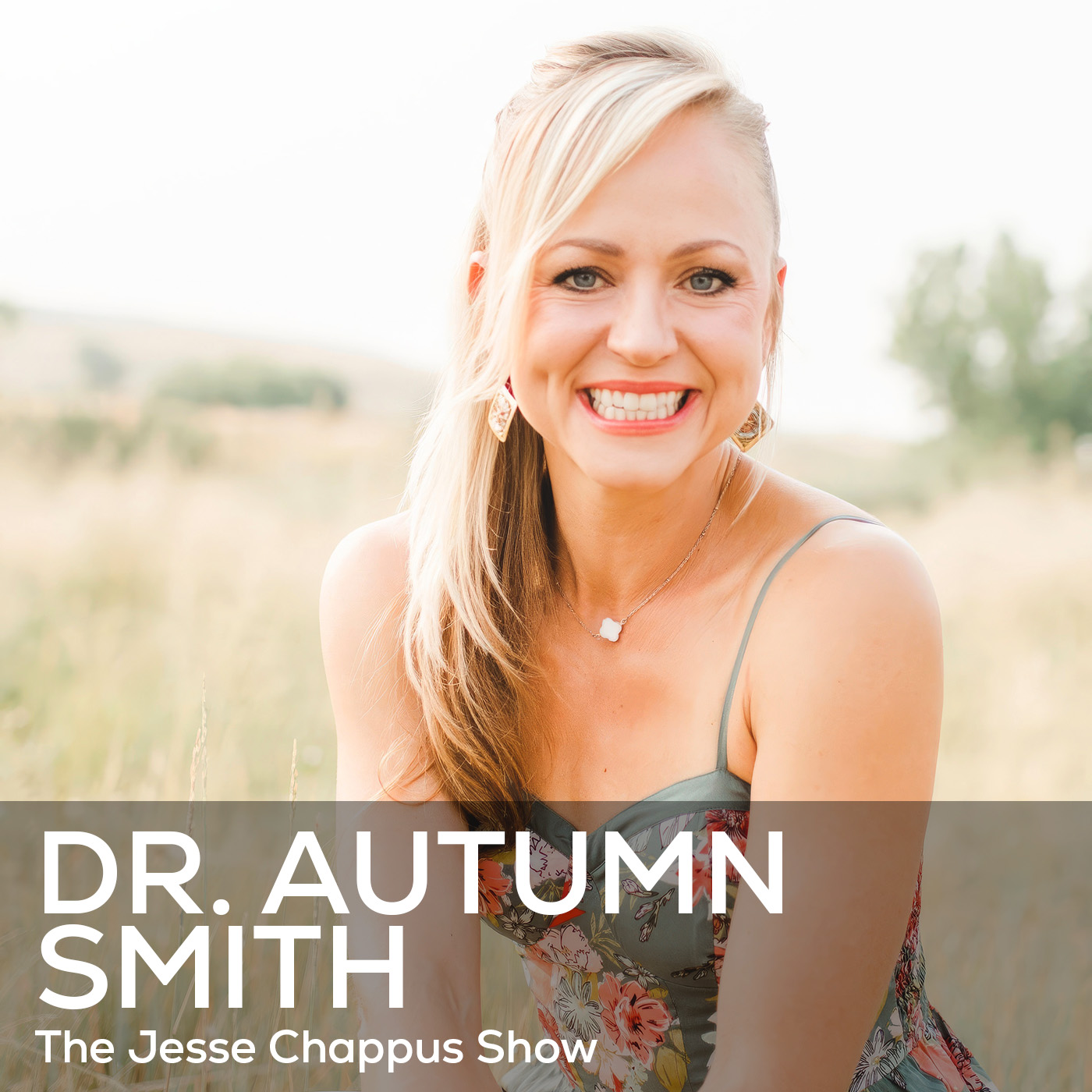
The Food Labels You Trust Are Lying to You | Dr. Autumn Smith
104m 41s
The discussion emphasizes that food is a reflection of its production system, with modern industrial agriculture depleting soil nutrients and reducing the nutrient density of foods compared to decades ago. Advanced scientific methods, such as metabolomics, allow researchers to identify thousands of compounds in foods like beef, revealing significant variations based on farming practices—grass-fed beef, for instance, often contains higher levels of beneficial omega-3 fatty acids, minerals, and other nutrients than grain-fed alternatives. However, food labeling can be deceptive; terms like "grass-fed" or "pasture-raised" lack consistent regulation, sometimes masking practices that don't align with consumer expectations. The conversation advocates for a dietary focus on whole, minimally processed foods while also prioritizing high-quality sourcing to ensure optimal nutrient intake and support sustainable agricultural practices that restore soil health and food nutrient density.
Coming up on Today's show. Food is a photograph of the land and the system from which it came. And these new advanced techniques are giving scientists the ability to really zoom in on how they change. And then the next step is how exactly does that impact human health? We found even 30,000 compounds just in beef alone. They changed dramatically based on the production system. There's this paper that came out in 2019. They've looked at the grass-fed beef available and the fatty acid ratios. And they found that up to 26 to 1, all the way down to 2 to 1, in the same grass-fed category. Grass-fed is not necessarily grass-finished. I think that's what people need to understand. And then when it comes to chickens, there's that whole vital farms, controversy, pasture raised. There isn't really a super clear definition about what that means. When it comes to cage-free, animals can be out of a cage and still in a warehouse. And free range, it just kind of requires that there is a door to the outdoors. Not necessarily a pasture even. You just have to be really careful. There's this illusion of choice whenever you go into a grocery store, right? The truth is there's like four companies in the meat industry that own 85% of the processing. It's a highly highly consolidated market. Autumn, what would you say is the biggest mistake you see people making when they think they're eating healthy? Oh, not paying attention to food quality. I think it's really, it's a lot simpler than we've made it. Rather than counting macros and obsessing over other smaller details of the diet, I think just if you eat whole foods, high quality animal products, whole foods, one ingredient foods, food your grandmother will recognize. I think it can be a lot simpler than people are making it. Okay, as you explain that to me, there's a couple different areas we could zoom in on. One being the whole foods aspect from the ultra-process foods. And then two, even within that, going deeper into quality within the foods, say meat. So try and parse those to a partner, explain how you feel in each room. Yeah, so I do. I think there's something about these ultra-process foods that create, you know, that you 58% of our American diet calories or, you know, approximately, and 67 are our children's, 67% of our children's calories. There's something about those foods that is not only nutrient deficient, obviously, but also makes us overeat. And I think that's very dangerous because we're eating and eating and eating and not getting the nutrients that we need. And so we're feeling tired and potentially anxious like I was. We're bloated. And we're eating enough calories. We're just eating the wrong kinds of calories. So whole foods brings us back to the right kinds of calories, right? But like you said, there's this other element of the quality of those whole foods that is super important right now, too, because we're at a point in history where the nutrient content of our foods is lower than it's ever been at any other point in history. It's been estimated we need two times the amount of meat, three times the amount of fruit, and four to five times the amount of vegetables to get the same amount of nutrients that we would have in 1940. And this is largely due to our industrial agricultural practices that have essentially turned our soil into dirt. So we've taking the life in the soil, which in a tablespoon of soil, there's more life than there is people on the planet. But because of the chemicals, the fertilizers, the pesticides, the extractive agriculture, we've killed that life that acts as a bridge between the nutrients in the soil, the plants that consume them, the animals that consume the plants, and ultimately the humans who could benefit. And so when I did my work with Dr. Van Blieh, which I'm sure we'll talk about, we found even 30,000 compounds just in beef alone and that they changed dramatically based on the production system, or did it come from a feedlot? Did it come from an organic operation? Did it come from a grass fed operation? And so I think, yes, going to a Whole Foods diet is step one. And I hope more people can just simply start there. But then beyond that, once you've mastered that, paying attention to the quality of those Whole Foods, where did these Whole Foods come from? What was the system that created those Whole Foods is an amazing next step because ultimately, if we don't, we won't ever restore that nutrient density of the food supply. And some people estimate we only have, you know, 60 years of topsoil left, right? And what happens then? Then where do we get those Whole Foods? And are they even as healing as they once were? I think it's an important question. You mentioned 30,000 different components of just meat. Most people think of it as, you know, macros, maybe some vitamins, minerals. What does that look like? Yeah, it's crazy. So yeah, we have the 13 nutrients on a food label. We track about 150 in databases, but 30,000 different compounds in meat and beef in our particular study. Now, this is Dr. Van Viet out of Utah State. And they've developed more advanced techniques to look at this array, vast array of nutrients of compounds of metabolites or just things kind of floating around in the food that we're eating nutrients and other things. It's called metabolomics. And essentially, it just widens the view, right? You can all of a sudden see all the different tiny little changes that happen. And so when they do this, they don't, and honestly, Dr. Van Viet can't necessarily categorize all of the different compounds. We don't even know what they are, right? They're just beginning to be studied. But what we do know is that they're changing in very profound ways. He did an analysis to between like a plant-based burger and a grass-fed burger, and they found that 90% of the metabolites in that, I know, 1,000s were different. So the nutrition pounds were the same. And yet they were very, very, very different foods. And these are plant compounds. These are, oh, my goodness, we fatty acids. These are vitamins. These are minerals. And so it's a broad spectrum of different types of nutrients. But they are changing. It's basically meat food is a photograph of the land and the system from which it came. And these new advanced techniques are giving scientists the ability to really zoom in on how exactly they change. And then the next step is like, and how exactly does that impact human health? Well, let's zoom in on the meat aspect right now. And the different types of farming and talk about what science is shown in that final product we're eating depending on how that animal is raised. Yeah, so I got to do this really cool project called the Beef Nutri-Intensity Project. Are you familiar with Dan Kittridge? No, tell me about him. Okay, you should have him on the show. So Dan Kittridge, he is the founder of the Bio-nutrient Food Association. And his parents basically wrote the organic standards and his goal is to repri- oratize nutrient density to become the foundation of the way we produce food and the way the consumers can choose their food. And so what he's developing is this handheld meter, kind of like start to strike your stowers where you'd go to the store and you scan a piece of produce and it would tell you what was the most nutrient dense, right? What's the most nutrient dense piece of meat or a piece of produce and he thinks in doing so gives consumers the power to then change the way that we're raising our food. Because right now we're prioritizing for yield how much can we make, how big is what we're making. But not the more important aspect is what nutrients to the food does the food actually contain. And so he partnered up with Dr. Van Viet because in order to create a handheld meter, you first have to define nutrient density, right? And what he's found in his testing is that it varies dramatically, right? In terms of four times different amount of minerals, 10 times different amount of antioxidants from this carrot to that carrot. And then it doesn't always correspond to organic or conventional, right? The labels don't always accurately capture the variation in these nutrient levels. And so what they had to do was they started with beef. We're going to define beef because it's one of the most widely distributed food products. And so Dr. Van Viet's team at Utah state came in and said, okay, we're going to look at all the different production systems that are happening in beef in North America when I was involved, but it has gone beyond that. It's going to be a worldwide. There's people doing this in the UK too in other areas. But if we look at feed lots, if we look at what we call feed lot lights, maybe like feed lots who, you know, are they're out on pasture more? They're feeding for a shorter window of time at the end of the life. What about if we do a grass fed operation? Or what if we do something beyond grass fed operation where they're actually doing something like regenerative grazing, rotational grazing. And we looked at how many species were in the pasture, right? And we got really nuanced with the practices. And so there's over 300 different samples. And we looked at rib eyes because you have to be very specific about the type of meat. This was a fattier cut so that we could actually capture the variation. And what they found was pretty awesome. So lots of different changes in the phytonutrients are more of like, vendletes specialty. It talks a lot about the plant compounds that can actually end up in our meat, phenols, turpinoids. And they changed, like you said, based on what the animal is eating, we can have plant compounds in the final product. Dr. Fred Provenz actually believes that these compounds might be able to affect satiety. This is maybe why you eat a grass fed stake and you feel a little more satiated than you do when you eat a grain fed stake. But these compounds on their own also have antioxidant, anti-inflammatory, antidepressant. You name it. They're called secondary compounds. But what these researchers believe is that they have very primary role.
in our health, they just haven't been as emphasized as we, you know, maybe should. And then what our paper looked at specifically, and it just came out in the Journal of Animal Science, which I was very excited about, is the fatty acid profile. And my favorite takeaway is that, oh, I'm going to get through fatty acids. This is a topic I love because I think they're so important, so underrated, and so many people are suffering because they're not getting enough. I think Harvard research suggested 84,000 deaths in America every year are just due to this one deficiency. And so we had three times more omega-3s in a grass fed stake than we did in a grain fed stake. And other research that we can talk about, I check that my people who I worked on this project with, Dr. Ashley is going to be a doctor, Joseph Verde, has looked at how eating beef changes the omega-3 ratio in the blood. And it's significant effects. People have argued that, oh, no, the absolute amount in beef isn't large enough to be meaningful, but that's not true because it can make meaningful changes in the blood. So the omega-3 fatty acid status was one thing. The omega-6 to 3 ratio was another. I'm sure you've talked about this ratio. People are often aiming below two, four to one or two to one. Americans live, you know, 15 to one. And people believe that rebalancing the foods that we eat, that ratio, can help prevent inflammatory conditions. And so we had eight to one in the grain fed beef and around a two to one in the grass fed beef. And then we also saw higher levels of certain minerals, six times the amount of selenium, three times the amount of calcium, two times the amount of copper, one point two times the amount of iron. There was also a different saturated fatty acid profile, which I think is really interesting because many people don't look at saturated fats as this diverse category, but they are and certain saturated fats are neutral. Certain longer chain forms are actually associated with a decreased risk of cardiovascular disease. And so we had higher levels of pentadecanoac acid, which C15 people are talking about. And then Bahenic acid, Arachidic acid, these longer chain forms and a higher percentage of steric acid, C18, which we know is a more neutral saturated fatty acid. And more CLA conjugated linoleic acid. And one of the other cool takeaways is grass fed is not grass fed is not grass fed. Grain fed is an always grain fed, right? We had the longer the animal was on pasture and the more diverse that pasture. So if you had up to 10 different plants in that pasture, it seemed to have a higher amount of ALA, the plant form of omega-3s and a lower omega-6 to three fatty acid ratio. And not all grass fed samples had a better ratio than the grain fed samples. And so basically our conclusion is that it really matters. The production system matters, right? For things that will be probably impactful for you and health. Actually, I think definitely impactful for treatment of, but that the current labeling system doesn't necessarily capture, doesn't accurately capture that variation. Okay, well, as an end user, let's talk about that. What do we want to look for in labels and then what are some of the deceptive things that may be used that we want to ignore? Yeah, that's a great question. So I think in 2016 and Mary, they took away that USDA regulation of the grass fed label. So you can actually have, in all cows, begin their life on grass. And then it's what they eat in the last 90, 120 days. That's the fat profile that often ends up on your plate. And so there's this paper that came out in 2019, bronchema. They've looked at the grass fed beef available in America, grass fed and the fatty acid ratios. And they found that up to 26 to 1, you know, would all the way down to 2 to 1 in the same grass fed category. So grass fed is not necessarily grass finished. And so if you want to look for something like grass fed and finished, that might be another layer of certainty. Also you can look for a third party verification like the American Grass Fed Association. They come in every 15 months and verify that the animal is actually eating grass for the entirety of its life. And unfortunately, a lot of these labeling claims are based on affidavits or they submit paperwork, the ranchers, the people raising the animals rather than any sort of third party verification. So I would look for 1% grass fed and finished or inquire to the company. Are they eating grain at any point in their life? That's my favorite question because it kind of just gets to the heart of the matter rather than or they grass fed because all animals are or live for something like the American Grass Fed Association. And then when it comes to chickens, this is also really interesting because there's that whole, you know, the vital farms controversy and a lot of people were really surprised. So pasture raised, you know, there isn't really a super clear definition yet about what that means. I think they're moving in that direction, looking like they're probably going to define it, you know, the life of the chicken or 51% of their life has to be on pasture. But right now, that isn't necessarily regulated. And so you have to kind of, again, get a little closer to the food supply and ask what's actually happening, what percentage of their diet is coming from corn and soy, you know, how many days of their life, how often are they out on pasture and ask questions like that. When it comes to cage free, you know, animals can be out of a cage and still in a warehouse with thousands of animals, right, when it comes to eggs. And for your range, it just kind of requires that there is a door that has access to the outdoors. Sometimes it can be like a cement or dirt plot. So yeah, you just have to be really careful. Pasture raised, I think, is the way to go when it comes to chickens and pork, what you still have to ask questions about. And then they have you like eggs. I don't know if you've talked much about the vital farm stuff on here or what was happening. Did you see that? No, but that's what's going to be my follow up. Explain that whole controversy and what panned out there. Yeah, it's interesting because I went to lunch the day of the CEO of Adolfarms. I know he cares deeply about the human welfare of animals. I was very, very impressed. And I think people were surprised by the amount of linoleic acid in the eggs. And I'm sure you've talked about linoleic acid. It's an omega six fatty acid. And a lot of people believe that we're eating too much of the omega six, which is competing with the omega three needs, right, and potentially leading to more inflammation. So what came out was that Adolfarms egg had a ratio or an amount of linoleic acid, that omega six fatty acid, that was similar to connole oil. And though the absolute amounts were different, they were a little bit different. So I think what surprised people is they saw vital farms eggs. They believe they were just out on pasture. And that is a misconception. Like, chickens do eat grains. They do. And it just depends upon the amount of grains they're eating and the amount of time on pasture they're getting. Those are the two big levers. Like, if you're having a lot of grains in very little time on pasture, you're going to have a higher percentage of those omega six fatty acids. But if you're having more time on pasture, maybe a smaller percentage of the diet from grains, and maybe even there's things like DHA rich eggs where you're having kelp or linseed oil, or they're actually supplementing with high omega three rich foods. And then they have certain plate companies doing like corn and soy free eggs entirely, which is I think really another interesting concept that goes beyond the omega six to three ratio. I've heard a lot of people. Now I haven't seen a lot of good evidence around this in the scientific community, but I've had a lot of people say we need to study this better. It's that certain people just, especially when it comes to autoimmune conditions, seem to react to the corn and soy fed animals, whether that be pork or chicken or beef, in a way that they don't when the animal is strictly fed grass. And that obviously, chickens that can't happen strictly, feeding with grass, but with cows that can. And so I think that's really interesting. But for me, it's, if I was eating something on a daily basis, because I'm very tuned into this omega six to three fatty acid ratio, like our staples at our home, like we're mindful of that. We're in the wellness space and this is like our life and our livelihood. But I do think it's unfair to say that having one of those eggs as a one soft, you know, is going to be like eating canola oil because eggs have so much else to offer than, you know, canola oil does it in my humble opinion. And so I think some of it's unfair. I don't think by definition, little like acid is toxic or anything like that. I think if you eat too much of it, it's definitely not a good thing, but it's also an essential nutrient and it comes in an egg. So that's kind of my really nuanced take. I don't know how you feel, but I'd be curious. Well to me, from the reading I did on this topic was the linoleic acid. And I think the other piece that people felt that they were deceived on was the yolks and the birds eating marigold. And I think there may have been another type of molecule in their feed that was adding to the color of the yolks, making it more of that yellowy orange color. Are you familiar with that being a piece of this? Yeah, I didn't read a lot about that. I was really clued into just the omega-6 to 3, but I could see that. I could see that. And that does happen in the industry. I'm very familiar with that because people, you know, whatever the consumers are clued into, that's what the producers are going to be mindful of and trying to create in their product. But I do understand too that those are not not cheap eggs and people are expecting, you know, the best of the best and all of these boxes to eject and I could see why that would be a surprise. If you've been listening to the show for a while, you'll know I'm always experimenting with ways to boost energy, improve focus and statement.
sharp without the crash. One of the tools that's genuinely earned a permanent spot in my routine is Keto and IQ. This super fuel will have you feeling your best anytime with a boost to awesome feeling energy and clarity. Keto and IQ is the cleanest fastest way I've found to raise Keto levels and they work even if you're not doing a strict ketogenic diet. It gives you this really smooth steady lift in mental clarity, no jitters, no spike, no crash, just clean energy for your brain and body. I use it before interviews and honestly anytime I want to stay fully locked in and you can feel within minutes it's one of those things where once you try it you immediately understand why they're used by the world's top performers from Navy SEALs and Tour de France cyclists to pro athletes across major sports. If you want to support your metabolism, your focus and your endurance, this is one of the most powerful tools you can add to your stack. Save 30% off your Keto and IQ subscription order plus you'll get a free gift with your second shipment by going to ketone.com/jessey. That's ketone.com/jessey. This gives you your special listener discount. Give it a try and feel the difference for yourself. If you've been feeling tired, depleted or like something's just off, this might be worth paying attention to. Trollscriptions make science back pharmaceutical grade formulas designed to work fast and I'm a big fan of their Jess Blue Methylene Blue Neutropic. This stuff is going to make your mitochondria happy. It supports brain energy and ATP production, sharpen's focus and performance, boost mood and helps calm inflammation, which is why I keep coming back to it. What really sets to our subscriptions apart is how it's delivered. Instead of liquid, they use a buckled trokey. This is a small, dissolvable, losage you place between your upper cheek and gum and because it absorbs directly through the cheek mucosa, an area that's highly vascular and close to the brain, you're typically going to feel it within 15 to 30 minutes. Each trokey is scored into four squares, so you can easily dial in the dose that works best for you. If you want to try it for yourself, you can get 10% off your first order by going to troescriptions.com/jessey or using the code "Jessey@Checkout". Troescriptions is spelled TRO-SER-IPT-I-O-N-S. You get 10% off your first order by using that link or my code. If you're ready for a change, give just blue a go, you'll feel the difference the first time you try it. To me, this is potentially a microcosm for a bigger issue. We've zoned in on this one company in this one instance, but for me, as somebody prioritizing these foods, spending that extra money, when you have an erosion of that trust in one area or with one company, you begin to doubt your investments in this area as a whole. I know. It's unfortunate, isn't it? People just throw their hands in the air and say, "Oh, okay, well, it's all the same. It doesn't really matter." It's a big problem. I can see that. So you mentioned going to lunch with, I think it was the CEO the other day, talking to him, the reading you did online. Do you feel like there was deception in what this company was doing, or was just people interpreting what they were seeing online and on the cartons wrongly? I don't think that they were being deceptive. That's not my opinion. I think that many people don't understand that chickens do stilly grains and that pasture isn't always a clearly defined term. I don't necessarily think they are being deceptive. I think people don't understand how gray this area can be, unfortunately. That's my opinion. What do you think? I didn't go too deep on it. I don't have a lot of thoughts other than they were eggs I was investing in. Now I'm hitting the pause button, waiting for the desk to saddle and just inquiring with people who are in the world and seeing what they're thinking. I'm just really excited that these conversations are happening because I do think that people with soy and corn were reacting to that. It's important to know that these chickens are eating soy and corn and that if you really include it and they don't make a 6-3 ratio, which I think is hugely important topic. I think people are just learning about these issues through that. Even though I don't necessarily think that what vital farms is doing is wrong or necessarily deceptive, but I do think the conversations that are happening because of that are important and are going to be really helpful for certain people in populations. Let's zoom in on pork. You mentioned quickly we want to look for pastures there. This is one I've been kind of confused on what to look for ideally. You find a lot of organic pork, but talk about the specifics there and how much good quality pork there actually is. The pork industry, it's really hard and you almost never find pastured pork out there in Urz or anywhere really. The thing with it, you look at that ratio of omega 6-3 again, which a lot of my research has focused on is it can be like 30-1 in pork. In pork that is traditionally fed. Now we used to work with a pork farmer and he did his own experiment on this to see how low he could get that ratio because like chickens, pork or pigs will eat a little bit of grain, but he took a very specific breed, the burkshires and then he put them on grass, you know, on 50% grass and some grain or you know I'm mostly grain. He took that 30-1 down to 15-1 and then eventually like to 5-1 with the pork eating only grass. Again, their reflection of what they're eating and if you put them on pasture, it changes the nutritional profile. So I think pasture pork, that's that's what you look for. It's really hard to find, but yeah, organic animals aren't necessarily eating grass. When it comes to cows, they have to be on grass 120 days of year and they can get organic corn and soy feed, which is I think what happens in a lot of these more organic scenarios. Now they do, you know, they restrict antibiotics, it's going to be, you know, and there is third party fairification. So they're really good things about organic certification, but in terms of what the animals are eating organic corn and soy and grains is definitely in the equation and can definitely impact the nutritional profile. For somebody who is eating some of these foods that are higher in linoleic acid, whether it be organic eggs, organic pork, organic chicken, etc. Do you feel that eating extra omega-3s to rebalance that equation omega-3 omega-6 is part of the solution? Absolutely, I think it can be. If you're somewhere and you cannot access, you know, any other type of animal product, that is something that I would definitely do and I would also take out seed oils from my diet, right? I would look at the other omega-6 rich foods that you're consuming and definitely reduce them because that is, you know, it's a balance, right? And if you're eating a lot of omega-6s, they essentially outcompete those omega-3s. And it's really interesting is Van Bleat did a study on this too where he looked at like the omega-3 content of the red blood cells and the plasma and people unthen changed the animal products they were eating, whether they were fully pastured or conventional. And I think that they started with like a nine to one ratio in the blood and it went all the way down below a five to one when they were eating just pasture-ace products. I mean, so that is one lever, right? To reduce that ratio, but it isn't the only one. And he did not restrict seed oils in that study, but I have a feeling if he did, you know, I think they could see similar benefits and especially with supplementation with omega-3 and just regular fish consumption. I've gotten a little bit obsessed with, you know, eating herring. I'm telling you, if I eat herring, there's just like, is it called like Harbor Bay? Do you ever, do you ever eat herring? It's been a while, but it is something I remember finding decent in the past. Yeah, they have, I think it's like Harbor Bay or something like that. They come in as like like canned herring and herring is one of the most omega-3 fatty acid rich foods. And it's like a light turns on for me when I eat it. It's got B12, it's got like two to three grams, I think in this, I think 130 grams serving that I'm having. But yeah, so having fish regularly, you know, anchovies, stardeens, mapperel, herring, salmon, these smaller fish, regular, is just another really great option if you have that availability. But yeah, there's many levers that you can pull. And it doesn't mean you have to eat the perfect animal products every single time or you're, you know, you can throw your hands up. There's a lot of things you could do. Before we were talking about B, if you mentioned the grain fed versus grass finished, and when it comes to omega-3s, it's three times higher in the grass finished. Just to give an idea, very high level, compare that to fish in the omega-3s. Oh, I love this. I actually did this for my dissertation. So let me think if I can recall the numbers. So beef, I believe, had about 50 milligrams per serving. So that's way, way lower, right? than fish. But then there's certain like leaner fish like haddock that if you're eating like the liver, then it would be like beef liver would be more on par. I think around like 200 milligrams. But, yeah, 50 milligrams. But the thing that's important is that we eat a lot more beef. I think like 59 pounds per person per year. And something like, I don't know, 16 pounds of fish per person per year. And so, I think I remember researchers like if you eat
grass-fed beaker every time. For those 59 pounds, you're going to have about 13 grams, so omega-3s, and about 5 grams if you ate the grain fed beef. So, you know, 10 plus gram, almost 10 grams extra in omega-3s. But eating fish is going to move the needle far faster. If you're able to eat fish and you have access to fish, I highly encourage fish is the bigger lever, obviously. But because we're eating a lot of beef more consistently, I still think it's also an important addition because not everyone has access and not everyone wants to eat hearing out of a can like I do. So, you know, I think they're both important. What are my favorite products you guys have over at Paleo Valley is the fish row. Talk about omega-3s in there. And then I'm curious because normally fish whales kept in the fridge and there's all us talk about oxidation because it's a product that's dried. How well preserved are they? Yes, I'm so excited about you asked about this because literally on Tuesday, we launched our newest edition of that product. Now, I loved the fish row because at Paleo Valley we're all about whole foods, right? And so many fish oils, rancid, they come from farm raised fish, right? They're just, you know, they sometimes are made from effulester forms, triglyceride forms. So, there's a lot of they have heavy metals, other contaminants, right? The fish oil industry is such a wild west. And I think that's why the trials in fish oil are inconsistent, right? But I think the benefits of fish very consistent, right? Nobody doubts that. And so, what we decided to use is fish row because we're all about like how do you find the foods that no one can access that have a really unique healing properties and make them accessible? And so, it's just fish dried fish eggs, freeze dried. And so, they're very well preserved. But what our second iteration is, is this herring fish oil. Now, it comes again from fish eggs. And then it has also sardines and anchovies. And why we upgraded was for a few reasons, A, we can have a very predictable amount of omega-3s because, formerly, if you have the fish row and then you freeze dry the whole egg, you're going to get a lot of protein. You're going to get a B12. You're going to get this vast array of nutrients. But you're going to get a smaller absolute amount of omega-3s, which I don't necessarily think is a bad thing, because I love whole foods. But a lot of people were looking for something a little more consistent and a little something that could help raise their levels. And so, by doing the fish row oil, the herring oil, we were able to do that. The second reason is the phospholipid form. So, when you look at row, that's what's really interesting about row and krill, this is true of. When you look at fish, most of the time, you're going to get the omega-3s in the triglyceride form. It's kind of nerdy, but three fatty acid glycerol backbone. But the phospholipid form is different. It's like two fatty acids, phosphate group, and then this like, cooling or some other type of nutrient. And these are membrane fatty acids. And these types of, these forms of omega-3s are actually very easy to get in the brain. They become yourself membranes, and they've been shown to have preferential access to the brain. So, the row has those types, those phospholipid forms of those omega-3s, which I think is really exciting. And the other thing I loved about this is, have you ever heard of specialized pro-resolving mediators? No. Tell me about them. I'm so excited. So, there's a, I think this was in the 1990s, Charles Srirhan, I think he's Harvard. And he discovered that, so we have EPA and deep DHA, the omega-3 fatty acids, the longer chain forms. But what they discovered is, there's these other compounds, what they called pro-resolving mediators, that then it's kind of like the grand children. If you look at this of EPA and DHA, are these specialized pro-resolving mediators? Because it's things like resolvins, protectants, maricinins, and these compounds are the ones actually turning off the inflammatory response. So, it isn't the EPA and the DHA. They found it's the pro-resolving mediators. So, now they don't turn it off like an ibuprofen or like a cox inhibitor would turn off, right? They just help it to be resolved in a healthy balanced way. And so, these pro-resolving mediators are found in this omega-3 fish row oil as well. And the other thing I love about it is very oxid, like there's international standards for oxidation. And you want to below five. Now, when you look at a lot of fish rolls on the market, it's way higher than that. Usually, in a lot of cases. And so, this company is very careful and keeps it below, you know, like a three, like well below international standards and below even like European standards for mercury content because it's coming from fish eggs and small fish and fish in Norway. So, fish row, I think, is one of those untapped gold mines, especially if you're concerned with DHA, which is very important for the health of your retina and also for the health of your brain and for neuroprotection. And I have both genes for Alzheimer's. And so, I'm very clued into, and I know that certain people, there's research to suggest, that genotype where we have both, apoi-4 gene alleles that we might need that DHA form in phospholipids, specifically to get in there and protect the health of our brain. So, fish row, but yeah, if you're going to eat fish row, if you just have access to fish row and you want to eat it, it is another one of those nature's multivitamins, just like organ meats. And I think that more people would benefit from consuming it. All right, so new product coming out, I wasn't aware. Is this going to be a liquid kept in the fridge? And then, too, is this replacing the product I was talking about? You know what it is? It is because it's just more consistent. It's a higher dose, it's more consistent. And yeah, like I said, it contains those pro-resolving mediators. And we can just be more, you know, when the batch is very, when it's a whole food, it varies. And people just like to little bit more consistency. And yes, you can keep it in the refrigerator. You don't need to, but because it is in a bottle, and it is in a capsule that is very, is carefully protected and processed. And so that is not going to receive a lot of contact with oxygen and light. But yes, if you want to keep it in the refrigerator, too, I think that's never a bad way to go. With the old product, as you talk about the regularity of the Omega-3s, I don't believe it said Omega-3s on the nutrition label there. And that's why I was curious. I assumed I was getting them. But I assume this new product will tell you the amount of Omega-3s are getting per serving. Yeah, and that's a cool thing. So we did do testing. So the old fish draw had about 200 milligrams. But people were like, well, what about this other fish draw? It has like four grams. You know what I mean? Or like, it has like a gram. It's like, why would I take this? Because of the other nutrients that it also contained. But people want something a little more specific. So it's going to have about a thousand, like a thousand milligrams, one gram, little over a gram, 700 of those around roughly are coming from DHA. So it's a DHA dominant form. Yeah, because I, we really wanted the brain to be our area of focus. But then it also has EPA. So EPA is that another cell membrane that kind of leads to the production of less inflammatory signaling molecules. And so that's going to have about I think 180 milligrams of EPA. And then also DPA. This is another Omega-3 fatty acid that you don't often hear about. I think, you know, 80 or 50 milligrams of DPA. So a total of about a gram. Cool. All right, well, we've gone over the food labeling in good detail. We know what to look for now. A hundred percent grass finished or just grass finished. Grass fed isn't enough. Let's talk about American made in the deception. And what some companies are doing importing different meats and then labeling them what we would consider incorrectly. Yes, see, this is such an important issue. So there's this like a luge of choice whenever you go into a grocery store, right? And the truth is there's like four companies in the meat industry that own 85% of the processing. And so and two of them, well, yeah, are coming from outside the United States, right? So JBS is a Brazilian company, Marfrog National Beef also has Brazilian influence. And then we have the chicken industry, the pork industry, China, Smithfield and China. So anyway, we have these companies who could be importing meat. And then as of before January of 2026, now this is changing. It's called cool labeling country of origin labeling. So before this, you could bring a product into America and simply process it and at some processing facility and then label it product of the United States. But thankfully, a lot of people change that worked really hard to get that change because what that does is undercuts American family farmers, right? And it allows bigger corporations to import meat from wherever they want and then prioritize it at their facilities and label as product of America. But if you remember about it is, this is still voluntary labeling. Okay, so companies do not have to tell you where their meat is coming from. And so it's important if you have the bandwidth and the resources and it matters to you, which I think I think it should because we see how vulnerable we are like during the pandemic. And if we have four companies controlling the meat supply and then one of them goes down or processing facility goes down, we're in a very vulnerable position. So I really I'm a
champion of this concept of food sovereignty? Have you heard of that? - Yeah, talk more about it. - Yeah, so food sovereignty is just like we need biotically appropriate and regionally appropriate food systems that are in the control of the people in that region. It's then that we can meet our needs within our community and have a very sustainable and reliable food supply, right? And the people in other countries are not going to care as much about what's happening to your soil and your water and your land as you would in your own community, right? So we're like outsourcing the control of our food supply to people, CEOs in far off countries and I think that's a really scary thing. So if we can look at where is this coming from? Is it coming from China? Is it coming from Mexico or Canada? Not Mexico so much anymore, but Canada. And prioritize the American family farmers. I think we can build those little hubs, those bio-regional food hubs that we need in order to have this freedom of our food supply. And that's essentially what food sovereignty is. - Early in the conversation, you quickly mentioned anxiety in your past. I think now is a good time to jump into your story. Let's talk about leading up to that. What your diet and lifestyle was like. And I know IBS was also part of your story. So let's start there. - Yeah, I was in a child who had starting up about the age of 10 digestive issues and just bloating and I would wake up in the little night in pain and one time I had my mom take me to the emergency room. (laughs) And then they told me you have gas. And I was like, but it just feels so much more severe than that. And no doctor really knew what to do with me. And so I just kind of continued on until high school and I took some bino and tried to relax 'cause that's what they told me to do. And then when I got into my teens, I didn't realize at the end that there's this profound gut brain connection. And so my unaddressed digestive issues started to manifest as in other ways on my skin as anxiety, sometimes even depression. And eventually just in coping in how I choose to cope with the both of physical pain I was in and then the emotional, what just felt like lack of control I had over my emotional self as well. So then I got into substances and just tried to kind of numb it all out and my life just kind of spiraled. And I eventually got, you know, I didn't live with my parents when I graduated high school. You know, it was just wasn't a good period of life for me. But fortunately, I was able to go to college 'cause I love learning, still do. Like learning and dance kind of carried me through. And then I met my husband and that's when my story really changed because my husband's like a problem solver. Like that is his gift to the world. And he was like, no, no, when he moved in, he's like, you're suffering. Like you look, make it look pretty good because you have a good job. I was working for Tracy Anderson as a celebrity finishing her always fits, right? But definitely not well. Like definitely really struggling. And he said, okay, we have digestive issues. Let's check our food. Like let's people on the internet in 2007 were looking at food as a potential fix for the, which sounded absurd to me because I'd been to all the doctors. And but we changed, we changed my diet. And we just, all we did was take out processed foods. We went to the Pasadena Farmers Market every week. We got high quality animal products. We got fruits and vegetables. At that time, I was even eating this like sourdough bread from the farmers market. But it was really just that shift to, to whole foods that might digestive issues were gone in about two weeks and totally gone in about 30 days. And then we got even more into a rice art fermenting our vegetables. We brought in a bone broth. And then we really got, you know, like we didn't have those crazy weekends where we just, you know, ate whatever we wanted and we're good fighters. Like we really kind of like took a period of like healing and more in depth discovery. And that's when my mental health started to shift to in really profound ways. And when I finally realized, I think my mental health was tied to carbohydrate too. How much carbohydrate was in my diet? That was another really profound level of stability. It was just kind of like this noise and this kind of like buzzing that I had always dealt with. It just like turned off. And I was just like, whoa, this is a really different place to experience life from. And I do think I don't do like the keto diet necessarily because I'm always kind of like doing the least. I need to because I feel like maybe, because I have both ginger and small amounts. Maybe later there will come a day when I'm going to have to test my ketones and I'm going to have to get in that one to three millimolar range or, you know, but right now, I live in like a low carbohydrate area and that really works well for me. - So got issues improved quickly. Mental health took a bit longer. What was the timeline on the mental health improvement? - Yeah, so I think it was probably about a year. It was probably around a year before I realized, wow, just like wow, I'm not having these crashes at night because I would, I would go when I would work and I would come home and I would cry. And how did I have anxiety? And just this whole, it was just like real struggle. The ups and downs of my day were just so laborious. It took so much of my energy, just to kind of like, bring myself out of that cycle. And so yeah, after a year, I started realizing, like, I don't need to nap anymore. I'm not crashing at night anymore. And then I have this other, this all this energy for like, should I go back to school? You know, I wasn't, I wasn't managing anymore. I was suddenly had this abundance of energy in this, in this vitality. But yeah, that took about a year. And that's kind of when I decided, 'cause I had gone on tour with Jennifer Lopez is one of my last assignments when I worked for Tracy Anderson. And I started to kind of backslide a little bit 'cause you were traveling so much. And so I realized, okay, I have to go back and fully understand this like mental health transformation that I just had. And so that's why I went back to school and got my masters initially. - So part of your journey was bringing carbs down. It sounds like that was tied to the improvement in mental health. You're not in ketosis right now. But over the years, have you experimented with ketosis at all for shorter periods, carnivore, vegan, any of the extremes? - I would say as a youngster, I kind of was living in a vegan adjacent area. I didn't avoid animal products because, you know, moral, ethical or even nutritional reasons. It was just something I didn't, wasn't drawn to. I wanted to eat bread and cheese and candy. And as a dancer, ballerina, who was taught, you just have to, you just see how calories is possible. And essentially take Jens thing, eat lettuce and smoke cigarettes. So I did that, not, you know, in a good way, right? That's not a healthy vegan diet. I get that. But that didn't work for me. But it was when I brought back my animal protein. We did really start focusing on that when my husband and I cleaned up our diet. And I do think, I think the carbs was one part, and I think the highly viable nutrients in animal products was another, I think, coming out of the dance world. I was probably deficient in many, many newsurants that my body needed, especially adding organ meats in. That made me feel like a totally different person. And that's why that was another one of our products too. Now, I haven't gone fully carnivore. I haven't, because I feel really good. And like I said, it's not that I don't think there might be a season for me where that is possible, or I might want to try that. But right now, I'm pretty into my body. And if I go on vacation, and I'll do maybe like a carnivore day or two, where I eat me six and fermented veggies. I'm always eating the fermented veggies. Those do really well for me. End the bone broth. Sometimes I'll do a bone broth fast, right? Two days just eating bone broth. But I don't necessarily consider that like me being on carnivore. They're just kind of like a reset that I do. But for me, my husband on the other hand does really well with a lot of animal products. Like that being the center of his diet, he thrives that way. Very little vegetables for him. But for me, I think I am a person who could probably do a healthy vegan or vegetarian diet, and do pretty well. Do pretty well. I don't think I will, because I feel so good doing having both. I think I'm more of like that balanced phenotype. I like 50% fruits and vegetables. I actually like vegetables, maybe like 20% fruit, and then some animal products. But yeah, I do think that as I get older, and I'm having my mom do this now, because I'll probably do more in-depth testing around ketones. I have done it in the past. I have done it in the past and experimented with it, along with fasting. And I like it a lot. Once I get got past 40, I started doing less of that, less of the more extreme things for now, because I can feel my hormones are shifting, and I'm just having to kind of like recalibrate. And so I like to kind of just be a little more balanced at that time. But yeah, I would definitely, I'll definitely move in that direction if I start to notice a decline in my mental health or other indicators that maybe my body could use a different tool at this time. As somebody who is still consuming a significant amount of plants, how do you think about the whole plant talks and talk, things like fightates, oxalates, lactants, we could go on and on? Is that something you're concerned about? And if so, is there anything you do in preparation to tame those down? - You know what? Luckily I'm not a person. I honestly have almost zero digestive concerns now. And I think that came from a lot of like a lot of years. I mean, this is my 13th year about really,
paying attention to the quality of my diet and what I'm consuming. So for me, for me personally, it isn't a concern, but I do eat a lot of fermented foods. And I don't eat grains. I still don't eat grains, and I don't eat a lot of beans, right? So those ones that have higher levels, but I've never had to do nightshades or worry about specific vegetables that hasn't ever been a territory that I have had to wait into. Though I do think that some people definitely, I think it matters for certain people, nightshades, joint issues. People with a degree of gut dysfunction. Yeah, sometimes cutting out vegetables. Maybe even all of them for a period of time can be incredibly healing. It's just not the path that I took, but I do, I'm obsessed with fermented foods. And I think if you can at least get some of those fermented foods into your diet, if you're struggling with all vegetables, that could be a really great place to go if you're trying to get that, you know, some fiberback in. Also, there was a Saunenberg trial. Did you hear about the fermented food trial? Tell me about it. It sounds familiar. I know Saunenberg. Yeah, yeah, yeah. Not personally, but I know of his work. Oh, this work. Yeah, yeah. Just wrote their book and what they did was they took people and ramped up either fiber in their diet or fermented foods. And I think they eventually got to six servings of fermented foods a day, which is a lot, which is something I, is like one of my goals, which I never achieve. But I can do like three. I tried to do one per meal. But what they found was in terms of both my carwheel diversity and like the reduction of 19 different inflammatory markers, fermented foods was far more powerful than fiber alone. So for me, my priorities are, you know, high quality amroproids, fish and for meds. And then greens, a lot of, I do a lot of the greens do. And I just really pay attention to my body. If I noticed a problem with those vegetables, I would definitely pull them out. It wouldn't be afraid to. But it is something I think everybody needs to do. But I also think some people could benefit for sure. Okay, so fermented foods are priority. You're trying to have them at every meal. What about probiotics when it comes to gut health? Is that something you consume or how do you feel about them? Jesse, that's a great question. So I have in the past, you know, I think who was it just thrive? I've used theirs. I know they have really good quality evidence, but I'm going to let them their ability to heal, leaky gut, at least in the trial that they conducted. So I have in the past used that. I've also used one called seed, but fermented foods contain a lot more probiotics. And I am always just this food first person. So because of my research and realizing there's just so much more to food than use the eye. And so if I can avoid supplements, I often do. And so right now, no, I'm just on the fermented food bandwagon. I don't take them. My digestive system works very well. But I do think that they can be helpful for certain people, especially if you're not going to eat fermented foods, right? If that's just not something you can do, and you seem to have some sort of dysbiosis, you've been taking antibiotics, right? You bringing in probiotics could be very, very helpful for your immune system, for digestive function. There's something we gave our son. I remember as a youngster, I think he was starting to get rashes. And so we brought in this like little, you could just like dip your finger in it and give it to him. So probiotics or something I've used throughout my life, just not right now. I haven't been using them. - Okay, I as somebody who's not big into supplements, Paleo Valley has a group of products that are supplement-like, but they're whole foods. I'm not sure if you guys have, I can't think of any of the top of my head that are just purely an extract supplement. But what I'm getting to with all this, with the diet you've shared, is there any supplements that complement that you're taking? - Ooh, outside of our Paleo Valley ones. - Well share those too, which again, things like organs and your vitamin C is even a whole food. So again, it's kind of a gray area, but share those and beyond if there is any. - Yeah, so I love that question. And yeah, like you said, I just think that whole foods are the, you can't really outsevelement a bad diet. And so if we can get whole foods to be the first level you pull and then bring in the really nutrient dense whole foods that most people don't have access to, that's what we've tried to do with our product line, you know, with our mushroom supplements, our essential C-selement or organ complex. So that's what I take, an aphysro. I don't take supplements on a daily basis. Now I will experiment, like we've been doing some fun podcast with Dr. Joel Brent on glycine. And and glynac. There's been this whole thing about glynac. Have you talked about glynac on which are yet? - May have touched on it, but I want to go deep into glycine and glynac. So take it and run. - Well, yeah, those are those are things that I've experimented with. And for sure, it creates a time. I'll bring some of the in and because I noticed things profoundly, there's also herbs that I take. So I'll take that back. Ashwagandal bring in sometimes, Jin singal bring in sometimes, Bacopa, I do have like herbs for my brain sometimes. And sometimes I'll even have lythium, like low dose lythium because my aunt was bipolar and I've just read a lot of good things about lythium and the health of the brain and how that. So yeah, there are a few mostly herbs that I'll bring in every once in a while, but it's very rare. I really try to, I know I want my body to get the nutrients in the dose and the kind of like form with all this the logistic nutrients. And and otherwise, I think sometimes if you take too many isolated synthetic supplements like Rob and Openshaw actually wrote a really fascinating book about this called Take a Daily, Have you heard of this? - No, I know her, but not the book. - Yeah, yeah, yeah, it was really interesting. So I just read it and it's about kind of like the ties between many, many supplement companies and firms that we always look at these isolated synthetic like multivitamins as you know, the same or you know, an insurance policy. And I think for some people they could be, but they're also not always made in a way that aligns with nature. You know, they come from petrochemicals. There's like this dose compression so the doses can be really high. They can have other things in them. We get it. But she wrote that it's fascinating book to say that it could potentially like accumulate, right? And become kind of like a burden for our body and have doses that are way out of range and which could cause you know, a massive disruption in the balance, you know, of our minerals or the nutrients or the vitamins. And so I think that's an interesting thing to consider. Like what are we taking it? What are we really taking it for? Are we noticing a health benefit? And yeah, if you don't have access to high quality food and multivitamins, there's been trials to suggest that that can be helpful, especially as you age, maybe as you're older, right? And you don't want to eat as much, right? And your digestive capacity might be limited. But I do, I hope that we all really question like what are we actually taking and what are we noticing from what we're taking and is this as close to nature as we can possibly get. But if you want to go into glycine, that's what I want to just jump in before we leave supplements here. Like we did for labeling when it comes to food, is there any guidance in that realm for somebody that wants to take certain supplements? Things to look for on the label, things that we want to avoid. - Yeah, I think when it comes to supplements, like I like a food-based girl, right? I like, there's many different ways these food-based vitamins can be made, right? They can have be like a food-based powder, right? Like you take a food and then you dry it down, right? Like a freeze-dry or something. That's essentially what we do. There's also food-based supplements that can go like you have a food powder, but then you add synthetically derived nutrients from it. Like you can get like, you know, petrochemicals is where be vitamins come from, you know, vitamin D can come from like the oil on, lamb skin, whatever. There's many different places these nutrients can be derived from, some a lot more natural than others, but then they can be added these food powders. And then you can like grow nutrients, right? Like you can give these organisms, certain food, and then they kind of synthesize these vitamins. And then the vitamins are separated from them or not. So I think food-based is a great thing to look for, but there's many different ways that they can be made and synthetic vitamins can still be added. And so if that matters to you, I would look for something that's a little bit closer to nature of food-based vitamin. And I would say away from vitamins that have just the cheapest forms, like, you know, cyanocobalamin when it comes to, you know, methylcobalamin might be a little bit more absorbable and full age rather than full acid. And when you have the other ingredients, you just want them to be as small a list as possible. And so, yeah, I think just food-based and not dies and other additives that are completely unnecessary. And then trying to get active forms whenever possible. And, you know, calcium oxide sometimes is less bioavailable and so looking into just the more bioavailable forms, that's what I would be concerned with. And if you can, organic and all of that, I think is a good way to go for the vitamins. But for me, I don't do a lot of that. Like I said, and so if you're gonna do like a whole food powder, like an organ complex, grass-fed, grass-finished, you know, you don't want other additives in there. By doing C, 90% is made from genetically modified corn. And for me, I'd rather get mine from whole foods. And so, like organic omelaberry, camu-camu, oscarolachery. And then when it comes to mushrooms, I don't know if you've had this discussion at all about mycelium and the fruiting body and all of that. - It's been a while, actually. So, let's talk about it. - Yeah, so, yeah. So a lot of mushrooms are actually mycelium, which is the root structure rather than the fruiting body. And a lot of the literature historically has been done on the compounds in the fruiting body. 'cause that's it.
the actual mushroom, but it's really easy to grow mycelium on grain, laminate profitable, but the problem is you can't separate the root structure from the grain, and so that it all becomes part of the final product. And this guy in Jeff Hilton has done testing and found that, you know, up to 50% of the final product in the mushroom product can actually just be grain. And so you have those bioactive compounds, which make a mushroom so powerful, but if they're watered down, that's something you want to, want to be mindful of. And so when it comes to mushroom elements, you want to make sure that it's coming from the fruiting body, rather than the mycelium, another our compounds into mycelium that can be beneficial. I think the bigger problem is the grain that you don't necessarily know how much of that product is, is just grain, rather than an actual fruiting body. You mentioned organic there quickly for completeness when it comes to labeling, whether it be a whole food supplement or foods, how valid is that these days? I still think it's really important, right? There's problems with the system, obviously, right? I just did this podcast with Dr. Stephanie Senef and, you know, glyphosate, it's kind of ubiquitous in our environment, unfortunately, but I do think that it's still a really important label. And there is that third part of verification. And yes, there are some chemicals and pesticides that are approved when it comes to organic, but I still think it's something we need to prioritize because we really have to get these chemicals out of our food. And Dr. Senef said, and I've heard many people say that I think it's like literally an existential threat. If we're killing, you know, the microorganisms and the soil that are connecting us to the plants, that, you know, the animals get that we get, like if we destroy that, we're in for a very rude awakening. And also I interviewed Dwayne Lee Johnson, do you know of his story? No, tell me about it. He was a groundskeeper. And this happened many, many years ago, but he was one of the first people to sue Monsanto because he got non-Hodgkin's lymphoma. And when he was trained, he was basically taught that glyphosate's safe enough to drink, you know, and there was an accident where it did end up getting all of his body, like a hose burst. And, but he did, he developed non-Hodgkin's lymphoma and he took them to court. And he won. And he was kind of like a precedent setting case. And so there's been, you know, billions of dollars settled for people exposed to these chemical. And also, you know, like tens of thousands of our farm workers exposed to these chemicals. So no, I think, I think organic is, is very important. More important than ever. Is it perfect? No. But is it still something I think we should prioritize? Absolutely. And even beyond that, like going towards regenerative, right? I don't think it's the end all be all, but I still think it's important. Now that you share that case, Dr. Senniff was on my show and she shared that as well. So I know what you're talking about with the life of say how so sad. And he's not the only one, right? You know, there's a lot of people waiting in the wings for their hearing court. But then I did hear that bear just got some sort of immunity, which is really sad. Because Monsanto was acquired by bear. And then I think that it was just granted an immunity so that people can no longer sue the makers of these chemicals or at least round up for cancer, which I think is very scary. So I think this is, I think this is one of those, this is one of the topics and the issues of our generation that we just have to find a way to get the chemicals out of our food. For sure. When it comes to glyphosate, what do you do to protect yourself and your family? Yeah, it's interesting. I mean, obviously prioritizing organic as much as it's humanly possible. It's in our waters, in our air. So, you know, water filtration, eating organic, but then also Dr. Senniff believes, and we did a podcast about this. Have you talked to you about her glycine theory? We did talk about it, but share it here. Yeah. And it's theoretical, right? I want to be clear about that. This is something like something that you've tested in randomized control trials, but she believes that glyphosate, the molecule and glycine, the amino acid that you could find in bone, breath protein, power bones, collagen, skin, that glyphosate can substitute for glycine. And then, thus, negatively impact the way that our proteins and our body work, and which can have an entire realm of manifestations, right? Because proteins are the workworses. They are the structural components, and they do a lot of the work in our bodies. And so she believes that by flooding our body with glycine, we can actually displace glyphosate. And so that's one of her theories. And it's something I do regularly, whether or not, you know, that's not the only reason I do it. But that is something that she believes can help. I've also heard that there's different homeopathic remedies that I don't necessarily use on a regular basis. And also, I think the biggest thing is prioritizing organic and regenerative agriculture, making sure that those are the things when you can, whenever you can, making sure that you prioritize buying products for people who are not using the chemicals, because that's going to change the food system. We've been dancing around this glycine topic. Let's dive right in, talk about what it is, and why it's important. Yes, so I read, I always kind of in dronoglycine. And you did a fight guess with Dr. Friend, but it's just an amino acid, right? And it's a conditionally essential amino acid. So many people, there's this big conversation about completing incomplete proteins. And I think it's very important, right? Are these proteins going to build muscle? Very important. But what I think is missing is like glycine is conditionally essential. So our body can make it. But what there's a paper, Melinda's Havia is the author in 2009, wrote a paper and suggested that the amount of glycine that we make is not necessarily tied to the amount that we need if we're over a hundred pounds roughly. And that we're suffering from what they call like a glycine deficiency syndrome that is causing us to age more rapidly, because glycine is important for collagen, right? For our gut, for our skin, for the health of our bones. It also glycine has been shown to help. And they're believing between eight and 10 gram deficiency. So this is not like a small deficiency we're dealing with. It's like a massive multiple gram deficiency potentially that is helping us, whether it's causing us to age more rapidly. So sleep, three guns of glycine before bed has been shown to help you sleep better. I've seen this, I've done a lot of podcasts with Dr. Brind about it. And it is one of the comments I see over and over and over again. People sleep like a baby, right? And if you feel too tired when you sleep, you can take it earlier in the day. That's just what I've seen from the comments. So, and then also it acts as a calming neurotransmitter in the brain. So they're den research in, schizophrenia, very, very large doses like your own 60 gram doses. So that always kind of peaked my interest because I'm obviously very clued into mental health and my brain was always a little bit on the faster end. Faster side things. So I've noticed that it helps to calm my brain down metabolic benefits. I don't know if you've ever done like a continuous glucose monitor. I have. Yeah. Yeah. Yeah. Okay. He tells yeah. And what I've noticed so profoundly is that when I have bone broth or collagen, it comes right back down. No matter where my blood sugar is, it's just like a profound dropping. And they've actually done some trials where they were able to reverse insulin resistance. And I think it was five grams three times a day in this particular trial. And they also reduced inflammation as well. So metabolic benefits, skin health benefits. But the thing that Dr. Brain talked about that I think is the most fascinating is the potential immunological benefits. He believes that and there's research to suggest, you know, from it wasn't his research initially. He started in longevity and found out that eating glycine, you know, instead of restricting methionine, which is a muscle me's adding glycine could extend the lifespan of animals in the lab. And so he thought, oh, that's really interesting. But what his main book is about is how glycine can actually create this trigger lock on our immune cells, specifically on macrophages. And so where you might get injured, where you might fall down like he did, hit his head, or get a sunburn, you might not have that same excessive inflammatory response because the glycine, when it's in concentrations that you need that is more than what you need to build a protein, right? So we're talking about different amounts of this nutrient necessary to keep those immune cells quiet. What happens is there's these glycine gated chloride channels. And the glycine goes in or the chloride goes in and keeps the cell quiet, right? It keeps it calm, like a little baby, like giving it a pacifier. And then it just kind of prevents the explosion of these immune molecules, cytokines that can create all of that collateral damage. And so he thinks a lot of us, like he actually believes, and he has a lot of training in immunology that I don't have. But this is his belief that injury inflammation is not a normal response to injury that we should have inflammation when we have an infection, but that we're all becoming inflamed because of insults that don't actually require the level of inflammatory response that he likens or he believes that much of that has to do with the fact that we now throw the bones in the trash and we just throw the bones in our soup. And we're eating this predominantly muscle meat, methionine rich diet without the counterpart, or it's kind of like sidekick glycine. And so we're all dealing with this massive inflammation because of it. And I just have to tell you and you did a podcast with him yourself. I don't know if you've seen this, but I mean hundreds, thousands of comments from people who've actually tried adding glycine, magnesium diet, and the most profound, like I've never, I've never released a podcast that has such a profound response in terms of people sharing their testimonials.
It was actually pretty exciting to me. - I said this to Dr. Brynn too and you touched on it. The fact that this just makes sense. We're eating all this muscle meat and we're throwing the bones in the trash so we're not getting the proper balance as somebody who's consuming quite a bit of animal products myself and it sounds like you are too. - Mm-hmm. - So when I interviewed him and preparing and we're emailing back and forth and discussing, it really hit me the fact that this is a missing piece for me. And I'm sure so many others. - Oh my gosh, I just think it's so profound because we're all being told we use to eat the chicken breasts, right? And we need to have all of these really lean muscle meats that are very methionic rich. And there is this cultural conversation that we need, like, you know, these complete proteins. But I think, yeah, and that is important. Building muscle, very, very important, right? It's the key to longevity. I think you can't understate it's important. But inflammatory conditions, oh my God. Like what, 60% of deaths worldwide are tied to some level of inflammation. I know statistic is different, but do you know many people today who don't have some type of inflammation? I mean, it's crazy how ubiquitous the experience of being inflamed is and how profound that could potentially be for quality of life and the disease burden. So yeah, I do. I think that, like I said, I become obsessed with glycine. We release so much glycine content. Because like you said, the way we've changed, the way we eat has changed so dramatically in so many ways. But I think this is the one of the major ones. I think taking the super way, you know, taking the bones out, not even the skin, and also the way we're feeding animals, right? Because when we feed them grain, when they're not grass fed, on pasture, they lead to less collagen production. So they're less collage in the smetes as well. So I think multiple factors, but at the end of the day, if you can bring glycine, vatage or diet, bones, ox, tail, just these more collage-emous cuts, grass-fed meats, bone broth, collagen, gelatin. Gelatin has, if you want a really simple, cheap way that is like, you don't have a supplement, make some gelatin gummies. You know, you just make those little fruit juice and some gelatin and a little bit of honey. And I think like in a tablespoon, you get like 1.5 grams of glycine. And so in order to meet that glycine gap, you'd need like three cups of bone broth. You know, a few tablespoons of gelatin, you know, collagen will do it. And even my using glycine, we talked about that. I don't know if you talked about that in your podcast too, but you could get like-- - We didn't, but I know body, yeah. - Yeah, yeah. So there's lots of different ways. Do I think like it's one of the most important things you can do? And I don't think I really realized it, but back when I was healing my gut, I did it, brought in a lot of broth. We were always making broths, we were always making fermented foods. And I just, I think it's only recently that I started to realize, oh my gosh, I think that's why I don't have digestive, you know, I think I did a lot of healing there, and a lot of calming of this clearly very inflamed body I was living in, but I didn't necessarily attribute to to the glycine or the fermented foods, but I think they were a huge piece of that puzzle for me. - So really high level, we wanna add in 8 to 10 grams a day. - Yeah. - And there are supplements we could take. We could make soups if we're gonna simmer them for long periods, bone broth, or these foods that are supplement like, whether it be collagen, gelatin, bone broth powder. - Mm-hmm, exactly. - Am I missing anything else? - I don't think so. I think slow cooking, I think we gotta reclaim that art. Like I mean, at least once a week, like put some, you know, peperost or, you know, ox tail, or just like, and plus it's a very economical, budget friendly way to eat anyway, right? The you put it in a crock pot, and then you just cook them down, cook them slowly. Like that's another really great way to just get that glycine back into your diet. So yeah, and I don't supplement, like I said, like all experiment, I wanted to explain it with glycine, because I had heard the buzz about it. But for the most part, I just try to get my glycine in. And what I do is just drink it in between meals. Rather than having a snack, I have some bone broth. It makes me feel great, and keeps my digestive system calm, and so that's just kinda how I work it in. - And for me, what I do is, ever since I've been tuned into this, which is relatively new, I've been using your bone broth protein, paleovali, and getting three scoops of that in per day. And I feel good about that, because it's still a food, it's not as processed as gelatin collagen, and it tastes delicious. - Oh, I know, it's my, I'm obsessed. I think we like, we started out as like a beef sick company. I think we're like morphing into this bone broth company, because people are just obsessed with our bone broth, that doesn't taste like bone broth, you know? I think it makes them more accessible for everybody, and fun to just something you look forward to. - One of the pushbacks when it comes to bone broth is contamination, specifically with lead. So talk about your bone broth, the testing done there, and the purity. - Yeah, so yeah, we definitely need to cast all for all the heavy metals, but yeah, like, bones can concentrate heavy metals. It's just, again, animals are this photograph of the land on which they are raised, and so if you're not careful and you're not testing, then you can end up with high levels of leads, and other contaminants in bone broth. The other one that's interesting that people don't recognize is pesticides. So pesticides are often in pastures, sometimes sprayed on the actual animal themselves, and so again, like pesticides can end up, and so we test for 60 different pesticides, as well in our bone broth protein powder. But yeah, you have to be very, very mindful, for all protein powders are kind of notorious for levels of heavy metals and contaminants, because you're taking something, and then you're concentrating it down. So you want to be very, very, very careful about where you're sourcing that from. And they found actually, in one consumer lab report, you probably talked about it, but the plant-based protein powders are maybe even worse in terms of heavy metals than the animal-based forms. So just something to watch out for. - Bottom line when it comes to paleovali, no lead, or very low below the limit side. - Very low, yeah, I'll go get you a, like, yeah, exactly. Yeah, very low. Like you, I don't think you can do like, no heavy metals, like it's just, it's a natural function of food, right? Because those metals are living in the soil, and to some extent a plant, an animal eventually, will take them up, but yeah, it's about being mindful of the levels that are present, and making sure that they're below those levels, and that is something we test for. - And tying this back to what you brought up before with Dr. Senif, the idea with the glycine, what I got from our conversation at least, is to flood the body with it, to hopefully prevent the glyphosate from getting in there and becoming part of our proteins. - Yeah, I think that is a fascinating idea. I even like, talked to Dr. Brandon, I was like, Dr. Brind, how would you do this study for Dr. Senif, and he came up with a really eloquent design, and I shared it with Dr. Senif, and she's gonna try to get that actually tested. But yeah, I think, I mean, why not? I mean, for bone broth, I just think it's one of those foods that has so many benefits. Even outside of the potential glyphosate, kind of like keeping glyphosate out of your proteins, but definitely if you're someone really tuned in to trying to prevent as much damage from glyphosate as possible, it's a great avenue. And I do the same thing. I have two to three servings of bone broth every single day. It's, and it's improved my sleep. It makes me, like I said, my gut health, all the things, which is a simple thing you can do. - Game changer, it just makes sense. - Yes, yes. And people have been talking about it for so long, I don't know, but I think, sometimes I'm a very intellectual, like my mind drives a lot of what I do. And so I think now that I understand the research, it's just become something I never don't do. - How do you feel about dairy? For you, your family, raw, fermented, cheese is bring it all in. - What a great question. I think dairy is a very healing food. I don't eat it myself. I'll have cheese every once in a while. It gives me a runny nose. I don't think that my body loves it, but my husband and our son, they thrive. They thrive. We've got a dairy farm right down the street, and they even invite him to come milk their cows. I mean, it's raw, it's grass fed, it's grass finished. We actually get fermented forms too. Caffir, scur, they're staple. We take yogurt and he puts blueberries in it and we eat it every day. That's one of the fermented foods. I think they've actually done trials in yogurt for college students was able to help reduce social anxiety, which I think is mind blowing. So yeah, definitely fermented forms of dairy. I think have a lot of benefits. And when I do go that route, I bring in fermented forms. When I'm like, oh, I'm gonna do a little dairy. That's what I usually go towards, but we do a lot of milk in the house too. We make actually bone broth ice cream. So we take our bone broth, we take the raw milk and then they use this, I think it's the ninja creamy. How did you have this in Canada? - Never heard of it. - And we mix it. Okay, yeah, it's just like this ice cream maker and it makes this amazing little bone broth. Cheese, also a big fan of cheese. When I was bringing in, I used to eat blocks of cheese. It was just something my body craved. And I think essentially a grass fed, grass finished raw cheese, amazing. Right? And if you want like a little, like I do goat cheese too, for people who can't necessarily do the other types of cheese, goat cheese seems to be easier. And that's the one that I go towards only because my body seems to prefer a better. But again, even more so with the dairy. And I haven't been involved in a trial that looked at this necessarily, but I've, prevent this work in Dr. Van Gleets work, That's it.
the compounds in dairy and cheese change maybe even more dramatically in the meat itself in terms of leaves like plant-based compounds being able to be evident in the final product. So I think that's really interesting too. Why it's really important to source from as much grass-fed and grass-finished farms as possible in order to get those those plant-based compounds with all of those different healing properties as possible. So yeah, big fan of dairy for other people, right? I don't eat a lot of it myself, but I think it's in a very important food and you see that in a literature too. See, I think this is one of the reasons that we knew that saturated fat across the board wasn't necessary, could it necessarily be bad because you're going to find a lot of saturated fat in dairy foods and yet you'll see populations who consume a lot of dairy, they tend to do pretty well at least in certain trials. But I also think the way that most dairy is made from a feedlot, high-the-processed, the marginalized, you know, like heated, I never did well with that type of dairy. It wasn't until I really got mindful of the quality of the dairy, grass-fed, grass-finished, and raw back in the early days that I was able to tolerate today. And so I think if you're going to do dairy, be very, very mindful of the quality. And if a traditional dairy doesn't work for you, that doesn't mean that all dairy won't work for you. And fermented forms of dairy might be a different layer that you could bring in if both of those didn't work. One of the things that's come up a couple times and I want to go deeper into it you is saturated fat. And it's still being demonized, but most people are talking about it as a whole. And you've already brought up the different types. Go deeper into that and talk about different types, different benefits. If there is problematic types, basically the 101 on the different types of saturated fat. Yeah, so I think that we've all been talking a lot about saturated fats. And I think the real distinction is kind of like man-made and natural fats. So we've actually decreased the amount of saturated fatty acids that we're consuming and rates of our disease haven't gone down. So I think instead of so whereas many of our fats came from animals, right back in the early 1900s, today most of them come from the vegetable oils and more of these omega-6s man-made highly processed versions of fat. So when it comes to saturated fats, really interesting because that's a diverse category, right? So there's saturated fats like behena gase, or I'm stear gase, which are neutral. They don't raise your cholesterol to the same extent that other saturated fats do like pulmitic acid or meristic acid. And then there's these longer chain forms like behena gase, or chidegase, they're associated with lower risks of cardiovascular disease. These are associations, right? It's still being explored, but they're definitely not having the same impact as those other saturated fats. And then you have pentadecanoic acid, C15, Stephanie Van Watson, you know, which some people believe because we're not eating dairy, which is the mean source of pentadecanoic acid and heptodecanoic acid, C17, that we're maybe suffering from certain sort of deficiency syndrome. Now again, that's debated, but it is looking like there's at least the potential that this will be considered an essential fatty acid, an essential saturated fatty acid. So I just think that's really interesting. And also what we have to consider is a lot of this associative evidence looking at saturated fat is looking at saturated fatty acids in the content of a ultra-process diet, right? So are we eating hamburger with acococola in a side of fries, or are we eating a grass-fed steak with some broccoli, right? Because that is two very different metabolic outcomes, but it's not because of the saturated fat. And even back a few years ago, the American Journal of the College of Cardiology, came out and said saturated fatty acid rich foods, right? Like chocolate and beef whole foods that contain saturated fatty acids are not associated with the issues with disease like other forms of saturated fatty acid rich foods in the context of a whole food diet. So I think you have to look at the type of saturated fatty acid you're talking about, you have to look at the dietary context of those diets. And also then you can get into, you know, man-made or processed versions of those fatty acids. I think that that matters to is it isolated, is it extracted, or is it part of a whole food matrix? I think there's so much nuance in the saturated fatty acid conversation, but I was just relisting to this podcast idea with Nina Tichel, to whom you probably have spoken with her. Yeah. So back with the Minnesota coronary experiment, right? When they actually did take the saturated fatty acids out of the diet and replace them with the more polyens saturated fatty acids, I think it was corn oil. And they didn't find what they wanted to find, right? They found that it did reduce cholesterol, but that the risk of death still went up. And that particular trial, they didn't publish for like 17 years because I guess the lead researcher said that they were just very disappointed with what happened when they actually reduced the saturated fatty acid content of the diet. And so I do think I think it's about traditional fats, right? I think it's the delivery, I think it's the dietary context, and I think we just have to be always very skeptical when things seem too simple. And when we're turning our backs to traditional foods that have nourished us for millions of years, and then replacing them with something that's very, very new to the diet, like a polyens saturated fatty acid rich seed oil or something like that. Riffing off of what you just said there, cholesterol came up a couple times. Somebody that is getting saturated fat, elevating cholesterol through whole foods, and they're metabolically healthy. How much of a concern for you would elevate a cholesterol be? That's so interesting because yeah, I mean, I'm that what is the researcher's name? He was, he just did a trial on this. And what they're looking at is this lean metapelphi phenotype who also has the lean mass hyperresponder. Have you heard about this trial? Yes. Yes. So they fell in the ignore wets. They've fell. That's what you guys looking for. So yeah, so for me, I am not concerned with slightly elevated cholesterol. And especially as I age, there is a little bit of research that for women elevated cholesterol might actually be protective. And so I'm not saying like extremely elevated cholesterol because elevated cholesterol can be elevated for many different reasons, you know, inflammatory reasons. But for me, I'm not concerned. Mine is marginally elevated, but I'm also very metabolically healthy, right? My insulin levels are where they should be, like glucose is where it should be. I don't have elevated inflammatory markers. And so for me, I'm not concerned. I'm, I would be more concerned with like metabolic dysfunction. I think that would be a bigger, um, a bigger problem that might lead to more issues. But for me, just serum cholesterol alone, I don't think it tells us as much as we believe that it does. And let's say it can't be an issue for some people. I'm clearly not a cardiologist. But for me, I'm not to worry about it. Talk more to the seed oils. And this time, as we're talking about here with cholesterol, conventionally, people have said, take your seed oils in, lower your LDL. So let's talk about seed oils, though, more as a whole and the problems there. Yeah. So seed oil for me, I think they're just again, these are one of those like groups that have been just like lumped into one category. And I do faint seed oils, high in little lake acid, two different extent, right? For everyone. What I think the main problem with them is ultra processed, right? A lot of like to take those seeds into an oil. That's an extensive process. Lots of high heat, lots of pressure, catalysts, solvents, you know, it's, it's not a simple, you know, freeze drying something, right? You're not simmering a bone. It's an extensive process. And I do think the little lake acid is that they have a lot of double bonds, like same thing with omega-3 fatty acids, like all fatty acids. They, the bonds that they have determine how stable they are, in whole, vulnerable, they are to oxidation. And the creation of potentially inflammatory compounds that can mess with your mitochondrial health, potentially increase your risk for cancer. And so that is my main concern with the highly processed little lake acids that could potentially contain, you know, trans fats or other byproducts of little lake acid, when it breaks down or is exposed to high heat and pressure. And especially when people are frying them, oh my goodness, there was like a, I talked to Tucker Goodrich and he said, and I've, I actually read this in other papers that there was an increased risk of lung cancer in Chinese women and who weren't smoking. And they believed it was from this constant inhalation of these more polyunsaturated fatty acid rich, specifically a little lake acid rich seed oils. So I just think never frying with them ever should be a thing. I also don't consume them myself at all because I just think they're very, very new new products. And I think little lake acid is an essential nutrient, right? That omega-6 fatty acid, but you need very small amounts. A mouse that are met with just normal food consumption outside of omega-6 fatty acids. And because of the profound benefits of omega-3 fatty acids, I think eating too many omega-6s is again, it's going to compete with those omega-3s for access to your cell membranes. And we know that when you get more omega-6 fatty acids in those cell membranes, you can potentially lead to the reduction of more inflammatory acostenoids, prostate glandins. So potentially make the level of information in your body worse, simply because you're out competing it. So for me, I'm not eating seed oils now, can oil oils
So I mean, oil, they have moral mega-threes. You know, there's corn, cotton, soy, canola. These are your like your more the higher in the little egg acid content type of seed wells. But for me, I'm not consuming them primarily because I don't like to have that much little egg acid. I think it's need to have oxidized. There's even shown some seed oils contain trans fats. And so again, I want, my basis is are they man-made or are they traditional? And that's how I choose my fats. - All right, another area I wanted to make sure we came back around to. And this is an area you have unique insight in. Not a lot of other people talking about it. Is these phytonutrients in animal products? - Yeah, this is Van Blitz, big area. And Dr. Fred prevents a, they wrote a paper, a review paper that I will give, I will send it to you because it was really, really fascinating about these secondary compounds. These phytonutrients, the polyphenols, the turpinoyes, the keratinoyes. So those are the main categories that end up in the meat and the milk. Now, what happens is I can't give you an exact, I don't know exactly how many, what do you think about it? Like the animal is a reflection of what it's eating. So corn and soy, and you know, these, you know, very few grains make up the basis of a lot of animals' diets, right? And then, but then you take it over here, you have a pasture. And I remember speaking to a lot of these farmers and they couldn't even name how many different species of plants they had. You know, like 30, 50, who knows, you know, when you have a pasture? And so animals get to eat if they can, if they have access. These plants that we can't otherwise consume, right? And then, so kind of like brings in new novelty and diversity in turd diet too. So these polyphenols, you know, anti-inflammatory, right? Keratinoyes, we know that they have benefits for the eyes, turponoids. Those are ones that, the favorites has looked at in terms of like satiety and telling us where we can eat, but they antioxidant, anti-inflammatory, potentially anti-insulin effects, so metabolic benefits, all these different kinds of benefits. And so if you're not eating the plants that contain those plant nutrients, right? You're going to have a product that is significantly decreased. So corn and soy, rich feed is going to have significantly fewer than this botanically diverse pasture. The other really important thing is that the compounds, and when I was on Dr. Mark Heimann's show, as someone said, they're not the same, right? So the animals are going to take those plant compounds and then their microbiome is going to process them, right? And then potentially their liver is going to come in and add a sulfate, you know what I mean? They're going to transform these plant compounds. So they won't be exactly the same as they were when they were in the plant, but yet they can still have profound impacts on our body. And Dr. Van Vlees researches, he's done two, or he's done one trial, and then I have a trial that I'd love to share with you that I think kind of elucidate that. One trial, this was in kangaroo, just some native pasture versus beef from a feed lot, and they found rates of inflammation after a meal were far lower in the kangaroo, right? So it could be just the fat content, it could be a different species. But Dr. Van Vlees actually gone and done it for like more regenerative diet totally, and an irregular conventional diet in terms of animal products and the plant products, and found that there is definitely, he actually took people from the center of American diet to a Whole Foods diet, and saw a very significant reduction in inflammation. But then even people from a Whole Foods diet to a regeneratively raised Whole Foods diet, which in my mind, regenerative is, you know, moving the animal and pasture on these botanically diverse pastures, and then still saw a trend towards further reduction in certain inflammatory markers. And so for me again, it's like these plant compounds could potentially help our metabolism. They could make us feel fuller. They could be reducing inflammation. Every single time we eat. And so I think that it's a really profound idea, and if we could change the way that we made our animal products across the board, I think we might see what they saw in that kangaroo study, just we all were dealing with less inflammation after every single meal. And I think that's exciting. It hasn't been scientifically validated yet, but I hope that's where we're going. - There's so many levels to this. The food we're eating, we gotta make sure we're protecting it from the toxins, and then making sure the food we're eating in the case of animals that they're eating the right foods, and then the diversity layer, the nutrients, they're converting from plants to nutrients we're gonna get when we eat the animals. It's exciting, it's fun. There's so much to learn here. - I know, that's what I think too. I'm so glad you think you find it exciting rather than overwhelming, because I always want that to be the way it, take that first step, right? Whole food's diet. But then also it was kind of like my journey. Like I was able to take the step I needed to heal my own body, and then when we had our stomach, I was kind of able to look a little bit bigger picture, like okay, well, how do we make sure that nutrient density is a thing for all the future generations? And then that just comes down to paying attention to the source, the system that we're supporting every time. But you know, you just gotta start where you are, but you're right, there's such enormous complexity, so much exciting research going on, where they're looking at the different animal products, and how low can you get that ratio? We're actually, my husband, it's creating chicken feet in our house, because we invested in a chicken farm, and we're seeing like how low can we get those ratios? And it is, there's just so much to learn. And the more I learn, the more I learn, I still need to learn. (laughs) So it's exciting. And I think we can totally reclaim our food supply, and I think we can, yeah, make sure that future generations had the kind of health that they deserve. - Well, I have somebody with a 10 year old son. What are some of the things you've learned in that realm over the years? Teaching your son, making sure he's getting the proper nutrition. - Yeah, oh, I love it. It's been a journey. Sometimes in barris, about the way we eat, because it's so different, right? So it's been a bit of a balancing act, but he actually just recently had a nutrition section in their class at fifth grade, and his teacher reached out to me and said, he is so excited to share what you've taught him. And he's so excited to tell people, he just got to stay away from the processed foods, and we have to eat the one ingredient foods. And he was, even though he was embarrassed to me, he was actually excited to share it with his class. And he knows, he knows, in the morning, we have a high quality protein, and just one bite of referment to food. I don't need to make him go to town, but he just has to take one bite of referment, he prioritizes his protein, he gets some certifiers, so he just give him little rules. And yes, on Wednesdays, sometimes he wants to go get a bag of chips and take it to school and be like all the other kids. And do I let him? I do. We do like a once a week, hey, you get to choose. I want you, you're the boss. It's your body, right? And sometimes he doesn't do well with gluten, and we know that, but I don't micromanage it anymore. Now that he's 10, it's like, you know what happens, right? You're telling me he's gonna hurt, and you get that choice. So it's nice to see all of the lessons, and he does, he, you know, the more his frontal lobes kick in, he's able to kind of control those impulses. It's just nice to see him learning his own lessons and being excited to teach his classmates. But it hasn't, it's not always easy, right? And he isn't always excited about it. But we don't bring those foods into the house. Like I said, if we are gonna get a bag of chips, it's because we're gonna stop by before school, and he's gonna pick it up because, yeah, I just think if it's in the house, that's what he's gonna eat and can't blame him for it. Those foods are engineered to be addictive and to override your state of any signals. And so yeah, we're strict about keeping it out of house, and also making it an occasion, and trying to normalize it, making sure that he doesn't think he's bad because he wants those foods. No, the foods are, this is just a poster, "Want those foods?" People spend millions of dollars making sure you want those foods. But yeah, I think all in all, I really hope he has a balanced, empowered relationship around food, and like approaches it with curiosity, rather than some sort of like dogma. Like how do I feel when I eat this? Like, and I think if we can give that to our kids, then they can be like these lifelong scientists and just feel a sense of control over how they feel, 'cause I think that was the missing element for me. I didn't think I had control over my health or how my day unfolded, and you don't all the time, right? But like I do feel like you can, in many ways, predictably impact your biology. And I think that's what I hope to give him the tools for, too. - Earlier you mentioned this new fish role product coming out, which I'm excited about. Any other products coming down the line you can talk about? - Yes, oh, I love this question. So many, so many. We've got some of you going, but the one that's most recent and will be out at the end of March is a sleek formula. So we know glycine, right? It's very helpful for dropping your body temperature, potentially impacting your neurotransmitters in a way that can promote sleep alone. But then we've added other ingredients. We've made a sleep formula. It's like a strawberry cheesecake flavor, or we see as like an after dinner drink that has like a food-based melatonin. A very low dose, because again, very low dose, it's like a tomato, a form of melatonin and some chamomile and some risci mushroom and just all of these whole food kind of components that come together and to make a bone broth this sleep.
formula. And then we also have a new form of protein bar. We're working on a ready to drink, um, collagen milkshake, right? So like an alternative to, you know, chocolate milk that might have a lot of sugar and it will again be very glazed in rich. And okay, the last one I'll mention is a protein coffee. So we were really surprised that our coffee is low mold. It's low-astid, and it's rich in polyphenols. And it's one of our best sellers. We didn't predict that. We just wanted to create something that's high quality. But we are adding the bone broth to the coffee and just having a protein kind of like coffee latte, um, drink that's coming soon. And it's amazing. Exciting stuff. I got to give you guys props. You're always innovating, coming up with new products. And the most important thing is uncompromising on quality. Yeah, for sure, for sure. But it's so important to us because we have these really significant relationships with these farmers and ranchers that we work with and just like this commitment to the system, right? To just being an alternative to the system that is degrading the spoil. And that's what hasn't. I have to say my husband is an idea, man. I shoot every idea that we execute. He has 20 that I have to tell him that we can't do that. He's just, he's an engineer. He's got all of these. He sees the gaps in the marketplace and is really, really strategic that way. Has there been any challenges along the journey staying at that level and not compromising? Oh, of course. Of course. Yeah. It's always been, and I think we're just so honest. People were really angry that we don't have chicken breasts. And sometimes we run out of our products. And that's annoying. And I get it. That's annoying, right? Because you just want things when you want them and that it's inconvenient. But, but yeah, we found that just being honest about, hey, you know, sometimes our farmers and ranchers, they have a bad week or we're out of this or we just communicate that directly with people via email and they're pretty, pretty understanding. And also because we're just committed to like making things really accessible to people, we, you know, with wild passers or other company. We haven't even, we raise our prices like one time. It is the absolute last thing that we will ever do if we possibly can because we just, we really prioritize the consumer farmers, our ranchers, transparency and in the system. But yeah, it's not always easy. And if you so much easier as I've seen a lot of other companies do, oh, well, a little grain fed. Why does that matter? Like that's just a matter. Does it matter? Like they let the people determine, you know, can we still sell the product? That's kind of their north star. And ours is more like at the basis of the system. Like what is the system that we're creating? Who are the farmers and ranchers that we're supporting? Does that align with our ideals? And but it's not easy. It's definitely, it can be rocky. But there's so many people who are waking up to this that we just, and we keep finding those people and it makes it all worth it. So. Well, Adam, as we wrap up here, I want to give you props personally. You're a mom, you earned a PhD during this whole business growth stage. You have wild pastures, paleo valley, a restaurant. You have a lot going on. Uncompromising on quality. So I just want to acknowledge you and say, thank you. Oh, thanks, Jesse. That's so sweet. And it's actually I have a PhD. I have a DSC. So it's more of like, I'm more of like a clinician. I work more with patients in my training than I did in the lab. I realized working with Bendley to know some metabolomics machines and the liquid gas chromatography. I was like, it's not right. But thank you so much. And the reason I'm able to do it is because my team, my family, like this is a family business. It's like my brother in law's our CFO, my husband is, you know, it's just like, and we have 200 employees now. So it's definitely not something I'm doing on my own. This is a very much a team family based effort. So thank you. And thank you for the work you're doing. I love your podcast. I love your podcast. I love the work you're doing and what you're putting out under the world. So thanks for having me on. Well, thank you. We're going to link up your personal social media, paleo Valley, wild pastures, everything in the show notes. You have a podcast. We're going to link up your YouTube channel. Thank you for all you do. It's much appreciated. You're awesome. Thank you. Likewise, Jesse, always a fan. Now that you're finished with the episode, head on over to jessiechapis.com for detailed show notes, including links to everything we discussed. Thanks for listening and have a great day.
Podcast Summary
Key Points:
Food quality and nutrient density are significantly impacted by agricultural practices, with industrial methods reducing soil health and food nutrient levels compared to historical standards.
Advanced techniques like metabolomics reveal thousands of compounds in foods like beef, which vary dramatically based on production systems (e.g., grass-fed vs. grain-fed), affecting nutritional profiles and potential health impacts.
Food labels such as "grass-fed," "cage-free," and "pasture-raised" can be misleading due to inconsistent definitions and lack of strict regulation, requiring consumers to investigate sourcing practices.
A whole-foods diet is foundational for health, but attention should also be paid to the quality and sourcing of those foods to maximize nutrient intake and avoid ultra-processed options that contribute to overeating and nutrient deficiencies.
Summary:
The discussion emphasizes that food is a reflection of its production system, with modern industrial agriculture depleting soil nutrients and reducing the nutrient density of foods compared to decades ago. Advanced scientific methods, such as metabolomics, allow researchers to identify thousands of compounds in foods like beef, revealing significant variations based on farming practices—grass-fed beef, for instance, often contains higher levels of beneficial omega-3 fatty acids, minerals, and other nutrients than grain-fed alternatives. However, food labeling can be deceptive; terms like "grass-fed" or "pasture-raised" lack consistent regulation, sometimes masking practices that don't align with consumer expectations.
The conversation advocates for a dietary focus on whole, minimally processed foods while also prioritizing high-quality sourcing to ensure optimal nutrient intake and support sustainable agricultural practices that restore soil health and food nutrient density.
FAQs
Not paying attention to food quality. Instead of obsessing over macros, focus on eating whole, high-quality foods like one-ingredient items your grandmother would recognize.
The production system dramatically changes the compounds in beef, including fatty acids and minerals. For example, grass-fed beef can have three times more omega-3s and a better omega-6 to omega-3 ratio than grain-fed beef.
Grass-fed does not necessarily mean grass-finished; animals may still eat grain at the end of their life. The nutrient profile varies widely, so look for 'grass-fed and finished' or third-party verification like the American Grassfed Association.
Labels can be misleading. 'Cage-free' may still mean animals are in crowded warehouses, and 'free-range' only requires access to the outdoors, not necessarily pasture. For better quality, look for 'pasture-raised' and inquire about the animal's diet and living conditions.
Ultra-processed foods are nutrient-deficient and can cause overeating, leading to fatigue and poor health. They make up a large portion of calories in diets, especially for children, without providing essential nutrients.
Industrial practices have depleted soil life, reducing nutrient content in foods. Estimates suggest we now need much more produce to get the same nutrients as in 1940, highlighting the importance of regenerative farming for nutrient-dense whole foods.
Chat with AI
Loading...
Pro features
Go deeper with this episode
Unlock creator-grade tools that turn any transcript into show notes and subtitle files.
 PodcastTranscript AI