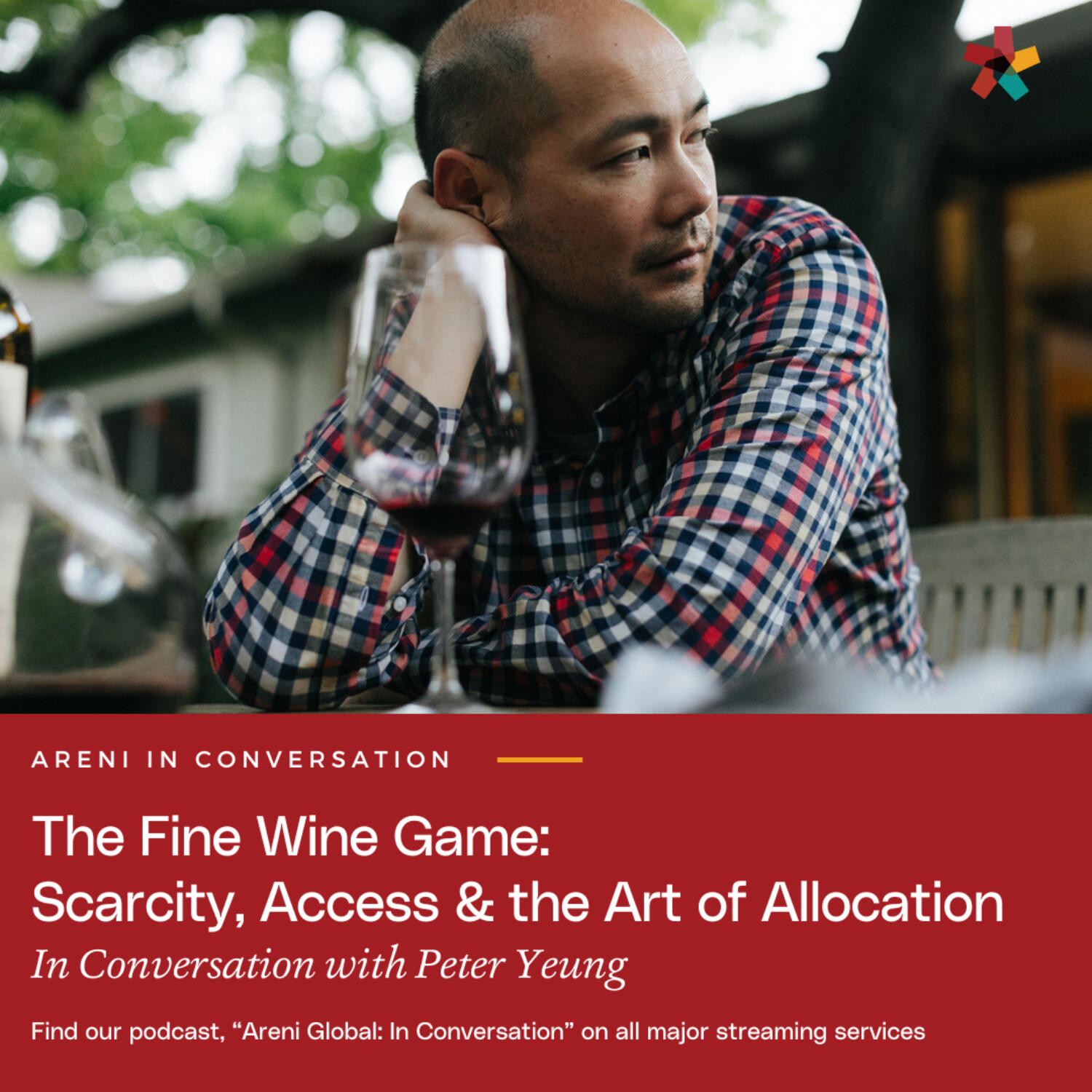
The Fine Wine Game: Scarcity, Access & the Art of Allocation
59m 1s
This episode of the Erine Global in Conversation Podcast features host Pauline Vigard interviewing Peter Young, CEO of Wente Family Estates, about allocated wine offerings and their role in attracting younger consumers. The discussion is framed around a new study on fine wine consumers under 40 across six global markets, which reveals that retention hinges on three factors: access, education, and community. Access is particularly critical, encompassing both financial resources and transparent systems for obtaining scarce wines. Younger consumers, likened to video game players, seek clear progression paths and fair rules rather than immediate access to top-tier wines, which they understand are scarce. Peter Young explains that allocated wine offerings—time-bound sales with purchase limits—can help wineries manage scarcity or create an aura of it. Key ingredients for success include a high-quality product, consistent authenticity in scarcity management, and segmentation of consumers based on past purchasing behavior to balance supply and demand. Young notes that even newer producers can benefit from allocations if they maintain consistency, avoiding practices like dumping excess wine into discount channels. The conversation emphasizes that allocations can serve as a tool to engage younger collectors by providing a structured, fair system that rewards loyalty and progression, ultimately fostering long-term interest in fine wine.
[Music] Welcome to the Erine Global in Conversation Podcast, where we talk about the future of Fine Wine. I am Pauline Vigard, Director of Erine Global, and in the series we bring you conversation with some of the most interesting and influential figures in and around the world of Fine Wine. To talk about how the world is changing, how these changes impact the production, distribution and consumption of Fine Wine, and how that create risks to be managed, and opportunity to be seized. [Music] This month, we are releasing our most ambitious study yet called the new Fine Wine consumer, how people under 40 find their way into Fine Wine. We wanted to understand how Fine Wine collectors and engaged customers came into being. First, what attract them into the category, and then of course, what makes them stay. So we set up to study young consumers in six different markets, London, Paris, New York, Hong Kong, Singapore and Shanghai. The results are not short of fascinating, and I would encourage everyone to go to our website, Erine.Global, to find out more. But one of the first takeaways is that the patterns that we have identified hold true across geographies. Yes, there are nuances, but regardless of where you are in the world, young people need three things to remain engaged with Fine Wine. Access, education and community. Access means first access to money, of course. Fine Wine is expensive and the first thing that people need to engage with the category is spending power. But it's not only this. Access means access to the wines that they want. And one of those things that defined Fine Wine is scarcity. And more often than not, they are hard to get by nature or by design. So how can wineries and by extension merchants design system to help them decide which consumers get access to which wine? And to the allocation system. And so this week we meet with Peter Young, CEO of Wente family estate in Napervali and host of the X-Shadow podcast. After co-writing the book Luxury Wine Marketing with Master of Wine, Liz Thatch, Peter has recently released an online course on allocated wine offerings. So we catch up with him to understand how allocated wine offerings work, what makes them successful and how wineries can leverage them to acquire younger consumers. Enjoy. [Music] Hi Peter, it's so lovely to have you. Thanks for being with me today. Thanks for having me, it's always good to see you, Pauline. It's so good to have you back on the show and we've got an exciting conversation ahead of us today. And as usual, my first question for you would be, what do you do in the wine industry? I know you wear many hats, so can you explain a few of them? Yeah, and I have a few new ones, I guess. I know, I've seen that. Congratulations. 2026 is sure looking like a good vintage for you. Hopefully, hopefully, yeah, 2026. I'm now the CEO of Wente vineyards, which is based in Livermore. It's the oldest continuously owned family winery in the US, was founded in 1883. And it's known for things like being the first winery to a variety, a variety label of wine. Okay. And also was the Wente clone of Shardonnay, which is 75% of the California Shardonnay is based on the Wente. Oh, wow. So a deep history in Shardonnay, the Livermore Valley, which is South East of San Francisco, and South East of Napa, which is small, and not many people have heard of, but it's, you know, at one point, it was the 30th largest producer of wine, and the 10th largest exporter of wine, prior to, you know, recent events and trade wars and whatnot in the US. So I think well known for Shardonnay and Cabernet, and now some other things. I have the Xjeto podcast, which you've been on several times, and hopefully continue to be on in the future, which focuses on the business of wine. And, you know, co-wrote the book with Liz Tosh, Luxury Wine Marketing. And another more recent thing was that I'm on the board of the Asian Wine Association of America, which is a new trade, non-profit marketing association that is focused on bringing more, bringing wine to Asian culture, I'd say broadly. Super interesting as well. Yeah. Asian-owned wine makers or connecting food in wine, I think it's a big element of that because Asian people, like many cultures, but a lot of Asian cultures are very into their food. And wine is not traditionally part of that mix, and so we're figuring out how to bridge that gap. And that's, I think, a huge opportunity for the world of wine, because Asians tend to be underrepresented as wine drinkers in the US at least. And there's many Asian restaurants that don't really have wine or very good wine list that anyone would want to drink. So there's an opportunity to up-level that, which I think could be boons for the wine and shoe for success. Also, one of the restaurants with the best wine list in London is actually an Asian restaurant, Chinese cuisine. That's great. Yeah, so Hu An, I think, is a place where all the wine lovers go, and it works really well. I mean, it's an amazing cellar and an amazing food. And so you've written an online course that's called "Allocated Wine Offerings" and discussed the best practices of that, because you have a lot of experience about it on the US side. And again, I'm looking forward to compare it with my European perspective. Can you first tell us very briefly about the course and what is it and why you created it? Sure. I had a client who uses "Allocated Offerings" and I was helping him find funding and doing investor decks and things like that. I saw how he was operating and I was like, "Oh, you're making a lot of simple mistakes in not using a lot of best practices." So I was like, "At some point, I need to write down what I know about "Allocated Offerings" and just the operations and how they work and how to think through the trade-offs. And luxury wine marketing, we kind of do talk about it, but it's at the higher strategic level. And then what's the operational strategy to actually go through it like what time of day, what do you send out the email, right? What days do you send it out? How do you think through how you set allocations and how do you set the wish amounts? Because an allocation generally is you can buy up to a certain amount, but then there's another function called a wish list that says, "I can wish for even more." And most people don't actually spend much time thinking about that, but the psychology and the ability to adjust consumer behavior is very important in that. And then just the planning and operations, the trade-offs between what we call a first-come-first-serve allocation, which is anyone who logs in the soonest can buy and then when it runs out, it runs out to a guaranteed allocation, which means the winery is specifically guaranteeing that it's there and balancing that with the ability to actually sell out of the line. And then if what's on to your guarantee as well, like also. Exactly. So all of those best practices that were sort of in my head, if you will, like I started to put down on paper. And I started to write, I thought it would be like a page or two of bullets for my friend. And as I went, I started building out the outline more and more and I was like, "Oh, this is like a mini book." Yeah. And I thought, "I've never done an online course with, let me try it to make it in that format to be more helpful for people so that they can actually learn and engage and dialogue." So that's super interesting. And I can't wait to dive deeper. And one of the reasons I'm so interested in that question of allocation and the trade-off and how you explain the trade-off and the conditions and everything is that because as you know, we are launching our new study, the new fine wine consumers in February and we looked at how people under 40 in six different markets from Paris, London, New York, but also Shanghai, Hong Kong and Singapore, how they get into fine wine the first time and from there, can we identify patterns and things that they need in order to stay engaged. And the first thing, and the three things that they need is similar across the board and across culture. And the first thing that they need in order to stay engaged with the fine wine category once, you know, they've had the first step into fine wine is they need access. So they need access to money, of course. Wine is expensive, so you need access to spending power, but there's not much that we can do here. But the second thing is they need to have access to wine. And when I say access to wine is that if you look at video games because there's so many similarities into playing video games and actually being a wine collector when you're under 40, it's a game that you play and it's a chase, right? And it's understanding the different levels and the different skills that you need to acquire to go to the different levels. And some of the wines we know, unless something really wrong happens, they will stay the final boss of the game, right? Some of those wines will be to have your video game complete.
your quest complete, you will need to have tried them or buy them to consider yourself a collector. What they actually need is the need to understand how you play the game and what skills you need to acquire to get to the final boss. They don't need to have access to the final boss straight away. It's okay for them not to be able to access the whole many a quantity of the world from, you know, the second year as a collector. They understand scarcity and they understand it's hard. That's why they're in the game. But they need to understand how many levels before the last levels and like do they need to team up like and it needs to be transparent and fair. So if the only condition is you need to spend 200k with us every year to have a chance to get to have an allocation or you need to have been a consumer for 20 years. They're not interested. So it's all about those trade-offs as you were actually mentioning because if you're a fine wine merchant today you have to consider your existing clientele that has been making money for you for decades maybe and they're still one to have the allocation. But you need to think about how do you give access to those young people in, you know, they're not going to spend 200k, I mean, some of them will but not most of them and they won't have the patience to wait for 20 years if they don't have clarity on what they need to do. So I'm very very interested in understanding first of all maybe backing up a little because I went straight from wine clubs to allocation. But I guess allocating offering can be part of a wine club offering. It can be a niche of what they do. But with also being at a context where there's too many wines to sell maybe probably, when is it still a good time to have an allocated wine offering? What's the good context for that? So that was a very long question. The video game analogy is fascinating. I never thought of it that way. I've compared the wine industry to entertain it before like making movies. There's an intrinsic value to it and so like people, the returns get pushed down because there's people who are willing to lose money in it and that drives the average returns down. Any of people who work cheaper. If you take the three seas of the video game, so if you look at what makes young male, which is, I mean, female, do women play video games as well, but it's still just like a big part of the wine industry male and balanced. They've got three seas and one of the, and I can never remember one, one is control. So they need to have control over the skills and their progression. And one is something that they need to keep on learning. I can't remember which sea that was. And those two seas are very, very much similar in the quest to be a collector. It's really, to me, the more I think about it, the more I think it's a very, very good metaphor to explain the interest of people because again, when it comes to wine, people are like, oh, it's too complex and that's why people turn away from it. I mean, for that niche of consumer, it's actually complexity and difficulty that drove them in, but it's how you manage that and what's the tradeoff of that. So sorry, for back to your question. It's the layers, but to the question of why people should do an allocation, I think there's two main reasons. One is you actually have scarcity and or you're trying to create an aura of scarcity. And does it still work to use allocation to create an aura of scarcity? It can in the right conditions. You have to be consistent with it. If you have an allocation and then you dump a bunch of wine into like a flash sale site or the supermarket, then that's not going to work. The authenticity is not there. It doesn't flow through. And sometimes like we talked about wine club, wine club generally is the winery choosing kind of what's in your basket and then sending that to you. If you have a very broad range of skews, that a lot of like Pinot Noir producers or Charney producers may have a lot of single vineyard skews that are all very small in production. It's very difficult to have a wine club to do that because like who do you give what? And so that allocated the offering part of the allocated offering is useful because you almost have like can have scarcity at that skew level, even if you don't as a whole business as a whole winery. So that I think those are the two main reasons I'd say you should consider allocated offerings. But I'm asking you about the managed scarcity point because it's been true to some extent that if you were to price yourself at a high price and to manage scarcity and to pretend that you were scarce when you were, I mean, defined scarcity, right? But that you could use those allocation to propose you into the world of scarce wine and you know, fake it until you make it and you become scarce for real at the end. But I was wondering if that's still, you know, if that was still something that works and that if wineries are willing to be consistent with that, they're still a good advice to give them. I mean, one concrete example how many years ago was this maybe four or five years ago of a Napa winery that sort of situation I was working with them. They decided to like close their offering early and to create a sense of scarcity and it worked. They had some of the best performing numbers within the industry and we're growing a lot and things of that nature. They also had very highly-radiated, all the components, highly-radiated wines, some smaller skews that were very tough to get in general. So they were managing that including things like buying back wine from the secondary market and other things to make sure that price wasn't below their direct to consumer price. So they were managing that scarcity and it worked well and that's not uncommon. So it's almost a well-suicitation. To some extent. Yeah, I mean, that's the whole luxury mindset. The Birken bag still works because not everyone has it and it's expensive. Yeah, and that's something, I get asked this a lot from new producers that don't have the history of the Bordeaux, the Burgundy Shadows and a wandering if they can play in that game but your answer is yes, if they manage it well and if they have consistency. You mentioned a lot. You need to have the ingredients, the basis there. You need to have a great product that has its own perspective and everything else. Well, let's talk about the ingredients because you mentioned some of them and they were all interesting. So if we can back up a little bit and if you can tell me what are. So again, just backing up even a bit more on the definition of an allocated wine offerings. Just I'm asking you this because that's something that I've learned quite recently in my wine career because even if I come from Burgundy, my parents, when every vintage, when the wines was bottled, it was ready to be bought and they will just send a letter at the time to all the clients saying, "This is the price for the year. Do you want to order any?" So it wasn't really what I understand to be an allocated wine offering today when I work with how the Bordeaux are preparing the on-première and even the Burgengens, what they do now. So can you quickly define what's an allocated wine offerings? What differentiates that from just my parents sending an email saying, "This is the price for the year." Well, your parents are doing it is the offering part and the allocated part is just a limit as to what you can buy. So if your parents sent that same letter and said, "You can only buy up to six bottles of these wines," then it would be an allocated offering. And that's how it started. That's why a lot of them in the US are quote-unquote mailing list because they were literally started as that kind of letter that was sent to their clients. But with the form saying, "You can only buy up to six bottles or whatever the number is." And then people would mail it back or fax it in with like a check. And if your check was cached, then you got the wine, right? And if it wasn't, then you didn't. And is it so it's a limited allocation of wine? But there's also something about time, right? Because again, when I look at how things are released on the plas, it's on one date and normally if everything goes well, you have a very short amount of time to actually put-- Yeah, the offering part should be time-bound, right? So I mean, I'm not sure how your parents' switerie's works, but it was just like until there's no stock. So it was released. The sort of time-bound, I guess, when there's no stock. But yeah, there should be a time-bound to it as well as that's because otherwise it's not an offering in the modern world. It's just an open store. Right. It's just an open cart. So if you just have an open store and you can buy any time, that's not what I would consider an offering. The time-bound, you're right, that's part of the definition of offering. And so what are the ingredients to successful allocated wine offerings? Yeah, you need to have great product. Yeah. Number one, right? Without question, you need to have the the right story that ties into what makes it special and unique.
And then to make it successful, you need to think about what your supply demand balance is and how you set up your allocations will vary based on that. And that's part of what I did in the online course is look at different points of your supply demand balance and that part of which maybe you have high production, you have low production or high-ish for allocated wineries. What is your demand? You have low demand, high demand. Where you are in that matrix should help you guide you in terms of what you're doing and the trade-offs that you're trying to make. So if you have, let's say you don't have scarcity, you're trying to create scarcity, right? Then doing a first come for Serb and having some things or everything sell out at some point can create the notion of scarcity. We had this, I worked at Realm Sellers and helped manage it. When we got our first two, three hundred point wines that we were doing first come for Serb, group-based offerings and then the wine sold out in like three hours. Group-based offerings meaning that you segment a consumer base and they receive the offer a different time in the day? No, meaning that we segment the consumers and different groups get different amounts of that. Okay, okay. Yeah, so we would call it a group or tiers or whatever. What kind of criteria did you use at the time to segment? Because I suppose there's plenty of them. What kind of criteria do you use? Yeah, you often use like how much you've bought in the past. So it could be total amount of wine purchase. It could be amount of wine purchase in the last year. As you get more granular and more specific, it could be the amount of each specific wine that you bought. It could be if you get even more fancy, did you wish for wine in the past? Were you granted that wish or not granted that wish? We did that at Costa Brown and other place. I worked with it, which I think is one of at least at the time had one of the leading allocated systems in the world. All those things come into play and you can use what most CPG markers would say like RFM type things. Your recent C, how recent did you buy your frequency, how frequent do you buy in the monetary value of how much did you buy? Which could have different definitions. At some points, credit customer scores for people based on those things. Anyhow. How did you feature the age and the point in the journey? Because again, if going back to my question of the young consumer, their score, I mean, you can't have bought, I mean, it will be difficult for a 30 year old to have spent as much as a 56 year old that has been, you know, buying wine for 15 years. So how do you take that into account in the journey to ponder that? I would rarely take age into account just because age doesn't reflect how much people want to buy or their ability to buy. You could have a 30 year old billionaire who is really into wine and spending tons of money. You could have a 30 year old who's just starting out of what we would call a luxury wine market like an aspirational customer who maybe will buy a bottle. And so their purchase decisions is going to be the highest indicator of who they are as a customer more than any demographic. When I first started at realm, I got a data scientist friend of mine that gave her our database and said, like, help me understand, like, what's the difference between a good customer and a bad customer? Or a customer that doesn't really buy and we pulled in data from Facebook linked in, right, like zip code, wealth data, gender, you know, all the different pieces data to pursue, ran it through all these different algorithms to try to separate it apart. And what we found is there's no difference. They all look the same. They're all like older white men. You know, in the high end one at the time, you know, 15 years ago, but or 10 years ago. But that predilection to want to spend money on wine is something very personal and unique. I think you may know the story of the largest wine collector in the world, right, it was a postman in France, right, is turning it into a museum now. They're making a movie. And, you know, he was a post office worker, right, he wasn't, he wasn't a well different time. You could do different time as well. You couldn't do that now, I suppose, but yeah. Well, but the point being that he loved wine and he loved buying wine and spent all his money on it, right, and some people will do that. And that's a better customer than one who is very rich, but doesn't really care about wine and isn't willing to spend money on the stuff. I guess I'm trying to, I had conversation with people that work in the very high fashion industry, like all the top brands that you can think of and that do analyze, you know, how they customer work and how same thing allocation, like to which consumers that are proposed to buy my obscure when I've got 10 of them in the continent in a country. And so what they use usually is the purchase that a consumer has done in a year, because when it's a new consumer to actually determine if what tier they're going to get into and they use both the data from the till, but they also use the human feedback from the salesperson in the shop because they have extremely highly personalized service to actually see that. And they came up with a mix of like if that mixed of product has been bought, like if they've repeated purchase for I think it's like five times in a year with that mix of product, we know that the probability of this person to be a high spender will be very high. And I was wondering if that was the case as well, what kind of criteria do you see relevant to segment your database because you might have. If you do allocations, yeah, but you might have only 50 year old and plus mail today, but we all know that it's not really a sustainable place to be you want to increase the 30 something. But you can't compare them with a 50 plus. So is there anything else that will help us identify from those 30 something which one are going to be the serious one or not. Yeah, so you know your point in what's different with fashion than wine may be that for an allocated system, you want there's often no purchase history. So you don't have that ability to segment out and that's where I was saying once they're a customer and you have the purchase history, you can do that to figure out if you're moving them up and increasing their amount of purchases or getting them the more rare item, which is what they're doing in fashion. Other than that, you have like time, how much how long they've been waiting if there's a wait list. So when they signed up kind of thing. And that's sort of a, you know, if you want to call it fair way of doing it, it's just going through a wait list and getting out of it by time. There's always exceptions to the rule, right? You meet someone someone comes and visits and tastes the referred by someone else who is a good customer. There's always exceptions that get through and you know might be prioritized for a variety of reasons you meet someone there celebrity or an athlete or something right there often not waiting at that line right and like going through. So there's always, you know, a judgment for some of those. Yeah, well, that's the same thing as the salesperson feedback from from the shop. It's it's it's you need that kind of qualitative input as well. But if you don't have that it's like I said, it's impossible to tell like you don't know if that 30 I'd rather have the 50 year old who buys a lot. Yeah, that's that's going to be trade-offs that you know, then the 30 year old that buys a little bit and maybe maybe they'll be with me for 20 years, but like their taste might also change. And this is where like I think there's a fallacy in the wine industry of like we need we as a entire industry need to engage Gen Z. I'm like maybe some wineries like Gallo or XXL do right and they're the entry point. But fine and especially in our world in like fine wine like I'm not sure that makes sense right like they may not be ready for that now a brand like wenti which is I would say like an entry point for fine wine. Could make sense because we're still at the grocery store shelf $15 a bottle or whatever like that's an entry point for fine wine. But like if you're a hundred dollar a bottle of winery and you're trying to say like I'm trying to capture Gen Z. Well, outside of the few billion air Gen Z's like you know I'm not sure that's interesting. Hey listeners just interrupting the conversation for a few seconds. First to let you know how grateful we are that you are listening to this episode. Thank you so much. And also to kindly ask you to subscribe to our podcast channel on whatever platform you are listening this episode on and to give us a cool rating. It's such an easy way to support us and it really makes all the difference. Thank you. Now back to our conversation.
One of the things, so before they need to have access, education and community, we looked at what makes an under 40, like what was their first point of contact? When did they realise that fine wine was an interest of theirs? And that was fascinating because I thought like I guess many French people would have thought that family has a huge role. And then there's a big difference in countries where you were drinking wine with your family on a Sunday versus countries like Shanghai, where traditionally until very recently not a lot of people were doing this. And actually it doesn't matter because we overestimate the weight of family because it's not family, it is friends. So you yourself as a young person will see why there's something interesting for you when a friend someone who looks like you will have very dated the fact that it can be for you. And until then you can do all the marketing message that you want. It is not for you. You haven't made that click in yourself, you haven't had that boom moments, have they told us an interview. And it just impervious, impervious, that sounds like a Harry Potter word. It doesn't go through you. It's like a raincoat. It just goes away. And then also what happens at that moment, and again going back to the video game metaphor, is that you understand not only that it can be for you, but you understand that there's something that you don't understand and that you want to crack the code. And again we back to the geeky side of things like wine collectors are geeks. They think like, you know, if you want an image, you can keep the image of someone playing a video game at home because that's really how you crack the code and how you can justify the time that you spend learning how to crack the code. Which is why community are so important because you don't do it on your own. Just like you don't do video games on your own, you might be isolated during your own. But you do. Well, you have sports with people watching millions of people watching people video game on screen. That's a community exercise. And you want people to understand how exceptional you are because you've mastered those skills. So it's really exactly the same. But I want to try to understand what other things that makes an allocation system successful. And so you mentioned you need to have a wine of great quality. You need to have the story. You need to have the process. I think you know the capacity to deliver and all of that. You know, I say it as it fits simple, but when you work across the US, I'm sure it's way more complicated that what it seems. But you mentioned the trade off. And that's something that I'm really interested in because that's the biggest decision. I think a winery has to take. And one is about price as well. I can see, you know, I've worked with La Plas de Bordeaux as you know, and I can see how people are choosing their price every year for the allocated wine offerings when they do the entrepreneur. What's the best way from your expertise and experience to determine a price? What's a good price for wine offerings? Well, I think that's just what's a good price in general. And for the offering in particular, I think you want to make sure that, you know, it's not cheaper for someone to buy it from a store or the secondary market. Because when you do that, then there's what's the incentive you have to come up with another incentive for them to buy directly through you if they're going to pay a premium. So if you put this in the context of the international market for wine, and I know that might not be the case for American wineries, but how far away from your market do you need to control the price? Like if you like if you do your allocated wine offering in the US, how much do you care about your wine being sold at a different price that's totally uncorrelated to yours in markets like Hong Kong, Paris, or London? It depends on what level you're at. So if you're at the very high level, you know, thousands of dollars, one of the key icon wines of the world, it's important because your customers are global. And they're going to be going around everywhere. If you're a $50 to $100 winery that's primarily in the US, but you know, you have some around the world that you dumped and it's cheaper. Fine. That's not that big of a deal. I think if you're, you know, there's some people who are maybe trying to sell to people in China, right? And the Chinese will look at what's my price there relative to the price in the US. And there could be some, I know some people who try to game that right who try to maybe artificially have prices higher in a market like the US or somewhere where they're looking on wide searcher or whatnot to validate that they're getting a good deal, right Chinese culture is somewhat about heavy deals and good deals. So they're checking that and so managing that is important. But like in for the bulk of the wineries who are selling allocated offerings, if it's 20% cheaper in France, certain Switzerland or something like that, I don't think it matters because the shipping cost would outweigh, you know, what they could buy it here. There's a little bit of validation in that people will check oftentimes when an offering goes out your wine searcher searches go up, right, because people are looking can I buy it. No, they're usually not looking internationally, right? So but domestically within the US, I can have a wine ship from New York or unless you part of that club of people that are global icons and have. If I'm flying around the world everywhere anyway, then it's like, well, I'm just going to go to Switzerland and buy this wine. Yeah, always you have to find directly. Yeah, not to that level of wealth, but you know, international people that will be a different, you know, if you're up in middle class London executive, you will go to Hong Kong probably, you know, if you work, take you there and you will know. And you also will trading on the secondary market, which is very much international and on that secondary market. But they still have taxes and. Yes, yes, but that people can understand, you know, that that's why I was like to uncorrelated to, you know, something that's not consistent. I wanted to ask you also, because you mentioned in the example of people that bought stock on the secondary market to clean the stock to some extent, I believe that's a huge problem with some of the wineries in Europe that don't know the stock levels of their wines around the world. And so we're not trading in clean environment because the stock levels are high, sometimes much higher than what they think and sometimes much more concentrated in a couple of collections that what they estimate I'm talking of some of the top wines. And if a couple of Asian collectors were to drop their collection on the market, the number of cases of certain wines will come back into the market will be very scary. So you mentioned something about trading, wide and thin in a in a podcast that I've listened to. I mean, the X shadow you did on that program, can you tell us about this like about what I guess what makes an allocated wine offerings a good one is also the number of consumer that you sell to you right. Can you tell? Absolutely. Yeah, so the theory behind that is you know, you have good customers, you want to reward your good customers part of that reward is often like larger allocations, but then you can lead to a concentration issue right. This is true, whether it's trade or direct to consumer, you don't if you have a high concentration of your business in a smaller number of customers and all business, that's a high risk business, right. Because if one of those numbers goes away, then you have an issue. And so being wide and thin and just having less amount of wine and more people's hands is a less risky strategy, assuming you have the people who are doing it. It's not only less risky from that perspective, it also keeps people thirstier if you want to call that right in that they don't their sellers don't get too full. So we go back to the quantity that you offer them. So how do you determine the right quantity that there will just be their own consumption, maybe they're going to trade one or two bottles, but you know, they're not going to stuck this seller with wines, they were never going to drink and you know, dump on the secondary market. Or not too little that they lose interest in your brand. How do you determine that? There's a variety of methods part you can look at like buying velocity, right, is there buying increasing over time, are they wishing for more wine so that would indicate they still have more capacity to continue to buy. Is are they not buying their full allocation, right, so they're buying less that must mean they're decline. So you can pull back their allocation to, you know, spread it out to more people. Those are that that action on the consumer part is the biggest signal. Otherwise, it's a little bit of a guess and you kind of maybe error on the side if you have a wait list, if you have the people to spread it to you air on the side of spreading it out. Well, at the same time, you want to make sure that your best customers are awarded and there's different philosophies here and this depends on the philosophy of the winery and what you're trying to establish as your community of customers. There are some wineries that will say every single person except for a few exceptions get the same allocation, right, that's quote unquote fair. Now if I'm a customer of the
that's been buying for you for five, 10 years, right? And I wanna buy a case and you're only ever giving me three, I might not consider that fair, right? So at some point-- - And I might have 12 when I'm only drinking five because I don't drink that much. - Yeah. - Yeah, it could be, and that's the opposite case where I have a lot, but I don't actually drink it, right? And so then it's stacking up in your cellar, and I've been to customer cellars where there's like stacks and I don't like everywhere. - I collect it always overbinds because again, it's the chase that feeds the dopamine system. But there's overbying-- - And the chase to get to the next level, the more rare and more expensive-- - But there's overbying of 100 wines, and there's overbying of 10 wines that you've got too much of. It's not exactly the same thing. - And that's part of why you don't want too much in someone's cellar because part of the beauty of wine is it's diversity. - Yeah, no, of course. - And we talked about cellar tracker and some of the trends they're seeing, one of the trends they're seeing is people are whole value one, but then two diversity. They're like trying to explore-- - But that's, I guess, is a trade-off as well because as a winery, it's easier for me to sell a hundred bottles to two people than to say a hundred bottles to a hundred people. So how do you ease that trade-off for winery with that extra wine? - Oftentimes, you need to put in the work to acquire customers, and that's why a lot of people who sell direct consumer these days and over the last couple of years with industries been struggling and declining are on the road a lot, right? They're not just waiting for people to come to them. They're out in the market, meeting even their direct consumers, trying to get their friends to sign up and all that. And so the cost of customer acquisition as competition gets tougher and tougher is going up, which is hard and costly, but important because you need those customers, you need new customers to not exhaust your existing customers. - What makes an allocated wine offerings or an allocation? Not work. One of the things that someone shouldn't do because they really not good practice. - I think we talked about this at the beginning, but like that sort of consistency and throughput if someone was saying we're allocated and then you can find their wine easily at the grocery store, the wine shop, or whatnot in high quantities and you can just for the same price, then bad consistency is people talk, right? And especially if you have consistency without, you have the bulletin boards, like wine berserkers or Parker's bulletin board or Reddit or whatnot, people talk and so they know. And if you do different things, the different people and there's not a good reason that they understand, like then, you know, I think that starts to alienate your customer base. - And sometimes people underestimate again the power of community, because I can see them in London and I've interacted with them quite a lot over the last year. And they talk that chat like everything on their WhatsApp group and they know and they share the information because again, they want to understand how to get access to those wines and they want to understand who they can trust and who they can't trust. So that's really important as well, that consistency. One of the things, again, I'm taking Bordeaux as an example, but you know, in the recent years, it's such an easy one. Every people that we interviewed, we asked them, what's your biggest obstacle to buying more? Like why aren't we buying more wines? And very obviously, there's the answer, well, I already have enough and I already have too much that I can drink. Then you have people that tell you why it's the money, you know, I'm putting money aside from other projects. But for the middle age people, so the 35 to 40 people, one of the biggest answer was actually, it's not a matter of not having enough money, it's having a matter of reason to spend it because they kind of lost trust in the system because they've bought wines, for example, the 22 vintage, that over the last year, they're from the same merchant that they bought the wine from, received at least 10 news letter with a prize being slashed. And I'm like, well, this is bad segmentation of your marketing, right? You might not want to send those emails, the actual people who boss it because now they feel ridiculous because they have, it's just like me when I see the dress, I've just spent 300 pounds on being on sale and like, gosh, I should have waited, but that's too bad for me. It's not, it's not, but it's a bit different for wine, I suppose. - The question would be, are you guaranteeing yourself access and accessibility? Because yes, that may happen. So part of it is just the value proposition that you're providing your customer, right? If it's on Premiere, what's the value prop? Is the value prop that it's gonna be cheaper than in the future, right? 'Cause of storage costs and blah, blah, blah, and you're selling it so I'm discounted from release price and there might be exceptions, or is it that you're guaranteeing access and that if it sells out, then you have access to it and you're gonna get delivery, but if you know you're not gonna sell out and you have that problem, then it's, you have an issue. - It's a very good point. I actually didn't think about that. Like if the value proposition is that they were going to make money and not, well, you securing access to that bottle of wine that you will have in your cello, it's a very good point. What's the difference between a wait list and a wish list? 'Cause you've used those terms and I wonder if they are intangible. - They're not. The wish list is when you have an allocation, usually, and you're saying, I want to buy more. Sometimes your allocation might be zero 'cause you haven't bought in a while or whatnot and I want to buy more. The wait list is you don't have an allocation yet. So prior to being a customer, there might be a situation where we don't have space for you so you have to wait. And so they both have different implications on, you know, your perception of brand scarcity, right? Like if you have to wait, you know, we mentioned, I think McDonald vinyard before that it's like 10 year wait list or, you know, sinequanana, things like that. So like, you're waiting for maybe 10 years to buy this wine. And you don't know anything how it works or why, you know, how much it even is at the time, you know, and what the price is. And so you're just waiting and hopefully you, the winery engages you while you're waiting so that you keep remembering what this is, you sign up for wanting to do it. And then the wish list is the method that wineries can make sure that they sell out of the wine while not forcing people to buy it. Cause the wine club, the difference between, a big difference between a wine club and allocation list is the wine club automatically purchases. It'll automatically charge your car, send you the wines, right? You purchase an allocation list or an allocated offering is an offering. So it's, you have the right and ability to purchase, but you don't have to purchase. And this is where like data analytics gets really important because what percentage of my customers are going to purchase? How much are they going to purchase? How do I construct my offering with both the allocation and the wait list, the wish list amounts so that I'm going to sell out. Cause the worst thing that can happen is, oh, you know, I'm going to guarantee your allocation and I'm, you know, going to wait for everyone to come in and then I don't sell out of my wines where I, where if I could have sold out, right? If I could have sold out and didn't, that's like the worst thing for a winery that you could do. So the wish list helps you, you know, ideally, the wish list is like 5% of your sales, right? So, okay. And that you're not granting every wish. And again, it's it's how you manage stock between people that will have different, need for different quantity. And that's how you manage that. Do you talk about, you know, people engaging while you wait? And I think that's an important point. Do you have examples of wineries that do a very good job of, and what do they do to keep people excited, even if they can't buy wine? Seneca and Anna was well known for doing this very well. There is a culty producer in the central coast. Even I know them. So, you know, yeah. Okay. So, like they would use to send you like letters, right? Like actual letters that talked about the wine and how sorry they were that they couldn't, they had no space for you. You know, you get that once or twice a year. They moved to digital now, so you get that in email form. And, you know, just to keep you remembering who they are. 'Cause often time, especially with a product like wine, which is an alcoholic product for the most part, you know, people sometimes forget, you know, they sign up for things. So, they forget. And, you know, if you let years go by, they're like, what is this again, right? But like if you can remember, keep them interested, keep them engaged. - Do you have examples of wineries that can't sell to everyone, but will again have something else. I'm thinking of events, for example, and you mentioned the pick up parties. And I also know in London that people can spend a lot of money on events. Like, it's not a problem if the event is really good. So, do you have example of wineries that are like, guys, we can't sell you one.
and possible but come and will open some and we can all enjoy them together. And this is, I don't know, 500 bucks a ticket. - I mean, it's quite often that even if you can't buy the wine, you can visit the winery. - But something that would be organized and curated, like for all the waitlist people, we do something, like, and it might not just be all the waitlist people, but something like once a year, you come to the winery and you can buy the capacity to drink those wines, but we just don't have enough to sell your individual bottles. - Yeah, there could be, there could be, you know, events like wine dinners or different events that people market to their entire list. The challenge is like, it depends on how big your list is and how many things are. And you generally want to prioritize your actual customers first, you don't want to alienate them, right? And have them not buy for the people who can buy it. - Yeah, yeah, I understand. - You definitely need a tier that experience as well, right? Where your existing customers and your best customers get feel the most special. - But it's also a trade-off, 'cause, you know, you can also have those people bringing you potential and you can see them. So it's one of those trade-offs that they have to think when you don't have that much wine. For one of mine. - Depending on the structure of your winery, and if you have more like a skew that is maybe in distribution, maybe higher production, you might reserve some and say, like, and a lot of people do this now when you sign up for an allocated offering, you actually get an offering right away of those wines and say this is an introductory offering. So even if you have to wait a year or two later to get the more rare wines, right? - Oh, that's interesting. - You get sort of a taste. And so you can say-- - So you don't give access to the final boss, but you make sure that they have the mini-gossen between. It's breaking down that video game, actually, if you think about it. It's like, so even a big winery from Bordeaux, or Burgundy, as you said, would have different skews and they can, they can, okay, that makes sense. And I guess my last question was, I've said it multiple times, but you know, the young consumers need access and need to have an understanding of how the video game works, and where are the boss in how to get them. But they also need community. So one of my biggest takeaway is, as many people that I thought that people will automatically trade off when they have more money, but actually they only do trade off when they also have a community that trade off with them. And I realized that it's actually why, I'm not that involved in the fine wine space and like very proper collector kind of space, because I could spend the time to find those wines, and I know my palate, and I know what I like, and I sure know a lot of merchants here in London that could help me build that. But I have no one to drink those wine with, and because I'm a mom of two kids, I'm very happy with the 30 pound bottle of wine that I'm drinking on a Friday evening, and I've got so few occasions on a personal side, not on the trade side, to open those bottles with people that will appreciate how much I've dedicated to the game, that I've, even if I've got way more money than when I started working, I haven't trade off. So sorry, all that personal experience to ask you the question, how can an allocated wine offering program that happens a lot now through digital thing, because it's an email that you receive and not a paper like my parents were sending, and then you trade through CRM kind of database, how can that element include an element of real life and into bringing people together and allowing them not just to have access to wine, but also to the people to drink it with? - That's what the best do. You know, Juan Mercado, who is the founder of Realm and has a new project rise in puzzle robles, he's one of the best at bringing people together. I've met so many of the customers who didn't know each other, and now they are friends, and they go to maybe they go to Formula One together, 'cause he'll invite people, he'll invite different people, he'll curate that invitation between two people. He's like, oh, I see you love shoes or whatever, boots. And this other guy knows a customer in mind is this designer or custom makes these fancy craft boots. Let me introduce you guys, right? And so the friendships, and then you have, now you have commonality, so it's easy to make that friendship over something in common wine, and then an additional thing like boots. - Oh, so warm. - And then you're also like, more Formula One, whatever it is, and then you're also tied in now to and feel a level of, like connection to the wine brand, right? And the person to one, because he introduced you. Now you're all like a group of friends and your life feels better for that. But community is immensely important for wine. There's a bunch of wine communities, like in Dallas, they have these wine clubs, where you people bring their bottles, they store their, by there, and then go there to drink together in San Francisco. I have many friends who are part of the French club, which is a community of wine lovers that go and have lunch or dinner there, and bring wine to share with each other. And it's one of the great things about the wine industry is the generosity. - I'm thinking about how to scale it, because the realm person that you mentioned was just him doing it, or did he manage to scale that up at a company level? - There's some element of scaling it in a sense that you do company events, right? And you may have different events in different markets around, and then you start seeing the same people, and then you as the winery person are brokering introductions to people, 'cause you know them, and they don't maybe don't know each other. But it's hard. It's very hard to scale, 'cause as you scale, it starts to become more one way. - Yeah. - And it's not to say that that doesn't work. I remember for a time, McCallan, the Scotch, would do a tour of events in every major market. They'd host this big event, right? Have all these cool stations tasting, and then some guy from Scotland who like tells you about what makes it great and special, and the different barrels they use, and et cetera, et cetera. And you do leave the event with that impression in your mind, and it's good, but that's sort of a one way push. And spirits tends to be a little more concentrated of a market and not as fragmented as wine, and not as much community. And so less complicated for the most part, right? But wine does have that application. - But it actually to capture what people like and to start from them, which is what, you know, it is to be consumer centric, and I understand that. Thank you so much, Peter. It's been fascinating talking with you today, and understanding a bit more, you know, talking about those allocations. It's a good problem when you have to put together an allocated wine offerings, but as you mentioned, it might also be a good solution in times like this, but it's a bit harder to sell wine. So if you put an allocated wine offerings that's really well sought through, and then you're able to maintain consistently through time that kind of offering, and everything that goes around it that might be a potential solution as well. So thank you so much for sharing all those best practice with us. - Absolutely, and if anyone is interested in that online course, the easiest way to find it is to go to xjeto.com, and look, click on the store page, and there's a link there. - Yeah, I'll put it on the show, no? - Easiest way. - Yeah. - Yeah, that sounds good. - Thank you so much, Peter. - Thank you for listening to this episode of a Reeneglobal in Conversation. A Reeneglobal is a think tank dedicated to the future of fine wine, and when we're not podcasting, we publishing reports, white papers, articles, and marketing sites. So if you are interested in the global conversation around fine wine and what the future holds, in terms of production, distribution, and consumption, head over to our website, www.reeneglobal. That's A-R-E-N-I, and subscribe to our newsletter. All the links are in the show notes, because whether you are producing or selling fine wine, you need to know what's happening in the world so you can make informed decisions. Until next time, cheers.
Podcast Summary
Key Points:
The podcast introduces a study on how consumers under 40 engage with fine wine, identifying three key needs for retention: access, education, and community.
Access involves not only financial means but also fair and transparent systems for obtaining scarce wines, with younger consumers seeking clear progression paths rather than immediate access to top-tier wines.
Peter Young, CEO of Wente Family Estates, discusses allocated wine offerings, which are time-bound, limited-quantity sales that can create or manage scarcity.
Successful allocations require a great product, consistent scarcity management, and segmentation of consumers based on past purchases to balance supply and demand.
Allocations can help wineries attract younger consumers by offering a clear, level-based system that feels fair and engaging, similar to video game progression.
Summary:
This episode of the Erine Global in Conversation Podcast features host Pauline Vigard interviewing Peter Young, CEO of Wente Family Estates, about allocated wine offerings and their role in attracting younger consumers. The discussion is framed around a new study on fine wine consumers under 40 across six global markets, which reveals that retention hinges on three factors: access, education, and community. Access is particularly critical, encompassing both financial resources and transparent systems for obtaining scarce wines.
Younger consumers, likened to video game players, seek clear progression paths and fair rules rather than immediate access to top-tier wines, which they understand are scarce. Peter Young explains that allocated wine offerings—time-bound sales with purchase limits—can help wineries manage scarcity or create an aura of it. Key ingredients for success include a high-quality product, consistent authenticity in scarcity management, and segmentation of consumers based on past purchasing behavior to balance supply and demand.
Young notes that even newer producers can benefit from allocations if they maintain consistency, avoiding practices like dumping excess wine into discount channels. The conversation emphasizes that allocations can serve as a tool to engage younger collectors by providing a structured, fair system that rewards loyalty and progression, ultimately fostering long-term interest in fine wine.
FAQs
They need access, education, and community. Access includes both spending power and access to scarce wines.
It is a time-bound limited offer where customers can buy only up to a certain amount of wine, such as six bottles. It differs from an open store by having limits and a set offer period.
The two main reasons are having actual scarcity or wanting to create an aura of scarcity. It also helps manage small production skews that are hard to distribute through a wine club.
Yes, if they manage it consistently and have a great product with a unique perspective. Authenticity is key—they must avoid dumping wine into discount sites.
A great product is essential. Success also depends on understanding your supply-demand balance and setting allocations accordingly, such as using first-come-first-serve or group-based tiers.
Segmentation criteria include total past purchases, purchases in the last year, specific wine purchases, or whether a customer previously wished for wine and was granted it.
Chat with AI
Loading...
Pro features
Go deeper with this episode
Unlock creator-grade tools that turn any transcript into show notes and subtitle files.
 PodcastTranscript AI