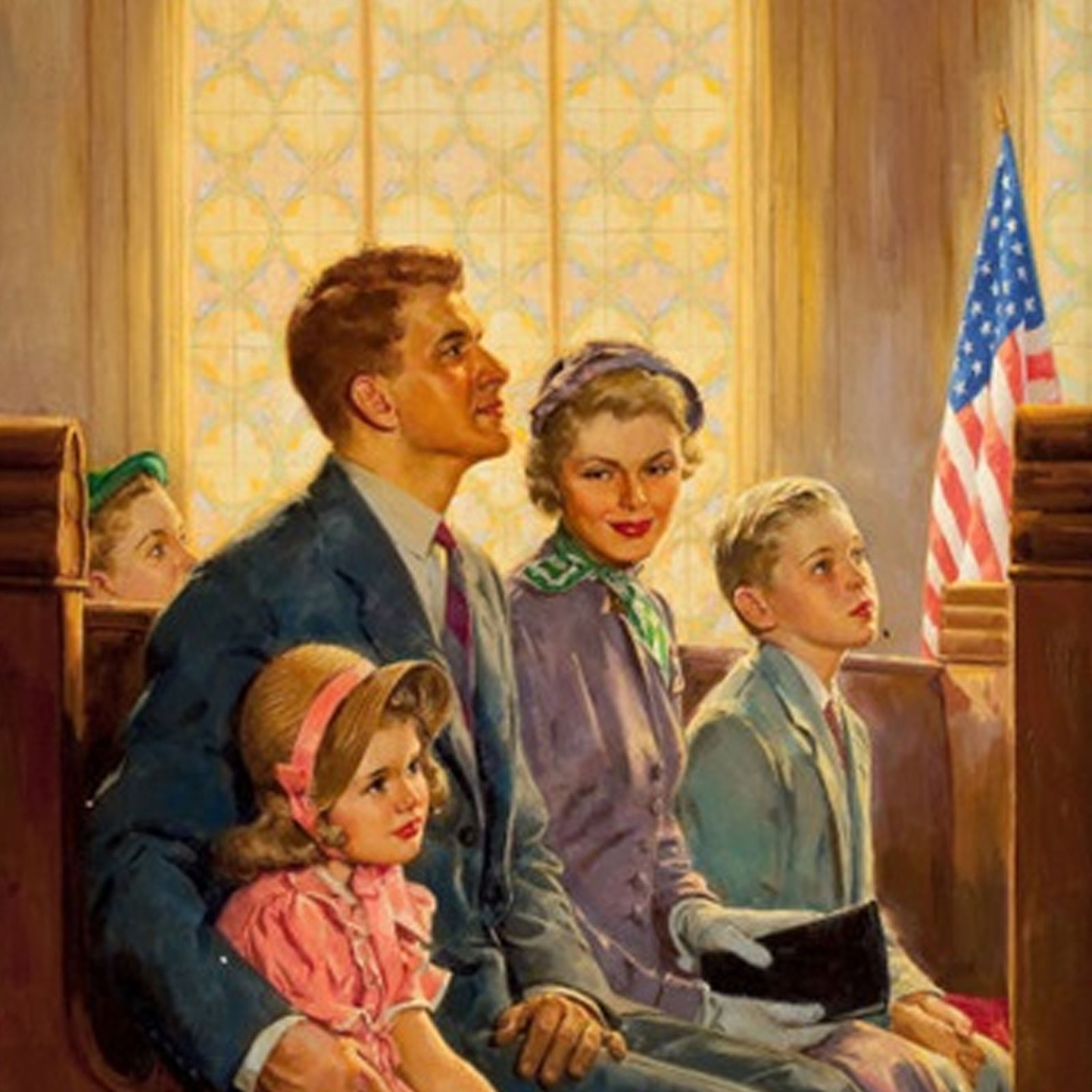
The Family, the Polity, and the Church – Fr. Brad Elliott, O.P.
from The Thomistic Institute
44m 47s
Father Ambrose Little introduces Catholic social teaching (CST) as a theological reflection on society, inaugurated by Pope Leo XIII’s 1891 encyclical *Rerum Novarum*. CST is not mere politics or activism but a moral theology centered on God and human perfection through society. Humans are political animals by nature, requiring a place and a people; cosmopolitanism, or being a “citizen of the world,” is a vice that denies this inherent belonging. True society arises from friendship—a love for a shared common good that is indivisible and enjoyed precisely because it is shared, unlike individual goods like pizza. Pope Pius XI identifies three necessary societies: the family (natural, rooted in marital friendship), the polity or civil society (natural, rooted in political friendship from shared culture and customs), and the Church (supernatural, rooted in divine friendship or charity through grace). The modern state, a post-Reformation invention, often corrupts civil society by absorbing it into a totalitarian apparatus that apes the Church’s functions but lacks grace. CST thus defends the organic, friendship-based societies essential for human flourishing against both individualism and statism.
Hello, I'm Father Ambrose Little, the Director of the Timmist Against Institute. Before we begin the next great TI lecture, a quick word with you. Thanks to donors like you, our content is cutting through the digital noise with the truth of the Catholic intellectual tradition. But we can't keep it coming without your help. If you enjoy programs like the TI Podcasts in Aquinas 101, please consider a small contribution of $25 or more. You can use the link in the description or visit our website to donate. Your generosity ensures that these important programs will continue to lead souls to the truth all over the world. So please enjoy this episode and may God bless you and keep you in His grace. Welcome to the Timmistic Institute Podcast. Our mission is to promote the Catholic intellectual tradition in the University, the Church, and the wider public square. The lectures on this podcast are organized by university students at Timmistic Institute chapters around the world. To learn more and to attend these events, visit us at TimmisticInstitute.org. Thank you guys. It's an honor to be here. It's an honor to have been invited to speak to you, especially on this topic. The title of the conference is the Saints in the State. Right? That's the time? Saints in State, which is actually quite provocative, actually. It's quite provocative because oftentimes those two words are not put together. But I want to take this opportunity first to this first talk to reflect on this body of thought that we call Catholic social teaching. Catholic social teaching is this is a largely a body of thought that had its inauguration with Pope Leo the 13th and cyclical Rarum Navarum in 1891. The cyclical Rarum Navarum meaning on the new things. And so as the very title of the encyclical suggests, Catholic social teaching was a response to quote the new things, end quote, that the Christian West was thrust into through the emerging industrial revolutions, the financial revolutions, the socialist and Marxist reactions to these revolutions. So first of all, what Catholic social teaching is not, and I'm going to try to race through some of these things just for the sake of time. So what it is not, it is not just Catholic politics, that's important. It is not the emergence of a new Catholic voice which finally drummed up the courage in the modern world to enter politics. That's not what it is. The church has always influenced politics and the church has always inspired social action. So that's not what's really new. Also, Catholic social teaching is not just or can be reduced to political action. It's not just activism. That's also really important to understand. That's can be a corruption of what we're talking about. It's Catholic social teaching is not simply the activism arm of the church. This is actually a deception. It can reduce the church's moral reflection into something far less than it actually is. So what is it? It's a theological reflection on the principles of society in light of the changing conditions of modernity. It is a theological reflection on the nature of society. That's why it's not called Catholic political teaching. It's Catholic social teaching. So first, it's real theology. It's real theology, which means primarily Catholic social teaching has God as object, which is pretty wild. So then we're already outside the realm of just political action, holding a sign on the street corner, yelling at people who don't care. That's not Catholic social teaching. It's moral theology of reflection on how the human person is the type of creature who must come to perfection in society. That's what it is. So it's a real speculative discipline. So let's dive a little bit deeper. Even the ancients understood this, we are political animals. Aristotle understood that the human person is a political animal, a zo-own political, political animal. So now, first of all, what does it mean? What does it mean to be a political animal? Let me offer, first of all, an illustration as to the complete corruption that has happened in the word politics in the modern world. Let me give you an example of what I'm talking about. A number of years ago, at the very beginning of the COVID epidemic, I remember having a conversation with a friend of mine who had at that point been locked in her apartment by herself for a good month and hadn't gotten out. And I was talking with her on the phone. I said, "So how are you doing? What's going on? Are you okay?" She said, "Yeah, I'm okay, but you know, ever since the pandemic, I've gotten really political." So since the pandemic, you've gotten really political. "Oh, yeah. Have you been locked in your house?" "Yeah, but I've gotten really political." I was like, "What can you, and I was a little confused. I said, "Can you describe for me, can you describe for me what you mean by being political?" She said, "Oh, yeah, I've been binge watching CNN for eight hours a day." So that's what we've turned politics into. Yelling at pixels on a screen. That's what it means to be political. That's not being political. That's not. So what does it mean? To be political animals, the zo-on-political, means that we are the type of creatures that must exist and inhabit societies. Or the Greek for city is just a palace. We get politics. In other words, we are creatures who, by nature, live in a palace. We have a place, or in Greek the topos. We have a place. We are creatures who must belong to a place and a people. That's what it means to be human. For the ancient thinkers, this was common sense. It was so much the common sense of philosophers that the ancient classical Greek philosophers understood that to not live in a palace, to not have a place that we belong to is actually a type of vice. Do you know what the vice is called? Cosmopolitanism. It's the vice of being cosmopolitan. For the cosmopolitan, the whole cosmos is their palace, where we get the word cosmopolitan. The citizen of the world. The cosmopolitan, the citizen of the world. And the ancients understood this as a vice because the ancients understood that for the human person to claim to be a citizen of the world, you actually have to turn something off in your fundamental humanity. There's something about you as a true human being that you have to kind of shut off or pretend to transcend to be cosmopolitan. Right? So this man, the cosmopolitan man, is without a place, a topos. It's a citizen of the world. To be a citizen of the world is equivalent to having no city at all, and having no place. No society. There's no community. There's no sense of belonging somewhere. No, because I just belong everywhere. I don't actually belong somewhere. We had that beautiful reflection last night on solidarity. That the ability, the ability, finally for the people to not simply have a them, but to actually have a we, which is the genius of solidarity. As human beings, we can't just fight against this. We can't just spend our lives fighting against this vague third person plural. They. That doesn't make any sense. As human persons, we are the type of creatures that can understand the first person, the we. We can actually have a we, society, and it's fundamental to your humanity to have a we, to which you belong. This is also why the cosmopolitan person for the ancient thinkers was also perfectly, truly utopian. Utopian. Why? Because what is the word utopia mean? Means to have no place. Utopos. It's not utopia. It's not just a good place, like a fairy tale land, like EU topos. It's OU topos. It actually comes first into the English, into English, like the con by St. Thomas Moore is 1516 book Utopia. So we are political animals. We're social by nature. As rational animals, we are social. I'll say it again by nature, but what's the contrary? We're not social by coercion. We're not social by contract. And we're not merely social because we consent to being social. We belong to places by nature. We belong to societies. We reach our fulfillment as rational creatures through society, through belonging to something. We develop the fullness of virtue through society. We develop the full nature of our human personality through society. Okay. This is why Pope Pius XI, in a brilliant and cyclical, from 1929, Divini Redem,
he says this, this is paragraph 29, "God has destined man for civil society according to the dictates of his very nature. In the plan of the Creator, society is a natural means which man can and must use to reach his destined end." Listen to that. Society is for man, not vice versa. That would be the totalitarian state, the fiction. And he continues, "This must not be understood in the sense of a liberalistic individualism which subordinates society to the selfish use of the individual, but only in the sense that by means of an organic union with society and by mutual collaboration, the attainment of earthly happiness is placed within the reach of all." In a further sense he continues, "It is society which affords the opportunities for the development of all the individual and social gifts bestowed on human nature. These natural gifts have a value surpassing the immediate interest of the present moment. For in society they reflect the divine perfection which would not be true for man to live alone or be cosmopolitan." But on further analysis the Pope continues, "Even this latter function, in this latter function, society is made for man that he may recognize this reflection of God's perfection and refer it in praise and adoration to the Creator." Only man, the human person, and not society in any form, is endowed with reason and immorally free will." So many might think that a society is merely a collection of individual members of a species that simply work together for survival, a material collection. This isn't indeed part of what it means to live in society, but human society is more than a mere collection. For instance a pack of wolves, a pack of wolves might hunt together for their survival. A hive of bees might all work in tandem for their survival, but this is not properly speaking society. You wouldn't call it be hive a society. Only the rational human person can enter into a perfective society, but why? And this is where we're going now. Why? The answer lies in that one type of love that only the rational creature can enjoy. Type of love. It's a type of love that not only thrust us towards another individual that is enjoyed as good, but rather thrust us towards a transcendent good that is shared with others and enjoyed precisely because it is shared. A type of good that is shared. This type of love, the love of a shared good that unites us to another is called friendship. Friendship. The Aristotle understood this. Friendship love. So when he's great to Nukamaki and Ethics, he would be an Aristotle who would outline the true goal of the height of the great achievement of the virtuous life is ultimately friendship. Cheap in the virtuous to be able to enter into a friendship. Friendship creates societies. Friendship is the heart and soul of a society. And wherever we have friendship, we have a type of society. And it's a society. Society that is a shared good that is loved together. Friendship love generates a true, it's a very important phrase, a true common good. Common good. What is the true common good? The common good, the common good, is not simply any good that is shared. No, a common good is good because it is shareable even before it's shared. It's fundamentally a shareable good. It's goodness lies in its shareability. Let me explain. I can share a pizza with all of you by dividing it up into dozens of little pieces. But this does not make pizza a common good. Pizza can never be a common good, no matter how, no matter how finally I divide it. Pizza is always an individual good. No matter how fine a slice, that piece of pizza that I enjoy is precisely not the piece that you enjoy. I merely consume it individually myself. The pizza can never be enjoyed qua common. It can only be enjoyed qua divided into parts. We have to enjoy it where we have to destroy it before we can enjoy it. But not the common good. A real common good is enjoyed precisely because it is shared and it can only be enjoyed as shared or else it's not enjoyed at all. That unity of order, which is that society, the dignity of going from the individual, the isolated individual to the dignified citizen, is entering into that order of a society. The common good then is an indivisible whole into which individuals can participate together. It's not something that they consume. The common good can never be something that's doled out by the state for individual consumption. Those aren't common goods. The common good, I'll say this again, is a type of good that is an indivisible whole into which individuals can participate together. So instead of dividing it up and consuming it, individuals enter into a common good that is shared together without diminishing it. Thus the common good causes real union, not merely sameness. It doesn't cause sameness, it causes union. It causes union between people for their mutual enrichment, not a mere collective consumption of mere physical things for survival. Now let's shift. To actually get to the title of this talk, I didn't even give you guys the title of this talk. I was so excited. It's my zeal for this topic I think. So what was the title of my talk? Oh my gosh, oh my goodness. The family, the polity in the church, yes, the family, the polity in the church. According to the same Pope Pius XI that we talked about, he claims that there are three necessary societies that every human person must inhabit. Three necessary societies. These three necessary societies are each distinct, each one function, each one's function is completely irreducible to the other. Yet they are each necessary for the full growth and flourishing of the human person. In his other great encyclical, this is also 19, I'm sorry, did I say the other, Dveni Redemptoris? That's not, Dveni Redemptoris was 1937. Sorry, I made that mistake. That was 1937. This is the one, Dveni Illius Magistry is from this quote, this is from 1929. I get so excited, I forget my dates. This is a quote from Dveni Illius Magistry from 1929. Now there are three necessary societies, he says, distinct from one another and yet harmoniously combined by God into which man is born. Two, namely the family and civil society belong to the natural order and the third, the church to the supernatural order. To the supernatural order. There are three necessary societies, two of them natural, the family and the polity, polity or civil society and then the last of the supernatural, which has a supernatural end which is the church. Now I am very, very, very, and even when I'm teaching in my Catholic social teaching class, I am a stickler about this. I use the word either the polity or civil society the way Pius XI and I don't use another word that's kind of a bogey goes out there. There's another, I call the polity, not what, it's another word, the state. The polity is not the state. This is important for Catholic social teaching. As a human person, as a zone political in, you enter into polities which are natural organic civil societies and this happens naturally. You don't enter these by type of coercion. The polity is not
The state the states of modern invention in many ways The state the state is simply the material apparatus that human beings erect to govern their civil societies but civil society has to exist first before the state Right, and it's actually a great corruption. It's a great corruption of civil society It's a great corruption of Catholic social theology for everything to be consumed by The state this is totalitarianism It's the complete is totalitarianism is the complete eradication of the human person as a political animal And it's the absolute triumph of radical individualism So everybody is individually attached to this artificial monstrosity we call the state Actually Hobbes called it Leviathan And he was right It's a true we've erected this in the modern world and largely this is a whole other talk that I could give about the Historical development of this monstrosity we call the state because it was it was erected after the reformation to fulfill a function that the church was no longer fulfilling and as I will talk You might talk this this modern thing we call the totalitarian state will always ape the church She will always ape the functions of the church she tries to be the church But only the church could be the church because the church is built on grace and only a Lord Jesus and his mystical body have Monopoly on grace Ready to go further. Let's go deeper still. Let's go deeper Each one of these societies these necessary societies is based on a distinct type of friendship Very important A distinct mode of friendship that's actually necessary to reach perfection the family is rooted in Marital friendship between husband and wife we even call this marital friendship But it's a real type of friendship because it's a shared good to shared bond that transcends the mere sum of the individuals It's the bond and that creates a friendship The polity is rooted in what political thinkers have oftentimes called political friendship that emerges among those who share a common social good common cultures common language common religion common customs these things create this these shared goods Create profound bonds of friendship between people these are societies But then finally the church is rooted in another type of friendship Divine friendship Which is also called charity Charity is defined as friendship with God friendship love with God And it's only it can only be had by supernatural grace because by the principle of supernatural grace in your soul You become a partaker of the divine nature as St. Peter says and you actually share in God's own infinite lovable goodness and that shared goodness is a divine friendship. That's the heart of the church But now let's examine these three distinct societies and let's examine their differences and their similarities And because when we when we examine the differences and similarities of these three societies we can understand why Pope Pius XI called these the three necessary societies and this is also why Finally in cat in this the era that we call Catholic social teaching we for the first time have explicitly in cyclicals on the family Because the family is a society First leo the 13th our conum Then costi canubi Pius XI then familiar or is consortium You know and then also in this era of Catholic social teaching we finally for the first time have in cyclicals on the nature of the church as the mystical body Because the church is a society. It's supernatural society it's a Miss miss miss miss teacher corpore is Christi by Pope Pius XII in 1943 If you ever have any actually extra time read these in cyclicals, they're absolutely breathtakingly marvelous They're insight and spiritual their spiritual insights are awesome But first, okay, let me go back. I'm we go back to my talk Let's let's examine the nature of these societies. What's the origin of these societies from what principle does each society emerge? The family emerges from nature the family emerges From the very biological complementarity between the sexes and is the necessary for the union of the sexes in procreation This is the origin of the family the structure woven into our biological Psychological and emotional complementarity as human persons The polity emerges From nature as well But it does not emerge from biology the polity emerges rather From our rational nature as rational social creatures can enter into Political bonds of friendship based upon shared common goods So the polity is also rooted in nature, but it's not rooted in biology rooted in our rational nature the church however is distinct unlike the family and the polity it has no origin in nature at all The church has no natural origin the origin of the church is Supernatural wherein our Lord Jesus took on flesh and the Hippostatic Union The supernatural penetrates into history the word became flesh And now in the Hippostatic Union there is a union between the divine nature and the human nature in the person of Christ And this is the origin of the church That's why we call the church the mystical body of Christ Now all who share in this divine friendship with God are members of the city of God and the society of the blessed And it's a true human society of the blessed because all in this society share that common good of the divine nature They can enjoy God as a shared good So that's the origin of these three societies Okay, what's the end of these three societies? So if we think of a matrix we just got the origin what's the end of these societies the church is as we have said a supernatural society It is fundamentally sacramental It has a unique mark of holiness that's distinct from the others its end is the perfection of the blessed in heaven Its telos is the perfection of the blessed in the beatific vision That's why the church is the unique society with the mark of holiness only the church has that mark We think it like those are the four marks of the church You know churches one holy Catholic and apostolic only the church has that mark of holiness And as we will see in in the fallen world in the fallen world the corrupt state will always want to assume for itself that mark of holiness She'll always want to pretend that the state has that mark on what's right and wrong. Nope, she does not The polity is a natural society. It's end. What is its end? It's the natural tranquility of order within the temporal society It is not a sacramental society It cannot give grace That's important distinction the polity cannot give grace the dispensation of grace is the unique role of the church Let us remember that the coronation of the king was Not considered a sacrament by the church Even though many of the saints thought that it was the church has decided that the coronation of king is not a sacrament So the or the natural polity cannot be a source of grace Only the church has that mark of holiness The family however is distinct its origin is natural yet It is a type of society that can be elevated by grace into a sacrament a Sacrament that's capable of giving grace So marriage is a natural society that God then elevates To being a true sign an instrument of grace That means the family is uniquely situated under the society of the church in a very unique way Okay, let's think of another category by which we can compare these societies what are the number of these societies? How many different societies are there in each? Well, there are many families the family is plural There's not just one family there are multiple families right? So the families plural How many polities are there out there in the world? Well, there are many polities Huh? There are many polities There can be multiple polities Wherever there is a unique people with a unique custom and language culture. There's a there's a new polity But how many churches are there? How many churches what there's only one? Hmm So the church alone has this unique mark of oneness
And only she can be one. And why? It's because she has a, she has, she is based upon a supernatural transcendent principle of grace. Only because the church is supernatural can she be one. The church is the only principle that can be cosmopolitan. The church, I'll say this is the only society that can be cosmopolitan because she is the only society that has as its, as its fringe, as the genesis of its friendship, a type of principle that transcends the natural. The early Christians understood the early Christians were a real threat to ancient Greek and Roman society. The early Christians were actually accused of being cosmopolitan. You can read some fantastic of the letters of origin sometimes to, to some of his, his contemporaries because the Christians were accused of being bad citizens because they, they claimed to belong to a, to a heavenly society. They claimed that their citizenship was not here. It was in another world. It would be bad citizens. I mean, Socrates himself was, was, was executed for what? Not, not worshipping the gods of the city. The church is cosmopolitan because only the church is one. What's the extension of these societies? The extension. How far can these bonds of friendship within each society extend through space? Well, the bonds of kinship within the family are the strongest bonds that we have. These blood bonds uniting family members are built into our very biology. Yet in spite of their strength and perhaps because of their intense strength, the family bonds, their power to extend only goes to a very limited range. For instance, the family can have four, eight, ten, maybe twelve children, but at a certain point, the mother and the father can't have keep having children. Or else it ceases to be a family. It ceases to be a family. You can't have a family of a thousand people. Now we have the concept of the extended family through extended familial relations of cousins, second cousins, aunts, uncles. But even we will know as these things extend outward, there's those natural bonds of those family friendships. They lose their power very quickly. So I oftentimes consider the familial bond. It's kind of like, it's kind of like the social strong force. It's like the strong force. It binds, it binds individuals together very, very, very, very powerfully. But it's, it's range only extends to a very limited amount. And once that, then once you break the family apart, like we've done in the modern world, once you break that strong force, the power causes incredible damage. Because those family bonds are, they are the most powerful social bonds that we have. But they only extend to a limited range. Okay, the polity's extent is much wider than the family. Since the polity is rooted in our rational nature, it's not rooted simply in our biology as complimentary, male and female. It can extend to thousands. Because it's not just rooted in biological bonds, it's rooted in rational bonds. So it's extent is much larger. But even here, it's extent is still limited. It can extend to thousands, but it can't extend infinitely. And this is the point. This is the point. The polity cannot be cosmopolitan. It can't. Aristotle in all his work, Aristotle in multiple places, and he gives numbers for how large a city can be. He gives different numbers at different times. The largest number he gives, I believe it's in the Nikamaki and Ethics, the largest number he gives is a hundred thousand. And even Aristotle says, after you get beyond a hundred thousand people, you no longer have a polity. That's very interesting. But the church, the church, being built on the supernatural friendship with God, the church can indeed extend to a limitless number of people. And why is that? It's because she's built on the principle of grace. This is why only the society of the church has the mark of Catholicity. Only the church is Catholic. This is where the marks of the church come from. I never really understood when I was first learning theology what the marks of the Bible was. Why was that so important? You know, it's actually come and becomes really important to understand the church as a unique society. And only the church has these marks. Only the church can be Catholic because only she can have a limitless extent. Only the church built upon grace can incorporate all the nations, as even it says in the book of Revelation, like beautiful image of the finally, the new heavenly Jerusalem coming down, and all the nations come flooding to her. Right? Because she is the true limitless Catholic city of God. Well, let's go for one final category. If we're building out all the different, we're comparing the societies. What's the duration of these societies? What's the duration? So if we've talked about their extension through space, what's their extension through time? Will the polity exist in heaven? Well, will we be Americans, Canadians, Mexicans, Europeans in heaven? No, not really. No. Because these are natural policies. That's a natural polity. It doesn't exist eternally. It doesn't. In heaven, we will all be citizens of the heavenly Jerusalem depicted in Revelation. The all natural and earthly nationalities will pass away into the perfect citizenship, which is our citizenship in the community of the blessed. Will the family exist in heaven? Well, no. The family's extent through time is also limited. It's not eternal. Keep in mind what our Lord says when He was asked about this very question. In heaven, you will neither marry nor be given in marriage, but you will be like the angels. It's what He says. Because the family is also here sacramental, which means it's a sign, it's a sign, a grace giving sign here and now of what our future destiny will be. The family also is limited in duration. Remember what Pius XI said about these first two societies, they are natural. Only the church is supernatural. So now with these examining these distinctions between the societies, what's the whole purpose of society? The point is to learn to grow in our human perfection and grow towards heaven. That's the whole point. To grow and virtue and we need these societies, we need the natural society to learn to love a transcendent good above ourselves. And only when we love a transcendent good that actually unites us with many, can we be fit for the blessed kingdom of heaven? That's the point. That's the point. Have a few more minutes. What's the opposite of the notion of a person as a social creature? What's the opposite? The opposite is what dominates basically all of modern political thought. This is what? That the human person is not social by nature, but the human person enters the world in some mythical state of nature. A mythical state of nature where the individual is this hyperbolic self, by himself. And then this individual enters into society almost as a necessary evil. Society is like a necessary evil because the individual in a state of nature discovers that he has these rights that are being attacked by others. So he enters into society in order to protect himself from others, not to enter into society in order to actually grow in his own perfection, to grow in his own nature as a human person. It's a complete opposite vision of the human person. There's the typified by Jean-Jacques Rousseau, a great frangative, Rousseau. He had this image. It's almost like a creation myth of the modern state. This image of the human person in this idyllic state of nature. This idyllic, perfect state of nature where everybody owns everything, everything's in common. There's no private division of anything and nobody's hungry, nobody's everything is perfect. Then at some point, as a corruption of our human nature, one person chooses to take control over another and enter into society. These artificial fake bonds of society, the family, political authority, property, all of these things, all of these things, these institutions that belong to societies are not the institutions within which are free to
is actually contextualized within which we actually discover and live out our identities. No, all of the institutions of society, family, church, property, even the very distinction of our male and female genders. These become instruments of oppression. Hello, it's a modern world. These are all instruments of oppression and who's going to free us from these instruments of oppression is going to be this Leviathan we call the state, is to free me from the bonds of family, to protect my freedom from other people, even, even, even in the most extreme cases, to free me from the identity of my own gender. Right? This is the opposite. So what's the moral of the story before we finish? What's the moral? The moral of the story is that you are a social creature, you're a political animal, you're as own political. This means that you are the creature that becomes a saint through society, by living in society and by working to foster societies. You are the political creature, not pixels on a screen and most importantly not the state. This is important. Your duties to live as a social creature cannot be expropriated to another. This is really important. Your duties to be the protagonist of society cannot be simply expropriated to some extrinsic bureaucracy, to an extrinsic central planner, to an extrinsic econometrician, your duties to society, the duties that you have as a social creature are yours. Social justice is your responsibility. Social justice is not the responsibility of the state. Okay? The universal destination of all earthly goods is your responsibility through the instrument and the mechanism of your stuff, your property. It's not the responsibility of the state. It's you. Because that's how you come to your perfection. Okay? Care for the poor is your responsibility as a social creature. This is not a duty that can be expropriated to another. That's the point. And this actually ties and we can wrap all of this up, beautiful kind of finishing off with the wonderful lecture yesterday about the Pope John Paul II, fighting the, fighting the communists. He was realized, John Paul II finally had a realization. He understood what very few people actually understand. It's not that it's not that some, it's supposedly the totalitarian communist regime was somehow the opposite of modern individualism. No, that's a deception. No, the totalitarian regime of any type is the complete consummation of individualism on steroids. Because it denies that you are a social creature who enters into society and comes to perfection by nature, not by coercion, not by mere consent. It eliminates the totalitarian, the totalitarian instinct wants to eliminate all intermediary human societies, a family, church, society, to do what, to tie each isolated individual directly to the center, directly to the state, without any of those spheres, those organic human spheres of social relations that we create. That gives us a place, a tall boss. So we actually, we're not utopian, we're free from the burden of being utopian, we're actually social creatures. That's the point. And that's the genesis of Catholic social teaching. Amen? Amen. The Father and the Son and the Holy Spirit. Thanks for listening to this lecture on the Tammistic Institute podcast. The generosity of people like you makes this podcast possible. If you enjoy these talks, please consider showing your support at www.tammisticinstitute.org/donate. Your donation of even a dollar helps us reach more college students and many others with the powerful truths of the faith. And it ensures that we can keep publishing top notch lectures on this podcast. Thanks a lot.
Podcast Summary
Key Points:
Catholic social teaching (CST) is a theological reflection on society’s principles in light of modernity, not merely Catholic politics or activism.
Humans are political animals by nature, needing society (a “we”) for fulfillment; cosmopolitanism is seen as a vice that denies this need.
True society is based on friendship love for a shared, indivisible common good, not individual goods like pizza.
Three necessary societies exist
The state is a modern apparatus that can corrupt civil society; totalitarianism arises when it eradicates natural societies.
Summary:
Father Ambrose Little introduces Catholic social teaching (CST) as a theological reflection on society, inaugurated by Pope Leo XIII’s 1891 encyclical *Rerum Novarum*. CST is not mere politics or activism but a moral theology centered on God and human perfection through society. Humans are political animals by nature, requiring a place and a people; cosmopolitanism, or being a “citizen of the world,” is a vice that denies this inherent belonging.
True society arises from friendship—a love for a shared common good that is indivisible and enjoyed precisely because it is shared, unlike individual goods like pizza. Pope Pius XI identifies three necessary societies: the family (natural, rooted in marital friendship), the polity or civil society (natural, rooted in political friendship from shared culture and customs), and the Church (supernatural, rooted in divine friendship or charity through grace). The modern state, a post-Reformation invention, often corrupts civil society by absorbing it into a totalitarian apparatus that apes the Church’s functions but lacks grace.
CST thus defends the organic, friendship-based societies essential for human flourishing against both individualism and statism.
FAQs
Catholic social teaching is a theological reflection on the principles of society in light of the changing conditions of modernity, inaugurated with Pope Leo XIII's encyclical Rerum Novarum in 1891.
It is not just Catholic politics, political action, or activism. It is a real theological discipline with God as its object, not merely a social or political movement.
It means humans are creatures who must inhabit societies and belong to a place and a people, reaching fulfillment through society and virtue developed in community.
The three necessary societies are the family and civil society (natural order) and the Church (supernatural order), each distinct and necessary for human flourishing.
A polity is a natural, organic civil society that emerges from rational nature, while the state is a modern invention, a material apparatus for governance. Totalitarianism corrupts the polity by absorbing it into the state.
The common good is an indivisible whole into which individuals participate together, enjoyed precisely because it is shared, unlike individual goods like pizza that are consumed separately.
Chat with AI
Loading...
Pro features
Go deeper with this episode
Unlock creator-grade tools that turn any transcript into show notes and subtitle files.
 PodcastTranscript AI