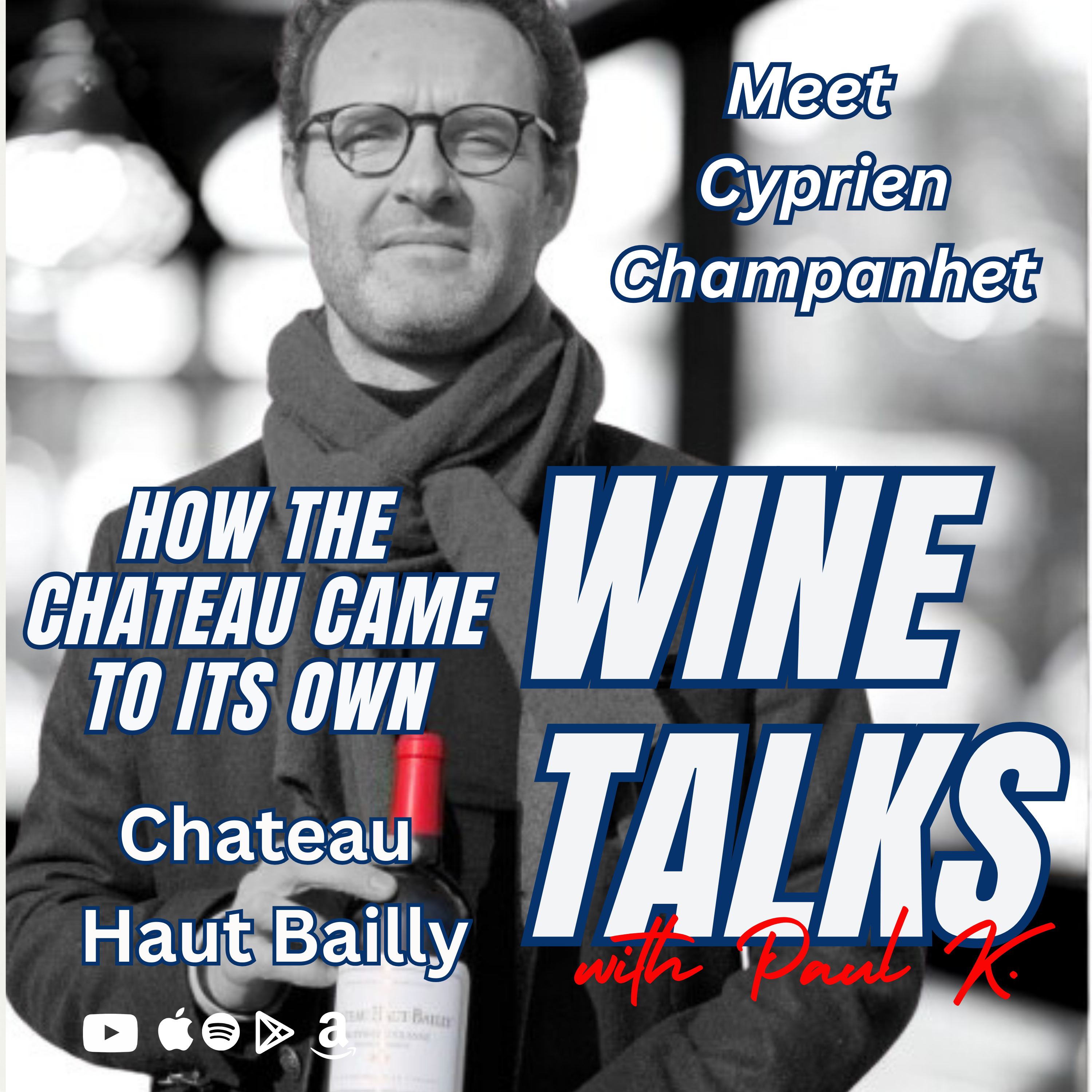
The Evolution of Bordeaux: Old Vines, Climate Change, and the Future of Fine Wine
45m 55s
The conversation emphasizes that wine’s primary purpose is to give pleasure, and that message should be kept simple, even for fine wines like those from Château d’Yquem. Cyprien Champagne, the sales and marketing director, explains that the estate’s approach is driven by a DNA of continuous improvement in quality, hospitality, and relationships, guided by owner Chris Wilmers’ ecological expertise. This sustainability philosophy, termed a “third way,” focuses on biodiversity, carbon impact, and health, avoiding chemical weed or insect killers while maintaining old vines that are more resilient to climate change. Bordeaux has benefited from warmer summers, improving ripeness, but faces spring challenges like frost and mildew. d’Yquem’s style remains consistent over decades, with vintage variations reflecting nature rather than consumer trends, which helps collectors appreciate its authenticity. Education and enotourism are vital to engage younger drinkers, offering personalized visits and experiences that build desire for wine’s emotional and sharing aspects. The industry’s cyclical nature, illustrated by vineyard pullouts that take 15 years to replace, underscores the need for long-term thinking. Ultimately, wine’s emotional and experiential qualities—distinct from other beverages—ensure its enduring appeal despite market fluctuations.
I think the main point is to like or not the wine. Yeah. What pleasure do you have to or emotion do you have to drink it? And this is also the message that has to be delivered by the sum. It's don't make it too complex. Yes. Even with fine wines. They are produced to be drunk and to give you pleasure. Sit back and grab a glass. It's wine talks with all kids. Hey, welcome to Wine Talks with Paul Kay and we are in studio today. Beautiful Southern California January day. And we are going to have a conversation with Cyprian Champagne from Chateau, by E. Hey, have a watch. I just came out with a podcast about winter song. It's a romcom, which I just heard this term romantic comedy. Held in Armenians. The first one ever done. It's in prime video. It's really quite interesting. And I had the whole production crew in here to talk about the production and how it came about. I will listen to that. But not why we're here is good to see you, Cyprian. Again, we met either at the Chateau passing when we were there or maybe here. Maybe here. Yes. To tasting as we are pretty often in the US and pretty often in California. Chateau by E, which we've been there, we've Varonique, the directories. It's been there how long? It's been like 20 years, 30 years or something. Almost 30 years. Yes. But it seems to be on the cutting edge of today's wine environment, particularly when the industry is sort of slow, Bordeaux, Gareth's woes. But you guys are out there shaking the tree all the time. You are traveling all the time. She's traveling all the time. You're going to be in Paris at Vonixpo. I mean, is that the strategy? You're the sales director and marketing communications director? I don't know if it's a strategy, but for sure it's in the DNA of the Chateau to never stay and to always question how to do better, how to improve, how to be more precise, how to improve the quality, how to improve the hospitality also. And that's where we decide everything. So each time we have a decision to make, is it going to improve the quality of the wines, improve the quality of the relationship with our partners, improve the quality of the hospitality, improve the quality of how we welcome people at the Chateau? Is that done as a group, like an aboard meeting type of thing, or is this passing in the vineyard, having conversations, or how these strategies sort of develop? No. So we have a ball meeting. We have the owners, the Wilmer's family, with whom we are discussing very frequently. They are very well involved, I mean in the decisions made at the Chateau. But that's also, I would say, spirit within the team and people joining Obaïe, they immediately embrace that spirit. And I think seeing the other being in that mindset helps you being yourself in that mindset. You see what I mean? Well, he's the teacher, Santa Cruz, or something like that. Chris Wilmer's, who is the chairman of the board and the owner. He's a professor of ecology and environmental science at the University of California in Santa Cruz, absolutely. Well, that would have an influence, wouldn't it, that sort of philosophy that he's bringing around? For sure, it has an influence and it's a great asset for Obaïe because, of course, environmental questions are crucial, particularly since a couple of years and having him helping us, deciding or researching also what is the best way to do it, Obaïe is a great asset. Yeah. Let's talk about that for a second. The sustainability side of things I was thinking about. He says something very interesting that made me trigger this. And this is this idea of Terwar, which, you know, I guess you're starting out learning about wine, you read about terwar, and you sort of grasp this idea of the soil and the earth and the rotation and everything. And then you start thinking a little deeper in that that terwar, of course, part of it has to be the wine maker's philosophy about wine, their history, what they've done, where they've been, that little nuances, little, you know, fermentation techniques or barrel techniques or in the vineyard techniques that start to evolve because of somebody's history can be part of the terwar. But now that thought that you just said reminds me that that terwar also probably starts in the boardroom as well, isn't that part of the energy that's coming from the wine? Yeah, definitely. I think that terwar is a central, I would say, and we are, the terwar remain, and all the people working now at Obaïe will move at some point. So that's why it's key and central. And yeah, so all what we do is to, of course, respect that terwar, but also to try to take the best of it. And it's a mark of respect to do the best from that you see where you're giving. Yeah. So I wonder this whole movement for sustainability, which clearly the owner, being what he does is interested in having, and Bordeaux seems to be one of the spearheads in the wine industry for sustainability. But it was always like that. How long have you been doing this? Have you always sensed that idea of respect for the terwar even when times are tough? Yeah, and that's a good question. I think generally speaking, Bordeaux in the '70s, in the '80s was more in a approach of producing as much as possible. And also at that time, clearly, we were less globally, all of us can choose about all these sustainability and environmental questions. This now, with the 10, 15 years, huge progress have been made, and Bordeaux is really doing extremely well on this point. With different strategies, some being organic or by the enemy, it's not all strategy with the help of Chris Wilmer or owner. We are following a kind of third way, which is trying for any decision made to take into a course the impact on biodiversity, but also the impact of carbon impact and impact on health for the people working in the vineyard, but also for the neighbors, and of course for the consumer. And this is also central. But even in the past, I think sustainability was already a question at Obey. We have never used any wheat killers. We have never used any insect killers. We have a very old vineyard, which means that it's also a way to be sustainable. We mentioned it earlier. Some plots that are one or 20 years old, still alive, still producing, to maintain such an old vineyard. You have to have a sustainability in your approach, necessary. It's interesting, because old vineyards, deeper vines, get their nutrients, you can screw it up for sure by doing these things. Has that made that vineyard, or are these old vineyards a little more resilient to the global climate change? Yeah, that's absolutely it is. It's interesting to see that, or very old vines, they are resisting pretty well to more extreme weather. So what we see is that the yields are generally speaking a bit lower, but much more constant, which means exactly what you mentioned. That old vineyard, this old vineyard is particularly resistant and resilient, and is facing extremely well the more extreme weather we have to face now. This is a brilliant thing I came up with. You have to listen to this very carefully. Yeah. I'm just thinking to you. I can tell myself that in a vineyard like OBE, probably most vineyards in board though, that are earnestly a sustainable bee trying to protect the vineyard and pass it on to the next generation, that mentality, right? That there are no bad ventures. That's a good thing. I think we have no more bad ventures also for two important reasons. First reason is climate change. We are benefiting. It's not politically correct to say that, but we are benefiting from warmer, longer, drier summers, and particularly late-grade vitals such as cabinets of the new that require such warm, long and dry summers, is benefiting from the global warming and these conditions. On the other hand, we are impacted by the climate change, mostly in spring, and we are facing more extreme spring conditions now with higher risk of frost, higher mildew pressure and so on. This longer and better summer would say helps us producing fruits that are riper with
We have a better control of maturity and therefore we can produce a better wine. And the second reason why we have no more bad ventures is that incredible progress have been made in the tools, also important investments have been made in the wineries to vinify more softly and to get a better expertise in vinification. Now here's the ultimate definition. And that is given the way, oh by functions, in the way you have an honest humble approach to what you're doing, that as long as that vintage, that what's in the bottle is representing what you were given. However the grapes came out, however you, with all the experience, it's hard for me to explain this sometimes to people that are learning wine, that it could take a hundred years to understand what you're going to get from this vineyard. Like in other words, it's just experience. You and I can start a vineyard tomorrow but we have no idea what we're going to get, how we're going to get it. But if you represent that vintage, the teoir, the weather, the soil, all the different things that go into a village that you've created an honest expression of that vintage. Yes, and that's clearly a wonderful goal. I mean, we don't want a wine that is standardized and every year the same. And that's a challenge. What we want to do is to have a recognizable style that is constant and some variations around that style that are the reflection of the weather of the year. So it's like in music, you know, you have the theme that is the style of the estate and variations around that theme. And these variations are the reflection of what happened during the year. And we are very happy to have differences from a year to another. And personally, I think it would be boring if you do it. It would be, right. It was every year the same. So that leads into this incision, the marketing sales side. And I literally said that there's a style, the OBE style. So if I'm an OBE fan, I know that I'm going to get in the in the bowels of the OBE, we're trying to create the style that represents OBE. But we are also influenced by the vintage and what things that go on. And I think that's a great way of putting it. But wine is consumer driven. And so years ago, I read an article where this gentleman was lamb-based thing, you know, exercise in the wine trade because we were not going to the consumer asking them what they want. We were only delivering what the vineyard in the taruar gives us, which is what the expression of wine should be, right? But you go to the supermarket and that's what you see. All of the consumer driven wines that seem to have, I'm not sure you can tell the difference between half the wines that are in the shelf because they're all driven towards a formula. And so I'm wondering what I try to wrestle with was, is that consumers or that formula driven wine more prevalent today, 2026 than it was 1985 or 2020, even 20 years ago. Like, is the industry moving more towards consumer driven products, including packaging, and less about an honest class of wine? Or in my opinion, this is my opinion, every generation comes around to understanding what's in our vulnerable Baye. Tough question. Tough question. Tough question. I can answer at least for our category of wine, such as O Baye, classified gross. And I think, of course, we are more than happy when our wines are both and drunk and that's the reason of doing that job for all the team, or raison d'être, it's to produce high qualitative wines that are drunk and that creates emotions and pleasure to the consumer. But on the other hand, with the nature, you cannot really cheat with nature, I think. And we want also to be the reflection of where we are from of the weather of the year and on. And therefore, we cannot just answer what we think the consumer needs are, because we are fully dependent on nature. However, what we see in the recent years is generally speaking, people are less patient to age their wine in their cellar and their less space. And they prefer drinking wines younger than in the past. And it happens that the weather conditions and the progress made in the investigation in the recent years help us to propose wines that are much more approachable in their youth and they weren't the best. But I wouldn't say we have changed significantly our way of making our wines to please some consumers pallets. I wouldn't say so. And I also say that even more as Obeï because Obeï's style is very recognizable and is very constant. And that's something we are very proud of that if you taste the Obeïs at his 10, 20, 30 or 40 years old, you will recognize his same style. And we were not impacted by some trends or other and we are very loyal to Osteine. And that's something in the end that the consumers, the sommeliers and the collectors love with Obeï. He is precisely that's consistency in terms of style and quality, of course. The most poignant, let's say the most obvious, the most rewarding thing that happens with me and my friends who have come to wine over the years is they latch onto the mainstream versions. I'm not going to name any names, but there are many wines of course in Napa Valley and in Paso Robles that people see the label and they've created great branding but they get bored of them because they don't represent anything. They just add sugar or microoxygenate or whatever they do to make this character that is pleasing to the palate to the novice sort of speak. And then when they taste an Obeï or any other classified growth that has character and interest and most importantly the word you used earlier emotion, the light goes on. And I think that's the age and the whole for us. In other words, that is what keeps the wine industry going because of that curiosity in that emotion. Like no other beverage. Yeah, that's true. It doesn't have one beer. Bourbon, right? You know, you get, it's though I do know people that drink the same bourbon every night, every time they go somewhere. But I think this is what, when I read all the pundits and we have to rethink the industry and we have to come up with new language and I'm like, I don't think so. We're just going through this phase. Yeah, exactly. And, yeah, and of course, number one, criteria will be keep doing high qualitative wines. I think it's absolutely necessary and you cannot play with quality. And then it's a matter of education also. And we work hard to educate the younger generation to the pleasure you can find with these fine wines, discovering the differences from a vintage to another, from a vineyard to another, from an appellation to another. And when you put your finger in that discovery, it's an endless story and usually people love it. And education is crucial also. It is endless. And that's maybe that comes circles back to the very first part of our conversation, which is that's why you get on a plane and you fly around and you have these conversations. The very slow industry anyway and then it's even slower to get the wines into the hands of the people that could make a difference for the brand. And you said something earlier, which sort of aligns with the idea that in California, you've pulled up I think 50,000 acres of wines because you cannot predict the changes in the industry. But in wine, you have to think at least five years out as what you're doing. And so all of a sudden, five years out, the market place has changed and you have way too much wine. And what's interesting, I do a lot of business and work with the Armenian wine community because they're what they've done in the short amount of time since technology showed up after the Soviet era is pretty amazing that that the available change. Not unlike the Bordeaux change from the 70s to now, but they have a glut now. Everybody jumped in, they wanted to be part of the industry and they think it's going to make a lot of money and all the rest of it. And I get my own brand and taste my own wine and all that. And all of a sudden, there's not enough drinkers for all the brands, right? And it's very hard to get going. It's always been the case. Let's re-know in Appalachians. You have also a lot of vineyards that are pulling out some vines and so on. And we estimate that in 2060, the market has changed.
After all these vines pulled out, we will go back to the size of the vineyard in the early 80s. Wow, that's really going back. And it reflects also the cycles we were mentioning. It's very sad for those who are obliged to pull out and to reduce the size of their vineyard. But that's life also. Margin is hard enough in this industry and then to have the expense of, you know, to cost money to pull vineyard and start lovrigan. But what you are right about is it's a long-term business. So, each time you take a decision, you have to look forward and very far away forward. And when you pull out vines, you need to wait minimum 15 years before you can get qualitative fruits produced by new plant-advines. So, if you decide to pull out now, you need to estimate what will be the need in 15 years. And how? Yeah, impossible. And also everything that is made in the vineyard will most of the time benefit more to the next generation than to ourselves. So, that's also the beauty of that job. Yes. But the difficulty of that job. We're all just passing through this. You know, one of the things that I thought was very fascinating, particularly with the new OBE tasting room and the experience there. And this patch here, Les Amidevent, was a group in America. There were 150 chapters. My dad had a chapter of the wine shop in that picture. And it was about the experience of wine. Now, you talk about 70s. So, you talk about the judgment of Paris. You talk about prior to that with nobody knew, drank wine. The liquor store, my father bought in 1969 was a liquor store. It was beer, ice, and booze. And a little bit of wine. And he turned it into one of the top five wine shops in Los Angeles by 1975. And Jim Barrett, the owner of Chateau Montalena, would come in. It was a neighbor. And my dad carried the wines. We even carried the 1972 Chardonnay, the year before they won. And because wine was experiential and they'd hold these dinners at the local venues and people would come and they'd be dressed up and Robert Mendovi would speak and all the, you know, even Michael Broadbence spoke. And I think that's coming back. I think it's almost necessary to come back. I think it's part of what build the thought process of wine and the emotion around wine. I think what you've done it all by is amazing for that exact thing. Yeah, you're perfectly right. I think what's wine is also all about sharing. So, I mean, what's nice with wine is sharing the lot with friends, discussing, arguing, and so on. How did that go on? I think what's doing very well in Bordeaux at the moment and Bordeaux was a bit late on this topic is all the wine trism and how we host events and welcome people. And we have opened now the doors of the Chateau. And since 10, 15 years now, big, big progress have been made in Bordeaux for that. And it's a booming activity. And that's the best way to also to re-boost, I would say, to boost the sales and the wine consumption because people are coming. They are seeing where the wine is made, how it is made, where it comes from. They meet the people making the wine. They can enjoy now in a lot of estates, lunch, dinner, or whatever. And that's the case at Obeï and we are welcoming more and more visitors. Always with personalized visits and taking a lot of time with our visitors to explain them to show them around the vineyard, the winery, the Chateau, taste with them some wines and some of them are staying for, also because we have some rooms or are coming for lunch and dinner. And I think that's also a way to recreate some desires about wine. And these experiences are part of the pleasure of drinking wine now. But I think Eno Tourism is up all over. And even with we were going to Ireland in a few months, we're going to drink whiskey. But the idea of visiting a facility that makes libations like that, I think, is part of almost all itineraries. I have coffee every morning at Starbucks, which costs the planning. And so, and everybody, neighborhood, so parents that I've known since, literally days, my kids and all that. So they always stop at the table. And they're always going somewhere and they're always saying where should we visit. And it's always about the winery. Now of course I'm in the wine trade, but it seems like so much of tourism in general is that you want to visit a winery maybe. Now maybe it's like the primary function of your tour. But you want to do it. It's a destination. It's of interest factor. It's something it's something fun to do. So, and Bordeaux never did that. Right. I remember going to Puyac. Not even that long ago, maybe 2015 or 14 and walking down the road. You know, you can't go into the tasting room. Yeah. It's appointment only, but that's changing a lot. A lot. Now almost almost all the shadows are for people dedicated to welcoming visitors to show them around the states. And that's a good thing. And, and this activity is booming in Bordeaux, not only in Bordeaux, but also in Bordeaux. And Bordeaux has so many assets because you have all these shadows, all these various appellations with their specificities. So, city of Bordeaux also is beautiful. You know what that's actually thought. Maybe maybe that is the consumer consumer driven products don't have to be just sugar that wine on the shelf of the Ralph's market. But consumerism can be driven through you know, tourism that's consumer oriented, right? I want to go visit Bordeaux Chateau. And then you get, and then you, then your economics come into play and marketing comes into play. And this is what I mean by that. The original premise of social networking. I did a lot of it at the wine of the month club was and it still is. If one person tells 10 people and they tell 10, they tell 10, they tell 10, they tell 10, they've sold 100,000 people. Now, what about you know tourism? If 10 people show up in a group to taste wine, they go home, they pour wine for 10 of their friends. And all of a sudden, even though they didn't visit this emotion for the experience has been conveyed to them through a dinner or through whatever they're doing. Yeah, definitely. And we retreat any visitors very well also because we think and I'm sure about that, I'm convinced about that, that they are becoming or ambassadors when they go back home. And we want ambassadors to be convinced as well. So we treat people particularly well also for that because we want them to go back home and to tell to their friends, women to buy, we drink amazing wines. We had a beautiful visit, we had a beautiful lunch or whatever. And then these people, they will either buy your wines or come to visit us and it's a way to increase the sense. The trip that we made to Chateau by that, there were 12 people. Now let me tell you something, I did not set out to take 12 people around, you know, not only Monaco for the Grand Prix but Bordeaux in Paris. And not my intention. And I opened my big mouth to my friends, you know, maybe there's two or three couples we love to travel with. But I thought, we're going to Monaco, why don't you come thinking they would say no because Monaco seemed to be very expensive and, you know, what a trip. Well, they all said yes. So I ended up with a sign of 12 people and thank goodness the pop was open, the six rooms we stayed at the Chateau, which is an amazing experience. But the point of that is, every one of the Chateau that we visited, we went to O'Bahee, went to Chateau, Shababrong, we went to Lagrange, there was Angelouz, there was something that happened that if I have dinner with that group which I'm probably going to do tonight, they'll be a comment. Yeah, of one of the events that happened at that Chateau that day, it's always changes whatever people remember at the time. And that's so important about this is this sort of memory and experience that they'll always bring home. Exactly. And also, I mean, drinking wine is always telling a story. And when you've been there and then you're back home, you're open the ball of O'Bahee and you explain to your guests. That you were there, you have met the technical director, you have seen the harvest or you've seen or whatever. It's something plus, I would say, it will not change the taste of the wine, of course. But I think it's part of the wine, telling story, and that's why I come back to what we were discussing earlier with the variations around that theme, with the vintage. It's also we are happy to remember
So what happened during that year, when you open a vintage, it can be the vintage of your wedding or the vintage of your birth of your son or girl or whatever or something happened. And you remember that and then you maybe remember the weather, that was on and so on. And all this is part of the wine. It's an emotion. I will say in my career of tasting every Tuesday for 35 years, unless I was sick or traveling, I tasted wine on the other side of this wall, which amounted to 100,000 wines. One time the taste changed when the price went down. It only happened once, but it did change and for whatever reason. So you, you, you, Vetter and Equ was gracious enough to house, to bring in a young woman from Cornell, Inology School, Lisa, Lisa Kay. She's been on the show. I told you that she, her video in Vetter and Equ is seeing it. I've seen it too. Yes, it did very well in the realm of podcasts, because it made its way around Cornell University. It was a newspaper and all that kind of thing. But is that a typical stagia type thing where you do that at OBE? Is it? We welcome a lot of intents frequently, so we always have every year intents in the final year of a knowledgeist diploma, and they are coming during two or three months during verification. But on top of that, we very frequently open all those to different intents. A lot of them usually, so they come from either Australia, South Africa, here it was California with Lisa, but usually they come from families involved somehow in the wine industry. Right. Right. And very often from producers. So that was funny, because so last summer we had Lisa and just when Lisa left, we had a girl from South Africa coming and and then what is nice is that we have then that community of people all around the world who can talk about OBE, but it's also a nice, nice friends now, friends of OBE, but also personal friends. We can visit, we can discuss about wine and we can go to visit them and they can come back and visit us and so on. So we always welcome people and also because we are happy to share our experience, we are lucky to have this beautiful winery. Now that was built in 2020, that is really, I think, yeah, she's a piece of art. She was very cute and I think if you watch the video, I think I brought it up, I don't remember. But when we first started talking about it, her interest in wine and this probably each intern has their own path, but her interest in wine came because they do have a small vineyard around their home in San Fernando Valley and they made a wine from it. It was a Cabernet field blend, Cabernet and the Merlot and it turned into a small brand. So a couple of things happened with this one. It peaked Lisa's interest. So we sent them to Napa. She interviewed her, had a chance to sit with the female wine maker up there. It's a clear grove and spark her interest. And then when she went to the Inology School, that more than of course, I can't imagine, it probably hard to quantify the impact this internship that Bobaie has on a person like that, right? But what was cute was when she first said she goes, you know, Uncle Paul, I'm not so sure. If I want to do this because they told me I'm going to go in the vineyard. And if I want to be in the vineyard. And I said, look honey, if you don't want to be in the vineyard, you're going to be a wine maker. Exactly. That's what you're going to be. And she goes the first day when the vineyard, and she's, I love the vineyard. Yeah. She did really all the different jobs. So she was in the vineyard. She was in the winery. She was in my team also for the communication marketing, winetrism. She took part to some dinners with sommeliers from Los Angeles, by the way. Yeah. I know the Sebastian was in town. Yeah. Exactly. And it was, it was wet, but you are perfectly right. If you want to work in that industry, at some point you need to go in the vineyard, in the winery, do the things to understand. Even if you are not going to be a vineer, spending time in the vineyard with the people, with the master of sedans is very important. And I personally, so I'm not in the technical part, but when I joined Obey, I spent three months with all this team. I've done the entire harvest, I've done the entire verification of the vintage 2020, which is a very dear to my heart now. But it's, I use that every day in my job. So it's important. And all the members of my team, every year, they spend one or two days harvesting, one or two days in the, in the cellar to make some task for the verification and so on. And I think it's important to keep the link with the production because it's hurtful for a job now. My dad used to say, you know, you've got to, you've got to, I packed wine here, I charged the credit card when I first started with him, you know, I tasted with him. You know, it was kind of interesting when, when he called me, because I'm going to sell the company, I was working a sold software and he says, I've got an offer from the South African wine to the month club. This is 1984, 87 or 88. And I see, he goes, maybe you should come check this place out. And so I came and I packed the wine and I charged the credit cards. And I tasted with him. And then we went to a boarded out tasting in downtown LA and we were separated by different, this is really interesting to me. Different rooms even. Yeah, for sure. It tasted the same 25 wines and it was a classroom type tasting. And we got in the car and he says, tell me your scores. And my scores, the way we scored at wine at the month club was one, two or three. And then I put, I added a hundred points scale after that. But one was no good at any price. Two was just the way it is. We could use the wine in our club and three was, wine was good, but a little overpriced. And we were of the 25 wines, we were only off on two of them. And then he says, I think you're ready and he left and never saw me again. He decided that he was done with this and moved on. You know, we're gonna wrap up here because we're almost done with time here. But you know, there was an interesting phenomenon in the wine trade, particularly in Napa. You know, tasting room traffic is off 30%. And it's because of the cost. And this is what's kind of an undue influence, at least in the Napa Valley, where the hotels are charging the same amount they would if the place was full. But they're not. They're running like 30% occupancy, but they're running with such less costs because they have a skeleton crew, housekeepers and all the rest of it, that now all that's affected is that the industry, the lack of tourism because of the cost of tourism has, the tasting rooms are suffering. And it's a, I'm not sure what the resolve is because the economy is the way it is, but you know, it's a problem. So I think in the point of that is, I just drew this picture of a stool. It's kind of a three-legged stool, right? You have tourism traffic, which is important. And you have wholesale traffic, which is important. And you have direct sales, which are important. How do you guys manage that? Very difficult. Difficult? No, it's difficult. We have, so if you compare with Napa, I think the tourism is up in your opinion. Which is interesting. And the main difference is that when you go, most of the time, when you go to visit Chateau in Bordeaux, you go to the vineyard, you see the cellar, you see the barrel cellar, and then you taste. It's not just a tasting. It's a visit. You see, when I visited a couple of Napa vineyards, and I actually didn't visit vineyards, but I went to tastings. So it's interesting to taste, but that's a really interesting part. But what you want when you go to a vineyard is not only to taste the wine, is to see how it is made. You know the backstage, it's something that people want to see. So that helps a lot. But of course, it takes a lot of time. And on the same time we need to deal with professionals, because that's the same for them. If you want your wine to be listed and a wine list, the best way to do it is to welcome the sommelier to show the sommelier around the estate, taste some wines with him. And then he's marked with the experience, and normally he will buy your wine list, your wine, and then tell his clients, "I went there, and I tasted beautiful wines, but the estate is like this, like this, these are the specificities and so on, and he can be the right ambassador for wines."
So, you know, I was thinking more dumb, but I had to touch on this before I asked you our medical question here. The world of some liaises is an interesting world. And part of the contemporary conversations that occur around wine are changing the language of wine, meaning I think that means trying to remove the aristocracy, right, this not be part of wine. And there are many Psalms that have embraced that that I've met. We were in Palermo, Sicily. And went to the restaurant on the seaside, and I couldn't get over the way the energy and the enthusiasm and the inspiration he was Slavic, Psalm had. It was the best presentation, and anybody whether you're a novice or an experienced person would respect the way this guy respected wine. Then I went to extraordinary port tasting in Beverly Hills, and I had a conversation with the Psalm there. And it was a totally different mentality. It was the old school Psalm mentality where I know and you don't. And I think that's part of it, like I said, aristocracy of wine. Yeah. I think you have good and bad Psalms everywhere. I guess that's a bad wine. But where I agree with you is people sometimes are afraid of not comfortable with wine, with all this ceremony or some too many technical things. I think the main point is to you like or not the wine, what pleasure you have to or emotion you have to drink it. And this is also the message that has to be delivered by the Psalm. Don't make it to complex. Even with fine wines, they are produced to be drunk and to give you pleasure. So let's go with that. It's a pleasure, it's a pleasure product. It's before being a technical product. It's a pleasure product. That's a good point. Maybe I was just inspired by this. It's a lot of a guy who's I even gave him a separate tip. I said, that was that was so fun to watch. All right. This is a book called Wine is the best medicine. It's written by Dr. E. A. Murray. This is from 1974. He was a medical doctor in France and he was also a homeopathic doctor. And so he took a bunch of human ailments and wrote around based on the, I don't know, I guess the chemical, the chemical breakdown of a glass of wine from a different region. And fortunately for you, they're all French wines. Good. Because he's a French doctor. So I'm going to give you a human ailment. I'm going to give you three choices of a red wine or white wine that could solve the problem. All right. Now, just so you understand, there's no pressure. Because on the average 66% of the people get it wrong because it's just because it's three options. Okay. So we're going to go with nervous depression. Okay. Okay. In fact, he writes, we cannot ignore the great disease of this country. This is him. This is France. You guys were nervously depressed. Would you have a champagne, a coat of bone or a Medocch red? And why? This is like the master of wine, didn't you? Why would you choose that? Yeah. So I would choose a coat of the bone. And the reason why is a historic origin, not because of the specificity of the wine, because I think this wines from Burgundy at the time of the kingdom in France, they were renowned for keeping you in good health and in good mental health. Oh, wow. That's a good choice. And they were given to the kings to maintain their good mentality. Well, I'm sorry. You're part of the 66%. Yeah. Sorry. It was the Medocch. See, I set you guys up. Is the Medocch? Yeah, when I had to take Tangerine here, the answer was a champagne. But it's, I'll tell you why. It says the Red Medocch wine. It says, because the glycerin, it contains combines in the intestine with the phosphates of the fermented grape juice to form glycerol phosphates of natural lime, which have tonic virtues, in which you're not interviewed with the functionality integrity of the nervous system. All right. I've done something. Yeah. I know they're a good reason to drink a bottle of wine. That's right. And the dosage is, do I think that what, how much should we have? It looks like a bottle a day. So there's one or two glasses before and during meals. So that means, no, less than the bottle a day, because we consider only two meals in from just lunch and dinner. Okay. So four glasses. So four glasses. Yeah. Can't have it a breakfast. Yeah. You're calm. It's such a pleasure. How are you guys here? Thank you very much. I really appreciate it. Are you going to be in Paris, the Von Expo? For one Paris, absolutely. One Paris, the Ville-Oniq, Ville-Oniq, Sonders, or present will be there. Gabriel Viennach, or technical lighter will be there. Okay. I'll go visit. So come and visit us. And Monsieur Van Beek, the Chateau-Gis-Cours, will be there. Of course he will be there, of course. I've got to keep an eye on his wife. Yeah. I should keep an eye on you. Yeah, that's right. Thanks for coming. Cheers. Thank you very much. You are very happy to be there.
Podcast Summary
Key Points:
The core message of wine is pleasure and emotion; it should not be made overly complex.
Château d’Yquem’s strategy is rooted in a DNA of constant improvement in quality, hospitality, and relationships.
The owner, Chris Wilmers, an ecology professor, influences a “third way” sustainability approach focused on biodiversity, carbon impact, and health.
Old vines are more resilient to climate change, offering consistent yields despite extreme weather.
Bordeaux has benefited from warmer summers but faces challenges like spring frosts; better winemaking tools and techniques have eliminated bad vintages.
d’Yquem aims for a recognizable, consistent style with vintage variations, avoiding standardization to please consumer trends.
Education and enotourism are crucial for reconnecting younger generations with fine wine’s diversity and emotional value.
The wine industry is cyclical; vineyard pullouts now will impact supply 15 years later, reflecting long-term planning challenges.
Summary:
The conversation emphasizes that wine’s primary purpose is to give pleasure, and that message should be kept simple, even for fine wines like those from Château d’Yquem. Cyprien Champagne, the sales and marketing director, explains that the estate’s approach is driven by a DNA of continuous improvement in quality, hospitality, and relationships, guided by owner Chris Wilmers’ ecological expertise. This sustainability philosophy, termed a “third way,” focuses on biodiversity, carbon impact, and health, avoiding chemical weed or insect killers while maintaining old vines that are more resilient to climate change.
Bordeaux has benefited from warmer summers, improving ripeness, but faces spring challenges like frost and mildew. d’Yquem’s style remains consistent over decades, with vintage variations reflecting nature rather than consumer trends, which helps collectors appreciate its authenticity. Education and enotourism are vital to engage younger drinkers, offering personalized visits and experiences that build desire for wine’s emotional and sharing aspects.
The industry’s cyclical nature, illustrated by vineyard pullouts that take 15 years to replace, underscores the need for long-term thinking. Ultimately, wine’s emotional and experiential qualities—distinct from other beverages—ensure its enduring appeal despite market fluctuations.
FAQs
The main philosophy is that wine is meant to be enjoyed and give pleasure, not overcomplicated. The estate focuses on quality, sustainability, and expressing the terroir.
They follow a 'third way' that considers biodiversity, carbon impact, health of workers and neighbors, and consumers. They have never used weed killers or insecticides and maintain very old vineyards.
Old vines resist extreme weather better, with lower but more constant yields. This makes them particularly resilient to the more extreme conditions caused by climate change.
Warmer, longer summers benefit late-ripening grapes like Cabernet Sauvignon, but spring conditions are more extreme with higher frost and mildew risks. Overall, better control of maturity has improved wine quality.
No, they remain loyal to their consistent, recognizable style and do not follow trends. They aim for a constant style with vintage variations, not standardized wines.
They emphasize the pleasure of discovering differences between vintages, vineyards, and appellations. They also welcome visitors for personalized tours and tastings to create desire and understanding.
Chat with AI
Loading...
Pro features
Go deeper with this episode
Unlock creator-grade tools that turn any transcript into show notes and subtitle files.
 PodcastTranscript AI