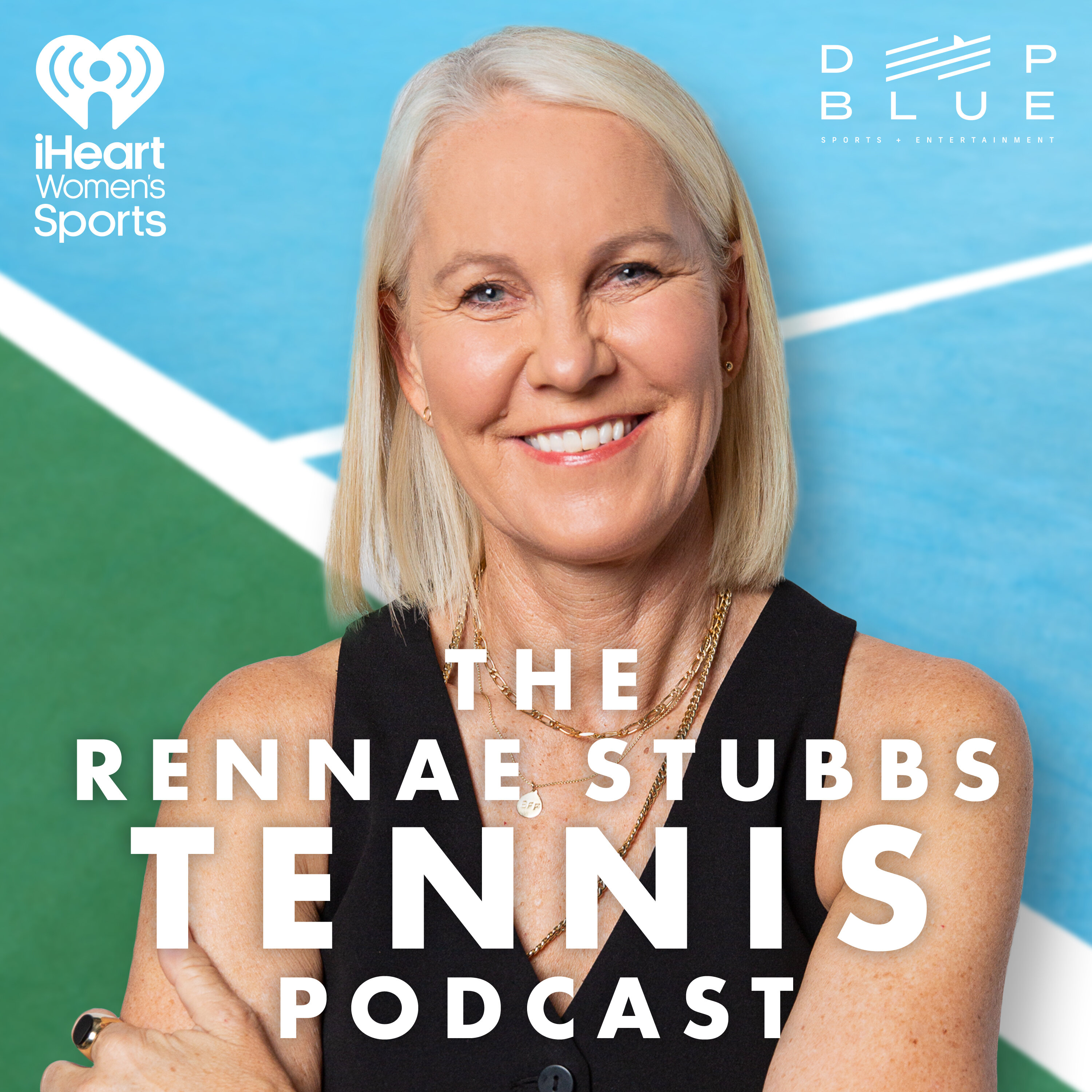
This transcript features a podcast episode centered on tennis, hosted by Renee and Caitlin, interspersed with promotional segments for other shows. Renee begins by discussing her vacation, where she pivoted from Southwest France to Southeast France due to extreme heat, spending most of her time playing tennis. The conversation shifts to the challenges of finding free tennis courts in New York City, with Renee noting the scarcity and long waits, and both hosts embrace "gap keeping" to protect hidden spots. They argue that tennis's growing popularity, driven by recreational players, demands more public facilities and innovative programs, such as public-private partnerships that reserve courts for kids. They praise the USTA's coaching initiatives under Craig Tiley, which aim to expand access beyond expensive private clubs. The hosts then highlight the phenomenon of Alex Yala, whose success has energized Filipino communities and diverse audiences, drawing comparisons to Simona Halep's appeal to Romanians. They discuss how Yala's matches create intense, partisan atmospheres that challenge opponents, citing examples like Bencic's resilience and Pegula's struggles. Ultimately, they see Yala as a catalyst for growing the sport, inspiring new fans and players worldwide. The episode concludes with a break, and the hosts promise to continue discussing recent tennis matches, while also promoting the "Podlandia" rewatch podcast with its creators.
This is an I Heart podcast. Guaranteed Human. Hey Portlandia fans. Carrie Brown seen in Fred Armason here. The Dream of the 90s is alive in podcast form. We're launching Podlandia AO rewatch. Our brand new podcast where we revisit every episode of Portlandia together. Breaking down sketches, going deep on our iconic characters and pulling back the curtain on how it all got made. And we'll also be joined by the people who helped bring it all to life. Guest stars, collaborators and friends, including director Jonathan Chrysel, the mayor himself Kyle McLaughlin, legendary musician Amy Mann and many more. Kyle is going for it here. You fully improvise not just words but a song about it. I thought you were all going to write a song. I remember you thinking that. Listen to Podlandia AO rewatch on the I Heart Radio app, Apple Podcasts or wherever you get your podcasts. On Solita, we share the messy reality of traveling alone as a woman. Your Duolingo is not going to come back to you when a man is inside of you. Oh no! I'm Julie Pinero and I travel by myself because it's a rare space where I can say yes without asking anyone else first. I'm on a mission to reclaim the word Solita, trading the pity for possibility. Listen to Solita on the I Heart Radio app, Apple Podcasts or wherever you get your podcasts. Hey, this is Hayes Davenport. And Sean Clements. We host the podcast Hollywood Handbook. Every episode we're trying to help our guests improve their careers by mainly focusing on how they can help us improve our careers. The show is famously super accessible so you can easily jump into any of our 650 episodes and understand what's going on. We recommend some of our recent episodes with Ben Stiller, Danny McBride, Riz Ahmed and Mary Steenberg. Listen to Hollywood Handbook on the I Heart Radio app, Apple Podcasts or wherever you get your podcasts. This is Chelsea Hamler from Dear Chelsea. Every week the news gets worse. The world gets crazier and Yamannika is here to tell whoever's responsible you're the problem. Do you know I just found out who Sidney Swini was? If he got a bunch of women, then I should have a bunch of men. Do better or do less so I don't have to do so much. I'm Yamannika and I'm out. Listen to you're the problem with Yamannika on the I Heart Radio app, Apple Podcasts or wherever you get your podcasts. [Music] Welcome to the Renee Stopstanders Podcast. We have Caitlin back. Ah, thank God, because listen. I'm back. You might think that I like the sound of my voice but talking for 40 minutes nonstop without a break. It's not my favorite thing to do. Well, you did it beautifully and you had firsthand accounts of what was going down in DC. I really enjoyed the episode. I listened to it while I was away. Yes, where were you? Let everybody know that Europe is on fire so you didn't go to where you were supposed to go because there's this thing called global warming and warning. And you had to pivot, as they say. We pivoted. We went from Southwest France to Southeast France where I played tennis. Six out of seven days. And it was hot, but it was amazing. It's so funny. I think about vacation and literally the last thing on my mind when I go vacationing is where can I play tennis? Although, Renee, to be fair, you just seemed to be out east where. Correct me if I'm wrong. Social media captured you on a tennis court playing tennis. Is that true or untrue? It's very true. I will say this, I like hitting tennis balls as long as I'm not doing all the running. So it's when I play tennis, I like to play with people that are actually half decent. And so I get a bit of a hit and a little bit of a workout myself. I don't not like playing tennis. I like playing tennis. I don't want to necessarily travel an hour or. And we live in New York City. It's not easy to get a court. And I just saw a. I don't know, a tennis influencer or something. I don't know what came on my algorithm, but she was going to play tennis on the Westside Highway. I can't remember this person's name and if I could, I would say it because I thought it was funny. But she said, "I am fifth in line." The thing is, it was like 9pm at night on the Westside Highway. So that means I'll probably get on the court around midnight. And good for her, she did. That's how hard it is to get a tennis court for free in New York City. Caitlin, do not tell the people where you can get on the court's a little bit quicker, okay, for free. We don't need that happening. Gap keeping is back. Influencer, the influencer economy is dying. Gap keeping is back. Everyone realizes that having your favorite noodle spot, massage spot, massage spot, tennis spot, overrun with strangers on the internet so that everything becomes a line and an excuse for people to take a selfie in front of it is actually a bad experience. And not very good for the businesses and the facilities involved. Gap keeping is cool again and it's not hard to figure out where you and I play tennis in and around New York City. But I implore the city, the state and our USDA to build more tennis courts. Demand is only increasing. The tennis economy is expected to pick up from $6 billion to $16 billion total addressable market value in the next couple of years. Tennis is not going away. Recreational tennis is driving all of it. As much as these matches in this pro game and the ticket sales and the viewership and all of this is increasing, which is fantastic. Tennis has been under optimized for a really long time. And now the recreational players who expect much less friction to watch, to play, to have access to their new or returning favorite sport, isn't going to cut it anymore. So to me, this is like the revolution I've sort of been waiting for. And when I started a racket 10 years ago, it was one that I sort of anticipated. And frankly, it took longer than I thought it would, but I'm delighted it's here because people picking up brackets are making the sport change and improve. And you know, whether the sport at the top echelons wants to, wants to bend to their will doesn't matter because sooner or later they will have to. And included in that is making more access to tennis courts. It's less of an issue in other countries, although it persists in other countries. But in the States, along the coasts, especially where a lot of this recreational tennis is happening, we just don't have enough facilities or the ones that exist are too expensive or hard to get onto. So let's fix it. Shall we? Do you think that there's an opportunity in, you know, major cities like the one we live in in New York that you could have a tennis court that is almost designated as well as a public court, but only for kids at certain hours. Totally. Yeah. I mean, I think a lot of the public private partnerships that are a staple of the New York City public courts mandate that the afternoons be for high school tennis because a lot of these high schools don't have tennis facilities. Junior tennis programs, if you're going to McCarran Park, for example, in Williamsburg public court, really, really improved by the presence of the public and private partnership that the McCarran Park charitable arm and local community organizers, which have repaved it, they've lighted it and they've provided for a lot of fundraising opportunities. And in the afternoons, certainly during the school year, all of their courts are taken up by kids having lessons. So yeah, I think there's all sorts of cool ways in which the tennis world is going to be pressured to provide more value to recreational tennis players. And I think that's a great thing. Tennis is not meant to be played only by people behind closed doors and in country clubs. It's a public chain link fence sport, at least that's the one I remember and grew up playing. So, you know, and I know you did too. So for me, it's a long overdue change and I think that idea is a great one. And as I tap on my mic, Craig Tiley, can you hear us? Right? I mean, this is sort of, you know, one of the things that he said is that, you know, in his introductory speech is talking about the importance of coaches and it is so important. And I think that there is an opportunity out there for a company or, you know, certainly the USDA to really start implementing that in cities for kids to play tennis. We see it with basketball courts, you know, these kids can go on a basketball court as long as they have a basketball they can play. And so it's really important that we open up, you know, the availability for young kids to play tennis because then it becomes a lifelong sport. I mean, look at your son, he's a perfect example, you know, wasn't really into tennis, right? When he was younger? Now he loves it. He loves it. I can't play with him enough. The first thing you wanted to do when we got back was get on our public court and play and he was, he would have played for four hours with me yesterday. Yeah, you're right. I think the USDA seems to be indicating under Craig's leadership that this is, you know, going to be a priority, especially with all the resources they've been putting into USDA coaching, which is meant to basically increase the pool of who can be a coach, parents, teachers, PE administrators in schools. Tennis doesn't have to just be taught by very expensive private coaches in very expensive and exclusive private clubs and academies. It can and should be taught at least in the early days by parents who maybe need a little bit of help with resources or community activists who can pull together groups, you know, I'm lucky enough to know some of those people. And I think what the USDA coaching folks have been up to since they started within the last 18 months is encouraging. We'll see, you know, what the overall impact is. But I think the goal here is to grow this sport because we know it's the one that you can play for the whole of your life. It's the one that increases your life expectancy. It's the one that keeps dementia and immobility at bay. You know, there's so many attributes that people who listen to this show are not going to be surprised to learn because we've talked about them over and over and over again. But that doesn't make them any less true. So for me, it's really incumbent upon the leadership to not just think how.
How can we make more money with the big events that we have or how can we create more American champions or European champions or Asian champions or Middle Eastern champions whoever reflects a big market? That all is important, but actually most important is that people fall in love with this sport in many, many different ways and pick up a racket when they're so inclined and find it easy to find a place to play it and a way to watch it. And those are still things that are too hard. Well, I have to say with this Alex Yala rise, how many people can you imagine, like how many kids, young kids of Filipino descent that live in the United States? And I can tell you, there are a lot, even in the tri-state area of New York City, New Jersey and everything. It's like, this is an opportunity to grow. There's not one young Filipino child kid that comprehends what they're watching from five years of age, six, seven, eight to ten that is not obsessed with Alex Yala right now. Every single Filipino descent person that I know has texted me or has written me on Instagram is like, we love her. This is amazing. So it's like, here's an opportunity to grow such an enormous amount of, you know, people that live in this country that are watching this phenomenon of Alex Yala to pick up a tennis racket. And once you start playing tennis and as your son is a great example of that, they start to love it. And when you get a little bit better at something, it's kind of like skiing or any sport that you play, once you start getting golf, once you start getting a little bit better at it, you want to get even better at it. Yeah. And I say, you know, playing professional sports is legal addiction, but sports is legal addiction because you do get addicted to it. Whatever sport, I mean, even me with paddle when I played it for that first time with you or Padel or however, how we call it. I was like, I'm the first one. I'm the first one. This is great. Like, I, yeah, paddle. And once you get better at paddle or something new, the interest compounds, you get better, you want to play more, playing more, makes you even better and so on and so forth. And I just love, I love hearing you talk about Alex Yala last week. I love the fact that you got to watch her win up close in DC. And also I love the way that in some cases and kudos to my fellow Canadians at the Toronto Open, the NBA, the national bank open, who have been really embracing it, who have been serving lumpia and chicken and dobo on site, which is so cool. And they keep selling out. Toronto is one of the great food towns of in the world and shadow to Toronto's South Asian food scene already. And the fact that they're leaning into local purveyors to match demand with a 10D demand is awesome. Yeah. I mean, I can't keep enough lumpia, you know, in stock. And I think that is just such a cool thing about tennis because again, it brings all these different parts of the world together. It travels across the world. And who knows? I mean, if Alex Yala has anything to say and if, if Lena or Chinwin Zheng or some of the other Chinese players had a huge impact in bringing tournaments to that part of the world, maybe we'll, maybe it's not crazy to think, you know, we'll see a 250, 500 maybe even a thousand in Monilla, you know, before too long. That to me is what is amazing about tennis. And I am so thrilled and I want to see it continue. Yeah. I mean, we cannot talk enough about the international part of the sport that we love so much. And, you know, when you're listening to particularly in Canada that has a lot of, oh, in the United States as well. And I would argue Australia, you know, when we've had so many tumultuous things happen in the world through the last 50 years and the immigration of so many people into other countries in notably Canada, America and Australia, for example, where we talk about the land of opportunity and all that sort of stuff. And if you're in a war, to one country or in a country that is facing economically, you know, socially, economically, disaster or whatever it is, where you seek some way to go to. And Canada is a, is a well, very much a welcoming, as you know, a very welcoming country. And they're, you know, the different immigrants that are enormous. So whenever you do go and plan to run or Montreal, wherever you go, the support, the support for certain players is off the charts. And I remember so vividly, and I was asked this question last week and you might remember it, is there anything like Alexiella that you've experienced as far as a player all around the world? And I would say Simone Hallop was very close to that in Canada. She had this enormous amount of Romanian support there because a lot of, apparently, a lot of Romanians when, you know, when they were having tumultuous time left running. Yeah, true. And there's a ton of Romanians. Massive amounts. I know in Australia, for example, I played Marianne Luchich and the Croatian fans that came out to watch her. And I was like, where am I? Am I in Australia? I mean, it was crazy. And of course, Alexiella. And it's one of the things that I mentioned and you would have heard in the podcast last week. I was like, when you know you're playing Alexiella, you're not just playing a very, very good player. You're playing against, I would say, objectively, 70% of people that are coming to watch her match are going to be fully against you. I mean, the match the other night with, or last night with Benchich was like, Benchich would play a great point. It was like crickets. And that is very unusual for even in Canada because they're usually very fair. You know, they're usually quite supportive of both players and they like to see good tennis. But it was like, I would say 80% of the crowd were for Alexiella and maybe even more. And so when you go up against a player like that, you have to mentally prepare yourself for the onslaught of fans and even last night with Andrej Peckovich and the commentators, they were saying it's like they don't really understand the sport of tennis yet because they're so new to it because of this phenomenon of Alexiella. So they're kind of like, they're screaming at times when they sort of like, hold on a second in the middle of the point, they're getting very excited. And I have to say even in China when I went there for the first time and they hadn't had tennis there professionally and even the Olympics, it was like they didn't understand tennis etiquette that much, right? So they would like scream out in the middle of the point or they would say stuff in between first and second serves and it was just like, oh my god, like they don't understand the etiquette of tennis. And I'm all for the excitement. Like there's nothing more exciting than what we're getting every time she walks on the court. I mean, Katie McNally said to her after the match, thank you for letting me be a part of this. That's cool. That's who I am. You know, like, so, you know, even the tennis players would have been out here a long time on realizing this is an atmosphere that you probably have never played in front of, ever, except if maybe we're talking like maybe Serena in New York the last time she played there or like what, you know, all the opponents that played her at the US open that last time experience, that is what you're getting every time you play at Alexiella. So you have to be mentally prepared to deal with that when you go out in the court against her. And Benchitch, I got to give her a lot of credit. Last night she was teetering. She was teetering on and Benchitch's matured a ton since becoming a mom. She probably would have lost that match, you know, five years ago because she would have let that crowd get to her and she would have like kind of checked out. And Jessica Buggola checked out in the finals in Washington. She was just like, I can't deal with this. You know, and she wasn't playing that well. Definitely wasn't playing as good as she was on the Sunday. She did not play well on the Monday. She was dealing with the strings and all this sort of stuff. But she checked out mentally and Benchitch, I got to give her a lot of credit, did not check out last night. She hung in there and hung in there and hung in there and then especially after such a tough match, the previous one. So, but just, you know, to go back to our original conversation, Alexiella is going to bring so many young kids to the sport of tennis and that is only going to make this sport grow even more. Anyway, let's take a quick break because I want to get back, Caitlyn and talk about all the tennis that we've been seeing over the last week. Hey, Portlandia fans. Carrie Brown's seen in Fred Armason here. You know us or rather you know them. Tony and Candace, Nina and Lance, Spike and yes, the chicken. We've played a lot of iconic characters over the years, but today we're showing up as ourselves to tell you about Podlandia, AO Rewatch, our brand new podcast. Each week we'll revisit an episode of Portlandia from the very beginning, breaking down the sketches, exploring the back stories of our most iconic characters, revisiting the Portland locations you know and love and opening up about our creative process. How did any of this get made? Why do you think that was a good idea? We're ready to talk about it. Guest stars, collaborators and friends, including director Jonathan Kreisel, the mayor himself, Kyle McGlocklin, legendary musician Amy Mann and many more. You fully improvise not just words, but a song about it. I thought he was going to write. Listen to Podlandia, AO Rewatch on the I Heart Radio app, Apple Podcasts or wherever you get your podcasts. On Solita, we share the messy stories of traveling alone as a woman. I'm Julie Pinieto and I travel by myself because it's a rare space where I can say yes without asking anyone else first. Every time I try to be alone, I kept meeting people and they were like, "You smiled at us, not a lot of people smile around here." I can wait four hours for the next bus or this random dude is offering me a ride on his motorcycle. It's when you're alone that you're most receptive to the world as it is and not the lies you're sold about it. So whether you're a solo travel veteran or you're too nervous to book your first trip, I hope you listen to Solita.
on the iHeartRadio app, Apple Podcasts, or wherever you get your podcasts. And Sean Clements. We recommend some of our recent episodes with Ben Stiller. The definition of what is a movie is kind of changed in the end. What do you think it is now? It's images and words being spoken captured by some sort of technology. Danny McBride, you love Kovah. Oh, that's fantastic. Can you make it on, you make your own? That's great. I call him Tero Reed. It's a good name. They're all named after cast members of American Pied. Yeah, I call. I never looked up if she was in this, but I call him Leachie Sobiaski. Yeah, I don't think she was an American Pied, but I just haven't looked at her. She was prominent in the same time. Yeah, than Mary Steenberg. Why are you guys talking to me? I'm wearing the Shandle movie. I'm wearing the Shandle movie so down to me that you think I don't understand your little play, play game. I just really, I'm trying to set you up for success here. Listen to Hollywood Handbook on the I Heart Radio app Apple Podcast or wherever you get your podcasts. I'm Nick Tertorrell. You probably know me from NYPD Blue, the longest shot, or Spike Lee's Black Plansman, but I'm also from Queens, which means I know pizza. And on my new podcast, "Delivering Happiness with Nick Tertorrell," I deliver pizza from "Prince Street Pizza" to a new guest. We deliver pizza now? Then we sit down for a real conversation. I've shared a slice with everyone from Seth Rollins. What are you doing on the belt? To Alex Rodriguez. Just let you people know we're talking to one of the goats here. To Bill Burr. I don't think I've ever met somebody so exactly out of their mind as I am. And now we even have more great guests coming up, including the great John Tertorrell. It's called Happiness, Delivering Happiness. Mariano Rivera. -I'm so glad you're on that. -And many, many more. Open your free I Heart Radio app. Search Delivering Happiness with Nick Tertorrell. And listen now. Okay, so let's get into a bit of the tennis. We already talked about the Yala Benchich match from last night, but you've been watching a lot of the dudes play. I know one of your favorite places in the world Montreal. Just give me your thoughts on what you've seen so far. And sort of like, you know, the people haven't heard from you, Caitlin. I mean, yeah, where do I start? So Montreal is my hometown. I got to go up there a few weeks ago to do a piece about the public art that pervades the city that has been a real big flavor of Montreal for the last really 20 years. And how tennis Montreal, which is the tennis Canada's local governing body, has commissioned portraits of its local stars and painted them in all these free facilities around town. And just like what we're talking about the top of the show with access being an issue, Montreal is a very non-capitalistic city. It's about art. It's about gathering. It's not about property. It's about community. And because of that, I mean, that's just somewhat true of Toronto, but more so of Montreal. Because of that, you can walk into a public tennis court and hit against a backboard painted with Gabe Diallo, with Leila Fernandez, with Victoria Emboco, with Felix Ojele, a seam face on it. And it just brings a real vitality to it. We just posted a story today on how beautiful these images are. And if you happen to be up in Montreal this week, I'll be there for a day or two having a party to release a scene that we did with some amazing stories about some of these local players. And of course, these beautiful murals. But to me, you know, it's a little grungy. It's a little gritty. I like it very much. It's a little less sort of polished and corporate than Toronto, even though obviously that city and that tournament is a sister tournament to the Montreal one. And yeah, I've been watching the men. We have a big story forthcoming on Yaku Munchik. That'll be out next week. He's in the next print issue of the magazine. Some incredible photos done by Sydney Golic. And I got called Lucas Juan Peterson sat down with him in Indian Wells. And he's so charismatic and cool and funny. And I just really can't get enough of Yaku Munchik. And so I've been excited to watch him. He's got Ben Shelton next who's also looked really good. Obviously hard courts are, you know, just by the fact that he won a clay 500 and a grass, 500 this year, which was a huge accomplishment. I think it would be crazy to say that natural surfaces are his preferred. He's back where he wants to be on hard court in front of North American fans. And, you know, this is the Ben Shelton that I think a lot of us have been excited to watch watching him take out Jouel, Funchika. Yesterday was a great, exciting moment. Jouel hasn't had a great season, but still then getting energy from the crowd, feeding off of it, playing for a strike tennis, was exciting. And, you know, we also have a great showing from Learner Tien who's kind of flying under the radar as he does. So for me, the matchups have been really interesting. We have to, I think, Renee, when we're talking about the men address the elephant in the room. And I am not mad about this elephant, but we have to talk about it. I know. We're going to have to talk about our presence in our pulling out. But I sort of want to make that a little bit of a, a little bit more of a longer conversation. So let's, let's like, because it deserves, it deserves its own little conversation. I want to sort of just touch upon some of the players that are playing and we touch upon Ben. I think he has a little bit, yes, he did win those tournaments. But, you know, what I watched last week in Washington was a little disappointing as far as like not getting the job done, particularly when he had a break. A couple of times just to be able to serve out a match and win it, he was a little bit disappointed with that. But what I saw last night, particularly, and I'm assuming you watched the match that three two game in the second set was bananas. It was bananas. It was like, I mean, I don't know what happened with Fonseca with the little, whatever happened to his ankle or foot there. He sort of looked a little funky when he sort of put his hand down there. So you wonder if that, you know, just bothered him because that was in that game and that game was super important. Because clearly you don't want to give a Ben an opportunity to get back into the second set, which he did by losing that game. But it was really interesting because these are two really big fun young players, you know, and they're going to play against each other a lot of times. And so for me, now it's what is the next for Ben after such a great match, such excitement, and now having to dig in and see because this is an opportunity before we get to the Alcarazans in a conversation, this is an opportunity for somebody to start winning these tournaments and say, okay, am I the third guy? Do you know what I mean? Like winning a Canada and then going to Cincinnati and winning those tournaments because neither of them are going to be there again. So this is a time to say, okay, there's no more excuses guys. The two best players in the world are not playing. So who's going to step up to the plate? Is it going to be an Arthur Feast who of course is playing great tennis as well now and back from injury? And is it going to be a Ben Sheldon? Is it going to be a Yiri Lahedska? Is it going to be, well, it's not because he lost a Hoda, but like Rafa Hoda, I said in the last week and, you know, of course they, these stupid little internet social media platforms that grab one liner from me and just blow it up on big head like, Hoda is going to be, yeah, I mean, I really do think that Rafael Hoda at his age is a player that is going to start knocking on the door to win these big tournaments. And if he can step up Hoda or Ben or Arthur Feast, those are the three I kind of throw into this mix, which or learn it to end, which one of these guys is going to step up and say, I'm going to win the Masters 1000s because I want to set my level to be at a pace that I can compete with the Yannick Sinners and the Alcarazas when they're healthy. Yeah, I mean, I think that's to me extremely dramatic and I think what I like so much about the field we're seeing right now is that they're a varied and interesting group. Like, learner Chen is fast and the lefty speed and angle combo, Yuri Lahedska kind of reminds me a little bit of a Spanish stalwart, you know, he's not going to take too many risks, but also he's not going to fade away kind of in the mix in a way that maybe he's going to hit the guy. He's kind of like plays a little bit like Burtik. He's a little like a little little bit like Burtik, but maybe Pablo Cranibuzza better. Oh, that's who he reminds me of, Pablo Cranibuzza. Okay, to me, the feels very check to me. Feast is such a such an exciting incredible, you know, ball of energy and swag. I personally like him the most, not just because he's French, but also just the spirit of it. You know, I mentioned Yakub Munchik, you know, he won Miami last year and that wasn't a fluke and I think he's backing it up with a pretty good season this year. He's had a couple not quite over the hump kind of draws, but to me, he's dangerous and certainly a possibility to be that third guy. It does bear mentioning that Zvera, who is often discussed is that they're a guy and often ranked is that they're a guy found another way to lose this time to talent Greeks for and of course blame the balls. So just quick note on it's never Zvera's play. It's always the balls or the conditions or maybe the umpires or, you know, whatever it is. I mean, listen, everybody knows how we feel, right? Even he knows because he told me in Australia, he goes, well, I know how you guys feel about me. So obviously he's paying attention to social media, he's paying attention to what's going on. And you know, Kudos to him to when the winning the French open played fantastic tennis deserved to win the tournament in the end. You have to beat your opponent. Did he beat Yarnik? Did he beat Alcras? No, but guess what? No one's going to remember that in 20 years time. Everyone's going to say he's a winner of
Well, because he's never going to win another one. Well, because he's going to win one major, but he's won one. It's more than you and I have ever done. But every time he loses, as you said, there's always a friggin' excuse. It's like, have you ever heard Raphael Nadal or Novak Djokovic or Roger Federer or Serena Williams complain about the balls? And that's the reason why they lost. I mean, what are we doing here? Yes, the balls are very different. But both players have to hit with the balls. Every single player knows. When you come from Wimbledon, where the balls are heavier, the conditions are completely different. It's a completely different ball. It's a dumb up ball and everybody knows they're heavy and they don't fly through the air. Although they've flown through the air a little bit more over the last few years, it's because it's been hot as balls and Wimbledon. But, you know, you don't have that dampness and where you do get the balls kind of get a little bit heavier. But everyone knows the balls fly. When you go to the United States or you go to Canada, the balls are Wilson. They're going to fly through the air differently. And if you kind of just so that, then you need to get yourself to the United States earlier or to Canada earlier and start practicing longer. Because yes, the balls are fully different and everybody knows that. And so you have to be able to be aggressive with the ball, go after it, which is why Creeksball beat him. It was just a more aggressive player. 100% agree. So I think for me, the third man, as it were, I'm excited for the crop. I think we've got some really interesting faces, styles of play, different levels of drip and swag. But enough that it's interesting and varied. And I hope whoever lifts the trophy this week in Montreal in the next two weeks in Cincinnati, maybe even who knows the Osopin, which I know we're going to talk about a little bit, just for vis-a-vis who's looking to be in the player field. I hope it's somebody who doesn't make complaints. Because, well, you know. Look at the list. As Billie Jean King lays to say, you know, champions adjust. Exactly. That's my point. So you know that. So get your strings tied. I get whatever it is. We've all been there. I know exactly how that ball feels after coming from London. And it does fly. And some players love it. And some players hate it. And you need to adjust to it somehow. But I can tell you one thing. When Rafa or Roger or Novak or any great player has lost in Canada, they haven't blamed the fucking balls. Because guess what? They know what the balls are. They're Wilson. They're different. So I'm excited. Montreal, the quarter final lineup, Caitlin. This is the age of the players. 25. Brandon Nashashima. Darderi. 24. Ben Shelton. 23. Arthur Fees. 22. Merida. 21. Menshik. 20. Loner T.N. 20. Raphael Choddah. 19. This is exciting. This is what we need in Men's Tennis. We need one of these guys. They're going to be in the top half of the game. Imagine if a Lerner 10 or Hoda 19 or 20 or Mancig who's already done it. It has to give them so much confidence to go into a US Open and say why not. There's a possibility that Alkarazan Center are going to be there. But it really helps when you're winning a lot of matches and when you're beating all these great players. And the only ones you're not beating are those two that are not there. But it certainly will help you going into matches like this against those great players to think maybe it's my time as well. Why not? Love it. Why not? Let's see who wants it most. I'm going to be there in a few days' time. If you're going to be a Montreal, Polar at me. Let's hang out. I got a collectible zine for you. It's half in French and half in English. Bonjour, as I say, Bonjour in Montreal. It is one of my favorite places. I loved it. I loved it. That was the French word you came up with. Bonjour. Bonjour. Bonjour. My wife who I speak pretty bad for. I have a lot of fun having just our one. We can France. It's a little more honed than usual. But my wife learns a new phrase every year because she does not have a French speaker in this. The phrase was, "Trejoli." Which is? Nishmi is very pretty. Very nice. Would she say that to you or just the whole place? I mean, pretty much everything. Have you been to province? It's treasually all around. Treasually. Exactly. Anyway. All right. Let's take a break. And we're going to talk about the ladies when we get back. And then, of course, the elephants. And I say elephants that are not in the room in both Canada and Cincinnati when we get back. Carrie Brown, seen in front of our misin here. We've played a lot of iconic characters over the years. Today we're showing up as ourselves to tell you about Padleandia, AO Rewatch, our brand new podcast. Each week we'll revisit an episode of Portlandia from the very beginning. Breaking down the sketches, exploring the back stories of our most iconic characters, revisiting the Portland locations you know and love, and opening up about our creative process. Why do we think that was a good idea? Guest stars, collaborators and friends, including director Jonathan Kreisel, the mayor himself Kyle McLaughlin, legendary musician Amy Mann and many more. You fully improvised not just words, but a song about it. Listen to Padleandia. AO Rewatch on the iHeartRadio app, Apple Podcasts or wherever you get your podcasts. And Sean Clements. The definition of what is a movie is kind of changed anyway, too, right? Danny McBride, you love co-op. Can you make it on you make your own? That's great. I call him Terro Reed. That's a good name. They're all named after task members of American pie. Yeah, I call. I don't. I never looked up if she was in this, but I call him Lee Chisobi Eski. Yeah, I don't think she was an American pie, but I just. I will get up. Yeah, then Mary Steenbergent. I'm worried. I'm worried. Why are you talking so down to me that you think I don't understand your little play, play game? I just really, I get it. I'm trying to set you up for success here. Oh, no. I'm Julie Piñero, and I travel by myself because it's a rare space where I can say yes without asking anyone else first. Every time I try to be alone, I kept meeting people and they were like, "You smiled at us, not a lot of people smile around here." I can wait four hours for the next bus, or this random dude is offering me a ride on his motorcycle. So whether you're a solo travel veteran or you're too nervous to book your first trip, I hope you listen to Solita on the I Heart Radio app, Apple Podcasts or wherever you get your podcasts. The world gets crazier and Yamanika is here to tell whoever's responsible you're the problem. If you come over here to play games, I'ma check you. Okay? If you do something in the news that don't sound good, I'ma play you. Join Yamanika Saunders as she breaks down the week's most problematic stories on her new podcast. You're the problem with Yamanika. Do you know I just found out who Sydney Swini was? New episodes weekly every Wednesday is part of my new network, The Dear Chelsea Network. So join Yamanika each episode as she answers one question. Who's the problem? I'm Yamanika and I'm out. Listen to your the problem with Yamanika on the I Heart Radio app, Apple Podcasts or wherever you get your podcasts. Okay, Caitlin, let's get to the ladies because I think the biggest story here. And listen, I still think it's possible it's going to turn around. This is like a big tanker ship because she is like a tank. Sabelanker loses again to Alex Androva. Terrific match. I have to say. Great hitting. I mean, it was just it was as Mary Carillo who is about to go into the Hall of Fame tennis hall of fame. Big babe tennis. This is big babe tennis. They were building the shit out of the ball. Alex Androva has beaten Sabelanker. I believe five times now. So it's a match up that she clearly likes. She loves pace on the ball. She takes Sabelanker's serve and just pummels it back. Even if it's a first serve, she stands on the baseline. baseline. She goes for it. And when I looked at the stats of this match, Sabelank
serving 55% and only winning 61% of the first serve that she was getting in. That to me, and Alexander Over, for example, was winning 67%. And that's not that much of a distance, but 6% of winning a first serve is in the end, the difference maker was why she was able to end up winning the match. But, you know, tons of break points, tons of breaks, both of them return really well, both of them serve well. It was just ball-a-tenice, but Sabelynka is not winning the matches she was winning last year. And she's not winning the matches that she won in Miami and, you know, India Wells, both of which she won on Hardcore. So, you know, I talk about this all the time, the plaque on the brain, you know, you're chipping away, chipping away. She is growing plaque on the brain. She's not chipping away at that. It's actually starting to get a little bit worse for her, because now she's losing matches that she was not losing last year. And it has to be concerned and also players in the locker room go, "Ah, she's beatable now." So, there's a lot of question marks. And Cincinnati has always been, for me, the precursor to who is probably playing the best on Hardcore going into the US Open, because the court is so similar and the conditions are so similar to the US Open, maybe slightly hotter. But this is a major concern for her coaching camp and for her, and for her confidence going into these last two really big tournaments of the year, other than the WTA finals. Yeah, I couldn't agree more. I mean, I think what's interesting is the tennis seems to be there, but the mental fortitude and the focus is not. And I think that's unlike what we've seen with Sabelink in the past when she's hit some rough patches. Obviously, famously, she had to rebuild her serve with a kinesiology chain expert when the Yips nearly, you know, derailed her ability to, you know, hold a service game, much less win a match. And she was winning matches still somehow, despite throwing up 10, 15, 20 double-faults in a match, sometimes more. But I think for me, what's weird and strange, and I think also a cause for concern, as you said, is the tennis seems to be okay, the focus and the stick-toidiveness that we're used to seeing from her, the fight, is what is seeming to kind of be a little fuzzier around the edges. And I'm not sure, maybe it's as you suggest, a coaching change, you know, obviously she's sort of been famously, you know, I'm not, I'm not one to pick on athletes for what they do off the court. I think they need to be well-rounded, full people. But it is coinciding with a pretty notable uptick in her public persona in a way that doesn't seem to be tracking with her on-court persona. And I think for me, you know, if I'm her, maybe it's time, as Naomi Osaka, and some others who kind of had, you know, a lot of off-court distractions, maybe because of the team and some of the people around them, just tighten it up, tighten it up and correct course, because as you said, these ships are not nimble. Now she's starting this vlog series. So, I don't like it. That's not great, right? I mean, that is the opposite of what you're talking about. That is somebody who is, you know, detailing her life. You know, and listen, she loves the spotlight. She's the opposite of certain players. But at the same time, it's like, yeah, maybe you need to think about, I don't know. I mean, I hate to tell people how to live their lives, especially someone who's, you know, that works as hard as she does and does all the right things, you know, in every, you would think every aspect, trying to be a tennis player. And she's achieved a tremendous amount already. And she's, you know, a multiple, multiple grand slam champion. But, and she's going for three p to the US Open, which hasn't been done since Serena. And so there's a lot on the line for her. But there's also a lot on the line with the number one ranking. People are nipping the heels with that. And there's so many good players. I mean, look how many players. I mean, Linda Noscoba loses first round. Did she complain about the balls? I don't think so. Just that. But, you know, the amount of great players that we're seeing, I mean, a rebukeena should have lost again. She was down three love against Sam Sonneva yesterday. And rebukeena came back and won that match. So there's her and Sabelanka, are those two players that were like, you know, what's happening with them both. And rebukeena, you know, that was a match that maybe that turns it around for her. Maybe a rebukeena beating Sam Sonneva down three love in the third, looking like she was down and out. And Sam Sonneva got, I think, a little nervous because she was up two breaks in the third. I think that that may turn rebukeena's hard court season or her season around, even though she's won a major title already this year at the Australian Open. It hasn't been a great year for her either. So it is a match like that, winning a match like that, going to turn her year round. But then you've got like the Osaka's. You've got Benchette, she's had a really good two years. You've got Svitalina. You've got who, you know, Amanda and Asimovah, I don't know what's going on there. She has her old coach back, but she lost very comfortably to Svitalina, not serving well. Svitalina serving stats were 10 times better than Amanda and Asimovah's. And that should not be the case. She barely had a break point. So, you know, there's a lot of question marks. There are a lot of players that had great years last year that are like, where have they gone? Yeah, I mean, I don't have the answers to that, but I definitely think, you know, the players for me who seem to be getting to get together and keeping it together, the ones who are laser focused. Naomi Asaka has really, really impressed me this year. I thought, for me, obviously, the comeback sort of started last year during the hard court swing. She made the finals a Montreal kind of lost her cool to Victoria and Boko, especially there at the end. But watching her just regain her purpose on the court has been really wonderful to see. And I think that to me is a blueprint that all these players can be working from. Yeah, I mean, look at Eagish Riantek. Get yourself into a position where you're happy on an off court. Get yourself in a position where you feel comfortable and at home. And yeah, Eagish Riantek, I was going to mention to me, she's really dialed back in. You know, obviously, we talked a lot over the course of the season about how it has looked upsetting. She has been upset, you know, and fist pumping and weeping after wins, much less going out in matches that she probably shouldn't lose and going out comfortably. Now she's kind of seem to regain a little bit of ease and comfort. And I think for the most part, very few players play with a gun to their head well. Some can eek out some results, but long term, you can't sustain that level where you need to be motivated and fit and focused if you're not happy on a basic level. And I don't want me to be too simple, but I think this is true of everyone from a recreational athlete to a D1 athlete to a professional athlete. If you're in misery out there, the results are not going to be what you want them to be. It's certainly not long term. And so for me, I just want to sort of say to the Nisi Movas and some of the other folks like, hey, just find yourself. And if you can't, maybe it's time to hit the brakes and come back because we've certainly seen it in Nisi Movas case, in fact, when that has done her a world of good. Maybe losing a bunch earlier this season has done ego world of good because it's a lot of her to come back with sort of renewed passion focus. I certainly hope that's the case for a lot of the women who seem to be a little bit at sea. But yeah, Sebelenko is kind of the chief among them because I don't know what is wrong and I have to imagine it's not between the years. It's not in the body. It's a little bit of the, you know, also players, as I said, you know, locker room reputation. They start saying, maybe she's beatable, you know, she is a little bit fallible right now. She's not as confident. I can get the serve back. She's not she's not absolutely blasting me off the court anymore. So there's a lot of factors to it. And obviously losing to someone that she's lost too many, many times, that's a factor. And Alexander is not afraid to beat anyone and she's got a massive game on its own. But I think she'll be tested against Fittalina, for example, because I think Fittalina is going to make her play one more ball. So, you know, Diana Schneider had a great win against Pagula. You know, Jass a little bit up and down, but Schneider's one of these players. But it'll be interesting to see, you know, how eager Sean take now takes that, right? Because the list is so long for great female players and you think about Coco Gough. We haven't really talked about her and she's up against Benchich now. And that's always been a little bit of a tough one for Coco as well. So, you know, Tennis is really about matchups. And when you think about Rebakina and Naomi Osaka, who's been Naomi's been very consistent this year. She hasn't had those massive wins like Rebakina did this train open. But she's been very, very consistent over the last couple months. And Rebakina has not. So what's going to win out in that much? You know, so I mean, the quarterfinals in both Toronto Montreal are super exciting because it's like which guy is going to step up to the plate. And, you know, in the women's, it's Hunger Games again. It's like which one of these great players is going to win this tournament from Osaka to Shiviontech and Coco and Rebakina? I mean, it's a wonderful problem to have. It's a wonderful problem to have. Now, the problem that we haven't talked about, which we wanted to get to, is a massive problem for the men because yes, it's exciting, which Arthur Fee, Ben Shelton, Lernertian, Manchick is going to step up to the plate. Who is going to step up the plate when the two best players without question are not playing tennis right now? And this is a major problem. And Alcarazza's wrist is such a concern for me. I had a wrist injury. It gives me very big anxiety about him going forward. We can just say Del Potro and it's not a good feeling.
the rest is the worst thing to have as a tennis player. Clearly, if you can't hit the ball, you can't play. But this is a problem for Yannick Sinner, a knee issue that he said he, and listen, he pulled out of Canada, I would suspect because he just wanted more time, but this is definitely concerning. 'Cause Cincinnati, every player knows they need to play matches on hardcore to get used to the balls and the conditions to be able to play best of five sets at the US Open. This is a very big concern now for the men's draw to not have the two best players in the world playing tennis. I have two thoughts about this. Number one, tennis is not in a good place when the only marketing that can sustain interest is star driven marketing. The sport, the locales, the variety, these are things that are wonderful about the sport. Yes, rivalries, yes, both face names. Obviously, those are exciting, but to me, the stars come and go and generational talents are just that of a generation. And I want to emphasize how lazy marketing and posters and tournaments feel to me when they are simply faces that we're familiar with who poof in a minute's press release can disappear from a draw. That said, the men's has not created a credible third man, not really. And one tried to make himself a credible third man. Pass. And I think what we're seeing is a couple of things. Number one, tennis marketing has been practiced incorrectly because now the tour is in crisis because the only magazine covers and promotion that the ATP and a lot of these tournaments have done is on hold on, stop talking. I'm going to tap my mic. Craig Tiley, are you listening? ATP WTA, are you listening? 'Cause this is really important. And you've been stressing this for years. Go ahead. Yeah, it's very, it can't just be about the players. If you go to see the Yankees, but your guy, Aaron Judges, injured, are you going to rip up your tickets? No, you're going to go enjoy a day at the Yankees. You're going to go watch the Yankees. You're going to watch the WNBA. You're going to watch the NFL. You're going to watch your team. Your wife would be so proud of you right now. Well, it's a mention. Yes, thank you for just mentioning the WNBA. Yeah, yeah. But it's about the experience. It's about the sport. It's about the variety. And I think the ATP and the WTA are doing better than they have to introduce us to new faces and voices. But it's more than that. It's about the experience of going to see world class tennis up close at all these different tournaments. So that's number one. Number two is these tournaments are too long, and the schedule is terrible. The ATP, WTA, Masters 1000, two week tournament has now been proven a disaster. The fact that the players would rather take the fines, the fact that they would rather take their bodies into recovery as opposed to playing mandatory tournaments is understandable. And it's also a problem with the structure. I think for me, what makes the tour so great and why the F1 model is amazing is it allows for everybody to be in all these great places. If that means trimming both the calendar and the amount of cities or places that gets world class tennis, I'm OK with that, because what you don't want is what we're having right now, which is players seemingly engaged in a tournament and then dropping out precipitously at the last minute. Now, that doesn't really address how serious Carlos and Yannick's injuries are, which you just alluded to, which sound pretty not great. - Yeah, no, it's bad. - It's bad. - Gastrointestinal flu situations, where it's like, oh, you get hydrated, you take a couple of days off and you eat some rice and get back out there. - Oh, you're tired. - These are tight. - And you don't want to play a tournament. - Biomechanical broken body parts, and in the case of the wrist and the knee, obviously, as you mentioned, we've seen players get career ending situations in the works. So yeah, I think this, again, is every opportunity we have to readjust the way to bring it back to the original concept. Tennis is growing, recreational tennis is growing, viewership is growing, fandom is growing, that's amazing. And it's not necessarily happening because of the governing bodies. I would argue in fact, it's happening in spite of the governing bodies. So if the governing bodies want to get on the right side of this, they need to address the structure. They need to address the calendar, they need to address the marketing apparatuses, they need to address their comms departments, they need to address how they promote market, the game to fans, and also how they treat the players and how they protect them. Because right now, none of that is working anywhere near where it needs to. And the new fan is not gonna put up with a subpar experience or a subpar product. They're just not. And I think that is, again, a great thing because it will force change. - Yeah, and I mean, some people say, well, the 10-day tournament allows a day break for the players, like at the rest, they can get their bodies. That's sort of not how it works. Like, you're still practicing the next day, you're still working, you're still getting up, you're still stressing. It's so much people don't realize that it's, so much of it is also the angst of having to play a match, and then you've got another day to think about that match and you're ruminating over and you don't sleep well and you'd like, wake up in the morning and you feel sick because you can't eat. And there's so much, I'm having PTSD right now. But there's so much about playing professional tennis. It is so difficult in so many ways and the travel and all of that sort of stuff. But also, if you were to lose first round, you're still going to the next city and you're having to practice an extra seven days. And then you're just like, you're just mentally fucking tired. You're just, so much of this is yes, it's physical, but so much the mental side and anyone who has any kind of a PhD and psychiatry and psychology knows that the brain, if it's tired, it affects the body. And the body, you might be a little bit lax 'cause you just didn't get the sleep you needed and then you're not getting the recovery you needed. And your body's not recovering well enough. And so these 10 day events are adding to the tournaments, are adding to the weeks away. They're adding to the weeks on the road. And so, you know, Washington DC is a perfect example of having two unbelievable draws in one week. And yes, okay, we had to finish on Monday, but that doesn't happen very often and hasn't happened very often in the history of tennis because we had a complete rain out on Sunday. But there are events that we don't need to do that. We just seven day event, you play, you play the next day, you lose, you fucking move on to the next tournament. And then there's that extra two weeks that you've added onto the schedule that could be recovery week. That could be a recovery week. Instead, you're in a city that you don't wanna be in, still having to do all the work, still having to do all the mental strain, still waking up not feeling great 'cause you're in a city you don't wanna be in, you know, unless it's a gorgeous place. But even then, you're still not at home, you're still not with your friends, you're still not relaxing. And so, you know, those extra weeks just add on another layer of stress to your body and your brain. And that's why it's annoying. Like, you know, make the qualifying a little bit bigger, make the draw smaller and let's go. - Das Kami Sauer has spoken. - We, we, sticking with the French. - Okay. - Yeah, stick with the French. - Anyway, I'm excited for the rest of Canada. I'm not that excited about Cincinnati. - I know everybody says this great, but it can't let the one needs it. - The same problem. Right? Yes, thank you. It's the same problem. We should be celebrating this week. This is a massive tournament in Canada. And you show me better crowds. They really don't exist. Canada, I'm gonna give it to you. You guys, I know I played there many, many times. It was the first WTA 1000 I ever won in doubles. And it's still a memory that I will never forget. And I didn't know that. Every time I, I feel so, enough to tell you. Every time I see the crowds there, I just marvel at the love of sports in Canada. I marvel at the way they love tennis in Canada. And, you know, and then we go to a place that is also incredibly popular. Cincinnati is, you know, a place that a lot of people go to because maybe they don't want to go to the US Open. They live in the Midwest. They're Chicagoans. They're from Dallas. They're from, you know, St. Louis, Kansas. All the places that maybe don't want to go to the US Open. Yes, it's an incredible attended tournament and they've put hundreds of millions of dollars into making it a better facility. But it's like, let's just do one week and one week. And let's move on. And it's just so hard to get excited about that back-to-back. I mean, it isn't really because as a tennis fan, I mean, you just, this is like heaven, right? These two weeks just like India, and while I'm in Miami, or just heaven. But, both of the players, it's a lot of stress and it's a lot of time away from home. And so, and then a week off and straight into the US Open, and you wonder why players, when they win a major or a tournament, cry and get excited, you know, this is why. It's a lot of stress. - Anyone? - 100% PTSD. All right, well, I think we covered a lot of stuff today. We didn't get to view a questions out of viewer. I always say viewer, listen to questions because I didn't put a tweet out today or anything on social because we had a lot to talk about. But we'll get to that next week. I'll send it out today, actually. Let's see the grant. I want to hear all sorts of things about what people are thinking. - Yeah, and listen, you can also, at any time, write to us, maybe we'll do a hashtag, listen to questions or something like that. I'll put it out today and you guys can write into us. So, we always have the questions in our little,
pocketbook or on our notes pad on our iPhones. And we'll get to them every week. And we'll make it. Obviously we've done it every week. I didn't have a chance to do it because I was playing tennis out in the Hamptons. I know. That's the most bougie thing I've said in a long time. But it was a pleasure and to my friend Kelly, thanks for having me out. But anyway, we've got a lot to get to over the next couple of weeks. Obviously the end of Montreal and Toronto, who's gonna step up to the plate on both sides, men's and women's and of course, and into Cincinnati, man, Yarnick, Carlos. I'm gonna be honest, Carlos, I miss you so much. And Yarnick, please get this knee better because at least we need one of you at the US moment, please. And on the women's side, again, like shooting fish in a barrel. It's a plethora. It's too easy. Too easy. But yeah, anyway, we'll see you steps up to the plate. Caitlin, thanks for coming back from your appreciation. Oh my gosh. It's been a delight to chat with you. And then, are we gonna do something fun at the US Open? Should we let our listeners know? Yes, actually. I need to confirm some schedules with you, but we should do a live show because we have a beautiful, as we'll be announced today, lineup of events and various things at the seaport. We're back and better than ever. So stay tuned. Renee, you and I need to sink our calendars and then we will come back to you with some live show dates. Because I know you just really want to hang out with us live, especially with some-- Yeah, I know. I mean, it's fun. We need to do something in the cocktails, you know what I mean? Sounds like a great to me. I mean, that is way up my alley. Don't threaten me with a good time. Are you a tequila girl now? Uh. In a polymer. I mean, sure. Yeah. I'm not mad at tequila. I'm not good at it. I've been having some spritzes this week, so. Caitlin, get off the bottom shelf. That's the problem for you. Okay. You're short. I know you've got to get to the top shelf, mate. Get the top shelf stuff. It's shut-safed. It's weird. Out, I'm just fine. You know, absolutely no reason you're at the end. Yeah. Anyway, all right. So guys, we had a lot of fun. I don't-- can you please do me a favor and not hang up on me? Because, you know, that's what happens all the time. So hang up on me right now. But to the listeners, we're hanging up on you. See you next week. Bye. [MUSIC PLAYING] [APPLAUSE] Hey, Portlandia fans. Carrie Brownstein and Fred Armason here. We're launching Podlandia, AO reWatch, our brand new podcast where we revisit every episode of "Portlandia" together, breaking down sketches, going deep on our iconic characters, and pulling back the curtain on how it all got made. Guest stars, collaborators, and friends, including director Jonathan Kreisel, the mayor himself, Kyle McGlockland, legendary musician, Amy Mann, and many more. Well, I thought you were all going to write a song. Listen to Podlandia, AO reWatch, on the iHeart Radio app, Apple Podcast, or wherever you get your podcasts. And Sean Clements. We host the podcast, Hollywood Handbook. Every episode, we're trying to help our guests improve their careers by mainly focusing on how they can help us improve our careers. The show's famously super accessible, so you can easily jump into any of our 650 episodes and understand what's going on. We recommend some of our recent episodes with Ben Stiller, Danny McBride, Riz Ahmed, and Mary Steenbergent. Listen to Hollywood Handbook on the iHeart Radio app, Apple Podcast, or wherever you get your podcasts. Oh no. I'm Julie Pinero, and I travel by myself because it's a rare space where I can say yes without asking anyone else first. Listen to Solita on the iHeart Radio app, Apple Podcasts, or wherever you get your podcasts. Every week, the news gets worse. The world gets crazier, and Yamannika is here to tell whoever's responsible you're the problem. Do you know I just found out who Sidney Sweeney was? Do better or do less, so I don't have to do so much. I'm Yamannika, and I'm out. Listen to your problem with Yamannika on the iHeart Radio app, Apple Podcasts, or wherever you get your podcasts. This is an iHeart Podcast. Guaranteed Human.
Podcast Summary
Key Points:
The transcript includes promotions for several podcasts, including "Podlandia
A tennis-focused discussion between Renee and Caitlin covers their recent travels, with Renee pivoting from Southwest France to Southeast France due to heat, where she played tennis.
They discuss the difficulty of accessing free tennis courts in New York City, advocating for "gap keeping" (keeping good spots secret) and more public courts.
They highlight the growth of recreational tennis, with the market expected to rise from $6 billion to $16 billion, and call for increased accessibility, including public-private partnerships for kids' programs.
They praise the impact of rising star Alex Yala, noting her appeal to Filipino communities and diverse fans, which is driving new interest in tennis globally.
They reflect on the challenges players face against Yala due to partisan crowds, citing examples like Belinda Bencic and Jessica Pegula, and discuss how international players, like Simona Halep, have similarly inspired diaspora support.
Summary:
This transcript features a podcast episode centered on tennis, hosted by Renee and Caitlin, interspersed with promotional segments for other shows. Renee begins by discussing her vacation, where she pivoted from Southwest France to Southeast France due to extreme heat, spending most of her time playing tennis. The conversation shifts to the challenges of finding free tennis courts in New York City, with Renee noting the scarcity and long waits, and both hosts embrace "gap keeping" to protect hidden spots.
They argue that tennis's growing popularity, driven by recreational players, demands more public facilities and innovative programs, such as public-private partnerships that reserve courts for kids. They praise the USTA's coaching initiatives under Craig Tiley, which aim to expand access beyond expensive private clubs. The hosts then highlight the phenomenon of Alex Yala, whose success has energized Filipino communities and diverse audiences, drawing comparisons to Simona Halep's appeal to Romanians.
They discuss how Yala's matches create intense, partisan atmospheres that challenge opponents, citing examples like Bencic's resilience and Pegula's struggles. Ultimately, they see Yala as a catalyst for growing the sport, inspiring new fans and players worldwide. The episode concludes with a break, and the hosts promise to continue discussing recent tennis matches, while also promoting the "Podlandia" rewatch podcast with its creators.
FAQs
It's a podcast where Carrie Brownstein and Fred Armisen revisit every episode of Portlandia, breaking down sketches, discussing characters, and sharing behind-the-scenes stories with guests.
Guests include director Jonathan Krisel, Kyle MacLachlan, and musician Aimee Mann, among others.
It's hosted by Julie Pinero, exploring the messy reality of traveling alone as a woman and reclaiming the word 'solita' for possibility.
Hosts Hayes Davenport and Sean Clements help guests improve their careers by focusing on how guests can help their own careers, with over 650 episodes.
The episode discusses tennis, including the rise of Alex Eala, the need for more public tennis courts, and the growth of recreational tennis.
Alex Eala is inspiring many young Filipino fans to pick up tennis, creating a surge of interest and support that's growing the sport.
Chat with AI
Loading...
Pro features
Go deeper with this episode
Unlock creator-grade tools that turn any transcript into show notes and subtitle files.
 PodcastTranscript AI