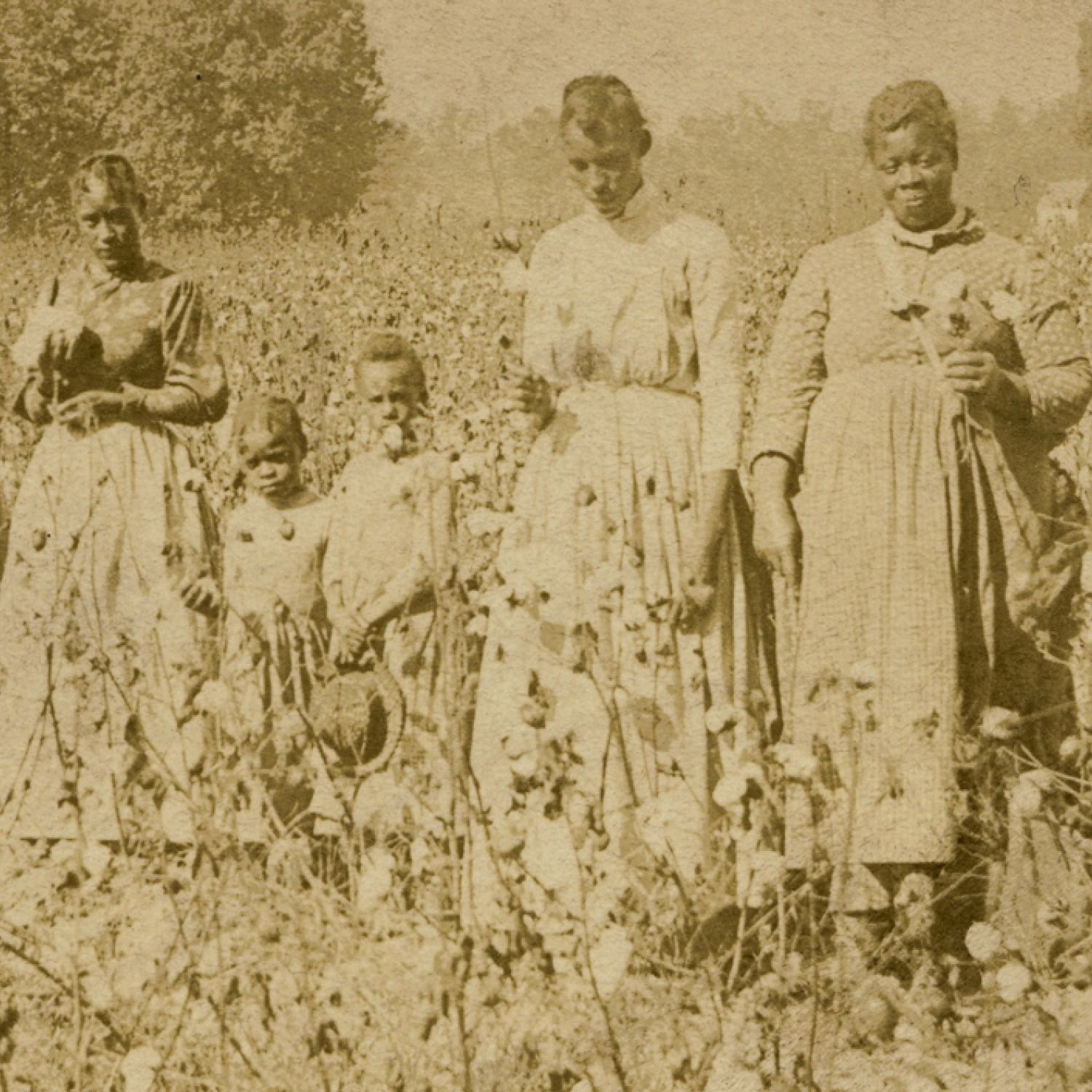
The narrator reflects on visiting Greenwood, Mississippi, the birthplace of their father, seven years after his death. This trip uncovers the painful legacy of slavery and cotton plantations, where their family history intertwines with the broader narrative of African American suffering and resilience. Accompanied by their great aunt Charlotte, they explore her reticence to discuss the harsh realities of their ancestors' lives, which included episodes of violence and oppression. The transformative impact of the cotton gin is highlighted, as it revolutionized cotton production, leading to a dramatic increase in the demand for enslaved labor. This economic system bore striking similarities to modern corporations, emphasizing productivity through brutal management techniques. Furthermore, the narrative reveals how global financial institutions supported slavery through slave-backed mortgages, allowing investors to profit from human suffering. The discussion concludes by asserting that the legacy of slavery profoundly shapes American capitalism, fostering a culture of inequality that persists in contemporary society. The haunting memories associated with the Mississippi River and the cotton fields serve as a reminder of the deep-rooted injustices that continue to affect descendants of enslaved people today.
Transcription
4122 Words, 22783 Characters
Seven years after my dad died, I went to the place he was born for the first time. My dad was born on a cotton plantation in Greenwood, Mississippi, where his family were sharecroppers in the same field that enslaved people had picked cotton for generations and generations before. Every year, our family would go on family vacations and we would go on family reunions, but we would never go to the place of my dad's birth. It wasn't a place that he really wanted to take us to or a place that he wanted to return. It just all happened that my great aunt Charlotte, my grandmother's sister, was visiting nearby at the time that I went down. And it's strange because I'm 38 years old, but I'm so relieved to have this elderly woman with me. Because for some reason, I'm just a little afraid. It's just kind of weird where I really was. I grown up with Charlotte my whole life. She's the one who taught me how to make e-strolls in her kitchen. And she was this woman who wore heels until she was in her 90s, who when you would go in her house, everything was always very neat. It was plastic over the furniture. It was very important for her at all times to appear respectable. And I understood that so much of that was because in her formative years, she was not treated with respect in the places she was born. So we get in the car and I try as I had done several times through the years to get my great aunt Charlotte to open up about what it was like to live down there. And for most of the ride, she was giving me the same gauzy version that she'd always given me that life for them wasn't really that hard. That it was a good place to grow up. As we finally approach Greenwood, I see a big sign. It's painted in brown and it says in white letters, Greenwood, cotton capital of the world. And then we approach the Yazoo River. The Yazoo River is fed by the Tallahacci River. And then Charlotte said that when she was young, she was baptized in the Tallahacci River. But as she's saying that, I also know that something else happened in that river. Because that river is a place where they found the body of Emmett Till, who was lynched by white men when he was 14, because they thought that he had done something untoward to a white woman. And after they killed him, they had sunk him in that river, tying a cotton gin fan around his neck. I know that Emmett Till was just four years older than my own father and that like my father, his mother had also fled north. And like my father, he had been sent for the summers to stay with his grandparents and that's how he died. And for some reason, it's at the river's edge that Aunt Charlotte finally starts to talk. And she tells me about another baptism of sorts that occurred there. It was a long time ago when they were kids and her brother and her cousin were walking through the white side of town and black people weren't allowed in the white side of town if they weren't there for work. So a car approached us behind them and a group of white boys began to chase. And my aunt described how her brother and her cousin just ran and ran and eventually jumped into those muddy rivers in order to escape. And how they came home, dripping wet, their chest heaving. And it reminded me of all the other stories I had heard about how when enslaved people tried to run away, they would sometimes jump into the river in hopes that they could hide their scent from the dogs that were chasing them. And then she tells me about the time another brother had to come home, his chest heaving. He came to warn the family that his cousin had stood up to a white plantation owner and everyone understood what that meant. You could not stand up to white plantation owners in the south if you were black and lived to tell that story. So her own father had to grab his Winchester and another rifle and they guarded him through that night in a well-practiced vigil to ensure that he would be safe until they could whisk him away to the north. All these years when I had been trying to get Aunt Charlotte to talk about what it was like in Mississippi and now here we are with the mosquitoes swarming our legs and it felt like the Ghost of Greenwood started to come near. For the first time I started to get a glimpse of my family story and the stories were in the land and in the water in the Tallahatchee that flowed to the Yazoo and the Yazoo that flowed to the Mississippi and the Mississippi whose muddy waters created the delta that this vast land was named after and that river created soils that were so rich that they led to the expansion of cotton unlike anything that the world had seen and it also helped to fuel the modern American economy. This river, the Mississippi River, brought so much life and so much death. It created the fertile land that made cotton king and lavish riches on the white people who owned almost all of it. But it also led to the pain and suffering for the black people who had to work almost all of it. From the New York Times Magazine, I'm Nicole Hanna Jones, this is 1619. This is cotton, the living plant. Beauty and utility bred into the living fiber by nature herself, by nature working with her incomparable tools, the sun and the air, the soil, the rains, and the wonder of growth. You want me to pull it closer? Yeah. Okay, you ready? Mad Desmond. How did we in the United States first start to come to grow cotton? Cotton. It's beginnings veiled in antiquity. So the story of cotton is an old story, you know, it goes back millennia. It's story older than history itself. In this country, it dates back to the earliest years of the colonies and when slavery begins on these shores, it begins in cotton fields, but it's also in tobacco fields. It's in rice paddies. It's in sugar plantations. And everyone understood the potential of cotton. It's beautiful. It was the commodity the world wanted. It was like oil in a way in our modern day. And just as important, it will stay beautiful. It's cotton. But cotton was not king at this time and the reason cotton wasn't king is because it was labor intensive. It took about 10 hours for one enslaved worker just to pick the seeds at one pound of cotton. And so everyone knew that if you could harness cotton, you could make a killing. But then something changed. And that something was the invention of the cotton gin. And the gin that we credit to Eli Whitney broke the bottleneck and suddenly you were able to clean as much cotton as you can grow. And so the cotton market explodes in America. But there is a problem. Cotton needed land. You could only grow cotton on the same patch of land for about three years before that soil was depleted. So where did we get the land? Well, the United States government itself took it from Native American peoples. It dispatched its military and Alabama and Georgia and Florida and it acquires land and then it sells that land back on the cheap to white settlers. And suddenly, the United States had millions of acres that could be cultivated for cotton. And this is when we start seeing slavery take off. Because once you have the land, the thing you need next is the labor. In 1790, we had just shy about 700,000 enslaved workers on these shores. By 1850, that number is 3 million enslaved workers in America and cotton is driving most of that growth. You know, we all learn about Eli Whitney and the cotton gin at 4th or 5th grade as kind of a clever invention. What we often don't learn about is how profound an effect that an invention had on the lives of enslaved workers. In slavers wanted to get the most out of their workers and they did. And what took hold in America was a new kind of economic system, one that was relentlessly focused on increasing cotton productivity. You know, many of our depictions of the cotton plantation are, you call it, can small, you know, you might see a handful of enslaved workers in the fields and an overseer on a horse and then the owner in a big house. That's not how it was. It was incredibly complex, the slave plantations that developed in the Mississippi Valley were huge. They resembled something much more closely to our modern multinational corporations than we often think. There was complex hierarchies with mid-level managers and workers who reported to other workers who reported to other workers. There were sophisticated data tracking techniques that were developed. So we knew how much labor and money went into producing each bail of cotton. Complicated workforce supervision techniques were developed for making sure people met their quotas by the end of the day. Professional manuals and credentials were developed. So in slavers could trade information about what to feed their enslaved workforce, how to house them, even how to speak to them. But behind all the sophistication, behind all this capitalistic rationality was violence. Because overseers were tracking everyone's hall, if you fell short of that quota, you were often beat. And these beatings are horrendous to read about, you know, enslaved workers pass out often from pain. They wake up vomiting. Cognit women were meant to lay down in small kind of divots in the ground so their belly could go in to allow the whip to fall flat on their back. You know, your job, this terrible job you had, was to try to hit your quota every day. And if you fell below your quota, you could be subject to torture. But if you overshot, that brought another tear, too, because the overseers might increase your quota for the next day. It's also why punishments rose and fell with global market fluctuations, it wasn't random. I read an account from 1854 from a fugitive enslaved worker named John Brown, and he wrote quote, "When the prices rise in the English market, the poor slaves immediately feel the effects. They are harder driven and the whip is kept more constantly going." So you know, you increase the price of the crop and Manchester, and enslaved workers are going to feel it in the fields of Alabama and Georgia, back in the United States. So when I was in college, I worked at a telemarketing call center. I did that too in college. Unfortunately, probably a lot of us did it. I was not very good at it. And I remember we would all have a target, and everyone's target was determined by how many sales they had made the week before. And there was this balancing of, well, you don't want to have a really exceptional week because then you might be expected to repeat that exceptional week. But you also couldn't have a really low week because then you'd get called into the manager's office. Are you saying that these types of management systems that they have their genesis in the system of plantation slavery? I think that's fair to say. These techniques of supervision were developed by folks trying to squeeze as much productivity out of their enslaved workforce as possible. And violence worked. You know, at the eve of the Civil War, the average enslaved worker picked 400% as much cotton as her counterpart did 60 years earlier. It's an incredible amount of productivity. The system is really pulling as much as it can out of its enslaved workforce. Prior to expand profits, you have to expand the amount of people who are working to pick and process the cotton, except enslaved people are very expensive. A single kind of quote unquote prime hand could be in current dollars, tens of thousands of dollars. So how are these planters, these enslavers paying for this expansion? That's where the banks come in. Just to expand their operations and make more money needed more capital. And so what did they do? They took out mortgages. And the way we usually think of a mortgage is, okay, bank, please lend me the money to buy a house. And against that loan, I'm going to leverage my asset, this house. So if I don't pay back my loan, you can take my house. Now, that concept has been around for a long time in America, but for a lot of our history, it wasn't about houses and it wasn't about land, it was about enslaved people. Plantation owners went to the banks and said, please give me a loan to buy more land and expand my workforce and against that loan, I'm going to put up my people that I own. So what does that mean? How does that work exactly that you can take out a mortgage on a human being? Or in slavers, mortgaging their workforce was easier than mortgaging their homes or mortgaging their land. Land wasn't worth that much. And so what people put up was actual human beings. They mortgaged enslaved workers to buy more enslaved workers. Only else that it means, though, which is critical is this allowed global markets to get into the business of slavery. And so this is how it worked. You know, state-charted banks would take this slave-back mortgage from this plantation owner and this one and this one, and they would bundle that debt and make something called a bond. And they would sell those bonds to investors all over the Western world. And so when owners made payments on their mortgages, the investors got a little return. Today, we call this securitizing debt, and it's really a way to kind of sink global capital into the American slave economy at the time. In fact, historians have shown that the majority of credit powering the American slave economy came from the London money market. And keep in mind, this is years after Britain abolished the African slave trade in 1807. So a generation removed from that decision and Britain, and much of Europe along with it, is still bankrolling slavery in the United States. So you didn't have to personally own human beings to make a great deal of profit off of them? No, you didn't have to. And it's interesting the growth of these kind of new fangled financial instruments like slave-backed mortgage bonds, they grew in popularity as the institution of slavery itself grew more unpopular around the world. It's allowing investors in those countries to really say they're against slavery at a one part of their mouth and use their money to invest in it from the other. And the money flowed in. So at the highest slavery, the combined value of enslaved workers exceeded that of all the railroads and all the factories in the nation. Let's just pause and reflect on that. Just say that one more time because I remember the first time I read that statistic, I just stopped on the page. Yeah. So at the height of slavery, the combined value of all enslaved people was more than that of all the railroads and all the factories of the nation combined. And you think of that comparison, how does that make you feel? Yeah, it's. I feel like a long pause makes sense because I'm not sure how it makes me feel either. It's such an illuminating statistic. It really speaks to what was driving our economy at that time. Yeah. The enslaved workforce in America was where the country's wealth resided. So America is riding this wave of cotton prices just increasing and increasing and more money keeps flowing and more people around the Western world are invested in this bubble. And we know how these stories end and the bubble eventually pops. You know the American South overproduces cotton? Consumer demand cannot keep up and prices start to plummet in 1834 and then they drop causing a recession, which has been known as the panic of 1837. Investors and creditors, they started calling in their debts, but plantation owners were totally underwater. They couldn't sell their enslaved workforce and they couldn't sell their land to pay off their debts either because as the price of cotton dropped, the price of enslaved workers and the price of land dropped with it. So that debt was toxic, but investors wanted their money. So states had a few decisions. They could have raised taxes, but their citizens said absolutely not and they listened to them. They also could have foreclosed on the plantations, essentially shutting down the cotton industry. But the cotton industry was holding everything together. And if you foreclosed on the cotton industry, you foreclosed on the economy. And so basically they did nothing. They did nothing because cotton slavery was too big to fail. Right if we heard that before. No, it sounds so familiar, right? We'll mark earlier this week we heard all about these two big to fail banks, the systemically important financial institution. So let's describe a two big to fail banks that are too big to fail. The city group is too big to fail. Two big to fail financial institutions were both the source of the crisis and among the primary impediments to policymakers efforts to contain it. It's not hard to draw these parallels between what happened in the 1830s in America and what happened in the 2000s. We are in the most serious financial crisis in generations. You know, all the ingredients are there. There is mystifying financial instruments. Help me out here. How does that make sense? Which hide the risk and connect people all over the world. There's stacks of paper money printed on the myth that some institution, cotton, housing is unshakable. It says Morgan Stanley encouraged a lender to push risky more expensive mortgages on black customers in Detroit. There's the intentional exploitation of black people. The suit claims they steered black and Hispanic borrowers into bad loans, resulting in mass foreclosures. And there's impunity for the profiteers when it all falls apart. Really the regulators had no practical choice but to keep them from failing. Many of the borrowers were bailed out after 1837 because they would have brought down the whole financial system with them. And of course the banks were bailed out after 2000. If a bank is too big to fail, it is too big to exist. So this is a story about American capitalism, about the foundations of American capitalism, about the American economy and was an economy that got started in brutality. Slavery allowed this poor fledgling nation to turn into a colossal powerhouse in the global economy. But what slavery also created was a culture in American capitalism that was incredibly brutal. Six women blamed their miscarriages on working conditions at the warehouse. Others say they passed out because of excessive heat and lack of AC. Hundreds of employees on zero hours contracts are subjected to a regime described as horrendous and exhausted. There are several investigations about injuries on the job. They're monitored at all times, even toilet visits are regulated. Breathing toxic fumes, stress injuries over a hundred ambulance calls. It's tolerance for inequality. I work 40 hours a week and I can't survive. The level of poverty that we have here compared to other industrialized societies. Who is this economy really working for? CEO's making 204 times what the average worker is making. And it's a culture that brought us the panic of 1837, stock market crash of 1929, the global financial crisis in 2008. These salaries on Wall Street rose last year to their highest level since the 2008 financial crisis. And if the American capitalist way is uniquely brutal compared to other kind of capitalist societies in the world, it may have to do with how capitalism started on these shores. And the plain fact that we haven't shook this kind of shadow of slavery from our economic life. Thank you so much Matt. Thank you so much to call. You've reached Nicole Hannah Jones. Please leave me a message, including your name and the number I can reach you. Thank you. Hello, Nicole, this is Judson Award. I just want to tell you a little bit about the piece I'm going to read about what happened on January 1st, 1808, when the act prohibiting the importation of slaves went into effect. This basically banned importation of enslaved people from abroad. But it also meant that enslaved people who are already in the United States of America, millions of them were then sold south to provide labor for the cotton industry and the sugar industry, which meant that thousands upon thousands of families were broken and split apart forever. So that's why I chose to write about that moment because I wanted to look really closely at what this change was changing all what that did to human beings, so hit the piece. The whisper run through the quarters like a river swelling the flood. We pass the story to each other in the night in our pallets, in the day over the well, in the fields as we pooled at the fallow earth. They ain't still in us from over the water no more. We dreamed of those we were stolen from, our mothers who old and braided our hair to our scouts, our fathers who cut our first staphs, our sisters and brothers who we pinched for titling on us, and we felt a cool light wind move through us for one breath. It felt like ease to imagine they remained, had not been stolen, would never be. That be a foolish thing. We thought this later when the first Georgia man come and roped us, grabbed a girl on her way from water, snatched a boy running to the stables, a woman after she left her babies blinking awake in their sack blankets, a man sharpened in a hole. They always came before dawn for us chosen to be so south. We didn't understand what it would be like, couldn't think beyond the panic, the crying, the crying, the begging, and the screaming, the endless screaming from the mouth and beyond. Sounded through the whole body, breaking the heart with its volume, a blood keen. But the ones that owned and sold us was deaf to it, was unfeeling of the tugging the children did on their father's arms, or the glance of a sister's palm over her soul's sister's face for the last time. We was all feeling, all seeing, all hearing, all smelling. We felt it for the terrible dying it was, no, we was walking out of one life and into another. And after life in a burning place. The farther we marched the hotter it got, our skin grew around the rope, our muscles melted to nothing, our fat to bone, the land rolled to a flat bog and in the middle of it a city called New Orleans. When we shuffled into that town of the dead they put us in pens, fatten us, tried to disguise our limbs, oiled the pallor of sickness out of our skins, raped us to assess our soft parts. Then told us lies about ourselves to make us into easier cells. Was told to answer yes when they asked us if we were master seamstresses, blacksmiths or ladies maids, was told to disavow the wives we thought we heard calling our names when we first woke in the morning. The husbands we imagined line with us, chest to back, while the knights torches burned, the children whose eyelashes we thought we could still feel on our cheeks when the rain turned to a fine mist while we stood in lines outside the pens, waiting for our next hell to take legs and seek us out. We'd our past lives for new deaths. Yeah, that's it. [Music] [Music]
Podcast Summary
Key Points:
The narrator visits the birthplace of their father in Greenwood, Mississippi, seven years after his death.
The narrative explores the historical context of cotton plantations and the impact of slavery on African American families.
The invention of the cotton gin led to the expansion of cotton farming, significantly increasing the demand for enslaved labor.
The economic system developed around cotton plantations resembled modern corporations, with brutal management practices.
Global markets and financial institutions played a crucial role in sustaining slavery through slave-backed mortgages and investments.
The legacy of slavery continues to influence American capitalism and social inequalities today.
Summary:
The narrator reflects on visiting Greenwood, Mississippi, the birthplace of their father, seven years after his death. This trip uncovers the painful legacy of slavery and cotton plantations, where their family history intertwines with the broader narrative of African American suffering and resilience. Accompanied by their great aunt Charlotte, they explore her reticence to discuss the harsh realities of their ancestors' lives, which included episodes of violence and oppression.
The transformative impact of the cotton gin is highlighted, as it revolutionized cotton production, leading to a dramatic increase in the demand for enslaved labor. This economic system bore striking similarities to modern corporations, emphasizing productivity through brutal management techniques. Furthermore, the narrative reveals how global financial institutions supported slavery through slave-backed mortgages, allowing investors to profit from human suffering.
The discussion concludes by asserting that the legacy of slavery profoundly shapes American capitalism, fostering a culture of inequality that persists in contemporary society. The haunting memories associated with the Mississippi River and the cotton fields serve as a reminder of the deep-rooted injustices that continue to affect descendants of enslaved people today.
FAQs
El padre del narrador nació en una plantación de algodón en Greenwood, Mississippi.
En el río Tallahatchie se encontró el cuerpo de Emmett Till, un joven que fue linchado en 1955.
La tía Charlotte habló sobre una experiencia de su infancia cuando ella y su hermano tuvieron que saltar al río para escapar de un grupo de chicos blancos que los perseguían.
La invención de la desmotadora de algodón permitió limpiar mucho más algodón, lo que provocó una explosión en el mercado del algodón en Estados Unidos.
Los propietarios de plantaciones tomaban préstamos y utilizaban a los esclavizados como garantía para financiar la compra de más tierra y trabajadores.
El valor combinado de los esclavizados superaba al de todos los ferrocarriles y fábricas de la nación, indicando que la riqueza del país residía en la mano de obra esclavizada.
Chat with AI
Loading...
Pro features
Go deeper with this episode
Unlock creator-grade tools that turn any transcript into show notes and subtitle files.
 PodcastTranscript AI