The dirty secret behind the hobby costing young men thousands of dollars
30m 57s
The conversation examines the dramatic rise of legal sports betting in the U.S. following the 2018 Supreme Court ruling. This shift transformed a largely illegal activity into a mainstream, smartphone-accessible industry now legal in most states. A key driver is the "frictionless" design of betting apps, which emulate social media and shopping platforms to promote constant engagement through live, in-play wagering on a global array of sports. This expansion was accelerated by intensive industry lobbying that directly influenced state legislation, with governments eager for tax revenue. Notably, major sports leagues, once staunchly opposed, have become official betting partners, framing regulation as a tool for integrity, though critics argue it normalizes gambling and increases addiction risks. The discussion highlights personal stories of addiction exacerbated by app design, noting that a tiny minority of bettors generates most industry revenue. Ultimately, while legalization has created a massive new market, it raises profound concerns about public health, the erosion of trust in sports, and the ethical responsibilities of both corporations and regulators.
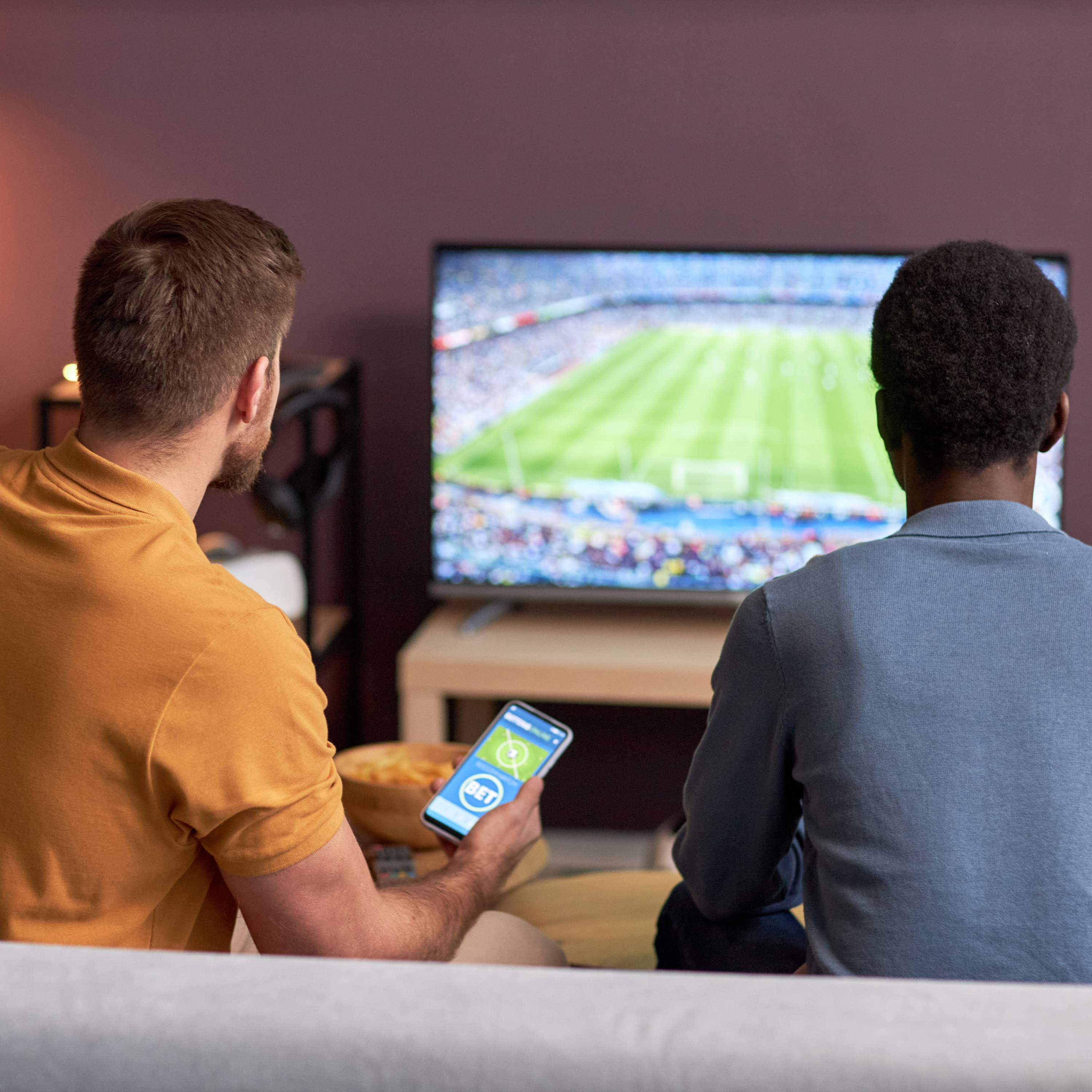
This is in conversation from Apple News. I'm Shemita Dasu. Today, why sports betting is bigger than ever? October is one of the peak sports seasons in the US. The NFL is in full swing, the NBA and NHL are just getting started. MLB playoffs are underway, the WNBA finals just wrapped up, and men's and women's soccer are moving into their final stretches. And along with all of that action, there's something else happening among the fans, tons and tons of sports betting. This Jonathan D. Cohen is the author of "Losing Big" America's reckless bet on sports gambling. It really is like alcohol in a lot of ways where you can really casually, really occasionally, really carefully imbibe or participate without running into any trouble. But there of course are other people who can't say the same thing. It wasn't long ago that sports betting was illegal almost everywhere in the US. That changed in 2018 when the Supreme Court struck down the federal ban and gave states the power to legalize it. To the end of this year, it'll be legal in 39 states, plus Washington, D.C. And this part is important, accessible on smartphones in most of those states, which has helped it explode in popularity. In 2018, Americans placed legal sports bets, totaling more than $4 billion nationwide. In 2024, they bet nearly $150 billion. 49% of American men between the ages of 18 through 49 have a sports betting account. 70% of people living on college campuses bet at least once a year, as of 2022, 60% of high schoolers were gambling at least once a year. So in just in terms of how big it's gotten is really because so many more people are gambling who never used to be. John has a measured perspective on sports betting. He's a lifelong sports fan who will place the occasional bet himself and he gets the appeal, but he's also deeply research the industry and talk to people who have struggled with gambling. Then he sees it's pitfalls. John's also written in the past about state lottery in the US and how even seemingly harmless gambling can have hidden consequences. For John, lottery and sports betting aren't just about games or money, they reflect bigger, cultural, and economic trends in America. I started my conversation with John by talking about the experience of sports betting on your phone today and just how seamless it is. The word to describe it is frictionless. TikTok is just smooth brain dopamine delivery. Sportsbooks apps are designed to do the same thing. It is designed to give you basically endless menu of options such that you can bet on the outcome of a game. While you're watching a game, you can bet on who is going to score the next point. When the games are over, you can bet on minor league British starts or Malaysian women's doubles bad men or whatever because the whole point, just like a social media app, is continuous engagement with the product. That means a live bet in the middle of the game on the next pitch or it means some obscure sport happening on the other side of the world because that's the only thing you can bet on it for you. It's funny that you talk about it being social media as I was chatting about this, preparing for this interview with some of my colleagues. We were talking about how it's a little bit similar to online shopping in some ways too. Totally. Just the frictionless part of it. Also the ex many people are looking at what you're looking at. The social pressure. Or 500 people have already taken action. Those things. And the celebrity endorsements. The buy with one click phenomenon is absolutely the impulsiveness that they want to inco-cate with gambling. Right. And that plus casino culture and casino lingo that really feels like it comes from some of the big Vegas establishments. Can you describe how some of those tactics find their way into sports betting? Right. So they can't pump oxygen into the room to keep you a little light headed. They can't take the clock. They can't play you with free alcohol in your house. But in the same way, they want you having a second screen experience is what one former draft Kings employee told me was they want you to be watching the game with your phone open with your phone on the betting app and you are continuously betting on the game while you are watching it. And that's sort of part of the experience. So again, they can't force you to keep the app open. But that's one of the reasons why if you watch your sports book during a game, you'll see the odds are just continuously updating so that every second, really every play, the odds are every so slightly different. And maybe you could like cash out now or maybe you could get down another bet. Maybe you could double down or whatever the case may be so that it's not just like set your bet and forget it and come back in three hours and see who won the game. It's no over the course of the game. They want you continuously to engage with their product in addition to engaging with the NFL. Whatever the game itself. Mm hmm. Well, let's talk a little bit about how we got here because it sounds like lots changed in 2018 when the Supreme Court struck down Paspa, which was the Professional and Amateur Sports Protection Act. It was in place since the 90s. It had blocked states from being the ones to decide whether they wanted to legalize sports betting. How did that change things? Yeah. So within six weeks, we had legal sports gambling in Delaware where none had existed before. I mean, prior to the Murphy decision, as it was called, the only legal sports gambling in the country was in Nevada, asterix for daily fantasy sports. And then within six weeks, you get it in Delaware and then very quickly in West Virginia and Pennsylvania and other states. And here we are seven years later with by the end of this year, it'll be 39 states in Washington, D.C. that have legal sports gambling and 31 that have it online. Mm hmm. And that quick rollout is at least partly due to just how strong the gambling line is. Lobby was, and it sounds like really it played a pretty significant role in shaping legislation and regulation in various states after the courts decision. Can you tell us a bit about that? Yeah, absolutely. It's one thing for a state to legalize gambling. Fine. But at the time, I don't think anyone was envisioning online sports gambling, like being able to bet on like the speed of the next pitch on your phone. But that's sort of what the industry after 2018 wanted and what it goes to states lobbying for and advocating for. In my book, I focus on the state of Colorado, just as sort of an emblematic example of these gambling companies sitting in the room with lawmakers helping to craft the bill and the licensure process and the tax rates and so on. And then the bill passes and then they sit in the room with the regulators who are actually in charge of regulating the companies and they say, oh, here's the kinds of bets you should allow. Here's where you should not allow. Companies should be able to operate in the state and so on. So yes, there was some genuine enthusiasm from lawmakers after 2018 to, oh, let's get sports gambling online. But left to their own devices, I think the version of sports gambling they would have passed looks a lot different from the version that we ended up with because of the intervention of the gambling companies. And just to spell it out, what is the benefit that legislators see in legalizing gambling? Yeah. In fact, 1730s lawmakers in the United States or in America have always seen gambling as free money as a endless well of tax-free revenue as a way to fund government services without compulsory taxes without paying for it. And this was especially important and useful during the pandemic when New York and a couple of other states jumped on the sports betting bandwagon because they just saw it as free money in a particularly difficult economic moment. It feels worthwhile just to point out how the leagues used to talk about this at least pre-2018 big sports leagues like the NFL and MLB were pretty staunchly against legalizing gambling. Now of course, fast forward a couple of years later, they have official betting partners. I mean, what drove that flip? Money. It's. But didn't they like money before? This is what I can understand. Yeah. So, okay. It wrote as all come down to money, but there is a little bit more to it. In 1992, Passbook gets passed because the leagues believe that sports gambling is a threat to the integrity of their product. By 2018, first of all, gambling in the interim 26 years proves to continuously be a threat to their product, even though it is illegal. So first of all, there's all sorts of illegal gambling scandals that happen in that ensuing period, most notably Tim Donahe and NBA referee who is accused of gambling on games that he refereed. And then second of all, there is this sort of nascent quasi-legal gambling happening through the form of fantasy sports and daily fantasy sports. And the leagues are basically seeing that keeping gambling illegal isn't keeping it out of their product and isn't keeping it away from their product. And there's all this money to be made from legalizing and from partnering with companies on it. So the most notable example here is Adam Silver writes an op-ed in the New York Times a couple of years before the Murphy decision advocating for a change in the law. Of course, the NBA continues its lawsuit to keep pass button place because this is sort of the conundrum. And the leagues when gambling is illegal have to say that they don't like legal gambling, but then the second it can be legal, they put intended sort of go all in on it because of the money to be made and because, oh, lo and behold, no longer is gambling a threat to the integrity of our product. It is a way to increase fan engagement with our product. And by keeping in the sunlight by having it regulated, we can more closely monitor the gambling rather than having to deal with these nefarious actors who might be acting in the shadows. Hmm. Is that a good argument in your view? Does that bear out being able to regulate something leading to better outcomes for people? Not really. The leagues had a long, long history of when gambling was illegal. They would do things like monitor Las Vegas Casino sports booklines or even monitor like Casino lines based in Curacao to see if they were sort of suspicious line movement. It's suspicious activity. So they were effectively monitoring whether people were rigging their games through illegal gambling. So sure, that's one thing. The leagues argue whenever a player or coach or something gets caught gambling on sports in a way that they're not supposed to, the leagues will say, this is proof that the system works, right? By bringing gambling into the light, by regulating it, we were able to catch John Tay Porter, being the most prominent example of an NBA player who is gambling on his own performance. Except my counter argument is a lot of these people, a lot of these players probably would never have thought to gamble if gambling hadn't gotten so big and so prominent. You hear it weren't shoving draft Kings ads down. Everyone's throws every five minutes during in game promotions. You've sort of created this problem that you're now trying to solve through these league partnerships. So I'm sympathetic to the argument that it is helpful to the leagues, but I also think that they sort of overlook the responsibility that they bear in creating the problems that they're now patting themselves on the back for solving. That kind of brings us to today and some of the other problems that have emerged with the rise of sports gambling, including in some cases, people developing serious problems and addiction to gambling. In your book, you tell the story of someone named Kyle. Can you tell us what happened to him? So Kyle is from outside of Wichita originally and was living in Colorado as it happens when sports gambling became legal there in 2020. And he was really excited. He downloaded basically every sports book app because they all, of course, offer like, oh, deposit $5, get $200 free bonus credits. And pretty quickly, he ran into trouble. Within the first month or two, he couldn't afford his rent because he had gambled it all away. His dad bailed him out, but it was sort of, okay, he felt sort of like a sobering life lesson until it wasn't until he sort of kept gambling and would go into these periods, these sort of rabbit holes, I call them where gambling takes on a logic of its own where it's not just like a thing you do while watching sports. It's like the thing you do in your life and work and shopping and dating and hobbies or whatever are sort of secondary to gambling. And at one point, he went up big and then of course, he goes down really big and while he was up, he was so confident that he was going to make all his money from gambling and he got fired because if he wasn't performing well at his job, and then of course, he gambles his unemployment checks and had to move back in with his parents in Wichita. And if that's not a moment for reflection of how much gambling has cost him, then I don't know what is. But then of course, in Wichita, he's still, now he doesn't have a job. He's living with his parents. He's upset. He's ruined his life and he keeps gambling. And the French open will come around and he'll stay awake for 40 consecutive hours just gambling live lines on these various matches. So I'm happy to report actually since the book came out that he actually is done. He knows I have this, but I have this app that's been tracked his gambling and he hasn't gambled in like a year and a half, which is great. Really? And what did he think helped him ultimately quit it? That's a good question. I don't know other than I think he felt that he'd finally had enough. I think he had gone through many other times when he felt like he had finally had enough and then for whatever reason at some point it clicked whether I think he was working again, which also really helped in something to take his mind off of things and sort of something to give him purpose. But he described gambling as like a landmine that's sort of lying in front of young men these days and they never know when they might step on it by accident. I should have said this earlier, but this is sort of the key part of Kyle's story. He had been to a casino many times in his life before 2020, before SportsGemma and Camellia and never had a problem. And he was like handing over cash to the dealer, playing with chips, he never ran into trouble. And it was only when it arrived on his phone and he could like sit in his basement and bet on mind like British Darts or on some obscure tennis tournament in Singapore or whatever. That's when he ran into trouble. So I think maybe having like a general healthier relationship with his digital devices is sort of key for him to stop gambling and to sort of get his dopamine levels back to a normal place. You write about the two sports betting companies behind the apps that really dominate the space, draft kings and fan duels are mentioned often throughout your book. Did you receive comment from them or any other betting companies on the reporting that you did in this book, but specifically some of the addiction aspects? Yes, so I talked to them for the book. I haven't really heard from them since. I think they conveniently lost my number. The industry responds generally speaking to problem gambling concerns. And of course, I sort of voiced this concerns like, hey, I am sort of of the opinion that we are sort of at a point of a public health crisis when it comes to sports gambling. And I sort of presented that argument to them and they offered two responses. The first is treatment for people who have gambling problems. And this is why you see advertisements everywhere for the hotline, the gambling hotline that you're supposed to call if you have a gambling problem, if you're a risk of taking your own life and so on. And then the second bucket is what the company's called responsible gambling. And they're preaching to people telling them to gamble responsibly. This of course puts the onus of responsible gambling completely on an individual, like on the Kyle and not on draft kings to make it easy for Kyle to be responsible or to not furnish him with an app that makes it possible for him to lose $95,000 over the course of three weeks and doesn't like slow him down or channel him like, hey, Kyle, like you've bet $95,000 over the course of January. Like want to relax a little bit, but they don't have any of that friction built in and they don't want to. And so the cynical view is that they care about the hotline, they care about treatment, they care about problem gambling, you know, the addiction, only because those people have already lost their money. Mm hmm. Well, beyond individual gambling problems, what do we know about whether there's been any impact on the sports themselves from game fixing to even just a perception that outcomes could be influenced for the purposes of betting? Yeah, absolutely. This is what buildings don't want to confront, I think, which is there have been, as I said, the early years of sports gaming, a bunch of cases of players and coaches who whether they knew what they were doing and it was bad and they got caught or they generally didn't know what they were doing because the rules are complicated, who were gambling on sports. And that will, as you said, absolutely foster distrust in sports writ large. And you see it all the time if you go on social media, like look at a game and like, honestly, this is exactly what the sports leagues feared in 1992 when they went to get past but past. They said we don't want anyone to interpret routine player or referee error, which is, of course, a sort of basic part of sports. We don't want anyone to interpret that as a result of fixing or gambling. If you go on social media right now and like, under any game, under big play, someone messed up, every single comment is like, oh, and it'll got to him. Oh, this guy calls me my parlay. It's not exactly what the league's feared, which is his made people lose faith that sports are on the up and up because they think everyone is just gambling and the whole thing is right. Yeah. So it's already, it's there. It's in the water. And you know, America is obviously such a trusting society right now, especially in our institutions. What could possibly go wrong is layering gambling now on top of sports too. I want to talk with you about what happens to the money. If we could just trace the money here and explain where it goes. So it starts with the betters themselves. Are ordinary bettors actually making money? Like what do we know about how much people typically win or lose ordinary bettors are absolutely not making money. They're not losing a lot of money. 60% of sports gamblers account for 1% of NFL gambling revenue. 82% as remarkable as it seems. 82% of the revenue comes from just 3% of bettors. Oh, wow. Yeah. Very small group of bettors who are really engaging heavily. Yes. And some of those are VIP types. You know, Phil Mickelson, professional golfer is a notorious big gambler and so on. But some of them are just like guys like Kyle who sort of get caught up and have a period or of addiction. So that's where the money is coming from. The money that matters is coming from sort of a small, small group. But if you want to talk about like literally like where the dollar goes in terms of like the pie chart distribution, this is what's sort of crazy about sports gambling. On average, bettors are going to win like 90 to 95% of their money back. And you take that remaining 5 to 10% that goes to the sports book and that money that 5 to 10% is taxed. That's where the money for the state comes from. It is a tax on the revenue earned by the sports gambling company, which is all the money that is spent on gambling minus all the money that have to pay back out to people who win. In your book, you describe how professional gamblers sometimes find ways to outsmart the sports betting companies, pattern recognition systems that they have, those algorithms that they use to detect unusual activity. Can you explain a little bit how they do that and what it reveals about the business model of how many of these sports betting companies actually work? Yeah, so I think you can take this two ways. Either professional gamblers are so weird and so unimportant and they're so few of them that like they don't matter or they're actually the small thing that actually reveals how this whole entire enterprise is a house of cards and is totally corrupt. The sports gambling companies just for context have a really, really quick trigger finger if they think that you can win. The second they realize that John is good at betting on football or someone is good at betting on basketball or whatever, they will limit how much you can gamble potentially down to like 10 cents. You can not gamble more than 10 cents at a time on the NFL. So professional betters know that the gambling companies don't want to limit someone like Kyle. But they don't want to limit someone who is lucky, might be winning in the short term, but over the long term is addicted and is going to lose all their money sort of down the road. So professional gamblers will do things that will make them look like the Kyle's of the world, that will make them look like they have a gambling problem, not like they have a crazy spreadsheet on their computer tracking every single like possible permutation of every single NFL game, which is what they actually do and this is how professional gamblers actually make money. So they'll do things like set money to be withdrawn and then at the last minute cancel there withdrawal. So it looks like they can't like stop betting or they'll bet on Aaron judge to hit a homeron, which is like the most vanilla ice cream version of a sports bet you could possibly make because they want to look like a normie and they know that the sports gambling companies don't want to cut off normies. They only want to cut off people who can actually win, even though the advertising of course is like come win big with sports gambling. Now that they don't actually want to win big and this is really important because these young men who we've been talking about many of them have this sort of sense of bravado and the sense of overconfidence that they're going to beat the book and that they've sort of figured out a system that they're going to win and it is impossible to win because the second you actually genuinely start winning in a real sustainable way, you get cut off. Right. I mean, it makes me think about the parallels to casinos where if someone's been on a hot streak for a long time at the blackjack table at some point, the house is going to notice and say what's going on here. But what I understand a little bit less honestly is something like like blackjack, I get how you can be sitting at the table and have your strategy and not game it, but know how to be very strategic about it. How do you game the sports betting system? Okay. This is actually really important for people to know because I think people hear the word professional gambler and they imagine all these people are winning like 100% of their bets. Nothing can be further from the truth. Professional gamblers would kill to win like 60% of their bets, 55% of their bets. Professional gamblers make money basically through arbitrage, through either being able to buy low sell high across different sports books and sort of guarantee themselves a profit. They might literally bet $1,000 for a guaranteed profit of $10, kind of thing. Or they'll look for really, really sort of hard to detect inefficiencies in sports betting lines such that over the long term, they can guarantee themselves a profit. The way one described it to me was if you could flip a coin and you get $1,000 every time it's heads, but it's going to be heads 52% of the time, I'm willing to flip that coin infinity number of times because I'm guaranteed to make money. But someone like me, I just don't have the disposition to risk losing 25 flips in a row and almost on I've lost $25,000. I'm good. Have fun professional gamblers. Well, let's talk about the piece of the pie, however small it might appear to be, that actually is states taxes. How much revenue are states actually able to bring in through sports betting and how significant is it? Yeah, this is the dirty secret behind really gambling policy writ large is it's a lot of money on paper. You know, it might be a couple hundred million dollars even, but in the grand scheme of state revenue and state expenditure, it is of course a drop in the bucket and that we're causing all this harm or all this risk to young men and to sports leagues and to sports for what amounts to sort of pennies for states. So my profile, as I said in the book is on the state of Colorado. If you sort of look at the actual sort of fiscal projections from 2019 when it was being debated in Colorado, it is absolutely met those predictions. Unlike the lottery, which was disappointing in most states when it was passed, sports gambling has actually met or exceeded in fact the revenue expectations in many states. The question of course being at what cost and it never actually amounts to anything close to something that would sort of offset government services in any real way. I mean, that gets us to the conversation about regulation really. What does regulation look like in this industry? What are the safeguards that exist and what are the conversations around what needs to exist? Yeah, so there are nominally safeguards on the legal industry, but they exist on paper, but they are sort of actually few and far between in terms of yes, this company has to be licensed. Yes, it has to have the hotline in size to font at the bottom of all it's advertising. Yes, it has to pay taxes. But in terms of restrictions on behavior and sort of responsible provision of gambling, it's actually sort of very, very few restrictions. The states could say, "Hey, this has gone too far. We need to require you to put problem gambling language more prominently in advertising. We need you to make it so that you can only deposit money into your account a certain number of times a day, make it so that you can't bet on Malaysian women's doubles bad men or whatever the case may be." The problem as we've been discussing is states have a direct financial interest in more people gambling more money and might not want to, it's not a golden goose, but like kill the goose that is laying semi-golden eggs for them. The alternative is Congress, which good luck to all of us, Congress can't do anything, but there is a bill in Congress that would basically set a floor such that if states are going to legalize gambling, they have to meet these certain requirements. They can't use AI in developing of live betting lines, they cannot accept bets with credit cards and so on. I'm skeptical that that's going to pass, particularly because it is so aggressive in its level of regulation. Something eventually is going to pass at the federal level. I just don't know what it is. Of course, the gambling lobby is going to get its fingers into that pot before it does. It does feel like with the ubiquity of sports betting and just how much it has grown in the past few years, it feels like something is shifting in the culture even. In terms of how we look at sports betting, I don't know. It's a far relationship with this idea of it being gambling versus it being entertainment is changing. Are you noticing that? Does that bring true to you? Yeah, let me broaden your point even more. I would say like gambling, or gambling culture writ large. I think sports betting is the most prominent because it sort of gets a leg up from actual sports. If you think about the rise of Robinhood and sort of gamified investment platforms and brokerages, you think about cryptocurrency? Oh my God. If you talk about any young person in the video games they play, all these gambling mechanics that are built into video games so that children, little children don't even realize they're gambling and effectively playing on slot machines, but that's exactly what they're doing. There is absolutely this explosion of gambling culture and a gambling mentality that has flowered recently and was long-lone seen in America as a dangerous vice. It is now just everywhere and we just accept it. I don't see my fear for the sports leagues is sort of a long-term thing. In the short term, one of the reasons they were excited about the guys gambling is it would increase viewership and engagement with their product, which absolutely has done viewership for all sorts of sports has been up or you can see a notable bump with the arrival of sports gambling. Over the long term, my fear for them is that you're not creating sort of a generation of sports fans who like to gamble. You're creating a generation of gamblers who happen to be gambling on sports and they might as well be gambling on e-sports or whether their buddy can throw a frisbee through the window. They'll gamble on anything. What do you think sports betting will look like in America in say 10 years from now? Three thoughts. First is I think sports gambling itself in the traditional way might actually look pretty similar. My fear, honestly, is that we get baked into the model that we have. These days, Americans, primarily less educated, black and brown people, lose $120 billion on the lottery every year and nobody cares. Nobody talks about it except when I get invited on your podcast. It's not an active policy conversation about helping these people. It's just like, yeah, okay. It's just sort of like, all right, we all know that poor people are going to lose $120 billion on the lottery. My fear is the sports gambling is going to become the same thing. No, yeah, that's the cost of doing business kind of thing. Right. It's just like, okay, that's like part of American life. It's actually going to get worse because Texas and California, the nation's two most popular states, don't have legal sports gambling yet. There's a chance you ain't seen nothing yet and that this is only going to get bigger. There's two other directions that might actually cut into sports gambling but in a way that might even be more dangerous. The first is what the industry calls eye gaming but what you and I would call online casino games which are legal in seven states and are really where the sports gambling companies want to go. They don't want to be sports gambling companies. They want to be online casino companies that happen to have sports gambling on the side because online casinos make so much more money and you don't have to bother with real sports. It's just a slot machine or a blackjack or a poker literally on your phone and like they want that person who's like playing candy crush on the subway to instead be on a slot machine and making money for them. The other place this might be going. This is your point about, you know, draftings in a fandal really do dominate the conversation and do dominate the market and the fear was how would anyone ever disrupt them and to knock them off their perch and we're sort of seeing the answer right now with the rise of prediction markets. Oh sure. I mean this is like the ultimate answer to wanting to bet on like pitch speed. Now you can bet on or Taylor Swift album sales. Yes. Right. It's everything. You can bet on everything. Yes. Right. So that's not great and these platforms they were designed really for election gambling, but you can gamble on gas prices. You can gamble on Taylor Swift album sales. You can gamble on the high temperature in Miami tomorrow. You can just gamble on everything. But effectively on the leading market prediction market, which is Calci, 90% of bets are on sports. So these are basically just sports bets in disguise that are available in places like Texas and California that don't have legal sports gambling yet. So there is now legal gambling nationwide, whether we like it or not. You know, there's one thing about making everything gambling for lack of other words. There's another thing that's like a desire to make everything a game, which I should be in favor of. Which we should all be in favor of, honestly, right? With the root of this, there is something about seeking joy and seeking entertainment and enjoying it with others, right? I mean, there are aspects of this that obviously and that you understand yourself so well because you like to engage with it sometimes. It's the gambling part that can turn into a problem for some people, certainly. Right. It's not enough. Any more to like sports. It's not even enough to like like Taylor Swift. You have to somehow leverage your knowledge of sports or Taylor Swift to make money off of them. That to me, it's like, it's not enough to have a social media account. You have to be an influencer and make money from social media. It's like every single thing. How I extract value out of this knowledge that I have or skill that I have. Yeah. Yeah. Right. So that to me is like, whether it's gambling or not, it sort of speaks to me about something broader in American culture that I think might be sort of the canary in the coal mine for how young people are doing and how they feel about their sort of financial situations, but might also just be sort of the unintended consequences. You said not just of gambling culture, but of gamification of absolutely everything. John, this was really fascinating. Thank you so much. Thanks for having me and just for the record I like Pittsburgh on the road on Thursday night. You can read "Losing Big America's Reckless Bet" on sports gambling on Apple Books. We'll include a link to it on our show notes page.
Podcast Summary
Key Points:
Sports betting in the U.S. has exploded in popularity and accessibility since the 2018 Supreme Court decision overturned the federal ban, with legalization in 39 states and D.C., primarily via smartphone apps.
The design of betting apps is intentionally "frictionless," using tactics similar to social media and online shopping to encourage continuous, impulsive engagement through live betting and a vast menu of options.
The rapid legalization was heavily influenced by gambling industry lobbying, which shaped legislation to favor expansive online betting, with states viewing it as a source of "free" tax revenue.
Major sports leagues reversed their historical opposition to betting, now partnering with gambling companies, arguing regulation protects integrity, though critics contend it increases addiction risks and fosters public distrust in sports.
Problem gambling is a significant concern, with apps lacking built-in safeguards; revenue is disproportionately generated from a small percentage of heavily engaged or addicted bettors, not the casual majority.
Summary:
S. following the 2018 Supreme Court ruling. This shift transformed a largely illegal activity into a mainstream, smartphone-accessible industry now legal in most states.
A key driver is the "frictionless" design of betting apps, which emulate social media and shopping platforms to promote constant engagement through live, in-play wagering on a global array of sports. This expansion was accelerated by intensive industry lobbying that directly influenced state legislation, with governments eager for tax revenue. Notably, major sports leagues, once staunchly opposed, have become official betting partners, framing regulation as a tool for integrity, though critics argue it normalizes gambling and increases addiction risks.
The discussion highlights personal stories of addiction exacerbated by app design, noting that a tiny minority of bettors generates most industry revenue. Ultimately, while legalization has created a massive new market, it raises profound concerns about public health, the erosion of trust in sports, and the ethical responsibilities of both corporations and regulators.
FAQs
Sports betting exploded after the 2018 Supreme Court decision that allowed states to legalize it, combined with easy access via smartphone apps. By the end of 2024, it will be legal in 39 states plus Washington, D.C., with Americans placing nearly $150 billion in bets in 2024 compared to $4 billion in 2018.
Apps are designed to be frictionless, offering endless betting options like live in-game bets and obscure sports to keep users constantly interacting. They update odds continuously to prompt more bets, similar to social media or online shopping, fostering impulsive behavior.
After the 2018 ruling, gambling companies lobbied states to craft legislation favoring online betting, influencing tax rates, licensure, and allowed bet types. In states like Colorado, they helped write bills and advised regulators, leading to a more permissive system than lawmakers might have created alone.
Leagues like the NFL and NBA initially opposed betting to protect game integrity, but after 2018, they saw financial opportunity in partnerships and increased fan engagement. They argued regulated betting would allow better monitoring, though critics say they helped create the gambling culture they now claim to police.
Apps can lead to addiction due to their seamless, engaging design, as seen in cases like Kyle, who lost significant sums betting from his phone. Companies emphasize individual responsibility and treatment hotlines, but critics argue they lack built-in safeguards to prevent excessive losses.
Betting fosters distrust, with fans often attributing player errors or referee mistakes to game-fixing. This erodes faith in sports integrity, a concern leagues originally had, and is amplified by social media comments linking every mishap to gambling outcomes.
Chat with AI
Loading...
Pro features
Go deeper with this episode
Unlock creator-grade tools that turn any transcript into show notes and subtitle files.
 PodcastTranscript AI