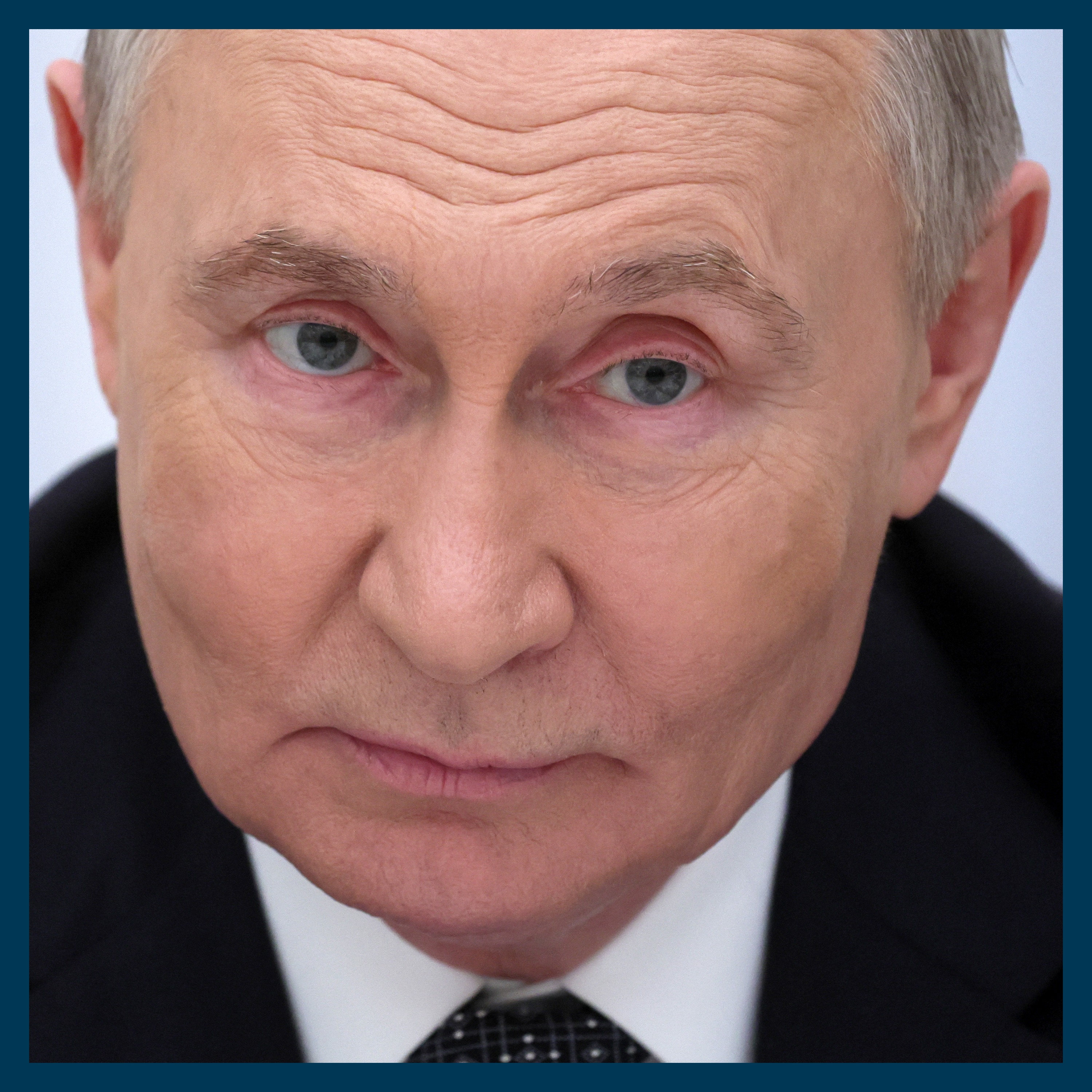
Mark Bennetts, a Times correspondent, spent 25 years in Russia, observing its transformation from the chaotic but relatively free post-Soviet 1990s to a tightly controlled state under Vladimir Putin. Initially, his Russian mother-in-law encouraged him to leave Russia for a better life in Britain. However, over the years, relentless state propaganda demonizing the West and glorifying Putin hypnotized her and millions of others. The media constructed a narrative where the West was an evil hellhole and Putin was Russia's savior, a message that intensified after the 2014 annexation of Crimea with fabricated stories. Bennetts describes how living standards improved under Putin due to oil wealth, which helped legitimize his rule, even as democratic freedoms eroded. The state's control over information became absolute, especially after the 2022 invasion of Ukraine, with new laws punishing dissent. This environment made independent thought dangerous, leading most opponents to stay quiet. Bennetts was forced to flee when his safety was threatened. His account illustrates how Russia, through economic leverage, media manipulation, and nationalist ideology, gradually descended into a paranoid, authoritarian state that sleepwalked into war, reshaping both its society and its relationship with the world.
From the Times and the Sunday Times, this is the story. I'm Manvine Rana. My first bed, my future mother-in-law in 1999 or 2000, I think. And at the time, she wasn't at all opposed to the fact that her daughter was going out with a British citizen. She even said to us, "Why do you understand Russia? Why don't you just move to Britain? It's nothing good is ever going to happen here." And she was even angry when we said, "No, I don't want to stay here. It's interesting." That's Mark Bennett's, a Times Foreign correspondent and dreams son-in-law. He lived in Russia for 25 years. He got married out there, had a family, and was our Moscow correspondent before he was forced to leave after the war in Ukraine began. Over those 25 years, he witnessed the country change. As the years went by, the state media, the state propaganda began to ramp up the hatred, the sheer redundancy of their reporting, especially about Ukraine, but also about Britain, about the West, telling Russians that the West was this hellhole where children were forced to call their mothers and fathers' parents, their parents' parents, to where in Scandinavia, sex with animals was legal and was encouraged, and there were special brothels for people to go and have sex with animals, just like horrendous stories. Russian media didn't just demonize the West. They were also building up a cult of personality around Putin. Putin was seen as this kind of like leader who'd saved Russia. I'm Russian surrounded by animals, the West hates us, the West is evil, Putin is your savior, and it's just constant. In 2014, when Russia annexed Crimea, the propaganda intensified, broadcasting for up to 16 hours a day. For many people, including Mark's mother-in-law, it was spellbinding. My mother-in-law was one of these people who was hypnotized, I think that's the correct word, to use, I think she was hypnotized and sent into a trance state by this steady drum beat of propaganda and hatred that emanated from Russian television, almost around the clock, and if it wasn't television, it was radio, if it wasn't radio, it was the newspapers. If the media is telling you to hate the West, that will have a toxic effect on your relationship with your British son-in-law. As the only Western person in the West, I actually knew I became kind of the focus of this laser kind of hatred that she now had for Britain, for the United States, for Europe, for Ukraine. Let me get increasingly difficult to have a normal conversation, and so eventually I just stopped. How have millions of Russians been brainwashed into believing the Kremlin's view of the world? How did the country sleepwalk into totalitarianism? And how did one man remake Russia in his own paranoid image? Informed by his first-hand experience of the country's recent history, Marx's new book The Descent answers all of those questions and more. The story today, how Russia spiraled into madness. I had always been interested in the Soviet Union in Russia growing up, trying to call the war. My parents gave me a copy of Master of Margarita by Mikhail Bulgakov when I was a teenager, which was a surrealist novel about the devil paying a trip to Soviet Moscow. I basically wanted to go and see it with my own eyes. So when the chance came to teach English, I decided it would be a good idea to head east for a while. I didn't expect to go there for 25 years, but I knew that's how it worked out. 25 years later, what was it that made you think I really have to leave now with your family, Binto? After Putin sent tanks into Ukraine on February 24, 2022, the Russian government introduced a new law banning what they called fake news. These were crimes punishable by seven and fifteen years in prison. Their definition of fake news was anything that wasn't contained on the Russian Ministry of Defense's website about the war in Ukraine. And then when that happened, I think, kind of like 95% of Western journalists left. So I kind of hung on for over three months. And then at the end of May 2022, I got a call from an editor at the time, so he said that the news UK security team thought I was going to be arrested and it was time to leave, after which didn't really have a choice. Mark, you were telling us about your mother-in-law and how she was influenced by all the messaging in Russian, state, media, or all the messaging coming out of the government. Is it possible to live there right now and think differently? Right now, I know people who live in Moscow, I mean, I've always said it's in Russia, who opposed the war, who opposed Putin. Before 2002, it was possible to say those things out loud. But after that, it became almost suicidal to voice any dissent in Russia. I mean, amazingly, some people still do go out on the streets with signs or write in social media, like no war, but there's no kind of mass movement and most people just stay quiet. I know those just sort of little pockets of academia, intelligence, people who are looking outwards. You know, for the bulk of the Russian population, is it just easier to believe the message you're being fed 24 hours a day? Yeah, I mean, there is support for the war and it's quite high. There's support for Putin. But I mean, I think that things are starting to change now because of economic consequences. And I think the scale of the losses in Ukraine amongst the Russian military is becoming, it's become very noticeable here. In March 2026, the mobile internet services were closed down in Moscow, which was unprecedented step. I think it kind of brought home to a lot of people that it was, this was another consequence of a war of the war in Ukraine. But then even here, we can see kind of the Kremlin's propaganda starting up, Russian state television, on one of its regular entertainment programs, broadcasts a group of children singing a song about how good it was to live in the country where there was no longer an internet. And the lyrics are incredible. They were like, there are no websites, there are no blogs. We're all going to play badminton. Mark, your 25 years in Moscow mirrors such a key period in the history of the country where it could have gone in so many different directions. So take us back to the beginning, take us back to when you arrived in Moscow. What was it like then for Russians and just explain the circumstances in which Vladimir Putin first came to power? Remind us how that happened. So I arrived in 1997 when President Yeltsin was in his second term. And I think it's fair to say that Russia was chaotic, violent in many places, but that also people in the country were freer to say things that were freer than they'd ever been in their history. The idol of communism, which spread everywhere, social strife, animosity and unpedal of brutality, which instilled fear in humanity, has collapsed. It has collapsed never to rise again. I am here to assure you we shall not let it rise again in our land. But on the other hand, there was kind of massive poverty. People weren't getting paid their wages on time. A friend told me that mother worked at a fish factory and said, "Oh, wait, just you've been paid in fish." Wow. And they would just sit there and eat macro-souple. The number one was gone by bread to go with it. Yeah, you can't pay your electricity bill in fish. Yeah, yeah. So the Russians started to call it this kind of period of democracy, shitocracy, kind of a play on words in Russian. The poverty and deprivations became associated with democracy. All the flawed version of democracy that existed on the Elsen. And it made Russians more open to the idea that what they needed to save the country was an iron fist, a man from the KGB who would come in and crack down. And that's essentially how Putin came to power. How was he viewed by both the Russians, but also by foreign powers when he was first elected? Do you know what was this a moment of hope? Well, I mean, when he was first elected in 2000, lots of people who would go on to oppose him, they supported him. They thought that he was going to need the country. It was going to be bright a future. I mean, obviously some people were immediately suspicious. It's like he's from the KGB. Like nothing good is going to happen. I think in the West they were willing to give him a chance and encourage good relations with him and often turn the blind eye to, for example, human rights abuses in Chechnya. George W. Bush met Putin during his Putin's first term and said, "I look the man in the eye. I found it to be very straightforward and trustworthy."
We had a very good dialogue. I was able to get a sense of his soul. I looked into his eyes and I saw his soul. He's a man we can do a business with. In 2003, Putin and his wife, Ludmilla, came to Buckingham Palace for a state banquet. This was after Putin had closed down the only and remaining independent television station. So he comes to Buckingham Palace. The queen tells him that Russia is now our friend and our partner. And we wish you luck. My message to you, Mr. President, is therefore one of admiration, respect and support. Putin kind of sits there in his dinner jacket, looking very pleased with himself. And Blair, turning Blair, seemed again to be more interested in doing business with Russia than anything else, as I mentioned. Anna Bletkovska, a Russian opposition journalist from Novgorod Gazeta, who was later murdered, assassinated on Putin's birthday. She asked Blair about why he was kind of ignoring the bad things that were already happening. And he said, according to her column, in Novgorod Gazeta, that as Prime Minister, it's my job to like Mr. Putin, not coincidentally. Of course, that this time for British oil industry, for example, was invested massively in Russia. I don't think it's surprising that he isn't present himself as a strong leader, as a patriotic leader for Russia. I don't think that's a bad thing. I think it's a good thing provided it's combined with a healthy attitude to the outside world, which in his case it is. And initially, you point out that things were already starting to go wrong. There was a crackdown on some media freedoms. People were starting to notice that things weren't as democratic as the hope had been. But what was life like in Putin's Russia? Was it sort of an improvement from the poverty of the else in years? How were ordinary people experiencing it? Yeah, living standards improved rapidly. Putin was very lucky. It was the price of oil. Shot up immediately. He introduced a flat tax rate of 13% for everyone in the country, which helped businesses, etc. Shopping standards started to spring up everywhere. Russia started to be able to take kind of foreign holidays. And things seemed to be on the up. I mean, in sport, Russia was doing well. It won the Eurovision Song Contest in 2008. Being in that at the time, you could see something was still quite right because of my state television. They took it so seriously. This is another sign that Russia is regaining its superpower status. I don't think anyone's ever described the Eurovision Song Contest as quite that before. A sense of destiny. Russia is great destiny. If we're looking back now and trying to understand how Putin got to the place he did, you know, a lot of it seems to come down to his version of Russian history and Russia's place in the world, that sense of Russian destiny. So just tell us, you know, what was the story he would tell about Russia? I think one of the key elements in Putin's view of Russia was the way that the Kremlin organized a victory day every May the 9th, which is the celebration of the Soviet defeat of Nazi Germany. When the first victory day is out, it ended. People would just go out and drink beer. Just a day off, people would go to parties. I remember once walking through Red Square and some company was handing out as an advertising stunt, you know, like these fake rabbit ears. Everyone was walking around with fake rabbit ears. I was like, well, what the rabbit ears have to do with World War II? I'm like, if I'm just like, don't know who cares. But it just seemed like another holiday into some extent. And then as the years went by and you could see the confrontation with the West was slowly starting to heat up. Victory day become almost like a religious holiday. And then the very concept of victory itself became this obsession. Victory in World War II, but also the idea that like one of Putin's early slogans was Putin's plan for Russia is victory. I mean, on one hand, it was difficult for an outsider to criticize because the Soviet Union lost over 20 million people to World War II. They really did stop the Nazis. So it was difficult to say like, hey, maybe you're going a little bit overboard. But I think it was 2020. This Russian schoolgirl stood on a bed of stood barefoot on a bed of nails for 75 minutes. Wow. To honour the memory of her grandfathers who had died in World War II. That's the thing, one of the early signs for me, I think, when I realized that this is kind of constant stream of propaganda and I was slowly driving people out of their minds. Was there a moment where it felt like, you know, even though those ideas were sort of being seeded quite early on, you know, the ideas of a bigger, greater Russia, the sort of the KGB paranoia, was there an inflection point? Was there a point where suddenly Putin decided this was the destiny of Russia? And he could openly change the way the Russian people would look at it. That place in the world. I mean, usually his speech at the International Security Conference in Munich is cited as the moment when his intentions became clear, when he accused America of wanting to dominate the planet and that Russia wouldn't stand for this and that Russia needed to be respected again. Incidentally, Russia, we are constantly being taught about democracy. But for some reason, those who teach us do not want to learn themselves. But in foremost, the United States has overstepped its national borders in every way. This is visible in the economic, political, cultural, and educational policies. It imposes on other nations. Well, who likes it? Who is happy about it? And that was a big moment on the world stage, because up until then Putin had sort of been, you know, invited to NATO conferences. He was sort of, you know, being lauded by the West. That was quite a stark moment. Yeah, it was. But then for a lot of people in Russia, I think a lot of people in the West as well, they saw that as his kind of swan song, because then in 2008 he stepped down, became prime minister, and midviet if he was kind of like young lawyer, who was into kind of Western rock, who was like a big fan of deeper purple, became president of the country. And they kind of saw that, okay, that was Putin just letting off steam before he hands over to the younger generation who are more kind of Western-oriented. But it wasn't his swan song. It was almost his manifesto for the future, because in 2012 he took the presidency back from midviet if and began his path towards full-scale war in Ukraine and the elimination of all dissent and all independent thought within Russia. Coming up, is this Russia's dissent into madness or its leaders? What do we know about Putin's state of mind? That's in just a moment. Mark, you've been describing how Putin has become quite wary and resentful of the West and how he's preoccupied with a sense of Russia's greatness as he enters his third term in office. At what point does he start to channel all of that frustration in the direction of Ukraine? I mean, I think he's always been an officer of Ukraine. There were documents that were discovered not so long ago where he was talking to a European diplomat I think it was German about Ukraine and how it should never have been allowed to leave the Soviet Union. And this was in the 90s when he was just an aide to the mayor of St. Petersburg. So I mean, it's just obsessed him for his life, really. And is that true of the Russian people? Have they always, has that been the part of the end of the Soviet empire they really regretted? Not all. Really? I mean, the idea about Crimea belongs to Russia until Putin decided that it did. No one cared. The only people who said, like, bring back Crimea were like, they had nationalists and an Arab, they were repressed by the Kremlin because they would go and protest and call for Russia to annex Crimea in 2014. There was an opinion poll which asked, "Do you think Russia should intervene in Ukraine?" And around 75% of Russia said no, under no circumstances, it should rush into an intervene in Ukraine. Of course, that will change once Putin annex Crimea sent troops into Donbass and the propaganda kicked off. But which is frightening because I mean, it just shows the power of propaganda. And you're right, this does show the power of propaganda. It does show what you can do when, you know, the state media organization kicks in when all the messaging turns. How did they do it? I mean, if you were watching TV at the time, what sort of messages were you hearing? What was it that made you think this is an entirely justified war Ukraine should never have left Russia? Well, from 2014, the messaging was very emotive. For example, one famous story that was run by Russian state media was that Ukrainian troops had crucified a three-year-old Ukrainian boy, and made his mother watch as completely false. Wow. Total fake news. Total fake news, yeah, that 100%. Eventually they pulled it, but the damage was done. And then there was the whole kind of idea that Ukrainians are Nazis. I mean, there was kind of very vocal far-right movement in Ukraine, but to say that the whole of Ukraine was not, or that the government was not. I mean, it would have been like saying that Britain was a Nazi state in the 1970s because the National Front was the fourth biggest party, I think, by vote share in 1990.
1979. I mean, Britain clearly wasn't a far right country. But all I kind of died down again. I mean, before 2022, the state media coverage was quite calm. That's why a lot of people thought that the war, the Putin wasn't going to send tanks in. I remember before the full-scale invasion of Ukraine happened, I was kind of walking straight to Moscow asking people, do you think there's going to be a war? People were like, "Why would there be a war?" Like a stupid, like no one wants war. I mean, the Kremlin was denying it before the war that they were going to send troops in. Then it was just, I was if it kind of sucked into this like memory hole. And state television didn't explain why they'd lied. People who had said there wouldn't be a war, they suddenly started supporting it and come on out of all the justifications for the war, which was also quite scary to watch actually. Yeah, watch people being convinced. Well, watch people being convinced. Watch people kind of almost erasing their minds of the thought state had just a few days before. Yeah. And then just replacing them with something to which it would come from state television. The state media messaging is so strong. I mean, in your time there, did you sort of see how they work? Did you see how they can twist a message or can mislead the public? They're kind of masters at masters of deceit in 2014 when Russia annex Crimea. There was a protest against this in the center of Moscow. I think around 50,000 people turned up to demonstrate against this. I was there as well, covering it. And just before it started, I saw this presenter from state television, state control television anyway. And she was standing next to a road slightly away from the protesters. And this road, it wasn't where the protest was taking place, but there were a few people coming towards the main protest with flags, but like a handful later in the camera on it. She stood it and did stand up. As you can see, it's just a few kind of like deluded, like idiots basically come to this protest. A few. Because they weren't shown in the 50,000. I was showing a few people coming up the road with flags towards the main protest. So I went out to her and said, "Why did you do that? Why did you lie?" I mean, you can see this. 50,000 people here. And she was like, "You do your job and I'll do mine, all right?" I just walked off. Wow. As blatant as that. Well, yeah. I mean, it's just a career for a lot of people. That's the debate. Do the people who push this? They ridicule this hateful murderous propaganda that they believe it or are they just doing it for money and for career. I mean, I think it's kind of half and half by now. I think maybe it's some of them started doing it just because they were cynical and they wanted money. They wanted promotions or whatever. But after you do it for so long, it's that kind of like an actor who kind of grows into the world. Yeah. That's how you see the world. Yeah. Yeah. And it's also, it's to your disadvantage, not to see the world like that. Yeah. And clearly it has a huge impact on people. You know, you described your mother in law earlier. Were you able to see? I mean, were people around you being as affected as your mother in law? Were people worried about members of their family who were entirely believing all of this? Yeah. I mean, one woman told me that her dad was pushing two television and listening to the radio at the same time. Oh, wow. And he would just scream at her. She was an enemy of the people. If she said anything against the war. Sometimes you would talk to people and they would just you wouldn't even be talking to them about Ukraine. The conversation wouldn't even be about Ukraine, but they were just, they were just assessing about it themselves. I remember once I was on Russia's Arctic coast in this fishing village and I was hanging out with some fishermen. One of them suddenly started shouting, "Whoa, what is all around us?" And then he started quizzing me on Donbass. Donbass is ours, right? And Crimea. And then one of them was gutting fish with this huge blade and he picked it up and sort of wavened in front of my eyes and talking just just kind of stream of insanity about Ukraine, druids, the British royal family. Well, then I was thinking like this is like the far more for Russia and Crimea is in the Black Sea. I think differences can possibly make to your lives. You're living in this kind of fishing village with no infrastructure at all. You know, have any money yet? You're kind of like so proud and it's so important to you that Crimea is part of Russia. So yeah, I mean, we became quite depressing a lot of the time to talk to people and see how very much they became, but then it was also kind of quite up left-end to see how many people have resisted. The very mushing and we're trying to organize opposition movements, we try to organize protests. Yeah. I mean, how easy is it to voice dissent now? Just describe what's happened, how much it's changed. You can go to prison in Russia now for eight years for writing, for example, you write the Russian army bombed Maruubal on social media, they can arrest you, put you in prison for eight years, and it's happened all the time. I think the youngest person to have been arrested was 15. He was arrested for handing out leaflets about Putin. Like, do you want this man as your president? He got five years. So yeah, I mean, it's just it's extremely dangerous. That's what it's a one person and they said it's like it feels like you're walking along a tight rope above an abyss. It's just like one stumble and you fall and you're gone forever. Mark, you've been describing how over a number of years, Russia is through the use of propaganda, through the messaging, through the increasingly harsh punishments for people who did speak out. Russia sort of descends into a state of almost a certain kind of madness. During that period, what's happening to Putin? Because there's been a lot of speculation about his own sort of ability to judge the truth and his view of the world and how, you know, whether he's too cocooned to understand what's really happening. How do you assess what's happening to him in the Kremlin during this period? I think we saw a change in Putin's not necessarily mindset, but I think that he became more extreme and more prone to taking kind of radical decisions during the coronavirus pandemic. He was just locked himself up basically in his residence and during his time when he was in this extreme state of isolation, his circle was just reduced to hardliners basically and I just sat there and discussed the West and they just sat there and they discussed Ukraine. I mean, this isn't to excuse Putin. He was locked in the seco chamber and he wasn't getting any feedback or any of information at all. There's no one at Putin's top aides who was at the time who said that the West wanted to invade Russia because they wanted Siberia and the reason they wanted Siberia was because they all wanted to relocate there after the explosion of the super volcano on the Yellowstone Park, which would destroy most of humanity, but Siberia will be left. But it started to get extreme. So, you know, I think what's really fascinating about that is that we all know the Russian state exercises is huge propaganda arm. It tries to manipulate people into believing certain things, but you start to get a hint that at the center of it all, the people putting these messages out kind of believes them. I mean, I think it's all come from Putin. I mean, it's coming from the rantings and ravings of Putin and the few people around him who are unhinged and becoming, have become increasingly unhinged, detached from reality. He's been in power now for 26 years. And I mean, it's kind of cliché to power corrupts, but I mean, I think it also, at least in Putin's case, I think power also drives you out of your mind. And then it's also, again, this echo chamber, because then state media starts to repeat their idea that Putin is the only person who can rule Russia. I mean, I think you genuinely believes that there's no one else who can rule Russia and his mission is to make Russia great and that he has to conquer Ukraine. He has to punish the Ukrainians. He's no longer what I think we would identify as a sane. Yeah. It's very hard to see how you could be rational in that position, especially when you have a cult-like media kind of reflecting your own manipulation and your own sort of self-image back at you. Well, is there something about the historical context of Russia and the live memory in Russia that explains why the population is so willing to put up with Putin for so long and not see that as a problem? Yeah, I mean, throughout the centuries, Russians have never had a choice as their country is wrong. They've always been oppressed by the man at the top. And for many people, that's kind of become the natural order of things. It's reflected or manifested in empathy, where people feel like they can't change anything. So, why bother? I mean, I remember, I went once to this village in Russia's Black Earth region, where environmentalists were measuring uranium, which had kind of lead tinted the local well. And this woman came on to just leave us alone. Well, yeah, why can't you just leave us alone? I was like, but don't you care that uranium comes to you and that your kid is going to be drinking it. And she was like, we don't decide anything. Well, how can I decide it? It's all decided in Moscow, just like clear off and leave us alone. So that's kind of like empathy that you can't change anything and that the average person doesn't actually, their lives have no meaning at all. Do you have any sympathy for ordinary Russians who are, you know, this is they are just getting a diet of these messages through social media too, but certainly sort of state media, the papers everywhere. Do you have any sympathy for why they would think in a particular way? That's a really difficult question. I mean, I have same sympathy for my mother-in-law because she's my mother-in-law and it comes to me and I feel essentially she's a good person, but my interest has been kind of damaged.
twisted it by I stay propaganda and I know she's a good person because I knew her when she wasn't a bad person. When she didn't wish death upon the Western Ukraine. But when I think about the people I know, not my friends, but the people I knew who support the war and fell completely for propaganda, I don't even think of it in terms of sympathy, but they're dead to me. I don't even think about them. I don't want anything to do with them. I don't want to talk to them. I don't want to try and persuade them that they're wrong because I tried a little bit in the beginning of the war, but it's pointless and they just depressed me. That's probably wrong because I mean if anything's going to happen in Russia, we need somehow convincing people that Putin isn't gold. You know, and you can be as a full of Nazis. But for me personally, I don't know how to do it and I don't have the energy to try and convince these people that they're wrong. That was Mark Bennett's foreign correspondent for The Times, whose new book has called The Descent, witnessing Russia's spiral into madness under Putin. The producer today was Michaela Arneson, with help from Grace Keeho. The executive producer was Tim Warplate. Sound design was by Ross Burns and theme composition was by Mala Seto. If you'd like to get in touch with us, do drop us a line to the story at The Times.com. Thanks for listening. We'll be back tomorrow. [Music]
Podcast Summary
Key Points:
Mark Bennetts, a British journalist, lived in Russia for 25 years and witnessed a dramatic shift from post-Soviet openness to a state-controlled media environment that demonized the West and cultivated a cult of personality around Vladimir Putin.
Russian state propaganda intensified over the years, particularly after the 2014 annexation of Crimea, using false narratives and emotive stories to justify aggression against Ukraine and foster domestic support for the government's actions.
The full-scale invasion of Ukraine in 2022 led to harsh censorship laws, forcing most Western journalists, including Bennetts, to leave, while the population, subjected to constant messaging, largely accepted the state's worldview or remained silent due to fear.
Putin's rise to power was initially welcomed by many Russians and Western leaders as a stabilizing force after the chaotic 1990s, but his tenure gradually eroded freedoms, recentralized control, and promoted a nationalist ideology centered on Russian greatness and historical grievance.
The transformation of Russian society was facilitated by economic improvements funded by oil revenues, the systematic dismantling of independent media, and the strategic use of events like Victory Day to foster a siege mentality and nationalistic fervor.
Summary:
Mark Bennetts, a Times correspondent, spent 25 years in Russia, observing its transformation from the chaotic but relatively free post-Soviet 1990s to a tightly controlled state under Vladimir Putin. Initially, his Russian mother-in-law encouraged him to leave Russia for a better life in Britain. However, over the years, relentless state propaganda demonizing the West and glorifying Putin hypnotized her and millions of others.
The media constructed a narrative where the West was an evil hellhole and Putin was Russia's savior, a message that intensified after the 2014 annexation of Crimea with fabricated stories. Bennetts describes how living standards improved under Putin due to oil wealth, which helped legitimize his rule, even as democratic freedoms eroded. The state's control over information became absolute, especially after the 2022 invasion of Ukraine, with new laws punishing dissent.
This environment made independent thought dangerous, leading most opponents to stay quiet. Bennetts was forced to flee when his safety was threatened. His account illustrates how Russia, through economic leverage, media manipulation, and nationalist ideology, gradually descended into a paranoid, authoritarian state that sleepwalked into war, reshaping both its society and its relationship with the world.
FAQs
Russian state media has systematically demonized the West and built a cult of personality around Putin, using constant propaganda to portray the West as evil and Putin as Russia's savior. This messaging intensified significantly after events like the annexation of Crimea in 2014.
He left in May 2022 after the Times' security team warned he risked arrest under Russia's new 'fake news' law, which criminalized reporting not aligned with the Defense Ministry's version of the Ukraine war. Most Western journalists had already departed by then.
In the late 1990s under Yeltsin, Russia was chaotic and economically struggling, with widespread poverty and delayed wages. Many associated this period with a flawed democracy, making them open to Putin's promise of stability and an 'iron fist' from the KGB.
Many Western leaders, like George W. Bush and Tony Blair, initially saw Putin as a trustworthy partner and expressed support for good relations, often overlooking early human rights abuses. They believed he could modernize Russia and foster cooperation.
State media used highly emotive and false stories, like claiming Ukrainian troops crucified a child, to justify intervention. Before 2014, most Russians opposed intervention, but propaganda swiftly changed public opinion after the annexation.
Since 2022, voicing dissent has become extremely dangerous, with laws imposing long prison sentences for 'fake news.' While some individuals still protest quietly, there is no mass opposition movement, and most citizens remain silent out of fear.
Chat with AI
Loading...
Pro features
Go deeper with this episode
Unlock creator-grade tools that turn any transcript into show notes and subtitle files.
 PodcastTranscript AI