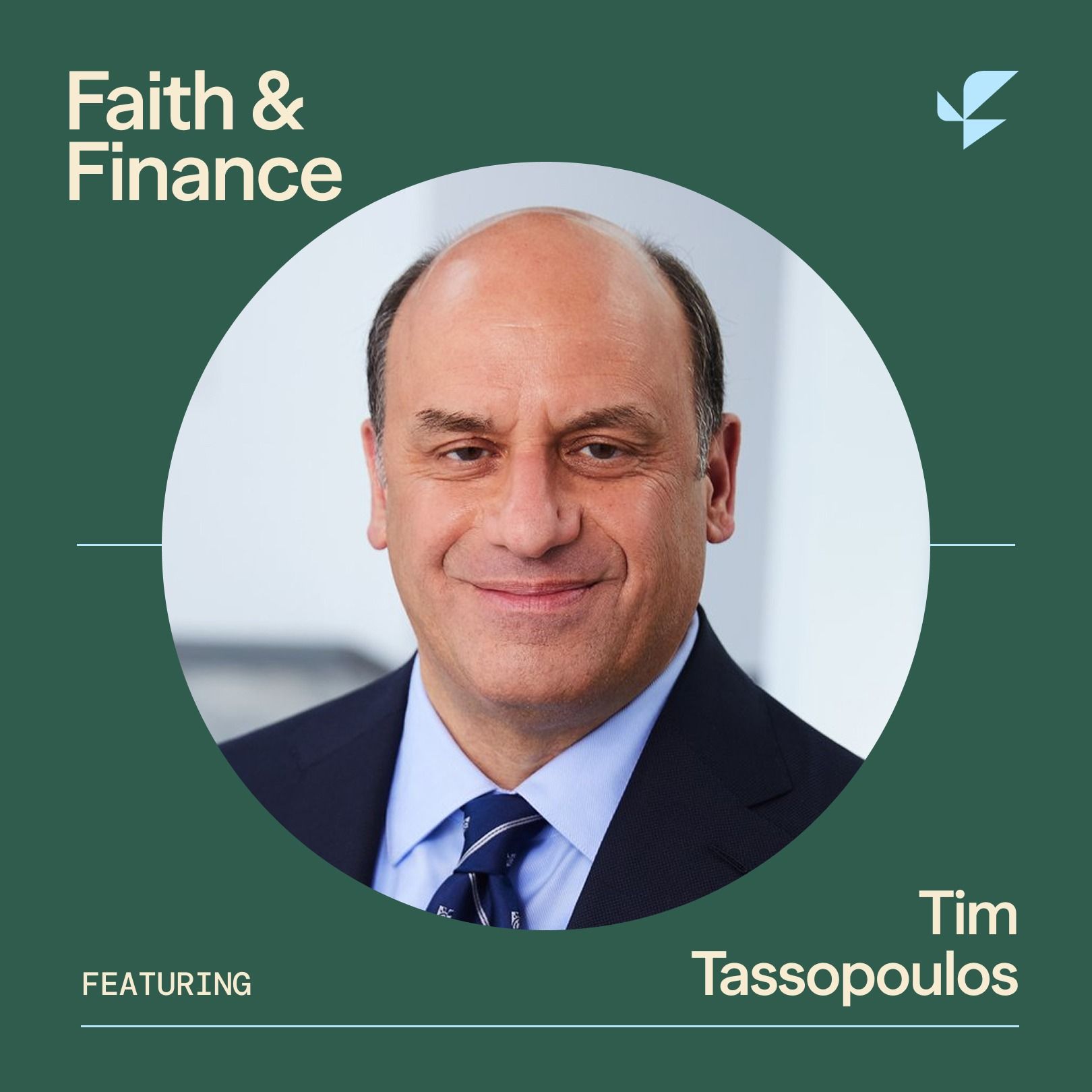
The conversation with Tim Tisopolis, former president of Chick-fil-A, explores stewardship as a cyclical process of gratitude, growth, and generosity. Stewardship begins with recognizing that God owns all gifts—resources, relationships, challenges, and opportunities—and being grateful for them, as ingratitude hinders faithful management. Growth follows gratitude, requiring humility and a commitment to lifelong learning, such as Tisopolis's practice of monthly "library days" for reflection and refocusing, which he increased when facing greater time pressures as president. This growth enables generosity, which encompasses not just finances but also time, spirit, and mentoring others. Truett Cathy modeled this through his "10-10-10" approach—give 10%, save 10%, work 10% harder—and his life verse, Proverbs 22:1, prioritizing a good name over riches. Chick-fil-A's corporate purpose embodies this cycle, focusing on glorifying God and positively influencing others. Practical listener questions address Medicare: if still employed with employer-sponsored coverage, including HSA plans, enrollment can be delayed without penalty, with an eight-month window after coverage ends. Another caller is advised not to refinance a 3% mortgage for home repairs or $8,000 in credit card debt, but to prioritize urgent issues like water damage and mold to prevent health risks and further deterioration.
[MUSIC] Stewardship isn't a one time choice. It's a cycle that moves from gratitude to growth to generosity. I am Rob West. Gratitude helps us recognize what God has entrusted to us. Faithful action helps us develop it and generosity allows it to bless others. Tim Tisopolis joins us today to show how that cycle applies to both time and money. And then it's on to your calls at 800-525-7000. That's 800-525-7000. This is Faith and Finance Biblical Wisdom for your financial journey. [MUSIC] Well, I've been looking forward to this conversation. Joining us today is Tim Tisopolis, former president and Chief Operating Officer of Chick-fil-A. During his decades with the company, Tim helped shape a culture known not only for operational excellence, but also for servant leadership, hospitality and investing in people. His leadership offers valuable insight into how organizations pursue growth without losing sight of their values or the people they serve. And Tim, what a treat to have you here. Thanks. Tell Lidey to be with you Rob. Tim, I want to ask you some stories about your time at Chick-fil-A and true at Kathy. We'll get to that, but let's first tee up this cycle of stewardship. Now, I think it's important you'd call it a cycle, not a checklist. So walk us through this relationship and your mind between gratitude, growth and generosity. Absolutely. So first and foremost, I think stewardship starts with the premise God owns at all. And so whether we're talking about gifts or talking about challenges, opportunities, natural abilities, capacities, relationships, we're called to be faithful stewards of all of those. And I believe it is a cycle because this is an ongoing process. And it's actually a way to approach life. And so first and foremost, when you think about all that God grants to us, the gifts that He gives us, we start with gratitude. We need to be grateful for those gifts. And I think it's really important to remember if you're not grateful, you can't steward well. And of course stewardship in that sense is managing for God's glory and for future generations. So we start with gratitude and we're grateful for gifts. And again, that does include challenges and opportunities, not just what we would consider as immediate resources or relationships. Sure. Then the next step is when we're grateful for those gifts, then we can focus on growing those gifts. And so again, whether it's the gift of relationships or the gift of opportunity, we want to multiply. We want to grow those gifts and we want to do it not for our own self, but for the service of others. And ultimately, we have to remember especially how important learning is to that growth cycle. And one of the things that I think is really important in stewardship is the more we learn, the more we can contribute. So we start with gratitude, then we want to grow those gifts that we're grateful for. And then ultimately, we want to be generous with those gifts. And that's really about sharing the fruit from the gifts that have been multiplied. That generosity, so often we think of it as generosity financially, but it's really generosity of spirit. It's generosity of times, generosity of relationships, generosity of what we have learned, where we get to share that with others. So when we do that, that generosity, I believe, opens the door for us to be grateful for that opportunity to be generous. And that just cycles right back to start that cycle of stewardship over again. Incredible. And you saw this play out at Chick-fil-A time and time again, starting with Truett, didn't you? Absolutely. You know, Truett was such a model of faithful stewardship. First of all, it's totally encoded in the corporate purpose of Chick-fil-A, which was penned in the early 1980s at a time of real crisis in the business. And the leaders of Chick-fil-A came together and decided in the midst of a business crisis to step back and ask the most important questions, why are we in business? And that group penned the corporate purpose. And it really reflected Truett's philosophy of business up to that point. But the corporate purpose has changed a word since. It's to glorify God by being a faithful steward of all that's entrusted to us and to have a positive influence on all who come in contact with Chick-fil-A. And so you see from that statement, of course, that has nothing to do with the number of sandwiches sold to their number of restaurants open. Everything about that statement is an others focused statement. The why, where we're focused on glorifying God, we're focused on faithful stewardship. It's not to our benefit that managing that that he blesses us with for others. And then ultimately, positive influence is about impacting others as well. Wow, there is so much there. I really want to unpack this a bit more, but you're right. It's a virtuous cycle. And when we get to the end and we're generous, it goes right back to the beginning so we can be grateful for what we have. Tim Tisopolis is here today. We're going to unpack a bit more this cycle of stewardship right after the break. And then we'll be taking your questions as well. This is Faith in Finance. I'm Rob West. He's Tim Tisopolis. And we'll be right back with much more after this break. Stay with us. Money always seems to ask for more. More income. More savings. More security. But what if the better question is, how much is enough? This Faith 5 Field Guide isn't just a book to read. It's a practical guide that helps you prayerfully answer that question for your own life, one step at a time. Order your copy of how much money is enough today at faithfi.com/shop. Are you a financial professional looking to grow your practice while offering advice that aligns with your Christian values? By becoming a certified Kingdom advisor, you'll gain the biblical wisdom and professional credibility to serve clients who are seeking faith-based financial guidance. Each year, more than 75,000 people search for a certified Kingdom advisor. Join our community and share your expertise with clients looking for someone who shares their faith and values. Start your journey today by going to KingdomAdvisors.com/getcertified. Stewardship begins with gratitude grows through faithful action and comes full circle in generosity. Today we're talking about the cycle of stewardship with Tim Tisopolis, former president and chief operating officer of Chick-fil-A. And Tim, I want to go back and unpack each of these. Let's start with gratitude. One of the downfalls of the rich fool in scripture in Luke 12 is that he saw everything as his. I think he says, "I and my about my grain and my barns like nine times in two verses." And this is a big idea that we start by just being grateful for what we have, which requires us to understand that it wasn't ours. It was entrusted to us, right? Exactly. And to your point about referencing scripture, even Matthew 25, 14 through 30, the parable of the talents. One of the key differentiators between the first and second servant and the third servant was gratitude. Yes. The first and second were grateful for the gifts, even though the gifts were different between the two of them and the third servant was clearly ungrateful. And again, you can't steward what you're ungrateful for. It's very difficult to make that happen. What do you think that rhythm of gratitude looks like? Because we've got to be intentional about that or it won't happen. I do believe that actually should start with the daily discipline of how do we start our day? How do we view all the gifts that are given to us? I believe it's of course a start with prayer and scripture. But it really is beginning to say, "I'm grateful in account our blessings kind of way each and every day." And again, I think so often when we think about blessings, we start with health or relationship. But actually, I think we've got a broad and the sense of gifts. And again, I think sometimes it's challenges and opportunities that need to be top of mind, not just simply maybe some good finances at the moment or good health at the moment. Yeah. That's well said. Let's move to growth. Growth, of course, creates margin and impact. But you made a statement there just before the break. You said that when we're growing the gifts that God has entrusted to us, it requires that we be a learner. I'd love for you to apply that in your own life. What has that looked like for you to be a lifelong learner? So first and foremost, I think you have to make a conscious decision that you do want to learn. You have to remember, you've got to be humble. No humility, no growth. I mean, it's just a fundamental principle. And the reason that I describe it as humility, you've got to acknowledge, I don't know it all, I can learn and I can grow. And so it's just very, very powerful to base your platform of growth on humility. And then you have to invest the time and the energy and effort for that learning to take place. And whether it's the books you read, the people that you associate with and that you're mentored by famous basketball coach John Wooden, the legend used to always say, "Everything we've learned, we learned from somebody else." And so I think you have to be open to input from others. And then at impact, your experience and then you reflect on your experience and then you can continue to learning grow. So I've got lifetime practices of learning and there's been very helpful to me over time. I know I've read about something you have that you call library days. I think this is brilliant. And it's actually a practice you increased when you stepped into the role of president at Chick-fil-A. Tell us about that. Sure. So Dan Kathy and others at Chick-fil-A had sort of set the example for
or pulling away and having time of reflection. And I picked up that habit and I got to be very consistent with it. And so throughout my career at Chick-fil-A, when my assistant and I would work on my calendar, one of the things we would put in first is a day a month at a public library. And while a public library, well, I couldn't be in a Chick-fil-A restaurant or I could be at the Chick-fil-A support center, but instead I chose a public library 'cause you can't use your cell phone the public library. And so it's easier to not be distracted that way. But it'd be a time that I would have some things to study. I would have a review of my calendar and some key activities and then I'd look ahead the next 90 days. And so it was a time of restoration. It was a time of reflection. And then a time of refocusing. And so they became invaluable to me. And you did mention about I was very blessed and honored to serve as the president of Chick-fil-A and the day it was announced to the Chick-fil-A family, that the Kathy family and the Chick-fil-A board of directors asked me to step into that role. I knew my time pressures were gonna go up tremendously. And some went to my assistant and I said, "You know, every hour is gonna matter more now because of the challenges from a time standpoint. I need to plan more so I'm gonna add a second library day." - Wow. - Which is sort of a counterintuitive when you think about it. - Sure. - It's like, "I'm gonna have more time pressure and now I'm gonna spend more time away." - Right. - But I think it did help me in terms of my effectiveness, but at least it gave me confidence that I was trying to refocus on a consistent basis. That is powerful. So we're grateful. We then grow these gifts that God has entrusted to us and then we're generous. And this is something that is just hardwired into Chick-fil-A organizationally. I know it's true about the Cathes as well. True it modeled that from day one. And that's what I love about what we're talking about here is this isn't theory. You saw this lived out in their lives personally as a family didn't you? - Oh, there's no question about it. And when you think about generosity, again, it does start with generosity of spirit. There's a sense of we wanna share inspiration with others, that inspiration that comes from us being inspired, having the spirit within us and then sharing that with others. It is generosity of time. And so often that can get overlooked when we think about generosity, but serving in so many ways, which of course the Cathie family does over and over and over again, whether through wind shape and other entities like life shape that members of the Cathie family sponsor. And then you've got an amazing impact when that generosity is generosity of investment versus in foremost development of others. And so there's power in mentoring. There's power in developing future leaders. That's all through the DNA of Chick-fil-A, the Cathie family, again reflecting true it who always did that himself. And then lastly, it's generosity of finances. And it's hard to find a major project across both Christendom and specifically here in the city of Atlanta, which is Chick-fil-A's home, that Chick-fil-A's resources and the Cathie's family's resources have not impacted it. - Yeah, that is so true. I know I've heard you talk about truots, 10, 10, 10 approach. Tell us about that. - Well, you know, truot just exemplified the idea of stewardship. And so often he would talk about finances in this simple formula. He would say, give 10%, save 10% and work 10% harder. And he always said in that order and that clearly impacted me as I think about use of finances. But the idea that no matter what you make, you want to start with your giving. And then again, as little or as much as you make that you do save. And of course that's saving for not only today, but also for the future. And then working 10% harder, that was always an encouragement to make sure that as truot was say, one out your best. And so he was encouraging a challenge to give our very best. We'll also say one thing you can't separate from truot is his life verse that he said over and over and over again, Proverbs 221, that a good name is rather to be chosen than great riches. And you know, he clearly lived that out where his good name and the good name of Chick-fil-A mattered and it mattered more than silver or gold. - Well, yeah, his priorities were right. And embedded in the organization with that 10% of work harder is really the extra mile service that Chick-fil-A is known for, isn't it? - That's right, second mile service where you take that straight from Matthew 541 and the idea of when asked to go one mile, go the second mile. And Chick-fil-A restaurant team members, Chick-fil-A owner operators and staff members all across now, not just the country, but even around the world. Do take that opportunity when the customer says thank you that we say my pleasure. - Incredible. Tim, we've just scratched the service. We're gonna have to have you back, but this has been a lot of fun. Thanks for reminding us that stewardship begins with gratitude, moves to growth and ultimately leads to generosity. We appreciate your time. - Thanks for having me. - Folks, that's Tim Tessopoulos, former president and chief operating officer of Chick-fil-A. All right, we're gonna take a quick break and then we'll be back with your questions at 800-525-7000. That's 800-525-7000. Or if you'd prefer to email your questions, send it to us at ascrawbidfaithfy.com. Stick around. (upbeat music) - Managing money isn't just a financial decision. It's a discipleship journey. And the Faithfy app is the only app built to guide both your money and your heart. - With meaningful check-ins, automated budgeting, personalized insights and biblical wisdom woven into every step. Faithfy helps you build habits that last. Join more than 70,000 believers pursuing clarity and peace as faithful stewards. Start your 30-day free trial today at faithfy.com/app. Faith and finance is grateful for support from even-tied investments, a faith-based asset manager pursuing investing that makes the world rejoice, even-tied invests from a biblical worldview, helping values aligned investors pursue integrity, impact, and performance through their portfolios. More information is available about how you can align your faith with your investments at faithfy.com/eventied. That's faithfi.com/eventied. (upbeat music) - Great to have you with us today on Faith and Finance. I'm Rob West. If you have a question, we've got a few lines open. We've got room for you 800-525-7000. Pittsburgh, PA, high suit, go ahead. - Sure, hi, thanks so much. My question is just some clarity around being Medicare eligible versus Medicare enrolled. My plan is, I turned 65, I am Medicare eligible and need to make a decision here. But my plan is to continue to work, Lord willing, continue with employment sponsored insurance, which is also an HSA that they contribute to and I do as well. So I've heard some conflicting information and I just wanted to see where I stand. If I even have a thing to be able to continue to not enroll at this time. - Yeah, the nice thing is, and the key here is whether or not you're still employed and covered by an employer-sponsored insurance plan. If that's true, then you do not have to enroll in Medicare at age 65. Now, when you are no longer covered by that insurance, you have eight months starting the month after your coverage ends to enroll in Medicare without a penalty. If you fail to enroll in Medicare Part B during that eight-month period, you have a permanent penalty. It's 10% of your Part B premiums for each 12-month period. You were eligible, but didn't enroll and then there's a smaller penalty for Part D. But if you have employer-sponsored insurance, you absolutely can wait. - And the HSA piece of it? - Yeah, that does also qualify as long as you've got an employer-sponsored plan even though it's a high deductible health plan. - Okay, okay. And would they can contribute to contribute as long as I'm not enrolled in Medicare? Is that correct? - Yeah, they absolutely can continue to contribute to that for sure. - Okay, thanks so much. Appreciate it. - Alrighty, thanks for your call today. Let's go to Baker's Field. Olga, how can I help? - Rob, actually, I have two questions. So currently I'm planning and I need to repair, make some repair to my house. - Okay. - About when I bought the house, it had a leak. So it would leak every year that it rained and it rained. And it leaked for about maybe five, six years. Finally, I need to make a repair. I need to fix the house because I don't know if I'm there's mold or not. So my ceiling is falling, the roof got fixed, but now I need to make the repairs on the inside of the house, the carpet, the walls, the flooring. I also have a pool that I haven't used in quite a while that I need to make repairs to what else, what's the other thing? And I also have some credit card data about maybe rough estimate, about $8,000 in credit card debt. So what I wanna do is I wanna make the repair in my home, I wanna pay my credit debt. And but I need to know, I don't know which route to take. I don't know if I should take out a heat lock or I don't know what the other program is. Or because I don't wanna refine as my house. Right now I'm a 3% interest rate.
rate on my home loan. So I don't want to get anywhere higher than that. And I know interest rate for the 6% so I just don't know where to go. How did how to go about it. Yeah, very good. Well, that was really helpful background information there, Olga. And I would agree with you that what you just shared with me, I would not recommend a refinance. A 3% fixed mortgage is extremely valuable and replacing it with a new mortgage at today's rates would most certainly increase the cost on the entire loan. So I would keep the 3% mortgage and then prioritize the repairs. I mean, obviously anything that involves water damage, there's the possibility of mold and that's both a health consideration and you want to prevent further deterioration. And then any remaining structural issues you need to deal with, I would say the pool repairs are probably a lower priority unless it's causing additional property damage. With the credit card debt, that's always a concern, even though it makes a lot of sense to get that interest rate down, I just want to make sure we corrected whatever got you into that in the first place to the extent it was just lifestyle spending beyond your means because we're taking what is unscured debt and we would be securing it to the house, which is a big deal and when we take the pressure off unless we've corrected the spending, you know, often I get a call six months later where somebody says, guess what? Now I've got the first mortgage at 3, I've got the home equity line of credit at 6 and guess what? The credit card debt's back. And so that's the last thing I would want as much as I would love for you to get that interest rate down. So what I would probably do is keep the first mortgage the way it is, get the home equity line of credit assuming you can afford to service the debt, but I wouldn't use that beyond what you need to use it on, certainly fixing any mold or water damage, things like that. That seems like a must. Anything else that's structural, maybe on the pool, but again, that one may be a wait on. That's up to you. The credit card debt, I would probably leave right where it is, but slide it into a credit counseling program so that you're not securing it to the house. And we still get the interest rate down. Our friends at Christian credit counselors dot org could help you access rates, not at the average of 23%, but down somewhere between 0 and 10%. The debt stays right where it is that your existing creditors, it just goes into the credit counseling program, which you can only access through a nonprofit credit counseling agency like Christian credit counselors. So that would be kind of my path forward here. But what are your thoughts on all that? Well, the credit card debt is not, you know, crazy expenditure. What happened is I want to say 10 years ago, 14 years ago, I wanted to go into a real estate adventure. And I made a mistake that at that time, my ex and I, you know, went into it with him, giving me his word that he was going to partner up with me and we were going to work that venture together. So here I am thinking we were going to do that together. We were going to, you know, I was going to pay off the debt with, you know, doing the buying homes, purchasing homes and, you know, flipping them. So I was going to get rid of that credit card. So I didn't think I was going to hold that credit debt for a long time, credit card debt. Everything that I pay for the whole course of study for real estate, flipping houses came out to $40,000. That's mainly where all the debt is come. The credit card debt is, I put all that debt of purchasing that program, you see all my credit cards at the time. So I'm still paying and it's taking me this long from you to pay it. Like I said, it's, I've brought it down to, you know, I give, I remember exactly about $8,000, $7,000 right now and I'm still paying it. I try to give more than just the minimum. I sometimes give like, this is for example, if my, my minimum is $25. I spend in like maybe $100 or $50 or $180. Yeah. To the payment. Yeah, and that's great. I mean, you've obviously made a lot of headway there and that says a lot about your diligence and just your ability to keep your lifestyle at a minimum. I'd still be less inclined for you to secure that to your home because if something comes out of left field, now all of a sudden your home is at risk. So I would still take that 8,000 and slide it into credit counseling, get the interest right down and you can pay extra the same way. Now, stay on the line. We'll talk a bit more out there. Big thanks to my team today. Autumn doing a great job on our phones, Devon, my producer, and of course Jim Henry providing great research. Come back to Jonas tomorrow. We'll see you then. Bye bye. Faith in finance is provided by Faith Buy and listeners like you.
Podcast Summary
Key Points:
Stewardship is a continuous cycle—gratitude, growth, and generosity—not a one-time checklist, grounded in the belief that God owns everything.
Gratitude is foundational; without it, faithful stewardship is impossible, as shown in the parable of the talents (Matthew 25).
Growth requires humility and intentional learning, including practices like "library days" for reflection and refocusing, even amid increased responsibilities.
Generosity extends beyond finances to time, spirit, relationships, and mentoring, exemplified by Chick-fil-A's culture and Truett Cathy's "10-10-10" approach (give 10%, save 10%, work 10% harder).
Chick-fil-A's corporate purpose—"to glorify God by being a faithful steward of all that's entrusted to us"—reflects an others-focused philosophy.
Practical advice
For home repairs and debt, avoid refinancing a low-interest mortgage (e.g., 3%) at higher rates; prioritize urgent issues like water damage and mold.
Summary:
The conversation with Tim Tisopolis, former president of Chick-fil-A, explores stewardship as a cyclical process of gratitude, growth, and generosity. Stewardship begins with recognizing that God owns all gifts—resources, relationships, challenges, and opportunities—and being grateful for them, as ingratitude hinders faithful management. Growth follows gratitude, requiring humility and a commitment to lifelong learning, such as Tisopolis's practice of monthly "library days" for reflection and refocusing, which he increased when facing greater time pressures as president.
This growth enables generosity, which encompasses not just finances but also time, spirit, and mentoring others. Truett Cathy modeled this through his "10-10-10" approach—give 10%, save 10%, work 10% harder—and his life verse, Proverbs 22:1, prioritizing a good name over riches. Chick-fil-A's corporate purpose embodies this cycle, focusing on glorifying God and positively influencing others.
Practical listener questions address Medicare: if still employed with employer-sponsored coverage, including HSA plans, enrollment can be delayed without penalty, with an eight-month window after coverage ends. Another caller is advised not to refinance a 3% mortgage for home repairs or $8,000 in credit card debt, but to prioritize urgent issues like water damage and mold to prevent health risks and further deterioration.
FAQs
The cycle of stewardship moves from gratitude to growth to generosity. It starts with being grateful for God's gifts, then growing those gifts through faithful action, and finally being generous with them, which leads back to gratitude.
Gratitude is the foundation of stewardship because you can't steward what you're ungrateful for. Recognizing that God owns everything and being thankful for gifts, including challenges and opportunities, is essential to managing them well.
Growth involves multiplying the gifts God has entrusted to you, such as relationships, opportunities, or abilities. This requires humility and lifelong learning, as you invest time and effort to develop these gifts for the service of others.
Generosity of spirit goes beyond financial giving and includes sharing your time, relationships, and what you've learned with others. It's about being others-focused and serving, which is a key part of the stewardship cycle.
Truett Cathy's approach was to give 10%, save 10%, and work 10% harder, always in that order. It emphasizes starting with giving, then saving for the future, and putting forth your best effort in work.
Being a lifelong learner means making a conscious decision to grow, rooted in humility, and investing time in reading, mentorship, and reflection. This helps you contribute more and grow the gifts God has given you.
Chat with AI
Loading...
Pro features
Go deeper with this episode
Unlock creator-grade tools that turn any transcript into show notes and subtitle files.
 PodcastTranscript AI