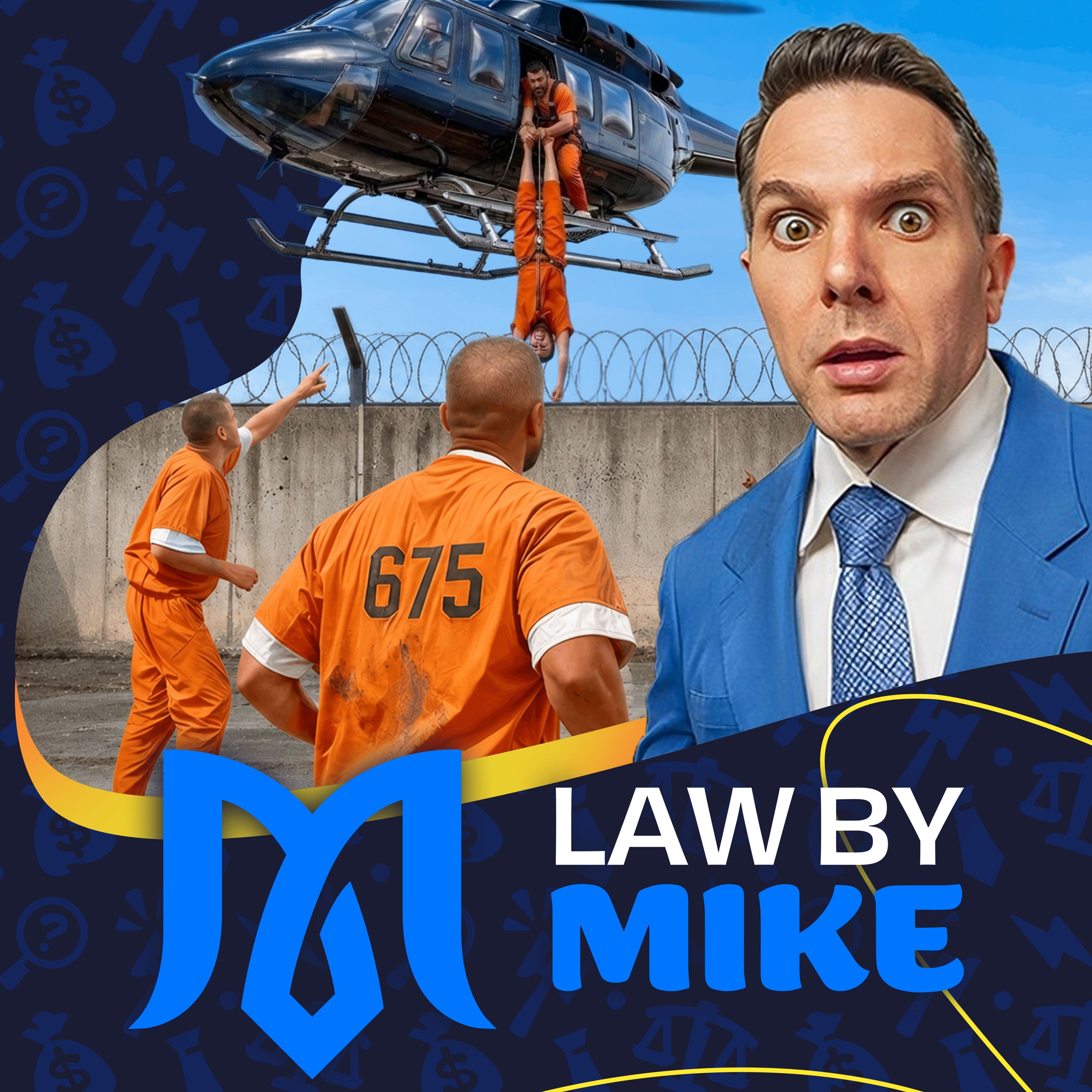
This compilation details some of the most audacious prison escapes in history, showcasing extraordinary acts of ingenuity, deception, and courage. Joaquin El Chavo tunneled beneath a secure prison, using blueprints and stealth to escape nearly a mile away. Yoshi Shiritori, under constant watch, escaped twice through mechanical and environmental manipulation, including using miso soup to corrode his handcuffs. The Alcatraz escapee plan involved drilling through ventilation shafts and building a raft, though the attempt failed due to missing coordination. In Rio, a prisoner disguised himself as his daughter, exposing institutional failure. In Argentina, a mass escape saw only six successful outcomes due to miscommunication and a hijacked plane. A South African prison case revealed a man faked his death, leading to a major cover-up and public outcry. In Australia, a woman orchestrated a helicopter escape with a convict, fleeing for 45 days before being caught. Finally, a convict disguised as a kangaroo was exposed when a guard mistook him for a real animal, resulting in a brutal punishment. These stories highlight the limits of prison security and the relentless human will to freedom.
These are the 10 craziest prison escapes of all time. El Chavo tunneled beneath a maximum security prison into a home nearly a mile away and escaped. Inside Mexico's most secure prison, Joaquin El Chavo Guzmán is locked in his cell. It's just after 8.50 p.m. and surveillance cameras show him pacing slowly, then heading toward the shower area in the corner of the room. 25 minutes later, guards realize El Chavo hasn't reappeared. They rush down the corridor and swing open the heavy steel cell door to find his bed neatly made and his belongings untouched. Panic sets in as a guard scanned the room until one of them looks down at the shower floor. Cut directly into the concrete is a rectangular hole, just enough space for an adult's shoulders to squeeze through. At the bottom, a narrow tunnel stretches forward. Electric lights line the ceiling. Air ducts run along the walls, pumping fresh oxygen through the passage. Sitting in the middle of the tunnel, a motorcycle mounted on rails, it's coated in dust, suggesting it was used for months to haul dirt and construction materials out of the tunnel. As they follow the passage, another realization sets in. The tunnel runs with pinpoint accuracy directly beneath the prison showers. A level of precision that suggests access to blueprints, security routines, and almost certainly help from someone inside the prison. The tunnel runs nearly a mile, ending beneath an unfinished house in a neighborhood called Santa Juanita. Yoshi Shiritori escaped prison four times. But this time, it was almost impossible, because he was watched at every hour. It's winter, 1942, and Yoshi Shiritori has just been transferred to Ashabiri Prison in northern Hokkaido, Japan's northernmost prison. Inside one of Japan's harshest prisons, Yoshi Shiritori is chained to the floor with custom-made handcuffs. The only time they're ever opened is when a specialist comes once a week to bathe them, and even then, it takes over two hours to unlock. Before this, Shiritori escaped prison two times. The first was done by picking his cell lock, using a metal wire from a bathing bucket, then slipping out through a cracked skylight, leaving a decoy in his bed so guards wouldn't notice. In the second escape, they put him in what was supposed to be an escape proof cell. But night after night, he climbed up and quietly worked the rotting wood around the skylight, until the frame finally broke, the guards watched him for hours a day. The only time he's not being directly watched is when he's reading and when they give him food. Over the next two years, Shiritori takes the miso soup from each of his meals and pours it on the links of his handcuffs. Over time, the salt begins to corrode his handcuffs links until one cold evening. The chain's break apart with his hands free. He now faces another problem. The door to his cell only has a food slot, which isn't possibly small. He slips his shoulders through and turns them on an angle. Disclocating, he pushes his body through and falls the cold hard concrete. He slides his body forward in agony, but eventually is able to get to his feet. He slips past the prison guards, climbs the wall and escapes into a nearby mountain. It's 9.30 p.m. as Alcatraz federal penitentiary. Four prisoners begin their escape. Frank Morris, John Anglin, Clarence Anglin, and Alan West. Morris and the Anglin brothers placed dummy heads on their pillows made from soap and concrete dust, combined with hair stolen from the barber shop floor. If guards look through the bars, they'll see what appears to be sleeping prisoners. West moves to his air vent to climb through an escape, but the concrete has hardened around it. The opening is too narrow. He can't fit through. Morris and the Anglins can't wait. They move forward without him. They enter the utility quarter behind their cells and climb to the top level of the cell block. There, hidden in the darkness is their equipment. For six months, they've been widening the ventilation ducts beneath their sinks. They've used discarded saw blades, metal spoons from the dining hall, and an electric drill they've built from a vacuum cleaner motor. They've hidden the noise beneath accordion music in their secret workshop above something else waits. A rubber raft made from stitching 50 stolen raincoats together, as well as paddles and life preservers. They've built by hand for their escape. Now they climb the ventilation shaft toward the roof. Guards here allowed crash when they break through. They slide down a kitchen vent pipe, dropping 50 feet to the ground. They climb over two barbed wire fences. They reach the northeast shoreline near the power plant. This area isn't covered by searchlights or guard towers. They pull out a stolen accordion. They modify to work as an air pump at 11.40 pm. Morris and the Anglin brothers push the raft into the water. Back inside the prison, West finally removes his grill. He climbs to the workshop. The others are gone. He finds an unfinished raft waiting, a paddle, three life preservers, and his own dummy head. He returns to his cell. The guards won't discover the escape until morning. A young woman walks towards the exit of Bongo 3 prison in Rio de Janeiro. She wears a pink shirt with donut cartoon characters. She's covering her eyes and keeping her head down. Something about this person isn't right. The woman's hands are a little too large. She's stopped and questioned. It isn't Silva's daughter. It's Silva himself. He's wearing a silicone mask, a black wig with long hair, and even a bra. He's disguised himself to look like his 19 year old daughter and swap places with her during her visit that morning. Prison officials release a video of him removing each piece. Officials question Silva's daughter and seven other people who recently visited him. They suspected someone smuggled the disguise items inside. They believe a pregnant woman who wasn't searched by guards hid the wig and glasses on her cell. Inside Rosson Prison, in Argentina, 110 prisoners are planning an attempt to escape at the same time. The escape was organized by Mario Roberto Santucha, leader of the workers' revolutionary party. Six leaders have formed what they'll call the leakage committee. They'll go first, so everyone else can follow. The prisoners move through the corridors. They encounter two guards. Gunshots ring out. The six committee leaders reach the front of the prison, where a getaway vehicle is waiting for them. The car drives toward Trelu Airport behind them. The other 104 prisoners reach the prison entrance. They look for the vehicles that were supposed to be waiting, but the vehicles aren't there. There's been a misunderstanding about the previously agreed signals. Most of the escapees are stranded, but 19 prisoners didn't give up. They run into the street and take control over three taxis. They order the drivers to take them to Trelu Airport. At the airport, something is already in place. A group of guerrilla supporters have disguised themselves as passengers. They board an OSTRO BAC 111 airline. They hijack the plane. The six committee leaders arrive and the pilot starts the engines. Minutes later, the three taxis arrive. The 19 prisoners jump out and run toward the aircraft. They're too late. The plane is already lifting off the runway. It's flying the Chile, where socialist president Salvador Alhinde is in power. Out of 110 who tried to escape, only six were successful. A fire breaks out inside Mongon Correctional Center in Blomfontein, South Africa. It's midnight, and the fire is in the cell of Tobbo Bester. The convicted criminal. Prison guards rush to the cell. They find a body inside, but it's burned beyond recognition. The Department of Correctional Services makes an announcement. They release the statement to the public that same day. Tobbo Bester is dead. But months passed. In October 2022, a journalist named Mauritia Damans published an article. She raises questions about the investigation. Months later, Damans published another article. This one includes post-mortem results of the burned body. The person was already dead before the fire started. Someone had set the body on fire after death. Police opened up a murder investigation. In March, another news site publishes new evidence. Journalist Mauritia Damans and Daniel Stein revealed the truth. He faked his death and escaped from prison. But there's something else in the article. A celebrity doctor has filed a court case. She wants the body returned to her. She claims to be Bester's wife under customary law. Two days later, the journalist published photographs. Bester is standing in a grocery store in Standin City. His wife is next to him. Bester is alive. Public outcry follows immediately. People demand answers. One week later, the Department of Correctional Services makes an admission. Tobbo Bester had escaped from prison. He'd been free for nearly a year while everyone believed he was dead. Lucy Ducco waits at Sydney International Airport. She has her phone ready. She's waiting for a call. John Killick is locked inside Silverwater Correctional Center. Across the city, he's imprisoned for robbery and firearm offenses. But today's the day, he gets out. The call comes. Killick tells Ducco he's entering the exercise yard. It's time. Ducco walks to a helicopter waiting on the tarmac. Pilot Timothy Joyce is inside. She told the company she wanted to see the construction site of Sydney Olympic Park from the air. The helicopter climbs into the sky. Minutes into the flight, Ducco reaches into her bag. She pulls out a pistol. She tells him to fly to Silverwater Prison. The pilot has no options. He turns the helicopter toward the prison. Below them, Killick is out.
is standing in the exercise yard. He can hear the helicopter approaching. The pilot brings a helicopter down. It lands on the oval inside the prison grounds. Prison officers see what's happening. They run toward the helicopter and open fire. Bullets hit the aircraft, two may contact, but the helicopter is still flying. Killik runs across the oval and quickly climbs into the helicopter. Joyce lifts off immediately. Bullets are still being fired at them. They fly away from the prison and land at another location. Dudeco and Killik tie up the pilot. They hijack a car and drive away. For 45 days, they stay on the run. They move between Victoria and New South Wales. Police search for them across two states. The escape makes international headlines. The media gives Dudeco a nickname. After 45 days, police found them. Both are arrested and returned to prison. In the 1840s, a convict named George Billy Hunt is locked inside an Australian penal colony. Guards watch the prisoners constantly. But Hunt has been watching something that guards ignore. Kangaroos hop near the prison grounds all the time. Hunt decides something simple. He'll become a kangaroo. He waits for his chance. One day, he manages to kill a kangaroo near the prison. He skins the animal carefully and removes the entire hide in one piece. The disguise is surprisingly good. Hunt has made a full kangaroo suit. He can wear it and move around inside it. From a distance, he'll look like a real kangaroo. Hunt puts on his disguise. He gets down on all fours. He begins hopping toward the edge of the prison grounds. The guards see a kangaroo moving across the open area. They don't think anything is unusual. Hunt keeps hopping. His plan is working. Then one of the guards gets bored. The guard is also hungry. He looks at the kangaroo. He decides it'll make good target practice. Maybe even good food. The guard raises his rifle. He aims at the kangaroo. Hunt slept with two choices. He can keep pretending to be a kangaroo and get shot. Or he can reveal himself and surrender. He pulls off the kangaroo skin. The guard stares. It isn't a kangaroo. It's hunt in a kangaroo costume. Hunt is dragged back to the prison. The authorities aren't amused. They decide to make an example of him. Hunt receives 150 lashes with a whip as punishment. And he never tries to disguise himself as an animal again. Insights are David Longland prison in Wackel, Queensland. Five prisoners are locked in their cells. Three years has passed since one of them, Abbott, was sent back inside. But this time, he's brought something most inmates only dream of. Angel wire. Diamond and crusted wire. Strong enough to slice through solid steel. The five men begin to work. Inch by inch, the wire cuts through the bars. Finally, an opening appears. Large enough to squeeze through. They move across the prison yard toward the perimeter fence, filled with sensors. The final barrier between them and freedom. Then they see him. Brendan Barrican is standing on the other side. He was released from the same prison jail two months earlier. Now he's back. But not inside the cells. He's outside holding bolt cutters. He throws him over the fence. Abbott catches them and starts cutting through the wire. The sensors are connected. The moment he breaches the fence, alarms will scream, and they do. Guards jump into the patrol vehicle and accelerate toward the fence. Barrican raises his gun. He opens fire. Bullets tear into the vehicle. It disables completely. More shops ring out. The guards can't move. For Abbott, this is unusual. His reputation is built on threats, not violence. But Barrican is panicky. The plan is falling apart. The gunfire buys them time. Abbott cuts through the final section of fence. All five men squeeze through the opening and sprint towards Barrican's waiting car. They jump inside. The car accelerates and disappears into the Queensland night. Around midnight in Karachi, the ground begins to shake. An earthquake strikes the city. Malier jail, the second largest prison in the province. Trembles with the movement. Inside, 5,000 inmates are locked in their cells. The facility is seriously over capacity. In fact, it was only ever designed to hold 2,200 inmates. The walls begin to shake. The building tremble. Prisoners feel the earthquake moving through the structure. Panic spreads through the cell blocks. Inmates start shouting from their cells. They think the building will collapse on top of them. Thousands of prisoners begin breaking down their cell doors. They're not trying to escape yet. They're trying to survive. The violence escalates. Police officers respond by firing warning shots into the air. Many inmates hear the gunfire and return to their cells. They decide it's safer inside than risking being shot. But others see an opportunity. The earthquake has created chaos. Security is overwhelmed. The guards can't stop everyone. 216 inmates storm through the prison gates and run into the streets of Karachi. Police immediately begin searching for the escapees. They go door to door, visiting past addresses of the missing prisoners. By the end of the operation, police had recaptured 80 inmates. More than 130 inmates remain at large. Families gather outside the prison gates. They're protesting. Relatives of inmates who didn't escape are frustrated that they can't see their family members. The minister for prisons, Ali Hassan Zadari, orders and investigation. He warns that any officers found it fault will be disciplined. The prison superintendent defends his staff. He tells the BBC, this wasn't a security failure. It was a natural disaster. But 216 prisoners had still escaped. And more than 130 of them are still free.
Podcast Summary
Key Points:
Joaquin El Chavo Guzmán tunneled nearly a mile beneath a maximum-security prison using precise blueprints and hidden access, escaping through a tunnel beneath the shower area.
Yoshi Shiritori escaped four times, including by corroding handcuffs with miso soup and using a food slot to slip through a cell door, showcasing ingenuity under extreme surveillance.
The Alcatraz escapees constructed a raft from stolen raincoats and used ventilation shafts to reach the roof, only to be thwarted when West later discovered the escape was already underway.
A prisoner in Rio de Janeiro disguised himself as his 19-year-old daughter with a silicone mask and wig, leading to a major scandal when his survival was revealed.
In Argentina, 110 prisoners attempted a coordinated escape, with only six succeeding due to a failed signal and a hijacked plane that took off before the others reached the airport.
A fire at a South African prison was initially reported as a death, but evidence revealed the man had faked his death and escaped, exposing a systematic cover-up.
A woman in Australia planned a helicopter escape with a convict, hijacking the flight and fleeing for 45 days before being captured.
A convict in Australia disguised himself as a kangaroo, only to be exposed when a guard shot at him, leading to a severe punishment and long-term imprisonment.
Summary:
This compilation details some of the most audacious prison escapes in history, showcasing extraordinary acts of ingenuity, deception, and courage. Joaquin El Chavo tunneled beneath a secure prison, using blueprints and stealth to escape nearly a mile away. Yoshi Shiritori, under constant watch, escaped twice through mechanical and environmental manipulation, including using miso soup to corrode his handcuffs.
The Alcatraz escapee plan involved drilling through ventilation shafts and building a raft, though the attempt failed due to missing coordination. In Rio, a prisoner disguised himself as his daughter, exposing institutional failure. In Argentina, a mass escape saw only six successful outcomes due to miscommunication and a hijacked plane.
A South African prison case revealed a man faked his death, leading to a major cover-up and public outcry. In Australia, a woman orchestrated a helicopter escape with a convict, fleeing for 45 days before being caught. Finally, a convict disguised as a kangaroo was exposed when a guard mistook him for a real animal, resulting in a brutal punishment.
These stories highlight the limits of prison security and the relentless human will to freedom.
FAQs
El Chavo tunneled beneath the prison for nearly a mile, using precise planning and access to blueprints and security routines. The tunnel ran directly under the prison showers and ended beneath an unfinished house in Santa Juanita.
He slowly corroded his handcuffs using salt from miso soup over two years. He then slipped through a narrow door by dislocating his shoulders and escaped into a nearby mountain.
They widened ventilation ducts beneath their cells using tools and metal scraps, then climbed through the ducts to the roof. They used a rubber raft made from stolen raincoats to escape into the bay.
He disguised himself as his 19-year-old daughter using a silicone mask, black wig, and bra. He swapped places with her during a visit, and prison officials later discovered the disguise after questioning.
Six leaders escaped first and reached a getaway vehicle, while 104 others were stranded. The group of 19 managed to hijack a taxi and reach the airport, but were too late as a plane lifted off before they could board.
No, the fire was staged. Post-mortem results showed the body was already dead before the fire, and Bester had faked his death to escape prison. He was later found alive in a grocery store.
Chat with AI
Loading...
Pro features
Go deeper with this episode
Unlock creator-grade tools that turn any transcript into show notes and subtitle files.
 PodcastTranscript AI