The transcription begins by highlighting Deloitte's role in helping organizations implement AI for tangible business impact. It then shifts to a detailed historical and legal examination of the U.S. military draft, using Muhammad Ali's Supreme Court case (Clay v. United States) as a central narrative. Ali, a conscientious objector based on his Islamic faith, refused the draft for the Vietnam War, leading to a criminal conviction and the stripping of his boxing title. His case underscored broader societal debates about who must serve when the nation calls. The draft's constitutionality was affirmed in 1918, but it has perpetually faced challenges over inequality and coercion, exemplified by Civil War-era substitution policies. Public pressure during the Vietnam War era led to the 26th Amendment, aligning the voting age with the draft age. Ultimately, the Supreme Court overturned Ali's conviction, though the decision hinged on procedural grounds rather than a broad endorsement of his pacifism. The discussion frames military conscription as a persistent tension between the state's need for defense and individual rights, a fundamental challenge embedded in the U.S. constitutional framework.
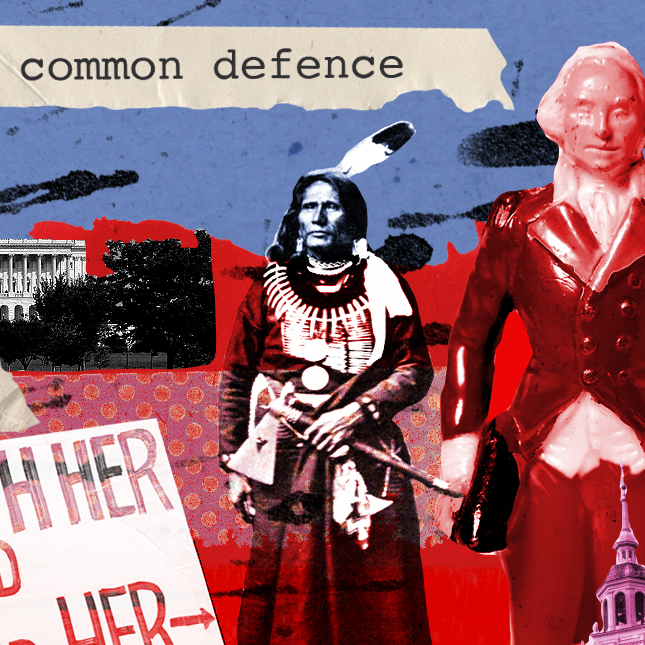
A biotech firm scaled AI responsibly. A retailer reclaimed hours lost to manual work. An automaker now spots safety issues faster. While these organizations are vastly different, what they have in common sets them apart. They all worked with Deloitte to help them integrate AI and drive impact for their businesses. Because Deloitte focuses on building what works, not just implementing what's new, the right teams, the right services and solutions. That is how Deloitte's clients stand out. Deloitte together makes progress. In 1971, a case came before the US Supreme Court concerning the military draft. It was a case about a fighter who didn't want to fight. More specifically, a world famous American boxer who fought in the ring, but was opposed to fighting the war in Vietnam. Welcome to Miami Beach and the Giant Convention Hall for what may be the richest heavyweight championship fight of all time. And into the ring. The case was Clay versus United States. Clay being the former Olympic Light Heavyweight Champion, Caches Clay. Later known as Muhammad Ali. To the ungunnetland I heard of, now Caches Clay, not only is still there, but still gapping away with his left hand to the face of Sonny Listernan doing remarkably, remarkably well in this sensational heavyweight championship. The story of the case starts in a way with that name change. It's looking as though Clay might put off the greatest sensation of modern times. Back in 1964, when Caches Clay was 22 years old, he won the World Heavyweight Boxing Title in a major upset in Miami Beach. I must be the greatest. I told the world I talk to God every day. If God's with me, can I know about it? If you're against it, he wanted to go to Heavens, so I took him himself. You took him in Heaven. I am the King of the World. Hold it, hold it. I'm perdiant. Hold it. You're not that pretty. I'm a man. Man. I should come to him. Two days after the victory, Clay announced publicly that he was a convert to the nation of Islam. It's great interest in the fact that you have joined the Muslim religion. How long have you had this interest, Caches? Oh, for the past six years, I would say, after hearing a lot of teachings on Negro history and who we were before we got here. Two weeks after the victory, he said from now on, he would go by his new name, Muhammad Ali. Caches Clay was the name of the white slave master. But now that since we are free, we are no longer slaves. So therefore, I'm going back into the name of a black man. Muhammad means one who's worthy of all praises and one who's praise worthy. And Ali means the most high, but Clay only meant dirt with no ingredients. Two years after the victory, Ali applied for an exemption to the draft for Vietnam. He stated that he was a conscientious objector. A pacifist who, for religious purposes, was opposed to fighting in such a war. The appeal board denied his application. It declared he had to serve. But. And I will say here boldly now on television. No. I will not go 10,000 miles from here to help murder. And kill another poor people simply to continue the domination of white slave masters over the darker people of the earth. That led to a criminal prosecution against him that slowly wound its way through the court system. And while the court's debated whether he had a constitutional responsibility to serve, or a constitutional right, not to, the public had its own animated debate over the draft. As for Ali, the athletic commission almost immediately stripped him of his boxing license. And it stripped him of his title as World Heavyweight Boxing Champion. But what the Supreme Court would do? That remained to be seen. This was one of many, many cases surfacing in the US court system that pressed for a clearer answer to the question, who is required to go to war when America calls his name. And who isn't? I'm Lillian Cunningham with the Washington Post, and this is Constitutional. We the people of the United States in order to form a more perfect union, establish justice, ensure domestic tranquility, provide for the common defense, promote the Jenna Welfare. I'll secure the blessings of the Liberty. To ourselves, my past, for the. Do ordain and establish this Constitution for the United States of America? One intention the framers had when creating the Constitution, as you just heard in the preamble, was to provide for the common defense. But who shoulders that duty has not always been so clear? At many points throughout American history, it's fallen to the poor more than the rich, to the young more than the old, to men more than women. Some who've wanted to fight have been barred. Some who haven't wanted to fight have been compelled. The Vietnam War era of the 1960s and 70s in particular, with its widely unpopular military draft, forced the United States to clarify its logic on this. In the public sphere, in the Supreme Court, and in Congress, the nation grappled with who's required to provide for the common defense of America, who isn't, and why. The Supreme Court case Clay versus United States was about conscientious objection. In the case Rosker versus Goldberg, the court weighed whether it was unconstitutional to draft only men. And in Congress, there was the pressure to justify why someone too young to vote could be drafted to fight a war. This was a moment when the civil rights movement was resounding in America, and the women's liberation movement was gaining strength. The country was confronting questions that had played it since the beginning. Questions about how far to extend civil rights, voting rights, women's rights, the right to free speech, but amid all the debate over rights that should be guaranteed and expanded under the U.S. Constitution, another question was lurking. Do those rights come with corresponding responsibilities? For the privileges in American citizen gets, what is he or she asked to give in return? The question of defending the state is his oldest history. This is Bernard Rosker, who was director of the Selective Service under President Jimmy Carter. His reference is in the Bible to the obligation of the Israelites to defend the state, and is also reference in the same paragraph in Exodus to, in a sense, deferments if you are newly married, you to go home and take care of your wife. If you are fictive heart, you're to go home because we don't want you to infect other people and being fictive heart. Figuring out how to provide for the common defense and whether to compel all citizens to help has been a challenge every nation on earth has had to sort through. And the fundamental question is what's the role of the state? Is the role of the state to protect you or for you to protect the state? In 1787, when the framers were creating the Constitution, a draft, a military draft, wasn't a concept they explicitly put forward. The Constitution at several points talks about the military without discussing the possibility of a draft. This is Jill Hasday, a professor of constitutional law and anti-discrimination law at the University of Minnesota's Law School. Congress has the power to declare war. Under the Constitution, Congress also has the power to raise and support armies and to provide and maintain the navy. But alongside giving these powers of war to the Congress, the framers also put some checks and constraints on that power. For instance, Congress has the power to appropriate money for the army, but no appropriation should last more than two years. This would enable Congress to temporarily pull together a national army during times of war and emergencies, but would guard against the Founder's fear of building up a full-time professional army, which they worried could be a threat to democracy. In the Constitution, though, there are no real details about how such a temporary army would be raised. As I said, there's no specific mention of the draft, but soon enough, military drafts became a primary tool that Congress used. I think the key point to note is the U.S. has never been able to get enough soldiers for a total war without conscription. Volunteer armies have been sufficient. When there's not total war, but in total war, we've always needed to resort to conscription. In other words, despite that the Constitution doesn't directly say it's okay to compel citizens to serve in the military. In really major wars, the United States Congress has always found it necessary to call a draft in order to raise a robust enough army. The first draft is instituted during the Civil War under the draft act of 1863. It applies to all male citizens and also to aliens who want to become citizens. Then the draft just follows the total war is the United States. So there's a draft during World War I, there's a draft during World War II, and then there's a draft during the Cold War, which includes both the Korean and Vietnam era. In fact, there's a continuous draft because of the combination of World War II and the Cold War from 1940 to 1973. The draft, it varies a little over time, but there's some tenants that remain in place. One, every draft we've had has been limited to male citizens. Two drafts tend to have an age range. Focusing on younger men. Three, there's able-bodied requirements. And in fact, during World War I and World War II, there's a lot of concern that a lot of young men are drafted and they show up and they're not able to serve because they don't meet the basic health requirements, and it's a sign of poor public health. There's one other thing that has remained constant from draft to draft throughout American history. There's always pushback. And those critiques started as early as the Civil War. The draft is deeply unpopular when it's imposed, in part because there's exemptions. The two main exemptions are you can hire a substitute or you can just pay $300 to get out of the draft, so Richard Mankan evade the draft. That's like paying about $8,000 today. Actually, there's a whole industry, by the way, of people during the Civil War who would hire themselves out as substitutes, and the key move they would make is you would hire them, they would be your substitute, then they would desert the army, take a new name, and then get someone else to pay them to be a substitute. This created two big problems. It meant that poor citizens disproportionately shoulder the fighting and the dying. And it meant that the Union Army didn't have as many soldiers as it needed or wanted, since these substitutes kept deserting. But pushback on the draft in America went beyond just this critique that it was too unequal or too inefficient. Citizens also asserted it was unlawful. Every time there's a draft, there are constitutional arguments that are presented against the draft, and these arguments tend to be fairly similar over time. So one argument that you see is at least after the Civil War, it's inconsistent with the 13th Amendment's prohibition on involuntary servitude. Another argument that's made is it exceeds federal power. That maybe the states have the power to form militias, but the federal government doesn't have a power to impose a draft. In 1918, after a draft had been called for World War One under President Woodrow Wilson, a big case went to the Supreme Court challenging the constitutionality of it. The case was called Arver versus United States. And the main argument was this 13th Amendment argument that since slavery or involuntary servitude had been banned from the United States in 1865 under the 13th Amendment, shouldn't that mean a military draft wasn't allowed anymore either? The whole idea of having a draft is you can't get sufficient volunteers, right? You're forcing people to do something that they haven't chosen to do. And if a draft is forced labor, like slavery is, then that means it's also unconstitutional. Well, the Supreme Court did not agree. In 1918, it upheld that a military draft is permissible under the US Constitution. And its decision in part hinged on a clause in the main body of the constitution called the necessary and proper clause. That's Article 1, Section 8. This is where, after detailing all the powers that Congress has, the Constitution then states that Congress can basically create any laws that are, quote, necessary and proper for carrying out all of these powers that have just been given to them. The court's basic theory is Congress under the Constitution has the power to race and support the army, to declare war, the power to make rules for the government of regulation, the army and naval forces. A draft can be necessary and proper to carry that out. So, involuntary military service is constitutional because it's a necessary and proper part of Congress's ability to effectively declare war and mountain army. Okay, that's one rationale the court uses. But there's something else the court says too, which is a bit more philosophical. Another argument that the Supreme Court makes in this 1918 case is to say, the responsibilities of citizenship are sort of the counterpart to rights. Just as male citizens have the right to vote and to participate in politics, they have this responsibility of the draft. A couple of decades later though, this argument led to another key constitutional question. If you don't have the right to vote, do you still have the responsibility to serve? After World War I was over, the draft had ended and there was a stretch of years without it. But it was reinstituted in 1940 when World War II was underway. The agency that administered the draft was called the Selective Service. As you know, I was the head of the Selective Service at one point. America hadn't yet entered the fighting, but it wanted to be ready just in case. So it started a draft for men ages 21 to 36. By 1942, the United States had joined the war and it needed more men. So under President Franklin Roosevelt, the Congress lowered the draft age to 18. The thing was, in most states, the voting age at the time was 21, meaning a lot of young men were now responsible for defending the country without having the right to actively participate in its democracy. So a popular slogan emerged at youth protests against this World War II draft, and the slogan was, quote, "old enough to fight, old enough to vote." The movement prompted a West Virginia congressman named Jennings Randolph to propose a new amendment to the U.S. Constitution, which would lower the voting age nationally to 18. That way, those men being asked to provide for the common defense could also experience, as the preamble says, the blessings of liberty. The notion that if we're going to take you for service at 18, you should be able to have a say in that decision by being allowed to vote, I think, is a natural extension. So this issue of what's the right age and what are the collateral responsibilities that have kind of always been there. Randolph's idea for an amendment didn't get enough traction. He proposed it 10 more times over the next 30 years. Even presidents like Dwight Eisenhower came out in support of it, but it still didn't go anywhere, until 1971. The Vietnam War was raging, Richard Nixon was now president, and that World War II slogan had returned to the streets with more force. Amid all the protests against the Vietnam War itself, and against this war's draft, some of the students marching through the cities could be seen with banners and pins on their sweaters that, again, said, "old enough to fight, old enough to vote." It was enough to finally create a tipping point. Jennings Randolph, now an old senator, proposed again an amendment to lower the voting age. This time was the 11th time he proposed it, and in March of 1971, it passed Congress almost unanimously. Within 100 days, the necessary three quarters of state legislatures had also ratified it. That made it the fastest that any amendment to the U.S. Constitution has ever been ratified. That amendment, the 26th amendment, brought rights and responsibilities a bit more in line with each other, but it definitely didn't end resistance to the draft. You can't really say, "Well, I gave you the right to vote," and therefore, now I feel better about conscripting you. For the young man who would say, "That's fine, but I'm still going to Canada," having the right to vote had very little impact. To look at the constitutionality of those other kinds of objections to the draft, the ones that lowering the voting age couldn't solve, we have to go back to Cache's clay. For several years now, Cache's clay, or Muhammad Ali, had been fighting in the lower courts against his criminal conviction for evading the draft, and he kept losing. He had finally managed to get his boxing license reinstated after suing the Athletic Commission, but that didn't turn out so well either. In March of 1971, when he could fight again, he went up against Joe Frazier, the new undefeated heavyweight champion who had emerged in the past few years, while Ali wasn't allowed to box. The match took place in New York City at Madison Square Garden, and it was called "Almost hurting for the fight of the century." The fight of the century. And another round two. Muhammad Ali had the fun, but Frazier landed the punch. Now Muhammad Ali is piling up points with those jabs, but they're fighting like lightweight now. Round 17. Round 13 of a 15-rounder. But Frazier has caught him again. The tide turns the other way now. 15 and final round. And then in the very last round, for the very first time in his career, Muhammad Ali was knocked down. He had lost his championship title four years ago for evading the draft, and now he had lost his chance to reclaim it. But he still had one last shot at overturning his conviction for draft evasion. The Supreme Court had decided to hear his case. "That's good, you may receive whenever you're ready." "And may it please the Court. This is an important case because it poises the famous athlete, the heavyweight or ex-heavyweight champion of the world against the United States Selective Service System." The Court was considering his conscientious objector status. "What's showing on the face of this application, are we considered to be a primafacial entitlement to the status of conscientious objector?" Now to be granted that status by the Selective Service, you had to be able to prove you were religiously or morally opposed to all wars, the concept of war itself. Not just this one. "Muslim means peace. Total submission to the will of a law. Do not take the lives of anyone. Nor war when ordered by a law and imprensive he had to work good. Keep up prayers and pay poor rates. That's a quotation from his form 150." There were lots of conscientious objector cases popping up across the United States around this time. In fact, the Supreme Court had just heard a case not long before Muhammad Ali's, where other young men were morally opposed to fighting the Vietnam War, but had been denied conscientious objector status. They lost their case in the Supreme Court, because their objection was specific to this war in Vietnam rather than to all wars in general. "Holy Wars." "Yes, it." In Ali's case, he was up against the same problem. Most of the Supreme Court justices thought there wasn't enough proof that he religiously opposed all wars. It probably didn't help that this was one of the best fighters in the world talking about his pacifism, and the justices were actually all but ready to rule not in his favor after hearing the oral arguments. Most of the justices were convinced that Muslims, because they believe in the idea of a just holy war, couldn't be considered pacifists as far as the draft was concerned. But not long before the decision came out, one of the justices, Justice John Marshall Harlan, changed his mind. And that spurred other justices to reconsider the case as well. In the end, they shifted just enough to decide the case in Ali's favor. But the primary reason they overturned Ali's conviction for draft evasion was not that they found him a valid conscientious objector. Instead, they pointed to the fact that the appeal board that originally denied Ali's conscientious objector status hadn't ever provided its rationale. And so the Supreme Court said, for that reason, his conviction should be overturned. This was a win for Ali, but not for other conscientious objectors. The decision brought greater public attention to the inconsistencies and problems that riddled the idea of involuntary service but even after his case, it was still considered constitutional to require someone to fight who doesn't support what's being fought for. This meant that others who objected to the draft would need to find a different kind of argument if they wanted to challenge its constitutionality. Among those who did want to challenge it was a student anti-war group called the Philadelphia Resistance, and they at the same time were bringing forward their own case against the draft. And they were thinking about on what other grounds it might be unconstitutional. Good evening. I have asked for this radio and television time tonight, for the purpose of announcing that we today have concluded an agreement to end the war and bring peace with honor in Vietnam and in Southeast Asia. In January 1973, President Nixon announced an end to the Vietnam War, but the process of ending the draft had started even earlier. In 1968, Richard Nixon was the candidate for president. And he had a number of advisors. The most important was a professor from Columbia at the time by the name of Martin Anderson. And Martin had been opposed to the draft, not the war, but the draft. He felt that there were better ways of raising a military, and that was to use the market and pay for it. And he convinced Nixon to include this in his platform. And when Nixon became president, one of the first things that he did was to form a commission to study the feasibility of moving to a volunteer force. Many Americans were in favor of ending the draft. Not only had there been pushback that such young men were being forced to fight, and that so many men who were morally opposed were being forced to fight, but also, kind of like back in the Civil War, there was a real sense of injustice around the fact that wealthier men could evade the responsibility. Draft deferments during the Vietnam War had been harder to obtain than in previous wars, but they were still sometimes given to scientists, for example, or to those pursuing higher education, which meant the fighting fell disproportionately to those of lesser means. And for all the civilian arguments for getting rid of involuntary service, the Defense Department was starting to experience some problems with it as well. Technology had pushed the military to the point that we needed skilled people who could work our weapon systems, and we were not getting those kinds of people from conscription. And so there are issues of efficiency as well as equity. All of this momentum was building to end the draft, but a big question remained, the most pivotal question of all, really. Could the United States effectively power a wartime army without a draft, without forced service? For a major war, it had never been done before. The Commission Nixon set up when he became president, the Gates Commission, was charged with trying to answer that question. And the Commission had a broad cross-section of Americans, many of them quite opposed to the notion of a volunteer force as a going-in position. But on the panel was an economist by the name of Milton Friedman. And Friedman from the University of Chicago was a great devotee of market solutions. And over the course of those meetings, he convinced his colleagues on the Commission that it was feasible. The Commission's report came out in 1970, and it officially recommended that the United States end the draft. To replace it, they suggested creating an all-volunteer force made up entirely of citizens who chose to enlist. Despite some resistance, Congress agreed. It authorized the extra funding to recruit and pay citizens to voluntarily join the army. And just as the Commission predicted, it worked. They started getting enough people to voluntarily enlist, that by 1973, they could do away with the draft. And ever since, the US Army has been made up only of volunteers. Because the draft had officially ended, many conscientious objector cases moving through the courts came to a halt in the mid-70s. So for a few years, these constitutional questions around compulsory military service seemed to have disappeared. But then. I come to you this evening to discuss the extremely important and rapidly changing circumstances in southwest Asia. Recently, there has been another very serious development. Massive Soviet military forces have invaded the small, non-aligned sovereign nation of Afghanistan. After the Soviet Union invaded Afghanistan, President Carter decided that he wanted to reinstate military registration as a show of strength. Law professor Jill has stayed again. So the idea of military registration is the government isn't drafting anyone now, but we want your name and phone number and address if you're eligible for the draft and the idea is then if we have a military emergency and we need to immediately impose a draft, we're kind of all set. We have your address. This was actually an idea that the Gates Commission had put forward. Some of the commissioners had worried that a volunteer army might be sufficient in peacetime, but might not be sufficient if there were another major war. So they recommended that the Selective Service continue to register citizens, just as a precaution. Basically, they said, "Maintain a list of young men's contact information." But about 10 years had passed since the Gates Commission made that recommendation, and no lists had been made. The Carter administration initially had no intention of reviving these registration lists either, but then the Soviet invasion of Afghanistan happened. That's when President Carter changed his mind, and he decided, "Okay, let's revive the military registration process just as a precaution, and just to show the Russians were prepared to fight if necessary." When Carter announced this though, he said he didn't just want to reinstate military registration. For men, this time, he said women should also have to register. Carter's thoughts are at the same time pretty radical and pretty conservative. So what's radical is he says, "Why don't we register women as well as men?" But what's conservative is he never questions the idea that women are going to be excluded from combat. His thought is just that if we register men and women, and then if we have a draft, draft men and women, that will free up more men to serve in combat jobs because women will be available to do administrative jobs. Plus, women had already been in the military for a long time. No, they couldn't serve in combat roles, but they were increasingly serving in plenty of other capacities that were necessary to a growing and effective defense force. But Congress refused to authorize the funds to register women. Leaning on the argument that since they weren't allowed to serve in combat, they shouldn't be registered. In some ways, this wasn't surprising. Registration and the draft had always been limited to men. But the constitutional background had changed. A decade earlier, the Supreme Court had begun to subject laws that you explicit distinctions between men and women to much more scrutiny under the Equal Protection Clause than they had ever had before. And this made male only registration constitutionally vulnerable in a way that it hadn't previously been. Still, Congress went ahead and authorized the reinstatement of male only military registration. And it was at that point that I got blocked out of the defense department and sent over to be the director of selective service. Bernie Rosker here was charged with starting registration back up by July of 1980. But a few days before it was about to take effect, that conscientious objector case that had been put forward during the Vietnam era by the anti-war group, the Philadelphia Resistance, that case reappeared. It had been lying dormant since the draft had ended in the mid-1970s. But now it was revived because one of its main arguments challenging the constitutionality of the draft had been that it's unconstitutional under the Equal Protection Clause of the 14th Amendment to compel men to register but not women. With registration starting back up, just for men, this argument suddenly seemed relevant. At one point, the district clerk writes to the plaintiffs and says, "You know, we haven't had any activity in this case in a long time. We're about to drop it from the doctorate. You still interested." And they say, "Okay." And they decide to go forward with it just with the sex discrimination claim. And the district court in Philadelphia ruled in the plaintiff's favor, declaring just days before registration was about to begin, that male only registration was unconstitutional. The government filed an appeal because it wanted to go forward with male only registration. And because Bernie Rosker was the head of the Selective Service at the time, his name was the one added to the case. So the case became known as Rosker versus Goldberg. Robert Goldberg was one of the students. And the case went to the Supreme Court. The Court had already been hearing a lot of sex discrimination cases raised during the recent Women's Rights Movement. And the Court had been getting tougher on laws that treated men and women differently. So it looked like there was a good shot that male only registration would be declared unconstitutional. By the time Rosker has decided in 1981, the Court has held that sex-based data action, i.e. a statute that explicitly distinguishes between men and women, is going to be subject to something that's called intermediate scrutiny under the protection clause. Basically, you have to have an important government interest. And the kicker is, you have to show a substantial relationship between that important government interest and the sex-based classification. Was there a significant reason this registration had to be only for men in order to support the government's interest in national defense? Would registering women substantially compromise that interest? The conscientious objectors who brought the case, President Carter, even some women's equality groups, thought, "No, there was no compelling reason it had to be male only." But the Supreme Court decided there was. In Chief Justice Renquist's opinion, he relied on the same logic put forward by Congress. That since women couldn't serve in combat roles, it was, in fact, constitutional to only register men. Bernie Rosker here, even though his name was the one that technically won the case, he disagreed with the decision. He thought it was driven more by the Court's preconceived notion of appropriate gender roles and responsibilities, unless by the actual needs of the military. There is no fact in the history of selective service that supports that view, that we had a draft to fill combat vacancies. We had a draft to grow the military, and that included combat positions and non-combat positions. There's no reason women couldn't be drafted in a limited number to fill a limited number of positions that they were already filling as those positions expanded. But Mr. Justice Renquist invented facts to come to a conclusion about the social role of women. He couldn't write an opinion which says that the role of women is to be mothers. He couldn't write that, so he invented facts. That justified a decision, which they didn't have the honesty to write about, at least in my opinion. I mean, I think one thing that's so interesting about registration and the draft is it's both about how the military will be organized, but it's also about how society will be organized, which is why there was so much emotional debate in society, on Capitol Hill, in the Supreme Court building, about these questions of service. But what I would say is that rights and responsibilities of citizenship are deeply intertwined, so military service has long been understood as a core expression in demonstration of both citizenship. It's often a stepping stone to political leadership and to other leadership roles within civilian society. Whatever you think of John McCain's politics, you can't really understand his start as a political leader without knowing that he was a war hero. Right, that's propel some into political life. So my own view is that any women's exclusion from registration will further the project of establishing their equal citizenship. Interestingly, of course, combat roles in the military have recently officially opened to women. So the whole logic of the rinquist opinion falls apart, because it was all based on the combat exclusion, but we still have not changed the law, even though the facts are now blatantly inconsistent with the logic of the decision. So this is where we are today. America continues to maintain a military registration system. Every young man in the United States between ages 18 and 26 is required to be registered. But if a draft were ever called again, using that list as a basis for the draft would face major constitutional hurdles. First, because the sex discrimination argument would now need to be revisited, and also because the list of registered men's names is problematic. The list that they have, I doubt, could pass the legal definition of a complete and objective, list because it is structurally flawed and selective surface knows it. Many young men don't ever actively register for the draft themselves. Their states automatically send their information to the selective service when they get a driver's license. But if they move apartments or across the country, the information doesn't necessarily get updated. And what about the men without driver's licenses, or the ones who live in states that don't automatically register them? It's a list that I'm sure the courts would throw out immediately because it's not accurate. The military has also so far proven that it can operate effectively without a draft. I mentioned that when the Gates Commission reported, they were quite sure that we could never go to war with a volunteer force. And we did. And a lot of us who were in the business were quite surprised that he managed and have been managing that war now for 17 years since 9/11 without conscription. It just is so much more powerful that people can be in jobs that they want to be. They perform better. Military we have today has performed magnificently and the fundamental bedrock of that is the volunteer force. Two bills were introduced in Congress last year that would end registration altogether. One was proposed in the House and one in the Senate. The Senate bill, put forward by Senator Rand Paul, was called the Muhammad Ali Voluntary Service Act. I asked Bernie if he thought these might ever gain enough traction to go through. Politicians don't want to be accused of being soft on defense by not having a stand-by selective service system that's adequate. But that has now survived for decades. And for the life of me, I cannot see how it adds anything to our defense effort. This from a man who ran the program. And so for now, America maintains that limbo. Not quite certain, it wants to permanently give up the idea of forced responsibility. It has the registration list. It keeps open the possibility that Congress could one day pass a new bill that authorizes a draft again since there's no constitutional amendment that says it can't. And yet, America has also fully embraced and financed a military that today comprises more than a million voluntary service members. Whether rights like the right to vote, the right to freedom of expression, the right to equal protection mean we can't be required to serve the state, or mean we are required to serve the state. That's not a question the framers answered for us. And it's not a question America has yet answered since. With each new decade and each new war, we keep searching for that answer. And maybe each time we inch a bit closer to finding it. [Music] Many thanks to this week's guests Jill Hasday of the University of Minnesota Law School and Bernard Rosker, former selective service director and now a senior fellow at the Rand Corporation. Our theme music and additional compositions are by Ryan and Hayes Holiday. The original artwork for our podcast is by Michelle Thompson. And thank you thank you thank you as always to Ted Muldoon, my producer here at the Washington Post. He also composed a number of the music pieces you heard in this episode. You know the drill by now. Constitutional listeners get a hundred dollars off on a one year all access digital subscription to the Washington Post. Visit wapow.st/podcastoffer to redeem it. That's wapow.st/podcastoffer. You can find me on Twitter @lily_cunningham if you want to be in touch. And in the meantime thank you so much for listening. We will be back soon with another episode of Constitutional. With real world experience across a range of industries, Deloitte helps recognize how a breakthrough in aerospace might ripple into healthcare. How an innovation in agriculture could trickle into retail or biotech or even manufacturing. Is it clairvoyance? Hardly. It's what happens when experienced multi-disciplinary teams and innovative tech come together to offer clients bold new approaches to address their unique challenges helping them confidently navigate what's next. Deloitte, together makes progress. When it comes to the big questions, who you ask matters. From breaking news to politics that impact your life, to advice you can trust. Get answers you don't have to question with Ask the Post AI. Trained exclusively on Post Journalism with clear sourcing. And if we don't know the answer, we'll tell you. Ask the Post AI. Find it on WashingtonPost.com or in the app.
Podcast Summary
Key Points:
Deloitte helps diverse organizations integrate AI effectively by focusing on practical, tailored solutions rather than just new technology.
The case of Muhammad Ali (Clay v. United States) centered on his claim of conscientious objector status to avoid the Vietnam War draft based on religious beliefs, leading to the Supreme Court overturning his conviction.
The U.S. military draft has a contentious history, raising constitutional questions about citizenship duties, equality, and the alignment of rights (like voting) with responsibilities.
Key legal milestones include the Supreme Court upholding the draft's constitutionality in 1918 (Arver v. United States) and the ratification of the 26th Amendment in 1971, lowering the voting age to 18 in response to the "old enough to fight, old enough to vote" movement.
Draft policies have consistently faced criticism for being unequal, inefficient, and for conflicting with civil liberties, highlighting ongoing debates about the state's power to compel service.
Summary:
The transcription begins by highlighting Deloitte's role in helping organizations implement AI for tangible business impact. S. military draft, using Muhammad Ali's Supreme Court case (Clay v.
United States) as a central narrative. Ali, a conscientious objector based on his Islamic faith, refused the draft for the Vietnam War, leading to a criminal conviction and the stripping of his boxing title. His case underscored broader societal debates about who must serve when the nation calls.
The draft's constitutionality was affirmed in 1918, but it has perpetually faced challenges over inequality and coercion, exemplified by Civil War-era substitution policies. Public pressure during the Vietnam War era led to the 26th Amendment, aligning the voting age with the draft age. Ultimately, the Supreme Court overturned Ali's conviction, though the decision hinged on procedural grounds rather than a broad endorsement of his pacifism.
S. constitutional framework.
FAQs
Deloitte focuses on building practical, effective AI solutions tailored to each client's needs, not just implementing the latest technology.
The case involved Muhammad Ali (formerly Cassius Clay), who challenged the U.S. draft during the Vietnam War based on conscientious objection.
Ali claimed conscientious objector status, stating his religious beliefs as a Muslim pacifist opposed to all wars, not just the Vietnam War.
The 26th Amendment, ratified in 1971, lowered the voting age from 21 to 18, partly in response to protests over drafting young men who couldn't vote.
In the 1918 case Arver v. United States, the Court upheld the draft under the Necessary and Proper Clause, linking it to Congress's power to raise armies.
Critics argued it was unequal, favoring the wealthy who could avoid service, and questioned its constitutionality under the 13th Amendment's ban on involuntary servitude.
Chat with AI
Loading...
Pro features
Go deeper with this episode
Unlock creator-grade tools that turn any transcript into show notes and subtitle files.
 PodcastTranscript AI