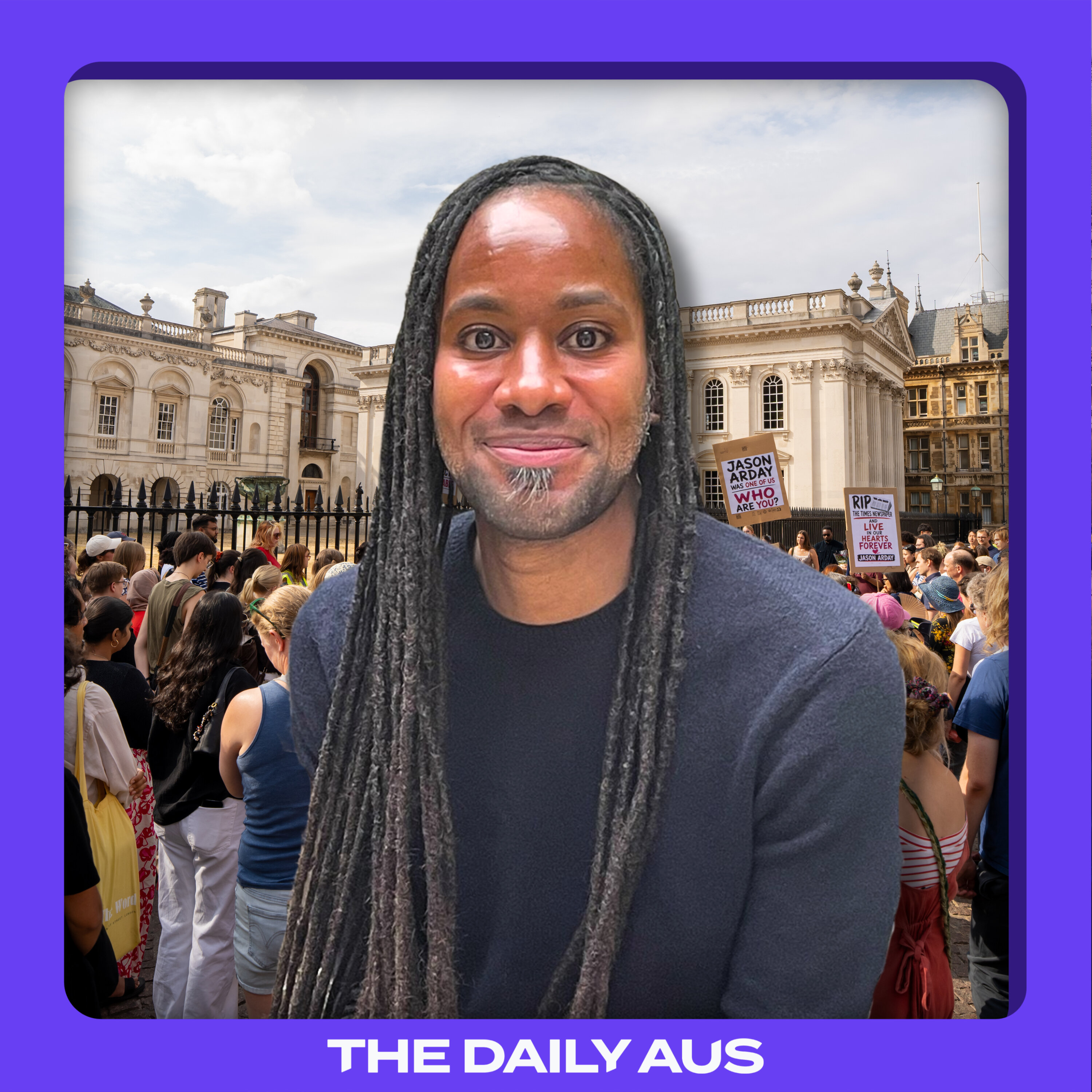
Jason Arde, a 37-year-old professor at Cambridge University and the youngest Black person to hold such a position there, was found dead in South London over the weekend. His death is being treated as unexpected but not suspicious, suggesting suicide. Arde’s life story was remarkable—he grew up in a council estate, was diagnosed with autism at age three, and claimed he didn’t speak until nearly 12 or read until 18, yet earned a PhD and became a professor. However, his career unraveled after a blog post by Nathan Coffnas, a self-described "race realist," alleged plagiarism in his PhD thesis, comparing it to another academic’s work. This sparked weeks of relentless media coverage, including investigations into his memoir claims, such as a brain tumor and marathon running, with many outlets publishing critical op-eds. Arde denied wrongdoing, alleging a racially motivated campaign, but resigned on August 5 amid a university investigation. His death has prompted reflection, with Prime Minister Andy Burnham calling it a "moment for reflection," and his family describing a "campaign of sustained abuse." The story highlights the intense pressures of public scrutiny and raises questions about media ethics, particularly for marginalized figures. Support resources were noted, and ongoing inquiries will continue.
Today's podcast is brought to you by Finder. Just a heads up, this episode discusses distressing themes, including suicide. Listen to discretion is advised. Ready? And good morning! This is the daily Oz. Oh! Now it makes sense. Good morning and welcome to the daily Oz. It's Tuesday the 18th of August. I'm Lucy Tassel. I'm Emma Gillespie. Over the weekend, news broke that Jason Arde until recently a professor at Cambridge University had been found dead. It came after weeks of intense media scrutiny and discussion of his credentials and his life's story, sparked by a blog post alleging he plagiarized parts of his PhD thesis. UK Prime Minister Andy Burnham has described his death as "a moment for reflection," I would say, reflecting on how how things came to this. In today's episode, we'll explain how things came to this. Lucy, this is a really disturbing story. I had not heard much about it until the weekend when there was an inundation of headlines out of the UK about a British academic named Jason Arde. Yeah. Let's start with him, his identity. What do we need to know about him? He was born in 1985 in London to a parenthood migrated to the UK from Ghana, and he grew up in a council estate in London. He says that when he was three years old, he was diagnosed with autism. And according to his memoir, he didn't speak until he was almost 12 and did not learn to read or write until he was 18. Somehow he enrolled at university. He says in the memoir that his girlfriend at the time helped him with the application and then graduated with a degree in education in 2008. After that, he went on to earn a PhD from Liverpool John Moore's University, which I call LJMU for short, going forward in 2015. And that was his focus area was education. And specifically the experience of ethnic minorities in education as a black man that was where he was coming from. Okay. And he comes to be a professor at Cambridge University, one of the most prestigious institutions, not just in the UK, but I'd say around the world. Yeah. So what was his journey from the initial studies in education towards ending up in such a prestigious place? Yeah. He, it's sort of complicated because we know what he told us, but we also should acknowledge that he has, like there are many questions about the truthfulness of what he has said about his life in career. Okay. He seemed to sort of job hop from different universities, continually kind of being promoted over the years until 2023 when he was appointed a professor at Cambridge. And a professor is a very senior position. It's sort of second only to being the head of a department at Cambridge. And it's typically awarded to a senior researcher with a lot of published work. Yeah. So for this to happen for him when he is 37, it made him the youngest black person to ever hold that job at Cambridge University. It made headlines. It was a huge deal, particularly because at this point he has been open about his story in terms of like how do you go from being not able to read on right at the age of 18 to being a Cambridge professor in less than 20 years? Yes. Quite extraordinary. And particularly as a black man in 2024, 25 data shows us that around 1% of all people with the professor title in the UK were black. Okay. It's a vanishingly small number. It's something like less than 300 people out of a cohort of about 26,000. Wow. All right. So a huge feat that he got to the point that he did in his career. Yeah. But then there are these plagiarism claims that ultimately define the rest of his life, his remaining years. So take us back to the beginning of all of that. The beginning is kind of complicated. So we start in terms of like investigating the allegations, we start back actually quite a way. In terms of when they came to light, it's been less than a month. So last year a journalist named Jack Grove, he works for Times Higher Education. So that's like when we do our reporting on like these are the top universities in the world. Yeah. Times Higher Education does the rankings. Right. It also has a robust news publishing arm about academia in Europe and the rest of the world. So Jack Grove begins investigating Ardae. He said he got a tip off. Jack Grove says he assembled a 63 page report showing evidence that Ardae had plagiarized another student's work in his PhD thesis and other academics in other work throughout his career. He submitted his findings to LJMU which gave Ardae his PhD. Yeah. LJMU cleared Ardae of plagiarism. Right. So he was actually cleared despite this 63 page report. Yeah. And I think interesting that the claims weren't isolated to this part of his PhD was plagiarized from this person. There were allegations that he had plagiarized from a student and many other sources. Yeah. So a previous, so not one of his students but a student at a different university. While working on that story on Grove's story also, he says that he emailed Ardae seeking clarification and he said he was later called by police several months later who said there's been a complaint made against you basically that you've been like accused of harassing Jason Ardae by seeking clarification on the possible plagiarism. So was this a few years ago that that was happening? This was last year. And the final piece of this puzzle is that Jack Grove never ended up publishing his story. And that's because there is another story that Jason Ardae hired a high-powered law firm to send a legal letter to basically get the story pulled. Okay. So never actually went up in that original form that times higher education basically said we can't defend against this legal claim. So he, he, it's people in the UK wouldn't know this law firm. I hadn't heard of it. It's called Carter Ruck. That's on me. I don't think very people is to go. This is the sort of thing where I'm like if I told my parents, oh, he hired Carter Ruck, they'd go, oh, like I think they would probably know. The point is he hired like a well-known high-powered defamation law firm in the UK. And that was the story killed. That was in relation to Grove's story. All right. So this story never saw the light of day. Yeah. But it was preceded by 63-page report claiming plagiarism. The university where Ardae was out doing his PhD, cleared him of plagiarism and some scary lawyers were hired to make the story go away. But there was no proof. Well, there was, you know, there's, it's one person's word against the university's word. Okay. Yeah. Fair enough. Yeah. This takes a much more sinister turn than just alleged plagiarism. And I want to ask you more about that Lucy. But first we're going to hear a quick word from today's sponsor. I've been meaning to switch mobile plans for months. And turns out, find overboards you with free digital visa gift cards for switches on eligible products in mobile plans, broadband, home loans, personal loans, share trading platforms, and more. Exclusive to finder. And if the new providers already got a deal running, the finder award stacks on top. Get rewarded at finder.com.au/rewards. TNC's apply eligible products only. Okay. As I mentioned before the break, Lucy, what started with plagiarism claims evolved into something much darker, much more sinister. Yeah. Take us through that aspect of this story. Yeah. So that brings us to July 2026. So Jack Grove's story going nowhere, but it's now out there in the water that like I think it was kind of in academic circles. Yeah. As far as LLMJU had to look into it. Yeah. At least some people there would have known. Yeah. As far as I'm aware, as a person who is not a UK academic, this was out there. It was known. There was some sort of whispers, right? Then on the 21st of July, there's another researcher. His name is Nathan Coffness. He said he had run RDA's PhD through a plagiarism checking software. He puts out a blog post. He said the software showed similarities between RDA's PhD thesis and another thesis written by an academic called Paula's Wasdiac Myers in 2009. And he includes several sections where it's like, this is a part of RDA's thesis. This is a part of the other academic's thesis. This is a part where it's exact wording. These are parts where it's paraphrasing. Right. So like a side-by-side comparison of RDA's work and this previous work written in 2009. Yeah. So one example is, so RDA's work said, teaching is a highly complex activity and the dynamics operating in any given classroom environment will be determined by a range of contextual and situational factors. And so Asdiac Myers said, teaching is a highly complex activity and the dynamics operating in any given classroom environment will be influenced by a range of contextual and situational factors.
- Okay, so that's the Badam copy except R.A. uses the word "determined" and Vosdeak Meyers uses the term "influence." - Right. - So it's one sentence. It's one of several that coffinass pulls. - All right. And who is coffinass before we get further? I don't know how that is. - Yeah, I'm asking you what bad if R.A. responded to this. - So Nathan Coffinass is an academic. He's a self-described race realist. - I have not heard that term before. - Yeah. - Do you know what a race realist is? - Yeah, I had to look it up. It's sort of a person who believes that races aren't innately different from each other. - Oh, good. - And it typically leads to like, and because I believe that different races have innate differences, I also believe that there is some superiority to different races. - Okay. - I'm not saying that's specifically what he believes. What I will say is that in 2024, he said that if university positions were truly based on merit, quote, "The number of black professors would approach 0%, blacks would disappear from almost all high profile positions outside of sports and entertainment." - Okay. So I think I have a much better sense of what he means by race realist now. - So he also used to work at Cambridge, and Cambridge cut ties with him over those comments. And it didn't inquiry. It said his comments were offensive, but didn't breach the law or university rules. He still didn't like get his job back, but or his connection. - So he made those comments in 2024 when he was working at Cambridge. That's also when R.A. was working at Cambridge. - Yeah. I'm not sure if it's as clear as he was like working there. It was one of those academic things where you can have an association. - But he had at least a working relationship with Cambridge, and there was a crossover. - Yeah. - And we know that there are very few black professors. So at that time, safe to assume that R.A. was probably aware of those comments. - Yeah. Okay. - It was reported on in the Cambridge University newspaper too. So it was all all over it. - All right. So just back to the allegations against R.A. of plagiarism. So we had that side-by-side comparison of his work and another academic's work, some similar statements or copied sentences. What did Jason R.A. say to those allegations? I mean, he's already been facing on the sidelines a separate plagiarism investigation, but the world doesn't yet really know about that definitively. - Yeah. - Did he come out publicly and speak to this? - He didn't speak to this, but that's because things pretty quickly, I would say, spiraled. - Right. - So Coffness' allegations, I mean, basically exploded in the British media. It was, I mean, it was just so much media coverage. It was just relentless. - Okay. - Like investigating both his academic record and the things that he had said about his life. - Jason R.A. - Because three weeks after Coffness' allegations, R.A. was due to publish his memoir, which is called Great and Unfortunate Things. Several things in the memoir have been the subject of extensive media investigation. So, for example, he said, obviously the stuff about being effectively nonverbal, non-communicative, until almost the age of 12. - Couldn't read until he was 18. - Yeah. His statement that he, in the lead up to handing in his PhD thesis, was found to have a brain tumour. It was removed, and he said he effectively developed short-term memory loss in the weeks before he was meant to defend his thesis and did his PhD thesis while essentially he says, "Reading my thesis as if for the first time." - Okay. So that's in his memoir. - So there are a lot of questions around Arda's claims. - Yeah. - But when you say that the media coverage of the plagiarism allegations exploded, - Yeah. - Can you speak a little bit more to that, like the tone of the reporting and the rhetoric, I suppose? - I would say chunks of it were neutral. The fact of his position, I would say exaggerated how much, how many resources were dedicated to covering him, even when it's coming from a kind of trying to be neutral place. - Okay. - To be like, okay, this guy is the youngest black person ever to be a professor at Cambridge. It's a highly, like, rarefied environment. So then there's a lot of real estate, media real estate dedicated to him across multiple papers. And then in those papers, we not only have people investigating his work saying, "Okay, I found this inconsistency, I found this inconsistency." The time that he said that he ran 30 marathons in 35 days finishing with a hairline fracture in his leg. People sort of going back over that and saying, "I did that actually happen." He also said he ran 600 miles in six days and then he had to retract that and say, "Actually, it was over 12 days because they took some breaks." There was just like a huge amount of media resourcing dedicated to unpacking what this guy had said over sort of 15 years of time as he grew to be in the public eye because of his fundraising activities as well as his academic work. So both of those things being treated as equally seriously as each other, I would say. So people investigating the marathon stuff in the same breath as saying, "And we think he's plagiarised a bunch of academic work or has inconsistencies." It sounds like a kind of snowballed quite rapidly from being an initial question mark over his thesis to being big question marks surrounding his entire career and life. Yeah, because it's coinciding with the book coming out and then there's also universities. He said he was associated with publicly denied that he was ever associated with them, or that he had ever worked there. And then also the other aspect of this is that so TDA doesn't do opinion, but it's very normal for newspapers to do it. So sitting alongside the news reporting is also like basically daily op-eds in places like the Times of London and the telegraph from all sides, but a lot of commentary from more right-wing media, more conservative media, headlines saying the fantastical truth about Jason Arde, that's in the spectator, that's a more right-wing publication. The Jason Arde memoir that now appears to be more fiction than fact, that's giving you a sense of it. Given what I know about UK media, and of course the tabloid culture there is a lot more intense than it is here. There is a lot more scrutiny in its reporting that could be described as unfair, if someone is at the bottom of a pile on for fair or unfair reasons. I'm imagining that the comment section, particularly from some of the more conservative leaning outlets, may have devolved into racism, remembering where these allegations came from, Kofnass self-described race-realist, did it go that way? It certainly could be perceived as going that way. There are definitely, I mean, it's impossible to say that every single comment section about him was leaning one way or the other, but certainly some of them were. And certainly that's something that Arde himself said when he did speak, he spoke to the Times of London on 31 July. He alleged that there had been a racially motivated campaign to remove him from his professorship at Cambridge. He said it's more likely that he had made a mistake rather than had outright fabricated something if there was an error in his research. He said, "We're talking about academia here. I didn't murder somebody. I think the cruelty that I've experienced and the positioning of me as his kind of liar and fantasist is totally unacceptable." Okay. So all of this kind of unfolded about three weeks ago. We got that response from Arde at the end of July. He said that there was his campaign to remove him from his role at Cambridge. What ended up happening? Yeah. So he resigned from Cambridge on the 5th of August and on the 7th, the university said it had started an investigation. Okay. He then released another statement. He said what he'd experienced was far beyond scholarly disagreement. So the university itself said we're investigating. Yeah. Okay. But the media coverage did continue. It didn't stop. All right. So from the 5th of August to the day that Arde's death was confirmed, the times published, I'm going to say, around 30 articles about him, including operts. Wow. Yeah. So that's just from my casual count of doing a search, removing anything that didn't look exactly related. It still was around 30 news articles and operts. So a massive, massive story in the UK that ultimately leads us to the weekend, Friday, local time in London, Saturday for us here in Australia. When Arde was found dead at a South London home, what do we know about his death? We know that it's being treated as unexpected but not suspicious, which is sort of police code for it's likely that he died by suicide. We don't know that for 100%. I mentioned that he had a book coming out and memoir. Yeah. Has that been pulled? It has not been pulled. Okay. It is still coming out. I think you can buy it in the UK now. I don't think it's out in Australia yet. But I think it would be very hard to pull that now. Like once those wheels are in motion, it's pretty hard to stop a book being published. Okay. I just wasn't sure if all of the goings on pride his death had maybe prompted the publisher to pull back. That's not the case. Like I think he had canceled events. But as far as I know, I don't think the book is being stopped. Okay. What about the response to his death? I know that this has reached far and wide across the UK and the world, not just in academic circles but politically as well. What's the response being like? Yeah. So as I said at the top, UK Prime Minister Andy Burnham has commented he's
said it was a tragedy and a moment for reflection. Cambridge says it's mourning his loss and that they are committed to ensuring that no one feels they must face this alone. And his family said he had been subjected to a campaign of sustained abuse for more than three years. So sort of referencing back to when he first became a Cambridge professor. This was too much for Jason who was a gentle man and who always wanted to see the best in everyone is what his family said. Lucy, a really tragic story. Yeah. I guess there are ongoing inquiries and investigations that will continue in the wake of his death and we'll keep an eye on that. Yes. And if this has raised any issues for you, help is always available at Lifeline. It's 131114. That's all we've got time for for today's deep dive. Take care of yourself for the rest of today. We will be back with your evening news headlines a little later on. My name is Lily Madden and I'm a proud Arranda Bunjlong Calcutune woman from Gadigal Country. The daily odds acknowledges that this podcast is recorded on the lands of the Gadigal people and pays respect to all Aboriginal and Torres Strait Islander nations. We pay our respects to the first peoples of these countries, both past and present. You know the adult admin you keep meaning to do like switching broadband providers and sorting insurance. Well, thanks to Finder, they'll give you free digital visa gift cards for eligible switches on mobile plans, broadband, home loans, personal loans and share trading platforms. These offers are exclusive to Finder and if your new provider's already running a sign-up deal, you get to keep that too. They've paid out over two million dollars in rewards from members so far. Signing up is free to join and takes minutes. Find out more at finder.com.au/rewards. TNT's apply eligible products only.
Podcast Summary
Key Points:
Jason Arde, a Cambridge University professor, was found dead, with police treating the death as unexpected but not suspicious, likely suicide.
Arde, a Black academic from a London council estate, rose to prominence as the youngest Black professor at Cambridge, but faced plagiarism allegations from a blog post by Nathan Coffnas.
The allegations included copied text in his PhD thesis and inconsistencies in his life story, leading to intense UK media scrutiny and op-eds, which Arde claimed were racially motivated.
Arde resigned from Cambridge on August 5, and the university launched an investigation; his memoir, "Great and Unfortunate Things," remains scheduled for publication.
Responses to his death include statements from UK Prime Minister Andy Burnham, Cambridge University, and his family, who cited a "campaign of sustained abuse."
Summary:
Jason Arde, a 37-year-old professor at Cambridge University and the youngest Black person to hold such a position there, was found dead in South London over the weekend. His death is being treated as unexpected but not suspicious, suggesting suicide. Arde’s life story was remarkable—he grew up in a council estate, was diagnosed with autism at age three, and claimed he didn’t speak until nearly 12 or read until 18, yet earned a PhD and became a professor.
However, his career unraveled after a blog post by Nathan Coffnas, a self-described "race realist," alleged plagiarism in his PhD thesis, comparing it to another academic’s work. This sparked weeks of relentless media coverage, including investigations into his memoir claims, such as a brain tumor and marathon running, with many outlets publishing critical op-eds. Arde denied wrongdoing, alleging a racially motivated campaign, but resigned on August 5 amid a university investigation.
" The story highlights the intense pressures of public scrutiny and raises questions about media ethics, particularly for marginalized figures. Support resources were noted, and ongoing inquiries will continue.
FAQs
Jason Arde was a British academic who became a professor at Cambridge University, known for being the youngest black person to hold that position. He had a notable life story, including being diagnosed with autism and overcoming significant educational challenges.
Journalist Jack Grove compiled a 63-page report alleging Arde plagiarized parts of his PhD thesis and other work. A blog post by Nathan Cofnas later showed side-by-side similarities between Arde's thesis and another academic's work, leading to widespread media scrutiny.
Arde denied the allegations, suggesting they were part of a racially motivated campaign to remove him from his professorship. He said he may have made mistakes but did not intentionally fabricate information.
Arde resigned from Cambridge University on August 5th, and the university subsequently started an investigation into the allegations. The investigation was ongoing at the time of his death.
Arde was found dead at a South London home, and police treated his death as unexpected but not suspicious, indicating it was likely a suicide. His family stated he had been subjected to a campaign of sustained abuse for over three years.
UK Prime Minister Andy Burnham called it a tragedy and a moment for reflection, while Cambridge expressed mourning and commitment to support. The death sparked discussions about media scrutiny and its impact on individuals.
Chat with AI
Loading...
Pro features
Go deeper with this episode
Unlock creator-grade tools that turn any transcript into show notes and subtitle files.
 PodcastTranscript AI