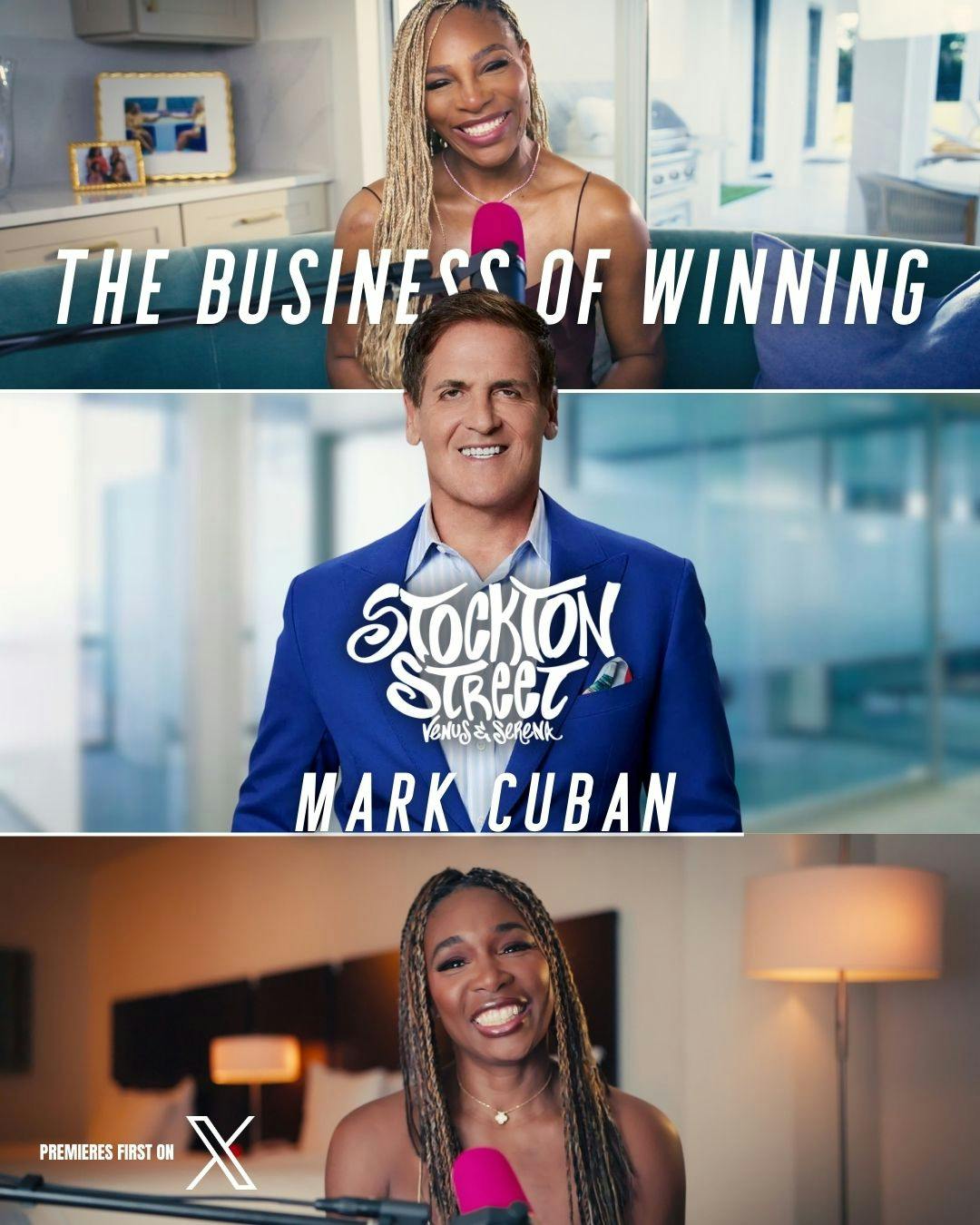
Mark Cuban shares his entrepreneurial journey, starting as a 12-year-old selling garbage bags door-to-door, which taught him how to handle rejection and sell effectively. He stresses that passion and a unique selling point are essential for any entrepreneur, and that sales ability is critical because investors need to believe in the founder. Cuban’s early ventures included flipping baseball cards and selling magazines, but his first major success was Micro Solutions, a software company he built from scratch and sold at age 30. Later, he co-founded AudioNet, the first commercial streaming company, which became Broadcast.com and went public in 1998, followed by a $5.7 billion sale to Yahoo. He joined Shark Tank as a guest in 2010 and became a full-time shark in 2011, investing his own money to support entrepreneurs and promote the American dream. Cuban emphasizes that founders must love their product and be able to sell it, as sales skills are key to raising capital and growing a business. He also notes that success requires commitment, hard work, and a willingness to face challenges, drawing parallels between sports and entrepreneurship.
- How did you get rich? Why would you stop that selling garbage bag? - I was going door to door and who's gonna say no to a 12 year old version of this, you know? And it's-- (laughing) - Close your reaction when you get a call like we want to buy you. (laughing) - I'm thinking of myself. Yes? - Don't fuck it up. - Don't fuck it up. - Being an entrepreneur is really all about selling. That's what I tell founders. I tell you have to have not a great story, but you have to sell it. Or you have shink and glasses right there. - What the fuck? - Oh my God. - You have no idea. - I literally don't. - I do. (upbeat music) - Hey everyone, welcome back to Stockton Street. Today's guest is an entrepreneur, billionaire investor. Former NBA champion owner, disruptor, and one of the most outspoken truth tellers in business and in sports. He built his first business from the ground up building curiosity into cash. Revolutionized sports ownership and became a household name as one of the sharpest investors on Shark Tank. All right, Mark, well thank you and welcome to Stockton Street. - Thanks for having me. - Yeah, we're so happy to have you. I'm the man, the myth, and the legend. Do you feel like you just created this kind of legend around you? - No, not at all. I mean, you guys are the legends. You guys are getting out there worldwide. I just try to do my thing and enjoy the ride. - What do you think though? One thing you can do as an entrepreneur to stand out because everyone has ideas. Everyone's trying to get off the ground and we know the statistics around when people start businesses, right? Most of them fail. What are the things that you can do to stand out so that way you can get all the things that you need as an entrepreneur with that marketing support or getting people to know your product, et cetera, et cetera, what's that one thing? - You've got to love what you're doing first of all and you've got, I always look at it that everybody's got something inside of them that's special, right? The hard part is finding it. And then when you find it doing everything you can to be good at it and then once you're able to be good at it, be great at it. You hear it all the time because you invest in companies. You guys both are very involved and it's like, I want to start a company. Will you invest in me? All right, well, what makes you different, right? Why are you going to succeed? What is it that you have as an individual that gives you an advantage that is worth it, worth me giving you my money? And so those are the types of questions I ask. They're like on Shark Tank, you know, what's your mode, right? What's your differentiation? What makes you unique? And once I get through that, then we can go into the details of the business. - So I think the new generation really knows you a lot for Shark Tank. Just talk to us, how did that even start? I mean, tell us the origin story of Shark Tank. Shark Tank started contacting me first in 2008, saying there was going to be a show from Mark Burnett called Shark Tank. I'm like, what the hell is that, right? And then they went on air on ABC in 2009 without me. They had some other dude in my spot and then they decided to have these guest sharks. So they brought on Jeff Foxworthy, the comedian to do three episodes and they brought me on to do three episodes. I came on, there is a guest and I'm like, okay, you know, I'm just gonna have fun. I'm gonna do every kid deal like can and I'm just gonna raise help. And that's what I did. And so they were like, okay, you know this stuff, right? You've been an entrepreneur in the shows. And so for my three episodes in 2010, they offer me full-time Shark Tank gig in 2011. - What made, like, did you have the time to do that? I mean, you are very busy. - Which crazy is that we only shoot two weeks in June and two weeks in September. - What, really? That's it. - Yeah, so you do long days, right? - Yeah, well those days must be crazy long. - Yeah, they're long days, but that's okay, right? And so we sit there, we get there in the morning, like I just walk in, right? They put my makeup on on set and then, you know, Barb and Laurie, they're there three hours earlier to get their makeup. So I just, you know, walk on set, plop down and they start bringing in the deals one after the other and we would see like 10 deals a day. Sometimes on Shark Tank, because it's a TV show and the reason I do the show is, you know, I want to send the message that the American dream is alive and well, right? So there might be somebody who comes from a small town where has difficult circumstances. And I'm like, normally I wouldn't invest in this business but I'm going to do it. - So you just want to kind of lend a hand to that American dream and give them hope because the American dream comes in all sizes, right? That dream of entrepreneurship. But have you ever invested in any companies where, you know, you're not sure that it's going to work? - Yes. - You know what makes you do that? - I mean, what makes you do that? - Because, I mean, I feel like I have an obligation in some respects. I've been so fortunate and I want people to succeed. I want people to be entrepreneurs. So many millions of people watch every episode. And if it motivates one, two, five, 10 people to go out there and do something special, then okay, you know, it cost me some money but the impact was far greater. - So you are investing your own money on Shark Tank? - Oh yeah, for sure. For sure. - So you definitely need to be very, you know, clear about what the product is and who's doing what and. - Oh yeah. - So I feel like we should take a step back and go to your origin story, right? I mean, here on Stockton Street, we'd love to learning about the real struggle. I don't know if you know this, but Stockton Street is the name of our podcast, but it's the street we actually grew up on. - I don't think it's called Stockton Street anymore. Maybe it's like Avenue or I don't know anymore. But so we just love that connection and talking about the struggle. So how when you were growing up, like tell us a little bit about your origin story. Did you have it easy? Were you quote unquote one of the so-or-spooting? - And you're all four. - Yeah, like my origin story is Metal Arc Drive in an area of Pittsburgh called Birdland 'cause all the streets were named after birds. And my dad did a poultry on cars. So if you had a rip in your car seat, you would take it to where he worked. Typical blue collar family, he would go to work at seven in the morning, come back at six, plop on the couch, put on the TV, you know, and just go and try to relax. My mom did odd jobs. Neither my parents went to college. My mom was 20 when I was born. And it was like, they were figuring things out, trying to make a better life for themselves and I have two younger brothers. But you know, it was typical Pittsburgh, blue collar town. My dad was always really, really clear that if you wanted something you had to work for it because he didn't have the money for it. And so like I remember being nine, ten years old and going and buying baseball cards and then going down to the park at the bottom of the street where I lived, I lived on a big hill. - Did you sell those cards? - Yes, exactly, right? So I would repack. I'll flip them all the time, right? Exactly. You know, if you know about flipping cards, right? So you know about a hustling. And so I would go and I would repackage the cards. So there's always a Pittsburgh pirate in it, and I would put them in the bench or on the picnic table in the park. And I'd set them all up and the kids would come out to play in the park. And I'd sell, you know, they cost me 25 cents and I'd sell them for 50 cents. And then I would do more and I'd make a few bucks. But that would really, was like my moment was when I was 12. I wanted a new pair of basketball shoes. And my dad and his buddies were playing poker and they were all sitting there drinking beer, yucking it up, playing poker. And I went in there to see him and I was like, "Can I get a new pair of basketball shoes?" And he looks at me, he looks at my feet and he goes, "Those shoes look like they work pretty well. "When you have a job, you can buy whatever you want." One of his buddies speaks up and he goes, "I got a job for you." And I'm like, "What?" He goes, "I've got all these boxes of garbage bags. "And if you go around the neighborhood "and sell boxes of garbage bags, then you can keep it." And I'll never forget. They cost me $3. And I would go to my neighbors and sell them for six. Imagine going up of one of us, you know, one up to one of our neighbors and I was like, "Hi, my name is Mark. "Do you use garbage bags?" And it was just like-- - So you're talking like the heavy duty like black, you know, garbage bags, I'd ever-- - So they were little shitty garbage bags that were awful, right? 'Cause I had extra boxes for years and so I remember them, but it didn't matter, right? Because I was going door to door and who's gonna say no to a 12 year old version of this, you know? And it's-- (laughing) - You know, I can tell you, from experience, going door to door will definitely keep you humble. And it also creates like this, "Oh my." I don't know something in you that makes you continue to go and continue to grow and it's great for an entrepreneur. But go ahead, I love this story. - So 100% right, because when you go to that door, like you have an advantage when you're in your neighborhood and everybody's trying to help up the kid up the street, but you also learn how to deal with objections, you know? - You learn how to deal with-- - You learn how to deal with nose? - No, right. - 'Cause they don't hear no a lot and as a business person, you hear no all the time. - A lot, right? And then I went on in the future to sell magazines door to door when I was in high school. Now that's the hardest thing ever, but you learn how to sell. And you guys know, once you can sell, right? You can do anything. I tell you, you have to have not a great story, but you have to sell it. 'Cause if you can't sell it to me as an investor, how are you gonna raise money? How are you gonna go around to the second round and raise money? - 100%. - And it's like, sometimes I love companies, but I'm like, this is so great, [BLANK_AUDIO]
"Wow, you're born at a death." And I've actually had to pass because the product was amazing and then the person just couldn't sell it. - So you nailed it, right? Because so often, like I would tell entrepreneurs all the time, if you don't love your product or service so much that all you wanna do is sell it. And if you don't love it so much, you can't figure out the best way to sell it, you're going to fail. Because if the entrepreneur, if the founder of the company can't sell the product, who can? And we've all seen companies right where the entrepreneur thinks they can hire somebody to do that for them. And you just can't, right? Because you can't train them to do it. They don't have the love for it that you do. It's like anything else. If you're gonna be great at it, you've got to commit everything. And that includes, as a salesperson, as an entrepreneur, as a CEO, whatever it may be, that willingness to go anywhere and talk to anybody at any time. Because you're not selling, you're helping, right? - Yeah. - You know, my garbage bags, I know you need garbage bags. I know you're not just throwing trash on the floor. And if you need garbage bags, why not me? Let me tell you why. - I think the best athletes, like the Jordans and the Cobies and Serenas, are the people that really love it. And they don't do it for fame. And they don't do it for anything. And so there's so many entrepreneurs now, right? But I feel like that is kind of one thing that really can set someone out. So if you're watching, you can really set you apart. Is if you really find something that you truly are passionate about and that you truly, truly, truly love. So, yeah. - Yeah, you know, it's like, like people always say in sports, it's just like, what you do when nobody's watching. - Yeah. - Dictates, health acceptable. - Absolutely, I can. - You're going to be, right? - I can definitely answer that. - Because people don't see the pain. People don't see, you know, and it's no different with your own company. You dream about it, right? I can't tell you, you know, companies I've started over the, I would wake up in the middle of the night and send an email to myself, or write a note to myself, because you dream about it, right? You get up early, you're staying light. When I was teaching myself the program in my first company, I remember sitting down to write software and looking up, and literally it was 18 hours later. And I thought I'd working for an hour or two, right? - Yeah, that's never been. - It's never happened to me. I mean, hidden balls felt like, if I were to-- - Three hours? It felt like six hours. - Yeah. - I don't know how to code or to program, but you know, that would probably feel like 20 hours to me. But it's okay. Different strokes are different folks, right? - But you know what I'm saying. Why would you stop that selling garbage bags? So what happened after that? We want to know that. - Right, okay, so let me keep on going. So let me keep on going. Okay, so I get to India, I go to, I dropped out of high school, and I went to the University of Pittsburgh 'cause I wanted to challenge myself 'cause I was bored in high school. And so I took some classes there. - So you're very smart. - It depends on who you talk to. My kids, no. Some people, yes. But I dropped out of high school went to the University of Pittsburgh. They didn't have a business school. So I transferred to Indiana University 'cause they had a top 10 business going. It was the only one I could afford 'cause I was paying for my school. And so started little businesses there some did okay, some not so well. But then I moved down to Dallas 'cause my buddies hadn't invited me there. And there were six guys in a three bedroom apartment slept on the floor, got a job at night as a bartender just so I can pay my bills. But then I got a job at a software store called your business software and in Dallas. And I was 24 at the time when I got to Dallas. And I learned about computers then. I hadn't taken computer classes really at all. And so, but then I realized I had an aptitude. I was like, oh my God, like I understand this technology stuff really well. And so I started to do pretty well. And then one day about nine months in, one of my responsibilities was to open up, it was a retail store. I had to open up the store and come in and all that. And so I came in and I had just gotten closed to steal. And that deal was gonna give me a $1,500 commission back in the day that would allow me to move out of this hellhole I lived in. - Sleeping on the floor. - We slept in the floor. - Yeah, I slept in on the floor. So I went to my boss and I said, Michael's his name. I'm like, look, I need to go out and pick up this check. It's money for you and I need this commission. And he's like, no, you gotta open up the store. And so I made the executive decision thinking, I'm gonna hand this guy a $15,000 check and he's gonna be happy, fired me. - So wait, did you get the commission? - No, no. - Okay, it seems to me like he didn't want you to get the commission. - Bingo. (laughing) You've been there, right? This is like, he was hustling me and I seem right. - Yeah, he was hustling me and I didn't know it. But I realized I wasn't a good employee and it was time to start my own thing. And so that's exactly what I did. So I started a company called Micro Solutions. And again, I'm still sleeping on the floor. I got nothing. I went to this one company I had called on called Architectural Lighty and I said, look, I have no money, but if you'll front me $500, it's all it takes. If this software doesn't work, then I'm gonna self to you and I'm gonna make $250 on it. And it doesn't work, I'll walk your dog, I'll wash your car, I'll sweep your floor. Whatever it takes to make you happy, I'll do it. Fortunately, I was able to make that software work. I was able to make that customer happy. That led to another customer, another customer. Along the way, I taught myself how to write software, got pretty good at it. Top myself how to connect PCs together, got really good at it. And then went seven years without a vacation, built in this company called Micro Solutions. And then I sold it to H&R Block when I was 30 years old. And I thought, I'm good, right? I'm good. I made a couple million dollars, I was gonna invest it, live like a student, just chill. I bought a lifetime pass on American Airlines so I could go travel anywhere I wanted to go. I was part of like a rock star. - Question, question, question. Do you still use that lifestyle? - I'm gonna play now, I gave it to somebody. - I knew the answer, but I was just asking, right? But let me just tell you, when I was like 30 and I just sold this company and I'm feeling myself, right? I would walk into bars, meet somebody, I'm like Vegas here we come, you know, Paris here we come. I was the American Airlines here we come. - Yeah, that's right, I was the man and I was loving every minute of it. And then a couple years later, and then I was trading stock, I was killing it, right? I was living my best life. And then mid 90s, one of my buddies from Indiana, Todd Wagner and I were having lunch and he's like, look, this new thing called the internet, this is so long ago. This new thing called the internet is out there. There's gotta be a way to listen to Indiana basketball 'cause we weren't a football school up until like, - Oh, no. (laughing) - Thank you. - Thank you. - Oh, I'm a lamb, you're all. (laughing) - But we weren't a football school, we were a basketball school and he was like, there's gotta be a way to use this new thing called the internet to listen to Indiana basketball. And I'm like, okay, I know how to do this stuff, let me figure it out. So we started a company called AudioNet, which was the very first commercial streaming company. Nobody else had up until that time had started a business that did streaming. We called it internet broadcasting back then. It wasn't even called streaming yet. And I'm like, okay, let's figure this out. So we got a computer, we got a radio, we hooked it all up, put up the site called audionet.com and I went around promoting it online and the next thing you know, people were just banging out the website, right? And then by 1998, we started to get into video and took that on. And then in 1998, July 18th of 1998, we had renamed AudioNet into broadcast.com and we went public. And it was the biggest IPO in the history of the stock market at the time. And so living my best life got better. - Yeah, well, you know. - You're my man, you know. - Exactly, exactly. - By by American Airlines. And so we were killing it. And then Yahoo, which was a big deal back then came along and offered to buy us for $5.7 billion in stock. - So what do you, what was your reaction when you get a call? Like we want to buy you for five. (laughing) - I'm thinking to myself, yes. Don't fucking ask. - What else do you want? (laughing) - I'm like, don't screw it up, right? I remember being in a meeting and Noah's even asked me this before. I remember being in a meeting, you guys know this feeling. Being in the meeting and we're thinking we're gonna negotiate the price, right? And the guy goes to us, we're not negotiating. This is the price, $5.7 billion in stock. Take it or leave it. - Okay, well, what did you think they were gonna ask? - Well, I thought maybe we can get a little bit more. It was just a starting point or whatever. And then I realized pigs get fat, hogs get slotted, right? So I could give us a second, we walked outside for about two minutes, we said, okay, we're taking it, but we waited a little bit to make it look like we were having a real discussion. - Why can't I? - Or you guys shink and glasses right there? - What? - Oh my god. - Oh my god. - You have no idea. - I literally don't. - You know, I would tell you more about it, but I don't remember. (laughing) - Oh yeah, we went hard. - Oh, that's so cool. - We sold to Yahoo. But the cool part about it was, like we bought it in stock and that was right, that was before the internet stock market had kind of peaked. - Right. - And so I wasn't gonna stick around to see if it imploded or not or that bubble burst. So I did something called a collar where I took the Yahoo stock and protected it. So even if the Yahoo stock went to zero, I still kept all the stuff.
the money. And so I did that and it was called one of the top 10 trades in Wall Street ever. Wow. Because everybody else was greedy just thinking, okay, the stock, you know, Yahoo stock price is going to keep on going up. I'm like, I got to be next to my name. I don't care. Yeah. Right. I'm just going to be appreciative and enjoy my life. And that's when I bought the Mavs and then the rest of the story. Yeah. The rest is definitely history. I love that story. I hope I think our viewers will love it as well. There is a lot of good moments in there, but also a lot of learning moments in there. Let's talk about the losses. Like I feel like for me when I lose, when I lost, I hated losing. First of all, I was, I really would prefer, I just hated losing. So I just always 100%. I almost see this never. Exactly. Winning is no fun, but losing is like, I don't want to do it. But sometimes I feel like you need to lose in order to get better. So like, is there like a moment where you had what you needed to lose that changed your life? Dozens of them. But you know, the biggest thing that almost really hurt me bad, my partner Todd Wagner came up to me and he goes, Mark, you go harder and faster in business than anybody. There's nobody that can keep up with you. You go, you know, you email, it's crazy. We email you at one in the morning and we're getting an email back at 115 because you live it. Other people have lives. You don't. You know, you have no life. But because of that, you can be a dick. You know, you're not as kind to people as people would like to be treated sometimes because you're going so fast. You want them to work at Mark Cuban speed. Only Mark Cuban can work at Mark Cuban speed. You need to start to be nice. Best advice I ever was given because being nice is a superpower in business because most people feel like you've got to be that business person, right? That's always demanding and you know, I want this, this, this, this from you. And by being nicer, people, people became more productive, didn't leave all that kind of stuff. Don't you think like, I love that. I love, I think it's so important to be loving and nice and that's kind of my MO. But don't you think that there was a time in the 90s where people were just meaner than they are now? Yeah, it was okay to yell at people and nobody put you on social media for doing it. That kind of thing. Yeah, like the whole Wall Street thing. Yeah, I was in the seat of getting yelled at. So I grew up a little bit after that. But like, I feel like when I go back and I watch old shows or I watch different things, like the whole vibe was different. Like it would never pass right now. No, no chance at all would pass right now. But you're right. Like that's all I knew though. But as things change, fortunately, my partner was like, this is not going to fly anymore. If you want people to work as hard for you as, as you're working for yourself, it's not going to happen. But if you understand where they're coming from now and connect to them better and are nicer, we'll get a lot more done. Oh, I used to hear it all the time from this girl I dated. You have no EQ. You have no emotional intelligence, you know? And I was like, I'm sorry, I'm trying to learn it, you know, but I was on a mission. The things change when you had kids? Oh, yeah. But at the time, I actually got married. Because I didn't get married until I was 44. So by then, I was already established and I was good, right? And then when I had kids, obviously everything changed. 180 degrees. But before then, that's why it took me so long, you know, before I settled down. So why buy the Mavericks? Like what made you decide to buy the Maverick and not go back to your hometown or did you try? No, I actually, I looked at buying the Pittsburgh Penguin's hockey team for a minute, right? But I was not, I liked hockey, but I was never a hockey guy. I mean, I still play pickup basketball. So basketball ball is life, right? That's always been in my world. And so I was with my then girlfriend now wife at a basketball game at a Mavs games, it starts the 99 2000 season. And the Mavs had one in decades, right? They had one in forever. And so I'm at a game. It's opening night. It's not a sellout, right? And I'm thinking to myself, oh my god, we got Dirk Navitsky, Steve Nash, Michael Finley, Sean Bradley, we have a good team and there's no energy, right? In the building. And I'm thinking to myself, I can do better than this. And then I'll write, oh wait, I've got some money in the bank now that I'd never had before. I can put my money where my mouth is. So I connected back to the then owner Ross Pro Jr. And within three weeks, I had to deal the buy the Mavericks. That was the fight. Oh wow. I didn't know he owned that. Yeah, Ross Pro Jr. Yeah. And so he and he did it for the real estate. He wasn't a basketball guy. He couldn't tell you what a travel was, what, you know, caring, but nothing had no clue. But it was, you know, he was building a new arena. That's just thing and that's cool. But for me, it was a dream come true. I would go out there and shoot with the guys. I'd play pickup. I was 41 maybe. And so I mean, I wasn't young, young, young, basketball terms, but, you know, I could still run around and shoot and all that and play. And so it was a dream come true. The commissioner back then was David Stern and all the owners were old. Maybe one other Sacramento guys were young. Everybody else, they were just 75 year old guys. But to be 41 in only team was it's nuts. Oh, it was, it was completely insane, man. I couldn't even begin to tell you how much fun. Playing one on one with Dirk. I beat Dirk. I scored the first two buckets. I know I got it on video. I scored a few buckets. He stopped me. He dumped on me. I quit. I won 21. Oh, that's hilarious. Okay. You know, wait. So what changes did you implement in the culture of the Mavericks? Oh, 100% everything. Right. So I remember I walked in there. So I walked in to see the guys, right? And for the first time meeting all the players, we got a group and the coach has introduced me. And then I see some of the guys like Dirk and Nash, Steve Nash. I see their eyes light up, right? Because I had been out partying with my friends the night before at a club. And I saw 41 year old would do, right? Yeah, right. And so I saw Dirk and Nash there and I offered to buy a beer. And they're like, you know, like someone offers to buy you a drink. You're like, thank you, but no, thank you. And then I show up and they're like, they're like, what the hell? We just saw this guy last night. But, you know, I said, I talked to the guys and they're like, look, we go in to play the Golden State Warriors in Oakland, California. We land at three o'clock in the morning. And we're staying at a hotel that doesn't have room service. You want us walking to 7 11 at three to four in the morning in Oakland, California? I said, I got your point, say no more. So I, you know, put them in the best hotels, upgraded the plane. So butter on plane. We're the first team to have its own plane. You know, just make sure you've got guys sweets when we got there. We did all the locker rooms. You know, got them everything, got them plushed because I wanted the guys to not have to worry about the off to court stuff. If I'm going to get, if, you know, if I'm going to expect a lot from you, you expect a lot from me. I'm going to expect you. But when I say you got to play and give you all and commit to the coach and commit to the team, I'm backing up my side. You got to back up your side. And that was the real cultural change on the court. And then letting Dirk be Dirk, and then making a stupid mistake of letting Steve Nash walk, but, you know, building a team around him, around Dirk, and then, you know, going from there and, you know, getting to the finals in 2006 and winning in 2011. Well, I'm a newly owner of the Toronto tempo. So I have a pretty decent amount for me, for me at this. So I'll definitely have to hit you up for tips. Yeah, anytime, anytime. And we want to win championships. You know, I love a championship. So well, I want to thank you for being here, but I'm not going to let you go until I ask you some rapid fire questions, because that's my thing. Let's go. What's one industry you think is completely broken? Music, clothing, both of them. Why clothing? I could maybe understand music. Why clothing? Because everybody's got an idea for a brand, right? And you've got there's two ways to carry a brand. And you probably know this better than I do. You have somebody who has a brand already and you attach the clothing line to the brand, or you've got to come up with something that is so unique and so compelling that it carries itself. So you're not going to start a clothing line. No, what, you know, it's like, be Mark. No, no, no, Mark Cuban and like that crazy font. I could see it. Yeah, you know, I actually looked at some stuff, you know, because our sayings are. Yeah, for that reason, a mouth, you know, and you know, whatever, you know, sweat equity is the best equity. All the little sayings I would have in Shark Tank. So I actually had some made. Nobody wanted them. What do you think is going to be the industry that changes the world in the next decade or choose one? There could be several AI. Wait, I knew you were going to say that not even the next decade, right? Yeah, not even the next decade. Now it's literally happening today. Every day. Yeah, there's going to be two types of companies. There's going to be those who are great at AI and everybody else that went out of business. If you don't know how to use AI, if you can't integrate it. Okay, how would your employees describe you and you only have two words besides nice, obviously. Yeah, very heads, very intense. Who do you call when you don't know the answer? I don't really have somebody I call. Like I'm one of those people I try to figure it out myself always. It was the last person you talked to. Todd Wagner and my son and all my buddies last night at the Indiana game. So we were all yucking it up.
So we, you know, we always have to talk some business too. How long have you been taught in partners? Since 1995. Wow. That's a very. Yeah. We're pretty much married. Partner is a marriage. So that's definitely what's your rule of thumb? Do you fire fast or coach longer? You always higher slow fire. Yes. Okay. And so you coach longer once you keep them. But if you know you've made a mistake, you got to clean it. Well, thank you so much for joining us today. I had so much fun. You guys are awesome. This is really, really enjoyed it. Thank you so much for having me on. This is a lot of. We really enjoyed your stories. I felt like I've learned something and so I really, we had a lot of fun. So I look forward to talking to you and seeing you soon. Anytime and if I could help you with the team, I'm here. Oh, by the way, I'm taking you up on that. So watch out for my phone calls. We're going to get Toronto going. Done and done. All right. Thanks guys. Bye. Thank you so much, Mark. We love to have you. Please come back and see us as Stockton Street. And we learned so much, right? Clean up fast, be a hustler, all the things. It was so motivating. And thank you guys for listening as well. And guess what? We will be seeing you soon back on Stockton Street podcast.
Podcast Summary
Key Points:
Mark Cuban started his entrepreneurial journey at age 12 selling garbage bags door-to-door, learning sales skills and resilience.
He emphasizes that passion, differentiation, and the ability to sell are crucial for entrepreneurial success.
Cuban’s first major success came from selling his company Micro Solutions to H&R Block at age 30, and later, co-founding AudioNet (later Broadcast.com), which was sold to Yahoo for $5.7 billion.
He joined Shark Tank as a guest in 2010 and became a full-time shark in 2011, investing his own money to inspire entrepreneurship and the American dream.
Cuban values sales skills above all, stating that a founder must love their product and be able to sell it to succeed.
Summary:
Mark Cuban shares his entrepreneurial journey, starting as a 12-year-old selling garbage bags door-to-door, which taught him how to handle rejection and sell effectively. He stresses that passion and a unique selling point are essential for any entrepreneur, and that sales ability is critical because investors need to believe in the founder. Cuban’s early ventures included flipping baseball cards and selling magazines, but his first major success was Micro Solutions, a software company he built from scratch and sold at age 30.
7 billion sale to Yahoo. He joined Shark Tank as a guest in 2010 and became a full-time shark in 2011, investing his own money to support entrepreneurs and promote the American dream. Cuban emphasizes that founders must love their product and be able to sell it, as sales skills are key to raising capital and growing a business.
He also notes that success requires commitment, hard work, and a willingness to face challenges, drawing parallels between sports and entrepreneurship.
FAQs
At age 12, Mark Cuban sold garbage bags door-to-door for $6 a box, which cost him $3. He learned to handle objections and sell, skills he credits for his later success.
He emphasizes loving what you do, finding your unique advantage, and being able to sell your story. Without strong sales skills, raising money and growing a business becomes difficult.
Shark Tank first contacted him in 2008, but he started as a guest shark in 2010 for three episodes. He was offered a full-time spot in 2011, and the show films only two weeks in June and two weeks in September.
He feels an obligation to support the American dream and motivate viewers. If his investment encourages even a few people to become entrepreneurs, the impact outweighs the cost.
He thought, 'Don't screw it up.' After a brief discussion, he accepted the offer, realizing that 'pigs get fat, hogs get slaughtered.'
He learned he wasn't a good employee, which pushed him to start his own company, Micro Solutions. He built it from scratch and sold it to H&R Block at age 30.
Chat with AI
Loading...
Pro features
Go deeper with this episode
Unlock creator-grade tools that turn any transcript into show notes and subtitle files.
 PodcastTranscript AI