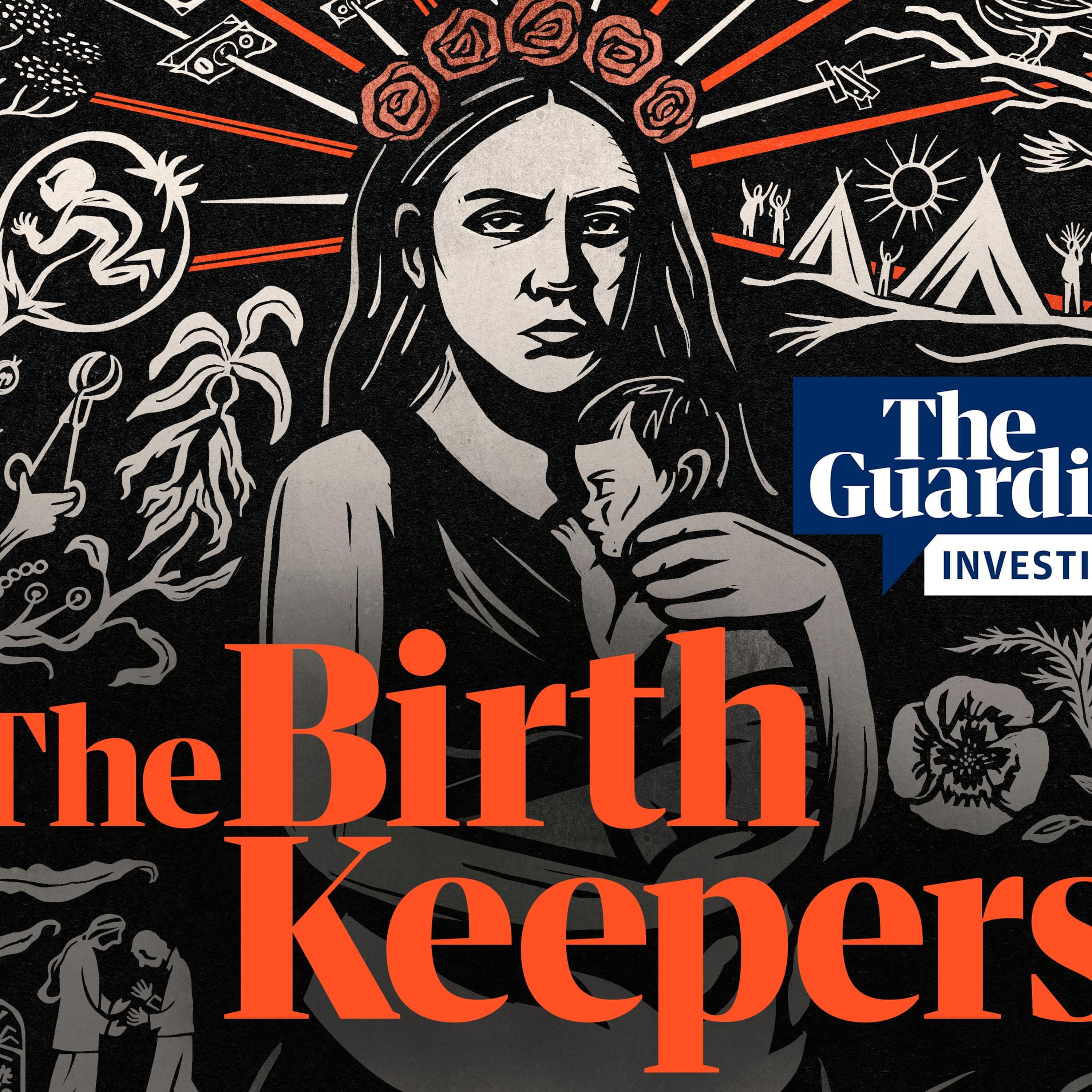
This Guardian Investigates podcast episode examines the Free Birth Society (FBS), a social media empire built by influencer Emily Sade that promoted radical "free birth"—giving birth completely alone without medical assistance. FBS sold a message of reclaiming power from a harmful medical system, using podcasts and a paid membership community to advocate against all prenatal care and medical intervention. The story follows Nicole, who, after consuming FBS content, chose to free birth. Despite her waters breaking days earlier, she labored at home, influenced by FBS teachings that downplayed risks. After delivering a healthy baby, she suffered a retained placenta and severe hemorrhage, nearly dying before finally accepting emergency help. The investigation highlights how FBS created an insular culture that discouraged medical transfers, normalized poor outcomes, and used authoritative, repetitive messaging to radicalize followers, ultimately prioritizing ideology over safety and factual information.
This is The Guardian. Hi, I'm Shewing Kahler, and I'm Lucy Osborne. You're listening to The Birth Peoples, and you six part series from The Guardian Investigates. Just before we start, this series contains references to baby loss and maternal harm. Yeah, yeah, I'm happy to see you have it. You have the crown. I can't believe it. That's the crown. It's one of them. Oh gosh, I recognise it. Yeah. It's summer, earlier this year. My Guardian colleague, the investigative reporter, Lucy Osborne, is in Omaha, Nebraska. She's interviewing a woman called Serendipity Day, who worked for a business called The Free Birth Society. FPS. Led by the influencer, Emily Sade. It is gold metal, or like, you know, it's not, it's gold plated metal. It's probably not real gold. If you go to her Instagram, you'll see it on her head. In The Free Birth Society, images of Emily and her crown are everywhere. Like in the artwork for her podcast, Emily gazes at the camera. The crown on her head has a base of sculpted roses, from which it stands lawn golden spikes. She's naked, wearing only a white robe, which is open to show her baby bump. It's a beautiful image, but there's something unsettling about it. It's a bit culty, like she's the leader of all pregnant women. And for many she was. Emily built a social media empire. The website, the Instagram, the YouTube channel, the podcast with millions of downloads. It was Emily in their ear for hours each day for every milestone of their pregnancy. Selling a simple message. Women can exit the medical system and take back their power. You don't need ultra sounds, they're dangerous. You don't need doctors and midwives. They'll assault you with unwanted medical exams. You can do this on your own. You can free birth. They made millions from this message, but behind the scenes, terrible things were happening. I feel ashamed about this, but I didn't think that the deaths were bad until a year after I left the membership. I thought that they were completely normal. I thought that this is just what happens when you have a free birth group. One of her mantras that she repeats over and over and over again is like, "Well, we can't really know. We can't really know if they were able to save them if they went to the hospital." No one really knows if that life would have still been around had she sought intervention. Yeah, I believed that until very recently. It has it feel now coming to that realization. It makes me like nauseous. It makes me sick to my stomach that I could have normalized it to the extent that I did, and that there's a whole entire platform normalising it. From the Guardian Investigates, this is The Birth Keepers. A year-long investigation led by me, showing Carla and my reporting partner, Lucy Osborne. Episode 1. I choose this. Okay, so before we get started, I just want to address one thing. People have a lot of views about birth and the right way to do it. And Lucy and I, we don't take a view on that. We're not anti-natural birth, we're not anti-sea sections and we're not anti-free birth either. Women should make choices that are right for them, whatever those choices are. But those choices should be based on good information. Real facts. We had been reporting on maternity failings in the UK and seen a lot of content on social media around birth that didn't seem accurate. One account really stood out. The Free Birth Society. It wasn't just that their posts and podcasts didn't seem factually correct, they were also really extreme, so we started monitoring them and making some calls. And then one day, I was sent a video by a source. I'm going to tell you about it, just not yet. But I will say it's the most upsetting thing I have seen in my career. I have thought about it many times since. And it's why we're telling you this story. I literally am embarrassed by how quickly I've been to my career. I'm so honored. It was so delicious. What's your recipe? Nicole Garrison lives in suburban New Jersey. She's in her 30s with long dark hair. She's Italian American from this close knit family. She baked me banana bread and laid out all these different teas for me, because she knew I was British. Nicole found out she was pregnant in October 2022. And like many pregnant women, her algorithms knew it almost immediately. She hadn't made up her mind about what kind of birth she wanted to have, so she set about doing her research. I wanted to have something outside the hospital and initially I was sinking like maybe home birth but maybe birthing center. I like the idea of midwives. Nicole typed in terms like midwife and natural birth. Each cake took her down a new rabbit hole. And one day her algorithm gave her something she had never heard of before. The free birth of society. Nicole was curious. She picked an episode of the podcast and hit play. Into the wild I am. But then minutes Nicole was hooked. Just like as soon as I heard Emily talking, I was like oh my goodness. What we know of birth has been inevitably filtered through the medical industry. But what is the truth about birth? Join us as we hop right into it. I just started consuming the podcast like a maniac. I did that. Nothing got taken from me. I walked through that. I was full of doubt. I fought and screamed and then I had my baby. Not the midwife saved me. I couldn't have done it. Oh my goodness. This is my tribe. This is what I've been looking for. It was such an overwhelming feeling. You cannot say pressing out on a feminist free birth podcast. Please reframe. The presenter was Emily Sadea, founder of the Free Birth Society. You just heard her talking on the FBS podcast. Emily didn't respond to our request for an interview for this series. So every time you hear her, it's from FBS content or appearances on other people's podcasts. What was it about Emily that we really like was so appealing? Oh my gosh. She was just so brash. I don't know. So strong in her language and so sure. Often we'll say things like God, you talk about it like it's evil. Like it's just evil. And it's like, well, yeah, yes. I don't know what else to call it. I remember watching her and listening to her and being like, she's kind of like all too much for me, but there was something that I liked about that. Lipped her out and she was just saying, you know, you can read all the hippie-dippy books you want, but you really need to go see a doctor. Fuck you. Yeah. No. I have had a lot of things happen to me in my life that left me feeling very out of control, disempowered, and Free Birth gave me an opportunity to take back my power. It only took, you know, a few podcasts for me to be like, oh my goodness. Why don't I just Free Birth? You're probably wondering at this point what's Free Birth. Lots of people get this confused with home birth, which is when women did birth with midwives at home. Free birth means steeping birth alone without any help from doctors or midwives. It's lead all in most parts of the world and usually safe for healthy mothers, but the version of Free Birth that FPS was promoting was radical. Not only no hospitals or midwives, but also no prenatal care, no blood tests, no ultrasounds, no backup plans. It's you on your own. For Nicole, it was Emily who drew her into FPS. But for Nicole's friend Olivia, it was Emily's business partner, Yolanda Norris Clark. Pregnant women are sold the rhetoric of informed consent as an emancipatory concept and it sounds really great, very rational. Oh man, Yolanda fascinated me. And yes, she really drew me in more than Emily. Olivia lives in Northern California and she studied anthropology. She's really well-read and interested in tons of stuff, but particularly women's health. She was researching women's experiences in the medical system when she came across Yolanda on Instagram. Most women have been conditioned since our own births into a very split, fractured relationship with our own bodies to the point that we actually believe that that guy, that random doctor, knows what's best and that when he tells us he's just gonna put us in. It was a video of some critique of the medical system, which really spoke to me because the medical system, the mainstream medical system had already really failed me on a few different levels. The entire construct of medicine is based on coercion and abuse. So FPS is Emily's business. Yolanda is Emily's business partner, but she's more than that. She's sort of Emily's role model. Yolanda's got all these kids, ten at the last count and she freebeth eight of them. She's articulate and she's beautiful and she makes motherhood look easy. She says what she says in a particular way that now looking back, I feel is a little hypnotic. I'd like to suggest to you that much, if not most of what you know about childbirth might be wrong, and that those individuals. She speaks with confidence and authority and in retrospect, I've had to remember that the term "conman" stands for confidence man. What they're selling is confidence. Both Nicole and Olivia signed up for the FPS membership, a closed online group with around 600 members. For an annual fee of $499 you get to connect with light-minded women from around the world and have calls as senior FPS feeders, including Emily herself. And it's exclusive club. Welcome to the Free Birth Society podcast. This is a radical space for women who are ready to celebrate their autonomous choices in birth. Some of the women even featured as guests on the podcast. There were two types of episodes, most feature Emily interviewing women about their Free Birth stories. She tells us about her idyllic first birth off the grid in her yurt in the mountains, snowed in with just her partner and her wolf dog Avalon. These stories are often incredible, multi-day epics, women overcoming self doubt to push through and Free Birth their babies on their own terms. So free Emily I cannot tell you I felt so free I felt like the most powerful woman in the world I felt like I can do anything. Often these women came to Free Birth following previous traumatic births in the hospital where they had medical procedures like vaginal examinations, performed on them without consent, or where they felt coerced into interventions they later felt weren't truly necessary. This is real. This is undisturbed real birth and I have to tell you and there's part of me that feels a little sadness because I didn't get this with my other two children. It's so sad. And these aren't just stories they really happened. Lacey and I have spoken to women who had the most incredible Free Births after fighting FPS, life changing experiences. After listening to these stories Nicole wanted the same, but she began to believe that in order to have that birth of her dreams she needed to avoid licensed midwives because, as Emily said on the podcast, licensed midwives sabotage women's births with unnecessary interventions. And I was like I am not letting this happen to me. The other type of episode is the one in which Emily interviews women she considers experts on birth. If a mother goes into labor as a healthy mother and a healthy baby then that's what you come out with. Nicole would take this advice as gospel. I would take specific ones that I felt I really needed to listen to and I would dissect them and I would write notes on them. Day in three Nicole's diabetes with her it's like watching her get radicalized in real time. Oh my goodness. Yeah it's been a minute since I've looked at these notes. Do you want me to read them? Yeah. Asus is processing fears, what would happen if my baby died? What would happen if I die? I would take full responsibility. I allow myself to be ready to face whatever I have to face and thus I am clearing the fear. How does it feel letting these nightbirds? That's a different person and it's it feels crazy reading it like it feels like my stomach is genuine like I just I don't um like it feels like a robot. I was crazy as like no one had a gun to my head while I was writing this. I took me a while to understand how Nicole got to this point. What does she mean? There's this belief in FBS which is that if you prepare properly and you get your mind right you don't have the birth of your dreams. Here's Yolanda on the FBS podcast in an episode called Thank you, Daud, choosing the portal of pain freebath. Oh I absolutely know now without any doubt what's however that orgasmic blissful birth is a choice that any woman can make to have. To Emily and Yolanda's teachings a huge part of it is like you know if you if you think it if you believe it if you imagine it enough you can have it and if you don't get the birth you want it's because you didn't do the work. If your birth didn't go to plan has on you you take responsibility for it. FBS calls it taking radical responsibility but if you're worried don't be but as most of the time FBS teaches that birth goes wrong when doctors and midwives mess it up. Freebath is the safest choice. I'm not seeing anything go wrong. I'm not seeing hemorrhages. I'm not hearing about hemorrhages. Of course some babies will still be born not alive. You know there's no there's no mammal who's eradicated stillbirth and I say this like with a lot of sensitivity and and and and I'm not meaning this cavalier at all but I don't know that that's a problem right I think that that's just a part of life trying to come in that stillbirth happens everywhere in all mammalian species you know across across the board so aside from that you know I it is a very I could count on one hand in the last seven years that I have even heard of a story of a baby being born term that needed true medical support. Constantly ringing in my head was if a healthy mom and a healthy baby go into labor a healthy mom and a healthy baby come out of labor. As Nicole prepared for her freebath she closed herself off to the world outside. I lied to almost everyone none of my family who I'm the closest with none of them knew this but she didn't want to go through this alone she lit for new friends inside the membership instead people she knew would understand and the person she connected with most was Olivia. We became really good friends yeah we got to the point where we were you know talking or texting every day but Olivia was starting to see things in the FPS membership that were worrying her. Emily and Yelanda would often say they're not medical professionals and they only speak when they lived experience they would acknowledge there are situations that are life threatening but they presented them as extremely rare for women who choose freebath. An Emily and Yelanda would say of course it's always a women's choice if she wants to go to hospital but Olivia and other FPS followers were left in no doubt about Emily and Yelanda's views on what they called the medical industrial complex and the harm it would cause them and their babies. Transfering to a hospital was generally always seen as a failure of your trust in your body's ability to do this. I never personally saw a time where from the authorities from kind of the key people from the insiders or from Emily herself that transferring was ever seen as the right move. And Olivia also noticed something there seemed to be a language that everyone used. A lot of women were really parroting the same phrases over and over again. It became very clear that there was an acceptable script of things you could say and so people would come on in a birth process having been in labor for days with concerns and it became very clear to me that the acceptable things to say were you got this mama, trust your body, trust your baby, everything's happening as it needs to, you're going to meet your baby soon, everything's okay, keep going. And it started to occur to me that none of us had enough information to say that. We didn't know what was really happening in that woman's home or in her body. But the encouragement would get lots of likes and anyone who said anything that was like, oh you know that might be serious, no likes and sometimes shut down. There's actually a specific rule that you agree to when you sign up to the membership. No sharing of plant engagement in the medical system. Anytime someone would come on and talk about that they might get any kind of medical procedure or check done, there were a couple incidents where Emily reminded them of the rule that you can do that elsewhere but not here. It caused Waltz's break on the 3rd of July 2023. I felt you fork. I was so excited and just like oh it's finally here. So when she texted me that her waters had broke I was so excited for her and I responded so funny I had a strong feeling about you this morning and then I said the thing that I had learned to repeat. You got this mama. Coming up when radical responsibility crashes into reality. Nicole's Labour wasn't progressing. A day went by, two, three. With each day that passed with open waters, Nicole's risk of infection was increasing. On the 4th day of Nicole's Labour, she spoke to Olivia. She still hadn't give birth so there was four days. Her waters had been open for four days. We were concerned but what Yolanda had said was in both of our heads that you know I believe Yolanda said that she went swimming and went to a swarray and it was no big deal. Again it's this myth of ease. Birth is just easy. Yolanda says, having your waters open for days, no big deal. Hello dear one and welcome to Freebirth Society's Affirmations Meditation. I'm Yolanda Norris Clarke. My baby is healthy and vigorous. I am safe. Nicole lay in her bedroom, lights off in the dark, listening to a recording of Yolanda's voice. By now it'd been a whole week since her waters broke. I have moments of fear but I'm not afraid. I'm feeling a lot of emotions just thinking about those birth affirmations because her voice was like in my head that entire week. I don't need to learn or to know anything in order to birth my baby. I follow my body's cues knowing that I am safe. I was just so exhausted and I was on my hands and knees and I really think I wanted to kind of give up. Finally, Nicole gave birth to a healthy baby girl. Oh my gosh, her eyes were wide open. She was so just awake and alive and pink and perfect like the way they described the baby should be. Within seconds, the trouble began. After she, right after she came out, there was such a huge gush of fluids and I remember thinking in that moment being so euphoric. I was like wow, that's a lot of fluid but didn't really think anything of it. I just took her to my chest and got in the bed and started to try to nurse her. I'm very out of it at this point. And I start to go. Things start to feel a little fuzzy. About after an hour of her being here, maybe a little bit less time, I reached down and I feel in between my legs, little chunks and I realized I'm like this looks like my placenta. This is my placenta. That's not supposed to be there. My placenta is supposed to come out all and at this point, I'm starting to go in and out of consciousness. How much blood was there? How much blood were you losing? It was dark so I wasn't able to see but I was able to, when I would put my hands down, sort of between my thighs, my fingers were dipping in to a pool. Nicole didn't realize it but she was bleeding to death. Her then partner called an ambulance but she was so desperate to not know to the hospital that she sent them away. Then she blacked out. I was kind of like out of my body just floating in this vast abyss that seemed like space without any stars in it. It was really like a very empty, dark place and I remember thinking to myself, wow, the afterlife is really different than I thought it would be. When she came to, she was choking on her own vomit. Her partner told 911 again. It must have been the amount of blood loss but I just felt like a wisp of myself like I don't even know how to describe it like I was not, I was fading and I was like I'm dying. This time, Nitala Dweets go. Thank you so much for joining me. For information on our courses and private coaching, please visit our website at freebrothersociety.com. When Nicole arrived at the hospital, she was in a critical condition. She was different four blood transfusions and the rest of her placenta was manually removed. The doctors told Nicole that she had an infected placenta, choreoamneonitis, which is likely the cause for the hemorrhage, the catastrophic blood loss, that nearly killed her. When I asked Nicole, why did she send the first ambulance away? She said it was because of what she'd heard from FBS. And to realize in five years, I've never talked with a woman who's had a physiological birth who also had a true hemorrhage. Never once. I'm not saying it doesn't exist but I have not, well, I haven't heard the story. There are women out there who think they have and then when we debrief it, it's clear that they haven't. So great. Okay, so that's pretty interesting. The hospital wasn't what Nicole expected. I remember a couple days after one of the doctors coming in saying like, I'm just so happy you got here because you were just so close. And if you have a baby next time, just know you can come here. You don't have to do this alone. I was taken aback by the level of emotional, you know, by the level of empathy they had because that was not what I was told. What did Emily and Ylanda tell you during your time in FBS about what doctors and nurses and midwives would be like at the hospital? That they were a danger, that they were dangerous people and that they were going to force you into things. And I want to make it clear that that has been some women's experience in the hospital, which is so wrong. And then on the other side of it, it's equally wrong to convince women who are in such a vulnerable state that the hospital is an evil, dark, dangerous, horrible place. When did the FBS ideology document have you on the toilet? When did it start to lift? I think the second day in the hospital started to lift when I realized what had happened to me, just looking at the looks on people's faces and the way my family, you know, hugging my dad, he was so upset and so, you know, he was angry but he was like, I'm just glad you're here. I can't believe where my head was. Me and my daughter shouldn't be here based on what happened to us. While Nicole was still in the hospital, she tested Olivia, telling her that her daughter was born healthy, but that she herself had nearly died. My jaw dropped and my stomach sank. I was just like in shock and confused and a little angry and just like wanting to make sense of it and kind of feeling a worldview that had felt important crumble around me. And you know, realizing that maybe FBS wasn't telling us the whole story. I started to question are Emily's intentions actually good and pure here? Is she actually doing this work to serve women or is it to serve her bank account, to serve her sense of power, to serve herself? And I'm like, kind of there's trouble in paradise. This story started like so many stories do these days on our phones, on social media. Emily and her crown and Yolanda surrounded by all her kids. Blissful, wholesome, seemingly perfect lives, not just experts in birth but leaders of a global movement that would make the world a better place. But you can present yourself as anything online. The deeper Lucien I went, the more we found, the stories Emily and Yolanda were telling. They did not add up. That's next time, on The Birth Keepers. Emily Saldaya and Yolanda Norris Clark were both approached for comment about the issues raised in this series. Neither provided a substantive response. In reply to one email, Emily said quote, "Some of these allegations are false or defamatory. After we published the findings of our investigation, Emily posted a statement on Instagram branding our report 'Propaganda' and suggesting it contained lies. She previously criticised other media coverage for unfairly depicting her as quote, 'Some manipulative cult leader' and said she does not care whether women free birth but wants them to have the option to choose.' Yolanda has previously said, "The FBS was the most ethical kind of business you can run. She has said that FBS critics failed to understand its commitment to mother's taking radical responsibility and that she should not be held responsible for her mother's choices. Yolanda has also said she has always been transparent that she's not a registered midwife. In May, FBS released a disclaimer saying its content was not intended to diagnose, treat, cure or prevent any medical condition related to pregnancy or birth. It added, for medical advice consult your health type provider." You can read all our reporting on the free birth society at TheGuardian.com. Reporting and presenting was by Shearing Carle and Lucy Osborne. The series produces by Elizabeth Cassin and Joshua Kelly, failed production from Lucy Hoff. Music composition and sound design was by Rudy Zedadlow, the commissioning editors Renekold Jackson and Paul Lewis. This is The Guardian.
Podcast Summary
Key Points:
The Free Birth Society (FBS), led by influencer Emily Sade and partner Yolanda Norris Clark, promoted a radical form of "free birth"—giving birth alone without any medical professionals, prenatal care, or backup plans.
Through a lucrative online platform, FBS sold a message of empowerment and "radical responsibility," framing the medical system as inherently harmful and suggesting that proper mindset could prevent birth complications.
Followers like Nicole experienced intense radicalization, isolating themselves and ignoring risks, which in Nicole's case led to a life-threatening postpartum hemorrhage after a prolonged labor.
The investigation reveals a culture within FBS that discouraged medical intervention, used repetitive, hypnotic language, and normalized adverse outcomes, leaving former members feeling manipulated and traumatized.
Summary:
This Guardian Investigates podcast episode examines the Free Birth Society (FBS), a social media empire built by influencer Emily Sade that promoted radical "free birth"—giving birth completely alone without medical assistance. FBS sold a message of reclaiming power from a harmful medical system, using podcasts and a paid membership community to advocate against all prenatal care and medical intervention. The story follows Nicole, who, after consuming FBS content, chose to free birth.
Despite her waters breaking days earlier, she labored at home, influenced by FBS teachings that downplayed risks. After delivering a healthy baby, she suffered a retained placenta and severe hemorrhage, nearly dying before finally accepting emergency help. The investigation highlights how FBS created an insular culture that discouraged medical transfers, normalized poor outcomes, and used authoritative, repetitive messaging to radicalize followers, ultimately prioritizing ideology over safety and factual information.
FAQs
Free birth is giving birth alone without any assistance from doctors or midwives, while home birth involves midwives attending the birth at home.
The Free Birth Society is an organization led by influencer Emily Sade that promotes a radical version of free birth, advocating against all medical interventions, prenatal care, and hospital involvement.
The approach discourages medical oversight, which can lead to life-threatening complications like severe hemorrhaging or infections, as seen in cases where women delayed seeking emergency care.
FBS used persuasive content, including podcasts and social media, to instill beliefs that medical systems are harmful and that birth complications are rare if women trust their bodies, often discouraging hospital transfers.
Nicole experienced a prolonged labor with ruptured waters, leading to severe hemorrhaging and near-fatal blood loss after giving birth, requiring emergency medical intervention.
FBS enforced rules against sharing experiences with medical systems in its membership groups, often shutting down concerns and promoting a script of encouragement that minimized risks.
Chat with AI
Loading...
Pro features
Go deeper with this episode
Unlock creator-grade tools that turn any transcript into show notes and subtitle files.
 PodcastTranscript AI