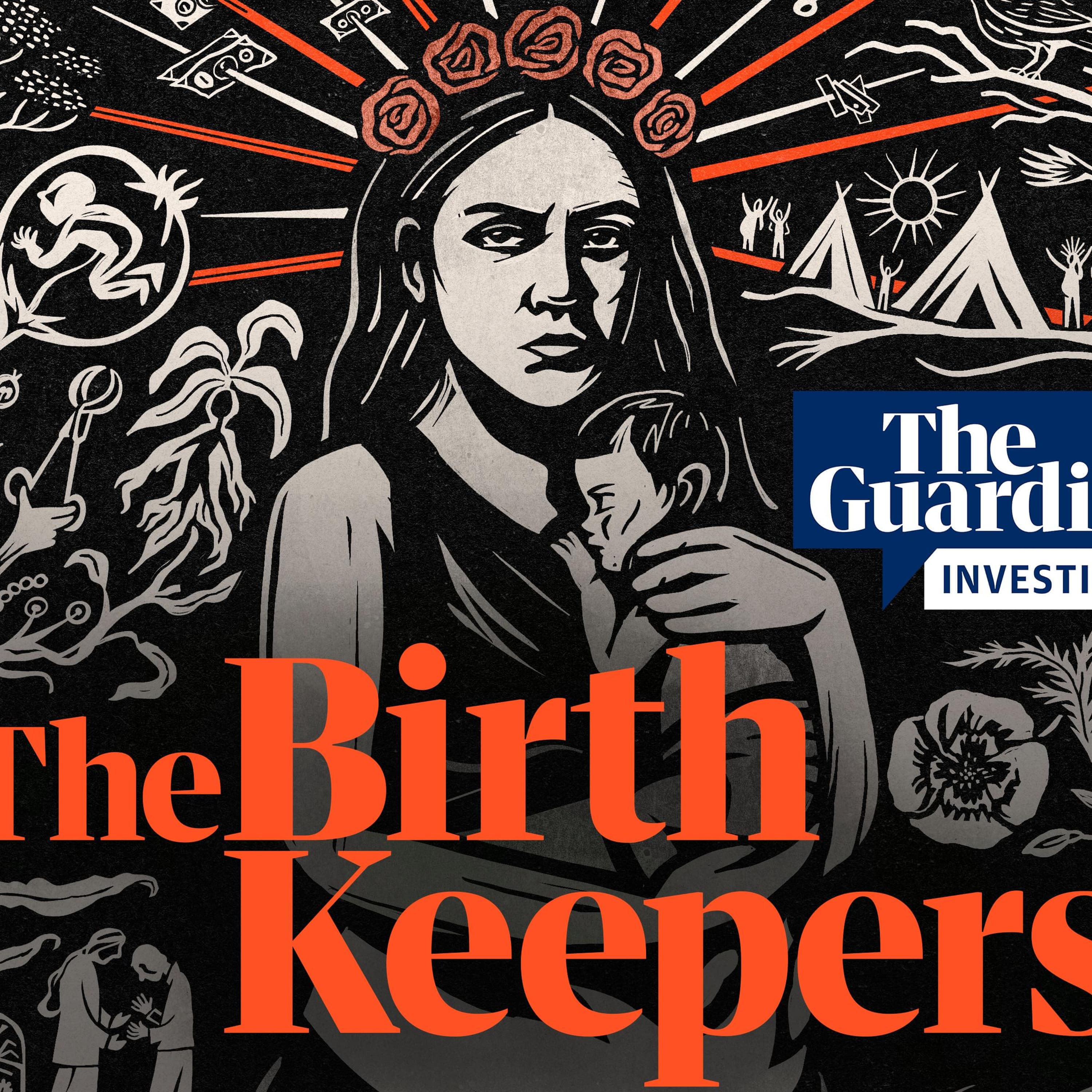
The Guardian investigation reveals the controversial practices of the Free Birth Society (FBS), an organization promoting unassisted childbirth. Co-founders Emily and Yolanda rebranded their "Midwifery Institute" amid legal concerns and criticism from former students. They face intense backlash from a Reddit community and bereaved mothers who allege their advice, which emphasizes "radical responsibility" and normalizes death as a birth outcome, has led to tragic stillbirths and maternal harm. FBS teaches followers to have a "death plan," advising against calling emergency services if a baby is stillborn and even suggesting misleading authorities if a baby dies after being born alive. In recorded sessions, Emily and Yolanda dismiss critics as "bitter" and deny any responsibility for followers' choices, despite cases like Camille's, who lost her son after extensively consuming their content. The report highlights a dangerous philosophy where medical intervention is rejected, exemplified by Emily not resuscitating her own distressed newborn in a widely shared video. Experts condemn these practices as negligent, emphasizing that children have a right to medical care.
This is The Guardian. Hi, I'm Shewing Kahler, and I'm Lucy Osborne. You're listening to The Birth Peoples, a new six-part series from The Guardian Investidates. Just before we start, this series contains references to baby loss and maternal harm. In spring this year, after that group of students had been kicked out of the Matribirth Midwifery Institute, Emily and Yelanda seemed to have a moment of taking stock. From the women who left the program, who did give us quite a bit of negative feedback, a theme among all of them was, "This is not a midwifery school, and you shouldn't sell it as that." So in response, they rebranded the Matribirth Midwifery Institute, or MMI. Emily explained why on a call with the remaining students. I'll be honest with you guys, I think I just overplayed my hand. I think you and I overplayed our hand, calling this a midwifery school. Now, it would be the Matribirth Mentor Institute. Which is the same thing, it's literally the same thing, like none of our material changes. It's the same program, same everything. Emily appeared concerned about the use of the term midwifery, which is regulated in many jurisdictions. It's hard for me to admit this, because I don't want it to be this way. But when it comes down to it, in some legal frames, the word isn't ours to use. FBS also added a disclaimer to their Instagram. Claiming its content was for educational and informational purposes, and not intended to diagnose, treat, cure, or prevent any medical condition related to pregnancy or birth. It said, "For medical advice, consult your healthcare provider." Emily and Yolanda were also dealing with another unfolding crisis, the Reddit community. You've mentioned it before, the one called FreeBurse Society scam. It accused FBS of using cult-like tactics, and it also included stories of baby loss and mothers nearly dying after listening to FBS content. In August, Emily and Yolanda decided to respond, by recording a podcast episode together. They were both pregnant at the time they recorded it. What is a really shocking development in the beginning of this year to catch wind of a hate group that has formed about you and I? Emily and Yolanda pushed back hard. Here's Yolanda. They made up a bunch of stories and told a bunch of lies and a bunch of other women who I think were also to some degree lonely and isolated. Believe them, and ultimately, it was, and is nothing, really just jealousy, the normal stuff, the stuff that anyone with any degree of impact or fame deals with, projection, essentially. The episode was an hour and a half long. It was called The Fruit of Cancel Culture and Mob Mentality. I know, with unwavering truth, that what I'm bringing to the world is incredibly important. And, and of so much value. And, and that the work I do is in devotion to mothers, babies and humanity, whether they appreciate it or not, it's not my concern. They called the Reddit backlash a public smear campaign, which hunt and bandwagon of slander and vilification. They also rejected the idea that FBS is like a cult. The contention is that, you know, how is it possible for this story, the story that you're both villains and liars and rifters and beaves and baby killers and manipulators and cult leaders? How can it not be true if so many women are saying it, right? From The Guardian Investigates, I'm Lucy Osborne. This is The Birth Keepers, Episode 6, Death Plan. What do you think about the FBS message about radical responsibility? You're shaking your head. I, I don't know if it's appropriate for me to say it's bullshit. Adair's daughter, Alex, was still born in January 2021, following 115 hours of labour. Adair was working as a musician and songwriter in North Carolina at the time. She did not have health insurance and couldn't afford a private midwife. She had not considered an unassisted birth before finding FBS. Okay, I'm going to press play now. Okay. We played extracts of Emily and Yolanda's podcast, the one we just mentioned to Adair. Here's Yolanda. I would describe the short version as sort of being a bunch of very deeply insecure, bitter, sad lonely women who had put us on a pedestal and really projected onto us. What I see now was a desperate desire for a guru, like they were looking for cult leaders, and they did a kind of 180 when they realized that we're both human to begin with, we're just normal human women, and that we're also actually truly committed to self-responsibility, which I think for many people, if not most people, is an unbearable proposition. It's very difficult for people to really understand even what that means, let alone how to implement it, and these lonely, bitter women banded together and created, as you said, a little hate club so that they could feel a sense of validation. Adair hadn't listened to it before, and we watched her react. There was this quiet fury on her face. I want to be clear that I don't think it's their responsibility what choices I made with the information they put out there, like that part is on me, but I wonder where their personal radical responsibility comes in in recognizing the impact of their work, and understanding that women like me are not making our personal choices in a vacuum. And I feel pretty angry hearing them essentially say that they don't hold any responsibility to any of us in any of this. Like what was the point of the work you were doing if not to influence people and make a change in the world? There was another section we wanted to play. Ready for the next one? The part of the podcast, this bit from Emily, that honestly shocked me. Women who are thriving aren't spending their time in hate groups, and so it's already just such a bottom of the barrel consciousness. Oh, honey, I feel really, really sad, it's really sad thing and learn from it. See what's here for us and move the fuck on because that shit is like, it's like I'm picturing em. In Bali, when you get a pedicure, you can choose to put your feet in a little fish tank where the fish just chew off your dead skin, it's disgusting, but I've done it and that's what it makes me think of just these little, like gross, like, gnats. Sorry, I just had to take a second with that one. You're a gnat eating my dead skin at a high end resort that I can afford to go to because I've taken money from you. You pour low consciousness, dweeb. I'm gonna say two things, one, against all odds given the last five years of my life. Actually, I'm actually thriving in a way that I'm really proud of, I'm happy with my work and my family and my friends, and it's a good life that I have found. And I want to point out that directly because of my involvement with Freepur society, I will never again thrive at the level that I once could have because my child is dead. And my child is dead because of information that I received from Emily on Yulanda. I made life-changing decisions based on that information that I paid for. Like a dare, every lost man we've spoken to has spent months, years trying to unpick what happened to them. What responsibility does FPS have for what happened? What responsibility do the mothers have? Emily and Yulanda offer a service for mothers seeking to understand why their birth went wrong. It's called a birth trauma debrief. We've seen no evidence to suggest that either Emily or Yulanda have any training in grief or trauma therapy. In May last year, Camille Voito logged on for a Zoom call with Yulanda from her home in Fontenue in the South of France. Camille had lost her son Marlo in a free birth, just weeks earlier. At the time, Camille couldn't afford Emily's $350 per hour price for a debrief. But Yulanda agreed to give Camille a discount of her rate, so Camille paid her $150. I just remember seeing her on my computer screen and talking to her live and thinking I was talking to a celebrity like, "Oh, I'm so grateful, I'm so lucky, I get to talk to Yulanda." Camille had decided to free birth after researching it for over a year, seeking out French and English resources. Camille purchased the complete guide to free birth, listened to the podcast every day, and read Yulanda's book, Portal. Camille had emailed Yulanda an overview of what had happened during Marlo's birth, ahead of the call. My first reaction when I read it and the response that I had after reading it several times is how much your beautiful baby's birth resembled births that I've witnessed on my own births as well, and just how unfathomable the mystery is of life and death. Early in her labour with Marlo, there was a moment when Camille saw Maconium in her waters where she felt there was something wrong. But she opened her laptop, rewatched some of the Maconium chapter of the complete guide to free birth, pushed away that intuition and decided to stay home. On the call, Yulanda told Camille that it sounded like a normal birth. There's really nothing about your story that indicates anything that really is out of the realm of what can be completely normal in a birth that results in a baby that is fine and healthy. That's what I thought and that's why I needed to up to you because it's like of course you're trying to make sense of everything and it's like when your brain goes back on it's like what's going on. We can never know if things would have turned out differently if there had been a medical professional there, but when I listened to her recording of the debrief, there was something Yulanda said that I wasn't able to get out of my head. There's an overall assumption that the outcome was wrong, that death is the wrong outcome. And I don't think that can really ever be true. We've talked about the FBS philosophy on birth, but we haven't talked about their philosophy on death. Here's Emily telling her students about it. So a baby dies and a story could be she shouldn't have died, right? Now whose business are we in when we say the thought she shouldn't have died? They taught them to always have what she calls a death plan. They needed one because as Emily suggested to her followers, still births are not rare. It's not rare. It's not rare in the free birth world. It's not rare in the normal mainstream hospital set up. It's natural death is occurring at all stages of life and it's just, I don't know if I'd say common, I don't know if it would define it as common, but it's definitely not rare or uncommon. Her first advice, if the baby is still born, don't rush to call 911. Let the family grieve in peace. There is no rush to do anything if the baby is gone. Something that will sometimes happen or I'll hear about these stories is the baby's born, dead and somebody, the doula or the dad or whoever, will knee jerk, call 911 in case there's just something that can be done. Well obviously that doesn't actually make logical sense, dead is dead. In a conversation with students about avoiding the involvement of child protection services, Emily warned them to be wary in cases in which babies die after being born alive. Then she told her students that if she gave birth to a baby that later died, she would mislead the police into thinking the baby was still born. I would certain lie. If my baby was born alive and then died and then I involved in the police, that baby was born dead. Mm-hmm. Yeah. What's the benefit? Yeah. I'd be careful on this recorded line though. Emily also suggested it was up to parents to decide whether to seek medical help in an emergency. For some women giving birth to a severely compromised baby at home and allowing that baby to die with dignity in the arms of their family who love them is a reasonable outcome. We spoke to experts about this. They said that children have rights to medical care, so if a child dies that was born alive and you didn't try to help them or call 911 after you saw they needed help, that's potentially breaking the law. That goes for parents as well as anyone else present, including birth keepers. If grieving families chose to bury their baby on their land, Emily passed on this advice. I remember asking an underground midwife in Australia what they do with babies who died and she said we just dig a little deeper. Yeah, and I appreciate that, I've never forgotten her saying that. There's this apparent fatalism in FBS that can be hard for outsiders to understand. If you've given birth to a baby, you'll be familiar with that terrifying moment between the baby being born and the baby crying. They're silent when you don't know if they're okay, it can be so scary. But Emily and Yolanda, they're willing to wait that silence out and not worry because they teach that babies need to choose to claim their breath, choose to live. Here's Emily speaking on the FBS podcast. So babies don't need to be suctioned, they need to learn how to breathe on their own. They need to, you know, I could get into a whole thing about the spiritual context of this, but I just think it's so profound to marinate on this idea of your baby walking with this story at his back or her back that she knew how to get born and she claimed her breath. Even if that process can take far longer than most people would find acceptable. Some babies can take, you know, five minutes, even longer, you know, I've heard of babies transitioning, yeah, for even 10, 15 minutes. Here's Yolanda talking about free-birthing one of her children. He was born limp and seemingly lifeless and it didn't even cross my mind to give him breath or to do anything to him just because that's not how I approach things. That's not, that's not my instinct. Emily took the same approach when she had her second baby in a free-birth in October 2022. She filmed the aftermath of the birth and posted it on the FBS Instagram. When newborn son appeared pale and limp, Emily glanced to her husband Johnny behind the camera who was filming her, the baby grunted and showed signs of acute respiratory distress. Over an agonising, four-minute, 40-second video. It was hard to watch. In the video, Emily did not call 911 or resuscitate him. The video got 8,200 likes on Instagram and was influential in the FBS community. We showed it to experts, they observed the baby was floppy, pale and not breathing. One said that it would be standard practice for a professional in these circumstances to suction the baby's mouth. Within a minute, a midwife or doctor would have begun resuscitation. Not just to keep the baby alive, but to ensure they did not suffer brain damage from oxygen deprivation. Michelle Telfer, a Yale midwifery professor, said quote, "It's like watching a parent sit by the pool while their child is quietly drowning and they do nothing." Emily's son survived and she later reflected on the moment on the FBS podcast. I looked at him, covered in mucus and gunk and fluid, and thought about this bizarre ritual that so many providers and even mothers themselves participate in the sucking of a newborn's face in their first few minutes of life. I felt my quick interest in wanting to do that and wanting to help and wanting to hear him cry, but I just breathed instead and smiled and kissed his face, knowing that he would claim his life. For Emily and Yelanda, when a baby claims their life, they choose to live and when a baby dies to quote Yelanda, it's not necessarily the wrong outcome. Coming up, Camille tries again to get answers. In the months that followed Camille's birth trauma debrief with Yelanda, she started to have more questions. Had she been right to put so much trust in this woman and an FBS? Whereas before, we have an expression in French that says, "Je bouvais c'est paroles, like I would drink from her words, like I would be fed from her words, whatever she would say and they would say with Emily, I would just take it as true." She had come to realise that she wasn't the only mother to lose their child after following FBS. So why in all the pokka she had heard and she not heard any women regretting their decision to free birth after losing a baby? She wanted answers, but more than that, she wanted to hold FBS to account, not just for herself, but for all the lost mothers. Camille, hello, let me put you in full screen. Yelanda agreed to do another birth trauma debrief with Camille, but now her rate had increased to $800 an hour. This time Camille was less star-struck and was not afraid to ask Yelanda more difficult questions. She was also pregnant again. Camille told Yelanda that this time she wanted to give birth with midwives. You know, it's just this idea that it could also happen at birth accident and if it happens I want to make sure, you know, someone can help me. Well, you can't make sure that you can't ever be sure that people die in the hospital, babies die in the hospital, birthing mothers die in the hospital. So, I mean, that's the truth of it. So this idea that the hospital can provide you a guarantee of security and safety that the hospital can guarantee that your baby will survive is not true. I've worked with many women whose babies have died in the hospital. I agree with that, but I'm just saying with, like, bleeding to death. If my artery or something, like, and it's blood, you know, that's where you go, right? If you're bleeding to death, you go to the hospital. Would you rather die? Give it, free both thing, than going to the hospital? I can't really answer that. I've never been in that situation where I felt that I have that choice as the work been faced with that choice. The call between Camille and Yelander got increasingly tense. Do you understand that by saying this, when you spend a year and a half listening to you and reading your book and listening to all of your content, do you understand that it could influence women, not to go when they could have been or they could go in extreme cases like that, because you were the only one I listened to, Yelander, you and Emily for a year and a half. And when I felt maybe the need to seek help, I didn't, because I had your voices in my head telling me everything was going to be okay, that it was a variation of normal. I have never ever saw anyone in my book, sorry, any of my content, Camille, but there is any guarantee that everything will be okay. And if you only listened to me and Emily, and if you took my voice on as the voice of authority for you, then I am sorry, but that is not my responsibility. I am so sorry about your baby, I truly am, but I wrote a book and I put a course out into the world that anyone who encounters it has the responsibility of experiencing the way that they experience it. I don't think it's fair or right or moral to hold an author of a book responsible for the choices that someone else makes. People are responsible for their own decisions and their actions, and you could have read other books, you could have gone on other websites, I am so sorry about your experience, Camille, but you are a woman that I don't know who lives in France. I think that you answered all of my questions, and I understand that you don't take any responsibility for what happened to me, right? No, I don't have any personal responsibility for what happened to you, Camille, and I am so sorry about your son. This summer, Emily posted on Instagram about how wild her pregnancy had been, listing all the prenatal care she had opted out of, ultrasounds, blood tests, urine tests, not knowing her glucose levels, the position of the baby, that she had not taken any fetal heart tones. She wrote, quote, "At its core, wild pregnancy and free birth are about radical responsibility. I found more freedom in my pregnancies and births than I ever imagined, simply by allowing them to unfold on their own free from medical management." Shortly after that post, Emily stopped putting personal updates on social media, then Emily posted again, "Dear free birth society community, I am writing the hardest thing I've ever had to share, to endure, to live through. I recently gave birth to a beautiful baby, still born at 41 weeks of gestation. Our son, our baby, was not born alive." Hi women, before we dive in today, I need to name something important, this episode along with all episodes that you will hear until our winter break in mid-December was recorded before my birth, prior to mid-August. Since then, our family has walked through the unimaginable. Our son was still born, and we are in deep mourning. As the show's air, you'll hear and see me pregnant, which now feels incredibly painful and weird, given that you are holding the sacred knowledge of what came after. So please forgive the dissonance. These stories still deserve to be shared and heard. When the news of Emily's stillbirth got out, it sent shockwaves through the FPS community. There were 15 teachers and students who were pregnant during the first MMI cohort. Emily's loss brought the number of full-term stillbirths or neonatal deaths to three, out of 15 women in just six months. A lot of the women she ran an ice boat to, wondered if Emily's tragic loss might be a moment for FPS to change direction. They stopped promoting such a radical version of freebirth, which concerns even some pro freebirth advocates. But no, FPS was standing firm. They launched a new course called GRIFFT. In September, Yelanda flew to visit Emily in North Carolina. "So, so good to be here, so beautiful here. We're looking out into this glorious, emerald forest, Blue Ridge Mountains, and yeah, I'm so thrilled that I get to be here with Emily in person." Sat together at Emily's house, they hosted their GRIFFT workshop on how to become, quote, "uncancellable." So the main point here is that it's extremely difficult to speak what is true for us to take risks, to branch out beyond the herd, to make money in radical ways, to withstand cancel culture, public scrutiny, criticism, and to be in-- They used the opportunity to sell places on their second MMI course. After the backlash to the last MMI school, in which many students left, or were kicked out, the next cohort was going to be smaller, more intimate. Sometimes we had 70 or so, and it was awesome, but yeah, we just want more intimacy. Dear Yolanda, nice clock, I'm a journalist at the Guardian, and I'm writing to you because we're planning to publish a series of articles and podcasts about the free birth society. In November, we emailed Emily and Yolanda the findings of our investigation. "You've reached my mind, we've been at it." Hi there, Emily, it's Lucy Osborne here, I'm a journalist. We also invited them both for an interview, initially, neither of them responded. After our first article in FBS was published in November, we noticed the Instagram comments referring to our investigation were being deleted from the FBS page. Emily posted to her Instagram, quote, "This is what it means to be a disruptor. They will try to discredit you. They will lie about you. They will attempt to silence what they don't understand." She goes on to say, "Pedaling propaganda on mainstream news channels is nothing you. There is nothing to defend. This mentality has captured those dwelling in darkness. We pray for them." Later, in an email replying to our request to comment, Emily said, quote, "Some of these allegations are false or defamatory." In a recent newsletter, Emily announced plans to translate the complete guide to free birth into more languages so it can be shared across the world. Despite everything, FBS isn't stopping. It's expanding. The women we met during our reporting have all tried to move forward with their lives. She's going to be so quiet now, but she is so talkative. She doesn't stop when she's just her own mummy, right? Nicole lives with her daughter in New Jersey. She's now 2 years old. They do everything together. A dear friend of mine has coined her my barnacle because she's just attached to me, where we're everywhere together. How is motherhood and how is it different how you thought it would be when you were pregnant? Well, I had high hopes for motherhood and it's kind of lived up to that, I will say. It's one of the best experiences ever. I've ever had and it's so difficult and so challenging and so exhausting and yet I am so happy. She's incredible. When you first set up everything, we had nothing with her. It was all completely raw land, so everything that you see, we brought in. Lauren lives in a trailer on an acre of land in the Arizona desert. Journey's three younger siblings run around barefoot and show me their 35 animals, dogs, cats, ducks, goats, chickens and turkeys. They made the decision to move completely off-grid with no address after all the heatmail they received following Journey Moons death. Our five-year-old knows about her big sister and she talks about her and she asks about her and we just try to honor her and remember her every chance we get. Lauren showed me Journey's tiny N. It has a hummingbird on it. To our family, to my parents, to a hummingbird will always represent Journey because when we just had her and I was just kind of coming out of all that medication and everything. I looked out the hospital window and there's a little hummingbird hovering and just staring at us, I was like, "Gress, I think that's Journey" and yeah, that just kind of became our thing. So every once in a while, we don't have hummingbirds out here, but every once in a while you'll see a hummingbird. Just kind of fly by. We'll have her in front of the window, Scarlet has seen it, we go, "Hi Journey!" And so, hummingbird is Journey. "I'm awesome, so I'm a hummingbird, get this close to my neck, is so close." So we say that's her checking in on us. Camille recently gave birth to a healthy baby boy. She told us that it was the birth she always wanted for her son and for herself and that it felt like a free birth of sorts because even though it was at the hospital, there was no intervention and she felt respected, heard, and safe. Camille tells us that after Marlo died, she received a message of love from him. "Where do you know when you want to feel close to Marlo?" The beach. Yeah, we spread his ashes in the sea in front of our house, so yeah, that was very powerful, beautiful. The name Marlo has a signification with water and the beach and we already chose it because of that reason, so yeah, he's there, whenever we walk on the beach, he's with us. I feel better and reassured that he's there, you know, his soul is there. A year after Esau was born, Gabby gave birth to another baby boy, Emilio, in the car on the way to the hospital, an accidental free birth. I'm just happy that both of my sons are happy and they're healthy and that we're here with me. Esau is now three. He loves it when Gabby sings to him or blows him bubbles in his wheelchair. All I can do is just keep going on forward and healing and trying to give him the best life possible. A dare is now the director of a summer camp for kids in Vermont. She lives in a cabin in the mountains with her partner and their son. Every time I see a little girl who would be my daughter's age, which is quite a lot because I work with children, you know, I think about it all the time. I don't think there's a single day of my life where I don't think about what it would be like if she was here and if my son had his big sister, you know, I don't really expect that to ever change and every milestone that goes by, I'll still be thinking about that. So, like, this is going to be a scar that's with me forever. Emily Saldaya and Yelanda Norris Clarke were both approached to a comment about the issues raised in this series, neither provided a substantive response. Emily has previously criticized other media coverage for unfairly depicting her as quote, "a manipulative cult leader" and said she does not care whether women free birth but wants them to have the option to choose. Yelanda has previously said, "FBS is the most ethical kind of business you can run." Thank you for listening to The Birth Keepers. Sporting and presenting was by Sharon Carle and Lucy Osborne. The series producers were Elizabeth Kessin and Joshua Kelly. Music, composition and sound design was by Rudy Zagadelo. The podcast artwork was by Laurie Aivan. Additional reporting by Elizabeth Kessin, Olivia Lee, Joshua Kelly, Lucy Hoff, Tom Wall, Joseph Smith and Philip Norman. Analysis of FBS's financial records was by Stacey Ferris, a forensic accountant and academic at Virginia Polytechnic Institute. Additional production by Lucy Hoff and Nase Delmer, Catherine Bull, George MacDonough and Phoebe McIndo. The consulting producer was India Rackerson. The production managers were Jackie Timberlake, Ellie Cole, Anna Otsugarvia, the commissioning editors for Nicole Jackson and Paul Lewis.
Podcast Summary
Key Points:
The Free Birth Society (FBS), led by Emily and Yolanda, rebranded from a "midwifery institute" to a "mentor institute" amid criticism and legal concerns over using the regulated term "midwifery."
FBS faces significant backlash from a Reddit community and bereaved mothers who accuse it of using cult-like tactics and providing dangerous advice that contributed to baby deaths and maternal harm.
Central to FBS's philosophy is "radical responsibility," where mothers are solely accountable for birth outcomes, and a controversial "death plan" that normalizes stillbirths and advises against calling emergency services.
Emily and Yolanda explicitly reject any responsibility for followers' choices, despite evidence that their content heavily influenced decisions, such as in the case of Camille, who lost her son after following FBS guidance.
Disturbing practices are promoted, including not resuscitating unresponsive newborns based on the belief babies "claim their breath," and potentially misleading authorities if a baby dies after a live birth.
Summary:
The Guardian investigation reveals the controversial practices of the Free Birth Society (FBS), an organization promoting unassisted childbirth. Co-founders Emily and Yolanda rebranded their "Midwifery Institute" amid legal concerns and criticism from former students. They face intense backlash from a Reddit community and bereaved mothers who allege their advice, which emphasizes "radical responsibility" and normalizes death as a birth outcome, has led to tragic stillbirths and maternal harm.
FBS teaches followers to have a "death plan," advising against calling emergency services if a baby is stillborn and even suggesting misleading authorities if a baby dies after being born alive. In recorded sessions, Emily and Yolanda dismiss critics as "bitter" and deny any responsibility for followers' choices, despite cases like Camille's, who lost her son after extensively consuming their content. The report highlights a dangerous philosophy where medical intervention is rejected, exemplified by Emily not resuscitating her own distressed newborn in a widely shared video.
Experts condemn these practices as negligent, emphasizing that children have a right to medical care.
FAQs
FBS is an organization promoting unassisted childbirth, which has faced criticism for allegedly providing misleading information and being linked to cases of baby loss and maternal harm. Critics accuse it of using cult-like tactics and evading accountability.
The rebranding occurred due to negative feedback and legal concerns over using the term 'midwifery,' which is regulated in many jurisdictions. The founders admitted they overplayed their hand by calling it a midwifery school.
FBS offers paid sessions to help mothers process birth trauma, but there is no evidence that the founders have training in grief or trauma therapy. Critics argue these sessions may minimize medical issues and shift blame onto mothers.
FBS teaches that death is a natural outcome and not necessarily wrong, advising against rushing to call emergency services for stillborn babies. They encourage having a 'death plan' and suggest allowing babies to 'claim their breath' without intervention.
FBS dismisses criticism as a smear campaign by 'bitter, lonely women' and denies being a cult. They emphasize radical self-responsibility, arguing that individuals are accountable for their own choices, not FBS.
FBS advice may delay or avoid medical intervention, such as not resuscitating distressed newborns or misleading authorities about live births. Experts warn this can lead to preventable deaths, brain damage, or legal issues.
Chat with AI
Loading...
Pro features
Go deeper with this episode
Unlock creator-grade tools that turn any transcript into show notes and subtitle files.
 PodcastTranscript AI