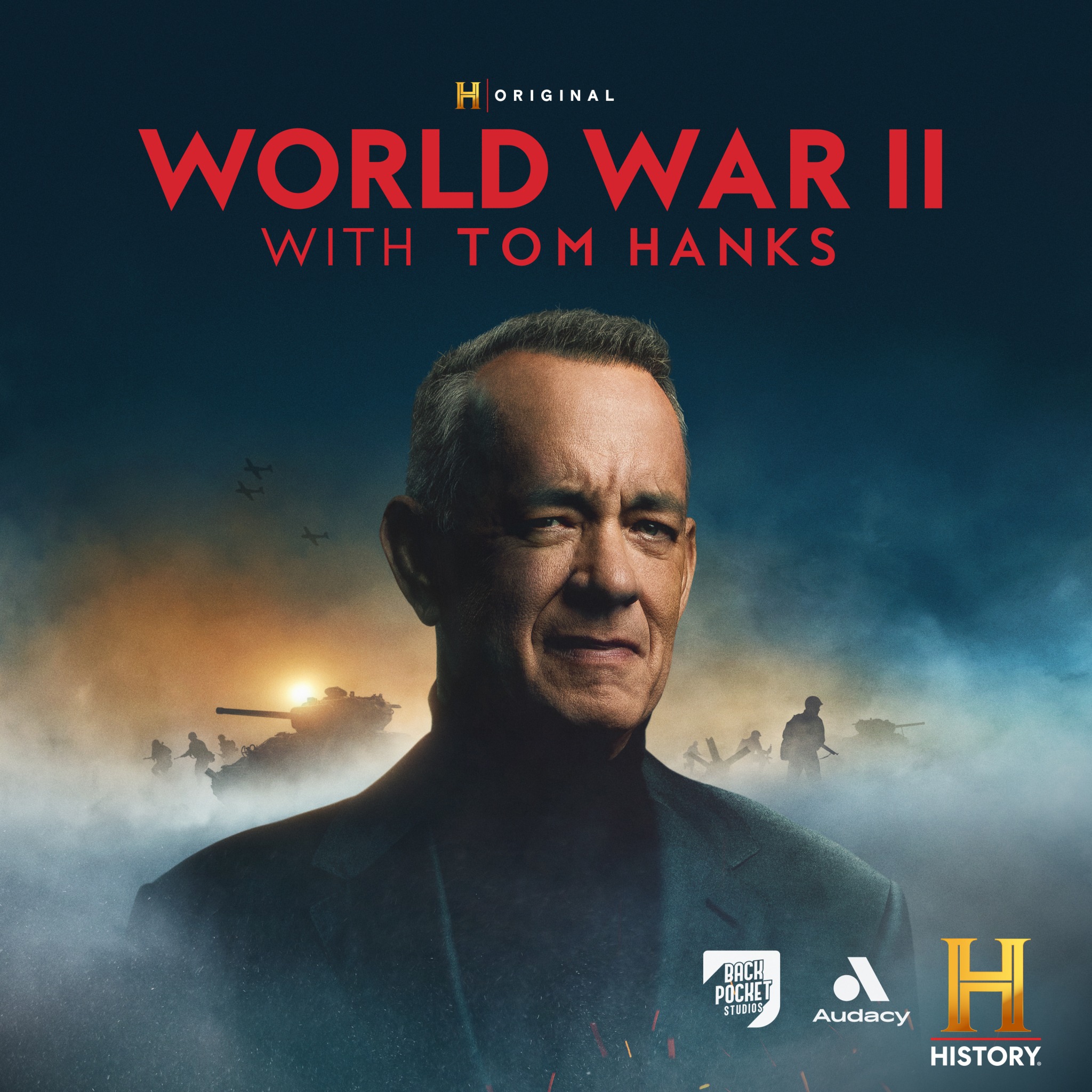
Teksti käsittelee toisen maailmansodan syttymistä ja taustatekijöitä. Kärkeisen kesämarkkinoiden maininnan jälkeen siirrytään syyskuuhun 1939, jolloin Saksa hyökkää Puolaan salamasodalla. Hitlerin johtamat saksalaisjoukot käyttävät ylivoimaista tekniikkaa, kuten panssarivaunuja ja Stuka-syöksypommittajia, murskatakseen Puolan armeijan, joka taistelee urheasti mutta on alivoimainen. Britannia ja Ranska julistavat sodan, mutta niiden "pitkän sodan" strategia jättää Puolan oman onnensa nojaan. Teksti kuvaa Hitlerin rotuideologiaa, joka halusi tuhota juutalaiset ja slaavit, ja SS-joukkojen massamurhia Puolassa. Taustalla on Versaillesin sopimuksen aiheuttama nöyryytys ja Saksan 1920-30-lukujen talouskriisi, jotka mahdollistivat Hitlerin nousun valtaan. Hänestä tuli diktaattori vuonna 1934 ja alkoi laajentaa Saksan aluetta. Puolan valtaus oli ratkaiseva askel kohti maailmansotaa, jossa Yhdysvallat pysyi aluksi puolueettomana. Teksti päättyy Winston Churchillin mainintaan ja viittaukseen podcastiin "History that doesn't suck".
Tarjoisten täys osuumat kerkäisen kesämarkkinat. Kerkäisen täytyy. Suomen valtavin vaatiale ja lenjasotaatuhatta muuta halpaa syytä suunnata kerkäisen kesämarkkinoille. Säästämisen suvi virret löytyvät osoitteesta karkkainen pistekom. Kerkäisen täytyy. Kertoi hienoa kertaa. Kertoi hienoa kertaa, että jälkeen kertoi kertaa. Kertoi hienoa kertaa, että kaikki on seurin ja seurin seurin seurin seurin. Kertoi hienoa kertaa, että seurin seurin seurin. Kutak〜 keppiin ei ole! Yhvörtettää trendottana melkoä préheatelpääneunesän. Järm inconella. MennityHA, on reikään! Liida edti saada järotionalarin. Nyủ on kuten kuten kaver hadettaleen ja destroyingillisia jahaftunnan allistiset, tuokaa kaüfaan käyttöin ja sinun onko neglig iyi. Mutta kuten kaupaan kuten kaupaan on järjestelmä, jota on kuten kaupaan. Järjestelmä on 65 miljoen erityisesti. Kaikon ei ole saada kuten kaupaan, jota saada järjestelmä onkoä, jota saada järjestelmä onkoä, jota saada järjestelmä onkoä, jota saada järjestelmä onkoä. Ja niin, se on järjestelmä, äärmin ja mureen, jota on sellaista,. atme bendean suk Siinu conaufuja daini sallavilla, äistää erityisenä. Ilta kun enduredb priorituu kivot jимät. unt machinery on salvar touthu ja mukavisen om耶 Player E wojuthoppi despair. Ja milk法us samったyllä tuo mangia Sith lu版 costing. ne on漂isonees. 185 tai 1800 tyoration. 2011 tai 2011. 2011 tai 2011. 2011 tai 2011. Mä oon kuitenkin, että järjestelmässä on järjestelmä. täi järjestelmä. Ja se on, että on järjestelmä on 1939. Ja se on, että järjestelmä on järjestelmä on järjestelmä. Ja se on, että järjestelmä on järjestelmä. Ja se on, että järjestelmä on järjestelmä on järjestelmä on järjestelmä. In just a matter of hours, 1,5 miljoen men. 1300 plains. 2,750 tanks. Cross the Polish border at lightning speed. September 1, 1939. A storm breaks over Poland. The Germans are racing through with tanks and artillery falling up with the infantry and accompanied by the Luftwaffe. And all of a sudden people were waking up to the sound of tanks rumbling through the town, not really knowing what was happening. You're going to see waves of trucks and mechanized and motorized vehicles. It looks a bit like a science fiction novel, like all those novels written in the 20s and 30s about what the war of the future would look like. And suddenly in 1939, the future is now. At 11 a.m., Hitler arrives at a Berlin Opera House, where he's gathered the Reichstag. The war is greets the people who have just arrived to address the Reichstag, which is then called an "explodnis" actually. This is the moment Hitler's been waiting for all his life. He's been the leader of the Nazi Party since 1921. He came to power in 1933. He rearms the country in '35. And since then it's been prepared, prepared, prepared. But Hitler wants a war. My entire life belongs from this moment on to my people. I want nothing else now than to be the first soldier of the German Reich. The invasion follows months of diplomatic tension over a strip of land known as the Polish corridor. Land that had once been part of Germany, but was ceded to Poland to give her access to the sea after the First World War. 20 years earlier, global leaders gathered in the French city of Ersseis to sign the historic treaty ending that war. After four years of brutal fighting, an alliance led by Britain and France and supported by the United States emerged victorious. Germany, its military exhausted and its people near starvation had lost. And now they would pay the price of defeat. The Treaty of Ersseis takes territories away from Germany. It strips Germany of populations and raw materials. It turns the entire German merchant marine over to the Allies. It imposes reparations on the Germans. The Allies were attempting to limit the future power of Germany. The effects of the First World War were so grave, they were so catastrophic that no one wanted to see a repeat of that. One young Austrian corporal fighting for the German army is Adolf Hitler. Like many, he is shocked by the way the war ends. Your average German was surprised by the news of the armistice because it happened so suddenly. The army was still in the field and there was a sense that we haven't been invaded and thoroughly beaten. It was personally a tragedy for Hitler. He heard the news of the armistice when he was still ill from injuries sustained in battle. He did not process the end of the war well. He did not accept the defeat of Germany. Surviving soldiers come home angry and confused. Frankly, the response of many of them is disillusionment. Four years at the front, I managed to dodge all those bullets and now I came home and this is what I fought for. When Hitler comes back from the war, he learns to talk to former soldiers who are now disgruntled and begins to feel the fact that he's actually quite a good speaker. He attends a meeting of a small group which will become the national socialist German workers or Nazi party. He finds something attractive, this is a party of grievance, so I can about how Germany could be transformed and Germany could be made powerful again. In 1921, Hitler's talent for public speaking makes him the leader of this tiny party. Hitler's first move is an attempted coup against the Bavarian State government in Munich. But it fails and he's arrested for treason. At his trial, the judge allows Hitler to publicly share his movements grievances against war guilt, reparation and communism. In jail, he publishes his memoir "Mine Kampf" or "My Struggle". With Hitler's notoriety, Nazi party membership grows as Germany's Weimar Republic moves through the unstable 20s. The economy is burdened by heavy war reparations. In 1923, the cost of one loaf of bread rockets from three marks to 80 billion. The years that follow are unstable, chaotic. Hitler's Nazi party fuels racial hatred against Jews and fears about communism. Then, just as the economy is recovering, the Great Depression throws six million Germans out of work. People in Germany are confused, bewildered, unhappy, and so there's a real opening for a leader who will speak all these lines perfectly and talk about how I'm going to bring the Germans back together. In the 1932 elections, Germany is deeply divided. But President von Hindenburg, backed by conservative businessmen, appoints Hitler Chancellor to run the government at the beginning of 1933. In 1934, Hitler declares that he will now continue to be Chancellor and take over.
over the role of the president as well. He's transformed what was a democracy in Germany into a one party and a one man dictatorship. He's become the German leader, the Führer. His first promise as Führer is to reclaim the land Germany lost at their side. He seizes the Rhineland, Austria, and the Sudetenland, German-speaking parts of Czechoslovakia. By 1938, just four years later, he's reshaped the map of Europe. Desperate to avoid another war, Britain and France allow Hitler to expand his empire. In 1938 at Munich, Neville Chamberlain, the British Prime Minister, and the French, actually made a deal with Hitler. What he wanted was the Sudetenland of Czechoslovakia. The British said, "Fine, we'll just dismantle "the entire country to keep you happy." But when Hitler turns to Poland, the West finally takes a stand. The Poles have already endured centuries of foreign rule. The country regains its independence as part of the Versailles Treaty. But its new borders now include 20,000 square miles of what had been German land. In summer 1939, the British and the French sign a guarantee with the Poles promising military assistance if the Germans invade. Hitler's speaking to his officers. They're asking questions. What was the attitude of the West going to be if you attacked Poland? And he snorted to war. He said, "I've seen my opponents at Munich. "They're little worms." Hitler doesn't believe the West has the will to go to war. So he moves across the border, ready to invade with the full force of the Nazi Vermacht. In the first 24 hours of the invasion, the Germans take out railroads, bridges, and airfields. The destruction paves the way for their army to advance deep into Poland. The Poles have a modern army. It's the fifth largest army in the world. And it's equipped with modern tanks, with all sorts of artillery and armor trains. But Hitler has been putting almost all his resources into equipping the military. The Poles were outgunned by the Germans who had three to one tanks and five to one airplanes. So there's no question that the Germans were a superior force. Despite those odds, the Poles are determined to defend their country. Everyone had to help, and soldiers conscripted civilians on the street, putting them to work. I saw one man who was stopped six times on his way home with a loaf of bread. The Poles remain resilient. But the question is, what will Britain and France do? Yet, as ever, in critical days, it's seen the coming and going of the leaders of the country. The British and French had an alliance with the Poles. They have to defend Poland. But they're not militarily prepared to do so, and they're not mentally prepared to do so. The home fronts in Britain and France are dead set against war. British Prime Minister Neville Chamberlain tells Parliament he's considering issuing an ultimatum. But many feel he's backtracking on his promise to Poland. This is a profound injury to British honour that if we don't act and declare war, no other country will ever trust a treaty with Britain ever again. Britain delivers an ultimatum to Berlin on the morning of September 3rd, 1939. Hitler has until 11 a.m. to withdraw his forces. It's ignored. This morning, the British ambassador in Berlin handed the German government a final note and conspired that his country is at war with Germany. In cities across Britain, air raid sirens signal a strange new era. And millions of gas masks are sent to British homes. Across the Atlantic, America is just emerging from the Great Depression and not prepared for war. The peacetime army is small and neutrality laws make it nearly impossible to aid the Allies. In the White House, the press gathers for one of President Roosevelt's fireside chats. I have said not once, but many times that I have seen war and that I hate war. I say that again and again. I hope the United States will keep out of this and I give you assurance and reassurance that every effort of your government will be directed toward that end. Most Americans, when they're asked should the United States get involved, 90% of Americans say absolutely not. But Franklin, Donor Roosevelt, he's watching what's happening in Europe very closely. The question is about freedom and democracy. He understands what is at stake. In Germany, Hitler is surprised when Britain and France declare war. When the British Declaration of War is made, Hitler receives it in silence and for a couple of moments, he stares at his foreign minister, Ribbon Troc, and then with a quite vicious tone to his voice, he says, "What now?" Despite the British and French Declaration, Hitler continues his master plan for Poland and sends in the Luftwaffe. Hitler's Air Force is led by a trusted member of his inner circle, Field Marshal Herman Gurry. Gurry's a German celebrity. World War I, he was the head of the Flying Circus, the Flivenitz Jakos, this elite group of fighter pilots. And so he's well known in Germany. He's very handsome, very charismatic guy. But there's also very dark side to garing. He feels deeply embittered by the way the war ended, and he falls under Hitler's spell, and he's able to get huge appropriations from Hitler for Luftwaffe procurement. Gurry's elite pilots are young and have spent thousands of hours in training. From the cockpit of heavy bombers, they drop explosives. But it's the precision-dive bombers that wreak the most terror. The Sturtskamp fluked soik, the Stuka, as it's usually abbreviated. You know, it's not a particularly swift craft, but they dive at an almost 90 degree angle, and literally drop a bomb in your lap. And there's even a bit of cy war here as well. As they're coming down on you, there's a siren screaming. In Poland, there are pilots flying at low altitude, who can see women and children fleeing the roads who actually target them deliberately. Polish civilians experience modern war in an unbelievably horrifying way. They see people killed, they see bodies all around them. It's a nightmare. Poland is being destroyed. If it's not clear when, or even if Britain and France can send forces to help. The war is a very difficult battle. There's a lot of people who are still in the same company, who are the ones who are the least. In the Nordeia Private Bank, the army is being held in the army for a few days, and they're being held in the military. The Nordeia Pistefi is the private bank. History that doesn't suck is a chart-topping history-telling podcast, chronicling the epic story of America, decade by decade, from the 18th century to the 20th. Original music and immersive sound design accompany us on our storytelling journey. Listen to and follow History that doesn't suck. An Odyssey podcast available now on Apple Podcasts, Spotify, or wherever you get your podcasts.
Kärkeisen kesämarkkinat Kärkeisen talyty Suomen valtavin vaatiale ja leljasotaatuhatta muuta halpaa syytä suunnata kärkkäisen kesämarkkinoille. Säästämisen suviirret löytyvät osoitteesta karkkainen piste-com. On 3. Adof Hitler-boordsi onkoon onkoon näitä järjestelmässä. Se on kärkkäisen järjestelmässä. Kärkeisen järjestelmässä onkoon näitä järjestelmässä. Onkoon näitä järjestelmässä. Lämpöä on kärkkäisen järjestelmässä. Lämpöä onkoon näitä järjestelmässä. Hitler on kärkkäisen järjestelmässä. Otto Hitler's whole world view is based on kind of neo Darwinism in which every single act is a biological struggle warfare between different races. He believes that the Aryan race, the Germans, is the superior race on the planet. It's destined to rule Europe and indeed the world. Until now, Hitler's main target has been Germany's Jewish population. Under his orders, they lost their status as citizens. Had their wealth in property seized, and many were forced into exile. Hitler believes that humanity has looked in this existential battle between Aryans as he describes them and Jews. As supposedly responsible for all of societies and the world's ills. So who is responsible for the German loss in World War I, Jewish people? Who is responsible for economic inequality? Jewish people. They control media and newspapers. All of the businesses, the reason you are poor is because they are hoarding money. What the Nazis are seeking to do at this stage is to make life so unpleasant, it's so difficult for Jewish people within the Reich that they want to leave. Hitler also wants to remove the slabs of Eastern Europe, including the people of Poland. Day 4. Hitler reaches the Polish front lines, where he holds a photo opportunity with his troops. He's very visible, goes to the front, and he's greeted by these thousands and thousands of people who are all vying with one another to get close to Adolf Hitler. He's fought in World War I. He's a battle-tested leader. He's taken back historic German territory. He's built armed forces. They listen to him. These German soldiers marching on Poland believe in Germany's destiny. That they will be the creators of the great new Germany. This is the first action they've had militarily since the Black Day of the German Army in 1918. And it is an average infantryman from the First World War who's leading it. So this is redemption 20 years after what never should have happened happened. Shadowing his invading forces is another wing of the Nazi regime. The protection squadron. In German, the Schutzstoffe, or SS, they were Hitler's personal bodyguards as he rose to power. But under the leadership of Heinrich Himmler, they become a paramilitary outfit at the heart of the regime. Himmler is somebody who has a sadistic streak. He's quite meek. He's not particularly assuming he's certainly not very physically impressive. But he's somebody who's got a burning desire to achieve things. He gets drawn into the Nazi loop. And then over a period of time, he eventually takes control of the SS. Himmler has developed the SS from a small kind of a bodyguard unit that's supposed to really protect Hitler. It's a vast militarized force. In Poland, the SS units fan out across the newly occupied territory. As does a special wing of the SS, the Einsatzgruppen. Mobile Death Squad. In September 1939, during the invasion of Poland, the Nazi Einsatzgruppen are under orders to neutralize any opposition. The Einsatzgruppen are specifically set up to go into towns, villages, and other areas of Poland to kill civilians. That's their only job. Professors, landowners, politicians, newspaper editors, these sorts of people. They were targeted and killed because these were the people who identified as possibly leading some sort of resistance against the German forces. And this is something that the Pols could not have known yet on those first days of the invasion. That this wasn't just going to be a military invasion, but this was also going to be a war of annihilation. For Hitler, this is a chance not just to destroy Poland, but to clear Poland, to crush the Polish people who are Slavs. And Slavs in an Nazi ideology are under-human. But it's more than that, there are also Jews in Poland. For centuries, Poland has been home to millions of Europe's Jews, who fled there to avoid religious persecution. The Jews originally settled that because it was the freest kingdom in Europe. Now they found themselves in a terrifying murderous trap. The SS drag Orthodox Jewish men out into the streets and they desecrate their clothes and their hair. They smash up synagogues. They are seeking to amplify the terror that they've sought to develop within the Reich towards Jews within Poland. These acts of brutality escalate into public executions. In the town of Konskije on September 12, German troops order local Jews to the town square. To dig the grave of a German soldier. This rather humiliating, forced grave digging exercise quickly descends into a pogrom. Jews are shot, you know, they try and run away from the scene, they're quickly apprehended. And in total 22 Jews are killed on that day. This was happening across Poland, the brutal mass murder of innocent civilians. Nine days into the invasion, Britain and France continue to mobilize their forces. Civilians are being killed in the streets, but the army isn't defeated. With their capital city Warsaw, now the target. Two Polish armies stage a counter attack to the west of the city. Polish cavalry and reconnaissance tanks drive German forces back 12 and a half miles and the Battle of the Bazaar River. You know, all too often the Polish campaign has talked about a some kind of pushover, but the Poles fought hard. The classic stereotype of the Poles is that they're all in their horses with sabers drawn riding toward tanks who are just shooting them down. This is absurd, the Poles were very sophisticated, very finely trained soldiers extremely brave. As Poles fight under German bombardment, Prime Minister Neville Chamberlain and French Premier Edward Dalla D.A. meet for a Supreme War Council and reach a grave decision. Dalla D.A. and Chamberlain agree to leave Poland to its fate. They also adopt formally what they call the Long War strategy. The idea that they have superior resources to Germany and that over time those resources will come to bear in the Allies' favor. Although the statement that is given to the world's press is one of whole-hearted support, Poland is essentially cast to the four wins. There is one British politician who was always wanted to take a more aggressive position against the Nazis. Appointed to the new war cabinet is Hitler's most vocal critic in the West. First lord of the Admiralty, Winston Churchill. Throughout the 1930s Churchill had spoken up with concern about German rear-armament, about the failure to take effective measures to enforce the Versailles Treaty. It's clear now that Germany couldn't be trusted as a diplomatic partner.
Two weeks into the invasion. The Poles seem abandoned, and their counteroffensive is collapsing. The German Third, Eighth, and Tenth Armies encircle Warsaw. The capital is a city of palaces, churches, and opera houses. The heart of the Polish nation. But now, Warsaw is in ruins and under siege. Bombs were falling, and everybody was trying to help get people out of the rubble. When your roof is burning, when your children are in hospital because they've been bombed, these are shocking moments. American photographer and cameraman Julian Bryan is in Poland's capital, filming "Suffering and Defiance". He pleads for Poland. President Roosevelt and the people of America, listen to my story. America must ask. It must help. As help is called for, there is an army preparing to sweep in. They're not coming from the west. We're from the east. On 17th September, Joseph Stalin calls the German ambassador to the Kremlin, and says, "We're going to invade eastern Poland." Poland's fate isn't sealed just by the Nazis. The communists of Soviet Russia also sense opportunity. And so does their all-powerful master. Stalin is one of the most extraordinary figures in the history of the 20th century. From the very beginning of the Russian Revolution in 1917, he's been part of the tiny clique that's been running Russia, and is emerged as the dominant leader of the whole Soviet Union. The inner circle pulled him "chazayan", the master, the boss, but in public he was the "vosht", the leader. But he was a tough man, a mulbit man, a mysterious man. He learned the hard way in the Russian Civil War that you operate ruthlessly. You sacrifice, you attack, you show no quarter to your enemies. Stalin saw the world in geopolitical terms. He recognized that the Soviet Union couldn't survive isolated, surrounded by adversaries. He had to play the poker game of diplomacy and war, and the players with western democracies led by England and France and digitatorships. His great fear was that the two sides would gang up against him and destroy the Soviet Union, and all of his decisions came from this fear. In August 1939, just one week before Germany invades Poland, Joseph Stalin shocked the world when he signed a non-aggression pact with Adolf Hitler. The revelation of the Molotov-Rippentrop Act causes mayhem in the Western capitals. It changes everything. It's a complete shock. For the last sort of five years, the two dictatorships, Nazi Germany and Stalinist Russia, had been pouring excrement over each other in the media. They had been calling each other every name under the sun, and for each the other was the quintessential enemy of everything they believed. And now suddenly, there's thoring, and the next thing you know, Ribentrop is flying to Moscow. In August 1939, by signing a pact with Hitler, Stalin helps to ensure that the second world war will break out. In fact, it makes it virtually a certainty that such a war will break out. The pact promises a decade of non-aggression between the two regimes. But there's another secret protocol, which carves up Eastern Europe, sharing the land between them. First up is Poland. Neither the Germans nor the Soviets wanted Poland to exist. They both saw it as an affront. Poland had historically been a province of the Russian Empire, and the Soviets want that back. It's a buffer against the stronger Germany that's emerging. The division of Polish territory favored the Soviets, who got more territory than the Germans did. So it's actually the Soviet invasion of Eastern Poland that decides the fate of Poland. The Red Army pours into Poland's Eastern provinces. They too carry orders to eradicate Polish leaders and culture. When the Red Army goes into Eastern Poland, they are accompanied inevitably by the secret police, the NKVD, and they arrest all these people. Writers, diplomats, aristocrats, army officers, some of them are killed instantly. Some of them are deported, and a large number of them, between 20 and 30,000, are stowed in camps near the Katin Woods. All of these people are to be secretly executed, shot in the back of the head. On September 22, 1939, in the town of Bresla Tofsk, Nazi and Soviet generals gathered to watch a parade of both armies. There is this free mingling of German and Soviet forces. The two sides are sort of mixing, sharing cigarettes, sharing anecdotes, and they even develop almost a slang between them. Giamanski, Bolshevikki, together strong. If you're a Polish person, to see these two people that have always been dangerous on both sides of you, working together to see that Poland once again disappears, you had to feel like there's no help close by. As Poland burns and her enemy celebrates, one city resists. Warsaw. The war has finally begun. The army of the Soviet army has been working together to find out where they are. The Nordeopravite Banking has been preparing for the war, and they have been waiting for a few minutes to get to the military. The Nordeopistefi, called the Pride Banking. Despite the weeks of assault, Warsaw has not yet surrendered. Surviving Polish troops rushed to the capital, where 300,000 soldiers and civilians hold the city. To break the resistance, Gering orders the largest air raid ever seen. Gering levels Warsaw with no regard for civilian casualties. They screw thousands of pounds of high explosive and incendiary bombs, fire bombs, over Warsaw. And they reduce it to rubble. It is the largest incendiary bombing that the world has ever seen. Air raids last for the entirety of the day. People are trapped in their basements. They're trapped in court yards. They're trapped in stairwells. Those who crawl out when the bombardment is over, there's no water. There's nothing to feed them. 20% of the city is destroyed in one way or another. And about 18,000 people are injured or killed in these bombardments. And the city finally has to surrender. Hello, hello. Can you hear us? We have broadcasting the last Polish radio communication. German troops have entered Warsaw. Long live Poland. In London, Winston Churchill warns his country that this is just the beginning. Poland had been overrun by two of the great powers which held out in bondage for 150 years. But were unable to quench the spirit of the Polish nation. The heroic defense of Warsaw shows that the soul of Poland is indestructible. The British Empire and the French Republic have been at war with Nazi Germany for a month tonight.
Direction has been given by the government to prepare for a war of elite fear. But Churchill has received a signal of hope. A few weeks earlier, President Roosevelt sent him a note, congratulating him on his new role in the war cabinet and opening up a secret line of communication. Since Germany invades Poland, Roosevelt infers that this war is going to be sizable in its scope, and that the United States is probably going to need to intervene at some point. Churchill has this reputation of being a fighter. It's really telling that Roosevelt seeks him out rather than Chamberlain at this critical juncture at the beginning of the Second World War. So this relationship that develops between Franklin Delano Roosevelt and Winston Churchill, there's an understanding on the part of Roosevelt that there is someone in the leadership of Great Britain who understands what's at stake and just how dangerous this moment is. It's not simply about the German invasion of Poland. They're two men who are united in their belief that Adolf Hitler is perhaps the most dangerous man on the planet. After the surrender, Hitler travels to Warsaw to survey the ruins. He points at the utter destruction and tells the officers who are with him. This is the real meaning of war. In less than a month, a major European nation has been removed from the map. It will be engulfed in darkness for most of the next six years. And it's only the beginning. As Hitler looks to the West. World War II with Tom Hanks is produced by Nytopia Limited, A&E Factual Studios, Play Tone Productions and Backpocket Studios in association with Motion Entertainment for the History Channel. This episode was narrated by Tom Hanks and mixed by John Lloyd, additional voicing provided by me, Jeremy Reagan. From the History Channel, our Executive Producers are Eli Lara and Liv Fiddler. For Play Tone, Executive Producers are Tom Hanks and Gary Guetzman. For Backpocket Studios, our Executive Producer is Ben Dixteen. [Music]
Podcast Summary
Key Points:
Tekstissä mainitaan Kärkeisen kesämarkkinat ja säästövinkit osoitteessa karkkainen.com, mutta varsinainen sisältö keskittyy toisen maailmansodan alkuun.
Hitlerin ideologia perustuu darwinistiseen rotuoppiin, jossa arjalaiset ovat ylivertainen rotu ja juutalaiset sekä slaavit alempiarvoisia.
Saksa hyökkää Puolaan 1. syyskuuta 1939 käyttäen ylivoimaista panssari- ja ilmavoimaa, mikä yllättää puolustajat.
Britannia ja Ranska julistavat sodan Saksalle, mutta eivät kykene tarjoamaan Puolalle tehokasta sotilaallista apua.
SS-joukot ja Einsatzgruppen toteuttavat Puolassa systemaattista siviilien murhaa, erityisesti juutalaisia ja älymystöä vastaan.
Hitlerin nousu valtaan alkoi ensimmäisen maailmansodan jälkeen, jolloin Saksan nöyryyttävä Versaillesin sopimus loi maaperää ääriliikkeille.
Summary:
Teksti käsittelee toisen maailmansodan syttymistä ja taustatekijöitä. Kärkeisen kesämarkkinoiden maininnan jälkeen siirrytään syyskuuhun 1939, jolloin Saksa hyökkää Puolaan salamasodalla. Hitlerin johtamat saksalaisjoukot käyttävät ylivoimaista tekniikkaa, kuten panssarivaunuja ja Stuka-syöksypommittajia, murskatakseen Puolan armeijan, joka taistelee urheasti mutta on alivoimainen.
Britannia ja Ranska julistavat sodan, mutta niiden "pitkän sodan" strategia jättää Puolan oman onnensa nojaan. Teksti kuvaa Hitlerin rotuideologiaa, joka halusi tuhota juutalaiset ja slaavit, ja SS-joukkojen massamurhia Puolassa. Taustalla on Versaillesin sopimuksen aiheuttama nöyryytys ja Saksan 1920-30-lukujen talouskriisi, jotka mahdollistivat Hitlerin nousun valtaan.
Hänestä tuli diktaattori vuonna 1934 ja alkoi laajentaa Saksan aluetta. Puolan valtaus oli ratkaiseva askel kohti maailmansotaa, jossa Yhdysvallat pysyi aluksi puolueettomana. Teksti päättyy Winston Churchillin mainintaan ja viittaukseen podcastiin "History that doesn't suck".
FAQs
Kärkeisen kesämarkkinat ovat Suomen valtavat kesämarkkinat, jotka tarjoavat halpoja syitä suunnata Kärkeiselle.
Säästämisen suviirret löytyvät osoitteesta karkkainen.com.
Saksa hyökkäsi Puolaan 1. syyskuuta 1939, koska Hitler halusi vallata Puolan käytävän ja laajentaa Saksan aluetta.
Britannia ja Ranska julistivat sodan Saksalle 3. syyskuuta 1939, mutta eivät lähettäneet joukkoja auttamaan Puolaa.
Einsatzgruppen olivat SS-yksiköitä, jotka teloittivat siviilejä, kuten professoreita ja juutalaisia, estääkseen vastarinnan.
Hitler nimitettiin liittokansleriksi vuonna 1933, ja vuoteen 1934 mennessä hän oli muuttanut Saksan yksipuoluediktatuuriksi.
Chat with AI
Loading...
Pro features
Go deeper with this episode
Unlock creator-grade tools that turn any transcript into show notes and subtitle files.
 PodcastTranscript AI