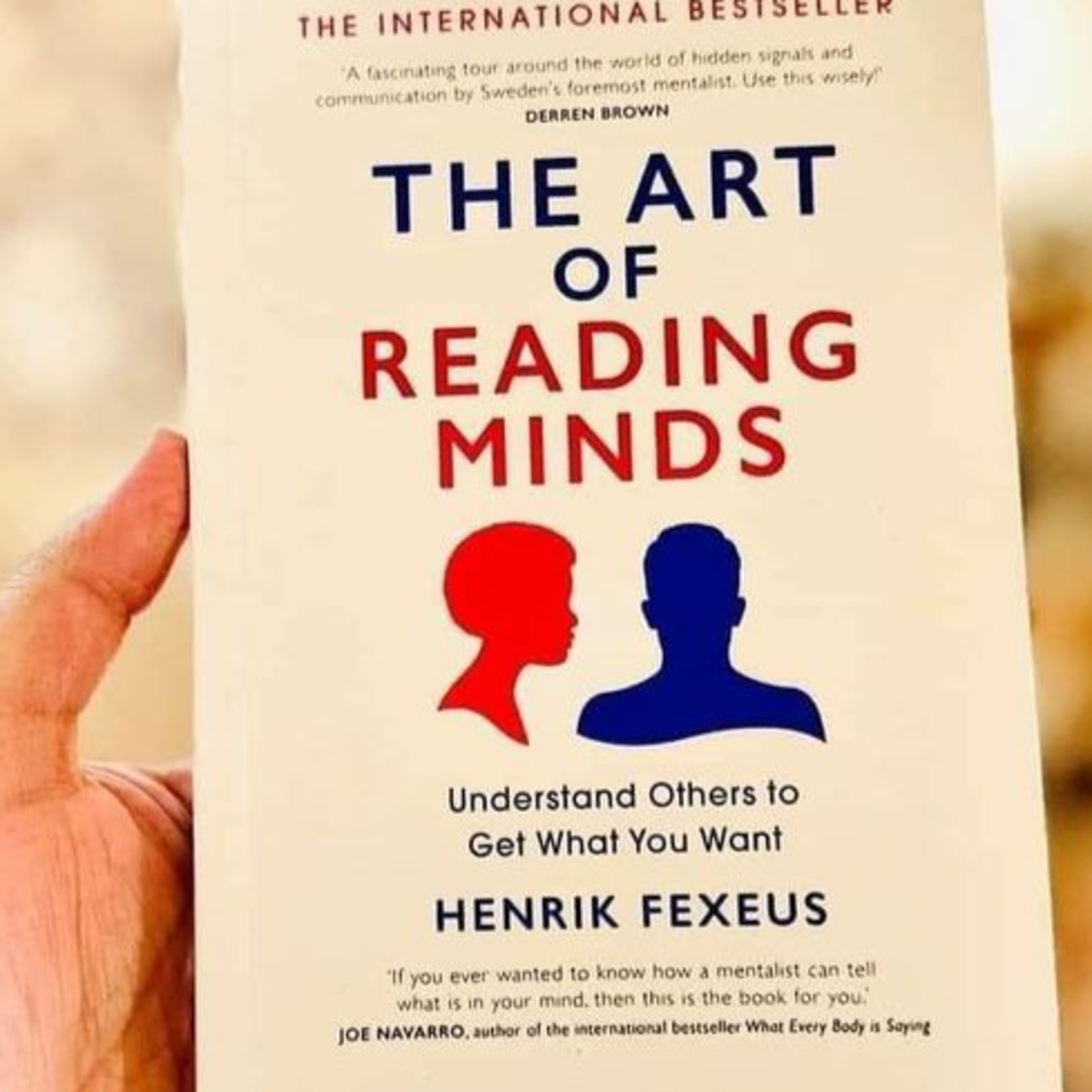
This discussion explores the principles of "hacking the human operating system" through psychological observation, as outlined by Henrik Fexeus. It emphasizes that genuine communication requires moving beyond words to interpret involuntary physical signals, rejecting the outdated mind-body separation. The foundation is building rapport via subtle matching and mirroring of posture, gestures, and vocal tempo to create unconscious trust. A key strategy is identifying a person's dominant sensory mode—visual, auditory, kinesthetic, or neutral—to tailor messaging effectively. The transcript details methods for decoding internal states, such as analyzing eye movements and spotting fleeting micro-expressions that leak true emotions, while warning against the "Othello mistake" of misinterpreting stress as guilt. Finally, it covers influence techniques, advocating for positive framing over negations and the careful use of emotional anchors. The overarching theme is that these skills, from reading cues to ethical influencing, move from conscious learning to unconscious competence, revealing a hidden layer of human interaction and demanding responsible application.
Welcome to the deep dive. So today, we're digging into something fascinating. Basically, hacking the human operating system. Right. Getting past just the words people say. Exactly. Forget small talk. We're talking about, well, what some might call mind reading, but the psychological kind. Our guide here is the work of Henrik Fexius. Yeah, he really breaks it down and it's crucial to get this upfront. This isn't about magic tricks or anything supernatural. No psychic powers involved. That all. It's purely about observation, really sharp observation, actually, and then interpreting what you see. So decoding signals, body language, tiny expressions, that can't think. Precisely. The body gives off all these involuntary signals constantly. They show what's really going on inside thoughts, feelings. And the starting point, kind of the big idea we need to grasp first, is shaking off an old philosophical concept. Yes, absolutely. We have to ditch what Fexius calls day carts big mistake. You know, the idea that the mind and body are totally separate things. So they operate independently. Right. And that thinking has led us to ignore just how much the body communicates. Modern science, neurobiology confirms they're deeply connected. So a thought or feeling isn't just in your head. No, it triggers a physical response, a biological process that runs through your whole system. We're often so focused on listening to the words that we miss the the physical conversation happening. You got it. We're missing a huge part of the picture. Okay. So if we want to read that physical transcript and also make sure our signals are getting through clearly, where do we start? Report. It all starts with rapport. Right. That sense of connection of trust. Exactly. It's the foundation for any real communication or influence. And the basic rule sounds simple. Adapt your style to match the other person. Simple in theory. Maybe harder in practice, especially doing it naturally. Well, the key is subtlety. Doing it unconsciously or at least making it seem unconscious. Matching and mirroring are the main tools here. Okay. Let's break that down. Body language first. Postural echo. Yeah. So subtly mirroring their posture. Maybe how they're sitting or if they gesture with their hands, you might do something similar, even the angle of their head. But it has to be subtle if you just copy them directly. No, it backfires completely. They'll feel mocked or just weirded out. Report destroyed. So how do you avoid that? Fexius has tricks for this, right? He does. One way is using a representative gesture. It's like a smaller scale version. If they cross their arms fully, maybe you just lightly touch your opposite wrist or elbow. Ah. So it echoes it without being identical. Right. Or you can use delayed movement. This one's quite clever. Okay. You see they make a gesture or a shift position and you wait maybe 20, 30 seconds and then you make a similar move. Huh. I'm just picturing myself trying to time that casually in a meeting. Okay. Wait for it. Now lean back. It sounds a bit funny, but that delay is crucial. It bypasses their conscious radar because it doesn't feel like a immediate mimicry. Exactly. The unconscious mind just picks up on the similarity later and registers. This person is like me. That builds trust beneath the surface. Okay. Beyond the visual stuff, what about voice? Voice is huge. You need to tune into their tempo, their pitch, their volume. Tempo is especially important. Why tempo specifically? Because we tend to speak at the same speed we think or process information. If someone's talking really fast, thinking fast and you're responding slowly, your ideas might literally feel too slow for them like you're lagging behind their brain. Spot on. Matching their tempo helps align your communication with their processing speed. It feels more in sync. And this ties into energy levels too, doesn't it? Like figuring out if they're a high energy energizer bunny type or more of a laid-back garfield. Yes. You look at their posture, their breathing rate. Are they animated or still? Fast tempo or slow? And the first step is always to match their energy level. Meet them where they are. That seems like a core principle for rapport. It absolutely is. And it leads directly into handling disagreements or resistance. He calls it opinion IKIDO. opinion IKIDO. Okay. I like the sound of that. So you present an idea and you feel them resisting. What's the IKIDO move? You don't push against their resistance. You sort of flow with it first. You start by agreeing with their position or at least validating their feeling. So you'd say something like, okay, I understand why you feel that way. Or even stronger. If I were in your shoes, hearing that, I'd probably react the exact same way. So you join their side first. You validate them. Yes. You adopt their perspective momentarily. Then once you've joined them, you gently introduce your alternative idea or viewpoint. You're using their energy, not fighting it. And there's this specific word choice trick here too, isn't there? Swapping butt for AND. That's the really subtle power move. We often say I agree but and that but just negates everything before it. It signals opposition. Right. It puts the shields back up. Exactly. But if you say I agree and here's another way to think about it or that makes sense and we also need to consider it feels like you're building on it not contradicting it. Precisely. It frames the second part as a logical continuation, not an argument. It turns potential conflict into collaboration. It's really effective. Okay. So we've built report. Maybe even navigated some disagreement. Now how do we get a sense of what's actually going on inside their head? How they're processing things. Right. This moves us into decoding their internal thought processes. And a key way to do that is by figuring out their preferred sensory system. Sensory system. You mean like visual auditory? Exactly. Most people tend to rely more heavily on one primary sense or mode of thinking to make sense of the world. Fexius identifies four main groups. Let's go through them. Visual thinkers tend to be fast. They often speak quickly, breathe higher in the chest and their language is full of sight words. I see your point. Let's look at this. It appears clear. Okay. Then auditory. Auditory people are often a bit slower, more measured. They might tilt their head as if listening intently. They use sound words. Listen, here's the thing. That rings a bell. Sounds good to me. Makes sense. Yeah. What's next? Kinesthetic. Kinesthetic is about feeling, touch, physical sensation. These people are often the slowest tempo. Their language is very grounded. I need to grasp this. Let's find a solid solution. It finally sunk in. They connect with emotions and gut feelings. Got it. And the last one? Neutral. Neutral are sometimes called digital. These are the logical analytical thinkers. They tend to avoid strong sensory language altogether. They prefer abstract words. Decide, process, think, understand logically. So knowing someone's preference helps you tailor your communication to them. Absolutely. If you're trying to convince a visual person, use charts, images, visual metaphors for an auditory person, focus on your tone of voice. Maybe tell a story. Kinesthetic. Connect with emotion. Let them feel the weight of the idea. Neutral. Stick to logic and data. And ideally you try to cover all bases if you're talking to a group. Yes. The best presentations hit all four. Show them something, tell them something compelling, make them feel something, and give them the logical reason. Okay. How can we spot these preferences in real time? Is there a tool? There is. It's called I Accessing Qs or EAC. It's based on the idea that where people look reveals the kind of thinking they're doing. I movements tell you if they're seeing, hearing, or feeling something internally. Pretty much. Now it's a generalization, a model. It's not 100% foolproof for every single person, but it's a very useful pattern. You'd usually want to check it with some simple questions first. Okay. So what's the general pattern? Generally for a right handed person looking up into their left means they're accessing a remembered visual image, something they've actually seen before. Up and left. Remembered picture. Got it. Up into their right usually means they're constructing a visual image, something new, something they're imagining. Okay. Constructed image is upright. Interesting implications there for other things. We'll get to that. Looking side to side level tends to be auditory processing, remembering, or constructing sounds. And down. Down into their right is typically linked to accessing feelings, emotions, physical sensations, the kinesthetic mode. Down and left is often internal dialogue, talking to themselves. You can actually test this on yourself, right? The DaVinci test. Yeah. Try it now if you're listening. Try to picture the Mona Lisa in detail. But force yourself to look down and to your right while you do it. Okay. Doing it. Yeah. It feels really awkward like my brain is fighting me. Because you're trying to access a visual memory while physically directing your brain towards the feeling center, it shows how linked the eye movements and internal processes are. And you mention implications. This ties into spotting deception, doesn't it? Someone says they remember seeing something but their eyes go up and right. It could be assigned they're constructing an image rather than recalling one. But and this is a big but it's not proof of lying on its own. You need more context. Which brings us nicely to emotional leakage. Right. The idea that our true feelings leak out often non-vertely even when we try to hide them faster than we can consciously control. Exactly. Especially through facial expressions. We're talking slight expressions, partial ones, and especially micro expressions. Micro expressions. Those are the really quick ones. Super quick. Like a fraction of a second. A full but fleeting flash of the real emotion before the social face snaps back into place. They reveal what's genuinely felt often unconsciously. What are some examples? Maybe ones that aren't the obvious stereotypes. Okay. Take sadness. It's not just the mouth turning down. The key hard to fake indicator is the inner corners of the eyebrows pulling up and together. Fects use calls them woody Allen eyebrows. Right. That specific muscle movement hard to do on command. Very. Or distinguishing fear from surprise. Both involve wide eyes and raised brows. But with surprise the brows are usually arched high.
With fear, they're raised, but also pulled together more straight and tense. Settle differences, but telling. Very telling. But this is where we need to be incredibly careful about interpretation. We have to avoid a fellow's mistake. A fellow's mistake? Sounds dramatic. What is it? It's jumping to conclusions. A fellow saw a desdemona's fear and distress when accused, and he interpreted it as guilt. But she was afraid because she was innocent and realized she couldn't prove it facing his fury. So, misinterpreting stress or fear as proof of lying? Exactly. An innocent person under pressure will show signs of stress. Fear of being disbelieved looks a lot like fear of being caught. You can't just rely on one sign, like nervousness, and assume guilt. So, if we suspect someone might not be telling the truth, and we're aware of a fellow's mistake, what should we look for? Where does the leakage tend to show up most reliably? You look for contradictions. In consistencies between what they say and what their body does, especially in areas they find harder to control, the face is one place, despite efforts to mask. Like a fake smile. How can you spot that? The eyes. A genuine smile called a duchin smile involves the muscles around the eyes, the ubiquularis ocular. It makes the eyes crinkle. Most people, like 90%, can't consciously contract that muscle. So, if fake smile is often just a mouth, maybe asymmetrical, and the eyes look cold or uninvolved. The eyes betray the lack of genuine positive emotion. We're about the rest of the body. Any reliable tells there. Look for increased hand-to-face gestures, especially covering the mouth, almost like subconsciously trying to block the lie from coming out. A symbolic stop sign? Kind of. Also, watch for gestural slips. These are small, repetitive, often meaningless actions fiddling with a pen, adjusting clothes constantly, tapping fingers, playing with hair. They indicate high internal conflict or anxiety trying to find an outlet. Nervous energy leaking out. Right. And finally, listen clasely to their language and voice. Changes in pitch or tone. Sometimes, higher or louder, might indicate stress or anger lower or slower could be shame or sadness. But more subtle clues are in the language itself. Look for linguistic distancing. Distancing, like what? Using negations excessively, like I did not do that, defining themselves by what they aren't or depersonalizing things, avoiding I, me, mine, using passive language. It creates a buffer between them and the action. Fascinating. It's like building a verbal wall. In a way, yes. All these little inconsistencies, eyes, body language add up to paint a picture, not proof, but strong indicators. Okay, this brings us to actually applying this knowledge for influence. Fects heist makes a point that all influences manipulation. But whether it's good or bad depends on the intent and outcome. It's a key distinction. The techniques themselves are neutral. It's about how and why you use them. Let's start with a really interesting verbal technique. The power of negations. The classic don't think of a pink elephant problem. Or blue polar bear in his example. Exactly. When you tell someone not to do something, their brain first has to process the very thing you told them not to think about or do. It has to picture the blue polar bear to understand what not to picture. So telling someone don't worry often just makes them focus on the worry. Pretty much. The unconscious mind doesn't process the not very effectively. So the practical advice is always frame things positively. Tell people what you want them to do or think, not what to avoid. Focus the energy on the desired outcome. Makes sense. It requires a positive target. And this idea of creating mental links leads us to anchoring. Anchoring. Like emotional conditioning. Pavelloves dogs, but for people. That's a great way to put it. An anchor is basically a trigger. It could be a specific touch, a word, a gesture, even a smell that you intentionally link to a particular emotional state. So you create an association. How does that work? You need to capture an emotion at its peak. Let's say someone is feeling really confident or happier determined. Right at that moment as the feeling is cresting, you apply the anchor. Maybe a light touch on their shoulder or using a specific keyword. Yes. Stinked. You do this consistently and soon, just applying that anchor the touch, the word can trigger that associated feeling even when they weren't feeling it initially. Wow. That's potentially very powerful for good or ill. Extremely powerful. You could anchor positive states to help someone access confidence before a presentation, but you also have to be careful not to create negative anchors unintentionally. How would that happen? Well, imagine if you only ever hug your child or touch your partner's arm when they are sad or upset trying to comfort them. The touch itself might become anchored to sadness. It could. The physical act of affection might start to subconsciously trigger feelings of low mood because that's when it most consistently occurred. Awareness is key. This has been a really deep dive. We've gone from rapport building, mirroring body language and voice to decoding how people think through their sensory language and eye movements. Recognizing those fleeting micro expressions and signs of emotional leakage while avoiding both those mistakes. And finally, understanding how suggestion works with negations and how to use anchoring for influence. It feels like moving from being unconsciously unaware of all this stuff to consciously learning it step by step. Right. And the goal, eventually, is to practice these skills enough that they move back into unconscious competence, where you're reading people and building rapport naturally effortlessly. But even just having the conscious knowledge changes things, doesn't it? Yeah. You start seeing the dance everywhere? Oh, absolutely. You see the subtle mirroring and cafes, the way people signal interest unconsciously like exposing risks, the fervent glances, fexious mentions and dating context, the whole hidden language of interaction becomes visible. So maybe a final thought for everyone listening. Now that you have these tools, now that you can start to see this hidden layer of communication. What responsibility comes with that? How do you ensure that your own intentions, hopefully ethical ones, align with the powerful, tough and unconscious signals you now realize you're constantly sending out? It adds a layer of critical awareness, doesn't it? It really does. Something important to think about as you start observing the world differently.
Podcast Summary
Key Points:
Effective communication and influence rely on building rapport through subtle mirroring of body language, vocal tempo, and energy levels.
Understanding a person's primary sensory thinking style (visual, auditory, kinesthetic, or neutral) allows for tailored communication.
Non-verbal cues like micro-expressions, eye movements, and gestural slips can reveal true emotions and internal states, but must be interpreted cautiously to avoid misjudgment.
Influence techniques like positive framing (avoiding negations) and emotional anchoring are powerful tools that are neutral in themselves, with ethics determined by the user's intent.
Summary:
This discussion explores the principles of "hacking the human operating system" through psychological observation, as outlined by Henrik Fexeus. It emphasizes that genuine communication requires moving beyond words to interpret involuntary physical signals, rejecting the outdated mind-body separation. The foundation is building rapport via subtle matching and mirroring of posture, gestures, and vocal tempo to create unconscious trust.
A key strategy is identifying a person's dominant sensory mode—visual, auditory, kinesthetic, or neutral—to tailor messaging effectively. The transcript details methods for decoding internal states, such as analyzing eye movements and spotting fleeting micro-expressions that leak true emotions, while warning against the "Othello mistake" of misinterpreting stress as guilt. Finally, it covers influence techniques, advocating for positive framing over negations and the careful use of emotional anchors.
The overarching theme is that these skills, from reading cues to ethical influencing, move from conscious learning to unconscious competence, revealing a hidden layer of human interaction and demanding responsible application.
FAQs
The foundation is to adapt your style to match the other person, primarily through subtle mirroring of their body language and voice. This creates a sense of connection and trust beneath conscious awareness.
Use techniques like representative gestures (a smaller-scale version of their movement) or delayed mirroring (repeating a similar gesture 20-30 seconds later). This avoids direct copying, which can feel mocking.
Instead of pushing against resistance, first validate the other person's perspective by agreeing or empathizing. Then, introduce your alternative idea using 'and' instead of 'but' to frame it as collaboration, not contradiction.
Listen to their language: visual thinkers use sight words ('I see'), auditory uses sound words ('sounds good'), kinesthetic uses feeling words ('grasp this'), and neutral thinkers prefer abstract terms ('process logically'). Observing eye movements (EAC) can also provide clues.
Micro-expressions are fleeting, involuntary facial expressions that last a fraction of a second. They leak genuine emotions, such as sadness or fear, before a person can consciously mask them, revealing their true internal state.
It is the error of misinterpreting signs of stress or fear as proof of lying. An innocent person under pressure may show similar signals, so one must look for multiple inconsistencies, not just nervousness, to avoid false conclusions.
Chat with AI
Loading...
Pro features
Go deeper with this episode
Unlock creator-grade tools that turn any transcript into show notes and subtitle files.
 PodcastTranscript AI