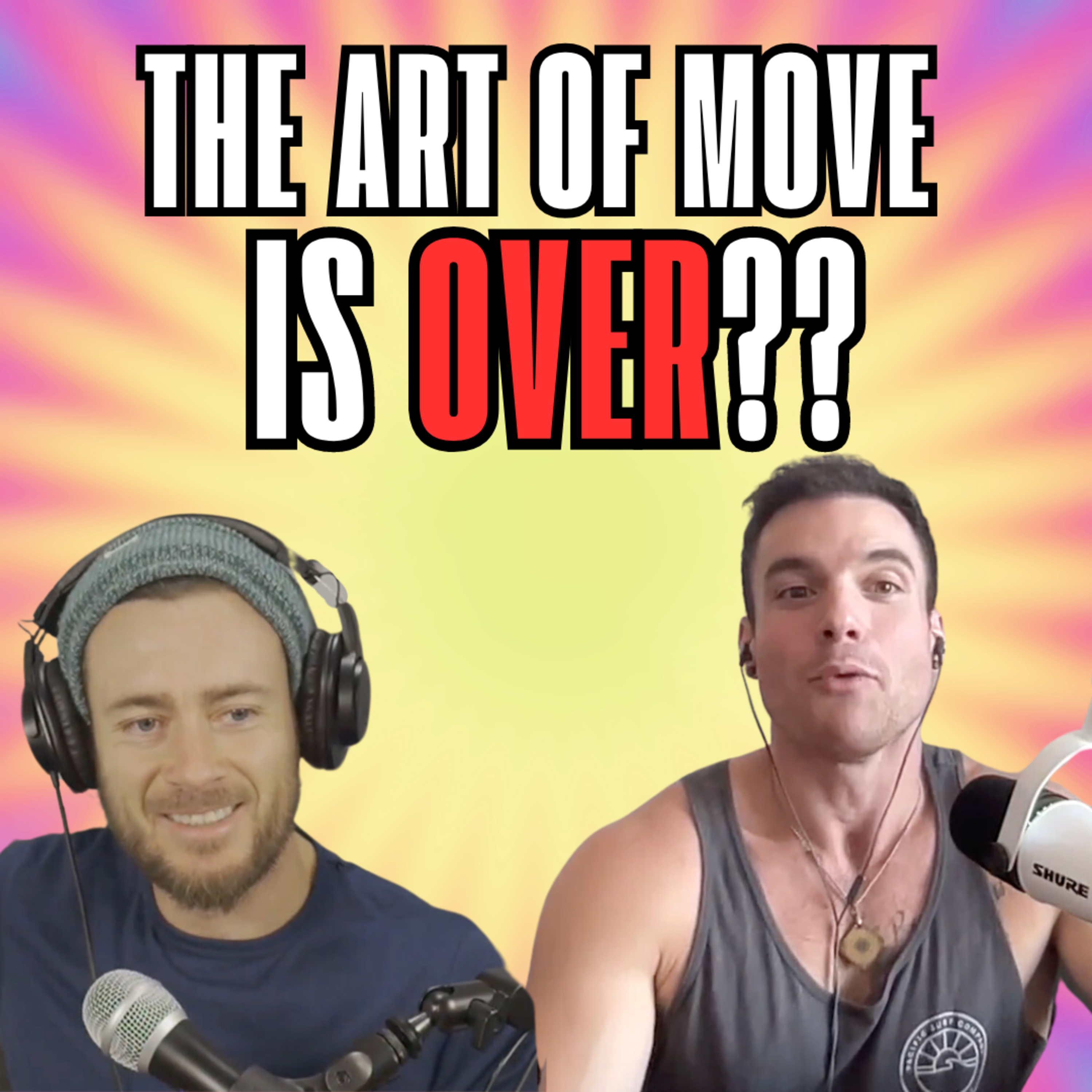
The Art of Move is OVER? What's Next for Will and Anthony?
76m 55s
In a reflective conversation, the hosts of the "Art of Move" podcast, Anthony and Will, discuss their evolution and future plans. They have moved away from consistent podcasting, focusing instead on personal branding and documenting their journeys. Will shares his insights on transitioning to a personal brand called the "Next Level Human Project," emphasizing the importance of not pigeonholing oneself into a single niche but rather embracing a broader identity that encompasses various interests. Anthony echoes this sentiment, discussing the value of integrating diverse passions into a unique personal brand. They both recognize that while the entrepreneurial journey can be daunting, it is crucial to embrace learning and growth through trial and error. They advocate for authenticity in content creation, encouraging others to document their lives and share their experiences, as this resonates more with audiences than overly curated content. The conversation underscores the idea that the future of personal branding lies in genuine connection and the sharing of individual journeys, emphasizing that their past experiences in biomechanics will continue to inform their new directions. Overall, they express excitement for the paths ahead, anticipating that their unique perspectives will positively impact their audiences.
Transcription
15494 Words, 82127 Characters
And five, four, three, two, one, what is going on guys? It's been a while since you have heard from myself and Dr. William Ray Bar. We have been doing tons of episodes of the Art of Move podcast where we're trying to find the Grand Unified Theory of Human Movement biomechanics live from the Canadian Rockies for a long time. I'm not in the Canadian Rockies anymore. We'll still rock it out in Bav, but we're all over the place and you may have noticed that, you know, we haven't recorded many episodes lately and so Will and I wanted to hop on here, talk about the future of the podcast, talk about the future of where we're going individually and collectively and what projects we're working on, and just going to talk about, you know, how we've evolved since the podcast has started, how we're evolving currently now professionally, personally, and honestly, this is just an opportunity for Will and I to catch up and hear what we're, you know, what we're both up to and make some cool plans for the future and you guys get to be a part of that by listening to this episode. So, dude, I mean, it's been a while since we've caught up, what's going on in your world right now? Oh man, a lot, it was literally minus 49 last night. So staying inside, like it's not a joke, man, like it's wild, you don't want to be outside for more than like half 30 seconds and it's hard to breathe the whole deal, right? And yeah, like professionally, I'm taking a new approach this year and it really started in October. We haven't done many episodes in October and I haven't talked about this at all, but I want to a marketing conference at the end of October and it kind of blew my mind. Like it opened up my world into basically knowing that I didn't know what I was doing before, right? So, you know, stage one is like, you don't know what you don't know. Well, I was there and I think most people are actually there, right? Especially when it comes to marketing sales, like all that world, the internet marketing, especially, most people don't know what they're doing. And I was definitely on that trajectory of not knowing what I was doing. And you kind of figure things out here and there, right? Like with Instagram, I was kind of figuring it out, right? And I'm like, okay, I could grow this Instagram, but what am I doing here? Right? What am I doing here? And that's what gave me the motivation to go, hey, I'm going to go learn about this and kind of like immerse myself into that world. So you're actually like 66 and a half thousand followers on your Instagram page right now. Yeah. Yeah, wild. Yeah, yeah. And I actually like, I've slowed down in the last couple months of posting, which is funny and like, I think I can grow it bigger, but when I was, and bigger quickly, but when I was growing and I was like, what am I doing? Why am I doing this? Like what outcome do I want from this? And you can see my page is kind of all over the place, right? Like if I'm inspired to post about this, I'll do it. If I'm inspired to post about that, I'll do it. I'll just go through my phone, pick a video, and then just talk about it. That's not what everybody else is doing on the professional end. I can tell you that like, I accidentally got that following, you know what I mean? Like it wasn't something I intended and actually at the start, like, let's go back a little bit. When we first started the podcast, I didn't really like, I had no real intention for the podcast. It was just like, hey, let's talk about these things. And, and even like, reluctant to get on to any social media at the start because before Instagram, I had a Facebook page that was, you know, I hadn't changed my profile picture in 20 years and, you know, Instagram, I had maybe like 10 posts and then I forgot about it for a year or two. I had an Instagram account of my dogs, but other than that, I had no idea what was going on with social media. So I thought like off the get off the get go, I thought, hey, if I just post my art, people will love it. No, that's not how it works at all. Like people do not care so much at the start because they can't find you. They don't know where you're at. No, and I think even looking at the growth of the podcast, I know one of the reasons that I asked to start the podcast with you is I saw you were doing YouTube videos under the brand The Art of Move and I'd been asked to start a podcast on no filter network, which was the streaming platform that my family had started. And you know, they they asked me to like start a podcast and have a use case and you and I were talking about biomechanics and stuff because I had just torn my shoulder and I saw you were doing the YouTube. But I was like, you know what? Like, Will and I had tried to start a, we tried to start a podcast before we were talking about like levels of energy in society. That was a pretty good podcast by the way. It was cool. I'd love to like go back into those topics with you, you know, like we talked about some really really cool stuff and even the last couple of episodes of The Art Move where we're talking about consciousness that's kind of we kind of with full circle and started talking about some of the stuff that we were originally talking about. But you know, a lot of it was just like, I wanted to have a use case. I didn't think maybe, you know, like a handful of our friends would maybe listen to it a couple of our gym buddies or whatever. I didn't expect it to grow. But I think looking at how the podcast grew is an interesting thing to look at too from a marketing perspective because both you and I were engaged within the sort of subnitch community. It was a relatively small community with specialized interests. We saw a little bit of tribalism. We stayed neutral within it. And then what we did was, you know, we gradually ramped up the intensity of the guests that we were interviewing, right? Like we started with smaller coaches, like when I say smaller, like people with smaller followings, more niche followings, people who were talking about their personal experiences. But you know, great episodes with these with these coaches and then over time we were asking like bigger and bigger people to the point where we're interviewing industry leaders and people who have innovated within the field of functional fitness and biomechanics. You know, and the growth of that was really, really interesting. Like we have a really good listenership, you know, that even my YouTube channel with, I think it's like a 1600 subscribers right now is mostly just from the pot. Like I'd say 99.9% because of the podcast and I'll produce a lot of YouTube content other than the podcast. And it was just really, really interesting to see how this thing that, you know, you and I didn't necessarily have the intention to grow it. But because we were consistent, we were passionate and we were involved in the community. I think the level of engagement, you know, we're commenting on a bunch of other people's posts. You're asking questions. We were reviewing things that were happening in the community. If we saw community discussion happening, we were covering it on the podcast. And so we saw what the community cared about because we cared about it because we were part of the community and we just talked about it publicly consistently. And that's how we grew our, you know, this very particular niche following. And so it's interesting to contrast that with the current growth of your Instagram page where, you know, sort of the same thing with my page, you know, I only have 18,000 followers compared to your 66,000. But most, I'd say 12,000 of those followers came from one video that went viral that was more entertaining than anything else. And so like 12,000 of my followers don't give a shit about what I'm posting about. They don't engage with my content, you know, I'm just some random guy that they happen to follow who never pops up in their feet. And, you know, they forget that they follow me probably kind of thing versus the people who engage with the art of move, you know, people who are probably listening to this right now. They listen to us because they like what we have to offer in terms of the specific topic. So it's kind of like niche marketing versus like generalized entertainment. There's that mainstream consciousness. Here we go. Like looping back to the levels of energy thing, right? We have the 200th level, that mainstream level of consciousness that's just looking to be entertained, pacified, fascinated, you know, kind of go into this like numbed out state where there's just being fed information or entertainment, you know, that's where some of the random videos that pop up, people just like unconsciously hit the follow button. And that happened to me and probably happened to you with a couple of videos that you did. But as you, you know, you so you went to this marketing conference, he realized, shit, I didn't really know what I was doing. I'm building this big following, but it's not like really conserved it in any particular direction. And you had some of these realizations, like, I kind of need a direction. And one of the things I wanted to talk to you about, you know, because we've done so much on this podcast, we've done so much with the art of move. But it doesn't look like neither of us are kind of investing all like, you know, the art of move is still your brand, it's still your Instagram page. But neither of us are like super like, all right, let's keep talking about biomechanics, you know, we did a hundred episodes, we covered so much. And I feel like we learned what we wanted to learn and we covered what we want to do. So so now what, you know, like, like, now, now, what, yeah, it's interesting. Um, yeah, let's let's go back at that for a minute with the, with the art of move, like off the gecko, I just wanted to like get some of the info because we're talking about it anyway. It's like, hey, let's just, let's just talk about it. And, uh, looking back, the community aspect of it, you were probably more into the community than I was. Which is interesting. Like, looking back, um, I can see that you were getting guests from engaging in the community more than I was, I was more like just nerding out like each topic that we had. I would look at it like a refresher for myself, right? So I was like, okay, I learned about this stuff before, let's refresh it for a few days, then talk about it. And then we were bringing on awesome guests and it kind of just like the show was actually good. You know what I mean? But that's absolutely key that it was actually like we were both passionate about it is a good show. Um, even if you don't necessarily agree with it and you're listening to it, we're bringing points around that we'll get you thinking and that's half the battle is, let's get you thinking, right? And I'd say that for myself as well, like a lot of times you don't know the ins and outs of a particular topic because you've never been presented with another side of it. Um, something that you haven't seen, but you think you know the whole thing, right? Like it's a different paradigm and I think that we were bringing in a different paradigm of how you see the body, how you see movement and, uh, you know, in the fitness industry, it's a lot of like parts, everything's a part. And we're more like holistic, like actually holistic, right? So I think that it's kind of like worn its course for me for sure, like the, the biomechanics niche. I never really even knew I was in that niche, to be honest, like it just kind of appeared, um, which is cool. Well, like it's cool. And that whole like, um, that whole world is very fascinating, actually, like you could almost, and by the way, I'm writing a mini book right now, you could almost write a mini book on the, uh, ins and outs of the, um, functional fitness world because it's almost a world, it is a world onto itself that's super interesting, super tribal. They've got gold. There's gold everywhere, but there's also like a lot of infighting. There's a lot of like issues, um, I'm the best, I'm the best, like a lot of like grandiose personalities in there and it's really hard to dodge and dip. I just want the info, man, you know what I mean? I don't, I don't want to be in a tribe, um, maybe lead a tribe one day. Maybe not. I don't know, right? Maybe in one. It's just not my style. So it was an interesting world to navigate and everything and I met a lot of people, have a lot of good friends, but I'm on to something else and we could talk about that as well. Um, one of the biggest compliments that I consistently got for our show was our ability to pick apart the tribalism and focus on the info. That was, that was like one of the biggest compliments that I consistently got. And the thing that people tended to appreciate about what we were bringing was it's like, you know, even, even when you had people trying to have discussions about, you know, like how does this system compare to this system? That was an offensive question to ask anyone who was married to a particular system. And I think what we did very well was we, we, we, not, not 100% of the time, I know there was times that we were trying to create some cross dialogue that just was not productive whatsoever. For me, that was like very demoralizing and it, it, it exhausted me and that was actually one of the reasons why I was like, I think I want to stop was just seeing how it's like, man, some of the conversation is not fruitful in this situation. But that was, you know, uh, because we were so focused on the info, I want to point something out that that's really fascinating to me in terms of like why the podcast was popular with the people that it was popular with because we had a big focus on the info and because we had a big focus, like we were not focused on audience size or growth. Not at all. Like zero. And we were just as passionate when we had 14 listeners as when we had like 14,000, you know, like maybe even more so at the time, you know, because like sometimes you do like get wrapped up in the logistics of the politics or the marketing aspect of it. I know, but that was even one thing I actively said. It's like, I'm not going to get too worried in the, in the editing of this. I'm not going to get to like, you know, we did some, some intro sounds and some, some nice thumbnails for YouTube and whatever. But the, the point, this, and this is something that I'm finding very fascinating about marketing in general is that, you know, as you learn marketing systems and you learn, uh, marketing psychology is sometimes you filter your own personal expression through the frameworks of marketing psychology. And what happens is your energy can get stifled because you're filtering your expression through how you think the audience is going to respond. And you become more focused on audience reaction and audience engagement versus the actual information and authentic expression, which is interestingly less magnetic. Uh, you might be able to, you know, hook attention. You might be able to, you know, have some sort of like psychology stuff, but it fundamentally stifles your energy and fundamentally stifles your expression in a way. And I've noticed this with a couple of clients that I was helping in the consulting capacity where it was like, Hey, try making your reals like this. All of a sudden they went from like confident, very clear communicators to kind of cheesy sounding coaches who are like here are five funky tips on how to do that. And it's like the conviction or the authenticity or the focus on the information dies and it becomes more about like how much engagement you're getting, how you're landing with strangers. And as soon as it be like, that's the Rick Rubin thing, I don't know if you've ever heard like the podcast interview clip of him or he talks about audience last, where it's, you focus less on what you think the audience wants and you focus entirely on what oriented around your taste, your preferences and your passion and that energy that comes through always ends up being something that the audience likes better anyway. Yeah. It's a fine line. You're always walking, right? Like, um, and again, we didn't really know this at the start and that's why it just seemed like we were passionate because we were, right? Um, but it is a fine line. You are slave to the algorithm kind of, you know what I mean? Like when you actually look at what's going on with the algorithm, you have to, you have to do videos that do well with the algorithm off the start with the Instagram. I had no idea what the algorithm even was. I was just like, you know what? My videos are sweet. The people are going to love it, but they're not ever going to see it. It's not ever going to pop up in their feed. They don't like, people are just scrolling. Yeah. They don't care about your art unless you can get in their face and that's like short form content, right? This is what I'm learning now, right? Like where I'm at now. The short form content is to kind of get people in your world, right? To just get people to know you exist, basically, right? And over the long term right now, I'm going to try to brand myself because I think that's where the future is going. I think you have to have a personal brand no matter what, right? You have to have one as like a, almost like a resume. This is what the future is going to bring because like in a bigger picture, there's going to be a lot of automation. Everyone's going to be using AI. There's going to be less authentic human interaction as we go like in time. And I can see this now that I'm single. I'm like, man, there is not a lot of natural human interaction going on out there unless you get a community yourself, right? So I'm seeing that in like the actual day to day end of it as well. But not only that, the digital end of it as well. So it's just happening where you can see a lot of the short form content is becoming more and more algorithm based and more. You could tell somebody wrote it on a, you know, chat GBT or it's just not authentic. I think people coming back speaking for an hour is going to make a big comeback and hearing someone who can authentically go live and just start talking for an hour on a certain subject. That's going to be popular in the future and that's where a personal brand is going to come in, right? So like on that end of it, I do want to brand myself and I've been looking at, so I hired a business coach and I'm finding all these ways to make money. And like when I was talking to him, I'm like, none of these really, they don't hit me. Like I don't want to do any of these. I don't because once you see like you have a little bit of a following, there's a lot of avenues to make money and you, but you actually have to put your energy into it. So there's your next issue, there's my issue now. That's where I'm at. I'm like, okay, I got to choose where I'm going. I got to put the energy in and I got to do it that way, right? So there's the short term, there's, you know, I can make money in short term. I can put it out of the course. I can advertise it that short term money, right? But long term, I do want a personal brand where I'm like, you know, a Joe dispensate type or like someone, not Joe dispensate, but like Joe dispensate meets Andrew Tate. Like that, right? So it's like. That's such a polar combo. Yeah. Kind of that's, but you could rock it. Yeah. No, like that's kind of what I want, right? Like I'm on both ends of the spectrum there, but like what I was, what I was getting out there is a, I found a guy, I'm like, I want to find somebody who's doing what I want to do. And I found somebody. His name is Dan Coe, right? Like, have you heard of him? Yeah, yeah. Okay. So he's got a one person business model. And he's basically like, uh, this is, he's, he's almost got her moses, uh, style where he makes a Twitter, like a, a Twitter, uh, threads, bunch of threads. He takes the winning ideas, puts them into a long form YouTube, then takes the long form YouTube cuts it up into Instagram and TikTok, right? But the underlying theme of that is writing, and I've never been a writer, and I'm like, oh, I can't write. I don't know how to write. Like I've always sucked at this in high school, I didn't, I sucked at it. Never really did it in university because like in, you know, health sciences, you don't really have to write. And I'm like, yeah, suck at it. So I'm like, you know what? I'm going to take his course and see how bad I am at it if I could pick this up. And I'm like, wait a second. I'm actually not a bad writer. I just didn't know how to structure it and how to get the ideas out. So, um, now I'm starting to understand that so basically what he does is he writes a news letter at the start of the week and picks a topic. And here's the key is that when you're a person who has multiple interests, right? And I'm sure you're, you lay in this camp as well, right? Like, it's hard to just stay on one topic, right? So for me, it's artificial to stay on one topic. I can't do it like, I have to drop things from my mind and just go to one topic. So like for me, uh, biomechanics is pigeonholing myself, right? Like I'm putting myself in a box and I didn't realize I was putting myself in a box. I thought that's what you had to do, but wait a second. You don't actually have to do that. If you can find a way to amalgamate your interests and talk about it for you personally, how it all ties together and that's the key. You have to figure out how it ties together, write about it and then there's your content. Okay. So that's what I'm doing now. Yeah. Well, this is, this is like, uh, I've heard guys like her most talk about this where it's like you either pick a niche or you are the niche, right? Like you are the niche. And that idea where he, you know, the example that was used was Joe Rogan, like Joe Rogan doesn't have a niche, but he talks about hunting and aliens and BJJ and eating meat and doing all this, you know, on psychedelics and, you know, he has this broad, diverse thing, but like he as a personality with his broad array of interests and fascinations, uh, is like this strong personality that becomes its own brand. And that has always been something that I've struggled with because I am multi-passionated about a gazillion and a half different things. And the tying it together part has always been like, how do I do that? And even before I was trying to like do a personal brand, I was always like, well, I want to be a musician, but I want to be a personal trainer. How do I stay up until three in the morning playing music and then wake up at five in the morning to train clients? How do I do that? And so I've always had this sort of thing where it's like, I got to figure out like the integrated life. How do I integrate my entire life? And how do I build, you know, a business around that and the reality is like, this is a cool segue to talk about the projects that we're both working on. The thing that I'm, that I decided to do where it's like, I don't want to just teach one thing. I want to have a community of people who are working on all the things that I'm interested in. And I want to develop resources for them. So, you know, like, I love building businesses. I love building courses. I love building coaching programs. My, my own business for the last couple of years was a consulting business where I helped people build and scale online courses and coaching programs that made 10 to $20,000 or more a month. And so I'm putting together a course that's going to live on a platform about that. So rather than me doing the consulting work, there will be my system that I used for those clients, that is going to live on a, as a course on a platform that you pay a subscription for. In addition to that course, I also want to talk about the biomechanics stuff that we learned about over doing a hundred episodes, interviewing industry leaders and taking certifications and courses and diving into my own personal practice and exploring all of that. I want to put together courses so that we have, at least from, you know, from my understanding, there's like a hub of all the information that I am algorithmated. There's this, you know, it's, it's interesting. Have you ever read the Cagallian? No, no, no, I know about it, but yeah, anyway, yeah. So, so it's this, like, hermetic principles is sort of this esoteric book. It talks about, like, universal principles. And in it, they have this idea that if you hoard knowledge, as in you, like, you accumulate all this knowledge and you hoard it to yourself, you're comically punished in your life. And I feel like, you know, as, you know, we've, we've shared the biomechanics stuff, but at the same time, I feel like I've kind of kept on all the gold in terms of my own personal practice and the application side of it. Like, we talked a lot about the theory, but the application side of kind of kept close to my chest. Same thing with all the work that I've done in habit psychology and behaviorism. Like I've overcome like addictions in my life using just behavior psychology, like I know how to build and scale businesses. I'm not sharing that information with people on mass. There's so many bits of specialized knowledge that I've accumulated over my journey in my own personal development that I haven't shared with others. I haven't paid it forward. So, what I'm doing is I'm building a platform where you can have access to all these different courses. You can have access to all these different resources. I'm going to just put together all these different educational resources, but then create community calls and community discussions and forums and, you know, like events, different events that we can all kind of go to and people can mastermind and have a supported group. And it's ultimately going to be like, hey, personal development is multifaceted. The human experience, the human expression is multifaceted. If you want to live a really good life that ultimately oriented around freedom, because I think this is like the big thing that I think is like, what does this all orient around? How does this all tie together? Well, it's personal freedom. If you build your business and you have finances, you have financial freedom. If you fix your biomechanics and you can move without paying you a physical freedom. If you can master your mind, understand your habits, psychology, and get your thoughts right, then you have free, you know, your mind becomes more free, learn how to think for yourself, your mind becomes more free. If you learn how to meditate, you can modulate your emotions and you can connect to a higher spiritual source, then you have emotional and spiritual freedom. And everything that I have kind of worked for in my life, oriented around that level of different layers of freedom and continuing to unbind yourself from the things that keep you stuck and slaved or put in a battery of a system that fundamentally just wants to drain you for everything that you have. Yeah, no, like I'm with you on that. Like, I'm also putting together a membership course or membership site as well. I may structure it slightly differently, but really it's about like showing what you're doing, right? Here's the thing, like I was saying before, you know how it's like some of the advice you hear from the gurus, okay? So some of the advice is you got to niche down, you got to niche down, right? And then other ones are like show your life, show your life, right? It's like, what if my life isn't niche down? My life is like an amalgamation. I'm like a high energy person. I don't watch TV. I don't waste any time. I'm constantly learning doing something physical. I'm either doing something physical or mental and then I pass out. I don't fall asleep. I pass out. So every day is filled with a lot of events. So my actual issue is like actually filming it. Like documenting it. Put documenting it. Like I never found a way to be able to properly do it and actually even turning on your camera and documenting it isn't even the way to do it. And I think for me personally, it is writing, which is ironic because I never thought I could write at all. And I took this basic course and was like, oh my god, that's how you do it because I thought it was an academic thing, but it's not an academic thing. It's like it's about organizing your thoughts on a daily basis, getting them down, then amalgamating how the ideas come together for you. So for instance, like that, what you said about music and mechanics or let's say music and working out, right? Like your personal training, your musician. Like the thought process, most people would have is like, I'm a musician and I'm a personal trainer. But you can be like, wait a second, the notes of the guitar I was playing have a lot to do with how I feel my body as I'm whatever bench pressing. And you can tie those ideas together and write something beautiful about how they tie in together. And then another musician who also was in a personal training is going to be like, hey, I completely understand what Anthony is saying there. I like Anthony now. I'm going to follow him, right? So like that's more along the lines of how it goes versus you have to separate each category. And that's what I see from almost everybody is separating the categories because it's almost like we're instructed to do this, like the basic advice definitely says to do it. But as you go on and you start to understand more and more, it's like, wait a second, there's something that you can do outside of that, which I was describing the Dan Coal, like writing model and all that. I'm definitely moving towards that. I'm organizing it now because there is a lot of organization behind it. You actually have to organize your thoughts. You actually have to be at the point, like I have cards in my pocket to write things down. I have no doubt on my phone. I'm carrying shout, I'm going to write things down in the shower, you know what I mean? And then so the I found because I've been doing work every day constantly, it's like I can't mix creation and organization at the same time. I have to have them separate. So when I'm creative, when the energy is flowing and you can feel it when you're in tune with yourself, you're just writing like crazy. You're just doing creative work, getting it down somewhere, then, you know, those times where you're like, oh man, I want to be creative right now, but my brain's just not there. And then you're trying to force it. No, that's the time to organize the creative time, right? So that one was key for me because I was like trying to do both at the same time as like a person who's not a naturally organized. It's like that is very difficult. There's like a background anxiety that comes in, it's like, oh, where do I have to put this have to put this in a proper place? As I'm being creative and that stifles the creativity because you're anxious about where to put down the creative information, because you know, naturally organized people are like, you have to do it this way. So you'll like, go to a guru who's like this organization guru and you're like, okay, I'm going to take what he says. So you might read a book on someone who's super organized and you take everything that he does, but that's not you. So you have to figure out you and how you operate. But again, you have to separate for me, definitely the creative time, definitely the organization time have to be two separate things, but you do have to do both. You do and it's interesting because like I used to use writing as a way to organize my thoughts and I also used to use some of these podcasts or conversations to organize my thoughts. I think a lot of the ways that I've made sense of the jumble in my head has been through a creative process. And then as it refines more and more, like over time, the ideas are more organized and so the creativity flows in a more stable way. Sometimes it's kind of fumbling around to understand the idea. And then other times, it's a little bit more refined. One of these things that kind of fascinates me is this narrative that you had about like not being a good writer and not liking writing and had an interesting experience with someone. And also this idea that like, I don't want to make courses necessarily. I don't want to like, I don't want to do that. There's so many ways for me to make money. I don't want to necessarily do any of them. And I think that's really important when people are considering like how they want to build their lives or build their careers or build their business is like, what do you actually want to do? I had an interesting coaching call with someone, a good friend of mine. We were talking about what he wants his business to look like in 2024. And he'd been working on building all these courses and he was going to put together these online coaching programs. It was going to do all the stuff that I teach people how to do. And I said, dude, what do you actually like to do? Like when you feel like close your eyes for a second and feel into your body, feel the emotion of fulfillment when you feel like you've had the biggest impact on people. When have you felt most in the flow? When have you felt like the transmission of what it is that your offering has been the clearest has come through with the least amount of resistance where it just felt the most natural to you. And so he feels the feeling in his body and he feels that satisfaction of creating that result for people. And he gets all excited. And I'm like, as you feel that emotion, what's the scene that that emotion brings? Like because you and I have talked about how like your modes of consciousness draw thoughts from the ether. So I got him to embody the emotion of fulfillment and of making an impact. And then to draw the thought or the scene from that emotion to have that clear vision for himself. And so that clear vision that came forward to him was live experiences because he does a lot of breath work. He does workshops and the in person stuff where he has a group of people in front of him and he's explaining stuff, that comes through super strong for him. And I was like, so does it make any sense for you to organize your business around anything else other than that? There's like, no, I guess it's powerful. Yeah, that's powerful. It doesn't, right? Like if you know that that's what you love to do, that's what's the most powerful. And it's like, now, does that mean that you can't scale it to something online? What if you do these live events and you set up cameras or you hire a camera person, hire people to film it? And then you record these things and you can either use it as YouTube content, short form content, or paid offerings because you have these amazing event recordings so you could package them together and sell them as ever green products online. But then you're never stuck sitting there making PowerPoint presentations that you fucking hate making. They're trying to teach people the concepts that just come through so much clearer when you're talking in front of a group of people. So I think deciding what it is that you actually want to spend your days doing because this is the other thing. But the idea of having an online business, yeah, freedom of mobility, freedom of whatever. But then you also have to realize that there's still a blue collar job element. You're still showing up day in and day out doing these things. And you want to make sure that you can actually fucking do that for the rest of your life. Not even, you know, like not that you will do that one thing for the rest of your life, but like imagine, like try to decide if you could, you know, and that was something that I kind of fucked up on my business where it was like, I know how to build funnels. I know how to copy, right? I know how to edit videos. I know how to build businesses for people. Do I want to do all of that all the time for the rest of time? No, that drains my energy like crazy. I'm not like lit up by that. That's not like where I'm best suited. What I actually like doing the most is coaching people one-on-one. And my favorite form of content creation, like I did my 30 day just post anything challenge where on Instagram, you post like a 90 second or less real where you're just talking into the camera and it's short form content, I fucking hated it. I was like, I was like, 10 days in, I was like, why did I do this? This isn't what I like to do. I like long form conversations like this. I like the flow state that I get into the energy that moves through the evolution of ideas as we bounce our shit off of each other. There's so much more power in that for me personally. And then it's like, why would I do anything other than podcasts? Why would I do anything other than long form content? And then clip it up with some B-roll, hire some kid to fucking chop it up and put some B-roll over it and post it on my Instagram for me. Yeah, and what you're speaking of is evolution of thought, right? Not only thought, but trial and error as well, right? I think from listening to a lot, you know, in the last three months, maybe two and a half months, however, it's long it's been since the end of October, I've been going hard. Like, 1 a.m. every single night trying to figure this out. And you know those entrepreneurs who are just like, man, I'm up to like four in the morning, every morning, I'm getting up, I'm doing all this work. It feels, it actually feels like you're not making a lot of progress when you're doing so much, right? Which is, for me, even finding out what I want to do and having that spark being like, oh, that's, that's what I want to actually do. I took months of rejecting what I didn't want to do with that I could have done and made money from it, but I'm like, no, no, no, there's got to be something else, got to be something else. And then I found it. And this is only like three weeks ago, right? And I'm like, that's it. That's what I want to do because I can sustain it for life. This is very exciting for me because I can actually sustain it. So the organization around what's going to happen on a daily basis looks realistic to me now, right? And looks fun to me. And the way I'm structuring it is basically you're talking about what you're doing in your life. So you have to make your life more exciting. That's like an amazing bonus point. You're not just sitting there making courses. You're making your life exciting and then it's a long-term game. Or showing the world what an exciting life is like and you're talking about it and learning. And you know, there's going to be, I'm going to make mistakes. I'm going to be on Twitter. I'm going to be all over the place, right? So it's more like a long-term game. I'm going to be making mistakes a year from now. I'm going to be talking about what I'm talking about now differently. But I do have got to a key point of seeing the vision that I want to do. And now it's just learning how to do it and then implementing, right? So it's like you do have to put in time where it feels like you're wasting your time. But you're actually seeking you shall find, right? Like I think that it is a lot more work than people think. Every guru guy, Hermosi, like all those guys, like they were doing it for years before the payday, right? Years before the payday, making massive mistakes. You're sitting there, I'm sitting there at one in the morning going like I didn't learn anything today, almost no less today than I did yesterday, you know what I mean? And then you get those frustrating days where you walk in home. It's like, what the fuck am I doing here, right? Like I could just go to work. And then you have the opposite. I could just work, make myself, you know, whatever amount of money and just go skiing. I can continue doing that. And that's tempting, right? Like that's the that's the opt out where it's like, man, this is like actually building something for yourself, building a personal brand. It's a long-term investment and it's a risk if there's no guaranteed payoff. And sometimes you're like going and going and going or like I've been doing some variation of this on and off for over a decade, right? Like that's the that's the crazy part is like I had given up a couple of times, you know? And like went back to the, you know, the job or like the more sustainable whatever. But I think at the end of the day, having that awareness that, hey, this is going to take a longer time. Not just because it's hard to do something, but also because you're still learning who you are. I love this idea of, you know, living a really cool life and showing people what's possible because that's that's actually a Russell Brunson thing from the book, Expert Secrets. Live the life that your customers wish they were living and showcase that and demonstrate what's possible for people. This is something that I have tried to do for myself more than for other people is live a life that I want to live. But then I get a lot of people reaching out and being like, dude, the way that you blend your interests and the way that you're living your life and the way that you're going after the things that you want. It's really inspiring to me. It's like, fuck yeah, that's 100% what I want for people. If you're going to be watching me do my thing, you're going to be watching me travel and just, you know, filming my little documentaries, eating food and training and learning these skills and trying these new things and like, I want you to be inspired by it. I want you to think it's, it's like fun and not necessarily do, you know, everything that I'm doing, but do your own variation of that. Do the same way that you and I have been inspired by other people who are living really cool lives and doing, doing cool things or, or incredibly big thinkers who are thinking big thoughts and building big things like we're inspired by so many other people. We could be that inspiration for others as well. Yeah. And like, a lot of the, I'm going to say guru guys, you know who I'm talking about like Hermosi and Russell Brunson and Dan Henry and Stephen Larson is the guy that I want to the conference. He's awesome. By the way, it was Russell Brunson's funnel builder. And so I was in the same boat. I was in 2018. I was really like on the brink of like creating something and then I just quit. Right. I'm like, this is too hard and back then actually in 2018, the tech was way less advanced. So you had to actually have some tech knowledge to really kill it. Now the technology is like, you can really outsource that and it's all there, right? So the tech end of it isn't exactly an issue anymore. It's knowing what tech you need is the issue, but it's all there and it's all fairly easy. What most people are missing, I think, and this is just for my personal experience now is knowing what they want to actually do because I think people are missing that element of it and then people think that the tech stuff is difficult and they may not even know what's possible. Like people don't even know what funnels are, right? So it's like most people don't. Most people don't know almost anything about the whole marketing world. So they also get led astray by like thoughts of like striking it big quickly, right? Which is a lot of marketers kind of play that up and obviously that's marketing, right? Like you should play that up and get people excited, right? But I think that people get caught up in like, oh, I'm, you know, I can make some courses and get rich quick. I actually thought this. I'm like, oh, I could just make 20 courses and just sell them, right? And I probably would have made money. But like how much time and investment and like, man, that would have been a mess. There was a time, I would say maybe in like 20, like in the early 2010s when you know Google AdWords and Facebook ads and stuff when it was very young. If you were an early adopter of that, that was when you could have just like posted anything paid for ads and you would have like made a ton of money, right? And you kind of see the people who were like Tai Lopez and his early adoption of Google AdWords and his early adoption of like YouTube ads, for example, it's like one of the early YouTube ad guys here in my garage, bought this new Lamborghini here, one of the most successful ad campaigns in history and the dude built a massive personal brand by riding that wave. And I think that now it's not as cut and dry, you can't just like, you know, I think buyer resistance is a lot higher because people are so inundated with ads. People are always being sold something. You have to be very creative with how you're advertising. I actually really like the approach that Stephane TV has where rather than doing direct cold traffic advertising for people to buy a product, he does cold traffic advertising to get people to follow him. Yes. Based on a certain value proposition that he has and then he nurtures his audience with more valuable content and develops trust with people to the point where they want to start working with him. And that's like an amazing model where you're building relationships long term with people. Let's talk about that because he is doing it differently than everybody else. Like I could I could follow that model like that's a model I could follow. I don't want to follow that model only because I'm doing the personal brand thing, but like as a fitness person or most fitness accounts, they should be doing it like that. Like, like he, it's so simple and so genius, like even even with my account, how I look at it now, right? And I'm like, I would do it like Steph's doing it. If I was to do it again, because all he's doing is like instead of me making a video where I'm just making a video and telling something like it's good information, but I'm not talking directly to somebody. He's like, Hey, you, office person, you're in pain. I can show you how to get out of that pain and I can bring you to the promise land. And he's saying it in the video. I mean, not in those words, obviously, but like that's the message he's saying in every video. He's like, you office person, you're in pain, I have your fix. And he's showing B role in the back, right? So every video is consistently targeting the same person or the same avatar and like that's so much smarter. Then what literally everybody else and me too is doing it differently. It's just like, Hey, I have this content and it's interesting and look at my content. And the person watching it is like, he might be a office person in pain being like cool content. And he switches the steps and stuff's like, Hey, are you in pain office person? And then office person's like, Yeah, that is me, right? Well, and this is, this is niching versus being the niche yourself, right? So in terms of like personal brand, like it's, it's, it's different. And we were, with our content, we were niche, right? Like our podcast group, because we were niche, we had a niche audience, you know, physios, heroes, people interested in functional fitness, the niche alternative biomechanics crowd. It was, it was like, as niche as you can fucking get, right? And so, yeah, now as we're shifting into personal branding, it's been, it's been kind of interesting, like we're, you know, we're shifting away from the podcast in terms of biomechanics, right? And I still think that you and I are going to be creating content together, like I'd like to do a podcast like this. This is awesome. Yeah. Like this is what I want to do now. I do have a podcast like this as well. I can currently started the peak players podcast, which is oriented around discussions like you and I are having with talking about like, you know, personal exploration, business development, skill acquisition, all these levels of self-awareness and, and personal and professional development so that you can play at your peak. Like that's, that's sort of, that's the new direction that, that I sort of went in with my personal brand, because that's how I live my life as well. You know, like I realized it's like, you know, if I'm, if I'm actually sharing the life that I live, I live a very introspective, intense life and I do enjoy my life tremendously. I, I enjoy really good foods. I like to travel. I have cool personal relationships. I do, do really interesting projects with a lot of people. I am an artist, so I paint, I play music, but like, I'm constantly looking for critical feedback on places that I'm fucking up and places that I'm not self-aware. Like, you know, in my personal life, I, I, I've been having like issues in my dating life for example and I'm like, okay, like I see I'm codependent here and I, and I over invest in people and I'm like, I'm doing too much here and then I lose my self-awareness here. And, and like, every situation where I'm not like crushing it, like, absolutely crushing it, I'm like, just fucking hammering on being like, what the fuck is wrong with me? How can I fix this? How can I handle this? And I did that my whole life. It's how I lost a hundred pounds. It's how I fixed my shoulder after my shoulder surgery. It's how I learned how to make money after I was like homeless at one point because I was so broke. Like, all the problems in my life, I'm just fucking hammered on over and over again. And so like, living my life that way, it's the same thing. It's like, share what you're doing, organize it in a way that's sharing that, now I probably won't do a lot of writing because even though I love, like, I actually love to write. Like, I love writing. Man, you should do Dan Coe's writing course. Maybe you're more advanced in me and this is like a new world to me. So I'm like, whoa, you know, but it's pretty fucking good. I'm going to be honest. It's really good. One of the first digital products that I ever bought in my life was a copywriting for fitness course by John Romaniello and another guy. And I just remember being so like fascinated by writing in general, I love to write. Like, it was something that like I used to in my early days of digital marketing when I was on face, like I used to digitally market on Facebook a lot. And the thing that worked really well on Facebook is if you posted a selfie, literally just you doing anything just like a selfie and you wrote like this big long caption that was like a little inflammatory and click baby. That would get so much engagement and people would get all fucking worked up and then get people messaging you and then he could sign them up for coaching. And that's what I used to do. I used to write so many posts and I used to like one of my morning routines for a long time when I was doing copywriting is I would pick a random industry that I had that I had nothing about. And I would write long form ad copy for like a sales page for the last I drank my coffee like for three years, I was like just like always always writing. That's cool. But now I'm finding that like I get into the flow. I can actually produce more content and come up with like a lot of good quality ideas. What are you and I are doing right now? Oh, absolutely. I'm the same way like a live experience. I'm just better like that's naturally me is live. I have to be live and like doing something. If I have to rehearse it too much or write it down, then I can't do it as well, right? And some people are completely opposite. You have to figure out what's like I'm 40. I'm just figuring out how I tick now, you know what I mean? By the way, I've got like for productivity, I bought a Paul Maduro timer. Have you ever used one? I have one. Yeah. Yeah. And that's key for me and key because I have like an external clock looking at me being like don't touch your phone until this five minutes is done. You have five minute intermittent intermission to fuck around on your phone, then back at it, right? Yeah. I think in today's like discussion, we've been really looking at the 30,000 foot view, right? The overall view of how things are done. Like I've walked your air duty power players podcast, that was really well done by the way. Like that. That show could like if you continue with a show like that, that would kill it, right? I'm a plan. Yeah, yeah. I interviewed other entrepreneurs as well about their business systems or their productivity systems. Yeah. It's going to, it's going to grow over. Oh, yeah. Definitely. It was a great, it was a great show and you did really well with the questions. And I don't hear a lot of shows like that where they're asking really detailed questions like you are, right? So that was awesome. Today's is more like the 30,000 foot view. Like you could be me watching this right now and be like, hey, I don't have to do this. I don't have to do exactly what everybody's saying. I have my own way of living and I can just show that, right? So I think most people are pigeonholed into thinking that they need to niche down because their life isn't that interesting or maybe they even haven't thought of even doing that, right? So you would have to make your life more interesting. And that would be the content itself. As you're making your life more interesting, you're just documenting that process. Yes. Yes. That's a Gary V kind of thing where it's like, you know, like if you, if you ain't shit yet, document the process of you becoming like, you know, you see like the guys who are like 300 pounds and they're like, here's my fitness journey. Follow me. It's like, I'm at the 60 pound mark and everyone's like, yeah, go, go dude. And everyone's like stoked for him as he continues to gradually lose more and more weight. You know, documenting the process is huge and most people just don't, they kind of have the ego of like, well, I got to be there before I share, you know, how I got there. But, you know, having people come along the journey with you, that's, that's like a whole other thing. And that was, I think that's, I don't know if it's necessarily ego all the time. It is sometimes, but it's just not knowing how to do it or what to do or like how the logistics behind it or the tech or like, it could be as simple as that, right? And like a lot of the guys are like, all you need to do is be one chapter head like in the book or, sorry, the movie catch me if he can, where Matt, Matt Damon's character. Was it Matt Damon? I've never seen it, but like I know Matt Damon, Matt Damon was like, he was like a fraud and a university professor and he was teaching a complex class and he was doing well with it. And they're like, how did you teach that class? You've never done it. He's like, I just read one chapter ahead and that's literally all you have to be like maybe you're 100 chapters ahead, but you don't have to be. There's people out there who, who won't resonate with the person who's 100 chapters ahead. They'll resonate with the person who's one chapter ahead. Well, oftentimes the people who are 100 chapters ahead have to tell the story about when they started in order to resonate with people. Yeah, it's absolutely. Well, let me tell you where I was so that you can resonate with me people who are trying to figure it out. So, dude, let's talk a little bit about where we're headed then, in terms of the future of the art of move as a brand in terms of the future of what it is that you're going to offer. I kind of alluded a little bit to what I'm going to be doing. I have the peak players podcast happening. I'm going to be doing some collaboration work with this awesome group in Vancouver called the Human Potential Academy, which is doing online programs, doing events, doing retreats, cooking it, starting clinics in terms of alternative health and a lot of stuff. So, kind of investing more into that brand and those people and not necessarily doing like the solo printer thing as much, but building my platform and hopefully getting other people to build courses on that and having like more of a community vibe, some one-on-one coaching, some one-on-one mentorship, but also building that personal brand. So, you know, I got a podcast, I got the Human Potential Academy, I got my platform, and then, you know, we're going to be just creating content around all the things that were interested in biomechanics, personal development, business development, everything that I knew, essentially. And that's sort of the direction that I'm going in, where are you headed? Well, I'm personal branding this year. So I'm switching everything to Dr. Will Rage, and I'm going to be doing it that way, and that's going to be under the banner of the, what's it called, Next Level Human Project. So there's a banner, there's an overarching banner where I'm like, and again, that goes for everything, because like it's, I'm not just into biomechanics, and in fact, I never really was just into biomechanics, it's just like we did the show on it, right? So like everybody watching thinks that, but like, that's definitely not my life, right? So the next level human project is becoming a next level human, and I think that as time goes on, people are going to be more and more drawn to these personal brands, I'm using my advantages, I'm good at going live, so are you, right? Like I'm going to be going live much more, I'm, I just got a, a podcast, or not a podcast, a live streaming software, restream.io, have you ever heard of it? You can go live on multiple platforms. I tried it the other day, I definitely did not do it correctly, or something. So there is tech issues that you have to work out, right? But like, that's where I'm at with that. And basically, this year is going to be raising the personal brand. I'm going to have a membership site that's like more off the start, what I want to do is network with high level coaches, because I've been kind of getting that anyway. Like, I've had coaches who, some of them want to remain anonymous, but are like high level that are teaching high level athletes. So they're like, okay, this guy knows something. I want to know what he knows, but I don't kind of want to remain anonymous at the same time. And I want to build up like a community of people like that who are like trying to figure things out that maybe don't want to be out there in public asking because they're supposed to be the expert, right? Gotcha. Gotcha. That's cool. Yeah. Yeah. That's a great audience to target. Exactly. It kind of fell into my lap at the same time on personal branding. So that's like my longer-term vision. And I think that a lot of opportunities will come from just doing that alone, right? So I have a loose plan like that. And like the membership site is definitely going to be a thing. A microbook is definitely going to be the thing. And the microbook is going to be my system, my loose system that I can build upon, okay? That's for mechanics and stuff like that. But also, again, I'm coming out of the gates with, if you would see Dan Covitz, it's this model, but I'm going to do it slightly different because I have different interests. That's the thing. You can copy me, but you can't really copy me with this one because it is how you see the world. And that's amazing, right? It's amazing because you can only see the world the way you see it. You can do the exact same thing as me logistically, but you're not going to come into the same content. Or a lot of the content now could be copied and copied and copied because people are just doing it on a single platform or niching themselves down. And one more thing before I forget is like, let's say on Instagram, when you're scrolling through, you're a fitness coach or like in the fitness niche and all you see is fitness stuff. And you're like, man, I can't do that because it's been done a thousand times. Trust me, the person that you have on your Instagram isn't seeing it a thousand times. It's just you. So you can do whatever you want to. And the people on your Instagram won't necessarily see what you're seeing, right? I think people get caught up in that where they think that their world is everybody else's world and that is not the case. So you can bring what you're seeing to another person who's not in your niche and make it digestible. That would be my advice there. And the cool thing about the personal brand that kind of plays off that point that you just said where it's like you see all these other people to man, it's been done a thousand times. That's the red ocean blue ocean theory, right? Like so the blue ocean is like where there's no sharks in the water. There's plenty of fish. You can just dive and you can grab whatever fish that you want. The red ocean is there's a bunch of sharks that are basically feeding frenzy. It's all these other people in a saturated market picking away at the niche, all doing the same thing and it's a saturated market. But if you are personally branding and you tie it all together in your own unique way, you're one of one. You are your own ocean. You are your own blue ocean. There is no other shark in the water because your niche is just you. The way that it, you know, like it's interesting because like Eric Tessie flow ops kind of did that with him, you know, his own, his own thing like he's doing the movement system. He incorporates some neurodevelopmental sequencing elements that go to kind of talked about but like in his own way now. And basically, you know, he, he, he doesn't, he didn't come up with any of his ideas on his own necessarily. He's using elements of the oxygen advantage of movement, a little bit of, a little bit of go to stuff, but like not even as much anymore. And he just tied it all together in his own unique way. And then what was interesting about his personal brand is he just started posting like funny things about him drinking raw goat milk from a pet store. And that became like an inside joke with him in his followers. And you know, he started adding these like different elements of like, Hey, this is like how I live my life. And this is how I tie the systems together and this is how you get the results. And so he has a pretty strong personal brand that has like funny memes, funny jokes about goat milk, funny things about muing, you know, that sort of like the Patrick Bateman, you know, like meme style that he has going on. That's just like that's who he is. He finds that stuff funny. And so he, he allows that to kind of come into his content, but he's all he's doing is like tying in elements of his own personal preferences, his personal style and his fitness system is just literally a bunch of other systems put together in his own perspective. And people will find him from that, right? Like he doesn't necessarily, that's advertising, that's organic advertising, right? Like, I don't see a lot of people actually doing that. I think most people's content is too curated to be on that on because we're always told that that's the way to do it. That's the advice out there that's that's and here's the thing. If you don't actually have an exciting life, if you're not actually doing, if you're going home, you're going to work, you're going home, you're watching Netflix, you could probably do something on that, but it's not going to be that exciting as a personal brand. Maybe you could write about it and make it exciting and like, I watched this Netflix show and it was like, it was tied into my life this way. You could probably make it that interesting, but it's not going to be as interesting as if you were obsessed with like a show in a series, for example, like I have a low key love for an anime called One Punch Man and there's like entire YouTube and like not like an obsessive way, more in a way that like I watched the show as I read the comic books and I just kind of enjoyed it, but like all the characters, there's like, there's, there's entire YouTube channels that are dedicated to like weird fan theories about like and like secret panels that were in comics that didn't exist and you know, sometimes they'll pop up in my suggested feed because you know, it tracks everything that you do on the internet and so like once in a while, I'm like, dude, there's like these guys have like hundreds of thousands of subscribers and all they're doing is talking about their opinions about a show that they like. And so it's interesting because like your personal brand, it could literally just be whatever you're interested in the most, but you have to like show up and like document that you have to make it interesting and consistent and like, you know, a person, you know, working a dumb job and like going home and watching Netflix and kind of like living this sort of routine, I don't think they're going to have the energy to even talk or share, you know, because the other thing is like you're watching Netflix, Netflix is a rotating, you know, like you're just always looking for the next hit of novelty, novel information. There's no consistency in what it is that you're doing, but if you have a passion for something, that's like, that's a totally different vibe, right? Like you can, you can, you can have a normal quote unquote life, you can let work a normal job, have a normal routine, but maybe you have a hobby that you're really, really fucking into and you talk about your hobby and you document your hobby right now, I got into rock climbing and I'm really not that good at it. Like, I'm like, I'm 190, something pounds. I don't have like a, you know, crazy flexible light body, I'm like a V5 climber at the most in terms of bouldering, which is like not super impressive at all. I mean, I've been doing it for less than half a year, but like, I love posting my, you know, I have like my little climber spam Instagram where I can keep like a little journal of my progress and I'm documenting my own progress. I'm documenting the things that I'm doing to improve as a climber. And then the unique angle, like if I wanted, if I wanted to build a brand off that, for example, what I would do is I would film the things that I'm learning. I would film my, I'd film every climb that I do, you know, I'd have my little tripod and I'd do that so that I can learn anyway. And then I'd be, you know, I'd be sharing everything that I'm learning from books. I would talk about how, you know, as a climber, this is what you're normally taught to do, but because I have 100 episodes of a biomechanics podcast, here's how I'm doing it differently. And so I would talk about my own unique angle of like, how am I training to improve my climbing from a perspective of someone who studied biomechanics for, you know, however many years it's been now. And so like I could build a whole personal brand about me being a climber. I don't care enough about it to do that. It's just like fun for me. And that's not really what I fully want to do. But if I wanted to make my life about climbing, and I wanted to center my whole brand around that, then that's, that's what I would do. And like, honestly, I should, it's funny, because I kind of should do that because it is my hobby. And I am doing that anyway. And if I documented it, like one of the videos that took off really well was when I was doing, I did a pull-up program, but I was doing movement exercises in between the pull-ups that I would have better activation. And, and I could work on my biomechanics and my pull-ups strength at the same time. So instead of just doing a linear lift for strength specific to the sport, I was also making sure that I was working my mechanics and getting the integration on that level. And people fucking ate that up. Like, people loved that. They thought it was so cool. And that was one post that I made. And I was like, you know what, if I ran with this, I think I could have something here. Like, I'd be crazy. That's validation from the audience right there. Right? Like, that's like, the audience is showing you what works and what doesn't, what they want. And like, that goes back to my original point off the start. It's like, one, okay, so you're what, 33? 33. Yeah. So I'm 40, right? Like, I have a lot of life experience now. So I can like, I could go straight into kind of talking about my life experiences. I already have done a lot, right? Where if I'm 15 or 16, nobody's going to listen to your life experience, right? So it's like, you have to actually document what you're doing at the time. It's going to be a lot more work. And it should be because you're 15 or 16, I should say like 19 or 20, right? You would have to document because you couldn't talk about your past life experiences and how they all tied together, right? So there is an element of where are you right now? What do you want to hone your energy in on? And then you have to choose that, right? Yeah. So if you have a lot of life experience, then you can, you can kind of organize it and be like, okay, and that's where I'm at right now. Okay, that's what I need to do right there. And I have to organize my whole life, my scheduling, my, like literally everything has to be geared towards documenting the way that I'm going to document, which is writing the letter writing, the documenting of the life, the talking about different angles, the books that I'm reading, the YouTube that I just watched, the movement that I just did had something to do with the book that I just read. And like, you know what I mean? It all ties together. It's a more complex way of doing it, but I have the life experience that I'm able to do it. But if you're 15, if you're 16, it's like just go out and do something, film it, talk about it, and there's your content, right? So it really depends on where you're at and where you want to hone your energy in. That goes back to again, like the person who worked a nine to five job is exhausted. It's like, I'm turning on Netflix, so I can kind of like reset my brain, maybe go to the gym. They're not going to have the energy to do it. And that goes back to the personal freedom thing that you were talking about. There's a certain type of person who doesn't want to be an employee, who wants to document their life, and all that. It's not everybody. It's definitely not everybody. So like even with what we're talking about right now, there's only going to be a certain type of person who's resonating with what we're talking about. Some people might listen to it and be like, I'm way more advanced in that, or some people might listen to it and be like, what are they talking about? Or some people might listen to it and be like, that's genius. Of course, I should be documenting my life. Of course, I should be writing or course, I should be climbing and talking about it and putting things together. Of course, I should be doing what I've seen work and doing more of that, right? So I think with this type of stuff, you get different levels of where you're at and understanding, and even the conversation we're having right now couldn't have had it three months ago. Because it took a lot of, no, exactly, especially me. You were obviously farther along than me, but I especially couldn't have this conversation because I didn't know what I didn't know, right? Yeah. And it's hard for somebody who knows to not know what the other person doesn't know. Do you know what I mean? Where is this person actually at? And this is trippy too. You could tell the person exactly what they need to hear, but because they don't have the reference experience to have it like stand out as relevant to their situation, they can't actually hear it. Like, if a person is in a place in their journey where they haven't like understood that they need to change their paradigm, they can't change their paradigm. And like, there's been so many times in my life where I've heard the exact thing that I need to know to move forward. And I haven't been able to do it because I didn't know that I needed it. It's like, it's a weird thing because it's like, it really is that whole saying when the student is ready, the teacher will appear. It's like, I've had teachers and information like shoved in my fucking face over and over and over again. And then like a year later, I hear the same lecture, I read the same book and I'm like, oh my god. It's this. It's been this the whole time. And I'm just like smacking myself in the head. It's like, how did I not see it? It's because like, you don't have the reference experience. You're not at the parent out of consciousness where it's going to land or resonate. You might have heard ten hundred things in this conversation alone that could be relevant to get you to your next level. But because you're not ready to get to your next level yet, you're not going to hear it. It's not going to land. It's not going to stand out. You're your particular activating system. Your RIS is not going to like, your selective focus is not going to hone in on it. And you're going to miss it completely. And that's a crazy thing too. So, you know, to wrap up this conversation, man, like I want to first of all, thank you for doing over a hundred episodes of the Art of Moot podcast with me. It's been a blast and I want to keep making podcast. I think, you know, in terms of like the new podcast moving forward peak players, you and I are going to have a lot of conversations like this. Oh, 100%. And, you know, like, you're going to be a regular guest because I just fucking love talking to you. I love bouncing ideas off you. I love sharing your journey. We're growing at, you know, we've been growing on parallel paths for a long time and being able to grow with you has been amazing to everyone who listened to the Art of Moot podcast and was was along for us on that journey as well. I hope you got as much value of it that we did in terms of producing it and having the conversations. It's been unbelievably fun doing it. And, I'm not against doing it once in a while too. Like, why not, right? Why not? You know, like, like, like, and this was the thing that I wanted to say is like, just because we're not producing it all the time, it doesn't mean that the conversation about biomechanics is over and done. Like, yeah, I'm, you know, heavily invested into the movement system in terms of my own personal practice and the thing that I talk about the most and the thing that I have the most reference experience about Will is still talking about really high level concepts in biomechanics and his cupping machines and like, you're you're still talking about high level concepts about this. We're still part of our, you know, when we're talking, we're like, oh, we're going to do our personal brand now. It doesn't mean we're not going to talk about movement anymore. It doesn't mean that we're not going to be a part of the discussion. It's just not going to be our niche down focus in the art of move. You know, maybe you'll see a couple of episodes every couple of months, right? But it's, uh, we're going in new directions. I just wanted to thank you for like building that with me and, and having that journey with me and exploring that with me. And, you know, I think we were able to change some lives. I think we were able to inform some people and expand some people's minds. I'm just really grateful to have been able to do that with you, man. Yeah, absolutely. And, uh, absolutely likewise with that, right? And like, it was, I feel like it's a launching platform for both of us. Like, it really is. And like, for life, you know what I mean? Like, we have to live our lives too. And, uh, yeah, the art of move was a testing ground, almost a testing ground for our voices, uh, how we like to do things. Um, we learned a lot, obviously in the biomechanics field. It's just like not many people dare to go and dare to go that, that far into the alternative biomech, uh, conversation, right? So I think we did a great job with that. And, and it's run its course. But like, obviously we're both still interested in the subjects. Again, don't want to niche down on it. Um, I never really did in the first place. Obviously, like, it just, it happens and not knowing how the whole game works. Like, Instagram and all the stuff we talked about is, it's a, we got to, you got to figure it out, right? Like, when, like, this last couple of months, when I've been working and just like every day getting into work mode, just being like, man, entrepreneurship is really about, you do have to be solo and figure things out. Nobody hands anything to you. You have to figure it out. And even if you're making money, you probably could be making more and better and, and better content, better more money. Others, uh, you could build up systems to channel money in without even having to do anything much more, right? Like, you just don't know how to do it because you don't know what you don't know. And nobody around you's just going to hand it to you. And you know, when, when that does happen, you probably hear about it over and over and over again. I think that's how it works. Yeah. Alex Hermosi, you heard about him a few months ago, but trust me, he's been around for years and years and years broke out of his mind, like, uh, suicidal a couple of times. Like, he's, uh, I'm pretty sure he was. Anyway, he, he had like a really shitty time being Alex Hermosi now, right? Like, I'm not saying not the whole thing was shitty. He obviously like killed it, right? But he had dark times where he had nothing and everyone just sees him now, right? So that goes along with most entrepreneurs who are doing their own thing. And entrepreneurs, just somebody who's doing their own thing, right? To me, at this kid, like, if you want to get more technical on it, uh, it's somebody who's organizing ideas, okay? Somebody who who is organizing like a new idea and to make money off of it. And the marketer or someone who makes noise, they're two different people, right? Could be the same person, but not usually, right? Not typically. Not typically. Usually the founder is like somebody who's the artist type and that's the entrepreneur, but they don't know how to make the noise about it. They're too close to it. Then the marketer's like, hey, I'll come in. I'll make the noise, right? And they usually work together, right? So it's like, um, my point was all it leads towards freedom. Okay? And like, if you're the type of person who wants that type of thing, it's like, you have to listen to things like this. You have to study the guru guys, uh, hate calling that, but like, you know what I'm talking about? Her mosey, a brussel Brunson, uh, Tony Robbins, like, uh, Dan Henry. Yeah, yeah, exactly. Like the guys that you see, they are actually really good. Most of them are really, really, really good at their craft. And they have a lot of gold. Um, and they're evolving too. That's the thing. Like, everybody is evolving. If you looked at Dan Henry five years ago, to Dan Henry now, it's two different people, right? Like he evolved too. Everybody's evolving. Uh, just know that everybody's evolving. And no matter where you are, exactly. No matter where you are, you have to evolve. And it may take going back a little bit. You do have to know what you don't, like, learn what you don't know. Like, for me, last three months, I've been on an intensive learning spree, like, never before, right? So it's like, I've never had something like this where I'm like, Oh, I got to know this. I got to, I got to learn what I don't know and then put it together. And that is coming from a place where I'm like, Oh, I want to do this. So it's easy. I'm up to one in the morning. No sleep. No problem. I'm on a mission. No problem. Right? It is such a good place to be. I was there years and years ago as well. I remember first, like, getting my hands on like the dot com secrets book. And I think I read it front to back three times. And that was like that, this sort of shifting point for me. And then I wanted to learn as much as I could vote digital marketing on that note. I have to wrap this up. Cool. And I just wanted to, again, thank you, dude, like, this is, this is, I'm so excited for both of us, as opposed to us branching out into things that we're really excited to be offering to the world and building our own personal brands. Frankly speaking, if I can tutor on horns, we do live fucking cool lives. You know, we live really cool lives and we're, we're doing cool things. And we, we learn at a rate that most people don't learn and we apply things at a rate that most people don't apply them. And I think that if we can share that at a rate that most people don't share it, then we're going to really have a positive impact on the world. And so anyone who's listening, I write sincerely hope that we've had a positive impact on you and that we've contributed to your ability to think more critically about things related to the body and in general that we've added some value to your life and that we get to continue to do so. Thank you for being with us on our journey. And we hope that you stay with us on our next iteration as we go through this cool, you know, continual evolution. Absolutely. And yeah, it's been a fun ride. And I'm sure we'll continue with a fun ride doing things like this. So yeah. Exactly. They tune for more conversations like this guys, you can follow me moving forward on the peak players podcast follow will at the art of move on Instagram and eventually he'll probably change his handle but we'll update that in the description when he does. I am Anthony dot Manuel and you on Instagram where you can find something my short form content. But then you know, go check out the peak players podcast, go check out my stuff on YouTube. And we know we'll stay in touch with you guys. Have a great day. Thank you for for listening and we'll catch you next time. - Have a good one, guys.
Podcast Summary
Key Points:
The podcast "Art of Move" has evolved, with the hosts discussing their future directions and personal growth.
Both hosts emphasize the importance of documenting their journeys and sharing insights as they navigate entrepreneurship and personal branding.
They highlight the distinction between niche marketing and personal branding, advocating for authenticity and unique perspectives.
Summary:
In a reflective conversation, the hosts of the "Art of Move" podcast, Anthony and Will, discuss their evolution and future plans. They have moved away from consistent podcasting, focusing instead on personal branding and documenting their journeys. Will shares his insights on transitioning to a personal brand called the "Next Level Human Project," emphasizing the importance of not pigeonholing oneself into a single niche but rather embracing a broader identity that encompasses various interests.
Anthony echoes this sentiment, discussing the value of integrating diverse passions into a unique personal brand. They both recognize that while the entrepreneurial journey can be daunting, it is crucial to embrace learning and growth through trial and error. They advocate for authenticity in content creation, encouraging others to document their lives and share their experiences, as this resonates more with audiences than overly curated content.
The conversation underscores the idea that the future of personal branding lies in genuine connection and the sharing of individual journeys, emphasizing that their past experiences in biomechanics will continue to inform their new directions. Overall, they express excitement for the paths ahead, anticipating that their unique perspectives will positively impact their audiences.
FAQs
Das Ziel des Podcasts ist es, die Grand Unified Theory of Human Movement Biomechanics zu finden und Diskussionen über verschiedene Aspekte der Bewegung zu führen.
Die Hosts haben persönliche und berufliche Entwicklungen durchgemacht und sich auf andere Projekte konzentriert, was zu weniger veröffentlichten Episoden geführt hat.
Die Community ist gewachsen, indem die Hosts regelmäßig mit verschiedenen Gästen in Kontakt traten und so ein engagiertes Publikum aufbauten.
Die Hosts planen die Entwicklung persönlicher Marken, Podcasts und Mitgliedschaftsseiten, um ihre Interessen und Erfahrungen zu teilen.
Das Next Level Human Project ist eine Initiative zur Förderung von persönlichem Wachstum und zur Unterstützung von Menschen, die ihre Lebensqualität verbessern möchten.
Persönliches Branding ist entscheidend, um sich in gesättigten Märkten abzuheben und authentische Verbindungen zu schaffen.
Chat with AI
Loading...
Pro features
Go deeper with this episode
Unlock creator-grade tools that turn any transcript into show notes and subtitle files.
 PodcastTranscript AI