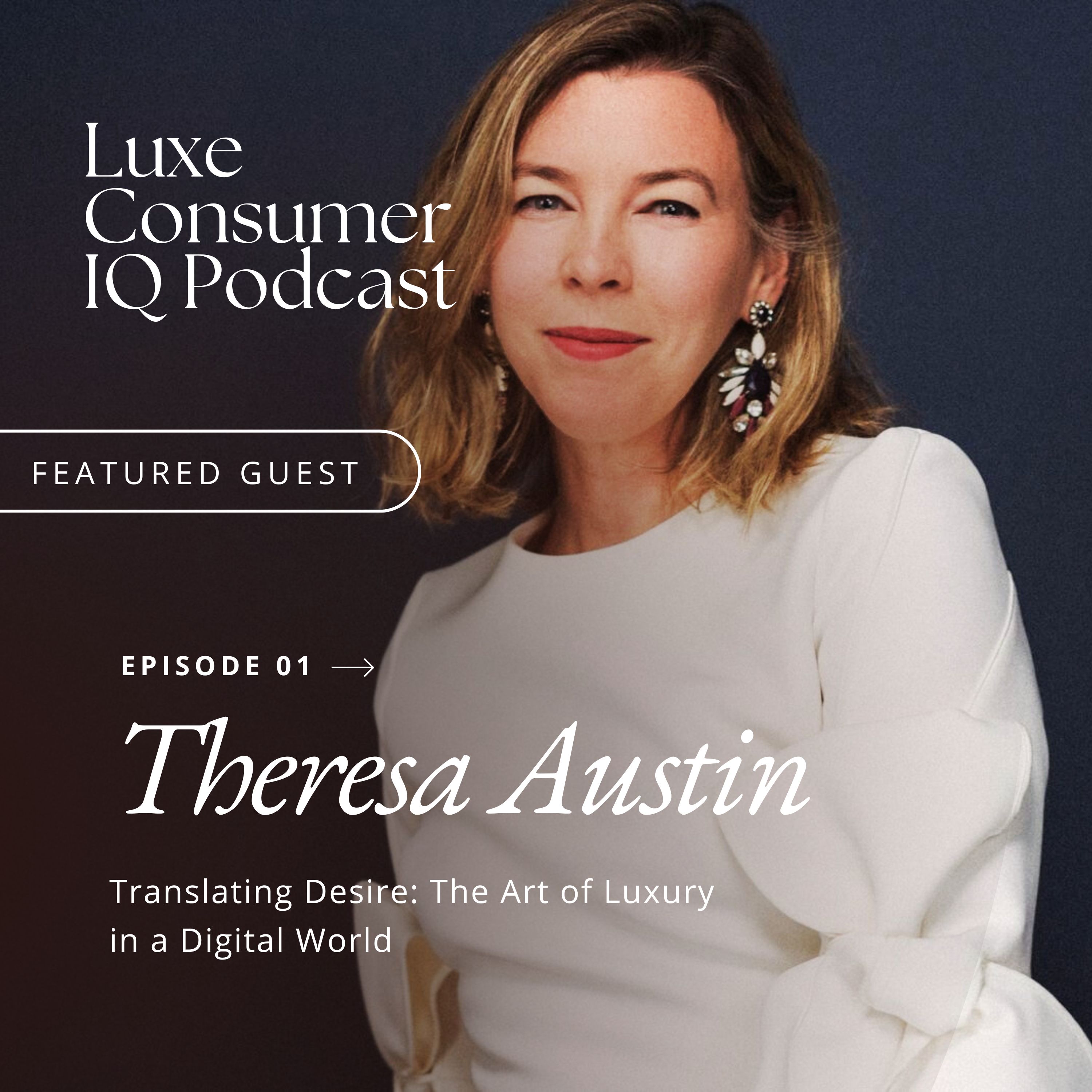
Theresa Austin, a seasoned digital leader in luxury, shares key principles for building meaningful, high-value digital experiences in the luxury sector. She emphasizes that luxury isn’t about selling products but creating desire through exceptional, seamless, and emotionally resonant journeys across digital and physical channels. A critical element is the reimagining of product imagery as editorial storytelling that brings a product to life. She highlights the need for digital efficiency—matching the speed and simplicity of mass-market platforms—to maintain customer trust. Personalization must be subtle, context-aware, and rooted in real customer interactions, not data overreach. CRM success depends on human connection, with loyalty driven by personalized, relevant messaging and deep customer insights. Global brands must collaborate with local teams using data to balance consistency with cultural relevance. She advocates for a full digital ecosystem approach, powered by AI and modern tools, where content is tailored to each channel and audience. Ultimately, intuition and data are not rivals but partners—data supports intuition, and intuition guides data-driven decisions. Her insights underscore that luxury success lies in craftsmanship, authenticity, and a deep understanding of the customer’s journey, from discovery to long-term belonging.
Welcome to Lux Consumer IQ Podcast, I'm Emilia Siminer, your host.
If you're ready to grow your influence, think more strategically and accelerate your
career and luxury, you're in the right place.
This show is for emerging professionals in the luxury and premium space, marketers, consultants
and commercial leads who want more strategic thinking, clarity and influence in their role.
This learning to use data and consumer insight isn't just about numbers, it's how smart
professionals shape better strategy, make sharper decisions and become trusted voices within
their business and across the industry.
In each episode you'll get practical guidance, insider stories and strategic frameworks
drawn from real experience, delivered in a way that you can apply immediately and start
thinking and acting like a leader.
Because in today's market, brands win when they understand not just what their consumers
buy, but why.
This show helps you be that person, step by step, with confidence and without the overwhelm.
Let's begin.
Today's guest is Theresa Austin, a dear friend and one of the most respected digital leaders
in luxury.
We met while working together at MoetHennis's global headquarters where she was serving as
digital transformation director, leading D2C, CRM, loyalty and consumer engagement across
more than 27 mazons, including Moet and Shandon, Verfklico and Dom Perignon.
She also headed MoetHennis's internal innovation incubator, DARE, an LVM age intrapenorial program
designed to accelerate change from within.
At the time, I was building the first global market intelligence platform, so we bonded
over dashboards, data and the future of digital strategy.
And we've been great friends ever since, sharing many conversations and more than a few glasses
of champagne along the way.
Before that, Theresa served as head of experience at LVM age group headquarters where she led digital
innovation across the fashion, beauty and watches and jewelry divisions and built digital
atelier and in-house creative and CX team that reshaped how digital experiences are
designed and delivered across the group.
Here in her career, she held global e-commerce leadership roles at Netaporte and co-founded
a consulting practice advising major brands like Burberry and Condonast.
Currently, she is making her career transition towards sustainability as the next frontier
of transformation.
Theresa is the global director for sustainable culture at MoetHennis's lectures at the
Parsons new school in Paris and sits on ShopTalk's advisory board, one of the retail industry's
most influential platforms on the future of e-commerce.
Today, I finally get to share her brilliance with you.
Let's begin.
Hi, Theresa and welcome to the show.
Hi, Amelia.
Thank you for that very exhaustive intro.
I hardly recognize myself there.
It was quite impressive.
I have to say, I couldn't resist.
Okay, so let's get started.
And if it's okay, I'd love to start with your journey.
Can you tell us what brought you here today working in both the luxury industry and in the
world's best-known and admired luxury group?
It has definitely been a journey.
I grew up in Cape Town in South Africa.
So not only have I traveled across half a planet, I've also transitioned from an arts background.
I studied arts through digital programming and somehow into luxury.
I think the red thread through it all is curiosity and desire to craft experiences with
a sense of exceptionalism and excellence.
This would always taken me from one role to the next and seems to have landed me here.
Okay, so let's talk about desire.
So in luxury, desire is everything because what we're really selling isn't just a product,
it's a dream.
As the quote from John Noel Capfer says, "Luxury is the art of creating desire without
the hard sell."
And I think this can be a real challenge in digital channels.
What does it take to create true desire in a luxury ecosystem?
And in your opinion and in your experience, which emotional triggers or journey moments matter
the most?
I think you've got to remember that there's no such thing as a standalone digital ecosystem.
It's really the consumers world and how they live in it.
And there's a mix of online and offline.
An online digital is definitely key.
It's part of how they're going to interact, discover, research and make a final purchasing
decision.
So number one, it has to be seamless, completely integrated.
It's very important to have continuity in your storytelling.
That's across all of your visuals on your different digital touchpoints and channels.
And I think also a sense of ease of execution and efficiency.
Digital on every touchpoint in every channel is founded on the principle of efficiency.
So you don't want cluttered pages, you don't want overly complex interfaces.
You want to abide by your design norms and you want to elevate those with a certain excellence
in your execution.
A follow up question, I guess, for our audience at home again, just thinking about the practicality
and how they can apply this tomorrow.
What's one high impact element a marketer can adjust, be it tone, content or user experience
to create more emotional pool in their digital journey?
Well, we've got a very powerful tool on our product pages and that is the product image.
Now, traditionally in Ecom, that shot in a very clean way on a white background.
And yes, this is great for showcasing the product itself and for operational cost efficiencies
in your production.
But AI has unlocked a lot of other opportunities in this area and bringing your show or your
brand storytelling into that and making it a more editorial image can be very powerful.
You've got that continuity of story, you've got a real showcase of how the product moves,
fit, can be styled, how the product lives.
I actually call this the life of the product.
So use your product imagery to bring that product to life and really connect it with your
brand story.
And I love that.
And I think especially given that you've got an arts background, I love how you've applied
that into the luck space.
So let's talk about the consumer journey then, according to McKinsey Research on the
luxury path to purchase, modern journeys are cyclical.
And in luxury, every touch point must reinforce brand codes and emotional value.
You've built journeys across tactile categories like wines and spirits where recreating sensory
richness online is especially challenging.
So my question is what does a successful luxury e-commerce journey look like in your experience?
And what makes designing for luxury fundamentally different from, say, mass?
Well, small secret, it's not actually that different.
Again, one of the founding principles of shopping online and e-commerce is efficiency.
And we find that our luxury customers are shopping across mass websites also.
And this is where they might have an expectation for efficiency set.
So the best example here is if you go on Amazon and you spend 500 euros on a Dyson
hairdryer, for example, it's one click to order and it's next day delivery, super efficient
process.
You'll go into the Dior website and you'll spend around 500 euros for a keychain or a baseball
cap.
You've got to take quite some time filling in some information and maybe it's three to
four days delivery.
Those two experiences don't match up.
As a customer, you've had your expectation for top level service set by Amazon.
So that's something that Dior need to be very cognizant of and in fact match or even exceed.
So that really does set the bar quite high for luxury brands.
And it means that we can't sit back and relax and say we're just going to do it our way.
We've really got to keep an eye on not quite the competition, but the other places where
our customers is spending their time and having their expectation set.
So I guess it's almost like keeping up with modern retail to some extent.
Time has become a big luxury.
And so if we are not saving or providing time back to our affluent consumers, it actually
starts to pose a really difficult question for a consumer right in terms of what is really
a luxury experience and what isn't.
And if you compare that to a store experience where you'll take a seat, you'll be offered
some champagne.
When it comes time to pay, they'll bring the credit card machine over to you.
They'll sign the slip on a little gold tray.
It's really a top level service.
They're coming to you for you to pay, all you've got to do is just lift a little finger.
So how do we replicate that online, not by putting you through reams of forms, not by
making you wait three or four days for delivery, but making it very short, sweet and efficient?
It does feel like a bit of an afterthought for the luxury industry, doesn't it?
In terms of not necessarily having put as much time on that channel as we do in the physical
channel as you say, and we'll talk about it a little bit later on, but I guess the
university economy, the retail environment is changing so fast and we really just need
to catch up.
And in a way, it's about understanding that as much as you need a selling ceremony in
the store, which your sales associates are highly trained on, you need their equivalent
of that online and that your customer's experience doesn't stop at the checkout.
It continues through shipping, through delivery, through any returns or repairs that they
wish to make.
It's again going back to that idea of a fully connected ecosystem.
And I'm going to flip it on the other side, what's one mistake you often see?
brands make that weekends the journey or dilutes the brand. I think putting obstacles in the
customer's way, a classic, a little bit of a classic trap is wanting to overload the site with
storytelling. So sometimes you'll visit a site and there's a big video you have to watch or
navigate through before you can get to a product page. Okay, yes, we do have some interest in the
footage from the most recent show, but is that the right moment to put it in front of the customer?
So I think sometimes we can we can err on a little too much content,
rather the better to bring it in in an integrated way and allow the customer to call for it and
request it rather than putting it up in their face and making them weed through it before they
can get to what they're actually looking for. It's such a good point because it's almost like
that we need to start from the end and the end is the consumer needs to feel the same way they
would in a store and in a store we wouldn't bombard them. You wouldn't have 10 sales assistance
tone up with 10 different stories at the same time, right? You'd never do that. Yeah. So it's
actually very simple. You think about what the in-store physical experiences like and you translate
those values and principles into online because consistency, consistency, consistency, right? Okay.
So we have to touch on personalization. Done well, personalization elevates the experience. Done
poorly, it feels invasive or inauthentic, especially in luxury, where tone and restraint matter.
You've worked across CRM and content to spaces where this balance is tested constantly.
So my question is how do you design personalization that feels curated and elevated without
crossing the line into invasive or inauthentic? It's a great question. Sometimes we can have so much
data at our fingertips. We can be very tempted to overuse it and almost overdesign a customer's
experience, but it goes back to the point we just mentioned about what would happen in a store.
Your sales associate would never rush up to you and go, oh, how is your 50th birthday and
how's your kids? And you know, is the cat eating its food? You would wait for the customer to come
to you and engage and then you would have those types of conversations in a certain more subtle fashion.
So it's really the same thing. If a customer has given us information and indicated that they would
like us to personalize on that information, we'll take action on it. If it is peripheral information
that we have gathered through our interactions, we'll certainly use that in building our understanding
of the customer and all of our wonderful analytic and profiling programs, but we won't rush up
there with the personalized experience. That would not be the appropriate. And what's one
principle marketers should use when briefing CRM or tech teams on brand safe personalization?
Like, how do we do this well? I mean, it comes down to, for me, it comes down to a very good design
system. So that's a set of tools and templates. It can be automated, but it's briefed into your
agencies and partners and there are rigorous checks and balances around that. You do have to
make adaptations per channel and touchpoint. Of course, the slightly more formal language that
you used on your website wouldn't necessarily be the same language on your social channels.
I can recall many debates about the use of emojis, for example, but whatever the rules are,
once they're agreed, you put them down in a design system, brief them in and put your checks
and balances around those. I want to shift gears now and talk about CRM and customer loyalty.
CRM is no longer just about reactivation. In luxury, it's become a strategic tool for
deepening brand relationships and driving loyalty and repeat purchases. This is especially
critical for the top of the pyramid where affluent clients are fewer, elusive and highly
attuned to brand tone. So, Teresa, what makes CRM work in luxury beyond just segmentation or
campaigns? And if you can also tell us which insights or metrics matter most?
So, first of all, we've got to remember that it's all about humans and luxury, especially at
that top-spender level. It is the one-to-one interaction and relationship with your sales
associate. And very often, that is then taken off the shop floor into text messages through
WhatsApp or WeChat, as you want. And that's where the relationship will enter the CRM system.
And the important point there is actually that we do have that customer's data and information
and it is linked with the sales record, but we leave the relationship in the hands of the sales
associates. They are trained, they are trusted and they are best person to carry that forward.
When we move a little further down the pyramid and we're at a higher volume level,
it's very often still a sales associate involved, but in a nominal way. And our job there is to
support them. With the clear client record alerts around key dates in that client profile,
should they have indicated that they are willing to share key dates like birthdays and so on?
And good content that they can pull up and share with that client.
And it's really, I think, predominantly around personal messaging now, more than email,
though it does differ by market. And where I find email to still be relevant is the connection
between in-store and online and bringing that client's experience together between those two key
channels. And I guess you're making me think as well. I guess given how I guess educated consumers are
now about privacy and what you are doing with their email list. If they've given it to you,
it's highly likely they know you're going to contact them. So you work around that, right?
In terms of yeah. And the reason why they provided the information. So very often it will come
from a store visit and it's because they're interested in another colorway or another size or a
back-and-stock item. So we wouldn't contact them with something not releasing to one of those three
three wishes. We'd make sure that we're really relevant to the reason that they gave us their data.
And I think when it comes to key metrics, again, there's no straight answer. It depends on
the particular challenge that you're trying to solve. I can say, you know, it's really important
to have a voice of the customer program and understand your customer's perspective towards you
and their particular sentiment. And this is where net promoter score can be a great and useful
KPI in the right moments, not to be used as a blunt object. I love that. I feel there's a story
behind that. But we're not going to unpack that one yet. So flipping it over, what do you think
is one underused CRM metric or tactic? More brands should be tracking or testing.
That's a tough one. I really think you've got to connect this up between email addresses and
phone numbers. You've got to really see all of your clients touch points and how they like to interact
across them. So I won't give you a key metric, but I'll say maybe understand where your customer
likes to interact. Is it text in store in person or email and have that as a key indicator and use
that to support your segmentation? So let's talk about profitability because scaling digital often
brings silent pressures on margins. And I can see you smiling, you know, you know this very well.
So for media inefficiencies to fulfilment and cost of promotions, you've led both the strategy
and operation side. So you've seen the risk up close. What are the biggest traps you've seen
brands fall into when scaling e-commerce and how can teams stay alert? There's really two,
one is on the operational side where your software licensing can really put a huge weight on your
P&L, particularly if it's commission or cost per sale driven. I like to calculate the cost of
an order when I'm setting up my P&L forecasting and that's inclusive of transaction costs as well
as performance and shipping costs. It gives you a very realistic and well-rounded figure and
kind of leaves no stone unturned when you're looking at the full picture of operational costs.
And then on the flip side, it's looking at the cost of marketing per sale. Paid media costs have
inflated dramatically over the last four, four and a half years. And you really need to understand
where you're going to put your paid media budget for discoverability versus drive to purchase.
And you almost need to see your paid media as a promotional cost. Now it has a big enough
impact on your margin to be taken seriously in that way. And can I just ask a little follow-up
question on that. Who's paying attention to this? Is it that people executing and coming up with
their campaigns because it's probably not is it? It depends how you design your team. And this is
actually a great point. A well-designed team will have collaborative connections so that your paid
media team might indeed be thinking this all the way through and discussing this number with
the CFO and with your merchandising team. I like to see a merchandiser have a full understanding
of a cost of operations and a cost of sale and connect those two dots to have a really clear
picture of what does it take? How many euros does it take to get a product through the shopping
basket? So if I am working in one of these teams and would you say it is recommended to actually
learn a little bit about the cost or the cogs? Absolutely. Should be able to be better at my job.
Absolutely. If you want to look at a well-rounded e-commerce team, it's going to be multifunctional.
They're going to come from very different backgrounds, supply chain, shipping fulfillment,
merchandising design, such different mindsets and such a different collection of skills. But if you
can put shared objectives in place and you can run enough joint workshops or exercises to create
those collaborative connections, everybody should have a shared perspective in mind and everybody
should be working towards a singular goal.
that says something like, move this much product but preserve these margins, down to your
youngest intern.
And I guess talking about the whole purpose of this podcast, being about career development
in luxury, moving into management, that's definitely a skill set that's going to set you
up right in the future.
For sure.
For sure.
Okay.
And just sort of staying on this topic for a second, what should brand teams watch or measure
regularly to make sure digital growth isn't eroding long term brand or commercial value?
Well, I think your traditional brand health trackers to check brand recognition, they're
just as relevant in a digital space as physical space.
You can also look at market share.
It's very useful to understand where else your customers are shopping, what those offerings
might have in terms of a value proposition and how you match up against that.
The next topic being global versus local execution.
This one's a really big one for me, I think because, you know, we've both worked in market
and global and it's, you know, the tension is real.
So luxury relies on global consistency, but consumer behavior and path to purchase very
wildly by market.
You've worked across central regional and local offices and seen how difficult this balance
can be.
How should marketers manage the tension between central brand vision and local execution?
And can data help?
And I say this from the context of, for example, do more data rich markets like the US have
more autonomy because they can prove their execution plans with data?
I'm going to say it depends on the business and the management involved, but really for
me collaboration is the answer here.
At the global level, it is indeed our job to protect that brand, create global consistency.
It is not our job to know the local market customers.
That's the job at the local marketing team.
It's our job to listen to local marketing team and collaborate with them to figure out
how we blend global vision with local market execution.
And indeed, if they bring data to the table, it's only going to enrich that conversation.
Too often this can get caught up in personal preferences or opinions and data is always
a great way of establishing a kind of shared benchmark that we can all work from.
I like that.
And, you know, I've been in global roles where I've seen, I've seen the power of data,
you know, when there's, sometimes when there's a really strong contradiction between the
local market culture and how that market wants to bring the brand to life there, and you
know, a really strong perspective or a no-go zone from the global team.
And looking at the opportunity through numbers can sometimes really soften the tension,
I think.
So I think that's really important.
So I'm going to ask you another question.
In your experience, is there a magic bullet data point that gets everybody aligned?
Oh, I wish I'll jobs would be so easy if they were.
I think you have to, you have to analyze each situation in each set of stakeholders to
find their specific silver bullets.
If you get to know your decision makers, what's in their minds, what are their concerns,
what are the trigger points that they might have, either positive or negative, what are
the key data points that they look for?
You can then start to design a set of metrics that really speak to their concerns and speak
to their mindsets.
So there's no simple answer.
Correct, correct.
And, you know, if I think back through all the organizations I've worked in, it's so
related to that organization's culture.
At Netaporte, it was voice of the customer.
That was in every Monday trade meeting and it was really something that we lived and
died by.
How did that customer feel and how should we adapt accordingly?
When you come into Elvie Mage, it's much more about sales metrics and repeat purchase
rate, for example.
So different cultures, different stakeholders, different silver bullets.
And I think the other question I wanted to ask you on this as well kind of ties back
into that as well, you know, sometimes from a market perspective, the market feels like
there are opportunities lost, you know, because the global team said no, but they're working
with retailers often in, you know, non-DTC environments where there is a really huge opportunity
and the brand just doesn't seem to understand that well enough, is there something in your
experience that they can do at this point, be it the market or even brand to understand,
you know, the one thing that you've seen that perhaps helps reduce these tensions and
make sure there's nothing left on the table or missed opportunities.
Absolutely.
I think there's two key things that you can bring at that stage.
If you're in local market, you can get down into that retail location and you can create
some real footage and assets.
And does that environment look like?
What is the customer doing in there, how are they behaving?
And if you put that together, it's almost a store and customer profile and show how well
that matches to the customer target that that brand has, that's a very useful tool.
To say, you know, this might look different from what you're used to, they're in Paris.
It's not Le Bonne-Mache, but this is the local market equivalent and the same customer
type is here.
Here's the evidence.
That's tremendously helpful.
And then of course, if you're working very closely with that retail or wholesale and distribution
partner and they really want you on board, they're going to be willing to share some kind
of performance insight or data.
So if you can also bring past sales figures, potential sales forecasts, that's a pretty
powerful combination.
Here is the customer profile that you're targeting, evidence, and here are the numbers
we think we can get, evidence.
It's hard to say no to that.
If you've operated close to the C-suite in multiple global roles and while executives
love vision, they invest when they believe something will drive growth and usually data
doesn't lie.
But when it comes to digital, not all numbers carry weight and not every metric open stores.
What are the metrics that truly resonate in leadership settings and how do you present
digital wins in ways that build credibility and unlock investment?
Great.
A two-part question.
I think when you're at the senior level, the conversation is usually about profitability.
So if you go in with really accurate forecasting based on historical data and market trends,
that's very helpful.
If you can show that you've thoroughly analyzed your cost of marketing and cost of sale and
cost of goods, that's also really key.
The other thing that I find very helpful is to take them along on the journey.
Sometimes when presented with a set of data and an accompanying decision, they can feel
left out of the decision making process.
They can feel as though they're not necessarily involved in that or part of that.
Here's the data.
Here's the answer.
Why am I even in the room?
So rather than presented as a fair complete, let's bring them on that journey.
Let's provide the key data points.
Let's almost workshop and discuss those, find the meaning in them and then reach a shared
and joint conclusion.
That way you're bringing your senior stakeholders along on the journey with you.
It's as much their decision as the data's decision and you find a lot more trust and engagement
that way.
I find, in my experience as well, the source.
Would you agree that the source of the data is a big point as well?
Key.
Absolutely key.
It's got to be from a trusted source, a well-recognized and trusted source.
Because I think for the luxury industry, I feel like it's especially relevant for us.
It's quite a dark industry.
It's not FMCG.
You don't have supermarket scan because sometimes when you're in that boardroom and the source
isn't reliable, would you say, "Don't use it?"
I would say be careful how you introduce it.
It might not be your lead data point.
It's really, again, it goes back to knowing your stakeholders and understanding their point
of view.
We used to go in on the fashion side of the image group.
We used to go in with a lot of information drawn directly from sales associates and that
was factual, that was realistic, but it wasn't necessarily loved.
So, yes, be thoughtful of your sources and how you introduce them.
My next question, that was a perfect segue, thank you, is what's one framing trick or data
point marketers can use to sell digital initiatives internally?
Again, it's really going to depend on the culture of your organisation, the unique stakeholder
preference and perspective on that data, but put yourself in their shoes, understand
the decisions that they are trying to make, the conflictine forces at play, and see if
you can position the data as a way of answering to the challenge that they have.
So, I guess in a way you're trying to make their job as easy as possible, youth analyse
the data yourself, you are confident in the data source, you're confident in what it's
telling you, and then it's just about framing it in a way that you know you're going to
make their jobs easy to say yes.
Yes, and bringing the component parts to life for them.
So, again, not presenting the answers a fair complete because the data says so, sharing
some of the more nuanced data points to help them build that viewpoint.
Don't put your stakeholders and your data sets in opposition to each other, try to integrate
them.
And I guess it's not the data alone as well, right?
Which is really relevant to the luxury industry.
We should probably be overlaying the data with, as you say, other experience, other intel.
Yes.
This is why I often talk about qualitative and quantitative data.
So, quantitative data you're going to pull from your point of sale, your CRM, all of those
big systems and tools that allow you to run particular analysis.
You might even be accessing it from external sources like Cantar or wherever else, but
qualitative data is what really attracts attention.
Its information about how the client is experiencing that
retail moment or that product that you're selling. So it is photographs from the shop floor,
it is interviews snippets from client discussions. It's very rich and very contextual and it's often
easier for for your decision makers to connect with that material than vast anonymous data sets.
So let's look ahead. So let's let's think about where we're going and where luxury is evolving. So
we know there's new tech, there's new expectations and a new generation of consumers who demand meaning
and immediacy, which is likely to impact the digital channel the most and many are actually
predicting this channel will keep growing in importance for the luxury industry. You've seen
these shifts up close. So my question is if you are building a luxury brand's digital strategy
from scratch today, what would you prioritize and does it change for categories? It's definitely
different by category because the customers expectations and behaviors are different by category,
it's going to affect your merchandising, your product assortment, your distribution and possibly
even the channels that you operate on or at least what you talk about on on different channels.
I can take this in 10 year windows. If I think of today, I'm able to design formal content
intensive strategies thanks to AI and the rapid production methods that we see in visual design.
If I step back a further 10 years, it would have been all social media led. I think the big fact
that's very different today is you're designing a full ecosystem from scratch. How you open the
different touch points across that ecosystem, what you make available on those different touch points,
that's going to be up to your brand's distribution footprint, your pricing and interaction strategy,
your consumer profile. You've got to think in terms of a full digital ecosystem. You can't afford
to not be on any particular social media channel. Knowing that this channel is here to stay and that
right now, perhaps it feels like a little bit of an afterthought in terms of the consumer journey.
And knowing that it's only going to grow in importance, if you are creating something from scratch
today, it would be fair to say that you need to approach it from a foundation perspective,
set up all your tools properly for the long term. Because perhaps in the future,
you'll be doing more storytelling here than you would have thought as a brand owner as you say 10
years ago. Absolutely. I think you have to design full full ecosystem and then you have to have a
roadmap that allows you to activate that ecosystem differently over time. We've got great new tools
and supports in place to make this easier. We've got headless commerce, we've got web services,
we've got AI. It's certainly not as difficult as it used to be. There's a lot of accelerators
that we can make use of. I think the hard part is keeping brand consistency and storytelling.
And this is difficult because you don't want every touch point to carry identical content.
You've got to be nuanced and you've got to be appropriate. So your content production for
TikTok should be different to your content production for Instagram. But again, this is where we
have new tools and accelerators to support us. So what do you think people working in these
teams could experiment or any new capabilities? Marketers today working in this space could test
now to stay ahead of the game. And I think I know what you're going to say. But if your answer is AI,
can you go into more detail? Yes, sorry. AI is not as simple as for everything. I think to give
context to the AI statement, it is a very useful operational tool. It can really support more nuanced
and complex program creation, marketing calendar creation, marketing content, written content creation.
But it's not going to do everything for you, of course. As a brand, you really want to look at
your audience development, who you're trying to drive sales with versus who you're trying to build
the brand with. And those might be slightly different segments, depending on your price point
and your positioning, as well as your long-term growth plan. These are brands that have been around
for hundreds of years and ideally will continue to be around for hundreds of years. So you might need
to be experimenting with very raw and organic content creation on TikTok for a Gen Z. But you also
might need to be doubling down on your very polished campaign content information on Instagram
for your millennials or even your boomers. So a nuanced strategy that speaks to the particular
audience across a particular touch point. If you want to experiment, I think where I have
a lot of curiosity at the moment is that very raw and organic storytelling that you're
finding on TikTok, where you can really see people experiencing the brand playing with the
products and finding joy in the product. Yeah, I'm loving what I'm hearing because what I'm
hearing you say is consumer centricity. Yes, what I'm hearing you say is find out who your
customer is. You've maybe got two types of customers, two different journeys in this space.
One is, as you say, interacting, engaging, your social media, and one is here to purchase,
and they may not be the same. And the journeys look very different. And so what you're saying is
experiment with those journeys and but start with knowing the consumer. That's that's absolutely
at the core of everything. And again, if you go back into the the origin stories of these brands,
you know, everybody started out with a small atelier and a small store and maybe
a sales staff of two and a physical book with your customer records. And that's that's
the roots of our brand. So know your customer, love your customer, bring them in close and make
them part of that story. So I think we have exhausted you now. Lots of questions. Thank you so
much for that. It's been incredible and we're approaching the end. But before we wrap, I want to
switch gears and ask you maybe a few more mental style questions for our audience of emerging luxury
professionals. But before we get into that, for anyone listening who wants to connect or perhaps
even has any follow up questions, what's the best way to find you or getting touched?
Oh, you can find me on LinkedIn. Okay, so let's get into the questions. So I've got three.
So the first one is if you could go back and give yourself your younger self, one piece of advice
when starting out in luxury, what would it be? I think it's attention to detail. Luxury is an
industry based on craft and craftsmanship is all about the detail. So it sounds silly, but making
sure that you spell things correctly in a presentation, making sure that your alignment on any given
document is just so. Again, think of how the product is presented in the store and carry that
through into everything that you do. Going back to the purpose of this podcast and providing
valuable insights from the inside of the industry, I think something that people don't necessarily
understand is what you see on the outside is usually on the inside as well. I want to use the
word elegant and graceful. And it's like couture. You know, if you take a couture garment and
you turn it inside out, that inside construction is as beautiful as what you see on the outside.
And that's really luxury. If you go through the bones of everything, if you look behind the scenes,
you want things to be elegantly crafted and created. And if I think of the digital platforms and
tools that we've been creating, it goes down to how you format your code. It's really, you know,
the craftsmanship is in the detail. I want to ask you what you think on how do you see the
relationship between intuition and data in luxury today? You'll find that intuition and data can
often be in opposition to each other. We're working in businesses that have a huge amount of
heritage and respect for innate expertise. So again, when you put data on the table in front of
your senior decision makers who have that value of innate expertise, it can be a little threatening
and challenging. So again, never present data in opposition to intuition, really position it as
a support or supplement to developing an intuition. So you allow your senior stakeholders to take
decisions based on their talent and expertise supported by data, not necessarily purely led
by data. I will very much agree with that. And I feel like it's almost not always in the same
format. You know, sometimes something's born from data and intuition helps you navigate it,
sometimes something's born from intuition. The data helps you form it or build the execution
plan. So they're very much complement each other and it's not really about one or the other.
So we're going to end on a more celebratory note. Bring the show. Oh, the champagne coming,
I didn't tell you. So I'm going to ask you something that celebrates working in the luxury
industry and the sector as a whole. What's been your favourite moment or most memorable experience
working in the world of luxury? Luxury is a doorway to such a beautiful world. And there are many
moments where I've had to take a pause and look around me whether it's landing up in one of the
most incredible restaurants in the world or being inside of a party inside of a palace or something
like that. There are so many odd places I've landed up in the world where I've had to take a moment
and go, how did I get here? And it's just through these exceptional experiences that our brands
create. And those are the celebratory moments where you you realize that you you've worked hard
to live in this world and to help create this world. And it's it's part of you.
Okay, what's your reason? This has been incredible. Thank you so much for being so open with us.
So generous with your time. We have had an incredible conversation and I know our audience will
take so much from it. So thank you. Pleasure. Thanks for listening to this episode of Lux Consumer IQ.
If you found today's conversation valuable, please share it with a friend
or colleague in the luxury world, who would benefit too.
It's one of the best ways to support the show
and helps us keep bringing in incredible guests
to share their insights with you.
We'd also like to invite you to join our email community
for exclusive tools behind the scenes content
and early access to new resources.
Plus, the chance to ask questions
and help shape future episodes.
Just head to LuxConsumerIQ.com.
I'll see you back here in two weeks.
Until next time, thanks for listening.
(upbeat music)
Podcast Summary
Key Points:
True luxury desire is created through seamless, integrated digital and physical experiences that feel effortless and authentic.
Product imagery should be transformed from static shots to editorial, storytelling-driven visuals that bring the product to life and align with brand values.
Luxury e-commerce must match or exceed efficiency expectations set by mass-market platforms like Amazon to avoid consumer frustration.
Personalization should be subtle, context-driven, and aligned with in-store customer interactions—never intrusive or overbearing.
Success in luxury CRM hinges on one-to-one human relationships, reliable data, and customer consent, with metrics like net promoter score and interaction preferences being key.
Brands must balance global consistency with local market autonomy using data-driven collaboration to reduce friction and unlock opportunities.
Digital strategy must be built as a full, connected ecosystem, with AI and headless commerce enabling scalable yet nuanced content across channels.
Intuition and data are complementary in luxury—they should work together, not oppose, to guide decisions rooted in both experience and insight.
Summary:
Theresa Austin, a seasoned digital leader in luxury, shares key principles for building meaningful, high-value digital experiences in the luxury sector. She emphasizes that luxury isn’t about selling products but creating desire through exceptional, seamless, and emotionally resonant journeys across digital and physical channels. A critical element is the reimagining of product imagery as editorial storytelling that brings a product to life.
She highlights the need for digital efficiency—matching the speed and simplicity of mass-market platforms—to maintain customer trust. Personalization must be subtle, context-aware, and rooted in real customer interactions, not data overreach. CRM success depends on human connection, with loyalty driven by personalized, relevant messaging and deep customer insights.
Global brands must collaborate with local teams using data to balance consistency with cultural relevance. She advocates for a full digital ecosystem approach, powered by AI and modern tools, where content is tailored to each channel and audience. Ultimately, intuition and data are not rivals but partners—data supports intuition, and intuition guides data-driven decisions.
Her insights underscore that luxury success lies in craftsmanship, authenticity, and a deep understanding of the customer’s journey, from discovery to long-term belonging.
FAQs
A successful luxury e-commerce journey must be seamless, integrated, and efficient—mirroring the in-store experience. It emphasizes ease of navigation, fast checkout, and consistent brand storytelling across touchpoints, while matching customer expectations set by competitors like Amazon.
By using product imagery that brings the product to life—showcasing it in real-life settings, styling, and use—marketers can tell a richer brand story. This 'life of the product' approach builds emotional resonance and aligns with luxury’s focus on experience over transaction.
Personalization should feel curated and authentic, not invasive. It should only happen when the customer has given explicit consent, and it should mirror the subtle, trust-based interactions of in-store sales associates, not overwhelm with data or content.
Collaboration is key—global teams protect brand consistency while local teams bring market-specific insights. Data helps bridge this gap by providing objective benchmarks, reducing personal bias, and showing how local execution aligns with global vision.
Key metrics include net promoter score (to gauge customer sentiment), voice of customer insights, and personal messaging effectiveness. Understanding customer preferences for interaction (e.g., text vs. email) is also critical for building meaningful relationships.
Leadership is most engaged when data is presented as a journey, not a final answer. Showing cost of sales, marketing efficiency, and profitability through accurate forecasting builds credibility and fosters shared decision-making.
Chat with AI
Loading...
Pro features
Go deeper with this episode
Unlock creator-grade tools that turn any transcript into show notes and subtitle files.
 PodcastTranscript AI