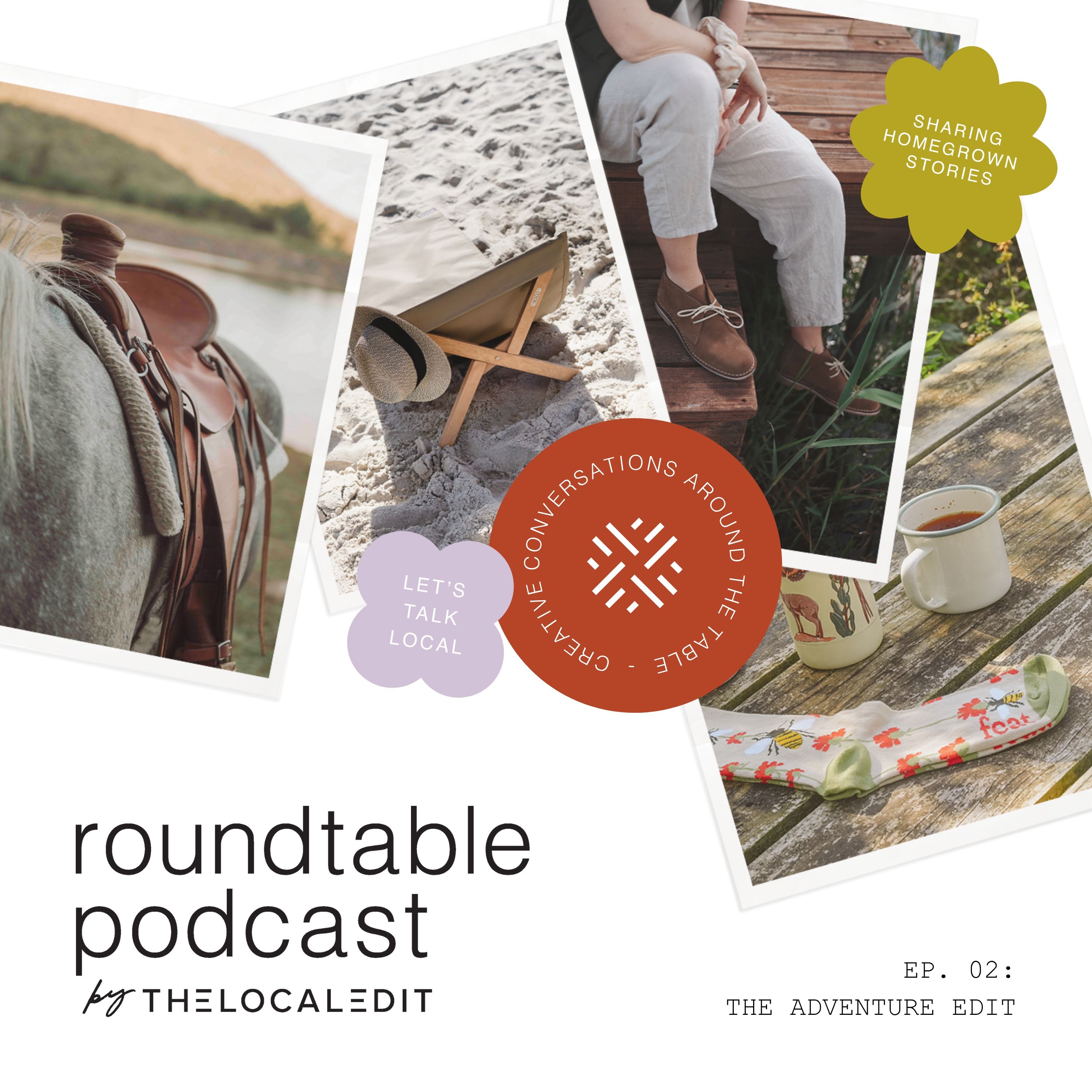
The Local Editor-on-Table Podcast serves as a platform for South Africa's creative minds to share their stories and inspirations. In this episode, four local brands, including Faber, Feltzgen Shoes, Designer Goods, and Soaker, discuss their origins and the significance of South Africa in their designs. Challenges faced by these entrepreneurs include periods of slow growth, financial responsibilities, and self-doubt. Despite these obstacles, the entrepreneurs emphasize the importance of patience, perseverance, and having a strong support system. They highlight the role of community, core values, and embracing challenges as opportunities for growth. The discussion showcases the resilience and passion of these entrepreneurs in pursuing their dreams and building successful businesses rooted in creativity, connection, and a deep appreciation for South Africa's diverse landscapes and cultures.
Transcription
10597 Words, 56072 Characters
Welcome to the Local Editor-on-Table Podcast, a storytelling platform where South Africa's creative minds come together. Join us as we engage with makers, designers and entrepreneurs in honest, insightful conversations about their journeys and inspirations. Rooted in community, connection and creativity, we invite you to take a seat at our table. In this episode, we explore the spirit of adventure and what it really takes to chase a dream in South Africa's creative landscape. From handmade leather goods to iconic felt-cuna, bold socks and locally made outdoor gear, our guests open up about building brands that embrace courage, curiosity and craft. Welcome to episode 2, the adventure edits. Today we've got four of our local edit brands here with me at the round table. Welcome, guys. Thank you so much for coming to spend time with us and just sharing the knowledge that you guys have. And I'm going to ask you to introduce yourself, starting with to my lift. Hello, my name is Claudia Faber, or Faber, which ever you are comfortable with. I'm representing us as a couple who founded Faber, which is a leather company we specialize in accessories, specifically curated to lifestyles. And the settlements are actually our main vein. I'm Nick Dreyer, and I'm the CEO and co-founder of Feltzgen Shoes. And what I do is a name. Feltzgen is a shoe product. It's been around in South Africa for hundreds of years. We are based in Cape Town. We sell our shoes globally, but we're very proudly South African and our entire brand is predicated on the fact that South Africa is awesome. Hi, I'm Chelsea Wilson-Rus. I'm the owner, designer, and all-around hat wearer at the designer goods, previously called FeetSock Company. Yeah, we started as a designer sock brand and now evolved into a designer goods brand where we do exciting stationary activities like memory games, flower presses, all sorts. So, with socks as to our big main business. Yeah, morning guys, I'm Scott Holing. I'm the founder of company called Soaker. We do a range of lifestyle goods, ranging from beachwear to kitchenwear to everything in between. Thank you. So, yes, let's get this conversation going. Can you guys take us back to the early days? What sparked your first product and the courage to dream? Nick, maybe? Well, ours is completely haphazard. We had two friends myself and Rosonda had an argument. In a car journey, which was six hours long, and the argument was around what the South African team were wearing at the Olympic Games in Rio. And I don't know if you remember, but they looked terrible. They just didn't, well, maybe not terrible, but they didn't look South African. You know, if the French walked out with the beret, you know, they French. South Africa didn't have anything like that. So, we had an argument about what would have been our uniform if we could do it. And we thought about the medieval shirt, possibly, and other things. But in the argument said, the only thing that is unique to every South African or at least that every South African knows is a felskin. But it was a little bit boring. So, even in that car journey, we thought maybe it should look different and have a little bit more colour. And then the photos came back from a little Photoshop job that was happening while we were in the car. So, we saw the product look differently and bang. It was like a lightning bolt went off. And so, we got absolutely lucky. We started felskin, the Russian old builder. I was an X-Art dealer. And so, we just stumbled upon an idea and a product idea, but the difference was we acted on it. And five hours later, felskin PT-Ylimited was registered. During the car journey, or just. During the car journey, you won't believe it. By the time I arrived in Cape Town, felskin PT-Ylimited was registered. We'd put in an application to register the trademark and we'd bought the URL. The only thing we needed was to learn how to do that because he was a builder and I was an X-Art dealer. Sure, you Chelsea. Yeah, so, I always loved fan socks from being a little girl. Like, my mom would buy me a pair of socks and I'd want to put them on as soon as I saw them on my bed when I got home. So, I've always had a thing for that. And, yeah, I actually went on my gap year after studying fashion design and bought a friend of mine. We had a little sort of friend gifting tradition of giving each other socks as well. So, yeah, I bought a pair of in Europe back when we didn't get H&M, so I bought a really cute pair of socks. And we were just chatting about it when I got back to Cape Town and she was like, "Oh, wouldn't it be cool if they were made locally and designed by us?" So, we actually started the business together, we were only 21 and it was started more like a project. She was still students. I just finished my studies trying to figure out what I wanted to do going forward. And, yeah, we just, the brand kind of was birthed there. We did the design and job as emerging creatives, got our first customers and it was just really exciting. So, that's how it all began and it's evolved a lot since then. Claudia? Sure, our founding really is the founding of us as a couple, really. We met out in the Eastern Cape and we both share a love for leather work. I've previously done leather work with ladies that I employed to make small products that we sold. And back then it was the only market at Libertas in Sanamosh. And then, well, employed, we asked them to make the products for us. My husband had been making leather, I think, from school. So, it's something that he did at Agricultural School. But, basic stuff, he needed tech for his horses and he just made bridles and basic stuff. But, salary was always like the main mountain that he wanted to conquer. And, when we met Fall in Love and our story began, the leather was such an integral part of our story as a couple. And, we just went for it. Yeah, there's a lot of detail to it but that's really, it was on both of our hearts to work with such a difficult material to shape. But, it shapes you in return. It shaped us as a couple. It has shaped our lives immensely. And, we get to feed families. We get to, it shapes families, not just ours. So, it's, yeah, it's a material that's really been integral to us as a couple. I would say, Scott? Well, I actually started as a kind of a fun, a varsity project where they gave us 100 bucks on Monday. And, instead, bring us back as much as you can on Friday. But, with no kind of limitations on what you could or could produce or make or sell. And, I made these like rudimentary, they were just a pine, piece of pine with natural rope kind of hangers. And, a little stainless kind of mounting bracket. And, we sold a couple of those and I think we turned 100 bucks. It's kind of insignificant figure, but it was like three grand or something. And then, at that point, I realized something clicked as I could shape it. Like, well, that went quickly and now I've got three grand. So, that's kind of how the process started. The business didn't start quite then, but that's when the love of entrepreneurship started. And, then, the first product that we actually hold still as a stock item started as a need for our Nick injury during COVID. And, I needed to work at a better angle with my laptop. And so, I designed a quick, as you said, as a one-day project, quickly it had laser cut. And, it worked. And, I didn't change the design once and it's still the same product. So, that's how that started. And then, it started on take a lot. I remember running down the passage of my first sale. Just like, celebrating the victory of like one sale. And, that feels like yesterday. So, it's that's where it started anyway, just the basic sale. And, I left two years just how everything is a solution to a problem that you guys were seeing or identifying. And, just seeing, as you said, Nick, it's an opportunity to better something that you just see the potential for. So, that's quite cool. And, now, of course, we're also the African. And, we see everything around us. If it's now the building's architecture, the people, what inspires you guys? What role does our country play in your design process? So, it's actually taken a while to get to this point. Because, starting as a sock company and being really young in immature, I think the brand was like, "Okay, well, let's just start this thing and see what happens." And, it's taken a bit of time to sort of go like, what's our design aesthetic? And, over the last sort of five years, we've really been touching on being curious and delighting in the beauty of South Africa. I fought it for a while because I was like, I don't want to just be doing socks with lines and zebras for the rest of my life. And, then I was like, why am I fighting this? Like, we have a beautiful country with so many amazing things to see. And, it doesn't have to be cliché. It can be done really beautifully. So, yeah, we, on a multitude of products now, I say we know it's myself and my husband. We design socks, memory games, all sorts with bird life, local bird life, local wildlife, floral fauna, landscapes sometimes. So, yeah, it's really just anything beautiful that we see in our country. We like to put on our surfaces. Our design, we have a strange design concept because we've got such a product that everyone knows. So, it's looked the same way for 200 years. We just changed the colour of the soils and the laces. But, what we've done is, we've threaded South Africa into it through our descriptions, through our marketing. So, the yellow shoe is called the vilacazi because there's no other street in the world that had two Nobel Peace Prize winners. And then the blue is the J-bay. It's the best right-break surf break in the world. And the red is the pinotage, which we all know well. Maybe too well. But, we injected what we considered to be South African excellence into our marketing and descriptions. And, to be fair, it's well received globally. There's an interest in South African products, but there's also an interest in South African story. But, ultimately, I think the thing that we try and push the most is that the products are excellent. And they're excellent because they're made here. They're not made by Nick Dre, they're made by a great factory. But, I think if you push that part of the South African narrative, that sort of convert. Yeah, when we started, we're used to, so I was in a question as well. And we're used to importing what we need to ride with. And, there are saddle makers in the country and they've stole what they've done in great work with specific disciplines of being endurance riding also. There are all these different elements to horse riding. And, there was a great need for a sturdy cell because it's not just specifically speaking of the saddle now as a product. It's not just a pretty item that you're going to put on display and look how beautiful this aesthetic is in the space. And, it's actually a work, it's a piece of technical gear. It's like you would buy your hockey stick or your rugby shoes. It needs to perform. It needs to not only be comfortable for the horse. It needs to be comfortable for the rider because why else would you put it on your animal? It's a communication tool. The only communication that you have between you and your horse is the saddle. Is it pinching? It's a fight-of-flight animal. Am I communicating comfort and direction to you? Am I communicating anxiety, pain? They want to get away from it. So, it's a very technical item but it also has to be aesthetic. And, that's not mentioning any of the other items that are catered for, curated for, cut the culinary arts or for travel. And, as a South African, we really struggle to find materials initially, especially the hard way that was of quality that lost because we were adamant that excellence is what, like you mentioned, Nick, that we want to offer. So, we just, in the long game, we just decided we're going to grow slower. We're not going to, we know we're not going to burst initially. We'll grow slower, we'll grow properly with solid brass, the leather quality that we use, the linings, and eventually we'll end up making all sorts of plans. And, that's where Bournemarka Blonde, I think, from a South African perspective, comes in because we love a problem-solving game. I mean, it's just part of, part and parcel of being South African as you are, presented with problems and you, you do it in a joking way, you just figure it out. And, we figured out the hardware, so we don't import hardware really anymore. There's certain items that we still do, but in the process of actually taking that over and making it our own, so much of what we make down to the hardware is actually all us, all in-house. And, that is, like, different avenues that we can skill-share with the hardware, the trees on the inside. So, it's, I'd say, Bournemarka Blonde has a big South African influence in our product. I think we've drawn quite a lot of inspiration from the places, physical places, that we have access to, and arranging from, you could go to the beach, to an evening dinner, to a forest, to, there's so many places you can get to, so quickly, in a round Cape Town, that there's so many opportunities for products in those different spaces. And, I think that's what we, and I guess we're trying to figure it out now, is which products suit, which environments, and really make your day better, because you had that product with you at that adventure, or at that dinner, whatever it was. So, we're trying to nail those moments that you have, this is really what I needed right in this moment, and it's making my life better because of it. So, that's, and there's, I guess there's a lot of stuff you could make, and that's where we're trying to figure out, you know, which parts to take, and which situations to try and invest more in, and which to invest less in, and there's just so many products to make. So, yeah, that's the challenge we're facing now. And I mean, it's trial and error the whole time, and as I say with, you know, most adventures, the journey, especially for creative entrepreneurs like you guys, it's severely smooth. Have there been moments we've just wanted to give up, and yeah, what does it keep you going? I would say no to giving up. I don't think we're wired that way, because we started a little family, and we put all our chips on the table. We had no backdoor, so we just went for it, and we swam like we needed to get to the edge, metaphorically speaking. So, I would say no to giving up, but definitely feeling and crashing a little bit under the pressure of it, and then, you know, I suppose within a couple, you have that where you can encourage each other and push forward through it. So, there were definitely times of very slow, almost no growth, and then you are reminded of seasons that there's seed, there's time, and then there's harvest. And that is for most products and business as a whole, the certain times things are quieter, as you also growing, knowing that just persevere, they will be fruit. So, it's definitely principles that we applied to the process was I would say patience, patience with us, even though it would be a difficult season for us. Yeah, so I would say patience, and absolutely no giving up. Yeah, I think being an entrepreneur is well known that it's difficult, but when you're building and scaling a business, I think it's an assault on so many facets of your life. It's an assault on your health, it's an assault on your relationship, it's an assault on your general mental well-being, and you question constantly, you know, not your decision to do it, but you're constantly questioning your business. So, there's this like elements of self-doubt, not so much that you can do it, but is this the right thing to do? And I think the perseverance and patience is a key thing to learn. Because the temptation to stop or knowing when to stop, I had a massively failed business before Feltzgen, and I wish I'd quit earlier, only because the whole got deeper, the longer I fooled myself, I could dig myself out. So, there's this edge to entrepreneurship, which is, is your business sustainable and growing, are you going concerned, and can you handle physically and mentally the process of scaling or growing? And that's a tough thing to do, and if you're statistically very rare, most businesses fail, so it's hard. Yeah, I don't think I've ever felt like I want to give up, like Claudia was saying, you get those very challenging seasons where you're like, yeah, you get to feel a little bit crashed, but I don't think I've ever felt like, okay, I just want to give up and give the supple together. I think because I was blessed to start a business so young, when I didn't have much financial responsibility whatsoever, I still lived at home with my parents, the businesses kind of grown as my financial responsibilities have grown, so it's kind of, and it's also grown as I've matured, so it feels so much a part of who I am, and the core of who I am, and I am a creative, I know I have this fight with my dad all the time, because he was a businessman, he started his own business as well, and he was an amazing mentor for me, but at the same time, he's always like, why don't you enjoy the financial stuff? And I'm like, because that's not what, I mean, I do it as a form of income, but that's not why I do it, I do it because the work I'm doing is just, it's me, it's like, I can't help but want to draw and create things, and as a result, like giving up would be like giving up myself. It sounds strange, because it's a business, it's not, it's, yeah, and it's almost like the online shop and the, you know, all those sort of sales channels are just a way for me to sell the things I love to make. It's not necessarily like feet, and the idea is the core of it, it's actually just me creating beautiful things, and just doing it because I love it, and if I gave it up it would be very strange, I think I would kind of lose sight of who I am quite a lot, so. Yeah, I suppose there's very big highs and very big lows as well, and I think it goes back to what you consider as core values as an entrepreneur, that's what you fall back on, and if you can get those right, kind of from the outset and focus on the basics of order, stand for, why do I stand for it? When challenges come not if, when they come, you have to fall back onto solid ground, and then that's for me is where personally I've tried to focus on, because that's where you stand strong, and that's what your baseline becomes, so that can't be shaky. And then the support of family and friends who believe in your cause, and what you're heading for and where you're going, and why you're going there, and being able to fall and can't on them is support when you need it, so important to have that back in your. Yeah, that's, yeah, I just wanted to say the community that you put around you, because yes, you have your core values that you fall back on, and I think what we've learnt in terms of hardship in business is the hard winter always leads to growth. So in terms, instead of seeing it as a negative, it's just what it is, and it's going to be there perpetually in seasonal cyclical manners, but use it to your advantage. If it's a winter season, am I actually rasting properly this area or this division, am I to produce more again when the next season, so it's not a, if it's a slower season, it's slower, then you evaluate, why is it slower, is it actually time for this or that? So it's not anxiety-ridden, it's actually you use it to prepare flinics and for the next, so. And thank you guys for sharing this, because it's actually such vulnerable points of showing yourself, and I mean, we received so many emails just saying about brands that have to close, and just when they get to that just extreme point of not knowing how to go further, but I think spaces like uppercone conversations like this is so valuable that just brands here, it's okay, we're all struggling with it. And just I don't want to say almost for the support group, but they kind of needs to be a support group for entrepreneurs, even if it's just now the brands on local edit or so, because there's so many people struggling and just wondering, do they give up completely or is the encouragement to go further? So thank you for that, definitely, and I mean, this brings us, I think, to the next big challenge, we know they are, we're not going to name names, but mass producing cheap goods, flooding or market right now, that's taking over all ad space on the internet and everything, and it's a challenge, because in the South African landscape, we are challenged by finances coming from different institutions, if it's no governmental, or so, where you really need to get bang for your buck, because it's the burning, yeah, it's, we all know the whole dynamic around the South African brand, but with a locally crafted product, it does cost more than what you would get at your, you know, fast fashion shop or so. And how do you guys protect yourselves from going into that stream of having to, to mass market, but just, rather to stay true to your craftsmanship, and also what can you say about that, that will help encourage South Africans to rethink local and versus mass produced? Well, yeah, we were, we sat with a brand workshop, brand manager, it's a friend of mine who's actually a creative director, for a company, and she has such a passion for brands, and what their values are, and how they build, and like your strengths specifically with the marketing and the words that you wove in there to create these contact points, so each of us have a different approach, because our personalities are different. Our identity as a brand is different, and there's so much you're speaking of a support group now, but it's, it's so welcome, actually, because I could learn so much from Nick in his process, and from your process, in your way of thinking about it, but what we learned in this brand workshop, which was so valuable, was the concept of a thousand true fans, and you spoke of, I think it was, I think you spoke of return clients, Nick, that keep coming back. And with that, all I hear is customer service, where you feel so taken care of, and that to us is the absolute foundation of our client interaction, is that when you walk away, you feel like I shook your hand, even if it's over email, and I'm going to help you, I'm going to help you with your product, this feedback. Can I send you a video with the saddles now specifically, it's quite technical, can we, can we send you the chart in the videos, and if we're in the area, we'll drive to you, so there's a lot of like you know us as founders, we don't. Yes, we have people who help with communications and all of that, but even that I edit to some level so that it sounds from our heart, which it really is. And I think with that personal connection that we maintain, we do not shy away from like that is paramount for us as the personal feeling that you would get is where in this meeting we realize that it's a thousand true fans, because those thousand they go out and they say, because I know bad thing, and I'll say bad thing, I bought these incredible shoes from FeltScoot, and she's going to trust me, because we have a relationship, she knows what I value. And by default, he has a new fan and forward and forward and forward it goes. So the concept of having just a group of people that you really take good care of from a genuine perspective, that grows out automatically. So personal relationships for us, I think. I think the importation of cheap goods is there's almost two problems here. One is the South African consumer who doesn't have a disposable income, but at the same time needs things. Yeah, so the education around buying local is kind of problem state number one, but it's going to get better, because one, we make really great products. And two, the importation costs are going to go up now. The rounds getting weaker, so it should be in our favor. That said, if they can't ship to the States, they may be flooding us as the new customers. So it might be going to be even more competitive against local, sorry, export importers. But I think the South African community just needs to know that cheap is still cheap. And if you want to buy something that lasts, and if you want to buy something that's meaningfully impactful to South Africa, you should buy something that's made here, because it's your countryman that are making it. You know, we like the statement. It takes 105 people to touch a pair of folks can before you get it. So I don't want that to go down. I want that to stay the same or the app. So that's like problem number one consumers need to learn a bit more about buying well, which means buying local, because it's more interesting and it's better made in a lot of the ways, and it's important. The second part for businesses, I think, for brands, we need to start thinking about selling abroad. Feltzgen has been in, Feltzgen is now selling in 30 countries globally. We take the benefit of the brand being weak. We can charge more for our products abroad, and we can spread positivity through our branding about South Africa. So that's a win-win. We need to think global, and I find this a lot with brands in South Africa. We make for local, we try to encourage people to buy local, but we somehow forget, you've got millions of people coming to South Africa that go back home. Why wouldn't they want to buy our products? So it's about solving that distribution, and also sharing the knowledge. You know, the support group is around our madness of being entrepreneurs, but what it should also be is to save school fees. You know, if there's a brand at the table that is not shipping into Spain, and I know how to ship into Spain, don't go and learn how to ship it into Spain. It's almost that melting pot of knowledge to say, hang on a second, you can times the RRP by three to get to the dollar price, and then you're going to take your margin up 80%. And we know how to do that. So why should you buy the learning? Just share the information so that we can all do it. We've got to think global. Do you think this maybe just that's a bit of a, you keep your cards close to your breast because there's so many challenges to being your own small entrepreneur that people are maybe scared to share their knowledge with each other. It could be a misconception that it will be stolen, but stuff obviously has happened both through bigger retailers taking ideas, but do you think there's still that culture maybe of distrust of trying to share your. I think it is. I think there's a distrust, but I think it's caused by big retail. I think smaller brands, companies like ourselves, we need to get less reliant on bigger customers. So in Feltzgen, we have 350 odd independent retailers in South Africa, not one large retailer. We're connected in parallel, not in series. But sharing information with, if I'm setting a pair of shoes to a customer in New York, and I show you that's making socks, how to sell to that exact same customer in New York, how does that hurt me? It only adds value because if you're selling to 20 customers in New York without me, at some time they're going to want to buy a pair of shoes. So it makes no sense for us not to go together. And can I tell you, I think you could bundle lifestyle products and I think you can bundle shoes and all rest of it. Because if you show me a human that's only ever used one plate or one pair of shoes in their lives, then I challenge you to say that that's simply not plausible. We should go together. There's no hominids. And if you're that protective of your own IP and your own product and your own market, I suspect you're thinking a little bit too big. You know, you're not going to be the next Nike in my world. You know what I mean? Let's just get over it. This isn't the Facebook experience. This is a South African local product experience. Let's be friends. Let's figure this out together. Grow the market, grow the audience and we'll all benefit. Yeah. Yeah, I think that education through marketing is so important. Like Nick was saying about craftsmanship and the quality of our products here. It is going to be more expensive. But I just remember hearing this quote where I said his grandmother always said we're too poor to buy cheap. And it's so true because a beautifully, a beautifully crafted product is going to last you for years and years and years. I mean, people say to us all the time like your socks like they still don't have holes and I've got the like the vintage like 2012 pair, you know. And it's so cool to hear that. And that's what we need to educate people and we need to be able to say to them like we know that our products are going to last you like a long time. And to also say like I've always cringed at marketing in my own business where I'm saying you need these things like you know sometimes there are things that we do need. We need socks, but they don't have to be funky socks. I can just be like white socks from wherever that I'm giving value in the design and the fact that they're made here and all of that. So how do you give value that's not saying to someone you have to have this thing because that just feeds the culture that we're trying to like address through what you're saying like this mass. Yeah, I mean I can't search for something on Google anymore with if I want a local product it's just like don't want to name the names but it's all from one or two international companies and it's really sad. So we really have to work off of that like what Claudia was saying that thousand those thousand true fans because it's we have to rely on word of mouth now. I mean everything's fighting us like I think I went through a two-year stint of just ranting about the algorithm on social media and then I was like I got to get over this. It's not working like I can rant till like you know my head explodes but it's not going to help me. So how else do I show people that our brand has value and yeah it's just purely about communication and making a beautiful product and showing people that you care about them. You care about the product if there's an issue you replace that items straight away you do it with a smile on your face you know. So yeah I think that's a big part of it. To echo that I think buying cheap is buying expensive because you've got to buy it three times. So it's the same sort of thing yeah and I guess that's where our responsibility lies in making quality products that we know will last and can tell the customers that you know with confidence this will last you forever. And they'll get attached to that product emotionally like a good pair of shoes like where my favorite shoes. So you get attached to the product that you have bought with your hard earned money and you've chosen them and their quality and you enjoy that. And you I don't think I think that's the way to do it so you've got to pay for what you get what you pay for. So I think we need to be constantly aware of providing that quality because that's the only way we can kind of differentiate is it's just being so good. And I think a big thing that you guys can all do is you can actually tell the person who has had their hands on your product while important thing you might not be able to trace the origins and you can share. This is this person who works for me for five years and makes so many pairs of shoes per day and everything. So that value and that of adding almost like the names and the faces in the back end of the products is for me also like that passion of just trying to take away of away from everything's hidden and you're just looking at the product but seeing the biggest story of it all. So yeah and I mean that as part of the adventure part of this whole theme is that's stepping out of your comfort zones. I mean as Scott was saying about his engineering degree and everything and ending with you all with your company brand. How do you push yourself and your boundaries with your work? Sure. Good question. I think you've got to just keep looking for gaps and we're someone's missing something for our product anyway or for our brand. That's what we're looking for is a gap where we can you can insert a really good product that upgrades somebody's moments or their day or whatever they're doing. So that's the gaps we kind of look for and try and try to try to find a need. I think that's the best product fills the need because it's not a hard sell. You can say confidently this really would make you day a bit if you had a chair at the beach. That's not a hard sell. You're not saying you have to have a chair like you said because you don't have to have a chair but it would make a evening or you're often in a lot better if you did. So that's sort of positioning and just pressing into that I think is important for us. Just so you know you nailed that chair. Thanks. I saw it earlier and I was immediately going oh my god. Yeah, it's been a winner. Yeah, it's been a really good man. Yeah, and then yeah, well done. Thank you. Appreciate it. I mean, thank you. We had a long discussions before before this recording just to hear everyone's background and it's just so encouraging. If you go on to everyone's profiles which we have and individual websites just to hear the back stories. I mean, especially Scott as you shared where your journey took you. It's it's very, very cool. Yeah, so Nick, how do you push your boundaries now? Well, I thought it was a pretty big boundary because we had no idea what we were doing. And I think it's that spirit of you kind of have to be open to the idea that you're never going to know exactly how to do everything. But being brave enough to pick the stuff that you want to do, love what you've said, Scott, around pick your gaps. And I think that's a commonality for all of us whether that gap is a new saddle or if it's a new color for the season or in arcades trying to scale into a new country or they're all they're all just problem solving moments. But it's it's really about picking the better problems to solve. You know, I had this really great analogy that if you're a business owner, you picture yourself being a baseball player or a cricket player and 500 balls being pitched at exactly the same time to you. The reality is that you could only hit five or ten of them. The trick is actually doing what runs to hit which ones to go for. And once you've picked the thing you want to do, think really carefully about the ones you want to how you want to challenge yourself because when you then commit, it has to move the needle. It really does whether it's creatively and makes you feel better or if it if it has to be a product line that sells more of or that you want to increase the price of your goods and you want to put it into luxury or you want to go into new category. Just pick the pick the challenge well and then commit hard and then press forward and then hope to hope to God that it works. You know, but I think so when I find ways to push myself, I'm very careful to make sure I'm in the lane at the best lane I can possibly think of. Now that comes with experience and if you had a mental mental could have stopped those pitfalls for one reason. Oh God, wouldn't that have been great. Hey, you obviously learned that through some bottles. Well, just like going down a lane that just took me to another country man. Yeah, no good. Yeah, sure. No challenges are, I think, integral to shaping us and the way we think and the way we communicate our brands and ourselves. Yeah, they're there for your advantage. I think for us, it's definite. And the client need a lot of it. Yes, the luxury items, those are something that's associated with almost your identity. I wear leather, this and the shoes and the comfort and the, but I have a leather travel bag. So there's an identity element to it, but with the saddles, I mean, we have been inundated with people who they struggle with this and this horse and this performance and this and this is through different disciplines. And a lot of the challenges that we, we take on is much like you said, you pick your battles carefully. We've taken on larger businesses that are started and curated and it was very good and it was the right thing to do. But at the right time, we also felt no, this is taking away from the main thing, moving forward. What else do we put in place? So you do burn your fingers through challenging yourself, thinking you can, and I think maybe that's the entrepreneur in all of us is that you tackle. Way bigger things that then you should and half the time you land on a good spot and half the time you're like, okay, maybe let's retrace. But at least you wait for it and at least you tried. So you're, I would say, challenging yourself and failing is not bad. If it teaches you, like, you're nicknoced to choose your battles well as you continuously grow yourself and your product. Yeah, I think for me, I feel like I'm like stepping out of my comfort zone, even just with doing this. But just generally, I wouldn't call myself like a, like if someone just made me there wouldn't be like, oh, she looks like an entrepreneur. I'm an introvert. I love being at home. Like, that's why I say the stuff that I enjoy is just the creative stuff. If I can just be at my desk designing something or painting something, that's like my happy place. So I feel like I'm constantly having to sort of push myself outside of my comfort level in order to make the business work. It's not like every day I'm having the worst time ever because I'm like, what am I doing? It's just, there are certain things that I have to, like, just nudge myself a little and go like, it's going to be okay. You can have your own time later. Like, even just with having a shop in Musenberg, like someone comes up to the door and I'm like, okay, let's put my, my customer front facing, you know, hat on. I think just with that, it's not being a natural extrovert. I already feel like I'm sort of pushing boundaries a lot of the time. But then also with design and the constraints with production, I think there's just purely because a lot of textile production has moved away from South Africa. There are lots of limitations. There are like a lot of limitations in terms of yarn colors and just the capabilities we have on our machines that we use at the factory in Cape Town. But I often say that those constraints actually force you to be more creative because I have had situations where I'm like, well, what would I do if I had like a full spectrum of every color under the sun and it's overwhelming. It's like, I don't actually know what I would do. Whereas now I work with the limited colors that we have. And then when we get a new color, it's so exciting. Like, oh, we got like a dusty move this year. Like, yay! So, yeah, it's those kinds of things. Like learning to still make beautiful things and be creative with the limits that you have, that are literally limits you have no power to move. Like, it's not our factory. I've said to them, like, if we get a custom color, like, how would it work? Well, you'd have to make at least like 20,000 pairs of socks in that color to use that whole color. So it's like, because you have to dye it in tans, you know? So, yeah, we're like, okay, well, I guess we'll have to just work with what we have. So, yeah, but it does force you to be more creative. Thank you. And you're looking ahead. What kind of legacy would you like your brand to leave? Well, for us at Farber, we have two daughters, twin daughters. And they grow up watching us do what we love, love what we do, struggle through the growth phases. So, I think legacy for me starts with my daughter really, because we are, they are going to go way further than we are. They are going to reach further heights than we did. So, in terms of legacy, they don't have to take over the family business if they don't want to. We'll never force them to. They don't have to be an artist if they don't want to. It's the skills surrounding being leather, leather craftsman, a craftsman as a whole, the way you think as an artist and as a businesswoman, that that legacy is something that first and foremost, we want to hand it down and grow them in that. And then as a business, as a whole in a leather business, it's, I would say, just excellence. You want to think of us and you want to think they go the extra mile and the product is excellent. And to some extent, even a loom quality, where the saddle we bought here, we wrote it here, we have been fortunate to start exporting our saddles as well. So, we have like a traceable line of where our saddles have gone. So, just the stories, we love hearing the legacy of where our products have traveled and what stories they have been on their companions, really. Silent companions in youth on a journey, be it a bag or a saddle or whatever. So yeah, there's a definite story thread that we want to collecting stories as a legacy. So with feet like we, he jokingly was like, I think a good way of answering is saying, well, legacy implies it's going to end and you know, it's what you leave behind, you know, obviously we won't last forever as people. But we really feel like it's something generational, like you were saying Claudia, like we won't force our boys to take up the family business. But you know, we have such a tight-knit community and a family focus in our like our church and everything and our assistant at our shop, she goes to our church. It's like we have this family feel about everything that we do and we, we want that to just carry on. However, that looks and even if the business evolves when we're done with it and we pass it on to someone else, whether it's our boys or somebody else, we, if they change it a little bit, that's fine. But the core values remain the same. I think that's really important to us at feet. Yeah, same thing for some of the personality at Soaker that we love the customer to feel like we first knew you before you knew us as a brand. So very similar going back to the sort of values of this product is exactly what I needed in this moment. They must have known I was going to get to this moment and they've filled that gap or they've upgraded my day because they knew I was going to get you. And I think that's so cool about the local space too is we often know what our mates get up to and what they could use what they couldn't use. We can be clever in filling those gaps as we spoke about earlier as to really putting a great product in a great position that actually is needed, not just because you can. And that that I think is a legacy that you could leave is being good at creating products that make a real difference every time they used in their in their places. I think the legacy that we want to leave is for it's a lofty one. So there's a tiny bit of hubris potentially that will leak out now. So forgive me. It's not a function of what we do. It's more a function of South Africa. So we have iconography in the country. We've got a bri and we've got Nelson Mandela and we've got Desmond Tutu. Be that what it may. Feltzgen like port is to Portugal and Champagne is to France. Could potentially be something in the world that exists because it's South African. Not necessarily because it's Nick Dre and Rosalindra that started a company called Feltzgen. So we're very cognizant of the fact that we have somehow gotten so lucky and blessed that we have a brand that could potentially do that. But the last thing we want to do is for that just to be us. So we call about people often ask us do we protect our trademark and all the rest of it and we don't at all. We, in fact, we encourage others in two or three companies have started inside our offices, rent free, making Feltzgen's. And the reason we do this is because we literally try to make the pizza bigger, not trying to get a bigger slice of the pizza. And I think if there's one thing that we would like to leave behind is that Feltzgen could one day become not just our company but multiple companies in South Africa that make a Feltzgen, that it could become something that stands for abundance in South Africa and collaborative work and helping each other. And just kind of being a brand that represents us as people more than it does a product. Us as people, we're fabulous human beings in South Africa. We've been through unfathomable miracles in 1994 and all the rest of it, we're hard working. And tell me a foreigner that doesn't like us or they're African living somewhere else, we're easy going. And I think our product kind of feels like that it doesn't take itself too seriously but at the same time it's really well made. And it takes itself seriously although it doesn't take it's not that serious. But I just feel like there's an opportunity for a brand in the world not necessarily ours because we've been build it, we've got given it to represent South Africa in a positive light. And so if there's one legacy that I'd hope to give or leave without us our input is that the Feltzgen kind of becomes that. And I love how you say that Nick because I think there might be some brands that are like well we're not creating something new, we're working on something that's already there. But I mean it's just furthering an icon that you're basically doing. And as Clara also said, which has been a, I don't know I had the word buzzword but it's been something niggling at the back of my head the whole time. So the Africa is creating new alums and that adds to the quality of why local because it's not just a product. It's an album that you're bringing into your into your house because it's recreat or creating new alums for people for every day use. And that's a valid but I'll not leave you with that heavy air question what I left with we had informal discussion beforehand is what what advice would you have given yourself. You know starting up and everything and with our studies and a lot of people are told that growing up now you need to have the paper behind your name or so. But there's actually practical skills that you need for entrepreneurship or starting up your business and Nick you you mentioned if you learned about margin earlier. I would love you to just say a bit about that but also what would you guys give as advice for someone who's standing on the edge and want to go into that creative leap. So Nick maybe you starting with the margin point please. Thank you here my advice to anyone thinking about starting your businesses. Something terrible happens if you don't start and it's nothing nothing happens if you don't start. So if there's business folks or people that are listening that want to think or want to start something my advice would be start. Be happy to fail to your point you know be happy to fail it's going to come but my learning I wish I had which was at high school or primary school. If somebody could have spent six maybe three or two six hours teaching me what a margin was. You said it earlier Scott you took a hundred bucks you made some stuff and you had three thousand in your pocket. If that bulb that went off in your head if somebody could just package that in a very simplistic illustrative way and teach that to a 16 year old or an 18 year old. Wouldn't that just be fabulous coursework and you know maybe we should just all get together and have a little YouTube 20 minute thing where we all just talk about the concept of a margin and how important it is. But that's the thing I would have left to have learnt. It was it's actually so good what you mentioned about the hundred grand turning into a three three grand because my advice to any young creative that has crossed my path and asked. They want to start their journey and they obviously talented and I said to him well first and foremost my journey started with science and then I did psychology post grad and creativity was always bubbling underneath the surface. But first and foremost study what you want to study and if this is an area I just didn't know design was so diverse. I thought if you're creative you study art there's not oh hey I could have become travel to Tuscany and worked as a cobbler and there's no set path. Yes a degree is fantastic and I love my university I wouldn't I wouldn't trade that for the world but I must want to say that street smart of if you have an interest in this go work there for a while if you have an interest in perfume go work there for a while like whatever there is that you can get yourself in and and experience it but with a creative I've always said the thing that I lacked and that I try to work in as best I could was entrepreneurial training business training. Business course can I do it a lot of it flew straight over my head because I'm not wired that way initially but you have to you have to learn business like he was saying now Nick about margins you you cannot the creativity comes naturally that's just opening the tap and product and ideas and that comes out of you but it needs to be profitable otherwise you are going to be not just unhappy but you're going to be struggling and unhappy so it's an unless it's it's not yeah but I don't like numbers or I don't like it's it's I'm sorry to say but it's such it's the other side of the coin you have to learn how to do business you have to learn how to engage yourself into those difficult conversations margins and chats where okay this isn't working re re evaluating your product and it's worth and so that's I think what I would say is like you were saying margins I would say absolutely entrepreneurial experience if it's multiple courses or a mentor or a small business where you don't the risk is low in terms of it's not like you can lose enormous amounts of money just get yourself going turn a hundred ran into three grand like get get the mentality going I think you've got to jump but you got to jump with your eyes open you can't just take a leap of faith and go like I hope it works you've actually got to have some sort of stepped up plan whether it works or not doesn't really matter but you have to have a plan which you're willing to follow and that I guess most of the time won't work out but at least you then have momentum to then you know lane shift but you still going forward so you got to keep you gotta keep stumbling to keep moving you know you can't just be stationary because you as you said nothing happens that's the worst of all and just be I think you got to be really bold as well especially as like a youngster's perspective you got to be willing to make phone calls and meet knock on doors and try and get a mentors that's so important as well I've had so many really great guys along my journey that have a really fast track the process of maybe don't do this maybe look at this more why aren't you doing this just just frameworks that you can you know just ballpark direction on points that you can really just get a couple of steps ahead with art going through deep holes and you will go through holes but then you have to be like by your head they can be waist high so that's so important and I think for if I can say all the guys to invest in youngsters is so important to I know I'm claiming that as a youngster but yeah I think there's so much knowledge that might not be passed down maybe from our generation not willing to ask questions or go out of their way to connect or whatever it might be I think it's just a link that needs to exist like you know all the days of father I mean the sun often took over the father's work and they work together and the craft has passed down so I think that to a point needs to be reinstated whether it's your father or somebody else's father that that that man-to-man link is so important to to keep that fire burning y'all I always say when people get asked this question all the time but when I do I always say I always encourage people to understand that at some point maybe a business will start as a side hustle but at some point you have to give it everything because I don't know how you get something off the ground any other way I think you know maybe some an idea starts as a side hustle and you get it to the point where you're like okay now but at some point there's going to be some risk you can't not have risk you have to at some point go like okay I think this is going to work like you said eyes open you don't you're not doing it just you know without thinking through all the aspects all the consequences but I think at some point you do have to go okay I'm giving this everything and I'm going to give it a good hot go you know and there's still the chance of failure but if you do all the as many things courses whatever you need to get the information you need to give you a bit of a base and a foundation and the knowledge I think you do have to actually go okay I'm going to give up up that job or you know I'm going to yeah give up something to start something and there's always something that you I mean I because I started the business really young I had to give up going out with friends a lot of times because I'm like you know I'm sitting packaging socks or whatever so there's always that's that buy and you have to give whether it's your time or with your capital or whatever that might be you have to at some point go okay I'm giving this a go I'm putting all my chips on the table so and thank you I think that's really encouraging to current brands and potential brands just this knowledge sharing and yeah I think in summarizing everything what would you say to people like we get also the African public how can they support local because obviously you can say just buy the socks but what would you add to that package of how do you support local talk about it talk about it tell people tell your friends you don't have to buy it but it costs nothing it costs nothing to share it and to think about it once or twice a month and if you find something cool whether you've bought it or not just share it it's not a it doesn't cost anything and it's just about having a positive mindset and you know something I love your settles they are they sculptural they're literally pieces of art I could either go home and go wow that was awesome or in a couple hours I can go look at this and share it I think that's the easiest way yeah definitely sharing on its social media like product it's not related to me at all but it's just a craftsmanship that I'd appreciate share it share it on Instagram it's it's seconds of your day and it the exposure that you give and you didn't give a cent you gave exposure you you people trust you for sharing it so what's that so yeah share verbally Instagram share and thank you for having us yeah thank you for allowing us to share our story yeah I mean for me it's it's always been about the brands especially and sorry to the buying public we really support you and appreciate you but just the encouragement for the brands because it's tough it's a tough landscape for you guys it's it's a lonely islands a lot of the time and just seeing especially from local in its side how can we help hold hands with you guys encourage you link each other together I mean just looking here a felt school and feet are doing a sock and a shoe combo soon you know things like that and forborsingly this traps for new soko products so you know it's it's those exciting opportunities but actually just getting the brands together and just having that support and just knowing that you are supported and you're seen and thank you for that and thank you for taking your time today and here's for everyone who's going to listen to this I hope it inspires you as a brand or as a client and support local thank you thank you thank you thank you
Podcast Summary
Key Points:
The podcast features South Africa's creative minds sharing their journeys and inspirations.
Four local brands discuss their beginnings, products, and the role of South Africa in their designs.
Challenges faced by entrepreneurs include self-doubt, financial pressures, and perseverance.
Summary:
The Local Editor-on-Table Podcast serves as a platform for South Africa's creative minds to share their stories and inspirations. In this episode, four local brands, including Faber, Feltzgen Shoes, Designer Goods, and Soaker, discuss their origins and the significance of South Africa in their designs. Challenges faced by these entrepreneurs include periods of slow growth, financial responsibilities, and self-doubt.
Despite these obstacles, the entrepreneurs emphasize the importance of patience, perseverance, and having a strong support system. They highlight the role of community, core values, and embracing challenges as opportunities for growth. The discussion showcases the resilience and passion of these entrepreneurs in pursuing their dreams and building successful businesses rooted in creativity, connection, and a deep appreciation for South Africa's diverse landscapes and cultures.
FAQs
The products were inspired by personal experiences and a desire to bring something unique to the market.
South Africa's landscapes, wildlife, and cultural excellence play a significant role in product design and marketing.
Entrepreneurship can be challenging, but perseverance, patience, and a strong sense of identity and purpose have helped them push through tough times.
They see challenging times as opportunities for growth, using the winter seasons to reevaluate and prepare for the future.
Having a supportive community of family and friends who believe in their vision and values is crucial for staying resilient in the face of challenges.
Chat with AI
Loading...
Pro features
Go deeper with this episode
Unlock creator-grade tools that turn any transcript into show notes and subtitle files.
 PodcastTranscript AI