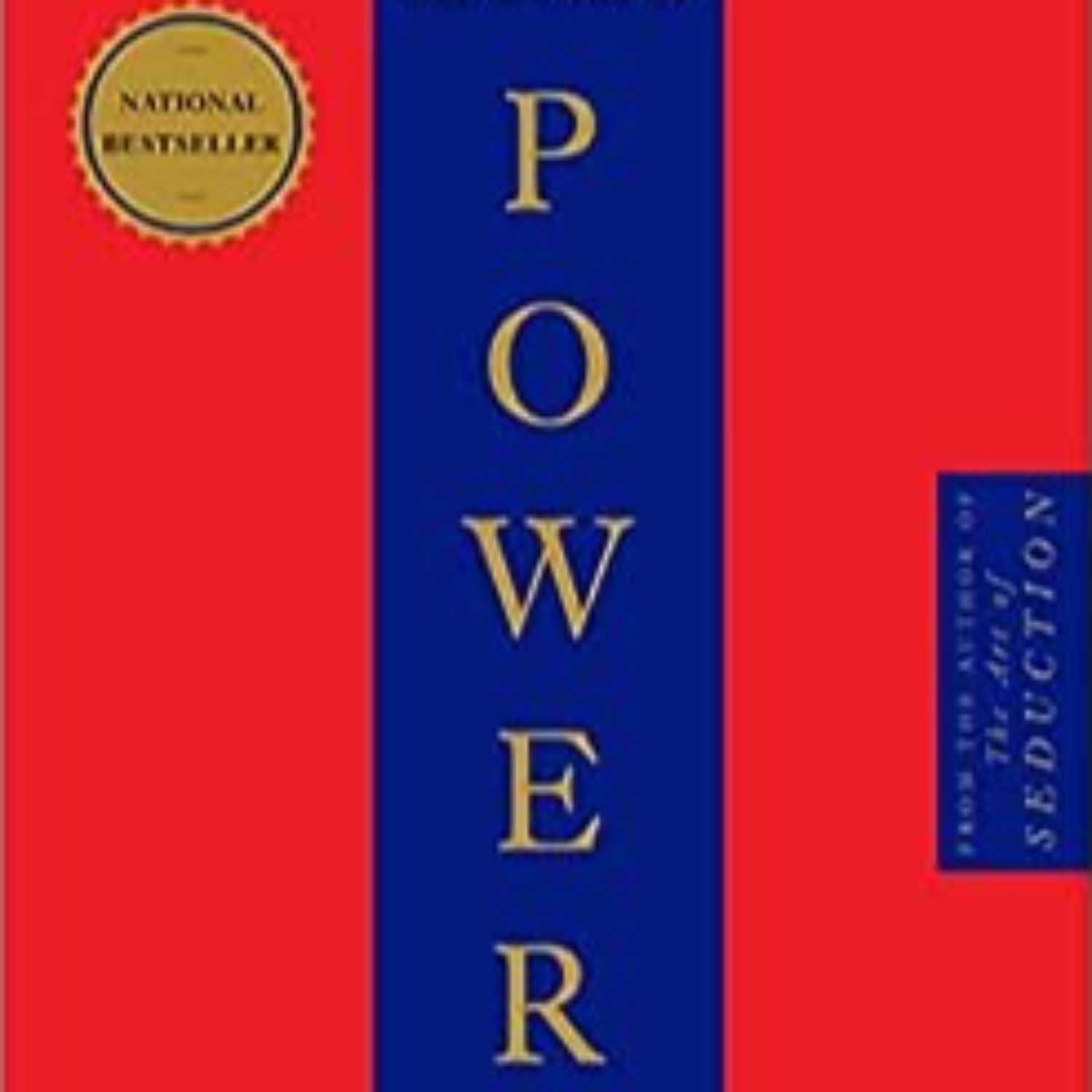
The 48 Laws of Power by Robert Greene 08 of 08 Episodes
76m 39s
The text explores historical lessons on power, seduction, and change through the examples of Alcibiades and Thomas Cromwell. Alcibiades mastered the "mirror effect," reflecting others' desires to gain influence over figures like Socrates and the Spartans. However, his promiscuous use of this tactic led to perceptions of betrayal, forcing him into exile. Meanwhile, Thomas Cromwell's swift, radical reforms in England—breaking with Rome and dismantling monasteries—triggered public resentment and rebellion. His aggressive changes made him a scapegoat, culminating in his execution. The analysis emphasizes that while change is necessary, it must be introduced gradually and framed as an improvement on tradition to avoid backlash. Additionally, appearing flawless risks envy; strategic displays of imperfection foster approachability. Ultimately, power requires balancing innovation with respect for human psychology and conservatism.
[MUSIC] Observance of the mirror effect. Early on in his career, the ambitious statesmen and general are subiities of Athens, 450 to 404 BC, fashioned a formidable weapon that became the source of his power. In every encounter with others, he would sense their moods and tastes, then carefully tailor his words and actions to mirror their innmost desires. He would seduce them with the idea that their values were superior to everyone else's, and that his goal was to model himself on them, or help them realize their dreams. Few could resist his charms. The first man to fall under his spell was the philosopher Socrates. Alcibiades represented the opposite of the socratic ideal of simplicity and uprightness. He lived lavishly and was completely unprincipled. Whenever he met Socrates, however, he mirrored the older man's sobriety, eating simply, accompanying Socrates on long walks, and talking only of philosophy and virtue. Socrates was not completely fooled. He was not unaware of Alcibiades' other life. But that only made him vulnerable to a logic that flattered him. Only in my presence, he felt, does this man submit to a virtuous influence, only I have such power over him. This feeling intoxicated Socrates, who became Alcibiades' fervent admirer and supporter, one day even risking his own life to rescue the young man in battle. The Athenians considered Alcibiades their greatest orator, for he had an uncanny ability to tune into his audience's aspirations and mirror their desires. He made his greatest speeches in support of the invasion of Sicily, which he thought would bring great wealth to Athens and limitless glory to himself. The speeches gave expression to young Athenians thirst to conquer lands for themselves, rather than living off the victories of their ancestors. But he also tailored his words to reflect older men's nostalgia for the glory years when Athens led the Greeks against Persia and then went on to create an empire. All Athens now dreamed of conquering Sicily, Alcibiades' plan was approved, and he was made the expedition's commander. While Alcibiades was leading the invasion of Sicily, however, certain Athenians fabricated charges against him of profaning, sacred statues. He knew his enemies would have him executed if he returned home, so at the last minute he deserted the Athenian fleet and defected to Athens' bitter enemy, Sparta. The Spartans welcomed this great man to their side, but they knew his reputation and were wary of him. Alcibiades loved luxury. The Spartans were a warrior people who worshipped austerity, and they were afraid he would corrupt their youth. But much to their relief, the Alcibiades who arrived in Sparta was not at all what they expected. He wore his hair untrimmed, as they did. Took cold baths, ate coarse bread and black broth, and wore simple clothes. To the Spartans this signified that he had come to see their way of life is superior to the Athenian. He had chosen to be a Spartan rather than being born one and should thus be honored above all others. They fell under his spell and gave him great powers. Unfortunately, Alcibiades rarely knew how to reign in his charm. He managed to seduce the king of Sparta's wife and make her pregnant. When this became public, he once more had to flee for his life. This time, Alcibiades defected to Persia, where he suddenly went from Spartan simplicity to embracing the lavish Persian lifestyle down to the last detail. It was, of course, immensely flattering to the Persians to see a Greek of Alcibiades' stature prefer their culture over his own, and they showered him with honors, land, and power. Once seduced by the mirror, they failed to notice that behind this shield Alcibiades was playing a double game, secretly helping the Athenians in their war with Sparta, and thus re-engratiating himself with the city to which he desperately wanted to return, and which welcomed him back with open arms in 408 BC. Interpretation Early in his political career, Alcibiades made a discovery that changed his whole approach to power. He had a colorful and forceful personality, but when he argued his ideas strongly with other people, he would win over a few while at the same time, alienating many more. The secret to gaining ascendancy over large numbers he came to believe was not to impose his colors, but to absorb the colors of those around him, like a chameleon. Once people fell for the trick, the deceptions he went on to practice would be invisible to them. Understand, everyone is wrapped up in their own narcissistic shell. When you try to impose your own ego on them, a wall goes up, resistance is increased. By mirroring them, however, you seduce them into a kind of narcissistic rapture. They are gazing at a double of their own soul. This double is actually manufactured in its entirety, by you. Once you have used the mirror to seduce them, you have great power over them. It is worth noting, however, the dangers and the promiscuous use of the mirror. In Alcibiades' presence, people felt larger as if their egos had been doubled, but once he left, they felt empty and diminished, and when they saw him mirroring completely different people as totally as he had mirrored them, they felt not just diminished, but betrayed. Alcibiades' overuse of the mirror effect made whole peoples feel used, so that he constantly had to flee from one place to another. Indeed, Alcibiades so angered the Spartans that they finally had him murdered. He had gone too far. The seducers' mirror must be used with caution and discrimination. Law 45. Preach the need for change, but never reform too much at once. Judgment. Everyone understands the need for change in the abstract, but on the day-to-day level, people are creatures of habit. Too much innovation is traumatic, and will lead to revolt. If you are new to a position of power, or an outsider trying to build a power base, make a show of respecting the old ways of doing things. If change is necessary, make it feel like a gentle improvement on the past. Transgression of the Law. Sometime in the early 1520s, King Henry VIII of England decided to divorce his wife, Catherine of Aragame, because she had failed to bury him as son, and because he had fallen in love with the young and comely Ann Bolin. The Pope, Clement VII, opposed the divorce and threatened the king with excommunication. The king's most powerful minister, Cardinal Woolsey, also saw no need for divorce, and his half-hearted support of the king cost him his position and soon his life. One man in Henry's cabinet, Thomas Cromwell, not only supported him in his desire for a divorce, but had an idea for realizing it, a complete break with the past. He convinced the king that by severing ties with Rome and making himself the head of a newly formed English church, he could divorce Catherine and Mary Ann. By 1531, Henry saw this as the only solution. To reward Cromwell for his simple but brilliant idea, he elevated this son of a blacksmith to the post of Royal Counselor. By 1534, Cromwell had been named the king's secretary, and as the power behind the throne, he had become the most powerful man in England. But for him, the break with Rome went beyond the satisfaction of the king's carnal desires. He envisioned a new Protestant order in England, with the power of the Catholic church smashed, and his vast wealth in the hands of the king and the government. In that same year, he initiated a complete survey of the churches and monasteries of England, and as it turned out, the treasures and monies that the churches had accumulated over the centuries were far more than he had imagined. His spies and agents came back with astonishing figures. To justify his schemes, Cromwell circulated stories about the corruption in the English monasteries, their abuse of power, their exploitation of the people, they supposedly served. Having won Parliament's support for breaking up the monasteries, he began to seize their holdings and to put them out of existence, one by one. At the same time, he began to impose Protestantism, introducing reforms in religious ritual, and punishing those who stuck to Catholicism, and who now were called heretics. Virtually overnight, England was converted to a new official religion. A terror fell on the country. Some people had suffered under the Catholic church, which before the reforms had been immensely powerful, but most Britons had strong ties to Catholicism, and to its comforting rituals. They watched in horror as churches were demolished, images of the Madonna and saints were broken in pieces, stained glass windows were smashed, and the churches' treasures were confiscated. With monasteries that had suckered the poor, suddenly gone, the poor now flooded the streets. The growing ranks of the beggar class were further swelled by former monks. On top of all this, Cromwell livid high taxes to pay for his ecclesiastical reforms. In 1535, powerful revolts in the north of England threatened to topple Henry from his throne. By the following year, he had suppressed the rebellions, but he had also begun to see the costs of Cromwell's reforms. The king himself had never wanted to go this far. He had only wanted a divorce. It was now Cromwell's turn to watch uneasily, as the king began slowly to undo his reforms, reinstating Catholic sacraments, and other rituals that Cromwell had outlawed. Sensing is fall from grace. In 1540 Cromwell decided to regain Henry's favor with one throw of the dice. He would find the king a new wife. Henry's third wife, James Seymour, had died a few years before, and he had been pining for a new young queen. It was Cromwell who found him one. Anne of Cleaves, a German princess and most important to Cromwell, a Protestant. On Cromwell's commission, the painter Holbein produced a flattering portrait of Anne. When Henry saw it, he fell in love and agreed to marry her. Cromwell seemed back in favor. Unfortunately, however, Holbein's painting was highly idealized, and when the king finally met the princess, she did not please him in the least. His anger against Cromwell burst for the ill-conceived reforms now for saddling him with an unattractive and Protestant wife, could no longer be contained. In June of that year, Cromwell was arrested, charged as a Protestant extremist and a heretic, and sent to the tower. Six weeks later, before a large and enthusiastic crowd, the public executioner cut off his head. Interpretation. Thomas Cromwell had a simple idea. He would break up the power and wealth of the church, and lay the foundation for Protestantism in England. And he would do this in a mercilessly short time. He knew his speedy reforms would cause pain and resentment, but he thought these feelings would fade in a few years. More important, by identifying himself with change, he would become the leader of the new order, making the king dependent on him. But there was a problem in this strategy. Like a billiard ball hit too hard against the cushion. His reforms had reactions and caroms. He did not envision and could not control. The man who initiates strong reforms often becomes the scapegoat for any kind of dissatisfaction. And eventually the reaction to his reforms may consume him, for change is upsetting to the human animal, even when it is for the good. Because the world is and always has been full of insecurity and threat, we latch on to familiar faces and create habits and rituals to make the world more comfortable. Change can be pleasant and even sometimes desirable in the abstract, but too much of it creates an anxiety that will stir and boil beneath the surface and then eventually erupt. Never underestimate the hidden conservatism of those around you. It is powerful and entrenched, never let the seductive charm of an idea cloud your reason. Just as you cannot make people see the world your way, you cannot wrench them into the future with painful changes. They will rebel. If reform is necessary, anticipate the reaction against it and find ways to disguise the change and Sweden the poison. Keys to power Human psychology contains many dualities, one of them being that even while people understand the need for change, knowing how important it is for institutions and individuals to be occasionally renewed, they are also irritated and upset by changes that affect them personally. They know the change is necessary and that novelty provides relief from boredom, but deep inside they cling to the past. Change in the abstract or superficial change, they desire, but a change that upsets core habits and routines is deeply disturbing to them. No revolution has gone without a powerful later reaction against it. For in the long run, the void it creates proves too unsettling to the human animal who unconsciously associates such voids with death and chaos. The opportunity for change and renewal seduces people to the side of the revolution, but once their enthusiasm fades, which it will, they are left with a certain emptiness. yearning for the past, they create an opening for it to creep back in. For Machiavelli, the prophet who preaches and brings change can only survive by taking up arms. When the masses inevitably yearn for the past, he must be ready to use force. But the armed prophet cannot last long, unless he quickly creates a new set of values and rituals to replace the old ones and to soothe the anxieties of those who dread change. It is far easier and less bloody to play a kind of calm game, preach change as much as you like and even enact your reforms, but give them the comforting appearance of older events and traditions. A simple gesture like using an old title or keeping the same number for a group will tie you to the past and support you with the authority of history. As Machiavelli himself observed, the Romans used this device when they transformed their monarchy into a republic. They may have installed two consoles in place of the king, but since the king had been served by twelve lictors, they retained the same number to serve under the consoles. The king had personally performed an annual sacrifice in a great spectacle that stirred the public. The republic retained this practice, only transferring it to a special chief of the ceremony, whom they called the king of the sacrifice. These and similar gestures satisfied the people and kept them from clamoring for the monarchies' return. Another strategy to disguise change is to make a loud and public display of support for the values of the past. Seem to be a zealot for tradition and few will notice how unconventional you really are. The answer to innate conservatism is to play the courier's game. Galileo did this at the beginning of his scientific career. He later became more confrontational and paid for it. So pay lip service to tradition, identify the elements in your revolution that can be made to seem to build on the past. Say the right things, make a show of conformity, and meanwhile, let your theories do their radical work. Play with appearances and respect past protocol. Finally, powerful people pay attention to the zeitgeist. If their reform is too far ahead of its time, few will understand it, and it will stir up anxiety and be hopelessly misinterpreted. The changes you make must seem less innovative than they are. England did eventually become a Protestant nation, as Cromwell wished, but it took over a century of gradual evolution. Watch the zeitgeist. If you work in a tumultuous time, there is power to be gained by preaching a return to the past to comfort, tradition, and ritual. During a period of stagnation, on the other hand, play the card of reform and revolution, but beware of what you stir up. Those who finish a revolution are rarely those who started. You will not succeed at this dangerous game unless you are willing to forestall the inevitable reaction against it by playing with appearances and building on the past. Law 46 Never appear too perfect. Judgment. Appearing better than others is always dangerous, but most dangerous of all is to appear to have no faults or weaknesses. Envy creates silent enemies. It is smart to occasionally display defects and admit to harmless vices in order to deflect envy and appear more human and approachable. Only gods and the dead can seem perfect with impunity. Transgression of the Law Joe Orden met Kenneth Hallowell at the Royal Academy of Dramatic Arts, London, in 1953, where both had enrolled as acting students. They soon became lovers and moved in together. Hallowell, 25 at the time, was seven years older than Orden, and seemed the more confident of the two. But neither had much talent as actors, and after graduating having settled down together in a dank, London apartment, they decided to give up acting and collaborate as writers instead. Hallowell's inheritance was enough to keep them from having to find work for a few years, and in the beginning he was also the driving force behind the stories and novels they wrote. He would dictate to Orden who would type the manuscripts occasionally, interjecting his own lines and ideas. Their first efforts attracted some interest from literary agents, but it sputtered. The promise they had shown was leading nowhere. Eventually, the inheritance money ran out, and the pair had to look for work. The collaborations were less enthusiastic and less frequent. The future looked bleak. In 1957, Orden began to write on his own, but it wasn't until five years later, when the lovers were jailed for six months for defacing dozens of library books that he began to find his voice. Perhaps not by chance. This was the first time he and Hallowell had been separated in nine years. He came at a prison determined to express his contempt for English society in the form of theatrical forces. He and Hallowell moved back in together, but now the roles were reversed, Orden did the writing, while Hallowell put in comments and ideas. In 1964, Joe Orden completed his first full-length play, Entertaining Mr. Sloan. The play made it to London's West End, where it received brilliant reviews. A great new writer had emerged from nowhere. Now success followed success at a dizzying pace. In 1966, Orden had a hit with his play, Lute, and his popularity soared. Soon commissions came in from all sides, including from the Beatles, who paid Orden handsomely to write them a film script. Everything was pointing upwards. Everything except Orden's relationship with Kenneth Hallowell. The pair still lived together, but his Orden grew successful, Hallowell began to deteriorate. Watching his lover become the center of attention, he suffered the humiliation of becoming a kind of personal assistant to the playwright. He's role in what had once been a collaboration growing smaller and smaller. In the 1950s, he had supported Orden with his inheritance. Now Orden supported him. At a party or among friends, people would naturally gravitate towards Orden. He was charming, and his mood was almost always buoyant. Unlike the handsome Orden, Hallowell was bald and awkward. His defensiveness made people want to avoid him. With Orden's success, the couple's problems only worsened. Hallowell's moods made their life together impossible. Orden claimed to want to leave him and had numerous affairs, but would always end up returning to his old friend and lover. He tried to help Hallowell launch a career as an artist, even arranging for a gallery to show his work, but the show was a flop, and this only heightened Hallowell's sense of inferiority. In May of 1967, the pair went on a brief holiday together in Tangiers, Morocco. During the trip, Orden wrote in his diary, "We sat talking about how happy we felt, and how it couldn't surely last. We'd have to pay for it, or we'd be struck down from afar by disaster because we were perhaps too happy. To be young, good-looking, healthy, famous, comparatively rich, and happy, surely going against nature." Hallowell outwardly seemed as happy as Orden. Inwardly, though, he was seething, and two months later, in the early morning of August 10, 1967, just days after helping Orden put the finishing touches to the wicked farce what the butlers saw, undoubtedly his masterpiece. Kenneth Hallowell bludgeoned Joe Orden to death, with repeated blows of a hammer to the head. He then took twenty-one sleeping pills and died himself, leaving behind a note that read, "If you read Orden's diary, all will be explained." Interpretation Kenneth Hallowell had tried to cast his deterioration as mental illness, but what Joe Orden's diaries revealed to him was the truth. It was envy, pure, and simple that lay at the heart of his sickness. The diaries which Hallowell read on the sly recounted the couple's days as equals and their struggle for recognition. After Orden found success, the diaries began to describe Hallowell's brooding, his rude comments at parties, his growing sense of inferiority. All of this Orden narrated with a distance that bordered on contempt. The diaries made clear Hallowell's bitterness over Orden's success. Eventually, the only thing that would have satisfied him would have been for Orden to have a failure of his own, an unsuccessful play perhaps, so that they could have commiserated in their failure as they had done years before. When the opposite happened, as Orden grew only more successful and popular, Hallowell did the only thing that would make them equals again. He made them equals, in death. With Orden's murder, he became almost as famous as his friend, posthumously. Joe Orden only partly understood his lover's deterioration. His attempt to help Hallowell launch a career in art, registered for what it was, charity, and guilt. Orden basically had two possible solutions to the problem. He could have downplayed his own success, displaying some faults, deflecting Hallowell's envy, or once he realized the nature of the problem. He could have fled as if Hallowell were a viper, as in fact he was, a viper of envy. Once envy eats away at someone, everything you do only makes it grow, and day by day it festers inside them. Eventually, they will attack. Only a minority can succeed at the game of life, and that minority inevitably arouses the envy of those around them. Once success happens your way, however, the people to fear the most are those in your own circle, the friends and acquaintances you have left behind. Feelings of inferiority naught at them, the thought of your success only heightens their feelings of stagnation. Envy, which the philosopher Kirchegard calls "unhappy admiration", takes hold. You may not see it, but you will feel it someday, unless that is, you learn strategies of deflection, little sacrifices to the gods of success. Either dampen your brilliance occasionally, purposefully revealing a defect, weakness, or anxiety, or attributing your success to luck, or simply find yourself new friends, never underestimate the power of envy. Keys to power There are several strategies for dealing with the insidious, destructive emotion of envy. First, accept the fact that there will be people who will surpass you in some way, and also the fact that you may envy them, but make that feeling a way of pushing yourself to equal or surpass them someday. Let envy turn inward, and it poisons the soul, expel it outward, and it can move you to greater heights. Second, understand that as you gain power, those below you will feel envious of you, they may not show it, but it is inevitable. Do not naively accept the facade they show you. Read between the lines of their criticisms, their little sarcastic remarks, the signs of backstabbing, the excessive praise that is preparing you for a fall, the resentful look in the eye. Half the problem with envy comes when we do not recognize it until it is too late. Finally, expect that when people envy you, they will work against you insidiously. They will put obstacles in your path that you will not foresee, or that you cannot trace to their source. It is hard to defend yourself against this kind of attack, and by the time you realize that envy is at the root of a person's feelings about you, it is often too late. Your excuses, your false humility, your defensive actions, only exacerbate the problem. Since it is far easier to avoid creating envy in the first place, then to get rid of it once it is there. You should strategize to forstall it before it grows. It is often your own actions that stir up envy, your own unawareness. By becoming conscious of those actions and qualities that create envy, you can take the teeth out of it before it nibbles you to death. Kierkegaard believed that there are types of people who create envy, and are as guilty when it arises as those who feel it. The most obvious type we all know, the moment something good happens to them, whether by luck or design, they crow about it. In fact, they get pleasure out of making people feel inferior. This type is obvious and beyond hope. There are others, however, who stir up envy in more subtle and unconscious ways and are partly to blame for their troubles. Envy is often a problem, for example, for people with great natural talent. Money others can attain power as well, but superior intelligence, good looks charm, these are qualities no one can acquire. The naturally perfect have to work the most to disguise their brilliance, displaying a defector to deflect envy before it takes root. It is a common and naive mistake to think you are charming people with your natural talents when in fact they are coming to hate you. A great danger in the realm of power is the sudden improvement in fortune, an unexpected promotion, a victory or success that seems to come out of nowhere. This is sure to stir up envy among your former peers. Suddenly emphasize how lucky you have been to make your happiness seem more attainable to other people and the need for envy less acute. But be careful not to affect the false modesty that people can easily see through. This will only make them more envious, the act has to be good, your humility and your openness to those you have left behind have to seem genuine. Any hint of insincereity will only make your new status more oppressive. Remember, despite your elevated position, it will do you no good to alienate your former peers. Power requires a wide and solid support base, which envy can silently destroy. According to the Elizabethan statesman and writer Sir Francis Bacon, the wisest policy of the powerful is to create a kind of pity for themselves as if their responsibilities were a burden and a sacrifice. How can one envy a man who is taken on a heavy load for the public interest? Disguise your power as a kind of self-sacrifice rather than a source of happiness and you make it seem less enviable. Emphasize your troubles and you turn a potential danger, envy, into a source of moral support, pity. A similar ploy is to hint that your good fortune will benefit those around you. To do this, you may need to open your purse strings. To deflect envy, grassy and recommend that the powerful display a weakness, a minor social indiscretion, a harmless vice. Give those who envy you something to feed on, distracting them from your more important sins. Remember, it is the reality that matters. You may have to play games with appearances but in the end, you will have what counts, true power. In some Arab countries, a man will avoid arousing envy by showing his wealth only on the inside of his house. Apply this wisdom to your own character. Beware of some of envy's disguises. Excessive praise is an almost sure sign that the person praising you envies you. They are either setting you up for a fall, it will be impossible for you to live up to their praise, or they are sharpening their blades behind your back. At the same time, those who are hypocritical of you, or who slander you publicly, probably envy you as well. Recognize their behavior as disguised envy, and you keep out of the trap of mutual mudslinging, or of taking their criticisms to heart. When you revenge by ignoring their measly presence, do not try to help, or do favors for those who envy you, they will think you are contescending to them. Joe Warden's attempt to help Hallowaw find a gallery for his work only intensified his lover's feelings of inferiority and envy. Once envy reveals itself for what it is, the only solution is often to flee the presence of the enviers, leaving them to stew in a hell of their own creation. Law 47. Do not go past the mark you aimed for, in victory learn when to stop. Judgment. The moment of victory is often the moment of greatest peril. In the heat of victory, arrogance and overconfidence can push you past the goal you had aimed for, and by going too far, you make more enemies than you defeat. Do not allow success to go to your head. There is no substitute for strategy and careful planning. Set a goal, and when you reach it, stop. In 559 BC, a young man named Cyrus gathered an immense army from the scattered tribes of Persia, and marched against his grandfather, Astieggis, King of the Meeds. He defeated Astieggis with ease, had himself crowned King of Medea and Persia, and began to forge the Persian Empire. Victory followed victory in quick succession. Cyrus defeated Cresus, ruler of Lydia, then conquered the Ionian islands and other smaller kingdoms. He marched on Babylon and crushed it. Now, he was known as Cyrus the Great, King of the world. After capturing the riches of Babylon, Cyrus set his sights on the east, on the half barbaric tribes, of the Masogetai, a vast realm on the Caspian Sea. A fierce warrior race led by Queen Tamiris, the Masogetai lacked the riches of Babylon, but Cyrus attacked them anyway, believing himself superhuman and incapable of defeat. The Masogetai would fall easily to his vast armies, making his empire immense. In 529 BC, then Cyrus marched to the wide river Arraxis, gateway to the kingdom of the Masogetai. As he set up camp on the western bank, he received the message from Queen Tamiris, King of the Meeds, she told him, "I advise you to abandon this enterprise, for you cannot know if, in the end, it will do you any good. Rule your own people and try to bear the sight of me, ruling mine. But of course you will refuse my advice, as the last thing you wish for is to live in peace." Tamiris, confident of her army's strength and not wishing to delay the inevitable battle, offered to withdraw the troops on her side of the river, allowing Cyrus to cross its waters safely, and fight her army on the eastern side, if that was his desire. Cyrus agreed, but instead of engaging the enemy directly, he decided to play a trick. The Masogetai knew few luxuries. Once Cyrus had crossed the river and made his camp on the eastern side, he set the table for an elaborate banquet full of meat, delicacies, and strong wine. Then he left his weakest troops in the camp and withdrew the rest of the army to the river. A large Masogetai detachment soon attacked the camp and killed all of the Persian soldiers in a fierce battle. Then, overwhelmed by the fabulous feast that had been left behind, they ate and drank to their hearts content. Later, inevitably, they fell asleep. The Persian army returned to the camp that night, killing many of the sleeping soldiers and capturing the rest. Among the prisoners was their general, a youth named Sparga Pisces, son of Queen Tamiris. When the queen learned what had happened, she sent a message to Cyrus, triting him for using tricks to defeat her army. "Now listen to me," she wrote, "and I will advise you for your own good, give me back my son and leave my country with your forces intact, and be content with your triumph over a third part of the Masogetai. If you refuse, I swear by the son our master to give you more blood than you can drink for all your gluttony." Cyrus scoffed at her, he would not release her son. He would crush these barbarians. The queen's son, seeing he would not be released, could not stand the humiliation and so, he killed himself. The news of her son's death overwhelmed Tamiris. She gathered all the forces that she could muster in her kingdom and whipping them into a vengeful frenzy, engaged Cyrus' troops in a violent and bloody battle. Finally, the Masogetai prevailed, in their anger they decimated the Persian army, killing Cyrus himself. After the battle, Tamiris and her soldiers searched the battlefield for Cyrus' corpse. When she found it, she cut off his head and shoved it into a wine-skin full of human blood, crying out, "The way I have conquered you and live, yet you have ruined me by treacherously taking my son. See now, I fulfill my threat, you have your fill of blood." After Cyrus' death, the Persian Empire quickly unraveled. One act of arrogance undid all of Cyrus' good work. Interpretation There is nothing more intoxicating than victory and nothing more dangerous. Cyrus had built his great empire on the ruins of a previous one. A hundred years earlier, the powerful Assyrian Empire had been totally destroyed. It's once splendid capital of Nineveh, but ruins in the sand. The Assyrians had suffered this fate because they had pushed too far, destroying one city state after another, until they lost sight of the purposes of their victories, and also of the costs. They overextended themselves and made many enemies who were finally able to band together and destroy them. Cyrus ignored the lesson of Assyria. He paid no heed to the warnings of oracles and advisers. He did not worry about offending a queen. His many victories had gone to his head, clouding his reason. Instead of consolidating his already vast empire, he pushed forward. Instead of recognizing each situation is different, he thought each new war would bring the same result as the one before as long as he used the methods he knew, ruthless force and cunning. Understand, in the realm of power, you must be guided by reason. To let a momentary thrill or an emotional victory influence or guide your moves will prove fatal. When you attain success, step back. Be cautious. When you gain victory, understand the part played by the particular circumstances of a situation, and never simply repeat the same actions again and again. History is littered with the ruins of victorious empires and the corpses of leaders who could not learn to stop and consolidate their gains. Keys to power. Power has its own rhythms and patterns. Those who succeed at the game are the ones who control the patterns and vary them at will, keeping people off balance while they set the tempo. The essence of strategy is controlling what comes next and the elation of victory can upset your ability to control what comes next in two ways. First, you owe your success to a pattern that you are apt to try to repeat. You will try to keep moving in the same direction without stopping to see whether this is still the direction that is best for you. Second, success tends to go to your head and make you emotional. Dealing invulnerable, you make aggressive moves that ultimately undo the victory you have gained. The lesson is simple. The powerful vary their rhythms and patterns, change course, adapt to circumstance and learn to improvise. Rather than letting their dancing feet impel them forward, they step back and look where they are going. It is as if their bloodstream bore a kind of antidote to the intoxication of victory, letting them control their emotions and come to a kind of mental halt when they have attained success. They steady themselves, give themselves the space to reflect on what has happened, examine the role of circumstance and luck in their success. As they say in writing school, you have to be able to control yourself before you can control the horse. Law 48 Assume formlessness Judgment By taking a shape, by having a visible plan, you open yourself to attack. Instead of taking a form for your enemy to grasp, keep yourself adaptable and on the move. Accept the fact that nothing is certain and no law is fixed. The best way to protect yourself is to be as fluid and formless as water. Never bet on stability or lasting order. Everything changes Observance of the Law. When World War II ended and the Japanese who had invaded China in 1937 had finally been thrown out, the Chinese nationalists, led by Shanghai Shaek, decided the time had come to annihilate the Chinese communists. Their hated rivals, once and for all. They had almost succeeded in 1935, forcing the communists into the long march, the grueling retreat that had greatly diminished their numbers. Although the communists had recovered somewhat during the war against Japan, it would not be difficult to defeat them now. They controlled only isolated areas in the countryside, had unsophisticated weaponry, lacked any military experience or training beyond mountain fighting, and controlled no important parts of China, except areas of Manchuria, which they had managed to take after the Japanese retreat. Chang decided to commit his best forces in Manchuria. He would take over its major cities, and from those bases would spread through the northern industrial region, sweeping the communists away. Once Manchuria had fallen, the communists would collapse. In 1945 and '46, the plan worked perfectly. The Nationalists easily took the major Manchurian cities. Puzzlingly, though, in the face of this critical campaign, the communist strategy made no sense. When the Nationalists began their push, the communists dispersed to Manchuria's most out of the way corners. Their small units harassed the nationalist armies, ambushing them here, retreating unexpectedly there, but these dispersed units never linked up, making them hard to attack. They would seize a town, only to give it up a few weeks later. Forming neither rear guards nor vanguards, they moved like Mercury, never staying in one place, elusive and formless. The Nationalists ascribe this to two things, cowardice in the face of superior forces, and inexperience in strategy. Mao Zeytong, the communist leader, was more a poet and philosopher than a general, whereas Chang had studied warfare in the West and was a follower of the German military writer, Karl von Klausowitz, among others. Yet, a pattern did eventually emerge in Mao's attacks. After the Nationalists had taken the cities, leaving the communists to occupy what was generally considered Manchuria's useless space, the communists started using that large space to surround the cities. If Chang sent an army from one city to reinforce another, the communists would encircle the rescuing army. Chang's forces were slowly broken into smaller and smaller units, isolated from one another. Their lines of supply and communication cut. The Nationalists still had superior firepower, but if they could not move, what good was it? A kind of terror overcame the Nationalist soldiers. Commanders comfortably remote from the front lines might laugh at Mao, but the soldiers had fought the communists in the mountains and had come to fear their elusiveness. Now, the soldiers sat in their cities and watched as their fast-moving enemies as fluid as water poured in on them from all sides. There seemed to be millions of them. The communists also encircled the soldiers' spirits, bombarding them with propaganda to lower their morale and pressure them to desert. The Nationalists began to surrender in their minds. They're encircled and isolated cities started collapsing even before directly attacked, one after another fell in a quick succession. In November of 1948, the Nationalists surrendered Manchuria to the communists, accumulating blow to the technically superior nationalist army, and one that proved decisive in the war. By the following year, the communists controlled all of China. Interpretation. The two board games that best approximate the strategies of war are chess and the Asian game of Goh. In chess, the board is small. In comparison to Goh, the attack comes relatively quickly, forcing a decisive battle. It rarely pays to withdraw or to sacrifice your pieces, which must be concentrated at key areas. Goh is much less formal It is played on a large grid with 361 intersections, nearly six times as many positions as in chess. Black and white stones, one color for each side, are placed on the board's intersections, one at a time wherever you like. Once all your stones, 52 for each side, are on the board, the object is to isolate the stones of your opponent by encircling them. A game of Goh, called Wei Chi in China, can last up to 300 moves. The strategy is more subtle and fluid than chess. Developing slowly, the more complex the pattern your stones initially create on the board. The harder it is for your opponent to understand your strategy. Fighting to control a particular area is not worth the trouble. You have to think in larger terms to be prepared to sacrifice an area in order eventually to dominate the board. What you are after is not in entrenched position, but mobility. With mobility, you can isolate the opponent in small areas and then encircle them. The aim is not to kill off the opponent's pieces directly as in chess, but to induce a kind of paralysis and collapse. Chess is linear, position-oriented, and aggressive. Goh is non-linear and fluid. Aggression is indirect until the end of the game, when the winner can surround the opponent's stones at an accelerated pace. Chinese military strategists have been influenced by Goh for centuries. Its proverbs have been applied to war, time, and again, Mao Zeyong was an addict of Wei Chi, and its precepts were ingrained in his strategies. A key Wei Chi concept, for example, is to use the size of the board to your advantage, spreading out in every direction so that your opponent cannot fathom your movements in a simple, linear way. Every Chinese, Mao once wrote, should consciously throw himself into this war of a jigsaw pattern against the nationalists. Place your men in a jigsaw pattern in Goh, and your opponent loses himself trying to figure out what you are up to. Either he wastes time pursuing you, or, like Shanghai Shaq, he assumes you are incompetent and fails to protect himself. And if he concentrates on single areas as western strategy advises, he becomes a sitting duck for encirclement. In the Wei Chi way of war, you encircle the enemy's brain, using mind games, propaganda, and irritation tactics to confuse and dishearten. This was the strategy of the communists, an apparent formlessness that disoriented and terrified their enemy. Where chess is linear and direct, the ancient game of Go is closer to the kind of strategy that will prove relevant in a world where battles are fought indirectly, invest loosely connected areas. Its strategies are abstract and multidimensional, inhabiting a plane beyond time and space. The strategists mind. In this fluid form of warfare, you value movement over position. Your speed and mobility make it impossible to predict your moves, unable to understand you, your enemy can form no strategy to defeat you. Instead of fixing on particular spots, this indirect form of warfare spreads out just as you can use the large and disconnected nature of the real world to your advantage. Be like a vapor. Do not give your opponents anything solid to attack. Watch as they exhaust themselves pursuing you, trying to cope with your elusiveness. Only formlessness allows you to truly surprise your enemies. By the time they figure out where you are and what you are up to, it is too late. Keys to power. The human animal is distinguished by its constant creation of forms. Rarely expressing its emotions directly, it gives them form through language or through socially acceptable rituals. We cannot communicate our emotions without a form. The forms that we create, however, change constantly in fashion, in style, in all those human phenomena representing the mood of the moment. We are constantly altering the forms we have inherited from previous generations, and these changes are signs of life and vitality. Indeed, the things that don't change, the forms that rigidify come to look to us like death, and we destroy them. The young show this most clearly, uncomfortable with the forms that society imposes upon them, having no set identity, they play with their own characters, trying on a variety of masks and poses to express themselves. This is the vitality that drives the motor of form, creating constant changes in style. The powerful are often people who, in their youth, have shown immense creativity in expressing something new through a new form. Society grants them power because it hongers for and rewards this sort of newness. The problem comes later when they often grow conservative and possessive. They no longer dream of creating new forms, their identities are set, their habits congeal, and their rigidity makes them easy targets. Everyone knows their next move. Instead of demanding respect, they elicit boredom. "Get off the stage," we say. "Let someone else, someone younger, entertain us." When locked in the past, the powerful look comical. They are over ripe fruit, waiting to fall from the tree. Power can only thrive if it is flexible in its forms. To be formless is not to be amorphous. Everything has a form. It is impossible to avoid. The formlessness of power is more like that of water or mercury, taking the form of whatever is around it. Changing constantly, it is never predictable. The powerful are constantly creating form, and their power comes from the rapidity with which they can change. Their formlessness is in the eye of the enemy who cannot see what they are up to, and so has nothing solid to attack. This is the premier pose of power, ungraspable as elusive and swift as the God Mercury, who could take any form he pleased and used his ability to wreak havoc on Mount Olympus. Human creations evolve toward abstraction, toward being more mental and less material. This evolution is clear in art, which in this country made the great discovery of abstraction and conceptualism. It can also be seen in politics, which over time have become less overtly violent, more complicated, indirect, and cerebral. Warfare and strategy, too, have followed this pattern. Strategy began in the manipulation of armies on land, positioning them in ordered formations. On land, strategy is relatively too dimensional and controlled by topography. But all the great powers have eventually taken to the sea for commerce and colonization. And to protect their trading lanes, they have had to learn how to fight at sea. Maritime warfare requires tremendous creativity and abstract thinking, since the lines are constantly shifting. Naval captains distinguish themselves by their ability to adapt to the literal fluidity of the terrain, and to confuse the enemy with an abstract, hard to anticipate form. They are operating in a third dimension, the mind. Back on land, guerrilla warfare, too, demonstrates this evolution toward abstraction. TE Lawrence was perhaps the first modern strategist to develop the theory behind this kind of warfare and to put it into practice. His ideas influenced Mao, who found in his writings an uncanny Western equivalent to Wei Chi. Lawrence was working with Arabs, fighting for their territory against the Turks. His idea was, to make the Arabs blend into the vast desert, never providing a target, never collecting together in one place. As the Turks scrambled to fight this vaporist army, they spread themselves thin, wasting energy and moving from place to place. They had the superior firepower, but the Arabs kept the initiative by playing cat and mouse, giving the Turks nothing to hold on to, destroying their morale. Most wars were wars of contact. Hours should be a war of detachment. Lawrence wrote, "We were to contain the enemy by the silent threat of a vast, unknown desert, not disclosing ourselves till we attacked." This is the ultimate form of strategy. The war of engagement has become far too dangerous and costly, in direction and elusiveness yield far better results at a much lower cost. The main cost, in fact, is mental, the thinking it takes to align your forces in scattered patterns and to undermine the minds and psychology of your opponents. And nothing will infuriate and disorient them more than formlessness. In a world where wars of detachment are the order of the day, formlessness is crucial. The first psychological requirement of formlessness is to train yourself to take nothing personally. Never show any defensiveness. When you act defensive, you show your emotions revealing a clear form. Your opponents will realize they have hit a nerve and Achilles heel, and they will hit it again, and again. So train yourself to take nothing personally. Never let anyone get your backup, be like a slippery ball that cannot be held. Let no one know what gets you or where your weaknesses lie. Make your face a formless mask, and you will infuriate and disorient your scheming colleagues and opponents. One man who used this technique was Baron James Rothschild. A German Jew in Paris in a culture decidedly unfriendly to foreigners, Rothschild never took any attack on him personally, or showed he had been hurt in any way. He furthermore adapted himself to the political climate, whatever it was. The stiffly formal restoration monarchy of Louis XVIII, the bourgeois reign of Louis Philippe, the democratic revolution of 1848, the upstart Louis Napoleon crowned emperor in 1852. Rothschild accepted them one and all and blended in. He could afford to appear hypocritical or opportunistic because he was valued for his money, not his politics. His money was the currency of power. While he adapted and thrived, never showing a form, all the other great families that had begun the century immensely wealthy were ruined in the period's complicated shifts and turns of fortune. Attaching themselves to the past, they revealed their embrace of a form. Throughout history, the formless style of ruling has been most adeptly practiced by the queen who reigns alone. A queen is in a radically different position from a king because she is a woman, her subjects and courtiers are likely to doubt her ability to rule, her strength of character. If she favors one side in some ideological struggle, she is said to be acting out of emotional attachment. Yet, if she represses her emotions and plays the authoritarian in the male fashion, she arouses worse criticism still. Either by nature or by experience then, queens tend to adopt a flexible style of governing that in the end often proves more powerful than the more direct male form. This feminine formless style of ruling may have emerged as a way of prospering under difficult circumstances, but it has proved immensely seductive to those who have served under it. Being fluid, it is relatively easy for its subjects to obey, for they feel less coerced, less bent to their ruler's ideology. It also opens up options where an adherence to a doctrine closes them off. Without committing to one side, it allows the ruler to play one enemy off another. Rigid rulers may seem strong, but with time, their inflexibility wears on the nerves and their subjects find ways to push them from the stage. Flexible, formless rulers will be much criticized, but they will endure, and people will eventually come to identify with them since they are as their subjects are, changing with the wind, open to circumstance. Despite upsets and delays, the permeable style of power generally triumphs in the end. When you find yourself in conflict with someone stronger and more rigid, allow them a momentary victory. Seem to bow to their superiority, then, by being formless and adaptable, slowly insinuate yourself into their soul. This way, you will catch them off guard. For rigid people are always ready to ward off direct blows, but are helpless against the subtle and insinuating. To succeed at such a strategy, you must play the chameleon, conform on the surface, while breaking down your enemy from the inside. In evolution, largeness is often the first step toward extinction. What is immense and bloated has no mobility, but must constantly feed itself. The unintelligent are often seduced into believing that size connotes power, the bigger, the better. In 483 BC, King Xerxes of Persia invaded Greece, believing he could conquer the country in one easy campaign. After all, he had the largest army ever assembled for one invasion. The historian Heronides estimated it at over more than five million. The Persians planned to build a bridge across the Hells-Pont to overrun Greece from the land, while their equally immense navy would pin the Greek ships in harbor, preventing their forces from escaping to sea. The plan seemed sure, yet as Xerxes prepared the invasion, his advisor Artabinus warned his master of grave misgivings. "The two mightiest powers in the world are against you," he said. Xerxes laughed. "What powers could match his gigantic army?" "I will tell you what they are," answered Artabinus. "The land and the sea." "There are no safe harbors large enough to receive Xerxes fleet, and the more land the Persians conquered, the longer their supply lines stretched, the more ruinous the cost of feeding this immense army would prove." Thinking his advisor a coward, Xerxes proceeded with his invasion. Yet, as Artabinus predicted, bad weather at sea decimated the Persian fleet, which was too large to take shelter in any harbor. On land, meanwhile, the Persian army destroyed everything in its path, which only made it impossible to feed since the destruction included crops and stores of food. It was also an easy and slow-moving target. The Greeks practiced all kinds of deceptive maneuvers to disorient the Persians. Xerxes' eventual defeat at the hands of the Greek allies was an immense disaster. The story is emblematic of all those who sacrificed mobility for size. The flexible and fleet of foot will almost always win, for they have more strategic options. The more gigantic the enemy, the easier it is to induce collapse. The need for formlessness becomes greater the older we get, as we grow more likely to become set in our ways and assume too rigid of form. We become predictable, always the first sign of decreptitude, and predictability makes us appear comical. Although ridicule and disdain might seem mild forms of attack, they are actually potent weapons and will eventually erode a foundation of power. An enemy who does not respect you will grow bold, and boldness makes even the smallest animal dangerous. As you get older, you must rely even less on the past. Be vigilant lest the form your character has taken makes you seem a relic. It is not a matter of mimicking the fashions of youth. That is equally worthy of laughter. Rather, your mind must constantly adapt to each circumstance, even the inevitable change that the time has come to move over and let those of younger age prepare for their ascendancy. Regidity will only make you look uncannily like a cadaver. Never forget, though, that formlessness is a strategic pose. It gives you room to create tactical surprises. As your enemies struggle to guess your next move, they reveal their own strategy, putting them at a decided disadvantage. It keeps the initiative on your side, putting your enemies in the position of never acting, constantly reacting. It foils their spying and intelligence. Remember, formlessness is a tool. Never confuse it with a go with the flow style or with a religious resignation to the twists of fortune. You use formlessness not because it creates inner harmony and peace, but because it will increase your power. Finally, learning to adapt to each new circumstance means seeing events through your own eyes and often ignoring the advice that people constantly peddle your way. It means that ultimately you must throw out the laws that others preach and the books they write to tell you what to do and the sage advice of the elder. The laws that govern circumstances are abolished by new circumstances, Napoleon wrote, which means that it is up to you to gauge each new situation. For lie too much on other people's ideas and you end up taking a form not of your own making. Too much respect for other people's wisdom will make you depreciate your own. Be brutal with the past, especially your own, and have no respect for the philosophies that are foisted on you from outside. This has been a hybrid audio production. Also available from Robert Green, the art of seduction, and 33 Strategies of War, on the web at www.hybridjaudio.com. Here is an excerpt from Green's ruthless guide to psychological warfare, the 33 Strategies of War. Do not fight the last war, the guerrilla war of the mind strategy. What most often weighs you down and brings you misery is the past in the form of unnecessary attachments, repetitions of tired formulas, and the memory of old victories and defeats. You must consciously wage war against the past and force yourself to react to the present moment. Be ruthless on yourself. Do not repeat the same tired methods. Sometimes you must force yourself to strike out in new directions, even if they involve risk. What you may lose in comfort and security, you will gain in surprise, making it harder for your enemies to tell what you will do. Wage guerrilla war on your mind, allowing no static lines of defense, no exposed citadels, make everything fluid and mobile. The last war. No one has risen to power faster than the Polian Bonaparte, 1769, 1821. In 1793, he went from Captain and the French Revolutionary Army to Brigadier General. In 1796, he became the leader of the French forces in Italy, fighting the Austrians, whom he crushed that year and again three years later. He became First Consul of France in 1801, Emperor in 1804. In 1805, he humiliated the Austrian and Russian armies at the Battle of Osterlitz. For many, Napoleon was more than a great general. He was a genius, a god of war. Not everyone was impressed, though. There were Prussian generals who thought he had merely been lucky. If he ever faced the Prussians, he would be revealed as a great fake. Among these Prussian generals was Friedrich Ludwig, Prince of Hohenloha Inglfingen. Hohenloha came from one of Germany's oldest aristocratic families, one with an illustrious military record. To Hohenloha, success in war depended on organization, discipline, and the use of superior strategies developed by trained military minds. The Prussians exemplified all of these virtues. Prussian soldiers drilled relentlessly until they could perform elaborate maneuvers as precisely as a machine. Prussian generals intensely studied the victories of Frederick the Great. War for them was a mathematical affair, the application of timeless principles. To the generals, Napoleon was a Corsican hothead, leading an unruly citizens army. Superior knowledge and skill, they would outstrategize him. The Napoleonic myth would lie in ruins, and Europe could return to its old ways. In August 1806, Hohenloha and his fellow generals finally got what they wanted. King Friedrich Wilhelm III of Prussia, tired of Napoleon's broken promises, decided to declare war on him in six weeks. In the meantime, he asked his generals to come up with a plan to crush the French. Hohenloha was ecstatic. The campaign would be the climax of his career. He had been thinking for years about how to beat Napoleon, and he presented his plan to the general's first strategy session. Precise marches would place the army at the perfect angle from which to attack the French as they advanced through southern Prussia. An attack in oblique formation, Frederick the Great's favorite tactic, would deliver a devastating blow. The other generals, all in their 60s and 70s, presented their own plans, but these two were merely variants on the tactics of Frederick the Great. Discussion turned into argument. Several weeks went by. Finally, the king had to step in and create a compromised strategy that would satisfy all of his generals. A feeling of exuberance swept the country, which would soon relive the glory years of Frederick the Great. On October 5, a few days before the king was to declare war, disturbing news reached the generals. A reconnaissance mission revealed that divisions of Napoleon's army, which they had believed was dispersed, had marched east, merged, and was massing deep in southern Prussia. The captain who had led the scouting mission reported that the French soldiers were marching with packs on their backs. Where the Prussians used slow-moving wagons to provision their troops, the French carried their own supplies and moved with astonishing speed and mobility. Before the generals had time to adjust their plans, Napoleon's army suddenly wheeled north, heading straight for Berlin, the heart of Prussia. The generals argued and dithered, moving their troops here and there, trying to decide where to attack. A moot of panic set in. Finally, the king ordered a retreat. The troops would reassemble to the north and attack Napoleon's flank as he advanced toward Berlin. Hoen Loha was in charge of the rear guard, protecting the Prussians' retreat. On October 14, near the town of Vienna, Napoleon caught up with Hoen Loha, who finally faced the battle he had wanted so desperately. The numbers on both sides were equal, but while the French were an unruly force fighting Palmelle and on the run, Hoen Loha kept his troops in tight order, orchestrating them like a cord de ballet. The fighting went back and forth until finally the French captured the village of Vietz and Heiligen. Hoen Loha ordered his troops to retake the village. In a ritual dating back to Frederick the Great, a drum major beat out a cadence and the Prussian soldiers, their colors flying, reformed their positions in perfect parade order, preparing to advance. They were in an open plane, though, and the Napoleon's men were behind garden walls and on the house roofs. The Prussians fell like nine pins to the French marksman. Confused, Hoen Loha ordered his soldiers to halt and change formation. The drums beat again, the Prussians marched with magnificent precision, always a sight to behold, but the French kept shooting, decimating the Prussian line.
Podcast Summary
Key Points:
Alcibiades used the "mirror effect" to gain power by reflecting others' desires, seducing figures like Socrates and the Spartans, but his overuse led to betrayal and flight.
Thomas Cromwell's rapid, radical reforms in England caused widespread resentment and backlash, ultimately leading to his execution as a scapegoat for the disruption.
Change must be introduced gradually and disguised as continuity to avoid triggering deep-seated human conservatism and anxiety.
Appearing too perfect invites envy; displaying minor flaws makes one more relatable and deflects silent hostility.
Summary:
The text explores historical lessons on power, seduction, and change through the examples of Alcibiades and Thomas Cromwell. Alcibiades mastered the "mirror effect," reflecting others' desires to gain influence over figures like Socrates and the Spartans. However, his promiscuous use of this tactic led to perceptions of betrayal, forcing him into exile.
Meanwhile, Thomas Cromwell's swift, radical reforms in England—breaking with Rome and dismantling monasteries—triggered public resentment and rebellion. His aggressive changes made him a scapegoat, culminating in his execution. The analysis emphasizes that while change is necessary, it must be introduced gradually and framed as an improvement on tradition to avoid backlash.
Additionally, appearing flawless risks envy; strategic displays of imperfection foster approachability. Ultimately, power requires balancing innovation with respect for human psychology and conservatism.
FAQs
The mirror effect involves carefully tailoring your words and actions to reflect the innermost desires and values of others, making them feel understood and superior to gain their trust and power over them.
Alcibiades mirrored Socrates by adopting his simplicity, eating simply, taking long walks, and discussing philosophy and virtue, which flattered Socrates into believing he had a unique virtuous influence over Alcibiades.
Alcibiades overused the mirror effect, making people feel used and betrayed when they saw him mirroring others, which led to anger and threats, forcing him to flee to avoid consequences like execution or murder.
Cromwell's story warns that implementing too much change too quickly can cause trauma and revolt; it's better to make reforms appear as gentle improvements on the past to avoid backlash and becoming a scapegoat.
Disguise change by giving it the appearance of older traditions, using familiar titles or rituals, and publicly supporting past values to soothe anxieties and prevent resistance from those who cling to habit.
Appearing too perfect can create silent enemies through envy; it's safer to occasionally display harmless flaws or vices to seem more human and approachable, avoiding the resentment that perfection can provoke.
Chat with AI
Loading...
Pro features
Go deeper with this episode
Unlock creator-grade tools that turn any transcript into show notes and subtitle files.
 PodcastTranscript AI