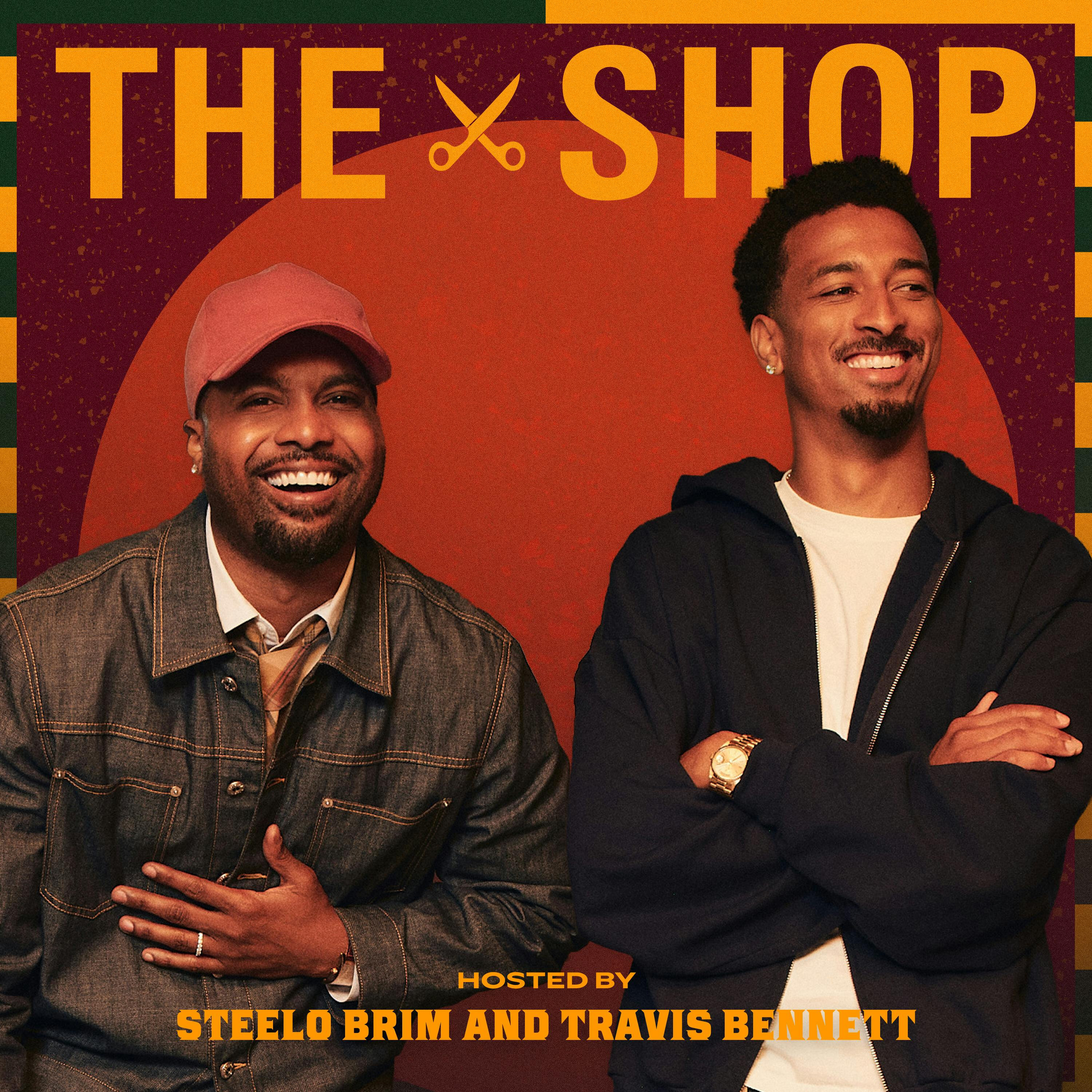
Teyana Taylor, Babyface, Allyson Felix, Tabitha Brown & Bobby Hundreds
49m 48s
Morgan & Morgan is positioned as a top injury law firm, offering free initial claims and extensive resources through over 1,000 lawyers nationwide. The conversation shifts to cultural topics, including the unique flavor of Kewpie mayo, which is celebrated for its egg yolk base and use in gourmet cooking. A powerful personal narrative explores healing through grace and surrender, especially after illness, emphasizing emotional resilience and the importance of empathy. The discussion also highlights work’s role in recovery, with a public pledge to support employees during cancer battles. Other themes include the evolution of athletes’ careers, the cultural significance of streetwear, and the need to protect authentic subcultures from being commodified. Personal stories from entrepreneurs and athletes emphasize authenticity, self-expression, and the value of building communities rooted in purpose. The episode concludes by advocating for inclusive, empowering environments where individuals—especially marginalized voices—can thrive, share their experiences, and create meaningful change.
Hey, you've been T-boned on the way to work.
You could be facing a big insurance company.
That's when size matters.
You want a law firm with the people, resources, and experience to take them on.
Morgan & Morgan has more than 1,000 lawyers and officers across the country
fighting for people just like you every day.
And that's a whole lot of lawyers.
Starting your claim is easy, and the fee is free unless you win.
So if you've been injured, go to ForThePeople.com slash Harvey Radio.
Morgan & Morgan, America's largest injury law firm.
This is Matt Rogers from Lost Culture East.
That's with Matt Rogers and Bowen Yang.
This is Bowen Yang from Lost Culture East.
We've been talking about Kewpie mayo for a minute now.
And wow, so many of you already love this stuff.
And if you're thinking, wait, what is Kewpie?
Do you not have the internet?
It's the OG Japanese mayonnaise, the one with the red cap.
What makes it different?
Egg yolks.
Kewpie is made with egg yolks only,
giving it this rich umami flavor that elevates everything.
Chefs use it.
Restaurants use it.
Where chefs work, of course.
Food and flavor lovers use it.
You haven't tried it yet?
Well, find the red cap and see what everyone's talking about, why don't ya?
Kewpie.
The original Japanese mayonnaise.
Kewpie.
I need to be healthy every day to survive it
and go through the next Kimo round and the next Kimo round.
So it's important that work was part of that,
to keep my mind busy.
For eight, nine hours.
And then I had to go back and face the reality.
I had a goal.
And the goal is to survive.
Research shows there is a significant connection
between the ability to continue to work and cancer recovery.
We can make work a better place for healing.
Learn more and sign the pledge at workingwithcancerpledge.com.
Autodesk invites you to make something.
A big thing.
A smart thing.
A fast thing.
A magical thing.
After all, this big world we call home is yours for the making.
So, make what matters.
Learn more at autodesk.com.
With Autodesk, you can make anything.
Were you fast right away?
Like, is it the equivalent of, like, you step on a court and do a 360 dunk?
Like, were you like, holy shit, I'm fast?
From the time I came out in high school,
that first time I ran, like,
the organized track.
At the end of high school, I went pro.
And the next year, I was in the Olympics.
So, it all happened.
Come on, at the end of high school.
Three months later, I was in Athens winning gold medals.
On this episode of The Shop Uninterrupted,
Maverick Carter and Paul Rivera are joined by Tiana Taylor.
I think success is actually the greatest revenge.
I think success and grace is the greatest revenge, you know.
For me, it's grace over grudges all the time.
I think success is the greatest revenge, you know.
Yeah, she was dissing you as more
like, you know, talking through her own pain.
It was projected. For your point, it's like, you ain't got
a group, all of us, in that. Like, your experience
don't have nothing to do with mine.
Right. And so that was
really it. And then I just prayed for her.
You're right. It didn't really have
anything to do with you. Yeah, it was all her.
She was just like, what's going to happen to her, too?
Yeah, exactly. And so my thing
was, everybody thought I was, like,
gave her this, like, shady read.
They was like, ooh, she cursed out without curse words.
And I was like, you be doing these reads
with a smile on your face.
I'll be sitting with you, but you be doing them.
You be doing them. I be giving the grace.
Okay. The grace. There it is.
You be giving the grace away. There it is.
But the reason I think
people were sharing it and had so much
to say about it is because nobody had ever
given Wendy grace.
Everybody would always give back. Oh, it was tough on her, yeah.
It was always the give back spirit.
But where's that come from for you?
Like, we can look back at it and think
about it with that grace, but in the moment,
right?
Like, our first reaction as humans sometimes
is to be like, oh, I'm going to show you, right?
Where's that come from for you?
For me, I mean, I feel like it's just
the work that I've been doing as I've been
healing, right, on my own journey.
You know, in the last five or six years,
coming from a dark
space of being sick,
I had to really get to a place where I said,
you know what, God, if you heal me, you can have me.
And I meant it.
And that was almost six years ago.
And in that,
in saying that, something
changed inside of me.
And I no longer wanted to be
in charge of me. I wanted to
be who he created me to be.
And I completely surrendered,
submitted myself to him.
That doesn't mean that I'm not triggered,
right? But when something
happens, right?
Because you're human.
Because I'm human, and I'm on a healing journey.
Healing is not permanent,
because you can still get triggered.
And so, I can feel something,
but because I'm on a journey, I know I need
to take a minute. I'll know
if I'm triggered by something. I'll be like, wait a minute, Tab,
you're about to react in a way that you shouldn't react.
You don't work too hard on this.
Right? And so,
I just take a moment. Anytime we react
out of emotion, it's most times not the right
reaction. You ain't processed yet.
So, yeah, so I just take time with it.
Did you ever talk to Wendy?
I've never talked to her, but I pray
for her every day since. I think that would be a great
conversation, because sometimes also just seeing,
like, if you could look at her and say,
okay, I can only imagine the pain you're going through,
I think that the best of the grace
is probably even reaching out in whatever
way you can, you know?
Because at the end of the day, it's like, you just never know
who's crying out for help.
Absolutely. I would love to embrace her
and show her love and grace
in person.
Well, look at our special guest today.
I can't even ask
how long it is.
But by the way, I was,
as an athlete, though,
getting back is a part of
the thing, like, especially in your sport.
Athletes is different.
I mean, I love when somebody
tells me I can't do something.
Or you race for a living, like,
if Jane Doe beats you, like,
the next race, I'm getting her back, right?
You need that, right? Yes, I think you do.
And sometimes I think you build it into,
you know, maybe something happened and it's not
that big, but you make it bigger because
you need that, like, you feed off of it.
So for me, it definitely motivates
me and drives me and, you know,
to reach a new height that
I didn't even know. And then it's like, okay, I'm grateful
that this happened.
But y'all know you probably look back and smirk at that
same girl.
You're so quiet and beautiful and graceful.
The walk-off.
Did you ever end up on the track,
was there ever a competitor that you ended up, like,
y'all had some words out there?
Because you're competing. It's kind of, it's,
I know it's in there. I feel like I usually
keep it pretty cute.
Yeah, you ran with a, you went with, she kicked
everybody's ass with a smile, for sure.
Yeah, but I mean, I think it's healthy.
For sure. It's a part of it.
And it's a competitive sport, you know,
you're going up against people and
it's just, yeah.
At what age, when did you start running?
I didn't start running until high school.
That's late, right? That's late for, yeah.
Wow, really? So you didn't know
when you. I knew I was athletic,
like I was always, I have an older brother and I
was always just trying to keep up with him.
Basketball was actually my first love,
but it was like very apparent that I wasn't gonna be it.
So it made my way to track. I kind of stumbled
into it. I actually went
out for the team to meet people
and find friends. And then I had a great
coach early on who, you know,
spent the time, invested in me.
So were you fast right away?
Like, is it the equivalent of like, you step on
a court and do a 360 dunk? I mean, from the time I came out in high school,
that first time I ran, like, organized track,
at the end of high school, I went pro, and the
next year, I was in the Olympics.
Come on, if you're in the high school, you're in the track.
Hey, you're like, when did you know? She's like, that's the time I stepped on the track.
She's like, oh, but I'm
just lacing my spikes up for that first meet.
She's like, not only me, everyone knew.
The question is, did you know
from the get-go that you were that good?
Did you know it? And did you love it? I did not know.
Did you love it? And I don't, from the beginning,
I don't think I was deeply
in love with it. I was like, okay,
here's a way to get to college. You know,
here's a way to travel.
I saw it as, like, my way out. Survival.
Yeah. And then it was like,
I didn't even know. I didn't grow up, like, watching the,
like, Olympics or anything. Right, right. So I didn't know
this could be, like, a career path. So when people
started telling me that, and they started talking
about shoe deals and stuff, I was like, oh. Okay.
All right. Can I say what now?
Well, you bring up an interesting point, talking
about shoe deals. Yeah. You've challenged
Nike, and keep me honest here,
when you were pregnant, I think there was a situation
with Nike on maternity leave.
Yeah, I went through kind of a really dark period.
Basically, even before
I got pregnant, I was offered 70%
less than what I had been previously making.
And there was a lot of fear,
even in starting a family, because what I
had seen in my sport was
women's contracts
being paused. I saw
them hiding pregnancies.
So when you say contracts being paused,
someone gets pregnant, and your
sponsorship is, wow. Yeah.
Because you can't compete. Yeah. Wow. Okay.
And you said hiding a pregnancy, too.
Yeah, so women were hiding
pregnancies, and so when I found
myself in that situation, I kind of felt like, well,
I think I've accomplished enough. Like, at that point,
I had been to four Olympics. I was a
six-time Olympic champion. I was like, I think I'm
safe. Like, I'm good.
Yeah, you're like, I'm me.
That's the point.
Exactly. Exactly. But I found
myself in a very similar situation,
and instead of, like, the financial
files, I turned my fight towards asking
for maternal protections. And basically,
the way that track and field contracts work
is that they're performance-based. So you
go to the Olympics, you get a medal, you get a
bonus. You don't, you get a
reduction. So if you become pregnant,
there's nothing in place to protect you.
So I was essentially just asking
for that. And I was actually told that I could
have time for that. That
would be fine, but
when the contract came back, there was no
legal wording to tie
it to pregnancy. And so
that meant that it wouldn't set that precedent.
Like, I would be okay, but all
the other women that I had seen. Which is a big deal. You won the. I was terrified. You know, it's
Nike. And I,
we had a great relationship. I was. You've been with them forever. Yeah, almost a decade at that point.
Wow. So it was really
scary, but, you know, I came forward.
I left over that, but
they changed the policy after
the op-ed came out. It was about two weeks
later, and now they offer
18 months of protection. That's awesome.
That's amazing.
And now, by the way, we were talking earlier,
you're retired. I'm retired.
When spring and track season comes around,
can you feel your body, like. It's so weird.
Like. You literally
feel like, we're supposed to be somewhere.
I keep feeling like, I gotta be
ready. Like. Nobody's gonna want to race me. Like. I need to be, like, in full
training mode. So I'm still, like, navigating
that. Like, it's a very strange space
to be in. I'm trying to figure it out.
But I always heard people say, like, it's really hard,
you know, retiring and pivoting to
your next thing, and it is really hard.
And can you turn that off?
Or, like, are you, like, in the hotel
gym? Working out. You see them on the treadmill
and you're like, beep, beep.
Yeah. I mean, I'm still getting it in.
I love it. Gotta be ready for that race.
Yeah. I love that.
Because in the back of her head, somebody want to try her.
Yeah. Stay ready, man.
Gotta stay ready. Faith, will you ever retire?
You always make music.
Yeah. Why?
Yeah, of course. Yeah.
It's the one thing that, you know,
it's life. Yeah.
You know, it's what I love.
And I don't see. Unless you have to stop, you know,
and I don't see any reason having to stop, you know.
I've been fortunate and blessed enough
to be able to work with, you know, younger artists
and just every artist
from every genre, so it's a little. I've been blessed enough to. I've been able to do that.
And you love the younger artists
that you work with now. They're a lot different
than what you guys were doing in the 90s, right?
A little different in the sense that, you know,
I used to write all the words
and write everything. Today, you know,
you can't write the words for me.
So, nah, nah, I ain't saying that.
I wouldn't say it that way.
And so, and it's
actually fun to
write with everyone and to get
their sense of things, because things are different.
People, they talk different,
they say things different. Meanings are the same.
It's still, everybody still gets their heart broken,
still falls in love. It's a different,
it's a different feeling.
You've spoken about heartbreak.
I'm curious to know your point of view
on, do you think artists make
their best work through pain
or heartbreak? Not all,
but, I mean,
That's what I thrived on.
- He didn't even get his girl on it.
- He started his whole career doing it.
His whole career is based on heartbreak.
- Yeah.
- His whole fucking life.
- He still didn't even get the girl on it.
- No, but I thrived on heartbreak.
I thrived on pain that was in voices.
And when I first heard Toni Braxton,
the pain that was in her voice.
Mary J, the pain that she had,
that's like, that gets me excited.
I was like, "Ooh, I can write for that."
But through the pain and through the heartbreak,
then there comes the other side of it.
Then you do find love and that feeling.
And so a lot of times when I would write songs,
I'd remember that pain that I felt as a kid
and from seventh and eighth grade.
And I go to that place 'cause it's so passionate
that you feel that stronger than any time in your life.
- Yeah.
- And that's what I would use when I'm writing a song.
- Tiana, and your new movie deals with a lot of pain,
the mother and the child.
How do you get, as an actor,
how do you get yourself, because you could be
having a lovely day, but then you show up on set
and you have to convey pain.
How did you do that in the new movie?
- I mean, I just went back to what I was literally
dealing with at that moment, you know?
I was six months postpartum.
So I was dealing with postpartum depression.
And then just being back at home,
like being back in my hood, you know,
performing in Harlem and shit,
like I lost a lot of friends and family.
So I was going to funerals during my lunch breaks.
You know what I'm saying?
So Tuesday I was at this funeral,
Friday I'm at this funeral.
So it was just like, I had to take everything
I was going through and kind of like
put it into Inez, my character.
The hardest part was going home and flipping the switch
and just being super mom.
'Cause I had an outlet.
I finally had an outlet to be able to have
my moment of weakness and just kind of break down,
scream, yell, cry.
So it was really easy to--
- It was almost therapeutic?
- Yeah, in a way.
Because I mean, you know, having a newborn,
it's never any real time for you, you know?
To think, to cry, to, everything's about you.
It's about baby, 'cause you're already panicking.
And even though you already got a kid,
when you have a newborn, it just still feel different.
You know, like my oldest was six when I had,
you know, my youngest.
So I'm like, I don't remember half of it.
Is she okay?
You're just a pimple, oh my God.
So you so occupied in just being mom
and being a superhero all the time.
You don't got time to think, cry, feel or anything, you know?
So I think that it was like, yeah,
it was therapeutic to be able to go on set and be weak.
- You remind me a lot of like,
female version of like Jamie Foxx.
Like, you're so talented, right?
Like, no one can fuck with you on the dancing thing.
Style, I mean, look at you.
Style-wise, like you have all these things
that you're super ill at.
Do you feel because you're great at so many things
that you maybe don't get credit for any one thing
as much as you should?
- Honestly, that's a great question.
And I don't know the answer to it.
Like people just, you know,
sometimes it take that one thing to make people
like finally wake up without pressing snooze.
Like, you know, when our alarm go off,
we hit that snooze six times.
Every five minutes, that shit coming back up.
You feel what I'm saying?
But I think like even moments like this with the movie,
I think this is like the moment to open up everybody's eyes
and go back to doing all the other things that I love.
'Cause in my time, I looked at it like, okay,
this weight is just punishment.
Like God, what's going on?
What's happening?
Not realizing that the weight wasn't punishment,
it was preparation.
- And Bobby, you were obviously with the hundreds,
which is one of the most legendary streetwear brands.
Ever.
Yours is all about community.
Like how have you created that community,
kept it together and they're so loyal
to everything that you do.
And how long has the hundreds been around by the way?
- We're celebrating our 20th year.
- Wow.
- Which is wild.
'Cause it seems like we just started it two years ago.
I still feel like it was my partner, my friend,
Ben and I sitting in our apartment,
just drawing sketches on t-shirts and writing stories.
- What was the inspiration?
What was like driving you to that?
- Honestly, it was just, I wanted to be heard.
I felt like I was excluded from every conversation.
Nobody wanted to hear anything I had to say my entire life.
I was a middle child.
I grew up being a brown person
in predominantly white neighborhood.
There was definitely no Asian Americans in the vicinity.
And I was just drawn to these marginal subcultures,
these fringe interests like skateboarding and hardcore music
and punk and backpack rap and graffiti.
And there was no place for it in mainstream culture.
So I'm watching film, listening to music,
and I'm already speaking my language.
And then it came to a point where I was like,
man, I just feel left out.
I don't have my own community,
but if I build a brand, I can create my own world.
And so that's what I champion
when I talk about entrepreneurialism
and I'm inspiring young people to build brands
or start off their careers.
I'm like, if you don't see a place for yourself
in the world, make one.
And then you can create a home for others to be welcomed,
to be included in.
And it becomes really beautiful,
remarkable experience for everybody.
And then it inspires them to do the same.
And so everybody wins.
- But are you okay with, as you said,
your inspiration came from being a part
of these subcultures, right?
Whether it was skating, streetwear.
And now those sub, because what happens, right?
Those subs become, skating became this thing
that a guy like me who's never been on a skateboard
in my life, but I wear skateboard shoes
and I like skateboard culture.
So skateboarding becomes this thing that,
oh, big institutions,
whether it be an art gallery, a company see these subs
and start using these subs to grow their business.
Are you okay?
Do you like that?
'Cause then the sub is no longer the same.
- I think the tension is important.
- It's a bit like hip hop, right?
Hip hop started as this sub thing.
- Absolutely.
- And then it became,
now it's the biggest genre in the world.
- I think there needs to be this exchange.
You know, skateboarding is a great example
because if it had stayed the subculture that it was,
it would have been this really great secret cool guy club,
secret handshake club in the background
that no one would have been aware of.
- Well, hip hop also took it too.
- Yeah.
- Right, 'cause I remember my first exposure
to skateboard culture was through Pharrell.
- Absolutely, yes, yeah.
- Through P and his style.
I never fathomed P was a skateboarder.
He was called Skateboard P right in his,
and then Wayne and then Nike and then Bape came.
- Yeah.
- But yes, to your point there.
- No, but now big designers are coming too.
My only issue with the big designers with the skate shoes,
I used to skate, I was also signed to Pharrell as well,
is like that I feel like the skaters are exclusive
'cause they're not included.
- No, that's my question, is that okay?
- If you gonna have some like high designer,
like Dior skater, like let me see somebody on a skateboard
doing a kickflip or something in the campaign,
you know what I'm saying?
But honestly, it's become a blueprint
for a lot of like big designers
that are making the skate shoes.
- Totally.
- And I don't really see a lot of skateboarders around,
and then I ain't gonna find out where a few of them
should be fired.
You know, I'm a keeper of the beam.
But of course in my head, I'm like, I'm DCs,
I'm, you feel me?
Like the original boys, you know what I'm saying?
Soho kid, like I know all about it.
So it's like to see a big designer do it,
I'm like, oh, this looks exactly like him.
- You know, one of my favorite movies was "Rocky."
And if you think about what that movie was about,
it was about the champion Apollo Creed and Rocky,
who was a no-name, off-the-street, underground boxer.
And in the beginning of the film,
Apollo realizes that he's losing touch with the streets.
There's a disconnect from culture.
And the people are kind of looking at him
as you're now becoming the villain.
And so he starts looking around the streets saying,
who's someone of the people that I can challenge
and be welcomed back into the community?
And meanwhile, Rocky's like, I just need a shot.
Get me on the main stage so that I can get notoriety.
People need to see how I box.
And so they needed each other, and it's a dance, right?
- And they became friends through that tension.
- And they become friends,
and then you get a remarkable film franchise out of it
that continues to this day.
- It never hurts, by the way.
- That's the way the franchise, yeah.
But where the problem becomes,
and I think this is to your point,
is if there's a disparity and an imbalance
where the corporation is now leading the dance
or starting to step all over your partner's toes,
and that happens much too often.
- So have you had big companies come to you
to buy hundreds of partners?
- Absolutely, yes.
- And that you've turned down?
What are those conversations like?
- They're really flattering at first.
And I talk about it in my memoir, in my book,
but it's like, you know, we have like everyone
from Tommy Hilfiger, Cordis, for months and years,
and then Echo and all these guys looking into the business.
And it is really flattering, you know,
when you build a business out of nothing,
materialize something out of scratch,
and then all of a sudden your heroes are coming
and trying to offer you money for it.
But at the end of the day, you know, look, money is great,
but at the end of the day,
I still would just be doing what I do every day.
So even if someone paid me $200 million,
which nobody's offering me that,
but if you are, maybe I'll entertain.
If you give me a hundred million dollars,
I probably would spend it on a yacht or something,
but I'd still be at work.
I just want to pay.
I'm like you.
I'm an artist and I just want to make stuff
and see people wearing and bring people together
through the product.
And I'm very happy with that.
- But you've also, like everybody else,
wrote books and done a lot of other things.
- That's right, yeah.
- All of you in the room do a lot of things.
Is that just like who we are, or is it just-
- That might be, 'cause I'm like a Glade plug-in.
Listen, plug me in this whole house.
Don't have me trapped in the bathroom.
Like why just the bathroom smell good?
When the whole, you know, the whole building can smell good.
- If a door open, I want to go in there and look around.
- Really?
- Yeah, I need to see what else is out there.
- Exactly.
- Is there stuff out there that you haven't done
that you want to do for anybody?
- Absolutely.
Absolutely.
- Like what?
- I feel like I'm just getting started, right?
Of course, my background was acting.
Nobody knew that, you know, nobody knew me rather,
but I did more acting for the last, you know,
over 20 years, a lot of small victories,
but never anything where people would be like, oh.
Sometimes,
every now and then people be like, "Was that you?"
I be like, "Uh."
some stuff I don't want to, you know, I don't know.
But I would love to get back into that.
Like the talk show space, that type of thing.
But even more business.
I mean, you know, I have a hair care line, Donna's Recipe,
because y'all know I call my hair Donna.
And so just even building that out and doing skin care,
like all these different things that I can include my family in.
I just think, you know, whatever I think of, like to me,
if I'm able, why not?
And if I enjoy it, right?
So that is a perfect segue.
You not only left the swoosh, you created your own shoe.
Yeah, our brand is all about purpose.
And so when I found myself without a footwear sponsor,
I had at that point been to four Olympics,
a six-time Olympic champion, but I couldn't find a sponsor.
And I was just exhausted and tired of begging.
You wouldn't talk to all the companies?
Yeah, I think because I had been so Nike branded, like.
And they didn't offer you deals?
Or you did like the offers they gave you?
Like a few this, the other.
Yeah, most would not offer.
Wow.
Which is insane, by the way.
It's a four-time Olympic.
And I think I was at a place in my career where I think brands saw like,
it was kind of like it was done, you know?
They thought you were finished.
Yeah, at that point I was, you know,
I had just become a mother and all these things.
And so it was like, okay, I'm going to bet on myself.
I'm going to do this myself.
And it's more about the reason behind it.
And for me, it was that what we thought we were doing was just creating,
shoes for me to wear in the Olympics.
But then we realized that shoes have not, sneakers are not made for women.
So a shoe is made off of a last, which is just a mold of a foot.
And it's a man's foot to make women's sneakers.
It's very hard to make a last, by the way.
Yeah, which I've.
It's very hard because, I'm sorry to interrupt you,
but the reason is because people never think about it that way.
All the shoes we have on, the last, literally the mold that your foot goes into,
has to, they have to make one for that shoe, that shoe,
that fits billions of people's feet,
who some people's feet are a little wider, a little skinnier.
But that one last, all of our feet, so it's very hard.
But never a woman's foot.
Super, millions and millions of millions.
But why is it never a woman's foot, you know, that is in the, so that was,
that's what our company Sash does.
We make shoes to fit the form of a female foot.
And I think we're just so much bigger than a shoe company.
To your point, it's about that purpose.
I see when people are wearing my shoes, it's like, you stand with women.
Like you stand for saying that women deserve better.
And that we're not going to be an afterthought.
Were you scared to start it?
You must have been.
Terrified.
I mean, being an athlete all my life and going into this industry, it's like I,
just imposter syndrome, like I'm, I don't know enough about it.
Like I haven't been doing it long enough, but then starting to reach out to people,
you know, Tiffany Beers, who's iconic shoemaker, engineer, and just,
I think the help and encouragement, and that's just been really refreshing, I feel
like this space has really been, um, yeah, people have been really helpful.
That's great.
But do you ever worry if I do too many things, how can I be great?
How can I, how can I make sure all those things are you making sure they're all really great?
You don't worry about that.
No, I don't.
And this is why, because I do everything rooted in TAB.
I don't just put my name on anything.
Like I started, I named my hair Donna in 2018.
Right.
And so everybody, listen, people know my hair.
Before they know me, they'd be like, I thought that was you.
Cause I saw Donna.
If I have a haircare line, it's only going to be Donna's recipe.
Right?
If I have a clothing line, it's going to be bright and it's going to look like me.
People be like, I saw that and was like, I know this TAB.
If I do it, it's rooted in every part of who I am.
I ain't going to just do it just to do it.
Like the money going to come, but if I'm staying true to who I am, I ain't got to
worry about like, oh, I'm not doing it well, because I know when I put my heart and my mind into it, I was
like, yeah, I was putting me into it.
Yeah.
Face it.
You've, you've said the word artist a couple of times and you as a true artist, is there an album you've worked
on that for us is successful and we've grown up on and all those things that you're like, ah, I changed something.
I wish I could have changed something going back in it.
Almost everything.
Like a true artist.
And do you have one song that's your favorite or are they all like, no, I don't.
And it's like a lot of times if something comes on that I've done, then I, I usually
turn the station because if I start listening, then I'll be like, damn, should've, should've did this.
Should've did that.
That's the line about an artist and we have a line in our company, you know, it's like the work is never done.
You just run out of time.
An artist will work because an artist, to his point, every song he's done, he would love to take back in the studio and
fuck with the drums a little more and like, just tweak it a little bit more and more.
The work is never done on a different artist.
I want to ask.
I want to ask you, and you're the perfect person to ask us, the word streetwear.
Yes.
Right?
Yeah.
Is it putting the culture, putting the genre on a box is, is that an old term?
That's a great question.
It really is a good question because no one can agree on what the definition of streetwear is.
And I think that's probably symptomatic of the, it's the postmodern problem today.
No one can agree on what cancel culture is.
No one can agree on what the virus is and streetwear is, is a perfect example of that.
Yeah.
And it gets us into.
A lot of sticky territory because high fashion will start claiming streetwear as theirs.
And then there's actual street brands that what I define as street brands coming out
of New York and Harajuku and London that I'm like, these are the real kids that are creating
streetwear.
But then that spotlights over here, I've always seen it like the media is that it's like a
desk lamp.
It's always going to put a halo around what they want to talk about.
And the last 10 years it was verge and Jerry and Matt and all these amazing pioneering
designers.
They're saying this was streetwear.
But what's amazing to me about streetwear is it's what's exists in the shadows.
And I think that's really a complicated, but also important part of how subculture and
culture play together.
We like being the ones that are starting trends or monitoring trends and putting them on the
map.
And then the high fashion guys will come in and start like clocking from there.
And again, it's that dance.
But I think it's just, I think it's really important and I can't emphasize enough that
when we talk about streetwear.
And I know the media likes to say it's this, it's really all this that you never see.
I really think streetwares is like a day to day manager.
Like, you know how like you have two managers, you have the one that's like going to get
you all the deals and they like never really see you and you have your day to day that's
with you every single day.
Like just every single day.
Like what I wear to the gas station to me is streetwear, but I've always been a streetwear
kid or whatever that's supposed to mean.
But when I came out at 15, like that wasn't okay.
And now it's this whole big thing.
So like he said, like streetwear is really just like, really, I want to say the underdogs
because you know, the big dogs will always take the little dog food, you feel what I'm
saying?
And things have been taken away from me all my life.
So I feel you know what I'm saying?
It's an attitude.
Like you embody the attitude of what streetwear is.
It's really hard to diagnose it as a specific fashion, article of clothing or a genre because
if I say it's hooded sweatshirt.
It's like a day to day.
It's like literally whatever is your style.
It's your lifestyle.
That's what it is.
When I walk down this street or walk to this gas station and I'm literally stomping on
the streets.
This is what I got on.
This is my streetwear.
You get what I'm saying?
But like he said, it's like, everything is always being grabbed and taken somewhere else.
And it's like, did you see her streetwear and it's just like, that's not because on
a regular day, you just wouldn't do that.
And I feel like streetwear has become something as this whole big thing when it's really something
so simple.
Yes, it is.
You know, it really is.
The dope side of it.
There's four of the other young girls like me where I don't like dressy clothes.
So like I remember one time I've always been like that.
I've always been like this.
Always.
Since the day I came out, I was talking to Kanye and he was like, I love that you never
change for anybody.
Like he's like, I ain't going front like in a few years, like how you dress this shit
going to be in and you never have to throw in another hill.
I used to be pissed.
I want to wear no dress.
So it's like the flip side of it is now we get to be who we really want to be.
Now is no longer a thing of, no, you have to wear this or have this certain look.
So like streetwear kind of becoming mainstream is dope because now I get to wear if I do
want to wear high and I wear a lot of vintage stuff, but I do want to wear high end stuff.
I know that I can go and get some shit that's swaggy and I still feel like me and I can
say, well, this is, you know what I'm saying?
Like I get to be free until it's dope.
It's not just okay now for you to do that.
You're influencing the trends.
People are following you.
So that's got to feel validating as well.
Like where at the beginning you did or earlier you didn't want to do that thing and now everyone's
kind of shifted.
The culture shifted to like how you've always.
I love that.
It's like I've always been into just like, just wear, you know, the imperative part of
this formula is that we, as the people wearing the product and being the influencers are
constantly pushing back and putting these brands on notice.
And so the last two years we've gotten really deep into web three and using NFTs and crypto
to actually reshape a lot of that.
So we have NFTs where if you buy them and we use your art, we start giving you royalties
and so the consumer, they should actually be a participating, exactly.
They should be participating in the upside somehow, right?
That's the next revolution of what brands should be.
You know, we're all a part of this ecosystem and everyone is influencing each other.
Reading up on you, it's like you were an actor and a comedian and you know, and then you
hit a phase or a stage in your life.
where you drove Uber and worked, I believe,
- You worked at Macy's maybe.
- I worked at Macy's first.
- What was that like when you think about like your journey
of like you thought you'd pop off one way
and then you know, you figure out a way
to make it about yourself and your brand.
Like what's that experience been like for you?
- I think the word fear is so real for me
because for so long I was fearful of being me.
So I had created this other persona.
I created the Tabitha I thought that Hollywood wanted to see.
You know, I'm from a small town in North Carolina,
I'm from Eden and I'm Southern, I'm country.
And so working in corporate America
and then coming to the entertainment industry,
I was always told I sound ignorant
or you sound country, you need to cover your accent.
And so I had mastered that so well
that I almost forgot who I was, right?
So I had to pretend all the time and wear my hair one way.
I remember when I first got an agent,
they were like, listen, with your skin complexion,
you're gonna need to have your hair straight.
So I was like, okay.
And I believed that.
You know, so.
- That was a real conversation.
- Oh, absolutely.
Absolutely.
Lose weight, right?
Cover the accent, which said, forget about who you were
and this is who you need to be.
And I believed it.
And I did that for a very long time
with again, small victories.
And it wasn't until I got sick
and thought I was gonna die.
When I said it earlier, when I said,
God, if you heal me, you can have me.
That meant, now I gotta start working.
Now I gotta start showing up as the real Tav.
Because it's exhausting to show up as somebody else every day
that's not the real you.
And God can't give you what he wanna give you
if you ain't you, right?
So I had to get to that place.
And when I started showing up as me, I was very afraid.
- Allison, I wanted to ask you, you are,
I believe the most, by medals,
the most decorated track athlete ever, correct?
- Female.
- Okay, can we at least, let's clap that up.
That's crazy.
All right.
So was every win as important as each one?
Like every medal?
- That's a good question.
I feel like at each point in my life,
I was like learning something new.
And so I was still passionate, they were still important,
but they were all different.
Like my last Olympics was my fifth Olympics,
my first as a mother.
And I won a bronze individually, a gold with a relay.
And that bronze medal, I think it means more than any gold.
It was like overcoming all the adversity
like being a representation for women, for mothers.
Like it just, it was everything.
You know, I got to do it in my shoes that my company made.
So it was like full circle of all the things.
- Where do you keep your medals at by the way?
- My parents keep them.
- At your house?
- I've never been into like the medals,
but you know, the parents, they like to brag
and bring them out and all that stuff.
- I'd have mine on during the show.
- Like Jeremy?
- For sure.
- Like Jeremy B?
- For sure.
- That's the New York in you.
- Sorry Tim, what were you saying?
Sorry, moving things to the side.
- That's the New York in you by the way.
- Sure.
- When you accomplish something,
how fast do you put it behind you?
Like you got a movie,
which people I think are going to love your performance.
How fast would you go like,
okay, I'm on to something else now.
I'm going to make something else.
I'm going to find my next thing.
How fast do you put those things?
Like you win medals and just give them to your mom like.
- Yeah.
- Like I'm going to win the next one.
- 'Cause you got to start focusing on,
you know, what's ahead of you.
Like you can't get stuck behind that.
After that, I got "White Man Can't Jump" coming.
Then after that, I got "Book of Clarence" coming.
So I'm like, okay, what's next?
And most importantly,
what are these kids about to have me do?
So it's never really a time to-
- They keep you quick on your feet.
- Yeah, definitely keep you quick on your feet.
- I feel like you barely feel the success,
but when it doesn't go right,
like that part to me, that's like,
I feel that more than anything.
- You feel that more.
- Yeah.
- So the pain or the failure,
you feel that more than you do the success and the victories.
- 'Cause I think like there comes to a place
where people expect like greatness out of you.
So it's like you win something or whatever it is,
you have a hit.
Like it's expected.
- Of course, of course they did, yeah.
- Do you think that's fair?
- Yeah.
- I always ask people that.
- Yeah, to me, I mean, it's not fair,
but I think that-
- It's not fair?
- Everybody doesn't understand it.
Like they don't-
- But you don't think it's fair?
- 'Cause they build you up to bring you down.
- Yeah, fair, I mean, yeah, it just is what it is.
- Some people want you to win until you win.
- That's what I'm saying,
they want you to bring it right on back down.
- Yeah, that's the thing.
- It's gonna be what it's gonna be.
- Yeah, it's what you said earlier
that I think a lot of people feel like
there can only be one, you know?
Like there's only one success.
- Like there's not enough room for everybody.
- Yeah, and there is.
- That's why I was like, even in the movie,
I say one quote, like, you know,
the only people who support black women
is other black women, and even that shit get messy.
Because of that.
- That's a great line.
- That's a bar.
- That's a bar.
- That's a bar.
- She was stealing it now.
- You know what I'm saying?
And it's because it's like we sit here
and we claim woman empowerment,
but are we really empowering one another?
Like sometimes you'll lose the opportunity
just because a girl that's intimidated by you
don't wanna stand next to you
or don't wanna be in the same room as you
because she's intimidated or made it feel like we're her.
She run fast or she did, you know what I'm saying?
Nobody's ever really uplifting one another, so yeah.
- It's gotta be intentional, right?
Every day my intention is to like spread love,
to give joy, to share that.
- But you also got a soothing voice.
- Very soothing.
- That I covered for so long.
- I love you in the videos.
I just be laying here like.
- Yeah, that doesn't mean I don't have bad days,
but my intention is to make others feel well, right?
I have a platform, so to me it's a responsibility.
And some days are rough and I'll share that,
but the majority, I am sharing positive information
or positive feelings and love.
- I would say majority of people
do not share that same sentiment.
- Right, and you know what's crazy?
Yesterday me and my husband,
we were just talking about this.
Somebody had did a video a couple months about me
saying that I had toxic positivity,
and I was like, dang.
What kind of world do we live in
that being positive is toxic?
- What's that even mean?
- I mean, they were like, "Can't nobody be that happy"
all the time.
It was a whole thing where any people were agreeing.
And I was like, again, the pain they must be in
to think that being positive is toxic.
- Because you fell into it accidentally,
trying to do something else.
So were you actually having fun doing it
or it was just like, oh, I'm making money,
I'm doing it, so I'm gonna keep fucking doing it?
Or was it like, I actually like making these videos
and I'm enjoying it?
- So in the beginning, I was very fearful.
So if you go back and look at all my old videos,
'cause I cooked live every day at five o'clock.
That was like, I made it like a job.
I wasn't making no money.
Listen, I would be cooking live some days,
I would cry 'cause I'd be like,
the Lord said thousands of minutes,
there's 33 people on here, you know?
And my husband, you would never see him,
but you would hear him.
He'd be like, man, you got them people
looking in our kitchen, doing these videos.
And I'm like, I'm trying to be obedient
to what the Lord has told me to do.
- That would've been me too.
- 100%.
- I mean, now that you've retired him,
he could've shut the fuck up.
- No, let him do it.
- I would've definitely been like,
man, you pretty know this shit.
- Hey, look, after the first check came,
he was like, don't you need to do one of them videos today?
- Almost five o'clock, ain't it?
- Right.
- Almost five o'clock.
- Y'all gonna botch y'all business
and have the most amazing day.
But even if you can't have a good one,
don't you dare go messing up nobody else's, yeah?
God bless you, I love you.
- Thanks for listening to The Shop Uninterrupted.
Make sure to subscribe, rate, and review
wherever you're listening to the show.
For full video episodes,
check out Uninterrupted's YouTube channel.
And for weekly show updates,
follow The Shop Uninterrupted on social media.
- Some people use ChatGPT to answer questions.
Others use it to get real work done.
With ChatGPT Work, you bring the goal, plus real work.
Others use it to get real work.
real inputs like briefs, notes, files, feedback, data, and project plans. It can help turn them
into an analysis, tracker, deck outline, prototype, or workflow you can review and keep shaping.
You stay in control, giving direction and choosing the final output. Put ChatGPT to work on your most
ambitious ideas and projects. Get started at ChatGPT.com by selecting Work Mode, available
on Plus and Pro plans. There are exciting things happening at your local CVS. Shop new extra big
deals with Extra Care every two weeks. No coupon needed. Plus, get access to exclusive sale prices,
personalized deals, and more as a member. Extra Care is the way to save at CVS. Join for free
online or in-store and start saving. Visit your local CVS store or cvs.com slash extra big deals
for this week's deals. What does Clinique Moisture Surge feel like? Like a tall glass of water.
Because Clinique Moisture Surge absorbs instantly and keeps hydrating for 100 hours.
That's thanks to the help of hyaluronic acid and aloe bioferment, Clinique's own form of the aloe
plant. It's concentrated over 500 times and then fermented through a 10-step process.
All that for instant absorption, 100 hours of hydration, and plump, glowing skin.
It feels like everything a moisturizer should be. It just feels like Moisture Surge.
We know kids don't hold back. And I wouldn't want them to.
In there, make a mess, slide for home, bring on the stains.
I've got OxyClean Versatile Stain Remover. It works on over 100 stains and it's America's
number one stain fighter additive brand. It's color safe and chlorine free. So I use it on
whites, colors, and dark fabrics. And OxyClean isn't just for laundry. Mix it with water for
use all around the house, kitchens, bathrooms, and even floors. When my kids go all in,
I say go for it. Because I've got OxyClean to get the stains out. It's not clean unless it's OxyClean.
Podcast Summary
Key Points:
Morgan & Morgan is highlighted as America's largest injury law firm, with over 1,000 lawyers nationwide, offering free initial claims and no fee unless the case is won.
Kewpie mayo is promoted as a premium Japanese mayonnaise made with egg yolks, praised for its rich umami flavor and use by chefs and food enthusiasts.
A personal healing journey is shared, emphasizing that surrendering to a higher power and practicing grace over grudges leads to emotional healing and resilience.
The importance of work in recovery from cancer is linked to research, with a pledge encouraging workplaces to support employees during illness.
Athletes like Tiana Taylor and others discuss the evolution of their careers, the challenges of retirement, and the cultural significance of streetwear and representation.
The conversation highlights the need for inclusivity in fashion and brands, especially as streetwear becomes mainstream, and the original subcultures are often erased.
Personal entrepreneurship is celebrated, such as launching a shoe brand rooted in women’s foot design and purpose, emphasizing authenticity and community.
The episode underscores the importance of self-expression, healing, and rejecting societal expectations to live authentically and purposefully.
Summary:
Morgan & Morgan is positioned as a top injury law firm, offering free initial claims and extensive resources through over 1,000 lawyers nationwide. The conversation shifts to cultural topics, including the unique flavor of Kewpie mayo, which is celebrated for its egg yolk base and use in gourmet cooking. A powerful personal narrative explores healing through grace and surrender, especially after illness, emphasizing emotional resilience and the importance of empathy.
The discussion also highlights work’s role in recovery, with a public pledge to support employees during cancer battles. Other themes include the evolution of athletes’ careers, the cultural significance of streetwear, and the need to protect authentic subcultures from being commodified. Personal stories from entrepreneurs and athletes emphasize authenticity, self-expression, and the value of building communities rooted in purpose.
The episode concludes by advocating for inclusive, empowering environments where individuals—especially marginalized voices—can thrive, share their experiences, and create meaningful change.
FAQs
Kewpie mayonnaise is an original Japanese mayonnaise known for its red cap and rich flavor. It's made exclusively with egg yolks, giving it a deep umami taste that chefs and food lovers value.
Research shows a strong connection between the ability to continue working and successful cancer recovery. Maintaining a work routine can support mental well-being and healing.
Autodesk invites people to create anything — big, smart, fast, or magical. They can explore making projects at autodesk.com, where they can bring ideas to life with creative tools.
The athlete didn't know they were good at track initially, viewing it as a way to get to college. However, after high school, they went pro and competed in the Olympics within a year.
The athlete advocated for maternal protections after facing financial cuts during pregnancy. This led Nike to change its policy, now offering 18 months of contract protection for pregnant athletes.
Streetwear is described as a cultural movement rooted in everyday lifestyle and subcultures, not just fashion. It represents authenticity, inclusivity, and resistance against commercial appropriation.
Chat with AI
Loading...
Pro features
Go deeper with this episode
Unlock creator-grade tools that turn any transcript into show notes and subtitle files.
 PodcastTranscript AI