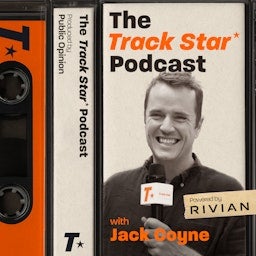
Zoe Zip reflects on how music shaped her childhood, especially through songs like "Surf's Up" and "Beach Voice," which were played during long family travels and tied to her hometown of Pacific Palisades. She celebrates the emotional depth of classic vocal performances, particularly Billie Holiday’s signature "tear in the voice," and recalls influential artists like the Everly Brothers and George Sweet Georgia Brown. Drawing on nostalgic memories of buying sheet music and playing it in person, she envisions a film about that era, highlighting the intimate, accessible nature of music creation compared to the large-scale complexity of filmmaking. She shares a personal encounter with Prince, whom she describes as a kind, generous, and insightful figure who offered advice on cooking and fashion. Currently, Zoe is excited about her upcoming film *Trash Mountain* and her new music projects, which involve active songwriting. She also humorously proposes a future “Trackstar” show set in the 1980s, inspired by retro trackwear and the cultural mix of running and swimming in woolen suits—blending music, memory, and lighthearted nostalgia into a vibrant personal narrative.
Okay, are you ready? -I'm ready. -Introduce yourself. Hi, I'm Zoe Zip, blah, blah, blah, blah. Not that, I can't. I can't even say my own name! -Oh, my own name! Hi, I'm Zoe Zip, she know, I'm here on trackstar. I have a bunch of songs that I picked out. -Okay. And you just have to tell me who the artist is. Oh, darling, my beach voice. -Yes. Yeah, great song. Am I supposed to take it on and off? Yeah, that was good. It was cool, because you can do whatever. Okay. -But it was kind of like, you were so. -Yeah, I knew it was so hard. -I knew it was so hard. You were going to rip it off, like, don't you? Do you love the beach voice? Big Brian Wilson fan. I was thinking this morning about five songs that defined my childhood. -Yeah. And Surfing USA had on me for some reason. I was like, always playing in the car. They mentioned, like, my hometown in that song, Pacific Palisades. So it was very special to me. -Oh, wow. When we would travel when I was growing up, because we'd be gone for, like, very long periods of time and live in, like, very far places, we'd listen to that song from "Remember Home." ♪ Inside, outside, Pacific Palisades ♪ Did you want to make music when you were a little? Listen to that song? Like, do you always want to make music? I always wanted to make music. Yeah. -What's your favorite song? Beach voice song? -Yeah. Probably wouldn't it be nice? -Oh. Yeah. I know it's, like, a very known song. It's not a deep-cut. I'd say if you wanted me to name a deep-cut, I'd say, "Surf's Up." ♪ Upline class, there is dark received ♪ ♪ Back through the opera glass ♪ ♪ You see the fit in the pendulum ♪ - It's not super deep cut, but it's like a middle deep cut. Yeah. - Do do do do do do do do do do do do do do do do do do do do one for one. (guitar music) - Oh, thanks. - Oh, oh, it's Billie Holiday. I'll be seeing you. - I'll be seeing you. - Great song. - Great singer. A lot of people have done that song, but you know, Billie Holiday. - Her voice. - Yeah. - What about it? - I had a voice teacher who used to call it like, like a, a tear in the voice, which I feel like is a thing. - Come on, tell me more. - It's just a voice that just makes you emotional. - Yeah. - You know, it's like, I feel like Billie Holiday, Judy Garland, um, Bobby Gentry, um, and it's not like something they're doing. It's just there. - Yeah. - That era of music, where everyone just did like the same songs, but they all did their own versions. - Yes, I love the tune. - I love the tune. - I love the tune. - And then it was really about like the signature. - Yes. - That you would put on the song. - Yeah. - And you could be all these different things. - And the arrangement, the way you, the you're phrasing, like who's producing it. - I love this idea of like back way back in the day before there were records, people would buy music like paper. - Sheet music. - It'd be like, and you hear that? - Did you get the new, yeah. - I'm like, no, I'd play it too. - I know, it's really cool. I think about that too, actually. I've thought about that a lot. Everybody's like running down to the sheet music store. - Okay, have an idea. - Okay. - I want you to do a movie. - Okay. - Where you play like a person who, in that era. - Yeah. - But you have a dream of like, it should be like recorded. But everyone's like, what are you talking about? - You can't do that. - Just kidding. - Nobody can top the sheet music industry. It's the biggest industry in the world. - And then you're like, no, no, no, there's something else. - No, no, no, there's something else. - There's not to be something more. What if we recorded this? - And they're like, no, no, they didn't yet. - Let's do it. You and me, we're gonna star. You heard it here first. - I'll be like the big bad business man. That's impossible, I'm shutting you down. If you're watching, people make the movies, you're a two for two. Next time. - Okay. ♪ When there's me to you ♪ - Oh, this is "How High the Moon" by Les Paul and Mary Ford. - Thank you. - You're welcome. - Okay, I also love Les Paul and Mary Ford. I got to record on that. They have a studio in LA where they set up all of his original recording equipment 'cause he invented multi-track recording and the electric guitar. And they have his original guitars. They have like his original equipment. You can record on it. And we did, we got to record a couple songs on it and it sounds amazing. It's really special. - How does making a record compare to making a movie? Completely different? Or are there similarities? - And well, there's some similar. I'm really fighting this. Does anybody else feel like they're fighting this one? - Always. Similarities are that when you're recording something, there are like magical things that happen in a moment that are like, whoa, that only happened in that moment and that's that magical fun thing. And that's true in movies and in music. But in movies you have like 125 people. It could take like millions and millions and millions of dollars to make something. There are just a lot of barriers of entry and you could just be like waiting around for jobs all the time. Whereas with music I can just write a song, send it to Matt, my bandmate who produces everything and then we go in the studio and we record it and we can just do that. Like it's so much quicker and it's a smaller collaboration but I love doing film. It's just like this is more moving parts and it's more complicated. - Yeah, that makes sense. - Yeah, and it's like on film it's like you have the moving picture and you have the sound. So you also have a multi-track recording equipment on the film set too. - This is like the sequel to our movie. (laughing) About the sheet music. - Well, you can, I'm talking about pictures. - What is that, crazy idea. (laughing) - Next song. - Okay. - Are you ready? - I'm ready. (upbeat music) - Do you use the "Everly Brothers"? - Yes. - I love that really. (laughing) I used to, my mom had like five albums in the car when I was growing up and it was like the "Everly Brothers", the "Love and Spoonfall", the "Beach Boys", "Linda Ronsett", like everything I love, like those are like the on rotation and I'm like I can very much trace all my influences to that car. (laughing) - That's so funny. - Is that cool? I know I still love it all, my good taste, mom. - Thank you, mom. This is, you don't give them enough credit when we're little and then it's like damn you, right? - Yeah, my dad has great taste too. - He used to play records all the time and yeah, he's the best. They're both the best. ♪ No gal made ♪ ♪ Has gal made a shame on us ♪ ♪ And Anita Ode to stage ♪ - George Sweet Georgia Brown. - I know that voice anywhere. I got to see her play. I was like 20 years old and I saw she was playing at a restaurant for New Year's Eve and I got tickets and it was like, nobody knew she was. She was just playing a little jazz set in a restaurant but she was incredible. So yeah. - I love those kind of shows. - Yes, that was amazing. - Like the little dinner? - Yeah, it was a dinner show. - I went a couple weeks ago to like a jazz thing and I was like, so we're like-- - But she had her back to the audience the whole time. - 'Cause she was shy. - I guess so, she was, she was very rhythmic. She was like had incredible rhythm and I think she was just being like in touch with her drummer. She was just kind of-- - She was feeling it. - Yeah, she was snapping and kind of connecting to the drummer. But it was like most of the set. - There's this like Van Morrison thing I've seen where he's like does the whole thing like in the back. Like high, so he's so-- - And then he also went in the last walk, so he's like doing that thing. (upbeat music) - To the one-off set. Wow. To the one-off set. So, you know what, he's all the things. - He's all the things. - Last song. - Okay. ♪ You'll be more than I did when you were mine ♪ - I love Prince and I worked with him, so-- - He did. - Yes. - Tell me about that. - Well, Prince was on my show New Girl. - Oh, how rude of me. I haven't given you enough time to freak out yet. You may do so now. - Oh my God. (laughing) Oh my God. (laughing) - He was such a sweet guy, such a gentleman, and actually got to sing on the song that he wrote for the show, which was like an incredible, fun thing too. So-- - Did you pinch yourself? - I was like pinching myself the whole time, and also everyone was afraid to talk to him. - Yeah. - And I have like a weird thing where I'm not afraid to talk to anyone. I guess it's just like I just talk. Like it's like a weird automatic, I don't know. And so they were like, "You talk to him." And I was like, "Oh, okay." So then I ended up like just chit chatting with Prince, which was very cool. He told me all kinds of things. He told me about, he liked to make omelets, and he's like never make an omelet with olive oil. - He gave me some advice. - Yeah, he was like coconut oil, which sounds a little weird, but not too bad. - Have you been-- - Making it with? No, I make omelets with butter. - Me too. - Hell yeah. I'm French. (laughing) - That's right. - Yeah, sorry. But yeah, I was interested. He was a vegetarian. He talked about Eddie Murphy's brother, Charlie Murphy a little bit. - Yeah. - I remember. - We talked about clothes. He wanted me to wear his clothes. - And? - Did you get it? - Of course. - Yeah, he did. - He told me he was gonna get me a pair of shoes. He never got me a pair of shoes, but that's okay. But yeah, he wanted me to put on his clothes and do like a fashion show. I did it, that only happens once. - That's so cool. - Yeah, he was super cool, dude. - What are you doing right now? What are you working on? - I had a movie at Toronto Film Festival that'll be coming out later in 2027 called Trash Mountain that I'm really, really excited about. Working on new music, which I'm stoked about. Writing a lot, so it's gonna be good. - Okay, yeah, track star. - Thank you.
- Thank you for coming. - You know what? Of course, you know what you're gonna say? - Well, I was just thinking you could do another show called Trackstar, but you're like racing people in old school 80s, like track gear. - Will you come on? - Yeah, I'm not a good runner, but I will. - Why 80s? - 'Cause that's when track outfits were the coolest, I think. Right? Do you think there's another era that would be better? 70s? - 1880s. - Ooh, what, what, what were tracks like then? I guess like they're like wool onesies or something. - Would you think it started like running on a track? - Like for women and men? I don't know. I can't say. - Probably for women later, presumably later. I'm just wondering, did at one point women like run in dresses? - Oh, deaf. - Yeah, deaf. - For sure. - And like, well, like remember the old bathing suits were like tracks. - I know, and they're made of wool. - It's kind of a similar thing. - I know, I know. - Can you imagine swimming in a wool? - Yeah. - And now people run kind of in bathing suit. - Yeah. - Like kind of things. - Yeah. - Very tight. - The world's upside down, upside down. - They're swimming in tracksuits. - Running in bathing suits? Up, down and down, up. Thank you for having me. - Thank you for coming on the track. - You're gonna have me on the track star, the track star. - Yeah. - For track stars. - I guess we should just call it track star also. - Two, track star also, yeah. - So also.
Podcast Summary
Key Points:
Zoe Zip shares how specific songs like "Surf's Up" and "Beach Voice" shaped her childhood and musical identity, especially through memories of Pacific Palisades and car listening.
She highlights the emotional power of vocal performances, citing Billie Holiday’s distinctive "tear in the voice" as a defining element of classic music.
Zoe reflects on the historical era of sheet music and how people once bought and played music physically, imagining a film set in that nostalgic world.
She contrasts the creative process of music production—fast, intimate, and accessible—with the complexity and scale of filmmaking.
The Everly Brothers, Beach Boys, and George Sweet Georgia Brown are central to her formative musical influences, rooted in family car playlists.
She recalls a memorable meeting with Prince, describing his kindness, generosity, and advice on cooking and fashion.
Zoe is currently working on a film, *Trash Mountain*, set for release in 2027, and creating new music while deeply engaged in songwriting.
She jokingly proposes a new Trackstar show set in the 1980s, inspired by retro trackwear, blending nostalgia with humor about early running attire.
Summary:
Zoe Zip reflects on how music shaped her childhood, especially through songs like "Surf's Up" and "Beach Voice," which were played during long family travels and tied to her hometown of Pacific Palisades. She celebrates the emotional depth of classic vocal performances, particularly Billie Holiday’s signature "tear in the voice," and recalls influential artists like the Everly Brothers and George Sweet Georgia Brown. Drawing on nostalgic memories of buying sheet music and playing it in person, she envisions a film about that era, highlighting the intimate, accessible nature of music creation compared to the large-scale complexity of filmmaking.
She shares a personal encounter with Prince, whom she describes as a kind, generous, and insightful figure who offered advice on cooking and fashion. Currently, Zoe is excited about her upcoming film *Trash Mountain* and her new music projects, which involve active songwriting. She also humorously proposes a future “Trackstar” show set in the 1980s, inspired by retro trackwear and the cultural mix of running and swimming in woolen suits—blending music, memory, and lighthearted nostalgia into a vibrant personal narrative.
FAQs
Zoe's favorite song from her childhood is 'Surf's Up' by the Beach Boys, which she describes as a middle deep cut with a strong emotional connection. She also mentions 'Remember Home' because it references her hometown, Pacific Palisades.
Zoe admires Billie Holiday's voice for its emotional depth, calling it a 'tear in the voice' that moves listeners. She notes that her voice teacher described it as something innate, not just technically executed.
Making music is faster and more accessible, allowing her to write a song and record it with a small team. In contrast, filmmaking involves many people, large budgets, and complex logistics, making it more complicated and resource-intensive.
Zoe was heavily influenced by the Everly Brothers, the Beach Boys, Linda Ronstadt, and George and Ira Gershwin, all of which were played in her car by her parents.
Zoe was struck by Georgia Brown's shy, rhythmic performance at a New Year's Eve jazz dinner show, where she was deeply connected to her drummer and played with incredible presence and timing.
Yes, Zoe worked with Prince on the show 'New Girl.' He was kind and open, sharing personal details like his preference for coconut oil in omelets and his interest in fashion, which led to a unique fashion show he inspired.
Chat with AI
Loading...
Pro features
Go deeper with this episode
Unlock creator-grade tools that turn any transcript into show notes and subtitle files.
 PodcastTranscript AI