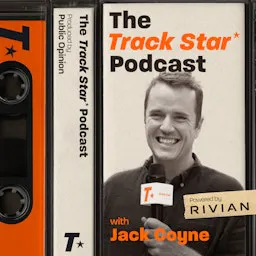
Jack Johnson reflects on the profound influence of music throughout his life, tracing key artistic inspirations from Jimi Hendrix’s immersive *Electric Ladyland* to the mentorship of Ben Harper, which shaped his touring and musical values. He credits Otis Redding’s rhythmic precision and the emotional depth of reggae through Gregory Isaacs as foundational to his own songwriting and guitar style. Early experiences with Fugazi and Wilco sparked his creative journey, while meeting Greg Brown introduced him to powerful, emotionally resonant lyrics that emphasize both critique and hope. Johnson credits his work in surf films and global travel as catalysts for his songwriting, which evolved through visual and emotional inspiration. Currently on tour with the *Surf Film Music Tour*, he integrates surf imagery into live performances, creating a dynamic, immersive experience that celebrates music, friendship, and shared joy. These formative connections underscore his belief that music is a universal language of emotion and connection, rooted in authenticity, gratitude, and shared experience.
- Before we start the music, just introduce yourself.
- Hey, I'm Jack Johnson.
Nice to be here in New York City with you.
- All you gotta do is tell me who the artist is.
- Okay, all right.
♪ Now if a six ♪
- Too easy, Jimi Hendrix.
And I love pretty much everything he ever put out.
My favorite album would be Electric Ladyland.
That was the first album I ever bought.
I can remember being in this little hippie shop
and I had a few tapes up there
and it was like The Doors and Jimi Hendrix.
And I remember just being like, I'll take that one.
And I didn't even really know about it yet.
And then I went home and I had this yellow Walkman
that had the auto flip on it.
I would fall asleep with it on
and it would just get to one side, flip over,
and I would just, sometimes I'd wake up
and turn it off, but other nights
I'd just sleep through the night.
There was a few times I think I just literally
let the batteries run dead sleeping through the night
to Jimi Hendrix' Electric Ladyland.
And to me, the way that album connects
and the songs overlap, it's just the whole thing
feels like one big thing that envelops you
and some parts take you underwater,
some parts take you up into space,
and I just love that album so much.
- One for one.
- Nice.
- ♪ I'm put into Nashville, Tennessee ♪
- Oh, nice, just wanna listen for a minute.
This is Ben Harper.
He's like a musical big brother to me.
The first person I ever got to go on tour with.
I get so stoked when my set would be finished.
I'd be so nervous every night.
It was the first tour I ever did.
Everybody in the band just took us in like big brothers.
They could all tell we had never been on the road before.
They were just teaching us how to do it all.
And I got to see Ben and his band every night
get together before the show and just give thanks that
the crowd had come that night.
They got to go out and play music and how lucky they felt.
They set the blueprint for how we tour.
It was just basically getting to go out on tour
with these people that really appreciated
playing music every night.
And so, yeah, really grateful for Ben.
Thanks, Ben.
- How old were you?
- Probably 25 or 26.
I'd made a couple surf movies,
and then the music thing started happening.
Kind of just was this weird left turn.
- And you were surfing?
- Yeah.
- Professionally?
- I say my professional surfing.
Almost every kid that grows up in Hawaii
gets to flirt with professional surfing.
Like, we all think we're going to be the next world champ
when you're a teenager in Hawaii.
- You're two for two.
- All right, thank you.
♪ These arms are mine ♪
- I love it so much.
Otis Redding fell in love to all these songs.
My wife and I would make these little mixtapes
and we'd go on road trips.
Otis Redding was always multiple songs on those mixtapes,
and it was just the perfect music to fall in love to.
You know, it was so romantic,
but it also had this thing that,
in the back of my mind,
just the way that the band would play
and really dig into the snare and the skank
at the same time and stuff.
I really tried to emulate that
on my acoustic guitar growing up.
My style of playing guitar kind of developed
by trying to play the bass and then the snare
by kind of lifting my fingers up a little
on the acoustic guitar and hitting it like a snare.
I remember when I first started playing with my band,
when I started making the first album,
they would tell me, you know,
"You don't always have to do that anymore.
"We can cover that for you now."
And it's true.
I've had to kind of find the balance,
but my style of playing was really trying to cover
that snare, and I think a lot of it came from listening
to that, like, Otis Redding songs.
- "Three for Three."
♪ You can't be what you're ♪
- I just want to listen to it.
I already know it,
but I just want to listen a little bit before I call it.
♪ Say it faster, B.A. ♪
- This is Fugazi, and this is the kind of music
that when you hear it and you're driving in your car
on your way to school, you have to pull over,
and you and all your friends look at each other
and you say, "Hey, after school, let's make a band today."
And that's what happened to me.
Driving to school, Fugazi came on,
it was called Radio Free Hawaii, this radio station,
and we literally pulled over and just all looked
at each other and thought, like, this is it.
Like, let's make something that sounds like this.
And we came home after school.
We didn't have a drummer yet.
It was just, like, four of us playing guitar
and, like, trying, you know?
So one of our friends were like,
"Hey, you're just kind of learning to play guitar,
"so why don't you be the drummer,
"'cause you haven't got that far yet?"
You know, so we borrowed a drum set
and we started making this band.
We called ourself Limber Chicken, and it was pretty great.
♪ Got a box full of letters ♪
♪ Thank you, my friends ♪ - You just stumped me?
Well, it sounds like Wilco.
- Yep.
- Is this off California Stars, or what's that album called?
No, Wilco AM, okay.
I was on an elevator one time,
and this guy got on with the drumsticks,
and we were on tour, and they were on tour.
Like, well, I didn't know who it was yet,
and I said, "Oh, cool, you in a band?"
And he said, "Oh yeah, I'm in this little band called Wilco."
And I felt like such a dummy because I was like,
"Oh my God, I love your band and stuff."
And I was like, "I'm so sorry I didn't recognize you."
He's like, "No, it's cool."
And like, enough time had passed.
I had asked him, I was like,
"Oh, where are you guys playing tonight?"
And he said, "You know, someplace over here."
And then as he's getting off and the door was shutting,
he looked at me and he was like,
"Where you play, in the Enormadome?"
And then it closed.
It was a line from Spinal Tap, but he fully worked me.
He was like, "You play in the Enormadome?"
And so I was just like, "Oh my God,
I lived with that for like a year."
And then when I finally saw him at a festival,
he came up and he was like, "Yeah, I feel so bad."
He's like, "I don't know if you remember,
but the last time we saw each other,
I did a Spinal Tap quote on you."
And then I was so happy that he came back.
And anyways, they've been sweet.
I've met all those guys over the years
and I really look up to them and we've all hung out.
It's fun.
♪ I got all the ♪
I love this song.
And I love this person even more.
Afey from the Bahamas is like one of the most fun people
to sit down.
He can play any instrument.
The way he plays guitar, you can tell that as a kid,
he was practicing all those scales
and he can shred as hard as he wants,
but he does it in a way
where he lays things back
and he just digs in just the right amount.
And he uses his palm to mute a lot,
like while he's taking a solo.
Our band is like one of our favorite sit-ins of all time
is just having him come up on the stage.
We can play like really subtle songs
that we would never have somebody come up,
play a guitar solo on.
And he has a way that he just elevates it.
He's like a standup comedian backstage too.
It's like the most fun to tour with that guy.
- Do you have a guitar all the time?
- I got acoustic guitar almost always.
Yeah, when we're on tour and stuff,
you always have to have one,
like going around the hotels
and it's a lot of acoustic guitar
because you don't have to plug them in.
Especially back when we were making surf movies,
it was always an acoustic guitar around.
I loved playing electric guitar when I was a kid.
You know, like the stuff I was learning besides punk stuff,
it was a lot of heavy metal too.
Like I really love Sepultura.
I love Metallica, I love Slayer, all those kinds of bands.
And so I was practicing a lot of that stuff when I was a kid
and then it changed to like not playing electric guitar
for years 'cause it was always making the surf movies
and just acoustic all the time.
Then when I went back on tour and you had,
like amps around and stuff, you know,
it was fun to relearn all that stuff again,
like how to play electric.
But yeah, I've always got some kind of guitar around.
- Do you think if you didn't make surf movies,
you would be a musician?
- Making surf movies kind of taught me
how to write songs at the same time.
Like I think it was like the visual thing
of being inspired by the visual
that started making me want to write songs
more than anything else.
And then when I started going on the road
and being places like India and Tahiti and Ireland
and kind of changing and just being so inspired
by walking around and seeing things,
and, you know, talking to friends.
And I think it was the traveling
that made me start trying to really write songs.
That's really where my first two albums came from
was making surf movies and being on boats
and being just around with friends and traveling.
So I don't think I would have really started writing
so much music if I hadn't been traveling for the movies.
- They're both like these languages of emotion.
- Yeah, for sure.
♪ Tell her try your best just to make it quick ♪
- Oh, it's a big hit right here.
- Right Nurse, Gregory Isaacs, okay, got it.
In Hawaii, reggae growing up was just so big.
It was like, that's mainstream radio.
And so Gregory Isaacs,
when anything off of this whole album comes on,
it just flashes me back.
For some reason, it always takes me to this one spot,
Ali'i Beach Park in Haleiwa,
where there was this surf contest
that would happen every year.
And I think I was like at that the first time
I must've heard this,
like somebody's bumping it from their truck
in the parking lot.
Yeah, it just, the production on it stands up.
It's like sometimes things from the '80s,
you can almost listen to, ironically,
now, but it's like this one,
it's just something about all the tones.
It's one that my band, we've talked about a lot.
Like when I used to get like crap for like,
doesn't he want to be more edgy, everything?
So like, we would all say like,
we just want to sound like Gregory Isaacs.
We want everything to feel smooth.
We want it to all feel nice.
Like I'm not looking for edge necessarily
in what I'm trying to do.
And this album, Night Nurse,
is definitely kind of like a big blueprint for my band and I.
- Last song before it rains.
- I think I know it, but I'm gonna listen for a voice.
This acoustic guitar could be anybody, hang on.
Greg Brown, as soon as the voice comes in.
- Who's Greg Brown?
- So he's a great songwriter.
He probably is my favorite lyricist.
He is somebody that in the same song
will make you laugh and make you cry.
And there's one line in particular I heard
when I was kind of just starting to get into songwriting.
He's talking about John Muir,
and he's talking about escaping
into the mountains and wisdom.
And then he's talking about trinkets
and like what things have turned into now.
You know, like eagle and bear trinkets.
When you go to Yosemite say,
"I don't think it's so good."
But he says, "Oh man, what am I trying to say?
"Well, it's a messed up world, but I love it anyway."
And that line is kind of always stuck with me
as like something that I was trying to express
in a lot of my music.
It's okay to point out what's wrong,
but you gotta still give people hope, you know?
And I called him one time.
I somehow got his phone number.
I got his voicemail when I called,
and it was like, "Hey, it's Greg Brown."
He has like the most beautiful little voice.
And I just started rambling on the message.
I was like, "Hey, Greg, dah, dah, dah."
And then I saw his number come up later,
and when I picked it up, you know, we started talking.
I was like, "Hey, Greg, I'm so sorry."
To even assume that you know who I am,
I started trying to explain, dah, dah, dah.
And he's like, "Hey kid, slow down.
"I know who you are.
"I like what you do.
"Let's start from there."
And then we just had a nice, beautiful conversation,
and it was so sweet.
Yeah, one of the greatest songwriters
of all time in my book.
- So what's happening with you these days?
- Right now we're on tour.
It's called the Surf Film Music Tour.
We got a movie that's playing around in theaters,
just like a few selected ones here and there.
We're up.
We're on Jones Beach, and we're going all around.
We have a lot of surf images playing around us at night
when we're playing music, and sometimes we look up at 'em,
and we kinda change the songs to match 'em and stuff.
We're having fun, just on tour with a bunch of friends.
- What better way to spend the summer?
- I can't think of one.
Thanks, man.
- So good to meet you. - Yeah, likewise, Jeff.
- I'm a huge fan. - Likewise.
Podcast Summary
Key Points:
Jack Johnson credits Jimi Hendrix’s *Electric Ladyland* as a formative influence, recalling how he slept through the night listening to it with a yellow Walkman, and how the album’s immersive, layered sound creates a seamless emotional journey.
Ben Harper played a pivotal role in shaping Johnson’s touring experience, serving as a mentor and inspiration, and setting a blueprint for how music tours should be grounded in gratitude and connection.
Johnson’s musical style developed through early exposure to Otis Redding’s rhythmic intensity and the interplay between bass and snare, which he tried to emulate on acoustic guitar, and later evolved through influences like Fugazi, Wilco, and reggae artists such as Gregory Isaacs and Greg Brown.
Summary:
Jack Johnson reflects on the profound influence of music throughout his life, tracing key artistic inspirations from Jimi Hendrix’s immersive *Electric Ladyland* to the mentorship of Ben Harper, which shaped his touring and musical values. He credits Otis Redding’s rhythmic precision and the emotional depth of reggae through Gregory Isaacs as foundational to his own songwriting and guitar style. Early experiences with Fugazi and Wilco sparked his creative journey, while meeting Greg Brown introduced him to powerful, emotionally resonant lyrics that emphasize both critique and hope.
Johnson credits his work in surf films and global travel as catalysts for his songwriting, which evolved through visual and emotional inspiration. Currently on tour with the *Surf Film Music Tour*, he integrates surf imagery into live performances, creating a dynamic, immersive experience that celebrates music, friendship, and shared joy. These formative connections underscore his belief that music is a universal language of emotion and connection, rooted in authenticity, gratitude, and shared experience.
FAQs
Jack Johnson's favorite Jimi Hendrix album is Electric Ladyland. It was the first album he ever bought, and he recalls being deeply moved by its seamless flow of songs, which he describes as enveloping and emotionally powerful.
Ben Harper was a musical mentor and big brother figure to Jack Johnson. Johnson credits him with setting the blueprint for how he tours, emphasizing the importance of gratitude and showing appreciation for the audience.
Jack Johnson was inspired by Otis Redding's music, especially the way the band played the snare and bass. He emulated that sound on his acoustic guitar, which helped shape his own guitar style and approach to songwriting.
While driving to school, Jack Johnson heard Fugazi on a radio station called Radio Free Hawaii. The song inspired him and his friends to form a band called Limber Chicken, which started with just four guitar players and eventually evolved.
Jack Johnson believes travel significantly influenced his songwriting. His experiences in places like India, Tahiti, and Ireland, along with making surf movies, inspired him to write music more deeply and authentically.
Gregory Isaacs' album Night Nurse has a strong impact on Jack Johnson. The smooth, emotive production and feel of the music inspired Johnson and his band to aim for a polished, heartfelt sound in their own music.
Chat with AI
Loading...
Pro features
Go deeper with this episode
Unlock creator-grade tools that turn any transcript into show notes and subtitle files.
 PodcastTranscript AI