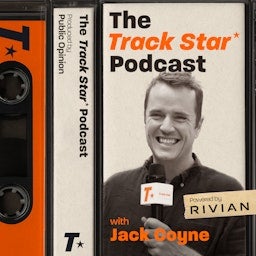
Flea, a musician and former bassist of the Red Hot Chili Peppers, reflects on his deep, lifelong connection to jazz music as a source of emotional and spiritual inspiration. He shares how his journey began in high school with trumpet and evolved into a dedicated commitment to mastering the instrument over two years, culminating in a new album. The album features cover interpretations of songs by Herbie Hancock, Eddie Hazel, Frank Ocean, and Miles Davis, each chosen for its emotional depth and musical innovation. Flea praises the transcendent power of jazz—especially the works of Herbie Hancock, Miles Davis, and Art Tatum—as a profound expression of human beauty, resilience, and creativity. He recounts personal moments of musical connection, such as jamming with Eddie Hazel and collaborating with Nick Cave, who contributed a powerful vocal to a cover song. Through these experiences, Flea underscores music’s universal role in telling human stories and fostering emotional truth. He also highlights his commitment to music education via the Silverlake Conservatory of Music, where he teaches hundreds of young musicians and supports community engagement. His passion for jazz and music education reflects a belief in music as both personal and collective healing, a force that connects generations and cultures through shared expression.
- How do we look? - We're shining. - Concern is good. I thought I was gonna be like in the 20s today, so one told me. - Before we start the music, just introduce yourself. - My name is Flea. I'm a musician, and you know, Denison. (laughs) - I'm gonna play you some songs. You just have to tell me who the artist is. - I'll tell you like what color it makes me sad. - That's perfect. (upbeat music) - Oh, herbie Hancock! (upbeat music) (cheering) - Tell me about herbie Hancock. - Well, let me tell you this first. Like when I was in high school, and I was paying trumpet in the marching band. At Fairfax High School in Los Angeles, California, all we wanted to do was pay chameleon. Every day in the marching band with tuba, I was like, "Bah, blah, blah, blah, blah." "Boh, blah, blah, blah, blah, blah, blah, blah, blah, blah, blah." It's a great song and really like a groundbreaking. Herbie Hancock, I think more than anyone else, at least in the era of my life, has the instrumental hits. He had chameleon, he had watermelon, man. He had these series of songs that really tapped the public consciousness and really built a bridge from jazz to popular music in a way that no one else has ever done. Has it recently listened to Morn D.C., which is one of his finest records. You know, the work he did with that Miles Davis group with Tony Williams and Ron Carter and stuff. I mean, it's beautiful. Herbie Hancock is a national fucking treasure and should be lauded. We should have a holiday. All hats off, bow down, get on your knees, and thank God for Herbie Hancock. - Well said. - Here you go. Another one. - Yeah. - I knew that one. - Up. - Yay, Peefunk. "Magic Brain" is the great Eddie Hazel playing guitar in the most gut-wrenching way. And I remember George when I first started hanging out with George and we were talking about it. And he was like, "Man, you just can't play like that until your heart has been shattered to smithereens and you have lost all hope." With such a beautiful sense of melody and obviously you put in the work to have the dexterity and the ability to express himself. But man, it's so beautiful. I once had the privilege of playing with Eddie Hazel and I will never ever forget it. This was the first time Chili Peppers ever went to Europe and we opened up for Funkadel at this festival in Germany. And there was just a moment on stage where I found myself just me and Eddie, like the sound check in the daytime there. We're both plugged in and have our instruments. And I had this thing I was doing on the bass back then a lot, like this real fast kind of this real fast-stopping thing. And he was just gassing on it and started jamming with me playing these fast rhythms. And we just locked in for about five minutes looking at each other, just going for it. And I'll never ever forget it, he was so, you know. And he knew he was being generous with me and what it meant to me to do it, you know. But he was having fun too and I was just an awe and hypnotized and transfixed. And on my new record, I covered that song, "Maggette Brain Trumpet" with a group of woodwinds and a vibraphone and, you know, as an homage to Eddie Hazel and of course George, who's my mentor forever. Where did this record come from? My record? Yeah, my heart. And why now? You know, as a little kid, I played the trumpet and I'm going to gotten high school. I started playing bass playing with my friends, started a rock band to go for my life for the last 45 years. But I always had sort of the jazz trumpet dream alive. It's always been like the guiding light for me and the jazz music that I love has always been this beacon. It's one of those things where it's like, this is the high bar and I'm always just, you know, it's always there for me and I always go to it. There's never been any point in my life when for like comfort and feeling chaos or pain or whatever it is in the world where I can put on Miles Davis or a monk, you know, just great jazz music and have that feeling like human beings can be beautiful. So about three years ago, I was like, if I don't play trumpet now and play it every day, I'll never have a chance to get good at it. So I kind of set my mind, I made a rule for myself, like I'm going to pay trumpet every day for two years. No matter what, and then I'm going to record a record and that's what I did. So what's your, what's your like trumpet habit like? What does that look like? It means like no matter what every day, whether I'm infuriating my wife or infuriating the hotel guests around me or whatever it is, I'm practicing my shift. Yeah. (guitar music) I got, you know, I've just working on stuff. Are you listening to music and like playing along? I'm more like working really hard on the math of music 'cause that's a big stumbling block for me is 'cause I'm not educated. I grew up a mistreat kid. I always like, throughout my life, I've relied on emotion and intuition to carry me through. And just like a yearning to do something beautiful. But to be a good jazz musician, you got to know all this cerebral stuff. Like when you hear someone playing jazz, they have studied intensely a very sophisticated language of music. Although it's a combo, the great jazz musicians. It's like education, but it's so much more spirit too. That's all of it. You got to be firing on all levels. Like spirit, emotion, spirituality, and the math of it. And I feel like I've been working on the emotion and the spirituality very diligently for a long, long time. But it's just that one part of the equation. And granted, there are great jazz musicians who never learned that shit. But they learned it too in their own way. Like look, man, these are the chords. You got to understand what are the notes in those chords? And how do they fit together? How do they create tension? How do they create eroticism? How do they create peace? How do they create spirituality? Like all those things. - So let's back on. - Yeah, bring it to me. [MUSIC PLAYING] - I love this song, Bad Religion by Frank Ocean. Frank Ocean is amazing. When he put out Channel Orange, it just floored me, man. And like, very rarely does that happen. I appreciate stuff. Oh, that smart. It's clever. Oh, that guy's really poetic. Or I feel a pain being expressed. Frank's record just laid me out. I couldn't get enough of it. Right? Get the fuck out of here, maniacs. - Are they talking us? - No, there's-- so this is like-- this is a fire zone? - Yeah. - That's usually-- and this guy just pulled up there. But it's like clearly marked. Like, you're right out of the house. - The guy's being a dope. Yeah, and like, I'm not a-- I'm a person who doesn't follow the rules. Like, I'm like, bricking a lot, bricking a lot. Like, all the time. But when it comes to fire trucks or ambulances, no, pull a fuck over, get out of the way, let them roll. That's one law that I always respect, no matter what. Anyways, Frank Ocean, that song, Bad Religion, like, him coming to terms with himself. So in such a vulnerable way, and speaking to somebody doesn't know a cab driver asking him to be a shrink. And doing it with a phrasing and a melodicism and an interesting, like, instrumentation and recording. Like, the way it sounds, I love it. I respect him and admire him so much. - So you had to do a cover. - So yeah, interpretation. - Yeah, so a lot of cover, or do you call it a cover interpretation? - We have a cover interpretation, whatever. Extrapolation up on a theme. But I was pretty true to the tune. You know, I cover thinking about you on my record honor. When I sat down, when I was like, okay, I've been practicing trumpet for two years, time to go make an album. And I started making little demos at home and putting together tunes that I wanted to do. And that was the very first one I did. Like, that I had in my head. I just imagined playing that melody on the horn. It just felt natural and organic, right away. I'm so excited to have done it. It's just a beautiful tune. I don't know what to say. I just wanted to honor it. Hey, see it for a minute. Is it just friends? Is it? - Yeah. - You know, one of them, a classic, biggest albums of all time. It's Charlie Parker with Strings. It sounds like I'll go to the, just go to see the orchestra playing like, you know, the L.A. Phil. And I get the seat, like, it's right above the stage where you look down at them. It's kind of the right below you. And it's like all these musicians, it's one instrument. The orchestra has one instrument. It's like this dropping thing in the way their arms all move together. - It's so beautiful. - Like the birds and the birds are flying together. And it looks like one animal. - Yeah, yeah, it is like that. - And it's like the feeling of hearing this. - Yeah, and the way that good ones can just like fall in and play together right away with that so little preparation or whatever, like they just know what to do. You know, reading a notes on the page, but it's one thing to read the notes. It's another thing to let the notes come through you. And, but anyways, that bird was strings album. I mean, it's, you know, a timeless, beautiful thing. And I always kind of shied away from it when I was younger 'cause I liked the idea of Charlie Parker as this rebellious wild, you know, drug addict, maniac, you know what I mean, who just threw the fuck down and demolished everything that came before him. Like, and it's true, he was all that. But, as time goes by, just the beauty and the lushness of that as a statement, man, it's heavenly. - Here. I gotta ask you about another guy. (upbeat music) - It's funny, just like, I don't know how you know this, right? I've been listening to this song lately, it's been my like, every night before a bed song. - Really? - Yeah, yeah. And it was the thing that before I made my record that I was listening to constantly this album.
and actually Warren Ellis from Nick Cave in the Bad Seeds, I'm a Dirty Three, who I, you know, my friend and I love and respect very much. He turned me on to that album, which is Get Up With It by Miles Davis. And I didn't know it, like I knew the albums around it, like around that, you know, the early 70s electric miles. Yeah, you know, on the corner and big fun and stuff, but I kind of missed Get Up With It. And the first track on it is called He Loved Him Madly. And it's like like a half hour long, just real minimalist, spare, harmonically simple meditation. And you think about, like, you know, what we call ambient music, and people always think of him, and I, you know, even thought, like, oh, well, the first time I heard ambient music was Brian, you know, doing, you know, music for airports. But Miles Davis was doing ambient music long before, you know, if you ever want to set the tone, but someone you're hoping to have an intimate relationship with, put that on, some candles, centered candles, you can't go wrong. If you're a human being, and you've heard Miles Davis, and you don't like it, you're an asshole. I mean, maybe you're not an asshole, you're a nice person, but you're not listening. Truth is, like all jokes aside, I'm lucky enough, too, as a child, been exposed to all this shit. And when I was a kid, and I first heard jazz, I had a stepdad who was a jazz musician in New York, and he would have people over in a play in a living room, and like, really high quality, bebop, jamming. And as a kid, I was just like, you know, like, like, just taken over by this holy spirit. Like, an old lady talking tongues in a Baptist revival meeting, like, it just demolished me. And it was just to me, I was like, oh, this is what music is. Like, it wasn't weird that it wasn't like, oh, some abstract intellectual thing. It was just, this is what people do. It makes sense that those are your two instruments, 'cause like, the bass is like, the harp, the backbone to jazz in a lot of ways. But then the trumpet is like, the melodic, like, line on the top, where people are so expressive, like, the traction of those two instruments, is like, there's an obvious connection to jazz. I mean, for sure there is, but with all music, I mean, it's like, you're talking about covering, like, thinking about you. It's like, there's a melody, there's chords, there's a bass line, there's rhythm, there's harmony, and there's melody in all music, you know? And I love the punk rock, like, I love black flag, I love the clash, I love Fugazi. It's all relative, it's all the same building blocks, people using the tools that they have to tell their story, you know, and that's everything. Like, without telling our stories, we shrivel up and die. I'm just, like, really loving these playing these songs. I'm just glad I'm not being a dumbass and not knowing the tunes. [MUSIC PLAYING] ♪ I am a lineman for the county ♪ So this song, "What You Tell The Line, The Blankamble." Thank you, man, for helping me with my record, because these songs I covered. I thought he was going to, like, break out some, like, live, cold train from '55. We're getting there. Oh, yeah. But this is an important song for you. That's why I'm curious to hear that. It's just a great song. And when I decided to cover it, just because I loved the meters version of it, I then heard the Glankamble version. And, you know, it's incredible. I watched live versions of them doing it. And, you know, and I was trying to, like, understand how the song works. And it's just a beautiful song. And when I recorded it, I intended on it just being an instrumental. You know, I was going to play trumpet through the whole thing. I actually played this thing called a flumpet, which is, like, a cross between a trumpet and a frugal horn. It's kind of a mellow or sound. But I was listening back to the track. We laid it down. You know, anabutters on bass, the Antony Parks on drums, Jeff Parker on guitar. We all tracked it live together. It felt great. I was like, OK, we did it. It's cool. And then while I was listening to it, I was recalling a conversation I had with Nick Cave. And I haven't had many conversations with Nick Cave. I love Nick Cave, so I remember them. Him, expressing to me how much he loved Jimmy Webb. And I was listening to it, like, we had this, like, a real, kind of low and dirty vibe on it. And I was like, man, maybe Nick would want to sing on this. He loves Jimmy Webb and sent him the version. And, like, within a half hour, he agreed. He was like, I'm going on tour in a couple of days. But I'll try to get in the studio. And he goes, and he expressed, like, it's such an incredible song. I'm a little intimidated to do it. And, you know, the day-- I think the two days later, whatever, I got it, you know, click my email, bam. ♪ I am alignment for the county ♪ ♪ And I drive ♪ Most devastatingly powerful vocal. And now, like, his vocal is way better than Clean Campus. - I mean, his voice. - Or the guy. It's my favorite. I mean, I can't be objective about this. - You are-- you're getting up. You're doing-- - What? - That's, you know. The song, the greatest pianist to ever, the greatest pianist. Now, the greatest pianist to ever walk on this earth is Art Tatum. And there's been a lot of great pianists, and that's crazy. I mean, Errol Garner and Stevie Wonder. And, you know, a lot of people have played a lot of music on the piano, but the one that has left me in a state of awe the most is Art Tatum. In particular, the solo masterpieces, where he takes all these popular songs, or, you know, standards, and interprets them in such a, like, substituting different chords for chords, slowing down, speeding up as he feels it. There's no limit to what he can do. And he does it all. He'll play real simple and poignantly. Or he'll go off on this flight of fancy that is the slight, the virtuosity is mind-boggling. You know, obviously I didn't know Art Tatum, but everything I've read is, like, he would play, you know, 10 hours a day regularly. - He reminds me of the thing, like, the piano, like, with the crank, where it's just like, he's a human version of, like, it's just like, "Rrrr," it's just going. - Yeah, and it could speed up the crank or slow down the crank as he sees will. Yeah, I have this portrait of him in my house, Art Tatum portrait. And to look in his face, like, it's one of those things that I walk by every day, you know, and I'm going to make my coffee in the morning, or just right on the way where I go to make my work room, and I just see him, and, man, he's so beautiful. That song is "Willow Weep For Me," and I play "Willow Weep For Me" on my record too. I did, like, a synth version. We sent a whole track to my friend, John Fashante, who treated the whole thing, like, Randall threw his modular synth and did reverbs and, you know, different things. Just so nice of him to do that, and a real thoughtful, cool, musical way. - Yep, yep, now. I got so many right, though, now I don't care. (upbeat music) - I could listen to that all day. It's Ambrose, right? - Yeah. - What song is that? - It's called "Tight of High Synth." - Oh, "Tight of High Synth," yeah. From that album, as kind of the greatest title of any album, I think my favorite book title of all time is "The Heart is a Lonely Hunter," and that's a great book by Carson McCulloch, Southern Lit. But that album is called "The Tender Spot" on Every Calist Moment, which is such a great title. Ambrose has the best titles, but if I can ever play 100th, "Train the Trumpet," 100th as well, as Ambrose can "Mussire Place the Trumpet," I will have grown immeasurably. - Where do you see this music? Are there jazz clubs? - Of those jazz clubs, man. - Yeah, yeah, you know, I just, well, right here in New York is kind of the best. I was at the van guard the night before last, and I saw, sorry, I'm having a brain fart right now, but I saw the great trumpet player from Chicago, whose name, oh, I knew this would happen to me. And I know his name, his name is Marquis Hill, and I'm just a dope sometimes. I get, you know, did a lot of drugs as a small child, and I'd like to apologize. I'm not the sharpest tool in the shed, but I'm a valuable tool. - Okay, I'm gonna stump you. I deserve to be stumped, I don't fucking know it all. ♪ Rollin' down ♪ ♪ Pure, Ohio way ♪ ♪ Big jazz ♪ - Go, Lakers! - I moved to, I left New York in 1972. I had just turned 11 years old, and I moved to Los Angeles, California. Since I was a little boy, I loved basketball. I loved Walt Frazier when I was a kid, you know what I mean? I loved the next. I moved to LA. I went to school. I was like, I became a Laker fan real quick. I thought, you know, my only way to make friends in school was to just play basketball every day and hang out with kids and make friends. That's what I did. And I became a Laker fan, and they don't do it. I think they still do it once in a while, but they don't really do it, and they should keep doing it. I hate when teams abandon tradition to be like modern, you know? And so at every Laker victory, I'm particularly doing the Magic Johnson era. After every victory, they play "I Love LA" by Randy Newman. And, you know, confetti drops from the CLN, and we all jump around and go crazy and, you know, at a purple and gold frenzy. ♪ From the side to the body ♪ ♪ From the west side to the east side ♪ ♪ Everybody's ever happy ♪ ♪ 'Cause the sun is shining all the time ♪ ♪ Like another perfect game ♪
That's what that song means to me, but I had to say that, you know, I have a music school in Los Angeles. It's a nonprofit music school called the Silverlake Conservatory of Music. We teach 800 kids a week. It's been like a great blessing in my life, started at 25 years ago and it's just been this thing. Every year we have a big fundraiser and one year we asked Randy Newman to perform and he agreed and, you know, he's no spring chicken. When he showed up and rocked, dude, Randy Newman showed up and threw down and he didn't play our love LA but he played a bunch of great songs and man, he's, you know, yeah, he's amazing. He's a great songwriter, great singer, sensitive man, like just an awesome, vulnerable, cool human. It's called the Silverlake Conservatory of Music. Okay, we're going to make a donation since you got all the songs, right? Wait, wait, wait. You got every song, right? We're going to make it done. Oh, I appreciate that. Yeah, I appreciate that. And how are you feeling about the Lakers this year? I had really kind of lost hope for this season but after the All Star break, they're all kind of finding their place and how to work together and they're like, we got to start playing defense and coming with some serious energy. Can we get a Nick's Lakers finals? That would be the dream. Dude, I love it and I can call up all my New York friends and just destroy friendships because I don't know, let's face it, when it comes to basketball, I act like a two-year-old man because I'm a fucking heckler. And I do honestly believe that my skill at being an evil heckler has changed the course to basketball games I've thrown guys off with my verbal powers. I've seen it. But I don't do it anymore. Now I just, like, I cop for the good guys, but I don't, I'm not, yeah, it's not right. It's your new era. Good to meet you guys. Thanks for, uh, thank you. Thanks for coming. That was so fun. Congrats on the new record. Man, thank you. Incredible. Thank you. Thank you for listening to it and, like, taking the time to pray for this thing. Definitely.
Podcast Summary
Key Points:
Flea, a musician and former bassist of the Red Hot Chili Peppers, shares a deep personal connection to jazz music, especially the work of Herbie Hancock and Miles Davis, which has long influenced his artistic journey.
He recounts his lifelong passion for jazz, beginning in high school with trumpet, and how it has remained a guiding spiritual and emotional force throughout his life.
After a decade-long hiatus, Flea committed to daily trumpet practice for two years to create a new album, blending emotional authenticity with the technical discipline required in jazz.
The album features cover interpretations of songs by artists like Frank Ocean, Eddie Hazel, and Warren Ellis, with a particular tribute to Miles Davis’ ambient masterpiece *Get Up With It*.
He expresses profound admiration for Art Tatum’s virtuosic piano playing and the emotional depth of jazz standards, seeing them as transcendent expressions of human vulnerability and beauty.
A major highlight is the collaboration with Nick Cave, who unexpectedly sang on a cover of "What You Tell The Line," adding a powerful, emotionally resonant vocal layer.
Flea emphasizes the universal language of music—its role in storytelling, emotional release, and human connection—linking jazz, punk, and pop through shared musical structures.
He highlights the cultural importance of music education and community, citing his work at the Silverlake Conservatory of Music, which supports youth and fosters artistic growth.
Summary:
Flea, a musician and former bassist of the Red Hot Chili Peppers, reflects on his deep, lifelong connection to jazz music as a source of emotional and spiritual inspiration. He shares how his journey began in high school with trumpet and evolved into a dedicated commitment to mastering the instrument over two years, culminating in a new album. The album features cover interpretations of songs by Herbie Hancock, Eddie Hazel, Frank Ocean, and Miles Davis, each chosen for its emotional depth and musical innovation.
Flea praises the transcendent power of jazz—especially the works of Herbie Hancock, Miles Davis, and Art Tatum—as a profound expression of human beauty, resilience, and creativity. He recounts personal moments of musical connection, such as jamming with Eddie Hazel and collaborating with Nick Cave, who contributed a powerful vocal to a cover song. Through these experiences, Flea underscores music’s universal role in telling human stories and fostering emotional truth.
He also highlights his commitment to music education via the Silverlake Conservatory of Music, where he teaches hundreds of young musicians and supports community engagement. His passion for jazz and music education reflects a belief in music as both personal and collective healing, a force that connects generations and cultures through shared expression.
FAQs
Flea is the bassist and musician of the Red Hot Chili Peppers. He shares his deep love for jazz and has a long-standing passion for the trumpet, which he began practicing seriously around three years ago to create a new record.
Flea began practicing trumpet daily for two years to fulfill a personal dream rooted in his childhood fascination with jazz music. He sees it as a spiritual and emotional journey, and it has become a central part of his creative process.
Flea was moved by Frank Ocean's emotionally vulnerable and poetic expression in 'Bad Religion,' which resonated deeply with him. He covered the song as a tribute to its emotional depth and authenticity.
Flea highly respects Herbie Hancock for bridging jazz and popular music, Miles Davis for his ambient and spiritual innovations, and Art Tatum for his unparalleled piano mastery and musical virtuosity.
Flea was inspired by Nick Cave's admiration for Jimmy Webb and reached out to him. Within hours, Cave agreed to sing on the cover of 'What You Tell the Line,' and his powerful, heartfelt vocal performance became a defining element of the track.
The record represents a personal and artistic evolution, blending jazz trumpet playing with deep emotional and spiritual themes. It honors musicians like Eddie Hazel and Herbie Hancock while reflecting on music as a universal language of human experience.
Chat with AI
Loading...
Pro features
Go deeper with this episode
Unlock creator-grade tools that turn any transcript into show notes and subtitle files.
 PodcastTranscript AI