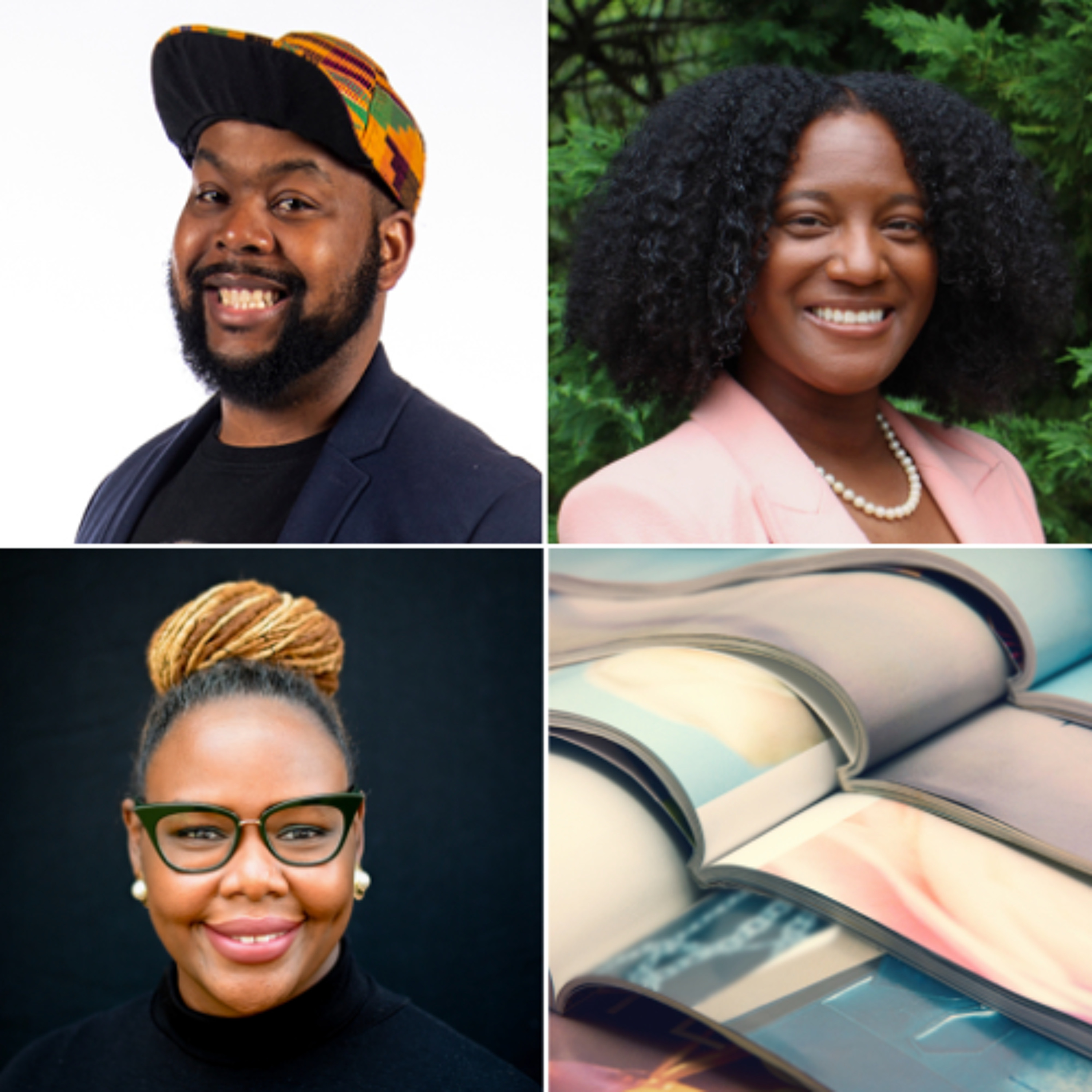
Terrell R. Morton, Whitney N. McCoy, & ReAnna S. Roby
46m 11s
This podcast episode from the APA Division 15 features a discussion with researchers who developed a new framework called Black Girl Embodied Motivation (BGM). They argue that traditional motivation theories in educational psychology are insufficient for understanding Black girls' experiences because these theories were not built with their onto-epistemologies—the interconnected reality and knowledge shaped by their lived experiences—in mind. Instead of treating race and gender as separate or additive variables, BGM intimately weaves them into the core of motivation. The framework is built from three foundational lenses and consists of five components that highlight how Black girls' multifaceted identities, critical awareness of their environments, assessments of systemic conditions for success, experiences of joy as resistance, and daily embodied decisions collectively shape their motivation. The researchers describe this as "re-imagined" theory, a process that involves stepping back from existing models to integrate new ideas from outside the field and fundamentally restructure understanding to center the specific, systemic realities of Black girls.
(upbeat music) Hi, this is the American Psychological Association's Division 15 podcast series on Immersed Research and Educational Psychology. My name is Jeff Green, thanks for joining us. So I suspect most, if not all of us, have been in the situation where we're trying to fix something we've written and we're just stuck. We've tried and tried, but all the little tweaks and edits we've made just haven't solved the problem. In times like this, it can be tough to think about just starting over, but sometimes that's exactly what is needed. Starting over doesn't mean throwing all of the old ideas out, but it does mean being open to removing some ideas and bringing in some new ones. It's like that old saying, sometimes we need to take one step back before taking two steps forward. My guests today have done just that in doing the important work of asking how theory could better capture Black Girls motivation. To produce their new framework of Black Girl Embodied Motivation, they had to take a step back and ask what ideas in the field of motivation were the equivalent of taking that step back. And what ideas outside the field were needed to take those two steps forward. I'm excited to talk to them today about their framework building process. Dr. Whitney McCoy-Hudson is a research scientist at Duke University Center for Child and Family Policy, whose work advances community engaged STEM education and educational equity, with a deep commitment of supporting Black Girl identity development. She uses advanced critical qualitative and mixed methods approaches to examine how academic and community environment shape P-16 student identity, engagement, and achievement, centering the roles of educators, parents, and caregivers in creating equitable learning spaces. Through curriculum design, program evaluation, and community partnerships, she develops environments that foster belonging and expand access to engineering and technology pathways for historically excluded learners. Her leadership in community engaged STEM initiatives repositions families as co-creators of STEM knowledge, while preparing future educators and leaders to engage ethically with diverse communities. A former K-6 teacher and a postdoctoral research associate in STEM education at the University of Virginia, Dr. McCoy earned a BS from Winston-Staleam State University, an MA from the University of North Carolina as Charlotte, and a PhD from North Carolina State University. A native of Raymond Mississippi, Dr. Rianna S. Roby is a research practitioner and director of the Women's Center at the University of Minnesota, the first university-based women's center in the United States. A first-generation scholar, Dr. Roby's lived experiences as a Black Southern woman in science, significantly informed her work. For more than a decade, Dr. Roby has worked at the intersections of race, gender, and science, which can be reflected in her professional experiences at the Office of Equity and Diversity at Washington State University, as well as her administrative and postdoctoral teaching and community engaged research experiences at Michigan State University, the Fisk Vanderbilt Regional Center of Excellence, and the Margaret Cunningham Women's Center at Vanderbilt University. Dr. Tarell Morton is an associate professor of identity and justice in STEM education at the University of Illinois, Chicago. He is an alumnus of North Carolina A&T State University where he earned a BS in chemistry, the University of Miami where he earned an MS in neuroscience, and the University of North Carolina at Chapel Hill where he earned a PhD in education with a concentration in the learning sciences and psychological studies. Dr. Morton identifies as a scholar activist. His work strives to transform the positioning and understanding of Blackness and mainstream education specifically STEM, seeking justice and joy for Black students. Through every endeavor, he strives to walk it like he talks it. Today we're talking about Whitney, Rihanna, and Tarell's 2025 article published in Education Psychologist titled, "Black Girl Embodied Motivation," a critically race-gender, reimagined motivation theory, which they call authored with Charlotte Agger, Monica Miles, and Hannah Lim. This article is part of a special issue of education psychologists titled, Race Focus Research in Education on Psychology. Whitney, Rihanna and Tarell, welcome to the podcast, and thank you for talking with me and about your article today. - Thanks for having me. - Thank you. - Yes, thank you so much. - So Rihanna, I'd like to start with you. I'd love to hear you talk about why you all chose to focus on Black girls in this article. - Thanks so much, Jeff, for the question, and thanks for having us again. Part of our wanting to think about Black girls stems from our early work. And when I say our early work, acknowledging why we steal in some ways might feel early in the field, as post-Dots and even as Doc students, I'll say I personally had an interest in thinking about Black women, specifically Black women in science, and when I was post-docking during my time at Michigan State, I had the opportunity to actually be in the field and work with Black girls doing community engage ethnography. And it was during that time where I started seeing some opportunities to think a little bit differently around some of the theoretical framework, specifically critical race feminism, and Black women as thought, and seeing how they could probably like expand it upon if we thought about Black girls, as Black girls, specifically Black adolescent girls, as girls, and how in that imagining them and their positioning in the world, how that actually was different than that of Black women. Right? This also comes at a time where as scholars in the field, thinking more and more around how Black girls are adultified, right, and trying to be intentional around creating avenues, creating frameworks to better hold them, them being Black girls in their childhood and their innocence. And so as the Universal Ahead, a few of us would get to know each other through AERA, through cadre, BRK-12 post-doc experiences, and a few started with, I will say, me knowing, getting to know to real and net capacity, and then getting to know some of our other co-opters because of other ways that we got to meet each other, and really kind of exploring more so around, what does it look like for us to come at the question around, thinking about Black girls from these different angles, and I say different angles, 'cause I identify specifically as like a critical race feminist in a curriculum theorist, motivation has never been my willhouse, and yet I have these friends who I'm excited, we've been able to be in conversation with these things for some time, and so big questions, oftentimes lead to multiple questions, and it's kind of how we get to be jail, but there'll be more time for us to think about that in just a moment. - Well, I'm so glad that you all found each other and came together around this topic. And so when we think about Black girls in particular, in the article, you argued that educational psychology theories don't always properly account for the onto epistemology of people from racially minoritized groups. So can one of you help me understand like what is onto epistemology? - Sure thing, I'm happy to help think through it. So one is thinking about the knowledge, right? If we think about the epistemologies, the ways of knowing that Black girls bring it to their classroom, that they bring it to their learning environments, acknowledging that every environment can be a learning environment, and really leaning into the onto and thinking about how's the lived experience? How is data forming our teaching and learning, right? And how does that, in the curriculum theory, so how does that create language for us to talk about what we learn, what we need to learn, what part of our learning is valuable, and when do we get to recall that? So I hope that helps, wait me in to real if you want to add to that. - I would just add from an educational psychology perspective, we think about ontology, the study of reality, and epistemology, the study of knowledge, as sometimes being too separate phenomena or philosophical approaches. And in some ways, we might even linearize how we connect the study of reality with the study of knowledge. And as Rihanna has pointed out, thinking through sort of these Black feminist and critical race feminist lens, those scholars really challenge us to consider the relationality between reality and knowledge. And so going back to the question around how traditional theoretical frameworks and educational psychology didn't really account for the onto epistemologies, the argument is saying that when we look at the roots of some of the core or even prominent motivation frameworks, one, we can look and see demographically who was represented in some of those core samples, when the theories were derived. And as a result of it, who's lived experiences, whose perspectives on reality, whose perspectives on knowledge were helping us create these frameworks. And no surprise, Black girls, Black women, weren't always a part of those core groups that were helping us derive these frameworks. And so their understanding of knowledge and reality and the relationship between the two weren't adequately reflected in the creation of these frameworks. - So thank you both. That helps me understand. I hope, help, start listeners understand that term and kind of how it informed you're thinking. What else was missing from motivation theories regarding the experiences of Black girls? Whether pieces maybe weren't there that you needed to think about? - So I can get started, but I'm also happy to call in my colleague Whitney McCoy, who I know who's done a lot of work in the
area. But one of the things we wanted to attend to is how if we look at some of these traditional educational psychology frameworks, constructs around race and gender have either been treated as a construct, a categorical variable that can be sort of explored and/or removed depending on if we're doing some kind of comparative study or using the framework to explore deeply, you know, differences across racialized or gender-based groups. But they didn't necessarily intimately integrate how race and/or gender or the combination of race and gender really situate a person's perspective around motivation, around external environment and how it informs their decisions and their experiences. Or even internally how we know that again, going back to this concept of pantoapistomology, what we perceive of the external environment is very much informed by our lived experience and the lens that we bring to this space. And so from a Black girl's perspective, which I am not, so you know Whitney and Rihanna can definitely talk more about that, we wanted to ask that question of how is race and gender not just being added to the framework as a possible influential construct or as something that can be explored comparatively, but how is it intimately interwoven within every facet of the way that we're describing each kind of core component that we're looking to explore in this motivational space? And I'll just add on a little bit to what Cyril said. So BGM is a theory that actually stems from three frameworks. We utilize critical race feminism, micro, which is out of a developmental side from only Rogers, and also looking at of course situated if it expects from C value theory and kind of utilize that to kind of drive what we reimagined as BGM. As Cyril just kind of mentioned, it shifts up to actually think about not just our Black girls motivated, but what conditions are actually shaping what motivation looks like for these girls. And so within that, we had five components to our actual theory. And the first one, Jeff, I know you've read the paper, is thinking about multiple pliketed identities, which I feel like as somebody that works with Black girls daily in the community, it's something that I often see. It's not just that they are Black or that they're girl, right? They're a Black girl. They're grappling with that identity every single day. And they are trying to see how that is actually influencing how they interact with other people in schools, how it shapes how they're going to be disciplined, who's encouraging them, how they're going to be overlooked. The next component of the theory is thinking about most of the positive consciousnesses. And so from there, we're thinking about how Black girls learn and see and read the world around them. So it's not just about understanding their schools, the opportunities that they have, but everyday moments, right? Who are people labeling as disruptive? Who's being praised? Who's being punished? And making sure that Black girls actually recognize these things. So it's not just that their awareness is a deficit. It's actually just thinking about the fact that they have become very skilled as I'm a Black girl. So I've become very skilled at knowing how to navigate spaces in terms of seeing how I know it's a safe space, how I know that I can speak up for myself and be open, but also thinking about what cost are the situations that I'm going to be in, what costs am I going to have to deal with in trying to be motivated and be aware and interact with individuals in these spaces? One of the other components that we saw that was really needed was thinking about the expectancies for social material and conditions of success, traditional motivation theories often think about, do I believe that I can succeed? And so instead of this, it's not just do I believe I can succeed, but are the systemic structures set up so that I can succeed? What conditions actually exist? And so it's not that it's not that I'm actually not motivated, but as a Black girl, I'm thinking about the access to resources, the representation in this space, and things of that nature. I've realized that a lot of times with younger Black girls, we think that these are not things that they're consciously thinking about, but they actually are. And so a lot of times it's really important for us to often not just think about their beliefs about succeeding or their teachers beliefs, but like how they actually see the world around them. And so I'll stop for a second and see if any of my colleagues want to jump in, but there are two more components to the theory that I'll share in just a moment, but I want to make sure nobody else wants to jump in. So if I think back to the question, Jeff, and what Whitney has just shared, it really goes to show again that intimate integration of how a person's race and gender identity is informing every aspect of the motivational process and not just being part of the, how do some of the frameworks position, not just being sort of like the introductory to the psychological processing, but like intimately interwoven in every facet of the psychological processing. And while some may say that you know, well, the theories that we have call us into these kind of conversations, we also know by virtue of people's use of theory that it can be misinterpreted because of the ways things are often linearized by virtue of the publication process. Sometimes it's hard for people to see in multiple dimensions when it's coming to think about how different constructs are informing the way that people are applying theory. And so as a result, it gives the opportunity to really localize on some components of a framework without really thinking holistically and intentionally. I was wanting to disrupt the opportunity to sort of reproduce these hegemonic deficit-based narratives that can be adopted about a black girl, is she motivated, is she not motivated? And then again, having some sort of punitive assumption about, well, why isn't she motivated? We wanted to really shift not only the language but the understanding of how their identities as black and girl are intimately connected and how it is situated within this broader systemic structure. And what does that broader systemic structure look like in the everyday experience of a black girl? So, and thinking about what Torrell just said, I think that the black girl joy-peace is why I kind of wanted to stop. So you could talk a little bit about, again, why this is needed, how this is connected to motivation theories, especially as it pertains to its like and as expanding what's actually already in the field. And so, and thinking about black girl joy, we hear this a lot and I feel like a lot of times people are kind of asking, like, what are the nuances of joy? But it's not just, you know, recognizing those things, but it's being seen authentically without punishment, without deficit views, taking in that pride and that collective identity that we have and being able to show up to take up space and systems that actually we're not designed for us. And so, with this joy is about resistance and self-preservation. And it's something that isn't superficial. It serves as a protective factor. And I feel like a lot of times, sometimes it's overlooked, but it is something that as a black woman, as a black girl, they keep me going every day. And so, I was really glad to see us embed this into the theory. And then last but not least, we have embodied decisions. So, you know, decisions, a lot of times we think about these as processes or thoughts that we might have, but decisions are things that we live, right? We choose these decisions, we make these decisions every single day. And these behaviors might help me navigate my everyday choices and decisions. So, whether a black girl is choosing to speak up in class, whether she's choosing to disengage, whether she's choosing, you know, to persist in a space. That isn't a body decision that is shaping how affirming or constraining a space actually is. And so, BGM actually helps us see that motivation is not just cognitive. It's carried in our body every day. And as we move through these educational spaces, community spaces, we need to think about when and where we decide to make room for black girls and when we don't. And I think that BGM kind of helps us reframe that and actually see how we should help support black girls, but also how we can use theory to understand their lived experiences on a daily basis.
So I really appreciated that overview of Black Girl and Body Motivation Theory or BGM. And as y'all talked, I heard some things that kind of sounded like situated, expectancy value theory, and then I heard a lot of new ideas incorporated. And so I think I guess back to this term that you used in your title and you saw the paper called reimagined theory. So some of our listeners may be familiar with the queer gumbia and Schütz's idea of reimaging educational psychology theory, but you intentionally talked about reimagining or reimagined theory. So can you talk to us about what that term means for you and why you chose to go that direction with it? Absolutely. I can kick us off and would love my colleagues to hop in as well. I want to say in sort of thinking about this concept of reimagining. A lot of how we were understanding our work was based off of our read and interpretation of how the reimaging literature was building. So going back to the earliest piece from the queer gumbian Schütz, I think it was like their 2014 piece when they talked about the differences between race-focused work and race-reimaged work. We saw that Jamal Matthews and Francesca Lopez kind of ushered a special issue. I think it was in contemporary educational psychology that helped push the field even steps further around the race-reimaging. So looking at the queer gumbian Schütz piece, looking at the Matthews and Lopez special issue, there were some core ideas that kind of popped out to us around what race-reimaging looked like based off of how some of the new race-reimaged frameworks were being positioned. So Jamal Matthews and Alan Wickfield presenting a race-reimaged situated expectancy value theory by using critical race theory. And then again saw evidence of Carlton, Fong and colleagues presenting a race-reimaged sense of belonging framework. Francesca Lopez and colleagues presenting a re-image self-determination theory. And so just from the read of those papers and how those scholars were working towards the re-imaging process, we saw or at least for us re-imaging looked like taking the ideas of the motivational framework, being intentional to see how they could be racialized, but still holding to some of the core sort of foundational perspectives of the motivational framework. So maybe using some of the same nomenclature to describe the ideas, but giving a nuanced interpretation of what that nomenclature could look like. For us, when we were thinking about this race-gender re-imagining, we didn't want to just rethink how we could interpret some of the nomenclature, but we really wanted to shift our language and how we were describing the constructs of interest. And in shifting the language, we realized that we also had to produce shifts in ideology. And so it could no longer be just a blend of ideas, but really trying to break down ideas into some of their most fundamental principles to then see, all right, what is it about this critical race feminist perspective? What is it about this micro perspective that we really want to use as our core as we're thinking about it in conversation with the situated expectancy value theory? And then how do we build from said core while accounting for other factors? And so it felt like, and not just felt because I'm saying like I'll I feel, but intentional cognitive intellectual exercising felt like, right, that we were really taking these ideas and deconstructing them into some of their more discreet components, tracing some of their ideological foundations to see what are some of the fundamental beliefs around knowledge, truth, morality, and lived experiences that were undergirding how we were even naming certain things. And then in the process of deconstructing, if I can kind of create a mental image, it was almost like the Marvel series Iron Man when he was building the new Adam and you have all the pieces up in the imaginary whiteboard and we're moving pieces around. If we were in a physical place when we were doing this, it might be old school where we'd have sticky notes on a board and try to organize sticky notes around certain ideas to see as a result of the deconstruction, how then are ideas complementing one another, challenging one another, being in support of one another, and then going back to our positionality as scholars, what do we want to hold as fundamentally true? So this is how we introduced this whole phase of critically race, gender, reimagining where that phase one was that deconstruction process that I was just discussing. And then that phase two, which is aligning and fusing, goes back to the idea of the sticky notes being reorganized, old school coding for those who had to code by hand as opposed to using any of our new software and technology. What ideas aligned, what ideas did not align, how do we resolve tensions and things that are misaligned, and then how can we begin to actually fuse? Myself as a chemistry major, Rihanna as a chemistry major, Whitney having, I think Whitney, you were biology, right, or were you chemistry as well? Yeah, I'm biology and a chemistry minor. Yeah, so a lot of the chemistry was coming out in these conversations when we were talking about the fusion of ideas. So again, imagine taking these two atomic particles and you're trying to fuse them together and there might be some electromagnetic resistance by virtue of the electron fields that they're actually in. Thinking through that resistance, what then becomes this new idea. And as a result, what is the name that we have to then use to describe the idea so that it is still rooted very much in that fundamental race, gender framework? Now the third phase, which I think also presents it as a reimagining more so than just a re-imaging is that we acknowledge that even within our motivational frameworks and with some of our race-gender critical frameworks, there may be developmental components that aren't always present. And so developmentally, how then do we account for the fact that as Rihanna shared early that these are girls as opposed to women? And then developmentally, given our positionality rooted in this critical base perspective, how do we think about what it means to operate within a system, a racist, gendered, sexist system that is now informing their everyday experience to the point where instead of just saying, do I expect to succeed, we have to think about do they have and see the resources, the material and social needs from their learning environment that's informing now whether or not they expect to succeed. And so that's where Arni Rogers and colleagues' concept of micro came in. And for those that are listening, micro in itself is this own derivative or interesting play on the macro system from a broth and been a perspective and the micro system being sort of merged together in a space where macro is no longer just this abstract concept that exists in sort of the ether but is present in our everyday experiences. And so they even spell micro M AI where AI is in parentheses, C R O to account for that tension or that combination or that fusion of the macro and the micro system. And so that also gave us the opportunity in this reimagining space where not just re-imaging motivation constructs, re-imaging constructs with a re-imagined perspective by building from new ideologies, integrating new theoretical perspectives and then presenting a theory that has its own name, that has its own nomenclature that can have some historical roots to these other ideas but it of itself is presented differently. So we're not saying that all we're doing a race, gender, re-image situated expectancy value theory, instead we're saying we're doing black girl embodied motivation theory. And one last thing that I'll add before I stop talking and others can hop in re-imaging as we understood it could very much be a part of the re-imagining process. And so we really tried to explain the relationship between how I can have a re-imaged construct within this broader re-imagining of theory. And so we saw re-imagining as describing the process by which we did all of these phases, recognizing that re-imaging could be a step as we're doing the whole aligning infusing process. I want to add that this is really good and I'm not sure exactly how helpful this second part would be but I do want to think about
How the ability for us to reimagine is necessary, or has been necessary for black girls, especially for black women, to exist in contexts to have not necessarily been developed for them. Whether those contexts are science in ways where they get to be authors or developers of knowledge, whether it is the classroom, acknowledging historically what classroom spaces have been, how they, in the ways in which they have existed to either shrink some of black girls being, or even in the development of curricula, where we think about the curriculum that was developed by Mary McLeod, but Thumb, Ida B. Wells, and other women. Other women of their time, how to allow for not just the same, but an existence for black girl joy in teaching and learning to co-exist in how our ability or our desire to reimagine does not mean reimagine necessarily trauma or harm, but imagining something that we can delight in. I also want to add in that based on kind of to real speaking about the process in which we came up with this, I think it's also really important to highlight the fact that we've met each other over the years in various spaces, one of which I'll just highlight is AERA. I think that being in educational spaces, being at conferences, and being able to sit down and network and discuss these things that we're trying to sort through, problematized through how we're actually using theory to speak about black girls, kind of drove us to actually create a brief be Jim. I think that's really important because I know a lot of times people are like, well, how do I develop theory, how do I actually advance what's actually going on, but I think building on those circles and those conversations in various spaces at AERA allowed me to actually re-invigiate things that I would have never seen before, just based on some of my earlier experiences. Because again, as researchers in scholars, we're always trying to challenge ourselves to continue to grow. And so I think that's also really important to highlight that we've utilized some of those spaces to kind of challenge ourselves and network within to kind of go back and re-invigiate how we should continue to advance this work for black girls. And not just educate those spaces, but also some of the programmatic spaces that some of us are in, as Brianna mentioned, some of her programmatic spaces, some of the programs that I've created, some of the programs that she's created and supported as well, because a lot of times community engaged research also helps build theory as well. Yeah, I love that. And having all kind of in the same space and talking through things and challenging one another and doing so in productive ways, all that's really important. And Whitney, I love that you mentioned how you kind of built this together out of need. And I think that kind of normalizes the fact that most of us can't just kind of sit in a room by ourselves and come up with a new theory. And like we need to talk it out, we need to hear different voices and perspectives. And so your example, I think is really helpful for our listeners as they think about trying to do what you all have done in terms of think differently about theory. But I also think your paper really illustrates that very well. You know, there's a great theory in there that is reimagined and that's really valuable on its own. But as Tarell talked about, there's also this process that you elucidate and that you describe by going through these various phases of thinking through for my word to kind of deconstruct and then kind of reconstruct or build a new idea. And so I think our listeners really should take some time to pull down your article and look at it from both perspectives, right? What is the theory being advanced, but also like what are the ideas about building theory that are in there too, because they're both really, really valuable. And I'm so glad you talked about both pieces of that. And there's a lot more in the paper too. There's a wonderful application to a nine year old black girl named Bobby Wilson that you know will help I think our readers understand how the theory can be applied. And you also have some really important implications of BGM for research, policy, and practice. So I mean, what are one of the ones in there that really stand out to you as far as really generative implications or next steps. I'll kick us off. I think one of the things that stands out to me is sort of the implications and next steps that also appreciative. Carol Lee and Sandra Graham kind of calling this in as they provided a response to the broader special issue on researching race and educational psychology. And where I'm going, I think Jeff is even great that we're having this conversation with you because having taught the ed psych theories course this semester, we got a chance to really read your 22 paper on how we're understanding theory development. And what ed psych can kind of learn from it more broadly. So naming all of those people and calling all that into say, you know, this work was developed over the process of three years. They said at ERA, but they didn't name the fact that the very first AER that we presented some of these ideas was in 22 right after the pandemic, which means that in order for us to have presented it at 22 is actually longer than three years. We've been thinking about it and working on this since probably 2020, 2021. A lot of it comes from the lived experiences of my colleagues, but it's also is very much informed by the research that we've been doing individually and collectively Charlotte Agar as a colleague has published a couple of papers and thinking about, you know, black girls from a developmental psychology perspective or even a quirk, a part-crit perspective, Rihanna as she's articulated a lot of the work that she's done, Monica Miles doing a lot of work around black girls and STEM spaces with environmental justice, myself looking at black women and undergraduate spaces. But to the sort of criterion of understanding and evaluating theory, I think next steps are really diving into the theory and applying it to research, either from a, and I always get these next stop, either deductive or inductive approach, guide some of the research designs or we can see how people lean to it as they're looking to make sense of some of their data so that we can hit some of those internal and external criteria that you outlined in 22 and that Carol Lee and Sandra Graham kind of call us into to think about as BGM advances as a theoretical framework to think about the motivational experiences of black girls. Thank you so much, Terria, for yes providing an extra context around the time line, but also in calling in that we come to this work, a number of us on the author writing team as scientists who were trained as formal scientists in our undergraduate experiences, and spent time in the field doing a number of different things, but even before becoming formal scientists, we were engaging in science, we were engaging in STEM in the informal ways. Part of this is also thinking about where the ways you adolescent girls are engaging in the science of home, engaging in the science of after school and in the most informal spaces that help them not only find their voice, but even in some ways allows for them to share their work in meaningful ways. So forever grateful for the work of I don't want to call them ancestors even though but elder mentors in the field like Natalie King and Ebony McGee, and I don't want to call them the evolutionists of more who had us thinking about black girls and black women in STEM and how are some of those experiences differently in school and out of school. And some of like our peers right now who are on this paper like Alexis and Rashida who are helping us in oh my god, I don't want to get the name of everybody because I'm going to leave somebody out who are helping us to continue to think around what does it look like to not think about black girls behavior is something deviant, it's something that's connected to learning something that's connected to exploration and a space for curiosity. So I'm going to leave it there and I'm going to pass it to Whitney. Yeah, so I'll speak a little bit towards policy and a little bit about practice. So I think especially giving you know where we are right now in our world. You know, I'm in North Carolina thinking about access to programs for children funding for educational spaces, whether that's in our schools or in our communities. That's something that actually we need right now right where our children, especially black girls, they are asking for these spaces, they want these spaces to be able to engage with each other to learn from people that look like them or that are supporting them in these spaces. And sometimes the funding just doesn't exist or people you know don't actually give them access to these spaces. And so I think one of the first things that we have to think about is how we can do black girls justice and provide opportunities for them in schools, whether that might be coursework or like I said these spaces where they can be curious. I often talk about counter spaces and how we can actually provide more funding for those things. And then in practice, we know again, you know what classroom spaces look like. I used to be a classroom teacher and I know one of the things that is really hard in schools is trying to make sure that we are able to do that.
we are there to support Black girls and that we don't create toxic environments for them. So being aware that Black girls do bring positivity and joy into these spaces, but we need educators to be supportive of them in these spaces as well. And I think BGM is a great space to start to challenge that work. We have a lot of people in the field that do research with teachers and how they work with Black girls. So thinking about strategies that they could use to bolster positive Black girl identity and to look at, as we talked about those embodied decisions that they're making in those learning spaces and how we can actually see those in more positive life. Because again, Black girls are full of joy. And I think we really need to highlight that and the work that we're doing. - I love that. And I think your article does such a wonderful job of reminding the reader that, Black joy matters. It exists. It's important. All the different frameworks that you bring together and all the different ideas you bring together help create this really nuanced and rich perspective that I think are listeners will really benefit from reading. So again, thanks so much for talking to me about your article. I really encourage listeners to download it and check it out. Let's talk a little bit about the research you're doing now. So, Rihanna, let's start with you. What are you working on right now? What kind of research you're working on? That's really got you excited. - Some of the research that I'm engaging in right now is really in storytelling, which is not necessarily different than a lot of my past research, especially because so much curriculum work is narrative work. And that work looks like specifically telling the history of this first women's center in EWIS and how it is a model. This is extremely timely work given the current social political context where a number of women's centers across the country are being closed. And yet what we know is in our writing, we provide blueprints for folks who are even trying to develop something new or return to something of the past. And so that's one of my major research projects. And the other is just continuing to think about black girls and black youth specifically within STEM spaces and how there are a myriad of opportunities available in the informal around how we get access as well as how they create further opportunities to imagine. - So, I'm currently working with what we call our lift lab. We're looking at learning innovations and future technologies. So our lab is working on a paper with our students where we're going to use BGM to explore black girls experiences with their moms. So girls and their moms engaging in science, technology, and engineering, which we're really, really excited about because this program is something that me and my students created together. And so we're going to use that and try to apply BGM and again, my students have been super excited about this. And they were really excited to see that the BGM paper came out to kind of help guide them as well. - That sounds super cool, William. I'm so glad you're doing that. Terrell, what about you? - Yeah. So I have found out that I really love theory. And I really love the process of trying to help build and expand how we understand theory, particularly race critical theories and frameworks. And so yes, very much really Dr. McCoy Hudson, I love theory. But I think some of my work is not necessarily as focused on BGM, though I do have graduate students who are excited to engage with that theory and build it out even more as we're thinking about their research. But I've been leaning a lot into Afro-futurism and black speculative fiction. And how we can use Afro-futurism as a theoretical or conceptual framework, depending on where you follow the debate as to what is theory and what is not, to really help us re-invision STEM teaching and learning at the university space. And so how can that serve as guiding principles for the design implementation of not just pedagogy, but lessons, classroom management practices, relationships between universities and community spaces, how we recognize who is an epistemological expert when it comes to understanding and innovating within the natural and social world. And I'm hoping to be able to do some of this work, not just within these lands that we currently call the United States, but a lot more globally as I have started to broker relationships and partnerships on the continent of Africa in different countries, as well as in some European countries and in some South American countries. Well, that sounds amazing. I can't wait to see what comes of that, Tarel. Thanks. So that seems like a great place to wrap it up for today. I'm so pleased our listeners can download and read your 2025 article in Educational Psychologist titled Black Girl Embodied Motivation, Critically Race Gender Reimagined Motivation Theory, which is part of a special issue of Educational Psychologist titled Race-Focus Research in Educational Psychology. So again, Whitney, Rihanna, Tarel, thank you so much for writing this article and talking with me about today. Thank you so much for having us, Jeff, and for APA Division 15. Thank you, Deion, Francesca, Matthew, and Jessica. I know I'm excited that we've been able to have this platform and look forward to see how the community continues to engage with this work. Yes, thank you so much. Thanks, y'all. Great. And finally to you, our listener, if you enjoyed this podcast, I encourage you to check out our other episodes on your favorite podcast app, and please consider reading and reviewing us. You can also go to our APA Division 15 website, where all of our podcasts are linked in the publication section. Thanks again for listening. (upbeat music)
Podcast Summary
Key Points:
The podcast discusses the development of a new theoretical framework called Black Girl Embodied Motivation (BGM), which reimagines traditional motivation theories to better capture the experiences of Black girls.
Traditional educational psychology theories often fail to account for the onto-epistemologies (the intertwined reality and knowledge) of racially minoritized groups, as they were not central to the original theory-building samples.
BGM integrates critical race feminism and other lenses to center race and gender as inseparable from motivation, moving beyond treating them as mere variables to exploring how they shape every facet of psychological processing.
The framework includes five key components
The work exemplifies "re-imagined" theory by not just adding race/gender to existing models but fundamentally restructuring theoretical assumptions to prioritize the lived realities and systemic contexts of Black girls.
Summary:
This podcast episode from the APA Division 15 features a discussion with researchers who developed a new framework called Black Girl Embodied Motivation (BGM). They argue that traditional motivation theories in educational psychology are insufficient for understanding Black girls' experiences because these theories were not built with their onto-epistemologies—the interconnected reality and knowledge shaped by their lived experiences—in mind. Instead of treating race and gender as separate or additive variables, BGM intimately weaves them into the core of motivation.
The framework is built from three foundational lenses and consists of five components that highlight how Black girls' multifaceted identities, critical awareness of their environments, assessments of systemic conditions for success, experiences of joy as resistance, and daily embodied decisions collectively shape their motivation. The researchers describe this as "re-imagined" theory, a process that involves stepping back from existing models to integrate new ideas from outside the field and fundamentally restructure understanding to center the specific, systemic realities of Black girls.
FAQs
BGM is a reimagined motivation theory that integrates critical race feminism, micro, and situated expectancy-value theory to center the experiences of Black girls. It emphasizes how race and gender are interwoven into motivational processes, focusing on conditions that shape motivation rather than just individual beliefs.
They focused on Black girls to address gaps in educational psychology theories that often overlook their unique onto-epistemologies. This focus counters adultification and creates frameworks that honor Black girls' childhood and innocence, informed by the researchers' community-engaged work and critical race feminist perspectives.
Onto-epistemology refers to the interconnectedness of reality (ontology) and knowledge (epistemology), emphasizing how lived experiences shape understanding. For Black girls, it highlights how their ways of knowing and being are often excluded from traditional motivation theories, which were derived from demographically limited samples.
Traditional theories often treat race and gender as separate variables rather than integrally shaping motivation. They may not consider systemic structures, embodied decisions, or the joy and resistance that inform Black girls' motivational processes, leading to deficit-based narratives.
The framework includes five components: multiple-plaited identities, critical consciousness, expectancies for social/material conditions of success, Black girl joy, and embodied decisions. These elements collectively shift focus from individual motivation to the systemic and embodied experiences of Black girls.
Reimagining theory involves critically rebuilding frameworks to center marginalized perspectives, moving beyond simply adding race or gender as variables. It ensures theories like BGM intimately integrate race and gender, challenging hegemonic narratives and better reflecting diverse lived experiences.
Chat with AI
Loading...
Pro features
Go deeper with this episode
Unlock creator-grade tools that turn any transcript into show notes and subtitle files.
 PodcastTranscript AI