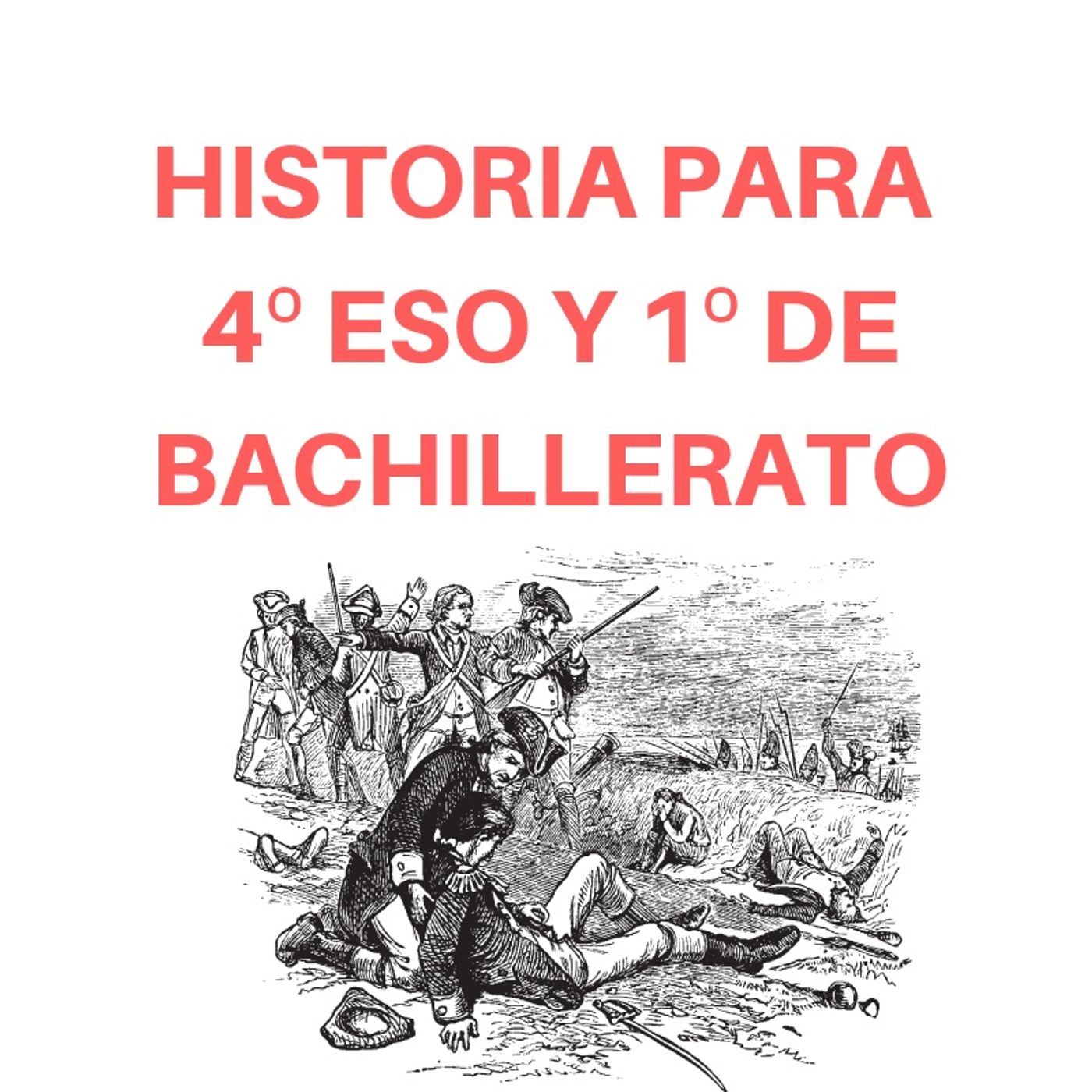
The Motley Fool is providing a 50% discount on their stock recommendation service with a proven track record of high returns. The Old Regime in Europe was marked by an agrarian economy controlled by the nobility, leading to low productivity and poverty among farmers. Society was divided into privileged classes like the nobles and clergy, while the majority lived in poverty. The economy started to change in the 18th century, with advancements in agricultural techniques and the emergence of a bourgeoisie class. The system of government shifted from absolute monarchies to shared power in countries like England after revolutions. The European continent experienced conflicts like the War of Spanish Succession and the War of Austrian Succession in the 18th century, shaping the political landscape.
Transcription
4631 Words, 25453 Characters
If you've been thinking about getting serious with your money, like actually serious, now's
the time.
The Motley Fool is offering new members 50% off their iconic stock recommendation service
stock advisor.
This is the same service that's crushed the market with recommendations that have returned
1,057% since inception compared to the S&P 500's 180% over that same period.
This isn't guesswork.
The Motley Fool has a track record of finding companies before they become household
names.
You want to invest smarter and you like saving money while doing it, go to fool.com/listen
to claim your 50% off discount of a one year term of stock advisor.
Again, that's fool.com/listen.
Returns of 1,057% are from the Motley Fool's product stock advisor and measured against
S&P 500 returns of 180% as of July 10th, 2025.
Pass performance is not an indicator of future results, all investing involves a risk
of loss.
Individual investment results may vary.
Welcome friends and friends to the POSCA of History for the Fourth of the year and its first of Vachillerato.
My name is Juan Jesús Plagazolo and I present this series of audio that covers all the theme
referring to dark stories.
Before leaving it to you today's topic, two very important remembered things.
The first one.
This POSCA is extracted from my main "POSCA" story with the Motley Fool.
Therefore, if you like the topic when you listen to it, you can go through that other POSCA
that will find another lot of audio that you can interest.
The second one, if you are taking care of that, if you are taking care of Vachillerato first,
you can acquire my book.
I invite you all the students who will help you to get the maximum resendment of your time
of study.
I leave you in the notes of the program.
Without further ado, I leave you with the topic and I hope you enjoy it.
Well, today we are going to talk about the old regime, the last one that results very
difficult to understand, well, to the fourth of the moon, the first Vachillerato, the second
Vachillerato.
It is a complex topic and I, when I explain it to you and I go to the moon a month and I always
go to the moon.
Once a little, once a little.
What does old regime mean?
Always the dust.
Always the dust.
And it is a complex topic and I will try to be the one who takes the most and the most
easy to understand.
Let's see.
The old regime has two definitions.
It turns out that the French Revolution, in 1789, the French Revolutionaries knew that they were
building something new.
And they knew that after the French Revolutionaries would come a new epoch, the French Revolutionary
Revolutionaries wanted to build something absolutely new and put a point and a part of what
I had until now.
So the French Revolutionaries speak of the new regime that comes, therefore, if a new
regime comes, the previous one is the old regime.
Therefore, the first definition of old regime, period, the previous one, to the French Revolution,
1789.
But if we want to give a more academic definition, more rigorous, we have to say that the
old regime is that economic and social system that was in Europe between the 16th and the 18th.
Take it there.
There, if they put it like that, they don't know it.
What do we have to say about the economic system?
Because it was an agrarian economy.
What do we have to say about the political system that the way the government was not a absolute monarchy?
What do we have to say about the social system? Because the society was divided between this
糟糕, which was the noble, the clear and the poor, no, etc.
And what do we say about the 18th and 18th?
This system starts to break apart.
It starts to change the demographic, the agriculture, the politics, the philosophy, which
starts to agriate that old regime's system and culminates with the French Revolution.
Let's talk about the economy.
Well, how was the old regime's economy?
Well, let's talk about it.
It was an agrarian economy of feudal rage, that is, the agriculture, the economy, which
goes between the 16th and 16th centuries, was agrarian and gave the institution of the Middle Ages.
That is, the land continued in hands of the noble, the noble continued to keep its privileges
and the farmers continued to work in a regime of servitude.
The 80% of the population of Europe were dedicated to the field.
The 80% of the population were farmers who lived in poverty, because the field had a low
productivity.
It was a agriculture of self-consumption, that is, the agriculture was working almost like that
to take to the mouth what was producing and little by little.
What were the problems that the field had?
Because the technology was very old, the technology was very behind, depending on the phenomena
of nature, that is, if there was drought, there was no production, there was no food and there was
hunger and death.
Or if there was a lot of rain, there was no production and there was hunger and death etc.
The campaigns had to support a very high impact and more all the land, well, all the
land, almost all the land, 2/3 of the land, was in hand of the noble and of the church.
The property of the land had a regime, the property of the land belonged to the noble
of the church, and they worked it and it was a property of the form of "seniorío".
What does "seniorío" mean?
It was, as I told you before, it was an institution of Raif feudal, we called it "feudal",
but now we call it "senioríos", and that "seniorío" had two types of "seniorío".
The "territorial" and the "judisticional" "seniorío", what does "territorial" mean?
Because the noble gave the land, the campaigns, the campaigns, they did not have to pay a
rent for the work of that land, and what does "seniorío" mean "judisticional" mean?
Because in the previous one, it was added to another thing, that now the noble, in the "judisticional"
"seniorío", towards the law and judged, that is, the "judisticional" "seniorío" was like
a mini-rein, where that noble had the power to do the law, and in addition to that, "judical".
But that the noble at the top had a privilege, that is, the noble could cover
the contribution of special to the farmers, had the monopoly of certain services, for example,
if the farmers wanted to use a Molino, if they wanted to use a bridge, if they wanted to use the
horn, all of that had to ask permission and pay the noble, who was the one who
possessed that service, we have to say, as I already told you before, in the 18th century,
the population increases, this leads to a greater demand of agricultural products, and that makes
the productivity in the field increases, and that leads to, for example, in
countries such as England and low countries, there is a better of agricultural techniques, and in
some places, and that better of agricultural techniques leads, that in some places, it is always
practiced an agriculture for export. We have to say, we continue with the issue of the
economy, that the trade, for example, the food inside was poor, because the trucks inside
were bad, bad. However, the food outside was richer, we had the trade with
the colonies, in the colonies, there were large plantations, especially in America,
worked by slaves, which exported those products to Europe, the tobacco, the sugar,
the wood, the cotton, and then the Europeans took the manufacturer and they took them to America,
sell them there, that is, this is what we are talking about, triangular trade, if you want to
hear the post of the slavery of the African people, all of this I explain there with quite
more detail. We have to say that the artisania, well artisania in the ancient regime, is in hands of
the agrarian. What was the problem? The agrarian controlled the whole process and impeded the
technological advance and impeded the progress, because the agrarians did not look at the prices,
controlled the units that they had produced, the agrarian controlled everything, however, there is
a burguessia, which, of course, starts to invest in workshops, starts to hire
workers to salary, and starts to manufacture products in series, what happens to those
products in series? They are quite cheap, which is what they were making on the grain.
That burguessia had the support of the monarchs, because the monarchs, it is thanks to the imposter
of the burguessia, the state can grow and can pay their employees, etc. Therefore,
to the monarchs, to the monarchs they are interested in, that is, it is a pure burguess class.
We are going to talk about the society in the ancient regime. We have to say that the
anti-war society in the ancient regime was a fundamental society, divided into
states, there were two privileged states, which are the noble, and the clear, and then the
establishment was not privileged, it was according to the books that it takes, it can be called
the town, the third state, the state general, etc. The noble and the other clear, as
we have already said, a series of privileges, for example, they did not pay taxes. In addition,
they had a juridical status, that is, the law was not the same for everything. The noble and the clear
had a special law. In addition, they copied the high charge of the state, only the
high charge of the state was steel, the noble and the clear, and then there is to say that within the
in the nucleus and inside the nucleus it was the high nucleus, the low nucleus and inside the nucleus it was the high nucleus and in the nucleus it was the high nucleus and the low nucleus the high nucleus it was the one that was in the palace and the one that was in the court of the king and the low nucleus the one that was in the field in the city and the nucleus was the same, the high nucleus of the nucleus had a non-violet origin and it was the one that was exposed to the cardinals and then it was the high nucleus of the king and the high nucleus of the king and the low nucleus of the king and the low nucleus of the king and the low nucleus of the king and the low nucleus of the king and the low nucleus of the king and the low nucleus of the king and the low nucleus of the king and the low nucleus of the king and the low nucleus of the king and the low nucleus of the king and the low nucleus of the king and the low nucleus of the king and the low nucleus of the king and the low nucleus
was the lower clear that it was the ones who were in the town and then we have the popular classes
or as we have said before, the state already, the third state, the general state, I call it as it
wants, what is the majority? What is the majority? Again, within the popular classes, we have
several divisions, we have those who live in the rural world and within those who come to the rural
world we have countryside without lands that work in a regiment of rendement and we also have
the small owners who live a little better. Then we have the popular classes that are in
the cities and there within the cities we have poor people, poor people, we have the artisans, we have
those who work as clients for gentlemen, for the bourgeoisie and the news, etc. and now let's talk about
another class, we have said that we have the news, the clear and the third state and attention, attention,
let's see this cultural level, let's ask, we are going to see what classes social and
emerging during this cycle, thanks to the trade, what classes social and wealth, thanks to the
trade and start doing the city, gentlemen, the bourgeoisie, the bourgeoisie for this date,
in the old rule, in the 18th century, the 17th century, it begins to grow in the city and
it starts to grow thanks to the trade, there is a point in that the bourgeoisie is so rich that it
looks like yours to the noble, they arrive to be so rich as they can be the noble but eye and
here comes the key to understand everything that is going to come in the civil war, repeat the data, the
bourgeoisie arrives to be so rich as they could be the noble, but who had the power, the noble,
the bourgeoisie did not tell, he did not have any influence in the government of the state, then the
bourgeoisie there is when a day would end, they would be angry, they would say, well, how if we
don't have this wealth, if this wealth, we don't have it, we are working on it because we can't
decide what happens in our society, and why the noble, who does not give a finger to the water,
who are rich, who are noble because they have born like this, if they can have political influence and here
this is here is the origin of the revolutions that they are going to come, starting with the French
revolutions, the revolutions of the 20, the 30, the 48, etc. So there is a data that it seems to me that
I have not said before or I have said before, but I want to resign, I have talked about that there are three
classes social, noble, clear and polo, and what was determined, what was determined, your
inclusion in a social class or another, your birth, your birth, that is, if you were a noble son,
they would be noble, if you were a son of the countryside, you would be a countryside and you could
noble some day descend and be a countryside, never, it would always be noble, it could
be a countryside, some day, it would be noble, no, it could not, it was a society is so much,
because we talk about society, it is mental, there are three states and where you would be born,
there you were born, there you were born, I agree, this is very important, I repeat, your
birth, a social class determined it, the birth, the birth, what happens, and I have a
question, if you answer me that you know a lot, it is that after the French revolutions, after
the revolutions of the 20, 30 and 48, what was determined your belonging to a
social class determined? the wealth, the wealth, after the revolutions, what was determined
that your belonging to the class at the top, at the bottom, it was your money, what you had,
previously no, it was your birth, and well, well, well, well, let's talk about the ways
of government, the system of government, look at what I do in the old regime, it is going to happen that
it is going to lose power, it is losing its political influence, it is losing its influence in the
government of the state and who is getting more power? the king, in a way that comes to a point in
the century 18, the king has absolute power, the king can do the law, he can judge, he has
the executive power, the king has all the powers, and in addition, he could not discuss this power because
attention, what was the justification? it was a divine origin, it was a divine origin,
the church was about to justify that power of the king, the king had the power of the king because
God had it loaded him, the king absolutist, the only thing that he did was to disappoint a divine
function that he had loaded the man, and you are going to talk about the dispute and very illustrated,
it is true that at the time of the 18th century there was a series of King absolutist that was
given to the movement of the illustration, a series of King absolutists who read, who read
the philosophers, who are intellectuals, who want the best for their people and do all a series of
measures for their countries, their reign to advance, develop and make measures in favor of the industry,
in favor of education, in favor of the economy, and this time we called it "despota illustrado" and
they had an element that was all for the people, but without the people, that is, all for the people who
improve their industry, their economy, their education, that the people have everything, but without
counting on the people, that is, their decisions are unappable, they are not going to ask the people
what it seems to them, everything for the people, but without asking them to the people, that is what
means that famous lemma, and well, we have said that in the 18th century where in Europe that model
of monarchy absolutist in the king has all the powers, but there are two countries, there are two countries
which are the exception to the king, one is province united and the other is England, and curious
in the case of England where there were two revolutions so that finally the king had to
polarize to share the power with the parliament, England had a device composed of two cameras,
the camera of the gold, which was composed of the high noble, and of the clear, and the camera
of the common is composed by bourgeois and by property, and the decision of the king always had to have
the approval of the parliament, it turns out that he tried to impose an absolute monarchy in England,
and this ended in a civil war that ended with the decapitation of the first king in 1649,
after 1649 England is proclaimed a republic, eye, directed by Crongwell, which ended up in a
dictatorship, so as it would have ended up in a dictatorship again, again, the decapitated
king again, the brother of the decapitated king, and now he gives power to a king that is called Carlos II,
in 1660, that well, he had good intentions, but when he dies, Carlos II, in 1660,
another king that is called Jacobus, and this is the law, the law, that is, this king, the law of Jacobus,
and again, he is a civil war, again, he comes in a revolution, and in 1689 he gives this revolution,
which, definitively, the parliamentary ban of Roca-albando absolutist, and from now on, we will have
forever a king who shares the power with the parliament, he gives the crown to Guillaume de Orange,
who makes him play the right card, and in that right card, the king always compromises
always asking permission to the parliament for any decision, and well, we are in the 18th century, and we are
going to talk on behalf of several conflicts that are only in the European continent in the 18th century,
which are the war of Spanish success, the war of Austrian success, and the war of the seven years,
the war of Spanish success is between 1701 and 1714, and what was the war of Spanish success? Well,
one dispute, because of whom he put his candidacy in front of the Spanish throne, it turns out that
Carlos II had died of indecency, and Spain was the largest territorial empire in the
time, so France, the French, Luis XIV, says, "Oh, well, my grandson Philippe Daniel is going to be the next
king of Spain", and says the emperor of Austrian, "No, no, no, no, he is going to be my son, the Archive of Carlo,
and so the whole Europe is divided in a way that France and Spain support Philippe Daniel,
and in the land of Portugal, the country is low, and Austria supports the candidate for Carlo's Archive,
and there is a war that lasts from 1701 to 1714, besides an interior war, also because inside of Spain,
the crown of Castilla, Philippe Daniel, and the crown of the dragon, supports Carlo's Archive,
finally it happens that the emperor sends him a message, and it happens to the Archive of Carlo that
is when England says, "Come on, stop the war, come on, stop the war, come on, look, this is not
serious, of course, if the Archive of Carlo is crowned in the emperor of Austria, in the emperor of
Germany, and also this is also crowned, king of Spain, again we have the empire of the
Asurgo, as there had been in the 16th and 15th centuries, and that in the land did not interest him,
then the negotiations began, which ended in the Treaty of Utrecht, of 1713, and in the
terrasta of 1714, in which Spain loses its European positions, and in addition to C
there is England, Gibraltar and Menorca, then we have the war of Austrian succession, which is
from 1740 to 1748, Carlo this, the previous Archive that Carlo leaves as a successor to Mary Teresa,
and a territory of the empire, which was a Prussia, it says, a king woman, or speak, so they do not
do not do it, they do not do it, that there is a woman, she is the leader of the empire, and she began to
again a war between Prussia, Spain, Baviera, Josef and France against Austria, Olaanda,
Great Britain, and this war ends in the peace of here, large of 1748, and finally, it is
allowed that Mary Teresa is sovereign, but her husband will have the title of emperor, and there in
Spain, she will recover a few places in Italy, then we have the second, the third part,
perhaps this war, or the second part, that we have, the war of the seven years, which goes
from 1756 to 1763, you already know, they start Prussia and Austria to fight for a territory of a
little girl, that is Silessia, well, no, I said what it was, that this was almost a world war, where
some European countries start to ally with Prussia, other European countries, they ally with Austria,
and in the end, the two great refugees, which are Great Britain and France, they ally with Austria
for all the Atlantic sea and France, well, it comes out losing, France loses its territory
in Canada, and also loses the territories that North America had, or this one from the
mountains of Palachia, it is very important to understand the American Revolution, because the
three English colonies, which begins the American Revolution, were in the east of the mountains of Palachia,
and of course, when the French had been defeated after all that, they had it for them, they had it for
them, and to occupy it whole, and well, let's talk about it now, to finish the Silo of the
colonial empire that was in the 18th century, that colonial empire was in the 18th century, not for the
Spanish empire, which ran from the 16th century, or even from the 15th century, we could say, and well,
in the Spanish empire, we had a good part of America, we have a divided empire in
neighboring states, we have the neighboring states of new Spain that occupied part of North America and the
center of America, we have the reign, the reign of the new Granada, which was Colombia, Venezuela,
Ecuador, then we have the reign of Peru, and the reign of the Rio de la Plata that was in South America,
in Asia, well, Spain is still maintaining the Philippines, and some archipelago in the Pacific, as
it was the Mariana island and the Carolinas island, and then also had more islands there lost,
Portugal had Brazil, which was property, the Portuguese empire, because it was not Brazil, which was
property of the king, and then it had many many commercial ports, by the sea of the South, by
all Africa, and by all the Indian ocean, for example, in Mozambique, in Arabia, India, in China,
in Malacca, but what happens is that all those commercial ports are losing them in favor of the British,
the French and the Dutch, and now we are going to the ancient colonial empire, we have the British empire,
the British empire is curious, this is the beginning of commercial companies, it was not the
crown of the English itself, the one who said, "I'm going to send an army, I have occupied so many
territories, no, no, no, they are commercial companies, and we have to, well, be established in the North,
sorry, in the east of North America, from 1620, then the origin of those 13 colonies that
began the American revolution, we have that the English are established in the Caribbean, for example,
in Barbados, they are established in 1605, in the vermuda they are established in 1612, in the Bahamas
they are established in 1646, then we have that they are also going to the oriental India, and they start to
push them to Portugal and they are going to expand it, and well, they are controlling, for example, the
stretch of Ormuth, already in India, they occupy Madrid in 1639, Bombay in 1665, Calcutta in 1696, and now
we are going to talk about the French, which begins to build their empire, in the 1616 North America,
I worry about the Nova, the new Scotland, the new France, they founded Quebec in 1608, Montreal,
they explore the Mississippi River, they founded Luisiana with their new capital in 1718, they are also established
in the Caribbean, and what they do is that the Cedars of the Corsars, they have transformed it in
the French colony, for example, Guadalupe, Martinica, IT, and we are going to talk about the last
Dutch empire, which first tries to establish itself in the North of Brazil, but good
there the Portuguese are resisted, and in the end, they hold a few territories in the Caribbean,
which are cura-sau in 1634, and the Gullana in 1636, the Dutch also control the
head of good hope in Africa, and in the eastern part they also take the Portuguese to one side,
control the Ceylan Malacca, they also establish themselves in the eastern coasts of
China and attention, the Dutch are the only Europeans who can establish themselves in Japan,
which in addition to Europeans, well, they did not leave them, well, until here friends and friends, I hope
to help you understand this concept that I already said to my students, the result is quite complex,
this is the base, this topic we have explained is the base of everything that is coming in the 19th century,
everything that is going to come in the 20th century, we have explained very important concepts to understand
the politics that comes in contemporary history, I remind you that I have a lot of projects related to
education, if you want to continue with all of them, you can follow my social networks on Instagram,
the internet and Facebook, and I upload it to you, I send you a huge hug, I wish you the best and I hope
in the next program.
Podcast Summary
Key Points:
The Motley Fool offers a 50% discount on their stock recommendation service.
The service has a track record of high returns compared to the S&P 50
The Old Regime in Europe was characterized by an agrarian economy and a social hierarchy.
The Old Regime's economy was based on feudal agriculture with low productivity.
Society was divided into privileged states - the nobles and the clergy - and the unprivileged.
Summary:
The Motley Fool is providing a 50% discount on their stock recommendation service with a proven track record of high returns. The Old Regime in Europe was marked by an agrarian economy controlled by the nobility, leading to low productivity and poverty among farmers. Society was divided into privileged classes like the nobles and clergy, while the majority lived in poverty.
The economy started to change in the 18th century, with advancements in agricultural techniques and the emergence of a bourgeoisie class. The system of government shifted from absolute monarchies to shared power in countries like England after revolutions. The European continent experienced conflicts like the War of Spanish Succession and the War of Austrian Succession in the 18th century, shaping the political landscape.
FAQs
The Motley Fool is offering new members 50% off their iconic stock recommendation service Stock Advisor.
The Motley Fool's recommendations have returned 1,057% since inception compared to the S&P 500's 180%.
To claim the 50% off discount for the Stock Advisor service, go to fool.com/listen.
The 'old regime' refers to the economic and social system in Europe between the 16th and 18th centuries.
The agrarian economy during the old regime was characterized by feudal agriculture, low productivity, and land ownership by nobles and the church.
In the old regime, social class and privileges were determined by birth, with the noble, clergy, and commoners having distinct legal statuses and rights.
Chat with AI
Loading...
Pro features
Go deeper with this episode
Unlock creator-grade tools that turn any transcript into show notes and subtitle files.
 PodcastTranscript AI