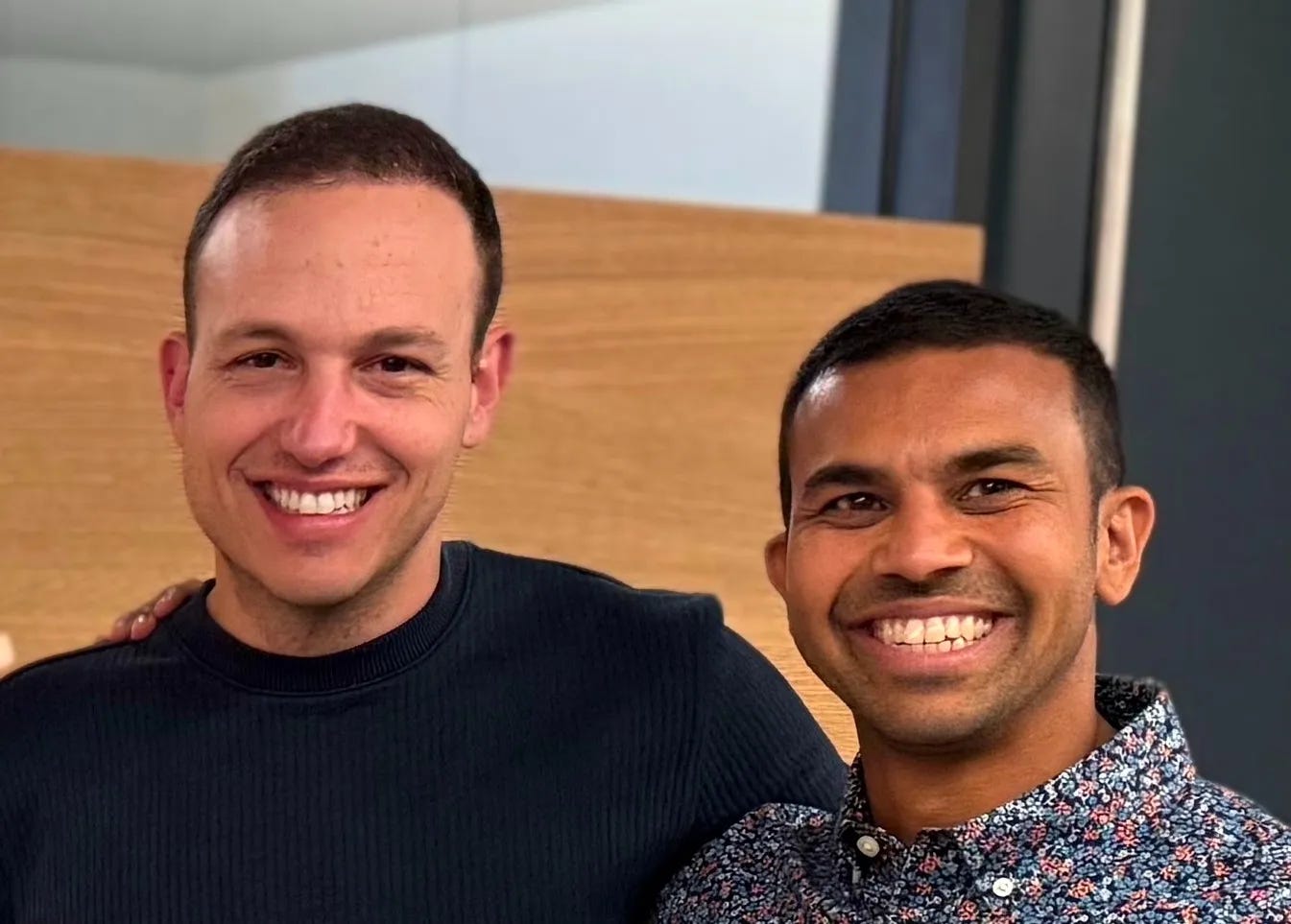
The transcription features a conversation with Ben Eidelsen and Anishah, hosts of the "Step Change" podcast, discussing their deep-dive episode on the electrical grid. They explain their approach to covering complex, characterless infrastructure topics by finding narrative arcs in historical events and figures. A central figure is Samuel Insull, who transformed the early electricity industry in Chicago. Upon taking over Chicago Edison, he found its power plant running at only 5.5% capacity because demand was limited to evening lighting. Insull’s key insight was to increase utilization by diversifying customers—adding electric streetcars, meatpacking refrigeration, and other 24/7 loads—which raised capacity to 50% and allowed investment in larger, more efficient turbines. This drove electricity costs down 90% in 12 years, as he prioritized lower prices over short-term profit, believing electricity should be a public good. This model, based on spreading fixed costs over more kilowatt-hours, laid the foundation for modern utilities and the regulatory compact. The hosts draw parallels to today’s debates about data centers and grid costs, noting that adding load without new infrastructure can reduce per-unit costs for all customers. They emphasize that the grid’s physical synchronization—turbines spinning in lockstep across vast distances—is a remarkable feat that still shapes energy economics. The discussion highlights how historical decisions by figures like Insull continue to influence contemporary grid challenges and opportunities.
[Music] Hello and greetings everyone this is Vultz for May 15th, 2026 telling the story of the grid. I'm your host David Roberts. Over the last few years a new model of podcasts has become popular, the extremely deep dive. Not just an hour or two of jabbering like you get here on Vultz, but three, four, even five hour pods that contain massive globe and history spanning narratives. The model for this these days is a pod called Acquired which takes on one company at a time and tells its full and I do mean full story. For instance, its first Microsoft pod of two is four hours and twenty minutes long. Ben Eidelsen and Anishah work as climate and energy investors here on the west coast and they were inspired by Acquired to do something similar. The result is step change and extremely deep dive podcast about issues in climate and energy. They kicked off a couple of years ago with a two-parter on coal, which is a cumulative six and a half hours in case you're interested in coal and then followed it up last year with a fascinating pod on the history of data centers. Their latest opus released just a week or two ago is about the grid aka the largest machine ever built. As you may have heard, I have some small interest in that subject. I listened to all four plus hours with wrapped fascination and thought it would be a fun treat to have them on to talk about how they pulled this epic together and what they learned. [Music] With no further ado, Ben Eidelsen and Anishah, welcome to Vaults. Thank you for coming. Thank you for having us. A lot of your work was an input into that output so it feels full circle. We just paste a bunch of Vaults pods together. That's exactly right. We spend over a dozen hours probably listening to you in preparation. I have a couple of sort of kind of met a question about this whole enterprise. I was thinking about this, the guys who make acquired their subjects, I guess, have sort of a natural narrative. There are natural storytelling beats with a company. You get IPO, you get bar, you get acquired, you go bankrupt, something, something. There are generally the narrative tells itself to you. You guys are taking on kind of bigger fuzzier subjects which do not really come with a narrative, fun, obvious narrative built in. I'm just sort of wondering, it's funny. I went to school for a long time until they finally kicked me out and I did a lot of big projects. I was thinking about how I approached big projects and it's funny. I never managed in my like 38 years of schooling. Never once, despite being brow beaten and bullied by many, many professors to do so, never managed to do an outline before I started. I always found that the only way I was ever able to do long things is literally just to start and sit down and start writing and then find my way through the thicket, which is horrible, woefully time inefficient. But it was the only way I was ever to do it. So I'm just curious, do you guys go into these things with some sort of plan, some sort of narrative in mind, some sort of outline, or is this a matter of just letting the subject tell you? We are sometimes envious of the fact that Ferrari has Enzo, Ferrari to lead the story. And so, you know, often the founders and these characters and then the company becomes really clear entity. So I think it is a challenge and one that we're trying to continually improve upon with each episode. We do have the fact that like history unfolds, I think. It does. It just keeps doing that. Exactly. Like, you know, there will be tomorrow and that will be different than today. And so, in these stories of infrastructure that we're telling, you do have an arc that is just, you know, kind of unfolded over time and that does provide, you know, what tends to be looking back these kind of moments of invention of kind of distribution, you know, you go back to London and their first kind of discovering that they can use coal instead of wood. And then it becomes this explosive thing and then it powers the grid in the US. And so you do have these like big moments, but what you don't necessarily have is characters. Yeah. And that is the thing that we're constantly working on is that in this moment is that, you know, is a place the character like Chicago or is this person like Ensole. And so trying to find these driving characters and moments that create a story. Yeah. And it turns out like the grid has, there's been some wild and woolly characters involved in the grid. And so, that's another challenge, right? You have an infrastructure that's spanning time and space. Yeah. And there are multiple different characters. And so when to your point about the outline, when we approach this project, it is this just unwieldy kind of, you can imagine if we had a desk in papers, it would just be, you know, the crazy Matt professor. That is the modern, that is the modern version. And we have to sift through that and essentially find our way kind of like you path find our way to a skeleton outline constantly asking ourselves, what's the right resolution? What's the right level of depth here? Who's the protagonist? Where's the storyline? Because it'd be very easy to get like boring about RTOs and ISOs and capacity markets. But you've got to figure out how to make it engaging. It's not boring. And I come on now. It's not. You have to find the story. So, you know, you guys went through whatever nine books, 40 podcasts, 20 interviews, plus I wonder if there is any particular thing that you went in thinking and found out that you were wrong about about the grid in general. And this is like a big one that we ended up opening the episode with, which is like, I did not understand physically, despite intellectual engineering and physics background. I did not understand physically the nature of how deeply interconnected, like the turbines are on one interconnection. And it wasn't really until like diving deeply into it that I came to appreciate the Hoover Dam turbine and the Grand Cooley turbine and you know the Diablo Canyon power plant all are spinning not just at the same speed, but actually locked together. And then more so like when I flipped on my kettle to make coffee this morning, that was felt by all three of those simultaneously. Like that surprised me. Yes. One of many things one finds out about the grid that props one to say, wait, that works. That's what happens. Yeah. So like all these generators and spinning masses spinning in perfect harmony, basically despite vast physical distance before for the Hoover Dam to communicate with the other turbine when this grid was built was like a frickin telegram. So they're all like they're all spinning perfectly in sync pre communications like pre internet pre everything. It really should not work. It makes no sense. Completely. Another one which I don't know if it's wrong as much as surprising is, you know, I kind of came in this with a patchwork of stories in my head. You've got the AC DC wars and you've got the Tennessee Valley Authority and you've got these different moments. And I think the appreciation we got through just through how much of this one of the most important pieces of infrastructure we've ever built was built and formed by historical accident and decisions that had unintended consequences. We're going to dig into that a little bit later. It is the kind of thing that makes you look back in sort of retrospectively like quite knuckle, you know, like it worked out, but like, are you kidding me? Like, yeah, this has always been my impression of the grid is like, I can't believe this works and I can't believe it's still running. Speaking of characters, let's talk about Mr. Samuel in soul, where does he enter the story and what did he do because and really bizarre amount of our current like this stuff we live with today was came out of his work in his life. So to maybe just tell us like where does he come in the story. Yeah, so you go back to this is early 1880s 1881 he arrives in the US he's 21 years old he arrives in the UK he was he had been working at one of medicines UK based businesses and he shows up and is becomes quickly Edison's right hand man legally as secretary. And just as kind of his air and boy, he orders copper when he needs it he stays on his crazy Edison's crazy schedule and quickly amasses, you know, the trust of the boss. This leads out of said when when they're opening a big factory to expand their operations, he said, you know, until you go run this like make it happen. Make a big Sammy. That's right. What was that that first big turbine called a factory and electricity factory how big was that turbine what was big back then this is actually I think a factory to manufacture bulbs and inectity so he helps it scale from 200 employees up to 6000. She's this is the like Edison machine works factory right. But then he ends up building a big turbine of his own right. That's right. He splits from Edison at some point these guys. The key thing with Insoul is that he becomes the architect of the scale utility. In this moment when what became General Electric spins out, Edison actually leaves the electricity business at this point. Insoul decides instead of going with the company that's making the machines General Electric, he wants to go and run a utility. He takes this job, it's kind of a crazy insane thing. He takes this job over at Chicago Edison, which had 5,000 customers. A small power plant was maybe a third of the comp he would have gotten at General Electric and he says, "No, I want to run the utility." All of a night I talked about what he saw there. Yeah, everyone thought he was insane. He shows up and he finds that they're running their power plant at about 5.5% capacity. What are people doing in the 1880s? What are people doing with electricity? Who are those 5,000 people and what do they want electricity for? The few homes that are wired up and their initial demand is actually much like today. The peak demand is in the evening hours when people get home from work and they flip on a light bulb. It's lighting, yeah. Mostly lighting to start with. Exactly. Yeah. That was their load. They've paid for the power plant. It's running and the rest of the time it's not delivering any electrons. Right. This is key. They've spent a bunch of capex, a bunch of capital built this big turbine and to satisfy its 5,000 customers that turbine is running about 5% of the time. That's right. So then Samuel Insol had one of, honestly, to this day still maybe V key insights about how to run the electricity business. Let's spell that out. That's right. This is the foundation of what we talk about today as utilization. He realized that he needs to amortize his costs over more kilowatt hours. He needs to basically be delivering electrons to more people at more times of day. The way he needed to do that in the late 1800s, early 1900s was diversify his customer base. Right. This is the structure here because this is a structure very familiar today. It's huge capex, huge capital investment upfront, but then the marginal cost of running it a little bit more is negligible. But basically, once you've got it built, your key business interest is in running it as much as possible. So how did, and it's one thing for us to do that, but back then, he was Samuel Insol's knocking on doors. Have you heard about electricity? So how did he go about raising the utilization of this first turbine that he built? Yes. There's a couple of interesting steps. The first thing he did was he looked around Chicago and was like, well, these electric cars are running at different times of day, street cars. And let's go serve them. And he moves into that customer base. Then he looked at the meat packing industry. And he's like, wow, you actually need to cool your meat 24/7. And so he can electrify that and then they can stop getting ice from the lake. They're harvesting ice off the lake. So instead of, instead of, instead of harving that harvesting ice, let's like build refrigeration. And so he pieces together, you know, the meat packing industry, the electric street car, the elevators are running at different times of day because that's when the office worker is there. And so he amasses these kind of diverse customer sets to find load across the entire day. And he spreads out his costs. And to your point, this is the unlock. He takes it from 5% capacity to 50% capacity. Which is crazy. And then what is the result of that for customers? That's right. So you have the flywheel on this load side. That allows a flywheel on the generation side to invest in bigger and bigger and more efficient plants. And this gets the steam turbine that he actually was the first, you know, real kind of, you know, utility to bet on the steam turbine as opposed to the old steam engine. And all of that then drives cost down, right? Because then you have more efficient generation. You get better utilization of that generation and the wires. So he drives price down something like 90% in 12 years. Yeah. And all his business guys thought he was crazy. But like, this is the key model. He said we've got this big capital expenditure. We want to run it as much as possible. And the more we run it, the lower the per unit cost for our customers. Please rewind everyone listening and listen to that sentence again because it really is incredibly important insight. He's like, we've got the plant. The more we run it, the cheaper the power is going to be for customers. Right? And so he, like you say, cuts cost 90%. There's an interesting embedded decision here. He cuts the cost, his own costs down. He didn't have to cut prices down. Right. He could have just taken more profit. Right. This is the 1920s, right? This is when monopolies are forming and they're built to gouge customers. So the common thinking at the time was keep making more money. And he makes the decision to think that, you know, electricity should be less illuxury good and more public good. It should be less like champagne and more like water. And he chooses to cut prices down at the retail level. This is the same thing. It's funny. We didn't know. We did the history in reverse order, but we did in data centers. This was the key unlock of AWS, right? All of the cloud computing, all the cloud services is instead of having your own server, you know, at your house or in your office closet, let's move to shared infrastructure. And that shared infrastructure should get cheaper and cheaper over time, which it certainly does. Now, storing something up on cloud computing today is orders of magnitude cheaper than it was the decade ago. And that's passed the consumer. And now we store more and more stuff. But the crucial, the crucial fact about that is AWS is not hurting for money, right? Samuel Insol did not make less money for doing that, right? He could have maximized his profits from each customer, would have been the short-sighted immediate way to make more money. But instead, he's like, if I make it super cheap, the customer base gets much, much, larger, and then my total profits go up because I have a bigger, right? So that's like an incredibly wise and incredibly impactful decision, like, you know, like that basically shaped all of electricity since. And so he's, you know, he's like going out looking for load because adding more load reduces costs for customers, which is a hard thing to wrap your mind around. But like it was established early on at the very beginning, the more customers you have, the wider you spread it out, you know, you get cheaper per customer and more total profits. And so he's going around looking for load. And so I did have a question though about the smelters because you guys use aluminum smelters as sort of a, both an example and kind of an analogy, you know, aluminum smelters are very legendarily electricity intensive. So if you're looking for something to soak up electricity when no one else is buying it, they can do that. But then here's my question. Aluminum smelters are consuming 24 hours a day basically. That's right. So it seems like if you add an aluminum smelter to the mix, you will raise the peak. You're not just soaking up under peak capacity. It seems like you will raise the peak and then you'll have to build more. So how did he add aluminum smelters without raising the peak? Yeah, I realize this is an extreme. Well, in a couple of different angles, I don't think there's a lot of aluminum business necessarily in the Chicago one. It was like, you know, this was more Niagara and then later in our region right in the Northwest. So you look at where Alcoa kind of built out the aluminum business. But the key thing there is it's base load as you said, which is this 24/7 base load. What the base load does though is it creates this customer that's soaking up a lot of that base infrastructure costs. Right. So then it's, you're right, it's not bringing down a peak. But they didn't yet necessarily have like a peak problem like we're dealing with today. They were happy to go build more, happy to build more generation, happy to build more wires. What you actually needed was to not have times of zero. You remember when in some got there, the whole thing was zeroed out 95% of the time because there were no, you know, lambs being turned on. So you actually wanted base load across the whole time. Then you'd build on top of that to actually build the core usage of the infrastructure. And so obviously this is material to current events, current decisions. I just recorded a pod. It's not out yet. I'm not sure what the order of the release will be. Some maybe people will have heard it already, but trying to make the point that adding data centers to your grid can reduce per unit cost for the other customers, which is hard for people to wrap their minds around. But it's the exact same principle. Samuel Insol was talking about like the more of that spare capacity you can soak up the lower per unit cost for other people. So people just assume you add a big data center, you're raising prices, right? But it doesn't necessarily have to be so if you can add a data center without having to build more infrastructure, just soak up capacity that you're not using, you can reduce costs. So I vaguely knew that that had been worked out early in the electricity system, but it's wild at the beginning. I mean, this is struck me again and again listening to this pod. It's wild how exactly the same the issues are. And just to kind of double down on that point, it's not the 1920s were the same as the 2020s. This was the model for the next several decades, right, where we kept building bigger and bigger baseloads and we kept soaking that up with larger and larger use cases and it's spread access and it dropped costs for over 50 consecutive years. Yeah, imagine, I mean, what a wild time to live through like magic power coming out of your wall, infinite amount of money.
for whatever you want and it gets cheaper every year. Like they must have just felt like they were living in history, which I guess they were. - I mean, I think it's how we feel with the compute is maybe the best, like, you know? It's like how we feel that all of a sudden we can cheaply orchestrate all of these knowledge workers, but you know. - For all the children listening, don't be entitled by your compute. You should be in awe. - Yeah, don't take it for granted kids. The other thing in "Soldid" is sort of establish the regulatory compact. - That's right. - That governs power utilities to this day basically. So talk about how and why he brought that about. - This was amazing. So he is cutting prices. Every time he cuts prices mind you, he gets on the front page of the newspaper and everyone gets excited. It's free marketing, it's genius. And so more people are signing up, more appliances are getting sold. There's this whole marketing engine around electrification. And people start to realize this is a huge big versioning business. And so competition starts to grow. And so you have private competition, you have municipal level competition. And Insul is looking around and saying, well, I'd rather be able to serve my territory exclusively. - Oh, well, I mean, of course, but he had rationales, right? - It should be cheaper. - It should be cheaper not to have multiple wires. It should bring down the cost per my whole model. So let me do that, right? His whole point was around this natural monopoly, right? He's like, "Electricity is different from these other goods." It will be better for the public if I can serve exclusively and I will do so reliably. - And that's because of the scale thing we were just talking about. Electricity gets cheaper and cheaper the more we do. So breaking a given city up into like 10 different loads for 10 different electricity providers, you're sacrificing that cheapness that comes with scale. That was his pitch. - That's what it was about. - And like actual competition meant multiple people running wires to your house, right? So like, kind of in the most extreme example, you had different companies doing that, which was obviously chaos. - And so he steps in, he essentially says, this is the grand bargain, right? He's like, "Government, you regulate me. I want you to regulate me." And in exchange for regulating me and I will provide you universal service in this territory. And you can give me a fixed rate of return, a guaranteed rate of return. And so this David is the point you're coming to that still governs to today, where he says, "In exchange for reliability and territorial exclusivity, I will take a fixed rate of return on my capital, pass through my other costs, and be a regulated, vertically integrated entity." - And that stuck and worked. It's easy to look back now and see that as like, slightly greedy and self-serving, which I'm sure there's an element of that, but he was not wrong. Like, it is true that lumping everyone in a territory together, especially at that time, and that area of technological development, and that area of building, it really did make things cheaper for everybody to lump everybody together. Like, he promised it would and it did. - You need to lump people together and you need to incentivize investment and the ability to go get more credit to go and do these projects. And so to build that growth flywheel, which is this whole time, right? There's only load growth. There's only cost decline, right? This is decades where there's only more and more new things to do with electricity, and you only want more of it, and more people want it. So you just kind of have that. And so part of one that starts to break down, which I'm sure we'll get to, is when those things stop being true. - Yeah, right, but they were true for a long time. - Exactly. It was highly rational, right? Like, in 1907, Wisconsin and New York for the two states to adopt it, and within 10 years, 41 states had utility commissions. So it was very rational and it caught on like wildfire. - Yeah, and other thing people, I think a lot of people these days are sort of kind of vaguely resentful of the role of private companies in what seems like a public good to many people. But again, it was also like, we're trying to electrify a whole giant country very, very quick. And if we do it with public tax money, it's just gonna be a problem. It's gonna go slow and people will resist. We need somehow to bring private capital in. But it is a public good. So it needs to be regulated as a public good. So they struck this sort of bargain. It's regulated as a public good, but using private capital, which is like, again, a lot of problems, especially looking at it from the current perspective. But I mean, it worked. - There's another element to what you're saying, which is the idea of like, what is a public good? It gets a little philosophical, because in 1920, most people don't have any electricity to their house. By the end of that decade, 70% do. The ones that don't, of course, will get into it with rural electrification. But what we as a society define as a public good, clean water, clean air, well, like is electricity one? Well, in 1920, it'd be a weird thing to say 'cause most people don't have it and don't have the, maybe the means to pay for it and don't own a light bulb. And so it's new, right? When infrastructure is actually a new product, it's not really infrastructure yet. It's just like, oh, you know, Sally down the street has light bulbs. You know what Chicago? 5,000 people did, you know, to 200,000 in that era. So you had this massive jump where it like became normal. And so of course, today, cheap, reliable electricity is something that we, at least in this country, expect to be a public good. - And you really can't live without it. - That's right. - You can't live a sort of dignified life as a member of society without it. And that became true really quickly. - I think you see that exactly. Maybe this gets us into the 30s when like, you have Roosevelt coming in and that's basically what he says, which is this model's kind of working, but there's a whole third of the country we're leaving out and we need to go address that now, which would, no one would have said at 1920, right? So that decade really matters. - Insul pitch this is a natural monopoly. And given this sort of economic and social and technological circumstances of the time, he was probably right. Things change and the question of what is still appropriately a monopoly in this area? What are the boundaries of the natural monopoly? Is a hot topic for decades? And still is a hot topic. And I'm sort of wondering like, having now taken in the whole scope of the history whether you guys have thoughts on whether like providing electricity to a city is still a natural, like what do you think is still monopoly and where do you think competition helps? - Yeah, so I think it is correct that we probably don't want multiple people running wires to move power around, right? Like that should be shared infrastructure. Now who owns that infrastructure? Is that publicly owned or is that privately owned? Is like a different question, but either way it should be, I think owned by one entity given that like we don't want duplicative infrastructure as just like a society. Similarly, we don't want duplicative, you know, highways. That creates problems. What's different now in particular is when we think about how different generating technologies are starting to shift what it means to own infrastructure. And so remember, Ninsel's timing, it all was this move towards like the first houses with light had their own power plant in the basement, right, that was JP Morgan, right? And like weirdly enough, we're now back to a world where the JP Morgan's of the world have a power wall and a solar panel. They have their own generating station in their house. And so the boundaries are starting to get pretty funky. What we see as, you know, taking it all in is that like the large scale transmission generating functions makes sense to look at in this more centrally planned organized way, but that when we get to the individual consumer and we get closer and closer to the edge, you know, taking to the extreme, we don't need that same company to own the wires in my house, right? And own the batteries in my house. And so I do think it really requires like a different answer at every level of the cake. - Yeah, it certainly seems a lot more complicated this day since then it did them. I mean, back then, Jesus like bigger, bigger, bigger, and bigger, bigger, bigger got cheaper, cheaper, cheaper for decades. So to return that really question, that first big steam turbine that Ninsel built, how big was it? - Yeah, so there were seven and a half kilowatt demonstration units and this was all invented by in the UK that's got Charles Parsons who did it for naval purposes, right? And this was the big move too. So we did, we, coal part two, we have a bunch on the invention of steam turbine, but that same design is then commissioned and he convinces GE to build a five megawatt plant in Chicago. And it really completely transforms both in that moment, but then going forward the efficiency gains. 'Cause it kind of topped out like the what type engine design. - Yeah, yeah, right. - And to now move to the steam turbine where you could actually go hotter temperatures, higher pressure. And so from that point, you basically have decades of efficiency improvements that don't really stop until the 60s, 70s when you get to kind of the largest highest temperature scale units up to like gigawatt scale turbines. - Yeah, things are simple then. Everything bigger, faster, grow, you know. - That's right. - It's uncomplicated. Now we got all these headaches. As you mentioned, and I earlier, one of the sort of key insights that comes out of all this is that we have this nation spanning infrastructure upon which all of us depend every second of every day. No one did it on purpose. Like at all, it all was like clued and reactive and you know, subject to events, et cetera, et cetera. Like every, so all the like sort of big steps forward, you see in response to crises, depression, depression,
oil shock and Ron. So I wanted to talk about sort of one of those accidents that very much shapes our current landscape which again we're not done with Insul yet. So Insul creates this monopoly utility, starts growing and growing and growing and is hailed as a hero and again you know speaking of things that continue to resonate in our time. Seems to have gotten a little high on his own supply. Seems to have decided he's a super genius and can do no wrong and is the smartest guy in every room and starts building these bigger and bigger companies, these holding companies that own multiple utilities, etc. What happens at the end of that road? Well the end of that road was unfortunately also the end of the 1920s, the roaring 20s and Insul's on the board of 65 companies. He's got this sprawling house of cards and the Great Depression hits 1929 and he actually, interestingly enough, he didn't think this was the moment so he continued to lever up. This guy loved debt. Well I mean it's his identity, it's what made him famous, it like it absolutely worked every moment up until then like you can totally understand why he was like depression, smish fresh and I'm doubling down. And so he continues to invest in this and that the house of cards falls apart and he gets taken down with it and there's a political climate right now that leads to him kind of dying penniless on the Paris subway. Yeah he died at penniless in a subway station. Beware Elon. Learn from history. But let's talk about Puka. Yeah. Public utility holding company acts. You got it. Wow. I didn't even write that down. I remember. There you go. So like Insul becomes this sort of bloated super wealthy monopolist. People don't like it. So they pass this. So what does this do? Because this also reverberates very much down to this is current day. It's so it this is kind of the historical accident in its paradigmatic example. So Insul is kind of this like evil villain poster figure of the holding companies. And so Roosevelt comes in. He's got the political mandate to put people back to work to restart the economy and to do something about these sprawling holding companies. And so Puka is essentially the legislation to kill these multi-jurisdictional multi-layered holding companies not just in utilities but in railroads and oil and other things. And so as a result of needing to pass this legislation to break up the holding companies, there's a underlying question that Roosevelt is wrestling with, which is how much do I nationalize this public infrastructure of electricity? And it wasn't a foregone conclusion. Another fateful decision. Right. Very fateful. And it was it was FDRs kind of he was on the stump doing this before he got elected. And he said listen there is a role for our free. And that's the end of the free preview. If you like to hear more, come and pay it subscriber at vaults.wtf. Thank you.
Podcast Summary
Key Points:
The podcast "Step Change" was inspired by the deep-dive model of "Acquired," producing multi-hour episodes on climate and energy topics, including a recent 4+ hour episode on the electrical grid.
The hosts, Ben and Anishah, found the grid's narrative challenging due to its lack of central characters, unlike company stories, but relied on historical arcs and key figures like Samuel Insull.
A key surprise was the physical interconnectedness of the grid
Samuel Insull, Edison’s former right-hand man, became the architect of the modern utility by focusing on utilization—diversifying customer loads (e.g., streetcars, meatpacking) to raise plant capacity from 5% to 50%.
Insull cut electricity prices by 90% over 12 years, believing electricity should be a public good, which expanded his customer base and increased total profits—a model that still influences grid economics today.
Adding baseload customers like aluminum smelters helped soak up spare capacity and reduce per-unit costs, a principle now relevant to data centers and modern grid debates.
Insull also established the regulatory compact that governs power utilities, balancing monopoly service with public oversight.
Summary:
The transcription features a conversation with Ben Eidelsen and Anishah, hosts of the "Step Change" podcast, discussing their deep-dive episode on the electrical grid. They explain their approach to covering complex, characterless infrastructure topics by finding narrative arcs in historical events and figures. A central figure is Samuel Insull, who transformed the early electricity industry in Chicago.
5% capacity because demand was limited to evening lighting. Insull’s key insight was to increase utilization by diversifying customers—adding electric streetcars, meatpacking refrigeration, and other 24/7 loads—which raised capacity to 50% and allowed investment in larger, more efficient turbines. This drove electricity costs down 90% in 12 years, as he prioritized lower prices over short-term profit, believing electricity should be a public good.
This model, based on spreading fixed costs over more kilowatt-hours, laid the foundation for modern utilities and the regulatory compact. The hosts draw parallels to today’s debates about data centers and grid costs, noting that adding load without new infrastructure can reduce per-unit costs for all customers. They emphasize that the grid’s physical synchronization—turbines spinning in lockstep across vast distances—is a remarkable feat that still shapes energy economics.
The discussion highlights how historical decisions by figures like Insull continue to influence contemporary grid challenges and opportunities.
FAQs
Step Change is a deep dive podcast about issues in climate and energy, inspired by the podcast Acquired.
They were surprised that all turbines in an interconnection are physically locked together, spinning in sync, so a kettle being turned on is felt by turbines across vast distances.
Samuel Insull was a key figure who became Edison's right-hand man and later architected the scale utility model, driving down costs and expanding electrification.
He diversified his customer base with different load patterns, like streetcars and meat packing, raising utilization from 5% to 50%.
He saw electricity as a public good, not a luxury, and cutting prices attracted more customers, increasing total profits through scale.
If a data center uses spare capacity without requiring new infrastructure, it spreads fixed costs across more usage, lowering per-unit costs.
Chat with AI
Loading...
Pro features
Go deeper with this episode
Unlock creator-grade tools that turn any transcript into show notes and subtitle files.
 PodcastTranscript AI