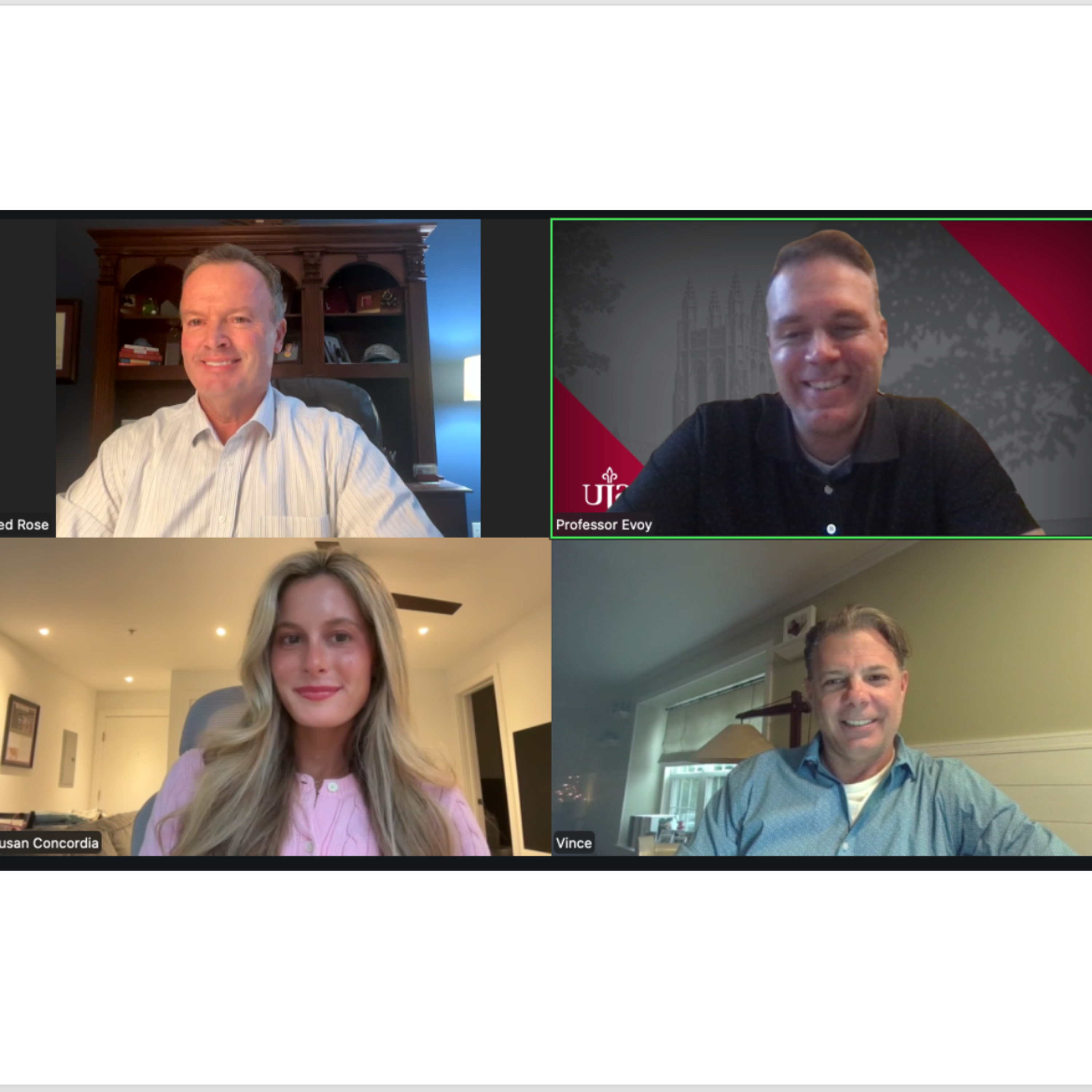
Ted Rose (Pharma Sales Leader) & Vince Schaefffer (Thought Leader Liaison Leader) are interviewed by Susan Concordia & Jon Evoy
from Path to Commercialization in Healthcare
54m 36s
In this episode of "Path to Commercialization and Healthcare," hosts John Evoi and Susan Concordia interview Ted and Vince, seasoned pharmaceutical leaders with extensive sales and management experience. Both guests reflect on their career journeys, emphasizing the importance of networking, adaptability, and continuous learning. Ted started his career selling Nike products after finding a newspaper ad, while Vince began in food brokerage through a connection made at St. Joseph's career events. They highlight how early sales roles—especially in pharmaceuticals—taught them professionalism, resilience, and the value of structured training programs. The discussion also explores the impact of MBAs: Vince credits his St. Joseph's MBA with accelerating his career, while Ted pursued his to demonstrate personal growth and open doors. Both guests have worked for multiple companies, learning different corporate cultures and management styles, though they acknowledge the benefits of long-term loyalty as well. A standout story involves Vince's 1990 class project marketing Xanax for pre-flight anxiety, which won first place despite skepticism about direct-to-consumer advertising—now a standard practice. Overall, the episode underscores that career paths are rarely linear, and success comes from seizing opportunities, embracing challenges, and focusing on patient-centered goals.
[Music] Welcome to the next episode of Pat to commercialization and healthcare from St. Joseph's University's Pharmaceutical and Healthcare Business Program. My name is John Evoi, I teach here at St. Joseph and the co-host of this podcast. Through reflections and opinions discussed today by the hosts and the guests are thoughts of their own and not necessarily the opinions of their employers. The owners of today's podcast is a spokesperson for respective companies. Today's co-host is a recent grad from St. Joseph, Susan Concordia. Susan, would you like to briefly introduce yourself? Of course, hi everyone, my name is Susan Concordia. Thank you for having me tonight and thank you Ted and Vince for joining us. We really appreciate it. I graduated from St. Joseph's last weekend as Professor Evoi mentioned, I majored in pharmaceutical and healthcare business with a minor in international business on campus. I was pretty involved. I was the VP of Marketing for Pilate, which stands for Pharmaceutical Industry Leaders of Tomorrow and I also served as Director of Ratchadising for Alpha Phi. I'm also a member of the Sales Excellence Group and I was on the Club Soccer team. And last summer I interned with DearField Group, which is a full service pharmaceutical advertising agency. And I learned a lot and gained some hands-on experience in pharmaceutical marketing and strategy and I'm very passionate about the healthcare industry and excited to keep growing especially in the pharmaceutical and medical device realm. Appreciate it. Thanks Susan. Today's guests are Ted and Vince. Ted, would you like to start off and introduce yourself? Absolutely. Thank you John and Susan for the very kind introduction. I'm very happy to be here and I definitely appreciate the invite. I'm not a hawk alum but between hiring a number of St. Joe's alums over the years and both of my daughters being hawk alums. I, St. Joe's definitely fills a great spot in my heart. I feel like you guys definitely do it right on hawk ill so I love that about St. Joe's. With regards to my background, I'm a LaSalle University grad as we say, Explorers are never lost. I got my, or received, or earned my MBA from Rowan University. With regards to my professional career in pharma, I've been in pharma for a total of 28 years, three years as a sales rep and 25 years in sales management and various roles. I've worked in Durham, Dermatology, Roomatology, Analogy and I've worked for mainly for three different organizations. I was with Gail Dermalabitouris for 16 years. I was with Regeneron for five years and I've been with Navaris for total of seven years and just happy again to join you on the podcast. That's a very impressive background Ted. Appreciate it. Vince, would you like to briefly introduce yourself? Sure, I'll take it and I have to say for both John and Susan, the nostalgia of my alma mother homecoming is exhilarating. So thanks for having Ted and me. And Susan, your background as a yours Ted is certainly much more impressive than mine is. So a little bit about me, I've been in the industry for quite some time. I've been with five companies. I started with Merck Pharmaceuticals right down the road and then I was with three companies Orofarma, which was purchased by Johnson and Johnson and then Sepercor, which is now Sinovian and then EMD Serona, which is German Merck. And now I'm with Novartis and I've been with Novartis for almost 16 years. I lead the thought leader liaison team across the entire Novartis enterprise. There are nine therapeutic areas that my team supports from hematology, solid breast tumor, radio ligand therapy, rheumatology, dermatology, allergy, renal cardiovascular and neuroscience. So I'm quite busy. Yeah, but I love Rome and love working with Ted and thanks for having us. Of course, well, thank you so much, Vincent Ted, for those amazing introductions. You guys definitely have some pretty great backgrounds. I guess getting into things, everyone would probably like to know, how did you land your first job out of college? So I guess I'll start. And Susan, I have to say that you and my daughter have something in common with your international business prowess and studies. So she has an international business major at Lafayette. So I little plug for my daughter there. Now, first job out of college, first job out of college. Actually being a food marketing major at St. Joe's, my very first role, which didn't last too long, was with the food brokerage company. And I have to say that St. Joe's was great with the career days, with the job fairs, with everything that it took for me to make that connection and get that very first role. So I'll say early on to students and everyone listening, it's super important, very early on, to flex and activate your network, because that's what St. Joe's did for me. That's great. Yeah. Well, in terms of my first job, I'll date myself first, how I got the role. Twenty years ago, there was no such thing as LinkedIn. There were no job boards. What we have with a good old fashioned, you know, help one at ads and the Philadelphia inquire. And I was fortunate enough to see an ad in the paper for a sales rep for Nike. And being someone who was very much into sports and athletics, it was really a dream job for me to get to find that role and to work at that company for a number of years in a multitude of different sales roles. I know it was super, super cool to get a lot of free Nike, footwear and apparel, as well as to get to meet people like Michael Jordan, Bo Jackson and Charles Barkley at various meetings. So it was a really great time in my career and I really enjoyed it. Oh, that's awesome. We'll have to talk about that. Yeah. Well, thank you guys. I really appreciate you answering that question. Going off of that. So a lot of students feel pressured to have everything figured out how much of your career path was actually planned versus figured out along the way. Sure. I know for me. I think it's really a combination of the two. I think it's good when you really find out what you're good at and you find out what you like and what you don't like. And I think that really helps guide your decisions. I know for myself, I was a little confused when I was in college at the South deciding what I wanted to do. I started as a communication major and then I added marketing and I'm really glad that I did that. But there was a time where I really wasn't sure what I wanted to do. I was torn between deciding if I wanted to be a sports reporter or a play by play announcer. That was kind of like my dream job. Being a big Harry Callis fan growing up in Philadelphia or getting to sales. And I had internships that really helped me. I did two internships. One was at an insurance company and I learned that, you know, I really wasn't great in an office environment. So that outdoor being outside or, you know, out of an office was probably a good thing for me. And I also did an internship at the ABC affiliate in Philadelphia working for a sports newscaster Gary Poppins, kind of like a legendary guy in Philadelphia. And he was amazingly talented and a great guy. But I saw how stressful that job was and I just realized that, you know, that wasn't really for me. And somehow I really, I thought that sales would be a better, less stressful approach and I ended up going that route and I'm really happy that I did. Great. Thank you. For me, and I alluded to this a bit ago, when I was with the food brokerage company, I think I was there maybe four months. And the network that I flexed to get my next role was my dad. So my father met someone from a water treatment company, a local water treatment company and I took that role in sales with a water treatment company, which the compensation and the benefits and everything else were kind of much better. And I was with that company for about eight months or so and then I moved into to Merck. And I'll say this to recent college graduates, you can only do so much to control the future. So I would say control what you can control. Do your best to create opportunity, but realize a lot of what happens when it comes to big, big events in life like this. A lot of it's timing, a lot of it's serendipity and a lot of it's a little bit of good luck. But don't put too much pressure on yourselves. Thank you. Great answers. So looking at both of your career paths, it seems like sales was a really strong foundation towards the leadership roles that you guys have today. How did early career sales experience shape the way you operate and your current leadership roles today? Well, I would say for me, I mentioned that my early career first role was getting it at Nike. I learned a lot about marketing and I learned a lot about brand management, which was, which was really important in that role. However, I would say that my greatest year of learning was the first year that I got into Pharma. I worked at a company called Gall-Durma Laboratories. It was a smaller at the time, dermatology pharmaceutical company. They had just an amazing sales training program that was, I thought was just amazing. They took a lot of pride in making sure that they had a very professional sales organization. We learned literally everything imaginable about sales and I feel like that really shaped my sales career.
just having that great background and that high level of professionalism. I still remember after everything we did, we would have to answer two questions, whether it was after a sales call or after a POA presentation, it was, what did you do well and what can you do better? Honestly, I still coached that way because it was just such a good model, and it was a great way to focus on reminding yourself that you did a lot of things well, but there's always room for improvement. That was such a key early career role to have a foundation of amazing training. Ted, there's different levels of experience that might listen to this. What is a POA? Yes. POA, I'm sorry, is a plan of action meeting. It's a very common pharmaceutical acronym that just refers to a mini sales meeting with pharma people that we tend to use acronyms a lot in pharma, and it'll get a lot worse than that with some other ones that you're here. Before we go back to Vance or Susan, coming from completely different industry with Nike, how hard or easy was that transition from sports apparel to pharma? That was a big transition for me because I felt like it was my first job. They didn't really have a very formal training program, and let's face it, we were selling Nike products, was not exactly incredibly hard. It was more about managing the brand. A lot of times we would get sales orders, and we'd have to cut them back, because they didn't want certain retailers to have too much product. They might not get sold in certain stores. It might end up going somewhere that where there was a distribution channel. They didn't want it to be. So we did a lot of that. So moving to pharmaceuticals, I felt like was more in line with you do a good job selling something, you get credit for it, and you benefit for it. And there was a lot more emphasis on the actual sales presentation, the discussion, and more of a traditional sales situation, which I found to be very rewarding, and just a great opportunity to work with physicians and professional people that really valued the information we were able to share. I appreciate that. I know that when my sports passion, sometimes a big brand like that can sell themselves and someone just walks on the door, and people already know about the product, whereas in pharmaceuticals to your point, sometimes we're informing the target audience about the product. Absolutely, yeah. Perfect, so I have another question. So I saw that both of you went back to school to earn an MBA. How has that advanced career helped to further elevate your career to the next level? Yeah, I'll jump in here, Susan, thanks. And I think that's a great question, and I'm quite passionate about this one. And I'll approach it from two different standpoints. One, if your organization or your company is going to fund your MBA, I would 1,000% do it for two reasons. Number one, it's free money. And number two, it's an excellent education earned. So that's the first perspective I would offer. The second I would offer is for me, my MBA, which happens to be from St. Joe's, the pharmaceutical marketing program, has definitely accelerated my career opportunity without a doubt. And I did have the good fortune of having the first company that I was with, pay for that MBA, and I'm forever grateful for that. That's amazing. Yeah. Before we go to Ted, then you said to me last year that you wouldn't be where you are today without that St. Joe's tie. Could you elaborate further on what inspired that really great complement to our school? So I'll say this in 1990, so I'm dating myself, which I'll do a lot during this discussion. In 1990, there was an undergraduate course offered, one of the first of its kind at that time in pharmaceutical marketing. And we had a challenge, a challenge course, meaning there were about 25 students in the course in the class. And we spread out into five teams of five. And you had to come up with a marketing plan for an existing pharmaceutical product. And the product that we chose to take on at that time was XANX. And I had noticed I traveled a lot thanks to my father's career with Delta Airlines. I traveled a lot and I had noticed that travelers were always so anxious and uptight and running from flight to flight or just rushing around in the airport. And I thought it'd be a great idea to market XANX towards the flyer that suffered from pre-flight anxiety. So we created a marketing plan. We were able to get on. And my dad was able to get us on an airplane to film a commercial, which we did. And we went up against four other teams. And I'm happy to say that we came in first place and each student won 100 bucks. But I'll say this interestingly enough. I'll say this. We almost lost because at that time, and you asked me the question, Professor, and you went off script, which I love, at that time, I was very intent and bullish on marketing pharmaceutical products, DTC. So direct to the consumer. Either in the in flight magazines or on television. And the judges said, you know, we almost didn't have you win because it will never happen that pharmaceutical products are marketed in magazines or on TV. And that's all we see. This is a true story. How about a true story? Wow. Yeah. Wow. And now it's the US and New Zealand are the only countries that have direct to consumer advertising. Yeah. Wow. Very impressive. Yeah. Yeah. So that's one of the many things that St. Joe's offered me. I think St. Joe's is ahead of its time. And that's great for men to students. Thanks for the question. Appreciate it. Ted, do you want to weigh in? Yes. I know for me, I'll come at this question from like a little bit of a different angle. I know getting an MBA was really critical for me just to really get into the industry. I definitely would not have gotten into pharma without it. And the reason why was I was not the strongest undergrad student in the world. There was many of interesting conversations when the mail arrived from LaSalle University and my grades came early on my freshman year. Fortunately, I did get it together. But it was really important for me to get my MBA because I really proved to myself that I was smarter than I realized. And it also spoke a lot about my personal drive and maturity that came along with maybe getting married and having a daughter and some of those things that you need to grow up, I would say. I would say something that I always remember about getting my MBA was this really wasn't on my radar. I remember I went for a role that I didn't get when I was working at Nike pretty early on my career that I thought I should have gotten. And I remember my mother and I was in the house visiting and she said, you know what? You should get your MBA. But at the end of the day, I was like, I'm getting my MBA and it wasn't even on my radar. I think that if that didn't happen, maybe I wouldn't have got my MBA. But it was definitely a pivotal moment that made me think that it's a good idea to go ahead and get it. And that's what I did. So I would highly recommend getting some sort of an advanced degree because you really never know when you're needed. It certainly opened doors for me that certainly would have been locked without it. So big fan of getting the advanced degree. Thank you. And I would have to agree. It sounds like the MBA is a great way to go. So going off that, we saw that each of you have worked for a few pharmaceutical companies over the year without sharing anything to proprietary. How have this chapter been similar or different? Yeah. Mind if I start that? Sure. Awesome. So as I shared, I've been with five companies. Two big pharma companies and then in between, there were three. The startup experience I would say is immeasurable and invaluable. You know, building a, building a Salesforce structure, a footprint, a culture from the ground up. I would say that there is no right or wrong answer as to be with, as to being with one company in your entire career or five, which you get with being with more than one is learning different corporate cultures, different approaches to the business, different approaches to management philosophies and agility. But if you have the opportunity to be with one company for your entire career, much like a sports athlete being with one team for her or his entire career, that's a great thing too. But I think in today's career management approach, it seems to be that the exception is being with one company and the norm is kind of looking around and seeing the different opportunities that are offered. That's my perspective. Yeah. Thank you Vince. I would say some of the chapters that I've had working for different companies have all taught me some different things. I know my first role in pharma was, as I mentioned earlier, was with Galderma. And we had some really great products, but we also had some, you know, really tough products to sell. And that helped us a lot in terms of developing our sales skills because, you know, sometimes it's easier to sell a drug that's really great and has great efficacy and everyone wants it, but a lot of times you get drugs that you really have to sell them. And I'm sure Vince could, you know, speak to that as well.
But that teaches you that you have to be very specific. You have to go for particular patient types to be able to win because you still have to produce even in like a tougher environment with a difficult to sell product. I know Regeneron and Novartis for me were were very different. They were opportunities to launch first in class drugs that had multiple indications across multiple specialties. They were really exciting drugs to sell. But we have to learn to work in more of a like a matrix environment meeting you have to work with a lot of different people that influence and contribute to your success whether it be a field reimbursement manager, a thought leader liaison like Vince's team. As somebody who works in patient services so all these companies have something called a hub that helps manage the patient intake and get people drug and different patient service options. You really can't do it alone and that was something that I I've learned at both Novartis and you know Regeneron that you really need to do it together. You can try but you're probably not going to succeed. The other thing that I would say that was really important especially Regeneron and Novartis is just the emphasis on the patient. A lot of times we forget about how important the patient is because that is the reason that we are here. There's some caregiver there's some patient there's some mother there's some father that may have a child or a family member that has some sort of an ailment that is greatly impacted by the products and drugs that we provide. And there's nothing better as a pharmaceutical representative or sales manager going into an office and hearing a doctor say, you know, I prescribed your drug. The patient came back and was crying because they haven't slept in six weeks they haven't they have intense itching where they could hardly do their work or they were able to walk or do something really amazing and that's one of the great things about farm but that's really why we're here it's all about the patient. That sounds extremely rewarding. Thank you so much. Did you mentioned patient types. What do you mean by patient types and why might that be important in pharmaceutical sales. When I refer to patient types I'm referring to just different subsets of the market, for instance, you might for instance in the psoriasis market. There are different types of psoriasis you could have type of psoriasis that's just in perhaps that's called inverse psoriasis that could be just in the groin area could be just under your armpits. There's that is a specific patient type. There's patients that have plaque psoriasis on their body, but they also have joint environment, which would be psoriasis arthritis. That's a different patient type. They're have their patients that may have a scalp and nail involvement, which are typically very stubborn areas to treat. There's some patients that just have plantar palm or psoriasis that are on their their palms and the the souls of their feet again thicker skinned areas that are tough to treat. And these are all a lot of the drugs work differently in different body areas. So it's important to know where your product works best. So when you're talking to a physician or dermatologist that you can explain where and why your job works in those areas. And it's always good in a crowded market, especially in psoriasis where there might be 14 or 15 drugs to have a clear space where your drug does particularly well. So that's what I meant by patient type. I appreciate that since you mentioned it and it's important to want to make sure that we cover that as well. Vince, you mentioned TLL before. Without seriathin preparatory, what is the TLL? What do they do? And let's talk about the thought leader liaison role yet another pharma acronym. So thought leader liaisons. They're actually a standard in the industry. Ted mentioned gal dharma. Gal dharma has thought leader liaisons. Mostly all companies have them now. And let's talk about what they do. So they're especially effective pre launch to a product because they do disease state education, disease state awareness and develop a specific market for its therapy. So you name the disease, especially the rare diseases these days. Thought leader liaisons are out developing the market and identifying thought leaders and talk about how thought leaders are identified in a little bit. The thought leader liaison is an extension of the marketing team. So they do not fall under customer engagement a k a sales. So they're an extension of the marketing team and they're the customer facing role for the brand team. And their role is to gather insights as I like to say together breaking news from the major medical experts across the United States or across the globe. But from the major medical experts thought leaders K wells all synonyms for the same term. And when they gather these insights, the TLS will take the insights back to the brand team to either tweak or shape strategy for marketing a product. And the TLS also play critical roles aside from gathering these news breaking insights. They play a critical role in Congress planning convention planning. So the national Congress is that all of the industries attend the TLS basically the quarterback at these Congress's speaker led programs. So the thought leader liaison will give feedback to a speaker on the back end of a program any kind of liaising externally and bringing the external climate into the internal world of a pharmaceutical company. The thought leader liaison is usually front and center. And there are a ton of travel. Their geographies are usually states, whereas the sales persons geographies oftentimes are zip codes or cities. The thought liaison does a ton of travel on a ton of overnight. It's an exciting role. And I can't stress enough that sales or demand generation is not in the risk. And the leadership of thought leader liaisons, can you describe without strengthening confidential? What does a leader do similar different than your team? Yeah, so my role is unique in that I span across the entire enterprise with nine therapeutic areas. And I think a thought leader liaison leader will have one to two, maybe three therapeutic areas that cheer he is responsible for. And as a result of that, they can immerse themselves and become subject matter experts in their disease states. And then they can also become very, very close with their KOLs. For me, it's a little bit more challenging because I've got nine therapeutic areas to learn and nine different sets of customers. Now, I find myself gravitating towards a handful of these therapeutic areas, but I certainly can't master all nine of them. So in my role, my remit is to ensure that my team is connected both internally with headquarter marketing and the other cross functional partners as Ted discussed earlier. And then externally serving our customers. One of my mantras is here to serve. Ted, you'll like this. I borrowed that from my LaSalle days, enter to learn, leave to serve. Hey, works. So that's a little bit of an overview. John on what the thought leader liaison does. Appreciate it. Perfect. And I have a question going off of that. So how does sales reps work with that leader liaisons? Yeah, in Ted's case, I'll hand it right to you. I need to I need to put in this this plug for you. They work very, very well because Ted gets the role and his team partners exceptionally well and finishes the sentences of my TLLs. Let me head it to you to go ahead. Thank you, Vince. You're welcome. Yes, we do actually work a ton with the TLL team. They are. They're a very important part of our organization and they're a part and very important part of our matrix team. We they're involved in a lot of things that we do and I'll share a few things that come to mind. I look at the TLL team is like the connectors of the organization. They're the people that are really key with the opinion leaders are biggest physicians that are very influential. They do a lot of work there. Many of those key opinion leaders. They have a lot of different interests that they might want to get involved with. Some of them want to be speakers. Some of them want to be involved with advisory boards. Some of them are looking for support for various meetings, symposiums that are common in the industry. Some just want to share some of their thoughts on marketing and how we can do things better and a lot of them are speakers themselves and the TLL thought leader liaison team will discuss what they're going to discuss from from the podium at various symposiums and maybe give them other some other thoughts around that. I want to keep things that come to mind. There's definitely some key points that I want to make that there are some firewalls that do exist because compliance certainly comes into mind.
to play as physicians are often compensated for their contributions to the company, but we have to avoid any potential conflicts of interest. We don't wanna make it a pay to play environment where we make you a speaker if you write our scripts and that's certainly a major no-no in the pharmaceutical industry that we strictly avoid. But just to the original point, the thought later on these on team is critical to what we do and they focus mainly on the marketing element of things and we focus more on the sales side. - Thank you, Ted. And Vince, this next question is for you. So how are key medical experts identified in our industry? - That's a great question, Susan. And Ted alluded to this. First, I'll tell you how they're not identified. And they are not identified by the amount of prescriptions that they write, that exclamation point. The way that they are identified is their podium presence at these conventions that I spoke of, these congresses that I spoke of, they're presence, they're frequency, they're reputation from podium, the articles that they've written, their legacy educational command and reputation. If they happen to prescribe the drug, okay, but that is not how we select a key opinion leader. That might be an ancillary. Interestingly enough, the thought leader leader liaison team does not see sales data. So we really are blinded to it. And if I have questions on what a physician is doing, I'd have to go to Ted to find out the answer to, tell me if Dr. John is prescribed or not. It's more about Dr. John's reputation and overall command in the therapeutic area. - Definitely, thank you. - Yeah. - You're welcome. I appreciate the promotion. - No, you're welcome. My pleasure. Are these thought leader liaison to these academics, are these researchers, are these full-time doctors? - So my team, John? - No, the people that they call on essentially. - Oh, okay. No, historically, so perspective, my team's target base, its universe, is anywhere from 45 to 50 max targets. Whereas Ted's team, his sales specialist, Tazas, as we call them, would have a universe of 200. So they are usually, but not always, M.D.'s, prescribed, practicing physicians, but in some cases, they're academicians that don't prescribe. And again, it goes back to just how influential they are in their field. But I would say 90% of the time, they are the same customers that Ted's team calls on, usually based out of an academic center, but not always. Does that help? - It does, a follow-up. - Please. - You don't see prescription data. How do you measure whether someone is influential? - Yeah, and I kind of, I kind of, I suppose I wasn't super clear. The best way to measure if someone is influential, especially in today's day and age, with social media, their sentiment around the organization that they're speaking for, or the therapeutic area that they're in, and frankly, the disease class that they prescribe. So you'll know if they're influential, just by their followership. That's one of the best ways to say it, their followership. - Got it. When I graduated college, there wasn't social media, so I'm sort of changing to for the years. - Same. (laughing) - You touched upon this a little bit already. How do you work with marketers? - Yeah, so the thought literally, as I shared, are an extension of marketing. They're in the marketing organization, but the headquarters marketing team, their remit, their responsibility, is to create, drive, tweak, shift strategy. The brand is theirs. Their headquarters based, they absolutely go out and see customers and can and do see KOLs, medical experts, but I would submit that they'd much rather be in headquarters than traveling 75% of the time away on weekends. My team shares the news with headquarters and works exceedingly closely as an extension of the marketing team, but it's the marketing team's role to be the strategic owner of the brand. - Appreciate it. - Mm-hmm. - Perfect, so I have the next question and it's for Ted. So we saw that you are the senior area business leader without sharing anything to proprietary. Could you describe your role at a high level and maybe talk about the similarities and differences that you've experienced along the way? - Sure. My role I feel is pretty straightforward. I'm responsible for sales performance. Obviously that's in my title, if you will, but I'm also responsible for coaching and developing my team. And that includes their sales presentations, giving them coaching after KOLs, maybe some things that they did well, some of the things that they could do, too better as well as their individual development. So a lot of pharmaceutical companies are in growth mode. They're always looking for the next leaders of tomorrow. And a lot of times they look to promote from within as they should. So it's important that we develop people. So I really find that it's a really important role because the organization is basically saying, we're gonna give you eight to 10 people that you're gonna be responsible for to get them to perform at the highest level while developing them for future roles. So it really is an important role. I know it's important to note that the number one reason why people leave pharmaceutical companies is because of the district manager. So the district manager can make or break you into your career based on how willing they are to develop you and how interested they are in helping you with your career goals. So it's really a critical role. I look at myself as being a servant leader because it's my job to kind of clear the path for everyone to make sure that they're able to focus on what they do best versus getting bogged down with problems that are only gonna inhibit their success. So hopefully that answers your question. - Yes, thank you. And then Vince, I'd love to hear about your roles and the similarities and differences as well. - Similarities to Ted's role and differences? - Yes. - Okay, having led sales teams, most of my career and now leading the TLL team, the similarities would be engaging with customers, engaging with thought leaders and serving them. Ted talked about being a servant leader. That is the number one priority of any medical professional is to serve the customer and then ultimately the customer serving the patients. Similarities, differences and we alluded to this just a second ago. My team does not drive demand. The analogy that I like to make is the, my team's version of insights, medical insights to my, or actually I say, marketing insights from physicians for my team are like prescriptions for Ted's team. So that would be the major difference again with my team not driving demand, but having to generate those insights so that the brand team and the rest of the organization knows what's going on from the medical expert standpoint. - Great, thank you. And then I'd love to hear from both of you on this. But obviously as you know, I just graduated college and I'd just love to know what to success in the first year and a sales role really look like and how can someone set themselves up for that early on? - Yeah, a great question Susan. I would say it's a really critical time for you if you're looking for that first role to really build that strong foundation of success and you can do that a number of different ways. First, you really need to learn how to sell. And if you don't get into pharmaceutical or medical sales right away, there's a lot of companies that provide really good selling programs that can help you that pharma companies will look at and say, "Hey, these companies have really great training programs. I know Cintoss is one, Gallo Mines, Enterprise Renacar." They do a great job with their sales training and pharma is notorious for taking some of their people. They're great first jobs and they're great to help you get into pharma. As regarding like pharma organizations, a lot of companies have sales associate level roles where they might be hiring, like said, they're doing a new division. Let's say they're hiring 60 people. They might reserve like five of those roles for entry level sales associates for somebody who maybe was a sales intern or somebody who they're looking for a recent college grad for some of those spots are there that they reserve for people like yourself who could jump into the industry right out of school. Some other things that I would also think about are some virtual sales roles. Those are people that they're not in offices, but maybe they're calling doctors offices to provide updates on product contract sales organizations or also great starting points. Those are companies like Cineos and Amplity. What they'll do a lot of times is their higher reps for companies on an interim basis. So let's say they're doing a new launch, the company's doing a new launch and they wanna have an increased share of voice and they don't really wanna hire 500 people, but they'll hire two.
50, right? So they'll start with 500 and the people that they want to keep say it's half of them, the 250, they'll bring them onto the organization and then the people who don't make the cut, they end up staying with the contract sales organization and then they might get another contract with another pharmaceutical company. But that's also a great way to get your foot in the industry. I would also say wherever you do land, find a great mentor and it's somebody that's you know, really willing to answer all your questions, provide great career direction, etc. That can make a huge difference in your career trajectory. If you find that person that has your best interests at heart and gives you great advice. So there's gonna be a couple things that come to mind. That was awesome, Ted. I echo everything that Ted just said and I'll approach the answer a little bit differently. I would share that as you're entering the occupational workforce, give yourself a lot of grace. Paste yourself. Don't try to learn everything in the first week or month or year. Sales is an apprenticeship. I'll say it twice. Ted and I are still learning every single day. So take your time. Don't burn out. Going to have a long successful career. That's for all the listeners. And then I'll say most importantly, have a ton of fun. Life short, have a ton of food and laugh and smile and enjoy the ride. Yes. Great advice. Yeah. You guys have given some great explanations with that and I feel like you've covered it for the most part. I totally agree with you with working with some sales companies besides the pharmaceutical and med-device industry just to get that first year of B2B sales because I know a ton of these companies are really looking for that, especially even in the sales associate roles. But for someone and I know a lot of our SJU students are really looking to get right into sales specifically from pharmaceutical and med-device right out of college. What do you think really opens the door for them? Yeah. I'll take that. There's a few things that come to mind. First, when you're in college, and I know they're very competitive, but getting an internship is a great, great foot in the door. They're very competitive, but it's a great entry point. A lot of times, the interns, they make a lot of great connections and then when there's openings, the next year, those people are strongly considered for some of those sales associate type roles. So an internship is a great way to get started. Can't emphasize the network enough. Get to know people who know people that will help you. I know LinkedIn is a great start, but so are friends, parents of friends of yours, people that are in the industry that already have great connections and find a few people that really want to help you because it can make a huge difference in getting your foot into the industry. I would also say preparation is really key. Fortunately, there's a lot of great things that make preparation a lot easier, such as chat GPT, of course, so you can get everything you really need to know with regards to information on industry news, researching drugs, pipelines, etc. But that preparation for when you do get that opportunity that you're ready and prepared. And then the last thing I would say is just be persistent. I know that it won't come easy, but neither is pharmaceutical sales, so it's really great practice for you. Rejection is definitely part of the process, but the end result will will be really special. So those are a couple of things that come divine for me. I love that. I love it. We both love it. Excuse me. I know. Amazing. Let me jump in with one point to accentuate what Ted said. And he talked about being persistent. Many years ago, I coined a phrase, be professionally relentless. And I emphasize professionally and professionally relentless, because if you're obnoxiously relentless, then it's productive. So it's super important, as Ted said, to be persistent, be professionally relentless. And we all need our big break. I received mine, Ted got his, John received his. You need your break. And if you're persistent, as Ted said, professionally relentless, you'll get your break. Great advice. And moving on to the next, this is one of my favorite interview questions. But once you're in, what separates the people who succeed early on in sales? Should I answer that with the star technique then? Susan, your favorite interview situation task actors. Okay. So you want to know what the star technique is too? That's right. I'll say this, it's super important to be a good listener in sales. Ask good questions beyond your customer's agenda and not your own. And then once you're a good listener, be sure to follow up. Listening skills are essential. They're oftentimes really difficult to teach. I stand by this so much that years ago, I, I memorized a poem and I'll share it. And it goes like this, a wise old owl who sits in an oak, the more he heard, the less he spoke, the less he spoke, the more he heard. Why can't we all be like that wise old bird? I will say this, you might think that's from Maya Angelo, it isn't, it might take a term Shakespeare, it is not or Poe, it is not. I'm going to date myself Ted. That's from an episode of Magnum PI that I never forgot, but it's super important and that wise old bird, that owl, listened and learned. The listening skills are key. I love that. Creative Vice as well. Thank you. That's awesome Vince. Thanks. I know just thinking of some successful wraps early in the career, some things that I think are really critical for some of those traits. I would say, you know, those people that are new to the industry generally have like a high level of maturity. They're particularly confident. They have a lot of passion and drive to do really well. I think it's also important to just have a really strong basis of clinical knowledge that you really put forth the effort to know your product and be an expert. So that would, there's going to be a couple of things that come to mind. In terms of some of the best reps, I think they're people that are really methodical in their preparation. It's very common to pull up to an office and jump out of the car and run in, but the people that do really well are the ones that spend a little time. They think about preparing. They look at some of their data before they go in. They put together a pre-call plan. They talk about call execution. These are the people that don't wing it. They're the people that go in and prepare and they have really productive calls every time. So those are some things that also come to mind. And I can't emphasize the point enough about focusing on the patient. When you bring it back to how this can improve the lives of patients in all different ways, that has a great impact because that's what does and what should matter to the physicians that you're calling on. I think the best reps do it the right way all the time. They have good habits. They pre-call plan. They have solid messaging. They ask good questions. And they ask for the business. And as I said earlier, they focus on patients. So those are some of the things that come to mind that I think are key habits to get into early in your career. What kind of pre-call planning lasts a minute before you get out of the car you're referring to? Sure. Well, you first you're going to be at most companies will provide some level of physician prescribing data. And you're going to know first of all who are your big prescribers of that class that you're and those are the people that generally are your highest target. So those are the people that you're going to focus on because that's the big fish and the pond that you want to try that could really benefit the most patients and quite honestly the company you work for from gaining their business. So you would look at that type of data like who are the big people in the market. You'd also look at not only their current total Rx's meaning their total prescriptions, but you'd also look at their new prescriptions. Like when they are writing that new prescription, what are they prescribing? Because you could have a drug that's a little bit older and they are still getting prescriptions from refills. But when it comes to new patients, they may be prescribing your competitor. So those would be some of the things that you would look at and you'd also look at trends. You know, what did they do six months ago and what are they doing currently? Those would be a few things that you would look at. And then we live in a very pay or driven environment. So you also want to look how your coverage compares to the competition and where you can win. If you have first line coverage with a particular physician group that sees a lot of say United Health Care and you're in a very good formulary position, that's a great place to focus on and to share that information. So those would be a couple of things that come to mind around the pre-call planning. So Ted, we've seen that you worked on co-promote. For those who don't know, could you describe what co-promote is? Sure, a co-promote is basically just when two companies work together to sell a product together. Generally, what they do is they share the costs associated with everything around promoting the drug, the resources, etc. But they also get the opportunity to share in the profits. I know I had the opportunity to be a part of that working at Regeneron, which we co-promoted to Pixent with San
And these can be a little challenging situations because sometimes companies do things a little bit differently and they end up having to agree trying to agree on as many things as possible and sometimes they don't really get there. So that can be the challenging. Sometimes it's a tough to align on the marketing message, the market access strategy or how much to spend with the budget. So those are all some of the challenges that are faced when you work in a co-promote environment. Definitely. And I feel like you touched upon that a little bit already. But how is a co-promote similar and different from promoting a treatment by a single pharmaceutical company? Yeah. I think it really just comes down to the single company is responsible for everything as well as all the costs and resources that are provided. I think one of the benefits of the co-promote is you get to share in some of those resources. So for instance, you could do it a lot of different ways like one team or one company could be responsible for managing the thought leader liaison team, the other company could be responsible for managing the field reimbursement team. You can break up all the different resources, different ways or even slip them. But that's probably one of the advantages is the shared resource approach. Yeah, thank you. Sure. So I can elaborate a little bit. My team right now is not involvement in a co-promote. I have been involved in three or four in my career and I can't stress enough Ted's points. You have different cultures and different philosophies coming together and frankly each company swears by their own. So you do your very best to get to the end result. Well, thank you so much for your time today guys. We really appreciate you hopping in the podcast and I know all of our listeners will be super grateful to hear all of your advice. You guys have been extremely helpful and we appreciate it. Before we close, we'd love to hear your parting words of advice that you have for the next generation of our healthcare marketers. Whoever would like to start, please go ahead. Sure, I'll take that one. I would say a few things come to mind. You know, really focus on learning and understanding the science. Know the data and not only that, but the customer experience that patient experience is really critical. It's really not just about the messaging. So it goes beyond that. I would also suggest getting very comfortable with AI because there's so much. I've been really influenced and it comes in there. Really know the data. It's critical to success. I know for me that's one of my developmental areas. So I'm always looking for ways to get better at understanding the data. And the other thing that I would really recommend that I've noticed at this stage of my career, how important it is to experience a lot of different roles and a lot of different disease states because it can only help you later. And how rounded you are the better. Don't be afraid to try new things, different roles, marketing training, cross divisionally, makes a big difference. And the last thing I would say, and I know I've alluded to this a few times is don't forget the why it really is all about the patient. That is why this industry exists to help patients. And hopefully that's everyone's North star. I'll close with this. Be curious learners. It's important to be a sponge. Make it a point to listen to podcasts to read. Ted talked about this earlier. Have a mentor. Have a have a board room table in your mind and have six people at that table that you can lean on for guidance. Have fun. Always be kind to others live by the platinum rule. The platinum rule as everyone knows now is treat others the way they want to be treated and just be sure to be kind. I can't stress that enough. Susan John, thank you. I need to say go hawks. Love walk hill. And it was our pleasure to be with you for sure. Thank you. I really do appreciate it. It was so great meeting you guys and truly thank you so much for hopping on. It means a lot to us. Our pleasure. Thank you. Absolutely. We appreciate it.
Podcast Summary
Key Points:
The podcast episode features hosts John Evoi and Susan Concordia (St. Joseph's graduate) interviewing guests Ted and Vince, both experienced pharmaceutical industry leaders with sales and management backgrounds.
Ted and Vince share how they landed their first jobs—Ted through a newspaper ad for Nike, Vince through networking and a food brokerage role—emphasizing the importance of networking and flexibility.
Both guests discuss how early sales experience shaped their leadership styles, highlighting the value of professional training, self-reflection (e.g., "what did you do well and what can you do better?"), and adapting to different challenges.
The conversation covers the role of MBAs in career advancement
The guests compare working at multiple companies (Vince at five, Ted at three) versus a single employer, noting that diverse experiences teach different corporate cultures and management approaches, while a long tenure can build deep loyalty.
A memorable anecdote from Vince describes a 1990 St. Joseph's class project marketing Xanax to travelers for pre-flight anxiety, which won first place despite judges' skepticism about direct-to-consumer advertising—now common in the U.S.
Summary:
In this episode of "Path to Commercialization and Healthcare," hosts John Evoi and Susan Concordia interview Ted and Vince, seasoned pharmaceutical leaders with extensive sales and management experience. Both guests reflect on their career journeys, emphasizing the importance of networking, adaptability, and continuous learning. Ted started his career selling Nike products after finding a newspaper ad, while Vince began in food brokerage through a connection made at St.
Joseph's career events. They highlight how early sales roles—especially in pharmaceuticals—taught them professionalism, resilience, and the value of structured training programs. The discussion also explores the impact of MBAs: Vince credits his St.
Joseph's MBA with accelerating his career, while Ted pursued his to demonstrate personal growth and open doors. Both guests have worked for multiple companies, learning different corporate cultures and management styles, though they acknowledge the benefits of long-term loyalty as well. A standout story involves Vince's 1990 class project marketing Xanax for pre-flight anxiety, which won first place despite skepticism about direct-to-consumer advertising—now a standard practice.
Overall, the episode underscores that career paths are rarely linear, and success comes from seizing opportunities, embracing challenges, and focusing on patient-centered goals.
FAQs
The podcast focuses on pharmaceutical and healthcare business insights, featuring reflections and opinions from hosts and guests.
Ted got his first job through a help-wanted ad in the Philadelphia Inquirer for a sales rep role at Nike, which was his dream job due to his interest in sports.
It's a combination of planning and discovery; find what you're good at and like, but also control what you can control and recognize that timing and luck play a role.
Sales experience taught professionalism and continuous improvement, such as reflecting on what went well and what can be better, which is still used in coaching today.
An MBA, especially when funded by an employer, accelerated career opportunities and proved personal drive and maturity, opening doors that might otherwise be locked.
Different companies taught varied skills, from selling tough products to launching first-in-class drugs, and emphasized working in matrix environments and focusing on patient care.
Chat with AI
Loading...
Pro features
Go deeper with this episode
Unlock creator-grade tools that turn any transcript into show notes and subtitle files.
 PodcastTranscript AI