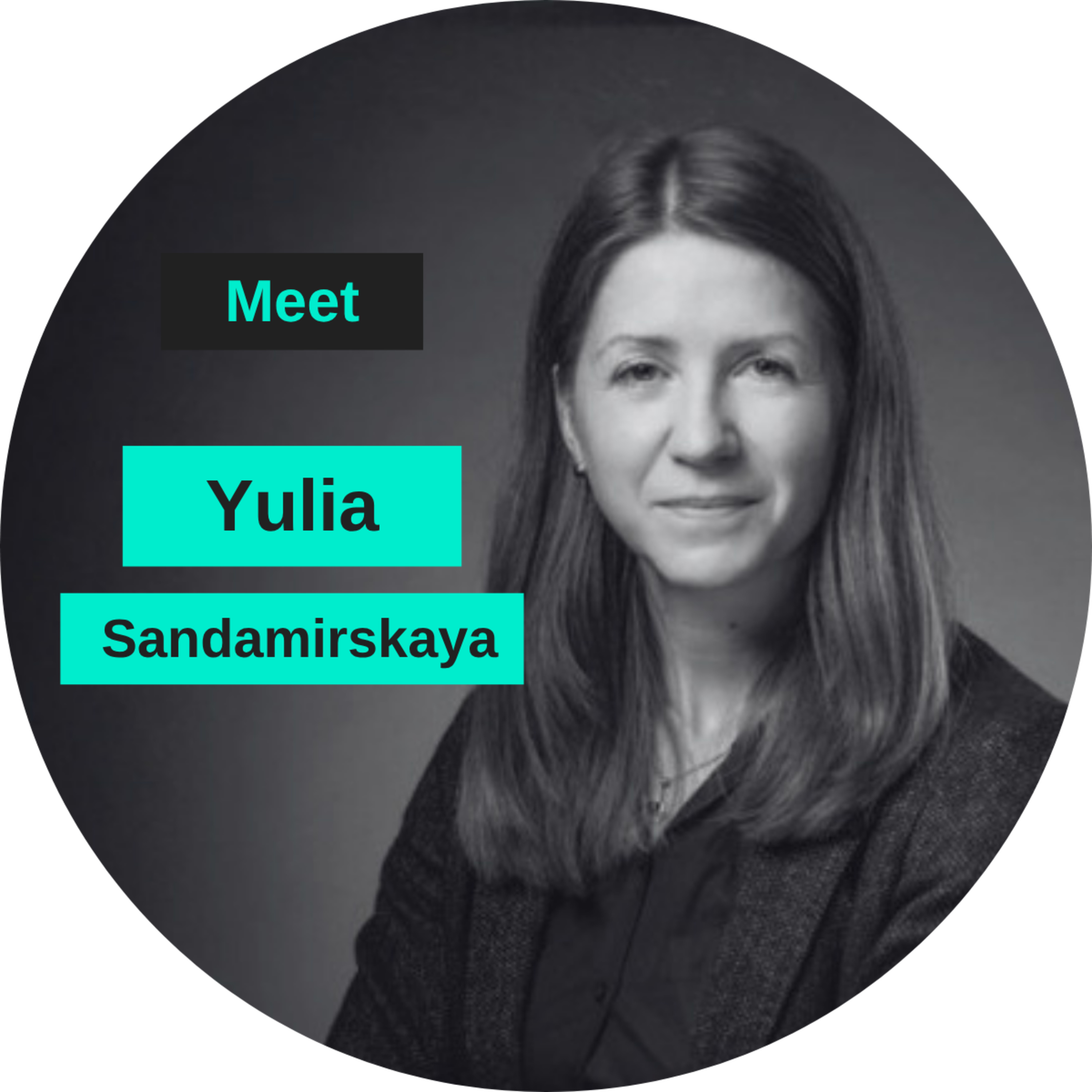
Julia Sandemiske, a leader in robotics and AI, discusses her career journey and current work in an interview. She transitioned from studying physics to specializing in neuromorphic computing and robotics, driven by an interest in interdisciplinary fields combining biology, computing, and human behavior. Now heading a research center, she focuses on developing AI-based technologies for life sciences, particularly robots that interact safely and assistively with humans. She explains that physical AI and cognitive robots differ from conventional AI by requiring real-time processing, stringent safety measures, and the ability to learn quickly from few examples. Challenges in robotics include managing latency, onboard computing limits, and adapting to dynamic environments. Her projects involve creating fast visual sensors for robot safety and exploring applications in healthcare, such as robots performing logistical tasks in care facilities. She highlights surprises in real-world deployment, like the need for robots to open non-automated doors. As an entrepreneur, she co-founded startups focused on integrating cognitive robots into industries and commercializing sensor tech. Reflecting on her experiences in academia and industry, she notes that while academia offers freedom, it is highly competitive, whereas industry fosters teamwork and applied research.
[Music] Welcome to Tech Inspired. My name is Priska and I am your host today. With this podcast, we want to inspire and empower more women to start a career in tech. We interview you on a regular basis exciting guests from the tech industry who share their stories, insights and career advice. Let's get started to build your best career in tech. So today I'm very happy to welcome to the podcast, Julia. You were recommended to me by Katarina Portman and you both shared the topic of robotics and she told me that you're one of the leading ladies in the robotics space in Switzerland. And that's why I thought it must be, you must be the great addition to our podcast, talking a little bit about what you're doing in the robotics fields and so on. But yeah, first of all, I want to give you the word and I want you to introduce yourself a little bit. Who are you and what are you currently working? Thank you so much, Helse. Thank you for Tukatavina for her kind words. It's of course a pleasure and an honor. Yeah, so I'm Julia Sandemiske. I lead a research center cognitive computing at SET Havi. Today in our center we developed a different type of deep tech AI based technology for life sciences, in particular and in my research group we focus on developing technology for robots that will work close to humans. Next to humans, interactive robots, service robots, assistive robots. Yeah, okay, perfect. Thank you very much. Now your path goes from studying physics, like in the old days. Leading now the research center for cognitive computing and life science. And also you work with Neuro-Morovic Robotics. You might need to explain this word a little bit as well because I think maybe some of us don't know what it is. But besides that, what was your personal motivation to get into this space or was there any key moment that you realized, oh, this is where I need to go. This interdisciplinary space is really what I want to work in. Yeah, that's a great question. I thought about it and I think there were a few important turns. It's always a pathway, not just a single decision that was made. So I studied physics. However, I always was interested a bit more in biology and humans and people. But physics was an elite thing you study if you're smart for that. And physics was exciting. I think it was very good that I got this basis both mathematical and also thinking modeling, believe it. But then for my masters, I got a chance to pivot to bio physics and do some computational studies of protein dynamics simulations. And that already brought me into the world of computer simulations computing technology in biology. And then for my PhD, I made another turn to institute of Neuroinformatics or neural computation in Germany in Bohrholm. And at that point, I didn't think much about neural networks, neural anything. So I just dive into this field. It sounded interesting. And I think this was maybe the most important pivotal moment because that institute was extremely interdisciplinary. It ranged from actual neuroscience, computational studies of biological neural networks, cognitive science, computational mathematical modeling of behavior, development of behavior, psychology. And then computer science with some very early work in AI and machine learning was early 2000s. And so and and robotics as part of the field of embodied cognition. So bad PhD that I've done in this institute got me immersed in this extremely interdisciplinary environment, which was very exciting. It was top top notch technology field, but also had this biological and human component for understanding human behavior, understanding the brain, the biological neural systems. I think this is where I mature as a researcher. And then after that, there were a couple more steps. So the next step was towards neuromorphic computing. And neuromorphic computing is brain inspired hardware. So where the processor, the hardware itself is inspired by structure of biological neural system. So this is a group of people, academic people, but also companies who build new type of processors that have the structure, not like our GPU or a CPU, but closer to the brain. And that of course matched very nicely the computational models that we were developing before. Yeah, so I ended this field first. I got in touch with them in 2007 at a tellurite workshop for neuromorphic computing. And then I joined institute of neuroinformatics here in Zurich in 2015. And there I led the group that was called neuromorphic cognitive robots for five years before I joined Intel. That was another pivot from academia to, you know, the dark side. This little thought was somewhere in the back of my mind and leaving the goods, gardens of academia and go to a company, commercial money, money, money. It was a very positive experience. So I discovered a lot of good research is being done in industry and companies. And so it was a positive experience and I can dive into this later. And then the last step was to set Havé where I now have my lab and can try to bridge research and exploring new directions and do applied research. The applications actually working on bringing technology to society, to people, to applications, the products. Yes. So basically bringing these all these parts together now into these research lab, not just what you did with your PhD, but also what you did at Intel and having this now all combined. Perfect. You mentioned many, many terms. And I'm sure a lot of people haven't heard of them before. If you talk to non-experts, how do you explain what physical intelligence or cognitive robot is and how can they make a differentiation to AI's and what people understand today under AI? Because I often also see that AI is immediately related to a picture of a robot. But I think there is still differences and they might scare people as well when they just see like, "Oh AI is a robot that takes my work more or less." I would you explain this to a non-expert? So AI becomes physical when it's about moving something in the physical world, moving a physical object. It has the dynamics, it needs to go from A to B, it changes the physical state of some object in the environment. And this has implications, this physical movement. On the one side, aside in terms of the algorithms and constraints that you have, and we can dive into that later, on the other hand side in terms of the safety. Now if I have an object moving in the environment, it potentially could hit someone, could break something, so there's much more constraints in terms of safety and how you design such a system. If it's not just about numbers on the screen, pixels on the screen. So that's the physical AI. If you want AI that moves something in the world, then it requires different approaches than AI that is just about numbers. Now if you talk about cognitive robots, then that's another step because I can have a robot, a system that moves from A to B, as robots that we had in automotive industry, building cars for decades now. So these are just machines, they go from A to B and they do the job they were programmed to do, very precisely, very quickly, very reliably, not as many hours as needed. But those robots are not very intelligent. No, they are just programmed in a fixed way. There is a controller that guarantees that they will go from point A to point B and that's it. Now, physically, AI is also about the robots that are intelligent that make decisions themselves where exactly shall they move based on, for instance, visual information. And that requires this combination of intelligence, cognition, some smart algorithms and ability to move. It went just before to dive deeper now on this topic. What are the challenges? Because I just realized I've read somewhere that the robots for your household should come sooner than expected. And there was this description, "Oh, it helps you make your bed, fold your laundry." And it was like, "Yeah, it's nice, but that's not the work that occupies me the most." I mean, for me, it was like, "Okay, nice, but I wouldn't buy because of that robot." But what are the challenges that you see not specifically enough for household, but in general, in this area that makes it so difficult to speed up the development of these robots? Okay, let me dive into that before I ask you a question myself. Yeah. So I think the main difference of this physical AI to normal AI is how time is treated, timing. Timing is very important for physical AI for control. In the regular AI that just displays the result on a screen, the screen has certain update rate. And it's fixed update rate. So whatever happens behind the screen needs to just deliver your update with this fixed rate. On the physical robot, you know, I can have some part of the system that need to move.
very quickly to stabilize the post-roller of the robot that it doesn't fall down. Others are maybe less critical. They can be computed more slowly. I have some sensors that are very, very fast. They deliver me updates and information with milliseconds time rate. And other sensors set us slow. They only deliver me updates immediately. So time matters. It matters how long the computation takes. And in pure, like computer vision, task, and pure AI task time is not so critical. Like in the worst case, the user gets response two seconds later. It's fine. You show them nice animation. They will wait. The robot that is balancing and is about to fall cannot wait. So time becomes really critical. Latency is critical. You might have different time scales, but you have to think about timing of your computing. That brings the next problem of resources, computing resources. Because of course, you can do any computation, almost arbitrarily fast if you have big enough compute. There are some caveats. But on the robot, you might want to need to carry your compute with you. So you need onboard compute for different reasons. Maybe it's privacy reasons. Maybe it's again the latency. You don't have time to send your signals to some remote server and wait for them to come back. So that also requires you to be economical about computation. You cannot just take the biggest, largest, greatest network and run your computation there. You need some compact computation because you know, you care about the energy that this computer will consume. The size of this computer, it cannot occupy the full room. It needs to be, you know, local, the size, the weight, and so on. The temperature now that this computer develops all becomes important, much more constraints. And finally, the speed of learning. So for these robotic systems, if you buy a robot, you might want to teach this robot the objects that you have in your home very quickly. And you don't want to wait, you know, for nine months for whatever a large model to be updated with your particular objects. So this ability to learn quickly from just a few data samples is also what makes, I'm embodied AI or physical AI different, more conventional AI. For a very, very much for sharing this very insightful, what are you currently working on in your research center? Is there anything you can share with us that shows us now what you explain that you're working on a concrete project? So we have kind of two poles on which we work. One is deep tech. So we work on a new sensor framework that is a very fast visual sensor that allows the robot to get visual updates about the scene around them quickly. And those updates include like where the objects are in 3D space around the robot, what those objects are and that the updates in real time. And that's very important to make robots safer around humans. So the robot knows all this is a human now in my workspace and maybe go around human with a robot arm and also more kind of agile, more capable in this human-centered environments. So this is the deep tech component. And on the other side, we work with end customers. So we envision that service robots could support workers in care facilities who do like small tasks, small logistic tasks, like bringing small items that you know someone forgot or needs more water or a snack or you know a package or a little latest newspaper so that the robot can do this simple bring tasks in the care facilities. So what we do, we go to care facilities and try to better understand the environments but understand the challenges where support would be appreciated and where it will bring value. So that's the other side of our work and we hope that two ends will meet. Okay, I think one very important aspect always for me is what you just mentioned like understanding where you want to like place the robot at the end or what's the task. And especially you mentioned now healthcare and I could imagine you let's assume you've never worked in the healthcare area so you don't know how their daily tasks are or what their needs are and so on. So it's very important for you as a researcher to understand their side but I also believe it's very important to have these people working closely with you when you work on the robots itself. And this is for me important because there is where I believe that diversity comes into developing AI robots, whatever it is within the tech industry. Did you ever had something that really surprised you when you were working either in your lab or in the real world, something you were like oh my god I've never thought of something like this. So basically usually small things. So I think the real world, like the small things that might prevent you from deploying your robot. Like I know really understood that we always think that the doors, there doesn't have a problem. You can always automate the doors. They will open the robot can talk to the doors. And no, it's not always the case like the doors to the rooms of the people in the care home for instance. They don't want to automate them. They want them to have that handle. There's also a lot of those doors in the care facility and they don't want to automate them all because that will now have some costs and then also have some maintenance costs. So they really want the robot that can open doors, all the doors on this facility. And they're like, well the robot developer, okay. And if you don't do that, there's no use case. You cannot put your robot. Yeah. So one big surprise was recently visiting one care facility and we had a tour around the facility and we went into the room where the group care personnel was sitting. And this is a joke I asked somewhere. Do you need most help for the robot? And then the person like the responsible for care, he like, oh, oh, like right now at the moment, okay, let me think, let me think. And then he came up like with 20 different ideas on the spot. They're like, wow, that was extremely useful. Yeah, exactly. You see, imagine because that's where like people really start thinking about positive in a positive way, not in a negative way of like, oh, it's taking away my work. No, it should really take over the work that bothers me most. And then I can focus on the work that's more important, like really being with patients, for example, than listening to them. So I did a great experience. You not only work in a research lab, but you also have your own startup. So you're an entrepreneur. Can you share a little bit about what you're doing with Oron, Oronic Robotics. Oronic Robotics, right? They are saying, yeah, okay. Oronic reportings. Yeah. Right. So we actually have two startups. So I'm supporting Oronics Robotics and I co-founder there. It's a German startup that is a robot integrator for cognitive robots. So robot integrator is a company that bridges the gap between the robot entities manufactured and the application that brings value for the customer because you cannot just buy a robot, you unbox it and it just solves the task for you. There's still work to be done. Sometimes you need to adjust your space. Sometimes you need to bring additional sensors or enable automation of elevator or doors or you know, put the charging station somewhere. You also need to think a bit deeper how the robot will fit in the processes. No, because you need to adjust the processes. You maybe need to teach the person how to use the robot. So there are a lot of steps and work that still needs to be done. So the integrator company does that job. So they make sure that the gap between the robot, now that doesn't drop in principle and the actual application is closed. And they do it very broadly. So it draws different verticals in manufacturing, but also logistics, retail, stores, the editors and me, all this world and healthcare, particular healthcare logistics, gathering, going to experience that goes across these different verticals and using AI tools. So that's why cognitive robots. So we try to make the robots smarter so that transition from one application to the next one gets smoother and there's less and less work involved in doing that. That's our running for Linux. And we have another startup, the URO that's as we start up to bring the DIGTEC that I mentioned so that fast vision for robots on the market. And we collaborate with our Linux. So when our technology is ready, our runicle help us to deploy it in different applications. In particular, in healthcare or in retail, where humans have to work close to the robot. I think there's still a lot more that needs to be done in the robotics area until we have this always very futuristic picture of robots being everywhere doing our work. What would you say? What is for you the biggest difference or how does it feel different between working at the university in the research lab at a large company when you were with Intel and now also with startups? How do you like look at this? What are the differences you experienced there? Yeah, that's very deep and personal maybe also. Academia is great because if you're successful in academic career at some point, you reach a point where you can realize your dreams. If you had some very strong ideas and opinions how things should be done, you're able to shape the whole field and come up with something new and then test this idea, try out this idea, define some new field of knowledge. And that's very rewarding. When I switched to Intel, I looked into academia from a different perspective and I saw how much no competition and politics is on the way there.
So on the way to this final state, where you finally have some level of academic freedom, it's still limited. There's so much competition. So when I was working for Intel, this is the first time where I experienced a real teamwork because we were a team, we had a shared goal. And like we all were very interested in bringing this goal, you know, to the market and succeeding. Where is the academia? There's always like a whole be the first author on the paper. And who will get this next grant? Who will become a postdoc in this lab and who will have to leave? And then when it comes to professorships as a fiasco competition. And then when finally you become a professor, there's also a competition with your colleagues for the budget of the overall university. So it's constant race and less and less space for actual deep research. I find so all the young scientists, they're very stressed to progress in their career because it's now it's like McKinsey up or out in many places. And you have to fight for grants and to get grants, you need to fight for publications and to get publications. It's very difficult to do like free research, just explore your new ideas. You have to come forward to the rules of the field. What is fashionable in this field? What methods are considered accepted and good? Yeah. So you change your mind. Yeah. That was a big disappointment, maybe because now I grew up in the family of researchers. I always saw myself as a researcher. But there's very little research in academia, these days. Unfortunately, there are exceptions certainly. And I was lucky to actually experience and leave these exceptions where two research has been done. Yeah. So Intel was great because there was this team work. It still was on the edge on the frontier of science. So we were doing exciting new things. And it of course was nice to be immense in this very kind of good old company with a DIC tradition engineering company where I could learn a lot from also from other departments, not just from the research lab, where I was. Yeah. So I think it also helped me to form as an entrepreneur. To a large extent. Also, my first entrepreneurial project was within Intel. I was an Intel incubator of disruptive ideas where you know, I pitched an idea and we were selected. I could form a little startup and we were coached within this program. And I was amazing learning experience. So I think I haven't learned as much as in that couple months ever before. It was very intense. Yes. And now in academia in a halfway back to academia and the University of Applied Sciences, I find it is a great mix between the academic freedom and now you can do research projects, but you are grounded by applications. By the thought, you know, our projects, we need to get funding for them, either from companies who will then bring whatever we develop on the market or from customers or also from the government, but with this applied research in mind, another thing is a very healthy anchor that takes away some of the ego from the system. You know, in this academia, when you want to fulfill your dreams, your research dreams and define your topic and it's really yours, it brings a lot of ego in the process. And then the University of Applied Sciences, you have more of this serving attitude. So we now serve, you know, other companies and the customers. And that makes everything kind of a bit healthier atmosphere, maybe. Yeah. So I really enjoy my position now. And now the entrepreneurial step. So that gives you the speak feeling. So suddenly, you know, when the company was formed, especially our like Swiss company, there was suddenly this feeling of responsibility. So now I'm responsible for this project to be successful. I'm responsible for these people having a job tomorrow. And you know, this customer said, promised is something we actually have to build this. Thanks. And I know always know exactly how and when. Yeah. So this feeling is very, it's like a cold shower. Like no, it's very refreshing and makes you focus and concentrate. And I like this feeling. So because it gives you, it's a way kind of freedom, right? But freedom that comes with responsibility. Yeah. So for me, that's, that's a good point, I think. Amazing. So you experienced everything and I think you made a very good pitch now. So I hope that our listeners can now choose which way they want to go where they feel more attracted to. Thanks a lot for sharing this very personal inside full views and talking of our listeners. And if someone is now at the point saying, well, I want to go into robotics or physical AI that's something I really want to explore, what would you, what would you recommend them to do? How would they get started? What kind of skills would they need to focus on first to get the foot in the door? And so I think luckily robotics is like Rome, all roads can lead there. There are so many different entry points. So in my experience with students, of course, you can have math and physics, right? Then you have this basic mathematical understanding and ability to build models, physical models, because a lot of the robot is about motion, movement, and movement is newton lowers of physics, you know, force is mass, time, acceleration, that's like the key stone of control theory. So from there, so one possibility is mechatronics. All right. So the mechatronics is the science about building mechanical, the electronic systems for controlling movement control. Very important. Cornstone, you can also come from computer science, kind of entry and there are different entry points there. Computer vision is one very important field. So how do we analyze images or other visual information, different methods, their classical methods, it can be about sensors themselves sensing and imaging. So this could be something that could lead you to robotics. Or of course, AI also as part of computer science, so machine learning, neural network training, brain force, mode learning, all kind of old fashion, AI and machine learning, modern AI and machine learning, even prompting and wipe coating can lead you to robotics. And then you have, you know, design, the robot needs to look nice, look friendly, be acceptable, accept it, trust worthy. You have human robot interaction design. So there's a lot of psychology there, user studies, now how shall, where shall the robot look? How can the robot signal the person, what it is doing, what it is not doing, user interfaces, no graphical user interfaces, anything. I can tell almost an anecdotal story from Intel. One person at Intel wanted to have a robotics as an important theme, a pillar. And he talked to different people who do all kind of stuff like you guys do Wi-Fi, you know, Wi-Fi is important for robots. So how what we say you do robotics and compilers important for robots and hardware important for robots, memory important for robots. So you know, everything is important for robots. So then he made the case like, look, we already do so much robotics. Why not just put the label on it? But management didn't like that approach. So they said, why are we doing so much robotics? We didn't want to. So like, should forward. But as you said, it's anecdotal. It's really some messages. There is everything you need. You find in robotics. So there is different ways to get in. So yeah, perfect. That's good to know. And I hope a lot of people will look into it and think about what's there as an opportunity for them. Because I think robotics is something that's also a growing topic in the future. Something that will stay with us, develop a lot over the next couple of years. But what is your take on this? So what do you think what is going to happen within the next five to 10 years in this field? Do you have any predictions or do you see already something happening that could be also interesting to dive into? Maybe the first thought is after looking now in different applications where we want to bring robots. I realized something we might not realize in our daily life. How much work is being done behind the scenes for us to enable our high level nice life as academics, for instance. And a lot of that work is done in dark places and underground places and places with bad air to hot places. Very repetitive work. Hard physical work is being done without assistance because it's not so easy to bring robots to those places. And there are a few and fewer people who want to do those jobs. Like the new generation, no, we brought them up well. We took care of them. So those parents took those hard jobs so that the kids can have a better life. So now those kids want a better life. They're not obligatory want to do those jobs. And now people in other countries also experience better and better quality of life. They also not obligatory want to do those jobs in the future. So the question is who will do all that. So I think some more automation just needs to come to keep our society going. And this is the thing what also the least big robotic company seemed the robots need to arrive. The development over the last couple of years or even months was immense in terms of the hardware, especially so now we can have very affordable robot hardware, which is reliable enough agile enough good enough. There's still advancements possible. No questions asked. But we are now at the level where the robots could do useful job. I think the big bottleneck now is kind of overall system design, application design and large part of that is perception. Perception has always been a bottleneck in bikes. And I think historically visual perception, so computer vision can develop separate from this embodied AI of physical AI. So it was developed for graphics for computer graphics for image processing without held those very strictly in sequence trains and computer.
all constraints. And so now we have to merge the two fields and this is where, you know, it's not so easy. And this is the gap that we are trying to close. But I think we are on a very good way. Many people now have good hopes because of AI tools because they also like kind of show how the gap could be close to capable robots that brings investment in the fields, which is like water, you know, on the mill, and things in motion. So I do think that we will get more and more useful robots. And as they appear, we will think about all this safety and regulation and how to integrate them in our society and, you know, how to teach people how to work with robots, how to use them, you know, safely and effectively. I think education needs to catch up as well so that the kids, you know, know what the robot is, know how it works, know how to build it, hack it, work with it. Yes. And then I think we have a chance as a humanity. Thank you very much. I think you're a good point there with especially like the education, how to deal with robots. And I think also how are you using robots and not to harm society, but to really support society and everyone in society and not just a specific group of people who are able to work with robots, but that we make sure that robots are there for everyone in a positive way. Thank you very much for sharing all your insight that was super interesting. And yeah, thanks a lot for being our guest and showing us your world as well. Thank you so much. Can I now ask my question? So you said you wouldn't buy a robot to just the laundry and fold stuff. So what task would you like to push on a robot? Isn't there anything? That's a very good question. I've never really thought about it because there are lots of things like I like doing and I wouldn't want to see a robot doing it. And I haven't really, because maybe I'm lucky and I could create a life that allows me to focus on the things or to do all the things I like doing. And there is not much in my life where I'm completely saying like, no, never again, maybe it's cleaning personally like the whole house cleaning. That's maybe one thing. I was not allowed to give someone else. But I don't know. I think for me, robots are more like an addition to my life. So supporting the things where I'm doing already, like things that do like doing, maybe giving me more time and space to do that or supporting me in doing this. I don't know. I've never really thought about it, but now I have a task. And thank you for being our guest. Thank you so much. I was a pleasure. Did you enjoy this episode? Don't forget to comment or rate us on your podcast app. Never want to miss an episode again. Sign up now for our newsletter on techface.ch or follow us on Spotify or wherever you are listening to podcasts. Stay tuned and build your best career in tech.
Podcast Summary
Key Points:
Julia Sandemiske leads a research center focusing on AI and robotics for life sciences, particularly robots that work closely with humans.
Her career evolved from physics to biophysics, then to neuromorphic computing and robotics, driven by interdisciplinary interests in biology, computing, and human behavior.
Physical AI and cognitive robots differ from conventional AI by requiring real-time processing, safety considerations, and the ability to learn quickly from limited data.
Key challenges in robotics include managing timing/latency, onboard computing constraints, and rapid adaptation to new environments.
Her work involves developing fast visual sensors for safety and collaborating with care facilities to deploy service robots for logistical tasks.
Real-world deployment reveals unexpected practical hurdles, like robots needing to manually open doors in care homes.
She co-founded startups focused on integrating cognitive robots into various industries and commercializing sensor technology.
Academia offers intellectual freedom but is highly competitive, while industry provides more teamwork and applied research opportunities.
Summary:
Julia Sandemiske, a leader in robotics and AI, discusses her career journey and current work in an interview. She transitioned from studying physics to specializing in neuromorphic computing and robotics, driven by an interest in interdisciplinary fields combining biology, computing, and human behavior. Now heading a research center, she focuses on developing AI-based technologies for life sciences, particularly robots that interact safely and assistively with humans.
She explains that physical AI and cognitive robots differ from conventional AI by requiring real-time processing, stringent safety measures, and the ability to learn quickly from few examples. Challenges in robotics include managing latency, onboard computing limits, and adapting to dynamic environments. Her projects involve creating fast visual sensors for robot safety and exploring applications in healthcare, such as robots performing logistical tasks in care facilities.
She highlights surprises in real-world deployment, like the need for robots to open non-automated doors. As an entrepreneur, she co-founded startups focused on integrating cognitive robots into industries and commercializing sensor tech. Reflecting on her experiences in academia and industry, she notes that while academia offers freedom, it is highly competitive, whereas industry fosters teamwork and applied research.
FAQs
The podcast aims to inspire and empower more women to start a career in tech by sharing stories, insights, and career advice from guests in the tech industry.
Julia leads a research center for cognitive computing at SET Havi, focusing on developing AI-based technology for robots that work closely with humans, such as interactive, service, and assistive robots.
Physical AI involves moving objects in the physical world, requiring considerations for safety, timing, and resource constraints, unlike traditional AI which deals with data on screens and has less critical timing needs.
Challenges include managing timing and latency for real-time control, optimizing onboard computing resources for size and energy, and enabling fast learning from limited data samples in dynamic environments.
They are developing a fast visual sensor framework for safer human-robot interaction and exploring service robots for care facilities to assist with small logistic tasks like delivering items.
Interdisciplinary environments, like her PhD institute, combine fields such as neuroscience, AI, and robotics, fostering innovation by integrating biological insights with technological development for human-centered applications.
Chat with AI
Loading...
Pro features
Go deeper with this episode
Unlock creator-grade tools that turn any transcript into show notes and subtitle files.
 PodcastTranscript AI