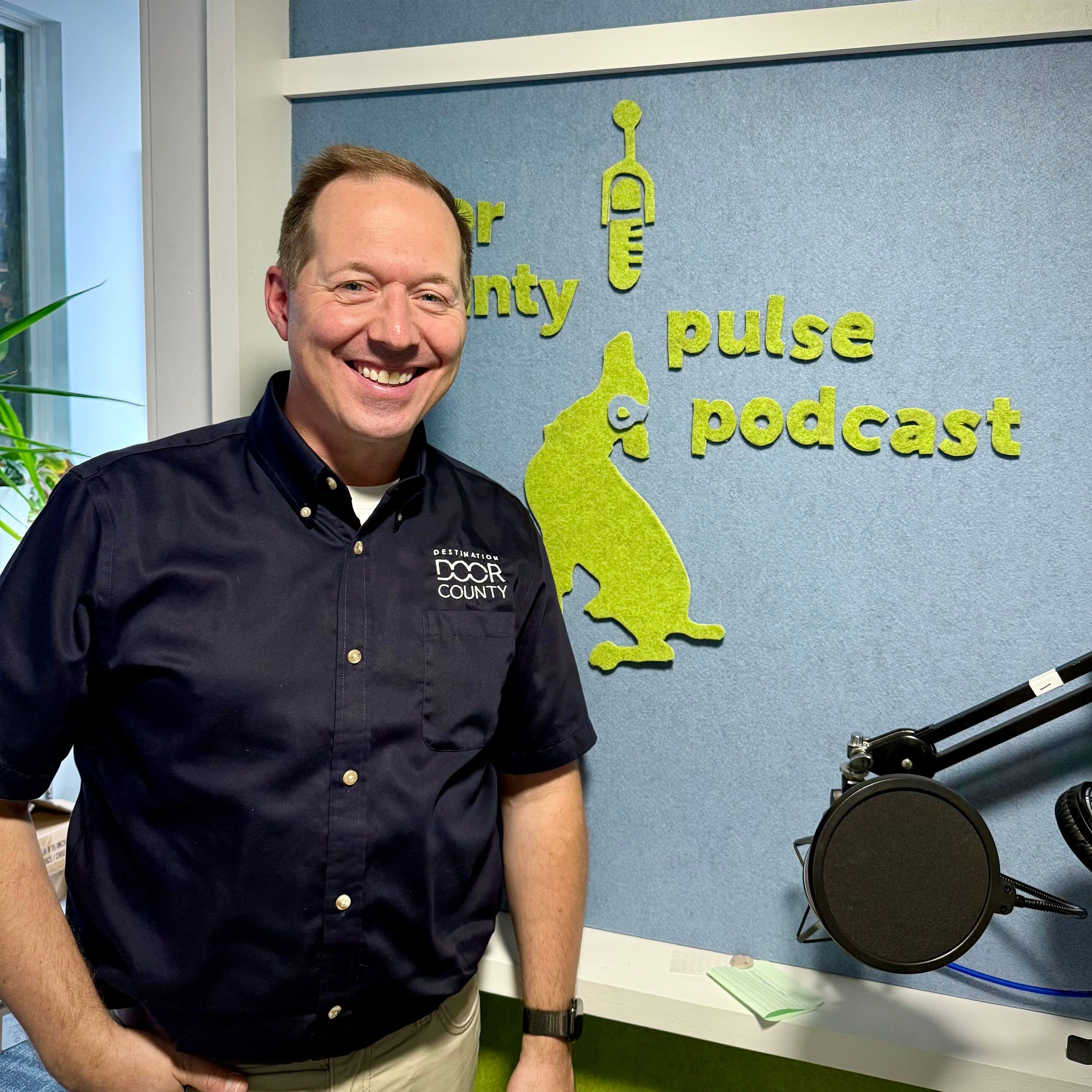
Talking Tourism's Impact with Jon Jarosh, New CEO of Destination Door County
54m 29s
John Jarish, the new CEO of Destination Door County, brings decades of hands-on experience in tourism, from visitor centers to community events and local business development. His deep personal ties to the region—including summers in Jacksonport and involvement in local schools and tourism programs—inform his grounded, community-centered leadership approach. Despite the organization’s long history of name changes, it has consistently adapted to evolving community needs. Room tax remains a vital funding source, though its use is strictly governed by state law, requiring careful, data-driven decisions to avoid misuse and ensure accountability. Jarish emphasizes balance—acknowledging valid concerns about overtourism, housing, and affordability while recognizing tourism’s essential role in sustaining local economies and services. He prioritizes transparency, accessibility, and dialogue with residents, often engaging face-to-face to build trust. Key initiatives include supporting community business associations and advancing long-term trail development, which could become a major driver of future visitation. While tourism faces challenges such as declining room demand and rising costs, Destination Door County is focusing on steady, sustainable growth through smart marketing and community investment. The organization also recognizes that the majority of visitors come from within Wisconsin, challenging outdated assumptions about core markets. With a focus on incremental growth, responsible stewardship, and inclusive development, Jarish aims to ensure Door County remains a vibrant, resilient, and welcoming destination for all residents and visitors.
Hey listeners, Door County is a community built on a foundation of giving time, talent, and yes, money.
This podcast is brought to you in part by the Door County Community Foundation.
An organization inspiring people to give back, to sustain, to advance the community that we love.
Learn more at givedoorcounty.org
Hey Door County, we have new ways for you to support your favorite local news.
The peninsula pulse is stacked with new gear, rock the read local tea available in two colors and two styles.
Sticker up your laptop or water bottle with the peninsula pulse sticker pack.
And don't forget to deck out your walls with the Door County State Park Postor Collection, every view one gorgeous set.
Peninsula pulse celebrating 30 years.
Check it, read it, use it, and now wear it.
Head to DoorCountyPulse.com/shop today.
Hello and welcome to the Door County Pulse podcast.
I'm Miles Dan, housing junior.
And today we're going to talk a little bit about tourism, a little bit about Door County and probably going a lot of different directions with my guest here.
John Jarish, the new president and CEO.
It's weird to say new about you John, but welcome to the podcast.
Thank you Miles, it's good to be with you.
I say that because you've been in Door County, you've been with Destination Door County for a long time.
In fact, through three different names of Destination Door County, right?
Actually four. Four.
What was the first one?
The first one when I started was that we were the Door County Chamber of Commerce.
Yeah.
Then we changed to the Door County Chamber of Commerce, Visitor and Convention Bureau.
Oh, that just rolls off.
That name tag was like a foot long.
And then after that we just changed to Door County Visitor Bureau, which we were that for a while, and then in 2020 we changed to our current name.
Destination Door County.
Not that you've ever said that.
No, but this is actually the eighth name that we're on since we started in 1891 when we were officially incorporated.
We have meeting minutes back to 1884. So we've been around with the thing I like to point about all those name changes, I think is important.
Is it shows that we as an organization have been willing to evolve with our community?
And it's like, oh, it's only a name, but it's still, it means a lot.
It's obviously what we put on our logo wear and on our building and all that stuff.
And I do think it reflects kind of the work that we do at the time.
So we've been willing to evolve.
Clearly, your first order of business with the organization is to change the name.
So what's the new name?
I think we'll stick with Destination Door County for the time being.
Whenever there's hard things, that must mean there's not something really difficult and hard for you to take care of right now.
Because whenever there's hard things, people are just like, oh, let's just change the name, that'll fix it.
Yeah, I mean, the last name change was right before it was January of 2020 when we changed the destination to our county.
So we've only, we knew what light ahead at that point.
Wow.
One of the things I thought we'd talk about was just the ebbs and flows of what you've seen in the industry.
But before we get to that, I'm assuming that so many people listening to this know exactly who you are because you've just been doing this so long and then with the organization so long.
But give us a brief introduction to your Door County connections and your past with the organization.
Sure, so I actually was not born here and didn't grow up here which most people as soon as I did.
I actually grew up in Dubuque, Iowa.
My dad was a teacher.
He moved from Appleton where he met my mother.
They both taught at Huntly Elementary School.
They moved to Dubuque when my brother was in the womb.
And so him and I were born and raised in Dubuque, Iowa.
But since my dad was a teacher, we came up to Door County for some summers.
And my family bought a place in Jacksonport back in 1984.
So I was 10 when I started and when was fortunate enough to spend summers here.
So I kind of grew up going to school there and spending summers here in Jacksonport where they were placed while.
So I played Little League.
That's how I got to know a lot of friends.
I think that's part of the reason why I think people think I was grew up here because I did know a lot of kids that went to Sevastopol just because in Jacksonport that's where a lot of kids were from.
So just growing up, that's kind of what that was one of the experiences.
I will say this was fun.
I was in student council and I actually was able to finagle one day of my life at Sevastopol school.
And we framed it as a student council exchange.
So you take that cred?
Yeah.
I'm as fast.
We like, we didn't have school on a Friday or something back home.
And so we came up on a Thursday night for a long weekend.
And my friend Matt Bly was like, hey, can I come to school with you?
How could we do this?
So we worked on it in advance.
It wasn't I just didn't show up.
But I did go to school at Sevastopol for one day.
And it was different because I went to a much larger high school.
I had about 400 kids in my graduating class and about 1600 that went to my 9 through 12 school.
So it was a bigger, bigger school.
But it was fun to see it.
And now my kids go to Sevastopol.
So it's kind of come full circle for me.
Are your kids in high school now?
9th grade and 7th grade.
So middle school and just starting.
So how's the new?
I still say new school.
It's probably won one by five, six years since they did that.
Yeah, it's innovation.
It's really good.
My kids did get a chance to spend a few years there.
My daughter, I think, was only there for two years.
My son got to spend three years in the new space.
But it's great.
And it was really interesting being a part of the process.
I was on the committee that kind of walked through that process back in 2017, 2018,
when they were trying to figure out what they might want to do.
Yeah.
And so it was interesting to see that perspective of the whole process and how it works
and how we were able to get that particular, that addition completed.
Yeah, I mean, that had to be a ton of work.
Because when you guys were first throwing out ideas of what those different referendum levels might be,
I saw the number.
And I just thought, there's no ways that basketball voters are going to go for a $25 million referendum.
But it passed with strong support.
And things probably do a lot of legwork on your committee's part.
And also, I mean, once you start touring the building, the need becomes a little more apparent.
Same thing happened at the broader.
I thought they were crazy when they first floated the referendum idea because I had the whole. Wow, that was fine when I was there and then I took a closer look.
Yeah, this is pretty old, just like a century old.
And tonight I'm going to the open house at Browter where my kids will know Browter as a totally different school.
Yeah.
than the one I knew.
Yeah.
With actual natural light and windows.
Yeah, the emergency space is gorgeous.
They really did a nice job on it.
So when I started here, I spent some time at the Greenwood Supper Club.
That was my local summer job.
So it did all kinds of stuff.
And that's really where I first started to answer questions about what you can do up here.
What could I do in North County?
Because all of our tables, of course, were not all, but a lot of our tables were visitors.
And so that kind of got that started.
And my first between my fourth and fifth year, I was on the five-year plan at EW LaCrosse.
Because I got involved in a lot of stuff, not because I flunked out.
I'm like, I have a long time to work.
So I was in Res Life and Greek Life and just a whole bunch of stuff.
And it was a blast.
But I worked for a summer at the door County Chamber of Commerce in their Welcome Center.
Just as something to do, I thought it would be fun.
My mom with her business in Jacksonport was a member of the Chamber at the time.
So she was familiar.
And so anyway, that's kind of really what initially got my foot in the door.
That was in 1997.
And after I graduated, I came back and was in Door County for the summer while I was looking for
air quotes here, Real Job.
Because I didn't know what I wanted to do.
And a full-time job.
I came back for the summer and I said, hey, I might be gone in two weeks at any point.
Even if it was July.
And Karen Raymore at the time was like, okay, that sounds fine.
We'll take a chance.
I didn't have a real job by the end of the summer.
And that's when Stone Harbor opened.
It was opening up.
And so our membership director at the time, Annie Lampert, decided to go and take her career to Stone Harbor.
And so a full-time position opened up in the fall of 1998.
And I took it, became the membership director as my first full-time role there.
And that was October of 1998.
What do you get your degree in a colleague?
Communications with an FCC and PR.
But, you know, we took marketing classes.
We took broadcast classes.
It was really kind of, it was pretty diverse in terms of the stuff that we took.
And so I was really, I mean, I was okay to do a lot of stuff with that.
After college, because I really didn't know what I wanted to do at the point.
Yeah.
So, anyway, yeah, it was the membership director for a while, for about five and a half years.
And then Tom Lyons, who was our organization's very first marketing director.
He started in the, say, '96 or '97, came over from the press Gazette.
He left.
And so they had offered me the position of marketing director.
I had been kind of working with Tom for a couple of years.
And felt like I was in a good place with that.
So, I did that.
And during that phase of my career, that's when room tax really came on board.
That was between 2004 and the end of 2008.
Yeah, that was a several year conversation.
It was.
We started in 2005 with destination assessment, with a guy named Roger Brooks.
He came in.
And one of his things was, you guys need a room tax or you're going to die.
And then the following year is when Marshall Murdoch came in.
And the community riled.
And we provided some money.
But most of the community came up with most of that.
Including.
Elliott and other folks that had kind of riled and so that came and that
really helped get us over the hump with the in keeping community. And so that's
when room tax first got rolling in 2006 and it first started in May of 2007 I
believe is when the first room tax was collected and all 19 municipalities were
not part of the tourism zone at that point in time. It took us until the I
think January of 2009 when the last municipality which was the city which had
a room tax on their own. It took us a couple of years to kind of get them into
the man. I remember that that hold out in all the different options people were
throwing on the floor to like how do we mesh these two together. Yeah it wasn't
wasn't simple. But I want to as you were talking about your background it got
me thinking that you were the first president of Destination Door County in a
long time who actually grew up in the tourism industry of Door County. And
no knock neither here nor there but like if I look back all the way at least into
even even Bob Hastings he was invested in the tourism industry up here. But
you're the first one a long time that has weighted tables done the grant work
worked in the visitor centers and and now see it from the top position. We've
had a lot of folks who came in and saw like the the large high-level 30,000
foot view, but hadn't actually experienced what people in bars and restaurants
and kitchens and visitor centers and and on the front lines do. Do you feel like
that informs how you approach the job? Absolutely. I think I think all the life
experiences that I've had have helped inform me. I mean that's how we all are
right. Whatever we've done to get wherever we are at that point in our life it's
all helped. And I think all that the different leadership stuff I did growing
up in high school. I was a counselor at a national leadership camp out in Lake
Tahoe for five summers so that was really cool. It was only about a week and a
half gig so I could still do my time at the Greenwood too. Thanks to Rick and
Susie for giving me that time off in early July every year. But they must have
loved that. Yeah right. You say thank you well you were all you're doing it
they're back in the bar going that like and he still thinks he gets a Saturday
shift. Yeah I know right. And then they're like well yeah he does because we need
something they need them. But so yeah I think that all is helped and I do think
that the amount of time that I've spent here and the different things that I've
seen also helped to make me the candidate that they went with this time around for
the CEO position. You know you you touched on this as you were just starting to
talk about room tax and do you find it? It's so interesting that in my lifetime
the eighties were like this this building phase and it was kind of this
exciting phase for a young kid grown up here of we're adding more motels all
something's happening like you felt like your community was growing in a good
way. At the same time there was also the pushback against that at the time
and for many good reasons of people trying to slow it down because it was
happening really fast like people think development happened fast now it's
nothing compared to the 1980s like imagine the 300 unit landmark resort getting
built on a bluff today yeah I mean it would just never happen but there were
many developments of scale at that time but then in the nineties things were
growing a little slower I think than the eighties but they were growing and it
started to reach this crescendo where people are like oh how much is too much but
then the market sort of corrected and and before we actually had to grapple with
it that much we were sitting here saying what happened to all the tourists we
need we don't we're not making the money the revenues not coming in like it's
flatlined and then you get room tax and there's the tourism market it's hard for
people who have arrived since 2010 probably to really grasp that there was an
era of Door County and that's a decade-long one where people were
desperately looking like business owners of all walks it wasn't just like
somebody up in the sky or big developers it was like every restaurant tour I was
talking to was like how do we build tourism back up because we can't make it
here we can't pay our bills and my kids are leaving and nobody see the future
like that was 2000 to 2010 ballpark in a to a large degree for a lot of
businesses and and then that very quickly became all right now there's too
much so now you're in a position where when it's good you you probably don't
get a lot of credit when it's bad you get a lot of the blame and when it's too
good you get a lot of the blame so I mean I just say that all just a six set it
up of like that you've been through those ebbs and flows and those ups and
downs in a way that gives you a different perspective than anybody else who
was coming into this job yeah for sure and I think you know it was interesting
miles when we were talking and going through all the stuff in the mid 2000s
before room taxes we were getting it set up and trying to figure out the best
way to do it that was going to be responsible and all that stuff right we said to
ourselves internally I don't think we said this all out in public a whole lot
but if we do our job right here in x number of years people are going to be
complaining that we're doing too good of a job and that's exactly what
happened now it's everything with a balance right I think today the letter of
the day is B today because balance is such a key a key part of it and everything
that we do these days especially but the more businesses invest in their
product in staff in housing for their staff the more they need to come in right
and so even a little bit of a downturn or even to some extent a flat to some
business owners can be very detrimental because they were planning and counting
on certain numbers to be able to support the things that they're doing to
invest back in their business right and I think that's one thing that I think
sometimes it's easier to overlook that unless you're a business owner yeah and
and it's easy but gosh you know there's just so many people here and I can't
take a left and whatever it might be right and and so again that comes back to
balance for us because people are talking on on us all different ways
there's too many people here there's not enough here well what about this what
about that and so and the thing is is I like legitimately realize that
everybody believes strongly in whatever they're telling us yeah and so we have
to treat it with respect and understand their perspective but that's where
the word balance comes in because we can't do everything for everyone yeah
there's just not a way to do that we try I think we aspire to do that but no
matter what there's going to be something that we're gonna do that somebody's
gonna not agree with and we have to just make sound decisions and make sure
that we have data to back up the decisions that we're making for whatever
that might be if we're asking for more marketing dollars if we're asking to
put more money into the community investment fund whatever it might be we've
got just have sound logic behind why we're doing that and just and be
confident and have our boards backing and then that we're we're doing the
right thing well and your family actually is impacted by so many of these
things too right you have you have kids it's fastball you have and
and so fastball just like the browser that school that referendum passes and is paid for by a lot of
second homeowners who own great property up here and pay higher taxes than
guys like me right and there's I always have that perspective of like yeah we
may complain about certain things about overtourism and part-timers or the
fact that somebody's home sit empty but like that's that's making my kids
have an incredible school system again we can't lose track of that either yeah
but you know your parents own the draft jack sport craft cottage for years
31 your mom was very involved in getting the jack sport farmers market and into
what it is and it's a great little farmer's mark I say big part is
marking out I remember when it was so small and like that that core group of
people was trying to just show up every week and hope it grew and it took a
long time but it's so cool I think of that every time and I think of your
parents every time I go through there that obviously you're brother with the
Edward Orchard Gallery and and the polar bear swim yeah but like there's so
the you your family is hit on so many different ways by the ebbs and flows of
tourism yeah and just paying their own bills yeah no doubt and then they sit at
the table and probably complain to you yeah but I mean there's so many of us
that that are fortunate to live here that do rely on the industry so many more
people than anybody realizes right it's easy to complain but there's tourism
impacts all of us and if it weren't for tourism first of all I wouldn't be
able to live here because you know our organization is funded mostly on
room tax yeah we'd have a little bit of other income but you know so my
salary is paid from room tax so many of our local businesses that support
schools and all these other things and even a lot of the trades a lot of the
work that our tradesmen and women are doing up here is is somehow related to
the tourism space whether it's a second home a resort a business that serves to
I mean we're all it's we're all tied to the carpentry or being electrician
as a tourism business but at 100% real estate is a tourism business I mean yes
there's absolutely the people who start if I've interviewed 2,000 people over
the years and of those people that I've asked like oh how did it what's your
door county story you know because you always ask that question yeah 80 90
percent start with some version of well I was in Peninsula State Park and I was
visiting or I came up to see my grandpa or something like that and it it starts
with camping it moves on to staying in hotels it moves on the renting a house
and then it becomes what we'd like to
we want to be part of this community and they buy a house maybe it's a second
home or whatever or they build and that construction job whether it's C&E or
Bailyn building from down the road or if it's portside that all started with
tourism yeah you know and that is the long tail it's not the room night at the
start it's the $300,000 $400,000 home down the road million dollar home down the
road so I actually think we under under count tourism's impact because you
don't count real estate and building in your tourism impact dollars but it yeah
but it is it is absolutely is but like anything you know we're we're talking a
lot about but we realize also that yeah there are some challenges that we have
here no doubt housing is a serious concern and it's getting harder and harder
for our tourism workforce not to mention our teachers and our EMTs and all the
other people to make our community run that we need it's get we realize it's
getting harder to do and and that tourism has played a role in that to some
extent it's kind of a double-edged sword to be quite honest with you because
tourism has given us the opportunities and the and the revenue to make our ends meet
here as residents but it's also made things harder to some extent because it has
brought more people here and it has you know forced it's it's raised real estate
prices right all that sort of stuff it's made transportation transportation was
hard all the time here because we're a peninsula so that's not necessarily new
but and so it's you know we look at it how can we help the way that we can this
is another thing I want to mention I think a lot of people look at room tax as
a piggy bank right they got DDC has all this money and they can they should be
able to pay for that and I get and I appreciate that perspective I'm glad
people think that we have that kind of power to do that as an organization I
think we've worked hard for that and we continue to work hard to show that we
can have a really positive impact on our community however room tax is
restricted with how it can be used it's done by state statute it's not rules
that we've made up we're just playing by the rules that have that exist on
state statute 66.0615 I believe it is to quote Juliana Holley from the
tourism zone and so you know we're restricted we can't use it for housing it's
very explicit with that we can't use it for transportation in most cases we
can every once in a while we have to get creative with how those dollars are
spent we've learned a lot through the Community Investment Fund working with
lawyers to be quite honest with you and getting their interpretation on state
statute as we've reviewed different grant applications that have come in for
community investment fund dollars finding the flexibility that you can on
the margins exactly and you know to play it safe we really try not to get too
close to the line it's not worth the lawsuits that could potentially come our
way yeah and I'm not necessarily saying the lawsuits would come locally it would
come from other statewide organizations we've had conversations with state
wide organizations in the tourism space built watch over and our watch dogs
about how room tax is being spent around the state have in keepers you know
our are their kind of constituents and I get it and it's important because
there are a lot of places around the state that over the years have most
definitely misused room tax so it happens I'm not denying that for one
second I don't feel for one second that we have misused room tax one's penny of
room tax dollars here particular with our Community Investment Fund I think
that's really been a great program that's allowed us to help support our
community in ways that we've never done before and really invest in some of the
infrastructure that we do know tourism does put a strain on and it's never going
to be enough I wish we had more dollars to be able to share with all the
amazing things that we have up here and that we like to have up here perhaps a
nice rank and so but you know we again it's about balance and it's trying to
figure out the best way that we can can utilize the limited funding that we
have available to us how do you personally look at some of the conversations
that happen because you know the nuts and bolts of of room tax and how the
dollars kind of be allocated it's a weird position because I feel like your
position the leadership of Destination Door County can have maybe the largest
impact of any role in the county because it does touch every life and because
what the decisions you make can incrementally make every business a little bit
better and that way they can be a little bit better their employees who can
have a little more comfort in their lives like all these different ways that
trickles down there's a county executives at the administrator doesn't quite
touch everything the way that does and it's a it's a big responsibility right
yeah and then there's also the way social media plays into things today and the
conversations that happen I struggle with it sometimes if I open Facebook and
see what's going on and you're like you want to correct everyone that's wrong
not that like people aren't your opinions are totally valid like yeah if you
think you're ticked off that day because there's too many people in your town
that's totally fine like yeah like there's a there's a good case to be made that
like hey I still want my sleep a little town but what always gets me and like
it do you remember like oh you want to go back to what this town was it was
well sister Bay was like everyone was bankrupt for a while again downtown or
a car was a place that everyone drove through so there's there is a balance
there of how do you make it the best version of what it can be now and and
best for for as many people as possible but like how do you handle that like
seeing the because you see a lot of the criticism and stuff of sure anybody
who's promoting tourism or not promoting tourism or yeah yeah and that's
the the interesting thing is sometimes like oh we're not doing enough because
business might be down or you know that sort of thing and then we'll hear
about it from well what are you guys doing to fix it right well at the same
exact time you still have people that are going to be like well wait a minute
this is there's too many people here what are you guys doing you're bringing
more you want more marketing dollars to bring more people here so again it's
about balance we yeah we do obviously see we keep an eye on things on social
media and in other media outlets that are reporting and talking about our
industry and how valuable and important it is and some of the negative things that
come with it all that sort of stuff so we do have to we keep an eye on that I
think it's important that we do we don't necessarily respond to it all in
particular a lot of the online stuff I was at a it was at a tourism conference
last year and the keynote speaker that they had brought a interesting word to the
table when it came to social media and he he called a lot of and this isn't
derogatory but he called a lot of people on social media crickets they're
loud when you're not near them but as soon as you get close to them they really
they quiet down they don't say a peep because it's easy to maybe express a certain
feeling or opinion or be a certain way online when you kind of hire
somewhat anonymous and behind a sheet or whatever that online world dictates
but a lot of people would never say this stuff that they say online to you in
person in your face yeah it just they wouldn't and so I just I thought that was
interesting not that again I don't just credit anyone that has their
opinions online and wants to share those opinions over social media it's a
great avenue we obviously use social media quite a bit to help share door
county stories and tell the world about what we have going on up here because
it's pretty cool as you know and everybody knows so it's a great medium for
us but like anything you just you kind of you have to understand that there's
gonna there'll be some things to come along with that particular medium that
you just that are part of it and you try to manage it as best you can without
getting really sucked into that to some of the downward spiral conversations that
we all see every day especially in when it comes to like a negative type
story so the hard part is sometimes I'll I want to comment to give some
perspective on something because I also appreciate that all right I've been
doing this for 20 plus years as a reporter another 10 years before that as a
business owner like all right I have this perspective I owe it to people to
share and inform some of this background yeah but the moment you do you're
like oh man this is three hours of my day because now there's going to be
responses and it's good like in the early days it was like this is a great
conversation this is a great way to talk to people that you wouldn't otherwise
be it now it's just like it's just not worth it most of the time yeah I mean
I there should be kind right yeah unfortunately people all the time aren't
kind online and something will quickly spiral out of control and turn into
personal attacks instead of a exchange of ideas and perspectives yeah and if
it was if it was an exchange of ideas and perspectives in a respectful manner I
think it would be a way different thing there are still places like that once
in a while yeah unfortunately not as many as there may be used to be right you
know that like yeah old Al's breakfast counter yeah yeah I mean and that's you
know for me I think the personal interactions I'm a people person if anybody
knows me and so I love just to have those conversations face to face I think it
means a little bit more and it just it's more natural for us as humans to be
face to face and so I love having those conversations as easier as difficult as
they may be to have face to face you can't hide or behind some chat GPT engine
or or something else that you can you know online you just have to just you know
call it like you see it and be honest and be nice and be kind when you're face
to face um so you that plays well into this other question I had is like you you've
worked with different leadership styles now Jack money penny who was in the
chair for about 13 years almost 14 yeah what like especially later he was not
that out and about.
in front of people and talk to people and probably had a lot to do with why he isn't there anymore.
And then I know Julie came in and that was a focus of hers to try and get out into the community a
little bit more. What about you? Like what's your thought in terms of like your leadership style
in the organization? Where do you hope to take it and what should people expect in the years come?
Yeah, I certainly believe in being out there and talking to people again on my people person.
And so, you know, if I'm working the concession standards have asked a pool for a football game.
I love just seeing people. Hey, how you doing? You know, whatever.
And so I definitely, I do have intentions and I think to some extent I already have tried to get
out there as much as I can and just to talk to people. Take an afternoon to get out and be like,
hey, if I have a meeting here while let me go talk to this person and then stop here and then stop
and visit with Dave for two hours and whatever it might be. But I think that's two hours. Yeah, I know.
I told him I had to go. But no, I think that's important and I think that that's the sort of thing
that will resonate well with our community. If they have a leader that's out there and seems accessible
and not just sitting away and oh, he's in his office somewhere wherever that might be. You know,
I obviously I need to spend time in an office because there's a lot of that kind of stuff that has
to happen as well. That's part of it. But I think being out and about and being accessible and
that's where I want to be. Like that's the kind of person I am. I want to be out and about and
talking to people and having those conversations and hearing what's happening good, bad or ugly.
I think it's all important. It can help us be a better organization and better serve a community
that we need to continue to respond to based on whatever is kind of the situation or the concern
or the positive thing of the day. When you take it the role, do you have like an idea or a big
project or a priority other than getting the kitchen at the green would open again? What's the
I mean, do you have something that you're like, all right, here's where something I'm a project. I'm
wanting to see through in my 10 year here or is that still under wraps?
No, it's a good question. You know, we're in the second year of a three year strategic plan right now.
So I came in at a good time just because we already had something. It's not like I was scrambling
to figure out what are we going to do as an organization. Yeah, it's always fun to come in and
they're like, well, first thing we're going to do is strategic plan. So I'm going to have one.
All right, great. No, what's this going to be a year? No, I was obviously a key member of our
leadership team while we put together the current one. So that helped. So we have a little bit of time
there. There inevitably will be some things that that come up. One of the first things that I did
just as even as interim was put together a new memorandum of understanding with our community
business associations. That's actually a program that we use to help fund all of our currently 11
community business associations in Door County. We provide funding to them to help them complete
their missions and serve their communities. It's obviously room tax that we're entrusted with
that we in turn have a program that we we help share with them to again to it better as the overall
experience as a destination and a better serves our community working with them. The birth
of that program was when Sturgeon Bay was trying to decide if they were going to join the tourism
zone or not. That was a program and then we put together it was considerably less money at that
point, but it was a program that we put together initially for three years to get the destination
Sturgeon Bay Sturgeon Bay Visitor Center at the time to feel comfortable enough because they
were losing their room tax. The city had to, you know, joining the zone then the 70% instead of
going to DSB would go to the tourism zone. So that was the birth of that program. It's still going
strong and I think it's been a great program and it's helped provide our community business
associations with some of the revenue and the resources that they've needed to run a lot of the
events that happen up here. I want to make a point there in that a lot of people can see that as
like oh just more marketing more visitors more events and I've said this before in the podcast but
I always think it's worth repeating is like those community business associations the things that
they do they help with tourism but as a local that's where I'm like oh this is great this is our
local community this is our event you know this is the fourth of July and Baylor's harbor full of
locals you know yeah fallfest full of locals marina fest take your pick like it's it gives us
something to do and now as a parent I see it in a whole different way I'm like oh this is so great
my kids love this stuff and we didn't have that forever and if you didn't when those organizations
weren't funded I think might do it for a year or somebody got really motivated and the thing would
disappear like now everyone's like I can't believe every title has fireworks but I mean we went
along stretch when I was growing up we're like okay on the fourth of July there was Gills Rock and
maybe Fish Creek and Baylor's harbor but like yeah a harbor didn't happen for years and things
and people forget that and I think a lot of that credit is owed those community associations
for doing that work and doing that lifting because they don't do it like they're just going to
disappear yeah those events are just gonna yeah for sure so they've been really important partners
of ours and we've really enjoyed working with them to make sure again it's about our overall
experience as a destination it's not about any one of their communities they obviously serve
their own individual communities but it's very important but it's a way for us to kind of work
collectively is that umbrella organization so to speak and make sure that you know so many of us
locally maybe think of just our own little community our own little are part of Door County because
that's where we live that's maybe where we're going to volunteer a little bit more whatever it
may be but visitors typically don't see it that way they see it as Door County and oh we're staying
in Fish Creek or we're staying in Surgeon Bay or wherever to the bed they're coming to Door County
they get to Door County yeah you've probably been this way there so it's like oh so I got this
room here you're 45 minutes away yeah because they don't think about the towns as being
things that different but I think that's part of the charm that we have here it is in part of the
thing that I think that makes us different is people don't think of oh it's 45 minutes away
it's like oh it's just Door County I get to drive through the coastal byway to go whatever and so
again I think that's helped over the years has taken us decades that we've marketed Door County
as Door County and even longer and so you know it's taken us a long time I think to get to this
point but obviously geography helps us to you know differentiate us because we're not on the way
to anywhere we're I don't call us a dead end even though we had Deaths Door at the end of the
mainland but we're really a cul-de-sac I think that's a little softer way to say you put that
on your under the logo yeah I don't know if we'll use cul-de-sac anyway but you know in terms of
other things I'll save that for the repulse yeah yeah yeah right stuff will come up that I'm sure
we'll we'll have to deal with it maybe I'll have a legacy of doing that I don't know at this point in
time I know we've got a lot of opportunities ahead of us just with what we have now and making
sure that we continue to be responsible and utilize our resources at Destination Door County that
we're entrusted with in the best way that we can I think there's an opportunity to help with
infrastructure that we've never had quite the opportunity so trails for example I think trails
as infrastructure that we are able to fund we've funded some great trail projects already through
the Community Investment Fund and I think we have some great opportunities there that can certainly
be long-lasting right I know Door County trails as an organization is going strong and
they're having a leadership transition right now as well but they they you know they're looking
at and focused on a long-term interconnected trail system here in Door County I think we
certainly we want to believe in that and help there however we can yeah exactly how that looks
and what our assistance is I think we're still working on that in terms of what that might be but
certainly that we look at it for long-term driver of visitation that you know this interconnected
trail system that was off the highway would be amazing yeah and I think it's it's a long-term goal
it's going to be probably 10 20 30 years before a system like that would get constructed here but
if you've been to other places that have that sort of thing it's amazing yeah nobody there's no
place that has trails I always say this about historic preservation and you could say this about
trails too like nobody looks at something they saved and says gosh I wish we would have torn that
down like that's not the conversation that anybody has years down the road yeah but they often say
I wish we would have saved that and I think that's trails it's a similar way is like there nobody
who's invested in trails is saying gosh we should we should tear that up and and get rid of that
like yeah everyone likes them yeah and a Traverse City is probably the best example right it's
like a sister to Door County and then across the bay and it's they started in the early 90s and
they have this great off-road paved system and they're still working on it I think they've probably
got like 30 plus miles now but it's you know it's a 30 year project Minnesota just finished their
longest off-road paved path 60 some miles but again that was a 30 40 year project and that's the
way to look at it here too it's not like one big nut of that astronomical expense it's this
expense over time as as opportunities right but you want to have that plan in place so that
it's incorporated into other things that happen so you don't like put a firewall there yeah exactly
well and I think like any big project or any long-term project you got to get started somewhere right
and so I think we've got some opportunities here the Town of Gibraltar that grant they just got
for 4.7 million yeah like that that was a key stretch of the of that hole if you look at a county map
like where are we gonna get from above by Lautenbach's and get it to Ephraim like that's just a tough
one with the bluff and everything and like that could vary.
will be the first part of that puzzle that's gonna get done and so I think you
know trying to help that and and show a couple of really big community wins. I
think we'll go a long way and that's I think what one of the things that we can
help with is to help get a couple of those big key community wins that really
get the ball rolling and I think my hope is that private donations will start
rolling in a different grants the you know communities we able to go after we'll
start to roll in because we're not we don't have enough funding in the
county through room tax or anything else right now to be able to fund it it's
gonna take multiple funding sources no none of the towns have like extra cash
they're sitting on but the thing with a project like that is part of that idea
was we've got to get something out here that everyone can see and we have to
have an organization that's there to answer questions because otherwise you had
all these towns going in alone and I was in so many meetings where you just
have a board member say oh we can't do that like the DOT won't let you and they
just accept that and that guy didn't have expertise yeah and that was based
on some conversation he had 12 years ago and a misinterpretation of something
and so you needed somebody at the table to say actually there's a way to do
that and here's how yeah and that a lot of and that's that I didn't think of
on my own that was when I'm talking to the folks from Traverse City and Julie
Clark the director of their tarot trails who was like yeah you know we just had
to keep showing up keep showing up and talking to people and then you had to what
they found like you said you needed like a catalyst so they had one town did it
and another town was like nope we're not interested but then the town on the
other side of them did it and then that town in the middle was like well now we
look stupid but also we want that yeah and so then they finally do it yeah and
sometimes some people just hey we got a great relationship they're gonna go
all all in like probably a carber and townage of Router and some don't and they
they need to be squeezed yeah and they will I think over time I think everybody
will understand the benefits that interconnected system like that could
have on us so where do you think because now we're afraid of this that we could
talk for like two hours so we're at 45 minutes plus our 15 pre-Creamble so I
don't want to take up your whole day but where do you think we are in the in the
tours and ebb and flow now where where are we going in the sense of like from my
standpoint the the pushback out of visitors isn't as strong as it was say like
two years ago to my feeling and what I hear I'm actually hearing more
businesses say I was a little soft this year like we're a little bit down or
something and then they start to get worried right because they hired based on
that growth like you talked about so where do you what's your impression of
where things are at and where the public sentiment is and where where do you
want to go in the next couple years sure I mean certainly the sweet spot for
me is that incremental gains each year right not a lot not too little but these
kind of nice two to four percent incremental gains each year yeah because you
know in 2020 obviously we were down a little bit 21 was through the roof and
actually up until last year room demand was declining since 2021 we were up
room demand was up just a little bit last year not a lot and we'll see
where it goes this year I think room demand may be down just a little bit
again this year yeah fortunately for the lodging community they haven't seen
the downward pressure on rate yet so rates are still a little higher so
overall at least through this point in the year lodging revenue is up a
little bit over last year and so that's that's a good thing but the room nights
where the room nights room nights now again this is only through July so we
still have a three solid months to go that we just don't know and there was
a lot of late reports in July so even the preliminary data from July was a
little iffy but demand seems like it's a little bit soft this year in terms of
room demand through preliminary July numbers so we'll see but we're looking at
national trends and we can see and we look at some of the other data sources
that we have unfortunately they're not real time so it takes a little bit of
time to get a full picture of what actually happened usually a couple of
months but we're also hearing the little bit soft we're hearing all over the
board months some people are having a great year others are it's and where
it's not as strong as we would hope at least eventually the numbers flesh it
out for ideally which is what we didn't have for like the first half of your
career right yes all right we're gonna call these eight key lodging owners and
that's gonna be our barometer right yeah and then we'll wait for the tax
numbers to come out in a year not room tax just like sales tax you know yeah now
at least eventually the late reports come in I used to try and report on this
every month but then it the late reports were skewing the number so bad that
it didn't become useful as much to do that no which I'm sure you deal with in
your job all the time just recently yeah so it's like all right well if this one
huge lodging place didn't report like this is almost meaningless yeah that's
typically what happens in the summer in July in particular is usually the worst
because everybody's busy and they don't get the reports in on time and the
numbers can really shift quite a bit and so if somebody looks at the preliminary
numbers from July for example which is generally our busiest year you might get
a totally different perspective of actually what's happening just because
people didn't get the reports in on time yeah and so so anyway it's just part
of how it is and eventually it all shakes out but I do think that we're at a
position now where we're going into an area where the growth isn't gonna be as
much as we've seen in certain sectors and so what we're doing and based on the
stuff what we're seeing we're trying to get ahead of it a little bit more so
we want to act we're hoping to actually put a little bit more money into the
marketing side just to help make sure that to try to stay ahead of it a little
bit more so that you know that we don't start going in the wrong direction
because we realize the financial implications that that has on our business
community if that would ever happen yeah if you're again even if you're your
dollars your room night your average daily rate is going up that can mask
some things right and you don't want to see the pure numbers slip to the point
where suddenly you're starting to feel that the room night dollars won't make up
for that right yeah exactly and I was talking with my dad about this because you
know my dad this is what he talks about like my kids will be running around
throwing macaroni all over the place and here my dad will be like well have you
looked at the tourism zone report I'm like no not today I'm like we've got our
screen but like he just constantly talks about this thing we were I got to
thinking about like the average daily rate numbers being what they are and then
you think part of that is just pure demand I know that everybody thinks that we
are developing like crazy but like I said earlier it's it's nothing compared to
throwing you know we had the hotel door which is a 40-some unit hotel
Sturgeon Bay is getting their first new hotel in 25 years but there really
hasn't been probably the open-heart expansion it's probably the only other
notable lodging establishment that has expanded and you think about how
like then we think well yeah but there's all these STRs getting built but you
think of how many single family homes have to be built to equal a single 40
unit hotel yeah it's just not happening that fast yeah and on top of that
Riley's Bay Resort has gone it's 100 rooms I think that was the second third
largest resort yeah it was in the top three I think Al Pine's gone yeah there's
a little sister resource gone so in the last five six years we've lost what
300 hotel rooms major hotel rooms on the water high demand rooms so with high
at least in summer I can see rates that room rates gonna go up just because
you've you've increased demand on the remaining units with all the even with a
boom in STRs like we all know how long it takes to get a home built yeah or how
long it takes to get a plumber out you know so it just can't keep pace and
there's other small hotels that have also been gone and you add to that list
Helms for seasons being taken off the market and things like that so I would
guess that we probably have fewer hotel rooms today than we did 25 years ago
I'm curious if the STRs short-term rentals have kept up with that and filled
that gap or if we just have a a net loss I don't know if you guys have looked
at all yeah I know that data is available through the tourism zone they track
permits and units and all that kind of stuff pretty closely so I off the top
mat I had it just an interesting thing that I started when you think about
perspective on things because it always feels like so much yeah and that
that actually does that does plan to room demand because when you're looking at
room nights rented like you're right if you know probably's Bay Resort is gonna
bring a whole bunch of room nights on board and when they're gone you're
definitely not gonna have short-term rentals make up that amount of room
demand yeah you may help they're gonna help with the revenue but there's a hundred
that hundred units when you talk about the room nights and room demand yeah hundred
a hundred units it's that's one night so it's three thousand a month yeah you
know and then it adds up in a hurry so it's up in a hurry but we know I I think
we I do think we're in a good place you know this year we looked at at higher
gas prices and what is that historically meant typically when higher gas
prices are here people aren't driving out to Wally World for you know that
reference it they're staying closer to home and all the national surveys that
we saw I did kind of indicate that that people were gonna stay a little
closer to home this year because they didn't want to drive halfway across the
country because of the cost to shift then with a with marketing dollars to kind
of that northeast Wisconsin and extended version are there different moments
that we're like we really got to pound these people who can drive here and save
some money versus airfare type yeah
I mean for the most part our core markets are driving anyway, yeah, and so it like this year
We didn't have to shift a whole heck of a lot because most of the folks that were going after with paid dollars
Are within driveable distance anyway St. Louis was a growth market. We tried on this year's because some of the previous data that we saw
A higher propensity for higher spending from St. Louis people
So we gave that a try this year
We're still the verdict is still out
We're still waiting to get some data back to see how that was but obviously that's a little further out
But you know, we are we're always looking at potential growth markets when we look at who's on our site
Who's using some of our stuff we can sometimes tell where people are coming from or where they're based and so those are those
Provide us opportunities to consider growth markets. So we'll see I don't think at this point in time
We'll probably go after flight. Yeah, like encouraging people to fly here yet
Down the road. I think we we definitely may but at this point in time
I think we're still there's still a lot of people that are in driveable distance that don't know as much about door counties
We think they do and and we need to make sure that they know that we're a great choice for their vacation
I think that is a big misnomer for people up here is that we assume that
Everyone in the valley comes to door county all the time everyone in Milwaukee come and we oh
We assume Chicago is like this core market and I think Chicago what I've learned and I was the same way
Over time with family down there and a lot of friends down there. I realized oh, we're not I don't think we actually
I think a lot more of our visitors are Wisconsin-based people than I think the average person
Think so I think with that that whole thing about like fibs and it's all Chicago
We've overthought that our yeah our Wisconsin is about 50% the most recent study that we did
Yeah, about 50% of our our visitors come from Wisconsin about 30 to 33% around a third. Maybe our from Illinois
No, it depends you know coming up here in pumpkin patch weekend
It's going to seem like everybody's from Illinois because they have a three-day weekend. Yeah, so it depends
You got to look at that. That's a good point too. There's different weekends. There are different shoes coming
Absolutely, so and you know, maybe who the packers are playing could play into it as well and where folks are coming from and
There's all all sorts of packers are they playing to it? Are they playing this year? I thought they were taking the year off
I think they might yeah
There are offensive lined up
Yeah, not going back hopefully that turns around quickly. Yeah
Well, John, thanks for coming in and taking the time. I know you're you're busy in the new role and
And getting your feet wet and getting out to everybody and everyone who knows you
But now you got to introduce yourself in this new way again for the first time
No, it really it's an honor. I'm just so thrilled and happy to be in this role
I didn't know if I ever would
It's certainly aspired to and I'm just honored and humbled to have the opportunity now
And I certainly want to make them make the most of it. This is where I live too. This is my home
And I want to make sure that it's as good as it can be
For me for my kids
Maybe my grandkids someday for you for your kids miles really for everybody
I'm a part of this community just like everybody else and I want to make sure it's as good as it can be
Well, thanks so much, and I think that's a great spot to end it and uh, we'll talk again soon
Maybe we'll we'll just do a pure pure marketing and the audience base to do it sounds good
Thank you appreciate the opportunity. Good to chat. Thanks John
I
Know many of you keep in touch with Door County through this podcast
But wish you could call Door County home permanently
If that sounds like you consider taking a look at careers at Door County Medical Center
Where you can find a job with excellent benefits, culture and tuition reimbursement programs
From more than 75 years Door County Medical Center has been the leader in health and wellness for Door Inquiry counties
And this great small town hospital system is one of the reasons many people love living here
To join the team and find your future in Door County
Applied today at dcmedical.org/careers
Thanks for listening to another edition of the Door County Pulse podcast
This podcast is produced by me Miles Danhausen Jr
With assistance from Deborah Fitzgerald and the staff of the Peninsula Pulse
Right here in our offices in Bailey, Sober, Wisconsin
You can catch new and archived episodes at Door County Pulse.com/podcast
Where you can find over 500 episodes of the podcast
With interviews with movers and shakers and newsmakers all around Door County
Listen to those on whatever platform you love
Podcast Summary
Key Points:
John Jarish, the new CEO of Destination Door County, has deep personal and professional roots in the community, having spent summers in Jacksonport and worked in visitor centers and tourism operations since the 1990s.
The organization has evolved through multiple name changes since 1891, reflecting its adaptability and commitment to aligning with community needs over time.
Room tax, introduced in 2006, has been a critical revenue source for tourism development, though its use is strictly limited by state law and requires careful, data-driven allocation.
Tourism’s impact is far-reaching, influencing housing, real estate, local businesses, and community events, with both economic benefits and challenges like overtourism and rising costs.
A key leadership philosophy centers on balance—acknowledging diverse community perspectives and avoiding overreach to maintain sustainable growth.
John emphasizes being accessible and engaged, frequently interacting with residents and businesses to build trust and understand local concerns.
Significant investments are being made in community events and infrastructure, especially through the Community Investment Fund, to support local organizations and long-term trail development.
Destination Door County aims for steady, incremental growth (2–4% annually) and is focusing on marketing resilience to counter market shifts and protect business stability.
Summary:
John Jarish, the new CEO of Destination Door County, brings decades of hands-on experience in tourism, from visitor centers to community events and local business development. His deep personal ties to the region—including summers in Jacksonport and involvement in local schools and tourism programs—inform his grounded, community-centered leadership approach. Despite the organization’s long history of name changes, it has consistently adapted to evolving community needs.
Room tax remains a vital funding source, though its use is strictly governed by state law, requiring careful, data-driven decisions to avoid misuse and ensure accountability. Jarish emphasizes balance—acknowledging valid concerns about overtourism, housing, and affordability while recognizing tourism’s essential role in sustaining local economies and services. He prioritizes transparency, accessibility, and dialogue with residents, often engaging face-to-face to build trust.
Key initiatives include supporting community business associations and advancing long-term trail development, which could become a major driver of future visitation. While tourism faces challenges such as declining room demand and rising costs, Destination Door County is focusing on steady, sustainable growth through smart marketing and community investment. The organization also recognizes that the majority of visitors come from within Wisconsin, challenging outdated assumptions about core markets.
With a focus on incremental growth, responsible stewardship, and inclusive development, Jarish aims to ensure Door County remains a vibrant, resilient, and welcoming destination for all residents and visitors.
FAQs
The current name is Destination Door County, which was adopted in 2020 after several previous name changes over the years.
The organization has evolved through multiple name changes, reflecting its willingness to adapt to the changing needs of the community and tourism industry.
Room tax is a primary funding source for Destination Door County, used to support community initiatives and marketing efforts, though it is restricted by state law.
The Community Investment Fund provides funding to local business associations to support events and community activities, helping to build a stronger, more connected destination experience.
Tourism drives revenue and supports local services, from housing and schools to infrastructure, but also creates challenges such as housing costs and over-tourism concerns.
John emphasizes being accessible, out-of-office, and engaged with the community, believing face-to-face conversations are more valuable than online interactions.
Chat with AI
Loading...
Pro features
Go deeper with this episode
Unlock creator-grade tools that turn any transcript into show notes and subtitle files.
 PodcastTranscript AI