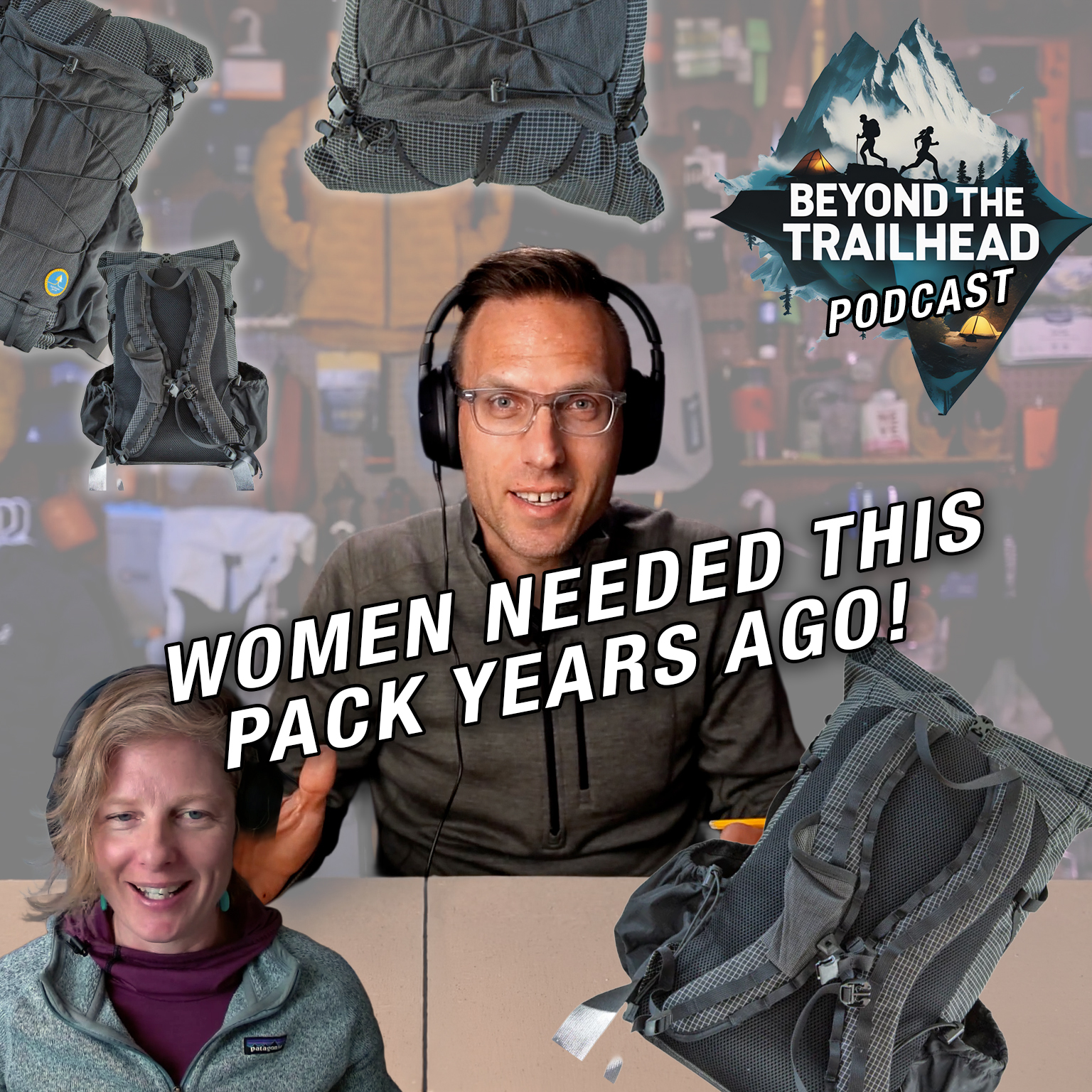
Symbiosis Gear Creator & Owner Sarah Berkeley | Beyond the Trailhead Podcast Ep. 31
from Beyond The Trailhead
58m 27s
Sarah Berkeley founded Somebody Else's Gear in 2022 after enduring discomfort and safety issues with standard backpacks during her PCT thru-hike. Recognizing a gap in women-specific, body-friendly gear, she designed the Aspen pack with adjustable S-curve straps that wrap around the torso and fit a wide range of body shapes, addressing common problems like shoulder pain and poor mobility. The product evolved through years of prototyping, testing, and iteration, with Sarah choosing to outsource manufacturing to scale efficiently while maintaining creative control. Her mission is to make women’s gear accessible in every outdoor store, helping women feel seen and supported. The brand has gained strong validation from users, including women who use the pack for day hikes, parenting, and outdoor adventures. Despite early supply chain and inventory challenges, Sarah has learned critical lessons in negotiation, market research, and self-trust. She now sees success not as ultra-light niche dominance, but as inclusive, accessible gear for women across all hiking styles. The company continues to expand with new products like a day pack and fanny pack, while maintaining a core belief that diverse designs—especially those rooted in real user needs—can be both innovative and essential in the outdoor industry.
(upbeat music)
- Hi everyone, welcome back to Beyond the Trailhead this week.
We've got some great guest this week.
Her name is Sarah Berkeley with somebody else's gear.
How are you doing, Sarah?
- I'm doing really well.
Thanks for having me on.
- Awesome. Well, I just wanted to have you on.
I know we have a different range of companies on here
all the time and we had talked a little bit on Instagram
and wanted to just get to know a little bit more about you
and the fact that you're making backpacks
and a specific type of backpack
and I thought it would be great to have you on
and just talk more about your background,
how you came up with your product,
the ups and downs and stuff like that.
So I guess without further ado,
go ahead straight into who you are, what you do
and how you came up with this for your back.
- Yeah, sure.
Yeah, so I'm Sarah Berkeley
and I'm the founder of somebody else's gear.
We make backpacking gear for people with boobs.
And I was like, oh, my wife would love this.
- Yeah, yeah, totally.
Yeah, I'm based in Leadville, Colorado
and I started the business.
I founded in 2022 and launched our first product,
The Aspen, which is an ultra-like,
frameless pack in spring of 2024.
So we've had a product on the market for just about two years now.
I came up with this because I'm a thru-hiker
and I went through three backpacks on the PCT.
None of them fit my body very well.
I was getting lighter and lighter
and I would see all these guys
with these cute little ultra-like packs
and then I'd get up close
and there would be like a sternum strap
that didn't slide up and down at all.
And I was like, I'm not gonna order that online
and like find out it doesn't work for my body.
So like an emailed one company
I was like, hey, can you just like make a small tweak
to that pack that's so cool and you know,
make more adjustability in this sternum strap
and they didn't even arrive back.
And so I felt really excluded and frustrated
and like, so there I was carrying, you know, a 60 liter pack
that weighed, you know, like 20 pounds total.
So that was 2019.
I sat on the idea for a couple of years
before I decided to start the business.
Honestly, kind of hope somebody else would do it.
(laughs)
And they didn't and I still needed a backpack
so I went ahead and started the business myself.
- Awesome.
So did you do the whole PCT?
- I did the whole PCT, yeah.
- That's awesome, so jealous.
That sounds like an awesome adventure.
I got one day, we'll do it one day.
But that's cool.
So I think the great thing about hearing about cottage brands,
you know, smaller businesses is you have a problem
and you figure out a solution to it.
And like you just said, you were hoping somebody would do it.
And then you're waiting and waiting.
And sometimes it's just because a bigger company,
it's not as big a viable of a market for them
or they're just not even thinking about it.
And, you know, that someone didn't email you back.
You're like, at least they could do.
I hate it when people just want at least email you back
and say, sorry, we can't do that.
You know, I'm like, just at least send me an email back.
So at what point did you go, okay, I need to,
'cause from what I understand
and you can correct me if I'm wrong,
yours is more the strap construction,
but I'm sure the bag construction has to follow the straps.
Right, you can't just throw a different strap on something,
you still gotta create everything.
So like how many versions did you go through
or how did you start going about doing it
in the testing phases and stuff like that?
- Yeah, that took two years.
So we definitely took a long time and a lot of iterations on that.
Yeah, yeah.
So I started with a pattern from my buddy
I met on the PCT who made his own backpacks.
And then I hired somebody to make the first prototype.
I cut it apart and re-did the straps myself,
put them back on.
Then I worked with some consultants, got their input.
And hindsight, it was not that helpful.
I could have done without them and saved a lot of money.
This was part of my journey and story too,
is like just trusting myself and my experience
and myself as the expert and not always going
to the male experts who are touted as such.
- Yeah.
- So yeah, so we got that.
Then I sent that prototype to a factory
and then we iterated like another six times from there.
- Okay, so I guess my question is then,
so what part of your bags do you hand make
versus do you get made?
Or did you kind of flop back and forth between those?
- Yeah, a great question.
So I have a background in art.
I was an artist for 20 years.
And there was a moment I was in a studio late at night
making multiples of this sculpture that was selling.
And I was like, how does this scale?
And I just pictured like, oh, okay.
It scales by me designing one thing
and hiring a bunch of people to make multiples.
And I was like, this is not what I want for my art career.
It was much more interested in ideas and concepts.
So then I went to grad school
and I started making conceptual art
and that was an art professor.
So I have two business models there for art.
One was like selling products
and the other one is the patron model of the university.
In 2018, I decided to leave my position as a professor
and I'm getting around to answering question, by the way.
- No, you're good.
- Vlog intro.
So reason I bring that up is that was really my first business
was being an artist.
I didn't think of it as a business per se.
And there was this kind of like tension between,
what do I want this thing to do in the world?
And like, what do I want my experience of making to be
and how am I gonna keep putting food on the table?
So I did that and then when I quit my professor job,
I was like, okay, what other business models are there?
And I looked into the gallery model and so on and so forth.
And finally, I just was like,
the art world does not set up for artists
to be financially successful.
And I founded a web design business.
So I had a background at web design.
I was teaching web design.
It's easy for me.
A lot of people need help with that.
And I enjoyed it.
So I had a service based business then.
And I thought about how do you scale this?
And a couple ways, you know,
one, you can do high-end bespoke work.
You can replace yourself and have an agency essentially
or you can productize.
And I ended up settling on high-end bespoke work.
So then when I came to symbiosis gear,
I had those two experiences behind me
of two other business models.
And I knew I did not want to be sewing all day every day.
- Yeah.
- The mission of the business is to be
in every outdoor store on the planet.
Like we should have women's specific gear
in all outdoor stores.
To reach that goal, I felt like I would grow slower
if I was making the products myself.
- Yeah.
- I love businesses that do that.
It's such a beautiful thing.
That's not what I wanted to do.
I didn't want to have long lead times.
I wanted people to be able to order online today
and get it next week.
And people to be able to try it on and all these stores.
So yeah, so that's why I started from the beginning
with hiring professionals who have more experience
making these specific types of things.
That said, I'm coming back to like maybe more
of a middle ground where I want to be doing
more of the prototyping myself and get my hands in there.
There are a lot of other parts to running a business.
So it's sometimes hard to find time to like sit down
on the sewing machine and play around
and be in that creative space.
But yeah, that's next product.
I'm gonna prototype it myself.
- Yeah, that's cool.
I like the fact that you say like if you have any store,
you'll see a women's section
and you'll have a bunch of different women's fit of clothing
and then you have a men's section with all that.
So you would think that we would have bags
that would be shaped for women and shaped for men.
Because I can't tell you how many bags everybody,
I'm sure you've tried on tons of bags.
I've tried on tons of bags.
There's just some bags I love, they look cool,
but they just don't fit me very well, right?
And my wife, I always get, I always,
hey, take this bag and wear this bag
and then she'll always complain about something.
And I just like, I just tell her to suck it up
because I just assume and I forget.
So it's a great reminder that like there's all these shapes
out there and that you're doing something to cater to women
who need a bag that's gonna fit them properly.
So I guess my question now is like,
the starting of your business to now,
what kind of growth have you seen or what kind of,
what kind of good kind of uphill climbs you've seen
and what are some downhill that you're like,
oh man, this is a lot harder than I thought because of that.
- Yeah, I'm learning all the time.
So yes, yeah, definitely some hard things.
Definitely some missteps.
Starting with the positive,
we've gotten some really good like awards, reviews.
That's been amazing.
I gave a pack to Double Dip, Katie Jackson in 2024.
She came down to CDT Days with me
and helped me with my booth and afterward
I was like, could you want a pack in exchange
for helping me?
And she was like, oh, I don't know, I'm starting this CDT
A couple days.
I don't like hmm and I was like look I'll just give you one try it. You don't have to use it. Yeah
She tried it. She absolutely loved it. She's gonna have a huge fan of the brand
Told so many people about it. Yeah
Um, same thing with Swiss cake. She's I met her on the CDT when I was hiking in 2024 and
She bought the pack mid trail swished her pack and last year she worked like six booths with me and
Hear these women talk to other women about their experience with it. That means so much to me. You know, it's like
Okay, it's not just me and this product actually works. Yeah, so that's been that's been incredibly validating and really exciting
Yeah, on the challenge side
Well, you know, of course, there's like big things out of my control like tariffs and things like that
I'm also learning to be like a better negotiator with the factory and suppliers. So
Not everybody knows like they make the fabric custom for me. So there's a minimum order on that and
I didn't know I couldn't negotiate that for the first run. So
I have fabric sitting in a factory of Vietnam um like a lot of it. Yeah, so there's that which is you know
That's my cash tied up. Yeah supplies that like if I had had that business savvy and knowledge beforehand. Yeah
I would have that cash in hand to do other things with so that's been kind of a learning curve
Same on the minimum order quantities for the bags like I met somebody who her first order from China was 5,000 units
And so when my factory said
500 I was like, oh, that sounds reasonable. Yeah, so I ordered 500 packs and then
That kind of like oh crap moments were
When it was being delivered there was two pallets two pallets of that
Going into my storage face and I was like, oh, no, what did I do? Yeah, and then garash groan gear picked me up pretty early
And I was talking that's great to Lloyd and he was like how much inventory do you have on hand?
And I was like, yeah, I've got like 400s on backpacks
He was like, oh, I think you have more backpacks on hand than we do and I was like, oh, wow
Yeah, yeah, so
I think there was there was a bit of a mismatch there in terms of
My desire for the product and I did some market research people were super excited about this brand
Yeah, but not as many people were excited specifically about a frameless ultra light backpack for a while
A backpack yes, but not specifically that so yeah long story short is taking longer to sell through that original inventory
than I had hoped and
I've had cash tied up in it that has slowed my growth in other ways. Yeah
That's a great point that you made about the
Not knowing that you can negotiate and everything else. I'm learning a lot myself talking to people about
You know, you start this and you go to to create things and it's great to have a
I wonder if there's somehow
For people in the future where they they have it before they go into that realm, you know where they can have a
A mentor you'd sort of speak to be like hey
These are some things you need to do so you're not
over ordering things or realize that you can negotiate
A lot of stuff before hand because that supply chain
Thing is is really rough when you've never done it before and now you're
Talking to people that you're it's a completely different culture and it's completely different thing and
You're trying to figure it all out that whole landscape so
At least you didn't have the order 5,000
Yes, yes
Yeah, yeah, and you bring up a really good point about mentorship and I I did have a mentor K from Boko gear
Who said to me she was like I don't want to come do house in two years and see a garage full of backpacks and
Well, here we are
But like there was like all these details within that of like I didn't think 500 was that many
I thought I was doing well, and then also I all those points in between of like each type of fabric
I could have negotiated on and I didn't know they were just like here's the cost and I was like oh
Okay, let's find the money for that, you know, yeah
Yeah, no, I think so my wife she's from South Korea
and so I know that like
With with Koreans if I if I buy something at the store that's a large large thing
They'll usually give me two or three things for free just as it's like a
It's a it's a give me and so when I worked at Apple
For I worked at Apple for like two or three years and people would come in and when I was working sales at first
people would come in and my like they would come in and buy a laptop and they would ask me if they get a free
computer case
And I was like no, no, you're just buying it then I had to go home in my wife my wife would be like oh, that's just
Our culture you buy something like that you expect to get something and so when I'm negotiating with my clients
All over the world I have to kind of do a little research into okay
This is the norm for them to almost double the price and then I have to come back and give them like
50% of that and then we try to find this random middle ground
That I'm like I would much rather just say you give me the number. This is the number
I hate that back and forth, but
But yeah, it's something you have that I think we all
Learn and sometimes the hard way or the easy way
But at least you have bags like because some people when I talk to them they're having a hard time because either they're
You know, it's make your own gear and they're they're basically
Doing a bag at a time versus you have a supply that you can say hey you order it like you said
At least you can get it in someone's hand right away instead of saying
Okay, it's gonna be eight weeks when they're gonna hit the trail in a week
You know because I think a lot of us we kind of last minute go
Oh, I just need to go hiking or I just need to go on a trip to get my brain free and stuff like that so
um
so
When
I've seen the UK you have some accessories and stuff like that as well, but just going back to the bag
What um because I don't have one here. I'm gonna I have them on the screen usually before hand
But so what specifically makes your bags different if for people who are listening maybe not watching that
That are different from the typical bag. Yeah, so the S curve straps really are S curve so they go out and around the boobs
They're also narrower than on a lot of unisex or men's packs. So they fit your shoulders better
Like I had one pack on the PCT the shoulders straps were wide and straight
So they sat over my rotator cuffs
And I couldn't really move my arms
So then I like ditched my trekking poles and then I found myself
Hanging off the side of a mountain by my fingertips because I'd slipped because I didn't have trekking poles
So you know, it's not just a comfort issue
It's really a safety issue too. They have packed that fits
And I met women who have like you know permanent nerve damage and their shoulders from
Backpack straps not fitting well. So that's those are two things
A third one is that the sternum strap fits in anywhere along the shoulder straps
So that fits a really wide range of body shapes and sizes
So there's a lot of adjustability in this pack
Because there's so many variables in women's bodies. You know like you might have
Big boobs
Small waist wide hips or you might have tiny boobs big belly narrow hips
So there's just like kind of infinite number of variables there and yeah
So yeah, lots of adjustability the waist strap the waist belt goes up to like a triple X size and all the way down as tiny as a human can be
Um, yeah, so yeah, those are few the this features
That's cool because I you know now that I'm thinking about my wife
She gets really sore shoulders all the time and you know
Usually I'm shifting her weight obviously down to her hips, but she's always talking about her shoulders
And I just thought it was
Just her just her shoulders always going to be like that, but now I'm thinking maybe I need to
Give her different things to try because I realized that oh she her her body is completely different
Then mine is and that weight is shifting differently those because even the width of that I didn't think about the width of the
The shoulder straps too
Yeah, definitely. Yeah, and I think
It's kind of a misconception. There is that idea that women should carry more weight on their hips and
I feel like some guy just made that up like was like a woman have wire hips. Let's put some stuff on them
You know like
And the whole like ultra like frameless ideas you're carrying your pack higher
So really the weight is like kind of sandwich between your shoulder blades a lot
For me that carries really well, and then my mid back and my hips are free to move which makes it a lot easier for
It's crambling or going under logs or over things or whatever
Um, it's a really different type of feel than what most people are used to for a backpacking backpack
But I find it works really well for me and my customers also love it too. That's cool. So I guess
For for a woman who's trying to get that pack is there an easy way for them?
Because I know sometimes the the biggest hurdle can be someone trying to get it
Trying it on without having to do a full purchase and return or whatever
So is that something that you find as as a hurdle or if you found a way around that or how does that how does that pitch work?
Yeah, that's one reason I do a lot of wholesale like I'm
Was doing sales calls today on the east coast and it's important to me to be in as many retailers as possible
So you know not only do women see it and feel welcome in other industry they have opportunity to try it
I did have a funny, maybe not so funny business growth story.
I did have a try before you buy option on my website where people would order it, try
it.
If you like it, you keep it and then you get charged a couple of weeks later.
If you don't send it back, no charge, but I got scammed.
So I got scammed by an app that did the try before, but you buy a thing.
Oh no.
Yeah, send out a bunch of packs and never got paid.
I don't know what they did with the packs.
I don't really know how this scam works.
I was looking on the ultra light right on eBay.
Are they trying to sell them secondhand?
I don't know.
Yeah.
Yeah.
So yeah.
I'm never going to order that.
That's crazy.
I can't.
So did it just come through as like a separate order here and there and it ended up sounding
like there were different people.
Is that how it worked?
There were different people, different shipping addresses, yep, yep.
And then we went back to Shopify and we're like, hey, that app that you had on there turned
out to be a scam and it was completely gone.
Like they weren't answering the emails and they did it over like Black Friday too.
So yeah, they're just like fly by night people.
Yeah.
There's evil people out there, you know, that I just don't understand how people can do
the things that they do sometimes.
It's wild.
Yeah.
I mean, especially to pick on a little tiny woman owned business, you know, that's just
starting up like God.
Yeah.
Yeah.
Like, I mean, like we like we talk a lot about with a lot of people on the show is that people
think that when they see a website with products and everything else, they assume it's like
a giant team of people behind it and everything and they might not go to your about me section
and realize it's just you.
So they think it's this big company when reality, 95% of time, it's just like you may be one
other person, you know, doing everything.
And so they don't realize that they're hurting that one person by quite a lot.
So yeah.
Yeah, I heard you say that on another episode and I really appreciated that.
I was like, yes.
And it is this funny thing of like, you know, you're trying to look really professional
but do the marketing and there was a point was like, I think it's looking too professional.
People think that we're like bigger than we are, which you know, and some like I do want
people to trust the brand and I am very professional and, you know, and I do have an assistant
and but also it is mostly just me like you said.
Yeah.
Yeah.
No, when you're going through by yourself, too, is that you got to watch the fine line
of marketing yourself so that people connect with you, but then not market it so much that
people go, oh, it's just the person and then they don't take you seriously either.
So yeah, it's interesting, like when I did our wedding photography, at one point we were
growing kind of like you were talking about earlier, I can go the boutique way and basically
charge a lot more or I can like be the boss and then sub out a bunch of people and we decided
we're going to do the weddings all in our own and then we're not going to contract out
a bunch of photographers and then me sit here and not do everything.
It was hard.
It was great, I'm busy still, but then I also can't do as many weddings.
But then in the end, I might be making more money, but the actual bottom line, I'm actually
not making anymore because I've got to pay payroll and medical and insurance and all this
stuff and then more money, more problems and more people, more problems.
Yeah.
It was a funny thing about scaling a business like I was just talking to, if you heard
of NuneTech, they are also here in Leadville and they do really cool custom puffy jackets
and sleeping bags and stuff and they shared exactly the same thing.
There was a point when they had a bunch of employees and then, but their net profit was
less than it is when they have just the two of them and like a few contractors.
Is there a moment when you first started doing the bag where you were like, oh wow, this
is actually, you know, look, this is actually working.
You know, where maybe you finally got your first sale or two and you're like, oh, people
really want to purchase what I'm making, what I have to say.
Yeah.
I mean, there were moments along, I mean, even just testing it myself.
I was like, ah, this is actually what I've been dreaming of for years.
And then, yeah, the validation of like the first order coming in from somebody that you
don't know.
Yeah.
Who is this person?
Yeah.
That's, that's really.
You're like googling and I'm like, oh my God, who is this?
Are they a friend of a friend?
Yeah.
Yeah.
And even, I mean, even still, I feel like, yeah, curious about these folks.
And, you know, I'm very accessible on Instagram and stuff.
So a lot of folks do chat with me first through Instagram or meet them at an event or they
are coming through referrals.
But yeah, that first person I didn't know ordering was a big moment.
Yeah.
That's cool.
So I guess going into that, are there any cool stories, like maybe customer testimonials
or reviews that like, hit you really hard that were like, oh, this was awesome.
You know?
Yeah.
Somebody wrote a review about how she had, I think she said like, H cup breasts, something
very big that I was like, is that I'd never heard of that?
And, has kids and she's day hiking with her kids and loves the big water bottle pockets
for all the kid stuff.
Okay.
And that was a great aha moment for me because I'm like, okay, this pack has utility way
beyond the through hiker kids, you know, or grownups.
And, you know, that was a big aha moment and also, yeah, it just felt really good that
she took it and tried it and, you know, used it for another application.
Yeah.
That's great to hear like a, because sometimes you create a product and you attend it for
one thing and then next thing, you know, you're like, man, I have like three or four other
markets that are amazing or potentially sometimes even better and next thing, you know, you end
up pivoting your product to come something completely different that you're like, I didn't
realize that everybody's buying my product is doing something completely off the cuff
of what I thought was possible.
So, and that's really, really cool.
Yeah.
Yeah.
People have also used it for like putting skis on the sides of it.
Yeah.
You do that and somebody else used it for business trouble a lot and messaging me.
I was like, you know what?
The great thing is I can go in the airport bathroom and I can pee without taking my backpack
off.
That's awesome.
Yeah.
So, I guess my next question is then, how, I mean, how do you stay balanced being in the
outdoor space when you're running your business because you're, you're running, you know,
two businesses, right?
You're doing your other business, you're doing symbiosis.
How do you stay connected to the outdoors because I mean, it sounds like you're doing phone
calls.
You're doing, because you're doing everything.
So, you're doing phone calls.
So, you're doing sales calls.
You're doing trade shows and everything else and you probably get overwhelmed sometimes.
So, how do you stay connected to the outdoors?
Yeah.
Well, living in Leadville makes it easier.
Yeah.
You're looking out.
You're looking out.
Yeah.
I'm going to look out my window at Mount Massive and Mount Albert every day.
Wow.
So, start my day with that view and a cup of coffee.
So, that's, you know, keeps me grounded and that's sort of like a bigger, bigger sense of
reality.
Yeah, I hike and run and I bike and I ski and, you know, do fun things outside.
It is a little harder to take longer trips at this point than before.
So, 2024, I just want to, the year I launched the Aspen, I did a hike half of the CDT and
I was really torn out there because I was like, oh, I just heard this business that I love.
It's peak sales season.
Yeah.
I want to be selling.
It's like the business is only going to get bigger.
I might as well take the time to do this through hike now.
Yeah.
And, you know, really test the gear also, like, taking on a through hike myself along on.
Yeah.
So, yeah, it's tricky.
The local shipping office here, I have an arrangement with them where they can ship orders
for me when I'm not here.
It's not going to put my hands off yet on my end, but we're getting there.
When we get there, that's going to be a huge milestone.
Yeah.
And then the other piece is answering customer emails and questions that I don't have set
up yet.
So, this summer, I'm going to need to take some time off.
So, I may just put, you know, auto responder on trail, sorry, like, I got to get outside.
Please be patient.
Yeah.
So, yeah, it is super important to still make time for that.
Do you know, this just popped into my head, the percentage, and it's funny, I don't actually
know this number, I'm sure I can get it very easily, but the percentage of women versus men
on trail, I'm just thinking, like, product testing, depending on the percentage, it might
be easier, it might be harder than you would thought.
Yeah.
It's pretty, it depends on the trail, like, in terms of long trails and so on.
And that data is a little bit squishier than what you can get from, like, the outdoor
industry association does a lot of nice studies.
So, really, in terms of outdoor activities, women are 50% or more, and hiking and backpacking
are like the biggest activity for women.
So yeah, we're a huge part of the market and a huge part of the
participants in those activities. Yeah. Okay. Yeah, because when I was on the, the AT filming
some stuff, I, I mean, it was easily 50% of the people are running into or women. And
so when I had gone hiking last summer, I was with some guys and they have a backpacking
company and, you know, you're seeing, they're seeing their product out actually out on
a trail. And it's so cool. Like we were there with the people who created the bag and you
walked by someone who's got the bag. And it's like firsthand, like we're run into somebody
and then they were like, Oh, well, there was a small tear on this one spot. So then we
stopped and we had this huge long conversation with the guy. And he's able to kind of tell
us how it happened and everything else. And then, so then they can go back and look
at and go, Oh, it's the material or it's this. So, you know, you going out on a hike versus,
you know, those, those women that you had given the bag to, you know, and they're able
to do it. So we're able to get some good feedback. I know that you already have those bags,
but do you have in your mind, like I can tweak this or this doesn't need to be tweaked
for like the next iteration, if you are going to have an iteration?
Mm hmm. Yeah, actually just sent specs to my factory for the Aspen 2.0. Oh, yeah, super
stoked for those little tweaks. Yeah, definitely. Yeah, it's super important, like to have people
with different types of bodies, different hiking styles, different gear setups to try it
out and get feedback. Yeah. Oh, and I people email me to and I love hearing from everybody
what their experience is. Yeah. I think it's good to be able to take that feedback and grow
from it instead of get offended by it. And something like, you're really knowledgeable.
I'm like, Hey, tell me because I need to know so I can make it better. No, I'm not going
to change it. You know those people that they'll create something and they're so hard-headed
and they're on a shark tank and the shark tanks telling you, you just need to not be doing
this product. You need to be doing this product. And they're like, no, no, but this is the
product. No, this is the product. Yeah. Yeah. I mean, it is like, you got to know what
your North Star is, you know, and then you can everything around that can change. Yeah.
And, you know, people ask me for things that I would love to do, but just maybe are not
financially feasible or there's not a big enough market for it or I get emails from men
like, are you going to make a men's pack? Well, baby, I mean, you guys have a lot of options
already. But I'm like, well, maybe I just make an extra large version of the pack. You
know, that's kind of definitely serving women first is the North Star. Yeah. Does it have
to be only women? No. Like the fanny pack we just launched is unisex and the Leibor
unisex accessories. So just as long as like women's bodies come first in our designs, that's
the North Star. Yeah. I think that's good. You really put your mission out there, which
is to help women in the backcountry, you know, versus we're and what we're still willing
to make these things versus some people who are like, this is the only thing that I do.
And you're open to it. I mean, it's just like you could literally go, well, there's plenty
other companies that say they only make men's packs and the market's not there for women.
But you can bring the numbers to them and say, hey, the numbers are there. It's not like
they're not out there. And I go out with my wife all the time, my daughter's all the time.
I'm, there's women on the trail all the time. So I don't know how people think there's
not like a ton of women out there, you know, totally. So I was actually shopping for new hiking
gear for my daughter because my mentality is wearing like tighter clothes when you're hiking,
but she wants like those new like the baggy, baggy, baggy pants and stuff like that. And
I'm just like, I think it looks ridiculous. But then she, she's like, I'll go out hiking
with you if I look really good in it. And I'm like, okay, I will, I will bow down to the
fashion style that you want to wear. That's fine. I don't know if we're going to be doing
scrambling in those pants. She's like, no, but they cinch up and you can do this and this
with it. And I'm like, see, I didn't even think about that. I just thought they were
puffy pants. So yeah, yeah, totally. I your bring my empty hammer pants out
from back on the day, just age myself right there for sure. Okay, so I guess kind of winding down
to a couple other questions I have is, what's the weirdest most, and I kind of like this one,
it's more of a story than a business question, but what's the weirdest most unexpected place?
Maybe your product has ever shown up so far.
I don't know if I have an answer for that. Maybe is that mom doing those day hikes?
Mom doing the day hikes? Well, I was also thinking about the, like, where are those packs that
I got scammed on? Like, yeah, that's sure. Anybody listening, see some like on eBay or what, let
me know? Like, what are these men doing with those packs out there that they got for free? So that,
that's a question hanging out there. And then, yeah, double dips pack got stolen out of her car.
So who knows where that ended up? Hopefully somebody's using it. But yeah, I don't know how people
can steal stuff on the trail. You know, like, you go, you pack your car or you go somewhere and
next thing you know, there's like 50 signs that say don't leave stuff in the car. I'm like, but
I'm parking my car here for two weeks, like what? There's got to be something. I can't believe
people drive all the way out here, break into my car, and then they're into being nothing.
And now it's so come on inside. And that's a whole, like a rant about that for days. But
yeah, her car was, it was actually in Denver. So my hope is that it was a homeless person
and that they're using all that gear to improve their life. Yeah, there you go. It went to a better
place. Hopefully. Okay, so if you know, what does success look like for you now and has that changed
since the beginning? Yeah, at the beginning, I was very committed to like, we're a women's
ultra light brand. And I realized that's very small niche. And now I'm more about serving women
in the outdoors, really alleviating suffering, like physically and also just the the suffering of
going into a store and not seeing stuff for you and feeling excluded. So that means, you know,
we've got a day pack launching in the fall. We do the Fanny pack. We're going to do a frame pack.
That's like a 55 liter type of still on the lighter side. Yeah, but not, you know, not the ultra light
frameless. We've got that with Aspen. So serving a broader market of women and not just like
through hikers, like I wanted to be this, you know, ultra cool ultra light will brand. And
they're not a lot of women in that space. Like there are way more women who are doing day hikes or
hiking with their kids are going backpacking with a little bit heavier kit. So yeah, so that's change,
that focus has changed. Let go of the ultra light only mission. Yeah, serving women is the mission.
And yeah, success. Well, being profitable, not there yet. And when I'm, I mean, as much as I
love the other work, I do being able to let go of that and focus 100% on symbiosis gear. Those
are the next two milestones for me. Yeah. That's great. I, I think the most fulfilling part is when
you get to kind of, it's sad, but it's also happy when you get to go 100% into what's your like
super passionate about, you know, and sometimes you have to do like that, that double triple grind with
jobs in order to get your ideas and passions off the ground and stuff like that. And there's not a lot
of people out there because a lot of people have, I mean, I'm sure you do as so much as I do talk to
people all the time, would they have great ideas, but they don't have the fortitude to push through and
do it, do that idea or if they do, they go gun holding that idea. And, but they don't want to grind.
And so they're like, oh, I just want, they've been like six hours working on it. And then they're like,
oh, why is it not successful? And, and not always, you don't always have to go through a grind. But most
of the time, you're, you're going to have to push through. I was, I don't know why I always refer to
it like having kids and like even birthing a child. I never birthed a child. But like, I know from
my wife having kids, that was a lot of work. I don't know. And you birthed your, your baby, you finally
haven't. It was that huge grind. And now you're like raising that, that kid and stuff like that.
And for you to pivot like that, it's really great. And you know, it's not so much you're changing your
whole vision. You're just tweaking it ever so slightly and going, okay, I realize that we're helping
out a lot of people, not just that ultra light community, but, you know, women as a whole. So, yeah.
I mean, that's really cool. So I guess what advice would you give for someone on the trailhead
of their business who's starting out of business, you know, maybe some advice on what not to do or
maybe some stuff they should do? Well, I think going back to what you said, it is a lot of work
for little or no money for a long time. So like, I four years in to this massive volunteer project.
Like, yeah, I don't pay myself. Yeah. So we'll get there. But yeah, so that would be one thing
of like, be willing to put in the time and the effort.
I find out how much money it's going to cost to do the thing.
Market research is really important.
I got some really good validation up front.
We got 200 responses in the first week of a survey saying, yes, we want this brand.
As I mentioned before, I could have drilled down a little bit more into what people actually
wanted.
It would have been a second survey, those things really help to mentorship is incredible.
Founded outdoors has been really hugely helpful for me.
That's a free group where I've learned a lot and gotten a lot of support and knowledge
through that and peer connections and networking as well.
It's a great resource.
Do you know of any resources where people can get?
Because I think that survey is so great where people can get statistics and stuff like
that.
People want to start it, but they don't know where to start to find any kind of numbers.
They try to Google and stuff like that, but are there any resources for people if they're
looking for that?
Yeah, the outdoor industry association provides some.
They provide some for free, and then there's some only for members.
But those stats are really interesting, even the free ones are pretty substantial.
And then some of the trail organizations have surveys as well where you can, if you want
to know specifically about through a hiking and so on.
Yeah.
Because when I went to the AT and I'm doing this like video series that I was trying to
post very consistently, because I'm about an hour, I've started about 45 minutes from
the start of the AT, and I wanted to go up there and ask people like, "Hey, I love your
setup.
What are your big three?"
Right?
And I would love to stop and talk to everybody about like everything that they have, but
I was like, "Oh, they're big three.
At least it's a fun kind of a hook and stuff like that."
And it was interesting hearing what I thought people were going to have on trail, and then
what they actually said they had on trail.
I was surprised, and again, I'm at the beginning of the trail, so no one's really done a
shakedown yet to really modify their gear.
And I'm like, "Wow, a lot of more people have a big agnus versus what I thought they would
have."
And then as they do the shakedown, I would go to the store up on trail and then talk to
people and they're like, "Yeah, I just swapped out this quilt for this sleeping bag for
this quilt," or, "I did this and that and the other."
And I'm hearing all these numbers and I'm like, "Oh, I love statistics."
So, and I know that they take statistics down at the start of the trail, but it's really
cool to hear that.
And then you can get it to a point where you go, "Oh, I'm hearing these women reaching
out saying, "I need this."
So what kind of questions would you ask like in your next survey?
Hmm, yeah, good question, yeah, so when my first one I asked one of the questions was,
how do you feel about a women's specific backpacking gear company?
94% said it's about damn time.
And so that was really validating.
And that's 6% mostly didn't say yes because they had an option to write in your own answer.
Yeah, some of the people were like, "Well, I don't believe in gendered stuff."
And what about nine-bound area people, totally valid, interesting responses.
Yeah.
So, and I asked what packs people used, which really interesting, is like 60% osprey,
which makes sense.
Yeah, that's why I saw a lot even on the ATEs, like osprey, osprey, and I'm like, "Wow,
okay."
Yeah, yeah, osprey, particularly because REI carries a lot of osprey.
And they're cushy, they're comfy, they're great for getting started, and they have some
really decent women's specific packs, totally different design than what I offer.
So great if you want that, great.
But what I found from the survey was that a lot of women were using the osprey because
that's what was available, and that's what they were sold at REI, not because that's
what they really wanted.
Yeah.
So that's where the missing piece was of like, "What do you actually want?"
Yeah.
And it wasn't, you know, so that part was just a little fuzzy, because I said, "Oh, you
don't want an osprey, so you want a frameless ultra light pack."
That's quite a leap to go from a 60-liter pack with the trampoline back, and like cushy
hip belt and all of that to, you know, 48-liter frameless.
Yeah.
But I think that's a good, it's almost like sometimes you can feel like, you know, when
you go through hiking or you're in the industry as a whole, or you're really engrossed in it,
you can almost, and I can come, I can do this sometimes where you forget that everybody
else isn't engrossed in it, right?
So they just go, like you said, they go in, and there's nothing wrong with an osprey,
but they'll go and that's what's available to them, and they go to that store that they
have, and they don't realize the number of resources now that are out there for everybody
for through hiking to just doing a weekend warrior kind of a hike and stuff like that.
And it's like, if there's a way that people, I know there's the internet, of course, chat
and everything.
But like, you know, you're like, "Oh, you see people and you go off, they only knew that
they could carry 10 pounds less than what they're carrying right now.
They would feast, they would enjoy it so much more."
And some like trying to figure out how do we get that message out to some people when
it comes to ultra light, or even just hiking in general, I know some of the gear can get
expensive as you go more ultra light, but there are options out there to lighten your load
or even just the knowledge so that you can go a little lighter.
You don't need, I mean, I went on a hike and my buddy, he brought his military shovel
from the Marines. That was like seven pounds, yeah.
And we did this whole thing and I was like told him exactly what to bring, and he's okay
with me telling him this and throwing him under the bus, but he brought that all because,
you know, you pack your fears, or you hear like you need to bring these things.
And so we ended up ditching his shovel like the next day, because when we saw it, we're
like, dude, you don't need that shovel.
And then he had a book that he had brought that had like, survival knots and everything
else in it.
And that was another like pound and a half.
And I was like, man, we just saved you 10 pounds in weight, just in a shovel and that.
But it was a foldable one, so I didn't see it outside his bag or I would have already
told him not to pack it when we got out of the car.
But yeah.
Yeah, totally.
Yeah, my my experiences were like that at the beginning, I went backpacking as a kid
with my grandpa's same military shovel.
The first day kit was like a canvas bag and everything inside it was in like these
aluminum tins in there, the backpack was like canvas, like literally canvas, and the
other backpack that I think my parents took was like one of those 70s ones with the external
frame.
Oh, yeah, yeah.
Maybe it was even 80s.
I don't know.
Yeah.
That one wasn't that bad.
But yeah, my first through hike, I had a Gregory Diva pack, which weighed I think six
pounds.
I had a sleeping bag from the 90s that weighed almost six pounds, took up about half the
pack.
Yeah.
And a lot of it.
Yeah.
Like you're saying, it was knowledge.
I didn't know a lot.
I also didn't want to spend the money.
I was like, I don't know how I'm going to like this like, you know, let me just go with
what I've got.
Yeah.
And I learned a lot on trail.
And actually like the first ultra light person I met was an older lady like she was retired.
And that was kind of a cool intro to ultra light because I think people usually think it's
like these cool young guys in their 30s.
And like as we get older, ultra light is so important.
And even like if we want to be hiking when we're older, like doing it lighter now is
a good strategy.
So yeah, she she'd actually had an osprey pack like custom fit for her because it wasn't
that comfortable.
But yeah, she was she was super light.
And I just learned a lot from her.
And I think that's like as you mentioned to like learning on trail is kind of the best
way to do it.
Yeah, especially when you're I mean, you're all you're doing is walking with someone for
hours.
You've got a lot of talking to do and you made a lot of people and then you end up talk,
I mean, all you talk about is gear, what you've been doing.
And then you're like, what are you going to eat?
What are we going to eat?
That's all we talk about.
So true.
Yeah.
Well, that's great.
Okay, well, I mean, I, I'm so fascinated with your bag and your product and stuff like
that.
And if people are looking, if people are listening and they're looking for your bag,
where, you know, where can we find your bag?
I know you said you air in some stores.
I don't know if you have a distributor, page or if it's just your website, I'm sure we
can order it through your website.
But how can we find symbiosis here?
Yeah, symbiosisgear.com, my Instagram also, it was symbiosisgear.
And yeah, on the website, it lists all the retailers where we're selling.
Fingers crossed.
There'll be a bunch more added in the next few months.
Garage-grown gear, as I mentioned, also carries our products.
So yeah, super easy to find this.
Awesome.
Okay.
Well, let's just go right into the lightning round.
So these are just some quick questions to get to know you a little bit more.
I've already heard that you did a lot of through hiking and stuff like that and you're lucky enough to
live in Leadville. So I guess my first question, I always like to ask people is your favorite national park.
Well, I feel like I have to say Rocky Mountain National Park because when I was 12 we moved from
Michigan to Estes Park and that's where I first got started. We had like required hiking every
Saturday and we'd hike with this this older man from Colorado Mountain Club, which teaches all
about the plants and the animals and we go to hike to a lake and so on. So to be honest,
I kind of hated it. I was 12, you know, like I was growing super fast, body was uncomfortable,
growing out of the shoes every two days, you know, and yeah, but so grateful for that experience
and that knowledge and really appreciating the beauty that was there and still is there.
Yeah, it's funny how we appreciate it when we're older but when you're young you're like,
if I got to be outside again, you know, or like, oh, this sucks, it's so hot, you know, and now
you're like, I could care less how hot it is on my own outside. All right, biggest splurge you've
made for your business outside of maybe buying your bags. Yeah, I, well, I hired a part-time
marketing person to help me for a few months. So yeah, we're currently on hiatus because business
was really slow between December and March, but hopefully I'll be able to bring her back on soon.
So that was huge. Yeah. All right, next is tent hammock or cowboy camping?
Well, it depends on the situation. I've never hammocked, so I can say no to that.
I've tested out other people's hammocks, but I don't have one. I love being able to go light
enough to cowboy camp. That's amazing and knowing you're gonna have good weather and all of that.
I do sleep better in my little cocoon of a tent, so that's my usual preferred choices as a tent.
Okay, next is worst trail snack you've ever tried.
So when I was on the CDT, I sent myself a box with resupply and it had wipes in it,
and I got on trail, and I'm like eating the trail mix, taste like wipes. Oh, no.
And then the oatmeal for breakfast tasted like wipes. Oh, no, I was like, what are you gonna do?
Like, you have to eat. Yeah. So I'm just like holding my breath,
trying not to inhale while I'm eating for several days. It was rough, man.
So do you have like PTSD anytime you use a wipe and you can't eat or
Yeah, and even that particular kind of oatmeal is like turns my stomach. Yeah. Oh, wow. Yeah.
That would be the worst because then you have like what five days of food and then you've got to eat wipes.
Oh, that's gross.
What's uh, what's your favorite trail snack?
Hmm, I'm really boring with that, which is trail mix with a lot of M&Ms. Yeah,
chocolate is the way to go. I'm a chocolate pound salt and fat. You get it all in trail mix. Yes.
If you could collab with any brand, who would it be? Hmm.
Oof, oof. Um, well, there are a few. There's a really cool ski backpack brand here called Raid.
I don't know if you've heard of them. Uh-huh. I think that could be a really cool collaboration to
add our like women's specific straps to their like packs that are made for, you know,
all the epic backcountry skiing people do around here. Yeah. That's cool. Um, okay. Last thing,
you googled related to your business. Um, stores. Yeah. Doing a sales trip outie soon. So
googling outdoor stores on East Coast, still on the 80. Yeah. Are you gonna be at the trail days?
I am. Yeah. Are you fingers crossed? Okay. I can tell everybody I'm gonna be there. So I better be
there. But yeah, it depends if I get a gig because I'm also I also do like a bunch of photography
here and so weekends and I can't remember that. It's a week there weekend. I can't remember. But
it's a weekend, but starts on Friday. Yeah. Yeah. So I might drive up there. I have it on the
calendar and it's all booked. So I'm hoping to see everybody there. So, um, that would be cool.
And I guess my last question is what's something you're still learning as a leader?
Hmm. Yeah. Well, I mentioned before this kind of self-trust, you know, in self-confidence,
that's one for sure. And there's a balance between listening to mentors and also leading with
confidence. Yeah. And as you mentioned in the pivot situation, like listening for feedback from
other folks and then staying true to yourself and your vision, that's a balance because it's not
always clear. Like, there's not generally in business, there's no right answer. Yeah. You know,
there are just choices and consequences. Yeah. What you say is really good because we before we
got on, we were talking about Coco Dona and like Rachel, she just won overall. She won first place.
Right. And then I watched her interview and she was like, I was really down on myself kind of
talking myself down like, you're out front. Why should you be out front? Like, you're pushing yourself
too hard and stuff like that. But she was like, I trusted in myself that like, no, I got this where
other people might be like, oh, she's she's coming out too hard, right? And she might be down in
herself, but she's like, okay, I was a trust in what I know myself to do. And even if people
might be telling me to slow down or whatever, I know what I'm capable of and I know what in the end,
it's your responsibility. So you know what to do is that's best for you. So totally. Yeah. Yeah.
And I loved her line. She said, like, why not me? Yeah. And that's something that I think a lot of
women, you know, even if we project confidence or we're doing great stuff, maybe men too, I don't,
everybody has a little self doubt once in a while. Some of us more than others. And especially when
you're, you know, like, like she is doing something that no woman has done before. Like, no woman
has won that race before. And it like, in my case, as far as I know, I'm the only woman-owned
backpack business. Like, all the other gear businesses for the big three are all owned by men.
You know, so there's like, I'm gonna do things a little differently and to trust that like,
different doesn't mean wrong. Like, different could be great. Different might be mean actual
leadership. Yeah. No, that's good. That's really good. And she, she crushed the course record too.
I think about like four hours or something. So I think like all three, all three of the top
people broke, I think all three of the top women broke course records. Yeah. That's amazing.
It's wild. Yeah. I feel so, I feel sad that someone passed away this year on the trail too.
So I just heard about it like yesterday and then I was like, man, it's gotta be hard to run that
knowing that someone has died on the trail, but she crushed it. So my wife was like, you're not
doing 250 miles now. You can do, you can do 100. That's fine. But I think the sleep deprivation might
get me. Yeah. And hurt me. Okay. Well, we'll see you in Leadville next year then. Yeah.
Well, awesome. Sarah, thank you so much and thank you for being a part of the show and talking so
much and being so open about everything. And everybody, thank you much for listening. We look forward
to having y'all hear us next week with our amazing guests. And thank you so much, Sarah. It's
great talking to you. Yeah. Thanks so much for having me. Super fun.
Podcast Summary
Key Points:
Sarah Berkeley founded Somebody Else's Gear in 2022 after struggling with ill-fitting backpacks during her PCT thru-hike and realizing the lack of women-specific, adjustable gear in the market.
The company’s flagship Aspen pack features S-curve straps that wrap around the torso, adjustable sternum and waist straps, and a frameless design that improves comfort, safety, and fit for diverse body shapes.
Sarah initially prototyped the pack herself through iterative testing, learning that hands-on experience and self-trust were more valuable than external mentorship, and later scaled production by hiring experienced manufacturers.
A core mission is to ensure women's specific gear is available in all outdoor retail stores, with a focus on inclusivity, accessibility, and addressing real physical discomfort caused by poorly fitting packs.
The business faced supply chain challenges, including misaligned inventory orders and difficult negotiations, but gained traction through customer validation, especially from women who use the gear for day hikes, parenting, and outdoor recreation.
Success is now defined by broadening the product line to include unisex and family-focused gear while maintaining a commitment to women’s needs as the primary design focus.
Sarah emphasizes the importance of market research, mentorship (like Outdoor Industry Association), and listening to real user feedback to guide design and growth.
She advocates for early self-trust, rejecting gendered assumptions in outdoor gear and promoting the idea that different designs can be both valid and effective.
Summary:
Sarah Berkeley founded Somebody Else's Gear in 2022 after enduring discomfort and safety issues with standard backpacks during her PCT thru-hike. Recognizing a gap in women-specific, body-friendly gear, she designed the Aspen pack with adjustable S-curve straps that wrap around the torso and fit a wide range of body shapes, addressing common problems like shoulder pain and poor mobility. The product evolved through years of prototyping, testing, and iteration, with Sarah choosing to outsource manufacturing to scale efficiently while maintaining creative control.
Her mission is to make women’s gear accessible in every outdoor store, helping women feel seen and supported. The brand has gained strong validation from users, including women who use the pack for day hikes, parenting, and outdoor adventures. Despite early supply chain and inventory challenges, Sarah has learned critical lessons in negotiation, market research, and self-trust.
She now sees success not as ultra-light niche dominance, but as inclusive, accessible gear for women across all hiking styles. The company continues to expand with new products like a day pack and fanny pack, while maintaining a core belief that diverse designs—especially those rooted in real user needs—can be both innovative and essential in the outdoor industry.
FAQs
Her backpacks feature S-curve straps that wrap around the chest and are narrower than standard packs, providing better shoulder fit and reducing pressure. The sternum strap is highly adjustable to fit a wide range of body shapes, and the waist strap goes down to a tiny size, making it suitable for diverse body types.
Sarah started the brand after struggling with poorly fitting backpacks during her Pacific Crest Trail hike. She found that existing gear didn't accommodate women's body shapes and decided to create a solution that offered better fit, comfort, and adjustability based on her own experiences.
Yes, the backpacks are designed with women's body shapes and needs in mind, including adjustable straps and a focus on comfort and support. However, some products like the fanny pack are unisex, and the mission is to serve women in the outdoors while improving overall accessibility of women-specific gear.
She faced supply chain issues, such as high minimum order quantities and poor negotiation skills, and financial challenges from tied-up inventory. She also encountered scams with try-before-you-buy platforms and struggled with market demand for her specific frameless ultra-light design.
She distributes through outdoor retailers and emphasizes being in every outdoor store globally. She also offers try-before-you-buy options and actively engages with customers on social media, ensuring women can try the gear and provide feedback that shapes product development.
The mission is to make women's specific outdoor gear available in every outdoor store and to alleviate physical discomfort and feelings of exclusion that women often experience when shopping for backpacks.
Chat with AI
Loading...
Pro features
Go deeper with this episode
Unlock creator-grade tools that turn any transcript into show notes and subtitle files.
 PodcastTranscript AI