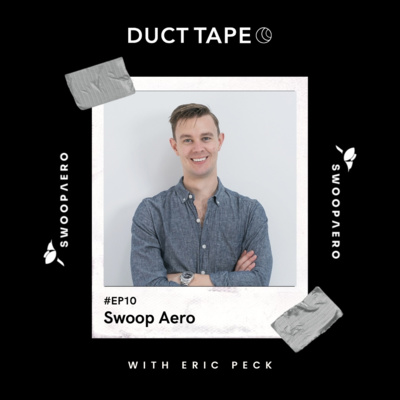
This podcast was created by Startup Victoria and Victoria University. [Music] When things go wrong, duct tape can hold just about anything together. And when you're starting and growing a business, a lot of things can go wrong. Welcome to the last episode of duct tape issue 2. Throughout this series, we've talked to founders from all across Victoria's startup landscape to explore what we call duct tape moments. Those times in a founders journey when things don't go as planned and they've had to get a bit creative. And as you've heard me say many times now, every founder has duct tape moments and we firmly believe they should be embraced. I'm Lara Chan Baker, the editor and producer of duct tape. And I've learned a lot from our featured founders over the last nine episodes, but it's not over yet. We have one more for you and it's an absolute cracker. I'll check back in at the end to chat more about what this resilient group of entrepreneurs has taught us. But first, you need to meet our interviewer for today. So if everybody listening, we caught up on a little zone before this and we started talking about planes and I literally had to stop talking and go, "I do not want to talk anymore because I want to hear it here." That's Jordan, John Francesco. You've made him a couple of times now in episodes 2 and 6. Jordi is a serial entrepreneur. There's very few types of businesses he hasn't doubled in at one time or another. And he's responsible for founding and growing a multitude of successful companies. He's also one of the entrepreneurs in residence at Victoria University. Today, he's interviewing a founder who's flying health supplies to the world's hardest to reach populations. We have developed a full stack of technology like all the hardware and all the software you need to run a drone delivery network. And then we use that in partnership with Ministries of Health or Healthcare Companies to transport health care supplies around. And that's Eric Peck, CEO and co-founder of Swoop Arrow. Eric started out doing what a lot of kids dream of. He was an Air Force pilot, first flying fighter planes and then huge Hercules transport aircrafts. But after nine years as a pilot and leading missions in the Middle East, he turned his brain towards business, got an MBA and eventually took up a job as a consultant at Deloitte. Perhaps not quite as exciting, but it's during that time that he met his future co-founded Josh Tepper, a robotics engineer. And they started thinking about how their respective skills and experience could be combined to tackle one of the world's greatest problems, global health inequality. In 2017, they founded Swoop Arrow, a company that flies essential health supplies like vaccines, medications, pathology samples and PPE equipment around the world by drone. I mean it when I say that what Swoop do is truly revolutionary. The drone itself is an incredible feat of engineering. It's fully electric, 3D printed and autonomous, with too many extraordinarily advanced features to rattle off here. It can transport supplies 175 kilometres away at up to 200 kilometres per hour in the harshest of weather conditions. But the success of Swoop lies in more than just the drone itself. They provide the full technology stack to seamlessly integrate drone logistics into any health operation at scale. That includes the hardware and software, of course, but also things like hiring and training local workers to operate the system, from pilots to healthcare staff and everything in between. What Swoop have done is develop a way to bypass the many barriers of traditional transport solutions, enabling them to deliver health supplies to some of the world's hardest to reach locations. Places like the Congo, where they're alone, they've transported more than 80,000 vaccines to remote villages. And they're doing this in a way that safe, fast, reliable and sustainable. Swoop Arrow are quite literally saving lives. They've scaled very quickly. After just four years, they now operate in five countries across three continents. They've worked with the largest organisations in global health, UNICEF, the Gates Foundation, UKA, USAID and Garvey, the Vaccine Alliance. They've delivered more than 500,000 items, including COVID vaccines, of course, and replaced over 10,000 traditional transport trips with drone deliveries, saving 240,000 kilograms of CO2 from being emitted into the atmosphere. And it all started here in Melbourne. I'll leave you now with Jordy and Eric to tell you more about Swoop Arrow and the duct tape moments they've had along the way. Dude, I'm super excited to have this conversation video I've got to admit. This is really exciting for me and all of our listeners because Swoop Arrow is operating in a space and for me, what I'm really interested in is that it's got this amazing technology through aircrafts and drones and all these kind of things that are super, super interesting to me. And it's got this intersection with human impact and the necessity for medical supplies and developing countries. And I guess the roll-on effect from that is is endless in my mind. But I can't imagine this has been easy. No, thanks for having us on. And I'll tell you what, it's definitely it's amazing to look back over the last, you know, almost four years now and see the journey we've been on. And all the different things we've done, it's just been, you couldn't imagine, or years ago, it would be where we are today. So only four years. What would be the dot points on, you know, pre four years? Where did you start? How come like aircrafts, how come arrow? Yeah, definitely. I started off as an Air Force pilot outside of school during the Air Force. I flew fighters for a little while, but I got Air SQL while I was dogfighting, which was like chasing the other plane. And so I was no good at it. And then I jumped off from blue and I caught the Hercules, which is like a 70-ton transport aircraft. And I used to fly them around at like 70 metres off the ground at night, wearing night vision. I was like, what was it? Five hundred K now. Holy. Hang on, and they're those super big ones in the back faults down. Yeah, backcoms, you can parachrovers can jump out. They go for engines. Holy. Yeah. How far above the ground? 70 metres. We get them pretty low. Holy. I'm just featuring this like pitch black, kind of crazy remote place and you've got goggles on 50 metres. So 70 metres above the ground. Yeah, that's pretty much it. And just like if you were standing underneath and you're just kind of like, wow, like this was noise and something went over the top of you. Insane. So train pilot, fighter pilot, what's the right terminology? Pilot pilot. I guess that's right. Pilot. Insane. And did that finish because you got sick and you're like, no, no more? No, I just kind of looked at like I was sort of educating myself, I didn't MBA. And I was like, cool, I want to learn about business, you know, I've seen other people in business, like my parents were in business and so I didn't MBA. And I got confused during the MBA originally wanted to start my own company, but I was like, oh, and I became a management consultant. Good MBA, good management consultant. So joined a firm in Sydney, which was actually a startup firm. I was employing number two, which was super cool and like saw the bit of growth in the startup and then had the first run at studying company, didn't work out and got punched over to Deloitte in Melbourne, worked at Deloitte in Melbourne. And then I met my co-founder Josh and Josh was like a robotic engineer. So if you can imagine like big arms on production lines, assembling Tesla start thing or like giant 3D printers, that's what he did. Wow. And so like really unique set of experience, it's like cool Air Force pilot and management consultant, robotic engineer. And we got posed this question about could a drone be used to move chemotherapy medication? And it's like, well, it's about a KELO of medication right in regional Australia. And it's like, well, you can fly 100k's with a KELO of medication on board. But we like, we didn't want to start a drone company, but kind of like, oh, we stepped back and looked at it. And it's like, well, what is not, what is the drone look like? Is the technology exists? But how can we build a system that can do that, you know, sustainably, reliably and scalably? And like a healthcare system can use that every day of the week. And we started building it and that was the birth of a swoop. Oh my God. What an amazing encounter. Whether the chances are always like when I hear these stories that the old saying, you know, if you didn't do what you did, you wouldn't be where you are. And it feels especially important here that if you didn't do what you did, you wouldn't have met the guy and that intersection of robotics and flight, really, wouldn't have happened. Yeah, definitely. I mean, it was just like a like a networking chance encounter like you met HL. It's okay. You should talk to this guy over there. We started talking. We had dumplings and then four years later, we run an company. All right. So for everybody listening, if we zoomed out, Swoop Arrow operates out of Port Melbourne here. It's a growing team, growing business over the last four years. What is the kind of number of flights that have happened? So far, is that how you be counting them, except like deliveries is what's the metric? It's like flights or like movements of a kind of similar thing. We can like fly out and deliver something and then when we deliver say vaccines out to a sender, we'll pick up blood samples and take them back to the lab for testing. And we're kind of we're well over 5,000 over the horizon flights in. In fact, I think we did 4,600 alone last year and I think we did 2,000 in the first three months of this year. Oh my God. Far out. Corrari. That's quite a few. That's a lot of flights of my brains just like trying to break it down. Like that's a lot of flights every day, man. Yeah. Like it's super cool. In fact, we did more daily flights than quadruced through most of 2020. You're kidding. Yeah, because they were like, they can't go anywhere. So we're running like 100 flights a day sometimes. Super cool. Oh man. And so I guess practically, and this is this might be a little bit selfish. I'm just super interested. Does that mean you've got your own kind of app or it's only like
pick up drop off, is that infrastructure need to be? Yeah, so we have a drone port in Dear Congo where we operate and we have one in the hospital as we operate from in Malawi and the aircraft take off and it's just super simple. It's like some visual landing targets for the aircraft to look down, they can look down and see the target and make sure there's no people around them. But it's just kind of like a five by five meter space. Now maybe there's a bit of fans in the stop people walking in at the landing zone, some stuff like that. But just little low impact sites built around the healthcare centers. Basically the healthcare staff are like, "Hey, I need to have 50 doses of TB vaccine or 30 vials of COVID vaccine delivered to this healthcare center and it goes into our system via WhatsApp or via a computer message." They walked down to the aircraft, sit in the other pad for them, they put it in the drone, shut the lid, press the button, take off and delivers it for them. And then it flies like 100k's out and then we go to each healthcare center or our in country teams do now. They'll go to the healthcare centers we're operating from. They train the targets like, "Cool, where's the drone going to land?" They work cool as well. The landing target looks like they put the target out. Generally like kind of in the backyard of the healthcare centers, so it's in the little fan stock area. Five by five meters, the aircraft comes down lands. They pick up the supplies and they don't have to send anything they want back, press the button or fly some. It's that simple. Wow. And so the drones have got vision on it. The camera looking down and it's using that to connect and of course GPS. Yeah, yeah. I mean, they've got a whole range of things on them. They're like fully autonomous little robots. So they've got AI on board to make sure that all the systems are working well during the fly. They've got like sensors so they can sense other aircraft that are flying around. They've got computer vision to help them land and make sure the landing area is clear. They've got LiDAR on them. And they're like, "Yeah, they've got GPS. They've got, yes, they've got a kind of a whole sensor suite on them that makes it possible." Wow, mate. I'm sitting here just like blown away, but I can't help but think you must have had some moments that have just not gone to plan because there's a lot going on. Yeah, tell me about the journey and especially I'm really interested in so-and-so where I listen to it as about the times where it maybe it hasn't quite gone to plan. And we like to say, you know, those duct tape moments when a spanner is thrown at you and you just have to adapt quickly. What comes to mind when we start talking about that? Yeah, definitely. I mean, saying duct tape, I think very early on, often the aircraft had duct tape on them. Yeah, kidding. It's easy to say it's a duct tape moment because I think duct tape was actually involved. But you know, we had this really interesting journey where we've kind of, we started off looking at doing that, you know, medication delivery pathologies of like blood sample, pick up in Australia. But we discovered on the route like really early on, there's this huge opportunity in emerging markets. And so we actually won the world's first tender for medical drone delivery and that was in Vanuatu. And it's probably like the first duct tape moment, you know, where this small Australian company would just move out of my co-founder Josh's garage into like a mezzanine warehouse like in amongst all this other stuff with a little bit of space. There's a couple of us working there and then we run this contract in Vanuatu and say, okay, you know, we were in the startmate program in San Francisco when we found out we'd want it. And so it's like, okay, we're overseas and we had like a month to get over there. And so like, how do we get the aircraft of Vanuatu? How do we get the batteries of Vanuatu? His batteries are impossible. And so we got all this stuff there. We like flew the team over. We went into the wrecky around the islands. So like hiking with the unicef stuff up and down these volcanic mountain ranges. No mobile phone. No internet. It's actually amazing, an amazing experience visiting all the villages. We're going to be delivering supplies to these drones. Oh wow. You know, we got there. We run a lot of meetings. We picked the drones up in Vanuatu. We'd get them from the port that come out of boat. Cool. We take them in. We rented out this like villa. And the next day we were starting flying and we had like a week to prove that we could fly. And then from there, we're like, if it's successful, if we can prove to like unicef in the Vanuatu government in deep-out in Australia, they were there watching if we can prove that it works. And then we can go and do the medical delivery, best in the world. And so we get there and like the night before it happens, if we unboxed the aircraft, nothing worked. It's been in the ship for two weeks. Nothing worked. We powered the one like dead. Don't know what's going on. It was a killer. And so then like we're trying to fix them. And you know, we're running off generator power and like this thunderstorm comes in as well. It's like, of course it did. Yeah, the night before like this thunderstorm, all these things are going wrong. Like powering the aircraft up, like pulling all the electronics out, putting them back together, eventually get the things working. And then we get like this cockroach investigation. It's like, is this a thunderstorm like where? Of course. 100 meters in the water, there's water going everywhere. So all these bugs are like, we need somebody to go and like the whole building fill up with all these bugs. And we're like, we're sitting here and it's like, man, we've got this big demonstration tomorrow. What are we going to do? Like it's happening the next day. It's the first time we've done this in this new country. There's stayed almost all night working on this stuff. Got everything working. I put it in the back of the year, drove out to the site. And it's like, okay, cool. Is this, can we actually do it? Are they going to power on today? Have we powered them all on? I got everything out because the place had been full of bugs and all that before. We all got food poisoning. So it's all kind of sick. No. And it's like, one by one, we were like having to run off and drive in the bushes because of this bug investigation we had. And like we get everything there. We get the aircraft ready. And it's like, cool. It's got like satellite connection. And I send the thing out. And like everyone's watching. There's all these people who have got around, you know, there's all these stakeholders watching what we're doing. The villagers are all heard. The drone, the drone isn't blown yet. So they're waiting for it. And it just like takes off and like it flies off into the distance. And it's like, all right, cool. Like the city on white and it can move. It was like an hour and we were just watching this little blip on the map. Move bit by bit. And so that would mean you put it back together. You're fighting cockroaches, thunderstorms. But you wouldn't have had an opportunity to test flight before the demonstration. You wouldn't have had to test flight. The first flight was the demonstration. There was nothing else. It was like, that's the first time you had a flight. So we couldn't even like make a takeoff on the ground. Oh man. Yeah. And these are like, they're also like, they've got like a two meter wingspan on the aircraft. They've got four motors that allowed to take off and land like a helicopter. So we've got them hover motors and it's got a couple of forward motors. And you couldn't hold it down and power it up because it's like spinning everywhere. Yeah, so it's like fingers. Yeah. That's it. It's just like, it's got to give it a shot. And so it worked in Australia. Didn't work when it arrived. Things sound a further rise in it. Because it was like amazing feeling of relief. Like we've got the core like it's landed like this remote site to like prove that it can do the dummy medical drop lands there. You know, it landed exactly where it was meant to but we told it to land five meters away from where we were meant to land it, which is kind of funny. And we fixed it for the next time and it came up and it was just like, wow, there's a little like 3D printed plastic electric robot. It's just flown 90Ks around all these islands like up and down over all canos. I was like, and landing it. It was like, it was the best, best feeling ever. And we got the ticket approval and that meant that we could start doing deliveries. And about a week later we did the first delivery of a vaccine with a drone ever, which is super cool. Dude, there is so much there that I want to unpack. The drone itself, the aircraft during that 90 minute flight, I'm just picturing you in the hot sun after a thunderstorm at steaming in Vanuatu. The team like looking over the shoulder, just like watching this blimp just. Yeah, this little like on Uber. You can see like the little thing moving. It was like that. We're watching this and it's like he's raining down on it. It's like 36 degrees, 80% humidity kind of sick watching the screen. Like it's like hawking it because it's autonomous, right? So you can tell it to fly home or we can tell it to like fly around a circle or like all the decisions it makes on its own. So it's kind of going there and you know, you'd like at every, every second of blips forward and like sometimes it'd miss a second and it'd be like it wouldn't move. And you'd be like, it's second and then a bit like do two blips really quickly and you're like, okay, cool. It's going. Oh my god. What are the relief when that landed? Was there, you know, looking at Unisurf and the officials? Was there this like just mutual? Yeah, we did this. Everyone was super thrilled. I mean, one of the challenges is the like the drone technology being made for a couple of years at that point and like just peppered with like failures all throughout. And so like it wasn't quite mature enough. It wasn't ready. And so there's this expectation that it might fail or something might go wrong. But it worked and it's kind of that was the exciting bit. It's like it worked. We did the delivery. It proved on that island that it could work. And the flight route we had to do, you know, for that delivery was like harder than what we had to do in the real world. Man, don't congrats. That was amazing. That seems like such. Was that almost more than like, you know, those big investor meetings or those sorts of things just proving to Unisurf and to the officials like, hey, we're here. This is the first time it's been done in the world. To me as an outsider looking in, that's that validation point in the real market where it was just, you know, the inception or the crossroads where it's like, we're on. We can do this. This is a sustainable model. We can actually change the world. That's the feeling that I'm getting now. Yeah, definitely. I mean, it's just like the investor meetings were kind of a lot easier compared to that, you know? So like all our initial investments were done from Vanuatu by the phone. And so it was like standing on this mound in a village in Vanuatu while the deliveries were happening like on a phone in the position of the village where the mobile phone got a reception and like talking to investors through financial models like shirtless in the whole sun. Oh, just like guys, you can read a spreadsheet. Come on. I'm getting some burn here. Oh, far out, man. So how many, you're still operating Vanuatu? So we operated Vanuatu for about five months. But one thing we hadn't learned is how to navigate the NGO government cycle. And so what we ended up doing is we won another tender to operate in DR Congo, which was so we competed again, we won that tender and we partnered with an NGO called Village Reach. And it was during that bit of the next phase of growth of the company was how we learned to interact with the NGO and the foreign aid funding cycle and like really learn how to build relationships with both foreign government and the NGO side to set up public private partnerships to run these scale. And like I too, you know, the big networks, we got running at the moment, one in Deo Congo, one in Malau, we took all the learnings from Vanuatu. And like we've very applied that in Central Africa to make those networks run far out.
feels like I'm correct me if I'm wrong here that you have the flight knowledge and the robotics knowledge from you and your co-founder. That coming together was the first piece of the puzzle after Van Allarto's initial test and struggles through there that you got through. Then that NGO level of going, "Oh man, there's a whole other skill set that we need here, navigating the politics of not only government but cooperation as well." It's just another layer on top of a growing startup. Yeah, definitely. That was a really good learning for us. It's like we need to be technically competent but we need to be able to support our partner organisations the way they need to be supported. They need lots of information, they need to understand the impact. You've got to be really transparent. The tendency in startups to want to hold all the information, really tight and not share anything, but the biggest thing we found is that it's going to be hard to copy what we're doing anyway. We're just reasonably transparent with all the information, how it's operating, how many flights we're doing, what are the challenges we're facing and like that honesty and the trust you're built by doing that is essential to make it work. Especially in this industry, right? It's not like you can point out another industry, like I'm thinking like the closest is Ospoe store, like a traditional logistics network. This is autonomous. It's in the air. It's delivering medication. There's real world implications here, not only by getting the medication there, but then how that reflects on the government or the organisation. If something doesn't quite go to a plan and they're left out of the lurch or you're just setting each other up for failure, so that transparency seems critical at this point because we all know when something new hits the marketplace and industry is breaking through, it's got the microscope on it. Absolutely amazing. You've moved from Vanuatu and then Congo was next. Yeah, that's right. We've been really successful in Vanuatu and this tender came up for De Arconco, a Democratic Republic of the Congo, which is like a country that you've read about, but like very few people you need have actually been there. Super cool country, by the way. I've been there four times now. It's amazing. But, you know, so we go, okay, cool. We're in Vanuatu. Like we've made it work here. We can make it work in Central Africa. That's good to go. And so we bit on the tender. We won it, which was really good. And we like, under the team up, we grew the team, so we've hired like a couple more people. We've had raised the VC around Wildland, Vanuatu, bundled everyone up, built some new aircraft. Took all the learnings in Vanuatu, like, like sat-com connection issues, like what things break in the field, like, you know, what bits of technology do we need to build? We built like a new flight control systems to really, really like take all the learnings in Vanuatu and put that into some aircraft, and over to De Arconco, so they'll even more reliable. And that was like a super cool experience. We got there and I underestimated how much they speak French. So really, you know, it's a good idea. They're French-speaking country. It's like, okay, but it's like, it's not like Paris, you know, where you got to Paris and everyone can't speak English. It's like, oh, they speak, they speak like four languages and one's French and then, you know, one's Cichilloah and, you know, one's, you know, the Congolese local language. Yeah, local dialects. No English. Oh my god. And so we got there at the airport and it was just like, oh my god, like everyone's speaking French. You're not being practiced saying like, you can speak a little bit of French and you get there and it's like, all the French just disappeared on my brain. Oh my god. What's going on? And the good thing was we were all standing there and like, we didn't know this at the time but everyone knew like that was the drone people coming. Like they're, you know, a partner over there had been like working with everyone. Everyone knew who we were. We were in like the T.S. Yeah, I actually. And they all know who we are but we didn't know that. And so I was just like, oh my god, what's going on? Waiting for the aircraft to come up to the conveyor belt with like, court for flights to get over there and like pull these things off and then all of a sudden everyone's coming over and they're like, oh, you're cool like in the drone people off we go. And there we are in, in De Arcon go. Oh my god. So we're then operating the business. Did everything have to be translated? Yeah. So when we, like so even the aircraft speak, which is kind of cool. So when you interact with them, we don't like a whole lot of human set of designs so that when you interact with the aircraft, like it's not just like you've got to learn that thing of the checklist, the aircraft tells you what to do. It'll be like, hey, something's wrong with me. Like press these buttons and like tell me on and off or like, hey, like it's, we'll walk up to me. We're good to go. And like so it's got all these different commands. So yeah, in De Arcon go speaks French in Mozambique is speaks Portuguese. Oh my god. Yeah. And so like we kind of translate that but also all the documentation and we have it all in French and the local dialect of wherever we're operating as well. So it's like everything's in all languages, the markings in the aircraft are in like two or three languages usually like English, like national language and then local language depending on which region we're operating in. So it's just like understanding, we're getting it right for that area. And you know, so we get to De Arcon go, we do the first flight. We like get out of this center. We're working with the health, we're working with the aviation authorities. We set up this like the first drone port in Central Africa is set up in this place called Bandarca in Central De Arcon go. Like cool, we're going to run the first set of flights. So everything's prepped up. We've done some flights out over the water over the Congo. We're super cool. We know the aircraft flight this summer is not like Vannevar. We've got them out of the box. It's working. Couple of hours in the hot sun, you know, making sure the satcom connection worked and like working out how to put new suns. You use some cards in for the local sim cards, you're changing settings like on your mobile phone, you got a country that you're setting settings. It was the same thing back then. So setting all of that up hot sun, cool. They're flying. That's good. I went out to this village, good, would you park it, which is like three and a half hours, you know, four-wheel drive. And if it rains too much, you can't get there. So we get out there to the village, like amazing community, like, you know, fully accept us in. We're sending the aircraft on the satelong distance flight in the middle of the Congo. Take off. It flies down. I got like a full ceremony, the chief of the villages there, the NGO stuff there, the health guest stuff there. It lands into this health guest center like 20 foot palm trees and one side, the health guest sound, the other like this 10 meter gap in the middle and everyone's like, oh, will it actually come in and land like perfectly in the middle, which is beautiful. Having this ceremony for it. And what we didn't know at the time was that there was a prophecy in the village that there was a white witch that flew around and abducted children. And they were very, very scared of the white witch. And so the aircraft is like beautiful gleaming white. And so the village was like, okay, like the chiefs like this, it's all good. And so we had this ceremony where all the mothers came out. The other bit of the prophecy was that if you touch the witch, it disappeared. So you could never catch the witch because when you grab them, they disappeared. And so they had this ceremony where the mothers came out and I got to touch the aircraft. And so we flown it down there, cool. Like it's a bit of technology. It's like in the hot summer. Like cool. It's just like sand it back and it's like, oh, we've got to run this ceremony. So everyone feels like they're comfortable with it. So like one by one, you know, the first mother comes out and touches it and they're like genuinely thrilled. It's like, oh my god, it's exactly what they said it is. It's not going to steal the children. It's not the witch. And one by one, everyone is coming out and touching the aircraft. And like 10 of these beautiful ceremony, they were so happy. They all started singing this beautiful, local song and like music playing in the background. And everyone comes in and touching the aircraft and this big ceremony and we sent it back and it flew back home and took the blood samples back after the delivered months for the health supplies. Oh my god. Right. And for you standing there, like there's so many things here is that a three and a half hour drive, super remote part of the world at range. You can't get there, which also means health supplies and service can't get there. And all of a sudden you've got the ability to really make that impact. But then the prophecy, just like the dialect on the aircraft, you wouldn't have known that unless you were there and you saw it firsthand, it's like it's almost hard to believe, like you're kidding me. No, that wouldn't have happened. There was a prophecy about a white witch. Oh, far. Yeah. You've just made proper impact. And do you reflect on moments like that and those moments in Van O'R to and go, wow, like we are making a difference because from the outside of looking in, you've got a product of not only the network and the aircraft, but the actual outcome and the impact from this is you're changing lives and you're helping people get access to something that, you know, we might consider just, you know, dead easy and you cruise down the road, you do a blood sample, you get medication, but we often forget that that's not the norm. That's not everywhere. Do you reflect on moments like that and have that purpose when things get hard having that, I guess, the guiding light to go? Remember that? Remember those people? How often do you replay these moments? I think everyone involved in the company replays them all the time, like the ability to get out there and have this impact and see how the technology can have an impact is really defined who we are as a company. And it also gives us this beautiful beacon or like shining light, as you said, it's like we can remain really focused on what we're doing because we know it's having impact and it also removes, you know, if you're having genuine impact with the service you're providing, then like money will come. People pay for impact. But if it's actually delivering value, that's all we can focus on and we know it is. And every person we send overseas in-country staff and Malawi and De Arquango, they've all got stories like this and it becomes part of the folklore of who swoop our as a company. That's amazing. Anytime things get tough, having that common goal that a team can look at is the guiding light, like I said, without that, creating that company culture's bloody tricky. I'm blown away by that. That's bloody insane. So we got vanilla to De Arquango. Things are going crazy. Did Malawi come after Congo? Yeah. So Malawi came four or five months after the first lights in De Arquango. So we won another tender there, which was really exciting. We took over from another cover to the bin running. It hadn't been working too well. And so we won two tenders in Malawi in quick succession, kind of two months apart. One for the north, the country, one for the south. Malawi was real exciting. It was cool. We've kind of proven the technology works. Everyone believes that we're going to go in and set up a network there.
We went into the north, we tripled the network size within a month of being there. I made it really successful. And then we started our operation down in the south. Network in the south is really cool. It's servicing about a million people and some of the hardest to reach parts of Malawi. The southern part of Malawi floods. Once a year, it just everything floods. And so it's like a combination of bad weather, flooding, access to everywhere is really hard. The roads get washed away. We've done there, they do a lot of crop development because the water supplies really good. But when it floods, it's a huge problem. And it can be flooded for like three months at a time. And so we set up this network down there in southern Malawi. It's massive. It's servicing a million people well received by all the health guests and servicing two provinces. I'm flying across the border. We're flying between Malawi and a Mozambique airspace, which is a huge challenge. It's like every day we're flying in different airspace. So it's a huge, logistical challenge to make it work. It's really, really well. So we started November 2019, fast forward March 2020. We've got the team over there. We've recruited our in-country team. So we've got six amazingly talented people we've hired from Malawi. The aircraft is still piloted by Australians because we're still training our pilots over there. And then this pandemic starts to kick off. So I was over there just before the end of February. I was over there. And we started, okay, like there's this problem. It's happening. There's this new flu like virus. It's out there. Okay, cool. And then we got the call. Like everything started to kick off. We went to work from home. And our insurance agents call us. And they're like, hey, you travel insurance is cancelled. So all the people overseas, you got 72 hours to bring them home. And it was just like, we have this network running. It's a pandemic is just kicking off. We work in healthcare. And now we need to bring people home. And so we're like, we like, we didn't know what to do. Like, okay, cool. We like, we like, call the aviation authorities. Can we pile up the aircraft from Australia? And they're like, yeah, during the pandemic, you can. That's fine. Wow. Cool. Got that approval from like, allow me to call this. You're going to be like, be assured. Malay says it's okay. You can do it. Okay. Cool. We can bring the, we can bring the pilot home. Like our head network manager there is a Sam is an absolute legend. And we're like, Sam, you're the boss now. Like you're on charge. Yeah. Like it was going to come anyway. But it was like, we needed this is our baby. It was running beautifully. We're doing lots and lots of lights having huge impact. Like 70 health care staff trained. We got the hub operating out of two hospitals delivering to all these senders. And we had to leave. So we brought the Australian team home with it, the local team running. And it was like a comedy of errors. It was like, well, like it was that time early on in the pandemic, where flights are being cancelled. Everyone's struggling to try and get home from wherever they are. And so we like calling people on the phone. We're calling, we're calling, we're calling, either the open airways. We're calling, sat down for a couple of hours. And like flights are being cancelled. And we've got the team all the way home eventually back to Australia. So we had the pilots in Australia and the Obsender in Melbourne running this network in Malawi. And it was the first time in the world anyone had been able to pilot like a drone delivery network from outside its gun through operation. And you know, it wasn't like Europe, where the countries next to each other was Central Africa and Melbourne. Yeah, you can't get much further away. Yeah, and we just kept on doing it. We just kept on working. And you know, we'd built all this technology, this platform, the systems of processes to make it work. And we stepped away and it was like that was like we let our baby add into the wild. And it's still going. It's still going today. Our network's running fully localized teams. We've wanted them from Melbourne. It's fantastic. That's amazing. It's almost like you stumbled across a state of like a stumbled across the scale really. Yeah. Like it's like, oh my god, we can do this. My amazing because you know, as you said, you're a healthcare company. And just just that's delivery method is yeah, cool futuristic and new and all those sorts of things. But I could imagine as a founder, you've got a pandemic kicking off. The last thing you want to do as a healthcare company is not be able to deliver healthcare. Yeah, that's right. And so I imagine some of those deliveries would have been, are they looking at COVID vaccines and those sorts of things now is definitely. So we started picking up COVID testing kits almost as soon as they started to end COVID testing. We're moving the testing kits and like testing kits out to centers and then picking up the samples and bringing them back. That was like April, April 2020, like a month into it as soon as they started like enabling that test. We're moving the tests around which was awesome. So we've been doing that for a full year now. We started moving the COVID vaccine in January, which is simple. So in Malawi, we started moving it. And so, you know, a large portion of the first doses they've got from like the vaccine alliance, the covax and AstraZeneca from over there in the UK. We've been moving them around in the area we're operating in, which is really cool. And it's like part of the reason why we're going to be expanding out from two to seven then 17 provinces across the country in Malawi. It's like it's really successful and it works. And what it also enabled was movement of healthcare supplies all around where we were working when the first lockdowns came in. So you know, they're locked down and it'll let you move between districts. Yeah, we could we could move health supplies around. And otherwise, they wouldn't have been able to move them, which was incredible. So you're saving lives. Yeah, I mean, legitimately, like a lot of these remote places, like without all these, like he say comedy of errors and from Fanoa to to Zirconco to all these learnings along the way. If that didn't happen, you wouldn't have been in the position to be able to to give the access to the medication and to to these vaccines, which you just got to look at the numbers in the data would have resulted in high amounts of death and fatality. Yeah, I mean, it's fantastic to know that, you know, we're able to play this critical link in the vaccines of light chain because vaccines do save lives and whether it's, you know, a polio vaccine or a TB vaccine or road of virus or a bowl or or covert. They're all like their things that save lives. And then we're lucky that between January 2019 and January 2020, we did 64 emergency deliveries, which is like someone needs an antivenom shot within two hours. And then we're going to be able to do some of these vaccines within two hours. There's a mother that's just given birth and they need oxytocin to like fix post birth complications within a couple of hours. And we've done that 64 times and that's like outside of like the nine to five, whether, whether moving for the house to play. I've been like a Saturday or a Sunday. And so it's like 64 times outside of that where we've moved something that we know saved life, which is super cool. And I think that is amazing. I got to ask it, we're kind of coming up to the end, but I'm really interested to learn from you. Where do you see Swapero? Not only as a company, but maybe as a pioneering industry, a player in the industry rather. Where do you see this in five to 10 years? What's the dreams? What's the goals? So I mean, I can answer that straight up. Our goal is by the end of 2025 to provide a logistic service to a hundred million people. And so we're on where we're currently hitting our benchmarks to be scaling up for that. Oh, that means after the technology we're going to have like new technologies flying further. It's carrying more payload. But that's predominantly going to be, you know, in ruralish areas. I'm going to start and move into cities and then our 20, 30 goals for reaching five billion people. So. Oh, man. Most of the world's population with a logistic service leveraging drones for transport and medical supplies. That's what we want to be. Oh, man. I am on the sidelines cheering. I cannot wait to see this happen. And it feels like it well on the way. Is it easier? In a regional context when we're talking about air spaces. I'm thinking here we're sitting in Melbourne is that 20, 35 billion. When do capital cities come to play? I imagine there's more challenges. Yeah, definitely. I mean, I think the thing about capital cities is that they already have really efficient systems. That's sort of a need. Yeah. Like initially the way we can have the most impact is to be operating on the fringes of capital cities in, you know, developed countries like Australia. And then really integrating well into the entire system and low and middle income countries, you know, central Africa. And you're getting even Indonesia. The Pacific islands. There's a huge impact we had there. But as you start to get scale and you can really, really like drive the cost efficiency down. That's when it starts to make sense in, you know, cities. And I think currently two or three years away from, you know, I'd say we're two years away from being overhead Melbourne and Sydney. Oh, man. I cannot wait for that. Dude, thanks for million for coming in today sharing your stories with us and with the audience. I'm sure everybody's sitting just like me going, yeah, I can back this. And I can't wait to see five billion people impacted by a sweep error. Thank you. It's been my absolute pleasure. Thanks, Ben. Catch ya. [Music] And that is it for the very last episode of Duck tape issue two. In a moment, I'm going to dig into the most important things we've learned throughout this series. But first, a quick word on sweep error. They are one of the most fascinating and impactful startups to come out of Victoria. And I highly recommend reading more about them on their website, which is swoop.error. Follow them on Twitter @swoop_error and on LinkedIn, where they post regular updates on their sounding work that they're doing. At the moment, they're scaling up their medical drone logistics networks in Malawi and Mozambique and partnership with Village Reach. And they're asking for financial donations to help improve the health and well-being of millions of people. We'll post a link to the campaign in the show notes so you can check that out. Now, before we close out the series, I want to take a moment to reflect on some of the key lessons we can take away from these 10 conversations. We've heard from founders right across Victoria's startup landscape. Each working tirelessly to solve completely different problems from cybersecurity to breastfeeding to food waste. These founders, each at totally different stages of starting, running and growing their businesses, have all faced obstacles. Some big, some. some small, some involving prophecies of white witches, but they all have one thing in common, tenacity. That spirit of determination, persistence and agility rings loud in everything they do, and it's certainly something we should admire. But what I'd like to point out is that while they're definitely inspirational, they're not gods. They are regular people, and I say that not to take anything away from what they've achieved, but to amplify it. They are brilliant, but they're people with flaws and limitations and blind spots just like the rest of us. And yet each of them has overcome enormous obstacles to get where they are right now. No doubt, they'll face many more challenges in the future too. And what I would love for you to take away from that at the risk of sounding awfully cheesy is that you can do it too. A duct tape mindset isn't something you're necessarily born with. Being scrappy, resourceful and creative, those are all skills that can be learnt, muscles that can be honed. And that starts with realizing that you're not alone. Because while every founder is different and every startup faces different problems, what is 100% certain is that those problems will be there. There are people in your community feeling the same feelings you are, battling similar insecurities, making similar mistakes, struggling with similar issues, and we could learn from each other if we're more open about it. If we embrace duct tape and acknowledge the hurdles, accept that it's okay to be vulnerable. No matter how perfect things seem on the surface, all startups are at some point held together with varying levels of metaphorical duct tape. And that is a-okay. What we've tried to do in this series is show you what duct tape moments look like for a variety of founders. There's zero denying that privilege plays a huge role in access and success. But sharing our mistakes and what we've learned from them is one step in breaking those barriers down. Accepting that things go wrong and learning how to think on your feet is useful for anyone trying to get along in this world, but it's especially crucial for founders. In the world of startups, there's a natural tendency to make everything appear perfect, but things don't need to be. Scrappiness, resourcefulness, and learning from mistakes is not a bad thing. As you've heard from all our founders throughout the series, it's these moments that teach us the most. Whether you're already way steep in startup land facing your own entrepreneurial challenges, or someone with a seed of an idea debating whether or not to take the leap. We hope this series helps you see things from a new perspective, and encourages you to share your duct tape moments with those around you. There is no one type of successful founder, nor one way of doing things. If you need access to information, resources, or community, organisations like startup Victoria and Victoria University are there to help you. Make use of them. For now, that's it for duct tape. If you enjoyed it, please let us know. Get in touch via our website ducttaped.co. That's
[email protected]. Or leave a review on Apple podcasts. We'd really love to hear your thoughts, your own duct tape moments, and whether you'd like us to do this again. Remember, you can find a ton of founder stories as well as full transcripts of all our episodes there on the website too. Duct tape is a collaboration between startup Victoria and Victoria University. An enormous thank you to Eric Peck for sharing with us today. To Jordan, Jan Francesco, our suburb interviewer, to the rest of the duct tape team, Judy Anderson, Poppy Truella, and Hannah G, and to every other founder who has so generously joined us on this journey. Thank you from the bottom of our hearts for trusting us to share your stories. It's been a real privilege. I've been your narrator, producer, and editor, Laura Chanveco, and thank you for listening to duct tape.
 PodcastTranscript AI