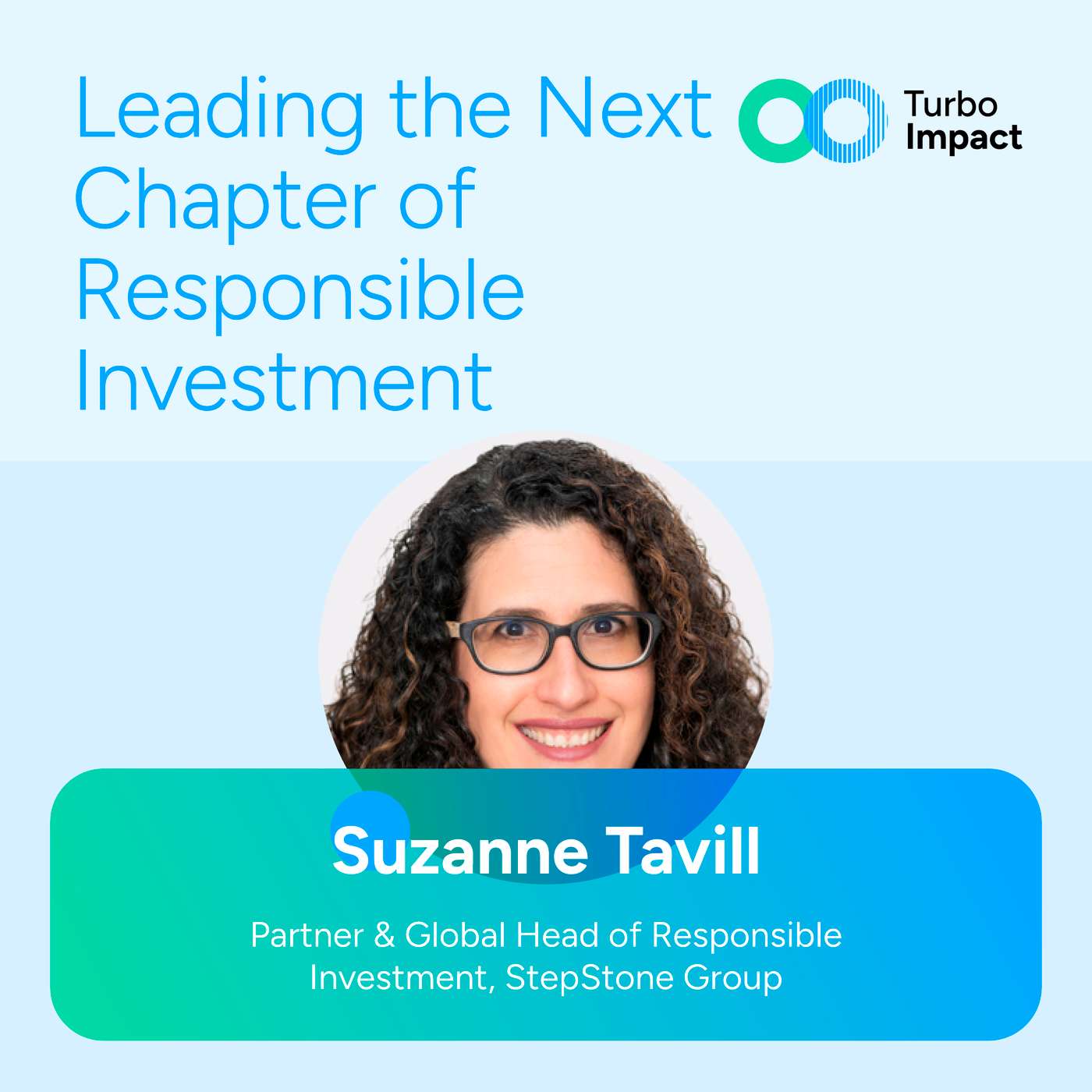
Suzanne Tavill: Leading the Next Chapter of Responsible Investment
26m 58s
Responsible investment in private markets is undergoing a significant shift from compliance-focused frameworks to a strategic, value-driven approach centered on sustainable value creation. Susanne Tavo of Stepstone Group highlights that this evolution is driven by financial professionals entering the space, emphasizing practical implementation over process-heavy reporting. Key to success is deep integration of sustainability across the investment lifecycle, from sourcing to post-investment engagement, led by senior GP leadership with strategic authority. This transition requires GPs to align sustainability with their core competencies—such as people management or supply chain oversight—rather than adopting one-size-fits-all models. LPs are also evolving, moving beyond rigid, checklist-style due diligence to more meaningful, data-informed partnerships with GPs. Technology, particularly AI and responsible tech, is emerging as a central topic due to its transformative impact on business models and labor markets, with national security closely tied to technological advancement. While impact investing remains limited by rigid frameworks, thematic investing offers broader opportunities for capital allocation in areas like decarbonization and circularity. Ultimately, the next phase of responsible investment will be defined by the strategic leadership of key individuals who can drive change, manage risks, and ensure that technology is governed responsibly—balancing innovation with long-term sustainability.
Welcome to Turbo Impact, where we navigate sustainability in private capital.
I am your host, Ken Chen.
Each episode, we sit down with investors, allocators and corporate leaders shaping the next
era of sustainability.
We explore how capital is driving the global transition and how today's decision are
shaping the future of the impact.
Thank you for joining us.
This podcast is brought to you by Turbo NAS0, a pure play sustainability advisory firm
driving impact across the private markets.
In this episode, I am joined by Susanne Tavo, Global Head of Responsible Investment
at Stepstone Group, where she leads responsible investment strategy across one of the largest
private market platforms.
Susanne shares her perspective on the next phase of responsible investment in private
market.
As the industry moves beyond frameworks and reporting toward a more strategic focus,
our implementation and sustainable value creation.
We explore how this shift is reshaping what good looks like in practice, and what investors
need to prioritize to drive meaningful outcomes in an increasingly mature and complex market.
Here's my conversation with Susanne Tavo.
Hi, Susanne, welcome to Turbo Impact Podcast.
Thank you.
It's a pleasure to be with you today.
Can you start by telling us about your role as Stepstone?
Sure.
So I've got the privilege of being the Global Head of Responsible Investment at Stepstone
Group, which means that I look after everything to do with how we do responsible investment
at the firm, be that from pre-investment to diligence to our engagement with our GPs,
the LPs and port co-hosts to how we manage data reporting disclosure, and then another
part of my role is looking after the corporate sustainability obligations that we have as
part of the firm.
So yes.
That is what my role covers, and I suppose I should have said, under sort of the first
part of the responsible investment considerations, that embodies all our processes, whether
they are around what historically could be regarded as core ESG, but also impact as well.
Thank you, Susanne.
Responsible investment has evolved enormously over the past decade.
From your vantage point, working with the private market managers, how would you describe
the current state of responsible investment today?
So I think this is a really interesting question, because if we think of any effort or initiative,
you know, it goes through a number of phases, and I think responsible investment likewise
has moved through a number of phases, and I think, you know, in the early days, it was
a space that was dominated by a lot of people who came out of the NGO space, that, you
know, charity sort of a space really had worked hard at the call phase, you know, on a lot
of initiatives, and it was very keen to bring some of that thinking and processes into
the financial sort of realm.
And I think, you know, this was a period that was dominated by high enthusiasm and a very
big build out of process and frameworks, and a lot of sort of deep, deep discussion and
debate around those, and ultimately, you know, coalitions, you know, and collaborations
have been set up, so a really important foundation.
I think over time, what we've seen is different people into the space, and a lot of people
who come from a formal financial orientated background, and this, I think, has been actually
an important internal driver, as people have looked at that legacy and gone, well, what
actually makes sense as we are doing investments, engaging with assets, and obviously, all my
discussion today is framed with the fact that the work that I do is only within the private
market space, steps done only, of course, invests across the full suite of private markets
from private equity to venture to real estate, private debt, infrastructure and real assets.
So, you know, there is a lot to be done within the context of private, private markets.
And I think the focus has actually been, while a lot can look amazing on paper, it actually
takes a huge amount of effort to do implementation in practice.
And no one has unlimited time budgets, you know, one limited budgets will stop.
And so, really trying to understand what to select to do that actually moves the needle
for the business, something that the business can get on, on side with.
I think that has been the trajectory, you know, that the space has been moving towards
this.
And I think really this is the phase that we are in, which, you know, nominally, I think
has sort of taken on, you know, the labeling around sustainable value creation.
So this is very much, I think, you know, I do recognize that obviously some of the political
discourse over the last couple of years, you know, which on a very strong light on fiduciary
fiduciy, you know, was an influence, or maybe a catalyst to drive actually what I think
was happening anyway in, in the space.
At the same time, this growing sense said the industry may be entering a new phase, where
frameworks reporting along are no longer in us.
Do you think we are reaching something of an inflection point?
So I think, you know, this focus of value creation, I think is going to dominate versus maybe
you could argue a mentality or a overemphasis on process for process sake, which potentially
lead in some cases, not all, but to a bit of a tick box, compliance style mentality.
I think a shift away from a compliance style mentality to sort of a practitioner mentality
is very much where we're at.
The tension when you're making this type of transition is to, you know, is that think
across the industry is to ensure that there's sort of a minimum viable level of standards
right across the space to ensure that the practitioner implementation actually is done
sortfully and to get to some type of real outcome.
We can discuss what that type of outcome might be, but I think yes, I think this is the
phase that we're right now.
And the one of the challenges in private markets is that many of your GPs say very widely
in size, resources and strategies, how would investors think about building responsible
investment approaches that are fit for purpose, rather than applying one size fits our model?
You know, I think this is another important point and I think, you know, as we moved away
from sort of maybe that or compliance mindset, I think this allows much more flexibility
in terms of implementation and an understanding that, you know, the expectations we have for
some of the megabar players should not be the same expectations that we have for a small
buyout, you know, manager.
I think at the crux, we have to start from the end goal and work backwards.
And I think what becomes important for a GP, you know, whatever it's strategy, whatever
it's size is to go, what strategic, we strategically can it make a difference with its portfolio
companies and what can it do that can differentiate that service to potential and existing portfolio
companies.
So, you know, there is a unlimited list of initiatives and things that could be done
to move the dial, but that is not going to suit every GP.
Latin GPs are really good.
dealing with management and people issues, are the GPs are unbelievable at managing running
playbooks that particularly around process or sourcing or manufacturing. I think GPs need
to lean in to those areas where they have a natural strength and infuse and live that
with that sustainability mindset and activities. But this all, this ability is to be strategic
to pick and choose that has to be done from a position of knowledge. So it is very difficult
for any GPs, respective of their silos, to embark on this path and to be able to authentically
argue that they can add value for their protocols, if they themselves are not really understanding
sort of the subject matter. And so I think out of a minimum, people need to have the
resource, part of the resource, but with real bandwidth, you know, that can really drive
and lead this initiative within a GP. And that person cannot be a junior person. It has
to be someone who is of partner managing director sort of style level, who can take that
strategic leadership, figure out what needs to be done, and then hire and resource up appropriately.
Because although today I think we were able to do a lot more with a lot less, you know,
paying a steel proof and sub-technology, these initiatives do not come and these efforts do not come without cost.
So I think, you know, starting, starting with someone senior to think through and navigate
this and figure out what they know versus what they don't know is a critical style.
From your perspective, what generally distinguishes high quality, responsible investment integration
from approaches that are mostly box-ticking. So I think it really flows from what I've said.
I think, you know, GPs that have resourced appropriately, appropriately within the context
of their strategy, you know, and GPs who have gone and developed really thoughtful playbooks
that they can run with their port codes and continue to refine those playbooks so they can really
evidence, you know, good positive value ad from these initiatives is incredibly powerful.
It all sounds pretty easy, but having the entire chain of right from the, you know,
sourcing to the due diligence that gets done to the post-investment engagement,
those 100-day plans, seeing sustainability infused through that and spoken about coherently
by investment team leads, deal team leads. Those, I think, are really impressive organizations
when the discussion at an IC flows seamlessly through topics, for example, you know,
that one might traditionally hear, but as integrated discussions around supply chains or concerns
about, you know, labor force management and, you know, that's not a separate RI discussion
or done by someone else. That is done and led and understood as deeply by those individuals
as sort of margins and, you know, return metrics, et cetera.
Another important dynamic is the relationship between LPs and GPs. As expectations around RI
continue to evolve, how do you see the LP dialog, LPGP dialog changing? So I think, you know, LPs
have to respond and recognize the change that is happening across the space. And, you know,
as we started this discussion with me reflecting of sort of a compliance or imitated maybe
beginning in the space or that infused eventually in the space. And, you know, I think LPs
have hit not all, but many have adopted a box ticking the style of approach, you know,
extensive, extensive and potentially untalered questioning to their GPs.
And I think, you know, often that's been done by teams that are very disconnected
from their investment teams and maybe like context. And so I think it is really
beholder to fund the LP community that, you know, as we see our GPs and we are supporting our
GPs to drive towards the sustainable value creation orientation. So we as LPs obviously need to
make sure that we are tracking as well. And in similarly, have that focus and similarly,
maybe adjust some of our approaches. I think the one thing though is, you know, LPs have to manage
that they have to, they do require a level of disclosure to be able to report to their stakeholders.
And, you know, it is data is really, really important. Data to evidence that all these
efforts that a GP is doing, you know, is driving and changing. A GP should want to see it,
but equally, LPs do need to see that as well. And I think that continues to be an area,
you know, which is challenging, but I think we will see a fair bit of refinement around that,
going forward. All right. Today is intersecting with a much broader set of issues, technology,
geopoliticals, supply chains and national security. Which of these emerging topics do you think
investors should be paying much closer attention to? So, so absolutely. I think
historically, maybe people thought in these sort of silos of ES and G and somehow things had to
fit into either of those, but at its core, what we're trying to do is to create enduring businesses.
And for me, technology is front and center and responsible technology practices. And within
that, obviously, AI is front and center. I think, you know, this is a huge area of focus
because this is not about implementing a new ERP system. This is about something an approach
that is fundamentally changing how we work, how we live, and how our companies that we are
investing in are going to be functioning. And if we not engage with this topic, then we are passively
watching something unfold. That is directly relevant to all our stakeholders. And I think the
topic of defense, which you rightly flag, this is very closely allied to the topic of technology
because, as you know, I feel very strongly that, you know, and we've written about this,
you know, defense going forward is heavily infused and heavily, you know, sitting on technology.
So, again, it's a connected topic in my view. Impact investing has been getting traction
in private markets as well. How should investors think about the role of impasse strategies
alongside broader AI approaches? So, you know, impact obviously has been in a space that has been
around since what the '60s. But impact is certainly a space that has created very high barriers
to entry. To be regarded as a true impact strategy, you know, you have to line up with, you know,
really well-recognised impact frameworks. And, you know, when we look at impact strategies for
our clients, we have to make that evaluation. We don't just take the label there to GP might
put on themselves as being gospel because, frankly, you know, there are varying levels of practice out there.
But one of the challenges is when you create high walls, there's a limited pool of opportunities
that actually make that standard.
it, which has meant, in turn, that the amount of capital going into the space while it
has grown, it still hasn't moved to being at, you know, a very, very large, large scale.
And that is a problem because clearly there's a lot wrong with this world and it would be
a huge benefit to see more capital going into the impact space. And the approaches that
we see LPs taking now ultimately are one of two. Either they make a defined allocation
within an asset class and they say within private equity, we will seek to make a x percent
or dollar allocation to impact. Alternatively, they look across their entire program and
they say we will similarly allocate x percent to impact. And there is a total portfolio
view to try and navigate through via private, public, multiple asset classes to seek
and sufficiently impact opportunities to meet that allocation.
What I would say though is some groups who might start by thinking that they want impact
are also starting to recognise that in fact, they don't require such high walls or high
barriers. In fact, more what they're wanting is a thematic investment. They want exposure
to one of the themes, be it around decarbonisation, be it behind a circularity, but they are not
necessarily going to demand to demand of their GPs adherence to those high impact frameworks.
And within the thematic investing space, the opportunity set is broader and certainly
a larger amount of capital is able to flow. And I'm not going to say that one approach
is better or worse than the other. Obviously, if you want impact, you've got to really
make sure you get impact. If you don't mind, then you know, you open up your trajectory.
But ultimately, I suppose if I have any vested interest, it's seeing more capital go into
either of these areas, because I do believe at the end of the day, both ultimately are
going to drive change. And I think particularly, you know, when I think about areas like venture
capital, it is very difficult for venture capital managers to align with some of the impact
frameworks, particularly when you're dealing with such emerging businesses. I mean, they
don't even have a business plan. How are you asking them to establish intentionality
and measure, you know, impact metrics, but potentially something that they develop
could be world changing, right? So, you know, that is something that I do think about
and obviously something like that potentially can much more easily sit within a sort of
thematic framework. Thank you for your insights. And looking
ahead, where do you think the next chapter of responsible investment will unfold in the
next five to 10 years? I think I always think of these things. Some things move fast and
some things live slowly. And I think the part that we've put ourselves on around sustainable
value creation will continue to drive forward. And I think it will be a dominant theme.
The wild card, which I think could accelerate things or potentially shift trajectories
about is around AI. And I think we will not be able to disconnect or ignore the impact
of AI in businesses on the labour market. All of topics that are highly relevant for
this space. The exact outcome, I'm not exactly sure. What I am clear about is that today
there are some really, really important potential harms or unintended consequences that can
come from this technology. And I think collectively we all need to be pretty proactive in engaging
and having discussions around practices and governance approaches to ensure that we
manage the technology as opposed to the other way around.
I have a question, I ask every guest, what do you think is the most effective way to
turbo impact in your field? I think getting good people involved in the space. In my experience,
the moment someone who is engaged and interested in a topic matter and is empowered with an
organisation to do something then change follows. And I think it's incredible what individuals
have been able to do across a space. And the change that they've been able to make in
their companies in their investments. And I actually don't think that even in an AI-fused
world that is going to necessarily change. I think the role of key individuals is critical.
We are very grateful for your steadfast leadership in driving the change in the industry and
the thanks for taking time to join turbo impact podcasts.
It's a pleasure, I appreciate all your effort as well as driving the change.
Thank you.
Podcast Summary
Key Points:
Responsible investment in private markets has evolved from compliance-driven frameworks to a strategic focus on sustainable value creation.
The industry is transitioning from a "box-ticking" mentality to a practitioner-led approach where GPs integrate ESG and impact into core business strategies.
High-quality responsible investment is marked by deep integration across investment lifecycle activities—from sourcing to post-investment engagement—by investment teams, not separate departments.
LPs must shift from rigid, process-based due diligence to collaborative, strategic dialogues with GPs, backed by transparent, evidence-based data.
Technology, especially AI and responsible tech, is a critical focus area, with defense and national security increasingly linked to technological innovation.
Impact investing remains constrained by high entry barriers, but thematic investing offers broader access and allows capital to flow into transformative areas like decarbonization and circularity.
GP success depends on having senior leadership (e.g., partner or managing director level) with strategic insight and authority to drive and resource sustainability initiatives.
The future of responsible investment will be shaped by AI’s impact on labor, governance, and business models, requiring proactive, collective action to manage risks and opportunities.
Summary:
Responsible investment in private markets is undergoing a significant shift from compliance-focused frameworks to a strategic, value-driven approach centered on sustainable value creation. Susanne Tavo of Stepstone Group highlights that this evolution is driven by financial professionals entering the space, emphasizing practical implementation over process-heavy reporting. Key to success is deep integration of sustainability across the investment lifecycle, from sourcing to post-investment engagement, led by senior GP leadership with strategic authority.
This transition requires GPs to align sustainability with their core competencies—such as people management or supply chain oversight—rather than adopting one-size-fits-all models. LPs are also evolving, moving beyond rigid, checklist-style due diligence to more meaningful, data-informed partnerships with GPs. Technology, particularly AI and responsible tech, is emerging as a central topic due to its transformative impact on business models and labor markets, with national security closely tied to technological advancement.
While impact investing remains limited by rigid frameworks, thematic investing offers broader opportunities for capital allocation in areas like decarbonization and circularity. Ultimately, the next phase of responsible investment will be defined by the strategic leadership of key individuals who can drive change, manage risks, and ensure that technology is governed responsibly—balancing innovation with long-term sustainability.
FAQs
The industry has moved beyond compliance-focused frameworks to a strategic focus on sustainable value creation. This shift emphasizes practical implementation over process-heavy reporting and aligns with investor expectations for tangible outcomes.
Large GPs can afford to implement comprehensive strategies, while smaller GPs must prioritize practical, cost-effective actions that align with their unique strengths and resources, avoiding one-size-fits-all approaches.
High-quality integration is embedded across all investment stages—from sourcing to post-investment—by investment teams and is coherently discussed with metrics and returns, rather than being isolated or managed by a single function.
LPs should move from compliance-driven questioning to strategic engagement, supported by robust data and transparent disclosures, ensuring that GP efforts are genuinely driving sustainable value.
Technology, especially AI and responsible technology practices, and defense-related technology are critical due to their deep impact on business models, supply chains, and national security.
While impact investing requires adherence to recognized frameworks, thematic strategies—like decarbonization or circularity—allow broader capital access and are more feasible, especially in early-stage ventures.
Chat with AI
Loading...
Pro features
Go deeper with this episode
Unlock creator-grade tools that turn any transcript into show notes and subtitle files.
 PodcastTranscript AI