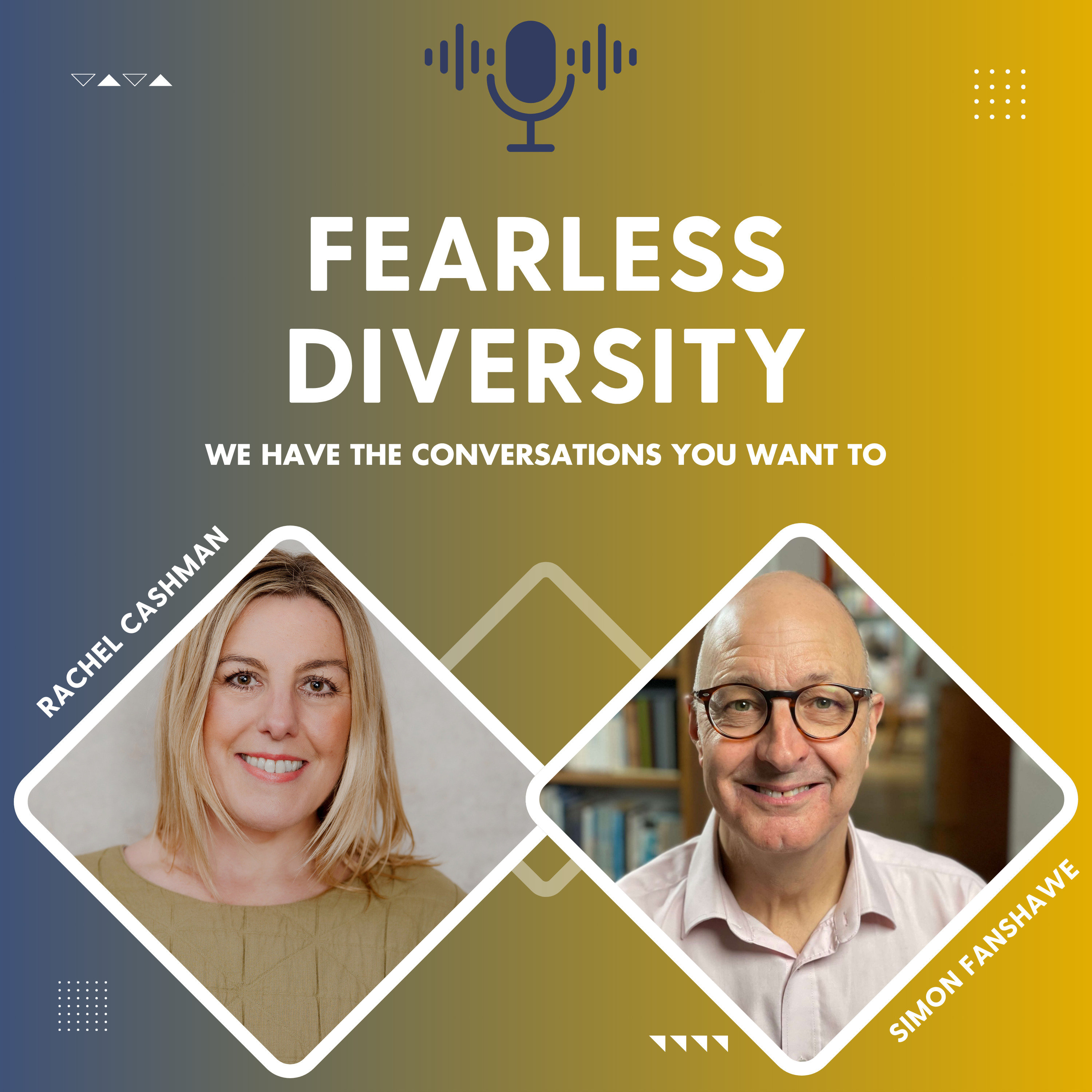
The discussion analyzes a UK Supreme Court judgment regarding the interaction between the Gender Recognition Act (GRA) and the Equality Act. The case originated from a Scottish government policy and was challenged by the group For Women Scotland. The Court's narrow ruling determined that for the purposes of the Equality Act, the term "sex" means biological sex. Therefore, a Gender Recognition Certificate (GRC) does not change a person's legal sex under this specific Act. This interpretation was deemed necessary to maintain the Act's coherence, particularly for defining protected classes and enabling single-sex exceptions. The hosts emphasize that the judgment clarifies rather than changes existing law, reaffirming that discrimination based on the protected characteristic of "gender reassignment" remains illegal. They caution against polarized interpretations, noting the decision balances multiple rights and provides legal clarity for organizations navigating provisions for single-sex and gender-neutral spaces. The emotional and political reactions to the ruling are acknowledged, stemming from widespread prior misunderstandings of the law.
Hello, welcome to this new series called Fearless Diversity. I'm Simon Pantroll. And I'm Rachel Cashman. And today we're going to talk about the Supreme Court, which we've left to do for a few days or weeks because we needed to think about it. And we need some clarification about it, don't we Rachel? We do. And you know, there's been so much stuff in prints on media, chatur in communities, I had somebody yesterday saying that they're dentists to raise it with them, you know, so it's really as a talking point at the moment. And because there's so much, we want to break the subject down into two episodes. So today we're going to talk about the judgment itself, what it means, what it is, and how we got here. And then we'll record another episode where we look at what the judgment has meant for leaders of companies and how people have responded to it, we'll give the bad and the ugly around that, what's working well and where people are struggling. So today's the kind of the factual element of you, or what does it say, what does it mean, and how do we get here? So I think the thing to start with, to understand what it is and what it is, it being the judgment. So you've got two pieces of legislation here. We've got the Gender Reform Act, the Equality Act. One, the Equality Act followed the other one by six years. So the origin of this judgment was a decision by the Scottish government that they were going to make a quota of 50% women on public boards. And that 50% of women initially was going to include anybody who self-ideed as a woman. That got knocked back by a court decision. But then they narrowed it down to a woman with a trans woman with a GRC, a Gender Recognition Certificate. And that decision to expand the definition of women to include trans women with a gender recognition certificate, that was challenged in the courts by an organisation called for women Scotland and they took it through a series of courts and that's why it ended up in the Supreme Court. So the decision of the Supreme Court just to say to start with is quite narrow. It's a bunch of legal minds talking about whether or not the definition of women for the purposes of the Equality Act, in other words, in terms of both dis-stopping discrimination and advancing equality or equal access, should I say, whether the definition of women in the Equality Act includes people with a gender recognition certificate or not. So it's quite narrow, which I think is one of the things that people are missing. Because there's so much hyperbole about what it means, what it isn't. And quite often people talk about it being the Supreme Court judgment on trans people. And it's important for us to recognise it's not that. It is this definition of the word women as it pertains to the Equality Act. And I also think it's important to remember that for women Scotland are a group of women, every day mums, who met on Mumsnet and got talking and had each set individually been worried about what was happening in Scotland as you've just described. And found each other. And the case was funded through small 1.2.5 pound donations of thousands and thousands of women. Now, yes, I believe people like J.K. Rowling donated some, but of the kind of half a million quids that the court action cost, the majority of that was funded by every day women. And the name was a joke. Yes. That's the originally there were four of them. So that was the joke. So you've got this case in the Supreme Court. One, it's about the interaction of these two pieces of legislation. And in fact, the court says explicitly the focus of this appeal is not on the status of the large majority of trans people who do not possess a full GRC. Their sex remains in law, their biological sex. So what you have to remember too is that the vast majority of people who fall under that very broad definition of trans do not have a GRC. And what the court concentrated on them was to say, well, look, if what the Scottish government's case is, is that you can include women, trans women with a GRC within this definition of women, does that make sense of the intention and purpose of the Equality Act? And what they concluded was two things. One is you can't have a different definition of sex within an act. So part of the Scottish government's case was that you could, yes, maternity impregnancy, clearly that could only refer to biological women. But that in the rest of the act, you could have a different definition of women. The Supreme Court said you can't do that because it makes the act incoherent for what they call duty bearers. And the second thing they said was that, which is generalizing that point, is that if you have a definition of women that he's not biological, you can't define the classes of people who are being discriminated against partly because you create two categories of trans people, those with a GRC and those without a GRC. So the classic example is that if maternity impregnancy is only about biological women, because only biological women can give birth, then if you're a person who's got a GRC that changes your legal sex to male under the GRA, you then are deprived, if you were to become pregnant of any of the protections around pregnancy. And that was a number of examples that they used. There were really compelling examples. And then there was the whole piece around the definition of lesbian and the implications for same sex-attracted women. There's been women as a result of had the Scottish government won its case, you know, and you know, through the Scottish government's legislation and their interpretation of what the word 'women' meant, it would essentially have allowed a heterosexual male diagnosed with gender dysphoria in receipt of a gender recognition certificate to be legally classified as a lesbian. And in that case, you were therefore eroding an entire class of lesbian, you know, not allowing lesbian to meet by association, I think the phrase is. So it really was not just a decision that was about the definition of women, but had huge implications for, in particular, there was a whole, there lesbian interveners, wasn't there, there's a group of lesbian organisations that were thinking about their protections in terms of their same sex attraction and them as this famous line in the court case around, you know, we are not attracted to a certificate. Yes. Well, the key thing too is that this is a legal judgement and it's about the operation of a law and it's as it happens the interaction of two laws. And one of the laws says, it has this slightly complicated phrase, the GRA says that actually your sex by GRC will change your sex for all legal purposes, but it then says subsequently, unless that is subject to a future enactment. So there was a whole legal argument about is the Equality Act an enactment? And what's interesting too is that when you read the Equality Act, it refers to the Gender Recognition Act. So one of the law lords, so the law lords, one of their arguments was, look, the Equality Act was written fully understanding what the GRA said. And therefore, notwithstanding that it didn't say anything explicit about, actually, we're going to override the GRA quite clearly, the Equality Act was written in the context of the GRA and to make sense of it, you'd have to use what's, when it's clause 9 brackets 3, which is the one that says another enactment. So the judge, what's interesting about reading the judgment, I think, is that the logic is really clear. But people are now taking this in a kind of very personal way, and I understand why they're taking a personal way, because it affects their lives. But you know, I've always got this thing right, I say, look, the thing with these issues is this biology, there's law and policy and the social interaction. And you said to me once, I remember, you say, one of the problems is that people then look at policy, but they put it in the personal bucket. Yes, yeah, you do. And I think that there's been so many misrepresentations of the law as it has stood since 2010, since the Equality Act came in, and 2004, since the GRA came in. When we'll come on to talk about the cultural dimensions of why people have misunderstood the law. But you know, I've even seen lawyers on Instagram and other social media platforms talking about how the Supreme Court has changed the law. You know, it hasn't changed the law. It has merely clarified the law. Now, we can all go out and law be government, current government and future governments for different legislation, new law, if we don't like what the law is. But I think it's really vital that we recognize the Supreme Court were merely clarifying the interpretation and the intention of the law as it stands today. And what the law is as it stands today, it says that it's quite clear that sex in the Equality Act is binary, because that is a way of making sense of qualitative discrimination around classes of protective characteristics. And it's very important to point out, as the law law to themselves did, it's really important to point out that there is a protection against discrimination on the basis of one of the protected characteristics, which is gender assignment.
In other words, people say, "Well, we're taking my protection from trans people." They were absolutely not. And it's a gender reassignment is a very broad definition. You either have to have, be in the tension of all going for it. It's got a series of things that enable quite a large group of people to claim protection. And also, the law, law, it's made the point that actually indirect discrimination can be claimed on the basis of perception. So were you a trans woman who went for a job and you did not get the job because you were perceived to be a woman? You would have protection through indirect discrimination on the basis of your perception, your perceived womanhood. So there's a range of protections which the law lords confirmed for trans people within the Equality Act. But to make sense of the whole act, you have to say, actually, the intention of the act was that sex was biological. So what does that mean, just to complete that point, is that for instance, everybody's arguing that lose, but that's not the real issue. The real issue is single sex spaces. And there's two things here. Employers are required to provide single sex spaces for their staff. That comes from the Health and Safety Act. But what does it mean when it comes into the Equality Act? It means biological. There are different obligations on whether you provide single sex spaces. You want either have to in certain senses, if you're an employer for your staff, you could choose to in certain senses, the FAs just chosen the cricket board. They've decided to make sports, what are called gender-affected activities, single sex. The key thing about the judgment is it doesn't say when you've got to do that. What it says is if you're going to do that, it's on the basis of that. Yeah, when you say single sex, it's got to be single sex. And you can't therefore admit trans women to a single female space. Or by the way, the opposite. You can't admit trans women to a single sex female space because that defeats the purpose of what you're trying to do, which is in that case privacy and respect of women, you know, in changing and more shade and so on and so forth. But it's a real worry that so much of this has got completely lost in the in the campaigning communications that you're seeing. And the kind of polarized communications because if you're somebody listening to this podcast right now, you might be, you know, having a cup of tea, thinking, oh, God, it's really complicated. And how am I going to navigate my way through this? And I think it's been more, been made more complicated by people seeking to simplify it as just being anti-trans. It's about toilets or on the other side of things. This is a great victory for women and not going into some of the new answers around it. You know, we talk on this podcast a lot about the nuances. And if you are my kind of cheryon call for leaders, thinking, what do I do now? And is to think, well, how do I, how do all these different pieces of legislation I need to be mindful of as the leader of an organization? How do they fit together? So if you're getting your legal advice from somebody that is just giving you one perspective on the equality act or the gender recognition act, and they're not taking into consideration all the different other bases of law that fit with that, you're probably not getting very good advice. Well, that's exactly right. And actually I keep on saying to people at the moment, they say, it's very complicated. I say, do you know what? It's actually not very complicated. If you start from the position, what am I trying to achieve as an employer with my staff as a public body or anybody else with the members of the public? It's simply this. With your staff, you're obligated to provide a single sex. Services for washing and toilets and so on and so forth. But that's not the place to start as an employer. What you're trying to do is make sure that you provide stuff for all your staff. Now that will include a range of people. And so therefore you have to think about single sex bases and gender neutral spaces. So if you start there, then it becomes a creative problem that you've got to solve. And actually that's potentially interesting now. There'll be all sorts of things about architecture in the estates and so on and so forth. It'll make that a period of time of which you have to do it. But actually the proposition is simple. I want to provide services for all my staff. There are rules about how I provide single sex. And I provide mixed sex. Some of the single sex stuff or the mixed sex stuff can be done with, you know, floor-to-seeding doors and internal basins and all that, but my point is, don't start from the, oh my goodness, me, am I excluding this people without that people. The point about the equality act, it precisely allows you to discriminate and circumcise. That's not. Right. People misstep on the equality act. Clearing. I mean discrimination is lawful under certain circumstances. In other words, you're entitled to exclude men or women by the way. You can do either in certain circumstances. So my point would be, you're equipping your point about the legal advice. Actually think of it simply. I've got to provide services. I'm under certain obligations and I want to do two things. I want to provide services to my staff or for the public. And by the way, I don't want to open my organisation up to an accusation of discrimination if I do that wrongly. So just. Now, to discrimination from trans people or discrimination from women. Yes. I mean, there's a load of stuff there that, you know, you could open up to risk. But I think the point I'm trying to make is it isn't complicated in one sense. It's complicated to enact as it'll mean you'll have to think about buildings, you know, states, department and all that. So yes, it's. But the load problems are complicated. The point is, the idea that you're trying to achieve is actually quite simple. And the great thing about the judgement is it's really clear about that. And it's fascinating to our listeners. You may not know that Simon actually studied law. So what we've heard in the first part of this podcast is quite a good synopsis from somebody who despite also being a stand-up comic, as we know, has actually got quite a good legal mind and to help us interpret it. Yeah, but to be fair, I only got a two-two, as they call it, a Desmond. So I'm not exactly. I mean, is that a good training? God bless you, Christopher Proud, now dead, and Tom Sharp still alive, brilliant teachers. But, you know, that's the thing about law, which is so attractive about it, is that actually what judges and people do is they balance constantly fairness in the individual context with fairness for everybody. So they're constantly. and that's the brilliant thing about the judgement, I think, is that he did really genuinely trying to balance rights here and make sure that there's a legible path. And they talk about this thing where they talk about the need for. The best way of ensuring that a coherent stable and workable outcome is achieved is to an atop approach to the meaning of a statute that is constant and predictable. This will be achieved if the legislation is constructed according to the ordinary meanings of words used. It's a very basic, it's very simple, but people are very upset about it. And I can understand that because there has been. I think a huge decades of misinformation about what the law is. So people, when you're under a misapprehension, you almost go through this phase of being both curious and scared, actually, about if I've been getting it wrong for the last decade, how am I know I'm going to get it right again? Then you've got those that are from an ideological perspective. And then you've got those people who have also been affected, personally, and feel very deeply and very strongly about it. And I think that a number of politicians fall into that bracket. And in the run-up to the Supreme Court judgement, and in lots of the organisations that I've worked with in the politicians, I've spoken to, I've characterised it as. And they hope these organisations forgive me, but if you take. Sex matters at one end of the spectrum, right? So sex matters being the charity that look at sex-based rights. So if you take sex matters at one end of a spectrum, you take Strongwall at another end of the spectrum. So Strongwall, who are very supportive, as we know, of gender ideology as a position. The job of parliamentarians is not to take either one of those positions, whether that's local government or whether that's national government. The job of parliamentarians is to transcend that continuum between those two positions, constantly thinking about the trade-off and the risk, thinking about the most vulnerable, about the majority, about. If we can't please or we can't do everything for everyone all the time, then what can we do that has least effect, least impact on that balance and that trade-offer and risk? So again, if you're raising a newspapers and you're hearing things which are incredibly polarized at either end of the spectrum, then I would say you need to be looking to those, have the ability to walk that continuum because they're the people that will really be thinking about how all of these pieces fit. So how have you felt, personally, when you saw the judgement, were you. were you jubilant? I am. I cried, actually. And I'm not sure why. I'm not sure why I cries, because they weren't happy tears. I mean, I was relieved, I think. Why, really? I was relieved for the clarity, really, to have clarity. So I kind of. I think I potentially almost got to the point of not caring which way the judgement went as long as the judgement came out. And I. suppose I take a. I come at this from two different perspectives. And so indulge me if you will on just. on what they are. One is my political and philosophical perspective. So my philosophical perspective as a feminist, the kind of what I've just described politically around the need to look at the most vulnerable and protect the most vulnerable, how we do the. that, I think women have those that have society has shown us that we need to look at the interests of women and we don't, we live in a misogynistic patriarchal society and that's a whole other podcast episode just on that. So I have a political philosophical position, but I also have a personal experiential position, which is sometimes that odds with my political position. So if I could just illustrate that for you. So as you know, I was quite poorly in 2023 and had to have a radical history to me. Only you'd have to have a radical. The only time I'd be, I would consider myself very radical and it was because whipping my ovaries out, but there we go. But I had to go, I went private for that because you know, as you know, my mother had died, that had prompted me to be screened and seen and they'd identified various things that have very quickly had to be operated on and for various reasons, the NHS couldn't do it. So I went private and I loved my surgeon. So I had an entirely male gynecological team. I completely trusted my surgeon. I love him. I love the bones of him now, like you know, saved my life. He's a wonderful man. He's a amazing clinician. And in all of the consultations I've ever had with him, all in submit as you would imagine, there has always been a female chaperone in the room. He's always just said, you know, without, you know, as per policy, that I'm just going to get a nurse for you. It's never even come into the conversation that those examinations would take place without a chaperone being in the room. My operation, his venue of choice for my operation was the Princess Grace Hospital. And it was the same time as that lady who had been due to having an operation there had discovered that one of the nurses there was a trans woman, a biological man, trans woman. And she had said she didn't want that nurse to be part of her care team. And that had been escalated. The hospital had cancelled her operation. There was kind of accusations around transphobia. The whole thing had kicked off. It was in all the press. And you know, she then led a campaign subsequently and the hotel, the hotel, it's felt like hotel. And we're being found. The hospital changed its, changed its position eventually. But my op was during that period when all of that was going on. And at that point, the hospital's position was very much, well, this trans woman nurses, a member of our team and you do not have the right to refuse care from them. And my husband had said to me, how do you feel like if you go in and that nurse is on your board, that nurse is going to the cafeteria. And I thought about it. It's so deeply. And I came to the, and he said to me, what are you going to do? And I ended up on the Saturday that I went in. I ended, and it took me right into that point that was in the gown to say, if I think that nurse or any other trans woman nurse is on shift during my care, as wrong as this may be or feel to other people, I feel so vulnerable at this point. And I'm really not very well, that I would prefer not to be treated by that individual. I would want to be treated by biological women or biological men. But I'd want to know. And that's, and I know this might be really difficult for some people, but you know, I would want to know because it came down to the shaperone issue. So when a biological male consultant on nurse was giving me intimate care, there was a conversation about a shaperone. And I found myself thinking, I don't know what happens in that scenario with a biological male who is a trans woman. So in a different context, a trans woman flabotomist is taking blood from me, but I wouldn't mind. But in that specific unique context, in the vulnerability that I felt at that point, I ended up coming down on the side of thing. I'd have to say something. Now I didn't have to say anything because that individual was not part of my care team. And my comments are not about that individual, but just about how I felt as a patient in that scenario. But if I could just give you another a flip side of that, which is that, you know, there's been a lot of stuff in the press recently about the Society of Radiographers suggesting that we should have male radiographers conduct mammograms. And I've thought really deeply about this. I've reasons that I've alluded to you already. I have to go for a regular mammogram, a regular mammograms, even though I'm not yet in my 50s. And I am not sure I would have a problem with a male radiographer. Many women do, and that is entirely their choice. I may feel different if I walked into the radiology suite. And it was a male radiographer, not sure that I would feel different. And to give you a further example, just to show you how complicated, you know, is that I, my GP, I've, I've, I've, a male GP who I've seen for many years, 15 years. And in the past, I've had to visit the GP because of a lump in my breast. So I've needed a breast exam in the GP surgery to get a referral. And he had said to me, "Should we get the nurse into the chaperone so that I can do the breast exam?" Now in that instance, I said to him, "Don't waste your time." I know you really well. Don't waste your time. This is where the lump is. Let's just get on with it. We're on the 10 minute call. Not because he put any pressure on me on the internet. You know, it was exactly the same conversation, but the relationship is different because I've known him for 15 years. And I'm not saying that my view is right or wrong, but it's just how I feel. Well, that's interesting. Two things, I think one is that what you're exploring is that there is, there is personal choice involved here. And the interesting thing about the personal choice is that it needs to be based on trust and certainty of whatever kind. And I think it's really interesting, the distinction between the gynecologist and the chaperone. The point about the chaperone is that you're only going to trust them if they are actually a female because of the experience that that woman will have of being a woman all her life and so on. And so, and it's really interesting. I mean, one of the things that I mean, little parallel, but I suppose that when I'm very self, of course, I've been to the sexual nearly set the sexual offenses clinic. Well, I've clearly been there most of my life. But this, the sexual diseases, clearly, whatever it is, which is that awful place where they come out. You think, well, you think you're going to die and then they come out and they keep just got gone or a year, you know, you know, you know, you're done mad sort of situation. The point I was going to say was that it's quite, I've always felt in that situation that if I'm talking to a gay doctor, a male gay doctor, I can tell him exactly what's what I can say exactly what happened, what I did, where we did it. Well, I would feel no anxiety about that at all, where it's I might feel. So I think these things about trust and trust and privacy and confidence. And there's something I'm talking about, true. Now, this might just be me. Yeah, this might just be my, yeah, but my when I was thinking about the Princess Grace example and, you know, what would I do if, in the middle of the night shift, a chat that a trans woman nurse came into my room. And there's a bit of me that thought, well, you might not know, like you might not, you might not know Rachel. And I have a slightly different view just as an FYI, you know, I have shared toilets. I know lots of women will disagree with me. I have shared toilets with trans women before. I'm kind of finding that, you know, I am fine with that. I've got very dear friends that are really not fine with that, you know, I'm really not fine. But that's the point, isn't it? It's the choice that people need to have and in the choice they need certainty, which is back to the judgment. And one of the things, I mean, my sort of, you asked me to think about this before and I've thought about the, you know, the role of Stonewall in all of this because when I heard the judgment, I was really pleased. And one of the reasons I was pleased was that I feel that Stonewall will now be, and it hasn't demonstrated this since the judgment, but ultimately Stonewall needs to face up to the reality of the distorting effect it's had on people's lives. Stonewall has sold people who idea as trans. Stonewall has sold them a pup. It's a false bill of sale. They have been telling people that they have rights in law, which they don't have. And not just rights, no, they don't have never did have. That's the bit that's really important. I, I'd like to explore with you your relationship with Strongwall or somebody who's kind of spoken out against it, but I think I, against their actions, I should say, but I feel quite strongly and indeed I've had some of the most vitriolic stuff on social media when I've defended Stonewall. It's really interesting. Well, there are two things, I mean, I would defend, I mean, I was on the Vubes set it up, you know, there's a certificate letter in the corner, which is the sixth of a sign when we started it. The, the, the point is that, if you go back to what achieved does victories or the equality that Stonewall achieved, and I mean, the car was any involvement beginning, you start something, you pass it on, you know, but we started in 1989 and there were 2014, you know, Equal Married, extraordinary level of legislative and social achievement there, you know, led by other people, Angela Mason and others. But the way it was done, which is really important, is that it was always based around putting together the broadest kind of alliances around big principles. So if you look back at all the stuff and all the kind of printed material that posed
as the banners, they were all with said equality. It never said a firm gaze, it never said gaze of this, that and the other. We like us lovers. Of course, there was that, you had to say gaze good because no one else was. But the fundamental principle was, and the point about going for equality meant that you then had to have discussions of the kind that you've just illustrated, where you had to take into account the different views that people had, the anxieties they had. It's no good just saying, if they say, "Well, I wouldn't be happy." I mean, mad arguments about gaze shouldn't be parents. Well, people say that because they're thinking about it, because that's a receive bit of wisdom. But then you say to them, "I get what you're saying there, but hang on a second." They're a really crap heterosexual parents, and they're really terrific gay parents. It's not about your sex orientation, it makes you a good parent. It's about how good a parent you are. So how do we support everybody to be great parents and therefore bring up kids, which is the greatest thing any generation does for the next one? So if you're always approaching it like that, then you are able to take into account the kind of nuance that you've, so what you would do there is you'd say, "What we've got to do in fighting for trans equality is make sure that we provide choice for everybody and certainty." So why do you think they haven't done that then? What do you think kind of went wrong or was a miscalculation? Well, I think there's a couple of things. I think that in 2014, once gay marriage, equal marriage, it happened. Stonewall was kind of wondering around going, "What do we do now?" And they're rather like, you know, he talked to parents, Michelle Obama's doing it at the moment, "Oh, I'm an empty nester." You know, it's like they've lost their purpose, you know. And that's what happens. I mean, I'm not coming to my sister. What happens? No, I'm not a mum, because they've all gone. Stonewall was in that position. It was kind of an empty nester. It had to make a decision, a strategic pivot, as they say, in management speak. And if you were going to do that, you know, what I would have done, and what, when people rang me when that job, the chief exec job was up, people rang and said, "What do you think Stonewall should do next?" And I said to them, "When, what period of time?" 2014, 2014, 2015. So Ben Summersky, had been chief exec. He was leaving. And then they had to decide new chief exec. And a couple of friends ran me up to the whole thing, he replied, "What do you think Stonewall should do?" And I said, "Well, I think I didn't say, actually. I said, "What do you think?" Because I've got, you know, but what was interesting was, each one of them said independently exactly what I would have said to them. And it was this. It was that you've done what I've done nationally. The obvious thing to do now is to build those alliances at a local level. So when the school has a problem with sex, education or whatever, you've built the alliances with parents and with the churches and with the community groups and with the local authority. So you can mediate in that kind of way and you can produce the way through those kind of complex. That would have been place based and also employer. And you know, there's lots of stuff to do at a local level, this is my point. They didn't do that. What they did was they looked around for another national platform and they decided, and this was happening independently. But if you read this sort of literature and stuff, trans activists made a deliberate strategy of attaching themselves to gay equality arguments. So you can sit in Ireland and most clearly was around gay marriage and so on as unfortunately abortion debate and all that sort of thing. Not the abortion debate, it's a gay debate. But attaching themselves to the bigger debates. And that was a very deliberate strategy by a group of trans activists on one level, well done then because it's been very successful. They attached themselves to Stonewall and managed to convince Stonewall that that is the next big thing they should do, which was trans rights. But they didn't do it. Learning the historical lessons of their legacy. So instead of doing what they should have done, we said, all right, we'll do that but we'll we'll shelter trans rights and then we'll help you to become an independent organisation. They allowed that to be their main slow and the slogan they came up with was accept accept sentence without exception, which basically is no debate. And one of the things I find amusing and like say I find, oh God, there's so much I want to talk to you about this so I want to ask you about your emotional relationship with Stonewall. We'll come back to that. One of the things I find kind of amusing because I have this inherent loyalty to Stonewall as an organisation, not because I've been as close to it as you have as I find her, but because I as you know, I was National Women's Office as a Labour Party. I was the first ever head of equality policy for the UK Labour Party. And in that role, I spent a lot of time working with Stonewall kind of growing up through the use of student movement, Stonewall and the people who were working within it and running it were always quite iconic, you know, it's me and I'm still, I still have a level of referee, that's the right word and reverence, that's the word. I think revelry is the part is you had after the reverence. I feel then this week actually, well that's a whole other podcast. But I have a level of reverence for a number of them including, you know, people like Mike, my namesake, Michael Cashman, who I love very dearly. And yet, I am somehow the muse at how that organisation and people that I think so highly of have particularly managed in my view to be kind of, I don't know if it's willfully blamed or not to specifically lesbians. I think that's one thing. I think one of the difficulties is we have to recognise, I have to recognise that there is an enormous strain of my sojourney in gay men. Gay men live without women and the only women they have in their lives are their mothers less sisters and what we used to be a radical fag hax. In other words, they're all women that centre them in one way or another. So they're the centre of women are around them, you know, gay men are the handbag around which women are dancing if you like. And so when it comes to women's rights, women's privacy, women's dignity, I don't think gay men, lot of gay men have really, that's not central to our lives. Now I think I come from a different group of gay men. I think we were beaten up my feminist in the late 70s and it was brilliant, you know, because we were told to get our bloody shit together and work out what kind of memory. So I think that's one element of it. I think there's another element of it. You see it in Stonewall's rhetoric at the moment. Make LGBT Britain safe, dear Kirstaama, make Britain safe LGBTQ people. Britain is safe LGBTQ people. Three women a week are murdered by their partners. I think that's the figure. That's simply not true of let's be in some gays. So there's a need. You know, when you've been evicted that long, there's a need to continue and that's a very powerful element of how you perceive yourself and it's difficult to get out of that construct. That triangle, you know, the one that you do in management speaker, you've got the victim, the persecutor term, the rescuer. Yeah, and you'll constantly. So I think there's a real strong sense of people needing to be victims because that's what being gays about. And the thing about it was that while I always thought we were campaigning, so we didn't have to. Whereas there's a lot of people thinking we're campaigning, so we have to go on campaigning because we go on being victims and so on. So I think there's a couple of things there which led them into and then they were distinctly captured by a very determined group of activists who broadly you could call kind of trans activists or gender ideologists or whatever. But it was, there was an absurd moment when there was, I don't remember, there was a guy called Alex Drummond. This is a man with a beard who wore a dress, mended cars and did a video for Stonewall in which he said that he was expanding the bandwidth of womanhood. And do you know the general public were looking at just thinking that's just nonsense, you know? So you had a whole series of things and then what happened was that if you look back at, well, there was, there was a parliamentary inquiry by the Women in Quality's Committee in 2015 led by Maria Miller. And you see the conservators really the concern is eight way here. Absolutely in there. And when you look at the consultation around that, Stonewall Women in Quality select committee inquiry on trans, their demands were to review the Quality Act, include gender identity and remove exemptions such as access to single spaces. That was Stonewalls and they went on. Stonewall 2017 vision for change advocated with the removal of all instances of permitted discrimination of trans people from the Equality Act. That's the removal of single sex basis. And of course in that inquiry, it did not hear bizarrely from women's organisations. Specifically, Lesbians of course. And what's emanated since a situation is like we find ourselves living in Brighton where we do, you know, if you are, in fact, I was at the football quite recently and one of the books at the football said to me, I mean, this is how much the Supreme Court judgement has permeated, right? So a football, since he's in ticker order said to me, what do you think about this Supreme Court judgement thing then? I said, well, what do you think about it? And he said, well, it's shocking for the way it's treating trans people, blah, blah, blah. And I said, I said, that's really interesting interpretation. And I said, I hope if I got raped today, and he kind of stated it to me, I said, if I got raped today on the way home from the football, living in Brighton, there is not a single service that is single sex, I biological sex, women only, to respond to my [BLANK_AUDIO]
needs. Every service in Bryson to support survivors of rape in this city have a policy of allowing those who identify as women to enter a biological man. And that's back to choice again, isn't it? And he looked at me kind of horrified and you know, I don't want to identify you know, but he and there's women in his life, right? And he said, that can't be as a, there is a court case that is due to be heard in September of this year precisely on that point. So when we talk about the need for single sex services, quite literally when the weapon of rape is often a penis, the male anatomy, if you can imagine a survivor of that experience being told to sit next to somebody, they know as a biological man. And in the case that's coming to the court, the individual didn't even ask for only single sex services. What they asked for was if you're going to run services that allow self-ide men who identify as women to join them, that is fine. But can we also please have a support group where it is single biological? Back to your shaperone. Yeah. It's certainty and trust. And you were asking about, you know, this, this thing that stomp, so stomp will develop this idea that what they needed to do was a dop gender identity, which if you think about is quite peculiar, back to the judgment and the notion of sexual orientation. Sexual orientation is single sex attraction. And there's all this controversy around about I kiss the boy at the moment. You know, and there is something that's the TV program where gay men, you know, it's a gay men dating show and you're supposed to kiss the boy and then see what happens. And one of the people they've included is a woman who has transitioned to be a boy, a man. And the point about this is, I think, is that people are going, lots of people are going, hang on. That's not a, that's not a homosexual kiss. That's a heterosexual kiss because sexual orientation is by its nature biological. And there are lots of people going, Oh, well, I'm very attracted to this person. You go, fantastic. Nothing. That's not what anybody's saying. It's not that you don't be attracted to them. It's that I don't, I'm not a child. I am absolutely gay. I mean, dear God, I tried a bit of bisexuality. And honest to God, it was like trying to get a marshmallow into a slot machine. It did, it did not work. It was not how I like to talk on my coffee. Well, I do think having talked at length about you is directly to me. The very least we can do is talk about my flaccid penis. The point was, I love women. I love women. And I spend lots of time with them. And I have friends of a straight and gay and whatever. I am not in the least bit sexually attracted to women. You know, so I am a homosexual. And that's really important to me. And it's important to lots of homosexuals. It doesn't matter. No one's saying you shouldn't be attracted to who you're attracted to. What they're saying is that Stonewall was demanding that you should be, which is a bizarre thing. And it takes me back to the 80s. I remember back in the 80s. I mean, women were in Sussex. And there was this thing where people would say, well, you shouldn't feel jealous. You know, somehow we just write this emotion out. But my point being is that Stonewall then went on under Nancy Kelly, who was a subsequent CEO of Stonewall. And two things happened with her. One was that a woman called Caroline Lowbridge in 2021 did a documentary for the BBC and investigation because lesbian dating sites were being, and I will say, invaded. There were biological men who were trans women on these sites. And the lesbians were going, hang on a second. We don't like this. We don't want this. We feel coerced in some sort of way. Not that there was no sexual assault accusation. But it was just again, that female space. I don't want to have to make the risk assessment that this might be a man. So what happened was Stonewall heard about this. The chief executive of Stonewall then wrote to the BBC head of the editorial director of BBC News and tried to get this documentary pulled and alleged in the letter that this was equivalent to sexual racism. Subsequently, it is true. She then went on women's air and compared gender critical thinking, which is where sex is fundamental and unchangeable. She compared it to anti-semitism. And when challenge, she continued and she didn't sort of re-sile from that comparison. And then a further thing was that when in Alison Bailey, who is a barrister, or she was no longer a barrister, was a barrister at Garden Court Chamber, she tweeted about Stonewall, this thing called the cotton ceiling, which was a workshop run by somebody called Morgan Page. She was a Canadian, but was employed apparently by Stonewall too. And this is all about strategies to get into lesbian nickers if I can put it that way. But it was done as expanding the bandwidth of lesbian sexuality and so on and so forth. In this court case, the vice chair of the Barr ethics committee compared this in a positive way to the attempt in South Africa to achieve racial integration. So what I'm the picture on painting here is that there's a complete takeover of a lesbian and gay organisation by a notion of gender rather than sex, which distorted its core purpose and crucially then stopped it building these broad alliances. And what I find really sad about that is that in all the examples that you've just described, there's this complete ignorance, and maybe it's based on the misogyny point that you talked about before, I don't know. This is complete ignorance about the real world implication of four biological women, four women hood, four women safety. So irrespective of my own personal choice, as I described earlier, that risk assessment that you describe, that sense of coercion or truth, like this is something for me around, you know, I want to know, so I've got back to my hysterectomy, you know, I wanted to know the type of individual who was going to be having a level of authority and control and power over me at my most vulnerable. So I wanted to know whether it was a biological manner, a biological woman nurse, whether it was a track, and that was the basic as it got for me. And what you've described seems to be this complete lack of people to recognise that that is not being, I'm not being discriminatory when I've answered anybody. Like I said, in a different service at a different time in a different moment, I might be more than happy to be treated by that trans woman nurse. But in that context, in that moment, so whether it's about sexual attraction or whether it's about your point of huge vulnerability and needing intimate care, that level, it's like, I've got my turn to describe, it's almost like a dimmer switch and a light, right? Things become more or less important for me anyway. Depending where you are. Yeah, what the situation is, where you are, what's informing, what's what you're going to be exposed to, what the risk is going to be. And my point would be that taking that, I go back to this idea constantly that if you're going to build broad alliances around big principles, the big principle here is how can we produce services, spaces, sports where everybody can contribute and at the same time, those who need protection are protected. Now, if what you do is just get out with a slogan and go trans women or women, well, number one, actually what you're doing is you're diluting the potential of protection of trans people. People who are trans need protection because they're trans. Not because they say they're women, because they're trans, that's a much more interesting story apart from the answer. So my point is a kind of political one is that what Stonewall did was it lost its strongest political tool and weapon. And that was finding the big principle, which I would say in this case is services for all, spaces for all. It lost the ability to build those big public alliances or confidence around. And what you can see, which is really sad, the constant decline in support for trans issues when people are told that means biological men in women sports, that means biological men in rate crisis centre. The minute people know that, they go well no, actually that's not what we need to do. We go back to the case you were saying in Brian, we need choice. And actually there's a whole thing around trans rights and trans health, you know, I do a lot of work in NHS and around trans health care, which we are missing. You know, I spoke at a few panels last year, I think it was, or maybe it's 2023. And looking at the kind of pathways for of care for trans people, particularly those who've been on a, who are under caken medical transition. And there are, you know, there is not sufficient support, information, guidance, education, training of the NHS workforce. So things like the algorithms and calculations are different around various transplantation. So it really matters about whether you are recorded as a biological man or as a biological woman because the decisions around your organs, if you should need certain transplantations are much quicker for, I think it's for a biological woman, you get the transplantation, no, no, it's the other way around actually it's for the biological man gets the transplantation far quicker than a biological woman just because the way, either the liver or the kidneys, just because of the way disease manifests. So all kind of, no expert on that, but you know, I've been 10 number of seminars on it. So all these kinds of implications and we're not having this.
conversation about how do we deliver best care, best serving, best support for people who believe they are in born in the wrong body, who have a diagnosis of gender dysphoria, who are living through a lifetime of difference and of navigating how they relate to the world and ensuring that our public services and our employers, etc, are doing the best they can for them to optimize their life chances, their happiness, feels like we've lost that kind of positive intent. Well, it's because Stonewall, the various organisations like Mermaid, that is not what they're interested in. So if you think about gender youth, it's not about pro-trans, anti-trans, conversion therapy, it's not about any of that, it's about how do you provide young people and young adults with the platform, the basis, the support for them to make the best decision for the rest of their lives, by the way, potentially, if they go down a medical route. That's what I, that's my bigger principle. It's not when I'm pro-ranti-trans, it's what do we do to support young people and young adults? You know, we can maybe do an episode on other dates, as you will know Simon, my family has been disproportionately affected by the issues that Hillary Cass investigated. And those are probably a whole other episode there about what, how for leaders, you know, this is a business podcast, but there is something about how do leaders work with the next, the next generation of workforce who have come through a society that has been so polarized on these issues that has been disproportionately affected by a number of these issues, how it will support, you know, not just my children, but siblings who have also been through an emotional set, that's a whole other episode that we can maybe do sometime. So I think what we're sort of in summation, in summary, as it says in the judgment, paragraph 265 or whatever. And so I think we're saying there's a clarity to the judgment, which is not discriminatory, which is clearly protects the right of those who would claim discrimination under the protected characteristic of gender reassignment, but it clarifies also the protection for people under the protected characteristic of sex. So there's a clarity to it. That's the first thing. And that means things like if you're going to provide single sex, those are single sex. So I think what we're saying there is the clarity gives the opportunity for employers or duty bearers, I think they call them in the judgment, to think about what are we trying to do here? So I think it opens an opportunity to get this clear so we can provide services for everybody. So I think the three things that I would say is number one is be clear, if you're an employer, what are you trying to achieve and what your obligations either to staff, which are different from those to the public, be clear? But don't start from the discrimination for yourself, what you're trying to achieve, go back to the thing that you want to happen. Secondly, I think echoing your pot, get good, get good advice, read the judgment, it's very readable, read the judgment, and work out therefore what that actually means. So don't, you know, don't take the noise into your calculation. And I think the third thing is that when it's a reflection of the first point about what are you trying to achieve, but you need in your organisation to talk to everybody. You can't just listen to the loudest voices. And we've talked about this before, but in this case it's particularly important. It has been difficult for women to say that they want single sex basis. There has been an atmosphere created that if you don't go along with this, you are some kind of bigger. Well, what I think the judgment helps us to understand is that you're not, it's just that you have a particular view, a particular need, and that is defensible in law. So as an employer, you really have to make sure you listen to women, but you listen to men, you listen to trans people, but you listen to the variety of voices in your organisation. And then what you do is you don't do a plebiscite or a democracy, say, right, I've listened to everybody. What I think we what we've got to do now is provide choice that matches the needs and demands on once of all of those people. I think my three would be one, try to reframe this as a creative opportunity. Use it as the opportunity to reset. Yes, in line with your purposes, you've described, but almost like a cultural resetting for your organisation and a rebalancing for your organisation. The second point that, and that just on that, the positive framing will help you look at the documentation differently, right? It will give you a different lens. The second point, I would say, is to proactively increase your level of discernment and curiosity, but particularly discernment do not believe everything you're told by all people, including people in positions of authority who you think would know best, because the number, there are rogue actors in every industry, right? So I've done a lot of work in kind of some of the scandals we see in the media around people who've caused harm in the national help service, for example. There is not a single sector that is immune from rogue actors or people who are ideologically positioning themselves in some way. So you have to be as a leader of an organisation very discerning about who you are trusting, what the sources are of their evidence and their information. And just because somebody is a lawyer, is a doctor, is a KC, does not mean that they have all the right answers. So discernment and triangulation of evidence is really important. And then you are point about, you know, listening, and I've said on previous podcast, be pay attention to where there is silence and quiet in your organisation. Pay attention to what might be the things that you are actively not hearing, because people are afraid for whatever reason or choosing to withhold their view. Well, we'll come back in the next episode to the reaction. Some of those misinterpretations, some of that noise that's been around it, where that comes from, who's basically driving it, why it's actually mistaken in most cases, which is, and again, really to reinforce and explore why leaders shouldn't listen to him. And I think what would be really great is we'll probably publish the second episode in a couple of weeks' time. And if people are listening and they've got examples that they'd like us to look at anonymously, send them to us via our LinkedIn pages or our emails or our websites, get those to us. And I'd just like to thank all of our listeners so far, because before we published a few episodes at this point in our series, and I've already had so many emails with subject ideas for us to talk about in future episodes. So if we could keep them coming, that would be great, because it's fascinating. The areas that this conversation is resonating with real life stuff happening in the workplace. Fantastic. And so it's goodbye from me. And it's goodbye from me.
Podcast Summary
Key Points:
The UK Supreme Court case centered on whether the definition of "woman" in the Equality Act includes trans women with a Gender Recognition Certificate (GRC).
The Court ruled that "sex" in the Equality Act is binary and biological, meaning a GRC does not change a person's sex for the purposes of this Act, ensuring legal coherence.
The judgment clarifies, but does not change, existing law, affirming protections against discrimination based on gender reassignment while allowing for lawful single-sex spaces based on biological sex.
The ruling has significant implications, particularly for single-sex spaces and services, and aims to balance various rights within the existing legal framework.
Summary:
The discussion analyzes a UK Supreme Court judgment regarding the interaction between the Gender Recognition Act (GRA) and the Equality Act. The case originated from a Scottish government policy and was challenged by the group For Women Scotland. The Court's narrow ruling determined that for the purposes of the Equality Act, the term "sex" means biological sex.
Therefore, a Gender Recognition Certificate (GRC) does not change a person's legal sex under this specific Act. This interpretation was deemed necessary to maintain the Act's coherence, particularly for defining protected classes and enabling single-sex exceptions. The hosts emphasize that the judgment clarifies rather than changes existing law, reaffirming that discrimination based on the protected characteristic of "gender reassignment" remains illegal.
They caution against polarized interpretations, noting the decision balances multiple rights and provides legal clarity for organizations navigating provisions for single-sex and gender-neutral spaces. The emotional and political reactions to the ruling are acknowledged, stemming from widespread prior misunderstandings of the law.
FAQs
The case focused on whether the definition of 'women' in the Equality Act includes trans women with a Gender Recognition Certificate (GRC), specifically in the context of Scottish legislation on public board quotas.
The Court ruled that the definition of sex in the Equality Act is binary and biological, meaning trans women with a GRC are not included in the legal definition of 'women' for the purposes of that Act.
No, the judgment clarifies that trans people are still protected under the Equality Act's characteristic of 'gender reassignment,' and indirect discrimination claims can be based on perceived gender identity.
The judgment affirms that single-sex spaces, such as toilets or changing rooms, must be based on biological sex, meaning trans women can be excluded from female-only spaces to maintain privacy and safety.
It specifically addresses the interaction between the Equality Act and the Gender Recognition Act regarding the definition of 'women,' rather than making a broad ruling on trans rights overall.
Employers must provide both single-sex and gender-neutral facilities, balancing legal obligations under the Equality Act and Health and Safety Act to accommodate all staff while complying with the clarified definition of sex.
Chat with AI
Loading...
Pro features
Go deeper with this episode
Unlock creator-grade tools that turn any transcript into show notes and subtitle files.
 PodcastTranscript AI