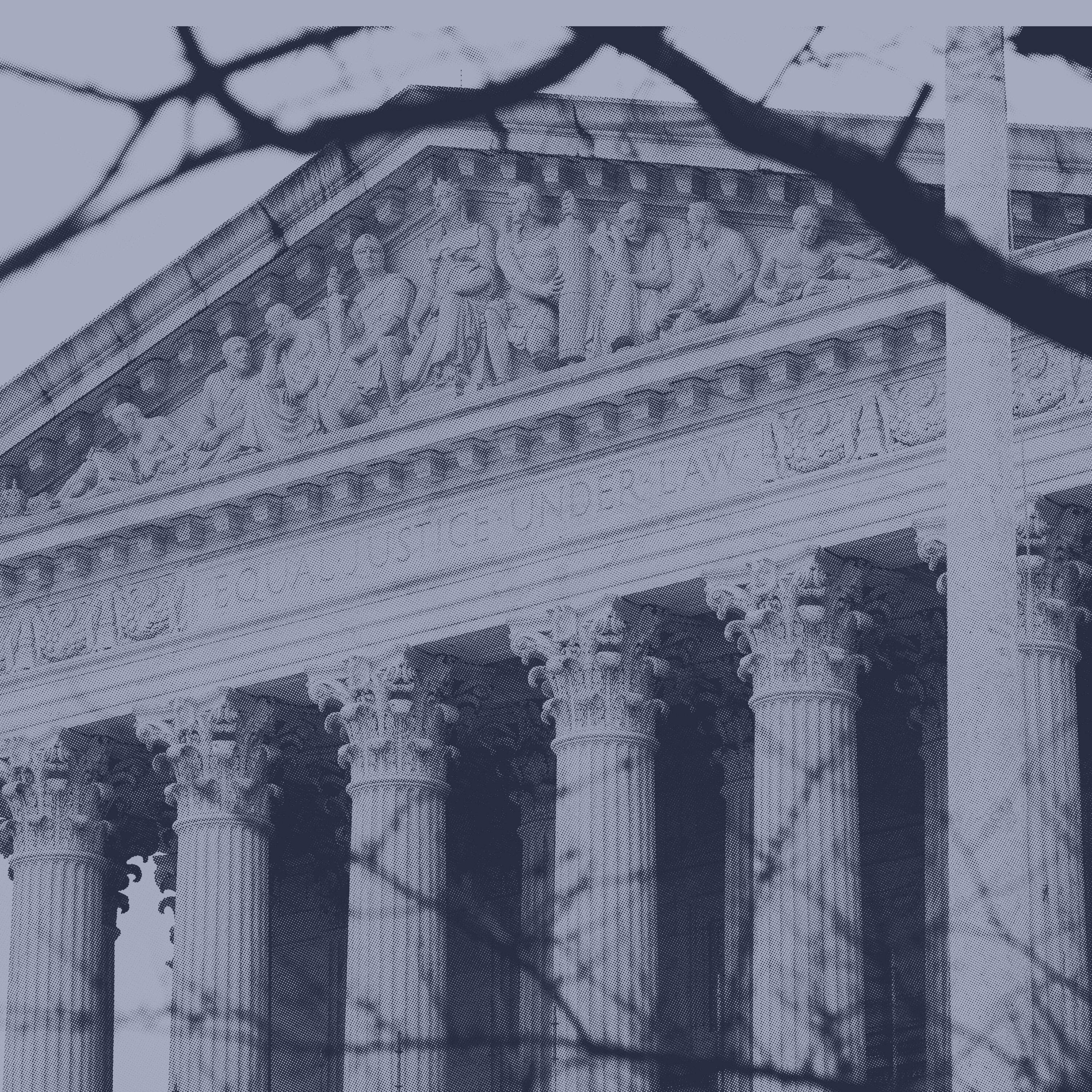
Supreme Court poised to rule on tariffs, birthright citizenship and more
20m 20s
The transcription covers a segment from an American life podcast discussing mysteries, lost items, and the Supreme Court's upcoming decisions. It delves into cases related to President Trump's tariffs policy, Federal Reserve appointments, birthright citizenship, voting rights, mail-in ballots, and culture war issues like transgender participation in sports and conversion therapy in Colorado. The discussion highlights the potential impact of these cases on the executive power and the Trump administration's stance on them. The conversation also touches upon the conservative majority on the Supreme Court and how it may influence the outcomes of these critical cases, ultimately shaping the government's structure and balance of power.
Transcription
3880 Words, 22057 Characters
This is our glass. On this American life, one thing we like is a good mystery. Sometimes about really big things, but most times, the little mysteries are the best. Our lost and found is currently filled with pants. I don't know. I've never seen this happen. This is true. This is true. Mysteries. Every size, each week. This American life. Wherever you get your podcasts. Hi. This is Juliana in Seattle, Washington, and I'm currently on my way to my first day of law school. Oh, congratulations. This podcast was recorded at 122 p.m. on Wednesday, the 7th of January. Things may have changed by the time you listen to this, but I will still be in the library. Knows deep in my massive law books. Enjoy the show. There's so much reading in that first year. May the force be with you. Hey there, it's the NPR Politics podcast. I'm Tamer Keith. I cover the White House. I'm Carrie Johnson. I cover the Justice Department. And I'm Mara Liason, Senior National Political Correspondent. And today on the show, we are talking about some of the major decisions expected to come from the US Supreme Court in the days, weeks, and months ahead. The Court has indicated it could release its first opinions of the year as early as Friday. Carrie, one opinion that we are watching for and could get on Friday concerns President Trump's tariffs policy. Remind us of the key issue here. Yeah, a central part of Trump's agenda, the sweeping tariff plan. He put it into place early in his administration. And he's relying on a law from the 1970s called the International Emergency Economic Powers Act. Even though that law does not mention the word tariffs and it has not been used for that purpose since it was established by Congress. And so the big question here is whether that law can carry the weight of all of these tariffs the president has imposed is important to note that when this case was argued before the Supreme Court, even some of the conservative justices expressed concern about it and how much power it gave the executive branch. Of course, Congress is really supposed to be in charge of appropriations and things like that. So it's a big question moving forward. How or if this will survive Supreme Court review. Appropriations and taxation. So yeah, and President Trump is clearly very, very concerned about this case. He has been posting on social media at a very regular cadence, including this post from January 2nd saying, quote, tariffs are an overwhelming benefit to our nation as they have been incredible for our national security and prosperity. Like nobody has ever seen before. Exclamation point, losing our ability to tariff other countries who treat us unfairly would be a terrible blow to the United States of America. Mara, it would certainly be a terrible blow to his agenda. Or would it? Well, the big question about all these cases is how far will the Supreme Court go to help Donald Trump in his overall political project, which is to vastly expand the powers of the executive? And what's interesting about the tariff case politically is ironically, if they rule against him on this, they could be helping his party because Republican candidates in the midterms are being heard by the economic effects of Trump's tariffs, which are to raise prices. But the Supreme Court could also rule, and I want to hear what Kerry has to say about this, they could also say, just go back and do your homework. You can expand tariffs. You just can't use IEPA in this way. Kind of like what they did with the Muslim ban in his first term. Just say, there are other ways you can do this. You could get a vote in Congress. You could use another statute. There is another way for you to get your tariffs done. So we'll see what they do. But the political implications of anything that lessons the effect of tariffs is probably good for Trump's party, even if it would be considered a loss for him. Yeah, it's been remarkable to me how existential he is treating this, even though, Kerry, I think there are potentially other options if the court rules against him. There are a bunch of off ramps the court could take here. They could rule very narrowly, allowing Trump to use different laws or statutes to reimpose tariffs, and they could rule in ways that would only affect money's moving forward. Remember it, oral argument justice, Amy Coney Barrett, a Trump appointee raised a question about whether it would be really a complete mess to try to figure out how to give money back that had already been collected. So we're going to have to wait and see how narrowly the court rules here. But the administration could have other options, even if the court majority rules out the use of this particular law from the 1970s. Kerry, this is one of several cases before the court, this term that are central to Trump's agenda. What are the others that you're watching? Yeah, first off, let's talk about Trump versus Cook. Cook is Lisa Cook, a member of the Federal Reserve Board and President Trump wants to fire her. He basically says that she may have committed mortgage fraud earlier before she got appointed to this board. Lisa Cook herself has said that allegation is baseless, and she has not been charged with any wrongdoing. Members of the Fed are appointed for 14-year terms, and they're appointed that way to try to insulate them from political pressure. The law that created this board basically allows the president to remove people for cause. The question is whether there is good cause for Trump to remove Lisa Cook. So far, lower courts, the district court and the federal appeals court have said no, and they've kept her in place on the job. But Trump's envoy to the Supreme Court's elicitor general, John Sauer basically is arguing that courts cannot second guess a president's decision about what cause might mean. But what's so interesting about this carry is that he is not saying I can fire anybody on the Federal Reserve for cause or not for cause. He's not saying that. He's saying I have cause. I'm playing within the rules. On this one, he isn't saying that the whole system should be thrown over so that the executive can make any decision he wants. Well, that's in part because the Federal Reserve is so important to monetary policy and to his continued success. Right, but that's what's so interesting about this. He wants the ability to put people on the Federal Reserve that will lower interest rates. But if he does that, he might get inflation. So here's another case of the Supreme Court may be saving Trump from himself. It's a political and economic high wire carry another one is birthright citizenship. President Trump signed an executive order when he came into office attempting to ban birthright citizenship. He did and you know that would be an earthquake for federal law. After the Civil War, the Constitution was amended to make clear in the 14th Amendment that all persons born or naturalized in the US and subject to the jurisdiction thereof are citizens of the US. And since then for over 100 years, the understanding is that yes, if you're born here on American soil, you are an American citizen. President Trump and his administration are arguing that part of the 14th Amendment only applies to newly freed slaves and their children, not the children of migrants. That would really upend most law professors understanding of the 14th Amendment and could be a totally revolutionary view of immigration law and the Constitution. And presidential power. He's saying I don't care what the Constitution says the president should be able to decide who can be a citizen. And you know, the Supreme Court kind of looked at birthright citizenship earlier, but it did not get to the central issue of what it meant. Instead, it took a case earlier on that had to do with universal injunctions. And so this is the court deciding really at the most basic level who is an American. And President Trump throughout his time in political life, but certainly in this term, has had a lot of very strong opinions about who belongs in this country and who deserves to be an American. And this case is part of that. Another case the court has already heard arguments for relates to the Voting Rights Act. Carrie, explain this one. Yeah, this is a case out of Louisiana. And it basically concerns section two of the Voting Rights Act. That is considered to be the crown jewel of civil rights legislation in this country. And basically it prohibits treating people differently in the voting context on the basis of race. Remember, this Supreme Court back in 2013 basically gutted another major part of the Voting Rights Act that had to do with pre-clearance, pre-approval of voting changes in states with a history of discrimination. So now we have another major section of this law potentially in peril at the Supreme Court. And really the way the court decides this case could have huge impacts around the country for drawing maps in the future. Some voting rights groups filed a brief in this case saying that depending on how the Supreme Court rules, the congressional black caucus could lose up to 30% of its members and the congressional Hispanic caucus could lose up to 11% of its members. It could have a big impact on who sits in Congress moving forward. Right. Big, big political implications on this one. The big question of course is timing here. If they do as expected get rid of the last vestige of the Voting Rights Act. And they do it very quickly. It could have an effect on this year's midterms. If they do it later in the term, then it won't take effect till 2028. But it's possible if the Voting Rights Act is changed that Republicans could draw about a dozen more Republican leaning districts around the country. And that would be a tremendous advantage for them, a big structural advantage in races for the House. One more thing here. Both Chief Justice John Roberts and Justice Brett Kavanaugh have expressed, you know, in the past pretty openly that they believe some of the changes that were imposed under the Voting Rights Act back in the 1960s have a time limit on them and that time may be coming due soon. And that squares with the whole MAGA argument and the Trump argument that if there is racial discrimination in this country, it's against white people. All right. We're going to take a quick break and we'll have more in a moment. At Radio Lab, we love nothing more than nerding out about science, neuroscience, chemistry, but we do also like to get into other kinds of stories, stories about policing or politics, country music, hockey, sex of bugs. Regardless of whether we're looking at science or not science, we bring a rigorous curiosity to get you the answers. And hopefully, make you see the world are new. Radio Lab adventures on the edge of what we think we know. There's a lot going on right now, mounting economic and equality, threats to democracy, environmental disaster, the sour stench of chaos in the air. I'm Brooke Gladstone, host of WNYC's on the media. Want to understand the reasons and the meanings of the narratives that let us hear and maybe how to head them off at the past? That's on the media's specialty. Take a listen wherever you get your podcasts. Public media counts on your support to ensure that the reporting and programs you depend on thrive. Make a recurring donation today to get special access to more than 20 NPR podcasts, perks like sponsor-free listening, bonus episodes, early access, and more. So start supporting what you love today at plus dot NPR dot org. And we're back. And we were just talking about some of the important cases before the Supreme Court this year. Carrie, the court is also expected to hear arguments in the coming months in a case brought by the Republican National Committee that would affect mail-in ballots. Something that President Trump talks about a lot. What's going on with this? Yeah, this case involves a law in Mississippi that allows these mail-in ballots to be counted as long as they're received within five business days after Election Day. And so it's really important because President Trump and some of his allies have been arguing that Election Day should be Election Day. People should go to the polls on Election Day and that's the way ballots should be cast and counted. You know, Mississippi says that the stakes are really high here because throwing out ballots that may not arrive on Election Day themselves could really swing close races. Something like 16 states permit absentee ballots to be counted if they're received within a certain amount of time as long as they're postmarked by Election Day. And that's important because the U.S. Postal Service has announced they may try to change some of those postmarks. So this could be very, very significant political case. Wait, how would they change the postmarks? The U.S. Postal Service said right around Christmas time that it may not postmark a piece of mail the same day that it receives it. And that change could really affect how people vote by mail and whether their ballots are counted. Well, and more voting by mail has become an increasingly important part of the mix of the way that people vote. And certainly both parties have put an emphasis on banking ballots or getting votes in before Election Day, getting those votes in so that they don't have to just get people to show up on the day at a polling place where it might be raining or it might be cold or something. Absolutely. I mean, this is one of those core beliefs. You said he talks about it a lot. It's kind of like windmills and tariffs. Donald Trump believes that mail in voting hurts Republicans, even though the evidence is just not there to show that. There was a election in 2020, a special election where the Democrat ended up beating the incumbent senator in Georgia. And many Republicans feel that one of the reasons the Republican lost is because Donald Trump disparaged mail in voting so much. He discouraged Republicans from using it. So it's not clear, even though he has in the past said that the more people who vote, the worse it is for Republicans. That's just not true anymore. Republicans have been using mail in ballots just like Democrats. So this would possibly if he wins this case, be a self-inflicted wound because mail in balloting, as you said, is an important tool for both parties. Though the Republican party and certain Republicans, including the president himself, have raised a lot of concerns, voting officials would say unfounded, but raise a lot of concerns about potential fraud related to mail in ballots. That's right. But we haven't seen any evidence of that. Right. There are also several cases before the court this term that relate to some of the culture war issues that Trump continues to talk about. In the fall, the court heard arguments in a case related to a ban on so-called conversion therapy in Colorado. And next week, the court is scheduled to hear arguments in two cases related to whether transgender women and girls should be allowed to participate in women's and girls' sports. Carrie, what should we know about these cases? Yeah, let's start with the sports cases. They involve challenges to the constitutionality of laws in Idaho and West Virginia. In Idaho, transgender woman wants to compete in track at Boise State University. The ninth Circuit Appeals Court ruled that Idaho's law that would ban that has violated the constitution and the guarantee of equal protection. The other case was filed by a trans student who wanted to compete in girls' teams at her middle school in West Virginia. There, the lower court also invalidated West Virginia's ban and basically said it violated different law, title 9, that prohibits sex discrimination and education. The Trump administration here is citing with the states who and enacted these bans. And President Trump talks about men and women's sports, as he says, all of the time and says that this is a, you know, a losing issue for Democrats. He says it's such a good issue for Republicans. He said yesterday, I think that they should save it and bring it up right before the midterms. Yeah. Well, you know, it's interesting about that because polls show that in general, people are not for transgender women playing on girls' sports teams. But the big question is how significant is this issue going to be? Is it more important than prices on health care and groceries? I don't think so. And Carrie, let's go back to that Colorado case. Yeah, that case involves a therapist, a Christian therapist in Colorado. Colorado had banned conversion therapy for young people and this Christian therapist wanted to talk about it with some of her patients. She says the state ban violates her free speech rights. She says it's a gag order. But the state says it's not about her speech. It's about conduct. And it also says that conversion therapy has been found to be unsafe and ineffective and could help exacerbate a mental health crisis among teens. The 10 circuit appeals court, the lower court said the ban regulates conduct and not speech. The Trump administration here is supporting the Christian therapist. And it would matter in part because this kind of ban applies in about 25 states. You know, Mara, there is a conservative majority on the Supreme Court. President Trump has in this term, especially, shown himself very willing to push the limits of his power to try to assert as much executive authority as possible even if there's a question about whether the law is on his side. How are you thinking about this year and this court in that context? Well, I think that the Supreme Court has been very friendly to Trump. Long before Trump was on the scene, many members of this Supreme Court, the conservative majority, have been in favor of something called the unitary power of the executive, which means giving more power to the executive branch. And Trump just happens to be the vehicle for that. What we're going to find out this year with this court is how friendly they're going to be. These cases have piled up. Just look at how many we've discussed today. There are tremendous number of consequential cases before the court and how the court decides on them is going to determine how our system of government has changed. We used to have what was supposed to be three co-equal branches of government with checks and balances on each one. But I think if Trump wins the vast majority of these cases, we're going to have a different form of government where we have an all-powerful executive and a withered judicial and legislative branch for a number of reasons. President Trump has been on a tremendous winning streak at the Supreme Court even before he returned to office. The court basically gave him near absolute immunity from prosecution for his official acts. And since then, on the emergency docket, Trump has been racking up win after win. But the court has not always sided with him. There have been a couple of prominent examples. The court told Trump to facilitate the return of Kilmar Obrego Garcia after he was shipped out of the country. And the court also recently refused Trump on the National Guard issue in Chicago. The open question here is whether on some of these cases that really matter to him, like tariffs and birthright citizenship, where even prominent conservatives are saying Trump has gone too far, whether this court majority will stand by the president. And I think another question that hasn't really been tested yet in this presidency, I mean, I guess it's been sort of poked at, but will President Trump follow court orders? So far, the administration has, with some limited exceptions, but if it is something that really matters to him, is he going to obey orders? As he has said, he will, and just accept the defeat, or will something else happen. Interestingly enough, the Solicitor General John Sauer actually made a concession on that very point in one of the first birthright citizenship cases. A Sauer would not say that the administration would follow what lower courts did, but he did promise just to say me, Coney Barrett, that the administration would do what the Supreme Court said. And in those two cases, I mentioned Kilmar Obrego Garcia is actually back on American soil, and Trump has moved the National Guard out of Illinois. He has listened to what the court had to say. And this is very important because the White House has gone out of its way to say that the president would not defy the Supreme Court. That would be a constitutional crisis. And this is a White House that flexes its muscle almost every day and says that they are unchecked and the president can do whatever he wants. But on this one, they have gone out of their way to say he's not going to defy the Supreme Court. Now he has to fight lower court judges, you could argue. But so this is really interesting. Is this the last guardrail that Trump is willing to abide by? We're going to find out. And we will be watching. Let's leave it there for today. As we said, the court has a decision day on Friday. So stand by for news and please make sure to tap the button to follow this show so you don't miss that. I'm Tamara Keith. I'm Carrie Johnson. And I'm Mara Lyerson, Senior National Political Correspondent. And thank you for listening to the NPR Politics podcast. This week on up first from Minneapolis to Venezuela to the Federal Reserve. One of the biggest stories of the year so far is how the Trump administration is using presidential power. We're following every angle. So you start each day knowing what's happening, what's true and what isn't on up first. Listen on the NPR app or wherever you get your podcasts. This year on NPR Stool Line, life, liberty, the pursuit of happiness. For centuries, America's pursuit has changed the world. Now 250 years later, who are we? Where are we headed? Join us every Tuesday for a brand new series, America in pursuit. I'm Threwline. Listen on the NPR app or wherever you get your podcasts.
Podcast Summary
Key Points:
American life podcast discussing mysteries and lost items like pants in the lost and found.
Supreme Court expected to release opinions on major decisions, including President Trump's tariffs policy.
Other cases before the Supreme Court related to Federal Reserve appointments, birthright citizenship, Voting Rights Act, mail-in ballots, and culture war issues.
Cases involving transgender participation in sports and conversion therapy in Colorado.
Trump administration's stance on these cases and the potential impact on executive power.
Summary:
The transcription covers a segment from an American life podcast discussing mysteries, lost items, and the Supreme Court's upcoming decisions. It delves into cases related to President Trump's tariffs policy, Federal Reserve appointments, birthright citizenship, voting rights, mail-in ballots, and culture war issues like transgender participation in sports and conversion therapy in Colorado. The discussion highlights the potential impact of these cases on the executive power and the Trump administration's stance on them.
The conversation also touches upon the conservative majority on the Supreme Court and how it may influence the outcomes of these critical cases, ultimately shaping the government's structure and balance of power.
FAQs
The Court is expected to release its first opinions of the year, including cases related to President Trump's tariffs policy and other cases central to Trump's agenda.
The case involves President Trump wanting to fire Lisa Cook from the Federal Reserve Board, citing allegations of mortgage fraud, while Lisa Cook denies any wrongdoing.
The case questions whether the 14th Amendment's birthright citizenship clause applies to children of migrants, potentially revolutionizing immigration law and presidential power.
The case challenges a law allowing mail-in ballots to be counted within five days after Election Day, with potential impacts on close races and the postal service's postmarking practices.
The sports cases challenge laws in Idaho and West Virginia on transgender participation, while the Colorado case involves a Christian therapist contesting a ban on conversion therapy for young people.
The Court has shown a favorable stance towards Trump, but there have been instances where the Court did not side with him, raising questions about the extent of executive power and Trump's compliance with court orders.
Chat with AI
Loading...
Pro features
Go deeper with this episode
Unlock creator-grade tools that turn any transcript into show notes and subtitle files.
 PodcastTranscript AI