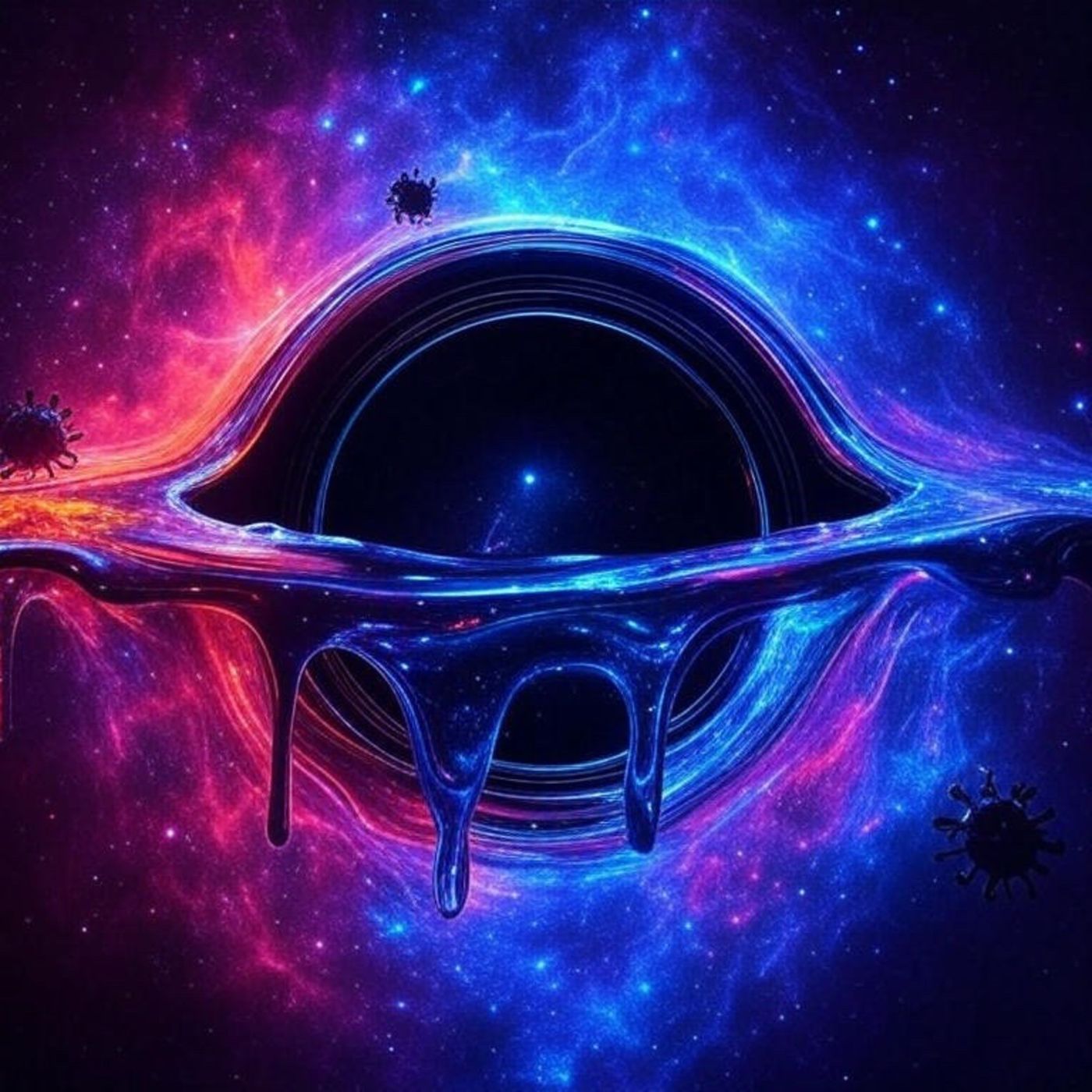
The transcription delves into the evolution of the fictional universe of Stranger Things, highlighting the shift from simple monsters to intricate scientific challenges. It explains the distinction between dimension X and the upside down, focusing on the role of emotion as a measurable energy source in the show's physics model. Additionally, it draws parallels between the show's concepts and real-life historical events such as CIA projects. The text also explores the theoretical foundations of wormholes and the necessity of exotic matter to stabilize them, linking these high-level physics concepts to the show's depiction of dimensional travel and energy generation. Ultimately, it offers a comprehensive analysis of how the show intricately weaves together science fiction elements with real-world scientific principles and historical contexts.
Transcription
5592 Words, 35977 Characters
Okay, let's unpack this. If you've been following the monumental climax of Stranger Things, you know the scope of the problem facing Hawkins. It escalated from a small, leaky rift in a basement to a literal monolithic wall of interdimensional conflict by the time the series reaches its conclusion in 1987. Right. We've gone past the age of simple monsters and into the age of full-blown cosmic horror. What's fascinating here is how the fiction evolved from, you know, a creature, a horror into a sophisticated theoretical physics and biology problem. Exactly. We aren't just looking at fantasy anymore. We are treating the lore, the mind-flare, vekna, dimension X as a rigorous scientific challenge that we need to solve using the most cutting-edge speculative science we have today. Exactly. Welcome to the Kerskasak podcast, Science Revealed. Today, our mission is to cut straight through the spooking nostalgia, the killer 80s pop culture references and the sheer volume of lore and dive deep into the actual scientific frontiers that could potentially explain how eleven opens wormholes, how vekna powers up using raw emotion, and how the upside-down functions as a literal physics-defying entity. And to do that, we've synthesized a rigorous stack of sources for you. We didn't just look at fan-wikies. Yeah. We pulled together actual cosmology papers on exotic matter and wormhole stabilization, neuroscience research on quantum consciousness, and biological studies on decentralized fungal cognition. We're going to examine the show's rules, the source of energy, the geometry of the alternate worlds, and the biology of the monsters, and see which scientific ideas they mirror at the very edge of discovery. Can we really explain interdimensional travel and hive minds using real cutting-edge science? I mean, are we talking about possibilities here or just cool analogies? We're talking about possibilities rooted in equations. What's truly compelling is how often the writers accidentally or maybe intentionally hit upon concepts that physicists are actively trying to solve in places like the Large Hadron Collider or in theories of quantum gravity. We're looking at what it takes to break the laws of physics and how the show provides a blueprint for that breakdown. So for the better part of a decade, the biggest mystery has been, what is that dark mirror world? Most of us just called it the upside down, but the final arcs of the story make a crucial distinction that separates the entire show's mythology into two fundamentally different types of reality. And this is critical for understanding vechnist true goal. It is. That distinction is the anchor for the entire story. We have the source reality, which we call dimension X, which is the primordial raw ancient state of existence, and then we have the upside down, which is a derived artificial pocket dimension, a sort of temporary construct. Let's start with the deeper reality then, dimension X. The source material describes this as the older, more fundamental plane of existence. It's the raw alien space, the reality that existed before humans ever showed up. Right, it's defined by containing shadow particles and an ancient non-human intelligence, which is the mind flair's true native form. So this is the source code of the universe in a way. In a way, yes, and critically, dimension X is where the genesis of the conflict truly happened. Back in 1979, Henry Creole, who becomes vechnist, wasn't sent to the dilapidator Hawkins we know. He was blasted by 11 into this primordial space. That's where he found the mind flair entity and fully merged with it. And this entity is terrifyingly abstract. It behaves less like a physical animal you could cage or shoot, and more like a massive pervasive environmental force afield or a weather system, as you mentioned. Exactly. Think of it less like a creature and more like dark matter or dark energy, an invisible immense force that governs the underlying reality. Okay, so the mind flair, therefore, isn't really a giant spider monster in its native state. Not at all. The giant spider shape we see is simply the entity concentrating its energy and mass, adopting the symbol of Henry Creole's deepest, darkest obsession, the black widow spider. Henry gave the ancient field a physical avatar based on his own psychology. Wait, so the ultimate evil of the upside down is literally wearing the costume of a bullied kid's favorite pet. Yeah. That makes the biology psychological. It does. The entity existed long before Henry or the upside down, but Henry provided the blueprint for its physical expression. Precisely. Henry Creole became the architect of the entity's physical presence in our dimension. He gave the field rules and a face which allows it to operate more efficiently within a structured geometric reality like ours. It needed a translator, a translator, a conduit, an architect, all of those things. And that brings us to the second more familiar layer, the upside down. This world is absolutely not dimension X. No, it's a snapshot. It's an artificially stabilized pocket dimension dimension X wearing Hawkins as a skin. A traumatic imprint anchored in space-time. Exactly. And here is the bizarre physics of it. It is permanently frozen on a single specific date. November 6, 1983. And that date is so important. It's the exact moment. Eleven made psychic contact with a demogorgon and will buyers was abducted. Those two immense psychic and physical events created a stable bridge effectively photocopying Hawkins exact geometry onto the dimension X substrate. Let's delve into the physics of that copy because this is where the rules get interesting. The geometry is stuck permanently fixed to that specific moment in 1983. The walls, the houses, the alphabet, they never update. Right, that famous alphabet wall choice used. It remains there fixed in that configuration even years later in the show's timeline. If the geometry updated it would just be an alternate timeline. But because it's a frozen copy, it implies a physical imposition of our reality onto a substrate of different reality. This is where we touch on brain cosmology. Okay, break that down. Brain cosmology is a theory that suggests our universe is a three-dimensional brain, which is short for membrane, floating within a higher dimensional book space. Like a slice of bread and a loaf. That's a good analogy. And in this model, dimension X could be that fundamental book space, or maybe an adjacent older brain. The upside down is like a blister, a temporary unstable link between our brain and dimension X. And what we see with the upside down is a temporary local stabilization of that blister. But a stabilization that is only skin deep. While the structures are fixed, the sources say the energy flows and interactions are real-time. That's vital. That's how Vecna and the Mindflare operating as a field can still influence our world through the geometry of a frozen town. Let me see. The structures, the houses are static, but the interdimensional energy required to power the rift and the mental connections that drive the hive mine are live. The physics allows the geometry to be locked while the power source is dynamic. This means the upside down isn't just a spooky parallel world. It's a specific, traumatic, temporally frozen snapshot anchored by immense power. And this clarification of dimension X versus the upside down gives us the hierarchy. The Mindflare is the ancient entity, the field. Right. It's the operating system. Vecna or Henry Creole is merely the host, the conduit, who provided the centralized purpose and the spider-symbol template. The user interface. Yeah. And the demigorgans. They're likely just specialized soldiers or maybe a native animal species of dimension X that was taken over by the hive mind. Their physical structures suggest they are efficient predators, but their actions are ultimately governed by the singular collective consciousness. They're the field's teeth. The Mindflare, therefore, uses Henry Creole to give it centralized intelligence and the demigorgans to give it physical force. The upside down is the stage frozen in time where this conflict plays out. It's a fascinating interpretation of how a higher dimensional intelligence might attempt to colonize a lower dimensional world. It really is. And if you were finding this explanation of the show's Mindbending Lore helpful, please take a moment to rate the Curse Kizak podcast. Science revealed five stars on your favorite platform. It helps others who are curious about the science behind the fiction find their way to this deep dive. Now that we understand the geometry of the upside down of frozen, artificially stabilized brain, we must address the mechanism by which power is generated to bridge these dimensions. How do you create enough energy to literally bend space-time? This is where we shift from gravity and dimensions to psychology and physics. The show suggests humans are not just beings, but power sources, an emotion is literal measurable voltage. Correct. The show repeatedly stresses that extreme emotional states, specifically trauma, fear, shame, and conversely profound love and protectiveness, are the most powerful charge sources. So humans are effectively biological batteries. And strong emotion is the short circuit that creates enough power to affect other dimensions. Let's look at Vekna. Henry Creole's arc confirms this mechanism. Henry absorbs energy when he kills. The ritualistic nature of his murders isn't just sadistic. It's functional. It's functional. The kills literally make him stronger, intensifying the connection to dimension X. And it's not just the physical act of killing. The mind, flare, and Vekna torment their victims with the deepest fear and shame. They force the victims to relive their trauma, specifically to charge up. They are harvesting the negative emotional energy the trauma is fuel. They're using it to fuel the opening of the large gates. Conversely, 11's powers spike when driven by extreme positive emotional states. Love, protectiveness, and memory of connection, particularly with Mike and Hopper. So the mechanism is the same. Strong emotion, whether it's positive or negative, translates into usable power in this fictional physics model. It generates the massive energy required to shove against the dimensional membrane. This is a radical concept, suggesting that the most volatile, least understood force in the universe, human emotion, is a direct energy source capable of violating the energy conditions required for dimensional travel. And we can see a subtle microscopic physical effect of this power generation that grounds this fictional physics. Think about the detail of lamps flickering your Vekna and the gates. Right, it's not just a cliche horror effect. No, it's a measurable physical phenomena. In the upside down energy model, this flickering is physics and action. Vekna, being a host fully entangled with the mind-flayer field, actively warps the local electromagnetic or EM environment around him. So imagine the interdimensional field as a huge magnet suddenly dropped near a bunch of delicate electronics. That's a perfect way to think about it. And lamps, specifically old incandescent and fluorescent lights, are designed to detect subtle changes in electric potential or local electromagnetic fields. So they respond instantly to this warping. They respond because the interdimensional field acts as a sudden, massive source of interference, or a localized change in the fundamental laws governing light and electricity in that space. So it's not just spooky. It's the local EM environment being dynamically warped by the interdimensional field that is generated by intense human emotional energy. Precisely. It gives a neat scientific explanation for why something as simple as a light bulb responds to a creature from another dimension. The invisible field is interacting directly with our visible world's energy infrastructure. So if emotion is a quantifiable energy source capable of bending space-time, it makes sense the US government wouldn't just ignore it. That brings us out of speculative physics and street into the dark history of the Cold War. Absolutely. The premise of the entire show-covert operations trying to harness these psionic powers mirrors real, declassified US government projects from the Cold War era. And we should emphasize that we're simply reporting impartially on the historical record here, showing how fiction drew inspiration from real events, not endorsing the fictional outcomes. A very important distinction. The program that led to 11 Project Indigo is conceptually based on the real CIA sanctioned research program M-Culture. This program, which ran from 1953 to 1973, focused on developing behavioral modification and mind control techniques. And often using ethically dubious methods, including the use of mind-altering drugs and unethical experimentation on unwitting subjects. Yeah. The show uses Hawkins National Laboratory as the backdrop for Project Indigo, implying that it was one of the many facilities where M-Culture research was supposedly conducted with Dr. Martin Brenner directing operations. This was a massive decentralized effort in real life. The fictional extension in the show is the shocking discovery that while traditional mind control might be impossible, psionic phenomena tied to interdimensional access are very real and linked to a dangerous ecology. And 11's signature ability remote viewing, spying from afar, while in a sensory deprivation tank, directly echoes another declassified long-running program. Project Sunstreek and the broader Stargate Project. Which ran from 1972 to 1995. Wow, that late. Oh, yeah. You have to think about the context. The Defense Intelligence Agency was seriously researching anomalous phenomena like telepathy and remote viewing for intelligence gathering. They were essentially asking could we use a psychic to spy on Soviet bunkers? That's the question they were trying to answer. Project Sunstreet aimed to train professional intelligence personnel and remote viewing, believing it could eliminate risk and cost associated with traditional espionage. The fact that the government was spending significant resources on this underscore as the Cold War paranoia. And this wasn't some tinfoil hat theory buried in a basement. No, the CIA was seriously funding scientists to look into whether a guy could just think his way across the ocean. While Stargate ultimately concluded that psychic abilities couldn't be reliably weaponized and was shut down, the fictional application project Indigo gives this historical context a terrifying application. Furthermore, we see those massive underground labs, like the one the Russians use in season three to try and open their own gate, or the Nina device 11 uses in season four. These massive subterranean machines tap into a real sense of monumental hidden science. Yes, deep underground facilities are common in high energy physics. You have the Sanford Underground Research Facility in South Dakota, which houses the LZ Dark Matter Detector. And the Large Hadron Collider in Switzerland, the LHC, which is nearly 600 feet below ground. The actual reason these machines are deep underground isn't secrecy, but physics itself. Going deep shields the sensitive equipment from cosmic radiation. This shielding is essential when scientists are searching for the extremely faint signals from Dark Matter particles, or attempting to study high energy particle collisions without interference from above ground noise. So the fictional labs, whether Russian or American, borrow this visual language of high stakes, deep earth physics, suggesting the scientific operations are so sensitive they must be completely isolated. It's all about getting a clean signal, whether you're looking for Dark Matter or, you know, another dimension. So if emotion is the voltage, the gate itself is the device powered by that voltage. In scientific terms, the gate or rift is a traversable wormhole, a shortcut through space time. This is where we need to dive into Einstein's general relativity. A wormhole can be described geometrically as a region of space time containing a world tube that connects two distant points, offering an instantaneous shortcut. The old fold a piece of paper analogy. Exactly. The distance between point A and point B on the paper is long, but if you poke a pencil through the fold, you've created a wormhole. And the theoretical foundations for this, they came from Einstein's math, right? The first type, the Schwartz child wormholes or Einstein-Rosen bridges. Correct. But the problem with those early theoretical wormholes, however, is fundamental. They are non-triversible. Non-triversible, meaning you can't go through it. You can't. They collapse almost instantaneously before light or even a single atom can cross from one side to the other. They are incredibly unstable, often leading to a singularity, a point of infinite density at the throat. So they are mathematically possible, but physically useless as a bridge? Exactly. So if the upside down gate stays open long enough for humans, demogorgons, or energy fields to pass through, it must be a traversable wormhole. Something is actively holding it open. And that's the big question. To stabilize a wormhole so it doesn't immediately collapse, physicists like Kip Thorne theorized you need something incredibly special to hold the throat open. That ingredient is exotic matter. Okay, exotic matter sounds like pure science fiction. But how do physicists define it specifically for a high school audience? It's non-intuitive, but necessary. Exotic matter is material that exhibits properties opposite to everything we experience. The key property is that it must have negative mass or, more specifically, negative energy density, which we denote as paratumal, and negative pressure, followed. Negative energy density, that's the opposite of, well, everything. If ordinary matter pulls things together through gravity, negative energy density must push things apart, right? Exactly. This matter violates what physicists call the null energy condition, or NEC. The NEC states that any observer should always measure a non-negative energy density. Ordinary matter has positive energy density, and exerts positive pressure, creating a gravitational pull. So this exotic matter has anti-gravity properties. Essentially, yes. With its negative energy density, it generates intense repulsive outward pressure. This repulsion is absolutely necessary to balance the immense gravitational forces attempting to pinch the wormhole bridge shut. It is the scaffolding that keeps the space-time tunnel stable. That makes the energy 11 uses even more fascinating. If emotion is generating the energy to shove against the membrane, is she effectively generating localized negative energy density to temporarily stabilize the gate? That is the fictional implication. Her emotional charge provides the anti-gravitational repulsive energy required. And it's not just wormholes that need this. Exotic matter is also theoretically required for faster than light travel concepts, like the alkybier warp drive. Right. The warp drive. Which needs negative energy density to distort space-time into a warp bubble, contracting space ahead of a ship and expanding it behind. Connecting this high-level physics back to the show's finale, we have the immense physical manifestation of the dimensional boundary, the wall. And Dustin's realization that the wall was created by science, not magic, aligns perfectly with the physics required to sustain such a structure. Also, it aligns with the barebuss Israel formalism, which describes the physics of null shells. Null shells. Think of a null shell not as a solid structure, but as a very thin, highly energetic membrane, a literal film of matter, at the boundary of two regions of space-time, like the thin surface of a soap bubble that separates the interior from the exterior air. So the wall wasn't just spooky vines. It was a field or a thin membrane of highly unstable energy dense matter, likely the exotic matter structure, holding the dimensions apart and creating the boundary of the pocket dimension. Precisely. It's the physical manifestation of the negative pressure required to maintain the stability of the upside-downs geometry. And the plan to stop Vekna involved Nancy Wheeler shooting a sphere, which was the core energy center. But wait, if the upside-down is frozen in 1983, does that imply the exotic matter required to stabilize it must also be frozen, or is the energy input from Vekna constantly resupplying that negative pressure? That raises a fascinating point about the nature of the stability. The geometry, you know, the buildings is frozen. This implies the foundational exotic matter, necessary for the initial stabilization is fixed from 1983. However, Vekna's actions tormenting victims to generate charge would be the active, continuous energy input required to keep the gate functioning and the bridge open. It takes continuous energy to fight gravity. So shooting this sphere, which was likely the localized exotic matter core, and the focus of Vekna's absorbed energy, would trigger a catastrophic breakdown. A kinetic impact on that core triggers a gravitational collapse. So trigger a breakdown in the local gravitational equilibrium, causing the physical structure of the bridge to disintegrate. Yes. And this results in the visual effect of melting walls and the rift closing. The plan to use a kinetic weapon was a deliberate attempt to collapse the wormhole and sever the connection permanently by disrupting that NEC violating field. It's astounding that such speculative fiction adheres so closely to high-level general relativity concepts, requiring physics that actively pushes against gravity. But since we don't have a ready supply of exotic matter, are there other theoretical alternatives in the real world that might make wormholes possible? Well, physicists are exploring alternatives that rely on naturally occurring phenomena, rather than manufactured negative mass. One involves harnessing quantum field effects. Okay, so this is where we look at the vacuum of space itself. Exactly. The vacuum seems like nothing. Right, empty space. That's the classical view. Quantum field theory says the vacuum is actually boiling with virtual particles popping in and out of existence. This leads to phenomena like the Casimir effect. I've heard of this. If you place two uncharged parallel metal plates very close together in a vacuum, a small force pushes them together. This is because the distance restricts the wavelengths of virtual photons that can exist between the plates, making the energy density inside the plates lower than the energy density outside. So, locally, you have created a region of negative energy density relative to the surrounding space. Precisely. The Casimir effect demonstrates that quantum field theory allows negative energy density to exist in certain regions of space, even if only transiently and locally. So maybe it's possible to scale this effect up. That's the hope. Some physicists argue that these quantum field effects could naturally produce the conditions needed for microscopic wormhole stability. It might be possible to scale this effect up or harness it more efficiently. That seems far more attainable than manufacturing negative mass in a lab. It does. Furthermore, there's the link to the fundamental components of the universe, dark energy and dark matter. Dark matter, which makes up about 85% of the universe's matter, has been computed in some entropic information theory frameworks as potentially having negative mass. And dark energy, which drives the accelerated expansion of the universe, already exerts a form of negative pressure associated with vacuum energy. So the very forces driving the cosmos, the things we can't see, might be the building blocks for holding a wormhole open. That's the theory. If we could understand how to manipulate or harness these fundamental cosmic components, dark energy and dark matter, they could potentially be used to stabilize a traversable wormhole, making them perhaps feasible within the universe's constraints. The conditions necessary for interdimensional travel might be more common than previously thought. We just need to figure out how to operate the controls. Exactly. That idea that the building blocks of the universe might already contain the necessary negative energy is certainly provocative. If you are enjoying this deep dive into interdimensional physics, remember to rate the Kerskasack podcast. Science revealed five stars. We've seen how the dimensions are structured and what it takes to open them. Now we shift our focus from space-time geometry to the structure of the intelligence itself. The mind-flair in 11, which requires us to bridge physics and biology. The mind-flair is the ultimate example of a hive mind. It connects all flayed creatures and humans. Will, Billy, the Demogorgans, into a collective consciousness where free will is subsumed. In biology, the closest analogy is a super-organism like an ant colony or a beehive, where individual members are specialized functions of a greater body. But the mind-flair is an intelligent super-organism. It acts as a central intelligence, suppressing or subsuming the individuality of its hosts, like Vekna, turning them into extensions of its will. Speaking of biology, the ecology, the upside down, all those interconnected vines, the spores, the generally dark decaying environment, suggests a heavy reliance on a kind of fungal network. This leads us directly into the concept of fungal cognition. Fungai form massive underground miscellul networks, which are essentially webs of microscopic thread-like filaments. The miscellul network. And these networks function somewhat like a decentralized nervous system for the entire fungal body. This offers a potent real-world analogy for how a monstrous distributed hive mind could evolve and operate without a single centralized brain. It challenges the very foundation of cognition. The Cartesian idea, I think therefore I am, posits that only organisms with a central nervous system can exhibit true intelligence. Indeed, recent groundbreaking studies challenge this. Researchers have shown that certain wood-eating fungi can pass complex cognitive tests, exhibiting both memory and decision-making abilities. Wait, really? What? For example, solving simple mazes or remembering previous food sources, all without a brain. How do they think or communicate without a nervous system? They communicate information throughout their massive network via electrical signal transfer, which closely mimics the way our own neurons fire, only much slower. They send out electrical impulses to search for nutrients and use the timing and intensity of those impulses to relay information about threats, food sources, or blockages to the rest of the collective. So that the Mind Flare's network of vines and tendrils might be an evolved malevolent version of a mycelial network, using superfast electrical or psionic signals to coordinate its massive monstrous body across dimensions. And this ties back to the Demogorgon's nature. They are often found adjusting dead material, which fits the fungal decay model. They are creatures of decomposition. So the Demogorgon may not be intrinsically malicious. It might just be a specialized mobile function area of the greater collective, taken over by the Vectomine Flare hive mind to serve as physical muscle. They are the fungal networks, mobile, digestive, and predatory units. Now, we tackle 11, whose power seem almost impossible to explain with classical biology. Her abilities, psionic powers, remote viewing, and the ability to interface with parallel realities push us into the realm of quantum consciousness. This is the most speculative, but arguably the most exciting area of theoretical science we cover a day. The idea is that consciousness itself is not just a classical, electrical process happening between neurons. But it's fundamentally linked to quantum mechanics. Exactly. And the most prominent hypothesis here is orchestrated objective reduction, or orch or, proposed by physicist Roger Penrose and anesthesiologist Stuart Hammeroff. Right, orch or posits that consciousness arises not just from the large-scale firing of neurons, but from quantum computations occurring deep within the tiny protein structures inside neurons, called microtubules. These microtubules may contain delocalized electrons that become quantum entangled. This is the foundation of the computational power. So the brain isn't just a powerful classical computer, it's hosting a quantum computer. What is the key mechanism in orch or that links to reality-bending powers? That's the concept of objective reduction. To simplify, in quantum mechanics, a particle exists in a superposition. Multiple states at once, until it is observed at which point it collapses into a single state. The one we observe. Right, the observer effect. Penrose argues that this collapse is not subjective, meaning it doesn't require a conscious observer. It's objective driven by gravitational effects at the infinitesimally small Planck scale. That Planck scale is the smallest possible size in the universe, right? Yes. It's where space-time itself is thought to become foamy and unstable. Penrose suggests that when the mass energy within the microtubules reaches a certain gravitational threshold, it forces the quantum superposition to collapse. And this objective collapse is non-random, non-algorithmic, and according to the theory, generates a moment of conscious experience. So 11's brain, especially when boosted by that extreme emotional energy, might be forcing this objective reduction, forcing the universe to choose a reality. This aligns perfectly with her ability to interact with different spatial dimensions and push on reality. The show is absolutely using that framework. If her brain is hosting these quantum computations, her extreme emotional states that voltage, we discussed, might be the mechanism that orchestrates or influences this objective reduction, allowing her to force a collapse that impacts space-time geometry. Thus opening the gate. She is, in effect, locally manipulating the gravitational threshold needed for reality to stabilize. Alternatively, let's look at the many worlds interpretation, MWI, which is hugely popular among cosmologists. Right, MWI states that every possible outcome of a quantum event exists in parallel, creating a constantly branching multiverse. A bit like a choose your own adventure book where every choice is taken. A perfect analogy. And applying MWI to consciousness suggests that every time a quantum decision is made, the universe splits, and each conscious experience corresponds to a particular branch of the wave function. This perspective suggests that consciousness is not confined to a single reality, but literally spans multiple potential realities. If 11's powers allow her to perceive or draw resources from these super-posed states, or even intentionally cause the branching of new worlds or jump between existing ones, that would give her the ability to bridge realities by traveling along the wave function. She's not just opening a door, she's selecting a branch. And this need to address the complexity of the brain has led to a brand new field. Quantum neurobiology. It's an incredible field. This sounds incredibly advanced. Yeah. Why do we need quantum mechanics to study the brain? Because the brain is a fundamentally multi-scaler problem, it spans nine orders of magnitude from individual atoms to complex neural networks. Classical computing struggles immensely with modeling challenges, like synaptic integration, where thousands of tiny electrical spikes aggregate and the electrical chemical signal transduction that drives thought. Classical models simply can't handle that complexity simultaneously. Exactly. Quantum information science, or QIS methods, which use principles like quantum probability and high-dimensional representation like tensor networks, are being used to model neural systems. So the goal isn't necessarily to prove the brain is quantum. Not at this stage. The goal is simply to use quantum models to accurately map the structural functional relationships in the brain, which may lead to breakthroughs in understanding complex neurological conditions. In the world of stranger things, 11's brain is simply doing what the most advanced quantum neurobiology is trying to model, manipulating information across complex high-dimensional neural networks to affect reality. This deep dive has shown us that the mythology of the upside down, Vekna and 11's powers draws on concepts at the very forefront of 21st century science ideas. They're still decades or centuries away from being proven or disproven. We've identified three major scientific intersections. First, the upside down is fundamentally a traversable wormhole stabilized by theoretical exotic matter, requiring a violation of the null energy condition. Right. Second, emotion and trauma act as a quantifiable energy source, generating the immense voltage needed to bend space-time and power-dimensional travel. And third, the mind-flair operates as a sophisticated biological hive mind, mirroring decentralized concepts like fungal networks. While 11's psionic abilities tapped into highly speculative concepts, like quantum consciousness and the mechanism of objective reduction, it really does transform fear and pain into a literal force of physics. It's incredible how the fictional closure of the bridge, the melting walls, draws directly on ideas from brain cosmology and quantum gravity thresholds, requiring a collapse of the anti-gravity field. It really is a sophisticated piece of world building. Before we leave you to ponder these multi-dimensional threats, we have one final provocative thought that ties back to the very start of 11's journey, her reliance on sensory deprivation. She enters the void to access her powers, a seat of minimal external stimulation. In the real world, researchers use techniques like flotation-reduced environmental stimulation therapy or flotation rest. The float tanks. The float tanks. When you quiet all sensory input site, sound, touch, it significantly decreases functional connectivity within and between the somatomotor cortex and the default mode network. The system is responsible for creating and anchoring our sense of self in reality. We talked about trauma opening gates. What is the concept of sensory deprivation? Points toward an ability to quiet the classical noise, the constant sensory input that anchors us to this specific reality, to intentionally tap into the quantum realities that surround us. If consciousness truly is linked to quantum mechanics, perhaps the real superpower isn't about raw strength, but about tuning out the signal of our 3D world to better hear the radio waves of dimension X. So maybe the ability to control that quantum collapse, or access other branches of the wave function is simply achieved by minimizing the sensory input that keeps our mind fixed on this particular branch of reality. That's a fascinating thought. It certainly raises profound questions about where the boundaries between mind and matter truly lie, especially if emotion is a quantifiable, universe-bending energy field. Something to mull over the next time you hear a light bulb flicker. That's all the time we have for this edition of the Critic's Act podcast, Science Revealed. Remember to rate us 5 stars if you enjoyed the journey into the upside down. Until next time.
Podcast Summary
Key Points:
Evolution of Stranger Things fiction from simple monsters to complex scientific challenges.
Distinction between dimension X and the upside down in the show's mythology.
The role of emotion as a measurable energy source in the show's physics model.
Connection between the show's concepts and real-life historical events like CIA projects.
Explanation of wormholes and the need for exotic matter to stabilize them.
Linking high-level physics concepts to the show's depiction of dimensional travel and energy generation.
Summary:
The transcription delves into the evolution of the fictional universe of Stranger Things, highlighting the shift from simple monsters to intricate scientific challenges. It explains the distinction between dimension X and the upside down, focusing on the role of emotion as a measurable energy source in the show's physics model. Additionally, it draws parallels between the show's concepts and real-life historical events such as CIA projects.
The text also explores the theoretical foundations of wormholes and the necessity of exotic matter to stabilize them, linking these high-level physics concepts to the show's depiction of dimensional travel and energy generation. Ultimately, it offers a comprehensive analysis of how the show intricately weaves together science fiction elements with real-world scientific principles and historical contexts.
FAQs
Dimension X is the primordial raw ancient state of existence, while the upside down is an artificially stabilized pocket dimension anchored in space-time.
The giant spider shape is a physical avatar based on Henry Creole's psychology; the mind flayer behaves more like a pervasive environmental force.
Extreme emotional states like trauma or love generate measurable voltage, serving as power sources to bend space-time.
Exotic matter with negative energy density creates repulsive outward pressure to stabilize the wormhole bridge against gravitational forces.
Eleven's emotional energy could imply generating localized negative energy density to temporarily stabilize the gate, aligning with theoretical physics concepts.
The show's premise mirrors real CIA projects like M-Culture and Stargate Project, exploring psionic abilities and remote viewing for intelligence gathering.
Chat with AI
Loading...
Pro features
Go deeper with this episode
Unlock creator-grade tools that turn any transcript into show notes and subtitle files.
 PodcastTranscript AI