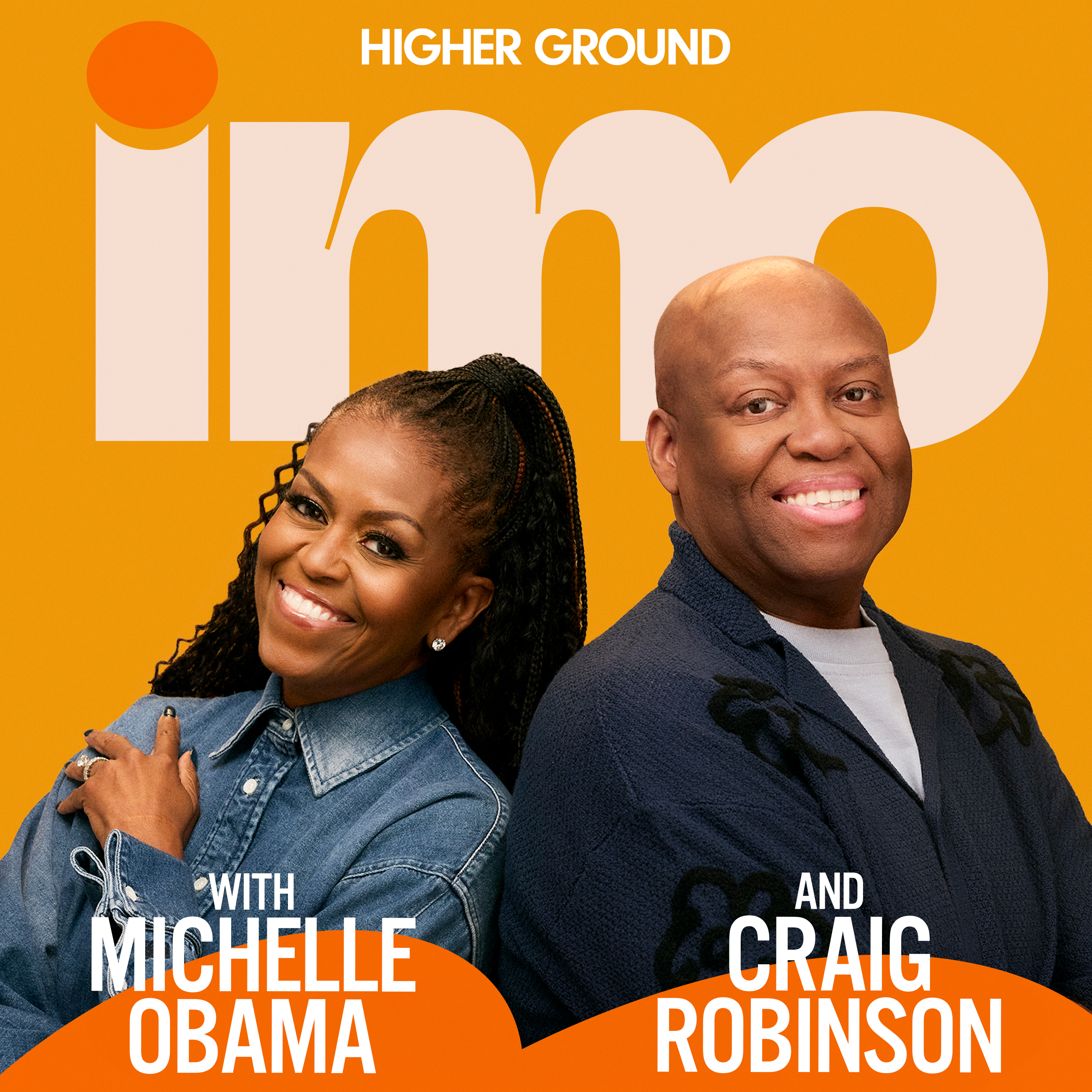
Stories of Motherhood and Home (from “Stories From a Stranger with Hunter Prosper”)
55m 46s
This episode of "Stories from a Stranger" features heartfelt interviews with four powerful women sharing their profound experiences with motherhood, love, and loss. Each woman reflects on the emotional bonds formed with their mothers and the wisdom passed down, such as the powerful message “Come home, we’ll love you here,” which offered resilience in difficult times. The conversation explores how maternal love, even in challenging circumstances like poverty, adoption, or separation, becomes a source of strength and identity. Personal stories of reuniting with biological families, surviving loss, and raising children with disabilities highlight themes of gratitude, resilience, and deep emotional connection. The episode emphasizes that parenting’s most valuable gift is not wealth or privilege, but consistent presence, love, and the ability to make a meaningful impact on a child’s life. It concludes with a powerful reminder that every person has a story, and through vulnerability and shared experience, we foster empathy and connection—proving that love, not material things, is what truly matters in building a life.
We wanted to share something special with you this week, an episode of another podcast from Higher Ground. Stories from a stranger, which features portraits of strangers connected by love, loss, regret, inspiration, family connections, and more. Host Hunter Prosper shares raw, intimate long-form conversations with real people. It's a show that inspires empathy and connection, proving that every stranger has a story. In this episode, Hunter interviews four powerful women about their relationships with their mothers and their experiences as mothers themselves. My sister was a guest on this episode and spoke with Hunter about how beautiful it has been to watch her daughters grow. They also reflect on the wisdom of our mother, Marion Robinson, who told my sister, "Come home, we'll love you here," which has always helped to ground her. Okay, I've said enough, I really think you'll enjoy this episode. You can watch and listen to more stories from a stranger wherever you get podcasts. Parenting is the hardest and most important job there is. Yeah, the best thing you can give them isn't clothes and shoes, it's love and your presence. That's right. No one will love you like your mother, and that is an only child raised by a single mom. I've grown to understand all the hard work and sacrifice she had to make to help me become the person I am today. Today, I am speaking to four powerful women about motherhood. Every stranger has a story. Let's start listening. I'm Hunter Prosper, and this is Stories from a Stranger. So Mrs. Obama, what I do is I travel the world, and I interview strangers showing that we're more elected than we are different. I just want to create a sense of connectedness through our emotions and experiences I think are uniquely yours, like why you felt love, pain, joy. I don't know, but you felt it and I have too. And so that's kind of the goal of this, this show, and it's always been the goal, just to create that connectedness, knowing you're not alone. So, a question for you is, what's the most beautiful thing you've been told? Oh, the most beautiful thing I've been told. Well, there are a couple of answers. You know, when it comes to one of the things that's the most important to me, which is being a good mom, you know, having my daughters who are now adult women themselves, telling me that they look up to me, you know, that they value what I've given them as a mother, that they can recite back to me, you know, wisdom and philosophy and insight. You know, they can be very articulate and clear about what I mean to them, right? And it's that bond with my children that is probably the most beautiful thing. And it's almost anything they say to me as a mother, you know, I take it in and now that they're older, they can articulate to me. And I can see it in them. I can see it in the way they carry themselves in the world, the way they solve problems. You know, I think there's beauty in watching for me and watching my children become uniquely themselves and to know that I've had a part in that. So, it's not so much of what they have said to me, but it's the many things they say and the way they live out their lives. But in the same vein, when I think of the things I've learned from my mother, that my mother has said to me, you know, and in the light we carry, the second book that I wrote, I had an opportunity before she died. There's a chapter where I really share some of her wisdom. I mean, the purpose of the book is to was to after COVID to share some of the things that got me through some of the tools that I used and a lot of those tools came from the lessons that my mother taught me. And one of them that seems to resonate with people is come home, we'll love you here. And what where that came from was that, you know, growing up as a working class kid, a black kid on the south side of Chicago, you couldn't always be guaranteed that people would show you the love and respect that you deserve because of the assumptions that we make about people, because of race, because of socioeconomic status. You know, sometimes you don't get the benefit of the doubt. And my mom was trying to prepare us for some of the unkindnesses that could happen to us out in the world. And she wanted us to be armored up for that, to not let that negative energy crack the shell of love that she and my father poured into us. So one of the things she would tell us is that, yeah, you're going to meet people out there that you don't agree with that don't like you, you know, that teacher who has a bad attitude, you know, who exhibits a level of unfairness to you. You're not there. You don't go to school to get love from your teacher. You know, she said, you go to school and you get whatever she has to teach you. If she's teaching you math, you get the math from her, you know, when you need love, you come home, you know, at this table is where you find your love and you get your foundation and you get your ballast. And I take that with me wherever I go and I think it is guarded me in some of the most difficult times of my life when you're in the public eye and you're getting a lot of energy, a lot of it love, but some of it not so good. I think that that has allowed me to stay strong in the headwinds of negativity because I'm not looking for love outside of myself, outside of my family, outside of the world that I know loves me and knows me. You know, I get filled up at my own table and that gives me the strength and the courage to go out there bravely and face whatever there is. And I think that those words are so wise, you know, so beautiful, so empowering, you know, so lasting. And so succinct. Yeah, you know, it didn't have to be this giant poem. That's right. Yeah, it's my mother is the most important person in my life. Not just woman, it's always been her and I. Yeah, it's just her and I against the world, her baby Baron, her against the world. So I appreciate you shedding light on motherhood. Your mother, what's what's her name? Marion. Marion. What was Marion's smile like? Oh, her smile. It was her smile was quiet. Her laugh was big. You know, my mom loved to laugh, you know, and she found everything, every word we said to be funny, interesting, you know, I mean, you know, I think I always say that I found my voice at my table because I had a mother and a father who loved what we had to say, who were curious about our thoughts and ideas. And with that curiosity and that love came lots of laughter, you know, it was deep, it was real. She enjoyed, she was a happy person, a happy spirit, you know, we didn't have a lot, you know, my dad was a working class, city worker and my mom stayed at home. So she, he raised, you know, he supported a family of four on his city salary. So, you know, you think small apartment rarely, did he have the resources to buy a car, a new car? We took one vacation, you know, we didn't have the latest or the newest, but there was laughter and a lot of that laughter came from my mother. Yeah. I lost my grandfather and I think about him every day of my life. Yeah. How often do you think about your mother and how is her presence made you who you are today? There isn't a day, just like with your grandfather, that goes by, that there isn't, you know, that I don't operate with the, with the hope that I'm making my mother proud, right? I mean, it's my mother, but it's also the people that my mother represents, you know, the elders, the people who sacrificed and, you know, put themselves last, you know, the people who are looking to us for hope, you know, the people who never saw us before doing the things that we were doing, they didn't think they'd live to see the day, you know, I get up every day thinking about making them proud, you know, showing them, you know, that their investment wasn't in vain. Yeah. I could talk to you for hours, I'm sure, but I just have one more question for you. What advice do you have?
for someone who wants to be a parent, but is scared that they're not going to be enough. And I only ask you because I'm kind of at a stage in my life where thinking about it if we're lucky and if my right now fiance, I'd love to have a big family if possible. But I often ask myself, am I ready to be a father? Am I able to put them in the best position to be little humans on this earth? What advice do you have for people like me? To remember that material things is never what a child needs. A child needs the basics. Yes. It's wonderful if a child has enough to eat a roof over their head. But I think we put place too much emphasis on the stuff. Do they have their own room? The newest clothes can I put them in the best schools? Our parents probably didn't have the luxury to think that way, but they became parents anyway. And they gave us what was most important. They gave us, they saw us. They gave us time. They gave us their wisdom. I don't remember anything my parents ever bought me, but I remember all of their words and I remember their love and I remember their attention. But the other thing I will say is that parenting is the hardest and most important job there is. And it's useful for you and your future partner to think about your why. Why do you want to have kids? Because I think your why will guide how you parent. And my why, my mother's why was that not she didn't just want children. She didn't want many me. She didn't want she didn't want little people that would love her unconditionally. Right? Because you parent very differently when you want something from your child. But if you parent from the position of I brought a life into this world and it is my responsibility to make sure that they are independent, thoughtful, kind contributors to this humanity, there's a totally different way that you parent when you're thinking about creating a whole person and not someone there to make you feel better. So I would say you don't need stuff but you should have a really clear reason for why you want to parent and then implement that. Every minute of their lives. You don't wait until they're seven or you do that the minute they arrive on this planet. You start thinking about who you want them to be. Yeah. The best thing you can give them isn't to close and it shows it's love in your presence. That's right. We didn't have much of anything. We had we had hardly anything but we had a lot. So you know, you don't need to have the perfect job, the perfect house, but you do need to have clarity and maturity, you know, and you know, and a willingness to set boundaries and with love, you know, and if you've got that, your kids are going to be great. Yeah. Thank you. At the end of all, my episodes ask the name. So I know your name, but for posterity sake, what's your name? For the record, my name is Michelle Obama. Hunter, please to meet you. Hunter, meet you. Thank you so much. My kitchen has never quite felt completely put together like it's always felt like something is missing. And then Kelly and I found these striped linen cafe curtains on Wayfair and the effect has been perfect. Once we realized we wanted some curtains, it was just a matter of typing our ideal item into Wayfair's search bar. And of course, they have what we want plus 10 other options. Their inventory truly cannot be beat. I especially like being able to look through customer photos and reviews before I decide. That's what sealed the deal for us with our new curtains, as well as all of the other amazing pieces we have from Wayfair in our house right now. Wayfair has more than 20 million verified five star reviews, so you can actually see how something looks and works in real people's homes. Fine pieces made for real life and get even more value with Wayfair rewards. Join Wayfair rewards today to get 5% back on every purchase. Head to Wayfair.com to shop all things home. That's w-a-y-f-a-i-r.com. Wayfair every style every home. I spent a long time as a basketball coach and here's something that's true in coaching and in life. Everybody shows up motivated on day one. That part's easy. The hard part is to stretch thereafter when the shine wears off and you've got to keep showing up anyway. That's true whether you're building a team, picking up something new, or trying to make a real change stick. That's one of the reasons I think Noom is so interesting. It's a health and wellness app that combines GLP1 medication with behavioral support to help people lose weight and keep it off. Medication can get you started. Delivered right to your door in as little as seven days. But Noom backs that up with real coaching, daily lessons, food tracking, and practical tools to help your plan hold up once real life gets in the way. Because the goal was never just to make progress. It's to keep it. The Noom GLP1 program starts at $39 and is delivered to your door in as little as seven days. Start your GLP1 journey today at Noom.com. That's n-o-o-m.com. New, lose for keeps. Initial one month subscription from $39 plus tax and $99 plus tax per month thereafter. Cost of medication not included. Final pricing depends upon program selection. Thank you, babe. Is there someone you still think about? Yeah. My sister, my mom, who live in Ukraine, I think about them every day. I just met them in the past year and a half and I've only known them about two years or known about them and I think about them every single day. Yeah. How did you find out about each other if you don't mind me asking? Oh, we got in contact through a through a private investigator and we got in contact and found my biological sister in Ukraine and my biological mom in Ukraine as well. If you don't mind Rosabella, can you just walk me back all the way to the beginning here? Because I'm totally curious. No, that's okay. So my adopted mom, she went to Ukraine when she was 48 and she went there for a month and adopted me. That was a year and a half and she brought me back to the US. Why did she go to Ukraine? Oh my god, I don't know. She's crazy. She went to Ukraine. She was a single mom at 48 and already had six biological children with her ex-husband and she wanted another kid and she was, she was older. She was 48 and she went for a month during Christmas and she adopted me and she brought me back here and it's amazing. It's a beautiful experience. So you had grown up living here with your with your mother? I lived with my mom. Yeah. Can you walk me through? Did you always know you were adopted? Was it something I was talked about later? I always knew I was adopted. And I'm really grateful for that. I think it's really important to know where you came from and to know that I was chosen is such a beautiful thing and I recently found out about my biological family, my mom and my brother and my sister and to know that I was chosen and have this amazing family that I was brought up with and then also have a family in Ukraine that wants me and loves me. Now that I know them is amazing. What does it feel like to know you were chosen by your adopted mother? It's really beautiful. I think to know that to know that she wanted me and that so many other people thought that her age was crazy to adopt a child and bring a family or bring a child into a family where there's already six other kids that are biological is amazing because I think it shows her dedication to children and her love for bringing up kids and wanting to be able to provide a good environment for someone to be raised in. It's really sweet. Patricia? What is Patricia smile like?
Oh my god, she's so beautiful. She has the most beautiful smile when she's with her kids. And I think that says a lot about why she adopted me is how her love for children and raising children. When we get to spend time, whether it's some of my siblings here or some of the siblings elsewhere and all of us together, when we all get to spend time together, it's her biggest smiles and her biggest laughs, because they have the best stories. She had her first kid when she was 16. So yeah, she spent most of her time as a mom. So every time we get to talk about her and her raising us, it's always a really good story. Yeah. What does it feel like to be so loved by her? It feels really good. I mean, I had a different experience with my siblings because she had her first child when she was 16 and then had six more and then adopted me. So it's an interesting experience because most of my siblings were grown up by the time she was like, by the time it was just us and growing up with her was a really unique experience because I feel like we got to get a lot of a loan time and she got to show her love that she has for me and just her dedication that she had to bring me into the world that she brought me into. Yeah. And it means a lot. Growing up, did you ever feel different for being adopted? I did, but not because my mom made me feel different or my siblings made me feel different. It was simply because I think I just knew that I had six siblings that were her biological children from one husband and I just knew I was different and that's okay. But she didn't make me feel different, my family didn't make me feel different, everyone made me feel like I was just part of the family and my mom told me that when you adopt a child, you make them one of your own and that's really important especially when you adopt kids and I was raised by a village as well. Yeah. Growing up, did you ever feel anger for your biological mother? No, because I don't think I really knew the situation and recently I got in contact with her in the past year and a half and she explained to me the situation and I didn't feel any anger. It wasn't her choice to give me up, so sorry. No anger, no, not at all and I feel angry at all. I feel really grateful to be where I am. And I think, sorry, no, you don't have to apologize. I think my biological mom did what was best for me and my mom here, my adopted mom, she also does what's best for me and I am so lucky because I have so many women and moms in my life that do so much for me and just want the best for me, so I'm really lucky but I don't feel anger. I just feel hurtuity, yeah, I'm really happy, yeah, I met her for the first time over the summer, my biological sister and I went to Ukraine and traveled to see them because my biological mom and sister and brother, uncle, everyone lives there, so I went to go see them and he was amazing. I could have never imagined that I'd ever be able to meet them. So I feel like you and my mom is so sweet, I think she had some regrets of giving me up because of the situation with the cracks husband and she already had two kids and she kept asking me the whole trip if I was mad at her. So I come through a crack question, they ask you about if I was mad at her about like giving me up and you know, being able to meet them was so important to me because it just gave me more family because my whole life growing up, it was always family is, family just love, family isn't blood and then being able to meet her and for her to feel bad and be like I feel bad about the way that you grew up, it's like I grew up with so much love and then now I get to know them, it's even more love and yeah, I don't, I don't feel anger towards her. I think she did what was right and what's right for her. Growing up, did you always have the intention to someday meet your biological mother or did this happen randomly? Did you have thoughts that you wanted to meet her growing up? Yes, since I was little, I would look for her the first time I was able to use a computer. I stole my papers from my mom's room from when I was adopted and looked for her and I couldn't find anything and then last year, or wait, 20 to 20, 20 to 24, my mom found them. Without telling me, using my papers and everything and she used to, like a personal investigator, yeah, and she found them for me. What did that mean to you? I was really excited, but my adopted mom was so good about it because she, she was always very open about me being adopted, there was never telling me, it was always just like you're adopted and it's an amazing thing and you're loved and everyone wants you, everything like that. And then she did this and it hurt. Yeah, because I wanted to be involved in it, but every day I try to focus on like the positives, because I know them now. I went to Ukraine and I went to see my mom and my sister and I talked to them every day and it's good. And it meant so much to me that my mom did that for me and being accepting of knowing that you have six biological children and that you have one that's adopted and still wanting to be able to be accepting of the fact that there's other people out there for them is amazing, but I just wish you told me that it's okay and it's allowed to be a confusing emotion. Yeah, it's definitely confusing, it's definitely a contradiction of like I'm so happy because I know these amazing people in my life that are now my family as well that are also blood but also the fact that she didn't tell me. Now I know her so it's okay, I think everything happens for a reason and timing and where you're at in life, I think it's all extremely important. So I think as much as I don't want to believe it in the moment like last year or now when I look forward in like 10 years, I know it's going to, it's perfect timing and it's going to be good. Everything happens for a reason and my family in Ukraine, they say that all the time because they're going through a war right now and I went and visited and I was involved in strikes that were happening there and they go throughout every single day and my sister has a tattoo on her, my biological sister that basically says what's meant to be will be. So I think that, I can relate to that a lot in the situation and I think it means a lot when she has that tattoo and I'm like okay everything that's meant to be will be and yeah. My mom used to always say to me, "Case or us or what will be will be." Exactly, it's the same thing. What was the first thing you said to your biological mom? So I went, I went to Ukraine over the, do you mind if I tell this word? Please, I would do that. I went to Ukraine over the summer and I took the train from Poland, it took a really long time. I was shaking, I was shaking to meet her and like my sister and I got off the train and they were standing right where I was getting off, which was because they knew where I was, where I was going to, they knew all the information and they gave me flowers and I just hugged both of them. My sister and my mom and big hugs, big hugs, no words and we don't speak the same language So I can't really speak. I was just like, oh hi.
And they couldn't understand. So I just hugged them. And it was crazy seeing two people that looked like me and in person and like same height. And knowing where I came from was a really interesting experience. And being there in itself, especially during more time. It was just interesting. It's the craziest thing at all. I think all of our experience, other than the childbirth, we're getting married. I think it's a craziest thing I'll experience meeting them. Well, interestingly enough, you would spend what sounds like most of your life wanting to meet her. And then you do meet her. And it's during this war time. Like the circumstances couldn't be more strange and dire when you meet her. Yeah. Yeah, it's hard. I feel really grateful that they came so far, because they live on the other side of Ukraine. And I only felt comfortable coming on the Western side that's considered more safe. You said that your biological mom would ask you if you hated her sometimes. What would you say? Well, there's no way I could hate her. I think it's such a unique experience to go through to have to give up a child, regardless of the reason. And I used to think about it when I was little and be like, why did she? Like, why? But it never made me hate her, because I'm so grateful for the opportunity that I have-- like my mom that adopted me always told me, you were given up because someone wanted you to have a better opportunity. And my biological mom told me that, too. She said, I just wanted you to have the best life. And my siblings didn't have a very good life. And every time I talk to them, they're like, I'm so happy that you had such a good life. And my mom adopted mom to this day. Once the best life for me, it gives me the best life. My biological mom now wants the best life for me. And-- Yeah, I don't know. If you could live this life again, would you? What's that about? I wouldn't change a thing. I think about that, actually, all the time. I'm like, what would happen if I wasn't adopted? What? Sick, what would happen? And every time I think about it, I'm like, I would do this over and over and over and over again. I think about it often. So it's funny that you ask that. I-- I'm so grateful. I have such a wonderful family. I have so many people that love me. And I have a family. And so many countries that love me. And my biological family and family here. And yeah, I feel really loved. So I wanted to change a thing. Yeah. What's your name? Rosabella. Hunter. Can I hug you, Rosabella? Yeah. Oh, it's so good. Oh, my gosh. You're the best. Thank you for being so cool. Thank you for being so open. Yeah, of course. You spoke so beautifully. Thank you so much. I think it's so powerful that you're able to lead life with love instead of anger or feeling like you were the trade or cast aside. Instead, you kind of use the events that you've been through in life to make you love more. I have so much family. And I have so much love around me. And I feel like everything that I've been raised on or brought up on, whether it's being adopted, the people that have cared for me or being introduced to my biological family, it's all love. Now this can be romantic or non-romantic, OK? I want you to answer this every one. Who is your greatest love? And why did you fall in love with them? I think my greatest love is my son. I love my son. Every morning I wake up and every night I would go to sleep and we say a prayer. And I'm really, really, really tired all the time. But I think he's the biggest blessing ever and having an autistic kid. I think God picked me as his mother. I love him so much. I tell him I love you like at least 10 times a day. He's my biggest blessing. What's his name? His name is Skyler. What does it feel like to be Skyler's mother? He feels rewarding. He's such a sweet kid. I work a lot. And he's very patient with me. He understands me. And he even tells me like, hey, mom, you need a break. He takes care of me as much as I take care of him. He's just-- he's really silly. I think he's a mimic of me sometimes, but also very serious. I love him a lot. I've never felt any love like this before. This might be a rhetorical question, but I would love to hear what you have to say. When did you fall in love with Skyler? I think maybe when he was a toddler, I think every mother loves their own kid and when they're a baby. But I think once I started realizing when he started walking and started being like a little human, is when I started falling even more in love with him. What does it feel like to be a mother? It feels like you're learning every day with them. I feel like every day is a new day, a new challenge. Nobody really prepares you for it. There's no panbook of saying, hey, you're a parent. This is the way you need to do it. I feel like I've made a lot of mistakes when I was young. I had them at 15 years old and not being able to diagnose him early on with autism. I feel like that affected him. And I blame myself a lot. But yeah, I think nobody could prepare you for being a mother. And I'm just so blessed to be able to be one. Yeah. Do you ever feel like you're not enough or you're not doing enough? All the time, every day, every day. I feel like I could do more for him, be more available, not work as much as I can help him with homework. He's like somebody who's just behind. And I could be helping him more. He does stay for tutoring every day, but he tells me they can mom. You teach me better. And I wish I could be there more for him, but also working so I can't. Juggle a lot while trying to help him. What does that feel like? Really sad. Honestly, really sad. I feel like I'm not enough every day. That feeling like you're not enough. Can you describe that for me? It feels, I would say, depressing. Not that I'm depressed every day, but it feels like I should have a student life for him. And I feel even guilty of I had another kid. Now I would be able to parent that kid better than I do my son. Then I did my son. And I feel like maybe that's what's holding me back from even having other kids. But yeah, if it feels sad, I just feel like I could be better for him. But I also know that I'm trying my best. And he knows that he tells me, like, mom, I know you're doing your best. What does it feel like when he says this, yeah? It makes me feel accomplished as a parent, yeah. That's really beautiful. Well, then I want to ask you this. In relation to Skylar, what's the most beautiful thing he's told you? I think it would be-- he had a project that was you. And he said, who do you want to live with in the future when you're older? And he said to my mom, because she works very hard for me. She takes care of me. And I know that she loves me. And she's always going to love me. And I love him, too. He's a really, really sweet kid. Do you feel like being his mother gave you a new purpose? 100%. What do you mean? I feel like before I didn't really care about life, I feel like before I was just living and had no purpose at all. And I was just living day-to-day. And now I need to make sure he wants to be a game developer. So I try to do everything that I can. I enrolled him in college. He's a freshman in high school. And he's enrolled in college, because I want him to get to his destination. I want him to become a game developer. And just because he has a disability, it doesn't stop him from being capable of getting to his goals. So I work hard so he can achieve those goals. And it gives me purpose every day to wake up and just kick butt in life. That's right. That's amazing. What do you mean before him, you didn't really care too much about life? I feel like I was just not really caring. I was not enrolled in school. I didn't really have a career. I had no plan in life. And I was living day-to-day. Yeah. Do you feel as though Skyler saved you? 100%. Yeah. Tell me about that. So I was a teen mom. I had them at 15. So I think I was just wiling out. And maybe it was the neighborhood that I grew in, the kids that I hung out with. I was ditching a lot. I was not focused in school. And I was just doing anything. And then when I had Skyler, I told myself I need to be better for him. If you could say something to Skyler, if he was right here, what would you say? I would tell him that your disability doesn't stop you. You're so smart. You're very strong. And you can do anything that you say your mind to. I would say, keep making friends. Get out of your comfort zone.
and keep pushing in life. Has Skyler ever had a deal with being bullied? Yes, he was in a school where he was being bullied. He was getting food thrown at him. He was getting picked on by students. He was getting rocks thrown at him, pushed. And I felt so bad so his social skills declined by a lot. So little by little, I'm putting him at my stand so he can get better at talking to other people. Yeah, you say putting him at your stands. What do you mean by that? So I have a food stand. And it's called the Brie Skies, Casa Diaz. It's both of our names combined. And he's my little cashier. I got the square app and I put little cartoons so he can pick if people want an option of cheese, chorizo, rajas, or chicken, and he's my little cashier. So he just taps and he turns the iPad around and people plays their order. That's beautiful. What's the biggest lesson you've learned being Skyler's mother? The biggest lesson I learned. I think patients, because it took a lot of patients when he was young and he couldn't talk. He would try to communicate with me a lot and he would stutter a lot and he couldn't communicate. He actually didn't really start saying full sentences until he was maybe nine or 10 years old. So it was frustrating because he would try to communicate with me and he would throw himself on the floor if I would understand. I would start crying. He would start crying. And it would be so hard to even understand him. But I think he taught me a lot of patients and he still does every day. Sometimes I get upset with on road rage or something. He's like, "Mom, let's breathe." And that's one of the things that we would do in the beginning when he couldn't communicate with me. I would tell him, "Let's breathe, take a couple seconds." So I think patients with myself, with the world and everybody. I think that's the biggest lesson he's taught me. I love, for sure, love. I've never felt anything like that before. Other than him. What does that love feel like? It feels like you have a meeting in life. Like, I wake up every day and I go look for him. I'm like, "Hey, come here, Bob. I call him Bob." And I was like, "Come here, Bob." He's like, "I'm warning for you." So he's like, "Hi, Mom." And then he's like, "All right, come here. Give me a hug." So we give each other a hug and then we make a little joke and then we start our day. And I said, I'm like, "Hey, you know, we're both not warning people, but we've got to give life. It's the best shot." Yeah. - This is beautiful. - Thank you. - What's your name? - This is Bree. I'm a cancer. Can I hug you, Bree? - Of course. - Thank you so much. You're awesome. - Is there someone you still think about? - I think about my mother who passed away at 67 years ago before I had my last child and she was my best friend. And-- - What was your mother's name? - Helene. - Helene. Yes, and she died very young, actually, unexpectedly. But losing her was the day she passed. I was laying in bed and she had cancer, but it was kind of one of those things where I didn't expect it. You never expected when you get that call. You're like, well, I know she's gonna pass, and it's gonna be any time, but when you get that call, it's just so final. So I was laying in bed, and I remember when I got the call, I looked up at the ceiling, and I just fear just came all over me, and I'm not a fearful person. I rarely get fearful, you know, as long as everybody I love and people I know are okay, but I felt a lot of fear and I felt very alone. And I was married at the time, and I had all my children. I think I had nine children at the time. I know, and I was still felt so lonely because she was with me every day, with the kids. And she helped me, you know, we'd go places, go to the deli, go to the mall, go to the park, you know, and we'd drive her crazy, and then she'd say, let me out of here, and she'd go to Bingo at night and we'd go see tomorrow. But she, losing her was just very traumatic, you know, and I don't think I cried about it for three years after she was gone. I was just that stricken. I can't even explain it, but it hit me going down the freeway one day, three years later, and I just broke down how to pull over. - You remember where you were when you first cried? - Yes, I was on the 118 freeway, coming from Simeon to the Valley. - Can you tell me about that? - Well, we were living in Moore Park at the time. My children and I was on the freeway coming from Moore Park, going into, on the 118 right about it, let's just say tap-o if anybody's familiar with the area. And I remember I just, seriously, I felt it for my feet, go up, crawl up my body to my head, and I just kind of started shaking, and I thought it better pull over. I was alone, thankfully, and I just broke down, and I had to just, I sat there on the side of the freeway, for I don't even remember how long it was a long time, till I got ahold of my thoughts and my feelings, and then after that, never really cried. I could cry, but I stopped myself, but I, that was the biggest cry I had over my mother, but I think about her every day, with only one regret. We were very best friends. I was, you know, we were close as ever. I only have one regret. When I was, had my eighth ninth child, she wanted me to go to Vegas with her, on a turnaround bus trip, and I said, 'cause I never told her no, but I mean, 'cause we were together every day, I said, mom, I don't think I can go, because there's so much to leave all of them, and she goes, well, it's only for one night and one day. Mom, it's just too hard, so I turned her down, and when she passed away, I still think about that I wish I would have gone. You know, I just, I just wish I would have gone, that one last trip that she wanted to go on with me. - What was your mother's personality like? - Someone like mine, very strong, very loving, very giving, very fun, fun, fun. You know, we laugh about her still today, we talk about the things she used to do, and the things she used to say. And she used to say a lot of fun. She was everything. Everything all in one, beautiful, fun, friendly, stood up for herself, and all of us, you know, strong. A strong woman, you know, ran a big business, you know, a rubbish company in the valley, you know, and was successful. - Yeah, she's great. - What was your mother's smile like? - Just big and beautiful. - Yeah. - Big and beautiful. - Yeah. - She was a gorgeous woman, she was tall, she was 5'11, so she was very statues, like I always tell everybody, when she'd walk in a room, the light bulb going on. Everybody remembered her, and she would just put that light on, you know, and walk in, and people would look at her, you know. Another indication how strong she was. She went into the hospital, and she had the CAT scan, and then they put her in a room, and the doctor was telling her what she had, and she had lung cancer, it was inevitable. And he goes, okay, well, you can get your clothes on. If you want to go home, my mother goes, I'm not going home. The doctor says, well, your insurance probably doesn't cover you just to stay here. Just, I don't care about the insurance, I'll pay for it. I'm not going home. She don't want to die at home, 'cause it would have been probably an impact on her children. On us, to be there, I just think she, so she stayed there, and 13 days later, she's gone. So, and that was, let's see, my mother died in 95. So, that's been a long time. I mean, you know, she'd be 100 right now. So, how often do you think about your mother? Every day, every day, every day. We talk about her, especially my brothers and I and my sister. We talk about her, 'cause they all feel the same way I do. Yeah. What things remind you of your mother? Well, once in a while, I'll be spunky, and I'll say something, and my kids will go, oh, you sound just like none, and when you said that, you know. So, I remind them of my mother. Do you ever see her features in you at all? A lot. More so than my father, yeah. Tell me about that. I think there's a lot about me that reminds me of my mother. Just maybe my coloring, you know, the way I color my coloring, the fact that I'm always upbeat and happy, and I always want to have fun. I'm up for anything, you know. Wanna go here, mom? Sure, let's go, you know. Very spontaneous. You know, my mother, she was very worried about me having the big family, because, you know, she was just worried about her daughter. You know, like, how are you gonna do this? Don't worry about it, mom, I'll handle it. So, I ended up having nine children before she passed. The youngest, my son at the time was six months. And then I ended up with one more, and it was a boy, so I ended up with five girls, five boys. And I also had 16 grandchildren. Yeah. That's a large family tree. That's it. That's it. She's lots to be happy about. And lots of places for me to go and see, because I always have a place to visit or whatever. And she got to be a grandmother for a lot of grand babies. My mother would right now have, she will, she ended up with 17 grandchildren. And I think 29 great grandchildren so far. Did you always want a big family? Yes, that's another part of the story. You wanna hear. When I was a little girl,
I was the eldest of four. I have a brother, seven years younger, a brother, six years younger, and a sister, two years younger. But I was like, the other mom. Let's put it that way. And I would get a doll for, my mom would say, what do you want for Christmas? And I was like, this way I go, I want a doll. So she'd get me a doll. And my grandmother would get me a doll. And I'd say, I want a lot of dolls. So I would have all these dolls and I'd play orphanage with them, you know? Like I'd be in my room all day long and they'd all have like a little spot. And I'd go and feed this one out. But right there in Angofina, I was like, in my head, I was playing house. So I played orphanage as a young girl. And then I was a, you know, I got married fairly young. It was a fertility patient for about six years. Never, you know, wouldn't happen. And went into adopt. There was one adoption attorney in LA back in 1978. So we went there. He talked to us both, you know, kind of judged us physically. We told him what we would expect in a mother that was maybe pregnant. And anyway, he found a baby. And he says, it'll be about the mother just got pregnant. So you'll be hearing from me if she chooses you. Well, lo and behold, a week later, she chose us. So the baby was due to be born like December January of the following year, you know, because it was now where like in March or April, lo and behold, after six years of trying on fertility treatments, I was off the fertility treatment. I got pregnant with my son. And then I just had a lot of kids. And after being told and having so much difficulty, having a child for six years, I'm sure there is a part of you that was like, well, let's keep going. You know what, it was, I tell people that because the idea of stopping because they were like such a joy. I mean, I just, like I said, I was playing house. They were my dolls, in a sense, you know. And they were all in sports. And I tried to always keep them busy and active in activities. And I did, I wear myself thin, not really. I don't know. I had a real good system going, you know, drove a big van, 12-person van. People still remember me by that van. Yeah, it was, it wasn't that hard, really. I mean, I think it's harder to raise kids today from what my daughters tell me. 'Cause like I said, I have 16 grandchildren. And, you know, some of them have multiples, like three or four, some have two, some have one, some haven't even started yet. So I just think that it was easier for me at the time I was raising my kids. And it is now, if you ask me now, would I have 10 kids? No, as much as I love my kids and my grandkids, it's a different situation now in the world. And probably wouldn't. Yeah. But they were the biggest joy, though. I'll tell you, sometimes I think it's almost surreal, you know. The grandkids and the kids, the grandkids are amazing. Because, you know, they're just, they give you life, they give you younger, they keep you laughing, they remind you of everything. I stand back and I just stare at them, disbelief. Yeah. Yeah. What does it mean to be a mother? To be a mother? It's the most fulfilling job. I mean, as far as being a mom, there's so much to love. My life is so full of love. And love is so important to me. I'm one of those, okay. And every day I think about that. I think about how full my life really is, you know, with just friends, my children, their siblings, their, my in-laws, you know, my grandchildren. We're gonna say, you know, being a mother has been a lot of work, but it's like labor. Speaking as a woman, it's like labor. You have the baby and you're like, never again, you know, this is crazy. And then you forget, you know. So I think parenting that many kids, there were times it was tough, you know, the fighting in the car just turned the music up. So they drowned out the fighting. Yeah. But being a mother was something I always wanted to do. And I would do it all over again. 'Cause look what I have now, right? It's so beautiful. Thank you. What's your name? Sharon, Bradley. Hunter. Thank you. Can I hug you, Sharon? Of course, yes. If you're lucky enough to still have your mother in your life, or someone you can sit here, your mom, reach out to her and let her know what you're thinking about her. Because chances are, she's thinking about you. I'm emigried, host of A Spire with Emigried. The podcast where I sit down with people who don't just dream big, they build big. If you love Michelle and Craig on IMO, just wait until you hear their episode on my show. Michelle told me about the moment at 26, when she lost her father and her best friend in the same year. It made her walk away from her corporate lawyer to figure out her why. That's the kind of conversation you get on A Spire. We talk about mindset, ambition, and doing the work that actually moves the needle. So if you're ready to raise your standards and take charge of the life you're building, A Spire is where you start. Follow and listen to A Spire with me, Emigried. Available wherever you get your podcasts.
Podcast Summary
Key Points:
The podcast "Stories from a Stranger" features intimate, emotionally rich conversations with real people, highlighting universal experiences of love, loss, and family.
Four powerful women share their deep reflections on motherhood, emphasizing the lasting impact of maternal wisdom and emotional bonds.
A recurring theme is the power of simple, heartfelt messages—like “Come home, we’ll love you here”—that provide emotional grounding and resilience.
The episode underscores that parenting’s greatest gift is not material possessions but consistent presence, love, and intentional connection.
Personal stories of adoption, reuniting with biological families, and overcoming loss reveal profound gratitude and the strength found in love.
Mothers are portrayed as sources of wisdom, resilience, and emotional support, shaping their children’s values and identities.
A central message is that being a parent requires clarity of purpose and self-awareness, not just effort or resources.
Across diverse experiences, the shared thread is that every person’s story—especially those of mothers—contributes to a larger human connection and empathy.
Summary:
This episode of "Stories from a Stranger" features heartfelt interviews with four powerful women sharing their profound experiences with motherhood, love, and loss. Each woman reflects on the emotional bonds formed with their mothers and the wisdom passed down, such as the powerful message “Come home, we’ll love you here,” which offered resilience in difficult times. The conversation explores how maternal love, even in challenging circumstances like poverty, adoption, or separation, becomes a source of strength and identity.
Personal stories of reuniting with biological families, surviving loss, and raising children with disabilities highlight themes of gratitude, resilience, and deep emotional connection. The episode emphasizes that parenting’s most valuable gift is not wealth or privilege, but consistent presence, love, and the ability to make a meaningful impact on a child’s life. It concludes with a powerful reminder that every person has a story, and through vulnerability and shared experience, we foster empathy and connection—proving that love, not material things, is what truly matters in building a life.
FAQs
The podcast focuses on creating empathy and connection by sharing intimate, long-form conversations with real people about their lives, relationships, and emotions.
They reflect on the love, wisdom, and emotional bonds they’ve formed with their mothers and how those experiences have shaped their own parenting and sense of identity.
It represents a mother’s message of unconditional love and emotional safety, reminding children that home is where they find true love and stability, especially in a world that may be unkind.
The best a parent can give is love and presence, not material things. It’s also important to have a clear 'why' for parenting and to focus on building character and independence in children.
The show highlights that parenting is one of the most challenging yet meaningful jobs, and that a mother’s love, guidance, and presence shape a child’s lifelong values and self-worth.
It means recognizing that every person has a unique story of emotion and experience, and that through shared feelings like love, pain, or joy, we realize we are not alone.
Chat with AI
Loading...
Pro features
Go deeper with this episode
Unlock creator-grade tools that turn any transcript into show notes and subtitle files.
 PodcastTranscript AI