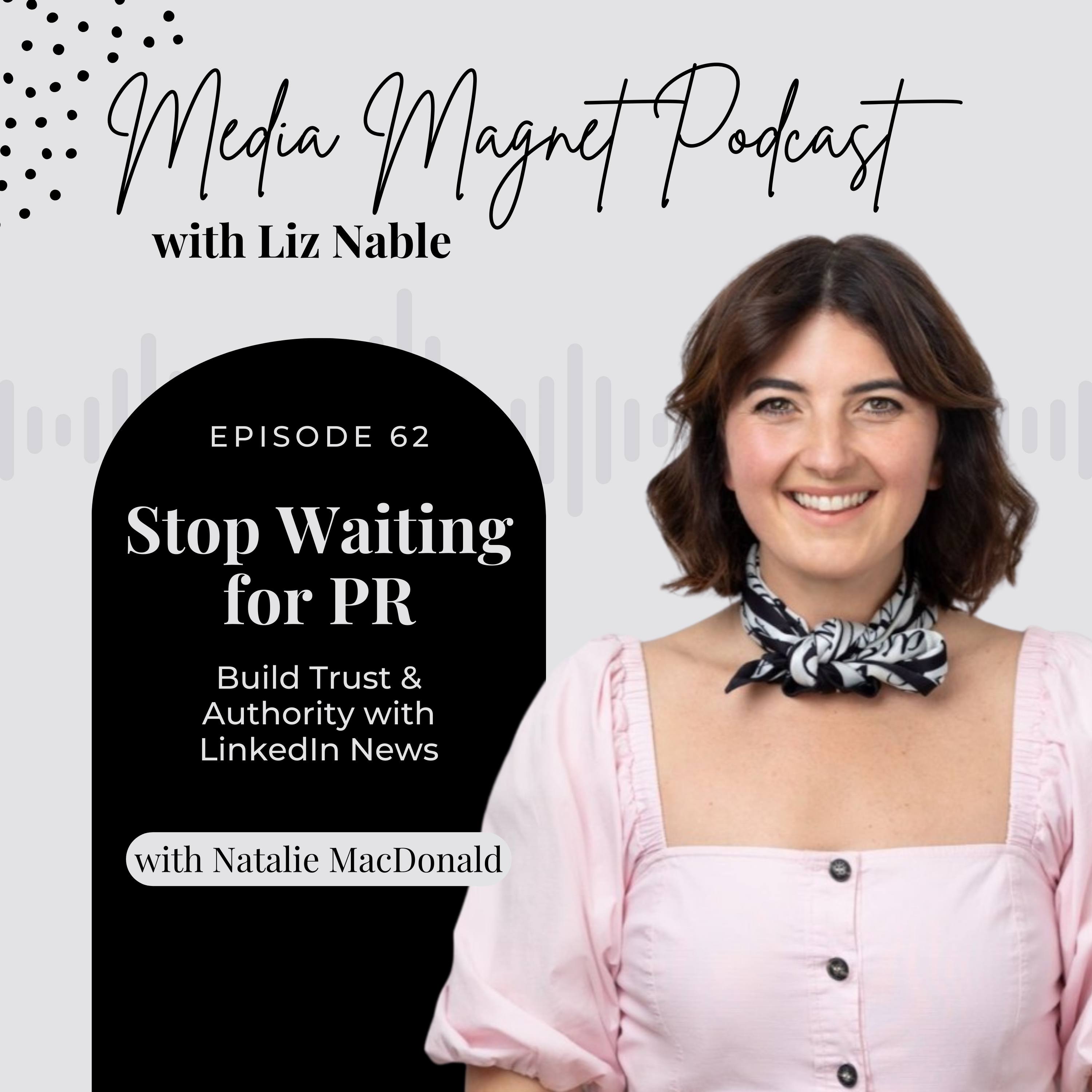
Speaker 1It's not often you get to hear directly from someone who's been inside the walls of a major media platform, helping shape what gets seen, what gets surfaced, and what voices get amplified. But today, we're bringing you something special. I'm joined by Natalie MacDonald, former TV journalist, former LinkedIn News editor, and founding member of LinkedIn News Australia. Natalie didn't just use LinkedIn, she helped build the editorial engine behind it. During her time there, she covered small businesses through crisis-led conversations around diversity and inclusion, and launched LinkedIn's first global editorial campaign for International Women's Day, shaping how professionals show up and get recognized on the platform. So in this episode, we're going beyond surface-level tips. We're talking about what actually gets attention, how LinkedIn News works behind the scenes, and why LinkedIn, now with over 1 billion members, worldwide, is one of the most powerful visibility tools available to small business owners today. If you've ever wondered whether LinkedIn is worth your time, this is the conversation you've been waiting for. Hello, and welcome to Medium Magnet, the podcast for female founders and women-owned businesses, startups, and side hustlers. I'm your host, personal publicist, PR strategist, and dedicated hype woman. My goal with this show is to give you a behind-the-scenes tour of how the media works, to break down the barriers between your business and the big mastheads, so you can see how easy it is to get featured simply by giving journalists what they want. At Media Magnet, you'll also get access to the top journos, editors, writers, and PR people in your industry and beyond, sharing their secrets and expertise on the how, why, what, and when of pitching, and getting featured in the media consistently. I will share with you how to build your reputation as an industry expert so successfully the media will be knocking down your door. When I first started in small business 12 years ago, I had no idea what I was getting into. I had spent 15 years as a television news reporter, working at several major networks in Australia, and then as a freelancer in the US and around the world. I spent years dividing my time between working long shifts on a news desk and traveling the world chasing stories. It was unpredictable and exciting. Until it wasn't anymore. I decided I wanted a life where I was in charge of what happened next, and where I was working to build my own empire, not someone else's. There was a lot I had to learn about running my own business, but getting media and great free PR was not one of them. I already knew what the media wanted. I knew the secret formula for what made news, and I knew how to leverage those media outlets to build my business, get more exposure, and ultimately make more sales. I was featured in every major media outlet in the country, and I never spent a single cent on PR. I took that knowledge for granted until it dawned on me one day, that I was going to be a media expert. I was going to be a media expert. I was going to teach what I knew to other businesses, let them in on the secret, and they too could build their brands with organic media and PR. Let me help you take your brand from best kept secret to household name. This is Media Magnet, the podcast, and I'm pretty pumped to have you here. Hi Natalie, welcome to the
Speaker 2Media Magnet
Speaker 1podcast.
Speaker 2Thank you so much for having me, Liz. I'm so pleased to be rounding out the year, getting to chat to you.
Speaker 1Yes, absolutely. I've thought for a really long time, or I've wanted for a really long time, to have a LinkedIn expert inside the podcast, and obviously there's lots of LinkedIn experts in Inverse, but I've wanted to have a LinkedIn expert inside the podcast, and obviously there's lots of LinkedIn experts in Inverse, out there, but you're really the only person I've met who has experience on the inside working at LinkedIn. Can you tell us a little bit about who you are and what you do before we kind of dive into the podcast?
Speaker 2I think you're totally right. There are a lot of people that profess to be LinkedIn experts out there, and there are so many small businesses and individuals looking to fly that plane that I had the good fortune of essentially helping to build that. 22% of disabled people. decision makers lean into thought leadership not just marketing um i think since things like covid and and beyond you know this real overlap between who we are as professional and who we are as people um has has really come together and as i say people want to do business with people they don't want to do business with marketing campaigns they don't want to do business with assholes um and so linkedin is a place for you to demonstrate who you are as as an industry leader of choice as an employer of choice as a brand partner of choice um it's fab i'm sold on it
Speaker 1so i've often heard um again correct me if i'm wrong that linkedin is also a really great social media platform to be you know to exist on or to um to spend time on because it's not like instagram with its algorithms or facebook i mean obviously you can take out linkedin ads and those but because it's a much more organic process in reaching out to your network and being able to be seen in front of the right people would you say that's correct
Speaker 2absolutely and that's i know we're going to come to the work that i'm doing now but that's really part of the the work that i do with working at it now and that is essentially helping people show up as themselves on purpose um and getting their message seen by the people that matter and linkedin it is clever in that and that you know you can do a lot of work and you can do a lot of work and you can do a lot of work and you can sign post who you are you know be through things like having skills on your profile your headline your experience um the content and that then helps you reach people who also through the things that they engage with are also sign posting that actually they want to learn about your market research business they are interested in pr in rural communities um and so you know like any sort of um algorithm system you know it's good data in good data out um and you are able to train the feed um in terms of what it is that you that you want to see and and and what you want to receive and and so that's where you're really able to build um those those networks and communities but i will say people often forget that people often forget that they are in charge of their own feed and the thing that i always remember is um with instagram back when i was on parental leave and i don't i think i was in a moment where i wasn't feeling great about myself and i was unfollowing like a whole bunch of like fitness influencers um and instagram at that moment had this really great thing where it popped up and said oh you follow six other accounts that do the same thing do you want to unfollow them as well and i was like yes get out of here i don't need to see your gorgeous hot bikini body right at this moment in time um and i always use that analogy about linkedin as well so you have to be proactive i always call it building those those linkedin healthy habits which is going on there for 15 minutes commenting on a few posts replying to to responding to your connection requests your dms and you will see slowly but surely the feed starting to give back to you as well
Speaker 1is it little side detailed question here i know with instagram at some point there was like if you follow too many people your actual posts and those sorts of things didn't work as well or get exposed so essentially you had to have less you had to follow less people than followed you or something like that um with linkedin is it the same like does it matter if you've got like a thousand connections or should you get rid of all the ones that don't serve you because i know that i have so many random people request with me or should i just say yes to them
Speaker 2all no please don't be discerning and again think about it as your own your own experience as well if you want to come to the platform and you want to see content that is going to fuel your voice not just be like a hate scroll on a random tuesday night um but if you want content that is going to inspire you that is going to inform and educate you that is going to help you in your day-to-day as a professional as a business be discerning about who you connect with and i've because of the nature of my role that i've been in the business i was very public facing that i did used to do a lot of interviews with with big personalities and i had have a newsletter that goes to 115 000 people i my my connection requests have always been on the larger side um but i've always been really discerning about um who i have connected with and that isn't to say that this person is a bad person or they're not worth my time but it's just really about thinking okay are we in the same industry are they someone that i would maybe want to do business with that my services are of use to taking a look at their business and i've been thinking about that for a long time and i've been thinking about that for a long time and i've been having control over over your own feed as well the other thing people always forget is that you can unfollow someone on linkedin but still be connected with them it's a little bit like when you've got like that grumpy old aunt on facebook and you just like quietly mute them because you don't need to see like their inappropriate jokes or memes um so with linkedin you can actually unfollow someone and you can unfollow them and you can unfollow them and you can unfollow them and you can unfollow them and you can unfollow them and you can unfollow them and um and um still be connected to them so you're not going to be offending anyone they have no idea but also similarly you can follow someone and not have to connect with them um and that again is a way to still get their insights in your feed but without having to be explicitly connected to them if you don't have an existing relationship who knows you may one
Speaker 1day yeah yeah um so we'll get into like some of the your tips i guess for small business owners who perhaps have a profile that they've never used or have never used a profile that they've never used or have never used a profile or maybe they don't have a profile yet and how the best practices you've seen of small business owners using linkedin well but before we do that i want to touch a little bit on your experience so you were the linkedin news editor um talk to me a little bit about that because i really love and i talk about this a lot in my media masters courses using social media to create news and then also linkedin news as a reputable news source is really growing in credibility as well tell me about that role and and your opinion or your insights on linkedin news and i guess how people can use that to generate an authoritative voice um on that platform and
Speaker 2beyond absolutely so um i was a founding member of the linkedin news australia team and i highly highly recommend as on your who should i follow and go to the linkedin news australia page or if you're if you're listening overseas go to whatever your local market linkedin news page is follow that the link to the linkedin news australia page is the link to the linkedin news australia page is because it is so full of the news and views and the conversations that you need to have to to inform your day and so it's focused on professional news and it does it explores different things like um you know current trends workplace trends workplace news and headlines and things that people are talking about on linkedin um it speaks to you know cultural days of significance and you know i'm already looking ahead to things like international women's day for instance um and it's a really great way for us to be surfacing those trusted voices and those expert voices not the people that just shout the loudest but the people that are actually sharing meaningful information i know there's so much concern around social media at the moment when it comes to ai slop and generic content 2026 is gonna put those creators on their asses um it is really really really going to be about sharing expertise and knowledge that only you have and the linkedin platform is going to be going to get smarter at identifying that as well um but when it comes to to linkedin news so a lot of people don't realize that when it comes to these linkedin news stories and if you go onto your feed and if you see it on desktop on the right hand side those linkedin news stories are populated by member posts and that's collected by people like that that is editors that is journalists that is people like you and i well definitely i um during that period and that is going through the feed and that is hand selecting and that is going through the feed and that is hand selecting and that is going through the feed and that is going through the feed and that is going through the feed and that is going through the feed and that is going through the feed and that is going through these amazing insights and people listening can be featured in those insights um and so what you do is i mean first of all you need to be posting um so take inspiration from what you're seeing in that right hand rail on on desktop um and that is posting and making sure that you are doing something that is purpose driven it is knowledge sharing is value add it's not just promoting your business um always ensure that you are adding a media source to it tag linkedin news australia in the comments um to be surfaced and if your post is featured what happens is everyone in your firstly you get a notification that says linkedin news have chosen you to be featured in this story which i've been part of the system and even been out of the system now for some time i still get a thrill from that who doesn't love that like positive validation and feedback but more importantly your whole network gets that notification that liz's post has been featured by linkedin news australia in um end of year small business admin or um how small business can be you know um leveraging social media and so immediately it gives that what i refer to as strategic recognition immediately you are showing up as a thought leader as an industry leader of choice um and it's just great it's really really great real estate that is one really small but like immediate thing that the linkedin news team does the other thing is that you're showing up as a thought leader as an industry leader um and it's really really great real estate that you're showing up as a thought leader um and the other thing is i say is sort of editorial campaigns throughout the year so top companies top startups they've just released um big ideas which i had the pleasure of being the custodian for for a number of years and big ideas is looking at the big work workplace and business trends and themes that are going to come through in 2026. We didn't always get them right, but they're amazing conversation starters and they're really cool. So yes, I, as I say, I was part of the team for seven years. I've been on the outside now for six months, but I am still just the biggest fan of the work that the team does and continue to work very closely with
Speaker 1them. Yeah. I think it's so, it's so amazing that you can literally be creating news as a business owner, as a thought leader, you know, as a, as an industry expert and having that picked up by something like LinkedIn news and building momentum around that. And then even potentially getting picked up by mainstream news in some, in some instances is, you know, like that blows my mind because 20 years ago, like who would have thought that was possible? Can you give me an example of someone who might, how they might use that? So you're, you're posting, let's say, for example, you have a skincare business, you sell skincare products for women, 45 years and up. You might pick one area of the skincare industry or something you're passionate about and you write about that and you post about it. Is that right? And then you're waiting or you're hoping in, in, you know, in some instances that LinkedIn news will pick that up because it's newsworthy and it's, you know, it's something that is interesting to them. Tell me a bit more in detail, how, how that looks.
Speaker 2I sort of suggest reverse engineering it a little bit. So one example is I have a client who's in the market research space. And she had the LinkedIn news team we knew were covering COP, were covering sustainability and they wanted it from a consumer angle and, or what people could do. And so this client of mine of, of working at it, she, he wrote a post around consumer behavior through a market research lens, because that's, that was the business that she ran. And it was this really interesting piece around consumers say that they want sustainability, that they're willing to buy, you know, to pay for it. But actually what I know as a market research expert who works with brands, you know, during that, those development phases, that when we're doing, when we're doing Q and A's with them, you know, during a product or campaign evolution, actually there are loads of, there are loads of other different factors. So what she did was took this topic and then distilled it and put it in her voice and her expertise. And like I was saying earlier, made it something that only she could share. So it's kind of, I would, would reverse engineer. So I'm seeing what the team is covering and then thinking, okay, how do I, how do I shape this? How do I make this different essentially? And another thing to really consider, a former colleague of mine, Lorraine Lee, who again, put her on your must follow list. She speaks about LinkedIn content in four buckets and her buckets are expertise. So here's something I'm going to teach you how to do much like this podcast, professional. So here is something that is happening in the world. Maybe it's a trend or an event or a cultural day of significance, and I'm going to take it. I'm going to distill it. And I'm going to share with you what it means from my professional experience. So an example that we see a lot of, and these are a bit naff, but they're the most obvious examples, you know, marketers talking about the Taylor Swift era's tour, or even economists talking about Taylor Swift and the economic impact, you know, the Superbowl, the assessments that we always see of like the Superbowl ads from the advertising space. But it is taking something that, everyone knows about and distilling it and putting it out there. And again, positioning yourself as an expert. Then there's the professional bucket. And this is the one that is so meaningful to me personally. I'm someone that speaks, that posts a lot of content around being a working parent. I have two small children. I love them, but it's, it's fun.
Speaker 1You say this from the floor of your bedroom as it goes on and hoping that my one-year-old stays. It's your one-year-old asleep.
Speaker 2Exactly. Yeah. But I, so I, I, I have always shared a lot around my family journey. I've also spoken a lot about pregnancy loss, postpartum mental health, all of these bits and bobs. And so it's not, I'm not by any stretch ever saying, yo, cut yourself open for the engagement, but there is value and there is deep connection in sharing those personal stories. And it might be about the juggle. It might be about resilience. It might be about a learning journey that you've been on. It might be about, about managing, you know, older parents and, and caregiving and, and all sorts of different things. But we're really seeing a lot of resonance on LinkedIn in those beautiful personal moments as well. Because again, it just shows who you are as a human being. And then the last bucket is promotional, but quite frankly, if you've been doing those other three buckets, well, you're already doing the promotional buckets.
Speaker 1Yeah. In a more authentic way. Exactly. Interestingly, it's important to note at this point that in terms of media and PR, traditional media, that's exactly what's trending in the media as well. You know, personal stories, your expert opinion on your experience through menopause or, you know, having teenage children or managing, you know, teenage children and, you know, your elderly parents, all those things are all also earned media opportunities and you can create. So I always say to my students inside my course, you need that content anyway, for your LinkedIn, for your Instagram, for your social media. So why not, you know, put it out there anyway, and then perhaps you'll get picked up by LinkedIn news, you'll get picked up by Mamma Mia, or, you know, that Instagram reel that you posted about the work-life juggle. That's all, it wasn't 20 years ago, but it is now. It's all really newsworthy content, isn't it?
Speaker 2Yeah. I had, and we know that it leads to opportunity. I have a beautiful mentee that I work with, Ali Smith. She's an elite netball. She's just launched Air It Out, which is a youth mental health space. Amazing work. She had initially was using Instagram and TikTok as her real home base to connect with individuals. And I had messaged her and said, like, this needs to be on LinkedIn. Bring this over to LinkedIn, have a chat with the got a corporate speaking engagement out of it um because it just had that presence and just also that visibility that visibility so frankly and i know what we're saying is adding almost another task to the plate of people who are busy running their nine-to-fives they're dealing with their five to nine of small children or you know dogs or elder um elderly parents that they need to support um but there are ways to think smart about it no you can't just be blasting you know your cute tiktok vids with that same messaging but a little tweak a little sharpening and you're talking to the grown-ups you're talking to the decision makers um and you're talking to potentially your your future business opportunities 100 and
Speaker 1the good news is is well i don't know if this is good news but it's better news than like you say creating another job for busy small business owners but for most of us um i mean there's there's the rare there's the rare exception where a small business owner doesn't need to have a presence on social media maybe if you have like a concrete company or you're a plumber you don't need to be on social media maybe you do but for most of us you need to have some sort of presence on social media if you want to amplify your brand voice your marketing get more leads make more sales etc so you need content anyway you may as well make it newsworthy content because you you know you might put like you say a tweaked version of the same of a real talking about work life juggle for instagram could have a slightly more professional angle for linkedin and then um you know maybe there's a you know a sillier kind of more meme-y virally thing that you'd put on tiktok if you need to even play there so it's important to sort of think about like you can like kill five birds with one stone in this space because you we need content as business owners unfortunately or fortunately for some who like this who enjoy this but i know for a lot of small business owners they do feel like this is another task but they can leverage that across multiple
Speaker 2platforms and i also if i may i just want to speak to the women for a moment and that when it comes to social media and when it comes to building a digital footprint and a personal brand it is just smart it is just smart economics um we know that there are a number of societal barriers and there are a number of hurdles and biases that that we as women already operate within and that actually when you think about investing in yourself we're the last people to do it um but it is so important because it offers future opportunity it future proofs your business your career um and ensuring that that you have opportunities and that to speak to my story you know for transparency um i came back from parental leave and unfortunately just shortly afterwards i'm not going to be able to do that i was made redundant from linkedin but i had a platform that i had invested in um and and grown to 35 000 followers and as i say a newsletter with over 100 000 subscribers that meant that I had opportunities. And that is so important. We know that in the current sort of economic environment and landscape, women particularly are the most vulnerable in these changing circumstances. And it is so important to be future-proofing and to be investing in yourself and your platform and your vision.
Speaker 1It's so true because back when I had fitness businesses, I still have one, I just knew, and I teach this inside the course as well, to think forward and think, okay, you might feel like it's cheesy and salesy to be on social media promoting your business or your brand or your founder's story. But I knew when I had that fitness business that I wouldn't have that forever. So I was really strategic about where I built my personal brand because I wanted to be able to take that with me, even when that business was sold or I'd moved on from that. And maybe I just saw that because of the work that I'd done in journalism. And I could see that there was a writing on the wall in a way there, but I agree with you completely. You have to, that personal brand, whether it comes in use now, six months from now, five, now there's a value on you when you're perceived to be that expert in that industry or that keynote speaker or whatever that is that no boss or no business can kind of take from you because that's you. And it's really important to think beyond feeling weird about self-promotion and sharing your story because it's really like a non-negotiable in my mind, if you are in a small business and you're looking to build something that's worth something in the long term. It's your story.
Speaker 2And it is ultimately the only thing that you own. It is yours. It is your skills. It is your IP. It is your value. And it is so important to ensure that you're putting that out there because no one else is going to do it for you. And that's unfortunately what I've found through developing, working at it, which is my consultancy, which helps to essentially empower professionals through storytelling on social media, is that more often than not, women particularly just aren't equipped with the tools, the confidence, the time to be able to do it. And while I do look after all professionals at its heart, that's, that's what I want to fix.
Speaker 1Just before I let you go, can you give me some advice or give our listeners some advice if they are brand new to LinkedIn or they have an account that they haven't touched for a few years? Like what are some of the basics that they need to think about in terms of, of like building their, I guess, their profile on LinkedIn, something really easy and tangible that they can take away from today's podcast and action in maybe 10 minutes?
Speaker 2Yeah, absolutely. So let's do like a quick, quick profile review, I guess then. Make sure you've got a picture and a picture that, that looks like you, that feels like you. You've got a banner image as well. You've got a headline and it may just be, you know, founder of XYZ, but also use it as an opportunity to share a little bit more or offer a little bit more of a tagline in terms of actually what does your business do? Make it punchy, make it hooky. Look at your skills, make sure that your skills are updated. As I mentioned earlier, they help signpost. To the algorithm, you know, what content you're putting out there and what you want back, essentially. Make sure that you're about is personable. Does it read as you? Does it tell people who you are, what you work on, what you're interested in? Maybe the types of people that you want to connect with or the conversations that you want to have. And as I mentioned earlier as well, just start spending twice a week, go on LinkedIn for 15 minutes, engage with maybe three posts, write a comment. It doesn't need to be, you know, sort of a novel, but make it meaningful. Don't just do a thumbs up, like actually use it as, you know, a bit of a hacky way to share your expertise and start building out your network that way as well. People are sleeping on the comments at the moment. It takes half the effort of posting, but you're still starting to kind of create that footprint for yourself. And as I say, really start building a feed that fuels you. Come follow me, come follow Liz to start really, most importantly. Start getting those expert voices in your feed. Go and follow the LinkedIn news profile of wherever you, of whatever country you may be in. And just start making the feed somewhere that you're a little bit more comfortable. You're a little bit more comfortable spending time there. And then when you're ready, you can start doing your little posts. Again, I'm always open. I'm going to see something, whether it's online or whether it's in my emails. And just start, really. And don't procrastinate. The best post is going to be, I don't know, I don't know, I don't know, I don't know, post is a published post and not something that just lives in your drafts. I experience perfectionism. I struggle with it a lot. And it is not unheard of for me to give myself a little countdown before I hit publish on something or send on an email. So if you need a countdown, go for it, but just post.
Speaker 1Do you have any inside knowledge on, if someone's going for media, they're pitching for media, traditional earned media, you know, they're, they're putting themselves out to journalists, creating relationships, those sorts of things. Is there a huge, like, is there a large amount of journalists to your knowledge or people in that media and power space that go to LinkedIn as a way to research?
Speaker 2Oh, so much so, so much so. And again, this is something that the LinkedIn team has really worked on and nurtured as well. But there are so many journalists who come to LinkedIn to look for sources, that want, that are looking for case studies. And a lot of them are now really, really proactive about it. So they will put their journalism, their media call outs on LinkedIn. So as we were saying earlier, you can follow someone without having to connect with them. So find journalists who are reporting perhaps in your field, if it's healthcare, or who work at mastheads that you want to be part of. And again, it's not, it's not a blanket across the board, but the, the ones that you want to be engaging with, you know, the AFRs, the ABCs, for instance, they're there. You can, you can find them, they are accessible.
Speaker 1And that's why it's important to have that profile up to date, even if you're not there in the means of time. Yeah. One last little thing. I wonder how many people, this is what I use LinkedIn for. I know I've got a newsletter on LinkedIn and all those sorts of things. And I have to say, I haven't, it's on my to-do list for 2026. We've talked about this to get that, to amplify what I have. So I'm going to practice what I preach, but I have gotten so many meetings with, like even this afternoon, I have a meeting, a coffee meeting with the CEO of a major bank because I reached out on LinkedIn. I mean, it blows my mind that that's even possible. I reached out to this person thinking she's never going to reply. And it was about a week later, she came back and she said, I'd love to have a coffee with you. As a small business owner, I said, that was my sort of, obviously I won't reveal all what we're having a coffee, but to me, that blows my mind. You have access to all these really high profile people, incredible opportunities to meet. If you're looking for investment for your business, or if you're looking to pitch to journalists, if you're looking to get media exposure or, you know, meet with someone like yourself, we met on LinkedIn. So do lots of people do that? Or do you think that more people, like, does people understand that there's this massive opportunity to be connected to these high profile individuals?
Speaker 2Yeah. But I think also, again, like I was saying earlier with connections, like, be discerning about it. Like, and if you're just spamming someone, like you need to act, like you need to be showing up with like, but so an example, I, so I was made redundant in May, I launched working at it in August, and I was attending South by Southwest Sydney in October. I went through the speaker, the session speaker lists, and I sent 48 connection requests and emails. Not everyone replied. Some people replied two weeks later, like, oh, sorry, like, I missed this. Clearly I need to have a conversation with you about how I use LinkedIn. But a lot of those turned into coffee chats, virtual meetings, real life meetings, and have turned into business leads. So it absolutely is. It's so worthwhile. But again, to come back to, okay, if I have kind of sent you a bit of a warm outreach note, someone's going to go to your profile, and they're going to be, and sometimes they may even be like, oh, actually, I've seen some of your posts. And they're going to be like, I've seen some of your content. Yeah, like, this totally resonates with me. Let's get together. But thinking about if you post once a week on LinkedIn, that four X's your profile views, twice a week, five times. So that so there is an immediate, you know, cause and effect kind of thing. So again, if you do do that warm outreach, you want to be telling someone, here's who I am. Here's how it aligns with you. And then they can go to your profile. And that actually acts as your your digital homepage, essentially. So again, you want to make sure that you're backing that up with the goods.
Speaker 1Yeah, amazing. I know we could sit here and talk about this all day. How can people get in touch with you, and maybe work with you more closely or get to learn a little bit more about what you do? Sure. So there's
Speaker 2this thing called LinkedIn. I'm very, I'm very, I am I am critically online. So you can follow me, Natalie MacDonald on LinkedIn, you can follow the working at it page, there's a lot of tips and advice there. I'm also on Instagram and all other socials, you can follow at working at it. Or head to my website to learn more about my services, workingatit.com.au. Awesome. And that'll all be in the show notes, guys.
Speaker 1So no need to look down. It'll all be there for you. Thank you so much, Nat, for being on the show. This has been so insightful. Love talking to you.
Speaker 2Thank you so much. Lots of exciting things to come in 2026.
Speaker 1This episode of Media Magnet was brought to you by my signature group coaching program, the Media Masters Academy. The Media Masters Academy is a live online six-week course taught by me and designed to teach you how to become your own publicist and give you exclusive access to pitch the country's top journalists and editors. Doors open just three times a year. Check it out at liznabel.com, along with a ton of free resources, to help you get started taking your business from best kept secret to household name right now. If you love this episode of Media Magnet, please share it with your business buddies or on social media and tag me at at liz underscore nabel. And if there's a specific guest you want to hear from on the show or a topic or question you want to know more about, please tell me so I can make sure the show stays dedicated, especially for you. I'll see you next time.
 PodcastTranscript AI