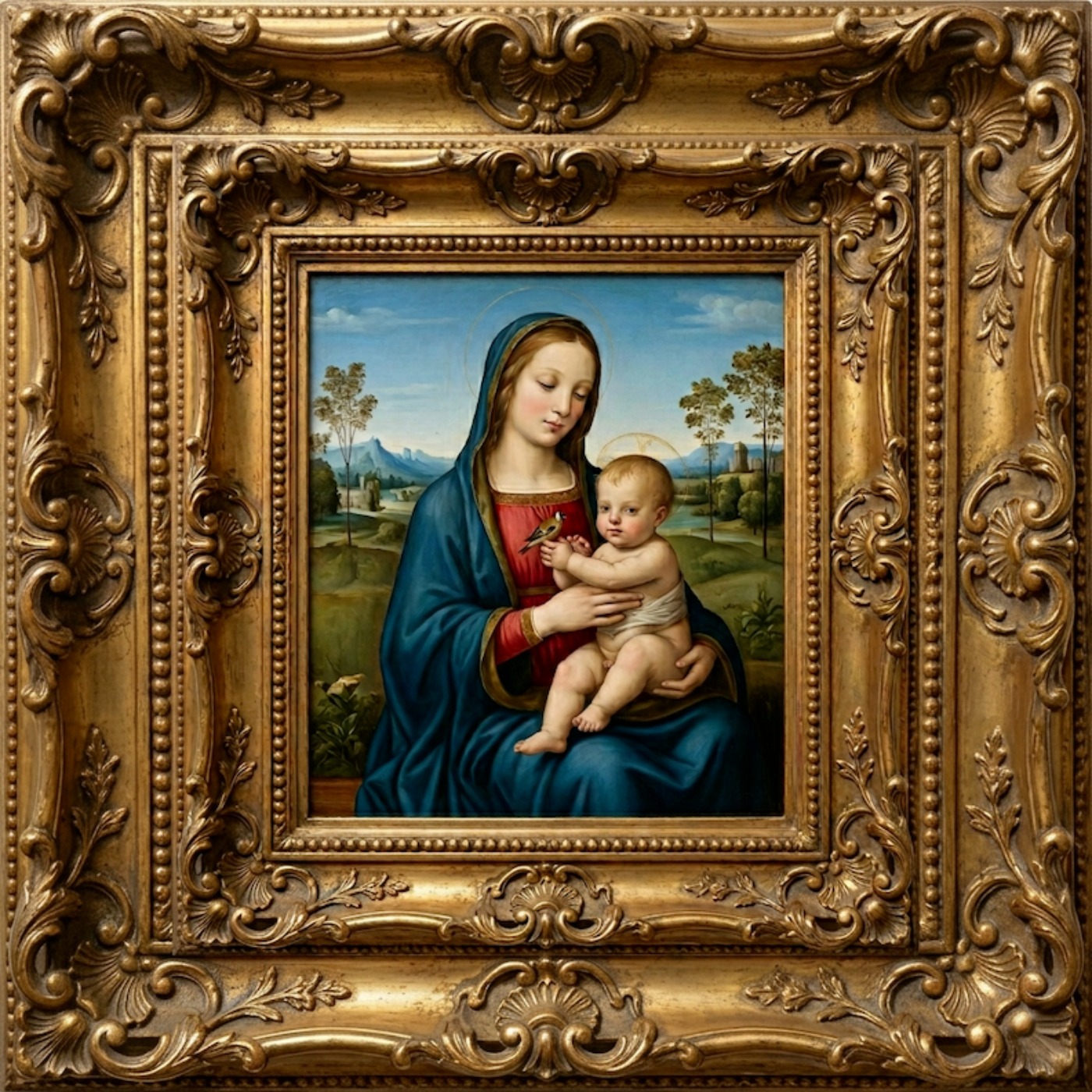
The transcription explores the concept of the "ghost child," a result of psychological famine in which a child's emotional and psychological needs are neglected despite physical care being provided. This environment creates a void where the child feels invisible and weightless, lacking maternal mirroring. To cope, the child internalizes the emptiness as a personal flaw, forming a "false verdict" that they are inherently defective, which preserves the attachment to the mother at the cost of self-worth.
In contrast, the ideal maternal archetype acts as a container that holds the child's reality without consuming it, fostering individuation through welcome friction and providing a protective shield against external dysfunction. Real mothers, however, are human and will inevitably fail; what matters is their ability to repair ruptures by validating the child's experience and taking responsibility, which strengthens the relationship.
The discussion aims to dismantle the false verdict by reframing the mother's emotional absence as a failure of the care system, not a reflection of the child's worth. Healing comes from recognizing this truth, allowing individuals to move beyond shame and reclaim their sovereignty, understanding that their sense of unlovability stemmed from growing up in an emotionally oxygen-deprived environment.
If this podcast is something up in your psyche, moods is where you take it next. Moves is the private pre-social ritual technology that my team and I built for your inner world. It's not therapy or social media, but a place to work through what's coming up within you and then get back into your real life. Start your seven day free trial today at moods.world and use the code Founders F-O-U-N-D-R-S at checkout to lock in early pricing. That's moods.world code Founders. To truly understand the sensation of the void, you first need to distinguish between physical maintenance and psychological presence. In a household defined by a psychological famine, the logistics of survival are very meticulously managed. The floors are clean. There's always enough food to eat. And to an outside observer, the scene represents the standard definition of a functioning family. But the atmospheric condition within the walls of that very same home is one of absolute emotional zero. It's like a vacuum. And in this environment, the child's inner world, with all of their fears and things that they're proud of, emotional highs and lows and their emerging personality, seems to exist in a state of total weightlessness. And by that I mean there's really no psychological, spiritual or emotional gravity in that environment, because there is no maternal witness to pull the child's reality back into the earth. You are physically fed, but you're starving for a very specific flavor of attention that never comes. This isn't the loud visible trauma of physical or sexual abuse, but the heart to describe suffocating trauma of non-existence. You move through your own home as a ghost among the living. You learn very early that your role is to occupy this space without disturbing the silence. And you become an expert at reading the emotional weather of any room you're in. This vacuum creates a profound and very uncanny and eerie stillness, because the mother is emotionally absent. There is no mirror. When you look at her for a reflection of who you are, you see only the reflective polished surface of her own logistical preoccupations. The sensation is one of falling through infinite space while sitting at your own dinner table, like a ghost child. The concept of the ghost child is the result of this special type of psychological famine. Because in this system, your existence is recognized only in so far as it requires logistical maintenance. You are simply a body to be clothed, a mouth to be fed, and a schedule to be managed. You are a physical entity moving through a three-dimensional house, but you occupy zero space in the mother's internal landscape. The mother's internal eye, you are not a sovereign being with your own private inner world. You're an object in the background of her own life. She looks at you to ensure that the buttons on your coat are fastened, but she never really looks into you. To see who exactly it is that's wearing that coat. This creates a split reality for the child. Sure, you're there in the sense that you occupy a chair at the table, but the you that thinks and feels is entirely unmerered. Because the maternal eye provides the primary illumination for a child's emerging self, being invisible to that eye feels like existing in a permanent eclipse. You learn to navigate the world with a profound sense of weightlessness, like you're an actor performing on a stage where the spotlight is just fixed on empty space. And so the ghost child's primary struggle is the lack of psychological and spiritual and emotional density. Since no one is holding the truth of your own existence in their mind, you start to doubt the validity of your own. You're a physical fact in a family system that treats you like a mental absence. To a small developing nervous system, this invisibility is so much deeper than just what it sounds like as I'm describing it as this philosophical problem. To that child's nervous system, this feels like a biological emergency. Human infants are the most vulnerable organisms on the planet, and our survival is hard coded into the attachment bond. The gaze of the mother is the primary regulatory organ for the nervous system of a child. So when that gaze is empty and there is no mirroring there, the child's biology interprets this as a death sentence. In the wild, a child who isn't seen is one who isn't fed or protected. So the lack of emotional reflection triggers a permanent state of high alert. Your amygdala, your brain's alarm system is just perpetually firing. Because you're not being held in the mother's inner eye, your nervous system perceives itself as failing. This is a state of physiological red alert that never ever resets itself. It's a biological terror, and it makes up the foundation of what's known as hypervigilance. You become a master at scanning the environment for the slightest shift in your mother's face or the tone of your father's voice, because your very biology knows that your survival depends on maintaining a connection that's fundamentally missing. You're living in a body that's constantly preparing for an abandonment that's already happened. So for you, the void is a chronically disregulated nervous system trying to survive in psychological famine. The survival logic of a child is a masterpiece of engineering, and it's all born from absolute necessity. For the child, the mother is the environment itself. She is the sun, the air, the moon, and the source of everything. If the child admitted that its environment was somehow indifferent to it or incapable of the kind of love that it needed to thrive, the child would face a terror so absolute that it would result in total psychological destruction. And so to prevent this annihilation, the child performs a desperate, subconscious swap. They choose to live.
manageable guilt and shame over unmanageable abandonment. The child's mind reasons like this. If my mother is flawed, I'm truly alone and I will die. But if my mother is perfect and I am the one who is flawed, then there's still hope. If I can just become better, quieter, less dramatic, more perfect or more invisible, maybe she'll finally see me. And so by making the failure their own, the child retains a small sense of agency. And so they trade their self-worth for the illusion of safety. This is the birth of the false verdict. The child looks into the mother's eyes and translates the emptiness she finds there into personal indictment. They don't see a woman with her own limited capacities and wounds. That makes it difficult for her to show up in the way that the child needs. The child sees a reflection of their own repulsiveness. And the child turns this into a devastating translation that becomes the foundation of their entire identity. The mother is God. God doesn't make mistakes. Therefore, if she doesn't look at me, there must be nothing there worth seeing. My authentic self is avoid. And I'm inherently defective. This identity becomes a verdict that the child uses throughout its life as a biological shield. It allows the child to keep loving the mother at the cost of hating themselves. They become a good child to a perfect mother while secretly carrying the sludge of shame behind the belief that they committed a crime that they never committed. The intent behind this episode is the total dismantling of this exact kind of survival logic. I'm not going to be engaging you in any soft and therapeutic inner child dialogue. You are here so that I can perform an autopsy of the system that demanded that you erase yourself. You have probably lived for decades at this point, under the false verdict. This psychological conviction that you were the defect in a perfect machine. And so today we're going to reverse that judgment. By the end of our time together, you won't just feel better. It's my hope that you will start to observe the exact mechanical breakdown of the maternal archetype as it functioned in your home. You'll see that the vacuum was never a reflection of your worth. But an objective failure of the machinery that was meant to sustain you. And so together we'll be stripping the divine mask from the mother. And when you see the mechanical reality of the shadow system, the shame of the false verdict loses its power. It can't survive the light of truth. You'll walk away with absolute immunity to the idea that you were ever unlovable. You are simply a sovereign soul trying to breathe in a room devoid of oxygen. Where to begin? I guess a good of place as any is to start by looking at how the machine was supposed to actually work. To understand the true mother, we have to look beyond the biological personality of a woman, a human being there in her meat suit. And instead into the highest esoteric frequency of the great mother archetype. And at this level of consciousness as high as you possibly can go, the mother is the ultimate vessel. In a cult and death psychological frameworks, the mother is the matrix, this womb space that provides the primary container of life. The highest expression of this container is a paradox though. She holds the child's reality with absolute firmness, but she never consumes it. So she's kind of like the glass that protects the flame from the wind, right? And a mother operates through this kind of archetypal ends. Her psychological field acts as a chalice, the holy grail, if you will. She provides the structure, right? The walls of the cup so that the child's liquid, its emerging soul, is contained safely. And without this holding, the child feels like they're spilling out into an infinite and incredibly terrifying void. But there's a distinction here. And that's that the true mother, the archetypal mother, doesn't use the child to fill her own emptiness. She doesn't drink from the child's energy. She is able to maintain this existence as a separate and grounded entity of her own. She holds all of your tantrums and your confusion and your fears and even your joy as objective facts of your life, not as reflections of merely her success or her failure. When she looks at you, she isn't looking at some kind of little mini-me or an extension of her ego or her own second chance at her own life. She sees a sovereign subject. In the eyes of the true mother, the child is a divine stranger, this soul that's arrived through her, but not, never from her. She recognizes that you have your own destiny in your own inner world and inner compass and your own private conversation with the universe that has nothing to do with her. This is the frequency of the receptive earth. She provides the ground that you can walk on, but she doesn't dictate the path that you take. She grants you the ultimate dignity of being a separate human being. And when you are seen from this kind of a lens, you never have to perform or be good to be visible or act out. Your existence is just a holy fact and her only job is to witness that fact with this beautiful and unconditional reverence. And so in this light, the gaze of the mother is the sun that shines on you simply because you're there. Because she views you as a divine subject instead of this managed object, the true mother doesn't merely just tolerate your rebellion when it inevitably comes because every child rebels from the mother. The true mother welcomes your rebellion as the holy fire of your becoming. And in depth psychology, this might be called the welcome of friction. For a child to become a sovereign adult, they first need to push against the primary container that they're held in. They need to test the walls of the cradle to see if they hold against their kicks and screams and cries or if they crumble. And it's this friction that's the biological and spiritual engine of what Carl Jung called the individuation process. It's the moment that the "we" of infancy starts to crack into the eye of personhood. When a child says no, the shadow mother hears a threat to her control. Or a rejection of her care. But the true mother hears the first heartbeat of an individuating soul. She understands that your "know" is the most important word in your vocabulary. It's the fence that you are building around your own interiority. She doesn't experience your resistance as an attack on her. She just sees it as the evidence of life. She looks at your defiance and anger and your stubborn insistence on getting your own way every single time. And she thinks, "Ah, it's working. You're becoming someone that I don't own." In the esoteric tradition, the Holy Spirit is in the middle of the world.
"Groath requires heat. It's impossible to forge steel without a furnace, and in the same way you can't forge a self without the heat of conflict. The true mother provides the steady, unyielding surface for you to strike against, and she stays grounded and present while you rage against her, ensuring that your fire has a safe place to burn. She demands your separation. She knows that if she keeps you merged entirely with her, she's committing against you a very slow, psychological and spiritual murder. And so she celebrates the moment that you stop needing her, even if it feels painful. She expects you to challenge her and outgrow her and eventually to leave her. Instead of being like a tether, her love is a launch pad. She sees your "bad behavior" as the sound of your spirit breaking the sound barrier as you move toward your own independent destiny. While the great mother exists as a perfect esoteric frequency, the human woman inhabiting that role is a biological entity bound by the laws of matter and the limitations of the human flesh. She's a nervous system, not a hollowed out saint, and so to understand the true mother, we have to address reality. There's a very dangerous cultural myth of the perfect mother who never raises our voice or feels resentment. This isn't the true mother. That's a plastic mask. The true mother is a creature of blood and bone. And just like all of us, she's subject to the crushing weight of exhaustion, illness, and the jagged edges of her own, often traumatized history. And so she will inevitably fail you. She'll misread your cues. And maybe sometimes she'll fall apart when she is giving way to her own fatigue and burnout. And she'll most certainly lose her temper with you. Probably a lot. In the depth psychological tradition, it's recognized that absolute perfection in a mother is actually a form of psychological trauma in and of itself because of a mother never fails, then the child never learns to survive the real world. Maybe good enough mother must fail so that the child can start to build their own muscles of their own in her world. But there's a massive difference between a shadow failure and a human error. When the true mother loses her footing and snaps at her child in a moment of sensory overload or retreats in a moment of deep need for temporary silence, she creates a small fracture in the container. And so to the child, this feels like a sudden earthquake to them, right? The sky is cracked. The primary source of safety is volatile, which feels like an emergency to them. But the defining characteristic of the true mother, the actual objective proof of her love, isn't that she creates this environment where no fracture ever happens because that environment doesn't exist. It's how she executes repair of those inevitable cracks. The shadow mother fails and then she hides away or blames the child for her outburst or pretends it never happened, forcing the child to gaslight their own nervous system to maintain the peace. But the true mother returns. Once her own nervous system is regulated, she walks back into the room, looks her child in the eye and performs a feat of spiritual alchemy. She takes total ownership of the break. And in these moments, she says, "I lost my way, I was tired, I was wrong to speak to you like that, it wasn't your fault, it's not your fault I'm angry, I was the one who should have managed my own emotions better, I'm so sorry." And it's these kinds of acts of repair that are the most powerful, magic a human being can perform. Because in that moment, the true mother does three things that literally save her child's soul. She validates the child's reality. She confirms that that earthquake that the child was feeling was real. The child isn't crazy and their perception of the world is accurate. She also relieves the child of the burden. Because by owning the error for herself, she prevents the child from internalizing that false verdict we spoke about in the beginning. She catches the shame for the child and acts as a barrier for it before it can take root in her child's heart and she keeps it for herself. And so the net effect of these two things is that she models sovereignty. She shows the child that an adult can be flawed and can fail but still be worthy of love and capable of restoring connection and enacting repair. And so the gold, the alchemical gold in the cracks of the repaired relationship, it makes the vessel even stronger than it was before. The true mother doesn't offer you a life without pain because then she'd be lying to you that doesn't exist. But what she offers you is something so much more beautiful and powerful. And that's a life where the pain, the inevitable pain, is always followed by the truth. She proves that even when the sky is falling down on you, she has the strength to hold it up and mend it. The final and most primal layer of the maternal archetype is the protective shield. We already discussed that she is this vessel of warmth and a mirror of reflection, but she's also the absolute perimeter of the child's universe. And the perimeter is where the protection happens. And so in her highest frequency, the true maternal archetype is this psychological and biological, protective force field against the encroaching chaos of the external world. And so to be a true mother is really to be a guardian of the threshold for your child. Every family system carries its own unique brand of dysfunction. One types of inherited traumas, an unresolved grief, and all those projections of the extended lineage. But in a healthy system, the mother is the filter. She doesn't allow the raw, unprocessed, toxic sludge of the family tree to pour directly into the psyche of her developing child. She stands at that door and says, "No, it stops here." She absorbs the shock of the criticism of a grandmother, or maybe the emotional volatility of a father, or even just the indifference and cruelty of the world. And she processes that energy with her own mature psychological system so the child receives only what they're equipped to handle. And so she protects the child's innocence by ensuring that the world doesn't arrive in a dose that causes the child's entire system to short circuit. It's not that she's completely lying about the world. It's just a protective mechanism for the wire instead of the child being that live wire exposed to the elements. This shield is most critical when it stands against the shadow masculine, the archetype of the violent enforcer or the unpredictable tyrant or the cold, detached critic. And whether this energy manifests as a literal person in the household, maybe in the form of the child's father or even a cultural pressure from the outside. The true mother recognizes it as a threat to her child. So she doesn't sacrifice the child to appease the tyrant. She doesn't tell the child to just be quiet so he doesn't get mad or force the child to manage the emotions of adults. She places her own psyche in the gap. She creates a sanctuary where the child is allowed to be soft and curious and vulnerable because she's the one holding the sword at the perimeter. This is the fierce mother energy of the goddess Sechmeth. This realization that love is a commitment to safety, not just a soft and fluffy feeling. When you grow up behind this kind of shield, you develop a nervous system that knows peace because you weren't having to spend all of your life for scanning the perimeter for danger because you knew that the guardian was on the wall protecting you. It's the physical and spiritual wall that says within these boundaries, you're safe to become yourself and the chaos of the world ends at my skin. This is the baseline.
This is what you were owed by the universe. What I just described to you is the blueprint of the true maternal archetype. And so now we have to do something even harder. And that is take a serious look at what happens when that maternal shield is inverted. And that requires taking a hard, difficult look at the shadow mother. And so my lovely listener, we've now established the baseline of the true mother. And now you have the exact blueprint of what your nervous system was owed. In the second half of this episode, we'll expose the inverted maternal dynamic. I'll go into the exact workings of the shadow mother and the process of exactly how you internalized her void and the general origin of that broken system. And we'll end with the alchemical resolution required to lift that false verdict from your life forever. And so to cross into that second half, you'll need to join the Patreon. I am a fully independent creator, I'm a mother myself, and this body of work provides my entire livelihood. The financial reality of this podcast relies exclusively on the commercial ads running on the public feed and the direct subscription of the members of my Patreon community. By subscribing at patreon.com/backfromtheborderline, you'll instantly unlock the rest of this episode and you'll gain immediate access to hundreds of hours of ad-free bonus content. And this includes my weekly archetypal and tarot forecasts that are released every Saturday, as well as a few collections of meditations and guided visualizations designed for this exact depth work that we have done here and the first part of this episode. So if you choose to remain on the public feed today, you also have another path available. You can open your podcast player and search back from the borderline childhood emotional neglect. And there you'll find a multi-episode, multi-hour series expanding directly on much of the territory of the psychological famine that we discussed today. And so the choice is yours. For those ready to complete this episode today, and dive into the autopsy and then step into the resolution of this programming, I'll see you on the other side in Patreon. [Music] If this episode brought something up within you, don't just leave it here. Take it into moods. Start your seven-day free trial at moods.world and use code founders at checkout to lock in early pricing. That's code founders at moods.world.
Podcast Summary
Key Points:
The "ghost child" phenomenon arises from psychological famine, where a child's physical needs are met but emotional presence is absent, leading to feelings of invisibility and weightlessness.
Children internalize this absence as a personal flaw, creating a "false verdict" that they are defective, to maintain the illusion of a safe attachment to an emotionally unavailable mother.
The ideal maternal archetype provides containment, mirroring, and protection, allowing the child to individuate safely, while real human mothers inevitably fail but can repair ruptures through validation and accountability.
A mother's role includes acting as a protective shield against external chaos and dysfunction, filtering trauma to preserve the child's developing psyche.
Healing involves dismantling the false verdict by recognizing the mother's limitations as systemic failures, not reflections of the child's worth, ultimately reclaiming sovereignty and self-worth.
Summary:
The transcription explores the concept of the "ghost child," a result of psychological famine in which a child's emotional and psychological needs are neglected despite physical care being provided. This environment creates a void where the child feels invisible and weightless, lacking maternal mirroring. To cope, the child internalizes the emptiness as a personal flaw, forming a "false verdict" that they are inherently defective, which preserves the attachment to the mother at the cost of self-worth.
In contrast, the ideal maternal archetype acts as a container that holds the child's reality without consuming it, fostering individuation through welcome friction and providing a protective shield against external dysfunction. Real mothers, however, are human and will inevitably fail; what matters is their ability to repair ruptures by validating the child's experience and taking responsibility, which strengthens the relationship.
The discussion aims to dismantle the false verdict by reframing the mother's emotional absence as a failure of the care system, not a reflection of the child's worth. Healing comes from recognizing this truth, allowing individuals to move beyond shame and reclaim their sovereignty, understanding that their sense of unlovability stemmed from growing up in an emotionally oxygen-deprived environment.
FAQs
The 'ghost child' refers to a child who grows up in a state of psychological famine, where their physical needs are met but they lack emotional recognition or mirroring from a caregiver, leading to feelings of invisibility and weightlessness in their own identity.
A child's nervous system interprets the lack of emotional reflection as a biological emergency, triggering hypervigilance and a perpetual state of high alert, as if facing abandonment, which can lead to chronic dysregulation.
The 'false verdict' is a child's subconscious belief that they are inherently defective or unworthy, formed when they internalize a caregiver's emotional absence as their own fault to maintain a sense of agency and avoid the terror of abandonment.
A 'true mother' acts as a secure container for a child's development, witnessing them as a sovereign being with unconditional reverence, supporting their individuation without consuming their energy or using them to fill her own emptiness.
A 'true mother' acknowledges her mistakes, takes ownership, and repairs the relationship by validating the child's reality and relieving them of shame, modeling sovereignty and strengthening trust through these acts of repair.
The mother acts as a filter and guardian, absorbing and processing external chaos or family dysfunction to protect the child's psyche, ensuring they only encounter what they can handle and creating a sanctuary for safety and vulnerability.
Chat with AI
Loading...
Pro features
Go deeper with this episode
Unlock creator-grade tools that turn any transcript into show notes and subtitle files.
 PodcastTranscript AI