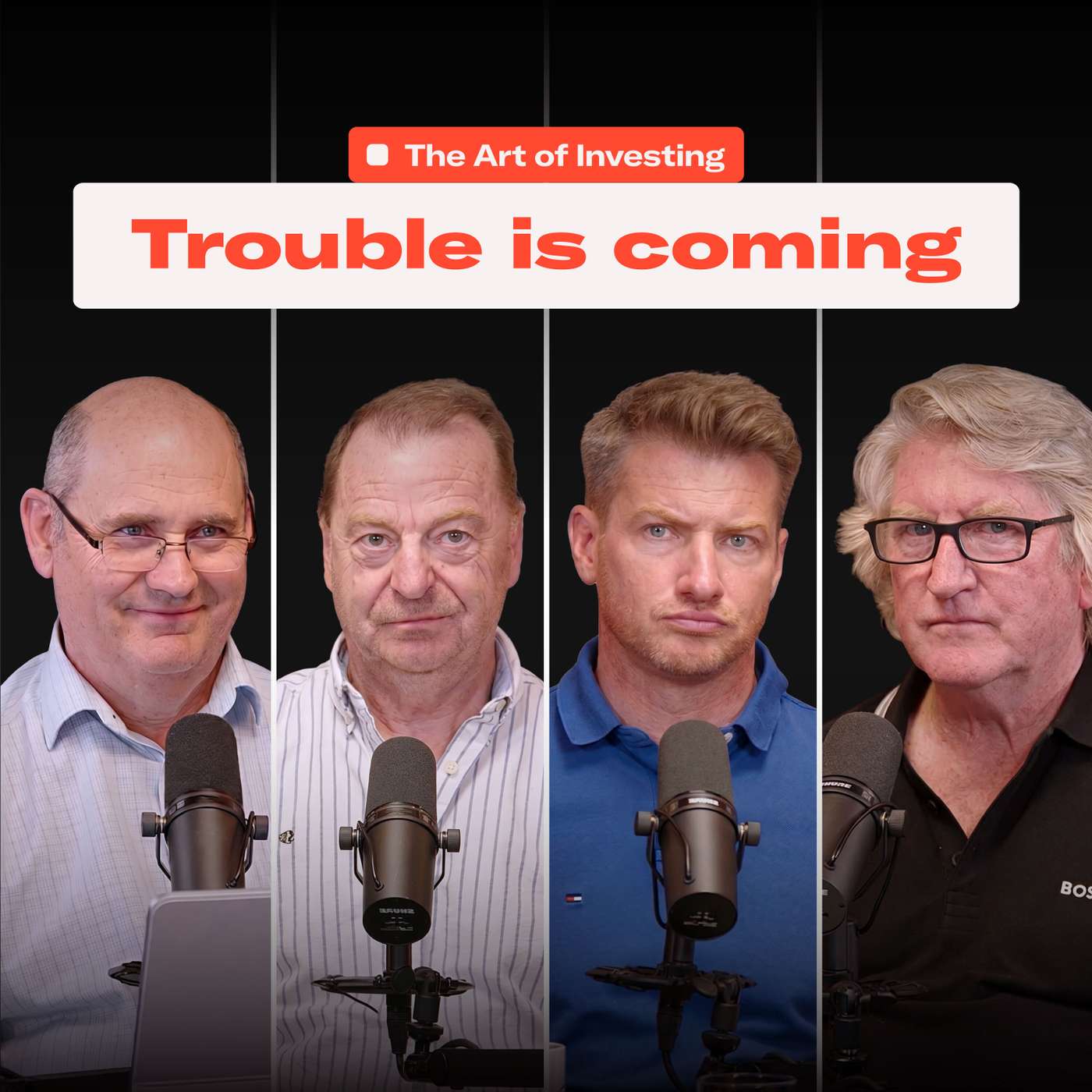
Stocks & Bond Yields at Record Highs...Something Must Break
from The Art of Investing
1h 8m 29s
The bond market has experienced a sharp surge over the past week, driven by strong economic data—especially the purchasing managers' index (PMI) in the US, which exceeded expectations—leading to higher inflation expectations and a significant rise in bond yields. This has prompted market expectations of four to five interest rate hikes in both the US and UK over the next year. Central bank actions, such as the end of quantitative tightening in the UK and hawkish statements from the Fed, have amplified these expectations. However, critics argue that the rise in yields is less about inflation and more about fiscal dominance, where governments pressure central banks to keep rates low to manage debt costs. This demand for capital, particularly from high-growth AI firms like SoftBank, which is borrowing at 9–10% yields, underscores a shift in capital allocation. While the Nasdaq has outperformed due to AI-driven tech strength, the Russell and smaller equities appear vulnerable to rising rates. Market participants note that bond yields may be nearing a peak, especially as potential AI-driven productivity gains could reduce future inflation. Despite this, equities, particularly in growth sectors, remain resilient due to their growth fundamentals. A key concern is market rotation: tech stocks have surged, while traditional and smaller-cap stocks have underperformed, signaling a structural shift. The episode emphasizes that while the bond market is reacting to strong growth and fiscal pressures, equities—especially in AI and tech—can still thrive in a high-rate environment, provided the growth narrative holds. The discussion concludes with a cautious call for patience in portfolio adjustments, as market dynamics remain fluid and influenced by both macroeconomic and technological trends.
Cracking show coming up, we've got Stu Thompson, our resident strategist,
questioning what is going to be the straw that breaks the camel's back in the bond market.
And then Chris C.J. Fillingham, he's sitting on the fence. Will we? Won't we see a decision
on the portfolio from the chairman? And what about this man? What is it going to take to see him
reduce some exposure to equities? Is today the day with the bond market explosion in the last 24
hours? Yes, we're back for another episode of your favorite podcast, The Art of Investing brought
to you by IG, the Global Investment Platform. Joining me as always, we've got Mark Spite Holden,
Irish, Chris C.J. Fillingham. Hey, Irish. And our resident strategist is back. Yes, it's Stu
Thompson. Hi, Irish. So let's take a quick look at the model portfolio performance, then a reminder,
the three of us run this to put our money where our mouths are each week. And it's looking goods
up 2.2% on the week. That leaves us up 25.5% since inception and up 13% on the year.
Slightly flattered because we're recording this on the Thursday. We snap it on a Wednesday evening,
but the bond market erupted yesterday, which is going to be our main discussion on the show.
The macro implications of what is going on right now with interest rates, three big
decisions last week. We're going to cover all of that and what are the implications for your
portfolio at home. So without further ado, let's get into the Spice Market Update.
Right. Well, thanks, Rich. Just a reminder, it's been nine days since we last updated you. So
there's a lot to pack in. I'll try and run through it very quickly. The main events, really,
that we've had as Rich mentioned, three of the major central banks have had their meetings and
their press conferences and their interest rate decisions. That's now behind us. They all
prices had a big fall down about 8%, although overnight, it's had a bit of a rally. And that's
because Trump and the Iranian President have had a bit of a conversation. Apparently, that was
very productive in his words. But then it's straight after that Iran came out and sort of said,
well, we're not so sure about that. But that's why the oil price went up again overnight. But
it's still nevertheless hanging around just below $100 and the last time we updated you,
there's $100 at Brent days. So they're all priced down about 8%. There's been some all-time highs,
believe it or not. I haven't been able to report those for a while. Nasdaq, one hundred,
takes out his all-time high. Took a while coming from June that took the last time. So yeah,
there's a decent amount. It was by about three points and then collapsed. Yeah, but every little
catch, getting away with a good story. And part of that Nasdaq rally was led by the magnificent
seven. But also copper also took outside. And we've talked about that now. The last month has been
sort of up a lot and down a lot and up and down. But it's taking almost one step backwards and
two step forwards. So that's more positive. And you'll see that's the major contributor to our
portfolio later. In the background, the chip sector's been leading this sort of market's higher
particularly Nasdaq and the magnificent seven. That was led by Nvidia. Their shares are up about
7% over the week. Very near their all-time high, not quite there. And they said they were basically
going to sell twice as many chips next year as they are this year. And that was a small positive
that wasn't expected. So Intel shares went up 23%. Micron shares went up 17%. Micron have got
results this week on the 30th of September. So we'll see what they've got to say. Let's hope they
keep the positive momentum. Apple nearly hit an all-time high as well. Basically, if you try and buy
the new iPhone 18 in the UK, they're pretty much sold out. But the biggest news really was probably
from Meta, who obviously owned Facebook. They launched a new app called Muse, which is basically
like an AI concierge, an agent in your pocket. It goes around price checking for you, things like
insurance, your banking rates, savings rates, etc. And actually that really hurt the banks and
insurance companies. And the travel companies as well because obviously competing for lower costs
are hotels and a bit like you would do on booking.com, whatever happens to be. But at the end of the day,
so over the week, the technology sector was the best all around the world, up about 7%. The worst
was the oil sector down about 7%. But the financials hit by that new app from Meta was down 4%.
And also didn't help that Goldman Sachs also had a profit warning saying that their profits in
their bond trading division were disappointing. And we'll talk about that now. Maybe they're a bit too
bullied funny. Just to warn anybody that tries to go straight onto their app store and download
the Muse app, I did exactly that on Monday. One of the biggest ever launches and one and a half
million Americans downloaded it on Monday. And that's had the stock up 11%. So on I go, download it,
search Muse and I get Meta AI. So yeah, that must be it. And I spent a knower trying to get this
thing to do all my jobs and sort my emails. And it wouldn't do it. And this is ridiculous.
You've got to short this stock. It was the wrong app. So Muse is not available in the UK yet.
So you've just given all your bank details to a firm in South Korea. Sorry, North Korea.
But now it's seen things as we talk. But never mind. It's all great this stuff. It's all good.
It's just the Meta virus. It's the Meta virus. Yeah, I think the reason it's called people's
attention because actually the downloads I think in the US are the three million by the end of the
first week or so. And that's that's nearly 50% higher than Chatchee BT got when it first downloaded.
So, you know, the signs are good. Still the AI people want to get involved. And that's very positive.
Can I interrupt just for a second? Because I asked some spice about this today. Now I understand
that I'm a dinosaur. I'm a bit old. I don't want to give people my bank details, my passwords
to get into my accounts. Does everybody feel happy just to do that? Am I just unusual?
No, it is incredible. So I have set up Chatchee BT linked to my email and the productivity
of everything, all the jobs that are sitting in your emails there that are just mundane.
Give me an example. What you don't do in general in general is give us a bit of detail.
So you get an email through and you have to fill in a form right of a checklist of everything.
Your Chatchee BT knows all that details. It can go on there and it can click onto a website.
It can fill everything in. Give you a final check and then you just hit go.
And then I had to send all my VAT receipts onto an app. So then it goes to the account and the
account you check all that. I don't even have to do that. It checks your whole email inbox for
business receipts, loads them onto the app and then writes an email to the accountant
telling you that it's all up to date. But you don't need to give any of your passwords or
anything like that. I suppose if you're going to use it to pay bills like fine insurance and
sort it out for me, you will have to give them those details. So I'm just a bit nervous about
it. And that is an interesting Amazon have actually banned Muse. So you cannot get your
agentech AI to go onto Amazon and buy stuff for you because they're blocked.
Okay. That's interesting. Thanks Rich. I feel educated as this show always does to me.
I feel I understand a lot. Well, one of the other things in talking of education that Trump is
desperately obviously trying to get the oil price down there. It's all about education.
Yeah, it's exactly. No, no, no, no, no. Sorry, Voldemort is basically trying to obviously get
the oil price down and therefore the petrol and the diesel price down in the US. But the diesel price
has pushed on up again this week, despite the fact that the oil price itself, it itself fell.
So it's now at a record all time high of $6.50 a gallon in the US. But just to make us feel a bit
worse, that's still nearly 50% cheaper than it is in the UK. Nevertheless, he's failing in that
set. And that's because the refiner's are not being able to get the product in time and so they're
running behind the demand and that's pushing the price up. The only other thing I want to talk
about really this week of major importance in this sort of broad asset sense is that the US dollars
had another very, very strong rate. Yeah. And we'll talk about that that's partly due to the
Federal Reserve and some very strong economic data that came out of the US. But there's an index
that sort of tracks the big dollar sort of foreign exchange crosses as they're called.
One's called the DXY, the dollar index. And that was at 1.3% this week. Now that was set up in 1973
after the Breton Woods, the end of the gold standard and the fixed exchange rate that ended in 1973.
And so as a result, the euro is about 58% of that index. So it's a huge sort of driver to what
happens when we say the dollars move 1.3%. A lot depends on what's happened to the euro, 58% of
that index is the euro. 14% is the Japanese yen. And guess what? The pound sterling is 12%.
It's only different to if you were waiting on gross domestic product around the world,
where much smaller than that. And then in Asia, they have this thing called the Asia dollar index.
And that's much more moderately in the sense that it actually goes with the weightings of the
economies in that area. So the Asian dollar index basically is dominated by the Chinese
Renimbi, the Chinese currency. That's about 48% of that index. The Korean one is 12%
and Singaporean dollar is about 12% as well. Indian repeal about 10. But both of those indices
have had a big move in the last week. And that's the, in the background, people have sort of
bearish of trust.
and expecting the dollar to come under pressure.
And actually, the opposite is true at the moment.
And the US seems to be tracking, you know,
sort of pulling in quite a lot of capital.
No doubt something we'll talk about later on.
The only other thing I wanted to talk about,
which we've had a bit of a quiet spell,
but there's been some big money raising to put into AI.
This time from Softbank in Japan.
Now, a few weeks ago, we were talking about the fact
that they wanted to raise about a trillion Japanese yen,
which is about $6.3 billion.
And they raised that money with,
through retail investors in Japan,
in local Japanese currency,
and they paid an interest on that of 4.75%.
And that was, you know, that's considered quite sensible.
And that's what we call investment grades.
It's quite high quality.
Well, this week, they've announced
they're raising $10 billion and $1 billion euros.
But this time issuing it in dollars and in euros.
And the paying between 9% and 10% interest on that debt,
which is a big, big difference.
It's being rated by the rating agencies
who, you know, tell you with the sort of quality of this debt,
where it stands in the pecking order,
if the company goes bust again, paid back.
And it's coming into what you call a high yield.
So it's not investment grade.
It's the one below that.
Junk, junk, almost junk, or some people say.
If it's not investment grade, it's junk.
Okay.
But anyway, basically, they're raising lots of money
because they're investing in like part of the reason
they want to invest more in open AI,
which is obviously on chat, UBT.
They've got a 13% stake in that business.
And they want to keep up with the funding rounds
they're going on.
That's why it's junk.
Yeah.
I think it's a good thing to just remember for our discussion later.
But they're happy to pay returns of 9% to 10%,
which means they're expecting returns on the investments
a lot, lot higher than that to make it worthwhile.
And you wonder if that's the case, how many other businesses
out there are confident enough to borrow at 9% and 10%
because they think that they're returned to higher.
And that's going to be a classic example
of the cost of capital, the competition for capital,
which Stu will talk about a bit later on.
But that's really interesting stuff.
And Stu, just remind us what this term,
the competition of capital, where did that come from?
What does it mean?
Competition for capital is the idea that the higher yields go,
they start to take capital, sucking capital away
from other markets.
Because government bonds, they're the safest instruments.
So if you can get a good return on your safest instrument,
why take the risk?
And that tends to take money away from the riskier markets.
They tend to weaken up.
And that tends to balance out the competition for capital.
OK, so the final thing I wanted to mention in the market
update before we go into talk about the other stuff
is that we've had some very strong economic data
out the US again.
And that had a big bearing on some of the bond yields
that we're about to talk about.
So they have what's called the PMIs.
They're purchasing managers index.
They were expected to be at about 56, a number of 56.
Anything above 50 means that things are positive and expanding.
Anything below 50 means things are contracting
and maybe getting tougher.
So we expect it, if the economy is growing,
for numbers to be above 50.
Well, the composite between they have services, PMIs,
and they have manufacturing PMIs, both of which are very strong.
So the manufacturing PMI was 57.
It was expected to be 53.7.
The service is PMI was even stronger, 58.7,
expected to be 56 and a half.
So overall, it came out at about 58.4 against an expectation
of about 56.
And that's the highest since 2021.
So for five, that's the highest of five years,
showing the US economy is beginning to accelerate.
Now, within that, they have a new orders price input,
input prices index as well.
And that came in at 66.4 against last time, it's 59.9.
And that is what spoke the markets yesterday,
along with some of the central banks.
Because as soon as that number came out,
people drove down into it and bond yields,
started rising, bond prices started falling.
And equity markets came off pretty heavily
on the back of that as well.
So the economy's strong, but prices for new orders
were especially higher.
Very strong, much higher than expected.
And back in the old days, when I was a trader,
the series, which was the national association
of purchasing managers, we used to call it napalm.
Because it affected markets could be a bit like that.
And yesterday, that's exactly what happened
and it burned up those bond yields.
Your capital is at risk.
The value of your shares, ETFs and ETCs,
can fall as well as rise, which could mean getting back
less than you originally put in.
This content is for information purposes only
and is not investment advice.
Pass performance is not an indication of future results.
Well, let's look how it was looking,
because it's the prettiest picture that you might see for a while.
And this was when the squeeze was happening.
And you can see the effect on the week, up 2.2%,
but copper as spice mentioned, a really strong week,
up over 8%, the NASDAQ 100, up 6.4%,
and then emerging markets, up 4.3,
and the NICI, up 3.8, just really risk on.
So was that because of a really positive message coming
from the Fed, or was that everybody was hedged, maybe even short,
and risk had been taken down, going into last week?
But I think we talked before about the way
that a high oil price had been sucking in capital
from governments and central banks
who were having to pay a higher price for oil,
so it couldn't invest in other commodities.
But as I mentioned, the oil prices down about 8%
over the period we're talking about.
And that meant that there was some relief for those central banks
to go and buy some other commodities.
And copper, as we know, is an integral part of the AI boom.
And that's one of the main reasons it's went up, I'm sure.
But also the fact that we had such positive news
about from the AI market with the meta and Nvidia Intel, et cetera.
And so I think the combination of a lower oil price
and stronger AI definitely helped copper this week.
And that strong AI definitely helped.
NASDAQ, who you talked about, and emerging markets remember,
biggest importers of oil probably as a group,
then anywhere else, apart from the UK and Europe.
And with that oil price down, that gave them some relief as well.
Just to give everybody an indication of why
we're focused on this muse from meta.
Meta have got 3 billion users worldwide.
So if they suddenly come up with a robot that you can use
and make your life easier, they've already
got that user base to sell it to.
So it's a huge potential if they get it right.
And of course, the early signs where they got it right.
The reason that moved ARM, AMD, and Intel so much
is that when you're talking about agente AI, that's not GPUs.
Agente AI is everything that we've got in front of us.
And your robot will be on your CPU in front of you.
So that's why those chips just took off.
I mean, that's AMD new all-time highs this week.
It also means that memory will be in those CPUs as well.
So there's a great need for memory, so micro on Sandisk moved.
And that's why you saw the NASDAQ up so strong on the week.
So if muse continues to develop and get this global uptake
and people download the right app, that is a new lease
of life that we've seen.
On the negative side, CJ, there wasn't really--
There's nothing really there.
I think we've got Russell down at the bottom.
But I think we said last week, it seems to be last week.
It was sort of nine days ago.
People were expecting most of these rate moves.
They got what they were expecting.
I don't need to surprise that the market said, well, that's good.
But remember, a lot of what we're seeing here
is before we see the effects of those strong numbers
that Mark was talking about.
And that is what we really want to talk about next.
Yeah.
Now, going back to last week, Kiran insinuated.
We might see an increase from the Bank of England.
And I think you agreed with them, didn't you?
Absolutely.
I thought we had an opportunity for rates to move up.
I joined Kiran in that view as old guild lags.
But as always, you could tell how successful we were
as farm managers when we couldn't call the Bank of England
right last week.
They did, of course, so do make some changes
to their quantitative tightening program.
Remember, when the inserts were very low,
the central banks bought a lot of government bonds,
whether they be guilds for the UK, whether they be treasuries
or mortgages for the Fed.
And over time, they've been trying
to get rid of these things, to get rid of sell them, sorry.
And the story was that they were having some effects
on these bond markets.
It wasn't just that the fiscal authorities,
the governments were issuing bonds.
And you're also finding central banks were selling bonds
as well.
So it was making it more difficult for bonds
to find the right level.
So they decided to stop doing QT essentially.
And that caught the market by surprise,
led to a very strong rally in the long end of the guild market,
which upsets me slightly, because we did ask the question
as to whether we should buy them.
There were some people around the table
who didn't want to buy guilds.
And so we didn't.
We won't talk about who, because as the chairman,
it's my job not to point finger at spicy and cure it.
I'm sorry.
But at the end.
the long end of the goat market did well. So I think that can be summed up as in
Kirin and yourself said what the Bank of England should have done and what
didn't happen was we didn't see a rate increase and that may have subsequent
effects in the coming weeks because we saw a rally also in treasuries this
week and that's all been given up in the last 24 hours. What is going on in
the bond market guys and how does that affect the macro picture overall. Okay so
let's just let's just catch up a little bit what happened in the bond markets
because it has been nine days and if you remember before we took our nine
days sabbatical we had Scott Besson the man they called the house trying to
massage prices of long treasuries downwards which has been a complete failure
as you will see from the numbers essentially after the in straight moves last
week whether UK kept their rates unchanged but the US put their rates up in
Japan put their rates up. Bond markets reacted pretty okay with it there was
no issues it was what was expected and Bonyls were very well behaved and then
if Mark just talks about in the spicy market update we then got these these
napalm figures which absolutely blew the doors off to use the expression in
Italian job. Essentially now US Treasury yields are significantly higher than
where they were nine days ago so the two-year treasuries that's a bond that
lasts as a maturity of two years is now yielding 4.94% that's up 20
basis points so the net effect of yesterday's figures was another rate rise
priced in. So having been pricing in three the market is now pricing in four to
five so significantly worse and of course when you're pricing those things it
affects other bond yields in the in the country so the US 10 year yield is 5.13
that's up 11 basis points since we spoke last time and the 30 year bond yield
yields 5.42. Now remember Scott the house person in with his king can you
sitting there his armchair as the tide's coming in says you will not pass at
5% they're 5.42 now so that's really worked well in the UK because we have
these QE this this quantitative tightening being reduced so a good shot to the
market bond yields pretty much unchanged so significant outperformance by UK
bonds to US bonds and the Japanese bond markets up about 5 to 10 basis points so
net net spicy talked earlier about you know the number of highs there are in
the market focused mainly on the X market as we normally do almost all
these bond yields now worldwide are higher than they were 10 days ago so the
prices are so the prices are lower so the markets are discounting higher
interest rates and in fact they are now saying in the UK in we're going to get
five rate rises in the US we're going to get five rate rises over the next year
now people don't believe it you know I'm going to talk about the OECD in a
minute and we'll talk about their estimates in a moment but most people do
not believe what the markets are saying most people believe you might get a
rate rise one or two more but no more the markets are telling you you're going
to get fired that doesn't mean they're right but it means you you need to
respect them as they are the collective wisdom of people who trade in these
things that that's what's going to happen let's go on then to the OECD the
organization for economic cooperation and development one of Stu's favorite
organizations to see will point out in a moment and the reason I mentioned
them is they came out yesterday with forecasts and they came out and they said
that growth in the US will be 2.2% this year and 2.1% next year that's too long
isn't it? Take that spicy spicy might be right in 2017 P over that one 2.1 next
year in the UK 1.1 this year and 1% next and he's having a great effect go
burn them right then in the inflation in the US next year 2.6 and the same in
the UK so 2.6% inflation here and there stronger growth in the US than here I
thought the most amazing thing about what they said though was rate rises will
go up in the world but they don't have to go up in the UK even though inflation
is forecast to be above target and we have missed the inflation tool for target
for the last 27 months now that's shocking but in fairness the US has missed
their target for the last five and a half years you are understanding
therefore why these bond markets are saying we don't believe you we don't
believe you you need to pay us a bigger yield if you want us to buy your bonds
and all I would say on that is I still think bond yields have got to go higher
but we got stew here this is fantastic because we can talk to somebody who
actually understands why these things move rather than us watching these things
move and pontificating about them. Stewies got some views or I had some views
as to where he thought rates were going so really I want to say to you stew
given what the OECD have said where their forecasts are given where these
bond yields are trading now how have your thoughts evolved on where interest rates
are going in the US and in the UK over the next you know year. Well first of
I can answer that in two parts first of all the OECD multilateral
international forecast the organization speaks with great authority full of
brewing economists including Catherine Mann of former chief economist who
voted the right way last week she was the one of the independent members of
the monetary policy committee voted for a rate hike. Oh sorry just before we
get in first so you would have voted for a right hike as well. Absolutely. It's not just me and Karen who got it wrong. That's three can go then.
Absolutely. That's what they should do. I might have done a description said the two
carried late to do it. But it's funded by national governments and so those
forecasts are filtered through. So you read the analysis which is brilliant and then
you discount the conclusions because the conclusions tell you what the
governments want you to know. So the US economic forecast that tells you that
Scott Besson wants gold locks growth. He doesn't want the market worrying about
growth being too strong in the US to inflationary. The UK forecast particularly the
no rate hike tells you that Andy Burnham doesn't want the Bank of England to raise
rates because the high cost of interest rates in the in the UK fiscal
policy. This is fiscal dominance of the Bank of England. Karen a wonderful
comments last week worried about loss of central bank independence. You don't need to
remove the Bank of England's independence if you've got a useful idiot in charge.
Because you know Andrew Bailey should be in the old Bailey for his betrayal of
central bank independence. As I say he should have raised rates. We're now far
behind the curve in the UK. But Stu what do you really think? Why?
Why the Treasury market rallied with Kevin Worsh's hawkish comments? Because the
Fed in their dot plot that is where the Fed members, the members of the FOA
MC put where they think rates should be in going forward. They had two rate
hikes and that was close to where the market was thinking so they thought the
Fed is not behind the curve. This week with much stronger growth in
inflation pressures coming through from higher oil prices and higher diesel
prices they're saying the Fed is now behind the curve and the Fed has to speed
up to get ahead of the curve. The bank is way behind the curve hence the
weakness in Starling and we you know we were benefited last week from what was
hawkish comments from the governor they talked hawkishly but they acted
dubiously. So let's just unpack that for just for everybody. They talked hawkishly
means they talked a good game that they would raise rates and they needed to
raise rates and they would do everything it took to keep inflation down that's
talking hawkishly and they did and they did dubiously which is they did
nothing. No worse than that the end of Qt correct. So that was actually at the
margin and easing a policy. Totally the wrong thing to do. Because of course
with Qt you're taking money out of the financial system and therefore if you
stop it you're allowing more money to slaughter owned. Absolutely. So so to go back
to my question you've given us great description that's lovely that's an
economist for you. What do you disagree? The market is going for four to five
rate rises in the UK and the US over the next 12 months. Do you disagree? Do you
think we'll have more? Do you think we'll have less? Because we're trying to
work out where we're going to put this portfolio given that things have
changed in terms of interest rates. I think four to five rate hikes is a
reasonable estimate.
given growth expectations, given inflation,
where inflation is going.
The question is not about what they expect,
is whether the central banks will deliver
and at what pace, because at the moment,
what we are seeing is inflation expectations remain low
in terms of forward inflation expectations,
to future inflation expectations remain low
because the market believes that they will get
what they're expected.
Now, if there's any sense that the central banks
are dragging their feet, inflation expectations
will start to rise, will start to see investors concerned
that less interest rate hikes in the short term
means more in the longer term.
That would be much greater concern
because obviously our international competition
for capital is centered around longer term rates.
And if they were to rise more rapidly,
that would again start to crowd out these risk markets.
Where are you saying the risk is then?
I think you're saying the risk is that interest rates
will need to go higher because people might do things
more slowly than expected, but is your forecast,
that's where the risk on the forecast is.
- Absolutely, the risk to the forecast
is this fiscal dominance.
We've got governments with very high debts
around the world and much of the rise
that we've seen and interest rates this year
has been about those high debts rather than about the growth.
And we're seeing, as you can see from Trump's trash talk
on interest rates, Andy Burnham's pressure
on the Bank of England not to raise interest rates
on the OECD not to forecast higher base rates.
They want fiscal dominance
and with fiscal dominance, central bank independence
is being compromised and the markets belief,
central banks will do what is necessary
to contain inflation can come into question.
- Stuart, can you just use that and introduce it
to the podcast for the first time,
this term fiscal dominance,
just give us a little bit more of a definition.
- So fiscal dominance comes when you've got monetary policy
and you've got fiscal policy.
And independent monetary policy is important
to central banks around the world
over the last 20 to 30 years.
I've been given their independence
because historically, governments were more interested
spending and they didn't want interest rates to rise
so they put pressure on central banks.
We got that independence, but as debt
around the world amongst major industrialized economies
approaches and often exceeds 100% of GDP,
then governments are worried about the interest costs.
As we know, the interest costs in America
are bigger than the defense budget in the UK,
given our defense budget, the bigger our defense budget
or education budget, and several more,
governments are concerned to hold down these interest rates
so they can spend the things that generate votes.
- Because as they're refinancing,
then every single week they're refinancing it
much, much higher rates than we had in 21, 22.
So therefore your interest burden is going up
and their budget deficit is getting bono.
- The other factor for government bond yields going forward
is that governments have been funding
their very large budget deficits in shorter dated bonds
because of the open sloping yield curve.
Now that that yield curve is flattened out,
the real possibility they might start
to extend the maturity of their debt issuance
and that would again, would put pressure
on the yield curve to steepen.
So I yields further out and longer dated
maturity start to rise relative to yield to the shorter end.
And again, that pushes up the international competition
capital. Sage, and this is a point since COVID
and we had ultra low interest rates.
People at the Treasury decided it'd be really easy.
Let's just issue short term bonds
because the interest rate hardly cost us anything.
So we can borrow hundreds of millions
and my brother-in-law was one of them
'cause he worked for the local council of Scotland.
And he could get millions and millions
at 0.7% interest.
So that led people to borrow a lot at the short end.
So it's a short term and you kick the can down the road
for the problems of that debt burden.
Are we at the end of the road now?
What's happening?
- There's a lot of unpack there
from what Stuart was saying and from what you were saying.
So let me just give a little bit of an explanation first
of some of the terms that were being used there.
We talked about their steepening, flattening of yield curves
and all that and if you're a bond trader,
you know exactly what we talked about,
but if you're not, you might be a little bit confused.
So imagine a yield curve where shorter data bonds
yield very low amounts and longer-dated bonds
yield very big amounts.
Just think about it in those terms.
When a government decides where it's gonna fund,
it can fund anywhere on that yield curve.
But why would it fund for those long-dated years
when yielded much higher?
Why wouldn't it actually move down to the shorter end
of the curve where yielded much lower?
And that's what Stuart's talking about.
What you're talking about there is sort of playing games
and saying, oh, it's much cheaper to borrow
at the very shorter end of the maturity spectrum.
So that's where I'm going to borrow.
But of course you have to borrow again.
Well, so the problem there is that after two years,
your bond may be mature, as you've got to borrow again,
you've got to keep borrowing, you've got to keep borrowing.
So you actually, that's why generally,
you would have had a nice spread of maturities
that you would be borrowing at,
which you would do some of the long ends,
some of the middle end, some of the middle of the thing
and some of the short end.
But now everybody's saying, oh, it's so expensive
to borrow these longer-dated maturities.
Let's borrow at the shorter-dated maturities.
Now, the problem with that is that's absolutely fantastic
until you get to a situation like today
where interest rate expectations are moving up sharply.
Interest rates effect the shorter end of the market.
So a two-year bond is very highly affected
by what's happening to interest rates.
So it may have been cheaper to roll everything
into the short-dated bonds.
But now it's getting more and more expensive
and actually it might be better to go and issue
at the longer end again.
The problem is your overall cost of capital
has risen quite substantially.
So what you did as an advantage to start with
is not working for you anymore.
So effectively, if you've done it already fine,
but if you haven't done it already,
your costs have gone up substantially
over the last nine months, the last two years.
And that's one of the problems,
someone like Andy Burnham is looking
as to how he can afford to spend the money
once in a budget in two or three weeks' time,
given the cost of how much the borrowing is now costing.
As I heard the other day, if the level of debt interest
we were paying was a government department,
it would be the second largest government department
after the NHS.
That is frightening to everybody or should be frightening.
So that's me trying to explain what you,
and what Stu was saying about the yield curve
and where your issue on the yield curve
is really, really important.
Okay Stu, that's great.
So you're saying the risk to interest rate forecast
is to the upside spice.
We've had these OECD forecasts.
We've had them criticized by Stewie
to be nothing much more than government mouthpieces.
What do you think on these forecasts?
And where do you, how does this,
the bond moves that we've seen affect
your thought process is going forward?
Well, I mean to be fair,
I've been wrong in thinking that the rate rise expectations
were going to be sort of modest.
I think they've definitely picked up
and become more aggressive.
To the point where we're now seeing headlines about
bomb market collapse, panic,
all the things you would normally say,
oh, are we getting to the very worst point of expectations here
because there is been some very scary headlines out there,
particularly in the last 24 hours or so.
If those continue, then these bond yields,
if they move up a bit further, so be it.
But I do think that we're getting maybe to the point
where people are forgetting that those expectations
can quite quickly reverse.
And I throw in what I've talked about before.
First and foremost, if the AI revolution takes hold,
the productivity that companies will get,
will lead to ultimately potentially companies
not having to push up prices as much to maintain
or grow their margins in their profits.
And so that should be disinflationary,
should cause inflation expectations to lower.
Now, when that comes and takes hold in a broader sense,
could be in 12 months, 18 months, two years, three years,
I don't know, but it's when the AI becomes more part
of the real economy, mainstream, mainstream, exactly.
I've got that in the back of my head,
I think that's what Kevin Warsh probably gets
in the back of his head.
But I also think that the obvious one,
which is why the Nasdaq and some of these other markets
took out highs last week, was because they all priced
suddenly fell 8% because Trump said we've had a very productive
meeting with the Iranians, blah, blah, blah.
if this or if there is a solution to this.
straights of homeowners. They're all price will be $70 or lower from $100 we are now. That is
a huge fault. That's a 30% plus fall and that will be baked into expectations because if you
sort of straights of homeowners out, yes, there's a chance it could come and stuck at some point.
But people will take the longer term, sort of project that longer term and so longer term inflation
expectations, which quite often driven by all price expectations will start to fall. And I think
that some of those long-end yields could reverse quite quickly if you saw that. It's a big if,
right? I mean, we know how difficult this is proving to end the war in the Gulf. But they're definitely
probably things we don't know about going on in the background. And in the meantime,
one of the reasons the oil price will fall very heavily at some point when this is all sorted out
is because people like Saudi Arabia and some of these other countries who can produce more oil
are producing as much as they can at the moment and having to use different suppliers. So,
you know, one of the reasons the oil price spiked to 108 a couple of weeks ago was because
the Houthis and Yemen had attacked the east-west pipeline from Saudi Arabia into the Mediterranean
effectively. And that was taking seven million barrels of oil. It was way higher than everyone
expected. So when that got hit, an output fell by about 50%. That's why the price spiked up.
Now the Saudis and where we can fix that in a couple of days and the market thought that
might be a couple of months. So their prices come back down again. That's one of the reasons it
came back down again. My point is very simple. The combination of potential AI disinflation and
a potentially much lower and sustained oil price in the future, I think we'll see that these
yields that we're seeing now are getting close to the panic point and maybe close to the top.
There I say I'm a bond investor. But to me, they're becoming getting at the point where I see
those headlines about panic and collapse and all the the scaremongering that you hear out there.
Maybe we're getting close at that point where they're picking out. I think that would be great if
there wasn't a constant reissurance and this demand from hyperscalers and from soft bank.
Everybody wants more debt and more debt because it's the race for space in AI terms. This is our
big fight. If I'll be it for me to disagree with my colleague opposite. But there's an
illogicality in what he says, right? And that is and please tell me if you think I'm wrong.
But there's no inflation expectation baked into the US.
Breakeven inflation rates in the states are just over 2%. Now remind people what that means.
If you look at the index linked market in the states, it tells you what the estimate
for inflation is for the long term. And currently that estimate is about 2.3, 2.4%.
So it's not that there is anything priced in for this oil price having moved up.
It's not in there. Now my second case of the defense, my lord, is all prices fall
and 8% over the last two weeks. And bond yields are up 20 basis points. So it's not
that thing. I think far more important is this link that Richard brought out, which is demand for
capital. What's causing this problem in the bond market? So keep saying we keep saying in this
podcast isn't the oil price. It's not inflation. It is the demand for capital. And that's where I
think the problem lies. So I think if the oil price does fall and I'm with you, I think any sane
person should expect that over the next, let's call it six months. The straights of all moves
is not solved, but it's less of a problem, okay? I think that's very likely. And then maybe
a short-term benefit to the bond market because the oil price falls, but it's not that that's driving
the bonds. And so to me, I don't think you're going to get a lot of benefit from it. It may well
drive the equities. You may well see equities do, though, one, and just you say, now that's that
took out highs. And I think that shows you the strengths of some of the arguments we've discussed
of how lowly rated some of these things are on a forward basis, but do not think oil price coming
down is going to be bullish for the bond market. And the bond market is where that competition for
the capital comes. So to me, I'm far more interested in the demand side there. And then this deflationary
impulse coming from AI in the future and how these things go, go forward. But I can't see at the
moment, clearly, I've been wrong many times. I'll be wrong many times going forward, but I can't
see at the moment why this level of bond yields 540, whatever it is at the long end of the US,
should make me go, wow, I've got to buy these things given the growth rates that we expect,
not what the OECD expect, but what we expect in the US, I just don't see it. So I think the
stresses and strains are going to continue. But what I think has been shown this week
is the NASDAQ can fight through most of it. So the question to me is, if we're talking about
a portfolio, if we generalize to our portfolio now, we've got a much higher interest rate
expectation than anybody thought was likely to start the year. I've read somewhere, and I'm
not going to be in detail, but basically, we've had eight interest rate rises priced into the US
from where we were at the start of the year. We thought we'd have three cuts, and then we've got
five rises, and I see NASDAQ trading highs, that tells me, NASDAQ's fine, okay, I'm with you.
But I look at something like the Russell, and I say to me, it's much more about
properly industrial US. Are we going to get rates to a level where smaller companies
struggle? And I don't, I say commit the Russell because it's a here, but you can set up about
$2.50, you can set up about Japan. I think you look at Japan, right? Let's jump over to another area,
Japan. Scott Besson, the House, I'm going to keep saying that until everybody knows that, said,
I'm back in the year and you can't back against me. I'm back in the year and well, suddenly
interest rates forecast go up in the States, and everyone wants to sell the year and buy the dollar.
So what's going to happen to Japan next? If he really believes what they've said,
they're going to have to talk about pricing and higher increases in Japan quicker. So, you know,
do we want to sell some of our Japanese equity to say and take some profits at these and buy
some NASDAQ where we think these, we're pretty well insured. That's what's going on in my
sort of head, that sort of sort of process. Anybody with me or am I just a complete lunatic today?
I'd like to hear what Stuart thinks the actual growth rates will be. Forget the OECD.
Yeah, go ahead. The SPY Sarge is 5%. Yeah, in the U.S. Yeah, on the optimistic side. I mean,
that's the top any of the four. Four to five percent. Yeah, four to five percent. To be fair to
SPYS, the plan to Fed, which has an estimate of annualized quarterly GDP, is currently running
around 5%. Now, you know, that will continue. That should continue over the next two to three quarters.
I would put U.S. growth north of 3% rather than 2%, or 5%. But it's definitely strong. Now,
in the rest of the world, you've got very weak growth in China. You've got sluggish growth
in Europe. So, the U.S. is out there on its own, but the U.S. is that great magnet for capital.
The Federal Reserve is tightening. So, other countries have to tighten alongside least their
occurrences weakened to the extent that it brings in inflation. So, the central banks have to
follow the leader. I think that's, you know, that's where we're looking at. So, sluggish, you know,
we're not going to get strong growth in the rest of the world. It's just the U.S. out in
its own. And eventually, the U.S. will start to come down to earth. But that's maybe, you know,
four to six quarters away, we'll start to see a sloy with a lacked impact of Tate affair policy.
So, answer the question, unlike most economists, what growth? Yes, put a number down for growth
this year and next year in the U.S. what is your point forecast? 3.5% for both. So, 3.5,
there. Inflation 2.5. Yeah, 2.5, 3.6. You know what, bodybuilding is ending? Yeah.
That's one thing we can all still agree on. I think, I'm sorry, I say that, spice and spices.
It's always good to listen to people who are talking about things that aren't in their
wheelhouse. So, when spice talks about equities, I think, yeah, he knows about it, but he might get
emotionally involved in that. Whereas, with bonds, he's not in his wheelhouse. And if he says,
"Yeah, well, I think they're looking quite good." We should listen to that. We should listen to that.
But what you're saying is, and I think what I'm saying is, we don't think we're there yet,
it's a bit like the kids in the back of the car. We're there yet. We don't think we're quite there,
but it's a market down this way. So, I see that. Rich, what do you think? Well, just for everybody,
that's because you're taking 3.5% growth and adding 2.5% inflation. That comes to 6%. Bond yields
aren't there yet. You need bond yields to be at least at the sum of those two. For me, yeah.
To put a point on the bond forecast, I think we've done 80% of the bond move. We got that 20%
left. That 20% tends to be volatile. It's two steps up, one step down. We will see that. So,
spices, rallies, we could see if oil prices come off on peace in the Gulf. Certainly, that's
going to happen, but the competition capital and the demand from governments for all of their funding
is going to push yields higher. That's going to happen.
take away capital from other risk markets. The question is whether it's high enough to take
it away from the NASDAQ is one for you guys. Well that's one, what is the elasticity of demand
with interest rates going higher? Because if SoftBank are raising it 9, 10%, and AI's promising
returns of, you know, you're going to own the world. You name the number. Yeah. Then a quarter of a
percent does nothing. Correct. That's the point. That's the absolute key point here. These
hyperscaders and other people can cope with a lot higher rates, but can the rest of the economy.
That goes back to my question. Should we be selling some of these other areas, which is done very
well, but with these higher yields are going to struggle to play ball. And that, do I think there's
a great rush to do this in this minute? Probably not. Are we in this time, bad time for markets?
September October. Yes. So it suits everybody to be too, to be bearish at this time.
But that's the question I think we've got to answer for our portfolio.
Haven't been accused of being paralyzed on making any changes because of a fantasy slowdown
and market collapse that never happens. As you were accused of the comment section on YouTube this
week, I thought you would have been forth into doing something, but no, no, no, no, no, no, no, no, no, no, no, because
you can never, you can never be goaded by the market. One of the things we've always said here
is you need to be patient. You move when you think it's right to move, not when other people
tell you to move. So very nice comment. Thank you very much. Come to lords and we can have a little
vlog. I want to be to just bring out a couple of things. You remember Kevin Warsh's first press
conference after the Federal Reserve and he didn't raise interest rates when he just first
appointed. He did say he did say the market is doing a lot of my work for me. I am just having
the back of my mind that with the moves we've seen in these bond yields in the very short term,
he will return to that very comment. He may not express it so explicitly to press conference,
but he will say, well, the market is being efficient and that will mean there will be there may
be some pressure come off of him to raise interest rates in the short term. Now, the next meeting
is in the middle of October, just before the midterm elections in the US, the market currently
thinks there's a 60-70% chance of a rate rise in October. I would put that much lower because
they do not want to be seen as being political going into the midterms because that will be
playing into Trump. I don't think they're going to do any rate rise in October. I think the next
opportunity is November December and a lot can change in that time. The other thing I think about
is that there is no doubt that yes, interest rate rises coming through, do hurt some of the smaller
companies, her individuals, etc. But what it doesn't hurt and I don't think it will will put off
track is this boom in AI expenditure and capex. As we saw, it's softbanked the willing to borrow
money at nine and a half 10% in Japan when their interest rates are three, they're 10 years or three,
and this is a 70-year issue. They're basically saying we're prepared to do a lot more of that because
they want to buy 13% stake in open AI or maintain their stake in open AI, which they expect to make
absolutely shed loads more. The US remembers just delivered a quarter of earnings that's 30% up,
30% in the S&P 500. That's three zero. You don't get that sort of growth unless you're coming out
of recession where things are recovering from losses to be going into profit. This is really
highly unusual. Now it's not going to carry on that 30% it can't because just the law are big numbers.
That will diminish the delta of that will slow as we say. So it might be 25% next quarter,
then 20, then 20. But anything above nine 10% is fantastic compared to history.
And this is the point. These companies can live with much higher interest rates in my opinion.
But does that not make in my case for me? Yeah, exactly. That breaks the indebted consumer.
It breaks the house and market. So one by one, you see all these points.
And then they don't have to put rates up. That's what that's what Walsh's point is. Then I don't
have to do it because those yields are hurting. The people like least want to hurt.
And that's what the Bank of England are doing, right? They know they should be put rates up.
But they just can't bring themselves to do it because the UK housing market isn't through the
floor as it is. And you know, the only people that hurts in economy that's only growing at one
percent real are the poorer people than the people. Your mortgages are on yields not on actual
interest rates. Yeah, absolutely. I know that. But they're not evenly trying to keep the short-term
rates because most people don't. In the US, mortgages are priced over 30 years. You get 30
of mortgage. In the UK, we might have a 10, 20 year mortgage, but the fixed rates are only
two to five years. So even independent central banks, maybe independent of governments,
but are not independent of markets. And so when markets discount rate hikes and central banks don't
follow, markets begin to lose faith in the central bank's ability to control inflation.
And then that's when they start to fill more. They put in a moron premium for the central bank.
Tell us what the moron premium is. So remember the moron premium came about with Liz Truss
and her disastrous budget. We added an extra premium to UK guilds.
Now that was professional stupidity. We might now get one for moron premium. Have we still
got more on premium? Yes, UK yields are higher than comparable yields around the world relative to
or debt to GDP ratio. Yeah, I don't know. The challenge I suppose and it's for another podcast
and not for today is is that because of Liz Truss or is that because of actions by successive
politicians, but they blame it on Liz Truss now. Absolutely. I have a final question I want to ask.
And that is to say to Spice, who's our resident bull, if long 30 year treasuries were trading
at six and a half tomorrow, if you have perfect foresight, they're going to six and a half.
What would you do to the portfolio? Why are they yielding six and a half? Well, is that because
of the capital? I don't think it's because inflation's going on. That's what I was getting to.
If it's because there's growth and the growth is sucking in extra demand, I would probably say
equity certainly can live with that because it is growth driven rather than inflation driven.
If it were inflation driven, and by the way, I think that's one of the reasons the market saw
so heavy, yes, it was because of those prices paid in the PMIs and the purchasing managers index
that were so strong, 66 against 56 expected. That's what backed the markets because everyone,
actually, we're not being worried about inflation or cracking, we maybe have to.
And that added that extra bit of yield. I think that that is something you've got to watch very
carefully and that these all prices at an all-time high again this week, even though they all
prices down 8%. Those are the sort of dynamics underneath. But if you answer your question,
if that 6.5% yield is because growth is at least as strong as it is now, if not stronger,
then I'm happy with equities. Let me give you a really eye-catching stat from Monday,
right? Monday, oil price down 6%, S&P 500 up 1.6% on the day, huge day, everybody celebrating,
right? No. There were 37 new 52-week laws by stocks, right? 37. There were only 14 new highs.
That is the market that we're in. That's not been seen for 18 years. A market so strong on the day,
but you're actually getting more companies by 2 to 1 are actually hitting new lows. And we've got
to watch that, especially for Russell, right? But also for the rest of the market, is that it's now
only a tech market. But we've been through this before, we did before, you know, if you go back 18
months or so, we're getting the same thing. And you know, it's taken a long time for the MAG-7 to take
out its high, it's all time high. It's only in the last sort of week, but it hasn't hit the MAG-7,
hasn't it here all time high for months and months? NASDAQ, last all time high was in June.
So it's been in this lot. There has been this rotation. That's one of the reasons the Russell
did so well. There was rotation out of these big. And so I think we're probably in answer to your
point. I think this rotation within the markets can definitely continue, definitely continue,
which may, you know, may weigh one week on the Russell and next week on NASDAQ.
So you're just shifting the textures. Are yields this higher, a slowdown on growth?
X, the AI element. So real yields at 2.25% is not a slowdown. That's back to the old normal. We need
to see real yields higher than that to not start slowing growth down. And I think we will see yields
higher, you know, 3 to 4% will definitely have an impact on weaker sectors, on the consumer.
I mean, remember, US savings are at a low. The United States, the only country where savings rates
did not follow the traditional post pandemic increase. So US savers and consumers are vulnerable.
But isn't it also true that the wealth effect in the US has been strongest because they're
most heavily invested in equity markets. So he pointed out rich for doubt last week that was
a 63% Merrill Lynch had done the server that 63%
of private client portfolios are inequities, which is a high, a raw time high. Well partly
that is because equity markets in the US, particularly have been amazingly strong. So absolutely.
So the wealth effect in terms of yes, the cash savings, the UK that loads the cash savings and
that way as we've talked up before, people lose money in real terms against inflation by holding
cash. In the US they don't because they're in the equity markets and the equity markets perform
fantastically. Remember the last time we had equity withdrawal, they used to be in the housing market
and then run out to 2008, you know, where the consumers took the wealth effect of rising asset
prices, which is wonderful until it stops. It always is, isn't it? Right, how would this
stewie Thompson portfolio look? You've got a blank sheet in front of you. I would increase my
cash levels, but then I'm a cautious Scott. That makes two of us. I'm not convinced by any of the
arguments, but I don't want to go against spice when he's still so bullish. I can't believe he is
still so bullish. I mean, there's not a chance, if modules were six and a half, we'd be anywhere near
these levels in any of these markets, not a chance. Now, they make a recover back at another time,
but we're not meant to be as long-only, hold it forever portfolio as, you know, as we're saying
it. We've got 15% cash. I'm still not sure that where real yields are at the moment is enough
to cause me to cause the markets to come off, but I am worried that we are getting into that
sort of end game where we will have to do something. I wanted to see where we were today. I don't
think we need to draw a conclusion today, but I think we will have to draw a conclusion pretty soon,
because I don't think we can carry on. We've clearly got spice very bullish, rich, pretty bearish,
me feeling that way as well, right? And we can't carry on that way, because if it does crack,
we're going to feel terrible, and spice will feel terrible as well in the same way. So let's not,
you know, we're all doing this together. We're all doing this together, but it's not clear to me
today is that day. Big reaction, yes, day after those, um, those no-part numbers, but, you know,
napalm numbers are just, they're not, the markets don't normally move that much on napalm numbers,
that's, they can easily rally for four or five days, oil price comes off a bit, and I think
the oil price will come off a bit, and that might make people feel better, but I'd be quite
tempted to sell on the spike with oil prices falling if you get much drift. But I do accept that
it could be regarded as being a bit ridiculous, because you could tell probably from the conversation
that we're all a bit worried, but we're still sitting there with some, we've got 17.5% cash.
So we've only got 80% in the market, as such, 82% in the market, but we've got, you know, we should
have more, if we wanted, if we really were worried, we should be selling more. I'd be long-gold.
Gold's on my radar, not quite there yet, but another guy, I'm going to have another go, but
yeah, but if we're going to have two cracks at buying it, I don't think, to sell Russell today and by
gold. And even if it's two and a half percent, you see, you're worried, but you know, you'll have
yield, real yields haven't risen that much. Well, that's what I think. I think, I think where I think
spices, I think, I think what I think spices right is this thing is going to take a lot of cracking.
It's not going to crack easy, right? And there'll be a lot of people all the way up saying you shouldn't
say, but there's loads of people coming, there's this conversation around there, they're a investor's
table saying, oh, you've got to sell everything, you've got to sell it, it's really crap blah, blah, blah, blah.
But it's not cracking at the moment. And I'm not convinced that any of the markets look on the
graphs, because when I look at things, I look at the graphs, right? The graphs in S&P, S&P looks
to me like it's going to take out the highs, right? Right. And that's that looks as though it's got more
on the upside. I'm a bit more worried about some of the other things. I could easily sell Japan,
that's why I wouldn't turn to Japan, because Japan's done really well, but I can't see anything but
higher interest rates in Japan, how that can be good for Japan. I've got no idea. And we've got
12 and a half percent in it. So you know, it's easy to chop a bit of that. So two and a half in Japan,
two and a half in Russia would put five percent in gold. That's exactly what I wrote down. But I
buy Nasdaq, I want buy gold. You see, where I think you're completely wrong, this gold has not
gone up in this environment. Everybody tells me gold should go up. As high yields go up, it will suffer.
We don't have any. We've got 60% of it. We've got we've got we've got we've got we've got we've got
we've got we've got black roll. We're mining. So third of that is gold. Right. So that's gold. I know
that's very and I've got copper as well. I mean, copper, we talk about a great run for copper. So
only because I had a ship, but we the week before I know it did, but it got a really shit week,
the week before, if you remember, it was down the bottom. It's down. It's up three. It's not.
So, so I mean, that's the point. So at the end to me, I can see trouble is coming in some places.
As I said, I would sell footsie on a 3% rise. I'd sell footsie on new high. But I Nasdaq, I think
is different. Nasdaq is showing why it's different. I think Nasdaq is unaffected by the rate rise
expectations. But it will be in the end, but not now. It's like everything. I'm with you,
man. I'm with you. We're in it together. It's what else we hold. Yeah. It's what I'm really saying.
This sort of environment hurts Russell. And if we get more rate rises than planned, it'll hurt
footsie 250. It'll hurt Europe. It'll hurt all these things if they have to go up the same ways.
Right. But they're starting off at lower levels in Europe, at least if not the footsie valuation
is so much lower. And footsie 250 is so much lower. You can accommodate some disappointment there.
It's difficult to see where you can accommodate disappointment in my view in the states,
except for Nasdaq. Well, I think you'd see it right. But that's the problem. And I'm trying to
hurt the sheep. And I'm looking for help in hurting the sheep. You and I, I mean, I can make
the decision, if need be, but I don't feel I need to make it today. What would you do if it got
to this year's level? I wasn't expecting because we absolutely. That's what makes it difficult.
And then you've got your strategist telling you to be
in more cash and more cautious. Correct. God, this has been a really horrible meeting today,
really tough, because the job of the chairman is to bring together all these things, all this
chatter, all these decisions and all these thoughts. I am worried about Japan. I think Japan
with pie yields, it's done really well for us. I'm concerned there. What I want to do with any cash
arrays, actually, I'm just going to, I'm just going to hold a bit of cash and wait and see what
happens. So I'm going to, I'm going to overall, or not overall, I'm just going to say this, what I'm
going to do. I'm going to say, yeah, yeah, yeah, yeah, yeah, yeah. So I'm going to sell two and a
half percent Japan, just to make our cash and guilt up to 20%. Just to give us a little bit more
room. Remember, we sold 5% in the week before, out of our ETF that we held our industrial ETF.
Well, we're going to add another two and a half percent cash by selling two and a half
percent in Japan. That's me. I'm exhausted. I'm going for a drink.
That's why we all agree. Yeah, yeah. We all agree with that.
Right. If you've enjoyed this at home, make sure that you give us the thumbs up underneath the
YouTube. If you're listening on Spotify or Apple, it gives us a really boost if you leave us a review.
The reviews have been great. Thank you very much for those of you that have done it. But if you
just take a minute of your time, that would be wonderful. Also subscribe to the channel if you haven't
already. And that means that you get these bonus episodes like the Jeremy Hunt one with CJ
in Westminster. Thank you very much for joining us. We've, we've got a big thank you to Stu Thompson
speaking the sense of the Scots. And if you'd like to send us an email, please write in two.
The awesome investing and ig.com. Remember last chance for signing up for
Lords, the art of investing coming to you live on the 13th of October 6 30 PM onwards.
There'll be free drinks. There's even some England cricket goodies,
which might be signed by me giveaway. Maybe they'd rather have it signed by you. I'm sure they
would rather than the English cricket team. Maybe they'll actually know what they're talking about.
We'll get you some signings and some things as well. Maybe, maybe the cards.
Good stuff. We'll see you next week.
Podcast Summary
Key Points:
The bond market surged due to strong economic data, particularly high PMI readings, driving yields up and prompting expectations of four to five rate hikes in the US and UK over the next year.
Central bank policy shifts, including the end of quantitative tightening in the UK and hawkish signals from the Fed, have intensified market expectations of rising interest rates.
Fiscal dominance—where governments pressure central banks to keep rates low to protect spending—is undermining central bank independence and fueling inflation concerns.
The demand for capital, especially from AI-driven firms like SoftBank offering 9–10% yields, is a key driver of bond yields, not inflation, highlighting a shift in capital allocation.
Despite oil price drops and potential AI-related disinflation, bond yields remain elevated due to strong growth expectations and debt burdens, creating risk for smaller, less resilient equities.
The Nasdaq outperformed other markets, driven by AI sector strength, while the Russell and emerging markets showed weaker performance, indicating a market rotation.
Market participants are increasingly skeptical of rate forecasts, with some warning that bond yields may be approaching a peak due to overvaluation and inflation expectations.
A key takeaway is that equities, especially in the tech sector, can absorb higher rates due to growth-driven fundamentals, while traditional or small-cap stocks face greater stress.
Summary:
The bond market has experienced a sharp surge over the past week, driven by strong economic data—especially the purchasing managers' index (PMI) in the US, which exceeded expectations—leading to higher inflation expectations and a significant rise in bond yields. This has prompted market expectations of four to five interest rate hikes in both the US and UK over the next year. Central bank actions, such as the end of quantitative tightening in the UK and hawkish statements from the Fed, have amplified these expectations.
However, critics argue that the rise in yields is less about inflation and more about fiscal dominance, where governments pressure central banks to keep rates low to manage debt costs. This demand for capital, particularly from high-growth AI firms like SoftBank, which is borrowing at 9–10% yields, underscores a shift in capital allocation. While the Nasdaq has outperformed due to AI-driven tech strength, the Russell and smaller equities appear vulnerable to rising rates.
Market participants note that bond yields may be nearing a peak, especially as potential AI-driven productivity gains could reduce future inflation. Despite this, equities, particularly in growth sectors, remain resilient due to their growth fundamentals. A key concern is market rotation: tech stocks have surged, while traditional and smaller-cap stocks have underperformed, signaling a structural shift.
The episode emphasizes that while the bond market is reacting to strong growth and fiscal pressures, equities—especially in AI and tech—can still thrive in a high-rate environment, provided the growth narrative holds. The discussion concludes with a cautious call for patience in portfolio adjustments, as market dynamics remain fluid and influenced by both macroeconomic and technological trends.
FAQs
Stronger-than-expected economic data, particularly the purchasing managers' index (PMI), drove up inflation expectations and led to higher bond yields. The rise in US 10-year yields to 5.13% reflects market expectations of multiple rate hikes in the US and UK over the next year.
Fiscal dominance occurs when governments pressure central banks to keep interest rates low to reduce borrowing costs, undermining central bank independence. This leads to higher government bond yields as markets demand greater returns to compensate for inflation and fiscal risk.
The rise in yields is driven by stronger economic growth and inflation expectations, not oil prices. Strong PMI data and elevated input prices have increased the market's belief that central banks will need to raise rates more aggressively to control inflation.
AI-driven innovation, especially in tech sectors like Nvidia and Meta, is boosting market sentiment and equity performance. While AI may lead to long-term disinflation through improved productivity, it currently supports risk-on sentiment and equity rallies.
While headlines suggest panic, the market's behavior is more reflective of rising demand for capital due to government debt and AI-driven investment. The rally may be nearing a peak, especially if inflation expectations stabilize or AI-driven productivity reduces inflation pressures.
A flattened yield curve means governments are borrowing at low short-term rates, delaying the cost of debt. However, as rates rise, the cost of refinancing longer-term bonds increases, pushing up overall borrowing costs and potentially steepening the curve.
Chat with AI
Loading...
Pro features
Go deeper with this episode
Unlock creator-grade tools that turn any transcript into show notes and subtitle files.
 PodcastTranscript AI