Stephen Miller’s appointment as deputy chief of staff marks a significant shift in the Trump administration toward ideological extremism and internal control. Known for his role in implementing harsh immigration policies and his racist, bigoted rhetoric—such as calling Alex Freddie a domestic terrorist—Miller embodies a hardline, uncompromising approach. His rise signals Trump’s decision to prioritize loyalty and ideological purity over policy stability or bipartisan governance. With Miller and Russ Vance forming a powerful, ideologically aligned leadership duo committed to Project 2025, the administration appears to be operating under a model of internal power consolidation, where loyalty and intimidation replace cooperation. This dynamic is especially concerning given the recent electoral setbacks and the administration’s refusal to acknowledge policy failures. Miller’s aggressive style, willingness to use media platforms to attack critics, and tendency to micromanage officials suggest a top-down, authoritarian approach. Key figures like Mattis may be protected from removal due to political risks, further enabling a lack of accountability. The absence of meaningful governance, combined with a refusal to admit mistakes—such as on foreign policy or Iran—indicates a strategy focused on preserving Trump’s image rather than addressing public concerns. This creates a volatile, unpredictable environment where political stability, democratic norms, and public trust are at risk. The situation underscores a troubling trend: Trump’s power is not being exercised through policy, but through personal loyalty, intimidation, and political survival, with Miller emerging as a central, unaccountable figure in the administration’s future.
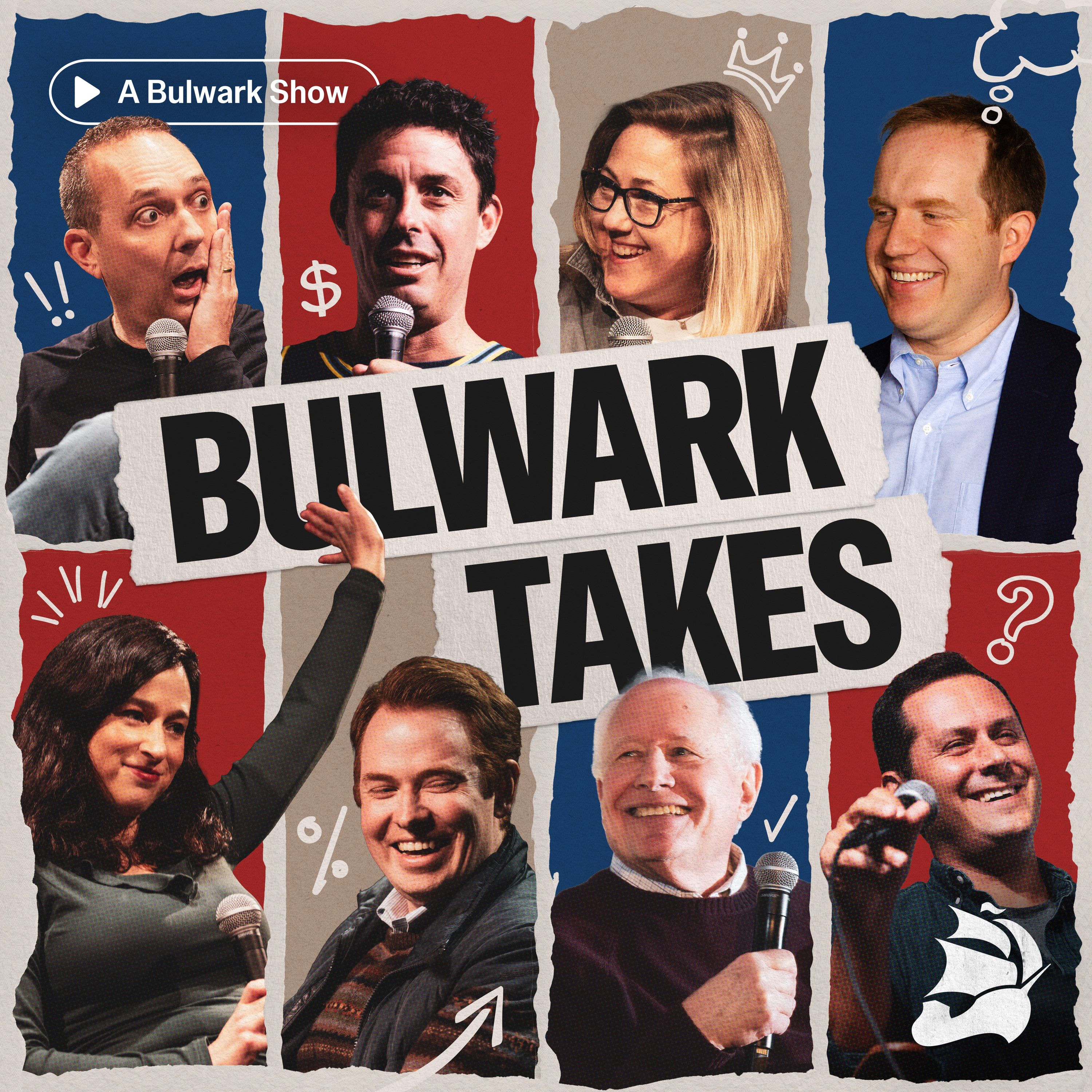
I've Bill Crystal here, Saturday afternoon for a bullwork take with my friend and colleague Sarah Matthews. We're going to discuss Stephen Miller, Donald Trump. He had a very bad Tuesday night, but he's pretty good at getting season control of the news, I guess, if you want to think of it that way, and it's changing the topic, and he changed the Chiefs of Staff on Friday, which is a pretty fast action, I suppose, and has appointed Stephen Miller to be Chief of Staff, and Sarah served with him for that last year of the first Trump term, and of course, you quit on January 6th, but you work with Miller. You know him. You're still in touch with so many people at the White House. I thought it would be great to get your thoughts on him, but also, does it strengthen one faction or another within the White House as a point in a certain direction in terms of foreign policy, domestic policy, and so forth. I think it's, well, my experience so from so long ago is that people underestimate how important Chiefs of Staff is, but maybe that's also not true anymore, not with Trump. I don't know. Anyway, Sarah, thanks for joining me, and tell me about Stephen Miller. Yeah, thanks so much for having me. Yes, Stephen Miller is about as extreme as they get, and if people aren't familiar with him, then I envy you, but for those of us that are familiar with him, he is most known for being the Chief Architect of Trump's cruel and inhumane mass deportation policy. That's kind of his baby. So right now he's the deputy Chief of Staff, and he touches on a lot of areas, and he covers a lot of domestic policy, but immigration is the issue that he cares most about. And I think of him as someone who is, you know, having spoken with him. He is racist, bigoted, just, I mean, as vile as they get. And this is someone though that Trump thought after the midterm elections when Republicans had a just humiliating defeat and this blue tsunami, what does Trump do? He's doubling down on the extremism with a pick like Stephen Miller. And so it shows you that he learned absolutely nothing because the voters rejected the types of policies that Stephen Miller was pushing. I mean, you take immigration. This was an issue that the GOP actually was really strong on and pulled very well with people and people were really supportive and wanted more border security and immigration enforcement. But then with Stephen Miller leading the charge, he went about it in such a bad way and fumbled it with obviously the aggressive ice tactics and sending ice into communities to terrorize them with these massed agents, which ultimately led to the murders of Renegude and Alex Freddie. And I'll note that Stephen Miller also in the wake of the death of Alex Freddie tweeted that he was a domestic terrorist. So that tells you everything you need to know about Stephen Miller. But that completely blew up the coalition that Trump built with Latino voters. So it's not even just that Stephen Miller is also a horrible person. I just think he has bad political instincts too. So it says a lot about what these next two years are going to look like. >> Yeah, no, I think that's important. And I mean, let me not push back, which just give a slightly different take or not an alterate, but a kind of orthogonal take, which is, but Trump isn't probably going to run again. He's not on the ballot. He may not care much about the Republican political fortunes in 2008. And what's happened is happened in 2008, in 2026. So what does he care about? I think what he cares about, I mean, what does the Miller appointment say in that respect? Partly, it's doubling down. Partly, it's somebody's comfortable with, I'm sure you can talk more about that and how they've been together from the beginning, right? But partly, it's got to be, he wants someone totally loyal running the mechanics inside the White House. He wants someone who's not going to, who's going to make sure that everything that has to get covered up gets covered up. The enemies that have to be gotten, gone after, could get gone after, that others in the administration get disciplined. I feel like it's what you do. It's not, it's not exactly crazy from Trump's point of view. If you think of him not as wanting to benefit the Republican Party or benefit the MAGA movement or that he cares about different issues, do you think about him as a kind of mob boss? You take it a big hit. You can't really undo that, but you really want to tighten the, the cord and around you. And I, and I guess Miller is pretty confident it seems to me at intimidating other people in the administration, just, you know, knowing what's going on elsewhere, getting people to do things, he seems like one of the more competent extremists in that group in Trump world. Is that right or not? No, I think that that's a fair acknowledgement. And I think that, like you said, that Trump picked him because he is loyal. This is someone who has been with Trump since 2015 and has survived and outlasted all these other figures in MAGA world and has managed to stay in Trump's good graces. And so Trump totally trusts him and that's what he wants most is loyalty. And Stephen Miller is certainly going to give that to him. And I think too that, like you said, Trump doesn't care about the future of the Republican Party and what, you know, happens in 2028. Maybe he wants to play Kingmaker and everything, but like, he doesn't really care too much. I think all he is singularly focused on is legacy building. So he wants to focus on his vanity projects, which is a very terrifying prospect them because that makes Stephen Miller essentially the de facto president. He's going to have so much power, so much influence. And he already has had an enormous, enormous power and influence in the second term. And that's why these cabinet officials, I think, understand that they need to be, they need to have good relationships with Stephen Miller. And so a lot of them do and Stephen is someone who is, you know, competent and I think that the president also picked him because he is willing to go on TV and go to bat for him. And that's not something that Susie Wiles necessarily did. She had a lot of things that I think that were her strengths. Like, I think that, you know, when you look at this second term that there hasn't been as much leaking and infighting and that she was kind of able to keep everyone, you know, happy and on the same team. And it was a little bit more chaos in the first administration. And I remember it well. I think with Stephen Miller, because Trump knows that he's going to be facing so much incoming from Democrats and investigations, he probably wanted someone who would be a fighter for him on TV as well. I mean, it's just, it's in line with all of his cabinet selections too. And that wasn't something that Susie Wiles necessarily did. She wasn't really an on camera person. And so I think that this selection of Stephen Miller makes a lot of sense for that reason too. Because Stephen is willing to go on adversarial networks. He'll go on CNN and he'll go on MSNOW and go to bat for the president. So I think that will be, that was something that he was looking for too. And also just, yeah, I think someone who will pick up the phone if someone adjusts his leaking or someone adjusts his doing what Trump wants and scream at them and make them do it. And he's not, he's not deferential to the other cabinet level people. He's now a cabinet level as chief of staff. He wasn't deferential. I don't think it's deputy chief of staff from the stories when we're at. So I think in that respect, if you think of Trump not as a normal political figure who cares about issues or his party or even his broad movement. But it's a kind of someone who, yeah, who cares about his vanity projects, his legacy understood that way. Cares about making money. Cares about staying out of jail. Cares about, I mean, he doesn't have to worry about that much probably, but cares about rewarding his friends and punishing his enemies. Miller makes a lot more sense. I mean, tell me about some Miller and Russ Vaud or Vaud, I can never remember how to pronounce his name. I know if the OMB did. Yeah. I think it's Vaud. Yeah, I think it's Vaud's. No, I can't. No, I've confused you. I've confused you. Yeah, no, exactly. Miller and they've been together for a long time, right? And those, even when I was in the White House, a much more normal White House with more distributed power and administration with strong secretaries like Janie and Baker and stuff. We didn't get intimidated necessarily by the White House still. The combination of the White House Chief of Staff and the OMB director is very powerful, as you know, a very powerful combination. OMB director has the financial strings within the administration. The Chief of Staff has access to the presidents and speaks to the president and then Vance. So I think, I don't know what the Vance and Miller relationship was. Vance wasn't a player when you were there, but I'm curious what you've picked up on that. So it feels to me like, if I were kind of stepping back, forget about everything, you know, like coming from Mars and just saying, well, what's going on here in these last two years? It feels to me like you could have Trump, as you say, being kind of doing his vanity projects and not worrying too much about policy. Maybe I've got one or two caveats to that, which would come to a minute, but Vance, Miller, and Fought, running the government, which is a pretty extreme, you know, kind of white nationalists, Christian supremacists kind of group, but hard-headed, but not incompetent either. I mean, Fought knows how to exercise the levers of power from OMB, Vance is not a dope. I mean, I feel like it's, I don't know, but tell me if I'm right or wrong about that, what's your sense of that balance as a power or other people who really matter? What do you think? Yeah, when you look at Russ Vaugh and Steven Miller, these are two men who are ideologically the same. They want to see Project 2025 carried out in its entirety. And it's funny because there are so many clips I remember from the 2024 campaign when Steven Miller was like, Project 2025 wasn't associated with us, obviously that turned out to be a bunch of BS. And so these two men are as far on the right, basically as you can get. And so I think that the idea of them holding these powerful positions and being able to kind of carry out their vision for America is definitely a little scary. I'm not as dialed in on what the relationship with Vance and Miller is, but I have to imagine that right now obviously Vance is signaling that he is trying to, I feel like do damage control around his palace.
presidential aspirations for 2028. It's like he posted that lengthy tweet on X, the detailing, all the things that they, he understands voters were upset with and why they, the results on Tuesday night were the way they were. And Miller is someone who is solely loyal to Donald Trump. So I don't think that that wouldn't necessarily play well with Miller if I had to guess. But, but I'm not sure, I'm not, yeah, like you said, their relationship wasn't something that I could have witnessed since I was there in 1.0. But I, I kind of have to imagine that that's how it was. At least when, you know, I was in the first Trump administration, as much as I liked Mike Pence, we all knew that he had his own presidential aspirations. So there were a lot of times where we were budding heads with the VP's office because they would go out and put something out and maybe not glue us in or have a sign off on it. And it was really frustrating. And so I kind of have to think that Steven Miller probably might feel that way. Sometimes when dealing with the vice president's office, but obviously now it being Chief of Staff, he'll be able to kind of crack the whip. I think when things like that happen, that maybe he's not okay with. And across the administration. And I think that he is from what I've gathered from people who work in the second Trump administration, while he's been deputy chief of staff, that is kind of the role that he has employed where he is the person to call people up and bitch them out and scream at them when he's not happy about something. And so I think that these next two years, it's going to be a little, a little chaotic. If Steven Miller gets to carry out his vision for what America should look like. Yeah, I think Miller advances a big question. His Vance has real power. I mean, VP has some power just because he's VP can't be fired. And then he's got allies like on the outside, like Teal, probably Elon Musk and Tucker Carlson to some degree. He's got some aspects of the back of a world that are plugged into him pretty well. He's got a pretty good job from his point of view, I guess. He was a creature of some of those people, especially Teal and some of the big money guys. And then so I don't know. I think that's the very, for me, for the next two years, the Miller Vance relationship is a big question. One thing I'm struck by now, I got an argument. Someone last night, I have no idea if I'm right, he said, well, this helps. Hexath, right? Because Miller's such a right-winger and Hexath is also the same kind of similar kind of, you know, quasi-fascist, if it can be honest about this and all the white nationalism and all. But I don't know. Isn't Miller, is Miller the more the time who did believe that we shouldn't fight foreign wars, at least outside the Western atmosphere? I mean, he lawyerly supported Trump on Iran, but he wasn't that outspoken on Iran now that I think about it. And I wonder if Miller would be on board dumping, they punish, they dump Susie Wiles for the election returns, which is kind of unfair, but that's how Trump thinks of things, right? Couldn't they dump Hexath, get out of Iran, basically, you know, except to kind of slightly humiliating, you know, loss, but they won't call out a loss. And the straight gets kind of reopened and we go, you know, we leave basically. And if you want to dump Hexath and get out of Iran, which I kind of assume Trump wants to do, you want to have a sacrificial am, isn't that how he works, you know, ask a good, I don't know, would Miller do that or is Miller the type who would rally to Hexath, do you think? So all of these cabinet officials, I think, have close relationships with Steven Miller, because they know that they have to. They know that he is one of the president's closest aids that he has the ear of the president. And so they all, it was interesting. And after Trump named him, that they all posted these lengthy tweets, congratulating him and just, you know, fawning him and all over him and how great he is and glazing him. And that's what they, they do. And it's smart because it is, you know, beneficial for them to have someone like Steven Miller on their side. And so I'm not sure how close Hexath and Miller are, but when I was on CNN last night with Caitlin Collins, the segment right before me was Maggie Haberman. And she was speaking about their relationship. And from her reporting, it sounds like they are actually pretty close. So I think there is a chance that Steven Miller goes to bat for him and defend him, because I think that Steven Miller also is in that same nature of Trump where it's like, don't admit any, you know, wrongs or failures and dig your heels in and keep fighting. And so even if Steven Miller, like the war isn't necessarily one of Steven's top priorities, I think that he's much more domestically focused. I think that he will kind of maybe fall into that mentality of like, don't give the other side or like the media a win and acknowledge that there was that we made a mistake by by attacking Iran. And so I kind of see him actually doubling down and sticking with Hexath. Even though I think politically, I mean, one, I think that Hexath just deserves to be fired or impeached in general. He's never should have been appointed in the first place. You don't make a Fox News weekend host the head of the Pentagon and we're seeing exactly why. But I think that politically, it would make a lot of sense for them to fire him and spare themselves from impeachment hearings because that will inevitably happen in the next Congress if they don't get rid of him first. And I mean, there's a chance that he gets impeached this Congress too. And so it would make sense for them to fire him. But I think that what we've seen in the firings from Trump, one, they've been mainly women when it comes to the most prominent and senior officials that have left like Tulsi Gabbard and Cristinae and Pam Bondi. But when you look at those people, they always kind of found like a soft landing spot for them to make it look like, oh, well, you know, they're actually going to move over here. They did that with Susie Miles. She's going back to the Trump political operation. But I don't think that they have that safe landing spot for heggseth. So I think that's actually kind of deterring them from firing him. And Marshall Blackburn, you know, there's been this floating of, oh, could she appoint him to her Senate seat when she's governor in Tennessee? And she has kind of signaled that she has no interest in doing that. And her office put out a statement basically throwing water on that idea and saying that DC isn't going to decide who's going to be the next senator from Tennessee. And so I think that if that were an option, sure, they probably do it and give him that, you know, that post and transition him out. But I think because there isn't anywhere for him to land. And I don't think I see Fox News necessarily wanting to scoop him back up. I think that's also a hesitation on their part. Yeah, that's so interesting. I was so struck by the Marshall Blackburn thing and it maybe really think two or three weeks ago, don't you think if Trump had called a Republican governor instead, I would, I need you to do this. 90% of the Republican governors would 90% of the time have said yes, sir, and a few of them would have boxed, but then eventually said yes, sir. I mean, he pulled the strings, you know, it really is a lesson of why these elections matter, right? I think now, I mean, I'm making this up in a sense, but Trump calls Marshall Blackburn, you know, and says, I like you to do this, Marshall. Congratulations. You know, and she's not like, the interesting idea Mr. President, I'll get back to you, you know, I mean, I think what leverages you have, you think about it for a minute, he's two years left. She's going out, she'll be the governor longer than he is. She doesn't want some loose cannon to send her from her state. She's appointed, who's going to God knows what he'll be saying. And she'll have to waste her first two years of office defending him or distancing herself, right? I mean, if you're the new governor. That's right. Yeah. So that'd be a horrible idea to make us her first decision as governor to do that. So I think good on her for at least, you know, having the spine, it seems like for now, I mean, there's a chance, you know, she gives in if Trump is, you know, relentless and keep puts pressure on her or something. But at least for now, it seems as if that that is she's not going to go along with that plan. But it does show how much elections make a difference. Not just in the obvious way that the democratic and more Democrats and the Congress checks them, but also makes such a difference in the internal Republican dynamics. He's so weaker compared to a governor like by Senator, about to be governor like Black money. So weaker, I think within his own administration, I mean, a sense that I kind of think the middle of things also, he doesn't have quite the ability, people were so intimidated by senses in the first two years. Even if you didn't agree with stuff, you were a second or third-year person, you thought you might have some wiggle room, but you would, I better not even try that, you know, because they'll come down on me like now with Trump weaker, they might think, you know, maybe they won't kind of notice what I'm doing this. And maybe I've got some other sympathizers somewhere hidden away at the White House. Boy, putting Miller in there is really an attempt to squash that. Someone I know who worked at justice said that it was amazing how much Bill would intervene in the first two years at justice and not just in sort of the huge, big picture things, but in individual cases that he heard about where he didn't wasn't happy. Is that your sense, too? I mean, that he really is a, yeah. Yeah, that's what I've gathered from friends that work at agencies across the administration is that he really is, he obviously like we talked about at the top of this, that immigration and border and all that is kind of his baby, but he really has had his hand in everything across the administration in these last two years and is always on the phone with different people, like not even just, you know, cabinet officials that we're talking like a policy staff level, he's calling people up and chewing them out for, you know, something if he sees something that he's not happy with. And so I think that I, it's going to be interesting to see what he's focused on, because like I said, I think he's really going to be dictating the agenda for the next two years. Yeah, well, let me ask in closing about that. That's so interesting. I will try to let him do that. I'll try to just focus on the ballroom and all that stuff and one or two things where he wants to and making money, I suppose, to the family. And he just lets Miller and Vaughan kind of run.
the federal government that was really at, that would really be something on the way. I mean, it doesn't strike me as a great picture, you know, this aging kind of demagogue who doesn't really pay attention to the actual policies and then Miller and Vaughn running everything. I mean, it's kind of, kind of, it could be a rocky two, added democratic Congress and the world in disarray could be a rocky two years, huh? >> Yeah, I mean, it was so interesting in the aftermath of the election when Trump was saying, "Oh, well, I'd be willing to work with Democrats on some things." And then he picks a guy like Stephen Miller as his new chief of staff and that kind of signals the opposite. It makes it seem as if there's going to be zero moderation and zero bipartisan governing happening. And I mean, I can't, I can't, we've seen, I believe it was like Hakim Jeffries came out and basically, like, was like, no, this is, this guy's a piece of shit, race is big, and he should not be chief of staff and he should be fired and let go immediately. And so, I have a really hard time imagining that the incoming speaker is going to have any sort of relationship with the new chief of staff then. And it's hard to imagine them doing any deal-making. And so, I don't really know then what that means. It seems like then it's going to be Trump governing through executive orders. And I bet that Stephen Miller and Russ Vaughn are going to be kind of inspiring those and picking what the agenda looks like. Because I really do think that Trump seems checked out. I mean, doing like the press conference the day after the midterm elections in front of the ballroom, that kind of tells you everything about where his head is at, what his priorities are, and that it really hasn't sunk in for him that the voters sent a resounding rebuke of his presidency at the ballot box with the way that they voted in this blue tsunami. But I don't think that Trump really, I don't think his narcissism allows him to accept responsibility that it's because of him and his failed policies and his failure to deliver on his campaign promises and going back on his word on things like the war and lowering costs and releasing the obscene files. So I kind of just think that it's going to be Stephen Miller running the show. Yeah, well, that's it'll be something to follow because we haven't really had this kind of situation. We had strong teachers to have. We had presidents who were a little less decisive and weaker, aging even, but nothing like this. I mean, this is really unprecedented, in my opinion. Which means it's very hard to, I think you said it's very interesting. But there's also just hard to predict which way things bounce right when you get into this kind of crazy situation. I do think I've come back to Trump as a mob boss. Trump, when we get weaker, when you have a setback, you need to show strength internally. You need to tighten things up internally. You cannot let people start thinking they can freelance, you know. And the one thing Miller probably is good at and brought to for the matter is stopping that intimidating people who had, and he'll pay a price for the hill and hacking Jeffries will be, well, me with them, they would have some bipartisan legislation. I'm not sure he cares about that compared to the sort of the, keeping the internal, you know, rains tightened. But then on the, the heck's that thing? I just, I think it could go either way. It feels to me like that would be interesting. They're, God, there are a lot of moving parts right in vans trying to distance themselves. But also, I mean, it's, it's, it's likely to be a normal White House. I don't think I guess it never was really wasn't. No, the wheels are, it seems like starting to come off because they definitely prided themselves and oh, there's no leaking in Trump 2.0 and we're all on the same team. And it seems like that has come to an end. And that the knives are out and that every man for themselves. And so I think that he, yeah, well, while I do think that Stephen has a lot of good relationships with people, like across the administration, he is going to come under more scrutiny now. And so maybe people, you know, will turn on him and there will be more leaking too. Hopefully, I hope there's more leaking. So we know what's happening and going on inside. Yeah, that would be good. We'll tell your friends to call you up. And we get more, many more discussions. There's not too many friends. Friends, friends. Okay. But I know some people in the administration that I'm still on good terms with, but not necessarily the West Wing. Yeah. And I was really thinking about, honestly, but it'll be interesting. It'll be interesting. It's a big moment, I think. And it's, I do come back to sort of Trump, Trump's, I don't know his kind of weird shrewdness about pop VR that, you know, he's got himself back. We're talking about him, right? We're not talking about, that's bad or really who cares what we're talking about because the truth is the election results are the election results, their facts. And then not going away, whatever Trump spin is and how far much he fires this person or that person. But he does have that instinct that he's got to look like he's back in charge. I guess I think it's always been true at Trump, he goes bankrupt, 30 plus years ago, and he still has to make it look like he's rich and he's in charge. And it's just a temporary setback. He doesn't have that kind of lizard brain sense that if he can't afford to look weak, he did for a couple of days there, though I agree, looking ridiculous there. But maybe, well, interesting to see whether he still does that or whether he sort of snaps back with this and maybe maybe does shove out ex-ath or does something else or got a bit accelerates the war in Iran. And he has a lot of, still pressing the United States. He has a lot of cards to play, I guess, right? I will say that too. It makes no sense why he wouldn't want headsets out because it's like, okay, he's inevitably going to get impeached in the next Congress. And you're going to have a harder time confirming your pick to replace him in the next Congress. So why wouldn't you want to fire him now and then rush through and appoint someone new in time? That's exactly what I would be saying if I were advising him. And so I just, so I'm not really understanding why they're kind of digging in on him and like sticking by him. But we'll see. Yeah, we shouldn't assume they are really. We haven't seen that much. We don't know what he's sticking in. But that's not Trump hasn't exactly said. He said publicly, like he said, you know, like that he's, you know, happy with him and all these things. But like he said that about Suzy Wiles a week ago. Yeah, that's a very important point. We'll have a conversation Wednesday when he's fired. Hexeth and we'll discuss. Yeah, no, that's the thing people are little too. They take Hexeth, I don't know, Hexeth's video. I said, I'll let you go. You go in a second, but just say a word about this. I mean, you've been to these things. Hexeth's video was that a sign of strength or weakness? That kind of weakness. Oh my gosh, it came off so pathetic to me. But I mean, all of his social media posts, you know, but that one in particular, I mean, weakness internally in the sense that he felt he had to sort of show people elsewhere and show Trump. He's, I'm your guy, Mr. President. Don't, don't walk away from me. And I and builder gets appointed and two seconds later, Hexeth has the the truth social of the ex post up. I love Stephen Miller. Here's a photo of me with Stephen Miller. But I don't know. People start doing that kind of thing in my experience. It sort of means that maybe they're not very, I'm very short, you know, very certain ground. I don't know. No, I agree. Yeah. Anyway, it'll be interesting. I mean, it really will be interesting and I hope it's not too bad for the country. So Sarah, thanks. I know you were rushing around today. Thanks for joining me, joining us. And we'll look forward to your continued interest. Very interesting and important commentary on Trump administration and other things beside, of course. So thanks, last Sarah. Of course. Thank you all for joining us.
Podcast Summary
Key Points:
Stephen Miller is a deeply polarizing figure known for architecting Trump’s aggressive and inhumane immigration policies, including mass deportations and tactics that led to the deaths of individuals like Renegade and Alex Freddie.
Miller’s appointment as deputy chief of staff signals a shift toward ideological extremism, with a focus on loyalty, internal control, and enforcing Trump’s vision through intimidation and discipline.
Trump’s reappointment of Miller, despite a major electoral loss, reflects a strategy of consolidating power within the White House by replacing moderates with ideologically aligned, loyalists who will suppress dissent and protect his narrative.
Miller and Russ Vance represent a powerful, ideologically unified right-wing leadership team committed to Project 2025, with Miller acting as a dominant, aggressive force in policy and communications.
The administration’s lack of bipartisan engagement, combined with internal power struggles and potential firings of key officials like Mattis, suggests a high-risk, chaotic governance model driven by loyalty over policy.
Miller’s willingness to go on adversarial media platforms and directly confront critics indicates a strategy of political warfare, not policy development, reinforcing a confrontational and defensive administration.
The absence of accountability—such as firing Mattis to avoid impeachment—shows a broader pattern of protecting allies and avoiding public scrutiny, even at political cost.
The situation reflects a dangerous consolidation of power where Miller may function as de facto executive authority, undermining democratic norms and institutional checks.
Summary:
Stephen Miller’s appointment as deputy chief of staff marks a significant shift in the Trump administration toward ideological extremism and internal control. Known for his role in implementing harsh immigration policies and his racist, bigoted rhetoric—such as calling Alex Freddie a domestic terrorist—Miller embodies a hardline, uncompromising approach. His rise signals Trump’s decision to prioritize loyalty and ideological purity over policy stability or bipartisan governance.
With Miller and Russ Vance forming a powerful, ideologically aligned leadership duo committed to Project 2025, the administration appears to be operating under a model of internal power consolidation, where loyalty and intimidation replace cooperation. This dynamic is especially concerning given the recent electoral setbacks and the administration’s refusal to acknowledge policy failures. Miller’s aggressive style, willingness to use media platforms to attack critics, and tendency to micromanage officials suggest a top-down, authoritarian approach.
Key figures like Mattis may be protected from removal due to political risks, further enabling a lack of accountability. The absence of meaningful governance, combined with a refusal to admit mistakes—such as on foreign policy or Iran—indicates a strategy focused on preserving Trump’s image rather than addressing public concerns. This creates a volatile, unpredictable environment where political stability, democratic norms, and public trust are at risk.
The situation underscores a troubling trend: Trump’s power is not being exercised through policy, but through personal loyalty, intimidation, and political survival, with Miller emerging as a central, unaccountable figure in the administration’s future.
FAQs
Stephen Miller is the deputy chief of staff in Donald Trump's administration, known for his strong focus on immigration policy and his role as a key architect of Trump's mass deportation initiatives.
Miller is described as extreme, racist, and bigoted, with a history of aggressive tactics in immigration enforcement, including the use of militarized agents, which led to tragic incidents like the deaths of Renee and Alex Freddie.
Trump chose Miller for his loyalty, extremism, and ability to act as a strong, uncompromising figure who can enforce policies, cover up mistakes, and defend the president on media platforms.
Miller's appointment signals a shift toward greater internal control and intimidation, reducing collaboration across departments and creating a more confrontational, top-down leadership style.
Miller and Russ Vaud are seen as ideologically aligned, both strongly supporting Project 2025 and pushing a right-wing, nationalist vision for the government, giving them significant influence over policy directions.
While Miller is not primarily focused on foreign wars, he is likely to support a defensive stance, potentially backing the removal of U.S. military involvement in Iran to avoid public embarrassment and maintain ideological consistency.
Chat with AI
Loading...
Pro features
Go deeper with this episode
Unlock creator-grade tools that turn any transcript into show notes and subtitle files.
 PodcastTranscript AI