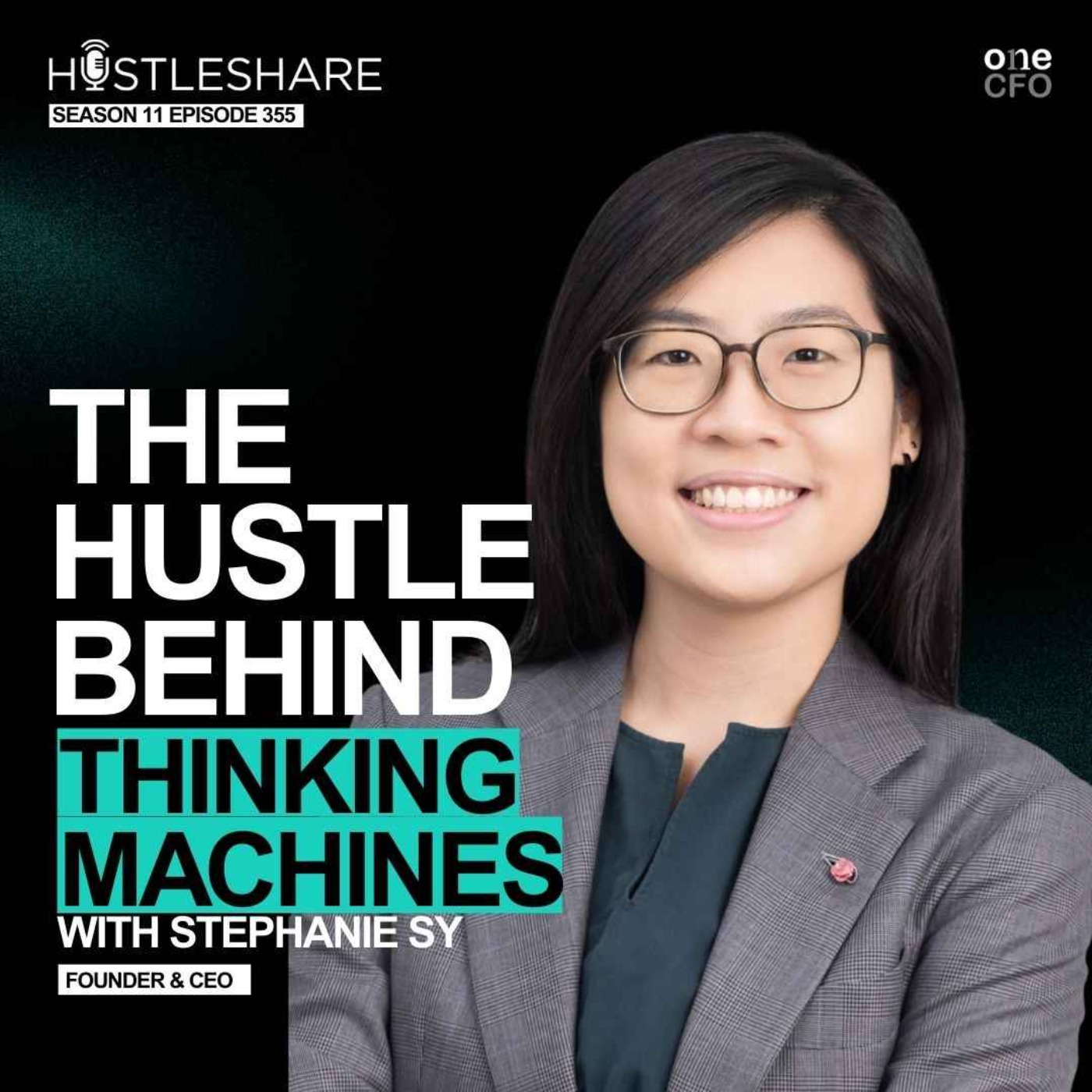
Stephanie Sy - The Hustle Behind Thinking Machines
from Hustleshare
79m 49s
In this episode of the HuzzleShare podcast, host Ron Sterbeit-Yong interviews Stephanie C., founder of Thinking Machines, during Women's Month. Stephanie explains her hustle as helping people and organizations make better decisions using data-driven frameworks, highlighting how small daily improvements compound over time. She critiques traditional decision-making processes, using Metro Manila's traffic coding as an example where limited, anecdotal information leads to suboptimal outcomes affecting millions. Stephanie advocates for a cultural shift toward data-oriented decisions. She shares her background, from a strict Filipino-Chinese upbringing to studying at Stanford, where she embraced Silicon Valley's mindset of learning from failure. Her startup journey includes an early failed media venture and a successful stint as an early employee at Wildfire Interactive, which Google acquired. Throughout, she stresses that true innovation requires willingness to fail and iterate, urging companies to adopt this approach for meaningful progress.
[MUSIC] The HuzzleShare podcast is sponsored by OneCFO, the Philippines leading fractional CFO services provider for startups, scaleups, and SMEs. Experience the power of tech-enabled, efficient, affordable, and expert-led fractional CFO services. Let one CFO handle your finances so you can focus on growing your business. Book your free CFO consultation today. I always try to emphasize because now companies always come to me and say, "We want to innovate. We want to innovate." Oh, okay, seeing it, and my question is then, how willing are you to fail? And if they say, "We don't want to fail, we don't want to fail at all," we're just going to innovate and succeed, right? I have to say, you know. Welcome to HuzzleShare. The podcast that features the daily grinds of unique hustlers around the world, to show not our differences, but that our hustles are very much alike. Now here's your host, Ron Sterbeit-Yong. Welcome to the latest episode of the HuzzleShare podcast. We are still in Women's Month. So, in the past couple of weeks, we've been featuring hustlers of different sorts of sizes, different genres, and different fields. They do what here. We go right into the core of what they, what I do, and what what's in my geeky robot cart. Because at the end of the day, though I talk like this and I talk very inappropriately, I am a geek-mighty fault. A AI and machine learning will always be a big part of my life. Because through that, in my company, ChatbotPH, I was able to get my first win in the startup life. Right there. But before I get hearing how I want to welcome our guest for today, the Queen of our robots. The Philippines. Miss Step! See of Thinking Machine! Those are our robot-y bots clapping for you. Step, welcome to HuzzleShare. Thanks, Ruan. Nice to be here. I and all the Thinking Machine's appreciate the one welcome to your podcast. That is Vision. If you're still not over one division by then, this is the creator of a lot of the visions out there. But again, step up a big man. I still remember the first time I met you. And this was Digicon. It's a 20-shit, I don't even know, 2018, 2017. It's not for us now. We always regenerate anyway. We respond. But at the end of the day, I remember having been part of this panel in Digicon. And you know Digicon in the Philippines, right? Digicon is the legit geek of Meetup. And I'm this dude who probably didn't know shit about shit. And I have right beside me is Step. See, I had mega-imposter syndrome that day. I never forget. Oh shit, I'm just going to fucking wing this and make it layman-serve because I cannot compete with the jargon. I have no idea what you're talking about. Now you're doing really well, though. Come on, I feel like I can't see this. Before we get carried away, sorry to cut you off, but I need to ask you the million-dollar question. Step, what's your hustle? All right, so hi everybody. I'm Stephanie C. And my hustle is helping people make good decisions because if you think about it, you, I actually do think that there are ways that people can make substantially better decisions for themselves using frameworks. In life, there's often no one correct decisions. There's no one perfect decision. But there's ways to help make your day better, to help like frame your decision so that you make many, many decisions each day. And if you're just like, if you are 2% better at the decisions you make on a daily basis, your lifetime, the lifetime benefit to you is compounding. It's huge. It's massive. And I think this is true of people. And I think this is particularly true in organizations. So my company's hustle, thinking machines, we help organizations make good decisions with data. Because think about the way organizations typically make decisions, right? And like I'm going to give you a very specific example. The Department of Transportation and the Metro Manila Development Authority making decisions about traffic coding throughout Metro Manila. So this is a decision that affects the 15 million people who live in the bigger Metro Manila area, who live here and commute in and out every day. So any decision made about the roads affects all of them. Do you know how many people are involved in making those decisions? How many? Less than 20. Maybe at the end, it's like five days. It gives me the creeps. Five people. Yeah, at the end of the day, if you think about it, right? An organization is not a monolithic. It's not a huge entity. It's a decision which affects you that comes from inside of the Department of Transportation. Probably comes from a 30-minute subcommittee meeting where it's that subcommittee. Some analysts who some analysts spend two weeks gathering information. Weeks are trying to ask questions. Maybe you're just kidding. Matrix, Matrix, Matrix Sess of whatever shit. Yeah. And if this analyst doesn't have good information, this analyst has to go around asking for. So right now, what we do when we measure how many cars cross roads at different times of day or how much traffic we have right. An MMDA guy or girl with a clicker will stand there with a click board and a clicker. And we come across as soon as we can. Yeah, when we carcasses don't click and at the end of the day, they look at how many clicks they have on the way on the white board. On the way on the way on the way on the way on the way on the way on the way. Whatever. A creep board. Yeah. A report report. They submitted to Central Office. Somebody somebody does data entry for all the good boards into an Excel sheet. If you're lucky, sometimes what happens with Excel sheet is that when their boss asks for a report, they'll send a PDF of that Excel sheet. And then it goes all the way up to this committee meeting where they're trying to decide, okay, are we going to bring back number coding? How is number coding doing? And so there is that information that makes it to that meeting. There's maybe 15, 20 people in this room who are pretty senior. And the more senior people after the presentation, you know what they do, people out there cell phones and they say, you know, like really good friend, my uncle, my cousin, yes, they're eating that in front of our sub division. There's always a traffic jam. So can we let our sub division and see how bad it is there? And my fraternity brother told me that in this other country, they do X, Y and Z. So why don't we do that? And often that's the basis of a decision that affects 15 million people, right? If somebody senior enough in the room was influenced by whatever they saw on YouTube, whatever they just saw, whatever they just saw, whatever they just heard, whoever just texted in their vibrant group, you end up with a sub part decision that affects millions and millions and millions of people. So how do you, how do you get out of this pit, how do you get out of this trap? I think at the end, it's culture change, right? Like changing our whole decision making culture to be very oriented around how do you serve people? How do you create the right metrics? How do you move towards the better world that we all want to live in? Because these people all want to make good decisions. Everybody wants to make it. The desire is there. I think it's more a matter of how can we give people the right information and the right capabilities to make data driven decisions and being this organizations? And that by the way, Steph is easily, I've been doing this for over two years now. Easily, that's the best what's your hustle answer I've gotten because people sometimes they go abstract, they go direct and whatnot, but if this is the the president of how this conversation would be, I am so hooked already. If you're not, I don't know what's wrong with you because nobody could have explained what the hell he does or she does the way Steph did just now. So it's the auntie is really apt at this moment. So whoever's going to be after this episode, you got to do a better job because Steph just raised the bar so. But before we get carried away, Steph, and I want to talk data, I want to talk decision making, but I want to understand first the origin story of a Steph C because I have to ride with you. The hustle share time machine. We have some of the things that okay, so this FYI, we are. Sound machine. I love it. Warping sounds at all. So before you help people or at least are on the we came on the road of helping people make better decisions because still now in 2020, 2021, you know, good luck to us really. That's the time for decision making we're trying to get. That's the name of my new podcast. Good luck to us. Good luck to us by Steph C. The episode art is just basically
across me. Good luck. Yeah. I know. No, but I wanted to say it stuff. How what was it? What was it like growing up? Because again, for people that are able to create and contribute the way you do in science, the step the core of this all, what was it growing? What would you have you influences and what were you doing growing up that contributed to what you were trying to do today? Yeah, wow, growing up. That's that's far back. So I think I have a pretty typical background for somebody who's Filipino Chinese, right? family started a small business. When I was young, I went to a very strict, very Catholic, very Chinese, very traditional in the bunch. Yes, exactly. I know the same dude Pips, they say the same adjectives. Thankfully, I did, I still do really enjoy, I really enjoy like math. I really enjoy the fact that there's a clear, you know, there's a clear answer to everything. And I got really lucky when I went to college, because I got in, I got into Stanford in the US. And maybe for people who don't know what that is, it's one of the really, really best universities to go to for technology entrepreneurship, because there's a whole ecosystem like the way they think and the way they talk in the US, it's so dynamic, it's so oriented around how do you give college students a chance to start startups, right? It's almost the opposite of funnily enough, they are kind of ages in that they'll discriminate against you. If you're older than 35, but if you're like 20, yeah, device, isn't that crazy? It's the opposite of the Philippines, like very traditional, very Chinese, Catholic system, where you know, the older you are, the more, more ripe you are, per se. And the Silicon Valley mindset and Stanford's like right in the middle of all these beautiful campus, too, by the way, but you don't notice it because you're so busy studying. It's really campuses for the visitors. Right. Right. Yeah. But there is this kind of real orientation around, I really learned there because everybody lived this idea that it's fine to try things and fail. That it's actually kind of noble and respectable to try a new endeavor. And if it doesn't work out, the question they ask is really, what did you learn from it? Like very sincerely, and actually, people trust you more if you've tried and failed at a couple of things, because it proves that you have the guts to do it, have the resilience to bounce back that really you can learn that you really tried something different and you learn how to test your assumptions and that you just are able to innovate that way. And then that's one thing about innovation that I always try to emphasize because now companies always come to me and say, we want to innovate. We want to innovate. Oh, okay, so yeah, my question is then, how willing are you to fail? And if they say, we don't want to fail, we don't want to fail at all. We're just going to innovate and succeed, right? I have to say, you know, it's not right. No, no, straight path. A lot of straight path. Actually, innovation means you try 10 things and maybe eight will fail. Right. And it's really about the two that succeed and that you get you get you to the next place. So I failed a couple of times. Right. You know, we're talking time machine. The very first startup I started, I was a college senior and two friends and I, we, oh my gosh, this is like a little bit embarrassing when I think back to the like our deck and what we sold. So we wanted to build a, the company was called Phenomenalist. And so we wanted to build a media website that featured the most phenomenal people in Silicon Valley. Whoa. And what year was this? This is for context. Is this the rise of Facebook? 2009? This is 2009. That was a year that the social network went out. Is it? Or right of that area? Oh, maybe, maybe I remember it was when Tech Ranch was first getting big. We're like, Techn Media started growing. And so we wanted to, we wanted to build something. And so two of them were journalists. And I was the, I was the chief technology officer built that website. Ruby on Rails hosted on. Wow, you were doing rails in '09. What version of rails were you even working on? I mean, it wasn't even rails. I remember at the time was Django was still being sold as a being marketed as a project to help you launch like a journalism websites or blog sites. Django was not like where it is right now. But I, I, yeah, Ruby gems. Trying to figure out how to do that. How to like hosted. I think I really remember that S3 Amazon Web Services was very new at the time. Like S3. Yeah. So I was like, Oh, I'll just do something bare metal. I know I know. And now nobody knows what the heck that is. What is I know? Are blue host? Whatever the fuck. Yeah. And some venture capital is was crazy enough to like give us, I think almost 200. It was a huge amount of money. I think 200,000 dollars. No way. Yeah. So three three, three need them on three idiots, but like three very smart, but four experience green. Yeah. I've three very green kids. And embarrassingly enough, I just like laugh thinking about this. I'm very sure that I have a picture from our launch party, which we held in the backyard of our venture capitalists house. And I'm pretty sure we had an ice sculpture of a unicorn that we paid a couple hundred dollars to have a unicorn ice sculpture in that back. That's a valley as a valley. It's like looking back. I'm just like kind of like put my head in my hand. So I was like, Oh my god, that was me. I would have looked for her like on that party. By the way, I'm pretty sure you were there. Yeah. Yeah. I couldn't watch the first episode of the first season of Silicon Valley when it came out because I was like, Oh, God, this is too real. It hurts. This is too true. It hurts. I'm laughing. But you know, it's I heard. Oh, man. But that startup we didn't have a business. We didn't really have a business model. This was the era of, you know, build it. And then they'll come. Then you figure out your business model. And I think after maybe half a year, I quit the startup. I found a contractor who could replace me, I quit the startup on good terms with my co-founders because I just couldn't figure out like, directionally, right? Like how were we going to be revenue generating? I really didn't like and I still don't like the idea of going into these constant like cycles of VC fundraising. So that was start. That was I would I would get and consider that to be like fail. Fail number one, that that startup did shut down a couple of years later. I'm a little bit afraid to like type in the URL these days because I'm pretty sure like some Russian porn site bought it and it like redirects to like no, okay, just don't try. Just take our word for it, whatever it is. Search at your own risk. Not gonna be in the show notes. Don't do it. The second startup. So I decided, you know, when I started the company, I realized that there are so many things I didn't know to be like the founder slash CTO, what a nice sounding title, right? But in practice, there's so much that you don't know about starting a company that you only understand the space of what you don't know when you get there. And so the second time around, I really wanted to learn from I really wanted to like be on a team that I thought had a lot of potential, but I didn't want to be the founder. I wanted to be and very early employee and like learn from the founding team. So I joined a startup doing B2B SaaS software called Wildfire Interactive. Right as I was quitting this first startup. And I was in play number 12. And that was super, super fun. We we grew from 12 people to 400 people in two years and Google bought us for a lot of money. It was Google's biggest acquisition at that date. It was about $350 million. Amazing, amazing outcome for for the wildfire team. We had some very good. I really respected our two founders. That's crazy. Yeah. And that was employee number 12. You probably had stock options. I mean, not life changing, right? Because I was a baby. I was like, I was the baby of the team. The most junior person in every sense of the word. I think the first three months, I'm I bought like I bought new desks from IKEA. I sell them on the office. You know, there's a birthday. See, I'll run out. I'll get the birthday cakes. But the fun thing was like they trusted me to do also everything. So as my skills grew, I became the de facto like a strike team leader inside of the company. So what that meant was every every three to six months, our CEO or one of the VPs would come to me and say, Steph, we have this like fire happening in this part of the company. Can you just take whoever you need, go spend three months fixing it. And then just come back and tell us. So it was great. I built out our I built one of our products in house. I worked
on our, I worked to launch our marketing teams, like keynotes and all the, all the data interactives that got us like huge free press and tech crunch. >> Wow. >> Gartner mentions, like, yeah, I think, I think the nicest mention we ever got was like Wall Street Journal cited us. >> Ooh. >> A couple of things. So it was pretty nice. >> Oh, my question. >> Yeah. >> On those six. As a dev, right? You mentioned that you, at the first try, you were the CTO right off the bat. >> Yeah. >> As a student, that's hard to do. Right? Now the second thing is, I've also worked with Dev so much and I know how important it is to have the right team or at least the right team or Dev's to walk you through that path to get that thing. Now my question is, how, if you were, again, talking to a dev at the moment, what type of mentor you look for to get to where you're supposed to be? Because you are very deliberate about the type of team you want to join. So early, but not the CTO right away. >> Yeah. >> Yeah. And at the end of the day, how do you also maximize your that opportunity when you get it? >> Totally, totally. So kind of coming back to that wildfire example, right? When you're an early employee at a startup, you really should frame it as who can provide you with really great code review, not who's going to hold your hands through writing your code, but actually not who's going to teach you how to do these things, but who's going to code review you and then who's going to guide you and point you to the right problems to solve. Because that's a lot of what you do as an early employee and that's how I grew a lot as a dev. I do think that, oops, sorry. >> Okay. >> The Tories type of state code is not being ran over. >> What? >> It's not in the streets. >> That's not the sound machine. That's how it's really good. >> Okay, there you go. So for what I was doing, right, like every project that I ran point on, I was technically the lead developer on it, sometimes product managers, sometimes lead dev, sometimes data scientists. For every one of them, I'd have a different mentor to go to who could do the job themselves, right? My seniors at the company, every job that they had given me, like honestly, if one of them had the time, they could do it. But what I did for them was I allowed them to focus on other things. So what I needed from them and what they gave me is I would bring them a plan, right? I would bring them, like here's my best research, here's my best conception of how we're going to move forward. Here's my recommendation on how we should, here's the system of architecture, here's the problem, here's our users, here's my concept, like what do you think? And the hour we would spend together on review was a perfect use of their time. They had no time. So they would just rip some parts apart. They would bring in new resources for other things. They'd show me like, hey, think about, I think about using this line. I really think about using this tool. This is going to cause you problems when this product scales up like 30X, like here's where the bottleneck is. So that kind of proves I have you. Yeah, that's what a senior can really, really give you. And what you need to bring to the table is you need to try, you need to try, even if you're wrong, the way you're wrong tells them a lot about how you are thinking and where you need to improve. And if everybody comes to it in the spirit of we're all trying to help each other and we're all trying to be better. And it's never, it's never feels like a criticism, right? Instead, you're so thankful that they taught you these things, that they saw these things that you were doing wrong. Got it. And that's true, because a lot of the listeners, when the year one of Hustle Share, they were around 2834, probably our age pressure were pretty close. And then since last year it became younger. So a lot of the 23 to 27, this is just to be spot actually the biggest listener, the same-er-chip chunk now. And these are the people that would probably want our in the process of doing their own startup or interested to go to join a, a, a budding startup. And that's absolutely correct. That's what, that's what rings the bell. The best employees that has startups eventually promote to go sea level or whatever goes with is, is that ability to try? If you're going to join a startup, bring your fucking A game because you're not going to be like, oh shit, I'm tired. There's no room to be fucking tired. You have to be fucking on the go all the time, right? But look at the amount of growth in foresight and also the learning curve that steepens because of that immense pressure that you get over the short amount of time. Yeah, agreed, agreed. You got to, you got to bring your best, you got to bring your best knowing that maybe your best was really good wherever you came from. But now you're trying to play the next level of the game, right? So super respect that. Bigs are higher. Okay. Now, before we take our first break, I want to understand. So after a wildfire, was it Google straight up away? Because that's why, well, how did you get to the Google opportunities? Because a lot, there's not a lot of Googleers that have ever been here on the show. Yeah. A lot of people who have been here are now hustlers and entrepreneurs as well. Yeah. Well, I kind of cheated, right? I didn't like really apply for a job at Google because they bought wildfire and what they did is they offered a bunch of the key employees. I think of the 400 people who were wildfire, Google offered like 100 of us jobs and they gave us like, it's like pretty nice. So if anybody goes through like an acquisition, one of the things that acquired what we'll do is they'll offer you golden handcuffs, right? They'll offer you bonuses and equity over, but you have to earn it out over a couple of years. Yeah. So that's some. So if you guys watch Silicon Valley, the TV show, I kind of arrested and invested for a year. I went from working like a hundred hours a week to working like 40 and it felt like a vacation. It was nice. A lot of burritos and a lot of go a lot of time going to the mission district and for sure. Yeah. Yeah. Yeah. But I really couldn't do that after your after three or four months. I felt like recovered and then I started learning all of Google's tooling and that's where I got that's where I got started with being able to do machine learning on like big, big, big Google scale data sets. Super, super fun learning how to do infrastructure at a totally different level. But after a year after my first like, testing, I was bored. So I decided to quit and look for my next opportunity and that's how I ended up back home. Wow. Now before we take our first break, let's just describe again, walk us through what's it like working in the HQ in the campus of Google because a lot of people have been here and that some tidbits and whatnot. But in your perspective, what's so enlightening in the Google experience that for some how for some reason everybody's been had had had a taste of that ends up becoming an entrepreneur and become big problem solvers. I think that selection bias. I feel that selection bias because you're only talking about slaves, right? Okay. No, no, no. You're only talking about hustlers, right? So when you talk to a hustler who was a former Google, notice how they're no longer at Google. It's a huge tech organization right now and a lot of the people who from wildfire went into Google, we ended up splitting out into like two groups, right? Maybe 30% of us have gone on to start our own things or to be early at other companies until I help them grow in scale. Everybody else is still at Google. It's almost 10 years later. Need them until sorry, sorry, that was a six years later. Six years later, quite a lot of them are now Google lifers. Like they are really part of that huge system. And I think Google at this point has 50,000 employees, like something crazy. When we joined, it was only a 15,000 or something like that. That's amazing. Yeah. So yeah, what goes through that experience? So again, obviously there's lifers now who stayed put and they love the Google life and all. But for those people that went out of the garden if you didn't, what was implanted into them that eventually wanted them to either join another joined startup or start their own ship? What do you think would that those key factors be? Well, this could be, I'm going to give you like the short answer because I think a little bit, but the long answer gets a lot more complex. And I'd like to, and that's something I might like write a blog post about it someday. But the short answer is, the short answer is if you're somebody who goes into Google with a drive to learn, Google is full of people who are deeply curious. And it's because the founders were PhD students, right? So they come in already, they're, they're in Sergei built a search engine, but they weren't intending to build a ad company, right? They wanted it. And they're also like very, they're very intellectual people. And that's why they started all the moonshots groups. And that's why they ended up focusing their time and energy on the moonshots. And they've left the Google CEO chair to a professional, to professionals over the years. So culture kind of comes.
from the founders who they hire around them, what projects they encourage. And that was an organization that encouraged really smart people to come in and solve interesting problems. Now there's a lot of pros and cons about Google culture. One of the things I really don't like about them as a company is that they don't have a great maintenance culture. They'll build a lot of products and they'll just randomly shut things down. Yeah, I don't think that's not something I like about Google, but it's part of who they are, right? Like they're people who always want to build new things. And they're not so much people who want to maintain. So Google Reader, I don't know if you guys like use Google Reader, but I was working in Google when it got shut down. And there was a ton of screaming around the world. And within Google, there were only five engineers working on Google Reader. And so the management team decided that, hey, that's like, this product isn't worth it. It's not like serving a big enough market. There's only-- When you're at Google scale, 10 million users is not a lot. 10 million users is actually not a lot. So if you're a product that only services 10 million people, it might get shut down just because-- Yeah. That's a whole startup here. [INAUDIBLE] I was like, that'd been an amazing company for me to run. Exactly. 10 million customers, that sounds awesome. But at Google scale, not really. So I think if you want to learn, there's so many people to learn from. And there's so many directions to take your curiosity. And some people have this drive to learn and teach, but maybe don't have the risk factor, the risk of the gene. So if you don't have the risk of the gene, you end up in academia, or you end up working at a place like Google and staying there for 20 years. If you're a learner who has the risk of the gene, you'll learn, and then eventually you'll want to try it yourself. You want to be your own boss, you don't want to get 50 layers of approval to do something pretty straightforward. You want to make a product that serves 10 million people, and give it the proper love and care detention it needs. So that's when you even start your own startup. That is amazing. Now let's take our first break, and when we come back, let's talk about what staff did when she came back home. Let's talk about the more after the break. And we're back when we're back. We're still with Steph C. Again, came back after her life in Google, and now explain it. That's probably the best explanation of what a former Googler did. Again, there's bias. I didn't know I had bias, because I only talk to ex Googlers. And I forgot the other spectrum of Googlers for life. So that's a great, great, great explanation that you said before the break. But now I want to understand. So, a producer, you have that race gene. That's why you came up. But why go back to the Philippines? Where you have such an amazing spree already of good experiences in the valley. What made you come back and what problem were you trying to solve? Yeah. So I-- there were a bunch of rational reasons why I wanted to come home. But there were a couple of irrational, emotional reasons why I wanted to come home. You did Steph C make the rational decision. Oh, yeah, man. One of the most interesting things that you learn in psychology about how people make decisions is that people always have an emotive element in their decision making that's very strong. And it's the people who do the most insisting. It's the people who insist the hardest, that it's purely logical that there's no emotions involved. They're actually the ones who are making decisions most strongly based on their emotions. Yeah. They just don't acknowledge it. And you just push-- Sisting and persisting all the time. Yeah. OK. And so you got to acknowledge when you're trying to make a decision. I don't think you'd support the acknowledge, the emotive factors. And that's how you can like corral and control them. So when I was thinking about coming home, so my options at the time were number one. Seeing the US, I thought I didn't want to work at another big tech company, but I could take a swing at starting a startup myself or go back as an early-- but a more senior early employee this time, somebody who could really help a startup go from 0 to 1. Or I could go back to the Philippines or to Singapore. And I'm super-- I feel super lucky in life that some people really need to support their families. And thankfully, I didn't need to do that. So I really was free to make a choice that was all about my career and what I wanted to do. Got it. So at that point, my parents obviously wanted me to come home. They were at the point at which they call me every week and say, don't you miss us. [LAUGHTER] That's your end. That's your emotional anchor right there. The parent trap. The parent trap, the parent trap. And I had some very young siblings who I wanted to spend time with. So there's an emotional factor there. Number two, there is a second emotional factor, which is I really didn't want to be part of the brain drain. You know, people talk about the brain drain all the time. I've seen it live in an action. And I really just thought, do I want to be part of the brain drain? And there's a bit of emotive-- emotive is there. The rational factors were, OK, one, I thought that the Philippines was a super underserved market where the things that I was quite good at-- data infrastructure, data science-- didn't really exist here yet. And I really did think that-- and I still think that data is an incredibly powerful trend. The cloud computing is an incredibly powerful trend. Until this day, I think something like 70%, of all IT spend is still on physical on-premise infrastructure. Right? You'd think that everything's shifted to cloud or digital now. But actually-- I'm getting a lot of flashbacks because in chatbot, pH, right? So what we do, our business model was we build-- we build this-- DevShopestyle. Yeah. And you would be surprised how many fucking bots we built on top of on-premise fucking infrastructure. And we're trying to execute at fucking social media level. How the fuck do we do that? How do you even-- What are the APIs you have to make? These companies are going to say, OK, yeah, build us a chatbot, host it on-premise, and then you go, wait, how are you going to serve? A thousand requests. Wait, and I want us to serve a thousand requests per second. Excuse me, on what? Physical software? On who's server? Under what desk? Not a masking tape, please don't say that. You know? Guarded by an IT playing ML. I didn't. I didn't know. Wow. Yeah, but that's also an opportunity, right? If you can convince them to change, that adds a big if, right? So I thought to myself, OK, I am going to give it five years. So I gave myself a deadline. I said, I come back to the Philippines, I do my absolute best for five years. And at the end of five years, I feel like things aren't really going. I think things aren't moving the way I wanted to, or that I really feel that there's more opportunities like back abroad than I think I could just pick up. And what do you say this is about? This is challenge? 2013. It's more than five years. It's been more than five years, right? Yeah. It must have been something right. And that's what we want to talk about. So what you did, that challenge for you, you went home, you had the parent trap, there's an emotional pull, whatever you call it, you don't want to be part of the brain drain. What did you start doing? Because it was basically bare bones, nothing much here to start with. How did you build that up? And was it thinking machines, right? Or did you get the order? Did you do a couple more stints first before you didn't think machines? No, I did one thing in between that and thinking machines. So I spent a year working with a really good friend of mine, who also Stanford grad, who was a very good Android and iOS developer. And we just did consulting work for a year on anything. Anything, we would tell people like any technology problem you have, just tell us what problems you have. And then between us, we had enough skills that we were like, OK, we bet we could solve basically any problem you had. And that was our way of learning. The best way to learn what people want is to try to find problems that people will like pay you to solve. And just solving them, right? Because I think that when you ask somebody in the hallway, what problem do you have? Or if you ask somebody in a survey, would you pay 100 bests per month for this? That kind of data isn't really reliable, because if you send a survey like that around, yeah, your friend will say, sure, buddy, like, sure, man, I really love and support you. I definitely say, I'll definitely check the survey. Or your theta says, oh, hi, you look like you're doing something interesting. OK, yes, check. Yeah, but when I'm comes and the question you're really trying to ask is, is this service valuable for somebody? Am I building a tool that you would pay money to use? And if it's not me, it's just a tool, right? That survey doesn't help you. Like the only thing that really, really works is actually getting out there. And they say, I have problem X. And you say, here's a survey.
solution. Are you going to commit to using it? Are you going to change the way you make decisions? Are you going to use this app every day of your frigging like work day? And then you get the truth. Now I'm curious. So before thinking machines, you were technically a freelance problem solver. I want to understand what problems were thrown at you at 2013. Because again, that's also the time where the startup community in the Philippines just started to blossom. There was already a startup community. I felt like there was a generation exactly. I think that that was a generation of founders that interestingly, there's not too many of them. It was really interesting to see the outcomes six, seven years on. 'Cause six, six years is not a lot of time, right? And like real years. But in startup years, it's like a huge thing. It's an eternity. So back then, you know, geeks on the beach. It was a pretty big thing. People were trying to figure out how to do development, web development in the Philippines, trying to figure out what our homegrown Filipino companies that could blossom and things were mostly being done on desktop. Well, the mobile experience was still a little bit behind. So I remember there was all the various EgoVians, Ecomers company, Ava, Zalura, Houdjost was just starting at the time. Ron Hose, I met him when he was still backpacking before he decided to settle. And he was just like telling me this hilarious story about how he put a message somewhere. I forget how he, on Facebook or something, he said, "If you want to buy Bitcoin, come with cash to this address." And he was there. Yeah, the lobby of his building, I think, and he was telling the story about how people would show up with like backpacks of cash to give him an exchange for like a physical Bitcoin wallet. That was an interesting area. And then by the way, if you want to find out exactly the small details, I've had both Ron Hose and Zalura on the pod gesture. So just dig down. That's awesome. It's also a little bit. So if you want to find out what exactly happened to transpired in how those were built. But again, these were all, it feels so much like Wild Wild West when you talk about it. Because so much has happened since 2013, 2012. So much has happened. But those problems that were thrown at you, what did you realize? Like, holy shit, this is a Wild Wild West or do you see opportunity? I saw interesting opportunities, but it required us to change, right? So maybe let me give you a few examples of the things we did in that era. So we built, we built really fun. Our blog started first, the data visualization blog started first. So did like really fun data visualizations about but on guys in the Philippines, hazard maps, the different languages we speak in the Philippines. We did one on like the the elections and we worked with, yeah, we worked with a couple of news agencies at the time to like publish these. We did, we also did that for American news media. I remember we did, I was doing like the machine learning model and data scrapers for the unicorn for Eileen Lee's startup that was that had written the definitive definition of a unicorn. And so like what are unicorn companies who starts them? We made snoop dogs, we'd experience application. Actually, it was pretty funny. We built a mobile app for snoop. You were snoop lying at that time. Wasn't even snoop dog. Oh yeah, that was hilarious. Especially, no fake, you make an accent. The funniest thing about building that iOS app for him was that none of the team smoked weed. So we were like, I don't understand this user's story, but I'll implement it. And what I came to realize is that every time we would build a machine learning model, number one, I realized that I really didn't like iOS and mobile app development. I really did not like developing for Android or iOS. Number two, you can't just build machine learning models because without data infrastructure, the machine learning model is just like a toy. You made a nice presentation. You showed it to some nice managers and then what, right? Like a follow through is not there. So I realized that if you needed follow through, you needed to build a whole data system. You really needed that whole infrastructure for it to become real. If the goal was to change how an organization does things, you actually have to get pretty deep into their tech. So yeah, so I my friend is still running this freelance problem solving startup. But I sold out to him and I said, okay, dude, I really want to do something that's purely focused on data technologies and building data tech. And major heart breaking, if you have ever broken up with like a co-founder, somebody who worked that closely with it is, it does feel like getting divorced. It really feels like getting divorced. And my first startup died. So it's not just getting divorced. It's really death. Good luck. You used the experience of having to disappoint so many investors, users, employees, dude. I get what is a gut punch. I still feel it till now. It's emotional. It's pretty hard. Even when it's the best, it happens in like the best of ways on the best of terms, like how our breakup did. It still hurts, dude. So really hurts. You're telling somebody who you like speak to, like eight, 12 hours a day, that you know, you don't want to work together anymore. My God, what is that? So well, but I think it was good that it happened. And then I started thinking machines from from that. Got it. Now in that said, so now your head, Hanjo, and you said, all right, let's focus on data. What were the exact problems we were trying to solve at that time? And how did you build the team to build the thinking machines? Like what I said, you're completely right. In a game of AI, before you even talk about machine learning, per se, it's all about data integrity and data structure, right? If you have a shitty source, why don't you get a field of robots? You can garbage out, right? Exactly. He go. It's just one one more letter. It's got to go already, but to give you a new one. Oh my God. At the end of the day, right? That's the first item on the list. What data and what type of data are we talking about here? And how did you build a company from that point and what were the projects that you initially did? Yeah. So we had, when we started, we were very much, the core question is, how can we demonstrate the value of machine learning and data AI technologies to organizations? Because from the very start, it was very oriented around how do we help organizations make good decisions, right? And so our first clients were kind of, you know, like it's really, I'm sure every started founder who's ever come up here has told you that it was incredibly hard to get their first clients and that they're so grateful. And they remember exactly who gave them a chance. How it was? Yeah, you remember exactly who. Same with me, right? Some very, very, really, if people I deeply appreciate to this day gave us chances. One, at the World Bank, a pretty visionary economist at the World Bank, a really great marketing manager for Moralical. Again, like the editor-in-chief of the PCIJ gave us like a small contract, the Philippine Center for Investigative Journalism, right? They wanted to do data storytelling with them. Ayala, then another one of the marketing managers there, gave us a shot. So, you know, like those projects, we really bled over it and we were like, okay, what will it take to solve this problem for you? And we're not going to stop at, oh, this is no longer data science. We won't do it anymore. It's like, no, what will it take to solve this problem? And the problem's truly, truly arranged for them. So, there's a lot of data gathering. There was a lot of, yeah, there was a lot of data cleaning, a lot of like calling people on the ground and asking, what was your process for getting this piece of information? And then we built a lot of machine learning models, data stories, dashboards. If you look back, if you scroll, if you go to the Thinking Machines blog website and scroll all the way back to our earliest, earliest, really, as key studies there, you can kind of, you can see some of the work we did for, yeah, for like power, for public health, for poverty analysis across the country. There's a lot of stuff today. There's a lot. We will put this one, we put on the show notes, okay? Don't do this. If you're driving or doing your transit, just click on Husker Share. That's how we also built the team out, right? My cord, so there were like five or six other data. You don't think that I was the only data person starting a data science company at the time. There were maybe five or six groups that, you know, if you looked at us all from day one, you would give us like approximately equal chances of
success. But if you look now, I really am like proud to say that I think machines has the strongest, we have built the coolest machine learning models. We are the only ones that have done like a very strong regional expansion and we are, we have a team that's built this biggest set of skills around data infrastructure and machine learning design and like a end user kind of how do end users experience AI and machine learning. But you really wouldn't have known at the time and I think all of us took different approaches to growing our teams and it kind of comes to that. What did you do right though? Did you think I allowed you to scale faster because again, machine learning models, if we live in a data, I mean, we live in the world of open source now, right? Pretty much go to GitHub, whatever, fucking other stuff. Import, psychic learn, for exactly the same. You can find it, but at the end of the day, you can be given the same weapon, but if you don't know how to wield it and make use of it, it's again, go again, right? If you don't know what to use that for, what did you do right that allowed you to be able to scale and also make it a profitable business? Because again, data and speaking from example when I was selling chatbots, first couple of years, I was like, what is a chat box run? I was like, do you have a chat box? I don't sell chat boxes here. So a lot of angelization had to happen. And then when you find those people that were actually woke or I don't actually understand, they're either hampered by their stack. Because again, they're probably on premise or again, there's so many freaking levels to get to that. Yes, that it took forever to get the project started. Yeah, that is so true. I think the couple of things we did right were, number one, we have a very, very strong culture of teaching and learning, because I am somebody who's very good at teaching and learning. So a lot of our competitors had founders who were not data professionals themselves. So they hadn't done the work before. They were smart. They read up on it, but they hadn't like done it. And so there's a lot of things you missed when you haven't done it before. Or they couldn't teach, right? They couldn't do it themselves, but they really gotten cultivate a team around them. They kept insisting that they had to import for a data scientist who could do x, y, and z. I was like, well, I don't think so, but you have to take a totally different approach if you're planning on growing a team. And you also see it in our culture, right? We are learning and teaching company. We blog very openly. We share our tools. We share a lot of our tools, not everything, but a lot of things we open-source it. We really try to push for open data sets, especially with our public sector engagements. And that's because we're not afraid of losing. We think that our market here is so early that to learn and share that the victory of any other company in our space also helps us. It helps all of us. It helps the whole data industry in the Philippines. So a lot of our competitors had more of a zero-sum mentality of, you know, they'll ask you to sign an NDA before you even interview with them, right? They'll say, "You will, this is our secret sauce." And I'm like, "What?" From psychic learning, like, important. For example, I was repressive. So they are focused on the wrong things as their strategic advantage, I think. So that's one, the learning and teaching environment. Two, I think is the fact that I wasn't thinking about how to scale maximally fast, right away. It's go slow to go fast. That's my personal philosophy, right? A lot of people will want to raise money right away because that's what watching Silicon Valley. The TV show tells you. That's the success. The examples of success around you are all about, you know, you raise around. You get a lot of press. You get celebrated. You raise another round, even bigger round, even more celebrated. So you keep thinking about, like, what do I have to do to scale and raise? My argument, my counter argument there is not every company, not every business should be a venture-backed business. Some are, some really should be. But you have to be really thoughtful about when you do and do not raise funding because, for a lot of friends, I have in the US. And the lesson I learned in the hard way when I was a college senior, when you take that money, the best day of your life, the happiest day is the day you see that check, hit your back. That's the happiest after that. And then your head is under guillotine. Right. And then every day is a struggle to keep that blade from coming down on your face. It's a guillotine game, man. That's what it is. And then a real, a new round just raises the the blade. It just raises so high. But the guillotine is still there. Yeah. Yeah. But you sometimes it's really worth it. So it depends on what kind of game you're playing. It depends. Like the true answer to every startup question is it depends. For us, because the Philippines doesn't have a lot of train talent, I made the bet that it's worth it to go slow to spend a couple of years getting this team really good to build up like a whole system, a whole cycle of tools, like internal expertise in both in different industries and in building different types of products in house and like delivering them directly ourselves to the customers, right? That's a lot of what we do these days. So it becomes very, very good at building data platforms. And so for example, like one of the craziest things like we've done as professionals is like we rebuild or actually we built the Department of Health, like public facing vaccine test tracker dashboard in I think the first duration we turned around was like within 48 hours. Holy week, I holy week of last year we got this phone call and it's like, oh my god, you guys need us to do what? And I know that I think some day people are going to make a documentary about this. I went over, it's over, over, over. But I have to say I do really respect that for all the things, for all the many things that they could have done better, I really respect that the healthcare professionals in the Philippines really wanted to help people. They were willing to throw out and change a lot of the things they were doing and really humble themselves in order to do better, right? Like they had gone from being a team, the epidemiology bureau at the Department of Health had gone from being a very small team of people who only get called out very rarely to being the most integral team. So they had to, they're Excel sheets, like they were tracking things with Excel sheets because at the very start, because we know what do you track things on? But you can't encode 10,000 tests per day and the results and like whose hospital submitted what on Excel? Like you really can't fully digitize system to do that. So that's amazing. And you were part of that in that process because also the time was ticking. This pandemic is just running a mock. And if you don't have good data, I mean, it's such a clear example, right? If you don't have, if you don't have data on who has it and where, you just, it's like literally life and death. It's literally life and death to know in what areas, who, who, who has COVID, where are they? Have they been contact tracing? Like all these like basic questions of, is this not like data science in the sense that it's not, sorry, it is, it is data science, but it's not a machine learning. You're not doing anything predictive. You're not doing anything fancy. Actually, I really respect, there were a couple of health data people who, the faster team out of Ataneo and then Dr. John Wong's team. They, they're professional epidemiologists who have the mathematical models for that. So I told my team, we're going to stay out of their way. We're going to enable them to do their best by making sure that anything, any piece of data that the government has is like stored, recorded precisely, log precisely, disseminated clearly and that there's like a source of truth that, well, I'm a little bit of a system. So that's that was like the mandate of everybody because there's, there's honestly like a lot of on the ground challenges with dealing with the data. Of course, because obviously that data still recorded manually somehow. Yeah, and sometimes like people don't report like we had some pretty funny incidents, funny because you can't cry, right? You'll, you just have to like laugh where sometimes I'm sure people notice this right occasionally in the Department of Health website. They'll do corrections and they'll see. So these two people we thought were recovered, they're actually dead. Oh no. And it's because the doctor didn't not date in the system that they had died. So in the system, if you have had COVID for like more than a certain amount of time, they'll like tag you. It's like, okay, so you haven't died, which means you've probably recovered, right? And a doctor, yes. So things like that. That's why when companies come to me saying, you know, we want to innovate, we want to transform. I really come to them and say, great, this means doing very humble data genitorial work. This means really investing in your frontliners because you don't want to live in a world where you know for every hour that your salesperson spends selling they have to spend
Now, the hour filling out your stupid form for your stupid data system, like that is a route to bad data. 'Cause at the end, it's data isn't something that stands alone by itself. Data is a representation of how people behave. And it's a feedback loop, right? People generate data informs people's actions, those actions show back up in the data again. And it's this loop. It's like really nice link of humans plus machines coming together. And that's really important to build. So no matter what the technology is, right? So right now, my team, like we really are focused on building things on the cloud. We're Google Cloud Platform partners. We do a lot of work with Snowflake and on Amazon Web Services. But I keep telling my team that the tools keep changing with the times, you know, had to infrastructure. Sorry, I might be getting like two technical. - Oh, it's all good. Again, that's what we wanted here. We wanted you to do, but anyway, carry on. - Snowflake, yeah. - Google Cloud, yep. - So maybe like five, six years ago, the big thing to do was to do like a Hadoop installation and you'd use like Apache Spark as your engine for doing data analysis. And that's pretty outmoded these days. So it's like, there's a totally different way of handling data processing at large scale, machine learning models at like large scale, data parallelization and so on. But you have to keep learning, right? Like you have to keep learning the new tools as you go on. But what you take with you is an understanding of how people behave and how data systems behave and that doesn't change. Like I saw the other day, really funny, one of the first examples of human writing, one of the very, very earliest examples of human writing are these Sumerian, Cuneform tablets that have come out of where the earliest humans were in and, oh gosh, I can't remember. It's like modern day, like irats. - Somewhere in there, the present. - The purple crescent. - Yeah. - Do you know what those guys were recording? Do you know what are on those tablets? Records, records of crops, records of debts, records of, what kind of inventory did you have? Who did you give this grain to? When are you gonna get this oil shipment back? Those were the very first things people had recorded and I will bet you, I will bet you money that if some person from ancient Sumeria, some clerk, some data entry, you know, you need that. - We're gonna have to share time with you. - If I were to share time with you. - And you know how to speak with that. - Yeah, and like I could magically talk to this person, I think I would be able to understand their problems. I think they would have the same problems as somebody doing frontline sales for refer, I don't know, proctor and gamble products, somebody selling electricity at Maralco, they'd get it. - Absolutely, because it's a tally, right? And these are the things you really keep safe because at the end of the day, these are the, again, life altering records that impact not just you, it's that a diary in a freaking stone tablet, okay? Or in fucking papyrus. These are records of human society. These are the records of how we behave with each other. But you know what, with AI, that is actually really changing. There are some things coming with artificial intelligence that I think are very different from these data systems we used to have. - Now let's talk about that when we come back. So we have to take our second break and then we come back. Let's talk about data and how you, how Steph is actually making people make better decisions using machine learning and AI and how it actually works. Let's talk about them more after the break. And we're back when the break was still with Steph C of thinking machines who will now talk about AI. So we built the whole narrative, you know? Why, why, how she built the first part, we talked about how her journey was, second part, we talked about how she built thinking machines. I don't know, this part I wanna talk about AI and how impactful and how people don't understand that a lot of their decisions nowadays are actually being influenced heavily. - Yeah. - Like AI, you have no mocking ideas. So if you are, if you are watching Black Mirror and all these weird documentation, documentation, document, documentary in Netflix, that's the ugly part that we see. Because AI can be very beautiful as well. Now, talk about the things that you guys are working on that step and how powerful AI can be if used properly. - Yeah, okay, okay. So earlier I was talking about half of what we did, right? Which is building data systems. The other half of what we do is building machine learning or AI applications on top of those data systems. So this is where the Philippines is kind of behind, right? Most of our clients who are in different countries, they already have their data system in place. Meaning they've already gone through some kind of digital transformation, they already have, they have a fully digital store of their interactions with their customers and they are able to use digital and automated means to touch those customers via SMS, email, their app, their app, and so on, right? And you need that data system to exist first before you can do any kind of AI. Because that's where AI is like, eat data. Like they eat data, they need it, they breathe it without it, they die. So AI systems, modern AI systems are very, very interesting because I think we're only at the first, we're only at maybe like the second layer of maybe five or six, but like an infinite number of layers of AI maturity. If you guys have watched her with Hockey and Thin X, right? That level of AI is like, if that's the final level of AI, right? That's level, if you're a little older, okay, whatever that is. Well, I'm depressing them on SkyNet. Just kind of like Johansson falling in love with you. Like maybe that's maybe like a nicer way of putting it, right? Let's use the nicer one, that's SkyNet, a little more like that. That's a nice one, that's a nice one, that's a nice one. If that's level 100, we're maybe at like level five or six today. And where we are today is there's two types of AI models that are, that people are thinking about and working on. One is perception. So some AI models are very mimic or augment our perception. So for example, object recognition, right? That's the AI that if you open your phone and you look through your photos and you type in the search, you search in beach, it'll pull up every beach photo you've ever had even though you have never labeled them before. That's perception, right? It's seeing and it's categorizing. The second one is cognition. So cognition's more of decision making and more of human thinking. So AI's mimic cognition by being trained on human data sets. So for example, a fraud detection model, right? If you train it on many examples of what humans have judged to be fraud or fraudulent in the past, oh, the name of this account is RB019422917772. You're like, oh, that feels like a, and there's no profile picture. It's just like the default bug box. So you're like, okay, that's more likely to be fake than not as a person, right? So you have to feed a model many, many examples of that. So it can kind of mimic it mimics, right? Now we haven't got to the point where it's, it can truly like think for itself, but it can mimic human patterns. Recognize the patterns of all these data sets that get you through at it. Right, right. And that's perception also. Perception is also pattern recognition, but I've chosen to break it out, break it out, so that you can feel the output of it, right? So sometimes the machine learning models, their output is to perceive for you sound and to perceive and clat and tell you, what is that sound? Is that a dog? Is that like, who's at your door? Is that, is that your, your, your, your gated, your mailman, thief? And then cognition is more of can we predict how much will sell here? Can we see if this is fraud? I mean, they're pretty closely interrelated, but that's roughly it. So my company, we do a lot with perception models, right? Because in the Philippines, we don't have a lot of data. So what we do is we use machine learning to pull structured data out of unstructured kind of mess. So things like looking at all the, looking at satellite imagery across all of the Philippines and being able to identify where is every single road in the Philippines to what extent is this road built out? What does it tell you about the probable wealth and the probable like addressable, the addressable market in some region, right? That's something we do for both the public sector. So people interested in like government development or private sector, people interested in building infrastructure. And we do the same thing with documents, right? So everything's PDFs in the Philippines. Like, if you request anything, - Oh, okay. - You get the people. - Or in hard copy. What the fuck? - Hard copy. So yeah, everything's hard copy or everything's PDFs. So it's okay, okay, we have to live in this system for now. So how can we pull out the data that we need from mess, from all sorts of mess? And then how do we take that mess and be able to, so we build up,
So we build machine learning models, usually for big companies, of a lot of customers. So it's mostly about how do you segment the customers in the right way, how do you send the right things, the right people at the right time, how do you build new products in a way that shows your awareness of who the customers are, and we are always like augmenting. That's what I like to do, right? My goal is not to replace focus group discussions, my goal is not to replace conversations, but my goal is to let you have the two halves of the equation, physical, face-to-face conversation, with the five people who you have time to talk to every day, where your customers are trying to serve, and data on the 100,000 others, who are not your friends, who are not around you, who you're serving, but they live in a totally different place under totally different circumstances. Let me at least give you the data, so you know that they exist, that they use whatever you're building, that you serve them also, so you can find them and help them. - That is amazing. Now I wanna understand, for these companies, and I'm thinking as one company, like should I have some data, say I'm part of this mega-glamic, and I wanna be able to execute on what to do with this big chunk of mess that I'm sitting on. What's that process like? In a haystap, I need help. I don't know what I need help with, but what do I do, right? That's usually probably some CTO or CIO that the word reaches out to you, and that's very same conversation with you. - Oh, that's my favorite conversation to have, and I have it like a hundred times a year, right? (laughing) So, no, it's fun, that's why I like this job. (laughing) I just really like helping, you know what, if I were, I think that if I had a different profession, I would be like a psychotherapist. - There you go. (laughing) - Helping people, but their own lives, right? - But here you used to do it, that they just slap it in front of them, like here, fucking make that decision. - Well, if we were in a first world country, if the Philippines was like Sweden, I would totally be a psychotherapist, 'cause everybody's lives is like really great. The organizations make decent decisions for everybody. - You're a nice, fun mess on mess. - Here it's like, oh my God, hello. So what do we do with the mess right? So first, it's like figuring out, where are you? Where is all your data? You know, just inventorying everything, and like holding our hand, right? 'Cause there's like a lot of anxiety and like stress around like, what the hell is happening here also? And there's a lot of pull to buy the most expensive thing right away and hope that it solves your problems, but actually quite often it doesn't. So you can't buy your way out of your, this mess is what I tell people, you actually kind of have to work your way out of this mess. So it's very much like Marie Condo's cell, right? Instead of this data give you joy. (laughing) - Is it spark joy? - I'm so sorry. - But yes. - Good. - It more like, does this spark inside, or is this just garbage, right? 'Cause it's like store things. It's like, well, this is kind of invasive and you don't need it. So maybe you should just, you know, throw it out. - You know, donate it somewhere. Just just, okay, there's data privacy. Handle don't throw out random data, please. - Okay. Yeah. So it's a huge exercise on figuring out, what are the things you're doing inside the company now? And working data make you more efficient. So that's the first place you always start. So that usually involves building a data platform that usually involves translating. You know, I have seen very, very, very impressive Excel macros that people like preserve and run and have like held on to for the last like 10 years and they get upset with us when you come in and say, like, can we please replace it? And they've actually like thrown out consultants before us who try to replace what they do. 'Cause like, it's, they can't do it. So sometimes we come into these situations where people have been hurt before and I really get it. I totally understand it. And those people have done like magical, amazing work with very few tools and resources. So the challenge is always to find who, who is it in your organization with those who unknown to you has been holding up your whole analytics pipeline on the back of their like, - Like typing. - Just like, yeah. Like at last, right? - Like, yeah, it's our type and what the hell? - Figuring out. (laughing) - He is a Titan. - I don't know. - I don't know. - I don't know. So figure out who they are, figuring out what it is they're doing that is usually unofficial and figuring out how to turn those things into automated repeatable pipelines that actually takes the pressure off of the poor person who's been like maintaining this for a while and if they go home or if they quit, like you're screwed as a company, you don't even know it. If they're on vacation, you can't run like, you can't run your financial analysis. And so we work with these people to kind of automate them, to scale them, to give them new tools to teach them how to write like SQL queries against a big data set. And we kind of get everybody to the place where, if what you're doing requires looking comparing two different documents all day every day, can we make you a machine learning model that compares those two documents and every time it sees something that it's confused about, that's the only thing it shows you. Can we do something like that? So one is that that level of making you more efficient and then two is starting to look at how can you use machine learning and data to serve your customers better. So really looking at being able to handle the long tail, that's what tech can do for you, the long tail microsegments, who you were telling me, right? But now you have younger people listening to this podcast, but I'm sure that our cohort is still there, right? And there's other cohorts of people. So how can you without spending that much more time yourself, how can you pinpoint which things could be most interesting to which people and send them to like, send them a list of recommendations, they say, hey, you probably want to listen to like, Rod Hose's podcast, you want to listen to the Zolaura podcast. It's like the Geeks on the Beach founder. These are these three podcasts in this team you should listen to, right? To figure out who that target segment is and sending them things that are meant for them and building the connection with them that way. Got it. So that's, and by the time we get there, the companies are usually doing like really well, they've started to like truly become innovative, more comfortable with risk. Senior people are more comfortable making decisions using data. Junior people are more comfortable speaking up and saying, holy boss, like, don't listen to your fraternity brother. (laughing) That's not what the data says, yeah, exactly. I mean, that really changes culture. And I think that's what I want at the end of the day. Like, I want us to live in a world where, yeah, where it's not just the loudest person in the room, the oldest person in the room who gets to make the decision for all the rest of us, or maybe not even in the room, right? How can you all live in a world where, you know, maybe not every decision is the best, but at least it's not that decision, after that decision, after that decision. You did not make it out of your own gut feel that's probably poorly informed, right? Yeah. That's amazing. Now, Steph, as much as I want to ask you. It's like the longest podcast you've ever gotten, like, that stuff, that stuff. It doesn't matter because I love it, because it's something that, again, this is very unique and I'm glad you were here and again. Thank you very much for joining us. Thanks, it's super fun to see what you're doing. He's very excited. Now, again, before I let you go, if someone is having the problem of a lifetime and sitting on a bunch of super-ass data and doesn't know what to do with it, but understand and recognize that maybe I need an intervention. Maybe I can make better decisions with all this, you know, brick-in-ancient data that I'm storing somewhere. How did they reach out to you and where did it go? Just reach out to us. Really, like, actually check the website all the time. So if you Google, honestly, if you Google thinking machines, Philippines, like you'll definitely, we're like the first result. Reach out to us. My email is Steph S.T.E.F. at Thinking Machines. So, and that's not, it's thinking machines with a dot before the ES. We got a Spanish domain because we thought it looked cooler. Sorry, so it's not, there's no dot com there. It's Steph at Thinking Machines with a dot before the ES. It's Spanish. You're Spanish at the, people are Spanish. I love you. Look, we have some history of the code. I love talking problems. So let's do it. There you go. Before somebody else, I'll probably take first tips after we just recorded. Good, good. Before I let you follow us in whatever podcast after we'll see to you again, if you did say, or we did say, which I think we did say a lot of jargon. It's going to be the hustle, share show notes on hustleshare.com. And don't forget, if you want to grow this community, you're also now doing a lot of interesting stuff as we grow hustle share on year three, on coming year three. We're going to be doing that. Go to the hustle share community on Facebook and last week. We do still have some, a semblance of AI in this wide range. We still have our chatbot. A three year old fucking chatbot. I'm not, I'm not, I'm just a live room. I'm here. No, it's on prem. Just kidding. (laughing) Just kidding. I am not, I'm the slash hustle share powered by chatbot. Again, Steph, thank you very much. Thanks for having me around, Stuart. And thanks for having me, community hope you enjoyed. I appreciate it. And I'll see you guys the next episode. Peace.
Podcast Summary
Key Points:
The podcast discusses the importance of embracing failure as a necessary part of innovation and data-driven decision-making.
Stephanie C. shares her journey from a traditional Filipino-Chinese upbringing to studying at Stanford and working in Silicon Valley startups.
She emphasizes helping organizations make better decisions using data, citing traffic management in Metro Manila as an example of flawed, non-data-driven processes.
Her company, Thinking Machines, aims to change decision-making culture by providing the right information and frameworks for data-driven choices.
Stephanie recounts her early startup experiences, including a failed media venture and a successful role at Wildfire Interactive, which Google acquired.
Summary:
, founder of Thinking Machines, during Women's Month. Stephanie explains her hustle as helping people and organizations make better decisions using data-driven frameworks, highlighting how small daily improvements compound over time. She critiques traditional decision-making processes, using Metro Manila's traffic coding as an example where limited, anecdotal information leads to suboptimal outcomes affecting millions.
Stephanie advocates for a cultural shift toward data-oriented decisions. She shares her background, from a strict Filipino-Chinese upbringing to studying at Stanford, where she embraced Silicon Valley's mindset of learning from failure. Her startup journey includes an early failed media venture and a successful stint as an early employee at Wildfire Interactive, which Google acquired.
Throughout, she stresses that true innovation requires willingness to fail and iterate, urging companies to adopt this approach for meaningful progress.
FAQs
Innovation often involves trying multiple approaches, where many may fail. Being willing to fail is crucial because it allows learning and resilience, leading to eventual success through the few ideas that work.
Thinking Machines assists organizations in making data-driven decisions by providing accurate information and frameworks. This helps move beyond anecdotal evidence to improve outcomes affecting large populations, like traffic policies in Metro Manila.
Organizations need to adopt a culture focused on serving people with the right metrics and data. This shift encourages decisions based on evidence rather than personal anecdotes or limited information.
Stanford fostered a mindset that values trying new endeavors and learning from failure. This environment emphasizes resilience and innovation, contrasting with more traditional, risk-averse systems.
Early employees should seek mentors who provide strong code review and guidance on solving the right problems. This approach helps develop skills and contribute effectively while allowing senior team members to focus on broader goals.
Her first startup taught the importance of having a clear business model and direction early on. Without a sustainable revenue plan, even innovative ideas can struggle to succeed.
Chat with AI
Loading...
Pro features
Go deeper with this episode
Unlock creator-grade tools that turn any transcript into show notes and subtitle files.
 PodcastTranscript AI