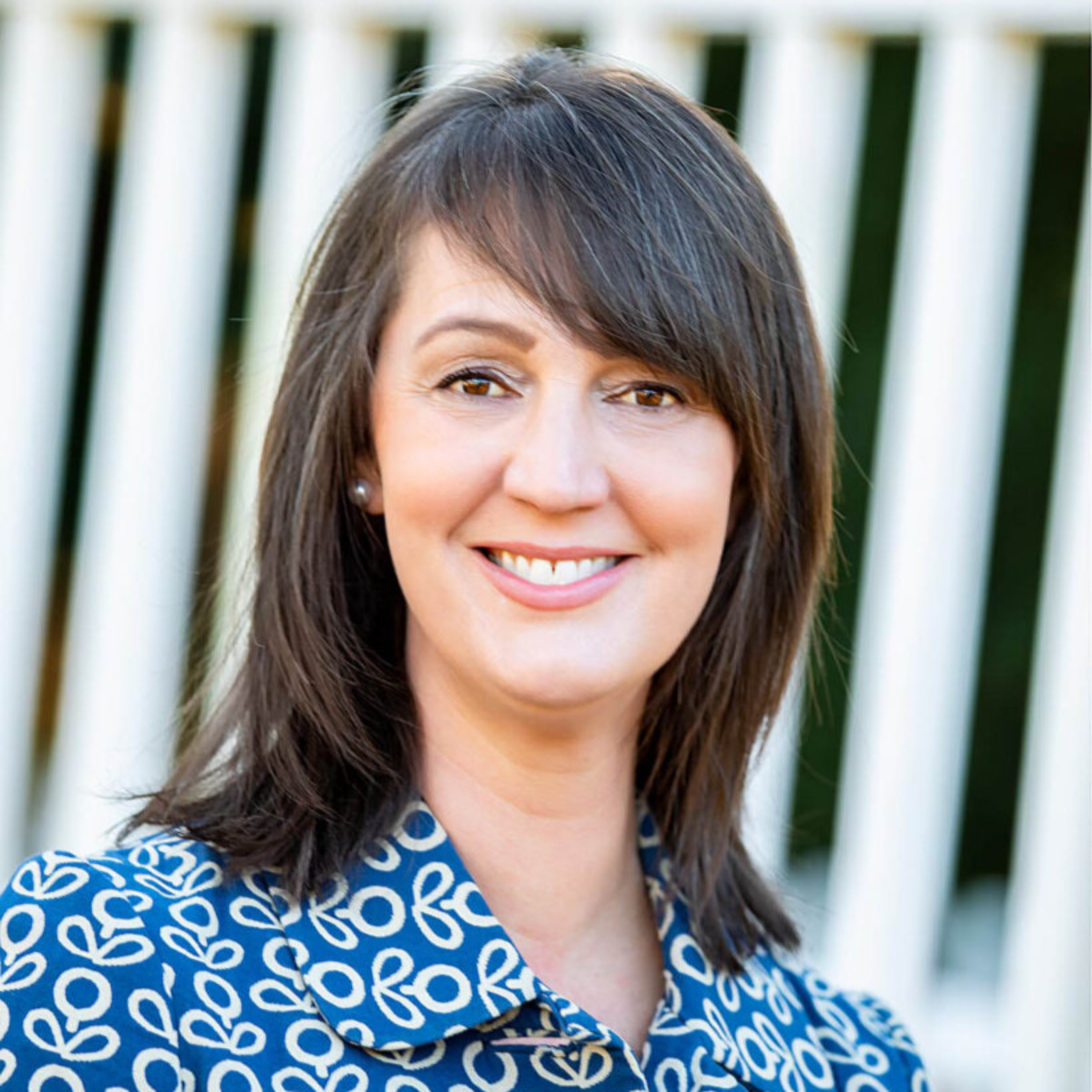
Stephanie Smith- Flock Cameras, the Fourth Amendment & the Price of Privacy in Alabama
20m 7s
The interview between the host and Stephanie Smith of the Alabama Policy Institute centers on the proliferation of Flock cameras and other automated license plate readers in Alabama, which capture vehicle data and feed it into national databases. Smith explains that while these tools can aid law enforcement—citing successes like finding a kidnapping victim in London and locating Nia Blanchard—they pose significant threats to Fourth Amendment rights. She highlights that Alabama law currently permits data retention for up to five years, and that there are nearly 3,000 cameras statewide, many in the Birmingham area. Smith argues that this creates a "wild, wild West" situation where citizens' movements are tracked without probable cause. She proposes guardrails: requiring search warrants, limiting data retention to hours or days, prohibiting data sharing or sale to national databases, ensuring transparency and audits, and creating serious penalties for violations. She also connects this to broader issues like geo-sensing, where law enforcement can access data from entire buildings of innocent people to target one suspect. The host and Smith agree that while technology has benefits, Americans are becoming complacent about their constitutional rights, referencing Benjamin Franklin’s warning about trading liberty for temporary safety. Smith expects legislative action in 2027, noting past efforts like Senator Orr's 2021 bill failed, and she emphasizes the need for proactive protections before technology outpaces the law.
And welcome back in for another hour of priority talk radio here on Truth 101 WXJC.
Glad you're with us at 101.1 FM 850 AM.
Don't forget if you leave your radio you can also stream live.
Do that at www.wxjcradio.com or download that free WXJC radio app.
Either one works. Go to the web and jump in there, go to your app store, download it,
and hit listen. And there you go. You can listen between three and five right here to
priority talk as it happens. You can also listen a little later. We'll post every evening a
contents from that day's program. And so if you want to listen in the evening or the next morning,
you can always catch what you missed. Just look for priority talk on your favorite audio
platforms like Google Apple Spotify. We're on all of those. Plus the rest of them as well.
All right. We visit with Stephanie Smith with the Alabama Policy Institute. Stephanie,
good to have you. Great to be here. Thanks for having me. As always. All right. We didn't have a great
game plan to talk about. So I want those some stuff out at you. And if you've been traveling and
if if you just go, no, I don't want to talk about that then just tell me.
Something I want to get your opinion on though or something. I've talked a lot about here,
but everybody else is talking about it. And that's the the flock cameras. Do you have a take on
those? I know there was some legislation a couple of years ago by Senator Orr to sort of
deal with that. But if I remember right, it doesn't seem like it got a lot of traction.
Right. Yeah. And the the flock cameras for whatever reason that shows you how powerful
marketing is, that, you know, they're the focus of the conversation right now for what,
you know, for whatever reason, I guess it's just because it's a catchy name. There are multiple
kinds of these cameras. And it's interesting because once you start looking for them,
you can't not see them. Right. You're just driving. I'm seeing them. I never noticed them before.
And now I do see them. Yeah, that's right. So, and, you know, some of this camera work for
law enforcement, specifically, you know, has been brewing for almost, you know, I mean, 8, 10 years
now. And it's one of those things that, you know, policy people like us will usually raise our
hands if we're being, you know, kind of smart and say, well, we told you all that this is kind of,
you know, the way things were headed with the red light cameras. And then there was legislation
last year about cameras in, you know, construction zones on the highway and that you can automatically,
you know, receive, you know, punishment for that. And, and where, where the parameters are
for filming citizens, whether or not, you know, whatever they're doing, where, where are the
parameters for the fourth amendment on law enforcement acting on something that they didn't see
themselves. And so we actually, yeah, so it was before I was at API when, when Senator Orr brought
that piece of legislation, but we've talked with him at, at links about it, as it has related to
these other law enforcement questions. Because there are, you know, different jurisdictions that have
disallowed the, quote, quote, red light cameras. The red light cameras are literally trying to catch you,
you know, running a red light and then just send you a bill. We have some toll areas in the state
of Alabama that, you know, you don't pay the toll, you just, you know, get a photo taken of your,
of your license plate and then you receive a bill. And then last year, that piece of legislation
about construction zones, that if you're speeding in the construction zone, then you just receive a bill.
And then now we have this new iteration of concern that is not, you know, specific to traffic
violations. But it is time stamping every single vehicle that passes and then feeds that information.
That's, that's one issue. So, that's, do you want video cameras getting information about your
car? It's usually make model and your license plate. And then it sends it to a, the flat camera
cameras do, but there are multiple companies that are doing this. Send that information to a
national database. Well, in the state of Alabama, the law is that that information can be retained
for up to five years. So, the question is, you know, where were you five years ago? And whether or
not you want that information to be fed into a national database that could be hacked, could be used
for legitimate law enforcement, you know, practice. It could also be used by law enforcement,
road law enforcement, for some other purpose. And so, we started looking into it a while back,
and we figured out that, you know, there are almost 3,000 of these cameras that we know about
in the state of Alabama. Interestingly, all half of those are in the Birmingham metro area.
So, it is highly since, his highly, you know, just concentrated in the Birmingham metro area.
There are 1,500 license plate readers operational right now. And so, in the Birmingham metro area,
and then they're just spreading everywhere. So, some of those are all on power poles. Some of those
are these separate little cameras that you see that have a solar apparatus on them. And then,
some of them are on, you know, light posts and, you know, the red light apparatus that everybody
has. So, but there are multiple questions here to be. One is the fourth amendment. Where does the
fourth amendment come in with this? Is it an appropriate use of cameras? Or is it that when you're
in public, you should know that people can film you and that you should relinquish your privacy
rights or your rights to be searched by law enforcement or your location to be searched by law
enforcement just by being in public. And we land, we land in between, that there are necessary
tools for law enforcement. But if the camera is, but that's a state decision. That should not be,
that should not be a national decision. It could be a local decision if we wanted to go down to the
local, the local level. But, you know, fourth amendment rights are, are rights given to us by God
and ordained by the, by our constitution. And so, there is a fourth amendment question here.
And so, it is really imperative, from my perspective, that the Alabama legislature protect our fourth
amendment rights. How they do that is what's up for debate. Is there going to be a complete ban
of these? Probably not. Is there going to be what's happening now, which is people that really
understand about them or know about them? And it's kind of the wild, wild West. And you've got five
years to do whatever you want with our, with our information. That's probably also not going to last
now. So, what's the right answer of what's in between that makes sense. And from our perspective,
we would like to see the Alabama legislature require police to obtain a search warrant based
upon probable cause, regardless of any, from public information that might allow otherwise.
And then there need to be very short time frames. If these are going to be allowed on our streets,
there need to be very short time frames. And I'm talking like hours or days, not weeks,
and certainly not five years. And then there needs to be a prohibition, I think, on government,
from all levels, on pooling that information or putting it into the national database,
or selling that information to the national database, which is also what's happening.
And then there should be transparency in an audit of the information. And then the violation,
if any law enforcement or other hacker or other person violates those guardrails,
then they, that we need to create a very serious offense for that purpose. Because right now,
our laws have not kept up with the technology. Wow, great answer. I thought I might have stumped
you with that question, but no sir. You know, it's that it's really a push and pull,
because you see the good that can come out of something like that for law enforcement.
But then you see your own privacy being invaded as a private citizen, you know, who's done nothing
to be under suspicion. It's a tough one. And you're right. I think they'll find a
middle ground somewhere. Do you, if you had conversations, do you expect this to be a legislative
matter in 2027? I do. I really do. I think it's one of those things that we've left undone. And I
will say I will add, I'll add to that. Okay. We actually had a piece of legislation that we had
drafted and ready to go last legislative session, not on the cameras, but about law enforcement
geosensing. And that is a fourth amendment question as well. Law enforcement agencies are able
to geosense people's data. And they do that for large areas of
large geographical areas. So for instance, if you and I were in the state house and they suspected
me of some sort of crime instead of trying to pinpoint my data because they are, you know,
I'm under suspicion or they have a warrant, they could actually read all of the data on your
devices because you're in the state house when I'm in the state house. And that is a fourth
amendment violation as well because they are reading and looking at your private information
just because of where you are located. And this is a very similar thing. Because you are located
on highway 119 at the intersection of, you know, 14 and 119 doesn't create a level of suspicion
just by you being there. And so we need to really revisit from a law enforcement perspective
and from a safety perspective how far and how many of our rights were willing to give away
to catch the bad guys. And that would be true anywhere. And that would be true anywhere you and I
were at the same place, not just the state house but wherever. Oh yeah, where, I mean, I just
used, I just used as an example to you and I were at the state house. Well, yeah, yeah, well,
I'm just thinking gosh, you're at church. And there's, you know, dozens, hundreds, thousands
of people there, according to your church. Wow. And that geo sensing bill really didn't get a lot
of traction either. And it's one of those, you know, it was on our blue front was number 17 on our
blue front last year, I think. And it was one of those bills, you know, that I talked to a few
folks about and they were like, yeah, that's really interesting and aren't, you know, aren't the
sheriff's going to be against shutting that down. And I was like, well, here's the problem, guys.
It's, it's actual right that we have a right to privacy and a right to, you know, demand that
law enforcement not only have reasonable suspicion, but I want to search our information and our
information now these days is on devices and travels with us. And so when you're geo sensing an
entire building full of people, full of innocent people to try to catch one bad guy,
then they're actually violating our rights when they do that. And I would argue this is really
similar on the, you know, the vehicles, which is right now they're mainly doing, you know,
make model of car in your license plate. Okay, well, technology is changing every day. How long,
or maybe it's already there, is it going to be when they can do facial recognition and then they
know who's in the car with you? Right, right. And, and then how can that be misused? And so I do
think, you know, that there, there are reasonable uses for things like this. I'm not a blood eye,
I'm not an anti-technology, but I also think that the technology has gotten to the point where
we're allowing it to violate, we're allowing people using it to violate our rights as American
citizens. And we really need to press pause and think about that. Yeah, I wanted to suggest this to
you listening to what you're saying. And I hear the concern. I was, I just returned from England.
And while we were in London, on every street corner, there was a sign, an official sign, not a
billboard, not a placard, that says CV, TV or CCTV is an operation in this area. You cannot walk
any street in London without a camera looking down that street from multiple points of view.
While we were there, there was a young girl that was kidnapped by an Uber driver. And the Uber
driver, the Uber driver and a man in the back, it looked like it was occupied. They pull up,
they kidnapped this, I think she was 14, 15 years old, they kidnapped her. It's all on camera.
And by camera tracing the car, street to street, they catch the person, they rescue the girl,
the two men are arrested. And the American news reporter for Sky News, which is a partner or owner
of Fox News, the American reporter on the news channel that not said, if we had only had these
cameras in, of this nature in the United States, we would have known what happened to Nancy Guthrie.
And so the emotion is there. And people are willing, I think people are willing, George Orwell,
not saying anything else. They are willing to give away these rods. One other, just one other comment,
they look at the person who controls all the cameras in Florida for the toll roads, actually
is operated out of Atlanta, Georgia. And that's the billing system is going through Atlanta.
You would think of all the tickets that they have written and mailed to people all across the United
States for running the toll roads and speeding and going through traffic laws, that the number of
crimes would go down. No, it's actually going up because people don't fear the police anymore.
They just ride a check and mill it into the billing agent over in Atlanta, Georgia.
Hey, I ran through the tow bridge on I-75. Big deal. I just paid the ticket. I got to
the location quicker. I'm concerned that Americans, the average American, is becoming lazy with respect
to the constitution. Oh, no doubt. Yeah, and I would say, I mean, I just as a hometown example,
or, you know, an Alabama example, I believe it's correct me if I'm wrong, but I believe that
the flock type, I don't know if it was flock specifically, but the flock type cameras actually
helped find Nia Blanchard. Yeah. That's why they serve a good purpose. They followed. Yeah,
and you say people are becoming lazy on the, I don't think, I don't think they know they have
a fourth amendment. Well, I mean, that's the problem. We don't even know. I mean, the constitution,
what's that? Most, you know, most people wouldn't even know there is a constitution hardly.
Much less, there's a fourth amendment. Well, you should be able to fight this in court,
and you should be able to say the law says, and it does say, that a police officer had to be an
witness to the crime that he's charging you for, not a camera, and a camera's not a police officer.
And you may say, well, it's an active agent of the police department, but the law's not written
as an active agent. It says the police officer has to witness you speeding or reckless driving.
The cameras are not written in the law currently. I think we need to really press this.
Yeah. What's interesting, and I'm sure, back in, I think it was 2021 when Senator Orr proposed
that, I'm sure the idea then was, this is a solution looking for a problem. You know, that's
usually what they say. Sure. You know, and what's wrong with the problem of ordinance? What's
wrong with getting ahead of an issue? And it sounds like we had an opportunity to do that back in
2021 and didn't do it. So now, like you say, now we're in this window of time where everybody's
information is exposed. Well, Stephanie, good conversation. Just off the cuff. That's pretty
impressive. Well, and I will say that the quote that keeps running through my mind, and you know,
this is easy for me to say because I haven't been able to make them a violent crime. And I do
understand that there are people who feel this is valuable because of their personal experience,
or fear of an experience like that. And I do, I do have empathy for that, for those situations.
Me too. But I do also, on the other side, understand human nature. And human nature tells me
that when we give our rights, our God given rights away, that men, and I'm men, I mean men and
women, that men will take advantage of that situation. And the quote that keeps running through
my mind is that Benjamin Franklin quote about giving up essential liberty. You purchase temporary
safety and give up essential liberty and you deserve me there. Well, all right, Stephanie. Thank
you so much. And we'll continue to remind everyone. Stephanie has got the big Alabama Policy
Institute dinner at the club in Birmingham coming up on September the 24th with Seth villain,
founder of the Babylon B. And Stephanie, I guess you still got space if people want to come to
that. It's always we're still selling sponsorships, but we're also putting individual tickets.
It's actually a month from today. So we're putting our individual tickets up today. So if you're
interested in coming as an individual and not sending out a sponsored table, you should be able
to do that on our website. All right, Alabama policy dot org. All right, you be careful out there and we'll talk again soon.
All right, thanks guys. Thank you. Bye bye. All right, Stephanie Smith with the Alabama Policy
Institute. Always a good and she she's been traveling and we didn't get a chance to really coordinate.
So I just asked her about flock cameras off top of my head or just something I'm interested in.
Boy, she was ready like she'd been studying up on flock cameras all week long. What's all over the
news? Especially the southeast. And I hear the people who were actively involved in human sex
trafficking are depending on these cameras to help catch certain vehicles that they're looking for.
I see it. I absolutely see it's a catch 22. No doubt about it. You can see it this way and you can
You can see it that way.
You can see the good, you can see the horror in both ways.
All right, let me take a break, we'll be right back.
Priority talk, Greg Davis here, and Dr. Stan Cook.
Podcast Summary
Key Points:
The discussion focuses on Flock cameras and similar license plate reader technology in Alabama, raising Fourth Amendment concerns.
Stephanie Smith of the Alabama Policy Institute notes there are nearly 3,000 such cameras in the state, with half concentrated in the Birmingham metro area.
Current Alabama law allows retention of data from these cameras for up to five years, which she argues is excessive.
She advocates for requiring search warrants based on probable cause, short data retention periods (hours or days), and prohibiting pooling or selling data to national databases.
Smith also discusses related issues like law enforcement "geo-sensing" of personal device data, which she calls a similar Fourth Amendment violation.
The conversation acknowledges the benefits of such technology, citing examples like finding a kidnapping victim in London and locating Nia Blanchard in Alabama.
There is concern that Americans are becoming complacent about constitutional rights, with a reference to Benjamin Franklin’s quote about trading liberty for safety.
Smith expects legislative action on this issue in 2027, noting past bills (e.g., Senator Orr's in 2021) failed to gain traction.
Summary:
The interview between the host and Stephanie Smith of the Alabama Policy Institute centers on the proliferation of Flock cameras and other automated license plate readers in Alabama, which capture vehicle data and feed it into national databases. Smith explains that while these tools can aid law enforcement—citing successes like finding a kidnapping victim in London and locating Nia Blanchard—they pose significant threats to Fourth Amendment rights. She highlights that Alabama law currently permits data retention for up to five years, and that there are nearly 3,000 cameras statewide, many in the Birmingham area.
Smith argues that this creates a "wild, wild West" situation where citizens' movements are tracked without probable cause. She proposes guardrails: requiring search warrants, limiting data retention to hours or days, prohibiting data sharing or sale to national databases, ensuring transparency and audits, and creating serious penalties for violations. She also connects this to broader issues like geo-sensing, where law enforcement can access data from entire buildings of innocent people to target one suspect.
The host and Smith agree that while technology has benefits, Americans are becoming complacent about their constitutional rights, referencing Benjamin Franklin’s warning about trading liberty for temporary safety. Smith expects legislative action in 2027, noting past efforts like Senator Orr's 2021 bill failed, and she emphasizes the need for proactive protections before technology outpaces the law.
FAQs
Flock cameras are automated license plate readers that capture a vehicle's make, model, and license plate, timestamping every vehicle that passes and feeding that data into a national database. In Alabama, this information can be retained for up to five years.
There are almost 3,000 of these cameras known in Alabama, with about half of them, specifically 1,500, concentrated in the Birmingham metro area.
The main concern is the Fourth Amendment, which protects against unreasonable searches and seizures. The issue is whether law enforcement can act on camera data without a warrant or reasonable suspicion, as being in public shouldn't automatically waive privacy rights.
They recommend requiring police to obtain a search warrant based on probable cause, implementing very short data retention times (hours or days, not years), prohibiting government pooling or selling data to national databases, ensuring transparency with audits, and creating serious offenses for violations.
Yes, they can be valuable for law enforcement, such as helping find Nia Blanchard and catching criminals like in a kidnapping case in London. However, this benefit must be balanced against potential privacy violations.
Geosensing is a law enforcement technique that reads data from all devices in a large geographic area to find a suspect, which can violate the privacy of innocent people nearby. It's similar to Flock cameras in raising Fourth Amendment issues.
Chat with AI
Loading...
Pro features
Go deeper with this episode
Unlock creator-grade tools that turn any transcript into show notes and subtitle files.
 PodcastTranscript AI