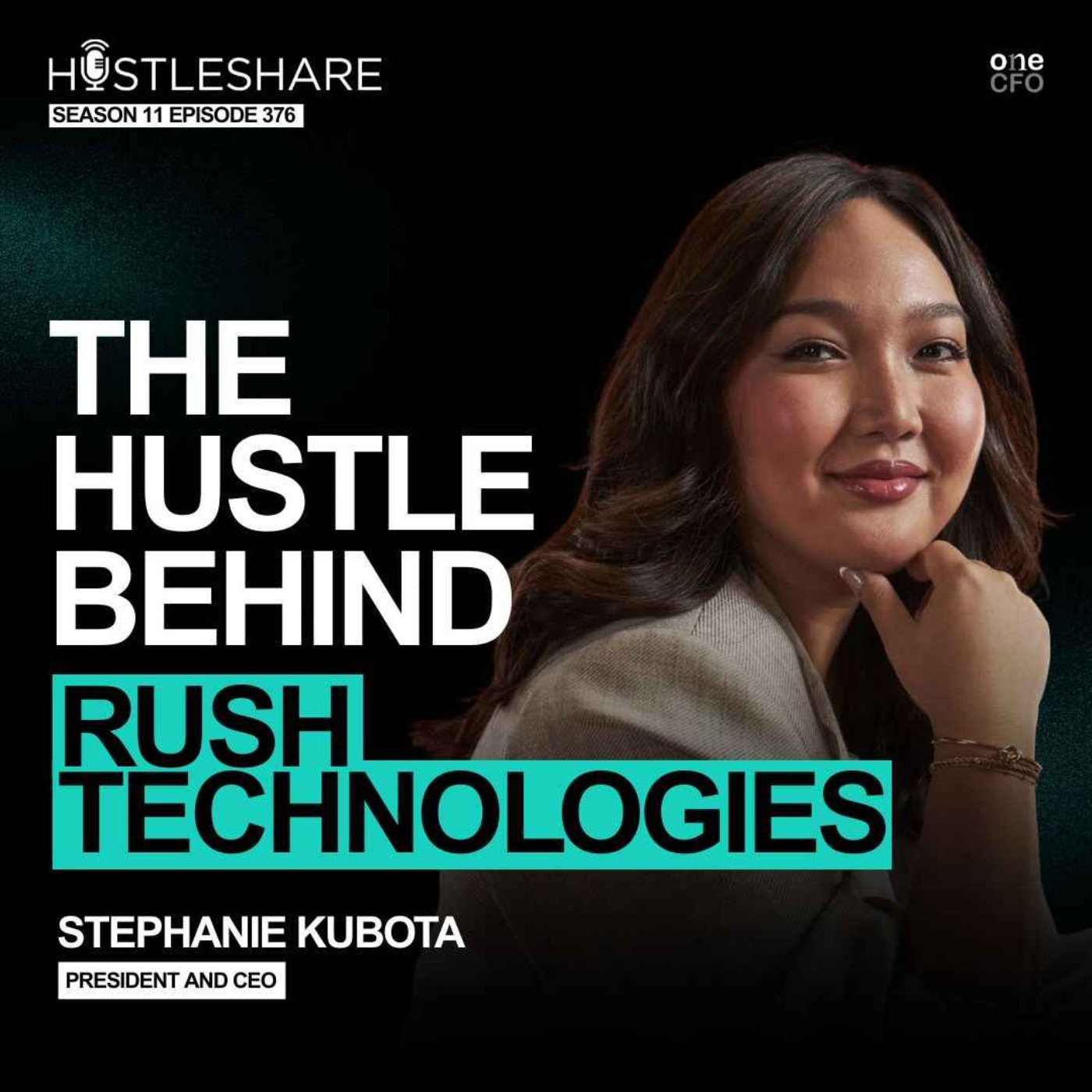
Stephanie Kubota - The Hustle Behind Rush Technologies
55m 0s
Rush, an e-commerce and loyalty software service company, originated under Globe's Digital Ventures with a focus on loyalty programs. Initially, Rush was built to power Globe's rewards program and later expanded to offer solutions to other businesses. The platform evolved to provide out-of-the-box solutions for various industries, with a key pivot being the development of Rush from a monolithic architecture to a ground-up build, enabling rapid growth and client acquisition. Despite facing challenges like accidentally deleting the customer database during a proof of concept, Rush managed to secure clients like Athlete's Foot and Unilever, showcasing its product market fit. Through strategic development and adaptation, Rush has established itself as a key player in the e-commerce and loyalty software service industry.
Transcription
9514 Words, 51212 Characters
Your network is your net worth. Social capital is creating relationships regardless if it's gonna give you an instant benefit. Let's welcome to the show, the president and CEO of Rush, Mr. Komoto. Pretty sure you still are one of the youngest, if not the youngest. To be put in that spot as the head of the dragon. The first couple of months, if not the first year, I really felt like I was impersonating someone else. The best way to learn something is to make that mistake. Welcome to HustleShare. The podcast that features the daily grinds of unique hustlers around the world. To show not our differences. But that our hustles are very much alike. Now here's your host, Ron Sterbät-Yong. Welcome to the last year podcast in collaboration with 917B. This is called the Spotlight Series, there you go. So we're in a beautiful 917 Ventures office. And of course we can't do a collab with the 917B if we do not do a deep dive on what are their most successful ventures. Led by, if not the youngest, one of the youngest. Youngest within Globe. Yeah, and youngest within Globe. That's been able to do it. And that's a beauty about what you guys do in 917B. You're able to really prove it. It's ages just a number and you can do it whether you're at Tito or a young in like step. Koboto. Oh, hello, thank you for having me. But again, Steph, really, really happy to have you here. And since this is the first time you've been on Hustle Share, aka in the Spotlight Series with 917B, I can't let you off the hook just like that. Everybody that's been here. What does that mean? It has had to go through this process because now I have to ask you, the million dollar question. Steph, what's your hustle? Oh, okay. My hustle is Rush, so Rush is an e-commerce and loyalty software service company. What we do is what we aim to digitize businesses across all of their customer journey phases from acquisition all the way to retention. All right. That's amazing. Top of the funnel end to end successfully, right? And it's funny because I don't know if you saw me earlier right before we did the role. One of my projects here was now shooting this with us. It's like, Ron, do you know that out of these companies here in 917 me, the only one that I know is Rush. Oh, my gosh. I am not talking about it now because apparently she was trying to sell some stuff during the pandemic. So, yeah, big ups to you, amazing, amazing. So again, Rush is a SaaS platform that enables people to sell their stuff online and to you and from at the heart, I don't know, browsing pahalan. Yes, from browsing, registering at the cart, although we don't do delivery. Got it. All right. That's amazing. Again, you have the unfair advantage. Yeah, guilty. Yes, we do. You have to, but hey, not that I mean, why deny, like I always take the opportunity. I love it. And that's what we want to be able to share here that how did you leverage the opportunity in 917 B? So a lot of people still don't understand how to actually take advantage of this opportunity. But before we get carried away, I need you to back up real quick because we're going to have to go all the way back. We even talk about 917 B, but we need to understand Muna, your origin story because we're going to have to ride the hustle share time machine. Okay, so again, we're all the way back. That's what I want to find out. Every hustler was not born. They were made. And I want to understand your very first influences. Was it like growing up and who were the very first few influences you've had when it comes to hustling? I mean, I feel like hustling part of my, all my family members are either their own business owners or they have side hustles of their own. So from the very beginning, I've always learned to have a secure revenue income and also have a side piece that you're passionate with and you're going to grow old with. That's amazing. But what are those profound things that you remembered them doing? Because say if you are in exposed to entrepreneurial relatives or whatnot, you learn entrepreneurship not just through theoretical, whatever's classroom setting, but you see it in their day-to-day life. Yes, yes. What are those things that you remember seeing them do that you still, inadvertently just like, "Whoa, I'm kind of doing that now." It wasn't pretty. I think it's like always like the 80/20 rule, so 80% of the time, they're struggling trying to make meetings and like pay their vendors and deliver the right things at the right time. And then 20% of the time, they get to celebrate what they put up within the 80%. And that's kind of where I see the struggle, the length of struggle, and then it's all worth it within the 20% of celebrating it. All right, now I want to zoom in a little bit on school, right? You are one of the IS mafia, who runs the tech industry, IS, I love, you're so many of you. There's a lot. There's a lot. There's a lot. And again, I'm too many to mention from BCs to founders and to amazing people in between. But I'll skip through that and talk about Boston University, not Boston College University, also two separate things, right? It's a guy who's a freak with these things and they're sending what is it in Boston? What was it like doing your undergrad in Boston and what did that teach you? Because typically when people go overseas, it just leaves an indelible mark towards how they view life and the opportunities around them. What was that like? Well, as you mentioned, I am from ISM, so I didn't get the experience of widening my mindset because it was already quite international, but one of the biggest things that happened in college was that I was able to get on campus jobs. So that was one of the things outside of learning within the classroom, it's also learning outside, doing actual manual labor. What are these? What are these old muscles that you did? Yeah, so you're looking at a subway sandwich artist. Wow. So that was one of my jobs that even did. So I did cafeteria trash pick-up, librarian, and then eventually I also volunteered to be a psych study in Harvard Business School, so yeah, Harvard Medical School, sorry. But while you're doing that, obviously humbling because you do that in the Philippines, you don't really get to do that as much, especially if you're coming from an IS school, right? But if you do that in Boston, I want to understand what are those lessons early on that that taught you, and I'm very curious, while you're doing undergrad in our uni in Boston University, what were the initial skills that you remember accumulating that early on that you still use today? So one of my other hustles was writing essays for foreign students that English was their second language. Oh. So the very-- Translator, essay writer, copywriter, all that stuff. So what I learned there, it paid for my lunch money for every month, so it was pretty good. So the very first thing I learned there is your network is your net worth. I befriended all of the Chinese associations, Korean associations, and got my connections from there. Wow. Amazing. Those those skills that you accumulated while obviously you're doing all these side hustles and in school, you talk of advertising in BU. What were those things that you remember banking on early as a skill set or a skill stack that were foundational in nature for you to do things in BU? Well, I think very first thing I learned in advertising and, I guess, communication in general is to understand the pain points of your customer. Like don't sell them the product, sell them how it's going to solve their problem. So that's the biggest thing I learned from advertising. Alright, thanks you. Fast forward, real quick, after BU went to Hong Kong for a bit to intern there and eventually made it all the way back to the Philippines. But walk me through that journey. So after BU, what was your mindset like, what did you want to expose yourself in terms of opportunities? Obviously, the whole world is here for a playground. There's a lot of choices that you could have chosen as a path. What did the Hong Kong quick experience as an internship? In BVDO, not Guerrero, BVDO, Hong Kong, what was that like? Well, that one was quite surprising because I thought in my mind, I was thinking madmen. So it was very old school. Like, just graphic design. There's no jackpot. Okay. Yeah. So that's what I thought coming in, but it was a lot more technical than it was. So back then, the biggest thing in trend there was like a virtual reality. So I had to learn so much about tech and how that's integrated into campaigns and advertising. And that's kind of my gateway into technology. Got it. Now, after this, now you went back home. First stint was Yondu. Yes. Obviously, this is within the globe ecosystem now. First few innovations. Have it. I'm aging myself. But I remember Nixeletto talking about, hey, how they were actually creating all these vests, things before in Yondu. But that was ages ago when there wasn't mobile smartphones yet. But in Yondu, you did strategy and governance right away. Talk me through that first crash course, and how did you fall in love with this? Because there's a pattern I'm seeing here. You didn't really leave the nest anymore. You kept searching. No, no. Just remained loyal. Just went to like different nest, same tree, different branches. Yeah. Yeah. But what did you first encounter in the Yondu experience that made you kind of really stick through and triple down on what you experienced there? So Yondu is globe recruitment agency. And I was deployed to digital ventures or digital media, which was also the vast arm of globe. My first encounter was G-Movies, which is a movie ticketing platform. I was a marketing associate there, and then from there, I moved to strategy. So the very first thing I countered really was, again, a mix of technology with marketing. I had no experience with technology, but I finally figured out that we can't really do marketing this day and age without it. Now I want to double down on the skill stack. This foundational first job. What were those things that you remember developing that early that again, are still with you today? Well, one is again, who is your network? The second one, I would say is everyone hates it, but everyone needs to learn how to do it. It's sales. Like learn how to sell yourself, your product, and like the way you operate. How did you learn that, because this is foundational, as I'm also a buddhulero by default. I don't know it. It's just the Holy Ghost just goes to my body. We never buddhul with influence. Okay. We don't buddhul with influence. Okay. Again, some people are blessed with a gift of gab that it comes naturally. Some guys, it's more of a longer learning curve, and you have to develop your own style. Right. Exactly. In terms of persuasion, you're right. Every day, you have to prove yourself to the people that love you, you care about, and obviously in your workplace and whatnot, but how did you develop that style of persuasion or sales? That's one of the foundational skills that you learned early on. I guess it's like, I always put it, break it down into three steps. The first one is established trust. So get into relationship, understand what their main points are, what they want are, their objectives, etc. And then after that bridge, bridge how your product, your service, even yourself, will be able to serve their passion or their needs. And then I guess the third one is either close or walk away, because sometimes it doesn't fit their needs, and you having the honor to be able to say that I'm not going to shove this down your throat, but it keeps that bridge open for maybe the next time they need something that is swung with what you have to offer. Got it. No, but I want to understand one last thing, your MO in establishing trust, because that's also the start of the persuasion process. What's your techniques that work for you? I'll start with mine. Yeah, okay. Please do. And now you're learning my MO, my MO, every single time I meet a new person, I will try to make that person laugh within the first five minutes. That's why I'm always coming in hot and full of energy. But what I'm always trying to establish is make someone laugh. Because here's what I, in a sales environment, if somebody you're trying to pitch, if they're not open to you, they have their, their, their, their arms high, whatever you try to push, it's going to get block 90% of the time. For sure. For sure. The way to make that, that guard down is to make them laugh. And that also establishes people liking you. And they associate, oh, if you, if they get your humor, they made your, you made your laugh. 100%. It's 50% of it. You're already 50% close. The next one is establishing, you know, what, what you're selling as a thing. But in terms of that personal connection, I'll always try to do some stupid or say some stupid. They're all. It works. It works. It works. It works. Okay. I cannot read this out. But what's your style? I want to understand how you do it. I, I mean, I wish I were funny. Unfortunately, I'm not, so I don't use humor. No, actually, so what I am, is I am a complainer. So I opened the door for rents. So my usual opener like today is, oh, are you in the office? Oh, you guys are three times, so we have to go to the office, Kawawa and Mantra, and that usually opens them up, let's say, guard down, allows them to like tell me all of their problems. Yeah. I'm going. That's amazing. I never heard of that style. The complainer. Yeah. But I love it. I love the style. That's what it is. And people start opening up to you. That's where everything flows. So you've been here and you did Yondu for a good year, technically. But again, you got sucked into the mothership, and that's what I want to find out. Obviously, Yondu, a very difficult environment, not everybody gets to that. But the mothership is a whole other beast. Yes, it was. Want me to that experience. And now what were the other layers of skills that you developed while you're in the mothership? And what did you learn working within Globe? I can't. Globe is a huge, huge organization. And there were, I think, just within my department, we were 100 people. So we're really trying to figure out how one to like establish yourself amongst others. And I thought I'm coming in with like a B background, like, okay, I can speak English. No, everyone was nosebleed. And second, I was not qualified or I was not competent for like being a Globe employee. They're very technical, diligent and like detailed oriented people. And I am more of a strategic macro thinker. The picture. That's definitely what I needed to learn, how, how to be more detailed oriented and process driven. Okay. How did you do that? Just again, it's, you always go back to your instincts, right? To diversify and try to build skills in your, you feel at that point where you're weak spots. That might have caused a lot of, you know, resistance from where old self actually pursue. But how did you break through? One is just mere exposure. I was looking through a lot of Excel files, creating dozens of pages of decks. And I guess just being comfortable with all of that, but I think the biggest one after I've gained a little bit of composure is that work smart, not hard. So I saw that because there are so many steps and so many details involved, some could have been done in a single step. So I recommended we streamline a couple of processes, just so that we move things along a little bit faster. And that's again, proof is in the putting product manager when you come in and then product manager and then all the way to a GM, but for you to be able to go up the ladder in such a competitive environment, per se, what are those things you had to really learn and adapt to as you leveled up on every single step? When is you cannot do it alone? You will need to find sponsors and supporters. I am so grateful and fortunate enough to have found a mentor so early in my career. And he was not just there to like open the doors, but also to take out the blockers from my path. I think the second one is also being able to be Teflon. Now, if there's a problem, you make a mistake, you take accountability and like instead of finding the root cause, it's self-problem first. And then maybe people will forget it, but yeah, exactly, I'm like, you know, you spend enough time trying to fix the problem, but I don't forget that about the cause. Galing, that's amazing, but this is what I want to find out. Obviously, you're in Glob doing PM work and PM is right at the middle of everything. You're a glue girl. It's cross-functional. Yes. If you do not exist, things fall apart because people typically operate in silos. They do not like looping each other in and that's why PMs and GMs eventually are a great system. A CC made in person. Yeah. But I want to understand, how did Rush originate? Correct me if I'm wrong. Rush started pre-917 and how did you get involved into this? This initiative? So Rush was created back in 2017, 2018 under digital ventures. At the time, I was still the product manager of G-Movies. Yeah. I remember this. Yeah, it was embedded inside G-Cush, too. Yeah, exactly. So what they wanted to do for Rush, back then, different founder, and she's still actually, well, she was. Give her a shout out. Who is this? Yeah, this is either Hernandez. She's now the CEO of ETAB. Oh, really? So back then, the initiative was, a globe was using a platform for to power their globe rewards program. And that was a lot of capital. So what they wanted to do is to commercialize that and widely be able to offer to other businesses. So that was the start of Rush. It was built in-house and then commercialized to be used for B2B. But it wasn't done for e-commerce yet. No, no, no. It was purely loyalty. And at the time, we were very similar to a software developing company. It depends on what the client wanted or needed. And then when we saw patterns through different clients, different industries, that's when we started creating the out-of-the-box solution. You know, it was funny. It was 2017, 2018. That was the time when I was in my second startup. My startup back then was Chatbot pH. Yeah. I had the time. I used to hold office before. I was cutie number one. But I remember my first exposure to Vince, actually, was when they reached out just they needed a Chatbot or free B M&N. Oh, wow. I haven't heard that in a really long time. But those are like early stages, because I remember them talking about it, that they needed to integrate somehow, some way, rewards into this ecosystem. Because there's so many people that use the globe service as prepaid, postpaid, whatever. But they don't know that they're actually earning rewards. Is this the building blocks of what Rush was and how did that then evolve into the product that it is now? And probably walk us through how that folded into 978. Yeah. The platform that globe rewards was using was this monolithic architecture. So we went in, we assessed it, and then we saw that we couldn't use it. It was made and used for globe rewards alone. So what we did is we built ground up Rush in three months. And one of our very first clients were athletes foot and Unilever, which is still a client to this day. Oh, that's product market fit, they've never pivoted to anything, so that's good. So how did the first pivot grow into? Because if you have that big of a client right away, you cannot drop balls. Actually, so funny enough, none of the brands that I mentioned earlier, one of the other brands beginning, we wanted to do a POC with them. I think on the first day, we were able to register around a couple hundred customers into their rewards program. At the time, everything was being done manually. So our devs were pretty sleepy. So one of our devs accidentally deleted our database. So no one allowed you hundreds of first registered customers. And that's where we learned to do backups. Or maybe by staging my lap, okay, what the hell, okay, yes, we were able to recover the last couple of hours or the first, because when we did backups every 12 hours back then, but it's too long. Yeah, it's too long exactly. So we were able to recover the first 12, but after that, we lost it, fortunately, it was low peak hours. So maybe we lost a couple of dozen, but still, it's definitely a learning, yeah, I mean, the best way to learn something is to make that mistake, so we're gonna put it in the learn bank. Yeah, put it there, chalk it in, but I now want to say, so you have this. How did that fold into the next iterations and walk me through 917? Right. 2018, 2019, we were able to establish a partnership with Unilever. We did a POC, they were happy with it. So we were able to commercialize the contract. We also were able to replicate that with another account. So by 2019 or so, we already had around 30 merchants under Rush. And then 917 Ventures came up. So it's a corporate venture builder, Ernest ideated. He had a lot of ventures already within Globe, he had jikash, he had Rush, he had Yondu, etc. And he wanted to kind of establish a home for all of us. So Rush was actually one of the first ones to be adopted by 917 Ventures. Wow. How did you come into the fold? Did you lead the charge right away and did the dynamics change? Or is it more of the same gold globe innovative culture that now resonated in a new home, a proper home for this? What was that like? So I think what they did was they took all of the vast innovation venture teams within Globe. So the founding team was, of course, Ernest, then there's of course the master director, Vince. Dr. Berra, which was a CCO of Globe, Mikey, Garavilio, and of course, Glenn Estrelia, who was leading digital ventures at the time and is also my longtime mentor. So he took all of that, how's it under 917 Ventures? Now your 917 exists, walk me through the different expectations, because if Rush was built to really help the big brands, like Unilever's and the 30 other brands that are there, how did that involve into what that is, correct me if I'm not, if you, this happened pre pandemic, the pandemic was probably consequential that you had to pivot in a certain way. What was that like? We were very fortunate that I guess unlike other startups, we are a corporate venture. So we had the budget for that year, but we saw all of the other portfolio companies are kind of closing left and right and we needed to figure out how do you remain relevant? Because at the time, our rewards program are being operated on premise. It's a digital platform, but there has to be a customer interacting in physically. And a lot of our merchants pause their program because their stores weren't open. In three months, we like doing three months stuff, we expanded our services to our e-store platform, which is our e-commerce solution. And we also saw that because we were such a new software, we're not like a shop-of-fire magento, we needed to introduce ourselves to a different market than what we were doing with loyalty. So that's where we expanded to serving micro and small businesses. Jared, now so when you down zero then, is this also the time where you officially took the helm as the headhunter? Not yet. How did you walk me through that process of how all of this evolution coincided with also you taking that helm? Right. So in 917 ventures, the way it was organized was that we had an entrepreneur and residence, which is, at the time, it was Glenn, Australia, who was able to exit Yondu and among other things. So he was handling a couple of the ventures and I was the general manager for Rush. And I think 2020 was the time where we pitched to the investment committee to eventually incorporate Rush because of the traction that we got by expanding our loyalty to e-commerce. And I was also peak performance because post-pandemic, everyone wanted to go digital. Yes. Everyone wanted to shop and it was great. And that's where I was fortunate at the time as well. I was general manager. I introduced this somewhat like golden era. So I was nominated for. Honestly, duh, she got the helm. And this is where I want to zoom in. And then this time, and pretty sure you still are one of the youngest, if not the youngest, to be put in that spot as the head of the dragon is a totally different beast. How did you evolve as a leader coming from GM, say, all right, next in line, what process was that like for you as a leader and also the thinkers? Obviously, the buck stops with you now. Yeah. The number of times I've heard buck stops to me. I think that's fine because even across all of my career, it's always been, they could tell you make it. And if you don't believe in yourself, then who else is going to believe you, especially now that the buck stops with me, I have to believe in what I'm saying. Okay. So if you felt like you were impersonating, basically that's massive imposter syndrome, right? Yes, it is. And I, I reached out for God, who said it, Alex Hermosi, he said that apparently competency and your confidence level, not matching, not matching, you're probably there competently already, but somehow, some way, you just feel like you haven't made it and you have to just convince yourself that it's aligned. Right. Exactly. So you felt like you were, you know, pretending to be someone else, but probably they want to do as a CEO if you weren't fit for the role of anyway, but how did you bridge that gap? At least on the first year, there is kind of a checklist of what you need to do to establish a company. It's in the process of incorporation. So with me, like, ticking every line item there helped me build that competency to confidence up. And also making sure that the team that is directly reporting to me is where we were all kind of faking it till we make it. But adding those layers up and making sure that we sucks, we tick it off made us all the more comfortable. Walk me through the team because if you were the youngest, I'm pretty sure you had people who are older than you in your team walk me through how you were able to get over that moment, because I struggled with this, man, I couldn't, I took me a while to be stern. Yeah. And then I became stern. People get, there's this new generation of Gen Zs all of a sudden I had to adapt to, right? But now I found, I found my equilibrium point just before I was just like tough love, you know, I'm just going to be me. And then I realized, oh, my God, there's a brand new, uh, uh, should we call this a set of people that I have to deal with, aside from the people that I just technically learn how to lead, which are older than me. I'm in between, but walk me through how you were able to then get the best out of those types of people. So we were all kind of founders of Rush. So we all built it together and we have so much passion and dedication towards its success that getting them to believe in the purpose, it was all, it was a given. I think the difficulty there was at the time we were all clevers. And then I was appointed CEO and had to figure out how the dynamics would change. And I think the very first couple of weeks, it was like, I would have to explicitly say what role or what hat I'm putting on. So like, I'm the CEO right now. And this is what I'm going to say. It's my final say. And then if I'm just like, okay, we're just co-workers. What do you think that had to be explicitly said until it became a norm? God, but that's, that's so true because obviously they, aside from you adjusting to them, they also had to adjust, oh, shit, see, boss, okay, that's, that's now, uh, uh, Steph. And she carries the burden of having to make sure that everything works around here, right? So now I want to talk about two things, 917V, and always talks about unfair advantage, 90 million people at your disposal, you know, all the resources in the world. But again, it's a break next speed. This has still start up one or one, right? With very high expectations. And the leash isn't that long, you're going to give in time to, to make mistakes, but it's not only, right? So how did you, not any more, not anymore before, but how did you now bridge or maximize those limited opportunities to hit the metrics and how did you nurture the team and the product within the 917V ecosystem? It's a double edge sword being a corporate venture. The positive side of things is that we had access to not just the 90 million customers, but also what we would call the center of excellence. These are technically competent people, if not teams like legal finance, um, compliance that we were able to use as a reference when we are establishing the company. And then on the other side of things, obviously, there is, we are in a large corporation. So getting approvals for things tend to take many layers. So really balancing those two out were one of our biggest challenges, I guess. That's amazing. Now walk me through the evolution of the product, or rush when I was born in the Undoos womb is totally different now. And walk me through the early stages and now it became e-commerce backbone execution. Walk me through how that was built because again, you have the, the, the, the resource of a 917V at your disposal, right? You can't, you're not working with chump devs here. They know what they're doing and you need to maximize their time because they're not also just working on your own project, right? So how did you lead that product? See, you're already in the product manager before to GM. So you have that DNA. How did that evolve now to what the rush is today? When we launched rush as a loyalty, the problem that I was trying to solve really is, um, how do I get my customers to come back? Um, if not, who are my customers? Cause obviously you get a lot of purchases, but you don't know exactly who they are. They're just an OR number. So digitizing the rewards program, essentially enabled merchants to really have a more connected relationship with their customers when that was established. We then figured out loyalty comes so far later, so much later in the customer journey that sometimes there is a gap that customers go on e-commerce now. They go to Lazada, Shoppy, Marketplace, Grab Food, etc. So many fragmented channels. So how do we ensure that we are, our program is introduced to the customer early on so that we capture and funnel all of that data into one database and dashboard. I mean. And that's how we've kind of evolved instead of starting from the beginning, we started at the end. Ah, reverse. Okay. But what were these key sprints that you remember validating on everything as an experiment? And that's what you guys do in 1971. We obsessively, you know, measure, measure, rebuild, measure, learn, build, measure, learn, the faster you go through these loops, more than anything, then we can validate stuff. So the things that are crucial validations that you did that you validated on and how are you able to experiment well to achieve those results? I think the very first one is just like initial traction. So are we able to solve someone's problem and are they willing to pay for it? That's easy enough to validate. You can, I mean, if you have a good enough salesperson, you can sell an idea without having to be there. The second one was more internal, which is are the costs to serve what you're, what you've sold low enough so that you're actually earning your margins. Of course. You're selling it at a loss, what the hell are we doing here? Exactly. Exactly. So that's the part where I think early in the startup world, it's like grow, grow, grow at all costs, but now VCs and investors are a lot more conservative. And that is now number one in our in our list when we are trying to develop products or launch new services. Unit echo. Yes. Right. Now again, because at the end of the day, I've sent this in my interview with Vince also. That yeah. It takes time. First time founders obsess over product. They've fallen love with the product too much and most time, most of the time they build something that nobody wants. Yeah. But it's an overly engineered product. Second time founders apparently obsess over distribution, distribute, you know, man, over distribution, they ask margins. Yep. And third times founders obsess over margins. And it doesn't require you having a brand new startup in getting this done. This can be done within us. Yeah. The same startup. Emphasation. Evolution just naturally happens. What did the margins PLV happen to you naturally at the start or did you realize this through all of these iterations over time? Yeah. I would say it happened in the middle, um, messy middle, the messy middle because at the beginning, it's really a choir. Oh, there's many merchants as we can. Yeah. Exactly. And then afterwards it was thinking about our margins and we saw actually that let's say our loyalty solution is a lot more profitable than when we launched our e-commerce platform. And it's because we are using a lot more third party enablers such as payments, deliveries, and we didn't account for the costs of those in the back end. Um, so that's the part where optimization happens. Fortunately, the more volume and business you generate for your third party service providers, the more we can negotiate our rates. And that's why it's that messy middle. No, it makes a lot of sense because imagine how slow you would have been if everything was built in house. And in this day and age, that's why it's always where you're like, yeah, it's proprietary. We all know we use third party APS, okay? It's impossible and blessed you're probably Amazon that you build every single thing in house, right? And it's also very counterproductive for you to be able to do that because good love trying to iterate there. But if you're able to then build product fast, build volume, negotiate your rates so that your margins become better, then you have a healthy business, right? Because now you can be obsessed over that margin and the distribution. That second time or third time started founders obsessed with. I remember when I talked to Vince, that one of the very profound things, regardless of the climate and the startup ecosystem, they really double down in training founders, education and training, which is so crucial to becoming a better version of a founder because I believe that as a founder, you're the ceiling center. If you don't evolve as a founder, your startup also hits it's the same ceiling that you are. Walk me through what type of trainings did 911 seven put you through and that allowed you to become this version of you now. Right. I guess it's one of those benefits of the unfair advantage. Yeah, we're very fortunate that we were able to sometimes part of an negotiation with sheer volume, like if there's a lot of executive training programs that globe is doing, it can be spread across all of their portfolio companies. Unfortunately, we were able to take advantage of that and that was one of the biggest things in terms of competency training. But the way of being able to navigate through ambiguity and stakeholder management, especially within the corporate world, a lot of that was really like being able to see all of these mentors and leaders just lead it by example. And I think on my side, it's figuring out which of their styles suit my personality best and kind of creating a cute Frankenstein out of it. This was a pre 911 seven product, but I grew big in 911 seven and then obviously became one of the most successful dentures within the 911 seven umbrella. But I want to understand about your journey because again, being a young CEO, it's not easy, it's not easy. You have to, sometimes you have the title, but you don't feel like that's you. I feel that I felt that too, especially, until I developed that confidence and I would be able to reach that. Correct. Correct. But I now want to understand first, several things about leadership, so big shout out to Tasha for giving me pointers here. But in terms of leadership, what advice would you give to other young leaders trying to find their voice and stay true to the start-up mindset while navigating corporate walls? Oh, it's a lot of layers. I think the very first one is don't be afraid to experiment on your leadership style, because there's no one perfect one size fits all. I mean, I told you earlier, I am a Frankenstein. I think I always bite more than I can chew and kind of adjust the same way we would rush, we were sorry at the end and then worked our way backwards. I think I guess that's the style. Yeah. It's always easier to cut a bit off versus being underestimated all the time. And then the third is, when you make a mistake, don't hide from it, acknowledge it, embrace it, and move on really fast. Those are three things. That's amazing. And these are the things that you really can keep up with with your age, because it's hard to say, all right, throw it to me and you're already a late 30 something like everything hurts as a late 30 something right now. And if you're in a young, say, young, late 20s, early 30s, can I have a, yeah, we literally have the stamina, the spirit and everything else, especially in your like mid 20s, cute power, when you make a mistake, I just kidding, again, you can actually keep up. And you're still malleable enough to say, yo, I messed up exactly, you know, you're still young and you can own up, right again, these, these are things that you earn. These are stripes you're not given to you, right? Because if you feel like somebody owes you something, that's the beginning and end because nobody's own shit at the end of the day. These are something that you have to prove not just to your higher ups, to your peers, but also to your customers. And that those, all of those, you are a synergy of all of those things happening together. What's something you've learned about leadership that no one really prepares you for? I think the sense of responsibility and guilt and burden that you need to be able to shoulder if you are at the helm of a company. So every single person that you employ, every single company that you serve is, again, the buck stops with you. And being able to just manage that weight and still appear to be light to your organization because the minute they see you sweat, they just doubt, just clouds the whole thing. Yeah, I saw a quote says that entrepreneurship is the art of staying calm in a storm. Dude, do you guys have no idea how scared shitless I am, but I cannot show them I'm-- Yeah, it's a pirate one where you wear the red shirt because they don't see you bleed and you wear the brown shirt so they don't see you shit. Yeah, bro, bro. Guys, there's even a song about this, this is resonated with me before, "Where are you? It's a child by Tito Garibi." And like, I had to put in a face like, "Yo, just--" "Kaya, what are you doing with this?" "I don't know what the type of shit we have to go through and all that, but I want to understand the stuff, right? These are the things that you cannot navigate alone. You've mentioned you've learned so much from your enthror, severe Frankenstein, but I want to understand what type of profound advice because we can never do this alone, right? This is a team sport, and a team sport requires coaches and mentors, your peers, and everyone else in between. What type of advice did you receive that left an indelible martyr to mold you into the leader that you are now? And who did it come from? Well, there's-- I get a lot of advice from the mentors. I think the one that I still apply to to this day is what Glenn said about social capital. Social capital is creating relationships and building bridges regardless if it's going to give you an instant benefit because it's something that you put in the bank and it'll get interest as time passes. And there are a couple of people that, when I was maybe in my early 20s, have worked with that I built a nice relationship with out of nothing, just to help each other. We're all struggling early 20 years. And now they're like VPs, directors, and that's where I can take out the interest from my social capital and get help from them. So that's one of the biggest and most relevant advice that I've gotten. No, totally agree. And in the realm of social capital, right? When you plant those seeds, because what people don't never underestimate us a little around the mass of kindness, just being checking in with people or just being helpful, adding value in small little things. Do the intro, do the like, comment them, public little things, because these things are technically establishing a reputation that you built. And unfortunately, a good rep is earned in spoons. Yeah. The flip side of this is that you're fucked this up and you know, it's lost in buckets. Yes. I lost a few buckets and then I hope that I in hindsight, like shit, I wasn't thinking straight there. So nowadays, as a young, not young, old, sorry, late 30s, my god. That's still young. That's what I tell myself at night. That's what I also tell my my personal out. It's something that I really protect, because I didn't come from privilege. The only reason I'm here is I built so many bridges that helped me navigate through the pyramid of life. And if I fuck up my social capital, I'll be straight down at the bottom of the security again. And I don't want to go back. It's dark there. Right? I don't want to eat cheap ass food anymore, no more. I like it here. And it took a while, made a lot of mistakes, built a few, burnt a few ridges, but what I have I really, really nurture because one thing about social capital and let me know if you agree. It's a gift that keeps on giving. Yes. Exactly. Because if you reciprocate value over time, you can just take and take and take. You have to give it. Yeah. Right? The opportunity. Builds that interest. I love it. Okay. Last few questions. Before I let you go. Right? Now, in terms of hard calls. Oh. Okay. One one shared trauma that we had is that as a CEO, when the buck stops with you, you have to make hard calls, walk me through the hard calls that you had to do. And how did that also leave an impact towards you as a leader? The biggest and hardest call that I've ever done, it was really downsizing, downsizing in the company. You know, people always say it. Oh, it's right sizing the organization. But to the recipient of that right sizing letter, it's all the same. And one of the biggest things I've learned going through this journey is, I mean, you have to do it. Right? Around it, but do it with humanity, with empathy, and be able to communicate it well. And why it happened, you know, don't just write a letter saying, I'm sorry, you know, I'm money. Yeah. Bye. You want to see how you do it? No. No. So it's really about letting them understand the position of the company as an organization and also understand where you as a leader is coming from and making sure that the bridge is not burnt because we're in tech winter, but season change and we can always recover. As you mentioned earlier, you are also like, you're recovered. We're still waiting for our recovery, but yes, but I want to understand now, I'll chime in on two things that I wanted to say here. I don't know a founder that I've really been through because it's not Reynolds and butterflies. Easy to flex when you're winning, but when you have to do cuts, this card is for life. The first thing I want to say is that a lot of the founders that I respect, I don't know anyone that are actually, because sometimes a path forward is to take a step back and that involves cutting people. You don't want to make no fucking cuts because it hurts. It hurts. I'm still starting for life, like I still remember that day, I had to cut my team in half. Most trauma, one of the most traumatizing days I've had to go through. But where it becomes shitty, you know, this is me reading the ecosystem. 2023 was one of the shittiest year. Had to cut my team in half, my co-founder passed away all of a sudden. Oh my god. When it rains at pours, I can ask people for advice on the cutting of people because people have done that. How do you fucking move on from someone passing rent fund of you and you still have to rally the ship? So sorry about that. No, yeah. It's all good. I can now. If you need ever advice, I hope I don't wish it on you. I'll be through it. But what hurts me the most? Not really personally. What hurts me in the realm of the startup ecosystem is when people, oh, I didn't have to cut my team in half because, again, startup life comes in seasons and inevitably you're going to hit the same wall we do. And if you look down on people that were going through this shit and once you're there and you're one of those assholes that looked out on it, nobody's going to be there for you when you do this. Here's a perfect example. 2023. I had to go through this. I have this profile. I know. Tasha Nana Man. Tasha has so much core memory things that we do. 2023. I was in a, I was in a panel with Roland Ross and Jojo Malolos. Roland Ross of Gumo, Jojo Malolos of Paymango and me. Tasha just asked a simple question. How is this year for you? Oh, dude. And I lost my co-founder and I cut half my team. You know what I did. I cried in front of the whole fucking crowd. I think that's all I cry. Where are you there? I hope you were there. Okay, good. Oh my gosh. I don't know how it had the crowd. It's a simple question that in a normal day, I was like, yeah, we're doing this flex. If you're winning, it's easy to flex. For sure. How do you come clean when you're doing that? I don't know how many people said, you know, whatever, but it didn't matter. That takes a lot of courage to say it up front. And like, do you think it didn't stop with me? The back did not stop with me. Roll and draw some gumoo because I started crying. He started crying. I love it. I think everyone sympathizes and ties together. Oh my God. No, but what I'm saying is the startup ecosystem here, if you see people having to do the necessary evil to give their team a chance to win again, that's when you rally together and be there for them. Don't be one of those people that would go out with me and I will never go to the hole. You will work for them. Or the vultures. Guess who's going through that now. A lot of people. Again, I'm not wearing it, but I'm here to help navigate. It's inevitable you have to do a lot of side of founders or serves now in order to make it through the storm, have to make cuts. Guess who's been there. Guess who Tasha will ask this year. But it's it's a norm. But on your end, this is my last question, how did that leave a scar on you? And how does that make you a better leader? Sometimes we really focus on the team that we left behind, like the people that we caught. But what I was really blinded by is also the morale of the team that remained. And I had to balance that out. I couldn't you can't make them see you sweat, so you had to stay strong and say, even if the morale is down, like we're at an upward trajectory. And also it's like if you're at rock bottom, there really is no no more like space to go up. The scar that left behind is really seeing the effects on not just the employees that you caught, but their family, their livelihood. It's the most traumatizing just to see the after effects of one decision that was made. And obviously it wasn't just made alone, but being able to see how that circle, the circumference got bigger. How it has affected my way of leading forward is really I'm not saying that I'm conservative anymore. But it's now, I make decisions a lot more carefully. When we are going to hire, what is the longevity of this employee? Is it a critical talent or a critical role? How will that be placed in our PNL and how will our PNL look like in the next three months? It just makes me a, I guess, fiscally wiser decision maker. Yeah. And that's what failure teaches you. It's again, it's unprecedented humility machine that you can, like right now on days before I remember that I do not have enough motivation to propel this team to win where I draw or where I drew motivation to keep going, I still want to fail again, I don't want to feel that again. And again, I credit. Hasn't you yet still crusty? Yeah. No, I just, I credit that my team, especially those ones who have been in like one of them here. Aryan is there. She saw there that, that era where we had to, we even have a name, Kapit Lang era. It's like, he's still going to die on that year, right? And now we're going to open up again. See, this happens in cycles. But having the right team, you're right, that stayed behind, that never wavered their trust or at least publicly. That was enough motivation to keep chugging away. Like you cannot let these guys down and having had an experience where I lost my first startup already, I'd feel like, fuck it, I'm not, I'm never going to go through that again. Not till I'm alive or whatever, I just, there's a way, not blindly just hoping that things get better. You just really need to iterate while you still have chances to operate and while you still have many in the bank. Yes. Cash flow. Cash flow is king. There you go. And margins is queen. There you go. Yeah. That's a good one. I love it. Next up before LITO, invite people over to check you out in Russian if you guys want to invite people over to collaborate with you in Russian. Be like you in 917V to become a great partner of the 917 Ventures through Velocity. Where did they go and how did they do that? Well, obviously, discover 917 Ventures through their website 917ventures.com. There is a Velocity program, which allows startups and small businesses to be able to collaborate with the overall ecosystem of globe. So the same way Rosh has taking advantage of the unfair advantage. You guys has, I think they've them, our favorite word, they've democratized that access. And now you guys will be able to take your brand and expose it to our 90 million customers and also the center of excellence is that we were able to leverage. If you also want to learn more about Rosh, if you have a business that needs to sell products online or to just reward and understand your customers better, head on to Rosh.ph. All right. That's amazing. Step by step. Let's go follow whatever podcast you're listening to where Spotify, YouTube or Apple podcast if you didn't see it. Follow, subscribe, subscribe, smash that thing so that you can get amazing content like this to be delivered to you. We've been doing this for six plus years. We ain't going to stop until you make me an AI then the AI would do it. Okay. We'll train it. Training to become a runs through AI. But again, if you did say some drug on any links that you mentioned is going to be hustle share.com. And lastly, if you want to support hustle share and create premium content like this, just like what 917 did, please do subscribe at premium.hustleshare.com. Again, step. Thank you very much. Thank you so much for having me. All right. That's the next episode, peace.
Podcast Summary
Key Points:
Rush is an e-commerce and loyalty software service company aiming to digitize businesses' customer journey phases.
Rush originated under Globe's Digital Ventures and was initially focused on loyalty programs.
Rush evolved into a platform serving various industries and clients with out-of-the-box solutions.
Summary:
Rush, an e-commerce and loyalty software service company, originated under Globe's Digital Ventures with a focus on loyalty programs. Initially, Rush was built to power Globe's rewards program and later expanded to offer solutions to other businesses. The platform evolved to provide out-of-the-box solutions for various industries, with a key pivot being the development of Rush from a monolithic architecture to a ground-up build, enabling rapid growth and client acquisition.
Despite facing challenges like accidentally deleting the customer database during a proof of concept, Rush managed to secure clients like Athlete's Foot and Unilever, showcasing its product market fit. Through strategic development and adaptation, Rush has established itself as a key player in the e-commerce and loyalty software service industry.
FAQs
Rush is an e-commerce and loyalty software service company that aims to digitize businesses across all customer journey phases from acquisition to retention.
Rush was created back in 2017, 2018 under digital ventures to offer a platform for loyalty programs. It later evolved to provide out-of-the-box solutions for various industries.
Rush's first clients were Athlete's Foot and Unilever. The platform evolved from manual processes to a more automated system, despite facing challenges like accidental database deletions.
The CEO of Rush developed skills in networking, sales, strategic thinking, and process-driven detail orientation during his time at Globe.
The CEO of Rush establishes trust by opening up with complaints to make others feel comfortable sharing their problems. In terms of persuasion, he focuses on building relationships, understanding needs, and offering solutions.
The CEO of Rush focused on exposure to new tasks, learning to be detail-oriented, working smart, finding mentors, and taking accountability to develop skills and progress in a competitive environment.
Chat with AI
Loading...
Pro features
Go deeper with this episode
Unlock creator-grade tools that turn any transcript into show notes and subtitle files.
 PodcastTranscript AI