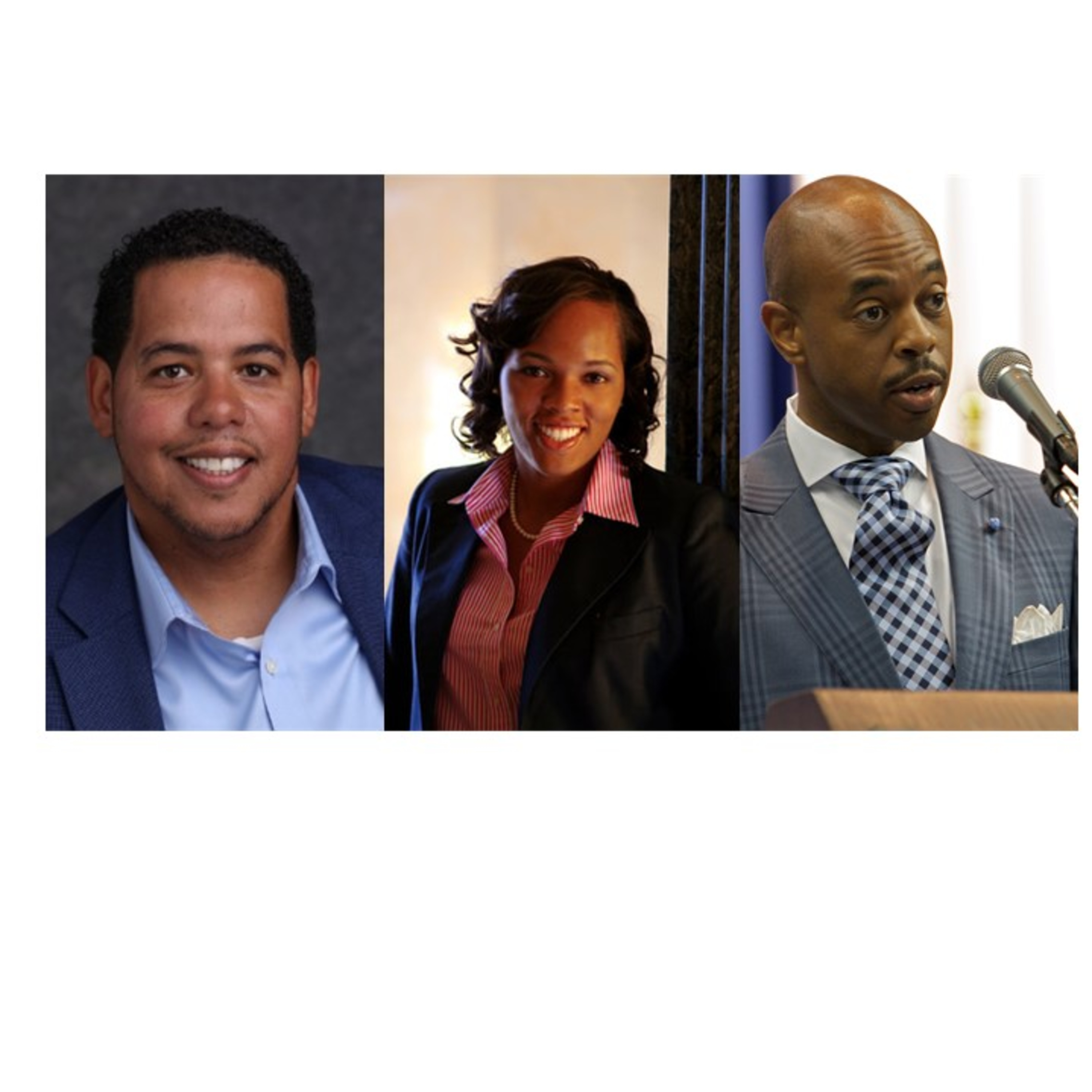
This podcast episode examines state takeovers of local institutions, focusing on schools and municipalities, and features insights from three experts. Dr. Domingo Morrell argues that school takeovers, particularly from the 1980s onward, are a political response to Black communities gaining power and successfully securing educational resources through litigation, countering the narrative that takeovers are due to local incompetence. Dr. Megan Wilson discusses municipal takeovers, using Detroit as a case study where financial crises and debt were used to justify state intervention. She notes that while efficiency is the stated goal, the process often involves racialized outcomes and results in neoliberal restructuring, including privatization and reduced public employment and services. Both scholars connect these trends to historical state policies, like disinvestment and segregation. Finally, State Representative Harold Love Jr. discusses preemption, where state legislatures override local ordinances, citing an example where Nashville's voter-approved local hiring rule for city projects was reversed by the state, highlighting the tension between local democracy and state control. The discussion collectively frames takeovers and preemption as mechanisms that centralize state power, often at the expense of minority-led communities' self-determination.
Greetings. This episode of the Freedom Plow Podcast looks at State Takeover in Primption. In recent years, state lawmakers have undermined local governments across the country, especially Black and Latino-led cities and school districts. We interviewed Dr. Domingo Morrell, author of Takeover, Race Education and Democracy, and assistant professor of political science at Rutgers University Newark. We also interviewed Dr. Megan Wilson, a post-doctoral scholar in the Department of Political Science at the University of Chicago, whose work focuses on public finance, urban development, racial politics, and state and local government. And our last guest is Dr. Harold Love Jr., a state lawmaker in Tennessee representing Nashville's 58th District and a second generation state legislature. So let me start with you, Domingo. You've studied state takeover of public schools, especially in the last or in more recent decades. And can you explain why takeovers seem to have caught steam, particularly in cities where African-Americans have gained political power? Yeah, so I think to try to understand how takeovers of local schools emerge, I think we'll have to really go back to the 1970s. I mean, we could definitely go back to the 1960s. The 1970s is really what it starts to see. You pick up. And this is what, what's happening is, you know, with the Nixon administration, the new federalism, have they called it what they tried to, you know, decentralize power from the national government, send it down to the states in response to what was happening at the national level, right, with the civil rights agenda, started by, you know, primarily by, listen Johnson at the national level. And as they decentralize power to the state in order to combat that, what was happening in the cities led to a response by state governments in an attempt to try to curtail the emergence of black power in cities, which had been aided in many ways. I was with happening at the national level, right, so during the 1960s, these funds were going directly to the national government and they went down to cities by passing the big governments. And so by the 1970s, again, with Nixon, and then it really picked up with Reagan in the 1980s, that they're trying to deal with, with this, with this, world of black political and power, many cities, particularly the funds that are going directly to the city. And while, this, this era of new federalism, is really seen as, has typically been seen as, but, decentralization of power from national government to state government, what was happening as well is the centralization of power, where state government started to take away control of historically, traditionally, local government institutions, schools being the top one. And schools become an important kind of like battleground because by the 1970s, 1980s funding starts to decrease for localities, but the one area where funding increases is education, public education, at the local level, and this is primarily because essentially black communities and communities of color at the local level are demanding more resources going to the courts, and the demand more resources for their schools, and they start to elect. And so, so what we get is a world of state power led primarily by, you know, conservatives, Republicans, at the state legislature and governorships, in tandem with these kind of conservative organizations that were on the 1970s, who were familiar with them today, like the American legislature, exchange counsel, hate on institute, and so forth. And so it becomes an interest in the survey about the state level, and they start to, again, to start to take over kind of responsibility, governance over traditionally local issues against school being one of them. And so, take over, as a policy, starts to pick up in the 1980s, what is because of the groundwork that was kind of established in the 1970s as a response to what happening says is primarily the quote of black power. You make an interesting argument, I think, that basically, we often sometimes buy into certain tropes that take over as a response to political apathy or dysfunction, but you make an argument, at least as it relates to African Americans, that take over occurred when, when black political empowerment and really black activism were actually pretty salient in many of these areas. And I remember reading about your, the story of New York, New Jersey, and you attending a meeting, and you're saying that a lot of people here at this meeting, and people are saying, we use that more. And so, explain how take over is really a response to black agency or black political agency, what am I going to say? Yeah, so the story that's told, and it's in, you know, New York where I spent most of my time doing case work, but looking at other places, well, the story, the dominant narrative, is that take over has happened because local communities are not, you know, capable or doing a good job of running their schools, so that there is, you know, some sort of inefficiency or corruption or something like that, and that's where take over is emerged as a result of that. But actually, the data is pretty clear on this, that take over is don't happen, you know, and I looked at the early periods of take over between 1980s and early 2000s, in order for a state to take over a school district, they have to pass a law that allows them to take over these schools. And the laws that allow states to take over local school districts only start to emerge once communities are successful in getting funds through the courts. And so if you don't get essentially two major factors here, one, black political empowerment in cities, and those cities is actually gaining resources through the courts, if you don't have those two conditions, you essentially don't have take over in the 1980s and 1990s all the way throughout the early 2000s, again, what I call the incubation period. And so I think that the story that we need to be what it really emerges in my view, based on the research, is that for a long period of time, historically modernized communities have been fighting for better schools. And it's precisely at the moment when they start to get the resources that they need to improve their schools, that take over is an option, and so that they never get a chance to govern their schools, get the resources that need to govern their schools, because it's precisely at this time where they start to become increasingly interested in passing take over laws and actually take over school districts. And so that's a very different narrative than the dominant narrative that folks are schools must be taken over, because people are not doing what they're supposed to be doing, where in fact it's actually people mobilizing to get the resources that they need in order to be an educated children. And that's what leads to a take over. Thank you. Thank you. This is an interesting segue to Megan's research, which looks at what the financial takeover of cities and Michigan and Megan, could you tell us what that process looks like and what was the main driving force behind that, particularly in the last six or seven years? Also, in the I take all of what Domingo was saying is as a norm, but I think you and I have talked about this previously. I think it's a little different when you think about municipal takeover from school takeovers, right? And so it is definitely his reaction to the black empowerment, but I think that there's something a little bit more in the nuance of like, how are we actually talking about the ways in which cities are going to be? And I think that that's part of what happened in at the municipal level is that there's a question of efficiency that the state says, hey, this entity is not as efficient as we would like it to be. It's not producing and it is accumulating that at a rate that it cannot sustain. It does not say that the emergency management or takeovers ever justified, but it becomes the story of like, can you actually deal with the debt load with the current cash load that you have right now? And I think that is that's part of the story that I think we don't look at when we look at schools because schools don't have to run in the same kind of efficiency markets that cities do. And so what I find is that
It's a story of looking for institutions, especially when you get to one institution, because it will come more efficient financially, and shut off some of the debt and reshape and reimagine what these institutions look like. And open it up to a market that is probably not free or fair, but is more lucrative in a situation for the stakeholders currently. Does that make sense? Absolutely. So can you give us an example? I know you looked at Detroit. I'm not sure if you looked at flight. Can you give us an example of how that plays out in real time? So yeah. So in Detroit, Detroit actually went going down with a debt, and they had a cash flow that could not be paying that, because they could continue to take out more and more debt. Right. In order to deal with their current iteration, like what they were trying to produce for the city. And the state saw this debt load as something that they would have to take on. And it can stay in this whole district, too. But the state saw this as something they would have to take on. That they would-- that they used to, by the way, to help-- it was an altruistic thing in how they articulated it. But it was definitely a racialization thing in the way that it played out. So the rhetoric did not match the actual intention. But in Detroit, it was, hey, we would like to help this city. And if you listen to or read the transcript of what the legislators were saying, because they were trying to help because Detroit could sustain itself anymore, it didn't have the kind of financial capital to actually remain a viable city. Then we can see this through everything that people are saying now about how Detroit changed that, because of active bankruptcy. And it was-- and so just the same way that it is in corporate bankruptcy-- is it's a work trying to produce the most efficient city. And I do agree with you, Jimi, though, and say, hey, this is really a violation of domination. But we don't want to talk about that. And we have to mask it in efficiency. And so what my work says is that, hey, yes, it is mask in efficiency. It is definitely racially dominated. But in Detroit, it is-- they actually did have to get rid of debt. There was a real issue of you don't have enough cash to sustain your current debt load. You cannot provide the deficit that you need. And so a real time example is that Detroit had all of this debt and could not pay its bill. And so they began to default on to their guaranteed and that became a problem for the market, for the larger market, and that was a threat to what the Michigan market looked like, how their credit worthiness and what the future of the city would be. Well, it was a mandate for taking over Detroit. And I think Ben Harbor maybe was also targeted. Yeah, Ben Harbor, Ben Harbor, Flint, Allen Hart, Blahen, Warlow Township. There were 13 cities, most of which were predominantly black. One argument is that someone might make is that-- and I lived in DC in the late 1990s when we were taken over by-- more than 1990s, I believe, when we were taken over by an emergency management. We called it the control board, as it was called, officially. One argument is that as a way to regain local power, the emergency management system that takes over or the state legislature is going to mandate certain reforms, such as neoliberal reforms or privatization or market-based reforms. And is that what you found also in Detroit and other places? And that made me layoffs, efficient government, those kinds of things. Oh, yeah, of course. Like, they're definitely laid off the institution that is now Detroit that everyone sees as a-- they mean to Army City is not the institution that it was pre-bankruptcy. They really, right side, that's the language they use, they make the government a lot smaller because they thought that was the way to make it the most efficient. And so, of course, they're neoliberal adjustments that are rooted in racial domination. But the institution is different. They created an entirely new kind of city that doesn't provide the same kind of good and services that it used to provide. So there were certain-- you could go and you knew who your truck-- who cloned your truck to those-- the city. You knew who that was. You knew who got your recycling. You actually knew everything. And now, there are larger bureaucratic checks on it. But the city is not the service provider in the same way that it used to be. So it's all about privatizing and finding the cheapest and most efficient way to provide the service in the city is just the mediator in that. Which means that they do it cheaply. They have less jobs. The city is not the largest employer anymore. And that creates a different kind of institution in a different way that people engage with the institution. And I think if I could just add one thing to that. So I think it's important to try to understand. But Megan is describing is how the state is responding to the debt that Michigan-- I'm not sure I got to throw in another city in Michigan-- have a burden. And so efficiency becomes a way to try to deal with this downsizing and all these kind of things. But what we have to understand is that the state is behind the condition that connects to this. So the disinvestment that happened in cities the white flag, which is supported by state policies, things like Malik and Bradley, which is based in Michigan. So these kinds of factors are state-produced. And as a result, to break this, to the black and the black politics, the emerges of black power in cities. These things are aided by-- so the factors that Megan is describing down the road are aided by many of these state policies. No day back to the 1960s, 70s and 10th-uncats of cases in New Poland. Yes. I mean, I think that that's definitely a part of the story. But there were also done in collaboration, at least in a city like Detroit, if we think about state revenue sharing. There were promises made by the state that the state was getting the opportunity to-- or they didn't have the power to hold up. So there was an agreement on a came-year state revenue sharing promise made under English that the Detroit city council approved of. And they approved of it. And the state legislature actually doesn't have that power. Revenue sharing is adjusted by the legislature at the end of the term. You can't make a came-year contract, right? That was also the politicians in the city. And this is not me blaming the city at all. Don't take it that way. But there were due diligence that needed to happen on all sides. And the state is definitely corrupt and definitely knew what they were doing in that. So you can promise things to people who didn't actually do their full due diligence. And then it becomes a larger problem of now the future-- the future iterations of the people who take over are subject to that, right? So one of the major reasons why Detroit, when all of these cities didn't have the proper revenue-- didn't have the proper cash flow was because they didn't get their same state revenue sharing that they thought they were going to get before. So it's definitely credited on what the state is doing. But it was definitely done in conjunction with some of the political officials at the local level. So I don't want to-- I just don't want to take them off the hook, right? Before I turn to representative Harold Law, I just want to clarify something that Demiko said for the audience. And Milliken V. Bradley is the inter-county, if I'm not mistaken, desegregation case that was the flashpoint of a lot of the conversations. Correct? Demiko? Yeah, yeah. I mean, so speak Supreme Court of Michigan trying to do something about desegregation. They understood that they couldn't come up with a desegregation plan within the city of Michigan alone because that in itself wouldn't have done anything. And so they needed to be a more natural type of desegregation where folks go into the suburbs. And that was struck down by the Supreme Court, and which gave the license to continue kind of wife's life. And to continue segregation is not only in Michigan, of course, but throughout the country. And so that's a state base of policy. that promoted. I'm going to be turned.
to this issue of where Detroit and Newark and other cities sit within the kind of global marketplace in the 21st century. But let me ask Representative Perry Love, are you still with us? Yes, sir. Yes, sir. Representative Perry Love, you witnessed a variation of state intervention, what is typically known as the preemption of local initiatives. That is that when a local government or municipal government or county government, whether it be Shelby County, Memphis, Nashville, passes a policy, the state legislature comes in and either overturns it entirely or at times makes adjustments to it or even threatens to make an adjustment to it, which can also change the direction of the conversation. So explain from your experience what are some of the challenges with preemption and give you one or two examples that have occurred when you've been in the legislature. All right, thank you. First to say this, there is an understood rule that we're not going to pass legislation that only affects one city or county unless that local government has requested it. And when I say it's understood, it's based on a respect for that particular member's district, for example. If a local business wants a low change to affect them, I'll respect for the member in whose district that business is residing, other member will let that member clear the bill or at least if they've been contacted by that business and they can't have bill, that member's in has to sign up to that bill. And so what we do, other respect, we try to say the bill is on a mid-live in your district Dr. Franklin, but his business may be in my district, right? And other respect for me, you may contact your state rep, but your business is in my district, right? And in that extent is to local government also, which is why we oftentimes say we don't need representatives from other counties passing legislation to the 6th Nashville, that a 6th Memphis. If we don't bring it, then it should not be brought. And what we see from time to time is that the state has decided to pass, as you said, laws after a local government has enacted something. And in some cases, past laws after the people of the local government by referendum have requested an act of an ordinance. And in some instances, the state impromptu comes because they think that the local government is going to pass ordinances. And just in the past, some years I've been here, I've seen that the people in Nashville in order to try to increase the number of local workers that are on construction sites in Nashville, I've said, on a very now focused, only state or rather the only local government building projects, not private, but local government building projects require a 40% local hypervision, not 70%, not 80%, not 60. But the same was, we would like to see the city of Nashville sponsors a building project, then 40% of the person's heart should be from Nashville. It made sense. It made sense to us in Nashville and the people in Nashville by referendum voted for that. My colleagues and the legislature felt as though that would be bad for business. It would be bad for them to send to other states. And they might also enact legislation to prevent us from coming there. My point then was that still is a 60% of the work. And it's not for all jobs just for the government building projects. We passed legislation that reversed that particular local hypervision. A few years back, there was a desire to have affordable housing provisions put in. That would say that if a developer was going to build some housing, they had to include a affordable housing units also in order to get their development rights. And this is just in Nashville, right? It wasn't in Williamson County, but what happened was the representative of Williamson County then broke legislation to make that illegal. So even though Metro government was trying to take care of its citizens by saying, "When you knock down one house, if you build back one, you've got to also build back another one, some of the place setting clues for visions for housing." Knock that down, and then most recently as you familiar with our community oversight board, where again the people voted to have this particular oversight board approved state government chose then to tweak and pull out a lot of money. And pull out a form of vision of the community oversight board. So what complicates matters in Tennessee, and I think a lot of southern states is that the legislative calendar is very short. Let's say for example, compared to a 10 month legislative calendar in California. And so some of the preemption bills that are being advanced are being advanced initially in secret, and they're being then submitted into the calendar or a week before the deadline. So in a four or five month legislative session, when it comes to preemption fight, it appears that the playing field is automatically stacked in favor of those lawmakers who are advancing preemption bills. In a short timeline, so how does a legislative culture of Tennessee, for example, assist preemption bills, particularly as they attack the larger cities such as Memphis and Nashville? The schedule for the legislature from January to April assist preemption because we have a short window for bills to be passed. And depending upon the culture of the legislature, which you may find to your point, not only are bills filed, but that number sometimes bills are filed in your face, you know what I'm going to do. But because you don't have the numbers on a committee to stop the bill, it goes to committee, it goes to House floor, and it passes very swiftly. And that's one of the problems we have is that the interest groups that are affected by these bills oftentimes don't even have a conversation with those members in the desk, they have delegation. Memphis or the Nashville delegation. And Memphis, this is something that becomes problematic because, again, we have to make sure that the provision we pass our best far constituents, but when you have bills that are reversing the local wishes, it becomes problematic. And you're sorry to mobilize people to your point over a three month period because the bill shows up. You might know what the bill is because it may be a caption bill, doesn't it? And there's an amendment to put on that to completely change the bill. And it's not done up front in your face because they know they have the numbers. And it's problematic because the language that's used is very much, for me, an accounting tone because I've heard on the House floor more than once. Members of the General Assembly say things about Nashville in this regard, we created the cities. And they don't have the right to pass laws that are in opposition to state law. And that kind of attitude, for me, negates the fact that these are adults in these cities voting for things that they want for their city. And that made that point on the House floor when I challenged my colleagues about the committee oversight board. I said, "The fundamental, one of the fundamental concerns about democracy is the right to vote." Right? If you have the right to vote, you have to decide who governs. And when we take away the right of someone to decide who governs, we use simply to say that even though the Oval Women Population of Nashville decided for the committee oversight board or decided for, we look for higher referendum. And then you say, "Well, we don't want you to do that." What you really said is, "You don't care about my vote, and you notified my voice." And that, for me, is a larger problem, is it just saying to people who ordinarily, you want them to vote if you want them to vote for the president, or for the governor, or for any of us who elected. But now you're saying, "Well, we don't want you to vote." For me, we even extend to say, "Who would have said that their election of me won't be invalidated by you if you decided you want to reverse that election?" And oversight being the referendum that created an oversight board in Nashville to monitor the policeman's conduct, that the state legislature tried to come in and tweak and make some adjustments in order to minimize its influence, correct? Yes, and the state preemption also oftentimes comes as the request of an industry that knows it really is coming like the tobacco industry.
Went to state legislator particularly in the ass in Tennessee asking for legislation to To regulate them because they knew that local government will be bringing ordinances the next year And would then be invalid if that's the way they went and so what you find out They listen to back on comment now Some of these coming bill with vaping are seeking state laws to go ahead and be passed And want to do the local local laws And my last question for you before we have a set of wrap up questions Representative love is the the context that you're working in and the context I think that you find a lot of states operating in especially after after 2010 and 2012 is Basically a legislature in which there's a super majority of Republican lawmakers and Many of the Primption bills that are targeting Mid-size and large cities are advanced by rural lawmakers Some of whom live in living counties or jurisdictions that have less than 5 or 10,000 people Can you can you talk about that? Yes, and even bills that are viewed as his preemption, but we've been talking about education and And other things today also we just passed a voucher bill that Many of us objected to vote against and our response to our colleagues oftentimes was if it's so good Let everybody have Passed for the entire state But it ended only being for Nashville and Memphis where we have a highest published of African-American so sometimes state Primption bills Coming to guys also of Local ordinances that weren't passed by local body but were passed by State let's take this so you're really saying Different places you can operate Our system is going to be in Memphis and in Nashville and then even fund School districts to be able to not have vouchers by keeping them off what we call our priority list And so our point is that you do find You're more conservative legislator's voting for bills that Into reverse again, it's whole premise of Local governance and we keep saying that at the local level is where the most issues are made, but we don't allow us to happen Okay, thank you And just the few minutes that we have left I want to ask just a round of questions in the first Question I have probably more so for Megan and Domingo So if you have the state takeover What does it do due to black municipal employment in terms of Many African-Americans employed in municipal government and working class jobs often in some cases Mid-tier professional jobs. So what are you finding out in terms of in terms of that dynamic? Michael Megan Yeah, I think that in Detroit At least in Detroit and quiet you can see that really clearly being a Just hit rid of a lot of jobs that's like in brown folks occupied in those places and so you create a Class I think that's the language on it a class of people that are under employed in searching for work as we find new ways To make government more efficient Okay smaller and not serve all of this underneath the service I think the biggest thing is that you you clearly see a lot in jobs and we can see that in in the black things that have been taken over unemployment has gone up drastically and and they haven't recovered so we can we see all of these new number of Employment in places like Detroit because of the research of of an investment Unemployment goes up but black I mean unemployment goes Both down but black unemployment Guy Rock is during that time just because the people that you're bringing in because people are flooding into the city People that you're bringing in are not the people who were there and so black and brown folks are losing their job And they don't have because they've been in these positions for so long and it's hard to translate to us to the private market it There's no space for them and so a lot of people have to find other ways or they take that are below their credentials Because of that So that's what I thought in Michigan I assume that that would be the same thing or similar thing in New Jersey, Domingo Yeah, so I mean across the country really we take over happening Oh, it's all districts it usually leads to you know People losing their jobs. I mean part of the reason why you have takeovers is because the state is not agreeing with The money that is being spent in these cities and the local Government actors whether it's the school board or job superintendents city council mayors. They're not trying to fire people and you know, so part of the justification for the takeover, you know, not expressed in the rhetoric but in action is To cut jobs and so one example is like in the world is that the takeover, you know, half thousands of people who lose their jobs many Black teachers on New Orleans prior to the takeover Which happened you know in the aftermath of Hurricane Katrina and one of the largest if not the largest black teaching force in the country and within our 10-year period essentially The black teacher port goes on 75% to That's 50% and then but this just not teachers. We see across the country as well Um, you know, it's like across attendance cafeteria workers people that represent the working class That get jobs through the school system Make those jobs as well. So it happened in Newark and happened in Detroit happen in New Orleans happen many other places And so yeah, that's clearly one of the effects and one of the other things too related to what uh, Magnus act particularly A particular relevant since Detroit and the main other places Is it's not just that folks are losing their jobs that they may not improve but there's a huge pension crisis as well And for those who had worked You know in work in municipal government They're having a hard time being able to get the pensions to be able to you know K-4 you know, they're there they're cost of living and so you know Detroit emerges out of bankruptcy and people don't have the same tackle of income that they had prior Prior to that bankruptcy. So this is also something that's very important to pay attention Well, just to to piggyback on that I think that is one of the biggest things that that is often overlush and in the some of the work that that we both do You know, you have a private gun and i-priced A private and a manateeor and that a lot of the reddred around This bankruptcy what this to just get rid of some of the pension liability and that's what that's what a lot of these Emergency management big takeovers are meant to do is to shut off that debt because a lot of that is pension underfunded under uh healthcare Four pensioners not being funded all of that is just the way that we take over Is a no the reason I say takeover is a way to get rid of that debt low Um, which is extremely unethical if I can just like make a normative assessment. It's an unethical way to do it Um, and it forces People to really take fake and what the institution is meant to do and what kind of good it's supposed to provide And it makes people not trust the government anymore because you can't even if you do get a good a good city job That's what that's what they would say all time. Oh, yeah, I had this good city job and now I lost my pension Then you now you can get that good city job But you have a lot so much of what your pension was worth because of the way that the that these Emergency management that takeover is we're negotiated um and even in the school district industry because the schools were taken over as well The teachers were laid off every summer and and all of them didn't come back every year, right? Like they weren't guaranteed to job when they were under emergency management Just because the emergency manager had that right right so it takes away a lot of the collective bargaining rights That that these stakeholders or these employers employees used to have So a question for anyone could take this question. So how do people resist how do folks if counter this Whether be primption I state legislatures or take over I state governments. What are some of the ways in which um Local official state officials and activists are trying to at least counter Um, at least the more adverse parts of this of this process Revolution Well, I think uh Oh, go ahead. Go ahead. Go ahead. No, I was gonna say Domingo you you talk a lot of us. I think you're worried So I'll defer to you and then I'll give you What I stop Yeah, I just just will briefly some of the things that I think you know we need to be doing or paying more attention to state
politics state election. I think that has been missing throughout and we are we are actually focused on national politics and to some extent local politics and state politics gets ignored. So we need to pay more attention to that. We need to build coalitions among cities. So like Michigan is a perfect example where you have like the Detroit Flint Pantiax, Ben Harbour, and so forth that they need to mount collective action as cities. And not only just cities but mental regions to try to come back with happening at the state level and our representative love was talking about there needs to be a lot more interest group mobilization and so folks not just in like you know that interest in national but they also call less and more folks have interest in Memphis and things like that so interest groups around city issues and then finally I think one avenue as well is to think about how the Fed's could step in to provide some protection and all this is you know in this moment with this justice department with these agencies is probably not not fruitful but thinking about a long term strategy obviously looking at the federal government to because it is partly a constitution to have you you know civil rights protection for the mental protection that appealing to the national level for support so here's something that I think we'll be thinking about. If I can answer it and I appreciate that information I have to ask that we have to find ways to give more support to state level elected officials who are engaged in trying to push back against this. The national black cargo system state legislative was meets every year various places and the government whether means on a beat but oftentimes what we found is the support level for those officials to your point is not where it is for federal Congress members or for our local council members because that's where people think that action is either because the mental council is close to them or the city government is close to them or the federal government because that's so visible right that they think that that's for the action is but to forget about the fact that it said state level piece that's so critical because in addition to state preampture is the state houses that redraw congressional lines is the state houses that draw these other lines when it's out to the census so there's so much power in that position and oftentimes our African-American legislators don't have the resources to to a amount of effective campaign against preemption along with those who will be on the revolution because they're inundated with sort of a lot of us don't have staff we don't have those resources so I think if we can find ways to partner with that and also find ways to utilize the resource that HBCU here particularly in Nashville to see a musket credit to Justin Jones and Jenisha Harris and those two some different states who embarked on a historical effort to take down that in different force but and as a result when I'm going to have to let a new speaker because of something that we found that he was doing to them and these are how efforts will be my final ways to work collaboratively with our groups outside of the government and I stick with elected officials to combat this thing and bring more pressure to bear on our colleagues who are taking these things in the wrong direction. >> Okay. >> I was very good by revolution right? >> I think that all of that is really important and you know we're full of crisis so this is kind of we believe in the power of the institution but I do believe that we need outside pressure to force the institution to be accountable and to force serious accountability within them and so I think that the work that has been doing in cities is like black cities taking a rachic haga thinking about Oakland and in Detroit let me just have a little work that they're done in Detroit. >> Who is this group? >> I think the movement of Black Lives Matter is absolutely. >> Yeah. >> And there are tons of radical organizations and activists that are doing this work on the ground and I think that we need to give them some more visibility because they are doing that. I think that all of that is a part of the story but I do believe that we have to start putting pressure on some of these elected officials. >> And I do think that the coalitions of cities and understanding coal like the hand brings their power would be really productive and generative but I think that we actually need to be able to do that. >> I think that we need to force ourselves as a table to have generative conversation along with we want our cities to look at it. >> And I think reimagining what they can look like that is basis are important. I think you can only get through that not the reform of the government. >> And I think that is not an energy. I think that is something that I do think there needs to be some kind of a kind of accountability packet. >> Yeah. That is a sort of like in many of our Black districts like take my district. For instance, I have 4HBCUs but the greater population of people who come out and vote are non-Black members. >> And we also have a couple of other people who are going to vote. >> And I think that is a very important thing. >> And I think that is one of the things that we want to look at. >> And I think that is one of the things that we want to do. >> And we want to look at the way that we want our people to look at the way that we want our people to look at the way that we want our people to look at the way that we want our people to look at the way that we want our people to look at the way that we want our people to look at the way that we want our people to look at the way that we want our people to look at the way that we want our people to look at the way that we want our people to look at the way that we want our people to look at the way that we want our people to look at the way that we want our people to look at the way that we want our people to look at the way that we want our Because voting doesn't know its worth and we saw that in Detroit right. Right. The people in Michigan voted or get emergency management, as it has to, and it's still passed. Right. Like it's still went through the house again and was signed by the government and a new legislator and a new legislation that they just put on a fund they just put funding on it to say like, oh yeah, this is their reconciliation and that's just not fair because the people in Michigan decided that they did not want this to happen. They went out and voted. There were actually, there was activism around it and they went out and voted and it still happened. Right. So I think that there has to be, and that that's not, that's not to undermine, well, representative of the other thing, because voting is important. I'm a political scientist. Voting is important. I need everybody to vote. If you're a president like the election, that's not what I'm sorry. But it's definitely important that we continue to put the pressure and hold everyone accountable because even when you vote, sometimes these institutions don't take those votes seriously and they still do what they want to do. And so accountability has to happen in the street. Yeah, that's not the important reason that the vote is not to consider, is that we have persons who vote on my election and they'll need to do what they want and they don't come back. And I'm seeking as one who I lost my first elections and I wanted to light up my father having served in office for 26 years. I lost my first elections. I have folks who vote for me the first time and I had to convince them to come back again and vote, right? And the third time come back again and finally the fourth time won. And so I almost got apatetic. I almost got discouraged because I saw the numbers and I folks who voted and kept standing my friends. I know you didn't get to result you wanted, but that's the whole point. They want us to be discouraged. You've got to keep on showing up, keep on showing up. And so I think as we have the revolution in the streets, as I've also in committee meetings, we don't show up in the committee meetings when these bills are being voted on and I've seen, I'm saying, I'm not saying so, I mean like we're so one, two or three people, but I've seen this as well. If you pack the committee meeting more than just once, you let them folks know that you're serious about this and you're going to vote them out. That's one thing I'm also going to do is if we make that statement, we've got to be serious about it and make that statement to it. The last thing I'll say about it and then we'll, we'll, we'll, we'll,
Well, close out is referencing a work by Daniel Gillen from UPIN. He makes the argument, and this might be helpful for this discussion, that at times mobilization works, especially if it's in district. So, in a lot of these states, you find that where I see folks are mobilized at the legislature, yet state lawmakers that are passing prescription laws or take over laws, go back home and there's no mobilization there. So, I think what Gillen is arguing, at least as it pertains to congressional districts, is that maybe tweaking some of our mobilization in terms of targeting districts that many of these rural lawmakers are coming from because oftentimes some of their policies and high-anticity mobilization protests as well, because oftentimes some of these lawmakers are passing laws that affect their constituents, but their constituents just don't know it. Does anyone have any comments about that? Well, I don't think we've got to be aware also that a good number of congressional delegations come from state legislatures, right? And so, people get emboldened if they can rail against people that don't promote them to our little office. And the constituents don't know. We look at the Affordable Care Act. People who need a health care, vote against the Affordable Care Act because they're laboring a bomb of care. People who don't need these restrictions on those things with the COB don't realize, hey, you're voting as shown entrance. My last question and it's particularly for I think practitioners of urban politics. And I got this really, really your work, Domingo, is we're almost think about another way of studying urban politics with this new state centralization. And so, is this what you're saying too as well on some of your work, Megan, Domingo, that maybe our basic assumptions about urban politics and local politics that some of us studied really in the last several decades have to be re-aligned to given this new state centralization approach that we've seen in the last decade or so, a couple decades. Yeah, so I think that's two parts to that answer. So the first thing that on the way that we have historically up to centralize, the urban politics needs to be re-examine. If I try to do that through this work and there's others who make it do it to work and others don't the same. And so we really need to think about in urban politics really being more of a broader politics and particularly in this example here, how state politics are just such an important part of understanding what's happening in the city. But the second part of the answer is that we also need to re-imagine what is going to look like in the future. The reason why we get preemption is because states are responding to what's happening in the city's particularly, and the work that I do looking at how black political empowerment and everything that came with that forced this type of reaction at the state level. And so it's these conservative forces, the counter forces finding out where they can leverage their power. And so this is a continuation as part of American politics. However they're going to find power, that's where they're going to go. And so today it's in state preemption tomorrow, it might be something else. And so we need to continuously think about that and particularly if we're interested in kind of mobilization, not only with the groups, but at the city council level, at the the euro level, at the state legislative level, the congressional level, and so forth, they can continuously think about where is power going? How can we expect that? And how does that, in some ways, what type of analysis is needed for that? And so as a continuation, it doesn't stand still, and I think that's a point part of what we need to be understanding here as well. Okay. Well, I learned a great deal from this conversation and I want to thank you Dr. Megan Wilson, Dr. Domingo Morrell, and Dr. and State Representative Harold Love. I think the audience will gain a lot from your wisdom and I think it also offers some insight for those individuals who are also outside of the academy in terms of activism and political pressure. So thank you for joining us. Thank you. Thank you. Thank you. Thank you.
Podcast Summary
Key Points:
State takeovers of local schools and municipalities often target Black and Latino-led communities, emerging as a response to Black political empowerment and successful efforts to secure resources through the courts, rather than solely due to local dysfunction.
Municipal takeovers, as seen in Michigan cities like Detroit, are framed around financial efficiency and debt management, but frequently mask underlying racial dynamics and lead to neoliberal reforms such as privatization, downsizing, and reduced public services.
State preemption laws can override local policies, even those enacted through democratic processes like referendums, undermining local autonomy and often prioritizing state-level political or business interests over community needs.
Summary:
This podcast episode examines state takeovers of local institutions, focusing on schools and municipalities, and features insights from three experts. Dr. Domingo Morrell argues that school takeovers, particularly from the 1980s onward, are a political response to Black communities gaining power and successfully securing educational resources through litigation, countering the narrative that takeovers are due to local incompetence.
Dr. Megan Wilson discusses municipal takeovers, using Detroit as a case study where financial crises and debt were used to justify state intervention. She notes that while efficiency is the stated goal, the process often involves racialized outcomes and results in neoliberal restructuring, including privatization and reduced public employment and services.
Both scholars connect these trends to historical state policies, like disinvestment and segregation. Finally, State Representative Harold Love Jr. discusses preemption, where state legislatures override local ordinances, citing an example where Nashville's voter-approved local hiring rule for city projects was reversed by the state, highlighting the tension between local democracy and state control.
The discussion collectively frames takeovers and preemption as mechanisms that centralize state power, often at the expense of minority-led communities' self-determination.
FAQs
State takeover refers to when state governments assume control of local institutions like public schools or city administrations, often undermining local governance, particularly in Black and Latino-led communities.
Takeovers increased as a response to Black political empowerment and resource gains through courts, with state policies centralizing power to counteract local demands for better schools and resources.
Municipal takeovers focus on financial efficiency and debt management, often leading to privatization and downsizing, while school takeovers are more directly linked to political responses to community activism.
Takeovers in cities like Detroit were racially motivated, masking domination under efficiency rhetoric, targeting predominantly Black areas under the guise of addressing debt and governance issues.
Preemption occurs when state legislatures override or nullify local policies, such as ordinances passed by cities, often disregarding local voter referendums and community needs.
Milliken v. Bradley limited desegregation efforts by preventing cross-district plans, reinforcing segregation and enabling state policies that disinvested in urban, minority-majority areas.
Chat with AI
Loading...
Pro features
Go deeper with this episode
Unlock creator-grade tools that turn any transcript into show notes and subtitle files.
 PodcastTranscript AI