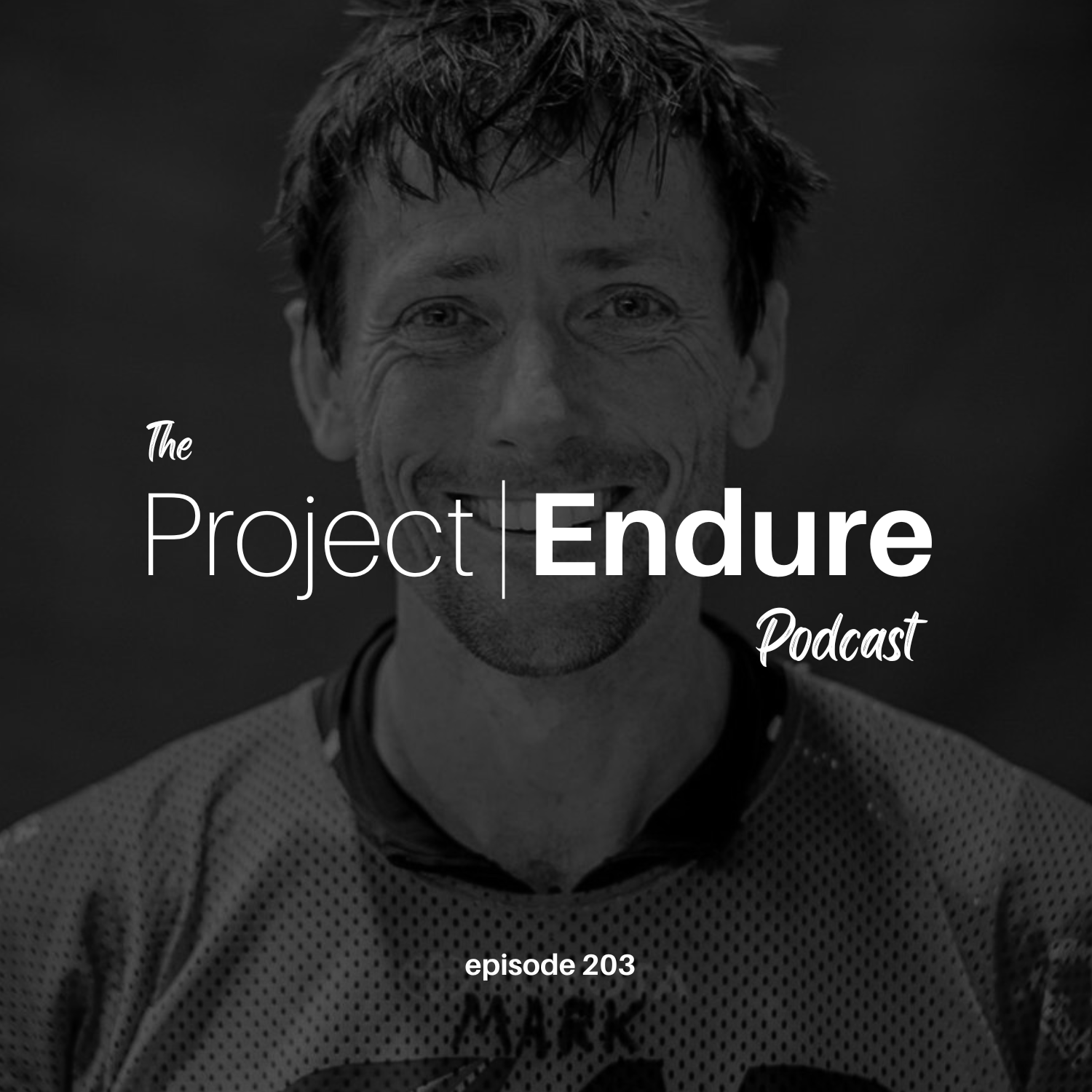
In this episode of the Project Indira podcast, host Joe Renaldi interviews adventure racer Mark Latanzi, focusing on themes of endurance, resilience, and growth. Latanzi, who turned 60 recently, explains adventure racing as a sport involving running, biking, paddling, and navigation over courses lasting from hours to days, where mental toughness and problem-solving are crucial. He shares stories from races like the Marathon des Sables and the Patagonia Expedition Race, including a harrowing incident where his team faced severe conditions and required rescue. Latanzi also discusses personal challenges, such as a divorce that shook his confidence, and how he reframed it as a period of growth rather than failure. The conversation highlights how adventure racing mirrors life, teaching lessons in adaptability, accepting reality, and persevering through setbacks. Latanzi emphasizes that success isn't solely about finishing races but about the experiences and insights gained along the way, encouraging listeners to embrace hard things as opportunities for development.
Welcome to the Project Indira podcast, the place where we talk about life, endurance, persistence, perspective, and so much more. I'm Joe Renaldi and I'll be your host. Let's jump in. Before we get started, let me ask you a question. Have you ever noticed that what you wear has the power to change how you feel? Project Indira apparel is designed to remind you that easy won't make you stronger and that growth is an uncomfortable choice that we all have the privilege to make every day. Look good, feel good, and perform good. Head to the link in the show notes to shop Project Indira apparel and keep on doing hard things. Now, let's get to the episode. Welcome back to the Project Indira podcast, episode 203. We have myself Joe Renaldi and in Virginia, we have a very, very special guest, Mark Latanzi. Mark, how are you? I'm doing well. I was injured over the weekend, but dealing with it. You know what, this podcast, as I was explaining to you before we hit record, is all about doing hard things, navigating hard things, and what better timing to record this episode after having gone through a relatively hard thing. I think it'll be clear as we talk why an injury or why a fall is such a big deal for someone like you because of the way that you spend your time and the things you pursue. Before I get into it, I just want to give a little context for how we got here. My good friend, Frank Allelies, who is episode 174 of this podcast, had mentioned your name a handful of times and pushed me to reach out to you. When I looked into your story and what you've done, I thought, "Wow, how has it taken me this long?" One, but two, I really need to talk to Mark because I have so many big questions for him. With that being said, I'd love for you to introduce yourself to the people listening. Sure. Mark Latanzi, I just turned 60 two weeks ago. I'll just point out I didn't break any bones until I turned 60. Yeah, I'm for the last 25 years an adventure racer, and I do a fair bit of running that has been my love throughout my life. I ran in high school. I ran not for the university, but I ran all through college and got into Marathons. Really adventure racing is where I've settled, and that's my career if you wanted to call it that. The obvious question is what is adventure racing because it's not a very well-known sport, which is unfortunate because it's an incredible sport. In a nutshell, it's like triathlon in that there is running, biking, and in our case, paddling some kind of vessel, as well as some other activities. Except there's no set course. There's just checkpoints in the woods, and you have to find them using only a map of an compass. And the races can be anywhere from six hours to ten days long, and that's nonstop. There's a lot that goes into it, a lot of gear, so it tends to be a slightly older crowd that has a little bit more flexibility in their life. But yeah, but it's a great sport. I encourage anybody that hasn't tried it to look it up. So I would imagine there are a lot of different ways that adventure racing could look. And one of the things I know you've done for sure because of the connection to Frank's wife Sarah is the Marathon de Sobblis. And so why don't we just start there as an example? Can you tell people one, what is Marathon de Sobblis? And two, why would you pursue something like that? Right. Well, it's kind of fun to try and run across a desert. And some people's version of fun. But the Marathon de Sobblis is a six, seven day race that is in Morocco. It's been going on for 35 years. Amazing production. It's put on by a French race director. And it's a stage race. So every day you get up and you put on all your kit and you run somewhere between 20 and 40 miles. And then they set up tents for you and you sleep in those tents that night and get up the next day and do it again. The interesting thing about it is that on day one you have to carry all of your kit including food. The only thing they give you is water and they give you nine liters a day. So day one you have a relatively heavy backpack anywhere from 15 to 25 pounds. And then as the week goes on, obviously it gets lighter. So it is a very logistical problem to figure out what to carry and what not to carry. So you hit on something that I want to talk with you about which is problems and problems as it pertains to adventure because I was thinking in preparation for this conversation what makes adventure racing fun for anyone but in this case for you. And I kept coming back to the idea that there are problems, problems that need to be solved in creative ways, in challenging ways. And I'm curious if that's what is fun in part about adventure racing is that it's full of problems. Yeah, I would agree with that, Joe. It's, there's a lot of challenges and you don't necessarily know what they are heading into it. And so they keep the course of secret. Sometimes they will be able to distance and so you have an idea. But there's always some problem in the middle like you're going along paddling and then there's a dam. And you have to take the boats out of the water and figure out how to get the boats below the dam to keep going or you're biking and then the trail disappears. And so you're carrying your bike. So there's a multitude of things like that. Sometimes you'll show up to a checkpoint and it'll be in a cave. Or there's just anything that a race director could dream of. And that is the, I say to it to be good at adventure racing, it's the mental aspect that you really need to conquer. And that's probably true in most of in most endurance sports. But in adventure racing, if you can be a good navigator, you know, you could walk or not go fast through the entire race and still do very well, right? Because going in the right direction is worth a lot. So yeah. So one of the things that I'm excited for throughout our conversation is to weave in some concepts, lessons, takeaways that are applicable to life at large, not just adventure racing. And I think there are a lot that you already mentioned. And so part of me wants to know what squiggly lines means to you. I know what that means, but what does it mean to you? Yeah, it's funny. You mentioned I was in another interview recently and they asked me what I thought my legacy to the sport would be. And it's hard not to bring that up. So in 2017, I published a book on map encompass navigation and the title of it is squiggly lines, which is a play on, of course, topographic lines on a map that look like a bunch of squiggles until you understand them. So that book was three or four years in the making and has done quite well in our little community. But it's basically how to on navigating which is to map an encompass. It's full of exercises and problems. So it's a nice, it's almost a workbook more than a text. Well, in a lot of ways, I think that adventure racing is sounding a lot like life. You know, there are these checkpoints we're trying to get to. There are these directions that we may or may not have. And there are conditions that we don't know, you know, up ahead and we have to navigate that. And so I'm just wondering in what ways has adventure racing and learning to navigate the squiggly lines in that world, translated to your ability to navigate the squiggly lines in life. Yeah, it's there's, I think the big lesson is you're not in control and learning how to deal with that and it's not good or bad. It's just what is, you know, and you, you can argue with the reality of life, but you can't change it, you know. And so it's one of my favorite quotes is by, I forget the lady's name, but it's, you can argue with reality, but you'll be wrong 100% of the time. And it's a nice, you know, way to think about problems and I can give you a great example in a race. We showed up at a transition from running to paddling and we were very late, but we were within the time cut off, but they had
and somehow decided there were no more teams coming. And so they had taken the remaining boats away. So we got there and there's no boats for us. And one of my teammates just immediately started saying, well, we have to call the race director. We need to, this is fair. And I'm like, look, we can do all that, but it's not gonna change the reality that we're standing here and there's no boats. So let's just solve this problem. And so we worked with, this was in Spain, which makes the problem a little harder. So, but we found two people that had boats that were happened to be at that put in, that were willing to give them to the race, with the caveat that the race would get them back. And so we took two radically different two person kayaks down this river. And it was okay, they were a little slower than the ones we would have had, but you know, we solved the problem. And then you just keep going, just like in life. - I love that. Let's just solve this problem. Could, because I think it's easy to get carried away with all the what-ifs or all the possibilities, options for the future. But just to be in this moment and say, let's just solve this problem, I'm sure that comes from a lot of experience of you may be having to remind yourself of that. I mean, over the years, I'm sure there were some disasters sprinkled into your adventure racing experiences. What were some of the moments that maybe couldn't be solved? Did those exist? (laughing) - Yeah, kind of semi famous. There's a very hard race called the Patagonia Expedition Race. It happens down in Puntoranus, Chile, in the very southern end of South America. It's an amazing race, 10 days long, and known to be very hard. Like the winning teams don't break a mile an hour. The terrain is so difficult on foot. So, and there's, most of the paddles get adjusted because the winds can get up to a hundred miles an hour, and there's, you could be biking. We were literally biking down there, and the wind picked up, and we could not pedal forwards. When we got off our bikes, there's a video, 'cause there happened to be a cameraman right there. The wind lifted the gravel off the road, and we, before of us, dropped our bikes and ran for shelter, you know, we're just being bolted by gravel. So, it's a challenging event, but in our first attempt, we were on a ridge line and got a story came in. So, we had to leave the ridge. And so, we dropped down off the wrong side, and one thing led to another. And so, this was a three day track. It was a three day track that turned into a four day track, and then a five day track. We ran out of food, we ran out of fresh water. One of my teammates broke his ankle, one was hypothermic. We were in dire strings. Not, I mean, very dire strings. We're literally saying goodbye to each other, and as we pitch our tent and sleep on a, it's like, we're in big problem. We had a satellite phone that didn't work, and then the battery died. We had a flare gun, we fired it when we saw something going by, and I learned about flare guns. Anyway, we eventually got our spot tracker to fire off an SLS that relayed to the United States rescue, that relayed back to the race director, and they sent a helicopter on day 11 of the tender race, and picked us up in the wilderness, where we were sort of pitched, and crawling, 'cause we were so beaten up that we couldn't make very good progress. So, yeah, hot. That was a very unexpected event that, you know, outside magazine did a story on it, and it said when smart people do dumb things, was the sight of love it. That's great. Oh, man. So, all right. So, let me get into the questions that I ask every guest, and we'll start with the first big one, which is when you look back at your life to this point, there are a lot of hard things you've done on purpose, but what's the hardest thing that you've done, or that you've had to handle, I should say, that you did not choose for yourself? - Yeah, that's a good question, Joe. I'm, there's, you know, death of a loved one, or a family member, and all of those are very hard to handle, especially a child. I don't have children, so that one's not gonna happen. But for me, the hardest event that I had to go through was divorce. Yeah, my first wife and I were not, it wasn't contested. We just had a kind of a disagreement about where we wanted life to go, and so although we still cared for each other, we separated. And that shook myself confidence in a way that I was not expecting, because you sort of, till death do you part, and then when that's not the case, you have this, I can't trust myself really, to make decisions, because clearly I made this decision and I was wrong, and you know, I was 28 at the time, so obviously younger. And yeah, but it really shook myself confidence about life moving ahead, relationships and everything. And it took me years to get over that. - Well, one, I appreciate you sharing that. And two, I don't think out of 203 episodes, anyone has given that answer, which I know, people who have been on the podcast, have gone through that, but nobody's given that as their answer. And it's interesting because I work with a number of clients and a handful of them are at various stages of the divorce process, and it's hard, right? And I see that, I hear that, I talk to them about it, but I've never really thought about the confidence part, the confidence being shaken of, you made this commitment that at the time you were so sure of, only later on to realize or recognize, "Hey, maybe this wasn't what I thought it was, or how do I trust myself? How did you get through that?" - I don't know. A lot of living and just learning and growing, I guess, realizing that, you know, some things aren't in your control and you just have to accept that you're not all knowing all powerful, all, you know, that you're gonna make mistakes and you just have to internalize that, you know, you're fallible. And so, of course, when you're 20, you're not. You're 10 feet tall and bulletproof, right? You know, you're, and so, yeah, I think, it's, it's a, I don't know, that was just, it was hard for me. And I think maybe the answer is not common because a lot of divorces are the result of infidelity or actions that it's very easy to not blame yourself. You know, but when it's not that, when it's something else, then it's this internal thing you've gotta really think about to work through. - Can I ask you a hard question? - Sure. - If you could go back to when you decided to get married, would you do it again? - Absolutely. - Without, yeah, absolutely. - Yeah. - Could you explain that? - Well, you know, I feel like I at least make the best decision I can make at the time. So, you know, if you put me back there, maybe with what I know now, I would not get married so young. We were married in 23. But at that time, I felt like it was the right thing. And I think, you know, you can also, one of the things that helped me was, I don't think of it as a failure. I think of it as five years of a successful relationship that then ended and we went different directions, right? And so that framing is sort of key. And I grew and learned a lot in my first marriage. So, yeah. - I love that answer. And I guess to bring it back a bit to adventure racing, to endurance sport in general, you mentioned for that endeavor down in Patagonia, you said very specifically on our first attempt. And so I'm wondering, when smart people do dumb things, round two, does that mean you went back and learned from the mistakes? - Four times. - Oh. - Yes. It's not a race that many teams finish. It's co-ed teams of four. And the finish rate is usually, you know, three or four of those teams, maybe. And so we took us four tries to actually get to the finish line. And yeah, that was, yeah. And I would go back and do it again. Yeah, actually I take that back. We finished on the third attempt. And then I went back and my one of my teammates broke her hip.
in the last bike ride and so we did not make it that year either. You know what I think is really interesting about that is a lot of people with the time, the effort, the energy that goes into a pursuit like that. After maybe the second failure, they might say, "Okay, I tried, I tried, but this is a lot and so I don't know, I might hang this one up. What is it inside of you that just itches to do these things?" Yeah, so again, right? It's your definition of success. You know, I go down to Patagonia, I spend two plus weeks with three other teammates that are also good friends and we have a really good time. And so is that a successful trip? Well, yeah. Did we make it to the finish line of the race? Well, no, but right? So it's, it's what you do for fun then. Yeah. One of my favorite quotes of all time is from Friedrich Nietzsche who said, "Those who dance are considered insane by those who can't hear the music." And you guys are just dancing to music that most people are not listening to. So, you know, with that being said, I'd love to transition. I think there's a lot here. So I'm curious what you're going to pick. When you look back at your entire life to 60 years, what's the hardest thing that you've ever done on purpose? And why did you do that thing? Oh, wow. I hate to say this, but I guess I'm gonna. Okay. Let me give it, let me pause here and reflect because there were a lot of hard, it was hardened relatively short. Okay, I'm going here. Sure. The Barclay marathon. I am so glad we're talking about this. Yeah. So that was, I knew it was going to be hard. I trained. I needed to get into it 10 years before I did. So it was only three years ago that I attempted it. And I had one of the worst races of my life. I do, I did a similar event in New Zealand the next year and I thought it was equally hard, but the Barclay, especially this past one because if they moved it at the February, the weather, but it's, it really is insanity. It's not about finishing that race. It's about learning your limit. Oh, the videos will tell you that, right? Yeah, just the, for me, the vertical was hard, but my area that I live in is steep, the roaded end of recovered slopes. So I was okay with that, but I'm not an ultra runner. So the actual distance got to me before the, the vertical, although it was a combination of a lot of things. Yeah, but I fell apart in that race and yeah. So we should talk about this. And I'm glad we're talking about it because I've been fixated on this race ever since I first came across it. I want to say maybe five, six or seven, eight years ago. I saw a clip on YouTube and it was this guy who I now know is Gary Cantrell, also known as Lazarus. Just big beard, smokin' a cigarette. I think he had an air horn or something in his hand. And it was the title of the YouTube video was something along lines of the world's toughest race or toughest ultra marathon, whatever. So I clicked on it and you see this guy, it's just, it is insanity from watching and reading about it, et cetera. And you can tell me more about this, but from the fact that I believe you get a letter in the mail that says, we give our condolences, you've been-- - condolences. It's a condolences email, yes. And there's a lot that's mysterious about it and it's just so hard. So tell us first, what is the race for people listening who don't know? And then I'd love to hear more about your experience. - It's a race in Eastern Tennessee at a state park called Frozen Hit State Park. And there's many videos about it that talk about the history and how it evolved. It's a very rugged area, very steep slopes, very wet. The weather changes on a dime. They call it 100 miles, but it's more like 130. Each loop is-- it's five loops where you have to find 13 to 15 books that are hidden. And so, and you-- you're not really doing map and compass navigation, although you are, but you're also following this seven page run on sentence written by LAS that you're supposed to follow as close as you can. So if it says go up the third ridge to the funny looking tree and then take a left and go that way, that's what you're supposed to do, which is not really orientating, right? And they don't call it an orientating race. So, but what you do in a nutshell is you are at this campground and you go clockwise or counter-clockwise around this loop five times. So each loop is 25-ish miles with, say, 13,000 feet of elevation. So it ends up being just a massive amount of elevation and a massive amount of distance in bad weather. And you only have 12 hours to complete each loop. And if you miss, you're out. So for reference, for people who know me and are local to Philadelphia in specific, there's a 24-hour event that I've done for the past two years where you run up and down the art museum steps, the rocky steps, 24 hours. And my elevation, depending on if you're looking at Garmin or Strava or whatever, is between 14 and 18,000 feet for 24 hours. So you're saying it's about 13,000 feet of elevation every 12 hours. Every 12 hours, that's right. Right, and five times. Yeah, and it's not steps to be muddy slopes that it's sort of like go up two feet, slide back one sort of stuff. And honestly, the downs are as hard as the ups because the downs really tear up your quads. And yeah, you end up cramping and never mind the getting lost. It's also an area that's fog is very prevalent. So to make matters even worse, right? Yeah. And so what were some of the quirky things about the race experience from your point of view before I ask you about how it ended and when it ended for you? The books are very hidden. You know, like I being an avigator didn't have a lot of trouble getting to where the book was, but then it could still take me 20 minutes to find it. You know, it's inside a beach tree. It's underneath a flat rock. It's right. It could be it's in the what did he call it? The barkly shaped stump. And then we got to even know what that means. You know, and so yeah, so that's the quirkiness of the event is finding the books. And as well as the whole entry process is a secret. You have to define that, you know, and yeah, and you get one support person. Yeah. So and the start, there's no official start time. So it could start any time between midnight and noon and last wakes up and blows a shell. And that means the race is starting in an hour. So your support crew basically stays up all night listening for the show while you're trying to sleep. And some some years it starts at 1 a.m. And some years it starts at 11 a.m. You know, and so it's really that adds to the difficulty. And before you get started. Sure. And I don't know if this is an every year kind of thing or just a video that I had seen where it stuck out to me, but at the finish, I believe he has one of those buttons from staples that says that was easy. That was easy. So with that said, where did your where did your race end and what what was it that ended up kind of getting you in that one? I they say you have to go with a veteran or you'll never finish. And so I tried to stay with the lead group. And I was with them for the first probably four books. And then when we got to book five, it's like I'm going way too fast. I'm I can't maintain this pace. And so from that point on, I was alone and I realized I actually had no trouble finding the book spots, you know. But but that initial going quickly, I got behind on my food and my water and started cramping. And I tried to recover, but there's it's like, do you want to eat going down the hill? Well, no, because you need your hands, right? Do you want to eat going up the hill? Well, no, because you can't eat going up the hill. You're working too hard. And there's no flat. So so I just couldn't keep calories in and everybody, it's a learning experience. You know, most people that finish it take three plus tries. And by most people, I mean the one percent that have finished it.
So for me, I got to the fire tower. I was in great shape, but I knew that I needed to eat. So I stopped there for 25 minutes, and I ate, I had a burger in my backpack, and I left thinking, okay, I've got that under control, and two big climbs later, I'm cramping. I can go 100 steps and I have to stop. And so the last bit took me two hours longer than it should have. But I finished the first loop in 11 hours, but I couldn't keep any food down. And so I stayed in camp as long as I could, and then I went out on the loop too, and I was just throwing up every time I ate or drank, and I made one book in about six miles and said, I can't, I'm gonna destroy myself. And so I turned around and humbly walked back to the yoga gate to be bugled out. Yeah, and then I think I laid in my van for about 12 hours, and then when I got home, I was in bed for another day and a half. I was totally wrecked. Yeah. - So is that the kind of experience that makes you say, hmm, glad I did it, not for me, or is there a part of you that thinks, huh? I'll try again. - I will try again. (laughing) Yeah, you learned, right? You learn what to do differently, like I needed more liquid calories, absolutely. I needed to go slower at the beginning and not worry about finding the books, that kind of stuff. I'm probably ought to find somebody that is about my pace to go with. These are the lessons you learn, and it takes more than one try. But yeah, I'm running out of years realistically, yeah, finishing a fun run is probably not even in the cards for me, but I would like to finish two loops if I ever even applied to get back in, which, how to certainty. There's lots of other fun events that are maybe a little more fun. - So I'm gonna read a quote to you, and I don't know who this is from. It's on the longer side, so bear with me, but I'll follow it up with a question. So the quote goes, why are we riding on? If you ask an alpinist why he climbs a mountain, he'll reply because it's there. As far as I know, no one has ever pointed out what nonsense that is. The alpinists' will isn't prompted by the mountain. It's there even without a mountain. The alpinist's will is not so petty that it needs something as random as the shape's crust in order to exist. Even if the earth, whereas flat as a billiard ball, there would still be alpinists, the true alpinists. The true alpinist would actually be so ashamed to have his will molded by things of an order as low as mountains. So the only question could rightly be asked of the true alpinist, why do you never climb mountains? So my question, as maybe I'll explain this quote as it stands out to me as the alpinist or the adventurer or the explorer, they don't climb mountains only because there are mountains. They would climb quote-unquote mountains even if the earth were flat. They would find internal mountains. They would do hard things. They would scratch that itch. And so that thing is inside of you. And I'm curious when you first recognized that that was there. - Yeah, driven, right? That's the driven to something, whatever that is. When did I recognize it? I would probably go all the way back to high school. I was, there was a March of Dimes walk and I just decided on a sort of a whim. Like, I'll do that. And like maybe two days before it kind of thing. And I was wearing, had to be blue jeans. And I think it was about 15 miles, which is a massive distance when I think I was probably 14. So, but anyway, I'm like, yeah, this sounds interesting. And so I entered, raised the money, whatever, and did it. And then I don't know, two thirds of the way through. I'm kind of not doing well, but I wasn't stopping. I was gonna make it to the end. And I did. So yeah, I raised money for the March of Dimes. But that drive sort of, that's when I, that I'd join across country team, you know, and I was known as the guy who crossed the finish line and threw up, because I would get, when as soon as I could see it, I would sprint for everything I had to get there. And invariably, then I would throw up. So it's definitely the, you know, extreme push myself as far as I possibly could, every chance I had. Sure. So I've had a number of, you know, runners and endurance athletes, et cetera, on the podcast, as well as a lot of people who have no interest in that world. And we talk about other hard things. But these two conversations stand out to me. One is episode 113 of this podcast with Mike Gagliardi. He goes by Gags. He's a local guy to Philadelphia, ultra runner. He's also got a great beard, which I feel like is pretty standard for ultra runners. And then episode 188 with Dean Carnazis, who's also, yeah, an ultra runner, although he has no beard. And I ask both of them, when things get hard, when you're out there, your legs hurt, your lungs hurt, you're tired, exhausted, delusional, et cetera, what do you tell yourself? What's the internal dialogue that helps you to keep going, to help you endure? Because a lot of people are listening to this and their, their hard might be going for a two mile walk because they just haven't, they haven't pursued exercise and fitness and while for someone else, it might be a marathon for someone else, it might be an adventure race. But what do you tell yourself when things get really hard? - So there's two sort of related things. One, in adventure racing, there's a lot of dropping out, right? Your team of four, people get hurt, all kinds of things can happen. And so just getting the four of you to the finish line healthy is kind of a big success. But when it's the middle of the night, it's pouring rain on day three of a seven day event, that's not what you wanna think. It's not day three of a seven day event. It's the end of this bike ride. Or if that's too far, it's the next checkpoint, right? And if that's too far, it's the top of this hill, right? You just don't focus on, I'm gonna do this for four more days, or 30 more miles. If it's a hundred more steps, it's that telephone pole or that hilltop, right? So I think that's one aspect of keeping going is reducing your goal and just do that over and over. And eventually you feel better or things change. The other is, when I'm in a race and I'm considering it's really bad and I think I should drop out, I is to stop, sit down, eat, drink, and think about, are you really destroyed or are you just mentally not in it? And tomorrow at the awards ceremony or this evening at the awards ceremony, do I wanna be sitting there thinking, mm, maybe I didn't give it all? Or do I wanna be exhausted sitting there going, I pushed on and got to the end. You know, what feeling do I wanna have tomorrow? And that's one of my big motivators is just to, yeah. And a lot of times, oh, it takes us a little break and you can reset your mental stamina and keep going. - Well, I think a couple things that come to mind. I'd love the idea of minimizing future regret. That's a lens that I try to look through a lot of life with. As just, you know, if I make this decision now, will I regret it down the road? And I think one of the things that stands out to me the most about regret is it's often regretting giving up on something. It's regretting something, something something, right? And you have to navigate that and tread with, am I hurting myself? And that can be a hard line to navigate at times. - The human body is quite amazing in its resilience and ability to keep going. You know, even untrained, you know, and I don't know, I just popped into my head, but in the beginning of World War II, when they marched the women all over Malaysia for six months, you know, basically just said, we're walking to a prison camp and it's 400 miles away and they just did it. You know, they weren't given a choice. And it's, you know, the human body adapts and adjusts and it's unbelievable what you can do. And I think most endurance sports, it's the mental. The mental is really the limiter. - I agree, I agree. And it goes hand in hand with the other thought that I had, which is it.
It comes from Chad Wright, who is also an ultra marathon runner. He was a Navy SEAL. And I believe it's his phrase, which is you can't quit in the chair, meaning, you know, if you want to quit the race, if you want to drop out, sure, sit down, change your socks, eat some food, but you can't make the decision to quit while you're sitting in the chair. You got to get up, take a few steps, and then then you can choose to quit. And I think it just plays to the fact that like, yeah, when you get moving, you realize, okay, I might as well just keep going. I might as well get to the top of this hill, right? Yeah. So all right, let me ask you this because this is the project in Der podcast. And the word in Der or endurance means a lot of different things to a lot of different people. When you hear the word in Der, what does that mean to you? I would say, you know, it's persevere. Just get through the hard stuff. There is another side and it's worth getting to. So that's end or. So one of the phrases I've been playing around with quite a bit is everything we want is on the other side of hard, you know, everything, everything worthwhile is up hill in a certain way. And I'm curious if you see that as a true statement in your own life. I don't know if I would go that far, but I would say that there was a lot of reward on the other side of hard. That's not to say that there aren't some easy things that are rewarding, but, you know, I don't know how this is related or not, but I was cycling across Europe on a road by touring. And we were going over the house and my friend was, let's just take the train up to the top, you know, it's kind of been a long day already. And I'm like, I really want it was Davos, we're going to Davos. And I'm like, no, I really want to cycle up. And and we sort of had this conversation while we were eating lunch. And it's like, you know, I don't, it's not that I want to look back and say. I cycled over the house. I mean, I do, but I'm actually enjoying the cycling over the house, right? So I don't want to stop because I'm really having fun like this is really cool, right? I'm cycling over a mountain range. So yeah, I think there's another perspective too of there's enjoyment going through the hard, right? It's not all terrible. Yeah. You know, I, I host an annual event in Philadelphia each year for the past five years. This is your number five. It's a health and wellness event. It's focused on bringing good people together to do hard things, have a good time, make meaningful connections. And last year's theme was it feels good to do hard things. And I think for a lot of the, I'll say quote, unquote, normal population, that's a, it's a weird statement to make. But I do think that there's something very rewarding and enjoyable about pushing yourself, about challenging yourself, about overcoming, about enduring. And it takes a certain kind of person to appreciate that. And I'm wondering for you what it's looked like to find those other people to do these hard things with, to have fun with while you do these hard things. Yeah, adventure racing is right. Those very people, you know, if you think you're doing hard stuff, well, you look around and there are people doing stuff that, you know, we were on a, a cross country ski trip. And two of the people had skied to the South Pole. Oh my goodness. Right. And we were just doing, we were skiing just around Sweden. You know, and then yeah. So there's always, and this is a theme, you know, there's always harder things. And there's always people better than you at whatever you're doing. You know, so, so the accolades of being on the podium or winning or well, that it's, it's, yes, there's an amount of, competence, you know, in you doing it. But it's also who else happens to show up that day, right? And so, and that's out of your control, right? So, yeah, as far as the people that like to do hard things, I think, are everywhere. We just have different definitions of what's hard. I like that. And, you know, just to bring it back close to where we started before I ask you the last big question, I think a lot about the squiggly lines and how it relates to life. And I can't help but bring up this fact that so far, nobody has proven me wrong on. And I think it's true. But when you look at nature and things out in nature, there are no straight lines, you know, if you think of a tree or river, even a blade of grass, right? Everything's got a bend, a twist, a curve, etc. And I can't help but think of our lives like that, right? There's no straight line from point A to point B, you know, I want to train for this race. I want to pursue this job. I want to have this relationship. It's never linear, right? Up, some downs and twists and turns. And so I wanted to circle back to that to preface this last question because there are people all over the world listening to our conversation right now who are going through all different kinds of things, you know, some are at the end of a relationship, some are at the beginning of an adventure. Some are just stuck somewhere in the middle. But regardless, there are people listening who are just having a hard time. They're going through a tough season. They might not know where to go or what to do. And if you had the chance to talk to someone right now, one to one and just share some encouragement, some guidance as to how to navigate, how to move forward, right? How to take the next right step. What would you say to the people listening who are struggling right now? Right. It's one moment at a time and enjoy the good ones. It's a, um, I don't like to focus on like a comparative analysis. You know, people think they're at the bottom and they're not. You know, there's there's a, there's always people that are or so off or further down the ladder or whatever, right? There's a modern day philosopher Tim Urban. He writes a blog called, wait, but why? Amazing, amazing guy. You should look at him, but he, he has this, um, staircase of life sort of thing. And he says, if you're breaking up and you know, you're in a bad relationship and it's ending or something like that, you're not at the bottom of the stairs. The people in the wrong relationship are actually not as far along as you are. So, so there's always that perspective of, is it really that bad? I mean, yes, it's bad. You're in your head and it's bad, but, but you kind of have to think, you know, they're still good in the bad. There's good moments in every, you know, you walk outside and there's a breeze and you watch the leaves come through where you're, you're in the forest and you stop and it's a moment of silence. And, you know, your whole life could be a disaster in whatever way, but wow, I can just pause here and maybe get a little energy back to face the next challenge. Yeah. And people are really what it's all about, right? We all do these events, but I put on events, I'm going to race director and I focus on the social. I want people to be able to interact in the middle of the event. So I always have two day events with a big dinner in the middle where sort of people get to know each other. And that's really the fun of it, you know? And so, yeah, I do truly believe that we're not in this world alone. Yeah. I mean, if I'm going to summarize for my sake, our conversation in a lot of ways, it's do hard things with good people and pause to appreciate all the great moments along the way. That is well said. Well, with all of that being said, Mark, I know you injured your shoulder. We started with that. You know, when we emailed back and forth about recording this, you mentioned depends on when surgery is and I didn't realize how the timeline of all of this. So I appreciate you recording this. But after you're healed and you know, after you're back and doing your thing, what's next for you if people are curious about the future? Next for me, my favorite event is the dragons back. It's a coast to coast stage run across whales. You start in Conway, Conway Castle and you finish a card of castle in the South. You navigate your way down with map and compass and you camp every night with 300 other people. And so there's this social bit. There's amazing food. There's navigation and there's running and it's amazing scenery. You go to whales and you think, oh, it's England, the UK, you know, and it's civilized and there is wilderness and whales. That's.
Oh, look amazing. So I love the event. This would have been my third time going this year and I just deferred because of my injury. There's no way this is six months of rehab and I can't run basically. So, but hopefully I'll be doing that in 2027. And then I don't know. I mean, it's always something, you know, yeah, the world adventures and championship this year is on Corsica. It won't be there, but next year it's in Croatia. Never been there. That could be fun. So yeah, just wait and see. - Well, I'm sure they're great things ahead and I know that the rehab is, you know, in some ways maybe a bit daunting. I'm sure it's not something you're super excited about. But I have no doubt that you will climb that mountain and embrace that adventure one day at a time and I always end off with asking, you know, where can people find more about you, learn more about you? And I'm gonna assume that you would point them towards your website, but I'll let you confirm that if that's the case. - Yeah, if there's not, I mean, there's certainly some of my thoughts and accolades and other things, but Tanzi navigation is my company of where I put on events and there's an about me page that has my previous schedule with some race reports and the future events that I'm planning on doing. So, and I'm always up to talk about adventure racing and navigation to anybody that wants to have a conversation. So. - Amazing. Well, I will link that in the description to make it easy for everyone to find. And before I let you go, I just wanna thank you for this conversation. It's really made my day and I know it's gonna add a lot of value to the people listening. - Great. Well, I'm glad you asked me to chat. So it's been fun. If you enjoyed this episode of the Project Indoor podcast, go ahead and subscribe, leave a review on your platform of choice and share this episode with a friend. It helps us get more conversations like this out to more people like you. We appreciate you and we'll talk to you next time. - And one more thing. If you're looking for a community of people all striving to be better together, check out the Project Indoor Hard Things Club. The link is in the description below. We'd love to have you.
Podcast Summary
Key Points:
The podcast discusses how apparel and mindset influence personal growth, emphasizing that growth requires embracing discomfort.
Guest Mark Latanzi, a 60-year-old adventure racer, shares insights on navigating challenges in racing and life, highlighting problem-solving and resilience.
Adventure racing involves multi-day, non-stop events combining running, biking, and paddling with navigation, where mental fortitude is key.
Latanzi recounts extreme experiences, including a life-threatening situation in Patagonia and personal hardships like divorce, framing them as learning opportunities.
The conversation explores broader life lessons, such as accepting lack of control, redefining success, and persevering through repeated failures.
Summary:
In this episode of the Project Indira podcast, host Joe Renaldi interviews adventure racer Mark Latanzi, focusing on themes of endurance, resilience, and growth. Latanzi, who turned 60 recently, explains adventure racing as a sport involving running, biking, paddling, and navigation over courses lasting from hours to days, where mental toughness and problem-solving are crucial. He shares stories from races like the Marathon des Sables and the Patagonia Expedition Race, including a harrowing incident where his team faced severe conditions and required rescue.
Latanzi also discusses personal challenges, such as a divorce that shook his confidence, and how he reframed it as a period of growth rather than failure. The conversation highlights how adventure racing mirrors life, teaching lessons in adaptability, accepting reality, and persevering through setbacks. Latanzi emphasizes that success isn't solely about finishing races but about the experiences and insights gained along the way, encouraging listeners to embrace hard things as opportunities for development.
FAQs
Adventure racing is an endurance sport that involves running, biking, and paddling, with no set course—teams navigate to checkpoints using only a map and compass. Races can last from six hours to ten days nonstop, requiring both physical stamina and mental navigation skills.
The Marathon des Sables is a six- to seven-day stage race in Morocco where participants run 20-40 miles daily while carrying all their own food and gear. It's known for its logistical challenges, as runners must manage their supplies while receiving only water from organizers.
'Squiggly lines' refers to the topographic lines on a map that represent terrain features, which can appear confusing until understood. It's also the title of Mark Latanzi's book on map and compass navigation, which serves as a practical guide with exercises for adventure racers.
Adventure racing taught Mark to accept that not everything is under his control and to focus on solving problems rather than arguing with reality. This mindset helps him navigate life's unexpected challenges by staying present and adaptable.
The Barkley Marathons is an extremely difficult ultramarathon in Tennessee, known for its rugged terrain, unpredictable weather, and a course that is roughly 130 miles long. Participants must find hidden books on each loop while following cryptic written instructions, testing both physical and mental limits.
Mark's hardest unplanned challenge was going through a divorce, which shook his self-confidence and made him question his decision-making. He reframed it as a successful relationship that ended, helping him grow and learn from the experience.
Chat with AI
Loading...
Pro features
Go deeper with this episode
Unlock creator-grade tools that turn any transcript into show notes and subtitle files.
 PodcastTranscript AI