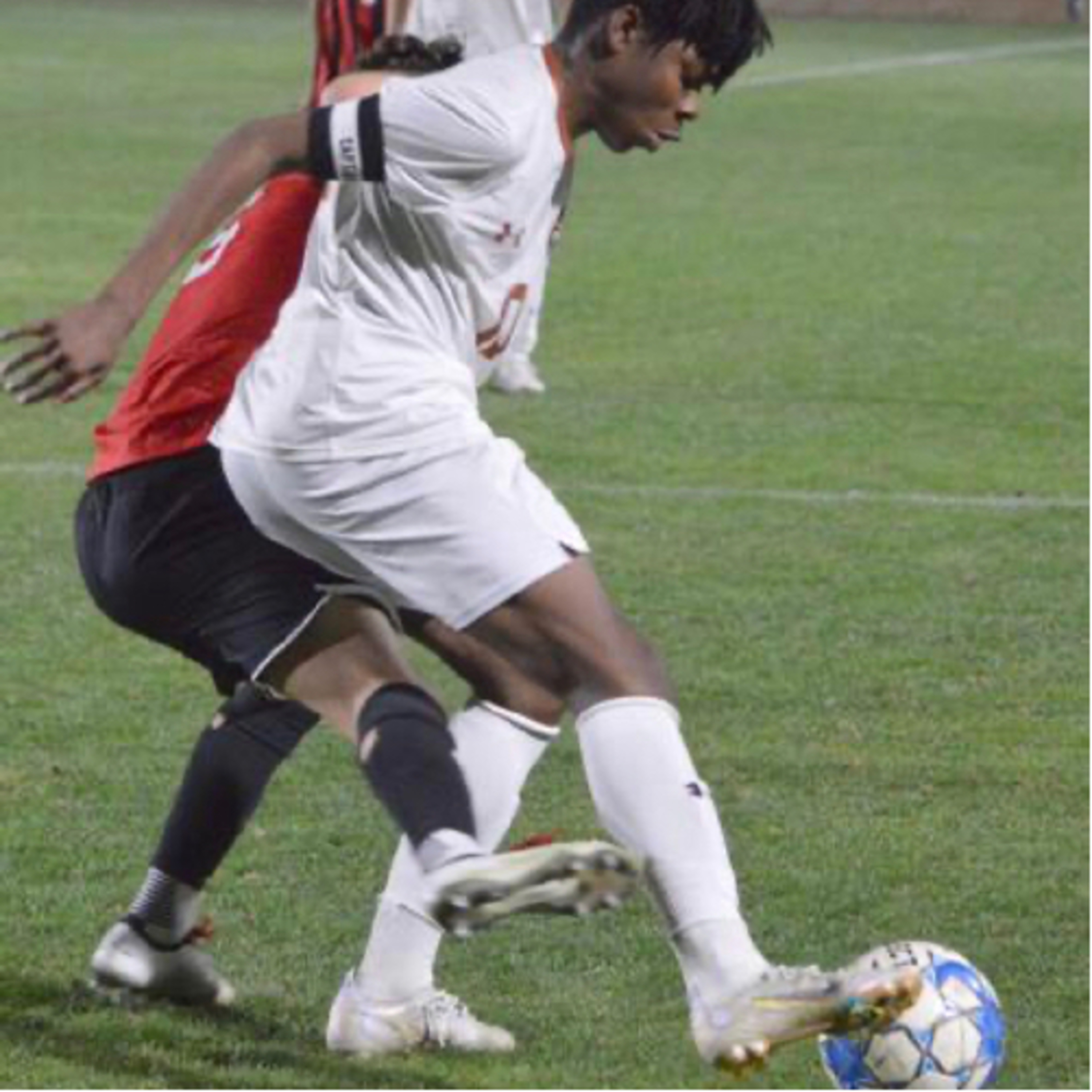
The podcast series introduces the evolution and significance of sports psychology, led by Dr. Stacey Hall and her colleagues. The discussion covers various aspects such as the influence of sports psychology on athlete performance, including factors like injury response and learning disabilities. The importance of mental health in sports is highlighted, with insights into how sports psychologists help athletes overcome challenges like anxiety and depression. The role of genetics in athleticism is debated, emphasizing the baseline genetic talent required for elite athletes while considering the impact of environmental factors and the development of grit. Overall, the series delves into the multifaceted nature of sports psychology, emphasizing its crucial role in shaping the success and well-being of athletes across different levels of competition.
Transcription
4788 Words, 26167 Characters
Hello and welcome to our podcast series on the evolution and importance of sports psychology. This is our first of several podcasts on this topic and we're excited to be with you today. I want to introduce who we are. First my name is Dr. Stacey Hall. I'm an associate professor of business at Trent McCombie University and have over 30 years of experience working in the sport industry and a variety of different roles. I've worked in youth sports, high school sports, college sports at both the NAI and the NCAA Division I level have served as a college athletic director and it just really been around sports my entire life working with coaches, student athletes and parents so hope to share with you some of those experiences. I'm also joined by my esteemed colleagues, Dr. Holly Haynes is a professor of psychology and biblical counseling here at Trent McCombie University. She has over 25 years working in higher education and has a vast experience working with athletics and currently serves as the faculty athletic representative here at TMU. Also joined by Dr. Rick Fowler, professor of psychology and biblical counseling here at Trent McCombie University. Rick has over 30,000 hours of counseling and also has experience as a college head coach and currently serves as a sports psychologist so just a wealth of experience and talent and we want to share some of those experiences with you and to get started we're going to talk about sports psychology and as we get into that I do want to tell you that the purpose of this podcast in addition to the reason that we wrote the book counting the cost, raising and coaching elite athletes is really to assist parents and coaches on the necessary multi-faceted factors that go into the development of an individual that has the potential to become a star athlete so throughout this series this podcast series we're going to be referring to that book quite a bit and intermingling some personal anecdotes in there as well. So to get us started, let's define sports psychology, why it's important, why it's relevant and Dr. Haynes if you want to get us started on that. Feel free to call me Holly Stacey. But actually the sport is really interesting and I think or sports psychology, the evolution of sports psychology is fascinating. You have folks who are working in sports and you had of course psychologists but I think what has really helped the field is the evidence that has been provided by folks like Carol Dwick in terms of how we think so cognition, cognitive psychologists who are beginning to study how we can best leader lies motivational psych than marrying that of course with counselors who are interested in mental performance and how that affects athletic performance and it was very performance driven at the beginning. However, now we're not just looking at performance, we're looking at all the factors that can influence performance and so there are a variety of them that can and so you have everything of course from how a person responds to injury to what happens with athletes who have a number of learning disability so there are different ways of thinking about sport psychology and it isn't involving field, there's a lot of work out there and you'll see it line up along you know multiple areas as well and we'll cover that throughout our podcast but Rick do you want to listen to our love of yours? So we start with a term sport psychology, there's two words, there's sport and psychology and so what this is doing is merging together the two disciplines. The methodology of the sport which is the exitos and then also the psychological insights that can set a player apart from other athletes. So what we look at is we see a culture today that it seems as a balance and so our goal in writing this book is to help parents and coaches understand as they're trying to train these potential lead athletes how to develop a balance in their life using the psychological dimension. When I was growing up a hundred years ago it seems like I remember many of my coaches would never let us have water breaks because that was considered to be wimpy. The athletic culture yesterday yesterday was more simplistic than it is today. There was no computers, cell phones, party line phones we had and only had three TV black and white channels to watch until kind of making the age and where we are which meant that nothing had to compete against sport participation. So like at the summertime I remember all the gangs that we were together with we'd play tennis in the morning and then in the afternoon we'd go into somebody garage and play table tennis for several hours and then in the evening we'd put lights out in our house and play basketball for about three hours and that if we didn't do that level we knew nothing and so nothing was there to distract us from sports and so we developed a way to look at things differently than they are today are so so many distractions that to raise an elite athlete today is so much different than it was when I was growing up years ago. But as we look at this idea of sports psychology is that the ability to look at how a player thinks. How do you keep them from if they're in a slump? How do you get them out of a slump or what are some psychological ways to deal? What goes in the mind is how they set about anxiety and depression and things like other things. So the world today is so complex for some of these kids that it's hard for them to highly focus on what they're doing in sports and so the need to develop it is just blossomed all over the world. I mean Europe, all these soccer teams in Europe have on their staff, the sports psychologists all over the place and there's not an NFL team and an NBA team that doesn't have sports psychologists on their staff a lot of them have many. If you have football team you may have three or four psychologists that work specifically with athletes to get to make sure their mind stays clear, focused and how they deal with the external stresses that they're dealing with. When I think of sports psychology, I think it's one of the practical standpoint that the success of elite level athletes, and maybe a little bit less than the elite level athletes, but certainly elite level athletes, I think their success really in a lot of ways comes down to what I call "fractional advantages" and meaning a fraction of an inch, a fraction of a second, a fraction of a loss of their focus. Fractional advantages and I think the reason the sports psychology is blossomed the way it has in the marketplace, the marketplace being the sport industry is because the coaches and elite level athletes realizing that they need to find that fractional advantage from somewhere other than the traditional training regimes and it's working. I mean, sports psychology can give them those fractional advantages to help them be more successful. That's an interesting piece on the fractional advantage because in many ways we also have more access to this data, right? So I can go to Google and I can pull up, I can enter and say how to train an elite athlete in their books that I can read, their other pieces. If I have that at my hands, then what do I do? How do I interpret that? And a sports psychologist, right, a sports psychologist, a mentor, any sort of coach that has this background can help me with that fractional advantage. I can do something that's just a little bit different than someone else who may not have the access to or is not looking that up. And I think the other thing is that you're bringing up the both of you have mentioned in this notion of also fractional advantage, but couching it also in the culture, right? You've mentioned that there's a reason that we're doing this. We want to create these elite athletes. And I think something has changed also in our culture. We're generationally very different. You know, I am not as old as Rick, but I can also remember it. I was actually, you know, we were out, we were outdoors, we were running, we used to run races in the backyard. We also used to run around the house and see a kid, you know, do it in the shortest time. And so we were out here doing our own Olympics, right? We lived in a cul-de-sac. We had multiple things that we were doing. And it was funny because my neighbors, they were soccer players. We happened to be not so much soccer players by default, but my, you know, definitely we were very athletic and runners. But it was interesting, it was free play, there was a lot of creativity. Now we've gotten down to prescribing, right? And so we're prescribing if we do these things, if you do these things that's only helpful, but our kids lives are structured. And so for my youngest, who is 12, you know, this summer, he'll go and he'll train for a certain amount of time with a trainer, then he'll do X, Y, and Z, and we do require some just free play, but there are a lot of kids, his age group, who'll train and train and train and train all day long, and we don't not have time to be a child, right? And so we are seeing two generations coming up, they probably have a little bit more on them in that Gen Z, Gen Alpha, and just to clarify for our audience, meaning those kids who are in middle school and younger, as well as up to 25, so. And we talk about that a lot in the book, when we get into cross-training, you burn out prevention and rest and the athlete and that kind of thing, because I think I don't want to get too far off track either from just opening up our podcast series, but the cross-training, the creativity and free play, I think, is so critical in actually reaching that optimal performance, because if you do the same regimented thing over and over and over, you just get burned out and bored. Right. I mean life happens and you just get bored. And later on in the book, I think, I can't remember what chapter it is, but I actually talk about entrapment, if you all remember that, where kids, you know, they have so much invested in their sport, and they feel those outside pressures on them that they're defined as by what sport they play, that they do entrapment in the sport, that they're not able to step out and have the free play, step out and have the creativity, step out and do cross-training, that they're just, they have to, you know, grind and grind and grind, and that just wears on me. And the cross-hology, coming back to what we're talking about, can help you avoid entrapment and understand what that is and maybe prevent it. But the younger child, the younger athlete, doesn't have the logical resources to sort a lot of that out, and so as a result, nor to the parents, nor to those parents. And the parents are just mimicking other parents who say, you know, this is what you have to do. Not all coaches do either. Not all coaches are able or what to see those situations developing because it might, you know, it might reflect poorly on their coaching. Fantastic. One of the things that I've noticed too is a lot of coaches still are coaching from the old school model, like I was raised in. So you find an athlete today that is, doesn't think that way, and it's not rewarded that way, you know, in that way being, when you say that way many times. Well, so they're not rewarded the way that the old, when my coaches would reward it. I remember they told me, like a basketball, we had, even if I had a free layup, I had to have, we had to have five passes before we would shoot. Oh, yeah. That kind of thing. It was ridiculous. And nowadays, if you go to the board and shoot without, you know, because you have an open layup, you know, and a coach still thinks you need to pass it five times, you're going to get in trouble. And so these kids are, say, there's a lot of problematic areas in their brain are thinking, so who am I? How do I do this? I had a free shot and I couldn't make it and all that kind of thing. That's, I actually have some stories about it, but we can address later in the series. That one thing drives me nuts sometimes when you see a kid say that you have to stick to the offense, even though you got a wide open shot, you have, I thought the purpose of an offense in basketball was to generate open shots, so why would you pass up in an open shot? We can talk about that later. There you go. But so they get depression. You know, there's a lot of depression on athletes. I see a lot of athletes. Every year, and they come to my office and they're either anxiety, depression, or they're just hitting them all great all the time. And so when they're depressed, their brain is not functioning in a relaxed format, so therefore that causes tension, which causes stress, it causes them to miss the shot or whatever. And so, and the coaches can't understand why they're in the slump and things of that nature. But one finding by a major university, athletic psychologist said that only 10 percent of college athletes struggling with their mental health ever reach out for help, you know. And so all of these things go together to cause difficulty and really the production of their play is decreased because of these factors. And a lot of times, even on a college level, even division one college levels, that's supposedly a well-funded. The student athlete doesn't have anywhere to go to address these issues. The athletic trainer typically, they just, they get a lot of that because a lot of times they'll develop relationships with the players. But they may tell the coach and there may not be a real trust factor there. The strength and conditioning coach, may or may not be that person, the student athlete may not feel that they have a good relationship with the coach and if they address those issues with the coach, for example, if they feel like they're being, they guess some overtraining issues. I mean, the coach might think negatively of them, so there's really just, a lot of times there's not that outlet to address some of the issues we're discussing. And I think we, at the time of this recording, were three years post-pandemic. And as much as we, as much as who has stated the pandemic is over, and the, we have the residual effects of the pandemic. And so part of, part of also, this issue is that our young people have higher rates of depression and anxiety in general. That's a, without athletics being a component of it, but, you know, here, depression rates among college students have gone up 30% in the past three years. Right. That's a big number. Right. Right. So we have to take these factors into consideration as well. And I think it brings light to the need also to address that aspect, the mental health aspect, because a lot of sports psychology initially just dealt with mental performance. If you can think a particular way, you will succeed. But we haven't taken into consideration other aspects of sports, mental, sorry, psychology and mental health, or well-being overall, most and well-being, and how that influences how we think and behave. Mm-hmm. Well, which leads us to the next part, you know, so, quite frankly, coaches want to win. It's clear. And so, when it isn't that, we're not just to play and play, especially if you're going to develop a lead athlete. And so, for the sports psychologists to come up with this kind of a pyramid, a success pyramid to determine how a player, you know, what a player needs to achieve in order to become a lead. And so, in today's culture, a team really cannot be successful or an athlete cannot be successful unless, here she integrates what we call a three-fold dimension to their sport, which includes genetic input, left-brain input, right-brain input. So, Holly, what do you think the genetic input is necessary in order to become successful as an athlete? Well, I think this one is a little controversial. I think this one is a little controversial. I think that there has been a push to look at genetics, right? So, the idea that you have parents who are athletic, I think, you have folks who, what we're hearing now, you have former professional athletes who are marrying other athletes. They were high collegiate-level athletes with the intention of producing kids who are these super athletes. However, we know from beforehand that really, you can actually take two folks who may not have been athletes, you know, and you can see some athletic pieces come out of those children as well, or they didn't participate here. And I think that is very interesting in terms of this notion of genetics driving your athleticism. But we've also had books written about, you know, certain populations not being able to swim, fast-twitch muscles, the development of all of those pieces, but some of that comes from our scientific literature on that as well. I think a lot of times when we look at genetic predisposition, it has to do with things like muscle mass and physiology of a child. But where we have to be slightly careful in that is to remember that not all genes are expressed, and then also that environment can shape the expression of genes, right? So you can, you know, you can train the body in different ways. And I also think you do need to think, you may be sometimes we do need to think about genetics. So in terms of physiology, right, so physiology, what did we come into the world with, what is this expression, what's our mindset going in, right? And interestingly enough, you know, my husband is not very tall. I'm sure my husband was a swimmer, because it was a short swimmer, defying all genetic predisposition there. Division one, the swimmer. But when our children were being raised, that was one question, right, when we had children, he wanted, he thought about what sports are good for kids who will be short. This was a conversation he had, this was a conversation, as somebody who was a short person who was under six feet in a field, were being six feet in taller, you know, he's a butterfly. Like, so it was the matter of he either had to be very, very, very quick, or, but nothing is going to outdo the fact that, you know, somebody with a bigger way with that. He swam against Lenny Krezelberg and training. So you make a good point there, I think there are no doubt, and I call it a baseline. You have to have a baseline of genetic and, and, and you know, born with talent in a lot of these, to be an elite athlete in a lot of times. But I think there are other, you can adjust, you can evolve, like you just said, he had a, had a, learned a quick, you can make adjustments for a, I don't say a lack of, of certain genetic or, or predisposition that just go out to use, but, um, I, I think a lot of it is grit, too. I don't think we're talking about grit, old fashioned, this is how bad I want it. Right. But even then, you have to, there is still a baseline. There's the baseline. Have to have a baseline. Right. But as, once you have that baseline past that, there's varying degrees of athletic attributes. Yeah. So grit can make up for a lot of that, and then evolving your technique can make up for a lot of it as well. Right. Absolutely. But you still, at the elite level, you still have to have that baseline. Right. You do. In fact, I do think that that is probably a problem for parents, right? They put their kid, and unfortunately, in a lot of cases, put their kid, their children in soccer. And I don't know if you've ever been to a four-year-old soccer game, U6, as it's called. Your parents are overly, you know, they're in the middle of the field trying to get their child to kick a ball or to run or to do these things. But then also, within soccer, as it evolves, those who are more predisposed, who are better runners, who are more coordinated because of the nature of the sport, those are the ones that move a little bit further. And, you know, that can have some difficulty for parents, recognizing, well, maybe my kid doesn't have the athleticism to compete in this. But they have to learn that. Yeah. So, that U6 league and other like levels, that's part of that learning process for the parent and the student athlete. Now, what happens if you try to force a fit as the child gets older? That can be very problem. But you mentioned about the idea of gut and so forth. Well, that gets to the next two parts when we talk about left brain input or right brain input. You'll have brain input, you know, a lot of it comes from the prefrontal cortex, you know, where our logic is, our reasoning, our goal in how we're learning things. And that is kind of what we're, the area of where you learn your exes and your oes and how you do things and you do this and this happens and so forth. And then the right brain can be even the limbic system, it's the reward system, it's the idea of how you relax and what you think about your intrinsic motivation. I think one of the things that is, I've counseled many, many athletes who had great talent. But if they don't have intrinsic motivation, doesn't nominate them, they don't normally become successful. If they're extrinsically motivated, they're pushed by outside events. And so these outside events, well, okay, mom and dad make me do this. But then when they have the opportunity, they back off. That's why we're going to talk about another podcast about was a majority of kids by time to get a 13, 70, 80% of the kids are already quiz fours because of that. So you, you, you help the left brain parents and coaches understand things that they can't logically process to begin with, but then you reward, the reward comes from all the right brain input, ability to rebound after a loss of a stake or mental gain readiness. All those things, there's, it seems like all athletes that I've evaluated over the years, those are factors that almost innate themselves and how they respond to things. But would you say that without intrinsic motivation, it would be very, very difficult if not impossible for some to come up with? Yeah. Elastration, my brother was six foot three and a seventh three. And so every basketball team wanted him. And so he didn't really have that intrinsic motivation and it was pushed because of his size. That sports illustrator wrote about him, other stuff he had offers after college to go to play, he just burned out because he didn't have that intrinsic motivation. Without intrinsic motivation, I think you'd like, you interact with him and say different. Intrinsic motivation, in my opinion, fuels the grit, right, that you have to have grit immediately. And intrinsic motivation fuels the grit. Case in point, Michael Jordan, case in point, Wayne Greskey, you know, all the great athletes in their sports, Serena Williams, I mean, all the great athletes in their sport, Tom Brady, have that intrinsic motivation, you look at the athletes I've just mentioned, they're multi, multi, multi, millionaires. So what drives the money, no, is to be the best they can be. And that's an internal motivation that fuels their grit that pushes them to keep working to get better. But is that an American concept? And I only say that because we talk a lot about intrinsic motivation, but in my favorite sport, soccer, there are the best in the world. Some might say it's intrinsic, but a lot of the more motivated, you know, Brazilian athletes often, they're coming out of the favelas and they are motivated to get out and to take people with them. It's a way to get their families out of a particular situation. And so that the motivation comes because of this, this is something that's happening right now in conversations about American soccer. The fact that most of the kids who play American soccer come from families that are comfortable and the fact that maybe we haven't produced this world-renowned player. I mean, Christian Policeman is up there, but we haven't produced this world-renowned player because our players don't come from the same type of greeting poverty that so many other players come from. Serena Williams, father, even though they were able to afford living in a nicer area, move them into the inner city so that they would want to get out in many ways. Like the encouragement for all of the kids and all of their children did really well. The idea was like getting out of poverty. But that was to start the process, but to maintain the process is some different, isn't it? Yeah, this is what I'm asking. That's what I'm asking. I think, you know, because a lot of our research, and I agree, intrinsic motivation is key. I don't think extrinsic motivation only, but I think in sport, I'm very, very, very, curious. I would love to study the difference between an athlete that has, I would love to study the children of these basketball players, right? Now we have these star elite basketball players whose kids are now at the stage where they're going to be in the NBA or they are in the NBA, or they are preparing to be in the NBA. Are they more successful and what, because they've got to be intrinsically motivated, right, to get through. They have everything, they have everything they need. They've got to be a key imaginable restaurant like some of them are going to be there for kids. I know. The pressure that's on him, no matter he could be a ten time, all NBA selection, and he won't be as good as his dad. I mean, think about that pressure. I mean, that's just brutal. And he has a little better kind of line, so, but, but, so anyway, so I think, you know, again, we have to realize, as individuals, everybody, the model says that we're fearfully one of we made. And an elite athlete doesn't have any more worth than an on athlete. Our abilities are God-given, and how we develop those athletes is up to us. And I just feel as we go through these podcasts, as we look at the whole concept of coaching and playing athletes, and that we keep the idea of balance in mind, so that we don't over-emphasize it, or we don't under-emphasize it, and, you know, as we go through. Absolutely. Absolutely. All right. With this wraps up our first session, our first podcast, we will be back shortly with the next one, and I hope that you join us throughout our series. It's been a pleasure being with you. See you again. (gentle music)
Podcast Summary
Key Points:
Introduction of podcast series on sports psychology by Dr. Stacey Hall and colleagues.
Evolution and importance of sports psychology, including factors influencing athletic performance.
Impact of sports psychology on elite athletes, fractional advantages, and mental health.
Discussion on genetics and athleticism in sports.
Consideration of environmental factors, grit, and baseline genetic talent in athlete development.
Summary:
The podcast series introduces the evolution and significance of sports psychology, led by Dr. Stacey Hall and her colleagues. The discussion covers various aspects such as the influence of sports psychology on athlete performance, including factors like injury response and learning disabilities.
The importance of mental health in sports is highlighted, with insights into how sports psychologists help athletes overcome challenges like anxiety and depression. The role of genetics in athleticism is debated, emphasizing the baseline genetic talent required for elite athletes while considering the impact of environmental factors and the development of grit. Overall, the series delves into the multifaceted nature of sports psychology, emphasizing its crucial role in shaping the success and well-being of athletes across different levels of competition.
FAQs
Sports psychology merges the disciplines of sports and psychology to enhance athletic performance. It focuses on mental aspects like motivation, leadership, and mental performance, which are crucial for athletes' success.
The field of sports psychology has evolved from a performance-driven focus to considering various factors that influence athletic performance. It now includes aspects like injury response, learning disabilities, and mental well-being.
Sports psychology can assist athletes in managing mental challenges by addressing issues like anxiety, depression, and stress. It helps athletes stay focused, clear-minded, and cope with external pressures.
Sports psychology provides fractional advantages that can make a significant difference in elite athletes' success. It helps them maintain focus, overcome slumps, and enhance their performance beyond traditional training methods.
Genetics can provide a baseline for athletic talent, but environmental factors and mental attributes like grit also play crucial roles in an athlete's success. While genetics are important, other factors like determination and technique can compensate for genetic limitations.
Chat with AI
Loading...
Pro features
Go deeper with this episode
Unlock creator-grade tools that turn any transcript into show notes and subtitle files.
 PodcastTranscript AI