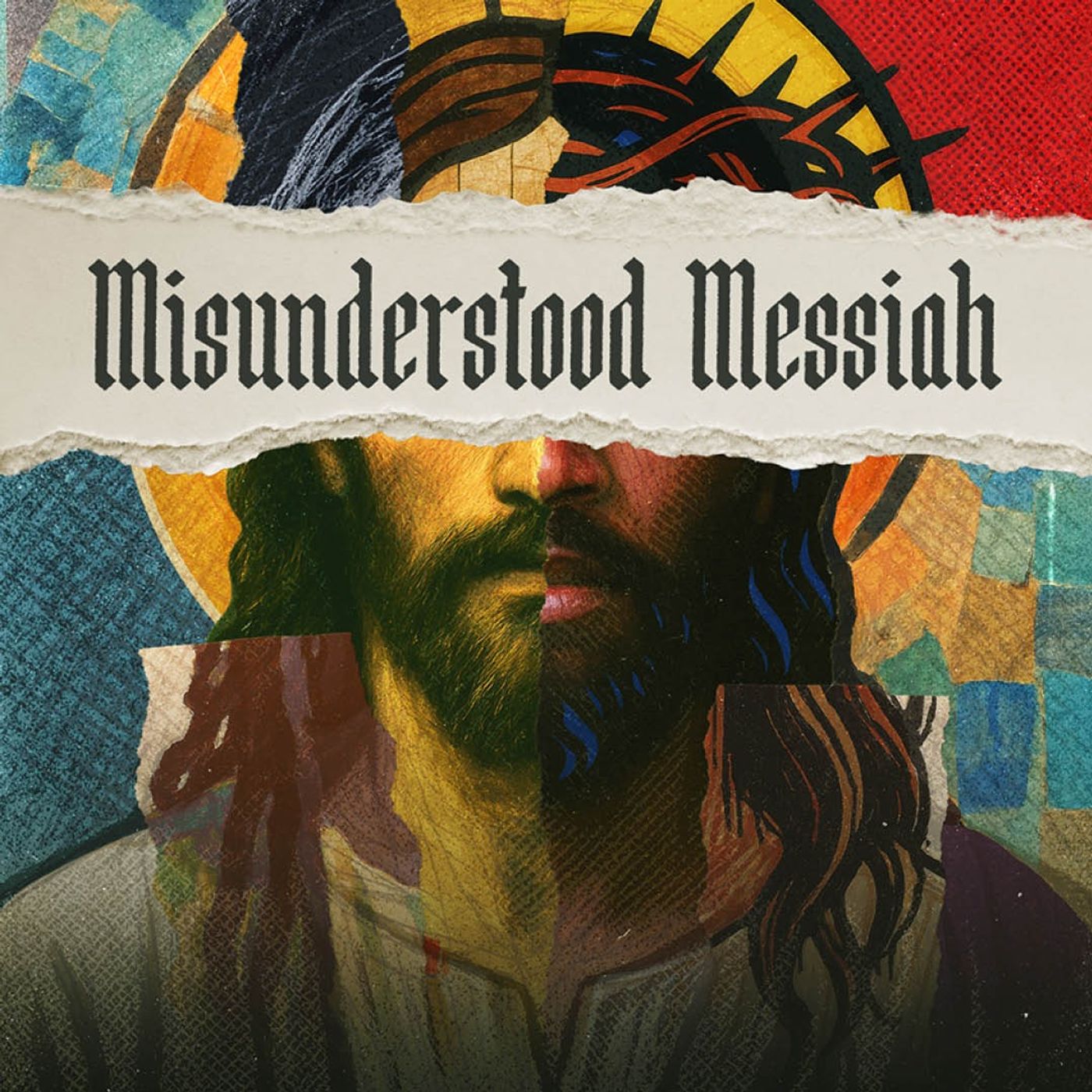
This sermon from Epicost Church focuses on Mark 10:32-52, examining the theme of spiritual blindness. It contrasts the request of James and John for positions of honor in Jesus' kingdom with the plea of the blind beggar Bartimaeus for mercy. Jesus corrects the disciples' ambition by teaching that leadership in his kingdom is based on servanthood, exemplified by his own mission to serve and sacrifice his life as a ransom. The central idea is that spiritual blindness is wanting salvation without the suffering of the cross—wanting a Savior without his sacrifice. The passage challenges listeners to evaluate whether they, like the disciples, seek Jesus for personal gain or, like Bartimaeus, recognize their need and embrace the call to follow Jesus in a life of service. The sermon anchors this in Mark 10:45, presented as the key verse summarizing Jesus' purpose.
Thanks for listening to this week's sermon from Epicost Church in Milwaukee, Wisconsin. For more information about Epicost, please visit epicost.org. We are moving into our continued study of Mark and the misunderstood Messiah. I'd like to bring to the stage my husband, Jesse Dignan, who will be doing the reading. If you would like to grab the Bible in front of you in the seat back or open your own Bible, the ones in the seat back were moving to page 846. We're going to mark chapter 10, verse 32. Good morning, Epicost. My name is Jesse, servant of our risen King Jesus Christ. Amen. I've been humbly asked to read before you today. They were on the road going up to Jerusalem, and Jesus was walking ahead of them. And they were amazed, and those who followed were afraid. And taking the 12 again, he began to tell them what was happening. Saying, "See, we are going up to Jerusalem, and the Son of Man will be delivered unto the chief priest, and the scribes, and they will condemn him to death and deliver him over the Gentiles." And they will mock him, spit on him, flog him and kill him. And after three days he will rise. In James and John, the son'sazzabity, he came up to him and said to him, "Teacher, we want you to do for us. Whatever we ask of you." He said to them, "What do you want me to do to you?" And they said, "Grandas to set one at your right hand and one at your left and your glory." Jesus said to them, "You do not know what you are asking. Are you able to drink the cup that I drink or be baptized by the baptism of which I am baptized?" And they said to him, "We are able." And he said to them, "The cup that I drink, you will drink, and with the baptism with which I am baptized, you will be baptized. But to set up my right hand or my left is not mine to grant. But it is for those whom it has been prepared." And when the tin heard it, they began to be indignant towards James and John. And Jesus called to them and he said to them, "You know that those who are considered rulers of the Gentiles lorded over them, and the great ones exercised authority over them. But it shall not be so among you, but whoever would be great among you must be your servant. And whoever would be first among you must be slave of all. For even the Son of man came not to be served, but to serve, and to give his life as a ransom for many." And they came to Jericho, and as he was leaving Jericho with his disciples and a great crowd, he was a partimeus, a blind beggar, and the Son of Tamiya was sitting on the roadside. And when he heard that it was Jesus of Nazareth, he began to cry out and say, "Jesus, son of David, have mercy on me." And many were vuked him, telling him to be silent. But he cried out the more. Son of David, have mercy on me. And Jesus stopped and said, "Call him." And they called the blind man saying to him, "Take heart, get up, he's calling you." And throwing off his cloak, he sprang up and came to Jesus. And Jesus said to him, "What do you want me to do for you?" And the blind man said to him, "Rabbi, let me recover my sight." And Jesus said to him, "Go your way, your faith has made you well." And immediately he recovered his sight and followed him on the way. The word of our Lord. Well, good morning, Epicodes. It's great to be with you this morning. For those of you joining us online, for those of you listening, for those of you at one of our campuses, it was really, really good to be with you. This is the 9 AM service, right? 915 up at Mayfair Road. And so what a wonderful way to say that you got up to shovel to be here. Thank you for your dedication. This is great. Do you remember the movie, Willy Wonka, or specifically Charlie and the Chocolate Factory? Anybody remember this? Not the recent one with Timothy Schalamet. That one's great. Then he had one with Johnny Depp. That was very Johnny Depp. But they won't gene wilder, right? You with me on this. Won't gene wilder. Just real quick. Just remember this story, refresh it in our minds. There's five children. And all five children get a golden ticket. And this golden ticket is once in a lifetime opportunity to go to Willy Wonka's Chocolate Factory. Now, as we're introduced to the children, the first child that we know is the main character of the whole movie is Charlie. And he's this impoverished child living with his grandparents, right? And they're just in this one room unit. And this is the biggest thing that has ever happened to him in his entire life. It'll probably be the biggest thing that ever happens to him in his entire life. The other four characters, the other four children, are the snottiest brats you could ever meet. All right. They want everything for their own self-interest. They have their own ambitions. They have their own motives. Some of them are being influenced by other parents, right? There's all these other reasons on what they want to do with the chocolate factory. As the story unfolds, bad things happen to those four kids. But Charlie ends up kind of becoming the hero because of his heart. You see, all five children had the same opportunity presented to them. But only Charlie was the one who actually saw the value, the purpose of what was in front of him. When we read our text this morning, we have this dialogue with the disciples and then we have this dialogue with this blind man named Bartimaeus. It's a bit like this. Because the disciples see Jesus. They see Jesus for all his worth. Literally James and John were on the mount of transfiguration and saw Jesus in his glorified body. We talk about 100% certainty. James and John are 100% certain that Jesus is Lord and that Jesus is God. And Jesus is talking about the new kingdom that he's going to bring in. And so James and John, their posture with Jesus and towards Jesus is one of self-interest, one of personal ambition is they say, "Hey, we want to be your right and your left hand man." And we're juxtaposed in our text today with blind Bartimaeus who can't physically see Jesus and yet understands the kingdom that Jesus wants to bring way better than even the disciples do. Two groups of people, the blind Bartimaeus and we have James and John and yet radically different views on what Jesus wants us to see. The text today is on spiritual blindness. That's what we're going to be talking about today. Spiritual blindness. And as we already read in the text, Jesus corrects the disciples and he's like, "Listen, guys, it's not about earthly glory. It's actually about serving other people." And here's where we're going. If you're going to follow Jesus, you can't avoid the cross. You can't avoid his suffering because if you do, that is spiritual blindness. If you're going to follow Jesus, you can't avoid the cross, anything else is spiritual blindness. And here's what spiritual blindness is, a very quick definition. Spiritual blindness is wanting a Savior without the suffering, wanting the Savior without the suffering. And so as we dig through the text and see this story come to life, hopefully in a very fresh and spirit-filled way, we, our prayer today, is to ask the question, "Am I spiritually blind?" Am I trying to follow Jesus and avoid the cross? Do I want my Savior without any of his suffering? And if so, then how do I see? And the text helps us get there. So if you got your Bible open, keep it open. If you've closed your Bible, go ahead and reopen your Bible to the gospel of Mark. The gospel mark, there's Bibles in the chairbacks in front of you, or perhaps you got them, got a Bible on your phone or whatever it is. The gospel mark, and we pick up halfway through here. And just to zoom out for a moment, where we've been in the gospel of Mark is in this three fold structure that the gospel has where Jesus has been telling, foretelling his death and resurrection. So we threw this slide up last week if you were here, but here it is again fully filled out. So in chapter 8, Jesus foretells his death and resurrection, the response from Peter is like, "Jesus, you're crazy. You don't have to die." And Jesus says, "No, I do have to die, and I have to die and to raise again, and anyone who follows me will also die for me too." And the narrative that follows that foretelling of Jesus' death is all about what faith looks like, what is faith? What does faith look like? And this is embodied in the father whose young son is demon possessed, and he says, "I believe, help my unbelief." And then in chapter 9, we have the second foretelling of Jesus' death and resurrection. And the disciples' response is just confusion. So Peter has already said like, "You're crazy, Jesus." And now they're just like, "We don't get it." And the narrative that follows is kind of a surmonellum out kind of material in the gospel of Mark, and it has everything to do with what is following Jesus' death.
look like. And we spent the last, the previous two weeks talking about that, talking about what it means to truly be like children in Jesus' kingdom, to truly be salty disciples as Pastor Jacob, so challenged us to be. And then just having this dependent kind of faith. And so today we come to the third foretelling of Jesus' death and resurrection. And here we have another narrative that follows, and this is all about following Jesus. It has everything to do about not being spiritually blind and seeing what Jesus came to do. So I want to draw our attention to something very specific in the text. And if you have your Bible, please look at it because it's easier to see in the text and it will be on the screen. And that is this. In verse 36 of chapter 10, Jesus asks, the disciples come to Jesus. And they say, I want you to do whatever we ask you to do. Now can we just pause for a moment? Do you have any person of authority in your life, a parent, a grandparent, a teacher, a manager, a boss where you would feel comfortable enough, walking up to them and saying, "A, Bob, I want you to do whatever I ask you to do." But like, no, you got this the other way around. You're my employee. You're my follower. You're my student. You need to do what I ask you to do. Like the audaciousness of the disciples. And yet Jesus is so loving and he's so caring. What does he say? Verse 36, he says, "What do you want me to do for you?" It's not how I would have responded. It's going to put it on the record right now. Not how I would have responded, but that's Jesus. This is Jesus. I'm not Jesus. Clearly Jesus says, "All right, what do you want me to do for you?" And what I want you to do is kind of keep a finger on that verse and then flip over to verse 51. Because in verse 51, blind Bartimaeus comes to Jesus and Jesus asks, "Blind Bartimaeus, the same question, what do you want me to do for you?" So at the beginning of our text, we have the disciples asking, Jesus asking the disciples, "What do you want me to do for you?" And then you have Bartimaeus, Jesus asking Bartimaeus, "What do you want me to do for you?" It's a really important repetition in the Bible. We should just pay attention. So let's look at this dialogue. It's really easy, as I just did it here with us, to criticize the disciples. Like, what are you doing? Why are you approaching Jesus this way? Why haven't you put like one and one together to make two? Like, why can't you figure this out? But if we think about it for a moment, we would do the same thing that disciples do. Just put ourselves in the disciples shoes for just a moment. You have whatever job you have, some of them are fishermen. Let's just go with fishermen. You have fishermen. And then this guy comes along, who's a rock star? He's bucking the system. All the authorities are mad at him, which that's pretty cool, right? He's healing people and he's casting out demons and he's preaching things where you're like, "Man, this sounds totally true. Jesus is a rock star and I'm one of the twelve that he's chosen to come along with me." And the whole time that you're with Jesus as he's going on, his earthly ministry, he keeps talking about the kingdom that he's going to bring in glory. Now, if you're one of the disciples, you're thinking, "This is pretty sweet." Because if someone's going to come into power, I want to be on the right side of this revolution. Let's put it in maybe more contemporary context. Startups are a huge thing in today's economic environment and they're really important to our economic growth. And so you have a buddy, you have a friend who wants to do a startup and they want you to be invested in it. And so you say, "Yeah, I'll be invested in it, but you have the conversation on the side too, don't you?" To say, "Hey, but when you get big, I'm not going to be the guy in the documentary who was like, "Oh, I didn't see it coming. I'm going to be the guy on the board, right? That's going to be me. I'm going to be one of your executives." You with me on this, right? We can totally see what the disciples were doing. So Jesus, they're on their road to Jerusalem. They haven't been to Jerusalem yet. Jerusalem's kind of the headquarters of the Jewish faith. And this is where the revolt is going to happen. This is where Jesus will come into his glorious state that they saw in the mountain and he's going to overthrow Rome. And so the disciples know Jerusalem's down the road. And so James and John take it upon themselves to pull Jesus aside and be like, "Hey, Jesus, all right, can we just have a little handshake deal for a moment? We don't want to be forgotten when you're slaying a bunch of Romans, okay? In fact, we want to be your right and left hand man. What does that mean? That means you're the most powerful person in the world. We want to be the second most powerful person." And it's in this we realize like, "Oh, yeah, we're probably a lot like James and John." Jesus' response is amazing because what he does is he's, "Listen, if you're going to follow me, you can't avoid the cross." And that's where he goes. He has his dialogue with the disciples and he talks about drinking the cup and being baptized and and all of that imagery, what that imagery means is that Jesus is saying the cup is an image of suffering. The cup is an image of wrath. And he says, "Listen, I am going to take the cup for you guys. But you're also going to take a cup. You're also going to suffer as I suffered." And when he talks about being baptized, is baptism a crucial thing in the church and does Jesus tell us to baptize others as a sign of our new covenant with him? 100 percent. Is that how he's talking about baptism here? It's not. It's not how he's talking about baptism. He's using the same imagery in, as a different metaphor. He's saying, "As I'm going to be plunged into suffering, you're going to be plunged into suffering." And we have to hand it to James and John because when Jesus questions them, he says, "Hey, this is what's going to happen to me. Are you guys sure you're ready for this?" And James and John are like, "Yeah, we're ready. Let's go." They're nicknamed the sons of thunder, right? Like this is who James and John are. They're ready. And so, however, spiritually blind they may be, man, they have all the vigor and they have all the courage and they have all the loyalty that's required. So, we talked about this one question that anchors our text. When Jesus asks, "What do you want me to do for you? We have to ask what's in the middle, what's in the middle?" And what's in the middle is actually one of the most important things that we could read in the entire gospel of Mark. This isn't going to be on the screen, so read along with me in your Bible if you still have it open. Starting verse 42, Jesus says, "You know that those who are considered rulers of the Gentiles, lorded over them, and their great ones exercise authority over them, but it shall not be so among you." What is he saying? He says, "James and John, you're asking for power and authority. You can understand my kingdom won't work that way." And anyone who gets in power has this innate desire to want to make sure that everyone knows that they're in power. And everyone who has authority wants to make sure that they have the ability to be in authority. So, we can understand this because when someone says, "Hey, I need you to have this responsibility." Maybe it's at work. One of your questions might be, "Well, can I make decisions on my own?" Right? "Do I actually have the ability to exercise my authority?" Jesus says, "It's not how my kingdom works." And at least in the gospel of Mark, he hasn't fully explained this yet. And the gospel writer is putting these three foretellings of Jesus's death and resurrection together, back to back, to help us get to the place where the disciples were getting in understanding Jesus. Because he goes on to say, he goes on to say this, "But whoever would be great among you must be your servant and whoever would be first among you must be slave above all." So he doubles down on the serving. He says, "First of all, whoever wants to be great, you got to be a servant." This is very antithetical situation there. He says, "Not only that, you actually need to be a slave to all." So it has this language of indebtedness. You think you have something to exercise over somebody else. You don't. You need to treat others as if you're indebted to them. And then verse 45, verse 45 says, "For even the Son of man came not to be served but to serve and to give his life as a ransom for many." You guys remember the force gump? Remember this force gump? Force gump is an iconic statement for his gump is when he says, "My mama always said life is like a box of, okay, you have seen it. Okay, I thought so. Life is like a box of chocolates. You never know what you're going to get." What's so important about that line in force gump? It's the theme of the whole movie. All right, force gump has this crazy life and it's like this box of chocolates where it's just like, "Oh, what's going to happen today? What's going to happen in this season?" It's the theme of the entire movie. You want to understand the entire movie? That sentence by Tom Hicks.
When he speaks it, that's the theme. Verse 45 is the theme of the entire gospel of Mark. If someone were to ever ask in the future, what's the gospel of Mark all about? I want you to make a note in your Bible. If you like writing in your Bible, I want you to, if you got a digital Bible, highlight, make a note on this, this is the theme verse. You can take them right here. Mark chapter 10, verse 45, "For the Son of man came not to be served, but to serve, and to give his life as a ransom for many." This is starting to connect the dots for the disciples because all the way back in Mark chapter 2, verse 17, "Jesus has already said he didn't come to save the righteous." Right? But the sick. And so what is Jesus' ministry been all about, especially in the gospel of Mark? It's been about his teaching, but it's been about his healing, and it's been about his casting out demons. And if you're one of the disciples, you're like, this is a really cool guy. Not only is he going to bring all authority under himself, but he's healing people along the way, there's no more oppression. And all of that is true, but in a much greater and more wonderful way because Jesus said the Son of man did not come to be served, but to serve, and to give his life a ransom for many. And that word, "Ransom" is a really important word. The Apostle Paul will expound upon this in great detail through his letters to the early church. The gospel of Mark doesn't, but we know from other writings in Scripture, what that means is that there is an indebtedness that we owe a debt that we can't pay. But that's what Jesus came to do. Jesus came as a man, fully God, fully man, to live a perfect life and die for us. This is what it means that he paid a debt on the cross that we could never pay, but unlike any other religion, unlike any other so-called Savior or so-called Messiah, Jesus didn't stay dead. He just rose again to new life, and because he rose again to new life, our debt doesn't remain in the grave because it was paid. We are given life as a substitute, and we are given a new hope to live for us, Jesus rose into heaven, and He's told us, "I'm coming back again, and this is how we can live to be like him." This is what? This is so crucial about verse 45, it says, "The Son of man did not come to be served, but to serve, and to give his life a ransom for many." And all of a sudden, I would imagine, I would imagine in the disciples' minds, all of a sudden, things are starting to click. This is why you have to die. They're still not going to fully understand it, but they will, and the Holy Spirit comes when the helper comes. Spiritual blindness. Jesus says, "I want you to serve each other, whereas the disciples' reaction, their heart posture was, 'No, I want to be served.'" And the greatest juxtaposition this is seen in Bartimaeus. Now, something that's cool is in the text. Bartimaeus calls Jesus, "Son of David." And you may think, "It's a weird thing, son of David. What is that about? It doesn't appear any time before this in the gospel of Mark. This is why this is important." Remember what we already said? The disciples have seen Jesus. They were on, specifically James and John. Peter, James and John were on. The mountain with Jesus, when he entered his glorious state, and they saw Elijah and they saw Moses, and God appeared in a cloud and talked to them, "Oh my goodness! That is not faith. That's 100% belief. They saw it with their own eyes." Jax deposed, "We have Bartimaeus, who's blind, who's never laid eyes on Jesus." And all he has to rely on is true faith, which is what we talked about several weeks ago. Faith is reason, gone courageous. He is every reason to believe that Jesus is who he says he is. And when he says, "Son of David," in fact, he says it twice, "Son of David, that is a specific clue for us, for those who are around him in that day, and for us reading the story later to realize Bartimaeus truly believed that Jesus was Lord." As a son of David has all of this connection back to the Old Testament, David was a king. Therefore Jesus must be the heir king, Jesus is the king, Jesus is the Messiah, Jesus is the Savior, is to show us that Bartimaeus has faith, reason, gone courageous. Let's read though, verse 51 and 52, one more time. And Jesus said to him, "What do you want me to do for you?" And this is where his answer is far different. Jesus, the blind man said to him, "Rabbi, let me recover my sight." Now there are different English translations of the Bible. And this is where I much prefer what the new international version, how the new international version translates this. Because I think it captures the heart of what was actually said by Bartimaeus. And what the NIV says, "Lord, I want to see." I want to see. "What's yourself and Bartimaeus' shoes just for a moment?" You've been blind. We don't know how long he's been blind. We don't know how old he is. But we know he's been blind for a very long time, probably since birth or something happened in his childhood, whatever it is. If you were blind and maybe some of you who are listening are actually blind and so we sympathize with you in this, we empathize with you in this. If you were blind, imagine being blind 2,000 years ago when you were confined to the gate to the mercy of others as you were resorted to begging. And all of the people who would walk through the gates of Jericho and people who would come from Egypt and talk about the amazing pyramids and talk about how amazing the Nile River is and all the wonders they saw in Egypt. You have no idea what that looks like. Imagine the pilgrimages that would happen when Israelites would come to Jerusalem, for festivals and for feasts. And he would hear the Psalms being sung and being repeated by his brothers and sisters in Christ, the Israelites. And he would hear the stories of families on their travel as they pass through the gates. He would hear about some who had to walk over the snowy cap mountains of Mount Hermann and maybe some of the dangerous things they had to avoid on the way. He heard about their encouragement towards one another and then on the way back as they went home. He would hear about the amazing worship experience in Jerusalem when everyone. Thousands of people gathered at the temple and they were burnt offerings and they were singing and there was reunion and there was joyous occasions. If you were the blind man, Bartimaeus, how long would you or to do this to be if you were given sight? All the things that you couldn't wait to see. The food that you would smell coming in and out of the gates from bakers, from those who just fresh pressed wine, you name it. And for the first time you have sight, what would you do? Where would you even start? And this is the biggest key in understanding what it looks like to not be spiritually blind. Because Jesus gives him permission to do this. Jesus gave Bartimaeus permission to do this. Jesus says, "Go your way. Go live your life." Your faith has made you well, which by the way, a more concrete translation is your faith has saved you. You talk about having a saving faith. His reason has gone courageous and God said, "Your faith is saved you." Saving faith. But what does Bartimaeus do? Bartimaeus says this, "In the 52 it says, "In immediately he recovered his sight and followed him on the way." He chose to follow Jesus. And his beyond with the church, that would be a hard decision. And that's the decision that we're actually faced with every day. Are we going to follow Jesus? Because where is Jesus going? Jesus is going to Jerusalem where he will suffer and where he will die. Will we follow Jesus? And want to avoid the cross or we follow Jesus and embrace the cross? Because if we avoid the cross, this is spiritual blindness. And spiritual blindness is one of the Savior without the suffering. So let's just talk about three ways in which we can be spiritually blind today. The first is this, we're still holding the cloak. We're still holding the cloak. So before verse 51 and verse 50, they call Bartimaeus and they call the blind man saying, "Take heart, get up, he's calling you." And it says, "Throwing off his coat, he's sprang up and came to Jesus." So the cloak is a very important piece of clothing to ancient Judaism, culture. And oftentimes they only had like one or two outer garments. And so for this blind man, this cloak meant a lot of things to him. And he threw it off. He's, he's blind. And he doesn't know for sure if he'll get his sight. He throws it off, knowing he may never find it again. It could get stolen or he may never make his way back to where it was before someone takes it. But he throws it off. And so here's one way in which we are spiritually blind is we still hold onto our cloak. Like the disciples, we want to follow Jesus as long as we can hold onto our ambitions and as long as we can hold onto our own self-interest. So let's just let the knife of Scripture cut deep.
when it comes to giving of our time. When it comes to giving of our time, we want to follow Jesus. And yet, justifying, staying up late or going crazy somewhere on Saturday is worth our time. But you're here. So I guess, I mean, no offense. Not to make anyone feel guilty watching online. But, you know, getting up to come to church, well, Jesus is just not worth it. Or specifically, maybe it's worth serving other people. I would serve other people, but if I don't do these things, then I won't like fulfill my goals in life. And I need to fulfill my goals in life. And man, Jesus asking me to serve other people that's kind of in a contradiction. And man, Jesus would want me to finish all the goals I have for myself. And the two don't have to be mutually exclusive, but oftentimes we make them mutually exclusive. So the knife cut a little bit deeper is this way oftentimes with our finances. Jesus, I will be generous. I will give to the church. I will give to the needy. I'll support missionaries, whatever it is, as long as, as long as, as long as I can still make sure my 401k is in good shape and my investments aren't good shape. Because Jesus, you wouldn't want me to jeopardize my future at all or anything in this way. Or you want me to have these really nice things in life. They're not mutually exclusive, but we make them mutually exclusive. And we're still holding onto the cloak. Well, saying, Jesus, I will follow you, but I don't want to suffer. I don't want to suffer when it comes to my career. I don't want to suffer when it comes to my future. I don't want to suffer when it comes to my finances. I don't want to suffer when it comes to my relationships. And sometimes we, following Jesus, means that we have to live in a way that Jesus wants us to live, which means not all relationships will go the way we want them to go. And this looks like in all kinds of different ways. We talked about marriage last week. And when we talked about how, listen, the easy way out when things just aren't working. The easy way out is like, well, listen, this just isn't working. We're not talking about biblical, true reasons for divorce. We're talking about inconveniences. And we're saying, well, I'm just going to let it go because I'm not being my true self. And so I'm not willing to suffer for Jesus because I can't let go of my identity. You see, if we're going to follow Jesus, we have to embrace the cross. But we are far more like James and John than we ever want to admit that we are. Because when it comes down to it, when Jesus says that he has come to be served, not to be served but to serve, and to give his life a ransom for many, oftentimes we just look at it and say, "Thank you, Jesus. Now I can live however I want to live, because you came to serve me." And that's awesome and what Jesus is saying is like, "No, no, no, no, no, no, no. I'm inviting you to serve like I served." That thing, the first one is, we're still holding the cloak. The second one is we're measuring, we're using the wrong measurement. We use the wrong measure. Let's just take the examples that we've used in our life when it comes to embracing the cross in our life. Suffering in our own lives is the most subjective thing that we can have. And in a way, it's kind of how it's designed. No one can really, we can be encouraged and we can be challenged, but I can't tell you if you're really suffering in one area for Jesus or not. That's between you and God. And so this goes both ways. And I'm speaking from personal experience because I do this myself, church. I am not immune to this. These are things that the Holy Spirit's convicted me of. And when it comes to serving other people, I know how much more I could be serving, but what's much easier is, well, you know what, I know a lot of people who aren't serving as much as I am. I'm a lot better than Johnny and Jane and Joe and whatever names I can make up. And if that's your name, I'm not talking about you. Okay. I'm a lot better than them. I do a lot more than them. Man, if people knew how much I did, if people knew how much I served. And trust me, I post enough, right? Hopefully people get hit on it. Look, there is always somebody in your life that you're serving more than there should be. There's always someone in your life that you're more generous than. There's always someone in your life in which you have, you're better at your relationships than they are. And this is not what the Bible calls it, too. Jesus says that he came not to be served, but to serve and to give his life a ransom for many. Our eyes when it comes to serving and to embrace in the cross are on no one else other than Jesus. And this is, we talk about this all the time. It's our mission statement to equip and to encourage all people to trust in Jesus, become like Jesus, and do as Jesus did. And guess who's the only person who can figure out if you're really trusting, becoming and doing? It's you. It's your relationship with the Father. He knows your heart. By the way, this is also another reason why we should be in community because at different times in our life, we need encouragement. And sometimes you may be serving more than someone else. You may be giving more than someone else. You may be handling relationships better than somebody else in a more Christ-like manner. And they may need your example. And there's going to be times when you need other people's examples. This is why we need each other. This is why we need the church. Why we should be in groups or if we can't be in groups. This is why we should also be in ministries. This is why we should be plugged in. Serving teams is a great way to do this. So small plug. We've been talking about this earlier this morning. We do something where we're just opening and inviting you to serve here in the church. And this is as much for you than anything else. And for those of you that serve on a faithful basis, you know what this is like because you begin to have relationships with people that you're serving with. And you realize, oh, they're just like me. This costs them something just like it costs me. Oh, they have problems just like me. We get to serve the Lord together. And there's this mutual encouragement. Where you come in on a snowy morning before anyone else steps foot in here and you go, oh, did you show, I just talked to one of our worship volunteers, Matt this morning. He goes, did you show up here, driveway this morning? I said, you're a better man than I. I just drove right over the snow. But what was that exchange? It was this mutual encouragement with each other. We need that third thing, third thing. So first, we're still holding the cloak. Second, we use the wrong measure. Third thing, we want to go our ways, not his. We want to go our ways, not his. And I'm just going to keep moving. So I'm just going to speak really briefly to this. But this is everything to do with James and John. This is everything to do with that Jesus gave Bartimaus permission to go his own way. And he chose. He chose to follow Jesus on the way, on the way to the cross. Okay, so if this is spiritual blindness, spiritual blindness is one of the Savior without suffering. And if we want to follow Jesus, we have to embrace the cross. How do we do it? How do we do it? And more specifically, how does the text today help us understand how to do it? Because none of us were looking forward to a beating necessarily, right, from Scripture this morning. But the Holy Spirit can really convict us in ways. But we need to be encouraged. How can we see? I think there's two dangerous prayers. And there's two dangerous prayers that the blind man, Bartimaus, gives us to help us take next steps in our faith. Help us take steps in trusting. Help us take steps in becoming and help us take steps in doing as Jesus did, especially when it comes to embracing the cross. The first is this. It's what the blind man said to Jesus. The blind man said to Jesus when Jesus asked, "What do you want me to do for you?" The blind man said, "I want to see." You want to know one of the most dangerous prayers that we can pray this week. You want to know one of the most dangerous prayers we can pray right now. And when we just, with a heart of humility, come before our Lord and Father and say, "Father, how may to see." I want to see. I want to see what you're doing in and around my life that I am spiritually blind to. I want to see all the ways in which I am holding onto my cloak, because we're blind to it. It's a blind spot in our life, spiritual blindness. I want to see the cross that you put in the for me that I should be embracing because it's how I can truly do as you did what I want to see. I have no idea what the Holy Spirit will lay on your heart. Likely, it will be the thing that you try to dismiss right away, because this is what happens. We have these prayers. If any of you have taken me up on this encouragement to pray prayers like this, we'll say, "Lord, I want to see help me see." And the Holy Spirit will put something on our heart and our first reaction is, "No, not that." Right? I got that. I'm good. The Holy Spirit. No, no, no. Is that? Is that? This reason gone courageous. This is what faith looks like. The thing that we won't have the answer probably and knowing that it might be something that is painful and it might be something that we've done a really good job.
justifying in our life, but man, that prayer is a powerful prayer to pray, Lord, help me to see. Second, we just follow in the footsteps of Bartomanus and we, we prayerfully ask Jesus, Lord, where do you want me to follow? Where do you want me to follow? And let me just be really clear. Being a Christian does not mean you cannot be successful in life and in relationships and in your career. I truly believe that God desires for us to be successful in these things. But what we often do is we use these blessed things that God has for us as leverage against him because we want to follow Jesus and avoid the cross. And so it's prayerfully asking on the heels of, "Lord, I want to see asking, where do you want me to follow? Where do you want me to follow?" And this hit some of us in different spots. For some of us is the people in and around our life or the people in our neighborhood or the ministry in our city or just opportunities here at the church that we have this inkling that we know we should respond to in a positive way but that we always find an excuse not to. And for others of us, if we're going to be really honest with ourselves, we have done such an amazing job of creating a Christian bubble in and around our life where we're always around Christian people, we're always around Christian in Christian environments. We make sure our neighborhoods are Christian and we make sure everything we do is Christian. And while that's not necessarily bad, you're not even in a place to serve. You're not even in a place to meet with the most vulnerable. "Lord, where do you want me to follow?" I want to see where do you want me to follow? If we want to follow Jesus, we must embrace the cross, let's pray. Father, thank you so much for your Son, Jesus Christ. Thank you that He came not to be served but to serve and to give His life as a ransom for many. And so Father, help us. Father, help us. So often you are just asking this question, "What do you want from me?" And our response is not what it should be. So help us to have humility. Empower us, Father, to follow you. Father, help us to see. It's in Jesus name we pray. Amen.
Podcast Summary
Key Points:
The sermon contrasts two responses to Jesus
Jesus teaches that true greatness in his kingdom comes through servanthood and self-sacrifice, not through seeking authority, as he himself came to serve and give his life as a ransom.
Spiritual blindness is defined as wanting a Savior without accepting the suffering of the cross; following Jesus requires embracing both his salvation and the call to sacrificial service.
Mark 10
Summary:
This sermon from Epicost Church focuses on Mark 10:32-52, examining the theme of spiritual blindness. It contrasts the request of James and John for positions of honor in Jesus' kingdom with the plea of the blind beggar Bartimaeus for mercy. Jesus corrects the disciples' ambition by teaching that leadership in his kingdom is based on servanthood, exemplified by his own mission to serve and sacrifice his life as a ransom.
The central idea is that spiritual blindness is wanting salvation without the suffering of the cross—wanting a Savior without his sacrifice. The passage challenges listeners to evaluate whether they, like the disciples, seek Jesus for personal gain or, like Bartimaeus, recognize their need and embrace the call to follow Jesus in a life of service. The sermon anchors this in Mark 10:45, presented as the key verse summarizing Jesus' purpose.
FAQs
The main theme is spiritual blindness, which is defined as wanting a Savior without the suffering, and the call to follow Jesus by embracing the cross rather than avoiding it.
Jesus teaches that in his kingdom, greatness comes through service and humility. Whoever wants to be great must be a servant, and the first must be a slave to all, as he himself came to serve and give his life as a ransom.
James and John, despite seeing Jesus' glory, approach him with self-interest and ambition for power. In contrast, blind Bartimaeus, though physically blind, recognizes Jesus' true purpose and seeks healing with faith, illustrating a correct understanding of Jesus' kingdom.
Jesus asks this question both to the disciples and to Bartimaeus to highlight different responses to him. It emphasizes the contrast between self-seeking ambition and humble faith, guiding listeners to examine their own motives in following Jesus.
Spiritual blindness is wanting a Savior without the suffering—trying to follow Jesus while avoiding the cross. It reflects a misunderstanding of Jesus' mission and a focus on personal gain rather than sacrificial service.
Mark 10:45 is considered the theme verse because it summarizes Jesus' mission: he came not to be served, but to serve, and to give his life as a ransom for many. It encapsulates the purpose of his ministry and sacrifice.
Chat with AI
Loading...
Pro features
Go deeper with this episode
Unlock creator-grade tools that turn any transcript into show notes and subtitle files.
 PodcastTranscript AI