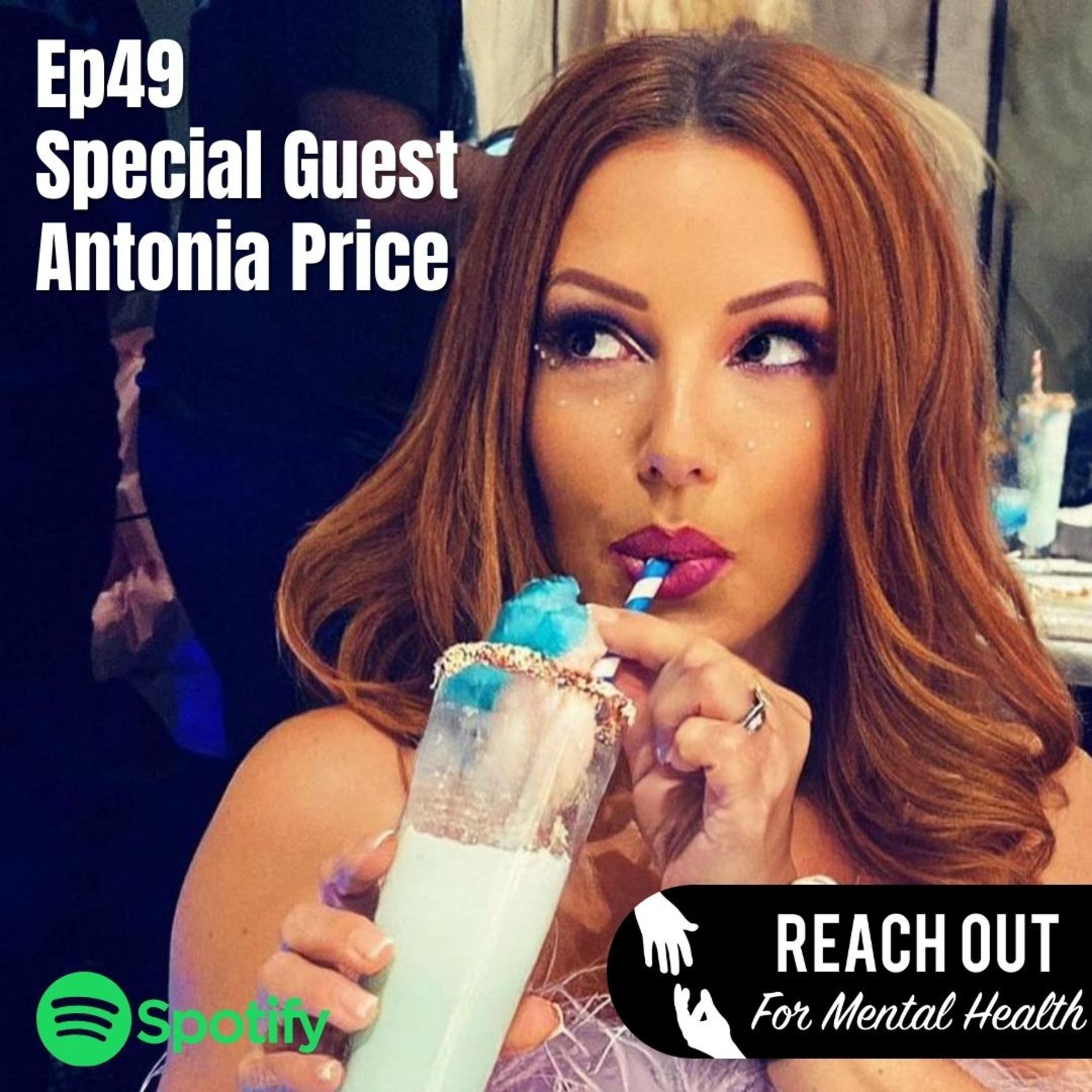
In this podcast episode, the hosts and a guest explore mental health, emphasizing balance as a core component. The guest shares a pivotal experience where a severe neck injury from overexertion led to chronic pain and a sudden onset of anxiety and panic attacks, intensified by prescribed nerve medication. This crisis prompted a shift toward holistic management. She found significant benefit in using functional mushrooms, specifically Lion's Mane, to combat brain fog and anxiety, noting a clear difference in her focus and calmness when taking it. This approach is combined with a committed vegan lifestyle, which she reports resolved previous IBS issues and increased her energy levels. The conversation underscores that mental health challenges can arise unexpectedly, regardless of past resilience, and highlights integrating natural supplements and dietary changes as key personal strategies for recovery and maintenance.
Hello and welcome to the Reach Out for Mental Health podcast. I'm Stuart Fink, joining me always, Kirsty and Hello. Hello, how are you doing? All right, I'm all right. I mean, it's been a while since we've done one of the eases, man. It has. It's been about six months. It's a long time coming. It's done very excited. Wonderful. I mean, it has something six months. That's, that's broad. Fink, it has, honestly. Yeah, and you look back. Yeah, it's been about six months. You've been busy, busy, busy. Well, one of the things that I've been doing, it's getting me busy, he's doing some work. With one of my oldest and dearest friends, who's actually sitting right next to me right now, and Tonya Price, hello. Hi, how are you doing? I'm all right, finally. We've had Wi-Fi issues. We had to leave the office and get back to our entire years, and then for some reason my laptop decided that he no longer wanted to have a Wi-Fi connection anywhere on his phone screen. So, I panicked, found you, and he said, I'm basically, I don't know, I'm telling you on again, being out, we're out. We are. Okay. I'll keep such a backstory as the podcast I'm following just to have, how I know I'm entirely here and what we worked on every year together. But we were starting to podcast, aside by Anthony, and if I say to you the words, mental health, what comes to mind? When my mental health is concerned, immediately, I just think of balance. That's what has been drilled into me is the fact of when I have mental health episodes, which tends to happen in, it does tend to happen in episodes, it doesn't tend to, you know, something that happens on a daily basis. And I always tend to find that when I'm struggling, it's when I've got a lack of balance in my life. When I live on it, because I pretty much, I feel like my life is like a sea soul. That's what it feels like. I'm sort of up one minute, sort of down the next, and it is genuinely because I have so much to deal with. It's like trying to balance everything in my life can be quite difficult. The minute I've got that balance, my mental health is a lot stronger. The minute I lose that balance, that's when I'm like, "Where is it?" It's like, "We're back on the sea soul." That's what I always feel. That's the word I would always connect to my mental health. A lot of people talk about balance, don't they, these days? There's a lot of talk about finding more balance, and particularly since the lockdowns, people found, well, they were looking to address their work-life balance especially. When people started working from home and they had a lot more time because they weren't doing the commute, the stories that I was seeing, people were finding more of a work-life balance. Then obviously, the lockdowns ended and we just kind of charged forward and reverted back to our former selves and was lost that again. The conversation was started, I think, and there's more talk about it now, particularly with social media, that it's being recognised that by and large, our balance is just a kill-ser, isn't it? For most people. I do think that that is a big chunk as to why people suffer with their mental health. I also think, as you get older, you're sort of like, you know, the way you deal with certain situations and the way you deal with workload, you become less able to, you know, sort of like, you know, balance and sort of like the amount of work that you have on a daily basis. I think, because when I was younger, obviously, I still had three businesses when I was sort of like 28-29 and I was still, I had four children and you know, I sort of, it was all good. You couldn't just phase me. No matter what you threw at me, I was never phased. Whereas now, sort of like the kids are more of hand, yes, I've got two more businesses to throw into the mix so there's five businesses, and you know, but honestly, my ability to be able to deal with pressure is nowhere new as good as what it used to be when I was younger. So I do feel like it is also an age thing as well, sort of like the older you get, the the the list your brain sort of allows you to compartmentalise the amount of work and the amount of, you know, sort of like your day-to-day as opposed to when you're younger. When I was younger, sort of like didn't give a far game, it was a bit like, but I can deal with this. Didn't even occur to a minute where it wasn't even a thing to me at that age, but you know, sort of like the older I've got, it's become more of a thing. Do you think maybe, sorry, there's one more thing on the melody tool for throwing. And do you think that maybe though, because you were going at 100 miles an hour, you know, in your late 20s and you had all of that energy and you had all of that drive, do you think maybe possibly, and I'm just talking for my own frame of reference now, the reason why we might not be managing as well now, yes, it's due with age with that much older, but did we just kind of overdo it, and you know, there's a great phrase that the body keeps score. And do you think now that our bodies and our mental health are staying right, you kind of abused us and you took war from us that we were able to give, we're going to start recharging and kind of stockpiling on the energy levels and, you know, whatever other things that we needed to draw on. Definitely. I mean, it's impossible to go at that level constantly unless you're a duress or gunning. It's just impossible. You know, the battery has to wear around at some point. And it's like, and I think when you stop being able to, you know, to work at the level that, especially that I used to work to, it's actually quite scary. And I think that's when, you know, sort of like level zone, anxiety starts to kick in because you do start to think, "I'm always wrong with me." It's like, "Why can't I do what I used to be able to do, you know, sort of like a couple of years back?" And it's not a case of that, you know, sort of like, you can't do, well, it is a case, you can't do it. And I totally agree with that. I think your brain sort of goes, "Well, well, do you want to minute it?" I think you've used your capacity. You've gone full capacity for far too long now. So we're going to sort of like take this back a notch and, you know, sort of like slow this down a bit. And as a person, you're sort of like, "Oh my god, what's going on? What, why can't I do it?" And then you start to panic. It's like, "So, yeah, I agree. I'll totally agree with that." Can you meet with the first time where you maybe realised that maybe your mental health wasn't where it should be? Mine was definitely, I mean, my mental health sort of kicked in, like, it was like a lightning bolt. It wasn't a buildup or anything. It was, I suffered from, I had a, sort of, a dis-ball, gym I neck about 10 years ago. And before that, I was just running 100% constantly. I was running businesses, I had kids. At that particular point, I was doing ballroom and letting dancing. And I was training for a competition. So I was putting in between sort of like 20, 25 hours a week at that point in training. And I woke up one morning, rolled over and I had this pain to shoot from the back of my neck down to the bottom of my spine. And I laid there and it was like, "Oh my god, got up and couldn't move my head to the left at all. Thought I'd slept funny." So as you do, sort of like, "Do you know what? I'm just going to have a beer." Sort of like, "That'll cure everything." Just had a drink and it took some of my beer offane because I was hung over from the day before from the night because this was the Sunday morning. And I thought, "Here are the dog. I'm going to be okay. I've just slept funny. This is absolutely fine." And the next day, I had a dance lesson. And these dance lessons, I want to undance it. So he was buzzing cheap. It was about 120 quid for an hour. And I was like, "There's no way I'm not turning up. I've got to pay that money anyway." And took a beautiful, hope-you-reffane, a red ball and went to my dance lesson. And my dance teacher said it was the best I'd ever danced. I'd like to wear. And that night, I went to bed and I could, the more no woke up, I couldn't get out for three weeks. I could not get out of bed. I lost complete power down my left side. Couldn't move. The pain was just excruciating. It was just that horrible nerve pain and ended up going to an osteopath. Then ended up having to go before an MRI. And the MRI results come back and basically said that I had the same trauma in my neck as what they would expect from a car accident victim. Yeah. And it took me six months to start to get power down my left side. I literally couldn't even hold a handbag on my left side. I couldn't move my arm to sort of like, you know, sort of like a 90 degree. And without my body, I happened to compensate and pull myself over to get my arm up in the air. It was like, it was, it was crazy. And I ended up having to go in and have like a electric shock treatment down my left side. And they stepped me on these sort of like heavy duty sort of like nerve agent sort of like drugs and high levels of a hand cream inflammatory. And they'd give you a, they'd give you a matric cell. No, they put me on
Lyra car. So, and I remember the nurse actually saying to me in the hospital because I've always been very much against sort of like if they even have a headache, I'll sit it out. I'll draw a sort of like in that right. That'll be it. Give me a can of car. Give me some sugar. That will still be out. You know, sort of like I've never been one for taking the tablet. And she said, right, they put you in these, these Lyra car, she said, and pretty much a sort of promise you, this is like the Rolls Royce of nerve drugs. She said, if a doctor gives you this drug, she'll seriously carry, keep taking it. She went, it's like, you know, you don't get any better than this drug for what, what is wrong with you? And I took it for a couple of weeks. It's up to make me panic and mixed with sort of like in the proxies that they gave me for the anti-inflammatory. And I started to get that horrific panic attacks and just honestly, just I was having like disassociation. I started to get agrophobia and because it all comes in together with anxiety. So you get anxiety and our members sort of like, it was, it was crazy and it came out of nowhere, literally nowhere. And they'll sit and think to myself, this is me. It's like, where, where has this come from? And the more I tried to think about it, the worse it got. It just, you know, it took me to, you know, pretty much, well, that's sort of. Can you see me? Can you hear me? Yeah. Yeah. I totally dropped out there for a good three minutes. So apologies. I was looking like I was listening really intently. Did it as well? Yeah. So just pick up and tell me on the lake side. Yeah. So I had this side, this situation. So we, my husband said, we had to go to lake side. And I remember being in JD sports. And I could, I was sitting on one of the chairs while my husband was trying to train us. And all the people around me, it just felt like, they just felt like shadows. I feel like people and like, I just felt like my whole world was coming in. And I remember just sitting there thinking, I can't do this. I can't do this. Straightly overworld. And my husband was like, right, let's get you out of here. And I was like, no, I went, if I leave, I said, I'll never come back. I said, I'm not leaving. And I could feel myself just doing this. And I went, I went to, I went to tortilla, we're giving some food. So I'm in tortilla, I had some food. And so I've got myself back into a place where, you know, I didn't feel as, as a nervy. And I remember leaving lakeside, literally to high five on that cell, just thinking, I bet you managed to do that. And you think, that's crazy. So that's not me. It's like, where, where is this comes from? And yeah, and that's, and I'm basically developed like a, a health anxiety. Just based off of the dispel that, and then I'd sort of, you know, obviously in their fingers myself, I don't want to take these tablets. I don't, I need to get myself off of all these tablets, because in my brain, this is what was causing the anxiety. And I even got myself into a state where, even the vitamins I was taking, I was, I'd convinced myself that I'd overdosed on them. And I'd have panic attack, and I'd be like, and you'd be like, and I knew it as a rational. You know, I'm talking to myself saying, the fuck are you, what is wrong with you? This is a rational, but you can, you can tell yourself it's a rational, but if your brain is thinking it, it's, you know, you can't, you can't stop it. It's a good thing. So context, cast, like the, you know, you, you, you have people that think, well, I'm fine. You know, I'm never going to strike with anything. And they tell me, was that person for me? Because I've been telling a really long time, and on confidence was something that I'd never seen. Any shoe with? Any shoe. And, and anxiety. I mean, I spent years and years and years and years in years, in all manner of crazy situations in Antione, and I've never once seen her face. And to hear, I would tell me about Daniel A. side that day, it was like, that's not you. And I think that's just testament to the fact that, you know, mental health is, you know, it doesn't, it doesn't matter how valuable you've been in the past. Completely. If that C goes, you know, that C sort of goes, you know, start to lean to the other side. You know, you've got a work on it to get it back to, to a bit of balance. And can you maybe tell us a little bit about the impact that that had on you? Because for me, it felt around then that was when you started to look more at questioning, maybe medicines and also, look it at. Dyer and because was it was that around then that you become vegan or was that after? Um, no, that was sort of like way after. But it was, like I said, I was always very mindful of pharmaceutical drugs. It was always something. I don't know why, because there was this, there was no reason for it. Um, I was just always one of those people that, you know, I would only take a tablet. If, if I genuinely, it was the last result, I don't ask me why I was just that person. And, and I think now I've now gone even more that way, because in my brain set, I'm sort of like, well, I was right. Because, you know, I do feel like it was only when I started taking sort of, you know, sort of like the, the nerve drugs and still sort of like the influx anti-inflammatories that I, I had that, that feeling. And, you know, it took me a good three or four months to get myself out of feeling like that. So, I knew that I wanted to look at a more holistic approach to my mental health and things that could help me. And my husband started to research functional mushrooms and mushrooms as a whole. And when we started to look into it and started to see the benefits and, you know, sort of like. And how many sort of, you know, sort of like the, how many countries we use in functional mushrooms. And we, they, and they were a big thing in the UK at that particular point. And we started to look at, you know, sort of like mushrooms like lines, main and racie and, and quarter steps and lines main was my main mushroom. Because it does give you help with anxiety, depression, it gives you that sort of like, is like a calming effect. It also helps with sleep. So it's a real rounder. And I think it's a, as well, when the car surely I can't be true. Surely, you know, I've always ever want to be doing it. It's like everyone would be taking this if, you know, sort of like if this works. And we started to grow it. So, and to this day, we still do now. We still have actually got thinnig. I've seen your husband's lines main. Align of the thing. White substantial. Yeah. And from the moment I started taking it, it works. It helped. And I'm sort of in the first instance, because it's not on the number lever, but I've just sort of thinking is this like a placebo effect. But at that point, I thought, I don't care. It's actually don't get blocked. I don't care. This actually works. And I do, and I can actually, I can sense when, you know, I'm not taking as much lines main as to when I'm on it. Because obviously, you know, I don't take it every single day. There are days when I drop out because it's that, you know, I've sort of rushed out of the, you know, for the morning. So we know to get into work and do this and the other. And I can tell, I can tell the difference. How, what are the signs that you're aware of when you think I've not taken this much sun only do. I can, I can feel the brewing fog straight away when I go into the office and I deal with a hundred things at once. You know, my boss app will be going off with one element of my business. My email will be going off with something else. You know, we've got social media accounts that, you know, that the constantly need community engagement on that that I also control within the office. And I'm so used to still be like, you know, sort of like being here there and everywhere and being able to deal with with so much. If I haven't taken lines main, I can feel that my focus isn't on its game. It's like that that brewing fog is there. And probably got even worse now that menopause is kicked in a hundred percent. And it's like, you know, straight away, it's, you know, we've always said to people it looks like a scene from breaking bad sometimes in our office because we get our lines main we dehydrate it. We do you know, in the office we, we've got a pill making sort of like kit in the office and everything. So we should like literally tell them make the whole lot there. And if I'm feeling any form of brain fog at all, I will take lines main at the office and with each within the hour I can feel a difference. And that's that's an appaulid for this not in a tincture or anything is just a powdered form. So I use a powdered form at the office and within the protein power that we've got is an extract. So I don't feel when I do even either that there's a difference between, you know, like the levels of sort of like clarity or focus that I'm getting.
It just depends on the time of the day where I am, what I'm doing, as to what form I actually take it in. But, line's main as a whole. I can probably show I feel like it's been a life saver for me. Just to sort of. not a lot to put all the focus purely on that, but it's important also to say that that he's also succumbed with a healthy lifestyle. You go to the gym and you eat healthy as well, right? Completely. I'm now a vegan. I've been vegan for about six years. And for a health level, being a vegan has helped massively. It really has. I felt such a difference in my body within two weeks of becoming a vegan. I didn't get any sort of blood. I used to suffer from IBS when I ate meat. The minute I became a vegan, two weeks in, I just felt like I. There was a sort of. I felt I had a more energy. I felt that I didn't get the bloating that I got from IBS. It sounds like I'm pushing the whole veganism thing and it's like, 'Oh, become a vet, this is your experience, good, but it really did.' And I think because of how I felt within the first couple of weeks, pushed me to continue that vegan journey. Because it's not easy. It really isn't. It's. I had to completely. I didn't just go from being a vegetarian, being a pescatarian, a flexitarian, anything like that. I went from a heart-carnival to. overnight, just going, 'That's it.' But that's me, genuinely, as a person. If I'm going to do something, I'm very much a go-hard or go home. I don't do anything by halves, but I think that is just me, genuinely. I don't do anything in half measures. Probably a problem a lot. I mean, I heard about Lyon's main through a few friends of mine who were white-crediting. And I was advised to do my research on that. And, you know, it's really, really interesting stuff. If anyone's in microdome, I really. I'm keeping none of the wasps in a little bit. Clevves. Really, really interesting stuff. I mean, King's College, London, they're doing trials on it. I mean, another thing that got me really interested in white-crediting was nine perfect strangers on Channel 4. Within the cold-kid men, if you haven't seen it, Warnsheet is absolutely fantastic. Based on a true story about a woman who opened up like a a retreat sanctuary for individuals, and she was white-crediting. Then with Silicide, I've been without their consent. But, you know, I mean, the results are, as they are. But as part of a microdosing protocol that I was looking at, you took Lyon's main as part of it. And, I thought, "Well, I'll get the Lyon's main." And again, so that it was really good for your mental health, helps with clearing the fog, it helps improve your memory. And I made them a stake of getting it as a powder form, rather than in the pellets, in the capsules. So I mixed it with things. I was making it with like, you know, my smashed avocado on toast, you know, in a banana smoothie or anything like that. But again, it was just aggro having to, you know, incorporate it into my diet. And then, yeah, the more I looked into it, I came across, I call it Rishi. Rishi, is it not? Rishi. Rishi. Rishi. Rishi. Rishi. You put that in your eye. I could be. It's like, listen. I mean, that was a complete game-changer for me. I mean, so last year, my mental health was absolutely on the floor. I mean, I think I spoke about this quite candidly on other podcasts. So I come off my searcher lane. And I will never take an anti-depressant again because I can't handle coming off of them. I've come off them twice now, and it was hideous. And equally so, I don't want that to put anybody off who's been advised that they need to take anti-depressant, do any of your research looking to Western Midson? That went to good studies. Do you know what I mean? There's a whole host of different stuff that's available. But I was, yeah, I come off them and then obviously, withdrawals were just hideous. And then he kind of plateaued and I'm still thinking, I come off them too early. I shouldn't have, you know, I'm not ready to face the world without a bit of support. And then I went on to the Rishi and much the same as you. I was like, this might be a placebo because this is, this is great. You know, I thought maybe the first couple of days it was just, you know, I found something. I found something that might help this, but the cavalry is on its way kind of thing. But it was, it was weeks, weeks, weeks. It was absolutely brilliant. And then went to see my dides in, in Rexham and I ran out and I thought, I'm mushroom differences are going to make. But me, I thrat like within about a week. Yeah, really, really notice the difference. It's no as easy. It's got to sort of like, you know, incorporate them and it'd be a couple of weeks to see a difference. I literally saw a difference within 24 hours. It was each of like within the hour, like the couple of hours when I was taking it. And exactly the same. I was like, this can't be real. It's like, you know, it's, it's got to be my brain because obviously, you know, I think my brain's a bit fucked up anyway. It's all right. I'm looking for it. I'm looking, I'm worried. Yeah, exactly. I want it to work before I'm made for it. When it's working, it's like, now that this is actually genuinely working. Yeah. He's working. So it's sort of like, so stop trying to look for the negative. And just keep taking it. Oh, I haven't, I haven't, well, I say I haven't come off of it. I've, I've taken a side step. So I was doing again, more research. So I get my, my supplements through British supplements, other sources are available. But that's who I get my from. And, um, and yeah, I come across ashwaganda, which is a herb rather than a mushroom. But again, it really helped with what I think the thing with me, it helped with the symptoms of ADHD. I'm a little bit, a little bit like that. And that's all I need to bear that to level me off. And, yeah, I think it's, I think it's working. I think it's working. Although, my memory again is starting to really, really suffer and my, my recall and, I mean, I went to see a mechanic this morning. And when I try to remember his name, when I went to text him, I just completely at a brain fart. So I think I need to come to you to get some lines main 100%. But taking it in isolation for my mental health, it, I must admit, maybe I wasn't taking a high enough dosage, but it didn't, you know, re-reaching was the thing that saved my life 100%. But I think, you know, incorporating it with other things. I mean, you can't, you can't, lines main and turkey tail and things like that. You can take them in conjunction with so many other different things. And they don't conflict with one another or cause any problems, do they? It's a really. No, no, it's so. That's the. Hmm. The only problem with functional mushrooms, it's, it's quite an expensive sort of, you know, stack to get involved with. Because obviously, you know, it's quite the trend at the moment about the functional mushrooms. There's so many, there's the gummies out there, there's the teas, there's the coffees, you know, sort of like the capsules. And it's, you know, it's not cheap to get involved with. So if you're trying to incorporate, you know, sort of like five or six different functional mushrooms into your life, you know, it's. Repricely. Yeah, it's quite pricey to do it. So that's my only sort of like, you know, the only pain point I find. I think that's why I think that we, you know, sort of like the main mushroom that we always go to, obviously being the lines main. That's why we grow it. Because it's like, at least, you know, we've. We've got like a, you know, a constant supply of lines main. And, you know, there will be times where I've got so much lines main that I've capsuleed out or sort of like in powder form in the kitchen, that's when another one comes through. And I'll literally just cook a bit and it tastes amazing. It's so. It did. I had some. I was in a baby texture, it was like crab or lobster. Yeah. It's like, honestly, and you make like a vegan crab cake out of lines main. It literally changed your life. It's great to eat. It really is. So still, obviously, you've not. No, you've had a bit of a line's main haven't you? That's the only thing that you've really taken as a bit of line's main. So was it, was it unturned? You've got you into it. No, no, it was Joe Rogan, who I'm sure has turned a lot of people onto lions main. So, yeah, maybe while I was working in construction then, so that would have been maybe six years ago. Jert General, I wouldn't spot cast, was being sponsored by lions main and Rogan was baming on about lions main. So. And then our friend, Squibbys Pip was doing. No, that wasn't lions main, that was. Old Subraine? OELFS, great company, another Joe Rogan special. Because I think Pip had to. In one of his easy videos, he had to sing the song backwards. Sorry, when they played the film forwards for this public crazy video. So he learned how to talk backwards, even as do he leaves these products and they work well for him. And
And I was a big fat of Joe Rowe and Magnin. So I, I thought I'm going to buy some lives made it. It was just a pad of fatigue. I'll feel whatever it was. And I'd done it for, I'll be doing it for about three weeks. And it made a big difference. But at the time it was quite expensive as well. And I love just, I'll be honest with my full kind of come off the gas with it really. I think I should have just persevered, but I didn't. And, and in that sort of time from then to now, the, the interest in just seeing anything to do with function mushrooms on, on my social media feeds. And they ate, it's, it's, it's such a, it feels like it's definitely been sort of anybody that was questioning, you know, the benefits of function mushrooms. I think they've been silenced now by, we had to be, it was lives changing because of, of, of taking them. And I'll bring this round to, Ontario be someone that she mentioned earlier, if she's into something, she's, you know, she's go out or go out from, you know, recognizing the benefits of function mushrooms on what they done for her. Ontario's thing gone on there to create a, a photo lush room. Protein powder, which obviously has the benefits of, of somebody that wants to trade them, or say protein powder, and in their diet, coupled with the benefits of functional mushrooms. And, and I told people are the first people, you know, to, to, to bring a product like this to market. And, very happy to throw it in. Yeah, so if you can just tell us a little bit about, you know, the journey of, of, of microprog really. And now you, you, you're probably too much as remarkable. Yeah, so it's one of those ones with, with microprog, it was like, I've always luck, you know, as the conversations gone, I've, I've been an advocate for functional mushrooms for, for many a year now. And I was always of that sort of mindset of, you know, anyone wants to listen to me to tell them the benefits of functional mushrooms, if they stand still long enough, I'll tell you to the point where, you know, they're probably just turning around a girl, please, you know, stop going on about being a vegan and stop going on about functional mushrooms. It's just too much. And, um, I sort of thought, I'll be really good to try and find a way of being able to introduce functional mushrooms into someone's diet in a way that it's not going to be too expensive because it can be quite privacy to bring functional mushrooms into into your daily diet. And someone that doesn't want to sort of like add it to a tea or a coffee, um, from, you know, sort of like from, from that sort of way, because I tend to find the teas and the coffees. I'm, I'm personally not a lover of the functional mushroom teas and coffees. I still think that you've got that under time. I don't think you're getting what you want from it from like the, the tea or the coffee. Um, there's a reason you drink tea and coffee and pretty much that is for the caffeine element of it. And I was sort of under the sort of, you know, sort of trying to think of a way of, of how we could introduce functional mushrooms into a product that a lot of people use on a daily basis already so that they didn't have to, you know, find that extra money. And we've been sort of like a quite an avid gym goa. I use protein powder quite a lot and being a little bit of a lazy vegan. It's my way of being able to get, you know, sort of like a decent whack of protein into my diet is by using a plant based protein powder. I, in the end, what I was doing is when I was making my protein powder, sort of like my shake in the morning, I was just getting a teaspoon of the lion's mane and teaspoon of quarter sips and dropping it into my protein shake. And then adding whatever else I was just going to add to it. And that was sort of like a big way of hair. I was taking my functional mushrooms. So I was sort of thinking, right, well, wouldn't this be great if there was a protein powder out there? That's actually was infused with these functional mushrooms. And yeah, and that's how my GoPro was born. I sort of did the research, found there was literally nothing in the UK. Like it. There we are the first to actually bring a protein powder to market that was the infused of functional mushrooms and to actually have lion's mane and quarter sips after a workout and quarter six gives you a lovely natural energy. And it's also a slow release in G as well. So there's no crash. It's not stimulant. You also get the lion's mane. So you're getting that focus. You're getting the clarity. You're getting, you know, sort of like the help with brain fog. It helps regenerate brain cells. There's just so much that these mushrooms do and to have it as a, as a, you know, post work out sort of like protein shake. And to me, it's, you know, that they're a match made in heaven. So, you know, so, and that's my GoPro. So we launched a few, a few months back and I got a minute. It's, you know, it's gone sort of leaps and bounds sort of very, very quickly as to, you know, sort of like people that want to try the product of actually said to me, you know, this is an ingenious way of, of, of, of maybe an able to try functional mushrooms and not have to spend that more money. And then what, you know, something what I've already spend out and all of that to do is change my protein path. So it's like, you know, so yeah, so all exciting, exciting times. But can you take the products if you're not building? If you're not going to the Germany, trying to get big muscles, can you still take it? Oh, good. Yes. Yes. I mean, it means you've got 22 grams of protein within sort of like my GoPro. And there's, you've got your daily recommended allowance of a meagre three. There's iron. You've got zinc. And it's, it's an all round powder. I would, I would say that we are marketing ourselves more as a wellness powder as opposed to a protein powder because I just think, you know, in this day and age, we should be able to expect more from our protein powder. So it's not only about sort of like, you know, the physicality of what you're using the protein or with functional mushrooms, it's also our powders and look after your mindset as well as, you know, sort of like your body. And it's, yeah, I've got to say it's we are going that route more of a, more of a wellness powder as opposed to, you know, sort of like a protein powder. And this is now something obviously that you take yourself as well, which again, is keeping you level. It's maintaining your own mental health. Oh, good. Yes. I mean, I take sort of my GoPro every day. So every morning, it's, we have a shake. My husband is bang onto the, the, the micropro train as well. Perhaps he loves it. My staff, we've got lined up in our, you know, canteen just loads of bags of microprote and the staff rule on the, on the, on the micropro train as well. So it's a, yeah. I can, I'm already thinking I'm going to, no, they're good. That's right. They have to take it basically if they don't miss that. Yeah. No, that sounds amazing. I can already think of a couple of people straight away that I'm thinking they will love that. That I mean, again, kind of curiosity about functional mushrooms and the benefits of it, but again, not quite sure how to incorporate it. Everything that you just address and it's all, um, it's all there. In one package, easy to take and, um, yeah, let you show the benefits of just more people need to know, more people need to know. I mean, obviously doing the work that we do is quite common, particularly with guys that they don't want to take meds, you know, um, many couple of years ago, I'll just be saying, you know, some people take CBD, you know, look into those. But now I'm like, check this out. Do your research. I'm not selling anything, but I'm just like, do your research. There's enough information out there. More people need to know about it because yeah, it was life saving for me. Yeah. It's been to the spirit of it's, you know, sort of like bringing sort of like new tropics and adaptogens into your life. Personally, if you can do, if you do the research on it and it is something that you feel is going to help you, um, all I can say is, I, I couldn't, be more of an advocate on that side of it if I tried. Um, because, you know, you are licked down that route of trying the pharmaceutical side of it first before your, sort of like for your, before your diet or your, your mindset is he is that when you walk into the doctor's surgery, there's the, I mean, personally, I just think the first question you should be asked, um, but anything, um, it is, you know, so give us an idea of, of your, you know, of your day, what, what's in your diet? What, you know, sort of like, how are you living your life? And those questions don't get asked. And to me, that's where the issue lies. It's, you know, you are what you eat and you are what you put into your body. Just get a say of that. You are what you eat 100%. And, you know, you, you, you are like how, how you treat your mind of, of, of, you know, like on a daily basis, those things should be, Those questions should be asked before a prescription is written.
That's what I personally think. I think we need to open up our own wellness clinic, Antonia. Let's do it. Let's get ourselves quantified and save the world. Oh, definitely. I mean, please list number six. That's done. You're going to be gone, yes, it's fine. I mean, it's fine. Before we launch that mission, what we're doing is micropro web link in the show notes. I've people want to go out of the room and try and do a 21-day challenge to see how it affects your life and there it will improve your focus. Yeah, click that link and give us a follow on the socials as well where we'll tag micropro in all the posts that people can go and jump on the website as well. Because on that website, you can buy a product there, but mostly but you'll break down what's in it. It gives you a real kind of insight into what micropro is and the money. I was about to say, there's no nasties. No, it's mean to we're very, it's a very clean brand. And I was going to say, I felt like I was putting the spot and I was just going to reel off loads and stuff that was in micropro. And there's a lot more goodness in there than what I've just mentioned. So yeah, jump on the website and take a look at yourself. Wonderful. Italy, thanks so much. I will not learn and tell us about you. Jeremy's been an absolute pleasure. Oh, thank you for your point to me. It is. Honestly, yeah. Thank you so much. You too. And I've got a feeling this is just the beginning of something rather beautiful.
Podcast Summary
Key Points:
The podcast hosts discuss the importance of balance for mental health, linking its loss to increased struggles.
A personal story details a severe physical injury (neck disc bulge) that triggered sudden anxiety, panic attacks, and health anxiety, exacerbated by prescription nerve medication.
The individual adopted a holistic approach to recovery, emphasizing functional mushrooms (particularly Lion's Mane) for cognitive clarity and anxiety reduction, alongside a vegan diet and healthy lifestyle.
Summary:
In this podcast episode, the hosts and a guest explore mental health, emphasizing balance as a core component. The guest shares a pivotal experience where a severe neck injury from overexertion led to chronic pain and a sudden onset of anxiety and panic attacks, intensified by prescribed nerve medication. This crisis prompted a shift toward holistic management.
She found significant benefit in using functional mushrooms, specifically Lion's Mane, to combat brain fog and anxiety, noting a clear difference in her focus and calmness when taking it. This approach is combined with a committed vegan lifestyle, which she reports resolved previous IBS issues and increased her energy levels. The conversation underscores that mental health challenges can arise unexpectedly, regardless of past resilience, and highlights integrating natural supplements and dietary changes as key personal strategies for recovery and maintenance.
FAQs
Mental health is often linked to balance in life; losing balance can lead to struggles, while maintaining it strengthens mental well-being.
As people age, they may find it harder to compartmentalize work and daily pressures, leading to increased anxiety and reduced ability to handle stress compared to younger years.
Mental health issues can arise suddenly from physical trauma or medication side effects, as seen with a neck injury and nerve drugs triggering panic attacks and anxiety.
Functional mushrooms like lion's mane are used holistically to reduce anxiety, improve focus, and combat brain fog, offering a natural alternative to pharmaceutical drugs.
Adopting a vegan diet improved energy levels, reduced IBS symptoms like bloating, and contributed to overall better physical and mental well-being within weeks.
A healthy lifestyle, including regular exercise, a balanced diet, and holistic supplements, complements mental health strategies and enhances overall resilience.
Chat with AI
Loading...
Pro features
Go deeper with this episode
Unlock creator-grade tools that turn any transcript into show notes and subtitle files.
 PodcastTranscript AI